
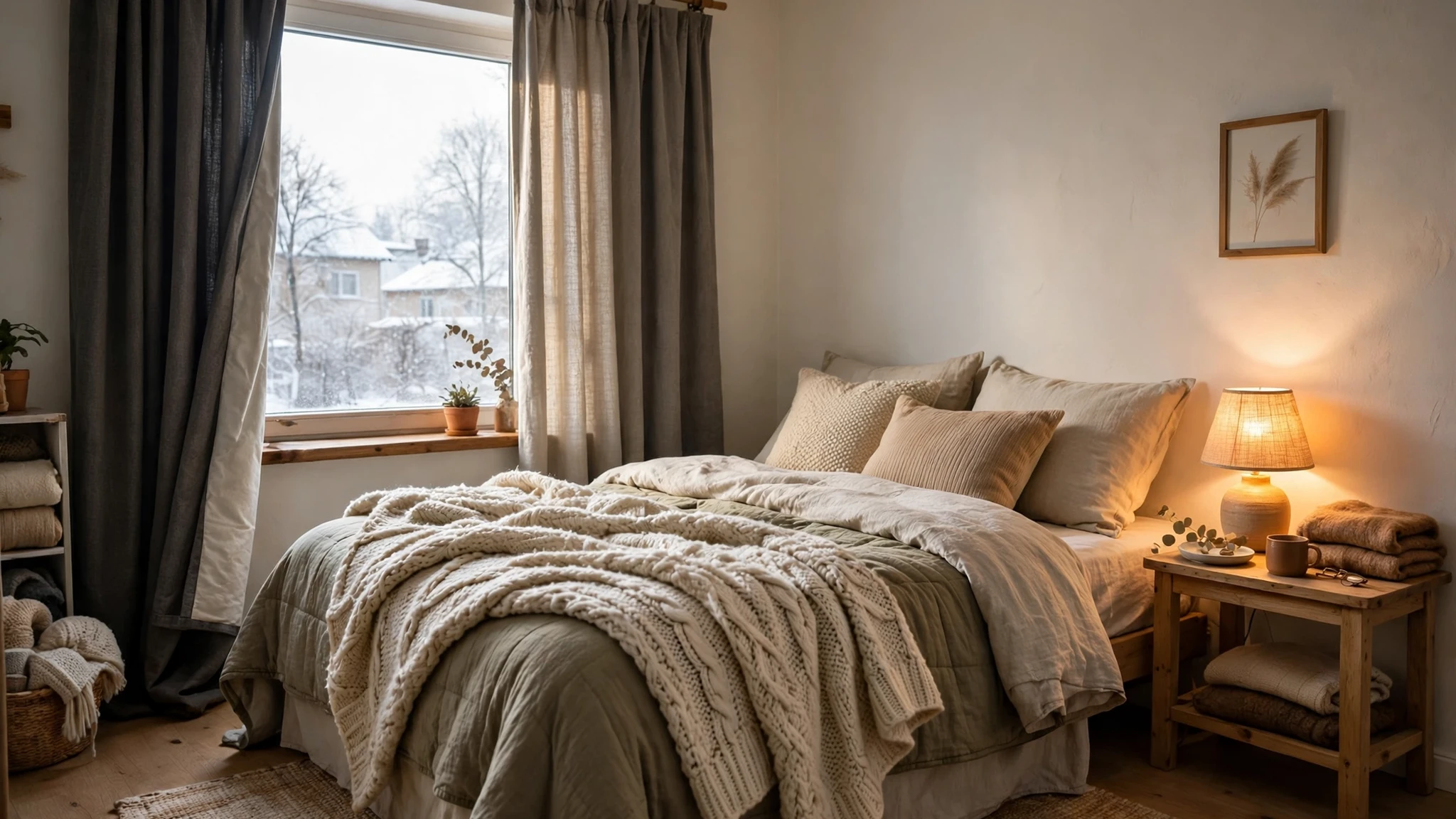

A small bedroom feels the cold faster than any other room in an apartment. One outside wall, one thin window, and a door that opens straight onto a hallway can leave the room chilly by midnight, even when the living room feels fine. The bed also fills most of the floor, so every winter change has to earn its space.
Good winter bedroom decor solves two problems at once. Layers on the bed, warm light, and covered glass make the room genuinely warmer, while a calm palette and soft textures make it feel warmer the moment you walk in. Most of these changes suit renters, because they hang, drape, or plug in, and they pack away in spring without leaving a mark.
These 15 ideas work in order, from the bed outward to the walls, windows, and storage. Each one gives measurements and placement that suit small bedrooms, says who it suits best, and names the mistake that most often wastes money. Pick the first five and a tiny room already sleeps better.
What Are the Best Winter Bedroom Decor Ideas for Small Apartments?
The best winter bedroom decor starts on the bed itself. Layer bedding in the right order, switch to brushed cotton or flannel sheets, and choose a duvet with a winter tog rating before you buy anything decorative. Then add warmth at the edges of the room: thermal curtains on the window, a rug on the cold floor, and warm light at the bedside. The guides to apartment bedroom decor show the basic layouts these layers sit on.
Work from the inside out. Fix the bed first, then the window and floor, then color, scent, and small details. Decor bought before the bed is sorted usually ends up hiding a cold room instead of warming it, and in a small bedroom there is nowhere to hide the extra clutter.
Layer Bedding in the Right Order
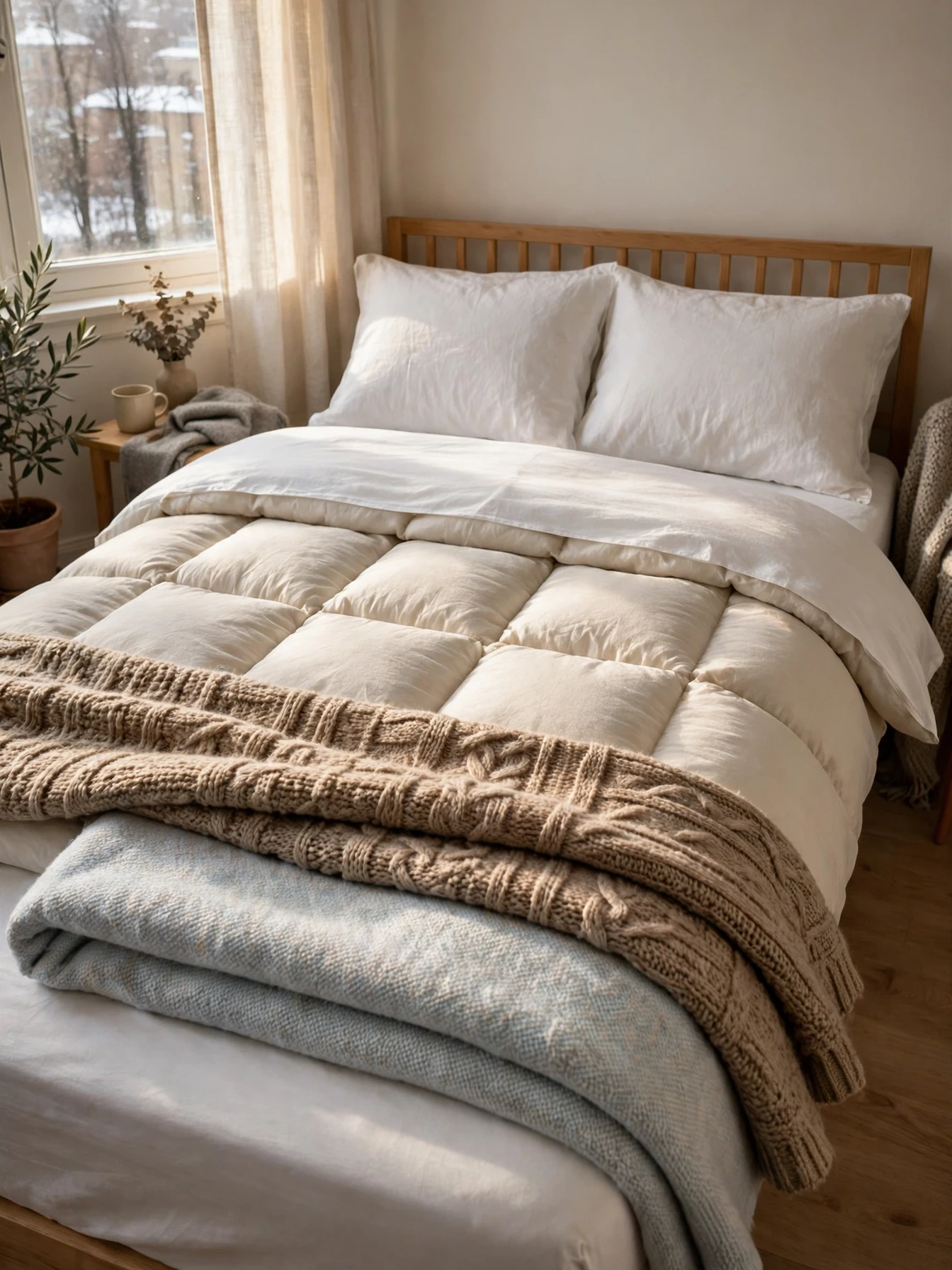
A bed that sleeps warm starts with layers in the right order, not with one thick blanket. In a small room that order matters even more, because the bed is both the largest surface and the first thing you see, so a tidy stack reads as calm instead of clutter. A flat sheet, a light blanket, then the duvet gives you two places to adjust overnight, while a single heavy layer gives you none.
Measure the drop before you buy. For a double bed in a small room, allow 25 to 30 cm of overhang on each side so the layers sit neatly without dragging on the floor. Fold the top 20 cm of the duvet and sheet back together so the bed looks made, then add the throw at the foot where it can be pulled up without undoing the whole stack.
Choose colors that stay quiet. A warm off-white sheet, a mid-tone blanket, and a duvet one shade deeper give the bed depth without needing a pattern, and they let one accent cushion carry the color. In a room under 10 sq m, that restraint keeps the bed from looking like a pile of laundry, even when three layers are on it.
The common mistake is adding a thick topper to fix a cold mattress and then piling a heavy duvet on top. The stack slides, the bed looks messy by morning, and you wake up too hot at 2 a.m. Fix the mattress first with a thin thermal layer, then build the visible layers in the order above.
Choose Flannel or Brushed Cotton Sheets
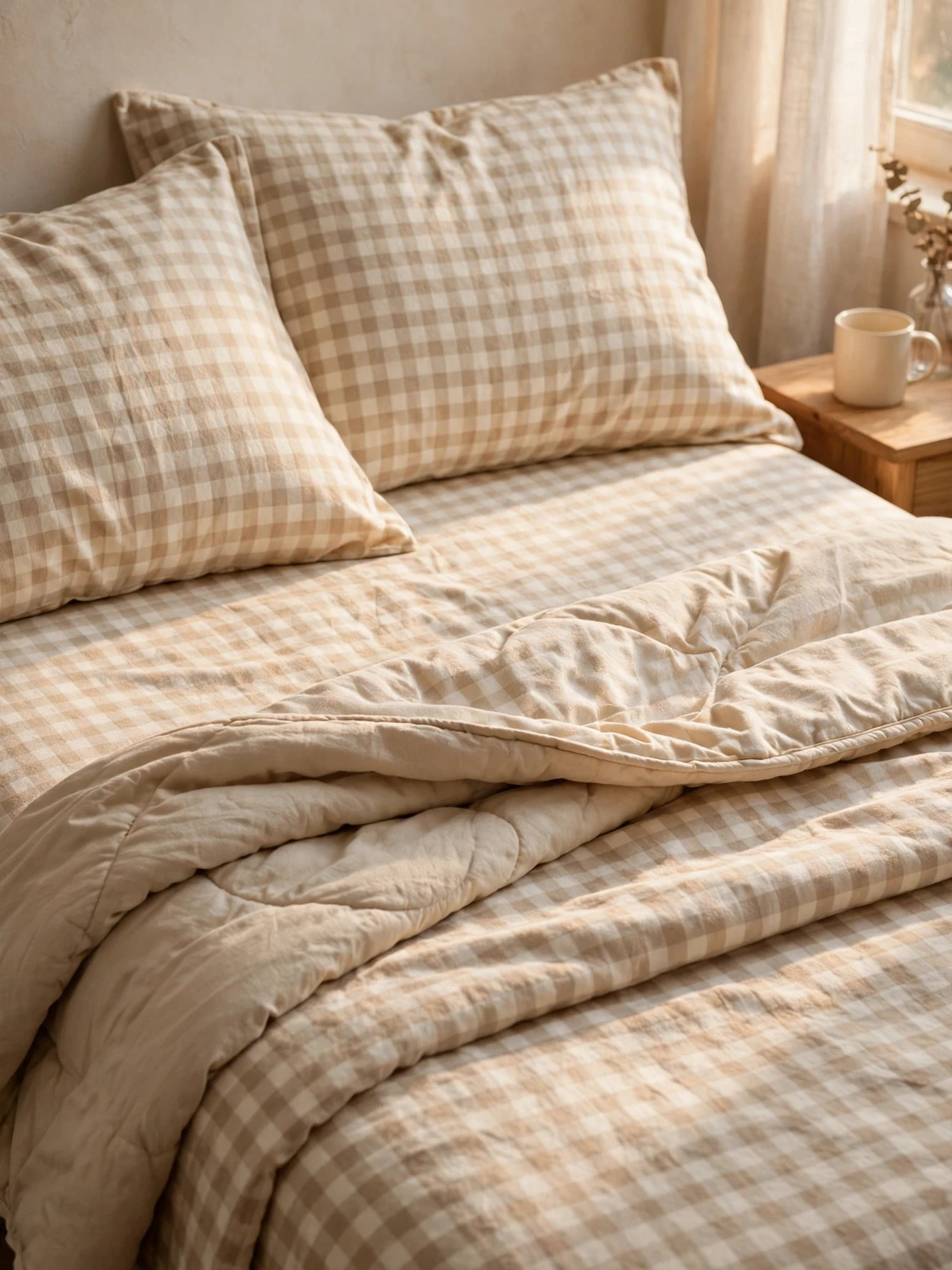
Flannel and brushed cotton feel warm the second you climb in, because the brushed surface traps a thin layer of air against the skin. That matters in a small bedroom, where the bed sits against a cold wall and the sheets are the first thing you touch. A plain cotton percale sheet can feel cold for the first ten minutes, even in a heated room.
Buy for the mattress you have, not the one you wish you had. Measure the mattress depth including any topper, then add 5 cm so the fitted sheet stays put when you turn over. In a small room, a sheet that pops off at the corner is more than an annoyance: it leaves a cold gap against the wall side of the bed all night.
Keep the palette warm and simple. A warm white or soft oat sheet works with any duvet cover, while a deep rust or forest flat sheet adds color at the fold without needing a patterned set. Wash flannel on a gentle cycle and skip fabric softener, which coats the fibers and dulls the brushed warmth after a few washes.
The common mistake is buying the cheapest flannel set and finding it pills after a month. The surface goes rough, the sheets feel cold again, and the set ends up in the back of the cupboard. Spend the money on one good fitted sheet and one good flat sheet, and keep the old set for laundry day.
Pick the Right Winter Duvet Tog

A duvet’s tog rating is the simplest way to match warmth to the room. For most small apartments in winter, a 10.5 tog duvet suits a room that holds heat overnight, while a 13.5 tog suits a room with a cold outside wall or a window that never quite seals. The number matters more than the filling: a 10.5 tog synthetic duvet and a 10.5 tog feather duvet hold the same warmth.
Test before you commit. Sleep two nights with the duvet you have, then add a light blanket on top for two more nights. If the blanket nights sleep better, you need about 3 tog more; if you wake up sweating, you need about 3 tog less. That small test stops you buying a 15 tog duvet for a room that only needs 10.5.
Size the duvet to the bed, not the room. A double duvet on a double bed leaves no spare to tuck, so it slides off the wall side by morning. In a small room, go one size up if you can: a king duvet on a double bed gives you the overhang to tuck at the sides, and the extra weight sits on the bed instead of on the floor.
The common mistake is buying the highest tog and then sleeping with the window open to cool down. The room gets cold, the duvet gets damp from the night air, and the heating works harder the next day. Match the tog to the room, then use a light blanket for the nights that dip below normal.
Add a Chunky Throw at the Foot of the Bed
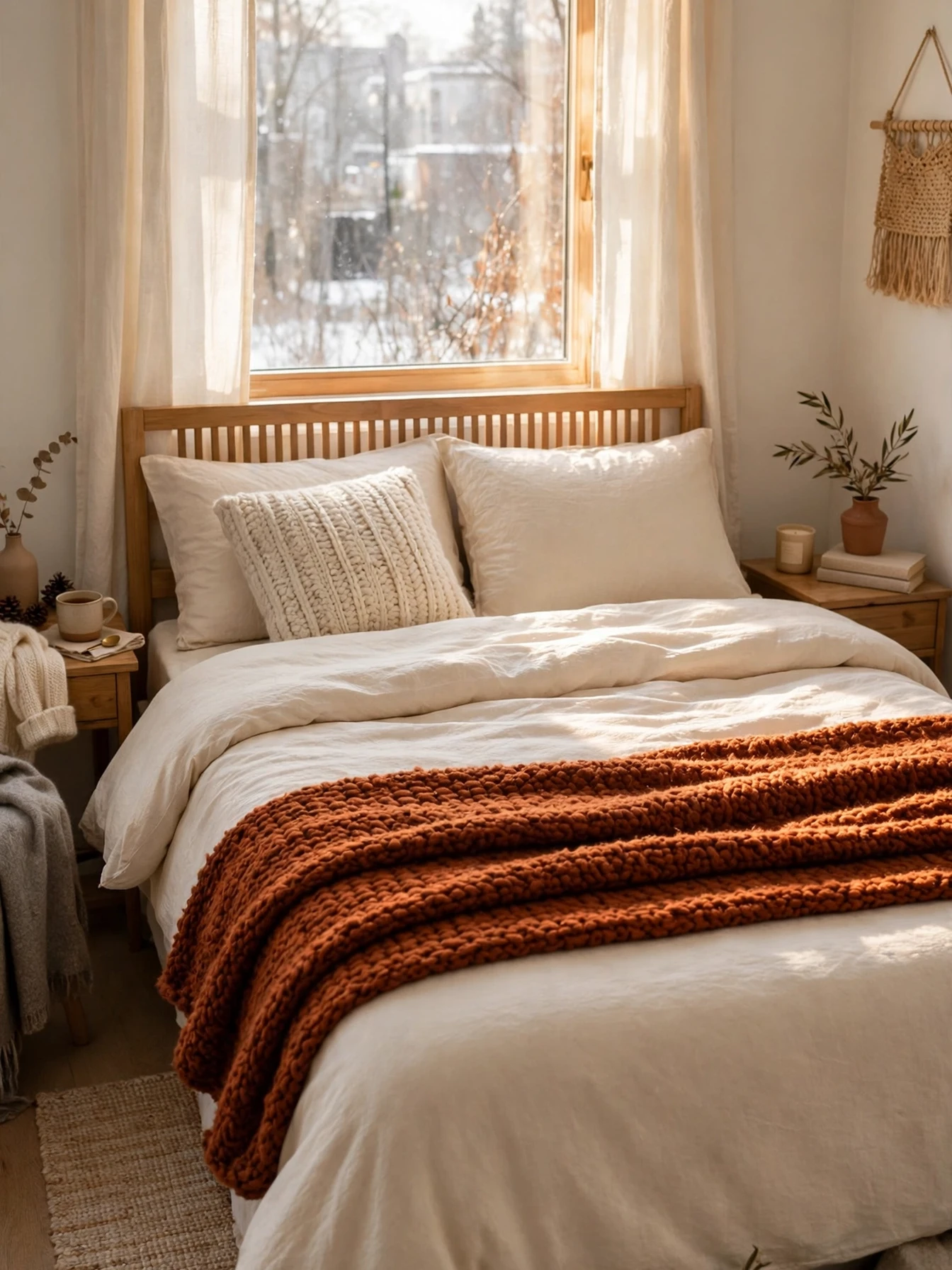
A chunky throw at the foot of the bed does two jobs at once: it adds a warm layer you can pull up without undoing the duvet, and it gives the bed a finished edge that makes a small room look made. Choose a knit with a visible texture, because a flat fleece throw reads as a blanket, while a chunky knit reads as decor.
Keep the size honest. A throw 130 cm wide and 180 cm long covers the foot of a double bed with enough drape at the sides to look intentional. Fold it in thirds lengthways, lay it across the foot, and let 15 cm hang over the edge. A throw that is too short looks like a scarf; one that is too long ends up on the floor by morning.
Use the throw to carry the color. A burnt orange or deep teal throw adds warmth against pale bedding, and it costs far less than a new duvet cover. A scheme built on one strong color, like this warm burnt orange bedroom, shows how a single throw can set the whole palette.
The common mistake is draping a throw diagonally across the bed for a photo and then leaving it there. It slides off at night, ends up on the floor, and gets walked on. Lay it straight across the foot, fold the top edge under, and it will stay put until you pull it up.
Warm Up the Bedside Lighting
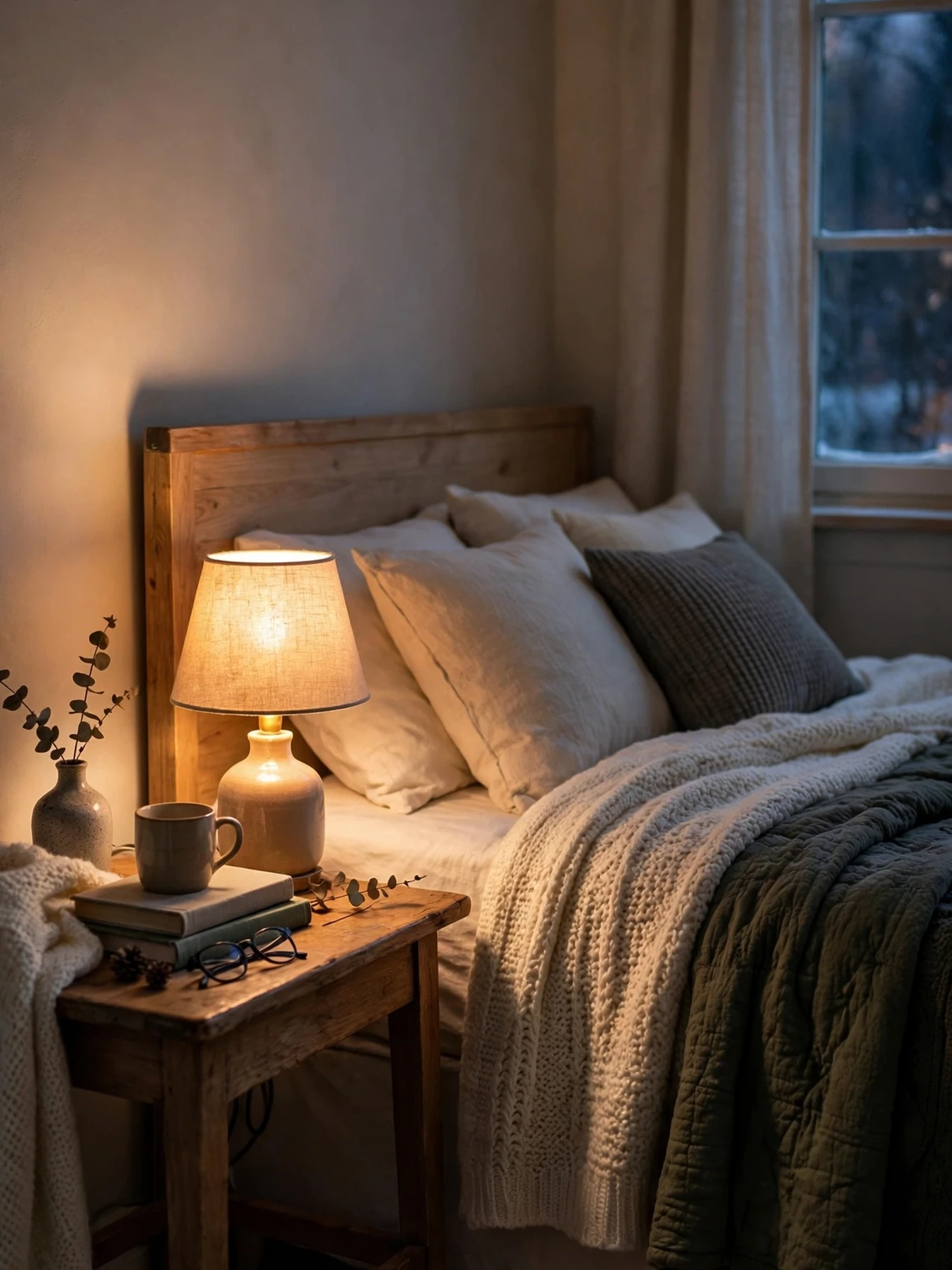
Light color changes how warm a bedroom feels more than any blanket. A cool white bulb at the bedside makes a small room feel like a corridor, while a warm 2700K bulb makes the same room feel like a cabin. In a small bedroom, the bedside lamp is the main light source after dark, so its color sets the mood of the whole room.
Keep the lamp low and close. A lamp with a shade 25 to 30 cm wide on a bedside table 45 to 60 cm high puts the light at eye level when you sit up in bed, which is warm without glare. For small rooms without a table, a clip-on lamp or a wall-mounted reading light works just as well. These small apartment floor lamp ideas show the same warm-bulb logic in a living room, and the same logic applies at the bedside. Good apartment living room lighting starts with warm bulbs and layered heights, and a bedroom needs the same two layers.
Choose a shade that glows. A linen or cotton shade in a warm cream lets the bulb’s color through, while a dark shade blocks it and leaves the room dim. If the lamp is the only light in the room, pick a shade that is open at the top so some light reaches the ceiling and the room does not feel like a cave.
The common mistake is buying a bright white bulb for reading and then wondering why the room feels cold. A 2700K bulb reads warm enough to read by, and a dimmer or a smart bulb lets you drop to 2200K for the last half hour before sleep. Keep one spare warm bulb in the drawer so a blown bulb does not force a cold white replacement.
Hang Blackout Thermal Curtains

Blackout thermal curtains are the single most effective renter fix for a cold bedroom window. The thermal lining blocks the cold air that falls off the glass at night, and the blackout layer keeps the room dark for sleep. In a small bedroom, they also soften the window wall, which is often the coldest surface in the room.
Hang them right. The rod should sit 10 to 15 cm above the window frame and extend 15 to 20 cm past each side, so the curtains cover the glass fully when closed. The hem should just brush the floor: too short and cold air pours in underneath; too long and the fabric pools and collects dust. Use a tension rod or command hooks if the landlord will not allow drilling.
Choose a color that warms the room. A deep rust, warm grey, or dark green curtain adds color at the window and makes the wall feel solid, while a pale curtain lets the cold glass show through. In a room under 10 sq m, match the curtain color to the throw or the cushions so the window reads as part of the scheme, not a separate block.
The common mistake is hanging curtains that are too narrow. A curtain that just covers the glass when closed leaves a gap at the edges, and the cold air comes straight through. Each panel should be at least 1.5 times the width of the window when flat, so the folds overlap and seal the edges.
Lay a Soft Rug Beside the Bed
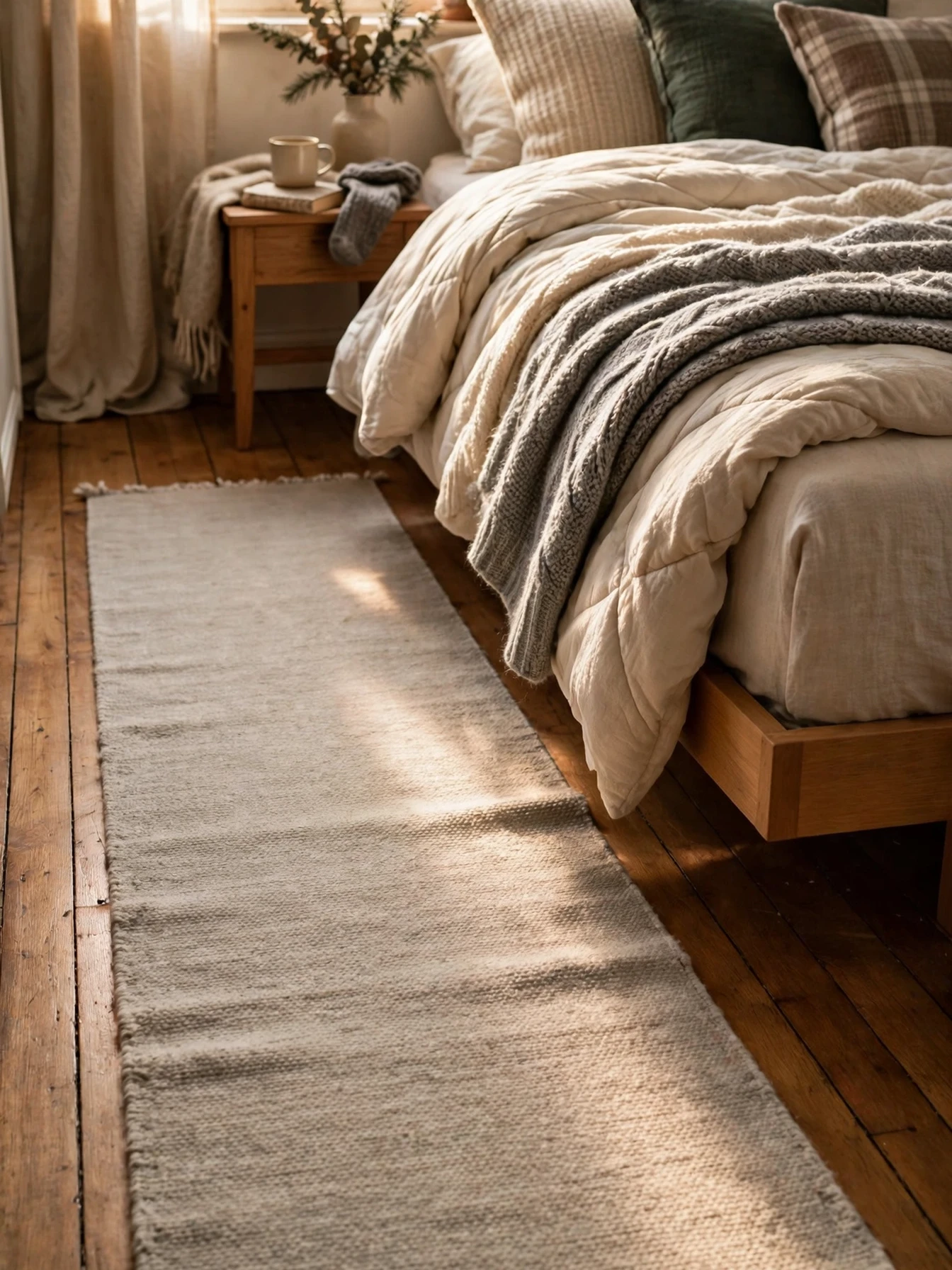
A rug beside the bed changes the first minute of the morning. In a small bedroom with a hard floor, the first step out of bed is onto cold boards or tile, and that shock sets the tone for the day. A soft rug in that exact spot makes the room feel warmer before the heating has even caught up.
Place it where your feet land. For a double bed, a rug 80 cm wide and 150 cm long beside the bed covers the step-out zone on one side; two runners, one each side, cover both. The rug should sit 5 cm from the bed frame so it does not bunch under the base, and it should be low pile so the door still opens over it.
Choose a texture you want to step on. A wool or high-pile rug feels warm underfoot, while a flatweave cotton rug is easier to wash but feels thinner. In a rental, a rug with a non-slip backing or a separate rug pad stops the rug creeping across the floor each night, which is the fastest way to ruin the effect.
The common mistake is buying a rug that is too small. A tiny rug beside the bed looks like a bath mat and leaves half your step on cold floor. Measure the step-out zone, then buy the rug that covers it fully, even if it means a runner instead of a square.
Build a Winter Cushion Mix

Cushions turn a made bed into a winter bed. A small bedroom needs only a few, because the bed is already the largest thing in the room, and too many cushions end up on the floor each night. Two sleeping pillows, two standard cushions, and one small lumbar is enough for a double bed: any more and the bed looks like a shop display.
Keep the count honest. In a room under 10 sq m, five cushions is the limit: two at the back, two in front, and one small one in the center. Store the spares in a basket or on a chair during the day, and the bed keeps its shape without a daily tidy-up. A cushion that lives on the floor is not decor, it is clutter.
Choose covers with zips. A cushion cover you can remove and wash is worth more than a pretty one you cannot clean, because bedroom cushions pick up dust and skin oils faster than living room ones. A velvet or chunky knit cover adds winter texture, while a smooth cotton cover is easier to wash and dries faster.
Match one cushion color to your throw so the bed reads as one scheme. A deep romantic scheme, like this romantic goth bedroom, shows how far one dark accent can go, and the same idea works in a small room with a single deep cushion.
The common mistake is buying a full matching set of cushions and throws. The bed looks like a hotel display, and the room loses its personality. Buy one or two cushions in a color you love, then add a throw in the same family, and let the bedding stay plain.
Set a Warm Neutral Color Palette
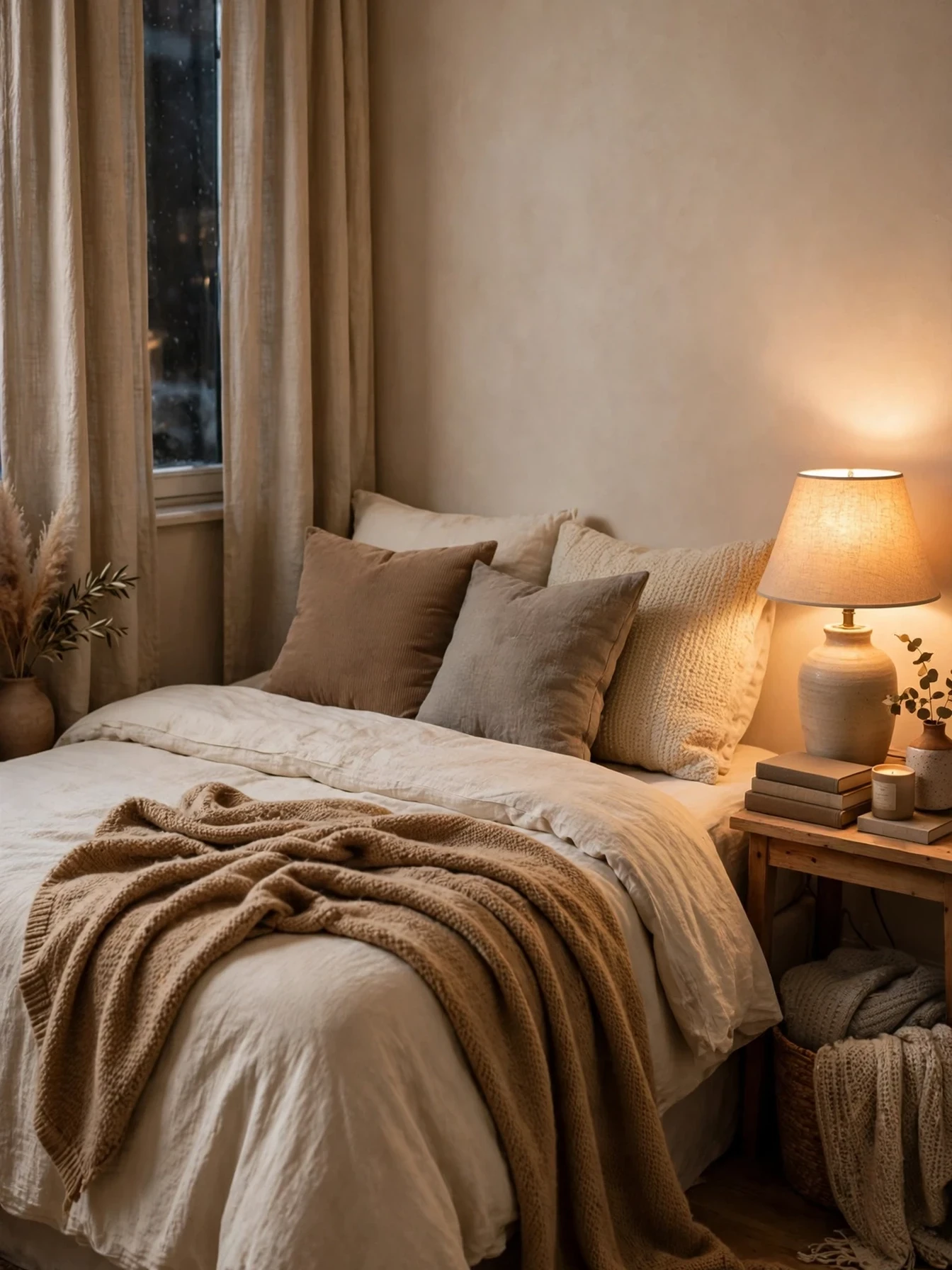
A warm neutral palette makes a small bedroom feel warmer without adding a single layer. Warm whites, soft oat, camel, and warm grey reflect the bedside light differently from cool whites, which bounce a blue tone around the room. In a small bedroom, the walls are close, so their undertone sets the temperature of the whole room.
Use the 70/20/10 rule. Let 70% of the room be the warm neutral base: walls, bedding, and the rug. Let 20% be a mid-tone, like a camel throw or warm grey curtains. Let the last 10% be the accent: one rust cushion, one deep green vase, or one framed print. The ratio keeps the room calm while giving the eye one warm place to land.
Test colors in the room’s own light. A paint or fabric swatch that looks warm in the shop can turn pink or grey under a 2700K bedside bulb. Hold the swatch against the wall at night with the lamp on, and check it again in morning light before you commit. A small room shows color mistakes faster than a large one, because the walls are always in view.
If you love strong color, let one accent do the work. Deep teal on a single cushion or a throw reads as rich against warm neutrals, as this teal bedroom shows, and coral tones do the same in a softer way, like these coral bedroom ideas.
The common mistake is chasing a full new color scheme instead of warming the one you have. A new duvet cover, new curtains, and new cushions all at once cost a fortune and often clash. Start with one warm accent, live with it for a week, then decide if the room needs more.
Keep a Small Bedside Hot Drink Tray

A small tray on the bedside table turns a cup of tea into a winter ritual. In a small bedroom, the tray also solves a practical problem: it keeps a mug from marking the table and gives the phone, the book, and the lip balm one place to live. A tray 30 cm by 20 cm fits most bedside tables without crowding the lamp.
Choose a tray with a lip. A flat board lets a mug slide off when you reach for it in the dark, while a tray with a 2 cm lip keeps everything in place. Wood, rattan, or a simple lacquered tray all work; the material matters less than the size, which should leave room for the lamp on one side and the tray on the other.
Keep it simple. A mug, a small jar of tea bags, and a spoon are enough. A tray loaded with a teapot, two mugs, and a candle looks good in a photo and gets knocked over in real life. In a small bedroom, the tray should hold what you use tonight, not what you might use one day.
The common mistake is turning the tray into a second bedside table. Books, chargers, glasses, and creams pile up, and the tray stops being a ritual and starts being clutter. Clear it each morning, and it stays a small winter luxury instead of a junk drawer. For a full festive version, these christmas apartment decor ideas show how a hot drink station can anchor a whole room.
Seal Window Drafts the Renter Way
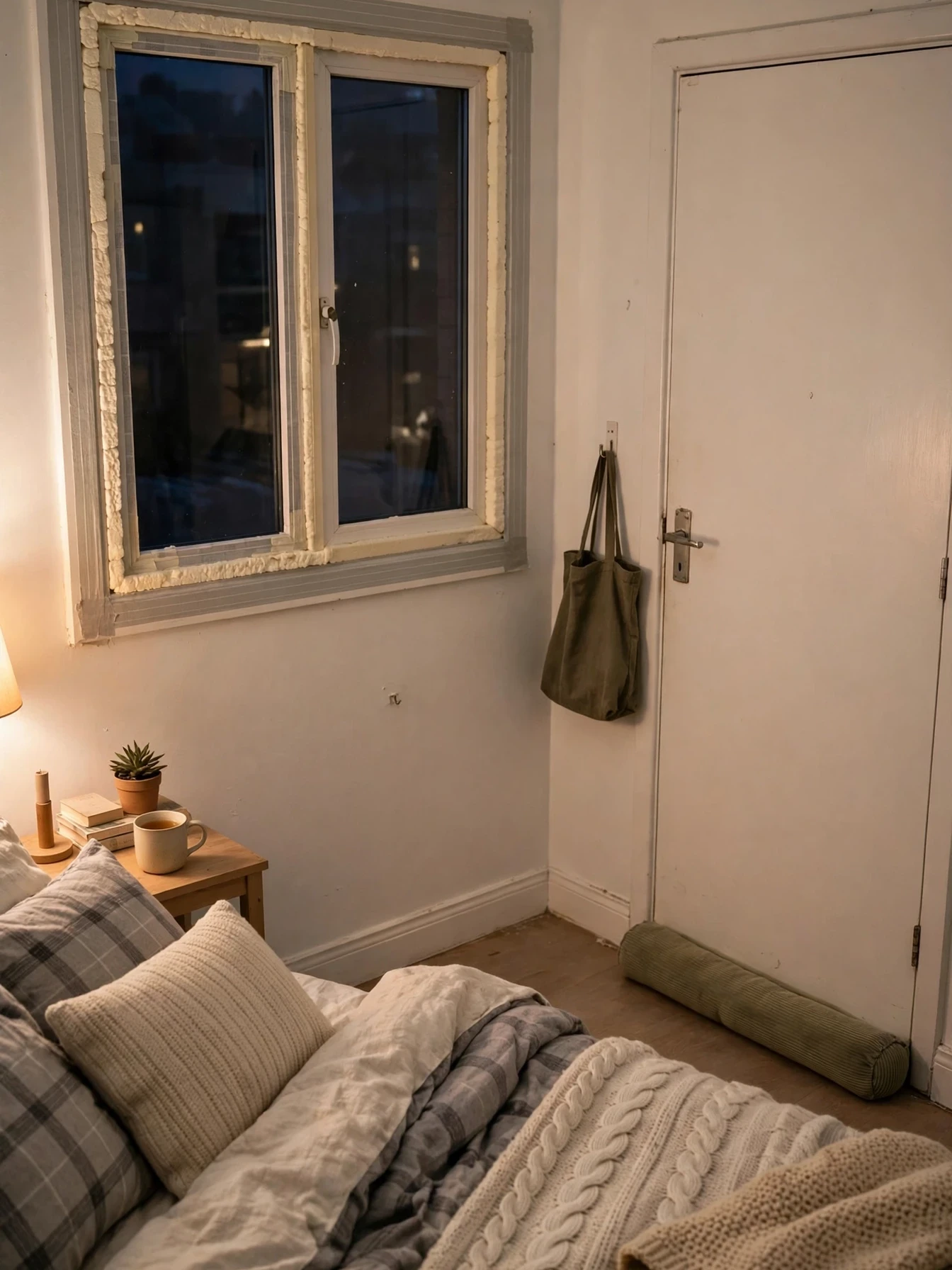
A drafty window can undo every warm layer in a small bedroom. Cold air falls off the glass and pools at the floor, so the bed feels cold even when the radiator is hot. In a rental, the fix has to be removable, because a landlord will not accept screws in the frame or sealant on the glass.
Start with the simplest fix. A strip of foam draught excluder around the opening sash seals the gap where the window meets the frame, and it peels off in spring without leaving a mark. A secondary glazing film, stretched over the frame with double-sided tape and shrunk with a hairdryer, adds a second layer of still air that cuts the cold noticeably.
Cover the glass at night. A thermal curtain or a simple roller blind closed at dusk traps the cold air between the glass and the fabric, so the room holds its heat overnight. Open it in the morning to let the sun in: a south-facing window can add a degree or two by midday, even in winter.
The common mistake is sealing the window so tightly that the room gets damp. A bedroom needs some air movement, or condensation builds on the cold glass and the walls go musty. Leave a small trickle vent open, or open the window for ten minutes each morning, and the room stays dry. For a tight space with the same problem from above, these space saving attic bedroom ideas show how small rooms handle air and insulation.
Swap in Winter Wall Art

Wall art is the fastest way to change a bedroom’s season. A summer print with pale blues and open skies makes a small room feel colder in winter, while a winter print with deep greens, warm browns, or a snowy landscape makes the same wall feel sheltered. In a small bedroom, one print above the bed sets the tone for the whole room.
Hang one piece, not a gallery. A single print 50 cm by 70 cm above the headboard fills the wall without crowding it, and it gives the bed a focal point that the bedding can echo. A gallery wall in a small bedroom competes with the bed and makes the room feel busy, especially when the prints are small and the frames are mixed.
Use renter friendly hanging. Command strips or picture hooks hold a framed print without holes, and they come off cleanly in spring. A print in a light frame is easier to hang than a heavy one, and a canvas print needs no frame at all, which saves both weight and cost.
The common mistake is hanging art too high. A print that floats near the ceiling leaves a gap above the bed that makes the room feel unfinished. Hang the center of the print at eye level when you sit up in bed, about 150 cm from the floor, and the wall reads as part of the bed, not a separate decoration.
Create a Reading Pillow Setup
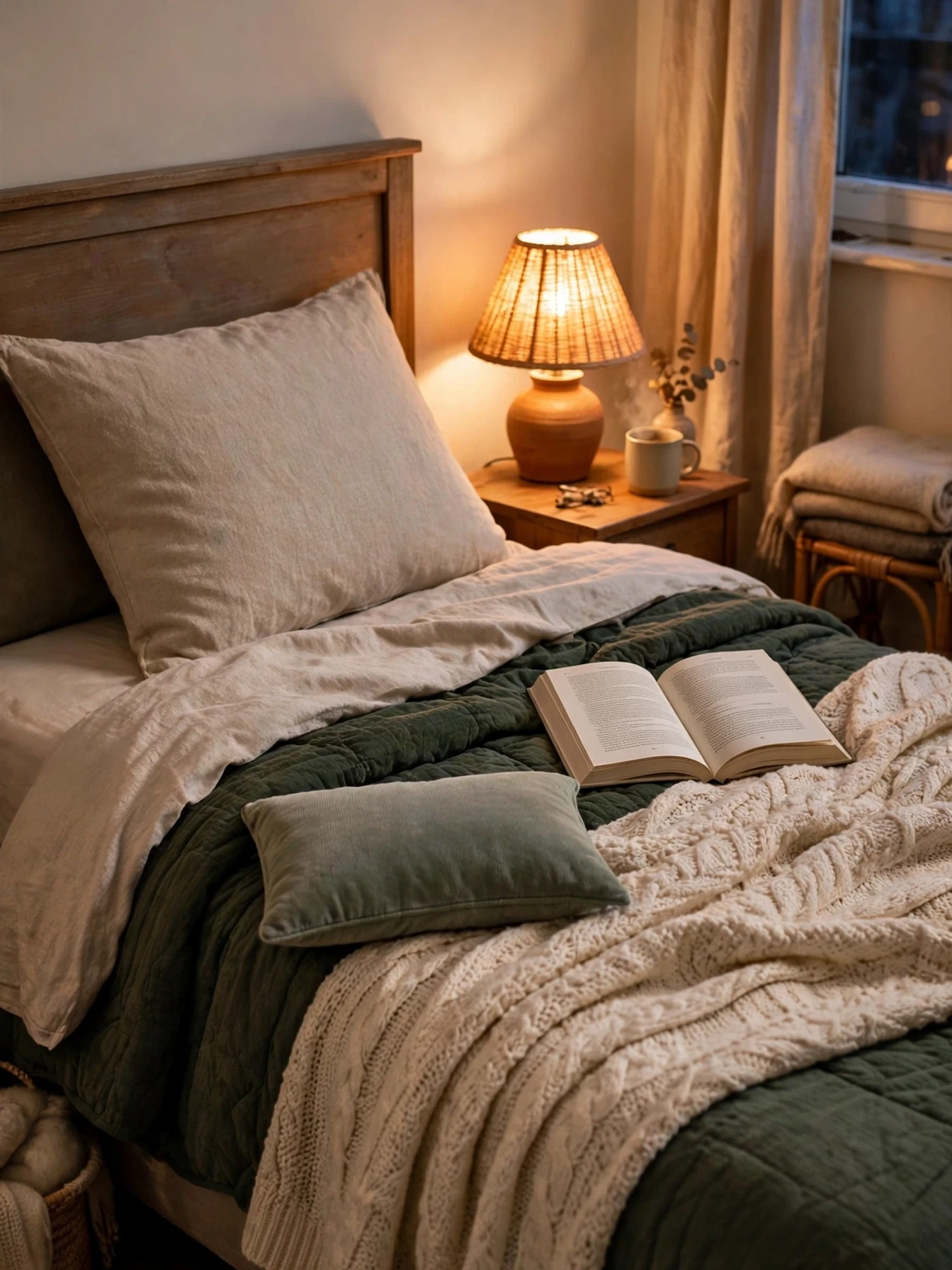
A reading pillow setup turns the bed into a chair for the last hour of the day. In a small bedroom, there is rarely room for an armchair, so the bed has to do both jobs: sleep at night and sit in the evening. A firm back pillow and a lumbar support make that possible without buying furniture.
Stack it right. Place a firm euro pillow upright against the headboard, then a standard pillow in front of it, then a small lumbar at the base. The stack should hold you at about 60 degrees, which is upright enough to read without sliding down. A wedge pillow does the same job in one piece and stores flat under the bed.
Keep it simple and soft. A pillow with a removable cover in a warm texture, like velvet or chunky knit, adds winter warmth to the setup, while a smooth cotton cover is easier to wash. In a small room, the reading pillows double as the daytime cushions, so choose covers that work for both.
Protect the wall behind the pillows. A small bedroom wall gets marked by pillows rubbing against it every evening, and a landlord will charge for scuffs. A piece of fabric hung behind the pillows, or a low headboard cushion, protects the paint and adds a soft layer that makes the setup look finished.
The common mistake is reading slumped flat against the mattress with one pillow behind your head. Your neck aches, the pillow slides, and you fall asleep with the light on. Build the stack properly, read for half an hour, then pull the pillows away and sleep flat.
Add Scent With a Diffuser, Safely
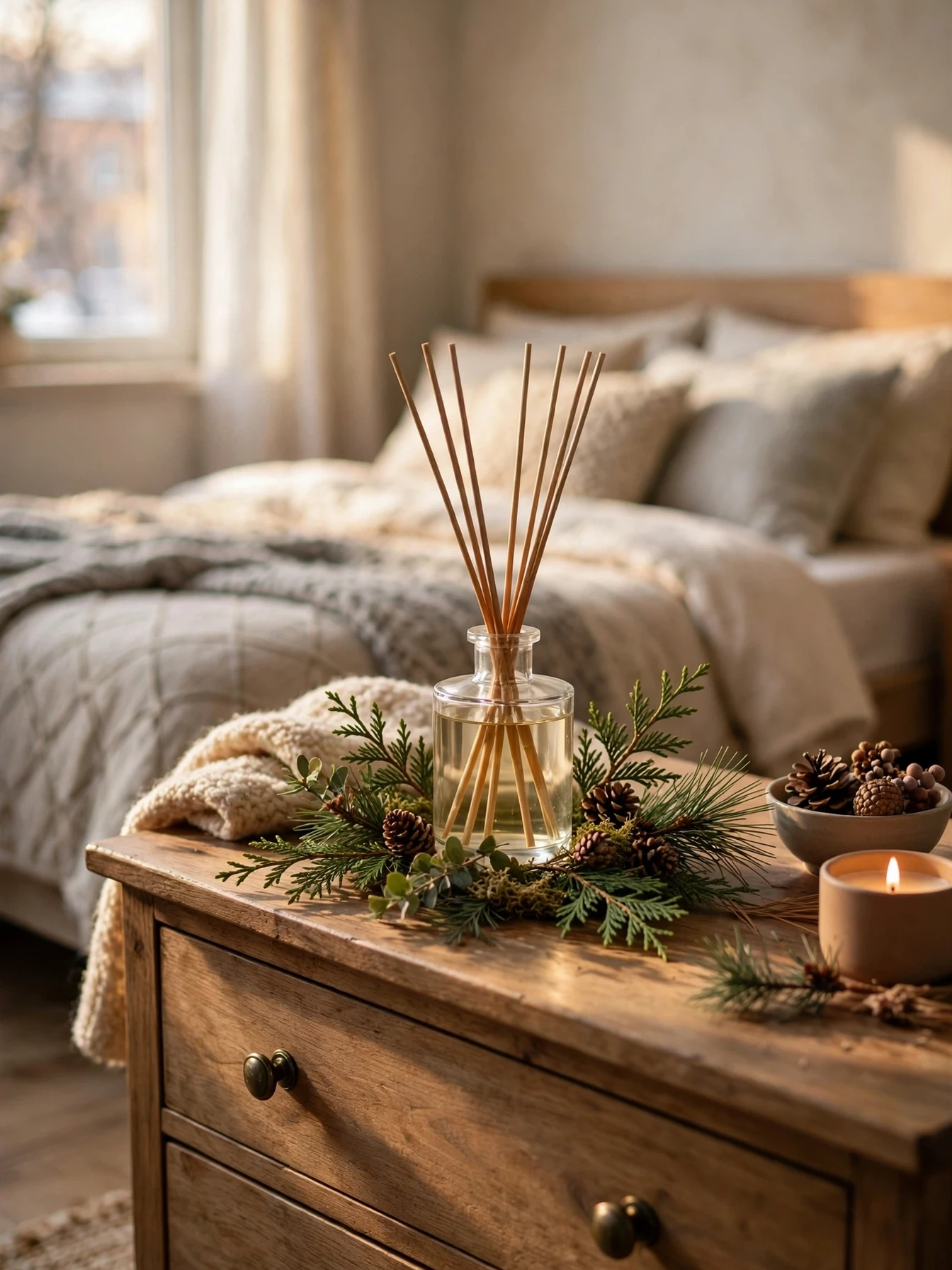
Scent makes a bedroom feel like winter before you see anything. A reed diffuser with cedar, pine, or cinnamon gives a small room a steady background scent that a candle cannot match, because it works all day without a flame. In a small bedroom, one diffuser is enough: two will overpower the room and give you a headache.
Place it where the air moves. A diffuser on the bedside table or a shelf near the door catches the air that flows through the room, while one tucked behind the bed does nothing. Keep it away from the pillow, because a strong scent right beside your head makes sleep harder, not easier.
Choose a scent that suits the room. A woody scent like cedar or sandalwood feels warm and calm, while a citrus scent feels clean but colder. In a small bedroom, a reed diffuser with five or six reeds gives a gentle scent; flip the reeds once a week to refresh it, and replace the oil every two months.
The common mistake is using a plug-in air freshener or a strong spray to make the room smell like winter. The scent is too strong, it fades in an hour, and the chemicals linger in the bedding. A reed diffuser or a few drops of oil on a cotton ball in a drawer gives a soft scent that lasts without chemicals in the air you breathe all night.
Store Summer Bedding in the Space You Have
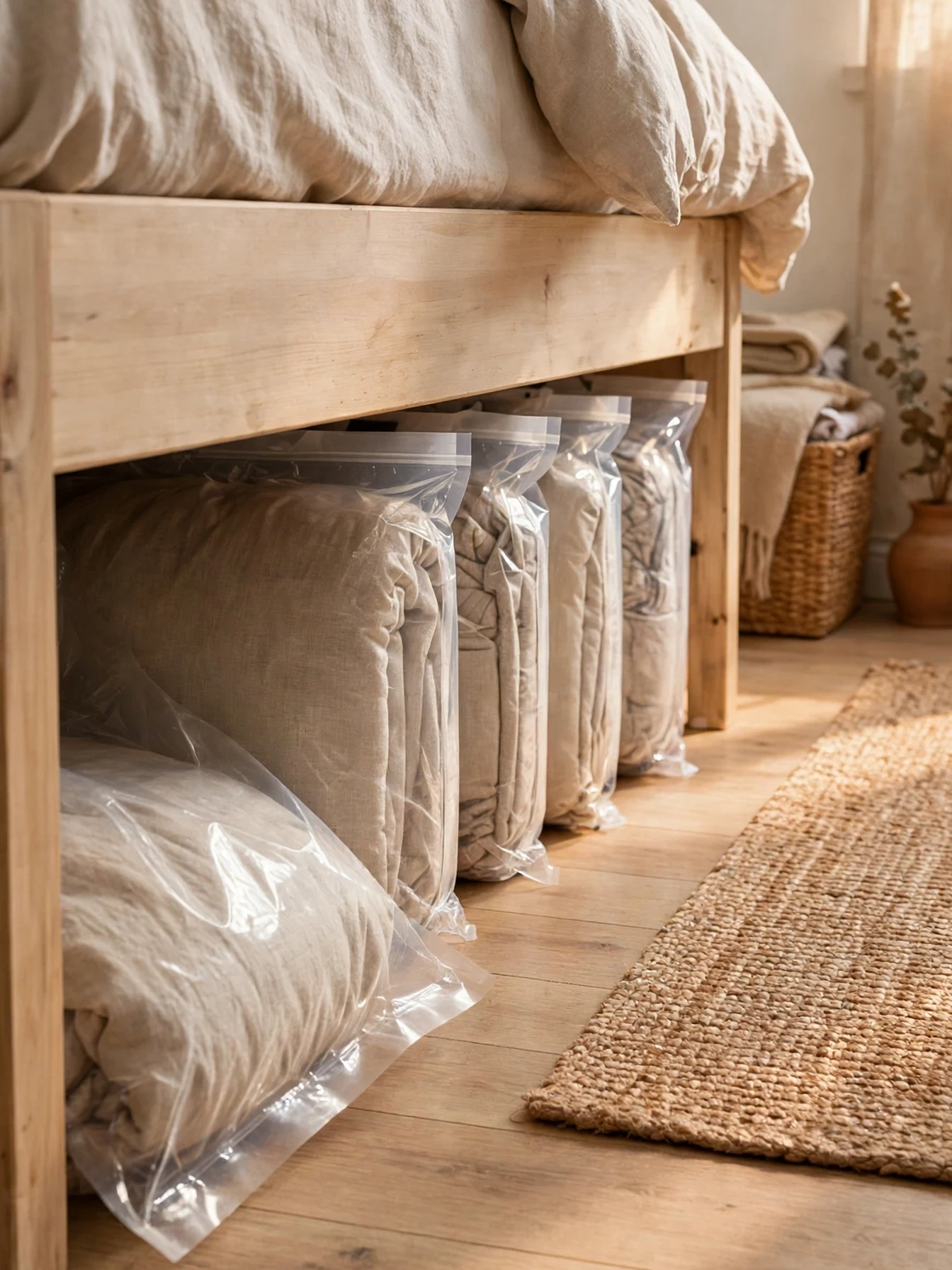
Summer bedding has to go somewhere in winter, and a small bedroom has no spare cupboard. A light duvet, a cotton blanket, and a set of percale sheets take up more space than you think, and if they live on the bed in a pile, the room looks like a laundry. Storage has to be part of the winter plan, not an afterthought.
Use the space you already have. Vacuum bags under the bed compress a summer duvet to a third of its size, and a storage box on top of the wardrobe holds sheets and pillowcases out of sight. A basket at the foot of the bed holds the summer throw and the spare cushions, and it doubles as a side table for a book or a glass of water.
Keep it dry and labeled. A damp summer duvet stored under the bed will smell musty by spring, so dry it fully before you pack it away, and add a lavender sachet to keep it fresh. For students and sharers with even less space, these small college bedroom storage ideas show how a tiny room can hold two seasons of bedding.
The common mistake is stuffing summer bedding into a bag and forgetting it. The duvet comes out creased and damp, the sheets smell, and you end up buying a new set in spring. Pack it clean, pack it dry, and label the bag so you can find it without opening every box in the room.
Common Winter Bedroom Mistakes to Avoid
Piling On Layers Without Order
More layers do not mean more warmth. A bed with five layers in the wrong order slides, overheats, and looks messy by morning. Start with the sheet, add one light blanket, then the duvet, and stop. If you are still cold, the problem is the mattress or the window, not the number of layers.
Heating the Room but Not the Bed
A warm room with a cold bed still sleeps badly. The heating warms the air, but the mattress and the sheets stay cold until your body warms them. A hot water bottle, an electric blanket on a timer, or flannel sheets warm the bed itself, and that is what your body feels all night.
Blocking the Radiator With Furniture
A bed pushed against the radiator blocks the heat from reaching the rest of the room, and the wall behind the bed gets hot while the window side stays cold. Leave at least 15 cm between the bed and the radiator, and the heat can circulate. In a small room, that gap is the difference between a warm room and a warm wall.
Choosing Looks Over Warmth
A beautiful bedroom that is cold is not a success. A linen duvet cover looks lovely in a photo and feels cold in January, while a brushed cotton cover looks plain and sleeps warm. Choose the warm option first, then make it look good with a throw and a cushion, not the other way around.
Forgetting Ventilation
A sealed bedroom gets damp. Two people breathing all night in a small room adds a litre of moisture to the air, and a cold window turns it into condensation. Open the window for ten minutes each morning, even in winter, and the room stays dry. A damp room feels colder than a dry one, whatever the heating says.
Budget-Friendly Winter Bedroom Tips
Start with the sheet. A single good flannel fitted sheet costs less than a new duvet and changes the first ten minutes in bed more than any other purchase. Buy the sheet first, live with it for a week, and you may find you do not need a new duvet at all.
Use what you have. A spare blanket folded at the foot of the bed works as a throw, and a cushion from the living room works as a lumbar. A winter bedroom does not need a shopping list: it needs the warm things you already own moved to the places that matter.
Shop second hand for texture. A chunky knit throw, a wool rug, or a velvet cushion cover costs a fraction of new in a charity shop, and the texture matters more than the label. Wash everything before you use it, and the room gets the winter feel without the winter bill.
Fix the draft before you buy decor. A £5 roll of foam draught excluder saves more heat than a £50 throw, and it works every night. Spend the first £10 on sealing the window and the door, then spend the rest on the layers you can see.
Swap, do not buy. A winter print from the living room, a dark cushion from the spare room, or a candle from the kitchen can change a bedroom’s season for free. Move things between rooms first, and only buy the one piece the room still needs.
A One-Day Winter Bedroom Makeover Plan
Morning: strip the bed, wash the summer sheets, and air the mattress. While the sheets wash, vacuum under the bed and check the window for drafts. Measure the drop for the bedding and the width for the rug so you buy the right sizes first time.
Midday: put the winter sheets on, layer the bedding in order, and add the throw at the foot. Hang the thermal curtains, lay the rug beside the bed, and set the diffuser on the bedside table. The room should look different by lunchtime, even before the cushions go on.
Afternoon: build the cushion mix, set the reading pillows, and swap the wall art. Put the summer bedding into vacuum bags and store them under the bed or on top of the wardrobe. Clear the bedside table, set the hot drink tray, and put the phone charger where you can reach it without getting out of bed.
Evening: switch the bedside bulb to 2700K, light the room with the lamp only, and test the bed. Climb in, pull the throw up, and check the light, the draft, and the scent. If something feels cold or dark, fix it tonight while the shops are still open, not next weekend.
FAQ
How can I make a small bedroom feel warmer without turning the heating up?
Layer the bed, seal the window, and add warm light. A flannel sheet, a thermal curtain, and a 2700K bulb change the room more than a degree on the thermostat, and they cost less to run. A rug beside the bed and a throw at the foot add warmth you feel the moment you touch them.
What tog duvet is best for an apartment bedroom in winter?
A 10.5 tog suits a room that holds heat overnight, while a 13.5 tog suits a room with a cold outside wall or a drafty window. Test with a light blanket first: if the blanket nights sleep better, you need about 3 tog more; if you wake up sweating, you need about 3 tog less.
Are flannel sheets worth it in a small rental?
Yes, if you buy one good set. Flannel feels warm the second you climb in, and it packs away small in spring. Buy a fitted sheet that fits the mattress depth including any topper, wash it gently, and skip fabric softener, which dulls the brushed surface.
How do renters block window drafts without damage?
Use foam draught excluder around the opening sash and secondary glazing film over the frame. Both peel off in spring without leaving a mark. A thermal curtain closed at night adds a second layer, and a trickle vent or a ten-minute morning airing stops the room getting damp.
How many cushions and throws does a small bed actually need?
Two sleeping pillows, two standard cushions, and one small lumbar is enough for a double bed, plus one chunky throw at the foot. Any more and the cushions end up on the floor each night. In a room under 10 sq m, five cushions is the limit.
When should I swap back to summer bedding?
When the room holds 18°C overnight without heating. For most apartments, that is late spring, when the outside wall stops feeling cold to the touch. Swap the duvet first, then the sheets, and keep the throw at the foot for the cool nights that follow.
Conclusion
A warm winter bedroom is not about buying more, it is about layering in the right order, sealing the gaps, and letting warm light and soft texture do the work. In a small apartment, every change has to earn its space, and the fifteen ideas above do: they start at the bed, move outward to the walls and windows, and end with storage that keeps the room tidy all winter.
Pick the first five, live with them for a week, and the room will already sleep better. Add the rest one at a time, and by the time the coldest nights arrive, the smallest bedroom in the flat will be the warmest room in it. That is the whole point: a small room, done right, holds heat better than a big one.