
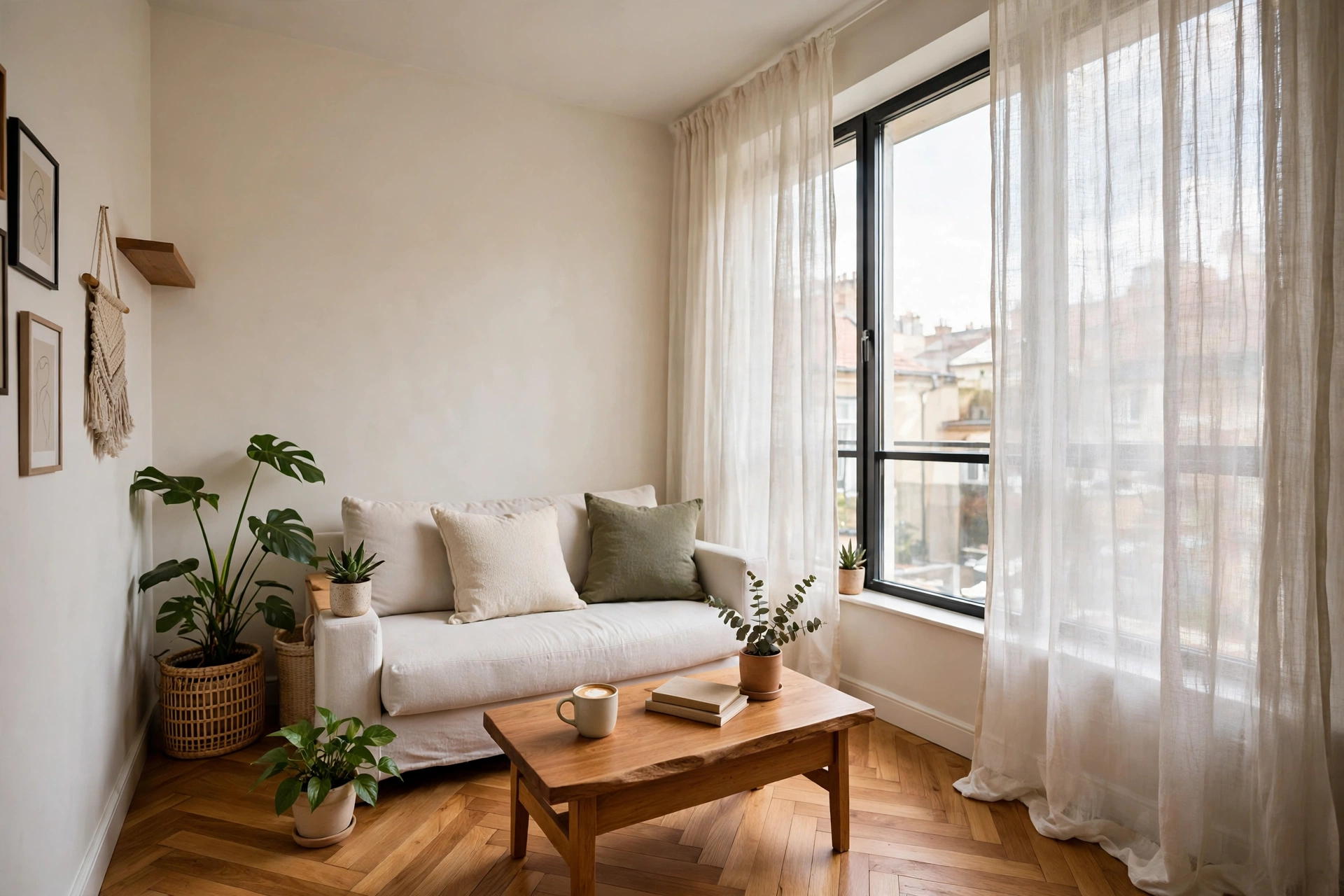

Curtains do more work per metre than almost anything else in a small apartment. They soften hard window frames, stretch walls upward, filter harsh light, hide a dull view, and they can even divide one room into two, all without touching the floor plan.
Most small rooms wear the curtains they were given: short, narrow panels hung just above the frame on a rod that is too small. The ideas in this list fix the proportions first, because in a compact room a curtain hung high and wide changes the architecture, not just the decoration.
These 15 curtain ideas are planned for small apartments and renters. Each one explains the effect, how to get the sizing right, and the mistake that most often makes curtains shrink a room instead of opening it up.
What Curtains Make a Small Apartment Look Bigger?
Long, wide, light colored curtains hung close to the ceiling make a small apartment look bigger. The panel should start as high as the rod or track allows, fall to the floor, and stack mostly outside the window glass when open, so the window reads at its full size and the ceiling reads higher.
Sheers and linen look fabrics in warm white or pale natural tones keep daylight flowing while they soften the room. If the room faces strong sun, layer a sheer for the day with a heavier panel for the evening, rather than choosing one thick curtain that darkens everything.
Fit matters more than fabric price. A cheap curtain at the right length and width beats an expensive one that stops at the sill, a point our scandinavian apartment decor guide also makes about light, pale rooms in general.
Let Sheer Linen Panels Pool Softly on the Floor
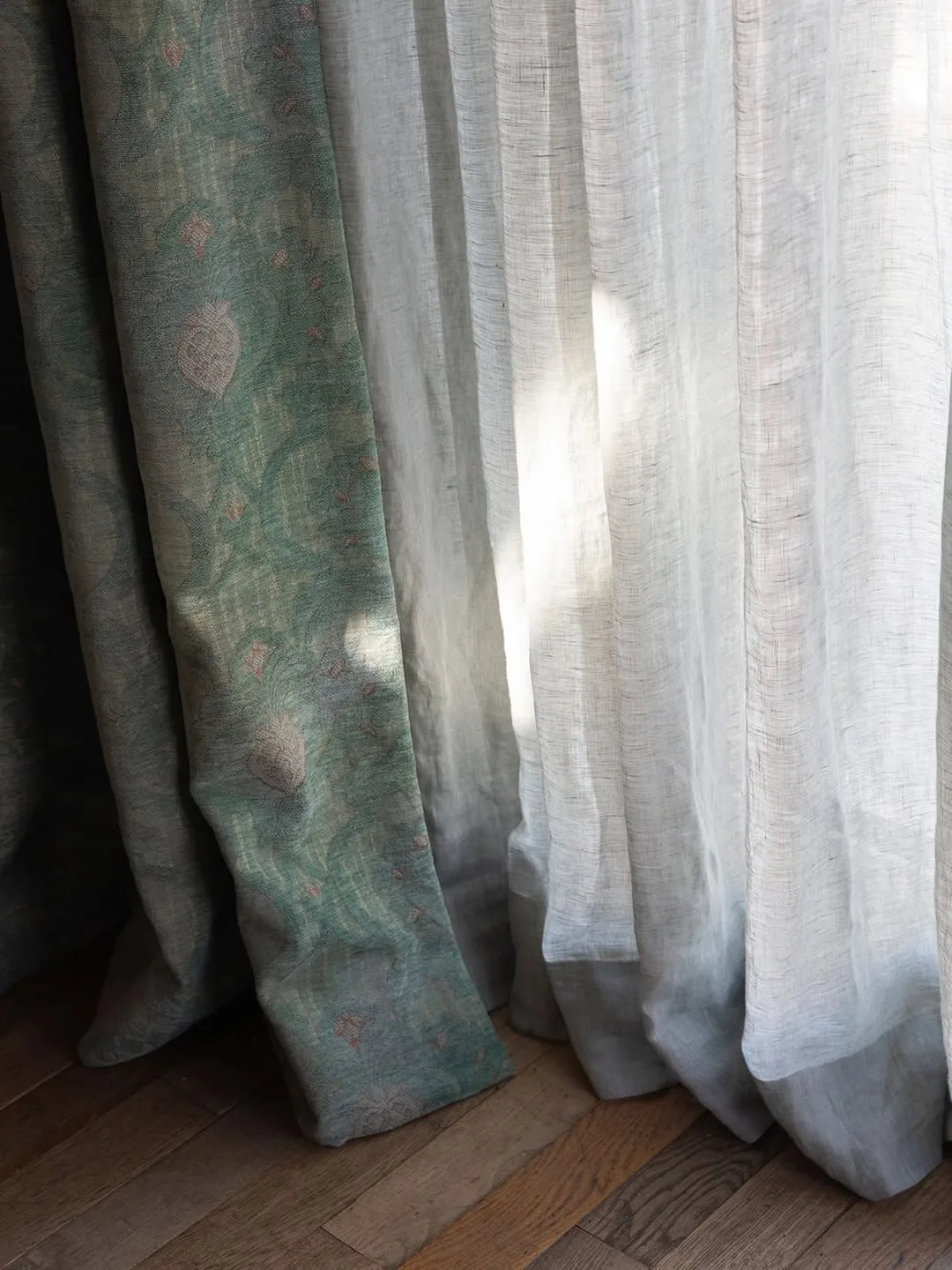
A sheer that falls a few centimetres long and rests gently on the floor, as in the close view in the photo, gives a small room an instant feeling of ease. The soft break at the hem reads as relaxed luxury, and linen look fabrics hold the look without linen prices or linen creasing.
Pooling suits living rooms and bedrooms where the curtain rarely moves. In busy doorways and kitchens, keep hems a centimetre above the floor instead, because a trailing hem in a walkway collects dust and catches feet.
Order panels with extra width so the sheer still folds softly when closed. A flat, stretched sheer looks like a bed sheet; the same fabric at twice the window width falls in the gentle waves that make the photo work.
Wash sheers on a gentle cycle and hang them back damp. The weight of the water pulls out most creases as they dry, and the panels keep their soft fall without ironing.
The common mistake is a sheer that ends mid wall. A floating hem cuts the wall in two and shrinks the room. If a panel cannot reach the floor, it is better as a cafe curtain at half height than as a short full length try.
Hang Panels High Above Tall Windows
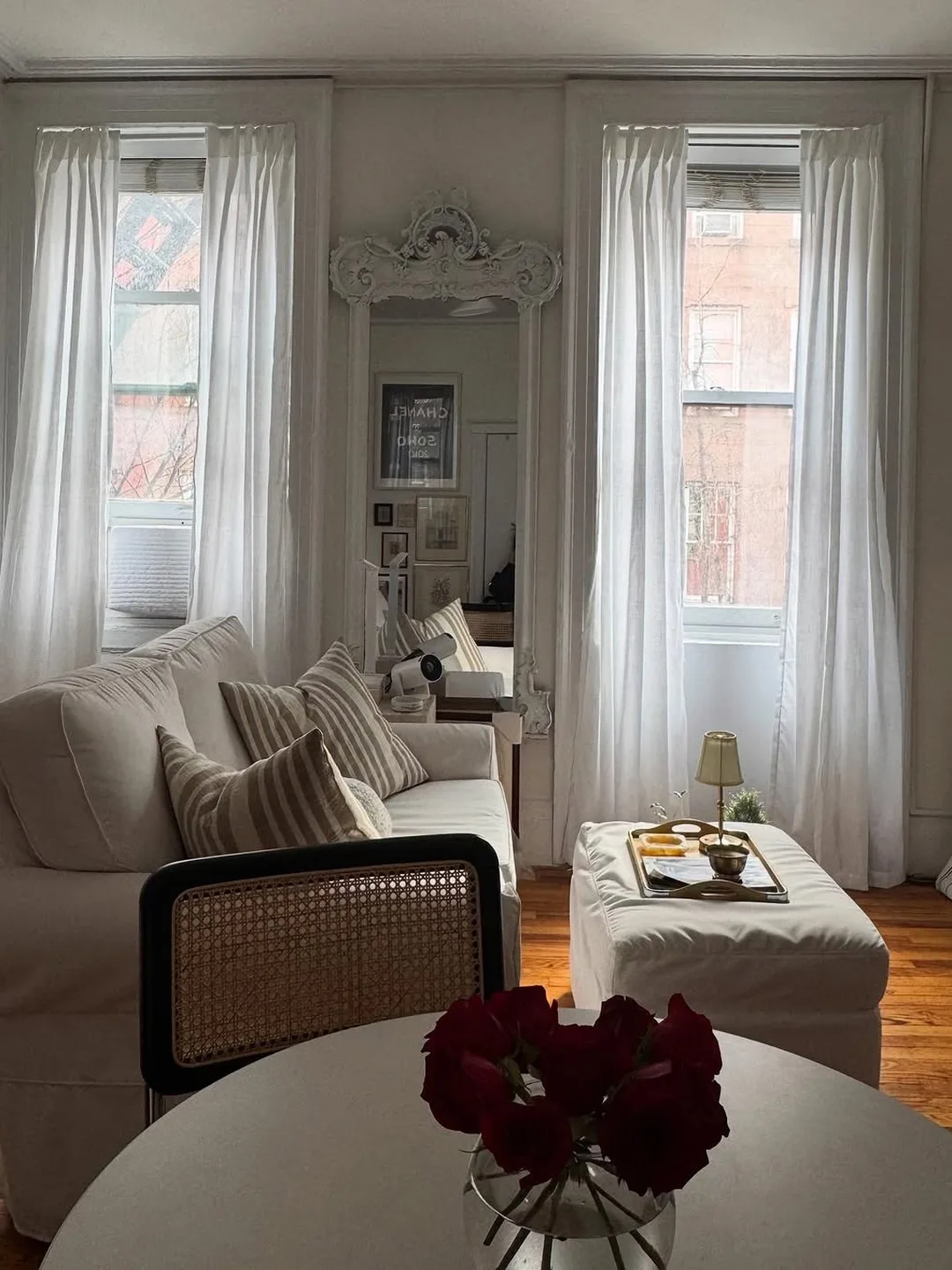
Tall windows are a gift in a small apartment, and they deserve curtains that honour the full height. The living room in the photo runs sheer panels from above the frames to the floor on both windows, and the vertical lines make the whole room feel grander and calmer.
Fit the rod or track 10 to 20 cm above the frame, or at the ceiling if the room allows it. Every centimetre of height you add above the glass is a centimetre the ceiling seems to gain.
Keep the two windows dressed identically. Matching panels, matching heights and matching tieback positions turn separate windows into one composed wall, which is why the room in the photo feels designed rather than decorated.
The common mistake is hanging each window at a slightly different height because the rods were fitted on different days. Measure from the ceiling down, not from the frame up, so every panel in the room shares one line.
Pick Warm Gold and Olive Tones for a Cosy Glow
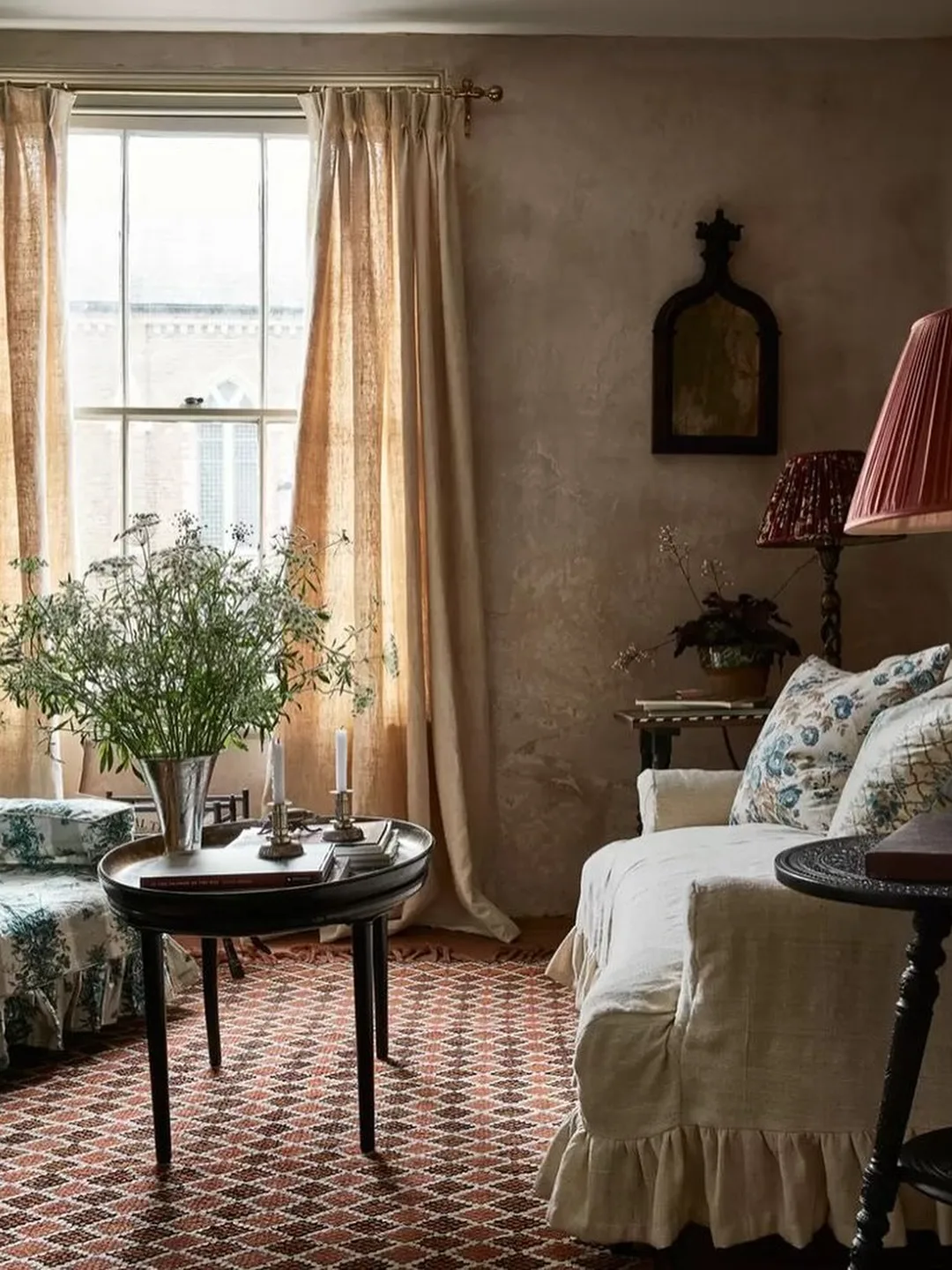
Not every small room wants white curtains. The warm room in the photo hangs deep gold panels that echo the patterned rug and the lamplight, and the curtains become part of the room’s glow rather than a pale frame around it.
Warm tones work when the rest of the room already holds warmth: wood furniture, a patterned rug, brass or amber light. Pull the curtain color from something already in the room and the panels will look chosen, not added.
Heavier fabrics suit this look because they hold deep color evenly and block evening light. Line them if the window faces morning sun, because strong light fades gold and olive faster than it fades white.
The common mistake is warm curtains in a cold light room. North facing rooms with blue daylight can make gold fabric look muddy, so test a cushion cover in the color at the window before ordering panels.
Gold and olive also forgive the pale, washed out walls many rentals come with. Where white curtains would disappear into a white wall, a warm panel gives the window a frame and the room a centre, and guests read it as confidence rather than size.
Run One Sheer Wall Across a Living and Dining Space
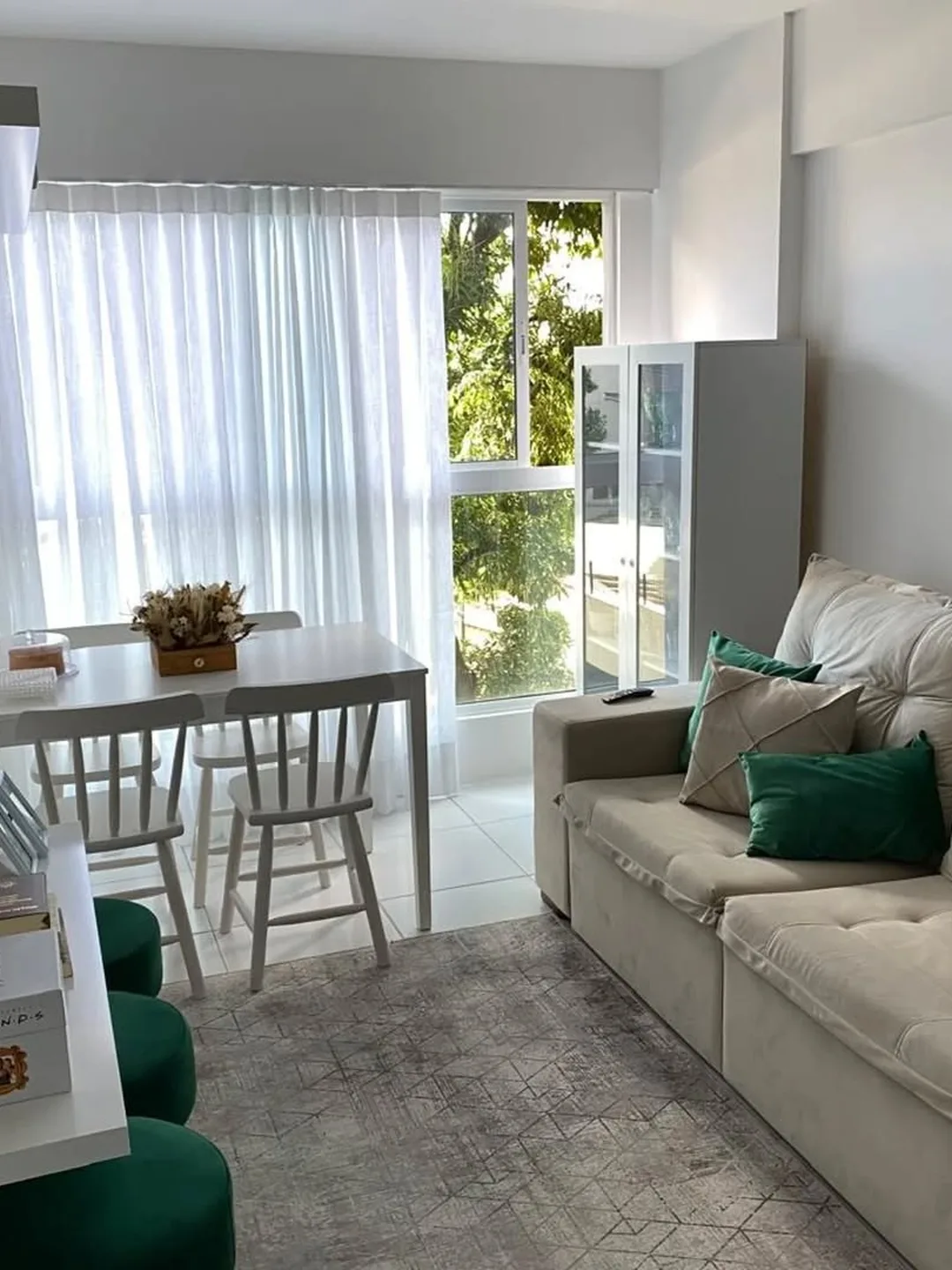
Open plan apartments often have windows along one whole wall, and one continuous run of sheers treats them as a single feature. The apartment in the photo runs sheers across the living and dining zones, and the unbroken line makes the shared room feel wider and more peaceful.
Use a ceiling track or a long rod with centre supports so the run has no visual breaks. Panels should be identical in fabric, length and fullness from end to end.
A sheer wall also solves the mismatched window problem. Different sized windows behind one fabric line read as one architectural gesture, and the furniture zones in front gain a calm backdrop.
Keep furniture a few centimetres off the sheer line so panels hang straight and air moves behind them. Radiators under windows need the same respect: choose a fabric that tolerates warmth and never let panels rest on a hot surface.
The common mistake is stopping the run at the edge of one zone. A sheer wall works because it refuses to stop. Carry it past the dining area to the wall’s end and the whole room benefits.
Wrap a Bay Window in One Continuous Sheer
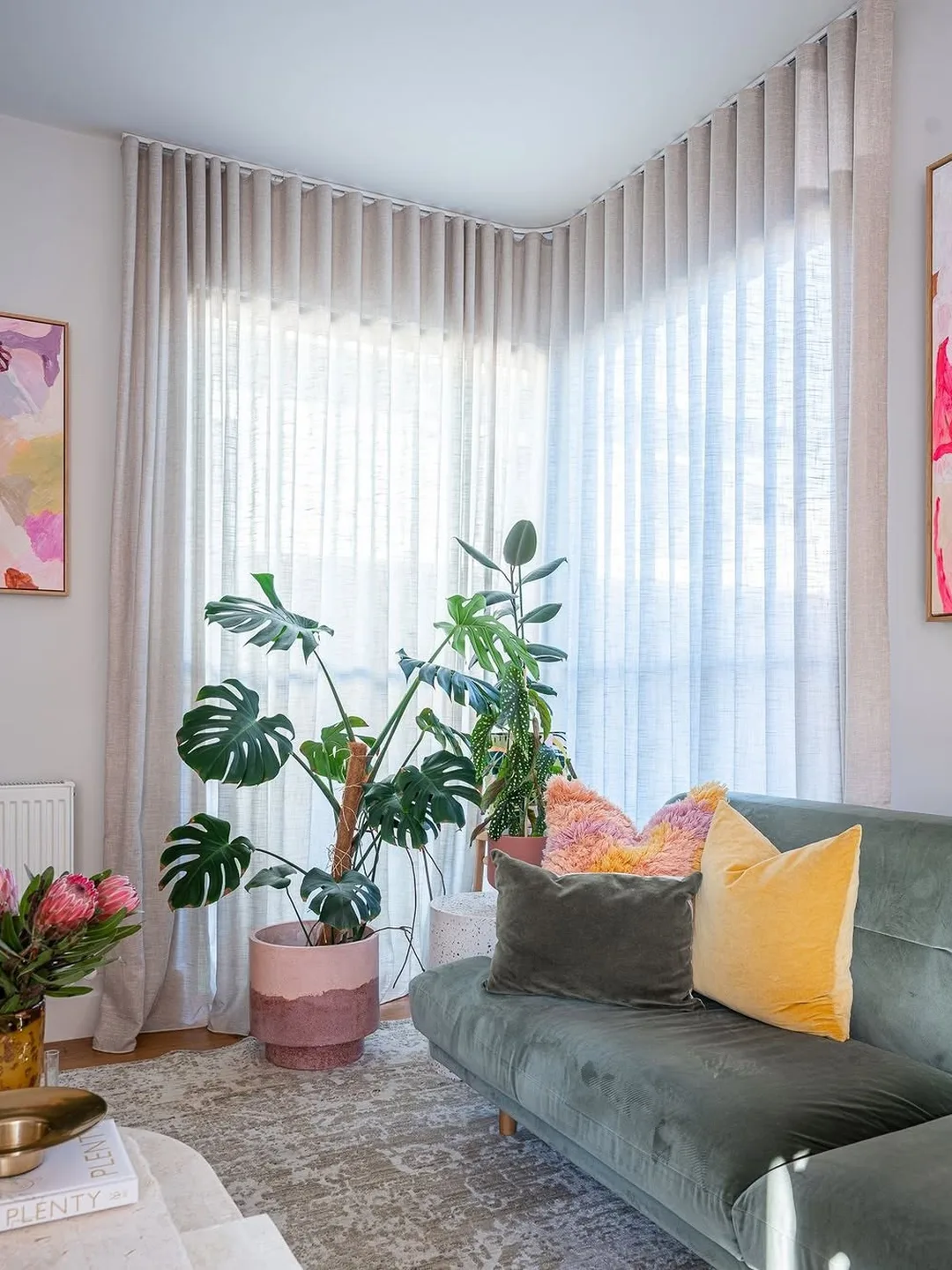
Bay windows confuse many curtain plans, and the simple answer is one sheer that follows the bay. The room in the photo bends a soft sheer around the whole bay above the green sofa, and the curve of fabric turns an awkward shape into the room’s best feature.
Flexible track or a bay rod with corner joints carries the fabric around the angles. Fit it once, carefully, and the panels glide around the bay in one movement every day after.
A bay sheer gives privacy without losing the light that made the bay valuable. In street facing apartments this is often the whole point: the room stays bright, and the window seats stay usable at every hour.
The common mistake is three separate short curtains, one per facet. The breaks chop the bay into pieces and waste its sweep. One continuous sheer keeps the architecture whole.
Layer Heavy Drapes Over Sheers for Winter Nights
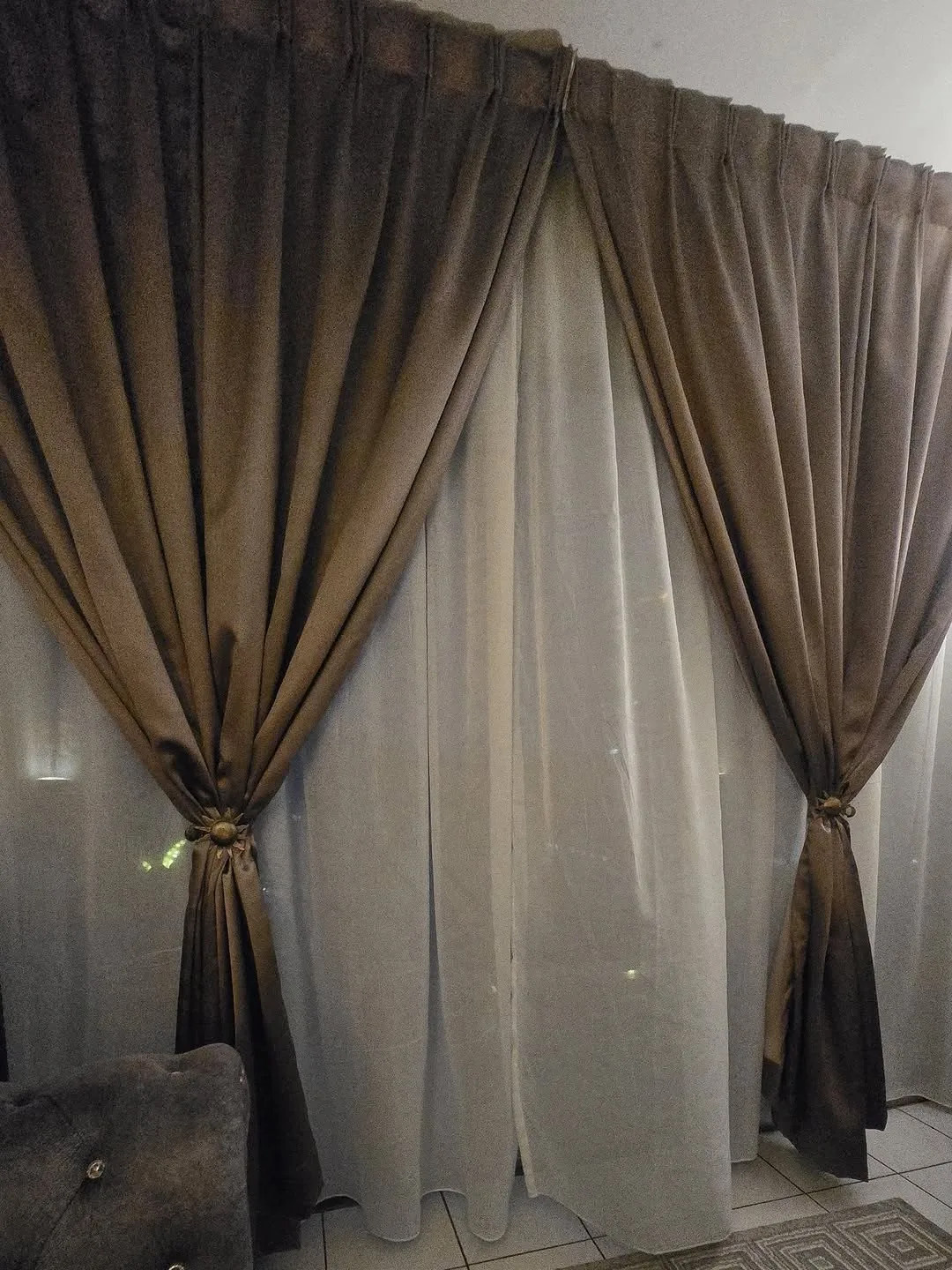
Layering is the curtain plan that works in every season. The window in the photo pairs a soft sheer for daylight with heavy drapes tied back at the sides, ready to close over the sheer when the evening turns cold and dark.
A double rod or a rod plus a track holds the two layers. The sheer lives on the inner line and rarely moves; the drapes travel on the outer line and do the insulating and the dressing.
Heavy drapes genuinely warm a small room. A lined panel closed over a single glazed window cuts the cold stripe that runs down the glass on winter nights, and the room’s heating works less hard for the same comfort.
Tiebacks keep daytime layers tidy and show off the pairing. Choose simple fabric or rope ties in a tone from the drapes, and fix the hooks at the same height on both sides.
The common mistake is drapes so heavy that the rod bows. Small windows need less fabric than shops suggest: one and a half times the width is plenty for a lined drape that still folds well.
Use a Curtain as a Room Divider in a Studio
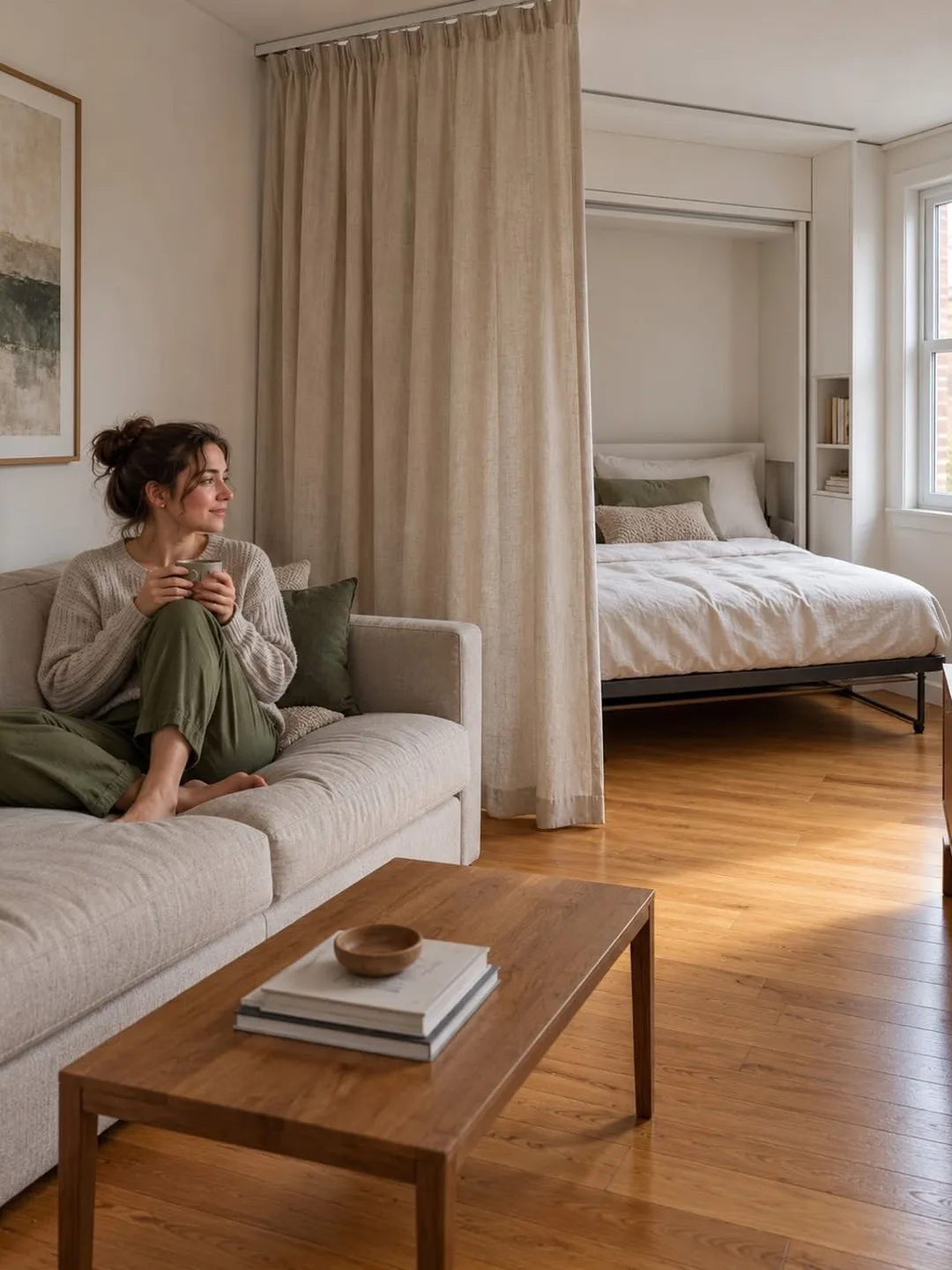
A curtain can be a wall that behaves politely. The studio in the photo hangs a full curtain between the living area and the bed, and closing it at night turns one room into two without a single screw in a stud wall.
A ceiling track makes the divider feel built in, and it lets the curtain stack neatly to one side during the day. Choose a fabric with body on both sides, because a divider is seen from two rooms, and line it if you want real visual privacy.
Dividers also hide what a studio cannot store elsewhere. A curtain across an alcove hides shelves, a laundry rack or a work desk, and the visible room stays calm even when the hidden one is busy.
Sound privacy is the honest limit. A curtain stops sight, not noise, so it suits couples and solo dwellers better than shift workers sharing opposite schedules.
The common mistake is a divider in a flimsy fabric that billows with every draft. A medium weight cotton or linen blend hangs straight, moves less, and reads as architecture instead of laundry.
Pair Slim Pleated Panels With a Simple Roller Blind
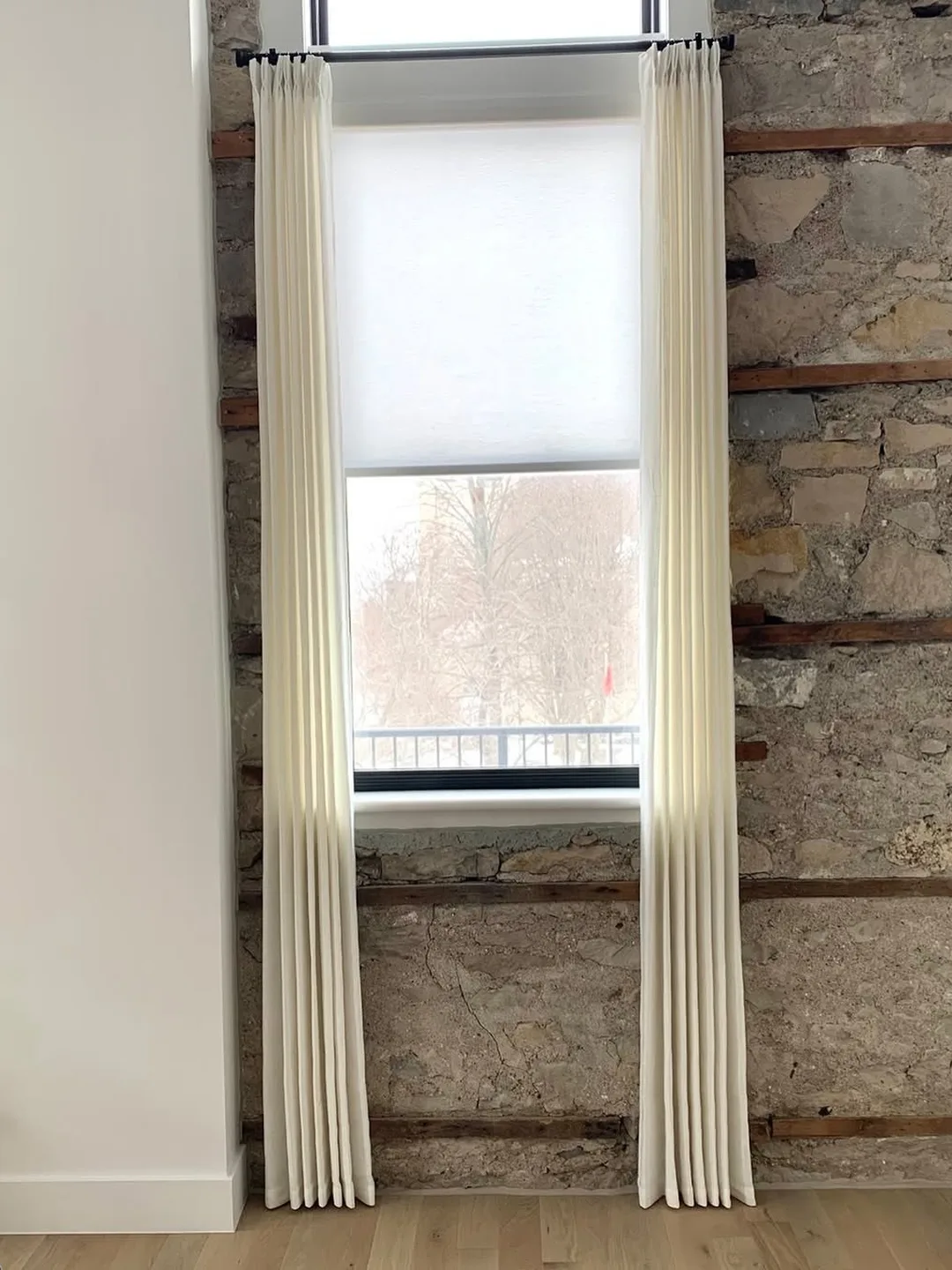
Some windows need a blind more than a curtain, and the tall window in the photo shows the compromise that keeps both: a plain roller blind for privacy and light control, framed by slim pleated panels that soften the stone wall and finish the edges.
This pairing suits narrow windows, bathroom windows and rooms where full curtains would swallow the wall. The panels are mostly decorative, so they can be narrower and cheaper than working curtains.
Keep the blind inside the frame and the panels outside it. That layering hides the blind’s hardware and gives the window a dressed border at all hours, open or closed.
The common mistake is decorative panels that are too short to believe. Even pretend curtains should reach the sill or the floor in one clean line, or the eye reads them as leftovers.
Cover One Wall With Curtains for a Soft Backdrop
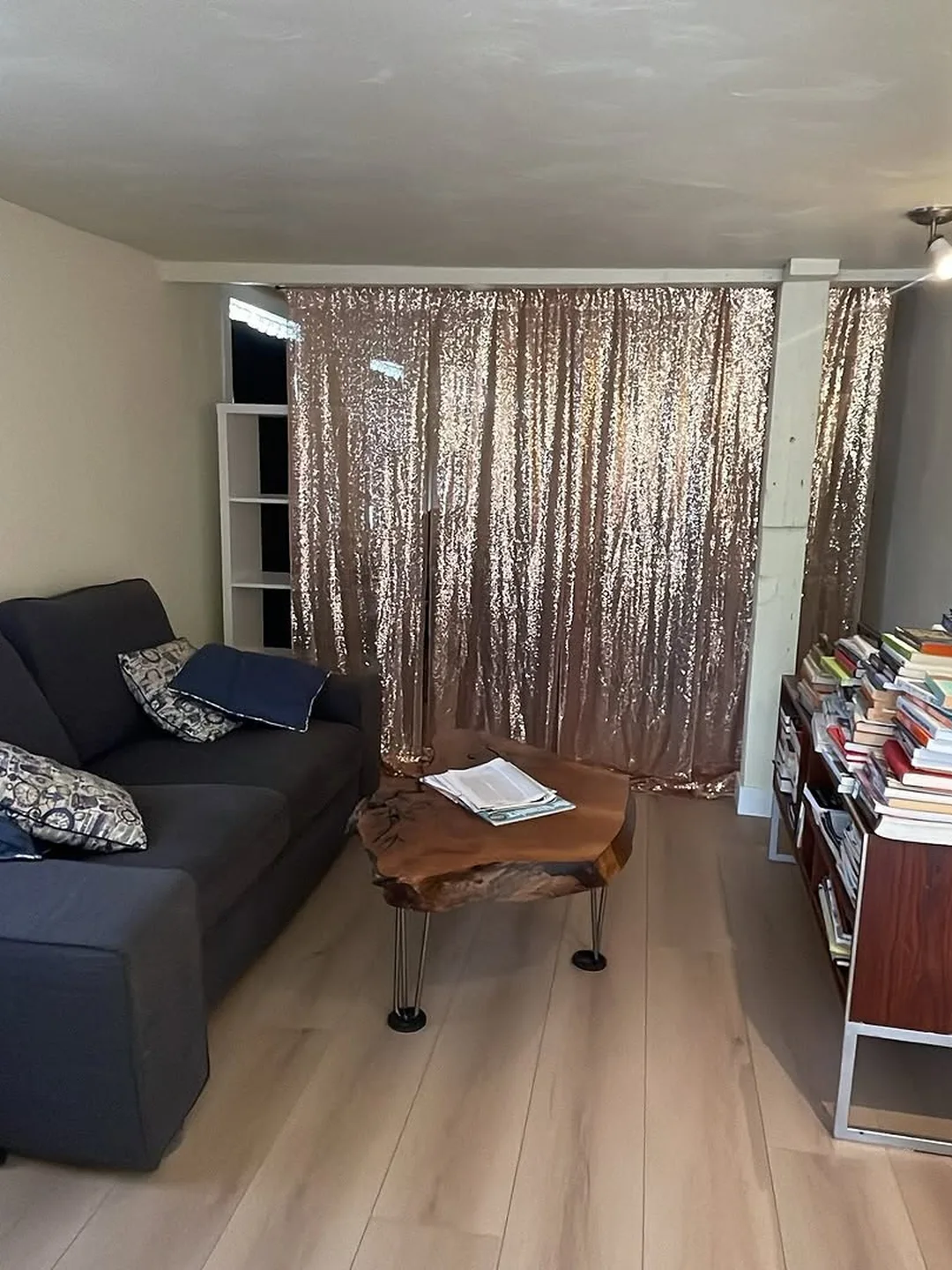
A full wall of curtains is a bold move that suits small rooms surprisingly well. The living room in the photo hangs a shimmering curtain wall behind the sofa zone, and the fabric swallows an awkward wall, hides doors and storage, and gives the room a soft theatre backdrop.
Curtain walls forgive bad plaster, strange doors and rented rooms you cannot change. A ceiling track, a few metres of mid weight fabric and one long hem turn the worst wall in the apartment into the calmest.
Choose a fabric with a matte or softly textured finish for everyday rooms. Shimmer suits party spaces and evening rooms, while linen look weaves keep a living room restful in daylight.
The common mistake is forgetting access. If the curtain wall hides a door or a cupboard you use daily, split the run at that point and weight the hems so the opening falls closed on its own.
Choose Sheers That Filter Light by a Glass Door

Glass doors and floor to ceiling windows flood small rooms with light that is not always welcome at noon. The sheer in the photo hangs inside a glazed door and turns hard glare into a soft wash, while the garden beyond stays visible as a gentle blur.
Door sheers need to move with the door or clear it completely. Fit a slim rod or a track on the door frame itself, or hang the sheer from the ceiling line so the door swings free behind it.
A filtered door also protects furniture and rugs from fading. In sunny apartments the patch of floor by the glass ages fastest, and a sheer slows that damage for the price of a panel.
The common mistake is a heavy curtain on a door, which fights the handle, the swing and the light all day. Sheers were invented for exactly this job, so let them do it.
Fit a Ceiling Track So Panels Glide Wall to Wall
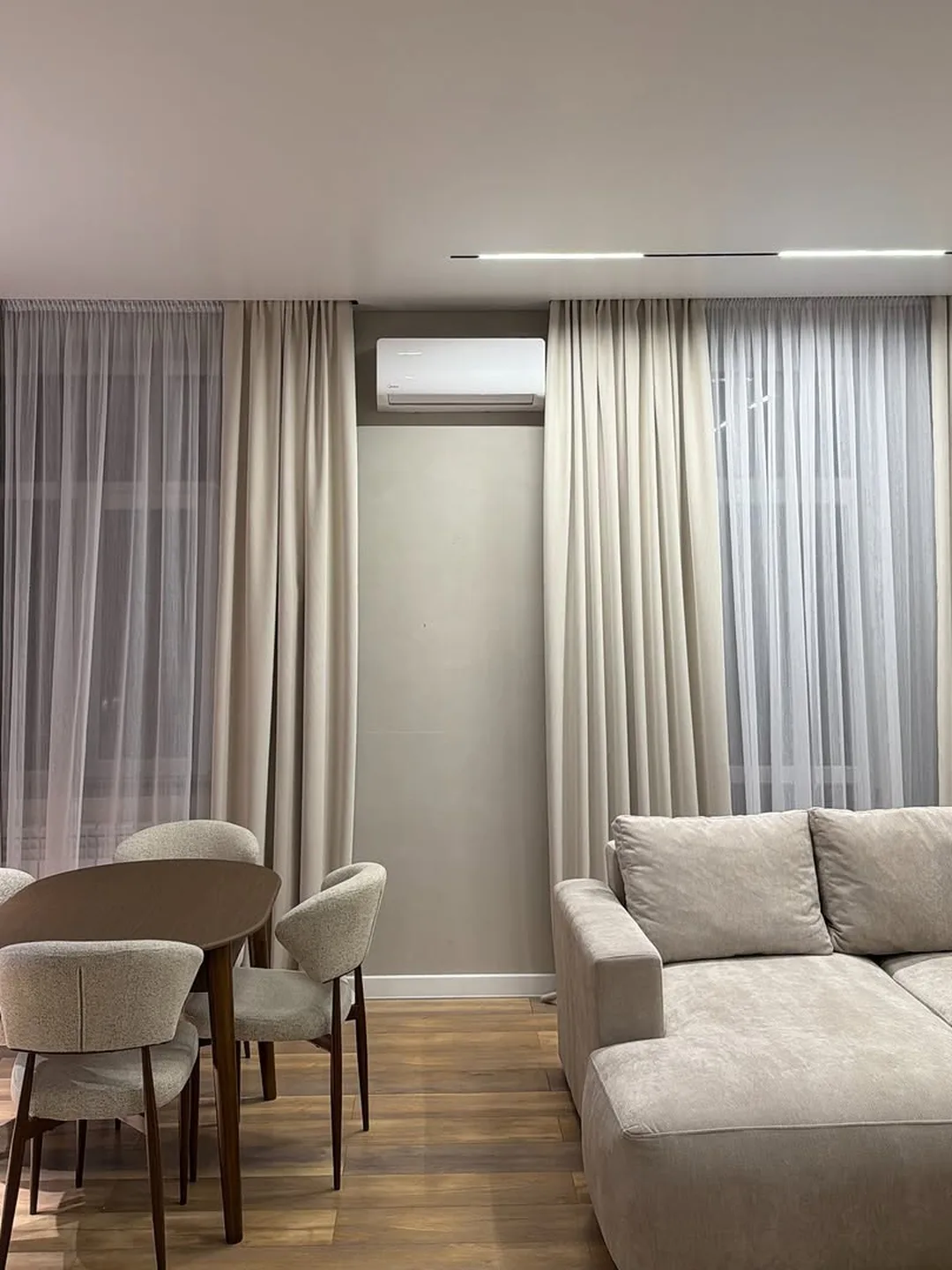
Ceiling tracks are the quiet heroes of small apartment curtains. The room in the photo runs layered sheers and drapes on a ceiling line, and the panels travel the full width of the wall with no brackets, no finials and no visual clutter at the top.
Tracks give the highest possible hang, which is the single most slimming trick for a low ceiling. The fabric starts at the ceiling itself, so the wall reads as one tall soft surface.
Most tracks fix with a few screws into the ceiling, and many landlords accept them more happily than wall drilling because the holes are small and paint over easily. Ask first, and keep the removed track and screws for moving day.
Gliders matter more than the track brand. Panels that glide silently get opened and closed daily, and curtains that move get used, washed and enjoyed instead of being left shut in protest.
The common mistake is a track that stops short of the wall ends. Run it the full width so panels stack completely clear of the glass, or the room loses the light the whole system was bought to protect.
Dress Corner Windows With One Flowing Sheer
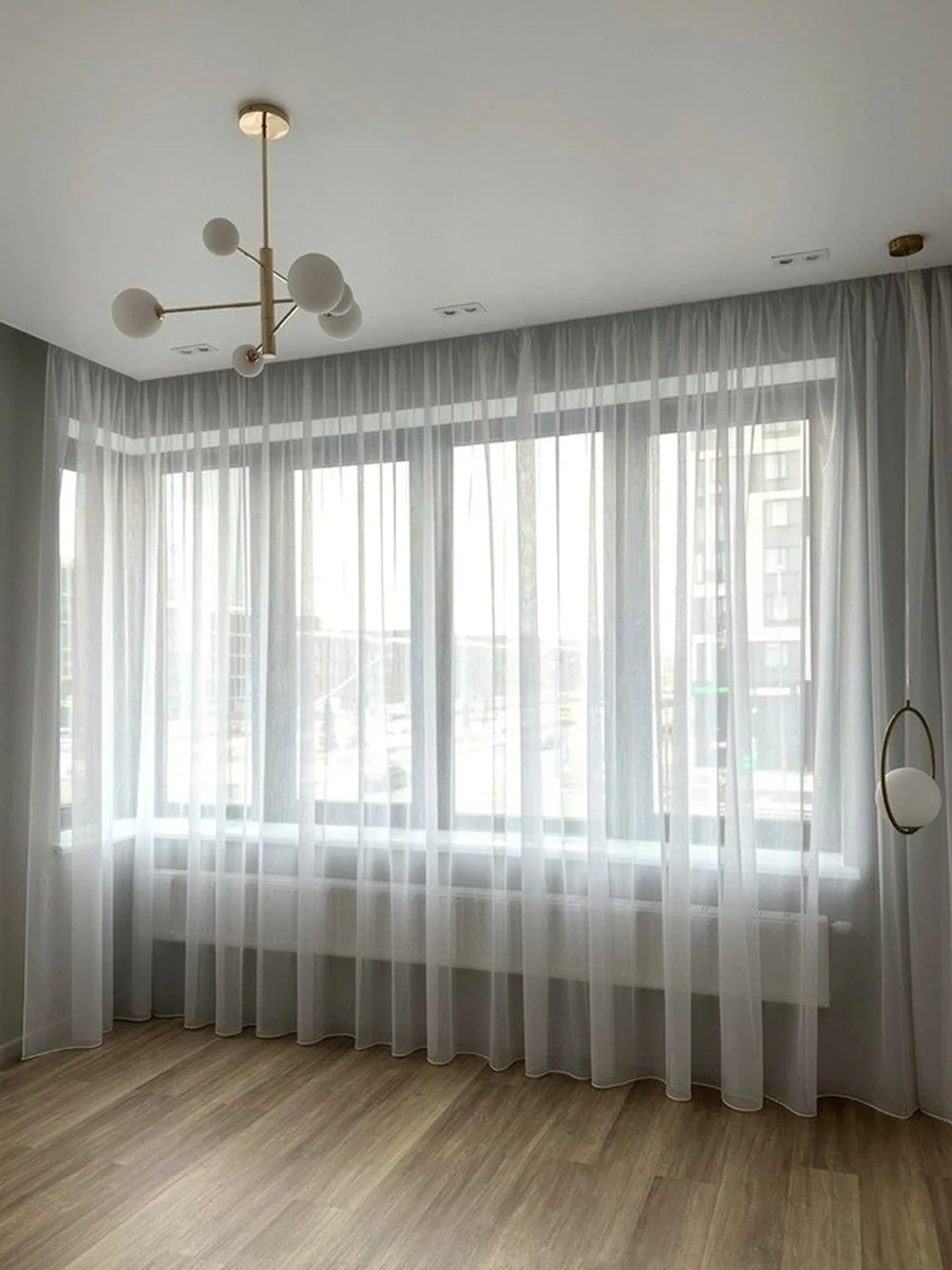
Corner windows are a small room’s treasure, and they deserve one sheer that flows around the corner instead of two that fight at the angle. The empty room in the photo shows the effect clearly: one soft line of fabric, two walls of light, and a corner that disappears.
A bendable track or a corner joint rod carries the sheer around the turn. Fit the corner piece first and work outward, because the angle decides where every pleat will fall.
Corner sheers give privacy on two streets at once in city apartments, while keeping the double light that makes corner rooms feel twice their size.
The common mistake is meeting two panels at the corner with a gap. Overlap the fabric at the angle or use one shaped run, because a slit of bare glass at the corner looks like a mistake every single day.
Try Embroidered Sheers When Plain Feels Boring

Plain sheers are safe, but a small room can carry a little embroidery. The sheers in the photo carry a delicate stitched pattern and a border stripe, and the detail rewards the close viewing that small rooms give everything.
Keep the base sheer and the thread close in color. White on white or cream on cream embroidery adds texture without adding visual noise, so the window stays calm and the pattern appears as light moves across it.
Embroidered panels suit bedrooms and quiet living rooms, where you sit near the window and notice detail. In a busy family room, plain sheers survive more washing and less attention.
The common mistake is embroidery plus patterned cushions plus a patterned rug at the same window. Let the curtain be the single patterned voice near the glass and keep the seats plain.
Let One Bold Patterned Curtain Carry the Room

A small room can hold one loud piece, and a curtain is the easiest loud piece to live with. The richly patterned panel in the photo turns a plain wall into a tapestry, and everything else in the corner stays simple so the fabric can perform.
Patterned curtains work like artwork that also blocks light. Hang them where a painting would go, beside the sofa or framing the bed, and let them be the room’s single story.
Pull one color from the pattern into two small places, a cushion and a book or a vase, and the curtain joins the room. Leave every other textile plain and the pattern stays joyful instead of busy.
The common mistake is a bold curtain on a busy wall of shelves and frames. Pattern needs plain company. Clear the wall around it and the fabric will look twice as expensive.
Go Floor to Ceiling to Make Ceilings Feel Higher
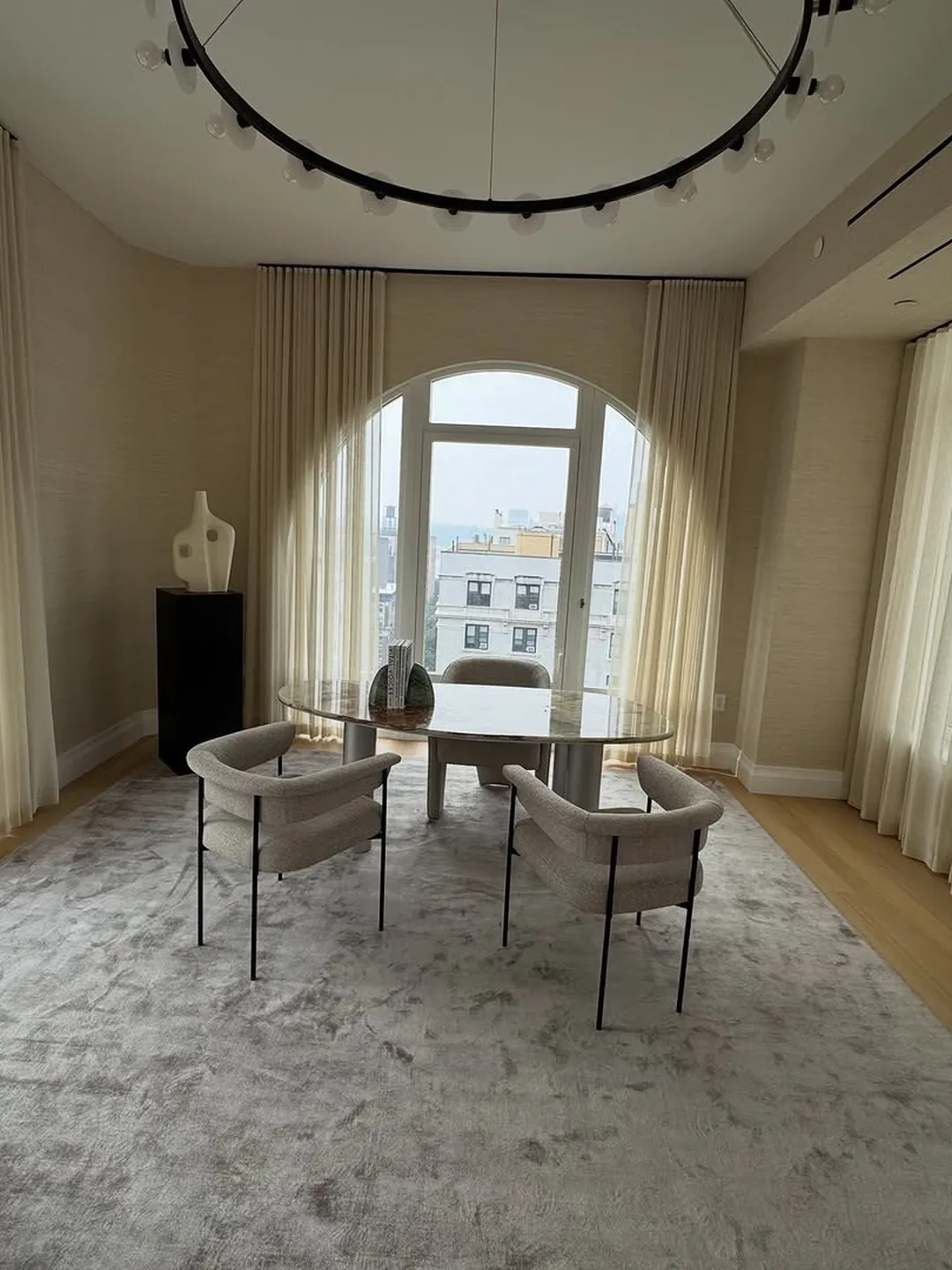
The oldest curtain trick is still the best one for small rooms. The airy room in the photo hangs sheers from the very top of the wall to the floor across a wide arched window, and the ceiling feels a full head taller than it is.
The rule is simple: the rod or track goes within a few centimetres of the ceiling, the panels fall to a centimetre above the floor, and nothing interrupts the vertical line. Our gallery wall ideas for small apartments use the same vertical thinking on solid walls.
Wide matters as much as tall. Extend the track 20 to 30 cm past the frame on each side so open panels stack on the wall, the glass shows at full width, and the window itself seems to grow.
Measure twice and order once, because floor to ceiling panels cannot be let down later. In old buildings, measure both ends and the middle: floors slope, and the longest measurement is the honest one.
The common mistake is stopping the rod at the top of the frame out of habit. That band of wall above the window is exactly the space this trick exists to claim, so claim it.
Common Small Apartment Curtain Mistakes to Avoid
Hanging the Rod Just Above the Frame
A rod fitted at the frame top wastes the wall above it and makes the ceiling feel lower. Move the fixing as close to the ceiling as the room allows and the whole wall gains height.
Choosing Panels That Are Too Narrow
Panels should total at least twice the window width so they fold when closed and stack kindly when open. Skimpy panels stretch flat, look mean, and expose the edges of the glass.
Stopping at the Sill in a Living Room
Short curtains suit kitchens and bathrooms, but in living rooms and bedrooms they chop the wall and shrink the room. Floor length is the default; choose cafe length only as a deliberate style.
Blocking Light With Heavy Fabric Everywhere
Thick dark curtains in a small north facing room steal the light the room cannot spare. Use sheers for the day and keep heavy layers for bedrooms and winter evenings.
Ignoring the Radiator Under the Window
Panels resting on a hot radiator dry out, fade and can be a safety risk. Shorten hems to clear the heat, or move the fabric line forward on a ceiling track so panels fall in front of the radiator’s rising air, never on it.
Forgetting to Test With the Light On
Curtains change character between day and night. A sheer that glows at noon can look grey under evening bulbs, so check samples at both times before ordering a full set.
Budget-Friendly Curtain Tips for Small Apartments
Fix the rod position before buying new curtains. Raising the existing rod to the ceiling and adding simple extension brackets costs almost nothing and can make the panels you already own look twice as grand.
Buy sheers generously and drapes carefully. Sheers are cheap per metre, so never skimp on their width. Drapes cost more, so let them be narrower and mostly decorative if the sheer does the daily work.
Plain linen look fabrics in warm white suit almost every room and every future home. They cost less than patterned fabrics, they never fight your furniture, and they move with you from rental to rental.
Secondhand curtains in natural fibres are a quiet bargain. Long panels from larger houses can be hemmed to your windows for the price of a coffee, and heavy vintage drapes often outclass new budget ones.
Spend on the track or rod before the fabric. Smooth, quiet hardware makes cheap curtains feel expensive every day, while beautiful fabric on a grinding rod annoys you every morning.
A Simple Plan to Rehang Your Curtains in One Weekend
Saturday morning, measure every window three ways: the glass width, the wall width you want to cover, and the drop from ceiling to floor at both ends and the middle. Write the longest drop down and shop from that number only.
Saturday afternoon, fit the hardware. Move rods up to the ceiling line, extend them past the frames, and patch the old holes while the filler is out. Hardware day is dusty, so do it before the new fabric enters the room.
Sunday, hang and steam. Panels go up, get adjusted for even hems, and take a pass with a steamer or a cool iron. Live with them open and closed at different hours before deciding anything is wrong.
Finish by checking the room from the doorway at night with the lamps on. That is the view you will live with most, and small fixes, a hem tweak, a tieback moved, are easiest while the weekend tools are still out.
FAQ
How long should curtains be in a small apartment?
Floor length suits living rooms and bedrooms: a centimetre above the floor for a clean modern line, or a gentle pool of 3 to 5 cm for a softer look. Kitchens and bathrooms can use sill length or cafe panels where steam and splashes rule.
Do curtains or blinds suit small rooms better?
Curtains add height, softness and warmth, while blinds give precise light control in very tight spaces. Many small rooms do best with both: a simple blind for function and slim panels at the sides for softness.
What color curtains make a small room look bigger?
Colors close to the wall color make the wall read as one wide surface, and warm whites and pale naturals keep light bouncing. Strong contrast at the window frames the glass and can make the window, and the room, feel smaller.
Can renters hang curtains without drilling?
Often, yes. Tension rods fit inside many frames, adhesive hooks carry light sheers, and clamp brackets grip some window frames. For heavier panels, ask the landlord about a ceiling track: the holes are tiny and the result looks built in.
How wide should curtain panels be?
Plan for the fabric to total at least twice the width of the area you want to cover. That fullness gives soft folds when closed and a kind stack at the sides when open, and it is the difference between curtains that dress a window and curtains that hide it.
How do I stop curtains fading in a sunny room?
Line the panels, or add a sheer between the glass and the main fabric to take the worst of the sun. Rotating panels left to right every few months also evens out fading on the exposed edges.
Conclusion
Curtains are the cheapest architecture a small apartment can buy. Hung high, wide and long, in fabrics that respect the light, they raise ceilings, widen windows, divide studios and warm winter rooms, and almost every idea in this list can be undone on moving day.
Start with the window you live beside most. Fix its height and width first, choose the fabric second, and let the rest of the apartment follow one room at a time. Small rooms reward that order every single time.