
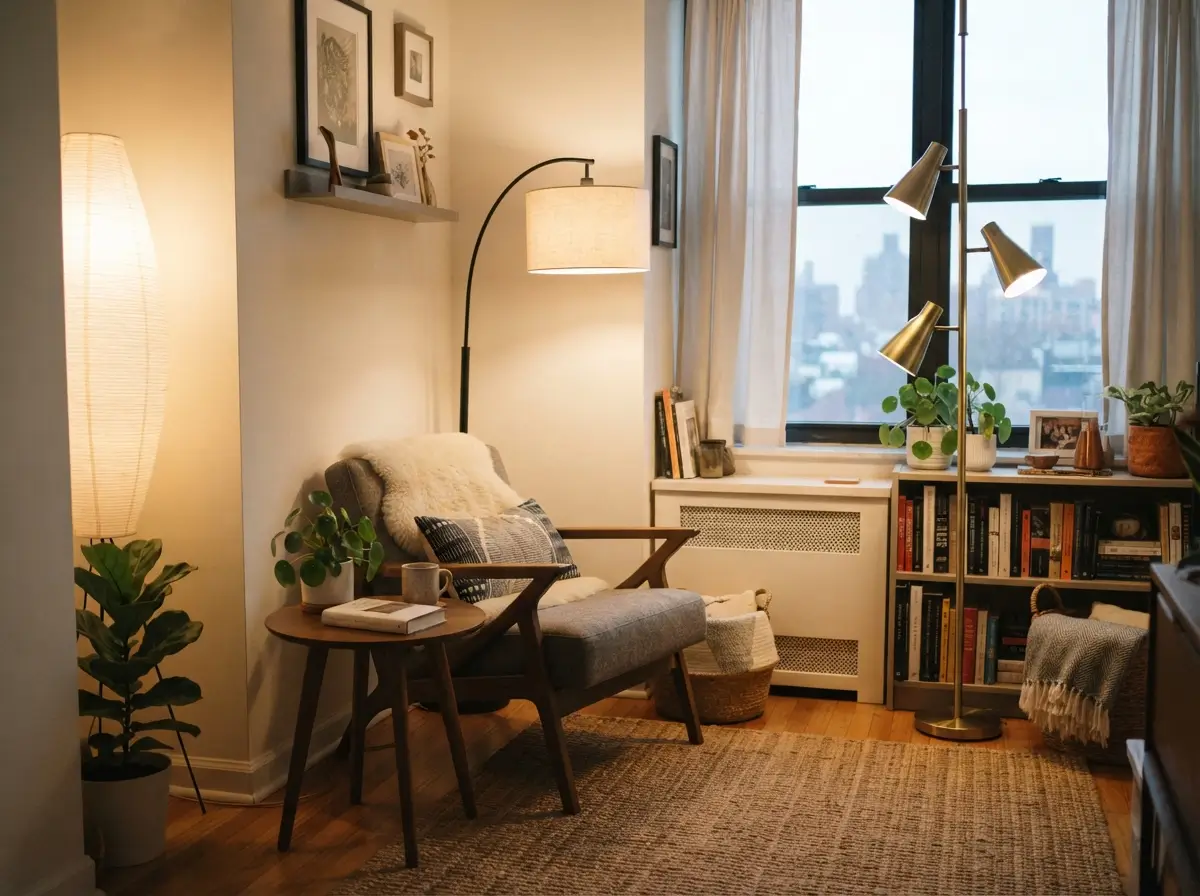

Compact rooms need lighting that works hard without taking over the floor plan. Floor lamps can solve several problems at once because they add light, create height, define activity zones, and reduce the need for extra side tables. Good placement matters more than buying the largest or brightest model. Small Apartment Floor Lamp Ideas should support daily routines, fit the furniture scale, and keep walkways clear.
Beginners often choose a lamp by shape alone, then discover that the shade blocks a view, the base creates a trip point, or the bulb feels too harsh at night. Measure the available floor area, note nearby sockets, and decide whether the lamp will support reading, television viewing, work, or general atmosphere. Rental-friendly options such as plug-in lamps, smart bulbs, remote switches, and cord covers can improve a room without drilling or changing electrical fittings.
How Can a Floor Lamp Improve a Small Apartment?
Small Apartment Floor Lamp Ideas work best when one slim fixture adds useful light where a ceiling fitting cannot reach. Place the lamp beside a sofa, behind a chair, near a desk, or in a dark corner. Choose warm white bulbs around 2700K for relaxing zones and 3000K for reading or work. Keep the base outside the main walking path and use an adjustable shade when the same room serves several purposes.
Plan the Lamp Before You Buy It
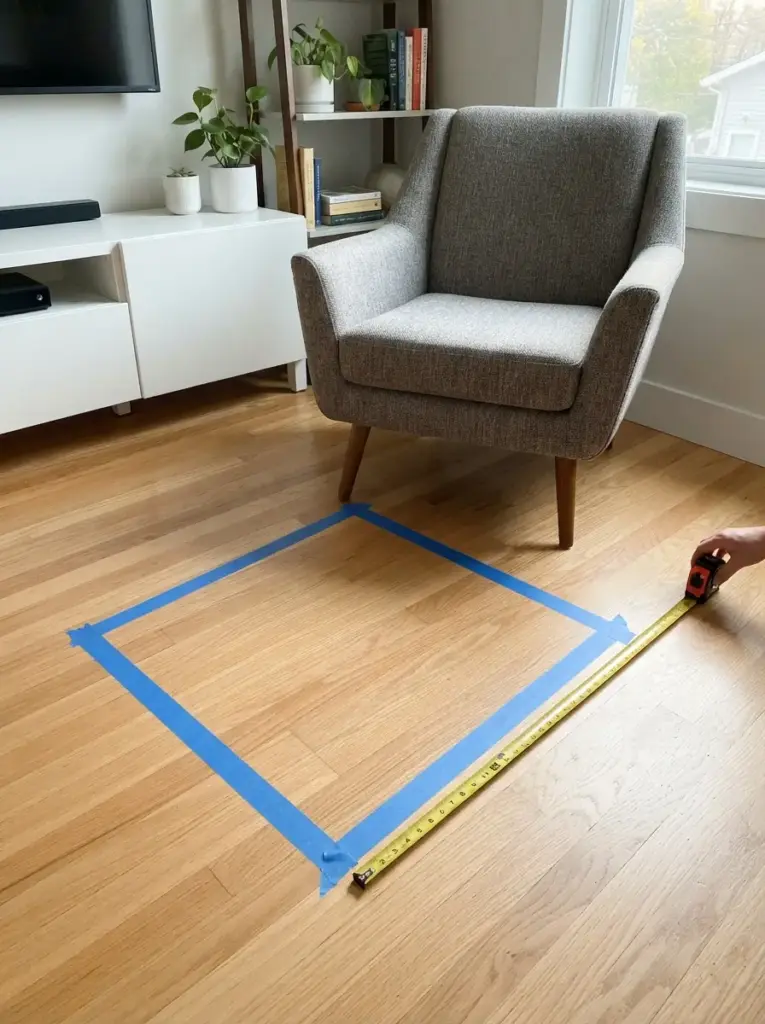
Start by measuring the gap where the lamp may stand. Record the width, depth, nearby furniture height, socket location, and distance from doors or curtains. Painter’s tape can mark the proposed base on the floor. Walk through the room normally, carry a laundry basket, open drawers, and pull chairs out. Practical testing reveals whether the lamp will interrupt movement before money is spent.
Consider what the lamp must illuminate. Reading needs a focused beam near shoulder height, while background lighting works better with a fabric or frosted shade that spreads light softly. People who work from home may need adjustable brightness during the day and warmer light in the evening. Small Apartment Floor Lamp Ideas become more successful when the light purpose guides the shape, bulb, and placement from the beginning.
Match the Shade to the Room
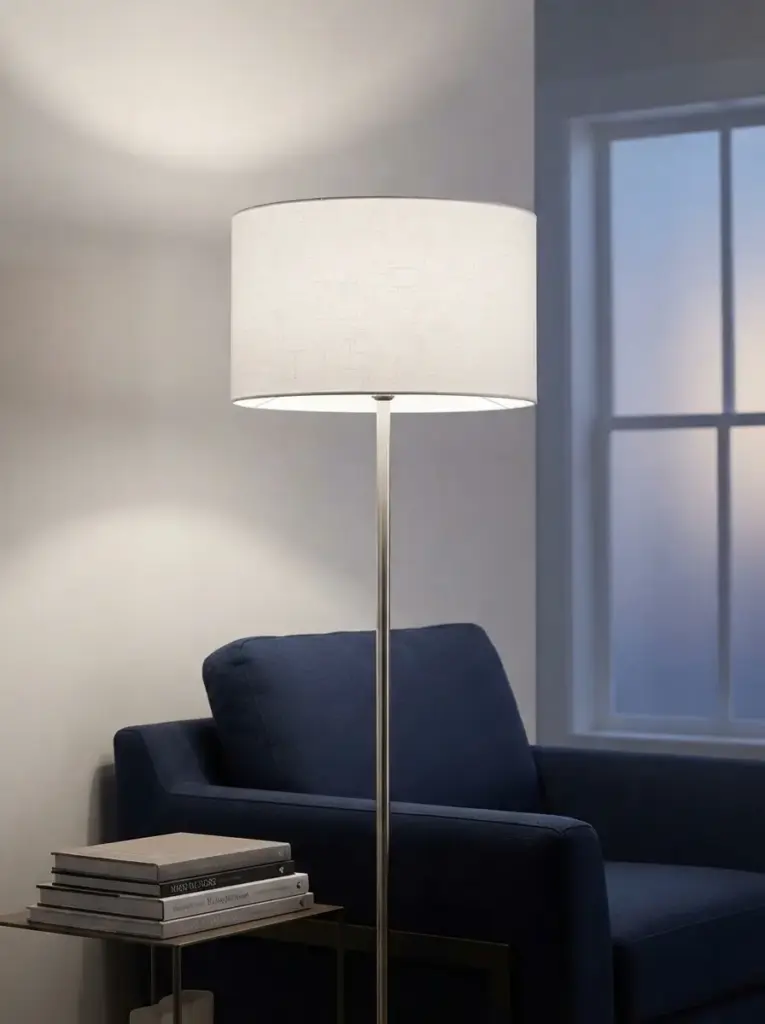
Shade shape changes both the spread of light and the visual weight of a floor lamp. Drum shades cast light upward and downward, tapered shades feel lighter near eye level, and metal dome shades focus a beam onto one activity. Compact rooms usually benefit from shades that stay inside the footprint of nearby furniture. Measure the widest point, not only the base, because a broad shade can catch curtains, cabinet doors, or people passing behind the sofa.
Fabric colour also affects brightness. White and cream shades release more light, while charcoal, brown, and dense woven shades create a narrower, moodier pool. Bedrooms and television corners can handle softer output, but reading zones need enough light to prevent eye strain. People with dark walls may need a brighter bulb than those with white walls. Choose the shade and bulb together rather than treating them as separate decorative decisions.
Check Lumens Before Choosing a Bulb
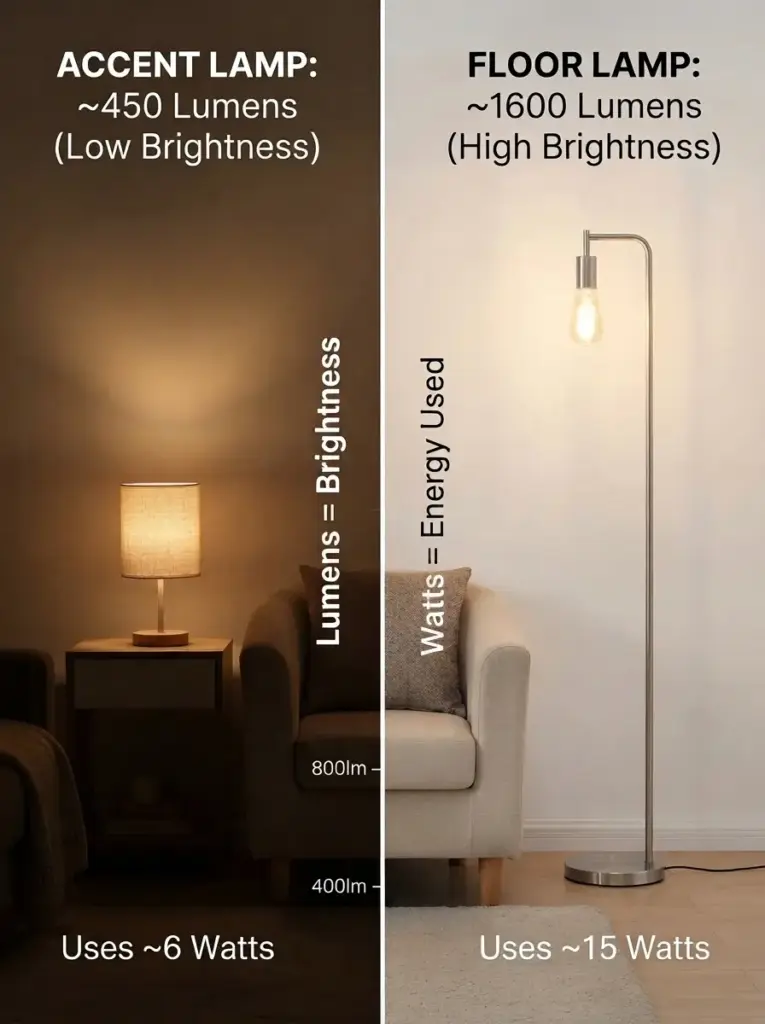
Lumens describe brightness more clearly than old wattage comparisons. Small accent lamps may need only a few hundred lumens, while a floor lamp expected to brighten a whole corner may need closer to 800 or more. Shade material, wall colour, and light direction will alter the final result. Dimmers provide useful flexibility, especially when one room moves from work to relaxing during the same day.
Colour rendering also matters around fabrics, art, and wood. Look for bulbs with a high colour rendering index when possible, since they show colours more naturally. Cheap bulbs may make beige look grey or warm timber appear dull. People decorating with subtle neutrals will notice poor colour quality quickly. Keep replacement details in a note on your phone so future bulbs match the same temperature, brightness, shape, and fitting.
Balance Lamp Height With Furniture
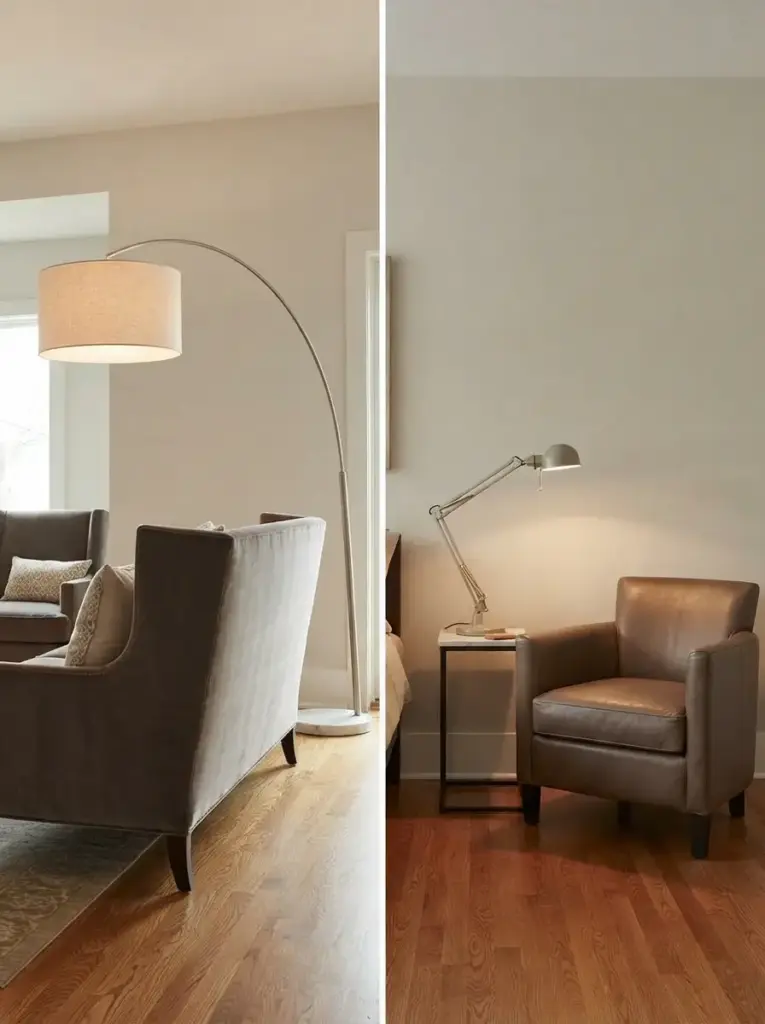
Scale should connect the lamp to nearby furniture instead of making it look isolated. Tall lamps suit open corners and high-backed sofas, while lower adjustable lamps fit reading chairs and compact desks. Keep large shades away from low shelves, where the proportions can feel top-heavy. Rooms with low ceilings often look calmer with slender stems and modest shades rather than dramatic branches or oversized arches.
Visual balance can be checked from the doorway and from the main seat. Take a photograph with the lamp switched off, then another with it on. The first image shows proportion; the second shows glare, dark patches, and reflections. People furnishing a new apartment should test more than one position before removing labels or packaging. A shift of twenty centimetres can improve both circulation and light distribution without requiring another purchase.
Keep packaging until evening testing is complete. Daylight can hide glare, weak corners, and unwanted reflections. Testing after sunset gives a more honest view of performance and helps beginners judge whether the lamp truly suits normal daily home routines.
Choose a Slim Tripod Lamp for an Empty Corner
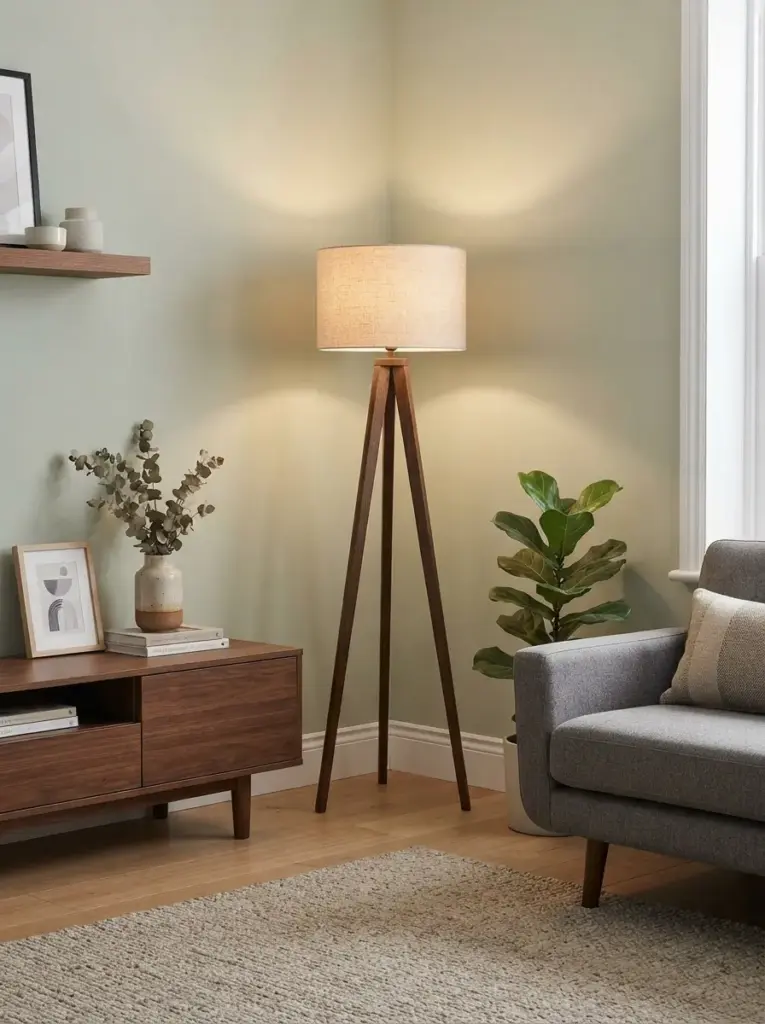
Tripod floor lamps add visual height and spread their weight across three legs, which makes them feel stable in a quiet corner. Look for a narrow version with legs that stay close together rather than opening widely into the walkway. A linen drum shade in warm white, oatmeal, or pale grey keeps the light soft. Black, oak, or walnut legs can connect the lamp to picture frames, tables, or shelving.
Corner placement succeeds because it fills vertical space without crowding the main seating area. Best results suit renters with an unused corner beside a sofa or media unit. Keep at least a hand’s width between the shade and the wall so light can spread. Avoid placing a wide tripod beside a door, curtain panel, or chair that moves often, since the legs can become awkward obstacles.
Use an Arc Lamp Over a Sofa Without a Side Table
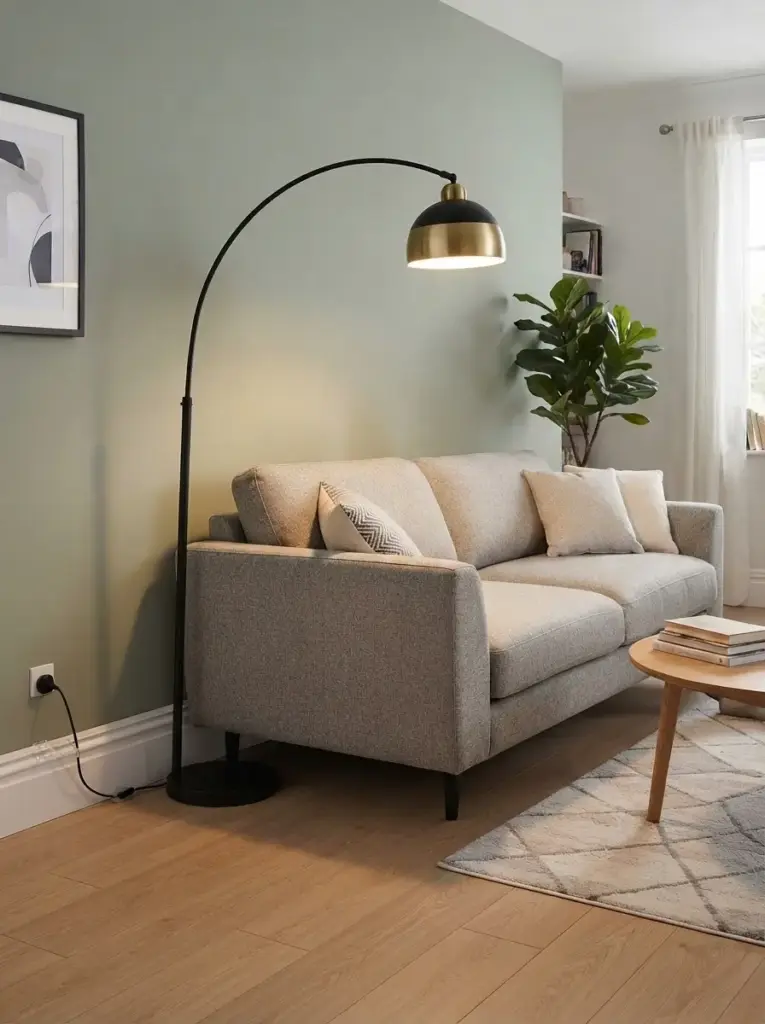
Arc lamps bring light over seating while keeping the base beside or behind the sofa. Choose a model with a compact weighted base and an arm that reaches only as far as needed. Oversized arcs can dominate a small room and may hang too low. A shade positioned roughly 150 to 170 centimetres above the floor usually gives comfortable ambient light without blocking sightlines.
Overhead reach helps when there is no room for an end table or wall sconce. Couples, readers, and apartment dwellers with one main sofa often gain the most. Place the base behind the sofa arm if possible, then secure the cord along the skirting board with removable clips. Modern Apartment Living Room Ideas often use a black or brushed brass arc lamp to add structure without filling the room with extra furniture.
Add a Torchiere Lamp to Brighten a Dark Ceiling
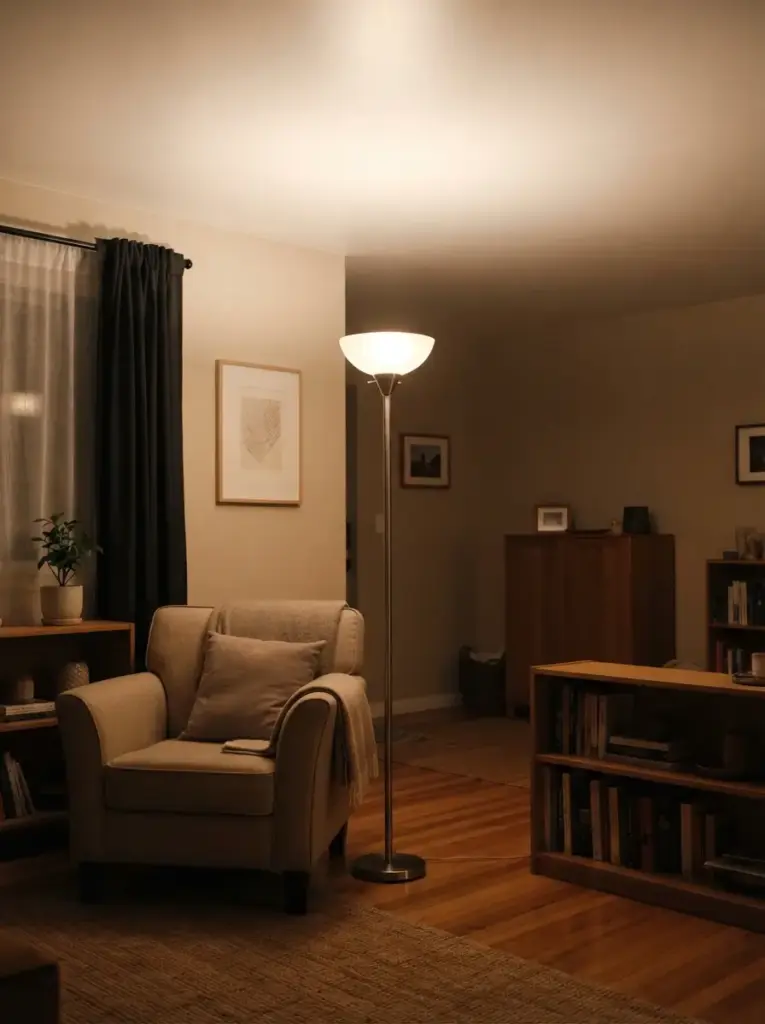
Torchiere lamps direct light upward, allowing the ceiling to reflect a broad, soft glow. Compact models with a straight stem and small base work well in rooms where ceiling lighting feels weak. Choose a frosted bowl rather than clear glass because it reduces glare. Warm white bulbs around 2700K create evening comfort, while dimmable LED versions provide more control.
Upward light makes a low room feel less heavy because the ceiling appears brighter and more open. Best use suits basement flats, north-facing rooms, and rentals with one central ceiling fitting. Keep the lamp away from low shelves and fabric curtains. Dust the bowl regularly because upward-facing shades collect debris. Avoid very bright cool bulbs, which can make white ceilings look clinical rather than welcoming.
Place a Pharmacy Lamp Beside a Reading Chair
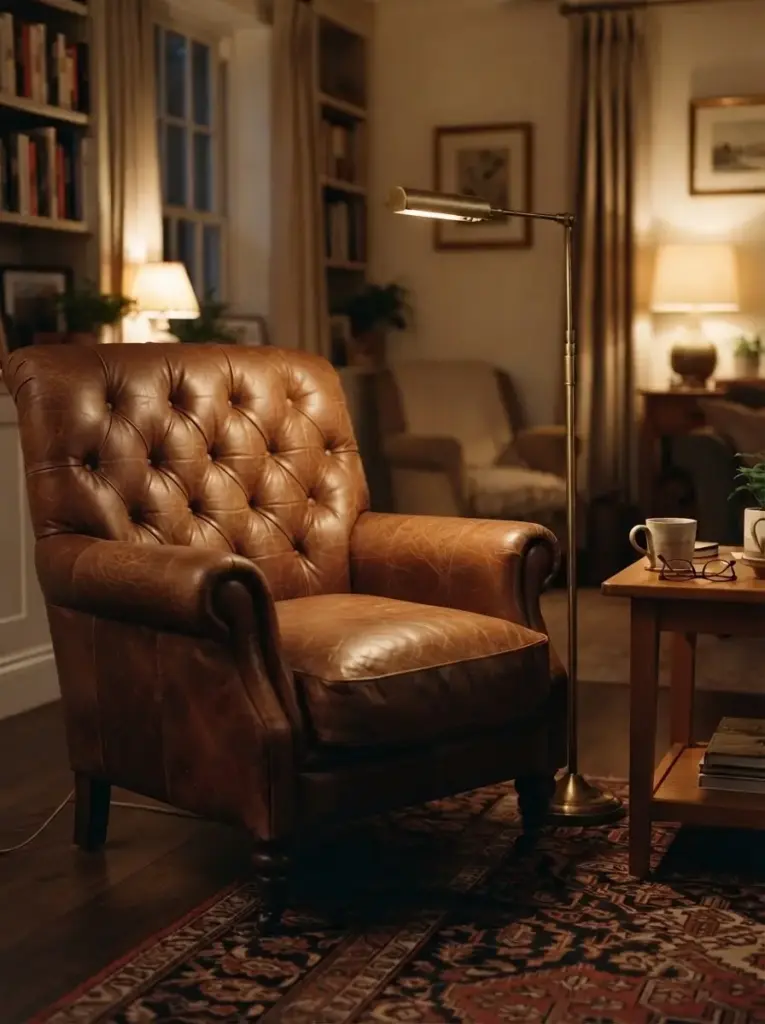
Pharmacy lamps use a narrow adjustable shade to direct light onto a book, craft project, or laptop. Look for a slim stem, small base, and swivel head that moves without loosening. Position the shade slightly behind the reader’s shoulder so the beam falls onto the page without shining into the eyes. A 3000K bulb gives clear task light while still feeling comfortable.
Focused lighting works because the rest of the room can stay softly lit. Readers, students, knitters, and anyone with a compact hobby corner benefit from this setup. Aged brass suits warm traditional rooms, while matte black works with Minimalist Apartment Living Room styling. Keep the cord behind the chair and leave enough space for the seat to move without striking the lamp.
Try a Shelf Floor Lamp for Light and Storage
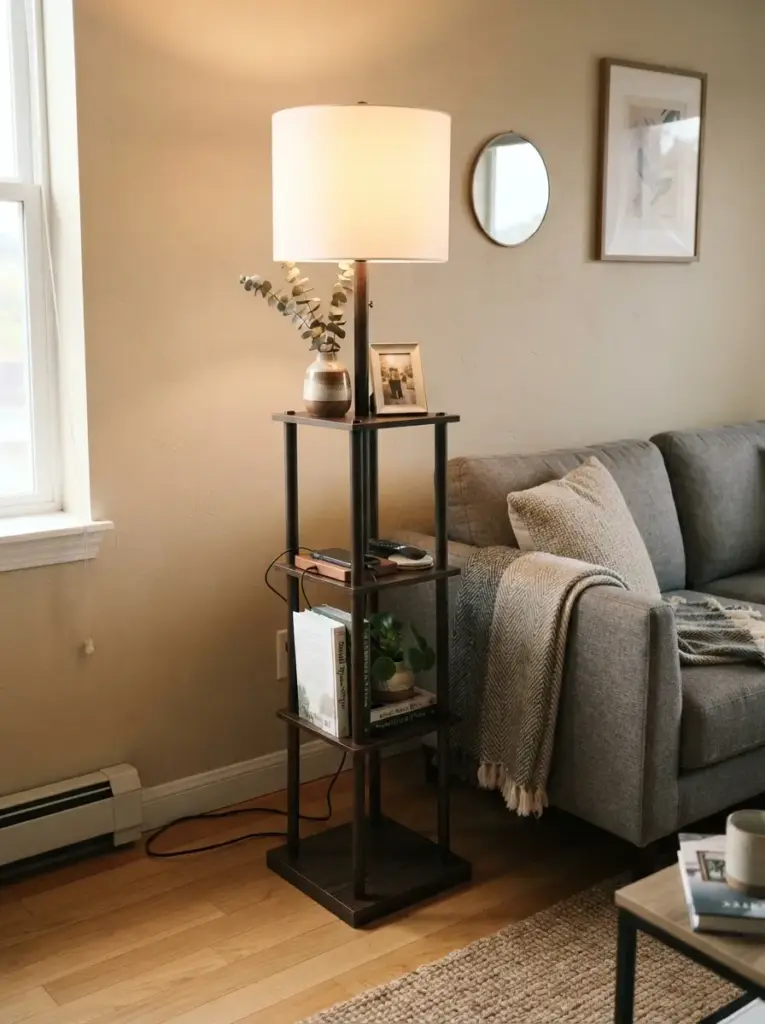
Shelf floor lamps combine a vertical light source with two or three small shelves. Choose a narrow unit with a stable square base and shelves deep enough for a few useful objects. A frosted or fabric shade at the top spreads light, while the lower shelves can hold books, a charging tray, or a small plant. Keep heavy items on the lowest shelf for balance.
Combined function saves room because the lamp can replace a side table in a studio or small lounge. First-home buyers and renters with limited surfaces often find this design practical. Use only a few objects so the unit does not look crowded. Small Apartment Living Room Decor feels calmer when cords, remote controls, and everyday items have a defined place instead of collecting across the sofa and coffee table.
Use a Swing-Arm Lamp Between Two Seats
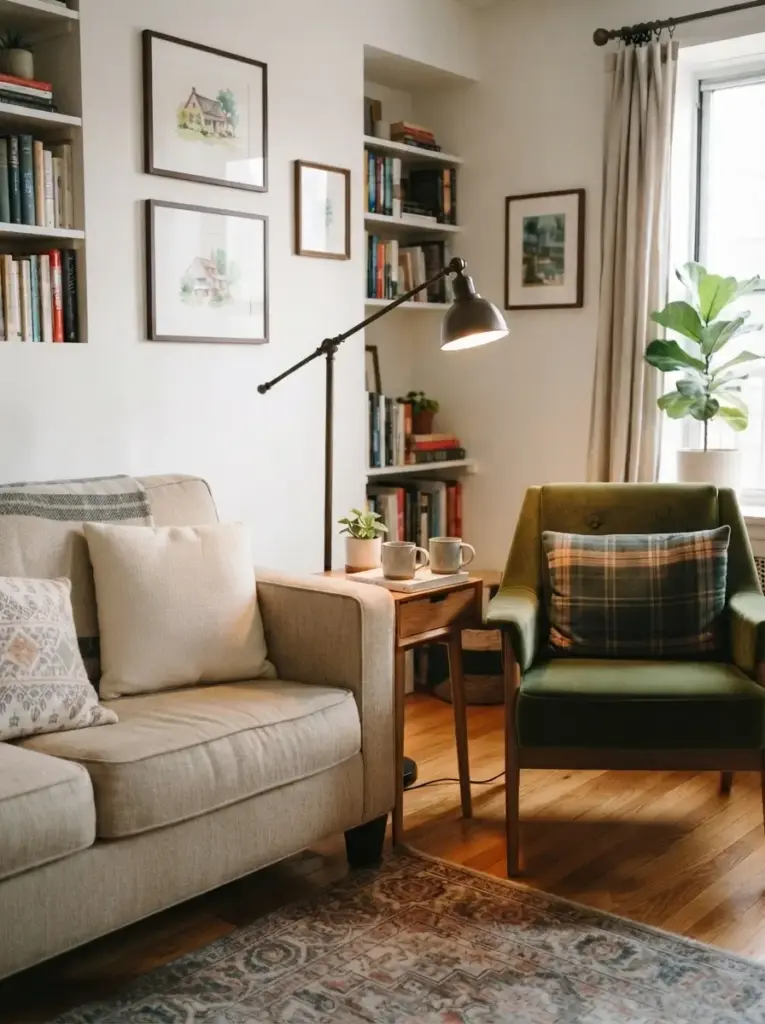
Swing-arm floor lamps can serve two nearby seats because the light head moves where needed. Place one between a sofa and accent chair, then turn the arm towards the person reading or working. A narrow base and controlled arm length matter in compact rooms. Models with a locking joint stay in position more reliably than loose decorative arms.
Shared task lighting reduces the need for two separate lamps and two free sockets. Best use suits couples, roommates, and flexible conversation areas. Choose a shade that hides the bulb from seated eye level. Keep the moving arm away from artwork and curtains. A soft bronze, black, or cream finish can repeat nearby hardware without forcing every metal in the room to match.
Pick a Paper Lantern Floor Lamp for Diffused Glow
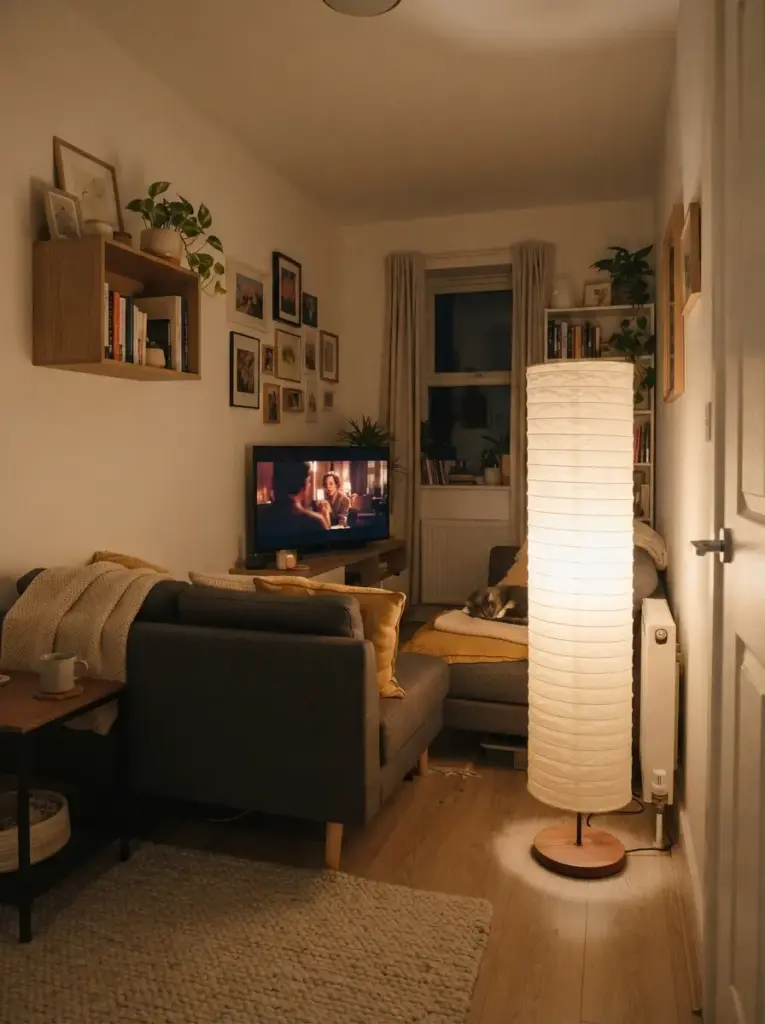
Paper lantern floor lamps spread light through a tall, lightweight shade. Their soft form can balance straight sofas, square shelving, and hard rental finishes. Choose a model with a protected bulb and sturdy inner frame. Warm LEDs stay cool, use little energy, and reduce the risk of heat damage to delicate shade material.
Diffused light creates an even glow that works well for television nights, quiet evenings, and casual entertaining. Renters who prefer Cozy Apartment Living Room Designs Ideas can place one beside a low sofa or in a bare corner. Keep paper shades away from pets, busy doorways, heaters, and damp areas. Replace torn or yellowed shades promptly because damage becomes very noticeable when the lamp is switched on.
Fit a Corner Lamp Into a Narrow Gap
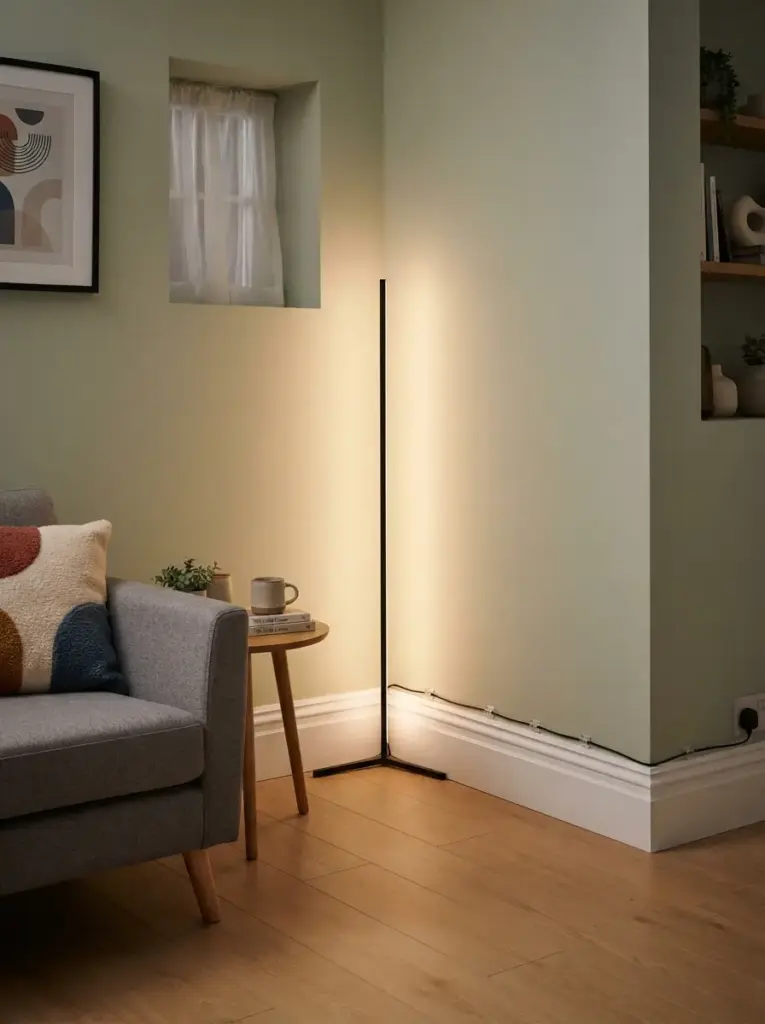
Purpose-built corner lamps have a small triangular or circular footprint that fits where standard bases cannot. Many use a slim vertical LED strip, while others have stacked shelves or narrow shades. Measure the actual corner because skirting boards may prevent the base from sitting flush against the wall. Choose dimmable light to avoid an overly bright line in the evening.
Narrow construction uses forgotten floor space and can brighten the junction between two walls. Studio residents and people with tightly arranged furniture gain the most. Angle the light towards the wall for a softer reflection rather than pointing it directly at the seating. Cord channels or removable clips can keep the cable close to the skirting board and reduce visible clutter.
Select a Floor Lamp With a Small Marble Base
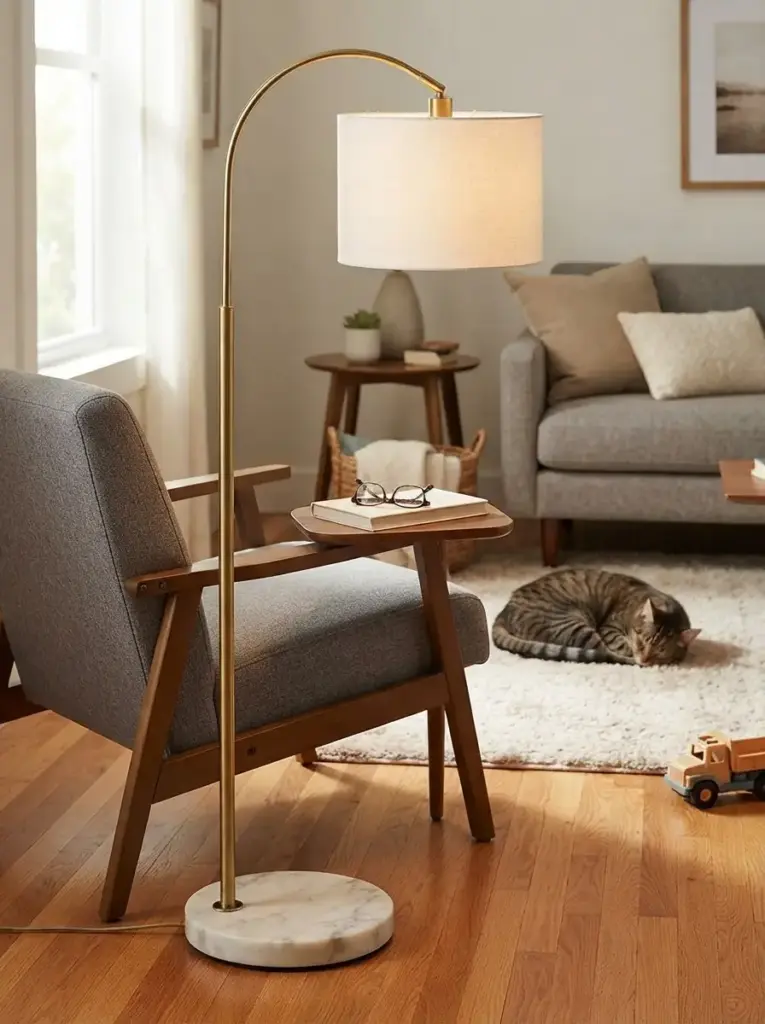
Marble or stone bases provide weight without requiring a wide footprint. A narrow stem rising from a compact round base can fit beside a sofa, console, or reading chair. Real stone varies in colour and may be heavy, while stone-look composite models are easier to move. Check the total weight before ordering if the apartment has stairs.
Solid weight improves stability when the shade or arm extends away from the stem. Best use suits homes with pets, active children, or busy seating zones, although no freestanding lamp should be treated as impossible to tip. Cream marble pairs with warm neutrals, while black stone gives definition to pale rooms. Felt pads under the base can protect wood or rented flooring from scratches.
Use a Double-Head Lamp for Work and Relaxing
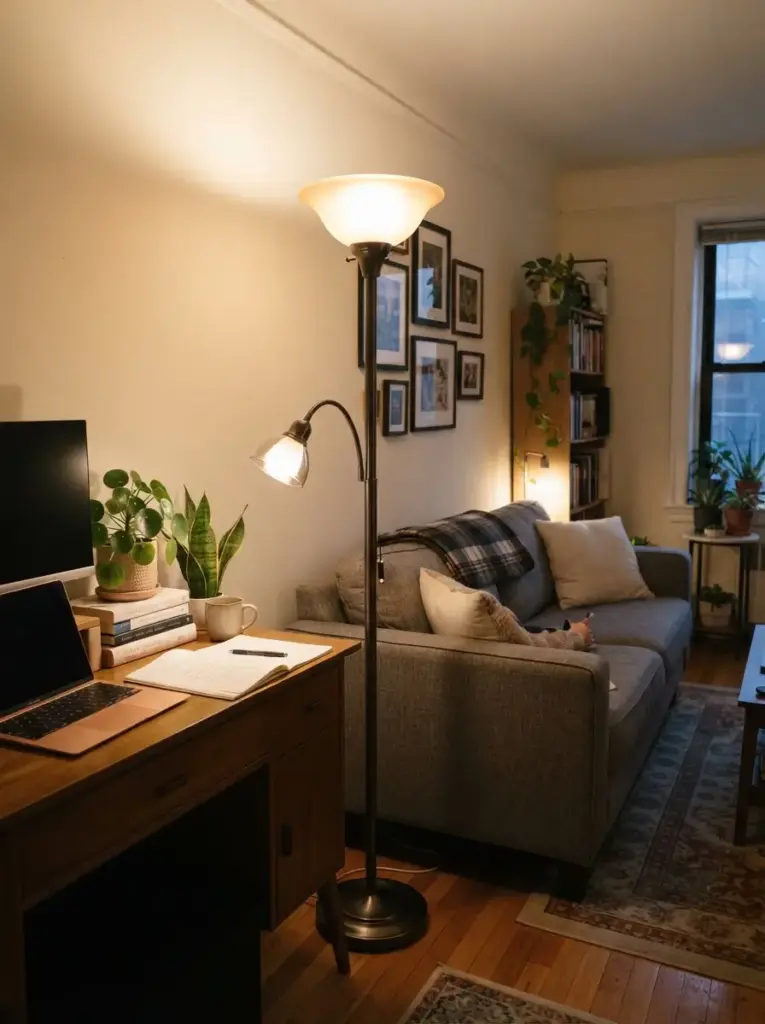
Double-head floor lamps combine one upward ambient light with a smaller adjustable reading light. Choose separate switches so each head can operate alone. During work, use the task light at 3000K; during the evening, turn on only the warmer upward light. Matching bulb colour temperatures prevent the fixture from looking uneven when both are used together.
Two lighting modes make one fixture useful throughout the day. Home workers, students, and families using one room for several activities will benefit most. Place the lamp beside a desk-sofa boundary or near a reading seat. Small Apartment Living Room Ideas become more adaptable when lighting can change without moving furniture. Avoid models with large plastic bowls that visually overpower compact rooms.
Add a Wooden Column Lamp for Warmth
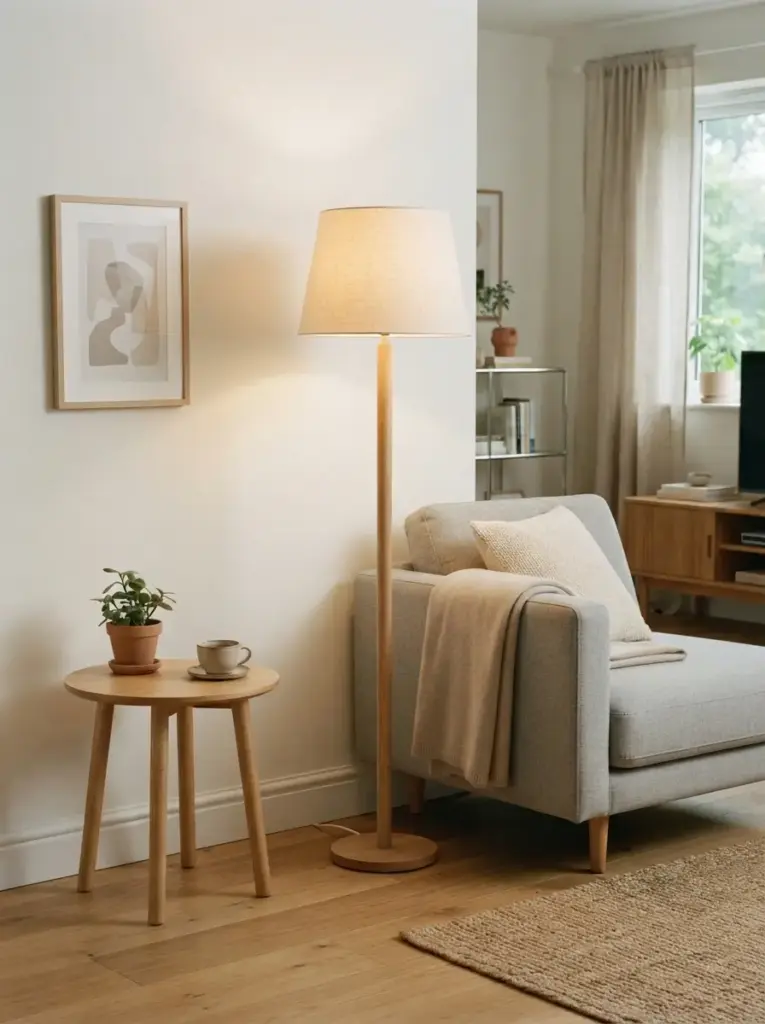
Wooden column lamps use a simple vertical base with a fabric shade, making them easy to fit into calm, neutral rooms. Choose a narrow oak, ash, walnut, or painted stem that repeats an existing furniture tone. A tapered shade usually takes less visual space than a very wide drum shade. Keep the lamp slightly taller than the nearby sofa arm so light can spread comfortably.
Natural material softens rooms filled with metal, glass, or glossy rental finishes. Best use suits Scandinavian, mid-century, rustic, and relaxed modern interiors. Pair pale oak with cream fabric for a light effect, or walnut with warm beige for more depth. Avoid combining several unrelated wood colours in one small area. Repeating the chosen tone in one frame or table creates a cleaner connection.
Place a Globe Lamp Near a Low Media Unit
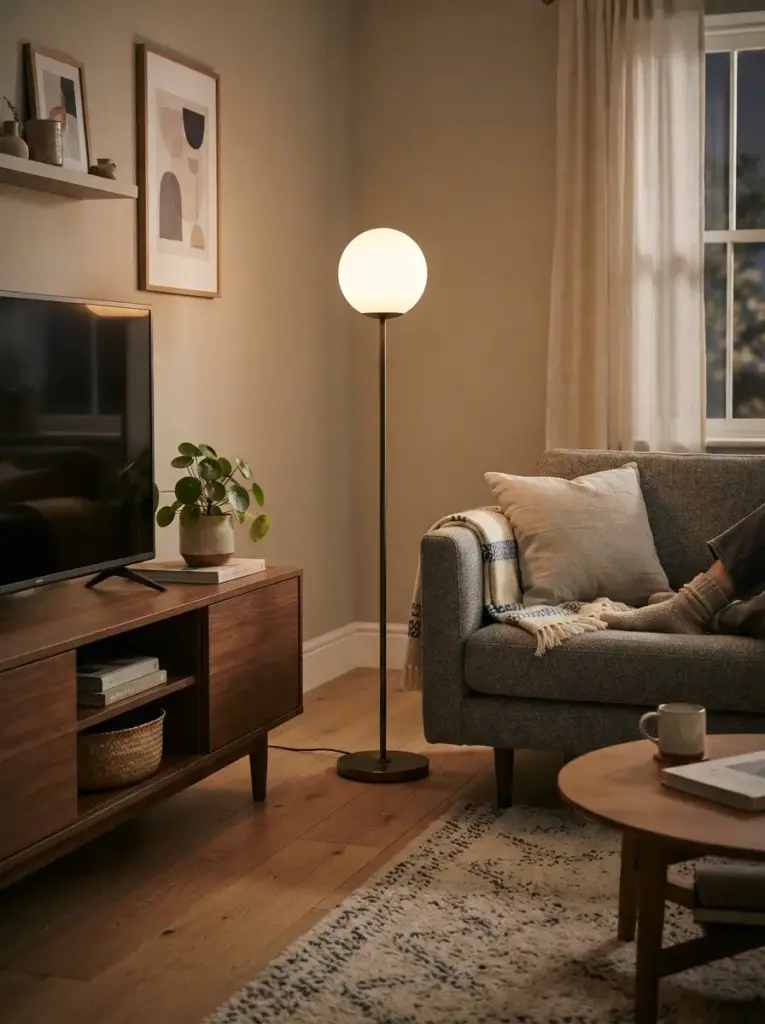
Globe floor lamps use frosted glass to spread light evenly and reduce harsh shadows. A single globe on a slim stem looks lighter than a fixture with many branches. Position it beside a low media unit or at the far end of the sofa, where the round shade can break up rectangular furniture. Choose opal glass because clear globes often expose uncomfortable bulb glare.
Rounded light works well during television viewing because it adds background brightness without creating a sharp beam on the screen. Movie watchers and renters with dark media corners benefit most. Keep the globe slightly behind the television plane to limit reflections. Loft Apartment Living Room Makeover Ideas often use oversized globes, but compact rooms need a restrained diameter that does not compete with the screen or block a walkway.
Choose a Rechargeable Floor Lamp for Flexible Zones
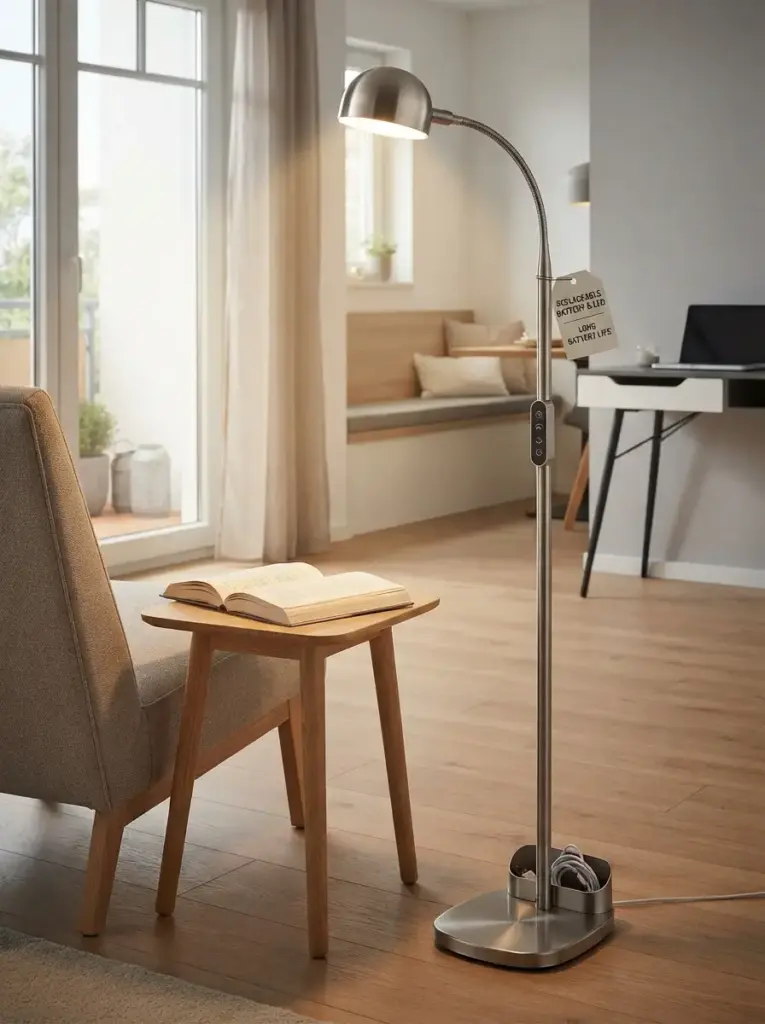
Rechargeable floor lamps remove the need to position furniture beside a socket. Look for a stable model with a long battery life, dimming control, and a charging cable that stores neatly. Portable lamps work well near a balcony door, dining bench, temporary desk, or reading chair that moves. Check whether the battery and LED can be replaced before buying.
Cord-free flexibility helps renters test different layouts and light areas where extension leads would create hazards. Best use suits studios, open-plan rooms, and homes that change often for guests or work. Recharge the lamp on a regular schedule so it is ready when needed. Treat portable models as supporting light rather than the only source, since brightness and run time may be lower than wired fixtures.
Use an Uplight Behind a Large Plant
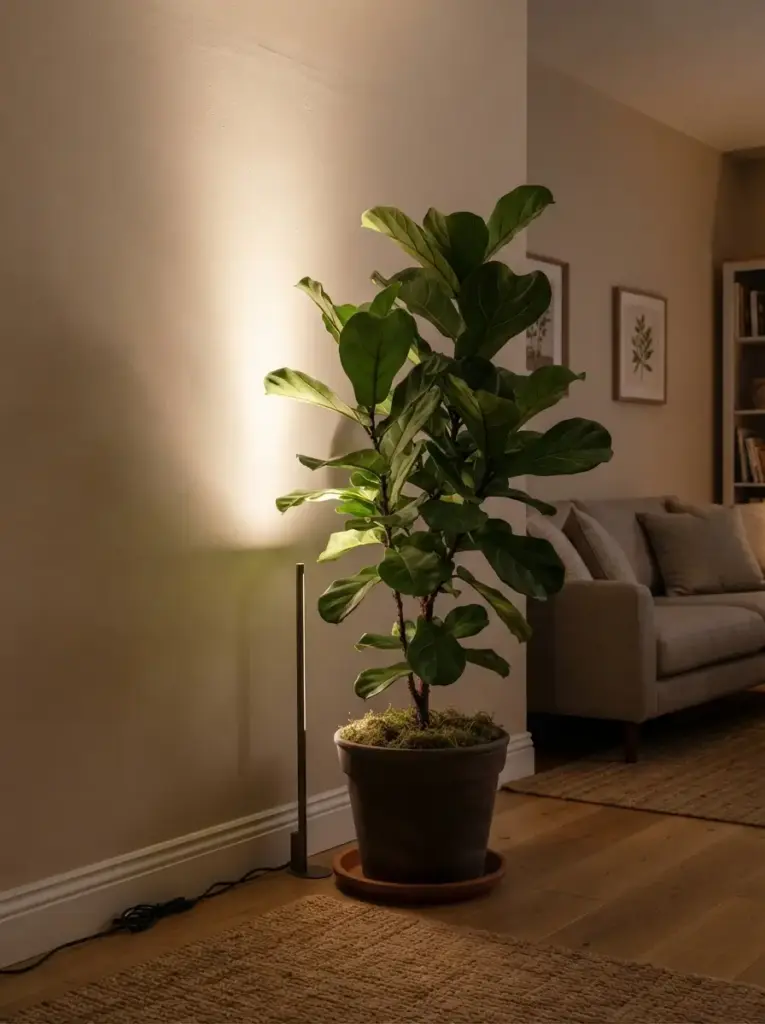
Slim uplight placement behind a tall plant can wash the wall with soft light and create depth. Choose a cool-running LED fixture with a narrow beam that can be angled away from leaves. Position the base where watering will not splash it, and keep cables outside the plant saucer. Warm white light usually gives foliage a natural evening colour.
Layered placement works because the plant hides part of the fixture while the reflected light makes the corner feel deeper. Plant lovers and people with bare walls will appreciate the effect. Choose a sturdy planter that cannot knock into the lamp. Avoid directing strong light through thin leaves at eye level, since moving shadows can become distracting while watching television or working.
Try a Minimal LED Bar Beside a Desk
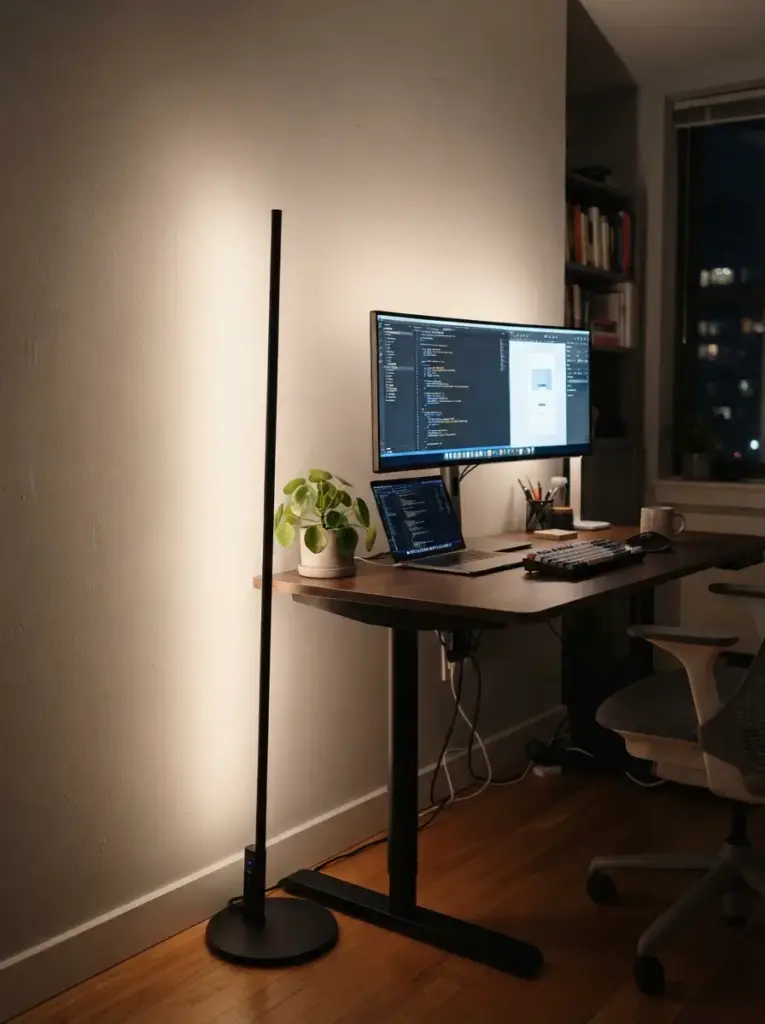
LED bar floor lamps have a very narrow profile and often rotate towards a wall, desk, or seating area. Choose a model with dimming, warm-to-neutral colour control, and a stable base. Place it beside or behind a desk so the light reflects from the wall rather than shining directly at the computer screen. A black, white, or brushed metal finish keeps the shape visually quiet.
Slim technology suits modern apartments where every centimetre matters. Remote workers, gamers, and renters who prefer clean lines gain the most. Reflected light can reduce the contrast between a bright screen and a dark room. Check whether controls remain easy to reach after placement. Avoid cheap models that flicker, produce uneven colour, or use an irreplaceable power supply with no clear warranty.
Common Floor Lamp Mistakes to Avoid
Buying without measuring causes many problems. Product photographs can make a wide base or oversized shade look smaller than it is. Record the available floor footprint, ceiling height, sofa height, and distance to nearby doors before shopping. Include the full reach of arc and swing-arm models. Returned lamps can be costly or inconvenient, especially when packaging is large.
Choosing the wrong bulb temperature changes the whole room. Cool bulbs above roughly 4000K can feel harsh in a relaxing lounge, while very warm bulbs may not provide enough clarity for detailed reading. Use about 2700K for ambient light and around 3000K for task areas. Lamps used together should have similar colour quality so one corner does not look blue and another orange.
Placing the shade at eye level creates glare. Sit in every nearby chair and look towards the lamp before settling on a position. The shade or diffuser should hide the bright bulb from normal seated views. Adjustable heads need careful angling, particularly around televisions and mirrors. Frosted glass, lined fabric, and opaque metal shades give better control than exposed bulbs.
Ignoring the cord creates both clutter and risk. Run cables behind furniture or along the skirting board with removable clips. Do not stretch a lead across a doorway, under a loose rug, or through a main walking route. Extension leads should match the fixture’s electrical needs and remain accessible rather than being tightly coiled or buried under soft furnishings.
Using a lamp that is too short can leave the room dim and make furniture look out of proportion. General floor lamps often work best when the shade sits above the sofa arm and near seated shoulder height. Reading lamps may sit lower when the head points directly onto a page. Check dimensions rather than relying on labels such as tall, compact, or standard.
Crowding every corner with lighting makes a small room feel busy. Most compact lounges need a ceiling source plus two or three supporting lights, not a lamp beside every seat. Let each fixture serve a clear purpose. One floor lamp may provide ambient light, while a table lamp or desk light covers another activity. Empty corners can remain empty when circulation needs space.
Selecting an unstable base can be dangerous. Lightweight tripod legs, narrow metal discs, and tall branched fixtures need testing on the actual floor. Thick carpet may cause wobbling, while uneven boards can make a base rock. Choose a weighted design near pets, children, and busy routes. Keep climbing furniture, dangling cords, and tempting switches away from young children.
Forgetting the switch location makes daily use annoying. Foot switches should sit where they can be reached without moving furniture, while inline switches should not disappear behind a heavy sofa. Smart plugs and remote bulbs can solve access problems, but they should still allow manual control. Test the routine at night when visibility is lower and convenience matters most.
Budget-Friendly Floor Lamp Tips
Start by improving a lamp you already own. A new shade can change its scale, colour, and light quality for much less than a new fixture. Measure the fitter type, top diameter, bottom diameter, and height before ordering. Replacing a cold bulb with a warm dimmable LED may also solve the main problem without changing the base.
Second-hand shops, local resale listings, and clearance sections often contain solid metal or wood lamps at useful prices. Inspect the plug, cable, switch, socket, and stability before bringing one home. Avoid damaged wiring or makeshift repairs. Rewiring may be worthwhile for a high-quality vintage base, but ask a qualified professional rather than attempting unsafe electrical work.
Spend more on the feature that affects daily use. A reading lamp needs a reliable adjustable joint, while an arc lamp needs a stable weighted base. Decorative finish matters less than safe construction and comfortable light. Set a realistic budget before shopping and compare total cost, including the bulb, delivery, replacement shade, and any smart controls.
Simple spray-paint updates can refresh some metal bases, but only after the lamp is unplugged, dismantled safely, and protected from paint around electrical parts. Renters with little workshop space may prefer removable decorative changes such as a new shade, cord sleeve, or wooden pull. Never cover ventilation openings or place flammable material near a hot bulb.
Buying one adaptable lamp often costs less than buying several limited fixtures. Dimmable models, adjustable heads, and neutral finishes can move between a lounge, bedroom, or office. People building a move-in checklist should choose a lamp that works beside different furniture heights. Compact packaging and replaceable bulbs also make future moves easier.
Use LED bulbs to reduce energy use and replacement frequency. Check lumens rather than assuming wattage describes brightness. Around 450 to 800 lumens may suit many task or accent lamps, while larger ambient fixtures may need more. Shade opacity and wall colour affect the final result, so choose a returnable bulb and test it during both daylight and evening hours.
Quick Small Apartment Floor Lamp Ideas Tips
Match the base to the available floor area, not only to the style of the room. Round weighted bases fit beside sofas, triangular bases use corners, and narrow rectangular bases can sit behind desks. Tripod lamps need more open space than photographs suggest. Measure at skirting-board level because walls may narrow near the floor.
Choose light direction according to the activity. Upward light expands a dim corner, downward light supports reading, and diffused light improves general comfort. Adjustable fixtures are useful when the room changes function. One lamp should not be expected to provide bright work light, flattering evening glow, and full-room illumination equally well without separate settings.
Keep finishes connected but not identical. Repeat black metal, warm brass, pale oak, or cream fabric in one or two nearby objects. Matching every fitting can look rigid, while too many unrelated finishes create visual noise. Small rooms benefit from a limited material palette because the eye can move through the space without stopping at every object.
Test the lamp from seated and standing positions. Check glare, shadow, switch access, cable placement, and whether the shade blocks a view. Take a phone photograph from the doorway because it reveals proportion problems quickly. Adjust the position by a few centimetres before buying another fixture; small placement changes often improve the result.
Frequently Asked Questions
Which Small Apartment Floor Lamp Ideas Save the Most Space?
Arc lamps with bases tucked behind sofas, slim LED bars, narrow pharmacy lamps, and corner lamps usually save the most usable floor area. Shelf lamps can also replace a side table, although they need enough depth for stability. Measure the full base and any projecting arm before buying. Wall reflection can make a very narrow lamp feel brighter without requiring a larger shade.
What Bulb Colour Works Best in a Small Living Room?
Warm white light around 2700K suits relaxing and entertaining because it softens shadows and supports warm colours. Reading and work areas often benefit from 3000K, which gives slightly clearer light without feeling cold. Bulbs above 4000K may suit utility spaces better than living areas. Keep nearby lamps within a similar range for a balanced evening appearance.
How Tall Should a Floor Lamp Be Beside a Sofa?
Many sofa lamps stand between roughly 145 and 170 centimetres tall, but shade position matters more than total height. The bulb should stay hidden from seated eye level, and the light should fall where it is useful. Low sofas may need shorter fixtures, while high-backed seating may need taller or arched designs. Measure the sofa arm and seated shoulder height before choosing.
Can Renters Use Smart Floor Lamps Safely?
Smart bulbs and plug-in switches can make floor lamps easier to control without rewiring. Choose products that suit the lamp’s bulb type and electrical rating. Keep a manual switching option available, secure cables neatly, and follow the manufacturer’s setup instructions. Smart controls are especially useful when a lamp switch sits behind a sofa or when several lights need one evening routine.
Where Should a Floor Lamp Go in a Studio Apartment?
Place the lamp where it defines an activity zone without blocking circulation. Beside the sofa, behind a reading chair, between the bed and lounge area, or near a compact desk can all work. Light can act as a subtle divider in an open room. Avoid placing a tall fixture in the direct sightline between the entry, window, and main seating.
Are Floor Lamps Better Than Table Lamps in Small Rooms?
Floor lamps save table surface and can provide greater height, while table lamps are easier to move and may fit on storage furniture already in the room. Choice depends on the available floor area, socket position, and activity. Many compact rooms work best with one floor lamp and one small table or desk lamp rather than relying entirely on one type.
Conclusion
Small Apartment Floor Lamp Ideas should make compact rooms easier to use, not simply add another object. Measure the base, decide the lighting task, choose a comfortable bulb temperature, and protect the walking route. Slim pharmacy lamps, arc designs, corner uplights, shelf lamps, and adjustable LED bars all solve different problems, so placement should follow daily habits.
Careful lighting improves reading, television viewing, work, and evening relaxation without changing permanent fixtures. Rental-friendly controls, secure cord management, and adaptable finishes help each lamp move successfully between homes. Small Apartment Floor Lamp Ideas deliver the strongest results when one well-chosen fixture supports several routines while keeping the room open, balanced, and comfortable.