
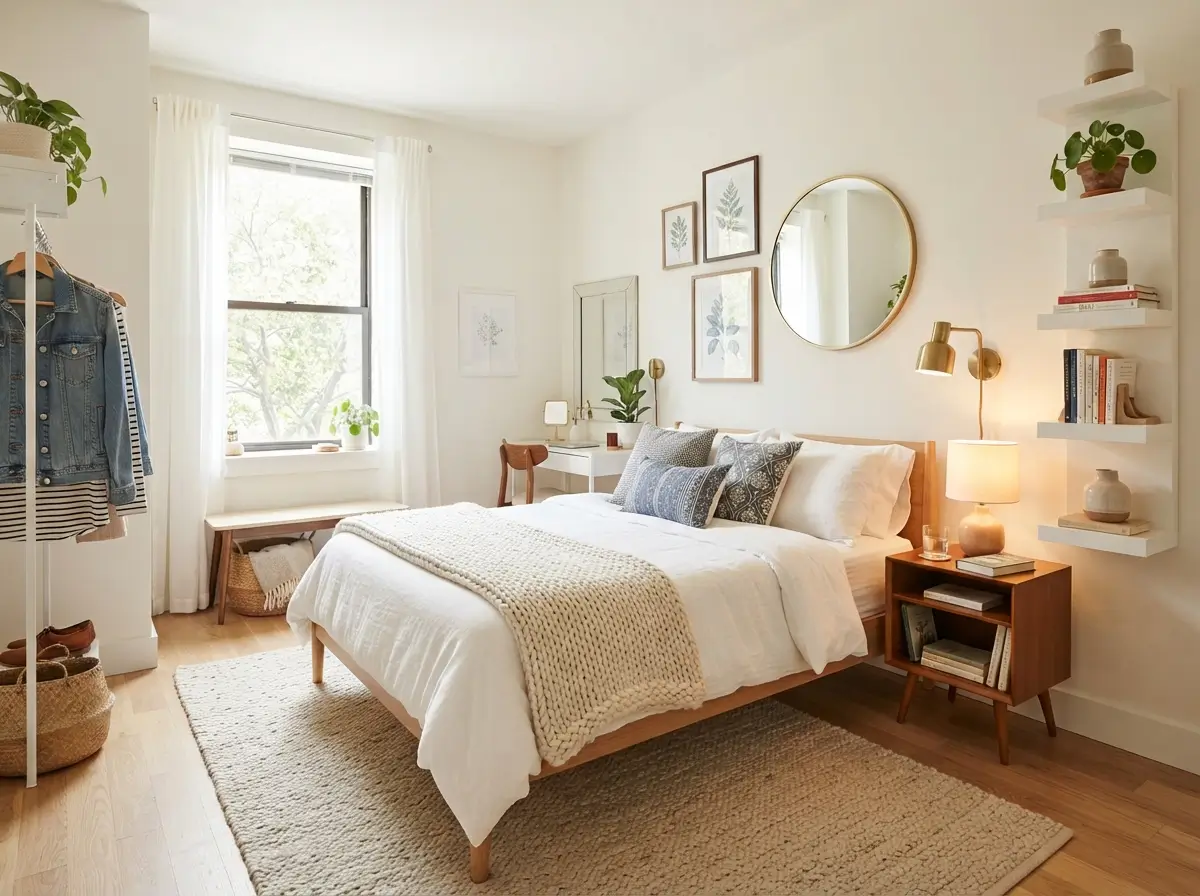

Small bedrooms can feel polished, comfortable, and practical without expensive furniture or permanent changes. Good small-bedroom design starts with understanding how you move through the room, where clutter collects, and which features deserve attention. Instead of filling every wall and corner, choose a few useful pieces that improve storage, light, and comfort at the same time. Beginners should focus on scale, spacing, and color before buying decorative extras. Those three decisions shape how open, calm, and useful the bedroom feels every day.
What Is the Best Way to Decorate a Small Apartment Bedroom?
Quick answer: begin with the bed position, keep a clear walking path, use vertical storage, choose two or three main colors, and add layered lighting instead of relying on one ceiling fixture. Apartment Bedroom Decor works best when every major item has a purpose, and the room still has visible space. Measure first, select furniture with slimmer profiles, and repeat materials or colors so the room looks connected. One compact nightstand, one soft rug, and one well-placed mirror often improve a bedroom more than several small accessories scattered around the room.
Start With a Better Bed Position
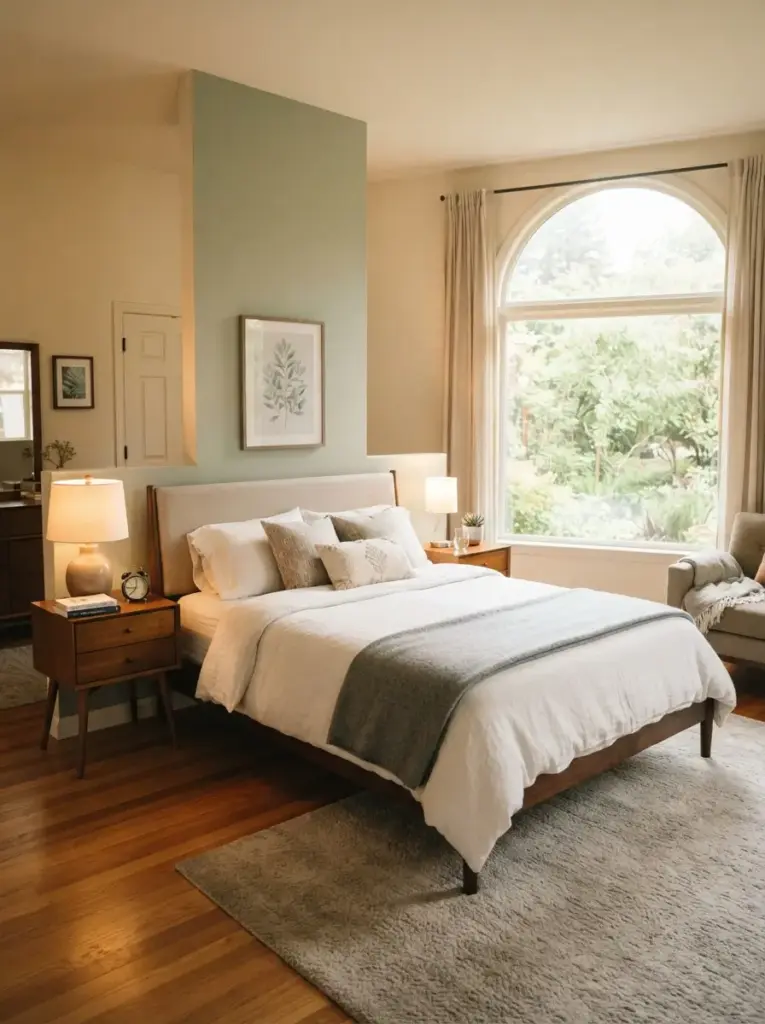
Bed placement controls nearly every other decorating decision in a small room. Centering the bed on the longest uninterrupted wall usually creates balance and leaves space for a narrow nightstand on each side. When the room is extremely tight, place one side near the wall and keep at least 24 inches of walking space on the open side. Avoid blocking the door swing, closet doors, or heating vents. Renters should also check outlet locations before moving heavy furniture, especially when lamps, chargers, and an alarm clock need power close to the bed.
Layout planning works because clear movement makes a room feel larger than extra decoration ever will. Mark the bed footprint with painter’s tape before rearranging furniture, then walk through the room as you normally would. People with queen beds in rooms under 10 feet wide may benefit from a low-profile platform frame without a bulky footboard. Couples should prioritize access on both sides whenever possible, while solo sleepers can use a corner layout to free space for a desk or wardrobe. Keep at least three inches between the bed and curtains so fabric can hang properly.
Choose a Low-Profile Bed Frame
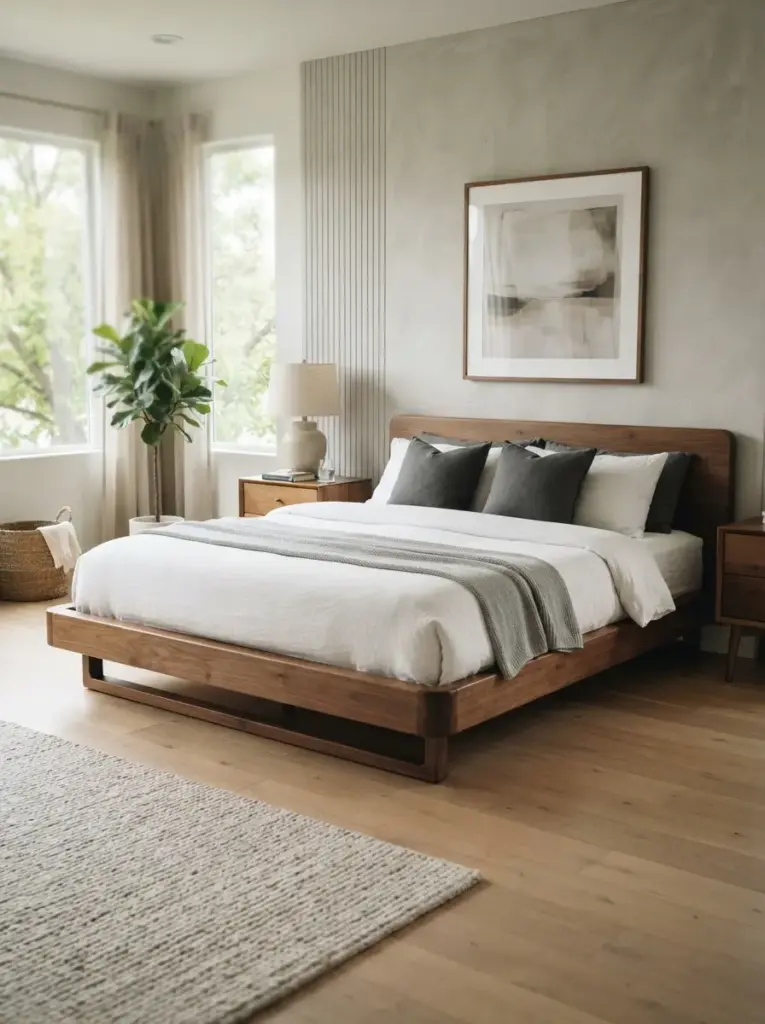
Slim bed frames reduce visual weight and help the ceiling appear higher. Look for simple wood platforms, upholstered frames with narrow rails, or metal frames with clean legs. Headboards between 36 and 48 inches high usually suit compact rooms better than tall tufted designs. Avoid thick sleigh beds, deep footboards, and oversized wingback headboards because they consume valuable inches and can overpower the wall. Storage beds can work well, but check whether drawers can open fully without hitting another piece of furniture.
Lower furniture improves proportion by revealing more of the wall and leaving a stronger line of sight across the room. Someone furnishing a studio or first apartment can save money with a basic platform base and add comfort through bedding rather than an elaborate frame. Choose warm oak, walnut, cream upholstery, or matte black metal depending on the room’s palette. For a renter-friendly update, attach a fabric headboard cushion to removable hooks or hang a lightweight quilt behind the bed. Measure mattress height, too, because a thick mattress can make even a modest frame look bulky.
Build a Simple Two or Three Color Palette
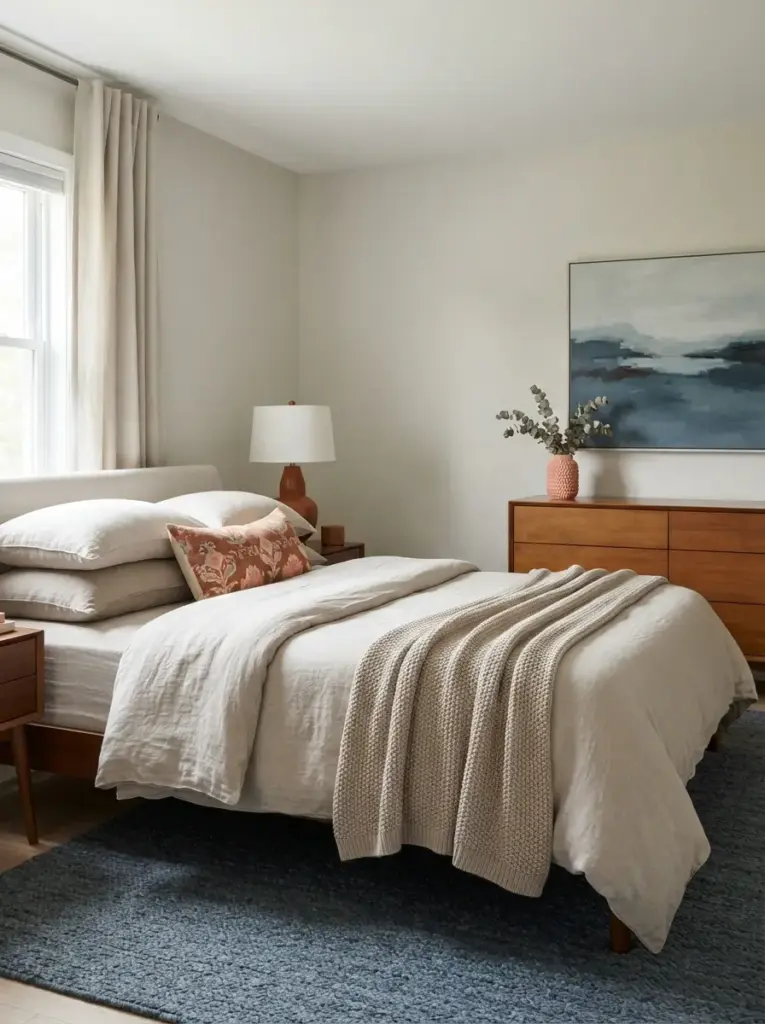
Color feels more controlled when one shade covers most surfaces, a second supports it, and a third appears in smaller accents. Soft warm white, pale greige, misty blue, muted sage, and light taupe all reflect light without making a bedroom feel cold. Use the main color on walls, bedding, and curtains, then repeat a darker supporting shade in the rug, lamp, or artwork. Accent colors should occupy roughly ten percent of the room so they add interest without creating visual noise.
Limited palettes succeed because repeated color helps separate items read as one composition. Beginners can test combinations with pillowcases, paint samples, and a saved photo of the room before spending money. Renters who cannot paint can use large textiles to establish color, such as a duvet, curtains, or a washable rug. Anyone wanting a stronger color can explore Coral Bedroom Ideas for warm accents, Fresh Mint Bedroom Ideas for a cleaner feel, Warm Burnt Orange Bedroom Ideas for earthy contrast, or Teal Bedroom Ideas for deeper character. Keep undertones consistent so warm beige does not fight an icy gray.
Hang Curtains High and Wide
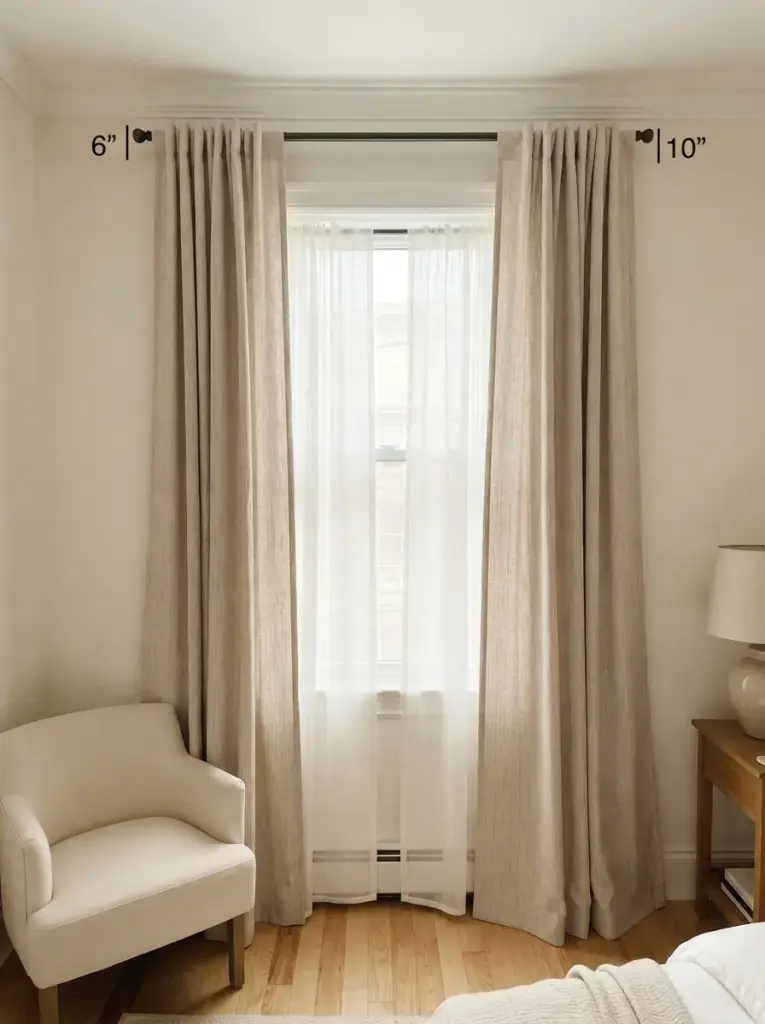
Curtains should sit closer to the ceiling than the window frame in most small bedrooms. Mount the rod four to eight inches above the window and extend it six to twelve inches beyond each side when wall space allows. Panels should just touch the floor or hover half an inch above it. Long vertical lines make walls appear taller, while wider rods allow more glass to remain visible during the day. Choose curtain widths that are at least twice the window width so the fabric hangs with proper fullness.
Higher curtains improve scale by making the window feel larger and bringing softness to an otherwise boxy room. Blackout panels suit street-facing apartments, shift workers, and light sleepers, but pair them with sheer curtains if privacy is needed during daylight. Renters can use tension rods inside the frame for sheers and no-drill brackets for heavier panels, provided the product suits the rod weight. Avoid short curtains that stop at the sill unless furniture blocks the lower wall. Linen blends, cotton-look polyester, and matte woven fabrics usually look calmer than shiny satin.
Layer Lighting at Three Levels
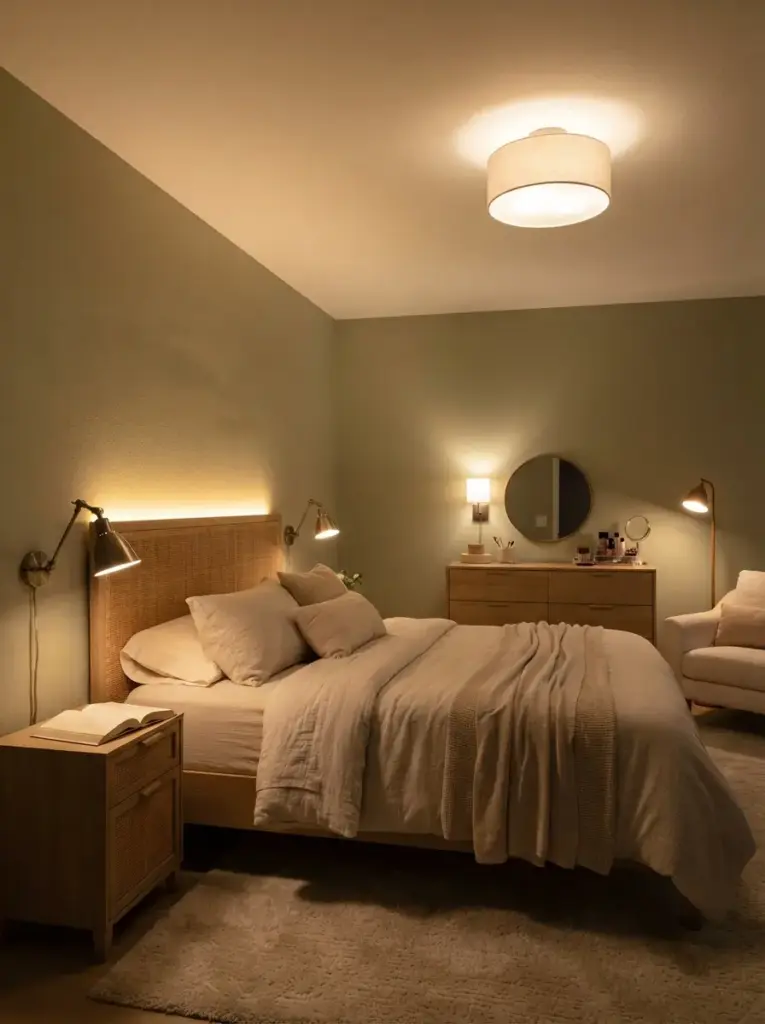
One overhead fixture rarely provides enough comfort or flexibility. Use ambient light for general visibility, task light for reading or dressing, and accent light to soften corners. Warm white bulbs between 2700K and 3000K work well in bedrooms because they feel gentle at night and flatter most wall colors. A ceiling light can handle cleaning and dressing, bedside lamps can support reading, and a small floor lamp or LED strip behind a headboard can add low-level evening light.
Layered lighting helps because different activities need different brightness and direction. Renters can replace bulbs, add plug-in sconces, or use rechargeable wall lights without changing wiring. Readers should choose lamps with focused shades and place the bulb slightly above shoulder level when sitting in bed. People who apply makeup in the bedroom need brighter, more neutral light around 3000K to 3500K near the mirror. Avoid exposed cool-white bulbs above 4000K unless the room doubles as a workspace, because they can make fabrics and skin tones look harsh after dark.
Use Nightstands With Open Space
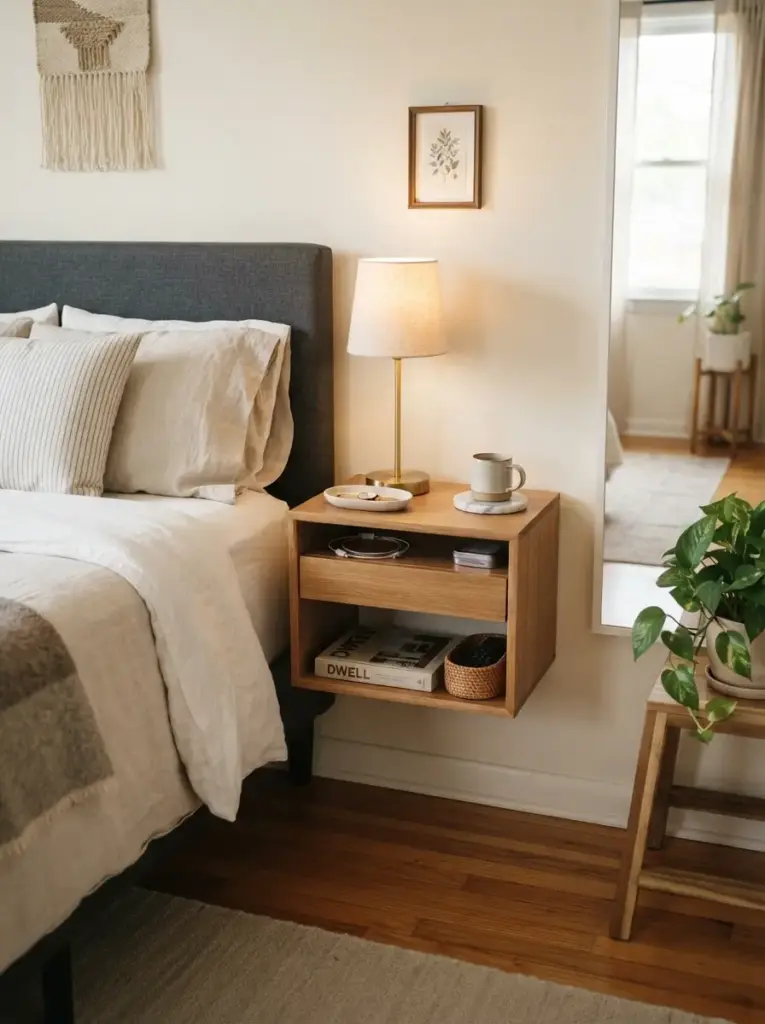
Compact nightstands should support essentials without becoming storage traps. Choose a table 12 to 18 inches wide, a floating shelf, a narrow pedestal, or a small stool with a flat top. Open-leg designs reveal more floor and reduce visual bulk. Height matters more than width, so aim for a surface within two or three inches of the mattress top. One drawer can hide chargers and medicine, while an open shelf can hold a book or a basket.
Visible floor area gives the room breathing space and makes cleaning easier. Floating nightstands work well for renters when attached with removable heavy-duty systems rated for the load, although standard wall anchors are safer when allowed. Small-room couples can use matching wall shelves rather than full cabinets. Someone on a tight budget can repurpose a plant stand, sturdy wooden crate, or compact side table. Skip oversized bedside chests unless they replace another dresser. Keep styling minimal with a lamp, coaster, and one small object instead of covering every inch.
Add Storage Under the Bed
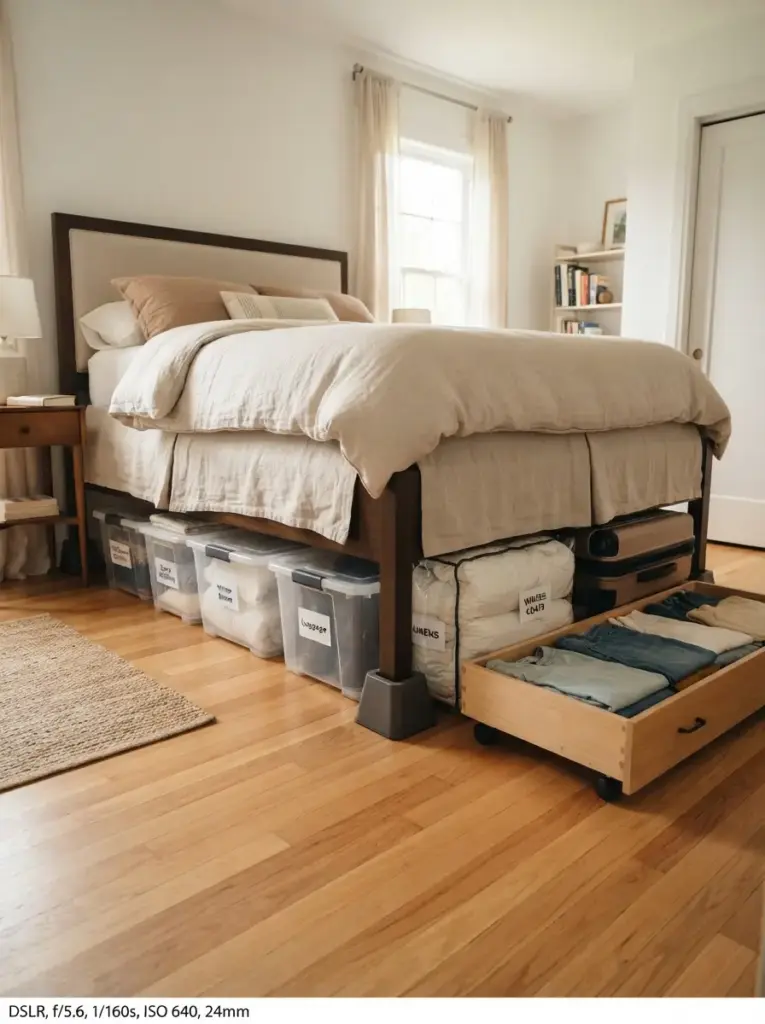
Under-bed space can hold off-season clothing, spare bedding, shoes, luggage, or rarely used items. Use low bins with lids to protect contents from dust, and select transparent boxes or clear labels so everything remains easy to find. Vacuum bags help with bulky duvets, but avoid compressing natural down for long periods. Bed risers can create extra height, though they should match the frame and include non-slip bases. Storage drawers on wheels work best on hard flooring or low-pile rugs.
Hidden storage strengthens the room by reducing the need for tall cabinets and crowded surfaces. People with limited closets gain the most from this approach, especially when items are grouped by season or use. Measure the exact clearance from floor to bed rail before buying containers, including any center supports that divide the space. Avoid pushing loose shopping bags underneath, because random storage quickly becomes hard to manage. Choose matching bins for a cleaner appearance if the bed frame exposes the lower area, or add a tailored bed skirt when it suits the style.
Use One Large Rug Instead of Several Small Ones
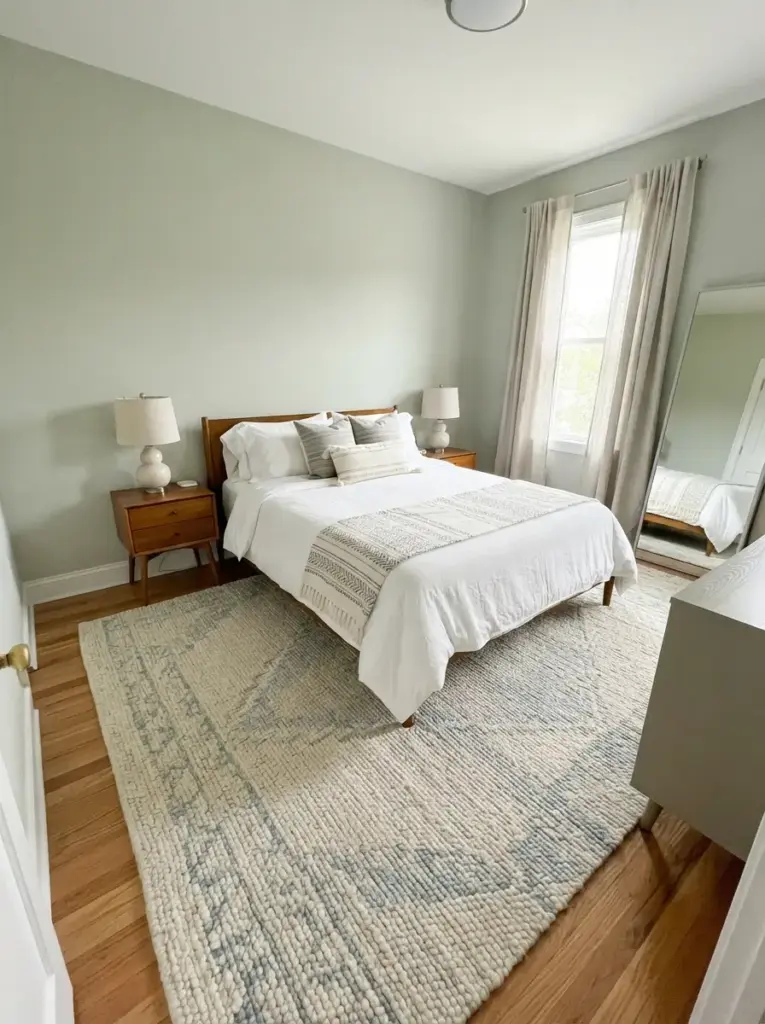
Large rugs make a small room feel more unified. For a queen bed, a 6-by-9-foot rug often works when placed under the lower two-thirds of the bed, while an 8-by-10-foot rug creates more coverage if the room permits. At least 18 inches of rug should extend beside the bed so feet land on a soft surface. In very narrow rooms, use two matching runners along the sides instead of one undersized rug floating near the footboard.
Broad floor coverage works because fewer visual breaks make the room look calmer and wider. Low-pile wool blends, flatweaves, and washable synthetic rugs are easier to maintain than thick shag in compact spaces. Renters should add a rug pad to prevent sliding and protect the flooring from rough backing. Choose patterns with medium scale rather than tiny, busy motifs, especially when bedding already has print. A pale rug can brighten a dark room, but medium taupe, muted blue, or patterned beige hides everyday marks more effectively. Avoid rugs that stop awkwardly beneath only half of each nightstand.
Bring in a Full-Length Mirror
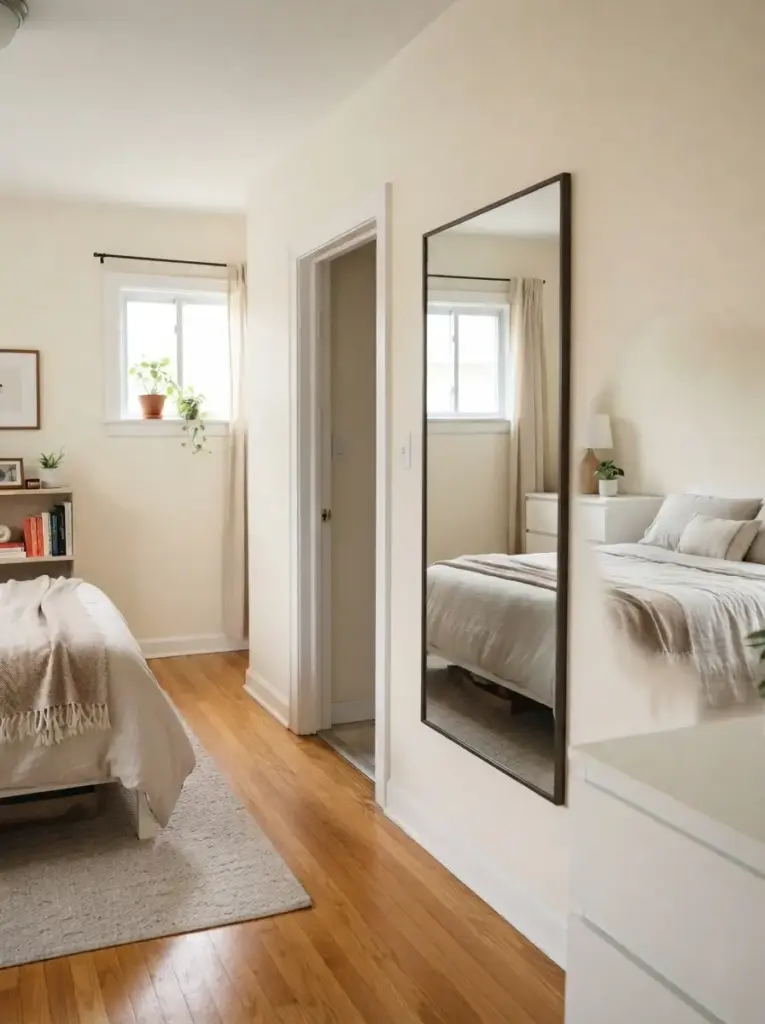
Mirrors increase brightness by reflecting windows and lamps, but placement matters. Position a full-length mirror across from or near a window to spread daylight deeper into the room. Leaning mirrors can work, yet they should be secured with anti-tip hardware, especially in homes with children or pets. Over-the-door mirrors save floor space, while mirrored wardrobe doors serve two functions. Choose a frame that repeats an existing finish, such as light wood, black metal, or brushed brass.
Reflected light adds depth without taking physical space, which makes mirrors especially useful in bedrooms with one small window. People who dress in the bedroom should select a mirror at least 16 inches wide and around 60 inches tall for a practical full-body view. Renters can use removable door hooks or adhesive mirror tiles, though large tiles need careful alignment to avoid a distorted reflection. Avoid placing a mirror directly opposite an untidy open closet. Keep reflected areas simple, because mirrors double both attractive features and visible clutter.
Select Vertical Storage With Closed Sections
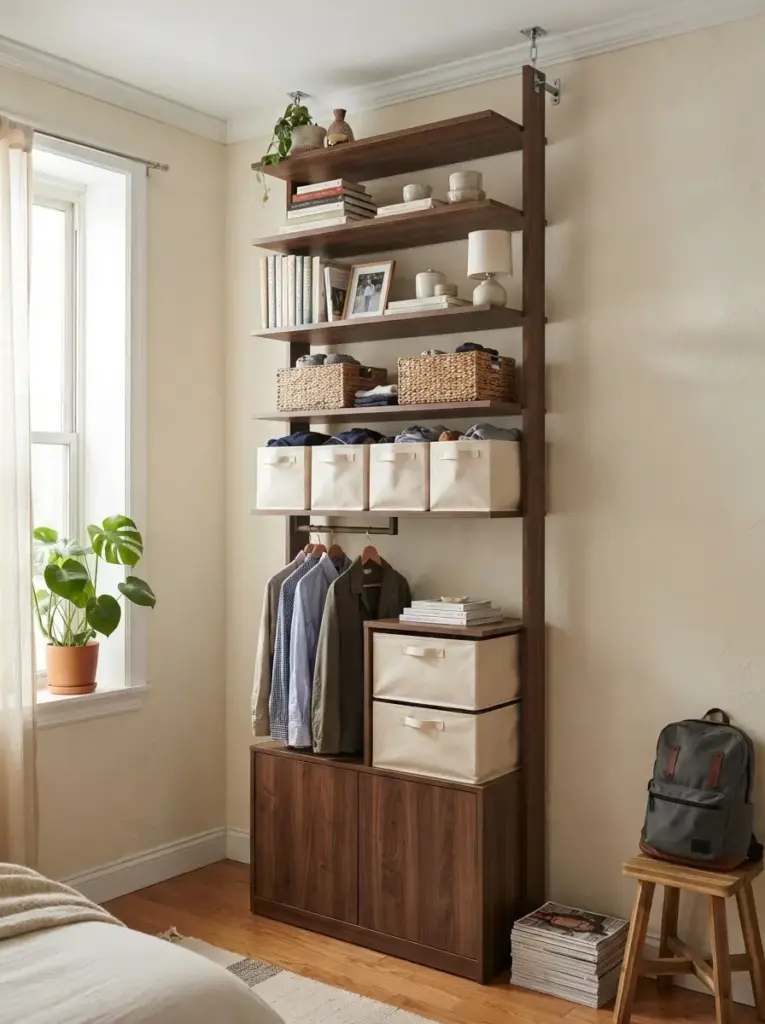
Tall, narrow storage uses wall height without consuming much floor area. Look for bookcases under 30 inches wide, ladder shelves, wall-mounted cabinets, or slim wardrobes with shelves above a hanging section. Closed doors or baskets should hide visually busy items, while open shelves can display a limited number of books and objects. Secure tall furniture to wall studs or approved anchors, even in rentals, because tip-over safety matters more than avoiding a small repair.
Vertical furniture earns its place by replacing several shorter pieces with one organized zone. Students, remote workers, and apartment dwellers without built-in closets benefit from combining clothing, books, and supplies in a single unit. Keep heavier items on lower shelves and lighter decor near the top. Baskets in one material, such as seagrass or canvas, create order without making everything match exactly. Avoid filling every shelf edge-to-edge. Leaving 20 to 30 percent of open shelf space empty allows objects to breathe and makes the entire room feel less crowded.
Create a Compact Bedside Workspace
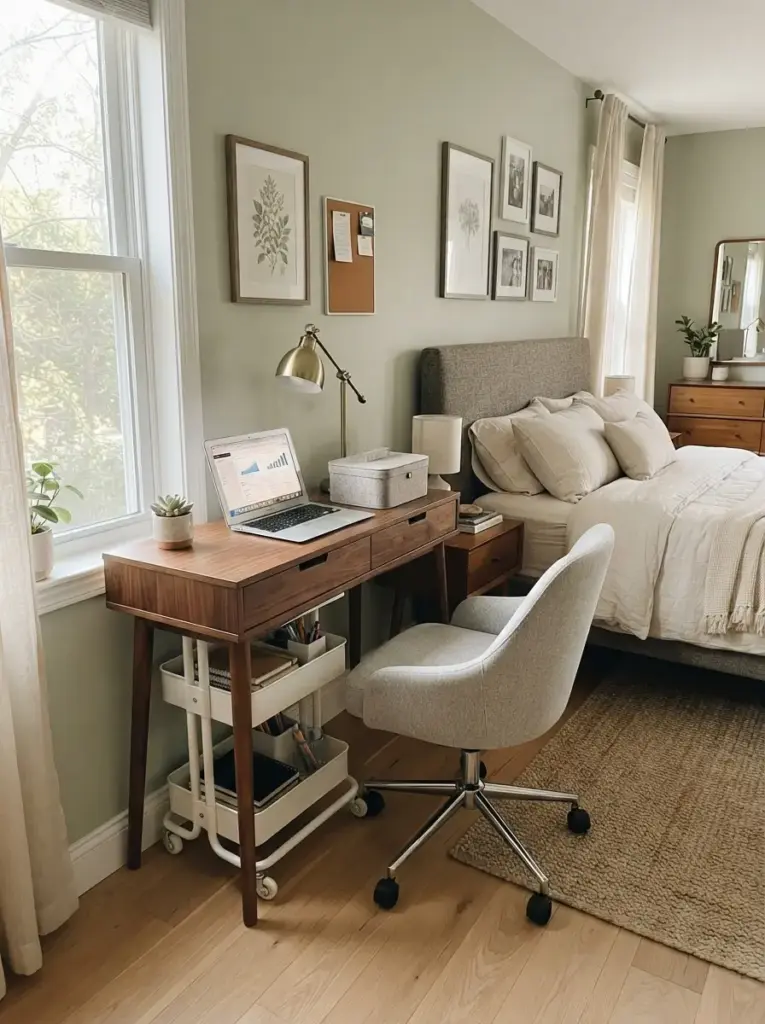
Bedrooms sometimes need to function as offices, but the desk should not dominate the room. Choose a wall-mounted drop-leaf desk, narrow console, secretary desk, or table no deeper than 18 to 20 inches. Place it near natural light without blocking the window, and use a chair that can fully tuck underneath. A desk lamp with an adjustable arm helps during work and can serve as evening accent lighting after the laptop closes.
Dual-purpose furniture supports small-space living because one area can change roles during the day. Renters and students can use a console as both a desk and vanity, storing supplies in a rolling cart that slides beneath it. Keep work equipment in one tray or lidded box so the bedroom feels restful at night. Avoid placing a large monitor directly opposite the bed when possible. Someone working full-time from home should prioritize proper chair height and legroom over decorative appearance, because comfort becomes more important when the desk is used for several hours.
Style the Bed With Controlled Layers
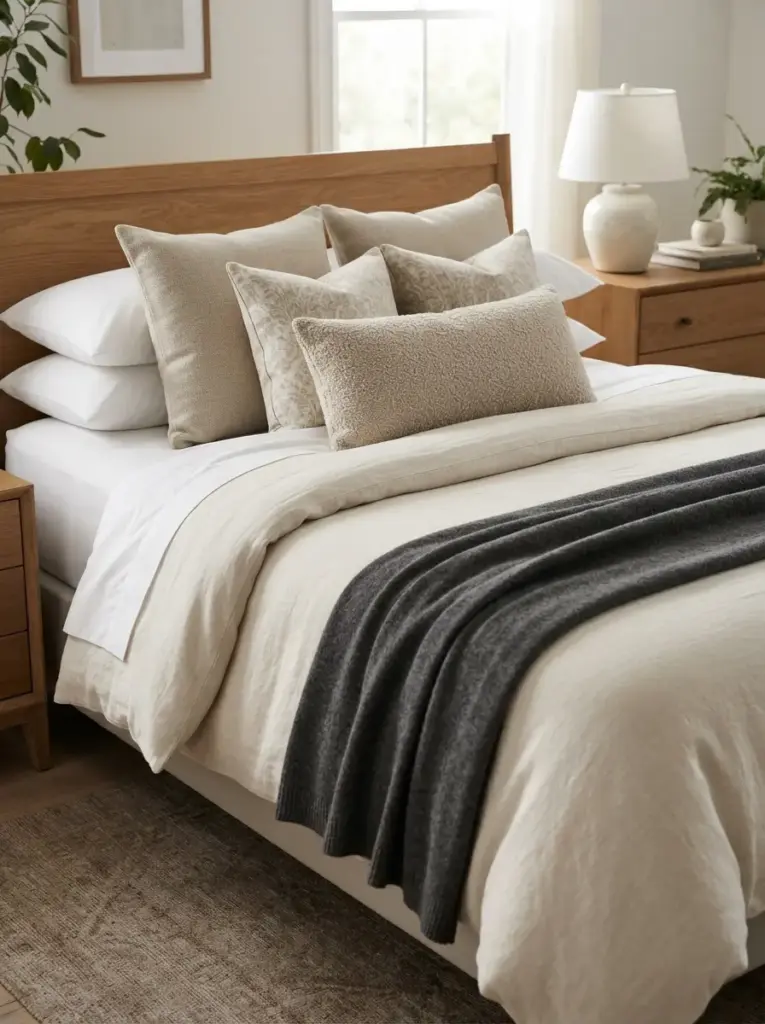
Bedding takes up the largest visual area in most bedrooms, so it should guide the palette. Start with breathable sheets, add a duvet or quilt, then include one folded blanket for texture. Two sleeping pillows, two decorative pillows, and one lumbar cushion usually provide enough depth on a queen bed without creating a nightly pile on the floor. Mix textures such as cotton, linen, boucle, or a small amount of velvet, but keep patterns within the same color family.
Layering works when each piece adds comfort or contrast rather than pure volume. Hot sleepers should choose percale cotton or linen and use a lightweight coverlet instead of a heavy synthetic comforter. People who want a hotel-like appearance can use white or cream bedding with a darker throw at the foot. Budget shoppers should spend first on sheets and pillow inserts, then update covers seasonally. Avoid buying many small cushions with different prints, because they shorten the visible bed surface and make a compact room look busier.
Add Art at the Right Scale
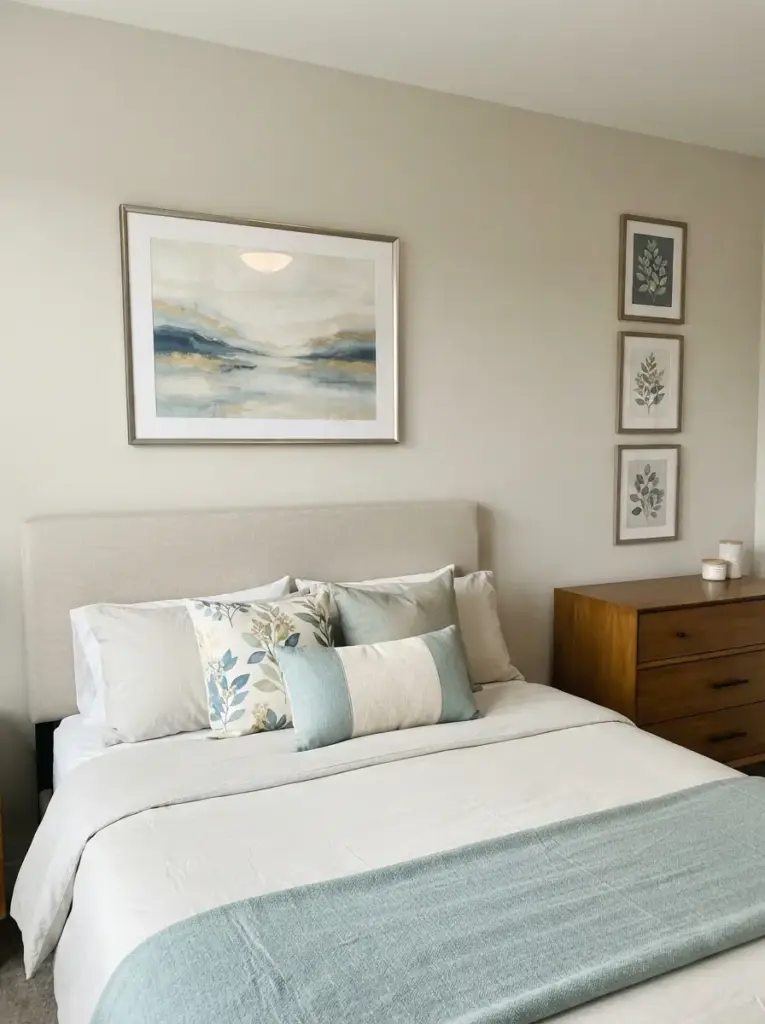
Artwork should relate to the furniture beneath it. Above a queen bed, one piece around 30 to 40 inches wide or a pair of 18-by-24-inch prints usually feels balanced. Leave six to ten inches between the headboard and the bottom of the frame. Small art can work in a tight vertical grouping near a dresser, but scattered pieces across every wall often look disconnected. Choose subjects and colors that repeat the room’s palette rather than introducing several unrelated themes.
Proper scale creates a focal point and reduces the urge to fill empty wall areas with random objects. Renters can use lightweight frames, removable strips rated for the correct weight, fabric banners, or framed posters with acrylic instead of glass. Beginners should lay frames on the floor first and photograph the arrangement before hanging. Keep gallery wall spacing consistent at roughly two to three inches. Avoid placing valuable or heavy glass frames directly above the bed in earthquake-prone areas. One larger piece often costs less than several frames once printing and hardware are included.
Use Plants Where They Can Actually Thrive
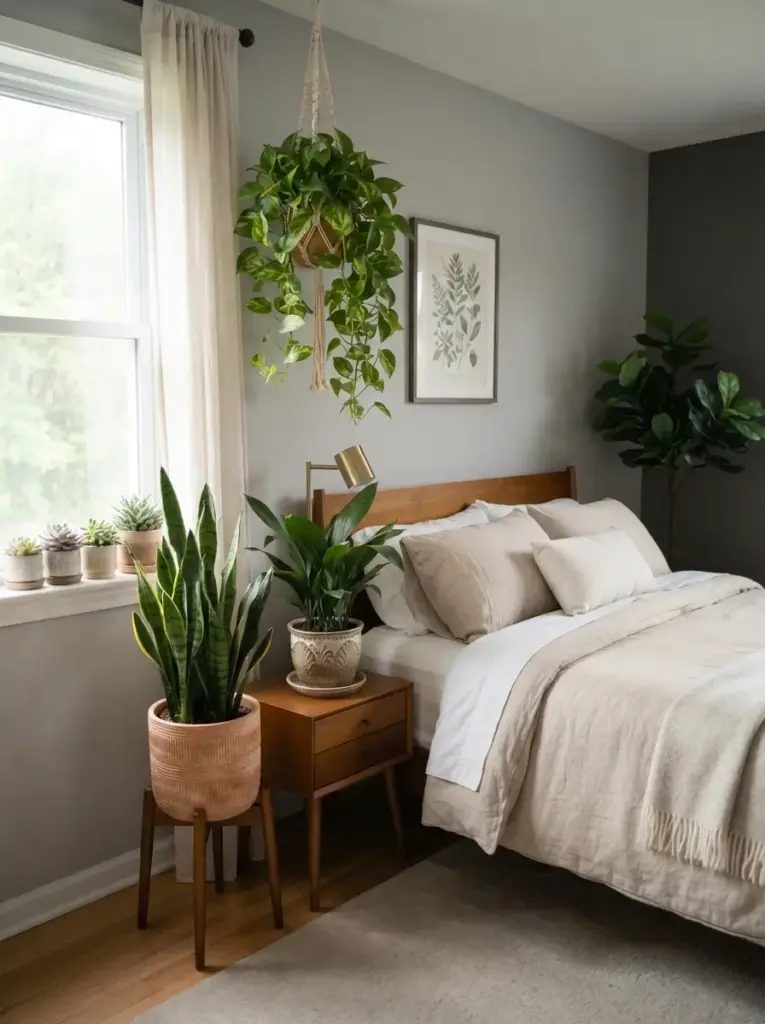
Plants add shape, color, and softness, but bedroom light should determine the choice. Snake plants, ZZ plants, pothos, and cast-iron plants tolerate lower light, while succulents need a bright window and often fail in dim corners. Place plants where watering is easy, and leaves will not brush against bedding. One medium plant on a stand can make more impact than several tiny pots spread around the room. Faux plants are reasonable for dark bedrooms, provided their color and leaf shape look natural.
Living greenery works because organic forms break up straight furniture lines and add a quiet sense of movement. Busy beginners should choose low-maintenance species and use pots with drainage holes placed inside decorative covers. Pet owners need to check whether a plant is toxic before bringing it home. Renters can use hanging planters only with approved hooks or secure tension systems. Avoid crowding the windowsill with many pots, since that blocks daylight and complicates curtain use. Dust leaves monthly, so plants reflect light and remain healthy.
Finish With One Purposeful Focal Point
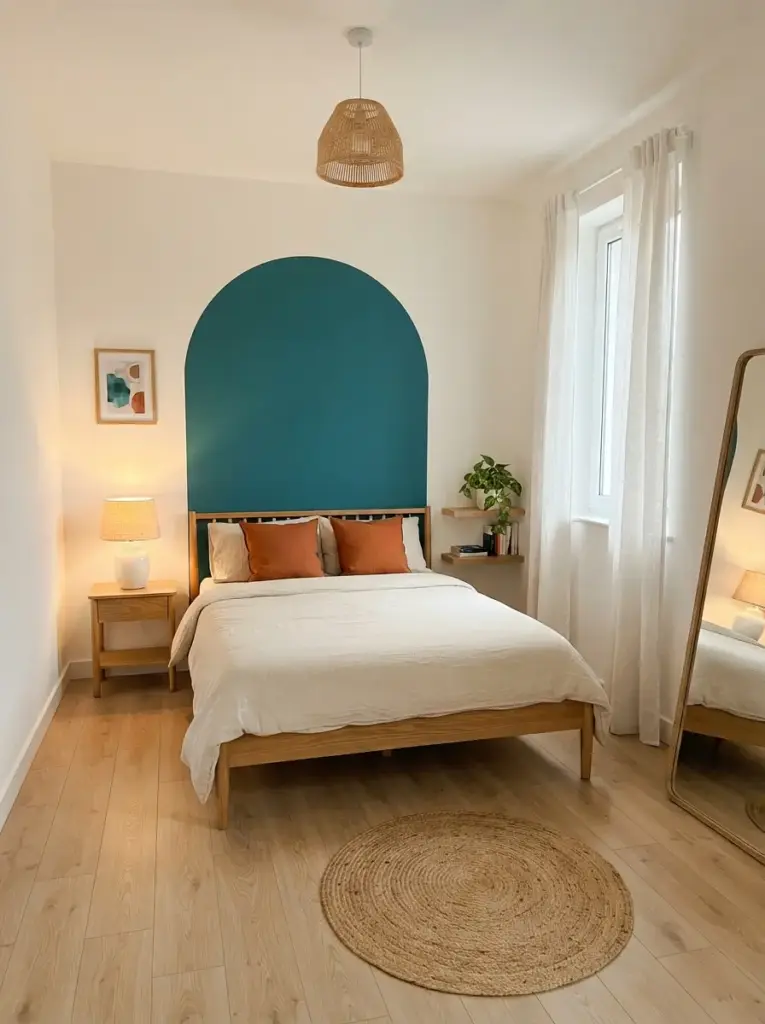
Every small bedroom benefits from one feature that attracts attention before the eye notices the room’s size. Options include a painted headboard shape, a textured wall hanging, a bold quilt, a wide piece of art, or a striking pendant shade. Keep surrounding surfaces simpler so the focal point remains clear. Renters can create a headboard effect with peel-and-stick wallpaper, a removable arch decal, or a large fabric panel attached with damage-free hardware.
Focused design succeeds because one strong idea creates order and prevents decorative competition. Apartment Bedroom Decor feels more complete when colors, lighting, and accessories support the same central feature. Creative renters might use a burnt orange quilt against warm white walls, a teal headboard with oak furniture, or a mint wall hanging with cream bedding. Avoid combining a dramatic wallpaper, colorful rug, patterned duvet, and crowded gallery wall in one compact room. Choose one leading element, then repeat one or two of its colors elsewhere in smaller amounts.
Common Small Bedroom Decorating Mistakes to Avoid
Overfilling the room causes the most common problems. Several tiny tables, multiple storage carts, and too many decorative objects can consume more space than one well-sized dresser or cabinet. Measure the room, doors, and circulation paths before shopping. Furniture should not block outlets, vents, closet access, or the ability to make the bed. Keep at least one clear surface, such as the top of a dresser or nightstand, so the room has a visual resting point.
Ignoring scale creates another issue. Small rooms do not require miniature furniture everywhere, but pieces should relate to each other. A huge bed with thin nightstands looks unstable, while a tiny rug beneath a large bed appears accidental. Choose fewer items with suitable proportions. Curtains, art, and lamps should also match the bed’s visual weight. Floor lamps that are too short, art hung too high, and curtains ending above the floor can make the room feel chopped into sections.
Poor lighting can flatten color and make even good furniture look dull. One cool ceiling bulb creates sharp shadows and does not support reading or relaxing. Add at least two light sources, use consistent bulb temperatures, and place switches or smart plugs within easy reach. Bedrooms with dark paint need stronger ambient light and reflective surfaces, while pale rooms benefit from warm bulbs that prevent a washed-out appearance.
Clutter without a storage routine quickly returns. Decorative baskets help only when each basket has a defined purpose. Assign places for laundry, chargers, shoes, and everyday clothing, then make those places easy to reach. Closed storage works better for small mixed items, while open shelves suit books and a few display pieces. Avoid buying organizers before sorting belongings, because the wrong containers simply hide unnecessary items.
Budget-Friendly Ways to Improve a Small Bedroom
Rearranging costs nothing and often produces the biggest improvement. Move the bed to the strongest wall, clear the window, and remove furniture that blocks walking paths. Shop the rest of the home before buying anything new. A living-room side table may work as a nightstand, while a dining bench can become a low shelf at the foot of the bed. Photograph the room after each change, because pictures reveal awkward spacing more clearly than standing inside the space.
Textiles offer affordable color and softness. Replace only the duvet cover rather than the full bedding set, add one larger cushion instead of several small ones, or use curtain panels to cover an unattractive closet opening. Secondhand curtains can be hemmed with iron-on tape, and flat sheets can become simple fabric wall panels. Washable rugs cost more initially than tiny mats but usually create a stronger result and are easier to maintain.
Paint provides value when the lease allows it. One gallon can cover a small room, though renters should confirm approved colors and repainting rules. Painting only the wall behind the bed reduces cost and labor. Removable wallpaper can create a similar feature, but order a sample first and test it for two weeks in a hidden area. Heat, humidity, and textured walls can affect adhesion.
Secondhand shopping stretches a small budget, especially for solid wood nightstands, mirrors, lamps, and frames. Check dimensions before traveling, inspect for odors or pests, and test drawers and switches. Soft upholstered items require more caution than hard furniture. Apartment Bedroom Decor does not need to come from one store or one collection. Repeating color, material, and shape can connect mismatched finds.
Practical Apartment Bedroom Decor Tips for Renters
Damage-free solutions should still be safe and intentional. Use removable hooks only within their stated weight limits, clean the wall before installation, and wait the recommended time before hanging anything. Heavy mirrors, shelves, and cabinets usually need proper anchors. Ask the landlord for written approval when safety requires drilling. Small repaired holes are often easier to manage than damage caused by an overloaded adhesive strip.
Flexible furniture makes moving simpler. Folding desks, nesting tables, modular shelves, and lightweight bed frames can adapt to future apartments. Choose items that fit through narrow doors and stairwells, especially in older buildings. Avoid built-in-looking pieces that only work on one wall. Neutral core furniture can move between rooms, while color can come from textiles and art.
Window privacy should balance daylight and coverage. Sheer curtains soften outside views during the day but do not provide full privacy after dark. Pair them with blackout panels, roller shades, or removable privacy film on the lower half of the glass. Frosted film suits bathrooms and street-level windows, while patterned film can reduce light more than expected. Test a small section before covering the whole window.
Maintenance keeps a small room looking better than constant shopping. Wash bedding regularly, vacuum under the bed, dust lamp shades, and clear nightstands each week. Rotate seasonal clothing instead of keeping every item accessible year-round. Monthly editing prevents decorative objects from spreading across all available surfaces. Small rooms reward consistent habits because every visible item has more impact.
Color and Style Routes for Different Bedrooms
Warm neutral rooms suit people who want calm without stark white. Combine cream walls, oatmeal bedding, medium oak, and black accents for definition. Add muted clay or rust through a throw or artwork. Keep whites in the same warm family, because blue-white sheets can make beige walls look yellow. Natural textures such as linen, wool, rattan, and matte ceramics help the palette feel layered rather than flat.
Cooler rooms benefit from softened blue-green shades. Teal works well in one major element, such as a headboard or quilt, then repeats in smaller art details. Mint suits pale wood, white, and soft gray, but choose muted mint rather than bright candy green for a more restful result. Coral adds warmth against blue-gray walls, while burnt orange pairs naturally with cream, walnut, and olive.
Minimal bedrooms still need texture and function. Use one simple palette, then vary materials through woven curtains, smooth cotton sheets, a wool rug, and a wood nightstand. Keep decorative objects limited, but do not remove every personal item. One framed photo, a small stack of books, and a useful ceramic dish can make the room feel lived in without creating clutter.
Frequently Asked Questions
How can I make a small apartment bedroom look bigger?
Use furniture with visible legs, hang curtains high, choose one larger rug, and keep pathways clear. Place a mirror near a window to reflect daylight, but avoid mirroring clutter. Light wall colors can help, though dark shades can also work when lighting is layered and furniture remains simple. Fewer large pieces usually create more calm than many small items. Keep bedding colors connected to the walls so the bed does not visually cut the room in half.
Which colors work best for a small bedroom?
Soft warm white, pale beige, muted sage, dusty blue, light taupe, and gentle gray are reliable starting points. Color choice should respond to natural light. North-facing rooms often benefit from warmer undertones, while bright south-facing rooms can handle cooler shades. Dark teal, charcoal, or forest green can work on one wall or throughout the room when paired with warm lamps, light bedding, and reflective surfaces.
How do renters decorate without damaging walls?
Removable hooks, picture strips, tension rods, freestanding mirrors, over-door storage, and peel-and-stick products can reduce permanent changes. Follow weight limits and test adhesive products in hidden areas. Heavy objects still need secure mounting, so ask the landlord for permission when needed. Keep original hardware, document the room before changes, and repair small holes carefully before moving out.
What furniture should a small apartment bedroom include?
Most bedrooms need a bed, one or two compact bedside surfaces, closed clothing storage, and suitable lighting. A desk, bench, or bookcase should enter only when it serves a clear daily function. Choose pieces that fit the room’s measurements and leave enough space to open doors and drawers. Multi-use furniture helps, but complicated transforming pieces are not always necessary.
How do I create storage without making the room crowded?
Use under-bed containers, one tall cabinet, drawer dividers, wall hooks, and closed baskets. Store frequently used items at reachable heights and seasonal items higher or lower. Avoid adding separate organizers for every category. One well-planned wardrobe or dresser often works better than several carts and bins. Leave some open shelf space so storage does not become another form of visual clutter.
How often should I update Apartment Bedroom Decor?
Major updates are rarely necessary more than every few years when the layout and furniture already work. Seasonal changes can stay small, such as switching a throw, pillow covers, or one art print. Review storage every three to six months and remove items that no longer serve the room. Replace lighting, bedding, or curtains when function declines rather than changing them only to follow trends.
Conclusion
Small bedrooms improve through careful choices rather than constant additions. Begin with a practical bed position, choose furniture at the right scale, and protect clear walking space. Build the palette through bedding and curtains, then support it with layered lighting, one suitable rug, vertical storage, and a focused piece of art. Rental-friendly methods can still look considered when materials, colors, and proportions repeat across the room.
Thoughtful Apartment Bedroom Decor should make daily routines easier, reduce visible clutter, and reflect personal taste without overwhelming limited square footage. Measure before buying, test temporary products, and spend first on pieces used every day. Strong layouts and useful storage create the foundation, while color, texture, plants, and artwork bring character. Small rooms shine when every item has enough space to be seen and a clear reason to stay.