
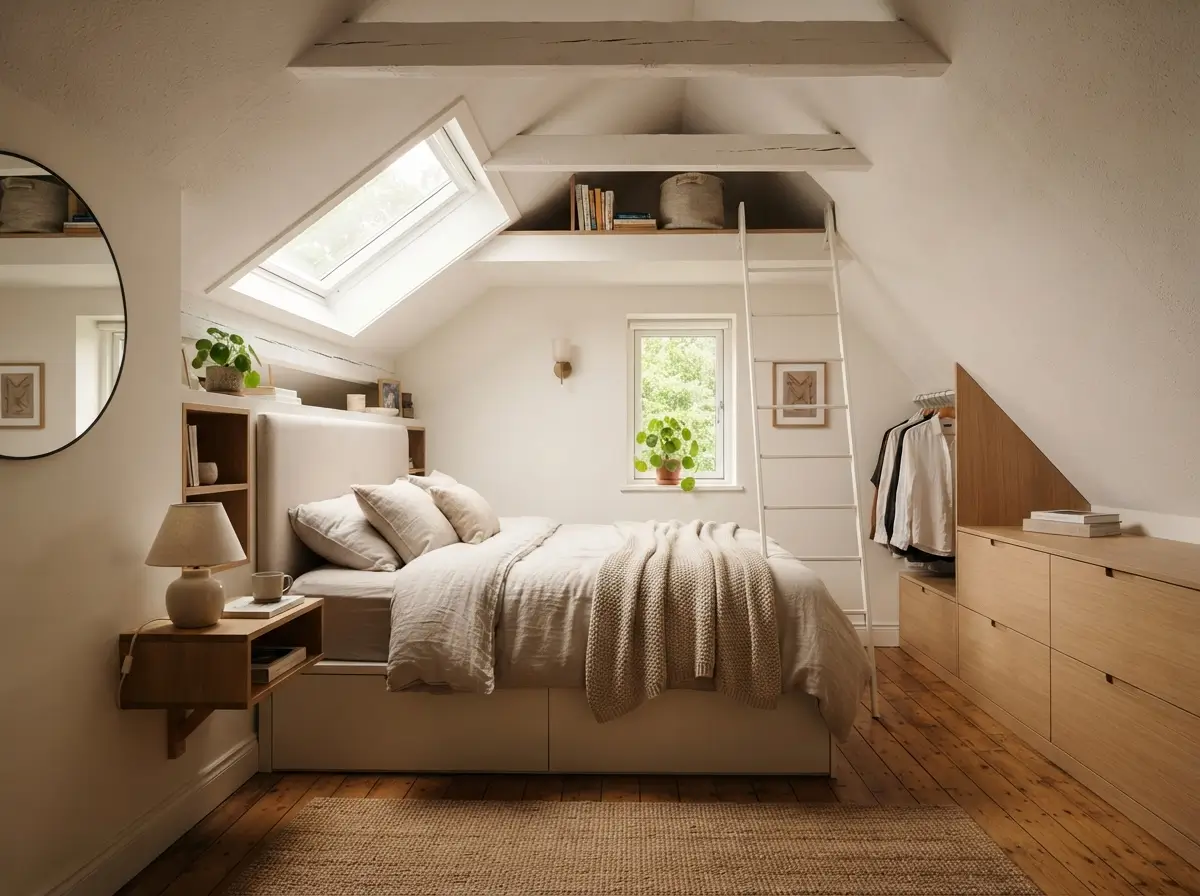

Small loft areas often come with unique challenges, including sloped ceilings, limited floor space, unusual corners, and fewer storage options. However, these features can become advantages when the room is planned carefully. An Attic Bedroom does not need a large footprint to feel comfortable and functional. With thoughtful furniture choices, smart layouts, and creative storage solutions, even the smallest loft can become a practical sleeping space. Space Saving Attic Bedroom Ideas
Many homeowners and renters overlook attic areas because they seem difficult to decorate. Low ceilings and angled walls can make standard bedroom furniture feel oversized, while poor lighting can make the room appear smaller than it actually is. The key is to work with the architecture instead of fighting against it. Choosing compact furniture, using vertical space, and keeping the design simple can completely change how the room feels.
This guide shares practical ideas for creating a comfortable loft bedroom without wasting valuable space. Each suggestion focuses on real decorating decisions, from furniture placement and color selection to storage solutions and lighting choices. Whether you are designing a permanent bedroom or improving a rental loft, these ideas can help you create a more organized and welcoming space.
How Can You Make a Small Attic Bedroom Feel Bigger?
A small loft bedroom feels larger when every item has a purpose. Start by reducing unnecessary furniture and selecting pieces that provide multiple functions. A bed with built-in drawers, floating shelves, or a foldable desk can replace several bulky items while keeping the room organized.
Light colors also influence how spacious the room appears. Soft shades such as warm white, pale beige, light gray, muted sage, and dusty blue reflect more natural light and prevent the space from feeling closed in. Combining these colors with mirrors and layered lighting can improve brightness without requiring structural changes.
The most effective approach is to create a layout that allows easy movement. Keeping pathways clear and placing larger furniture against walls helps the room feel open. Even a tiny loft can become comfortable when the design focuses on function first.
Choose Low Profile Furniture to Fit Sloped Ceilings
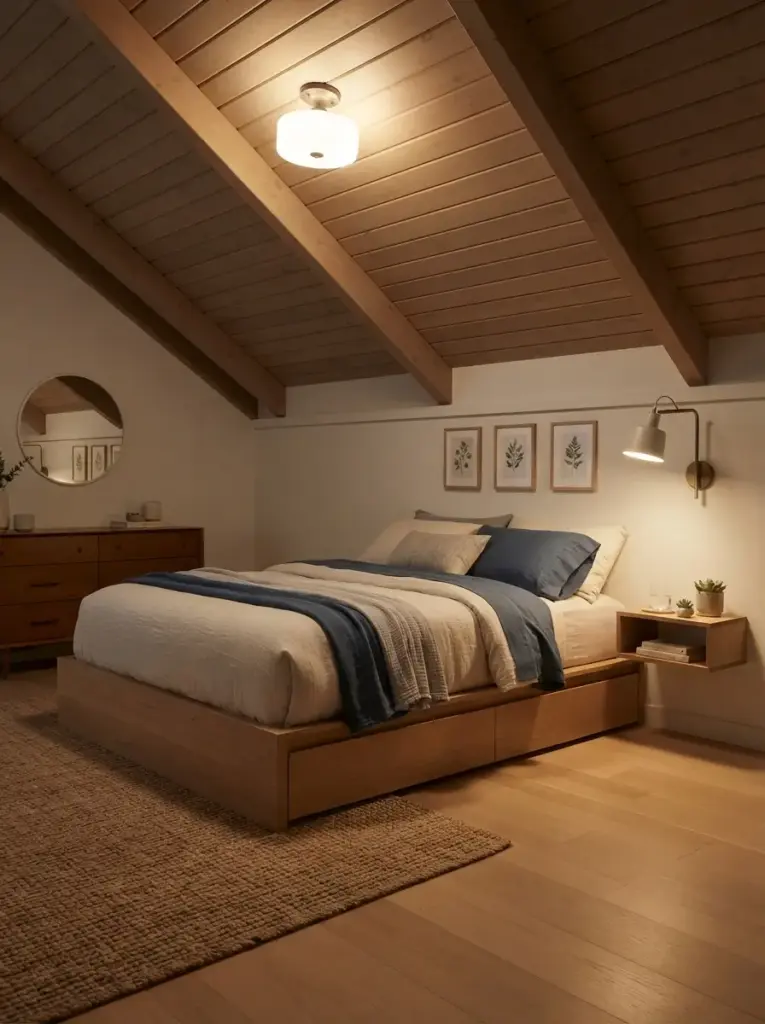
Sloped ceilings are one of the most noticeable features in attic spaces. Traditional tall wardrobes, large headboards, and oversized furniture can make the room feel crowded because they compete with the limited ceiling height. Selecting low-profile furniture allows the architecture to become part of the design rather than a limitation.
A platform bed is one of the most useful choices for a small loft because it sits closer to the floor and leaves more visual space above. A simple wooden frame with built-in drawers can provide sleeping space and storage at the same time. For example, a queen-size platform bed with two or three pull-out compartments can replace the need for a separate dresser.
This approach works especially well for homeowners who want a permanent setup and renters who cannot modify walls. Low furniture also creates a calmer appearance because the eye can move across the room without interruptions. Space Saving Attic Bedroom Ideas
For a balanced design, pair low furniture with warm lighting. Ceiling fixtures with a temperature between 2700K and 3000K create a comfortable bedroom atmosphere, while wall-mounted lamps save space on bedside tables.
Use Built-In Storage Under the Eaves
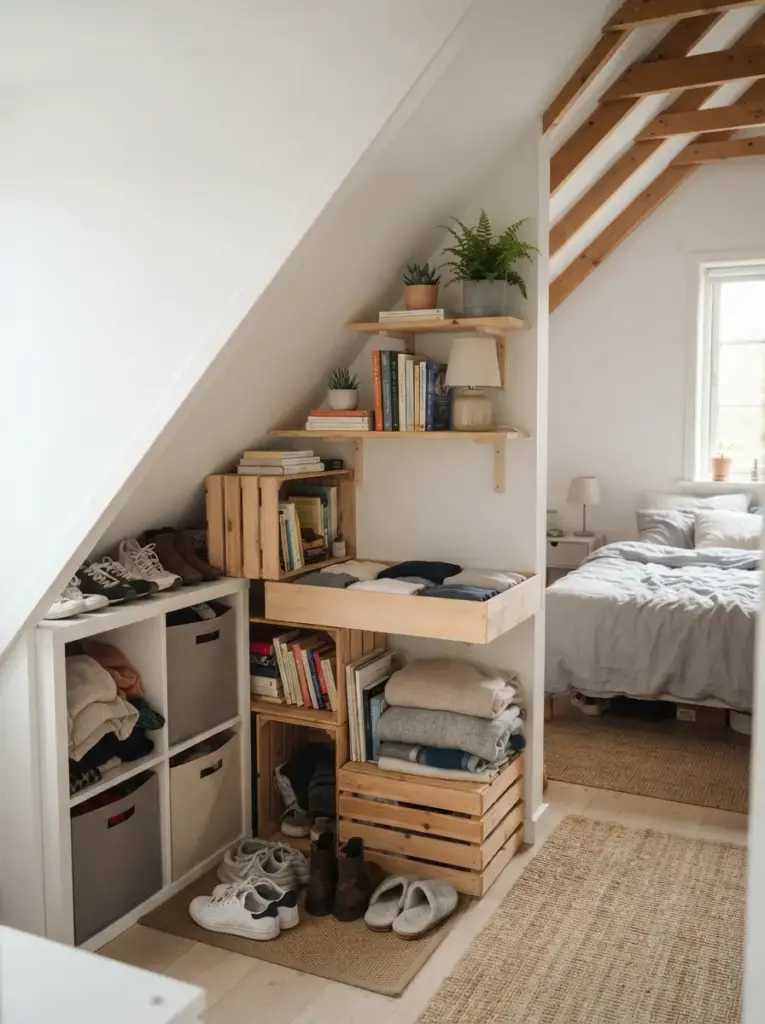
The unused areas beneath sloped roofs often become wasted corners, but they can provide valuable storage. Custom cabinets are one option, but they are not always necessary. Simple shelves, baskets, and modular storage boxes can turn these awkward spaces into practical areas.
Under-eave storage works well for clothing, books, shoes, seasonal items, and extra bedding. Installing shallow drawers or sliding containers makes it easier to reach items without crawling into tight spaces. White or light wood storage units help maintain an open feeling and blend naturally with the walls.
This idea is particularly useful for families, students, or anyone working with a very small room where every inch matters. Instead of adding another cabinet that takes up walking space, the unused edges of the room become functional. Space Saving Attic Bedroom Ideas
Budget-conscious decorators can use affordable cube organizers or wooden crates placed under low ceiling sections. Adding fabric bins keeps smaller items hidden and creates a cleaner appearance.
Create a Sleeping Nook Instead of Filling the Entire Loft
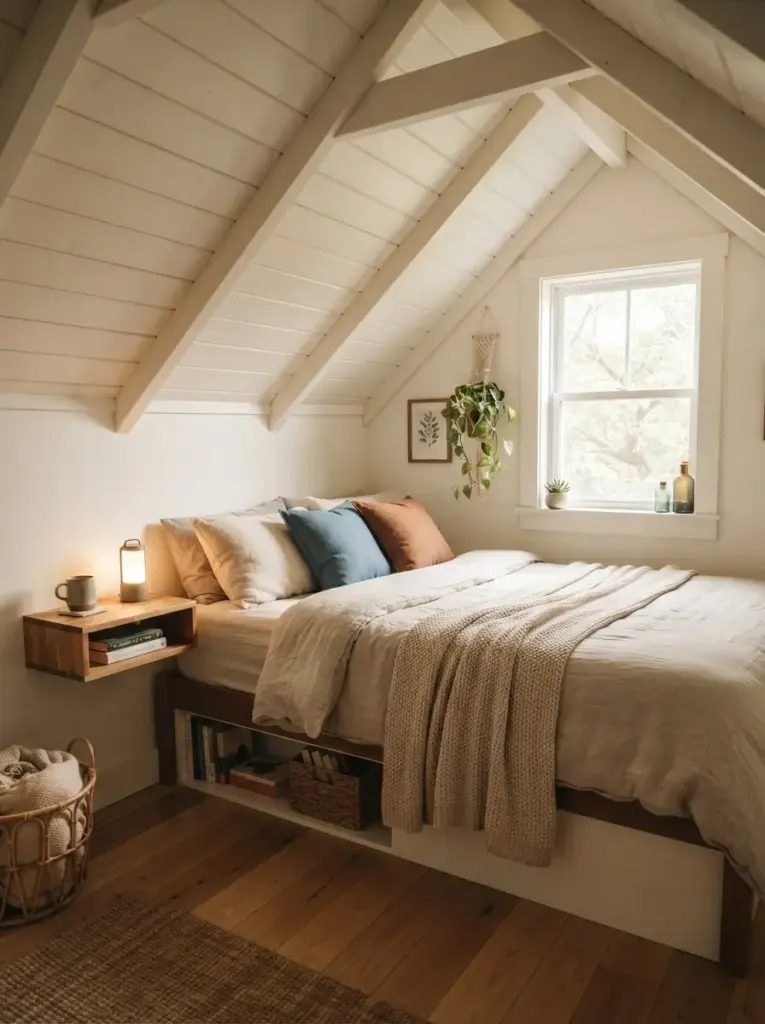
A common mistake in small loft bedrooms is trying to make the space look like a traditional large bedroom. Attic rooms often work better when they embrace their compact shape. Creating a dedicated sleeping nook can make the room feel intentional and comfortable.
Positioning the bed beneath the highest part of the ceiling creates better headroom, while placing it near a window can improve natural light. A small bedside shelf attached to the wall can replace a traditional nightstand and keep the floor clear.
This layout is ideal for tiny homes, guest rooms, and rental properties where space is limited. Instead of adding multiple furniture pieces, focus on creating one comfortable sleeping zone with enough storage nearby. Space Saving Attic Bedroom Ideas
Adding soft bedding, a lightweight blanket, and simple wall decor can make the area feel complete without overcrowding it. Avoid using large decorative furniture because it reduces available movement and makes the loft feel smaller.
Install Floating Shelves for Vertical Storage
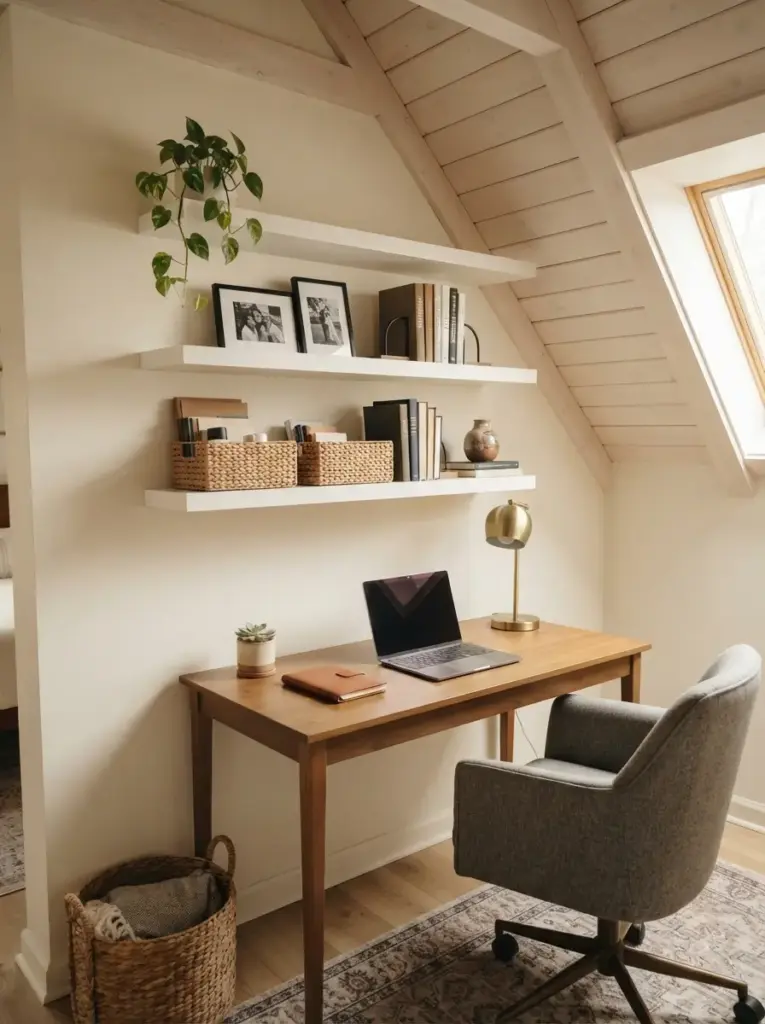
Floor space is usually limited in attic rooms, so using vertical areas becomes extremely important. Floating shelves provide storage without taking away walking space or making the room feel heavy.
Shelves can hold books, plants, small lamps, framed artwork, or everyday items. Installing them higher on straight walls helps keep important surfaces free. For example, a narrow floating shelf above a desk can store notebooks and office supplies while leaving the workspace open.
This solution is especially helpful for renters because many lightweight shelving systems require minimal installation. Removable adhesive options can also work for lighter decorative items, depending on wall conditions. Space Saving Attic Bedroom Ideas
The best results come from avoiding excessive shelf clutter. Keeping only useful or meaningful items displayed prevents the space from feeling busy. Use matching containers or baskets to organize smaller objects and maintain a clean appearance.
Use Light Colors to Improve the Sense of Space
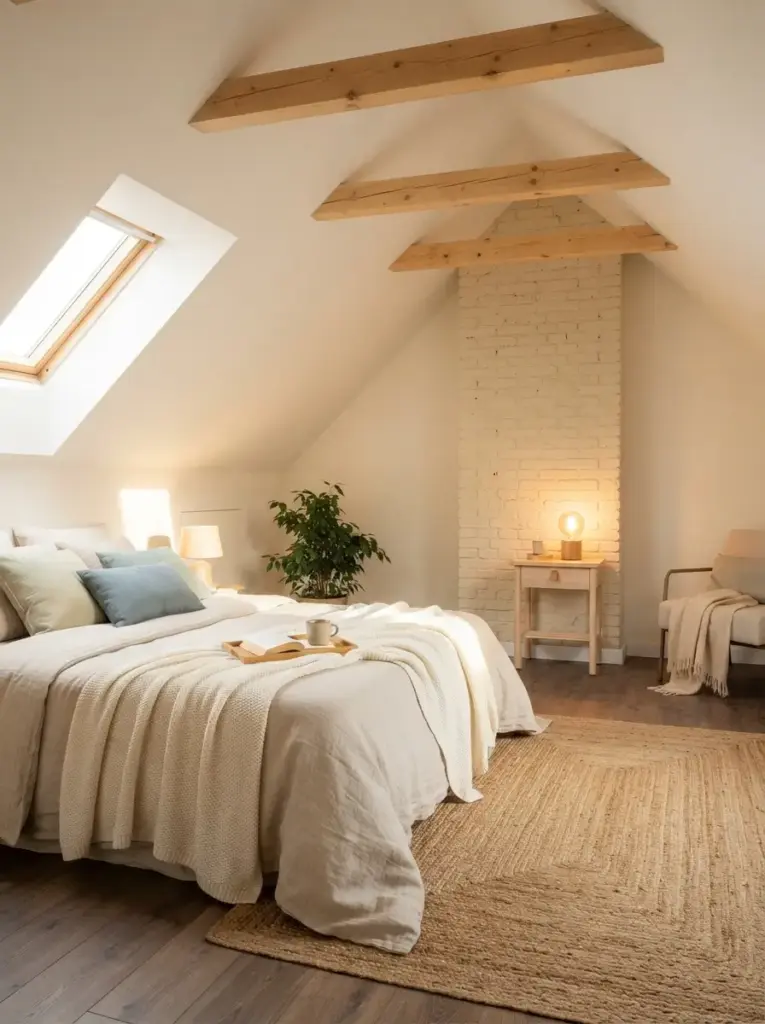
Color selection has a major impact on how a small attic room feels. Dark walls can create warmth, but they may also make a tiny loft appear enclosed if the room already lacks natural light. Lighter colors help reflect available sunlight and create a more open environment.
Soft white, cream, light gray, pale green, and muted blue are practical choices for attic bedrooms. These shades work well with wooden beams, exposed brick, or natural flooring because they create balance without competing with architectural details.
This method is suitable for beginners because painting is one of the easiest ways to change a room. Renters can achieve a similar effect with removable wallpaper or light-colored textiles such as curtains, bedding, and rugs. Space Saving Attic Bedroom Ideas
For a warmer appearance, avoid using bright white everywhere. Combining warm white walls with beige fabrics, natural wood furniture, and soft yellow lighting around 2700K can make the space feel comfortable without reducing brightness.
Select Multi-Functional Furniture for Maximum Use
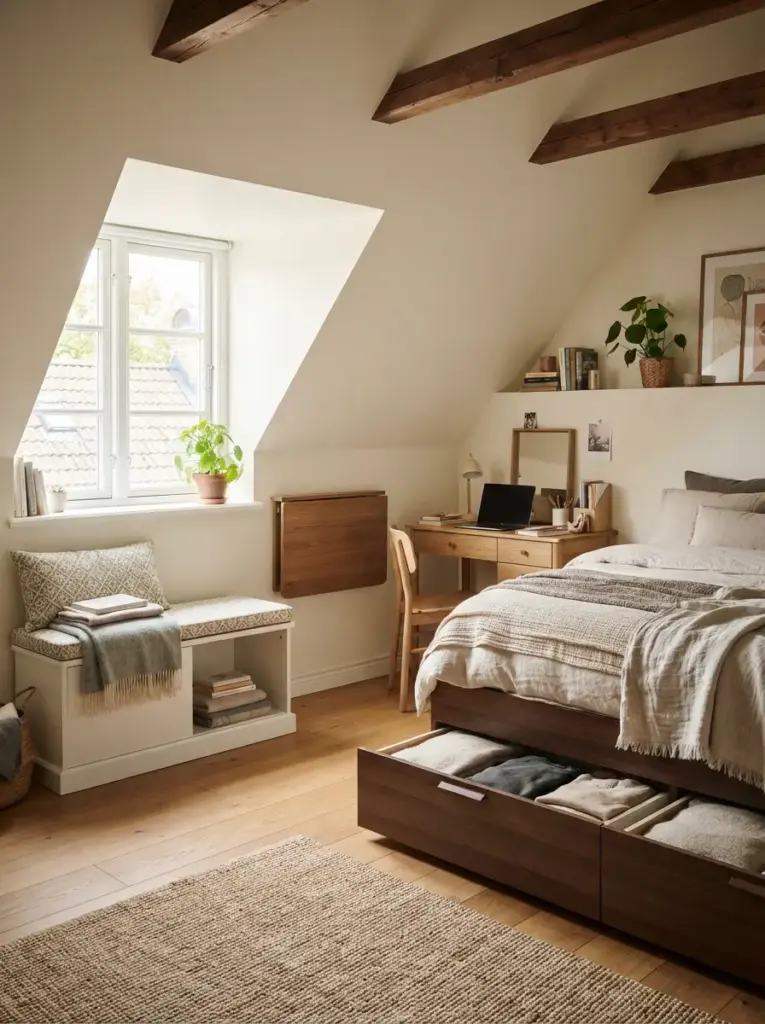
Small loft rooms benefit greatly from furniture that serves more than one purpose. Adding separate pieces for sleeping, storage, and working can quickly consume the limited floor area. Multi-functional furniture helps maintain comfort while reducing clutter.
A storage bed is one of the most practical choices for an Attic Bedroom because it uses the space underneath the mattress for hidden organization. Another option is a foldable desk attached to the wall that can function as a workspace during the day and disappear when not needed. Storage benches placed near windows can provide seating while keeping blankets, books, or seasonal clothing organized. Space Saving Attic Bedroom Ideas
This approach works well for students, remote workers, and guests who need flexible spaces. Instead of designing the room around one activity, create furniture arrangements that adapt to different needs.
For example, a small wooden desk with drawers can act as a vanity, study area, and storage station. Choosing furniture with clean lines and compact proportions prevents the loft from feeling overloaded.
Place the Bed Near the Lowest Ceiling Area Strategically
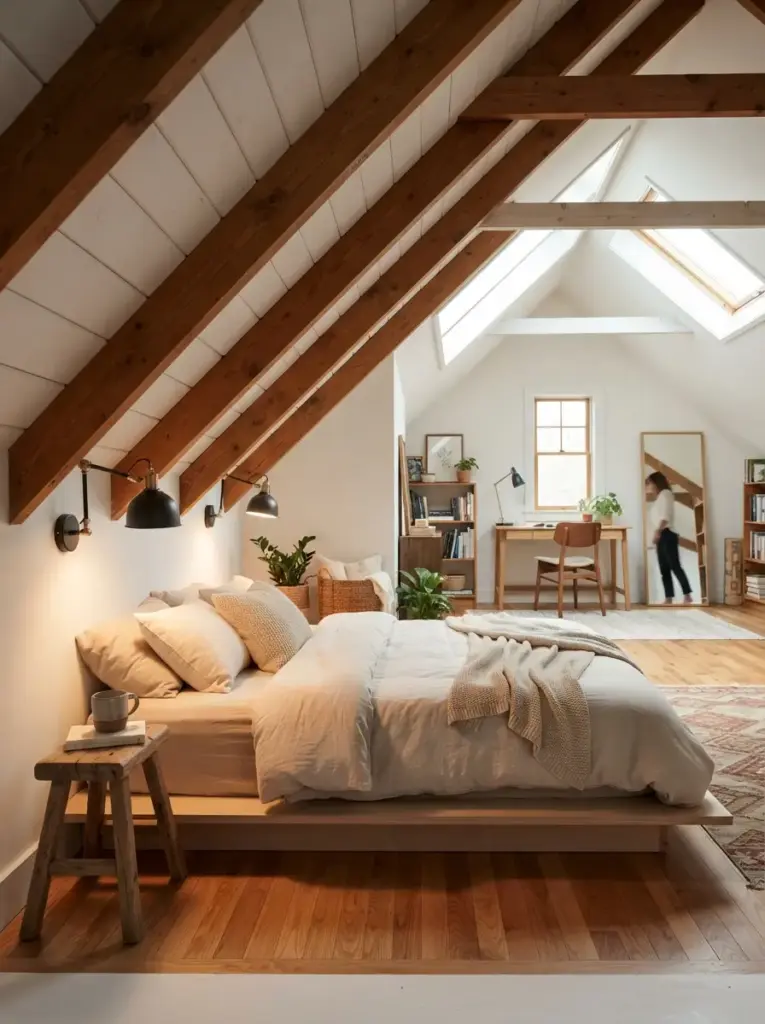
Many people assume the highest point of an attic must always contain the bed, but this is not the only option. Depending on the room shape, placing the bed under the lower ceiling can actually free up better standing space in other areas.
A low ceiling section can become a cozy sleeping zone where sitting or standing is not required. This leaves taller areas available for dressing, working, or moving around comfortably.
This layout is useful for very small loft bedrooms where every section needs a specific purpose. Children’s rooms, guest bedrooms, and minimalist spaces often benefit from this arrangement because sleeping areas naturally require less vertical movement.
A mattress placed on a low platform frame can work especially well in these areas. Add wall-mounted reading lights instead of floor lamps to avoid taking up valuable floor space.
Before choosing this layout, measure the ceiling height carefully. The goal is to create comfort rather than make the sleeping area feel restricted. Make sure there is enough room to sit upright without hitting the ceiling. Space Saving Attic Bedroom Ideas
Add Mirrors to Reflect Light and Create Openness
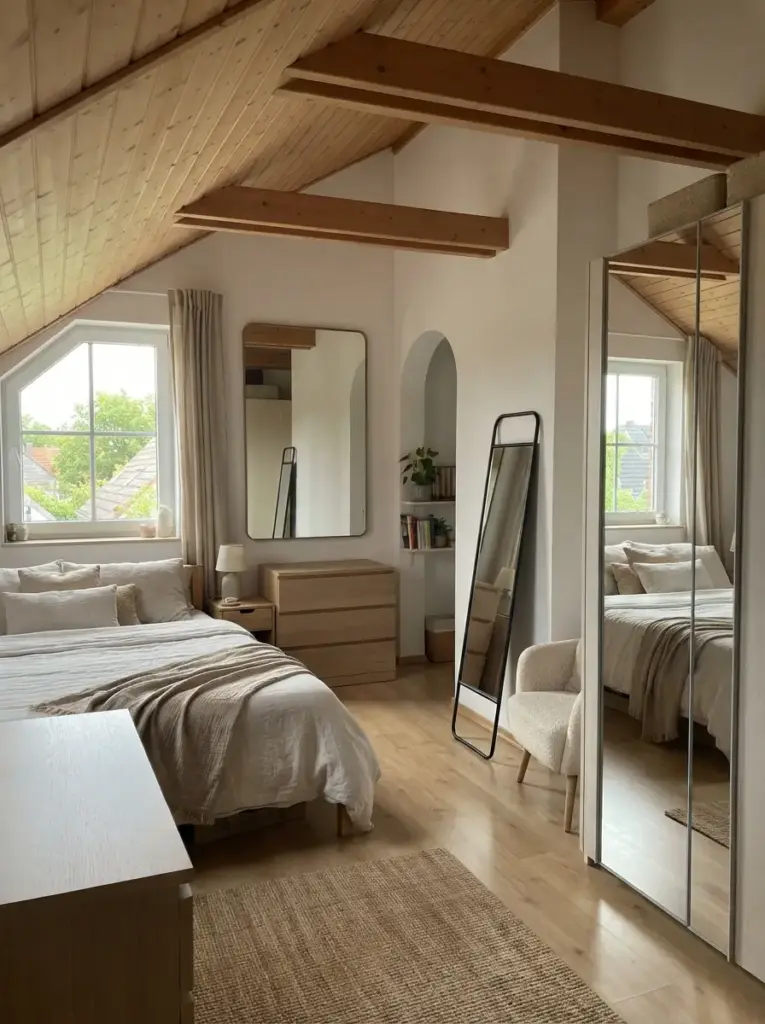
Mirrors are one of the simplest decorating tools for making small rooms appear larger. They do not increase the actual size of an Attic Bedroom, but they improve how light moves through the space.
A large mirror placed opposite a window can reflect natural light and brighten darker corners. Wardrobe doors with mirrored panels can provide storage and create the illusion of more depth at the same time.
This idea works best for rooms with limited windows or north-facing layouts where sunlight is weaker. Renters can use leaning mirrors instead of wall-mounted versions to avoid permanent changes.
Choose simple mirror designs with thin frames because heavy decorative borders can make a small room feel visually crowded. A full-length mirror near the entrance or closet area adds function without requiring extra furniture. Space Saving Attic Bedroom Ideas
Avoid placing mirrors where they reflect clutter. A mirror facing an untidy shelf or crowded corner will highlight the problem instead of improving the room.
Install Wall-Mounted Lighting Instead of Floor Lamps
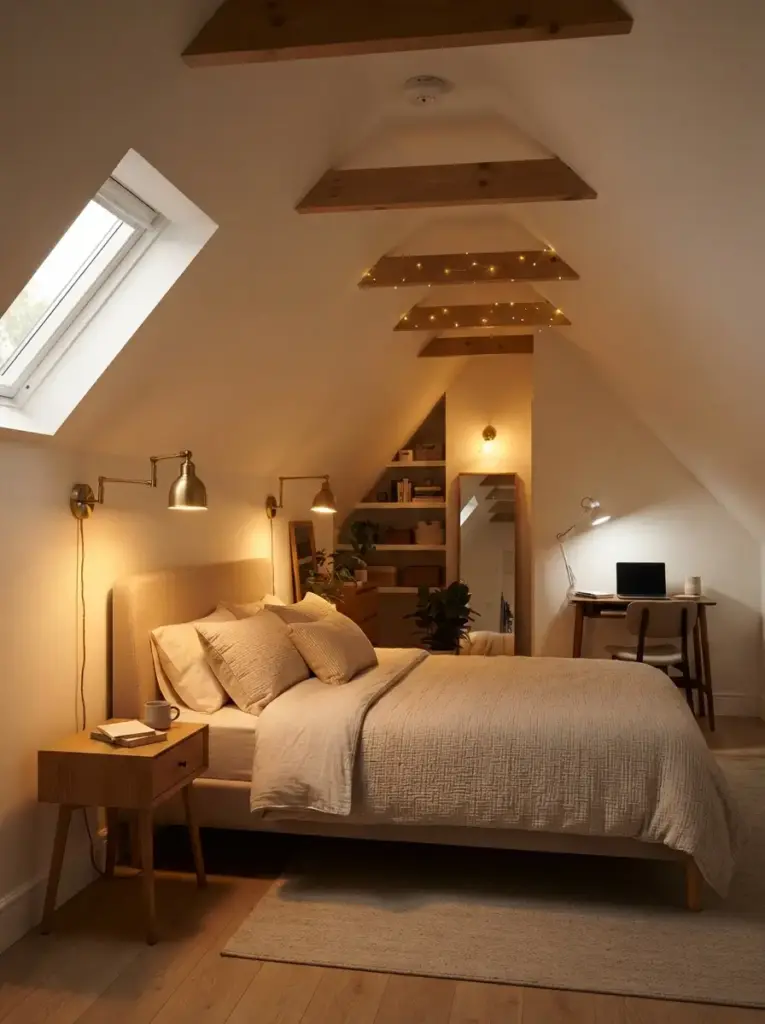
Lighting plays a major role in making attic rooms comfortable. Limited ceiling height and small floor areas mean traditional lamps can quickly become obstacles. Wall-mounted lighting provides brightness while keeping surfaces clear.
Adjustable sconces beside the bed can replace bulky bedside lamps. Swing-arm lights are especially useful because they allow you to direct light toward reading areas, desks, or storage spaces.
Warm lighting between 2700K and 3000K is usually suitable for bedrooms because it creates a relaxed atmosphere. Cooler lighting around 4000K may work better near a small workspace where concentration is needed.
This idea is ideal for renters who need flexible solutions because plug-in wall lights do not always require electrical changes. Battery-powered LED fixtures are another affordable alternative.
Layering different light sources creates better results than depending on one overhead fixture. Combine ceiling lighting, wall lights, and small accent lamps to make the room functional throughout the day. Space Saving Attic Bedroom Ideas
Use Curtains and Textiles to Add Comfort Without Taking Space
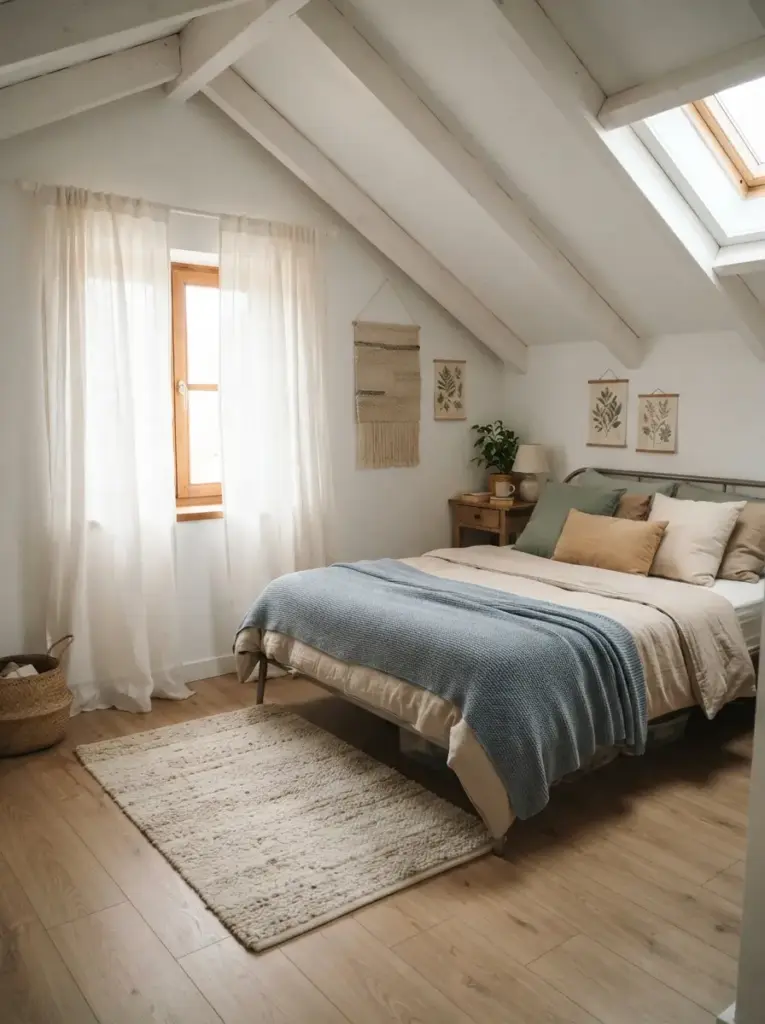
Textiles can completely change the feeling of a small loft bedroom without adding bulky decorations. Curtains, bedding, rugs, and cushions provide warmth while keeping the design flexible.
Lightweight curtains are especially useful in attic spaces because they soften strong sunlight while maintaining brightness. Sheer white or linen curtains work well with small windows because they allow daylight to pass through.
This idea suits renters and budget decorators because textiles are easy to replace when styles change. A simple change from heavy dark curtains to light neutral ones can make the room feel noticeably brighter.
Choose bedding colors carefully. Soft neutrals, muted greens, dusty blues, and warm beige tones usually work well in compact rooms. Avoid excessive patterns because busy designs can make a small space feel visually crowded. Space Saving Attic Bedroom Ideas
A small textured rug beside the bed can add comfort without covering the entire floor. Select a size that defines the sleeping area while leaving some flooring visible.
Create a Small Workspace With a Narrow Desk
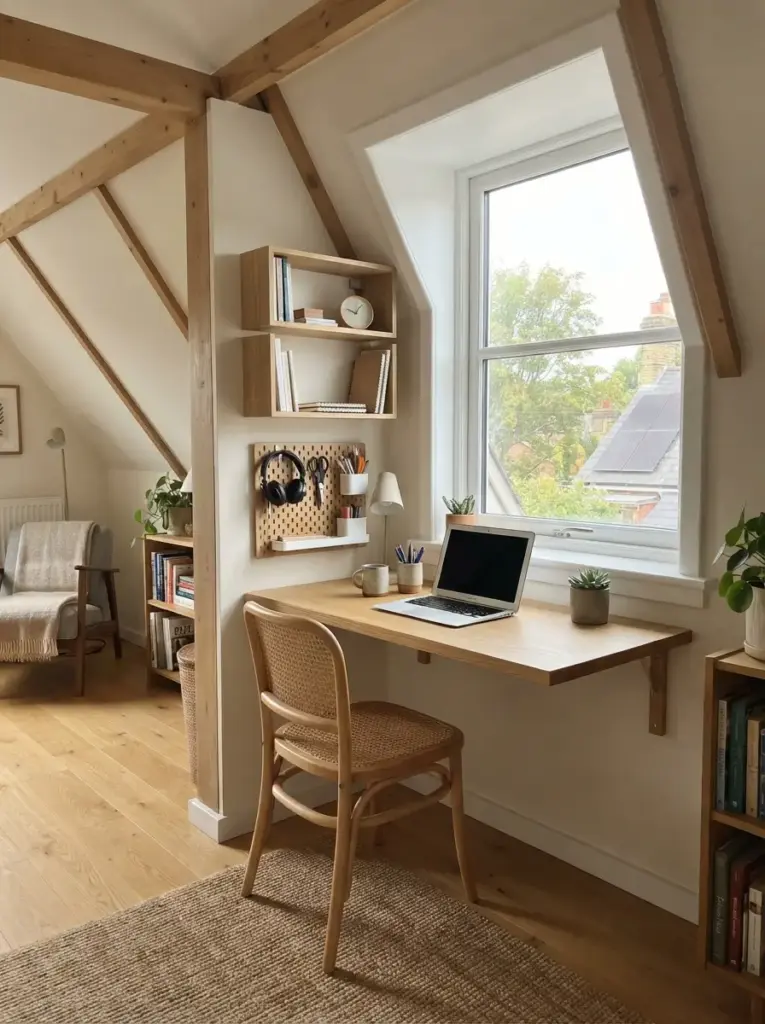
Many attic rooms serve multiple purposes, especially in modern homes where people need space for studying or remote work. A full-size office setup may not fit, but a narrow desk can provide a practical solution.
A wall-mounted desk, slim console table, or floating workspace can create a functional work area without reducing walking space. Place the desk near a window whenever possible to use natural light during daytime hours.
This design works well for students, freelancers, and homeowners who need occasional computer access. Pair the desk with a lightweight chair that can be moved easily when the area is not being used.
Storage above the desk is also valuable. Small shelves or pegboards can organize stationery, headphones, and office supplies without filling the surface. Space Saving Attic Bedroom Ideas
Choose a desk color that blends with the room. Light wood, white, or soft gray finishes help maintain an open feeling. Dark oversized desks often become the visual focus and make small rooms appear heavier.
Use Sliding Doors Instead of Traditional Doors
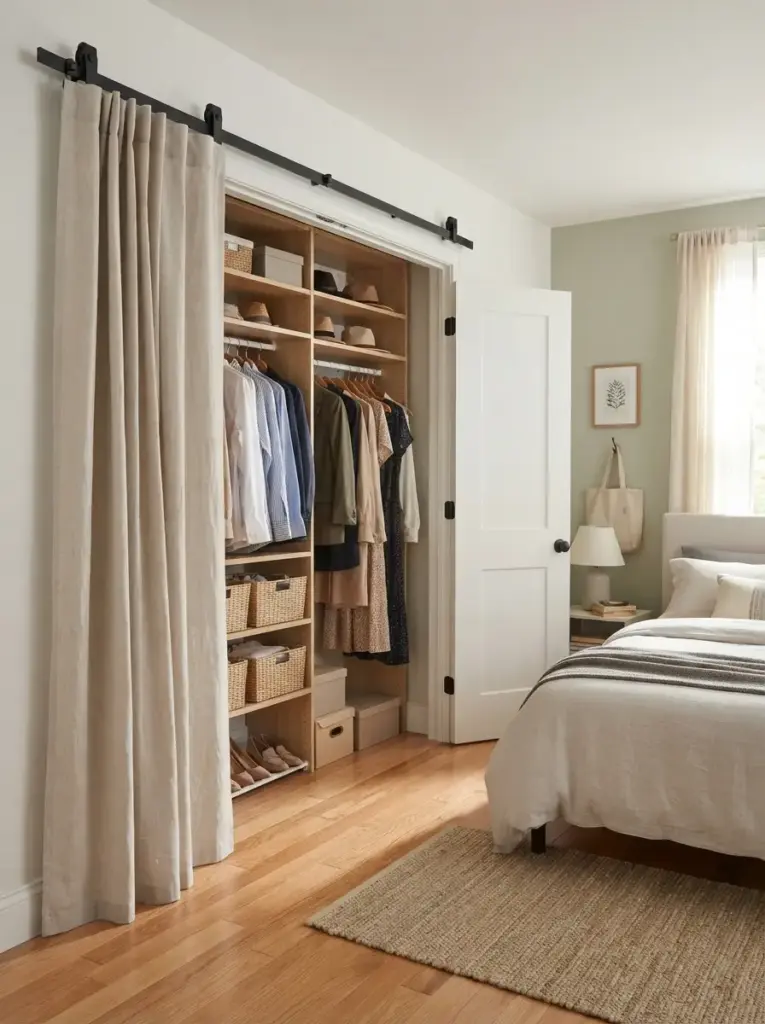
Door space is often overlooked when planning small bedrooms. Traditional swinging doors require clearance, which can waste valuable floor area. Sliding doors provide a smarter alternative when renovation is possible.
Sliding closet doors allow easier furniture placement because they do not require extra opening space. Barn-style doors can also add character while improving functionality.
This option works best for homeowners planning a long-term design upgrade. Renters can achieve a similar effect with open clothing racks, curtains, or freestanding storage systems.
For example, replacing a bulky wardrobe with a compact open closet and a curtain divider can create more usable floor space. Neutral fabric curtains keep clothing hidden while adding softness to the room. Space Saving Attic Bedroom Ideas
Make sure any sliding system is properly installed because poor hardware can create noise or safety issues. Quality tracks provide smoother movement and longer durability.
Keep Furniture Arrangement Simple and Functional
Small rooms often become uncomfortable because too many furniture pieces compete for space. Instead of adding everything a traditional bedroom contains, focus on what you actually use.
A practical layout usually includes a bed, storage solution, lighting, and possibly one additional functional area such as a desk or reading corner. Keeping open pathways improves movement and makes cleaning easier.
This strategy is useful for beginners who are decorating their first loft space. Start with essential furniture before adding decorative items. Live with the arrangement for a few weeks and identify what the room truly needs.
For example, a small chair may seem attractive, but if it blocks access to storage, removing it can improve daily comfort. Good design is not about filling every corner; it is about making the room work efficiently.
Use simple shapes and matching furniture finishes to create visual consistency. Too many styles, colors, and materials can make a small room feel disconnected.
Add Built-In or Foldable Bedside Solutions
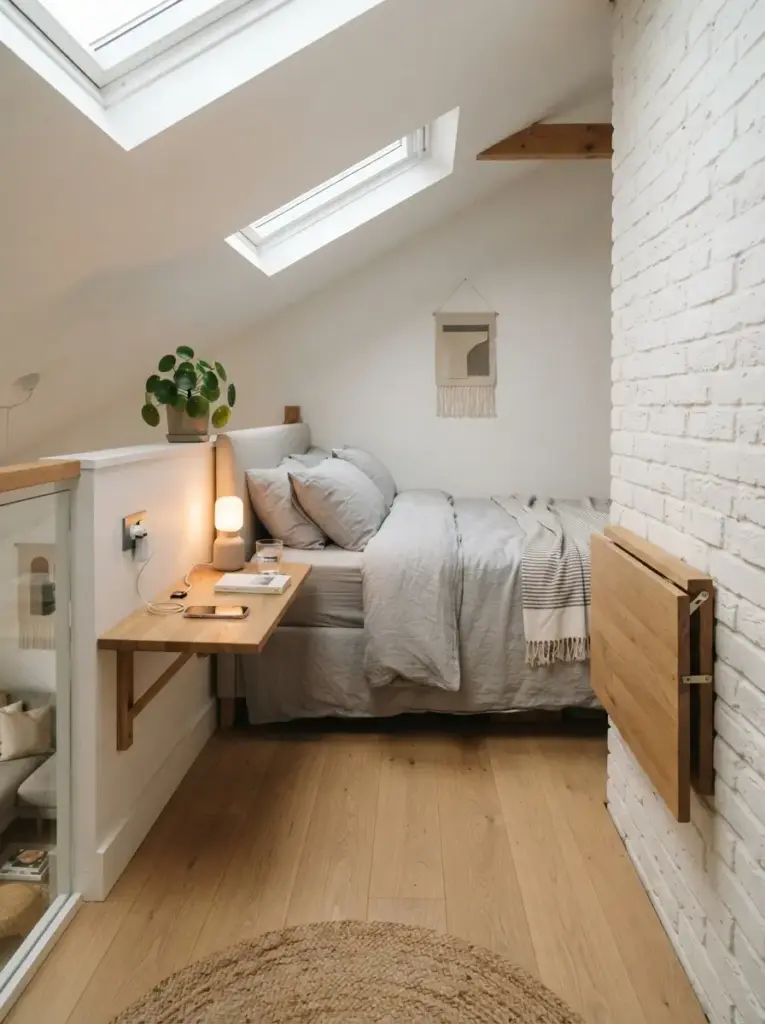
Traditional nightstands can take up more space than expected in a tiny loft. Replacing them with compact alternatives creates more room for movement.
A narrow wall shelf beside the bed can hold a phone, a book, and small lamp. Fold-down bedside tables are another practical option because they disappear when not needed.
This idea works well for small guest rooms and minimalist bedrooms where every inch matters. It also benefits renters because many compact solutions require fewer permanent changes.
Choose bedside storage based on your daily habits. If you only need space for a phone and a glass of water, a small shelf is enough. Avoid installing large storage units that create unnecessary visual weight.
Adding a charging outlet nearby or using cable organizers can keep the area tidy. Small details like these improve convenience without requiring more furniture.
Highlight Architectural Features Instead of Hiding Them
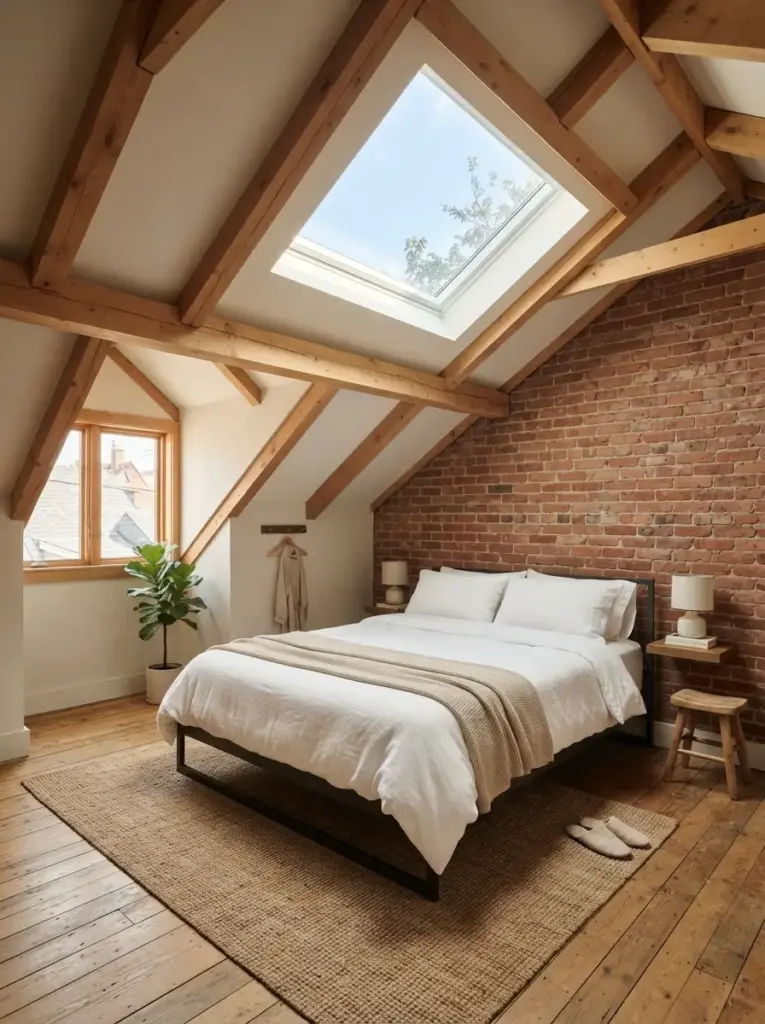
Attic spaces often have unique details such as wooden beams, angled ceilings, exposed brick, or unusual window shapes. Instead of covering these features, use them as part of the design.
Natural wood beams can add warmth when paired with neutral walls and simple furniture. Skylights can become a major feature by keeping the surrounding area uncluttered.
This approach works well for homeowners who want character without adding many decorative items. The architecture itself becomes the main design element.
For example, a simple bed with white bedding placed beneath exposed beams can create a balanced look without requiring expensive accessories. Highlighting original features can also reduce renovation costs because fewer decorative additions are needed.
Avoid overcrowding these areas with too many shelves, artwork, or large furniture pieces. Let the unique structure of the loft remain visible.
Common Mistakes to Avoid in an Attic Bedroom
Choosing Furniture That Is Too Large
Oversized beds, deep wardrobes, and large dressers are common mistakes in small loft rooms. Furniture should match the scale of the space. Always measure doorways, ceiling heights, and walking areas before purchasing new pieces.
Ignoring Natural Light
Blocking windows with tall furniture can make the room feel darker. Keep window areas open and use reflective surfaces to spread available light.
Adding Too Much Decoration
Small rooms cannot handle unlimited accessories. Too many wall decorations, storage baskets, and decorative objects create visual clutter. Select meaningful pieces and keep surfaces organized.
Forgetting Ventilation
Attic spaces can become warmer than other rooms, especially during summer. Proper airflow is important. Use breathable bedding, lightweight curtains, and fans if necessary.
Using Only One Light Source
A single ceiling light often creates shadows in corners. Combine overhead lighting with task and accent lights for better function.
Budget-Friendly Tips for Creating a Stylish Loft Room
Creating a comfortable loft bedroom does not require expensive renovations. Small changes can make a significant difference when they focus on improving function.
Second-hand furniture can be a smart option. Wooden dressers, shelves, and bed frames can often be refreshed with paint or new hardware. Light-colored paint can update old furniture and match modern interiors.
DIY storage solutions also help reduce costs. Wooden crates, fabric bins, and affordable shelves can organize clothing, books, and accessories without custom cabinetry.
Changing textiles is another affordable improvement. New bedding, curtains, and rugs can refresh the entire room without replacing furniture.
For renters, removable wallpaper, adhesive hooks, portable lighting, and freestanding storage offer flexible options without permanent changes.
Attic Bedroom Styling Tips
Successful loft decorating depends on understanding the limitations and strengths of the room. Measure the available space before buying furniture and create a simple floor plan.
Choose furniture with hidden storage whenever possible. Keep colors coordinated and avoid mixing too many strong shades. Natural materials such as wood, cotton, linen, and woven baskets work well because they add warmth without making the room busy.
Focus on comfort as much as appearance. A good mattress, proper lighting, and organized storage matter more than excessive decoration.
Small rooms benefit from regular organization. Removing unused items keeps the space functional and prevents clutter from returning.
FAQ
What is the best bed style for a small attic bedroom?
Low platform beds, storage beds, and compact frames usually work best because they reduce visual bulk and provide extra functionality.
How can I make my attic bedroom brighter?
Use light wall colors, mirrors, sheer curtains, and layered lighting with warm bulbs around 2700K to improve brightness.
Can renters decorate an attic bedroom without renovation?
Yes. Renters can use removable wallpaper, floating storage alternatives, plug-in lighting, and portable furniture solutions.
What colors work best for attic bedrooms?
Soft white, beige, light gray, muted green, and pale blue are practical choices because they reflect light and create an open feeling.
How do I add storage without making the room crowded?
Use under-bed drawers, vertical shelves, under-eave storage, and multi-purpose furniture instead of adding large cabinets.
Conclusion
Designing a small loft requires careful planning, but limited space does not mean limited possibilities. A well-designed Attic Bedroom can become comfortable, organized, and attractive by focusing on smart furniture choices, efficient storage, and practical lighting.
The best results come from understanding how the room works before decorating. Use the ceiling shape, natural light, and available corners as advantages instead of obstacles. Small improvements such as floating shelves, low furniture, and flexible storage can make everyday living easier.
Whether you are working with a tiny loft, a rental space, or a compact guest room, thoughtful design decisions can help you create a bedroom that feels functional and personal. The goal is not to add more items but to create a space where every element serves a purpose.