
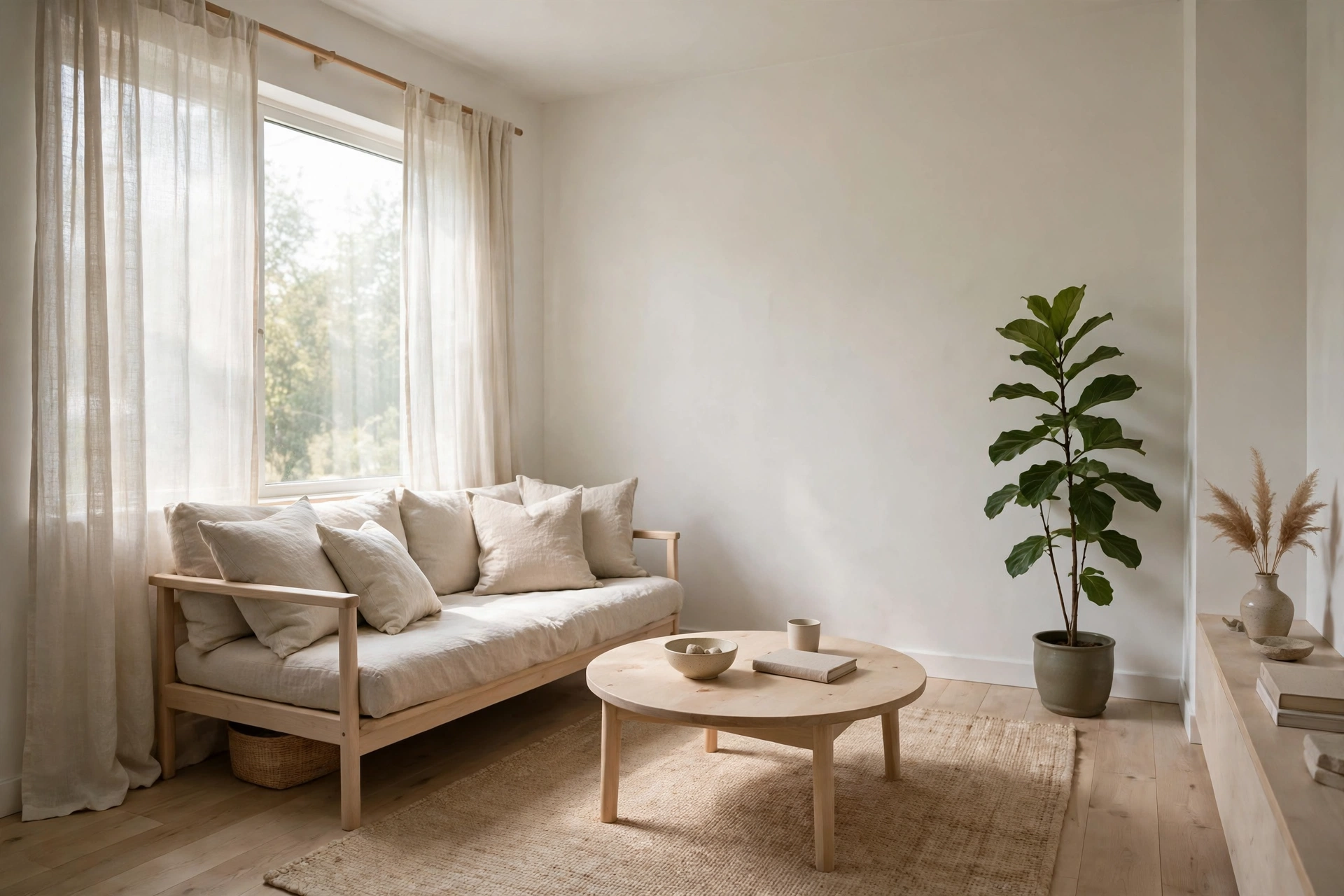

Japandi style mixes the warmth of Scandinavian rooms with the calm order of Japanese rooms, and it suits small apartments almost perfectly. Both traditions respect small footprints, natural materials and furniture that earns its place, so nothing in a japandi room is there only to fill a gap.
Good japandi apartment decor rests on a short list of ingredients: low wooden furniture, warm white or oatmeal walls, linen and cotton textiles, one or two sculptural plants, and storage that hides everyday clutter behind closed doors. Repeat those ingredients and even a studio feels calm and connected.
These 15 japandi apartment decor ideas are planned for small apartments and renters. Each one explains what it adds, how to scale it down, and the mistake that most often breaks the calm, so your home ends up serene rather than empty.
What Is the Easiest Way to Start Japandi Style in a Small Apartment?
The easiest start is to lower and lighten what you already have. Clear every surface, keep furniture low, swap bright white bulbs for warm ones, and dress the sofa and bed in plain linen or cotton in warm white, oatmeal and pale wood tones. That single edit gives you most of the japandi feeling before you buy anything.
Work with one palette across the whole apartment. Japandi rooms borrow their calm from repetition, so the same wood tone and the same two or three colors should appear in every room. If you want a brighter Scandinavian base first, our scandinavian apartment decor guide pairs naturally with the ideas here.
Add pieces slowly and stop early. A japandi room is finished when nothing can be removed, not when nothing more fits. In a small apartment that discipline is a gift, because every piece you skip is floor space you keep.
Start With a Low Platform Bed on a Tatami Style Base
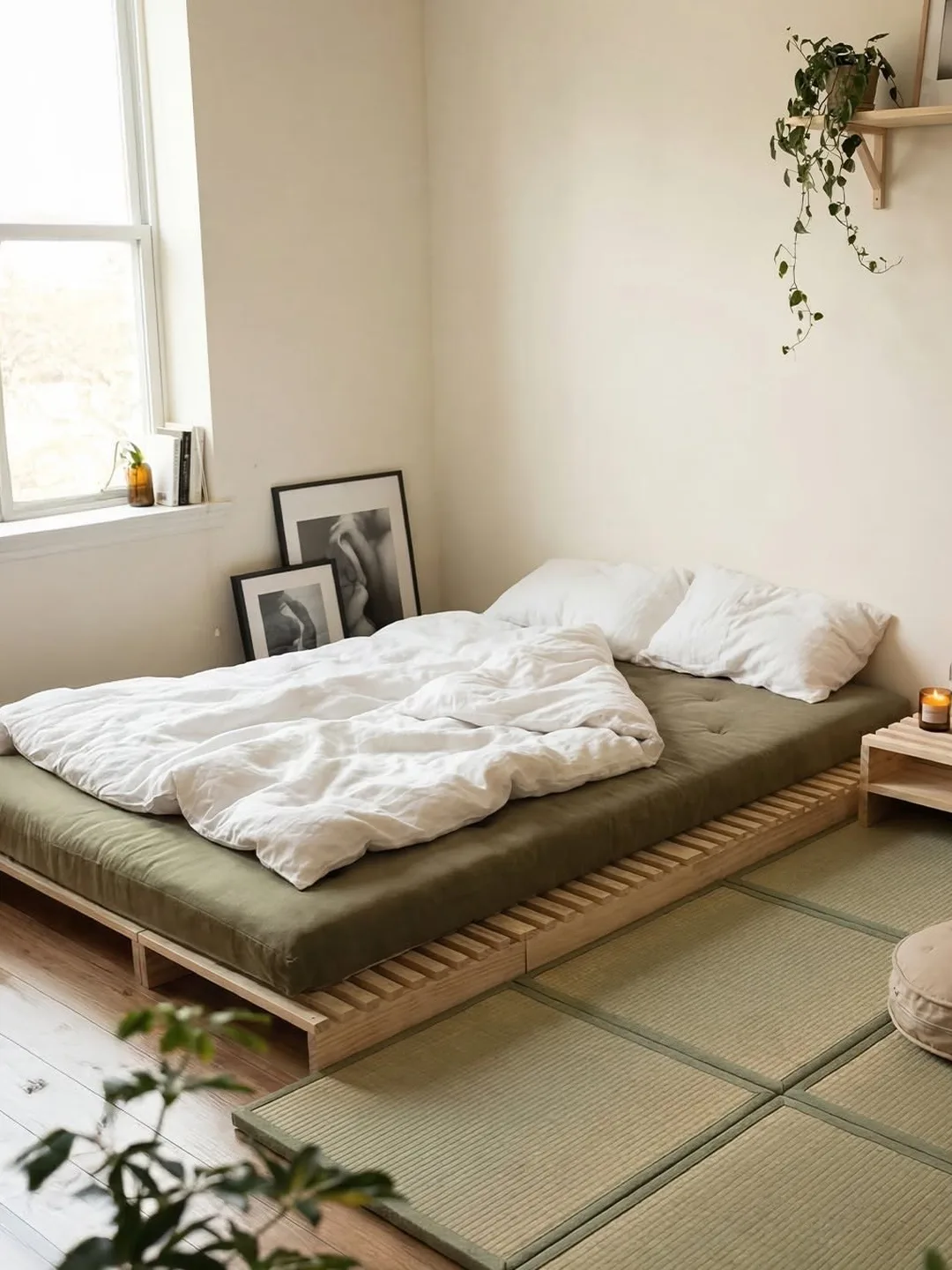
The bed sets the height line for a japandi bedroom, and low is the whole point. A platform base close to the floor, or a futon style mattress on tatami mats like the room in the photo, makes the ceiling feel higher and the room feel calmer the moment you walk in.
Keep the bedding plain and slightly rumpled. Washed linen or cotton in warm white, sand or soft olive reads japandi far better than crisp hotel white, and it forgives a less than perfect bed making routine on busy mornings.
A low bed also changes what storage you need. Under bed space mostly disappears, so plan a closed wardrobe or a lidded basket for spare bedding before you switch, not after.
Small bedrooms gain the most, because the bed fills most of the view. The common mistake is pairing a low bed with tall bulky nightstands. Keep bedside pieces low too, even if that means a simple wooden stool on each side.
Tatami style mats and futons ask for air. Lift or roll the mattress weekly so moisture escapes, and vacuum mats with a plain suction head rather than a beater brush. That small routine keeps a low bed fresh for years and takes ten minutes.
Keep the Sofa Low and Close to the Floor
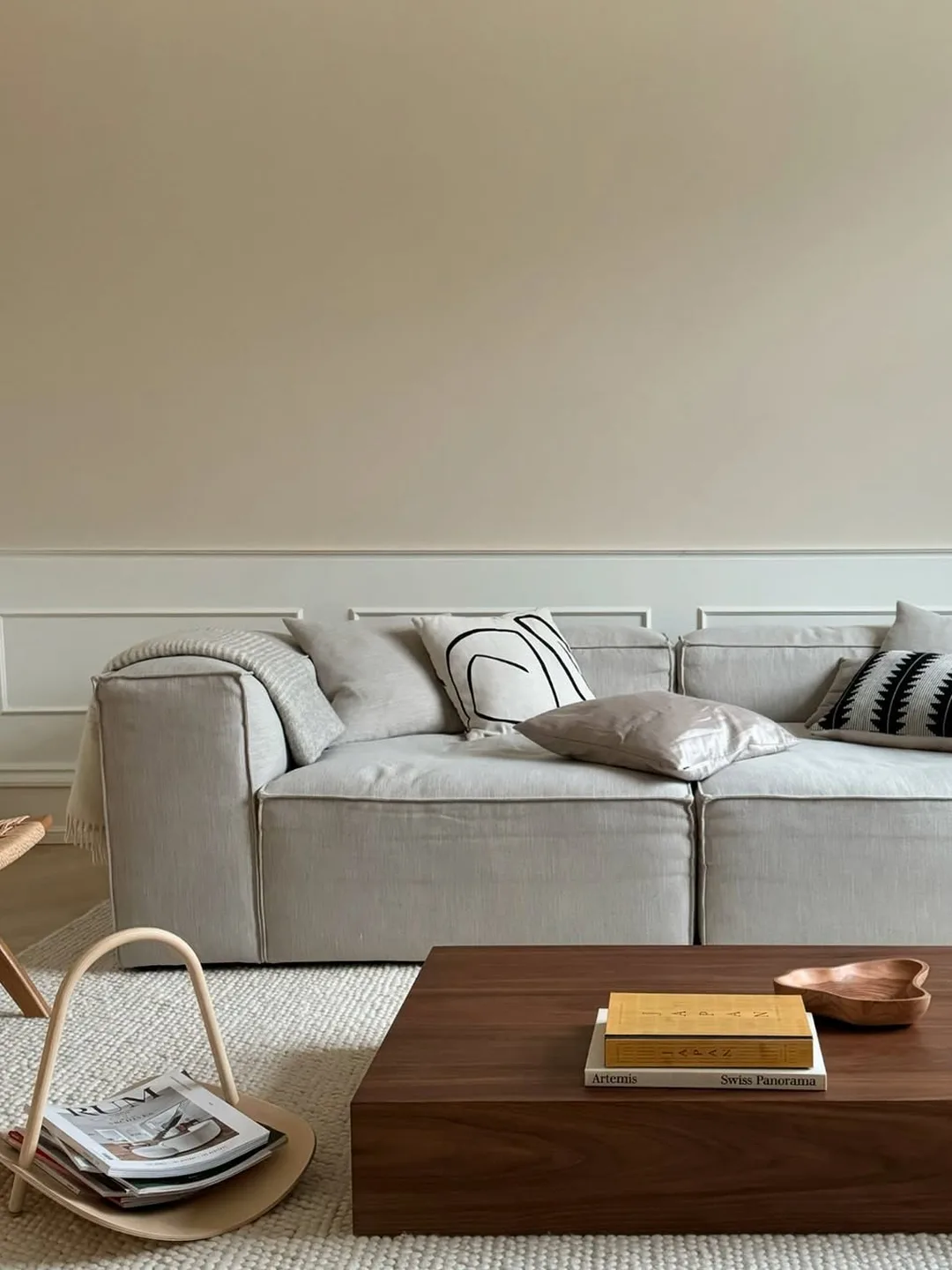
Japandi living rooms sit low. A sofa with a low back and short legs, paired with a solid wooden coffee table like the pairing in the photo, pulls the whole seating area down and leaves a wide band of calm wall above it.
Choose upholstery in a quiet texture rather than a pattern. Bouclé, linen weave and plain cotton in grey, oatmeal or stone keep the sofa restful, and cushions in the same family add comfort without noise.
Low seating works hard in small rooms because sight lines pass over it. The room reads as one open space instead of a set of tall obstacles, which is why japandi studios feel bigger than their floor plans.
The common mistake is a low sofa beside a tall bookcase and a high TV stand. Bring the whole room down to one height line, and move tall storage to the wall behind the sofa if it has to stay.
Let One Open Plan Room Share the Same Quiet Palette
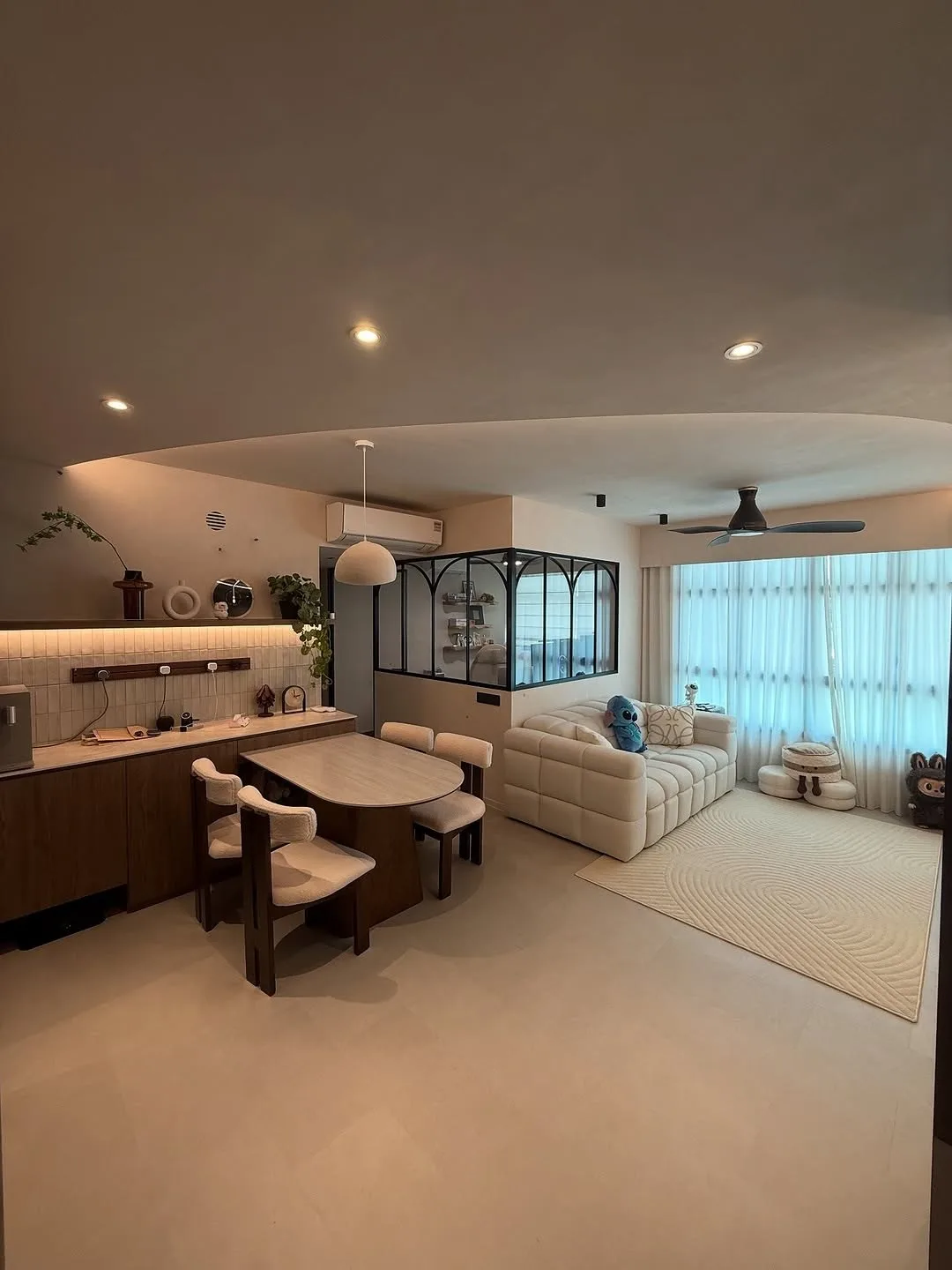
In an open plan apartment, japandi calm comes from sameness. The home in the photo runs one palette of pale wood, warm white and soft black accents from the kitchen through the dining area to the sofa, so the whole space reads as one calm room.
Pick two wood tones at most and repeat them in every zone. When the dining chairs, the coffee table and the kitchen fronts share a tone, your eye stops noticing boundaries and the apartment feels larger.
Define each zone with a rug or a light fitting rather than a color change. A round rug under the dining table and a pendant over the sofa mark the zones while the palette stays unified.
Renters gain the most from this idea, because it needs no painting and no building work. The common mistake is decorating each zone as its own project, which chops a small open plan into three competing rooms.
Carry the same palette into the kitchen and bathroom, even if those rooms only get one change each. A wooden bath mat, a linen hand towel and one clay soap dish in the shared tones stop the open plan calm from ending at the doorway.
Hang One Large Paper Pendant as the Only Statement
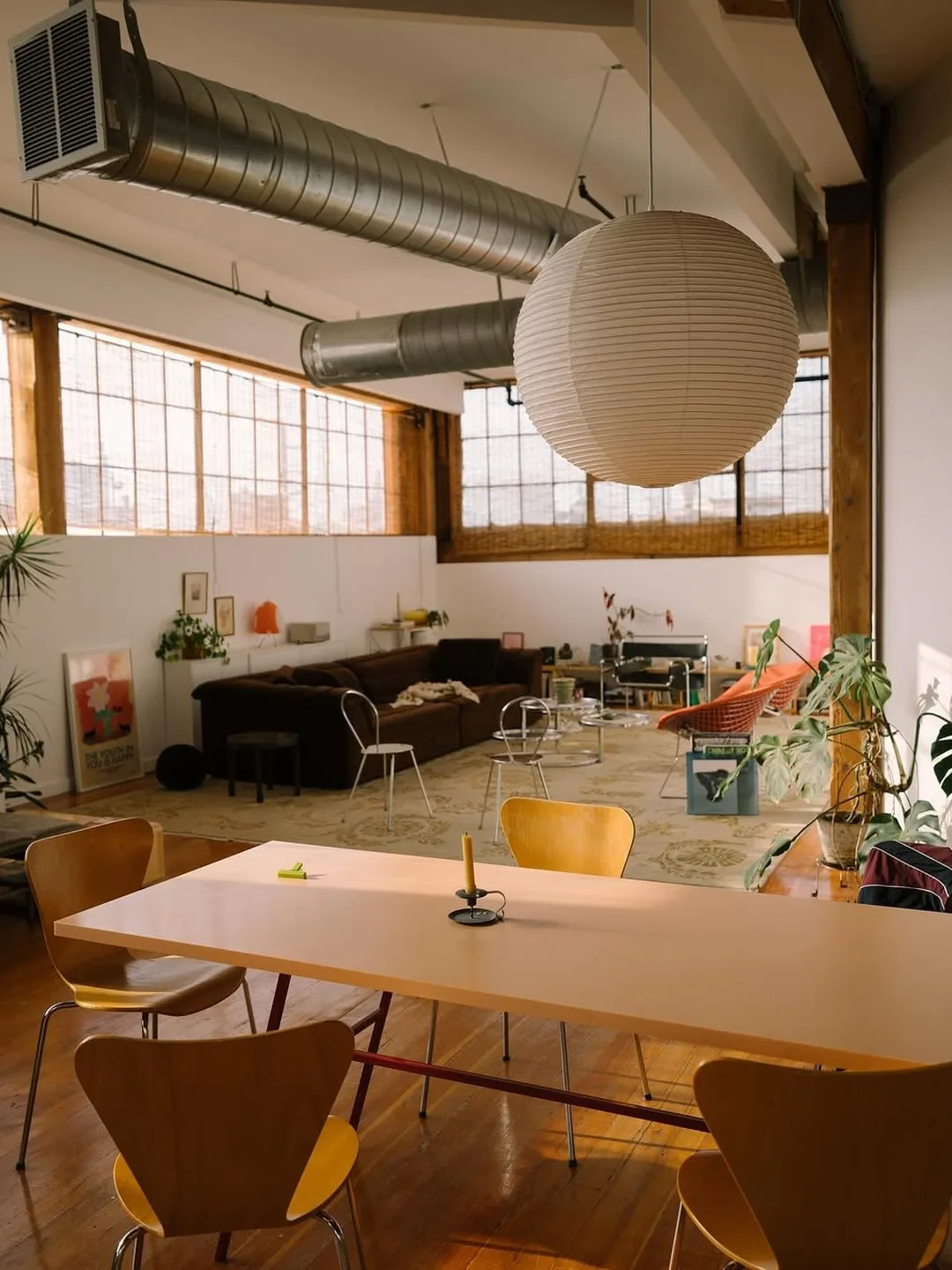
Japandi rooms allow one generous gesture, and a big paper pendant is the classic choice. The loft in the photo hangs a single oversized paper sphere over the dining table, and that one shape does all the decorating the ceiling needs.
Paper shades soften light beautifully and cost very little for their size. A 45 to 60 cm shade suits most apartment dining corners, hung low enough to feel intimate, roughly 70 cm above the table surface.
Scale is the trick. One large pendant looks intentional, while three small ones look like a compromise. If your ceiling point sits off centre, use a long cord and a ceiling hook to swing the shade over the table.
The common mistake is choosing a shade so large it brushes heads or blocks the window light. Measure the drop before you order, and keep the bottom of the shade above eye level when seated and standing.
Dress the Bed in Washed Linen and a Single Throw
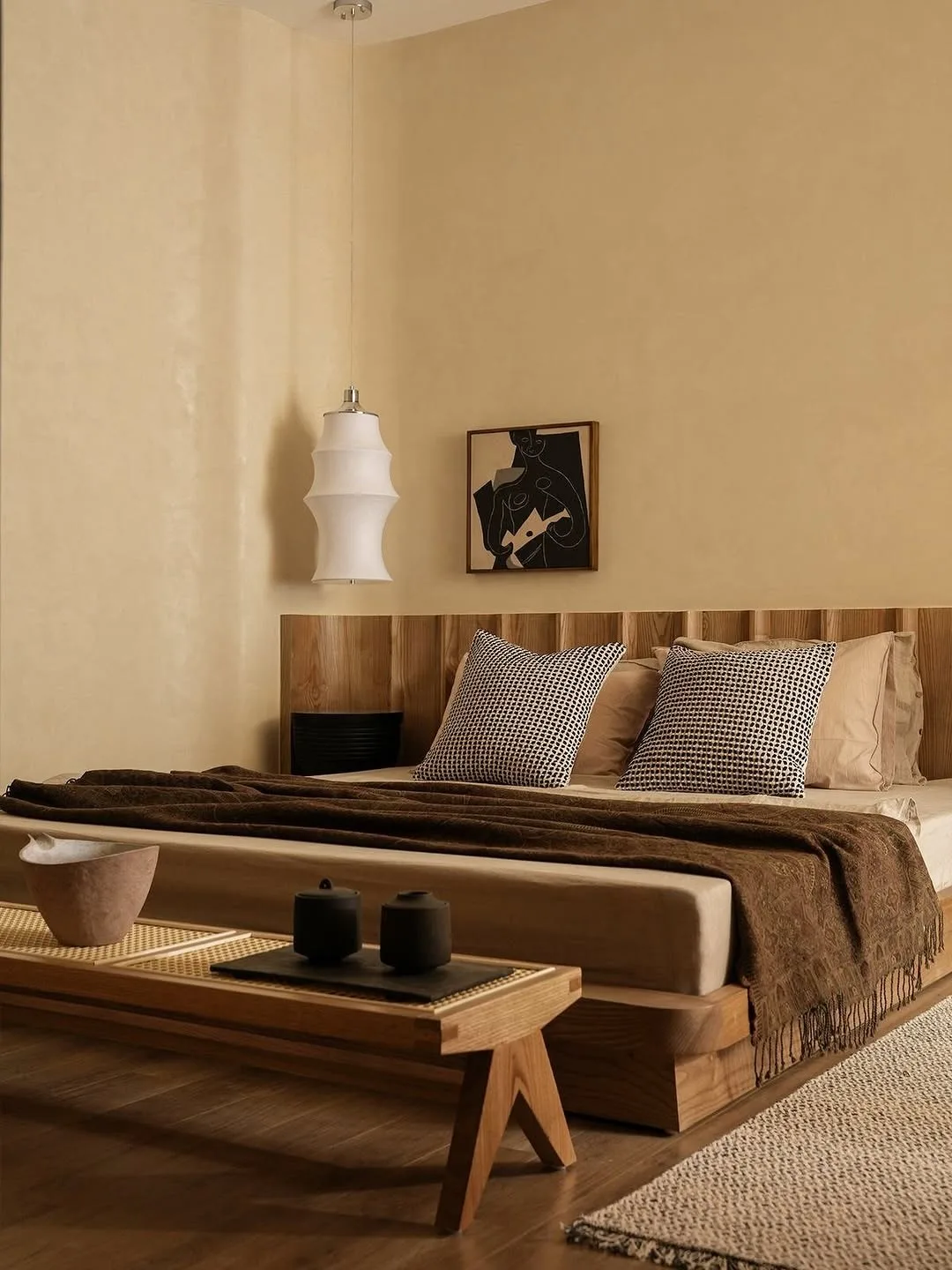
Japandi bedding is simple on purpose: a plain duvet, two sleeping pillows, and one throw or woven blanket across the foot of the bed. The bedroom in the photo layers warm earthy tones this way, and the low wooden bench at the foot completes the calm.
Washed linen is the ideal fabric because its slight creasing is part of the look. Cotton percale works too, as long as the colors stay in the warm neutral family and patterns stay away.
One throw is a discipline worth keeping. It adds the single layer of texture the bed needs, it is easy to wash, and it stops the cushion pile that makes small beds feel crowded and morning making feel like a chore.
The common mistake is adding a decorative cushion collection. Two sleeping pillows and at most one small cushion keep the bed japandi. Anything more belongs in boho or maximalist rooms, not in this one.
Divide a Studio With a Shoji Style Screen
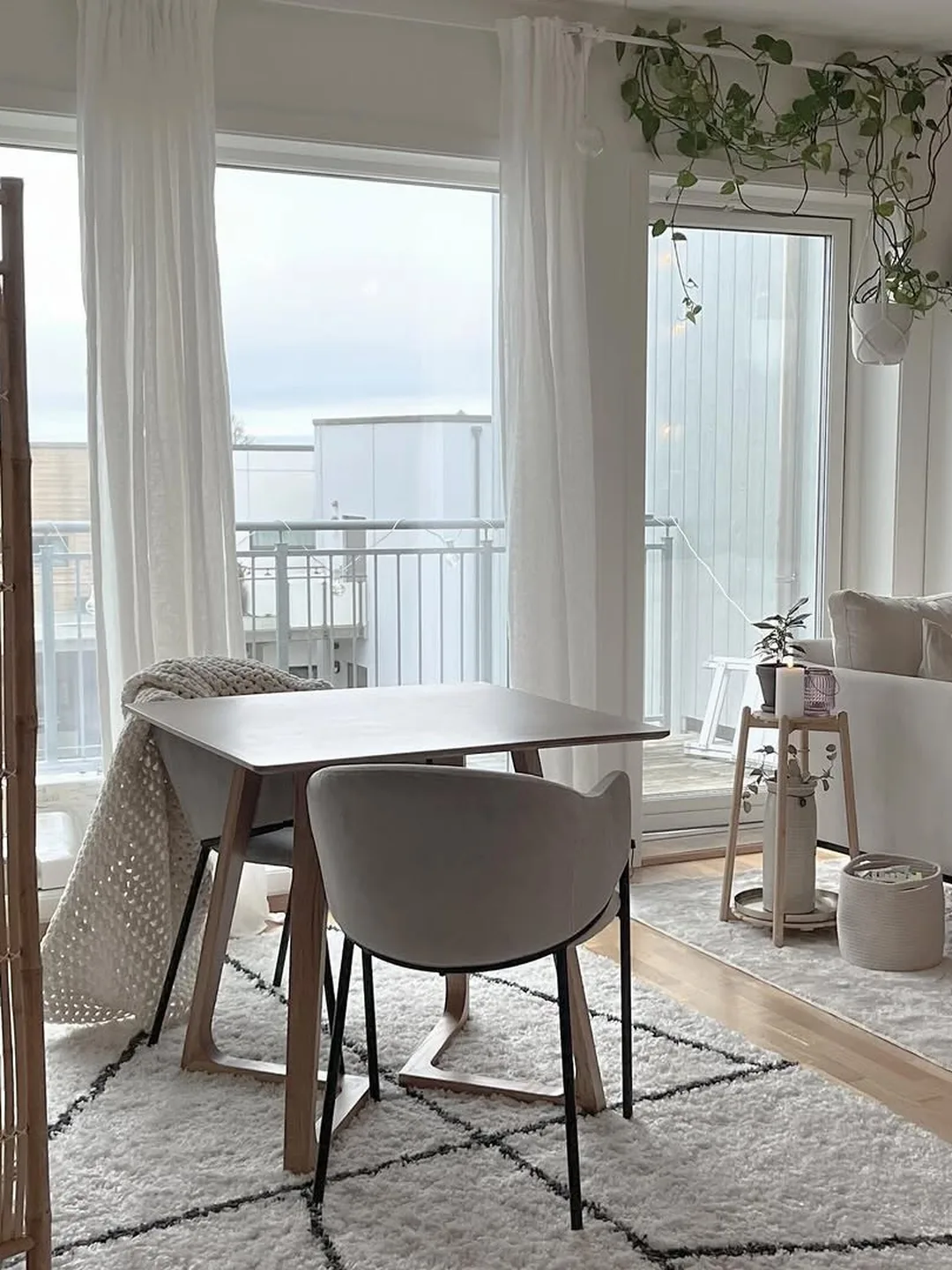
A folding screen is the japandi answer to the studio problem. The dining corner in the photo sits beside a wooden lattice screen that hints at a separate room without blocking light or air, and it folds away the day you want the space open.
Screens suit renters perfectly because they need no fixing at all. Place one between the bed and the sofa, or use it to hide a desk corner when work ends, and the studio gains rooms it does not have.
Choose a screen with a translucent panel if you want privacy with light, or an open lattice if you only need a visual boundary. Pale wood frames keep it in the japandi palette either way.
The common mistake is a screen that is too short or too flimsy. It should stand at least 150 cm tall and feel stable when brushed past, or it reads as clutter instead of architecture.
Think about what the screen hides from each side. From the sofa it should hide the bed or the desk; from the bed it should hide the door. Stand in both spots before you settle the angle, because a few degrees change everything it does.
Keep the Dining Corner to a Small Round Table
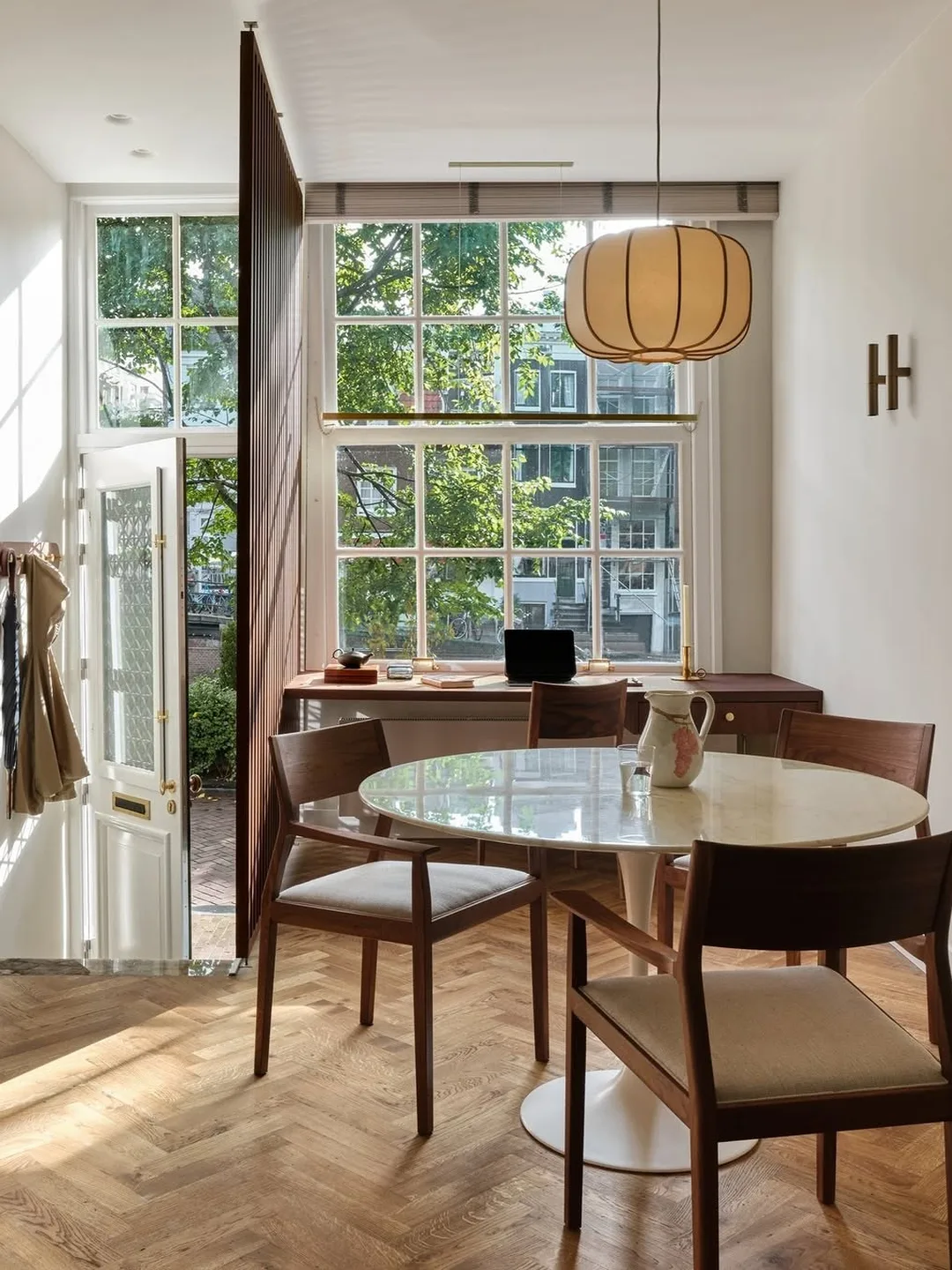
Round tables are the japandi dining default, and the corner in the photo shows why. A round top has no hard corners to catch hips in a tight space, it seats four in less floor area than a rectangle, and its soft shape matches the calm of the style.
A diameter of 90 to 105 cm is the small apartment sweet spot. Two people eat comfortably every day, four can squeeze in for guests, and chairs tuck under the rim so the corner almost disappears between meals.
Pair the table with simple wooden chairs and one pendant above. Keep the surface bare except for a small vase or a ceramic bowl, because a clear table is what makes the corner feel peaceful rather than busy.
The common mistake is pushing a rectangular table against the wall to save space and losing a seat in the process. A round table floats a little away from the wall and keeps every seat usable.
Hide the TV and Clutter Behind Closed Doors
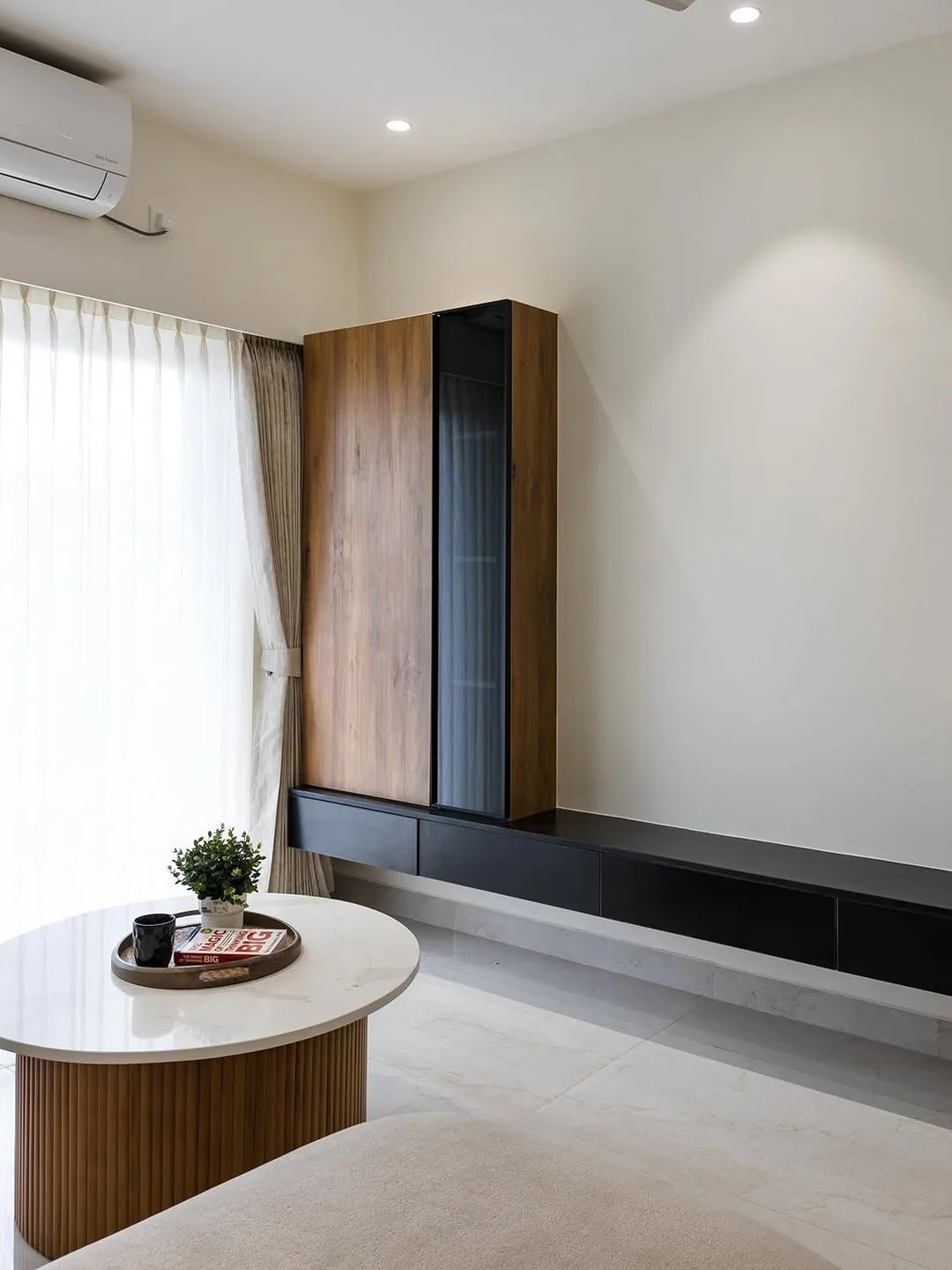
Nothing breaks japandi calm faster than visible clutter, so storage in this style hides behind doors. The living room in the photo uses a long low cabinet in warm wood tones, and every cable, console and remote disappears inside it.
Audit your open storage honestly. Books and ceramics can stay on display in small numbers, but chargers, paperwork, games and cleaning bits need a door or a lidded box, or the room never settles.
Low cabinets beat tall ones here, because they keep the height line low and double as a display surface for one plant or one piece of pottery. Our guide to minimalist apartment living room designs goes deeper on choosing closed storage that still looks light.
The common mistake is buying open shelving because it photographs well. In a real small apartment, open shelves fill with daily life within a month. Closed storage is the kind choice for a calm room.
Soften a Plain Ceiling With a Paper Globe Light
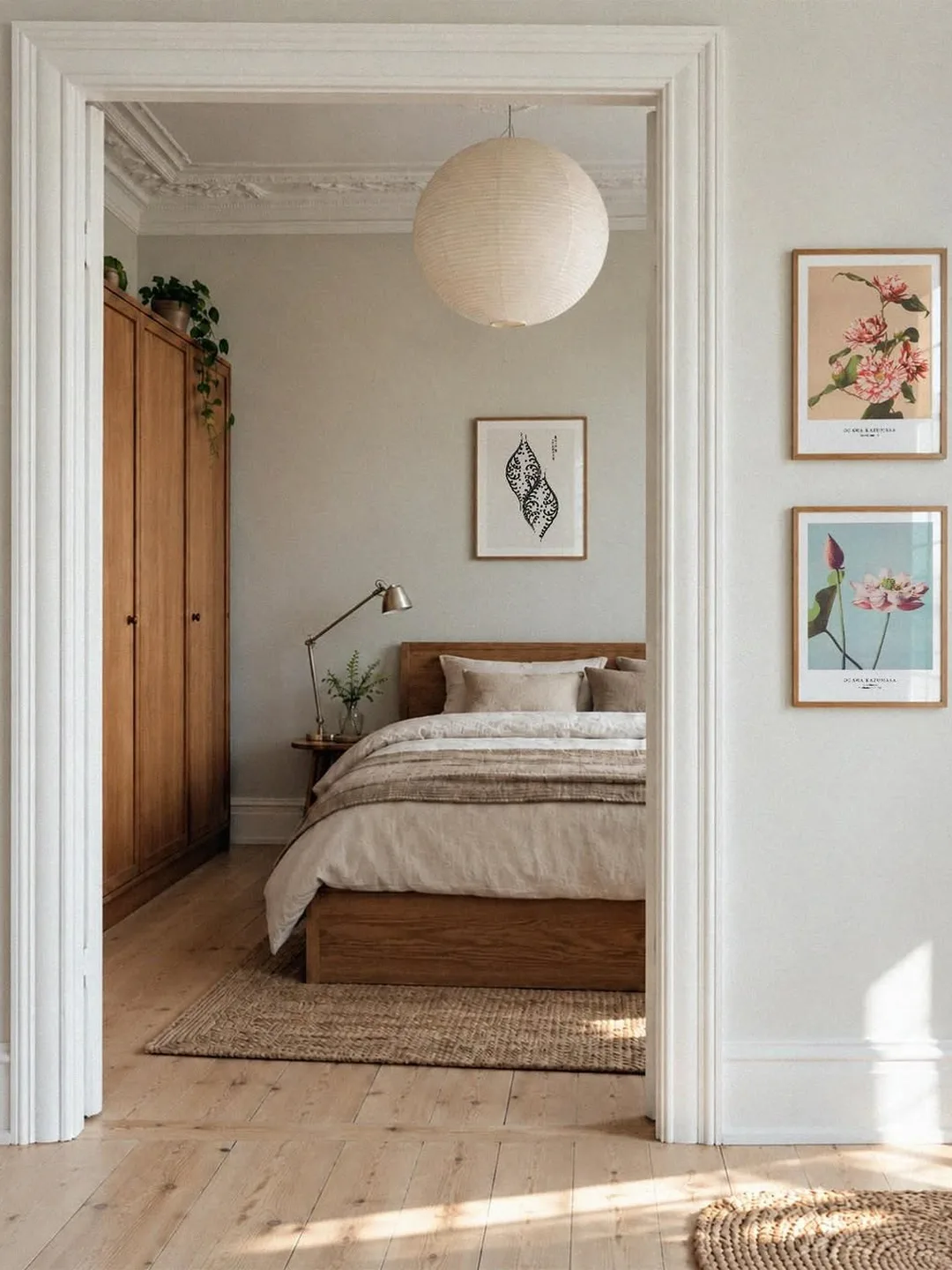
Many rental bedrooms have one harsh ceiling light in the centre of the room. A paper globe shade, like the one glowing in the doorway view in the photo, turns that single fitting into a soft moon of light for the price of a takeaway.
Paper globes fit most standard pendant holders with no wiring changes, which makes them one of the safest renter upgrades in this whole list. Keep the bulb warm white, around 2700K, so the light stays golden rather than blue.
The globe also gives a plain room a focal point that is not furniture. In the photo it balances the framed prints on the wall and draws the eye up, which makes the small bedroom feel taller.
The common mistake is a bulb that is too bright for the shade. Paper shows every hotspot, so choose a modest wattage and let the globe glow evenly instead of glaring.
If your ceiling fitting allows a dimmer or a smart bulb, the globe becomes two lights in one: bright enough for cleaning, low and golden for the evening. That flexibility suits a small bedroom that also works as a reading and dressing room.
Choose a Woven Floor Lamp for Warm Evening Light
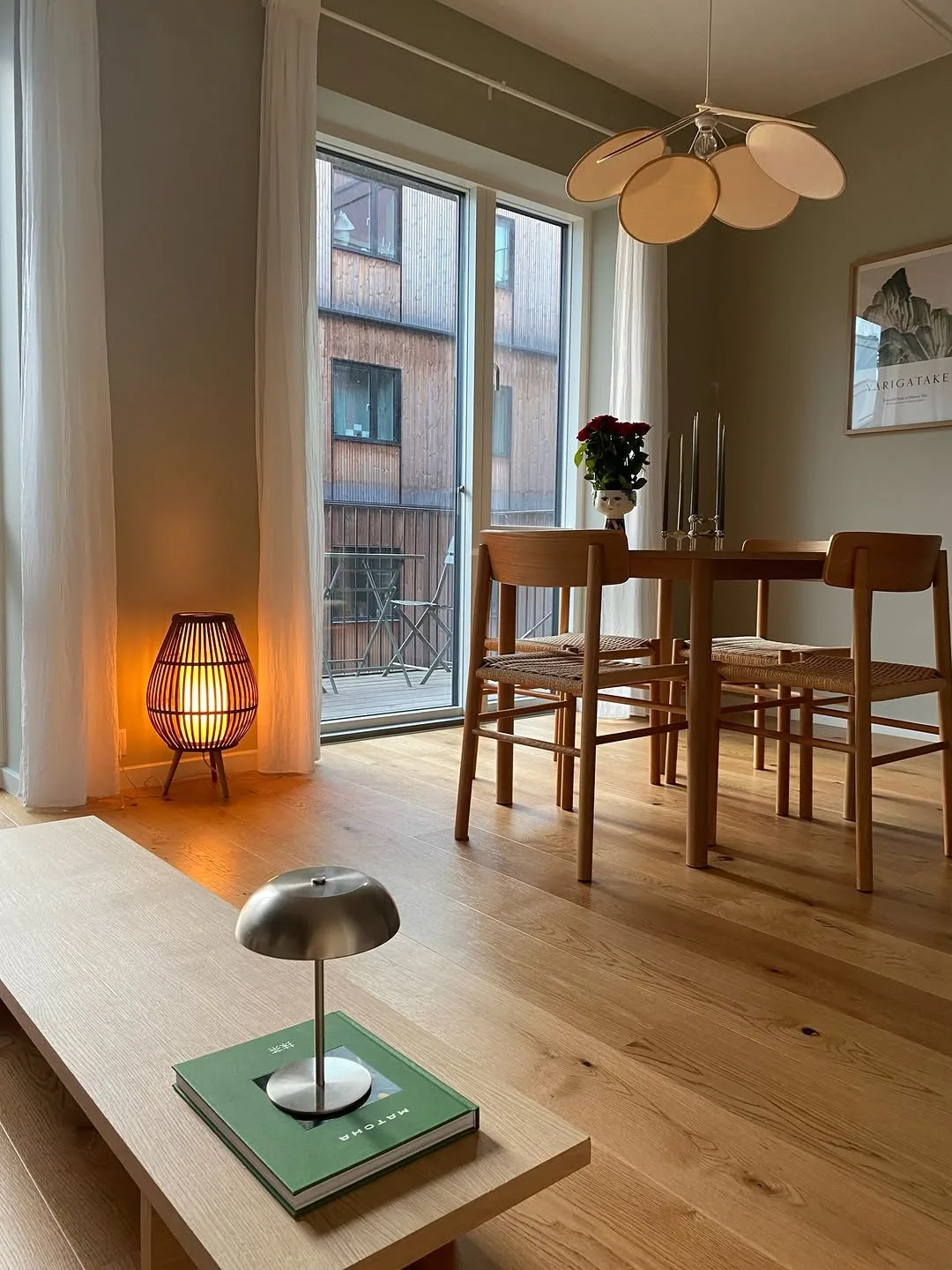
Japandi evenings run on low, warm light. The dining room in the photo glows through a woven rattan floor lamp in the corner, and the light through natural fibre feels softer than any fabric shade at the same brightness.
Place the lamp in the corner you use after dark, usually beside the sofa or the dining table. One warm lamp at sitting height does more for calm than the ceiling light ever will, so switch the main light off and let the corner glow.
Woven shades do collect dust, so add a monthly shake outside or a pass with a handheld vacuum to the cleaning routine. It takes a minute and keeps the light clear.
The common mistake is mixing light temperatures. If the lamp glows warm and the kitchen spots glow blue white, the room feels unsettled. Match every bulb in the open plan to the same warm temperature.
Tuck a Small Work Corner Into the Dining Space
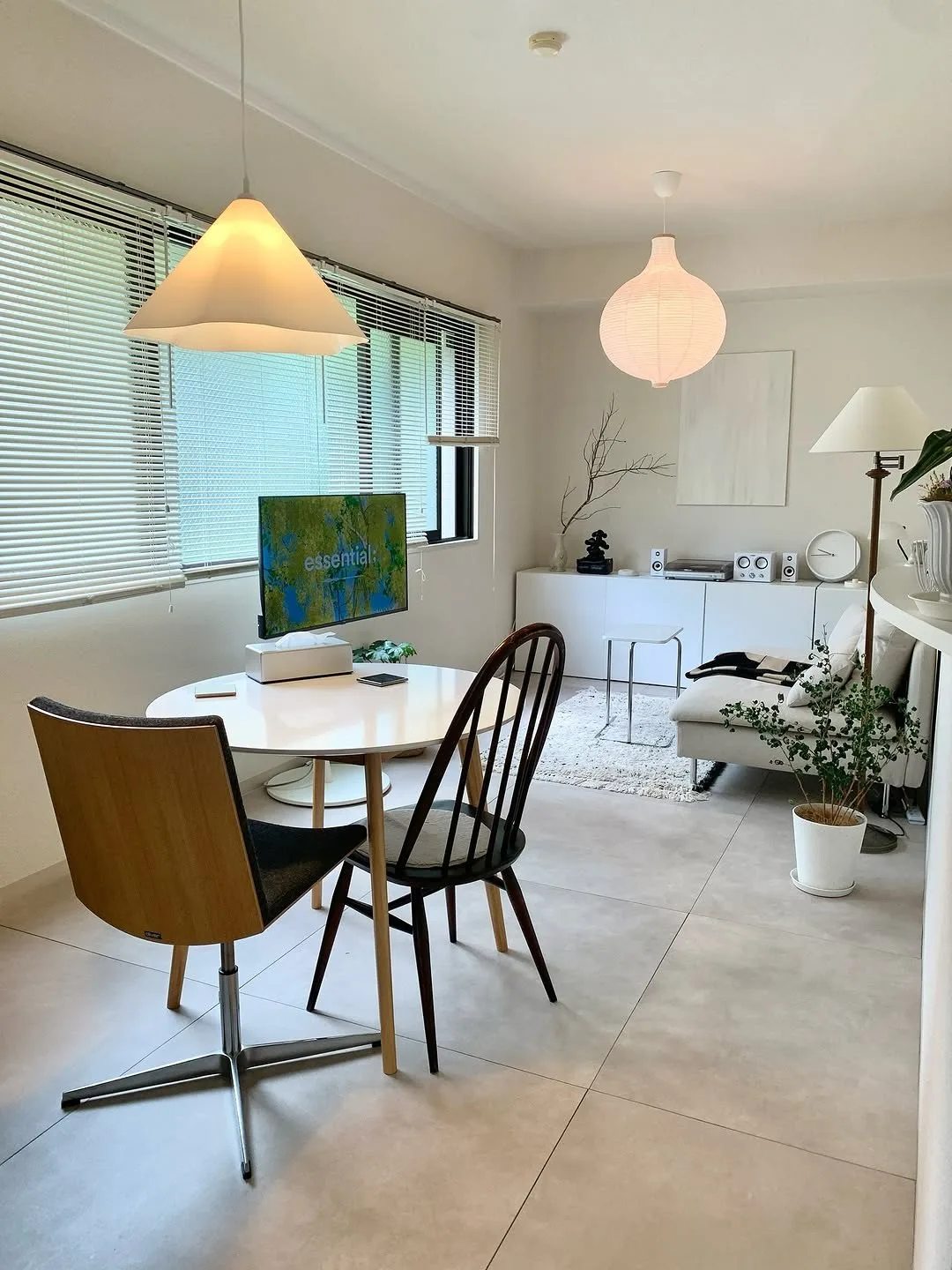
Small japandi apartments rarely have a spare room for work, so the desk borrows the dining corner. The home in the photo runs a slim desk along the window wall beside the dining table, and the shared palette keeps the office from feeling like an office.
Keep the desk shallow, around 50 cm deep, and choose a chair that matches the dining chairs so the corner reads as one set. A monitor on a wooden stand and a closed box for cables protect the calm.
End of day tidiness matters more than the furniture. A japandi work corner works because everything work related fits in one drawer or one lidded basket when the day ends, and the room becomes a dining room again.
The common mistake is letting the desk grow. A second screen, a printer and a paper tray turn the corner into a permanent office. Keep the kit minimal and store the overflow in the closed cabinet.
Build the TV Wall From Slatted Wood and Low Shelves
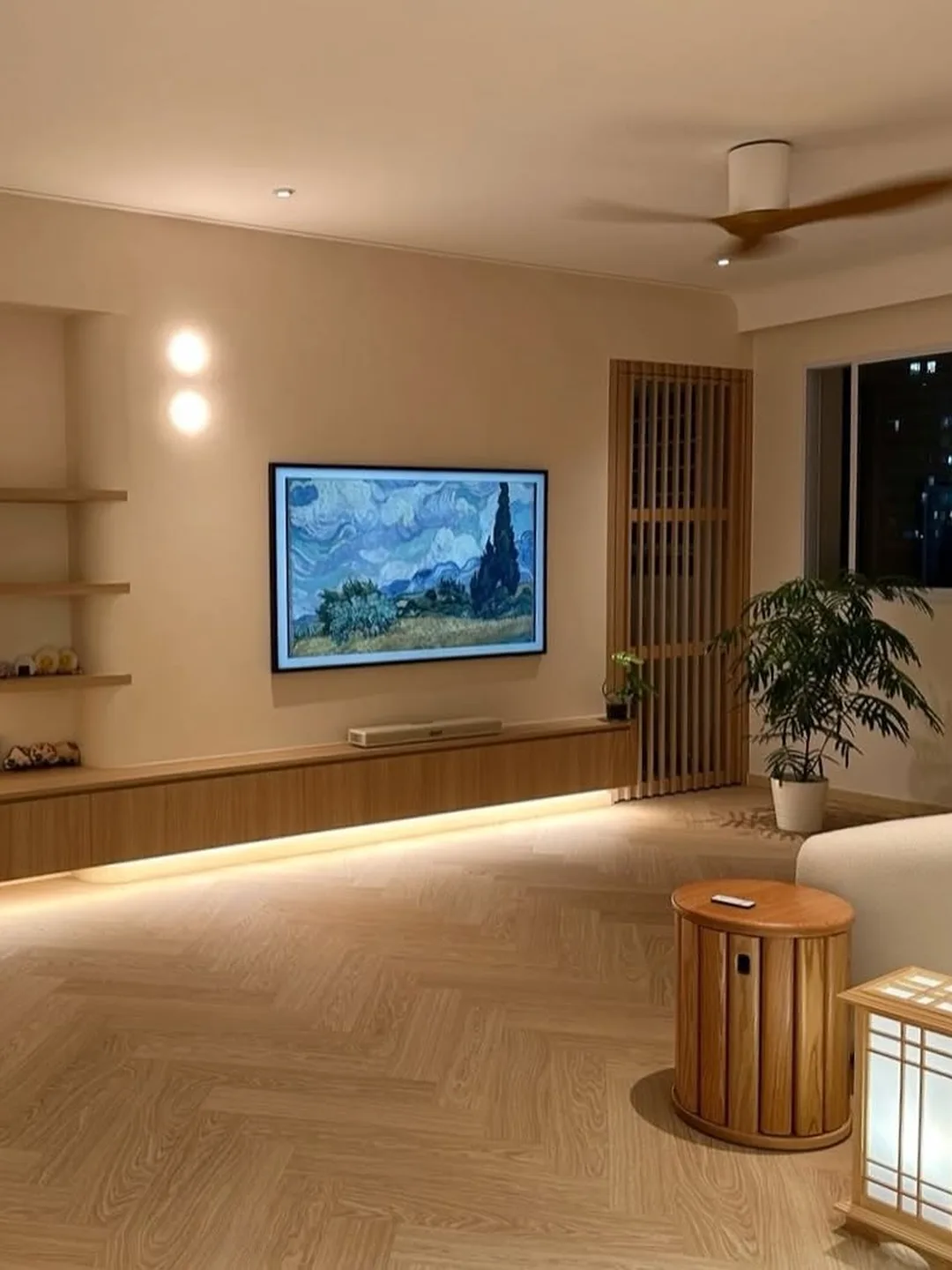
A slatted wood panel gives a plain rental wall texture without paint or wallpaper. The TV wall in the photo pairs vertical slats with low open shelves, and the black screen sits quietly inside the warm wood instead of dominating the room.
Renters can fake the look with slat effect panels that lean or fix with removable strips, or with a tall slatted room divider stood behind the TV bench. The effect is the same: rhythm, shadow and warmth.
Keep the shelves below the screen nearly empty. One plant, one stack of books and one ceramic piece is a full japandi shelf. Every extra object competes with the slats and the calm dissolves.
The common mistake is slats plus a busy gallery plus patterned cushions. Japandi chooses one texture hero per wall. If the wall is slatted, let the rest of the room stay plain.
Let One Tall Plant Sculpt an Empty Corner
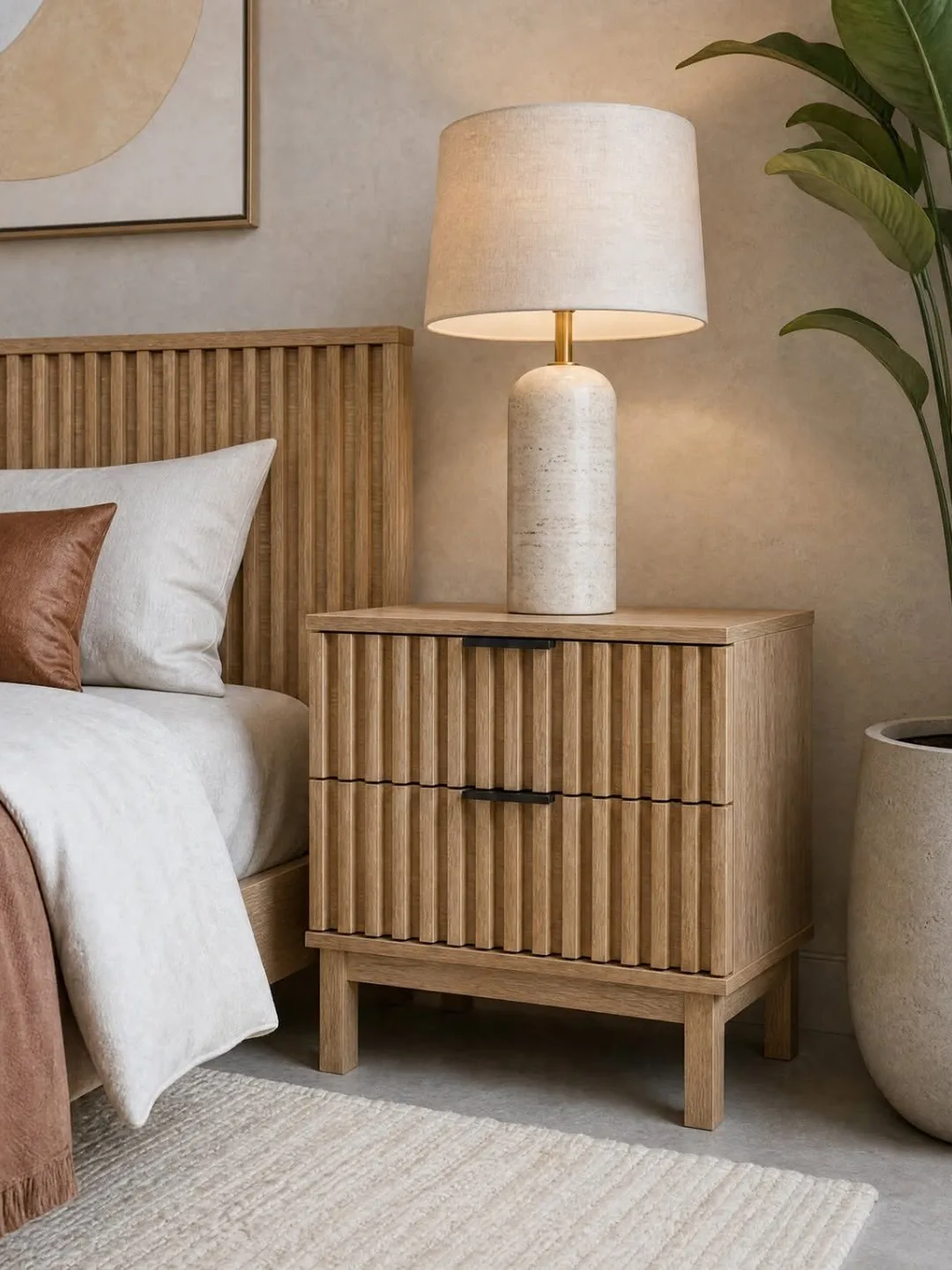
Japandi uses plants the way other styles use art: sparingly and on purpose. The bedroom corner in the photo pairs a fluted wooden nightstand and a ceramic lamp with one tall plant, and that single stem of green does more than a shelf of small pots would.
Choose plants with a sculptural shape, such as a fiddle leaf fig, an olive tree or a tall snake plant, and give the pot the same care as furniture. A plain clay, stone or woven pot keeps the corner in palette.
One strong plant is also easier to keep alive in a small home, because all your attention goes to a single watering routine. Our guide to indoor plants for small apartments lists forgiving choices for every light level.
The common mistake is a crowd of small plants on every surface. That is a boho pleasure, not a japandi one. Edit down to one plant per room zone and let each one breathe.
Rotate the plant a quarter turn every few weeks so it grows evenly toward the light. A sculptural plant that leans looks neglected, and two minutes of turning keeps the silhouette that made you choose it in the first place.
Lean a Tall Mirror Instead of Hanging It
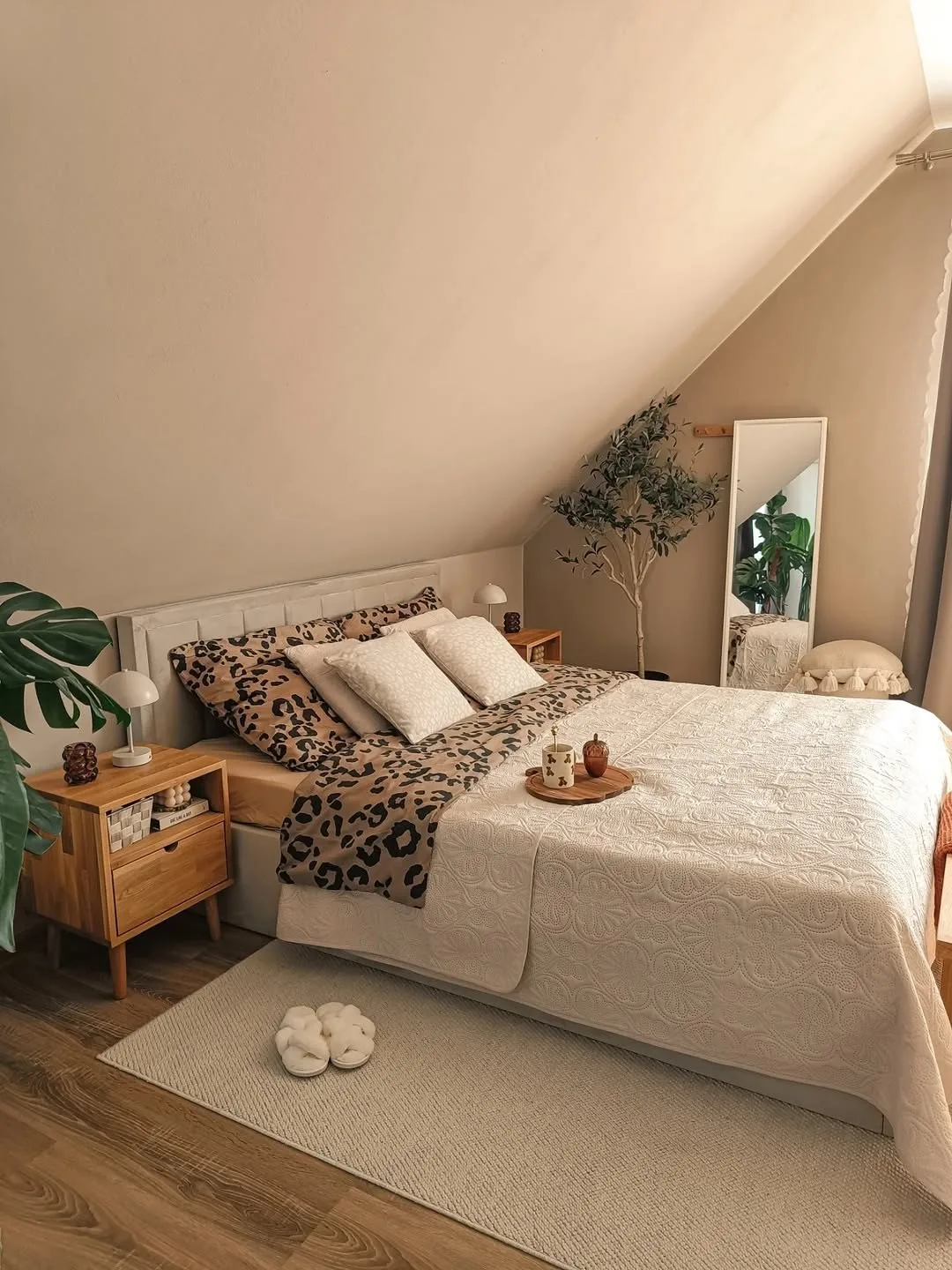
A leaning mirror is a japandi staple because it feels relaxed and needs no drilling. The attic bedroom in the photo leans a tall mirror near the window, where it bounces daylight into the sloped corner and doubles the view of the plants.
Place a leaning mirror where it reflects light or greenery, never where it reflects the bedhead clutter or the kitchen counter. A small shift in angle changes the whole effect, so test positions at different times of day.
Safety comes first in a rental. A tall mirror should rest on a non slip mat and, in homes with children or pets, fix to the wall with a discreet safety strap even if the look is leaned.
The common mistake is a mirror that is too small to lean convincingly. Below about 120 cm tall, a mirror looks lost on the floor. Save leaning for tall pieces and hang small ones instead.
Add a Woven Pouf and a Jute Rug for Soft Layers
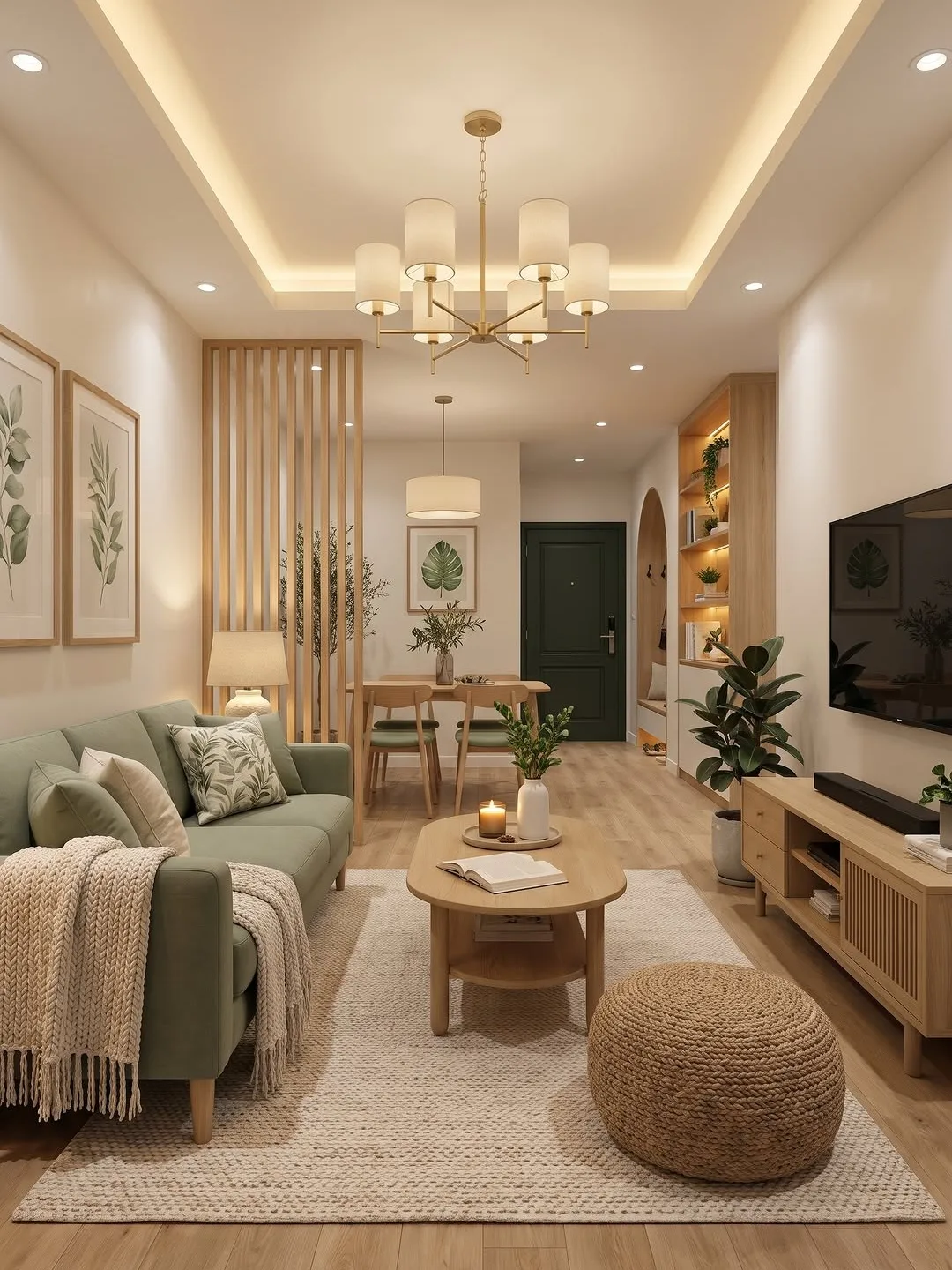
Japandi floors stay quiet but never bare. The living room in the photo layers a flat jute toned rug under the seating and adds a round woven pouf, which works as a footrest, a side table with a tray, or the extra seat when a friend visits.
Natural fibre rugs suit this style because their texture is the pattern. Jute, sisal and flat weave wool in undyed tones warm a room without adding color noise, and they sit happily under low japandi furniture.
If you are choosing your first rug for the room, our new guide to rug ideas for small apartments covers sizes and layering in detail, including which fibres survive dining chairs and pets.
The common mistake is a pouf in a bright color or a shiny fabric. Keep it woven, matte and neutral, and it will earn its place in every arrangement of the room instead of fighting them all.
Common Japandi Apartment Mistakes to Avoid
Making the Room Empty Instead of Calm
Japandi is edited, not empty. A room with no textiles, no plant and no personal object feels like a waiting room. Keep the layers, just keep them few, natural and quiet.
Mixing Too Many Wood Tones
Pale oak, dark walnut, orange pine and grey wash in one room fight each other. Choose one main wood tone and one supporting tone, and let everything else be textile or ceramic.
Buying Cold White Light Bulbs
Blue white light kills warm wood and linen instantly. Every bulb in a japandi home should be warm white, and lamps should sit low so light pools instead of flooding.
Leaving Clutter on Open Surfaces
The style depends on clear surfaces. If keys, chargers and paperwork live on the coffee table, no amount of pale furniture will make the room feel calm.
Choosing Oversized Furniture
Japandi proportions are low and modest. A deep three seater sofa or a huge dining table overwhelms a small room and blocks the light the style needs.
Copying a Showroom Instead of Living in It
A japandi room should still hold your books, your mug and your life. Edit what you own before you buy the look, or the new pieces simply join the clutter.
Budget-Friendly Japandi Apartment Tips
Start by removing, which is free. Clear surfaces, donate the pieces that fight the palette, and rearrange what remains lower and simpler. Most apartments get halfway to japandi in one honest afternoon of editing.
Spend first on textiles. Linen look cushion covers, a plain cotton throw and simple sheer curtains change the light and the texture of a room for very little, and they are easy to take to the next home.
Paper pendant shades are the cheapest large decor you can buy. One oversized paper globe costs less than a small lamp and transforms the ceiling line of a rental room in ten minutes.
Shop secondhand for pale wood. Small wooden stools, benches and side tables appear constantly in charity shops and marketplace listings, and a light sanding brings most of them back into the palette.
Secondhand ceramics carry the handmade look japandi loves for very little money. One uneven stoneware bowl or vase per room is enough, and charity shops price them far below the high street versions that imitate them.
Grow your one statement plant from a cutting or a small pot. A young olive or fig costs little, and watching it become the corner sculpture is part of the pleasure of the style.
A Simple Plan to Build Japandi Calm in One Week
Day one is editing. Clear every surface in the living room and bedroom, box what does not belong to the palette, and live with the emptier rooms for a day to see what you actually miss.
Day two and three are textiles. Hang sheer curtains, dress the bed in plain linen tones, and swap cushion covers to warm neutrals. The rooms should already feel quieter and brighter.
Day four is light. Fit the paper pendant, place one woven lamp in the evening corner, and change every bulb to warm white. Spend that evening in the room and adjust heights and positions.
The rest of the week is one piece at a time. Add the plant, lean the mirror, roll out the rug. Stop the moment the room feels finished, because in japandi the last piece you skip is the one that keeps it calm.
FAQ
Is japandi a good style for a rental apartment?
Yes, because most of it is furniture, textiles and light rather than building work. Screens, leaning mirrors, paper shades and low furniture all move with you, and nothing needs drilling or painting beyond what most landlords allow.
What colors define japandi apartment decor?
Warm white, oatmeal, sand, soft grey and pale wood, with black or deep brown used in tiny accents. The palette is warm rather than bright, and every color should look like it came from wood, clay, stone or fibre.
Can japandi work in a very small studio?
It works especially well in studios, because low furniture, one palette and closed storage make a single room feel larger and calmer. A folding screen or a curtain can mark the sleeping zone without any building work.
How is japandi different from Scandinavian style?
Scandinavian style is brighter and cosier, with more textiles and personal objects. Japandi takes that warmth and edits harder: lower furniture, fewer objects, more empty space around each piece, and a stronger role for wood and shadow.
What is the first japandi piece worth buying?
A paper pendant shade or a low wooden bench gives the biggest change for the least money. Both shift the height lines of a room, which is where the japandi feeling actually comes from.
How do I keep japandi from looking cold?
Warm the light, keep textiles natural and slightly textured, and always include one living plant. If a room feels cold, the fix is usually a warmer bulb and a woven texture, not more furniture.
Conclusion
Japandi apartment decor asks for less than almost any other style: low wooden furniture, a warm quiet palette, plain natural textiles, soft light and surfaces that stay clear. In a small apartment those limits stop being restrictions and start being the reason the home feels calm.
Start with editing and light, add textiles next, and let furniture follow slowly. Pick two or three ideas from this list, live with them for a few weeks, and add more only where the room still asks for it. That patience is not a compromise. It is the style itself.