
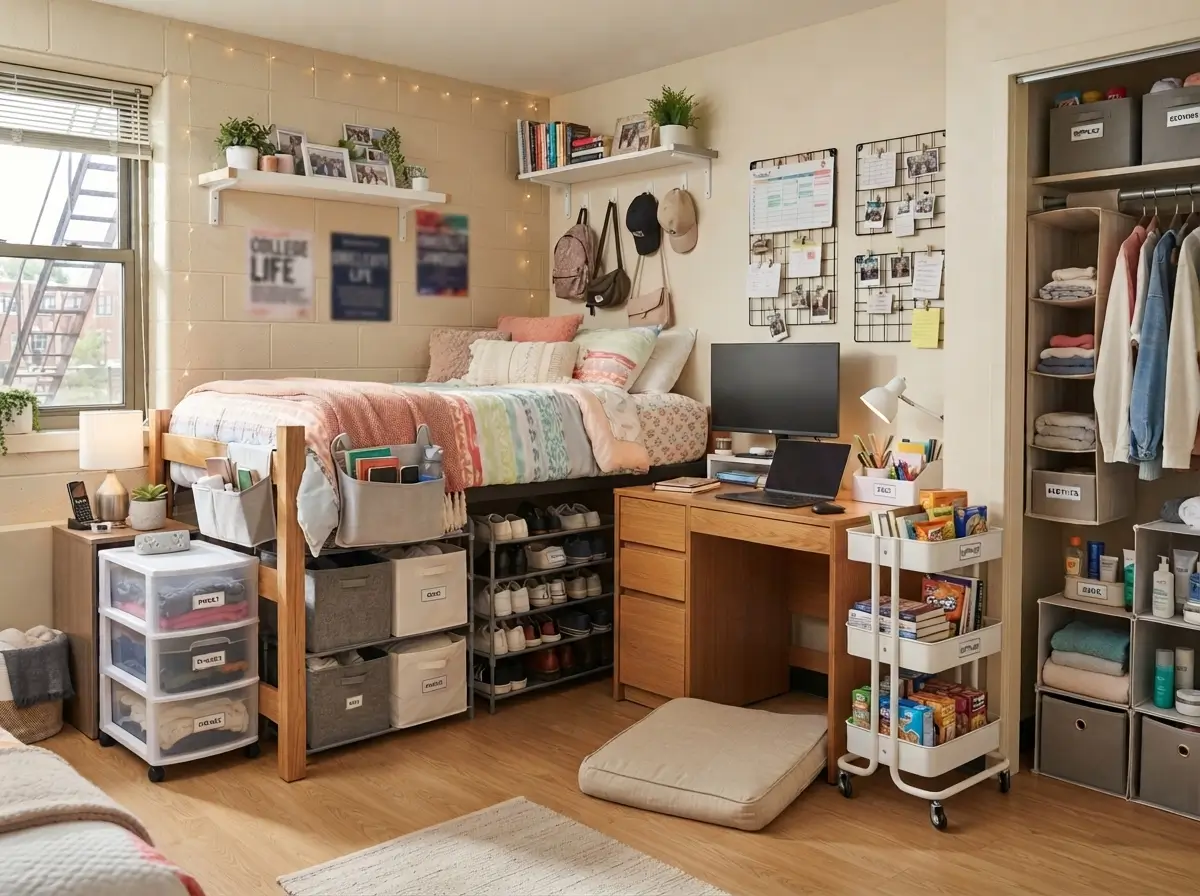

College bedrooms rarely offer enough floor space for everything students need. Clothes, shoes, textbooks, snacks, laundry, electronics, toiletries, and seasonal items can quickly make one small room feel crowded. Good Small College Bedroom Storage solves that problem by giving every item a practical home while keeping the room comfortable, personal, and easy to clean. Expensive built-ins are not necessary. Most dorm rooms improve with a few low-cost containers, better use of vertical space, and furniture that can handle more than one job.
Students also need solutions that respect dorm rules. Nails, permanent shelves, large furniture, and wall paint may be restricted, so removable hooks, tension rods, freestanding organizers, and under-bed containers often work best. Color matters as well. Matching storage in white, soft gray, navy, sage, or natural woven tones makes a small room look calmer than a mix of random bright bins. Practical organization should support daily habits, not create a complicated system that becomes difficult to maintain after a busy week.
Can a Small Dorm Bedroom Really Hold Everything?
Yes. Smart Small College Bedroom Storage can make room for daily essentials by using overlooked areas such as the space under the bed, behind the door, above the desk, and along the closet floor. The goal is not to fill every empty inch. Better results come from assigning each zone a purpose and leaving enough open space to move comfortably.
Begin by measuring the bed height, closet width, door clearance, and desk area. Those four measurements prevent many buying mistakes. Sort belongings into daily, weekly, and seasonal groups before choosing containers. Daily items should stay within easy reach, while extra bedding, luggage, and off-season clothing can sit higher or farther away.
Raise the Bed and Add Low Storage Bins
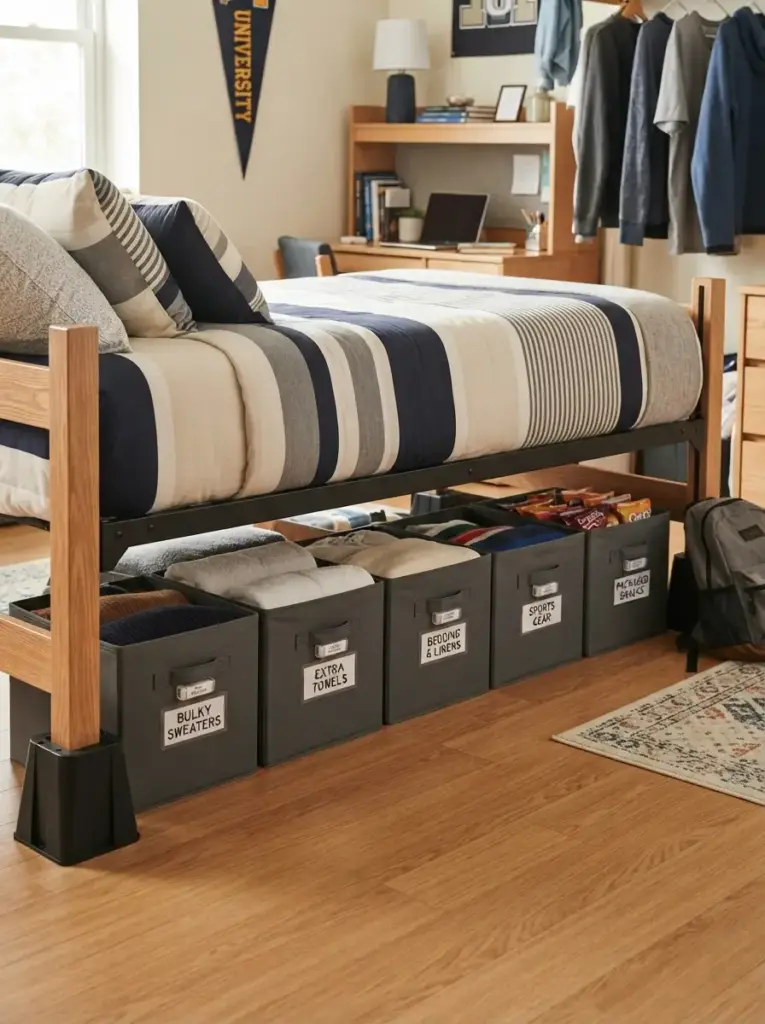
Bed risers create one of the largest storage zones in a dorm without taking away any usable floor area. Many dorm beds already adjust to a higher position, so ask housing staff before buying risers. When extra height is allowed, choose sturdy risers designed for the bed’s weight and place matching low-profile bins underneath. Clear bins help students see what they own, while fabric bins make the room look softer and less industrial.
Under-bed storage works especially well for students with bulky sweaters, extra towels, bedding, sports gear, or packaged snacks. Use one bin for each category instead of mixing unrelated items. Labels placed on the front save time because the entire bin does not need to slide out for identification. Small College Bedroom Storage becomes much easier when the biggest hidden zone is divided into simple, repeatable categories.
Keep the visible edge neat by using bins in the same color family. Black, charcoal, or navy containers hide scuffs, while cream and light gray brighten a dark room. Avoid overfilling bins because lids that bulge are harder to pull out and often crack. Leave several inches of clearance between the bin and bed frame so daily access feels easy rather than frustrating.
Use a Bedside Caddy Instead of a Nightstand
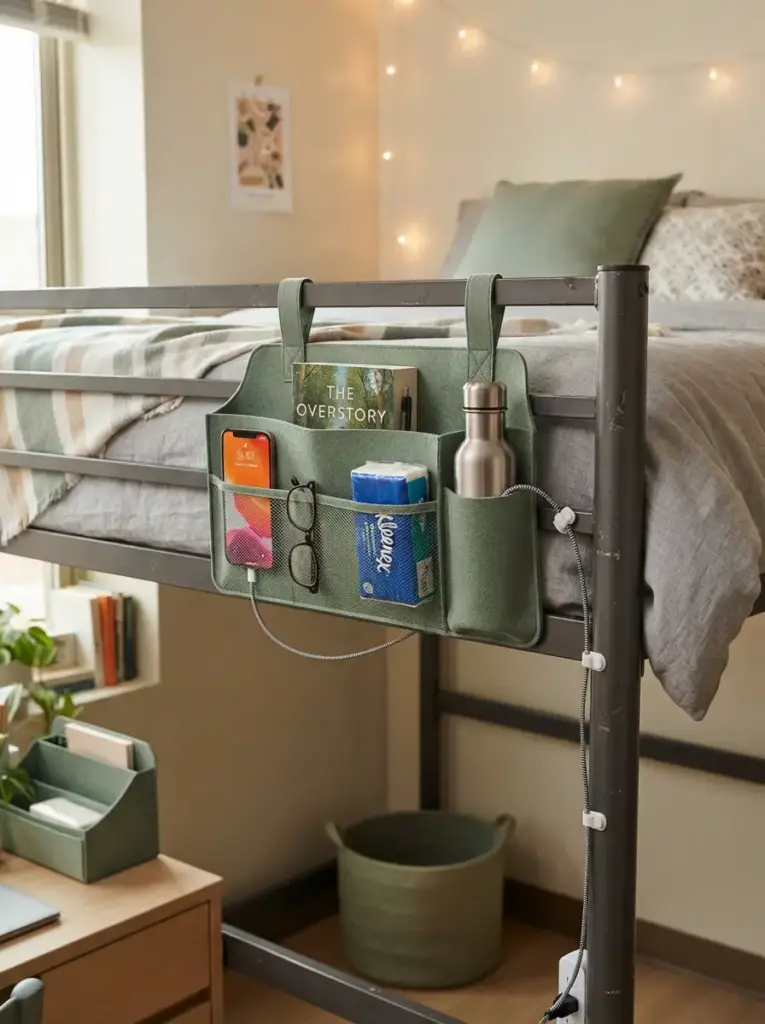
Bulky nightstands often waste floor space beside a dorm bed. A hanging bedside caddy provides a place for a phone, glasses, a charger, a book, tissues, and a water bottle without adding furniture. Choose a design with reinforced pockets and straps that wrap securely around the bed rail. Felt and heavy canvas usually hold their shape better than thin polyester.
Students who study or relax in bed benefit most from this setup because small essentials stay within reach. Place charging cables through a side pocket and secure the cord along the bed frame with removable clips. Doing so keeps the floor clear and reduces the chance of stepping on a cable. Avoid storing open drinks in shallow pockets, since a small movement can spill water onto bedding or electronics.
Neutral colors make the caddy blend with the bed frame, while one accent color can connect it to pillows or a throw blanket. For example, a sage caddy can repeat the color of a desk organizer or storage basket. Such repetition makes practical pieces feel intentional instead of temporary.
Turn the Back of the Door Into Storage
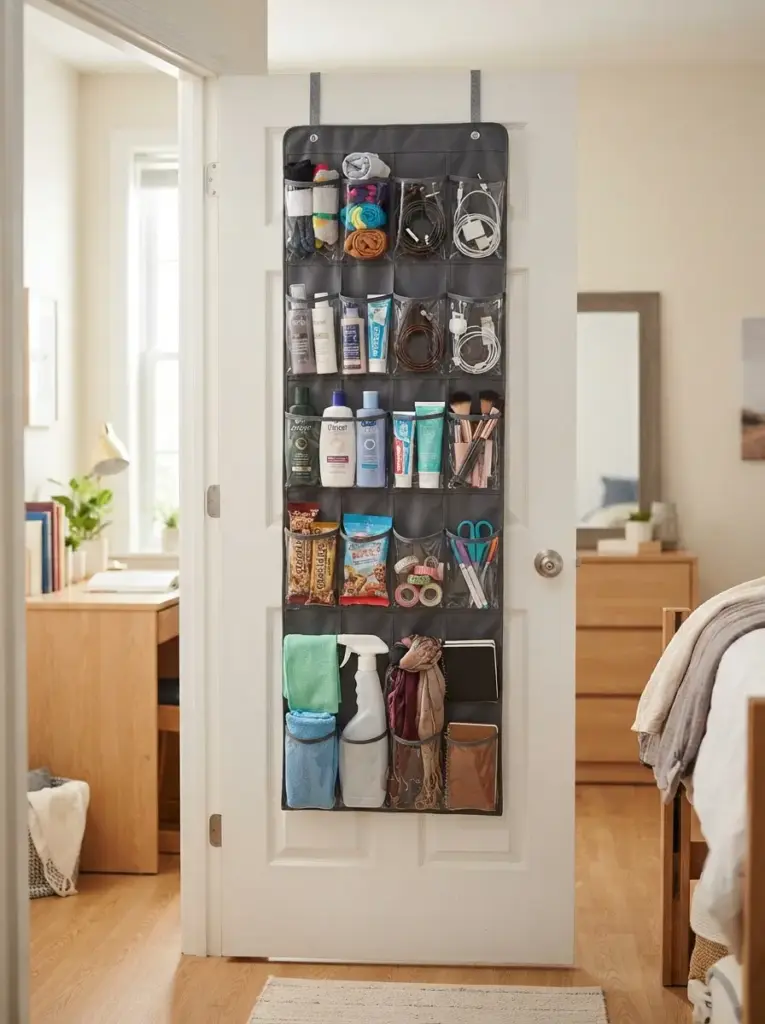
Over-the-door organizers use space that normally serves no purpose. Shoe-pocket versions can hold socks, belts, scarves, cleaning supplies, snacks, toiletries, chargers, or craft materials. Students sharing a bathroom can use the organizer as a portable grooming station, keeping hair products and skincare together rather than scattered across the desk.
Door clearance needs attention before installation. Thick hooks may stop the door from closing smoothly or scratch the frame. Choose slim metal hooks with felt padding, and test the door before loading the organizer. Clear pockets are useful for small items, but fabric pockets create a cleaner view when the door faces the main room.
Best results come from placing lighter items near the top and heavier items lower down. Uneven weight can make the organizer swing whenever the door opens. Students with limited closet shelving often gain the most from this idea because it adds vertical storage without changing the room. Remove rarely used items every few weeks so the pockets do not become a hidden collection of clutter.
Add a Slim Rolling Cart
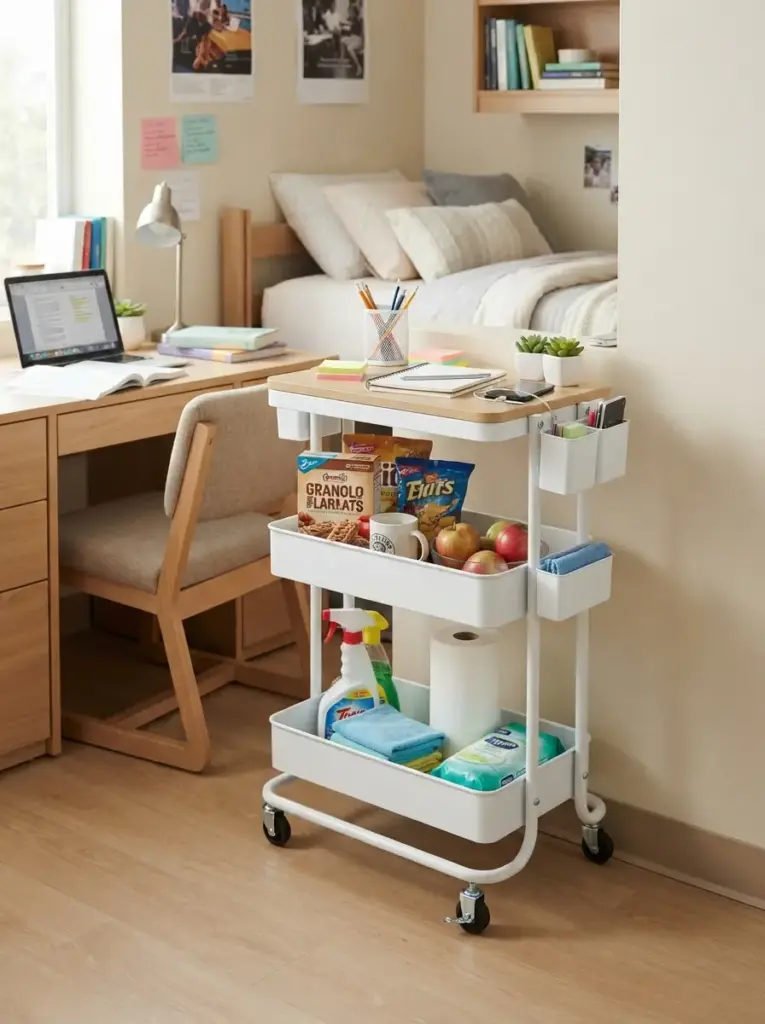
Rolling carts fit beside desks, between beds, or near a mini fridge and can move whenever the layout changes. Three-tier carts are especially useful because they provide open storage while keeping items visible. One level can hold school supplies, another can store snacks, and the bottom can contain cleaning products or extra paper goods.
Students who frequently change activities will appreciate the flexibility. Roll the cart beside the desk during study sessions, move it near the bed at night, or use it as a temporary coffee station in the morning. Dorm storage should support the way the room changes throughout the day, and a mobile piece handles that better than a fixed cabinet.
Choose a narrow cart with locking wheels so it does not drift on smooth flooring. White carts visually disappear against pale walls, while black carts work well with dark desks and metal bed frames. Avoid placing too many tiny objects on open shelves. Small bins, pencil cups, or shallow trays keep the cart organized and prevent items from falling when it moves.
Build Upward With a Cube Shelf
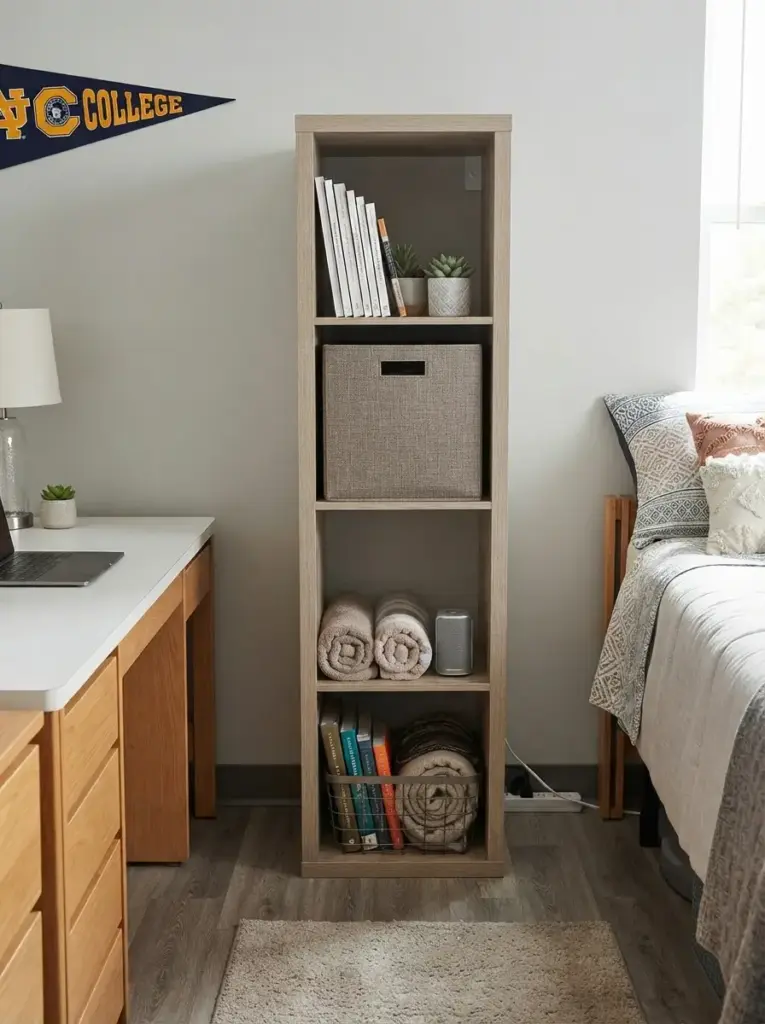
Vertical cube shelves provide storage for books, folded clothing, baskets, décor, and small appliances while using less floor space than wide furniture. A narrow unit with three or four cubes often fits beside a desk or at the end of a bed. Freestanding shelves are usually more dorm-friendly than wall-mounted options, but they still need to follow campus safety rules.
Anyone with many visible items can benefit from mixing open and closed storage. Leave one or two cubes open for books and display pieces, then use matching fabric bins in the remaining cubes. Closed bins reduce visual noise, which helps a small room feel calmer. Place heavier objects on the bottom to improve stability and keep lightweight décor at eye level.
Furniture color should connect to existing pieces. White laminate works with most dorm desks, while light wood adds warmth to gray walls and vinyl flooring. Skip oversized cube units that block windows or crowd walkways. Measure baseboards and outlets before buying because a shelf may sit farther from the wall than expected.
Double the Closet Hanging Space
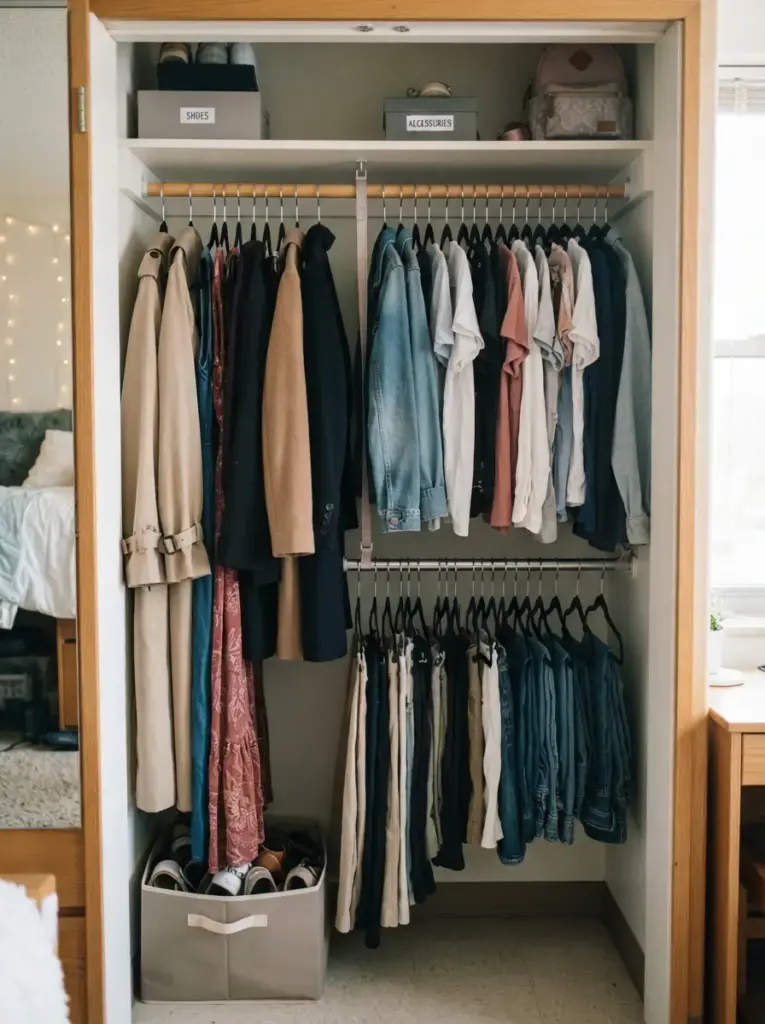
Dorm closets often have one high rod with wasted space below shirts and jackets. A hanging closet rod clips onto the existing rail and creates a second level for shorter clothes. Tops can hang above, while pants, skirts, and folded-over jeans stay below. No drilling or permanent hardware is required.
Students with many everyday outfits gain the most from this setup. Group clothes by type and length before installing the lower rod, since long coats and dresses still need full-height space. Reserve one side of the closet for longer garments and use the double section for shorter pieces. Leaving a small open gap also makes it easier to see what is available.
Slim velvet hangers increase capacity further and stop lightweight clothing from sliding off. Matching hangers create a cleaner line than a mix of plastic and wire styles. Avoid packing the rod too tightly because compressed clothes wrinkle and become difficult to remove. Enough breathing room between garments makes the closet easier to use every morning.
Add Shelf Dividers for Folded Clothes
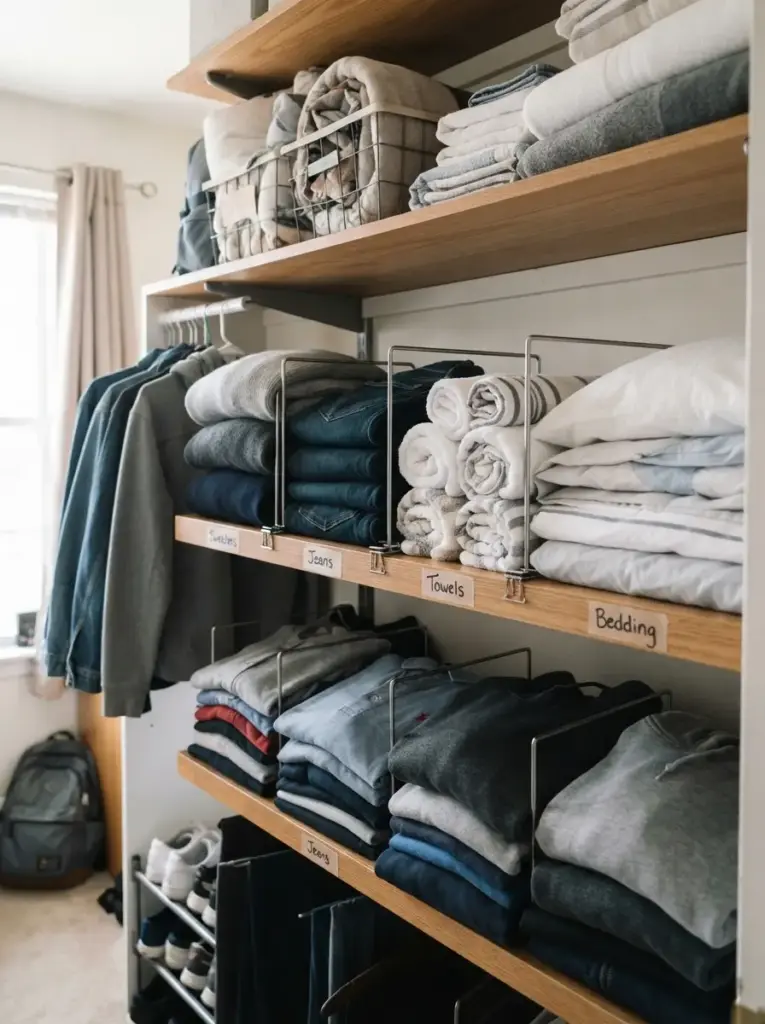
Wide closet shelves can look useful until stacks of shirts and towels begin leaning into one another. Clip-on shelf dividers create clear sections without requiring tools. Each category gets its own lane, so sweaters, jeans, towels, and bedding remain separate. Wire dividers feel light and open, while solid acrylic versions prevent smaller items from slipping through.
Students who prefer folding instead of hanging clothes will find this system particularly helpful. Keep stacks low enough to remove the bottom item without collapsing everything above it. Folding boards can create consistent widths, but careful hand folding works just as well. Place frequently used items at chest height and store backup linens on the upper shelf.
Labels can help during the first few weeks, especially when several similar bins or stacks share one shelf. Later, the dividers themselves provide enough visual guidance. Skip unstable cardboard dividers because humidity and repeated handling can bend them quickly. Affordable metal versions usually last through several semesters and move easily to a future apartment.
Place Stackable Drawers Under Hanging Clothes
Short hanging garments leave valuable closet floor space open. Stackable plastic drawers fill that gap and work well for socks, undergarments, workout clothes, accessories, or folded T-shirts. Clear fronts reveal contents, while opaque drawers keep the closet looking less busy. Choose shallow drawers for small categories and deeper ones for sweatshirts or towels.
People who dislike open baskets may prefer drawers because they protect items from dust and keep piles contained. Measure the closet depth carefully so the drawers do not prevent the door from closing. Handles should remain easy to reach, even when clothes hang above them. Adding removable drawer labels makes move-in organization faster and simplifies packing at the end of the year.
Balance is important when stacking separate units. Put heavier drawers on the bottom and use manufacturer-approved connectors when available. Avoid building a tall, unstable tower beneath the rod. Two or three low levels usually provide enough space while leaving room for hanging clothes to move freely.
Attach Removable Hooks in Useful Zones
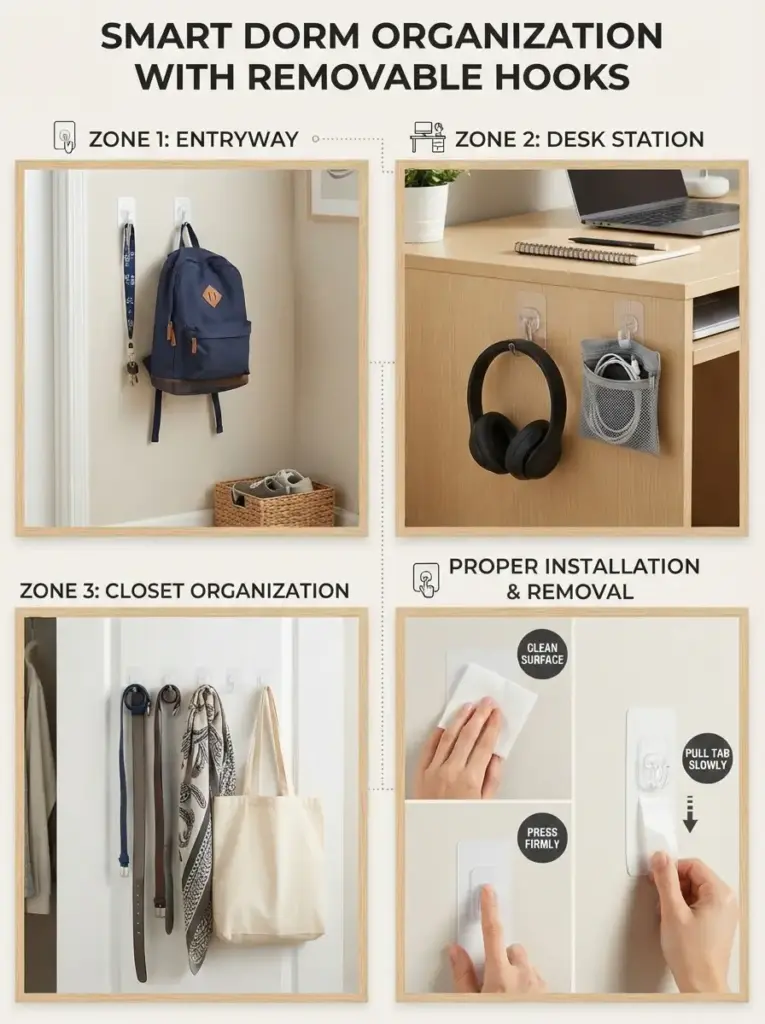
Removable hooks can organize bags, headphones, keys, towels, hats, and lightweight jackets when placed in carefully chosen zones. One hook near the door can hold a daily backpack, while another beside the desk can support headphones or a cable pouch. Hooks inside a closet door can store belts or reusable shopping bags.
Renters and dorm residents should always check wall rules and follow the hook manufacturer’s weight limits. Clean the surface before applying adhesive, press for the recommended time, and wait before adding weight. When removal time arrives, pull the release tab slowly in the correct direction instead of yanking the hook away from the wall.
Placement matters more than quantity. Too many hooks make walls look cluttered and encourage students to hang everything in sight. Select three or four high-value locations based on daily routines. White hooks blend into pale walls, while clear styles keep attention on the item rather than the hardware.
Create a Pegboard Station Without Drilling
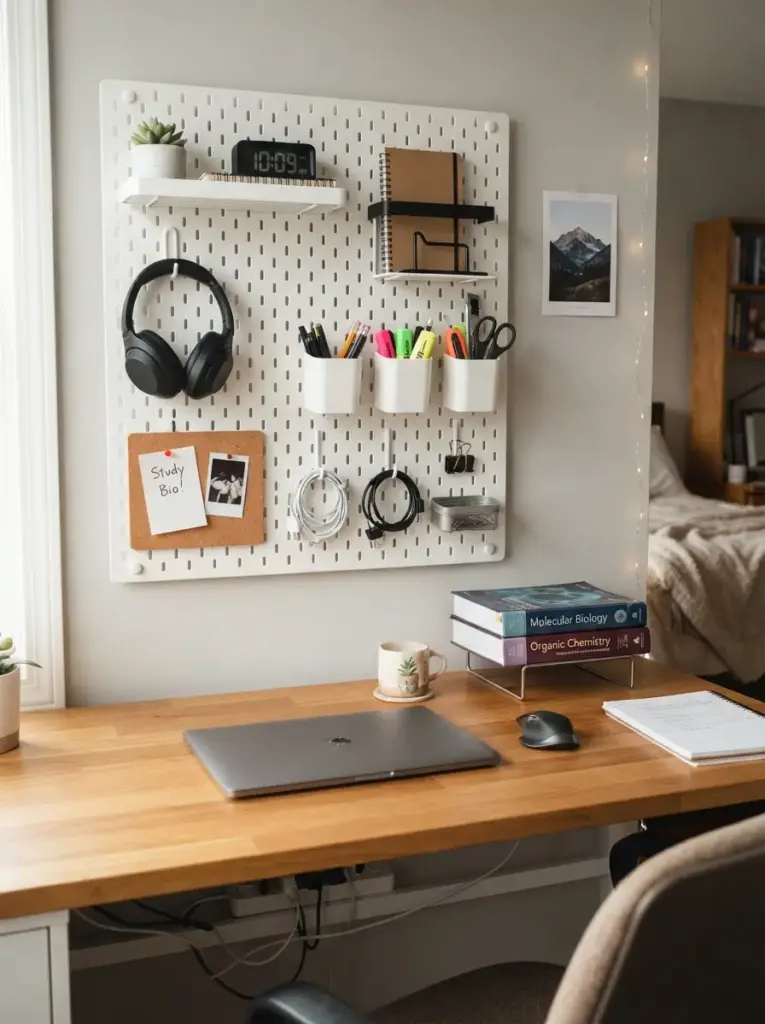
Freestanding pegboards and desk-mounted panels offer flexible storage for stationery, headphones, notes, scissors, cables, and small décor. Accessories can move as needs change, which makes the system useful for students studying different subjects each semester. Desk-mounted versions also keep supplies above the work surface instead of occupying valuable writing space.
Creative students, gamers, and anyone with many small tools often benefit from a pegboard. Use cups for pens, hooks for headphones, and a small shelf for a clock or plant. Keep the center area open enough to prevent the board from looking overloaded. Group items by function rather than color so the setup remains practical during busy weeks.
Visual order improves when accessories match. White cups on a white board feel clean, while black metal pieces can suit an industrial dorm scheme. One or two warm accents, such as a cork note panel or wood shelf, prevent the setup from feeling cold. Avoid placing heavy textbooks on lightweight pegboard shelves unless the system is rated for them.
Add a Desk Hutch or Monitor Shelf
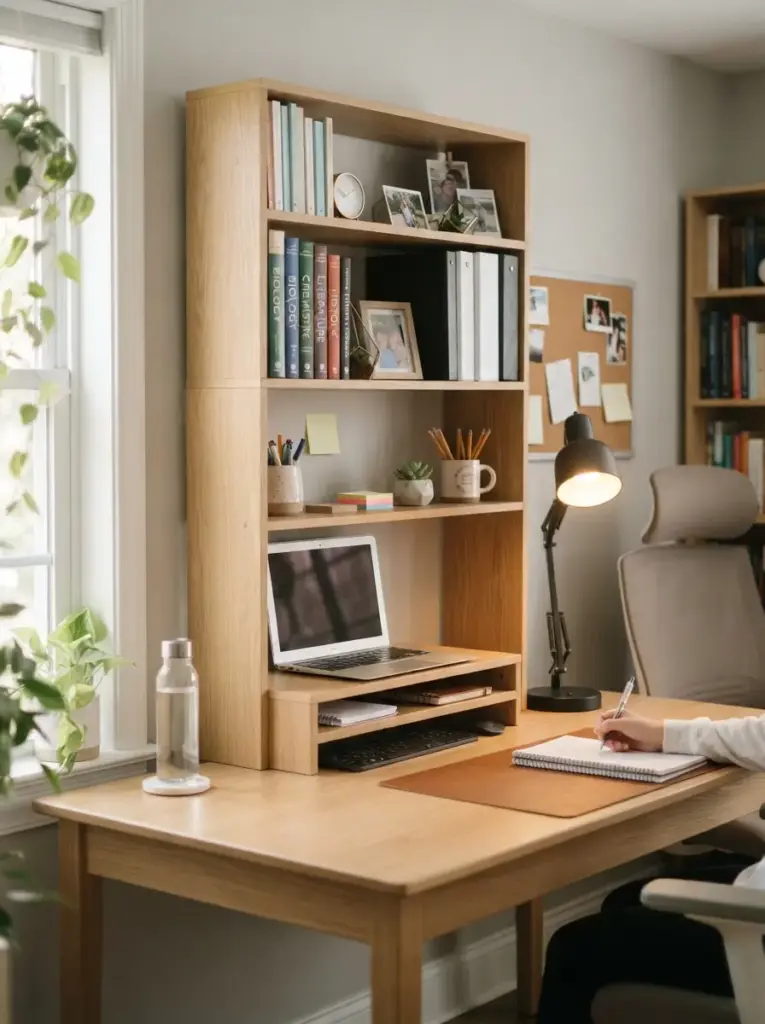
Desks become crowded quickly when books, lamps, notebooks, chargers, and personal items share one surface. A freestanding desk hutch creates vertical shelves without drilling into the wall. Smaller monitor shelves can raise a laptop screen and provide storage underneath for a keyboard, notebooks, or a pencil case.
Students who spend long hours studying should keep the main work area as open as possible. Store frequently used supplies on the lowest shelf and place décor or backup materials higher up. Position the lamp so light reaches the writing hand without casting a strong shadow. Warm white bulbs around 2700K feel cozy, while 3000K to 3500K usually provides a clearer balance for reading and evening study.
Check the desk width and hutch height before buying. Tall units may block a window or collide with an overhead cabinet. Lightweight shelves should not hold heavy stacks of textbooks. Keep heavier books at desk level and use upper shelves for smaller items that are easy to reach safely.
Hide Supplies in Under-Desk Drawers
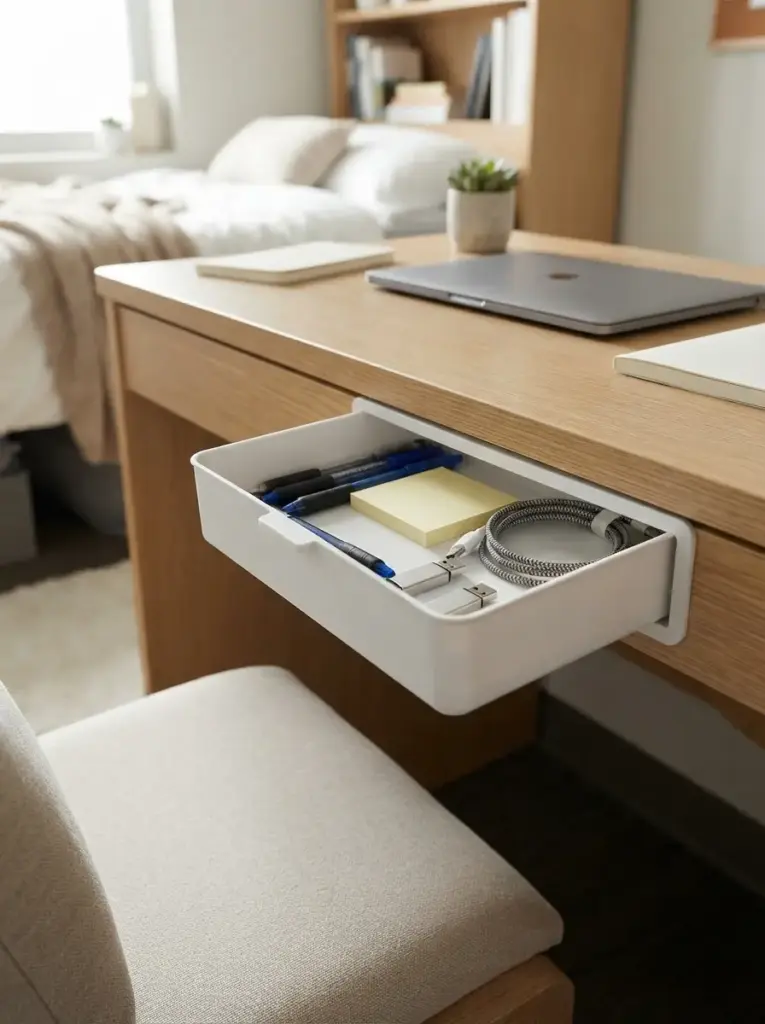
Adhesive under-desk drawers create storage for pens, sticky notes, charging cords, flash drives, and other small items. They work well when the dorm desk has no built-in drawers or when existing drawers are already full. Slim models preserve legroom and keep daily tools close without adding another container to the desktop.
Minimalist students may like this option because the storage disappears from view. Sort contents into one simple category rather than stuffing in every loose object. A shallow drawer for writing tools stays useful, while a mixed drawer of cosmetics, cables, receipts, and snacks becomes frustrating. Choose a strong adhesive designed for the desk material, and confirm whether dorm policies allow it.
Removal deserves planning. Some adhesives can damage the laminate when pulled too quickly. Using removable mounting strips between the drawer and desk may reduce risk, provided the weight remains within limits. Avoid placing the drawer where knees hit it, and test the seated position before attaching anything permanently.
Choose a Storage Ottoman or Folding Bench
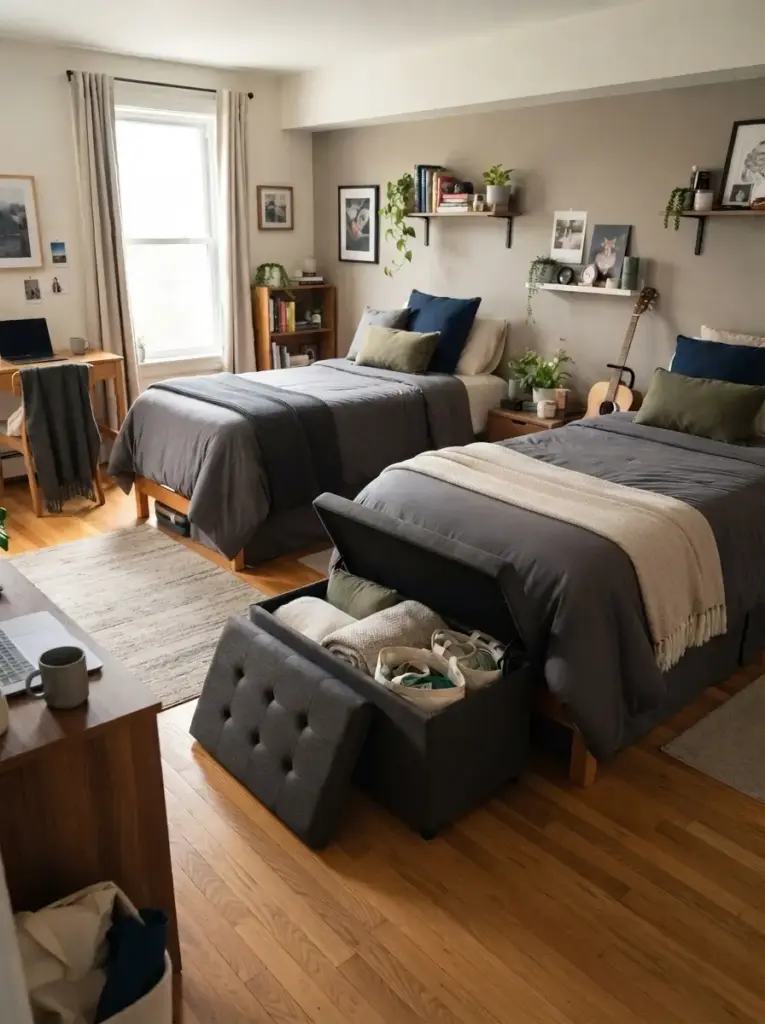
Compact storage ottomans can serve as seating, a footrest, a step for reaching high shelves, and a container for blankets or bags. Folding fabric models cost less and pack flat during move-out. Rigid ottomans provide better seating support but take up more transport space, so the right choice depends on how often the piece will be used.
Roommates who need occasional guest seating may find this especially practical. Place the ottoman at the end of the bed or under a window, leaving at least two feet of clear walking space around major furniture. Store soft, lightweight items inside so the piece remains easy to move. Blankets, reusable bags, and extra pillows work better than heavy books.
Select upholstery that tolerates daily use. Charcoal, navy, olive, and medium beige hide marks better than bright white. Small patterns can disguise wear, but busy prints may make a tiny room feel crowded. One solid color that repeats elsewhere in the room creates a more connected look.
Use Matching Baskets Above Cabinets and Closets
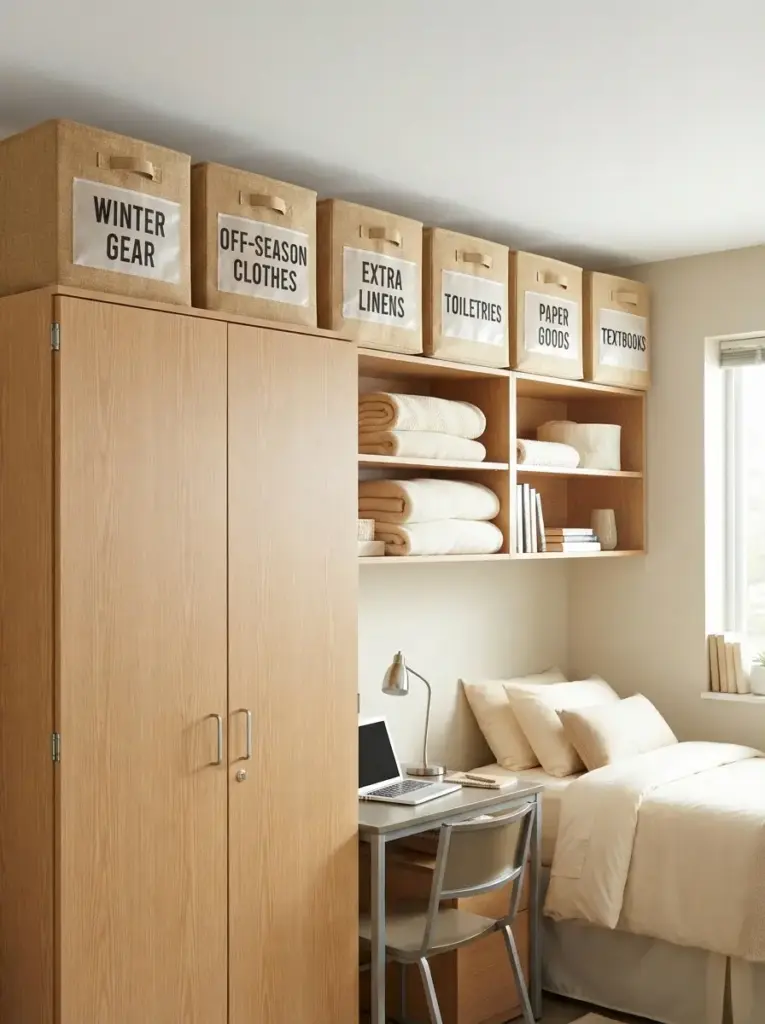
High shelves and the tops of wardrobes often hold unused space, but loose items placed there can look messy. Matching baskets create clean storage for off-season clothes, extra toiletries, paper products, or rarely used accessories. Lightweight fabric bins are safer than heavy boxes because students may need to lift them from above shoulder height.
People with limited floor storage should reserve high areas for items used monthly rather than daily. Attach front-facing labels large enough to read from below. Handles are essential because smooth-sided bins can be difficult to grip. Leave some space above each basket so it can tilt forward during removal without scraping the ceiling.
Woven textures add warmth to plain dorm furniture, while solid fabric bins offer a simpler modern appearance. Natural tan baskets work well with cream bedding and wood accents. Gray or black bins suit rooms with metal furniture. Avoid stacking unstable containers overhead, and never store liquids that could leak onto clothing or electronics below.
Turn Luggage Into Seasonal Storage
Suitcases occupy a surprising amount of space when they sit empty for most of the semester. Fill them with off-season clothing, spare bedding, keepsakes, or travel items, then slide them under the bed or place them on the closet floor. Packing cubes inside the suitcase keep categories separate and make holiday travel easier.
Students who travel home during breaks benefit from keeping travel essentials together. Store a toiletry bag, luggage scale, laundry bag, and spare charger in one cube. Another cube can hold winter accessories or clothing that is not currently needed. When travel day arrives, the suitcase is partly organized instead of starting empty.
Moisture control matters when fabric items stay enclosed for months. Make sure everything is completely dry before packing, and consider a small moisture absorber if the dorm feels humid. Avoid storing food, scented candles, or leaking toiletries in luggage. Check the contents once during the semester so forgotten items do not remain hidden until move-out.
Common Storage Mistakes to Avoid
Buying containers before measuring is one of the most common dorm mistakes. A bin may look compact online, but still be too tall for the bed or too deep for the closet. Measure every intended location and write the numbers in a phone note. Include door swing, baseboards, outlets, and furniture legs because these details affect the usable space.
Overfilling every wall and corner can make a room feel smaller, even when everything is technically organized. Leave some empty surface area on the desk, one open section on a shelf, and a clear route from the door to the bed. Negative space gives the eye a place to rest and makes cleaning much easier.
Choosing too many container styles creates visual clutter. Random baskets, bright plastic drawers, patterned boxes, and mismatched labels can make a small room feel busier than loose items did. Limit the palette to two neutrals and one accent color. For example, combine white shelves, gray fabric bins, and muted blue labels.
Hiding daily essentials in difficult locations also causes problems. Students stop using systems that require moving several boxes to reach one item. Keep frequently used clothes, chargers, and toiletries between waist and eye level. Reserve the highest and lowest areas for seasonal or backup items.
Ignoring weight limits can damage furniture, walls, or organizers. Heavy books need strong shelves, while adhesive hooks should hold only lightweight items within their rated capacity. Freestanding storage should remain balanced, especially near beds and desks. Dorm rooms are active spaces, and unstable towers can tip when bumped.
Keeping items “just in case” quickly consumes valuable space. Review duplicates at move-in and again midsemester. Four mugs, twelve towels, and a semester’s supply of empty packaging rarely serve a useful purpose. Keep quantities realistic for the available laundry schedule, eating habits, and storage capacity.
Budget-Friendly Ways to Organize a Dorm
Shop the room before buying anything. Existing shoe boxes can become drawer dividers, small gift boxes can hold cables, and clean food jars can organize pens or makeup brushes. Cover mismatched boxes with removable paper or simple labels if appearance matters. Reusing what is already available protects the budget and reduces move-in waste.
Compare the cost per usable section instead of judging products only by price. A slightly more expensive rolling cart may replace a nightstand, snack shelf, and school-supply bin, making it a better value than three separate items. Multi-use furniture deserves priority because every object in a dorm should justify the floor space it occupies.
Campus resale groups, local marketplaces, and end-of-year move-out sales often offer shelves, risers, lamps, and drawer units at low prices. Inspect used pieces for cracks, missing hardware, odors, and unstable joints. Wash fabric bins when possible and wipe hard surfaces before bringing them into the room.
Dollar stores can be useful for labels, small trays, drawer organizers, and lightweight baskets, but quality varies. Spend more on items that carry weight or move frequently, such as bed risers, rolling carts, and tall shelving. Save money on simple dividers, pouches, and decorative labels that do not affect safety.
Set a category budget before shopping. Divide the total into under-bed storage, closet organization, desk supplies, and décor. Spending limits prevent attractive but unnecessary purchases from taking money away from essential items. Start with the biggest clutter problem, live with the new system for a week, and buy the next piece only after seeing what still needs help.
Create a Calm Storage Color Palette
Color planning can make inexpensive organizers look more coordinated. Begin with the colors already present in the room, including the walls, floor, desk, bed frame, and bedding. Most dorms contain white, beige, gray, light wood, or dark metal, so choose storage pieces that repeat one or two of those finishes. Repetition helps separate purchases look like one system, even when they come from different stores.
Students who enjoy changing decorative accents should keep larger storage pieces neutral. White shelves, gray bins, clear drawers, and natural baskets can stay in place while pillows, blankets, posters, or desk accessories change by season. Muted green, dusty blue, terracotta, or burgundy can work as a single accent color. Using several strong colors across bins and furniture may make a small room feel visually crowded.
Lighting also changes how storage colors appear. Cool overhead dorm lighting can make gray containers look blue, and cream bins look dull.
The layout should support the palette rather than scatter it. Group matching containers in one area, such as gray bins under the bed and natural baskets on the upper shelf. Repeat the accent color two or three times around the room instead of concentrating it in one corner. A blue desk cup, blue pillow, and blue label border can connect separate zones without adding unnecessary décor.
Small College Bedroom Storage Tips That Last
Strong Small College Bedroom Storage depends on habits as much as products. Place every item near the place where it is used. Laundry supplies belong near the hamper, chargers belong near outlets, and school materials belong beside the desk. Convenient placement reduces the effort required to put things away.
Weekly resets prevent clutter from becoming overwhelming. Spend ten minutes returning loose items, emptying the trash, folding clothes, and checking the floor. Friday afternoon or Sunday evening often works well because the room can start the next week in better order. Short maintenance sessions feel easier than a large monthly cleanup.
Use broad categories rather than overly detailed labels. “School supplies” is easier to maintain than separate containers for pens, pencils, markers, clips, and highlighters. Detailed systems can work for people who enjoy organization, but beginners usually succeed with fewer categories and larger boundaries.
Rotate items by season. Move heavy coats and thick bedding to under-bed bins during warm months, then bring them forward when temperatures drop. Seasonal rotation keeps daily zones from becoming crowded. It also gives students a reason to review what they own before buying duplicates.
Keep one donation bag or box in the closet. Clothing that no longer fits, unused décor, and duplicate supplies can go directly into it. When the container fills, donate or recycle the contents. A permanent exit route for unwanted items protects the room from slow clutter buildup.
Frequently Asked Questions
What storage should I buy first for a small dorm room?
Start with one under-bed bin, a slim laundry hamper, matching hangers, and a desk organizer. Those pieces address the largest daily categories without requiring much money. Wait until move-in before buying tall shelves or drawer units because room measurements and included furniture can vary. Observing the space for several days helps reveal the real problem areas.
How can I store clothes without a large closet?
Use a second hanging rod for short garments, slim hangers to reduce wasted width, shelf dividers for folded items, and low drawers beneath hanging clothes. Seasonal clothing can stay in labeled under-bed bins or inside luggage. Keeping only current-season pieces in the easiest locations makes the closet feel larger and simplifies daily outfit choices.
Are adhesive hooks safe for dorm walls?
Adhesive hooks can work when campus rules allow them and the wall surface is suitable. Clean the wall, follow the package directions, respect weight limits, and remove the strip slowly using the release tab. Painted brick, textured walls, and older paint may not hold adhesive well, so freestanding hooks or over-door options may be safer.
How do I make storage look less cluttered?
Repeat colors and materials across the room. Matching gray bins, white shelving, and simple black labels create more visual order than many unrelated containers. Hide small loose items inside baskets, leave some shelves partly open, and avoid covering every wall with organizers. Clear walking paths and visible desk space also help the room feel calmer.
What is the best Small College Bedroom Storage for roommates
Shared rooms benefit from clearly divided zones. Give each roommate separate under-bed bins, closet sections, hooks, and desk storage. Shared items such as cleaning supplies or snacks can stay on one rolling cart with labeled levels. Agreeing on boundaries early prevents accidental mixing and makes cleanup more predictable.
How can I organize a dorm without spending much money
Reuse shoe boxes, jars, gift boxes, and small containers before purchasing new products. Look for secondhand rolling carts, shelves, and drawer units during campus move-out periods. Buy only after measuring, choose pieces that serve more than one function, and focus first on the category creating the most clutter.
Conclusion
Dorm organization improves when storage follows real routines instead of copying an idealized room setup. Start with measurements, identify the largest clutter categories, and use hidden or vertical zones before adding more furniture. Under-bed bins, door organizers, rolling carts, closet accessories, and multiuse seating can solve most common problems without permanent changes.
Effective Small College Bedroom Storage should make daily life easier, not create another chore. Choose a limited color palette, keep frequently used items easy to reach, and leave enough open space for movement. Small weekly resets and seasonal reviews will help the system continue working long after move-in day.