
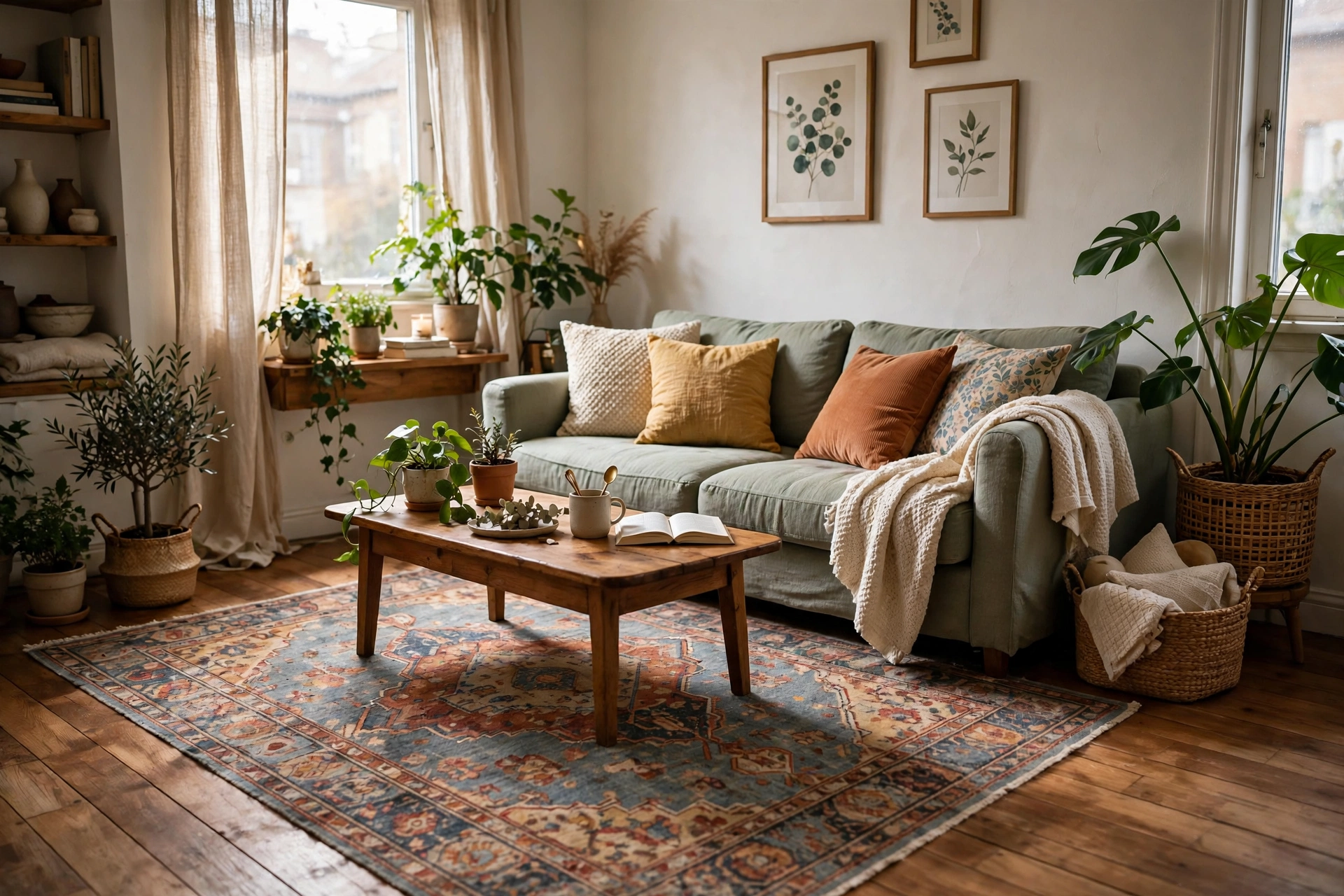

A rug is the fastest way to make a small apartment feel finished. It draws a room inside the room, softens hard floors, quiets footsteps for the neighbours below, and gives plain rental flooring a personality it never had.
Most small rooms go wrong on size, not style. A rug that is too small floats like a bath mat and makes the furniture look lost, while the right size pulls sofas, chairs and tables into one calm group. Almost every idea in this list starts with that simple sizing truth.
These 15 rug ideas are planned for small apartments and renters. Each one explains where the rug goes, how big it should be, and the mistake that most often makes a good rug look wrong in a compact room.
What Size Rug Works Best in a Small Apartment Living Room?
Choose a rug big enough for at least the front legs of the sofa and every chair in the group. In most small living rooms that means 160 by 230 cm, and in studios often 200 by 300 cm. A rug that reaches under the front legs ties the seating together and makes the whole room read larger.
Leave a border of bare floor around the rug, roughly 20 to 40 cm, so the room keeps its edges. Wall to wall rugs swallow small rooms; a defined island of pattern or texture gives the eye a shape to rest on.
If you are between sizes, size up. Our small apartment living room guide shows the same rule at work in full room layouts, and tape on the floor will prove it in your own room before you spend anything.
Size the Rug So the Sofa Front Legs Sit On It
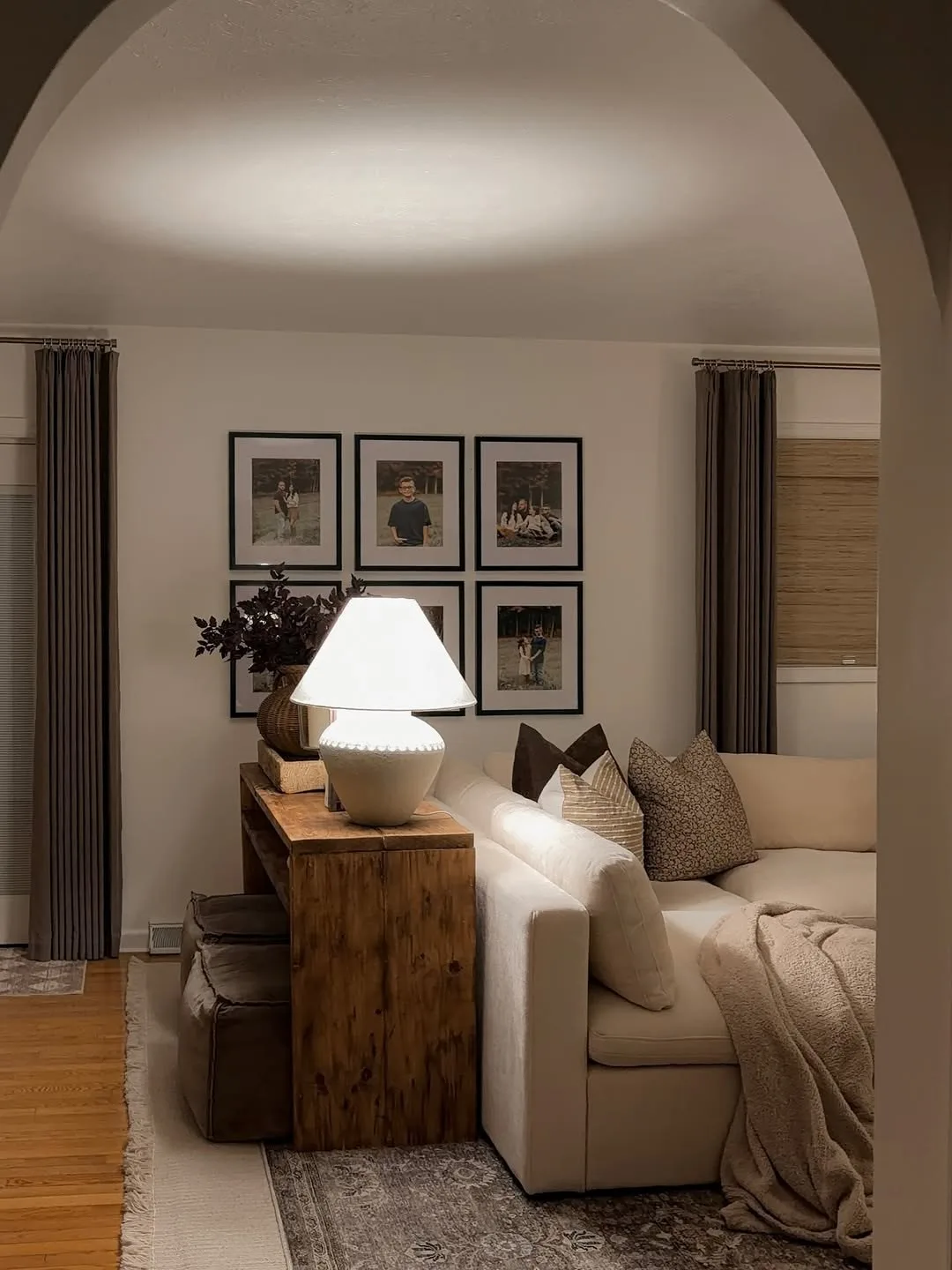
The front legs rule is the whole secret of a pulled together living room. The room in the photo runs its rug under the sofa’s front edge and the coffee table, and the seating reads as one island instead of three pieces of furniture sharing a floor.
Measure from the sofa, not from the wall. The rug should extend at least 15 cm under the sofa front and reach past the sides of the seating group, so chairs at the edges also land their front legs on the fabric.
Tape the outline on the floor for a day before ordering. Walk around it, open every door, and sit in every seat. Tape is free, and it has saved more rug budgets than any size chart ever written.
The common mistake is the postage stamp rug that fits only under the coffee table. It makes the sofa look stranded and the room look smaller, which is the opposite of what the money was spent on.
Lay a Vintage Style Rug for Instant Character
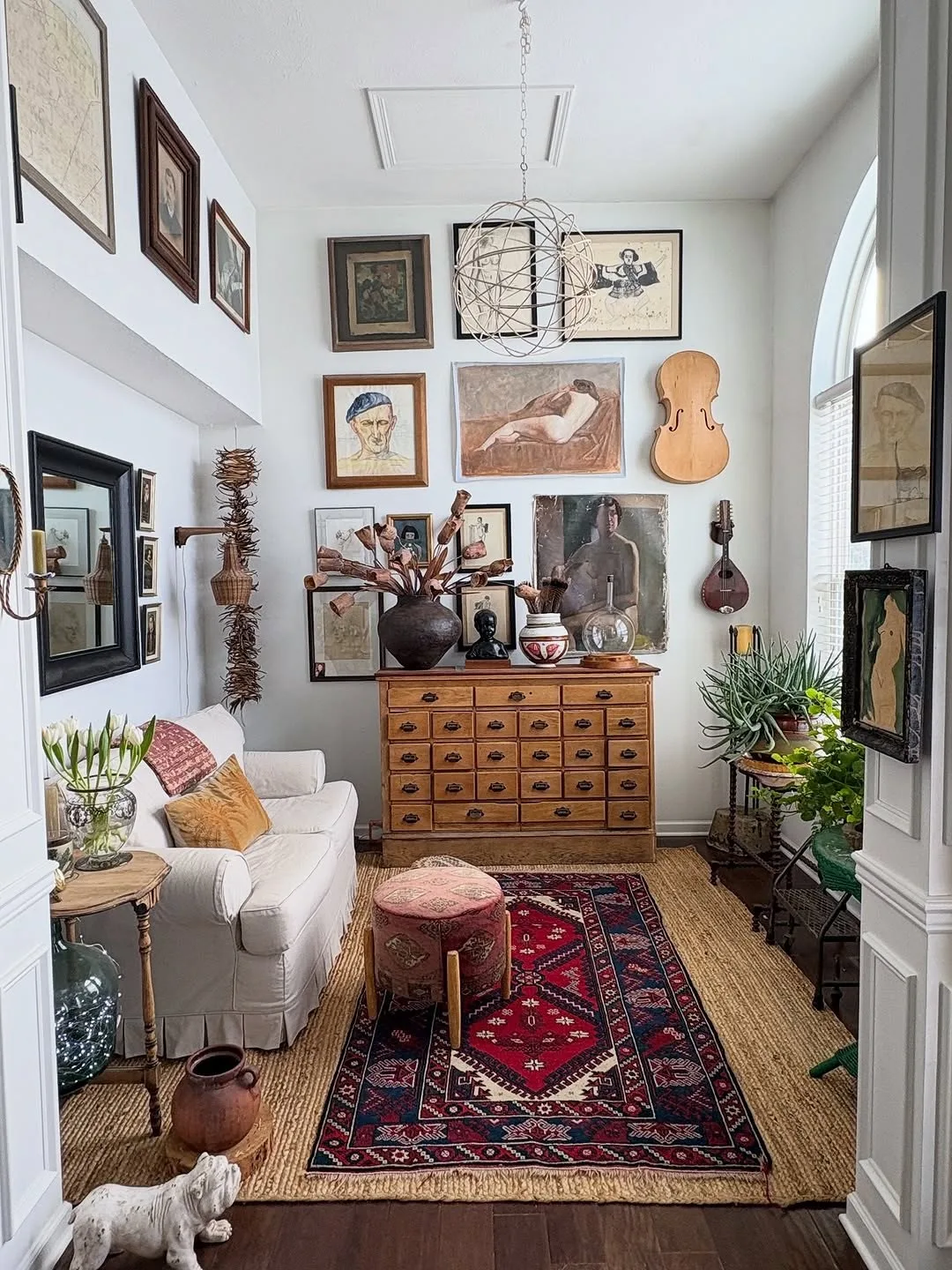
New build apartments can feel history free, and a vintage style rug fixes that in one move. The eclectic room in the photo rests on a deep red Persian style rug, and its faded pattern gives every modern piece around it something interesting to stand on.
Faded is a feature here, not a flaw. A worn look pattern hides crumbs, pet hair and the marks of daily life between vacuuming, which makes vintage styles the hardest working rugs in busy small homes.
Real vintage rugs from markets and estate sales often cost less than new imitations and feel better underfoot. Check the edges for fraying and smell the rug before buying, and budget for one professional clean at the start.
Pull one color from the rug into two cushions or a throw and the room settles. The common mistake is a vintage rug fighting a modern patterned sofa; keep the seats plain and let the floor tell the story.
Our boho apartment decor ideas lean on vintage rugs the same way, because collected rooms in any style start from a floor with a past.
Vintage rugs also age gracefully in sunlit rooms, because a pattern that begins faded has nothing to lose. New bright rugs fade into patches; vintage ones simply settle deeper into themselves, which suits a small room you see in every light.
Try a Wavy Abstract Rug as the Room Statement
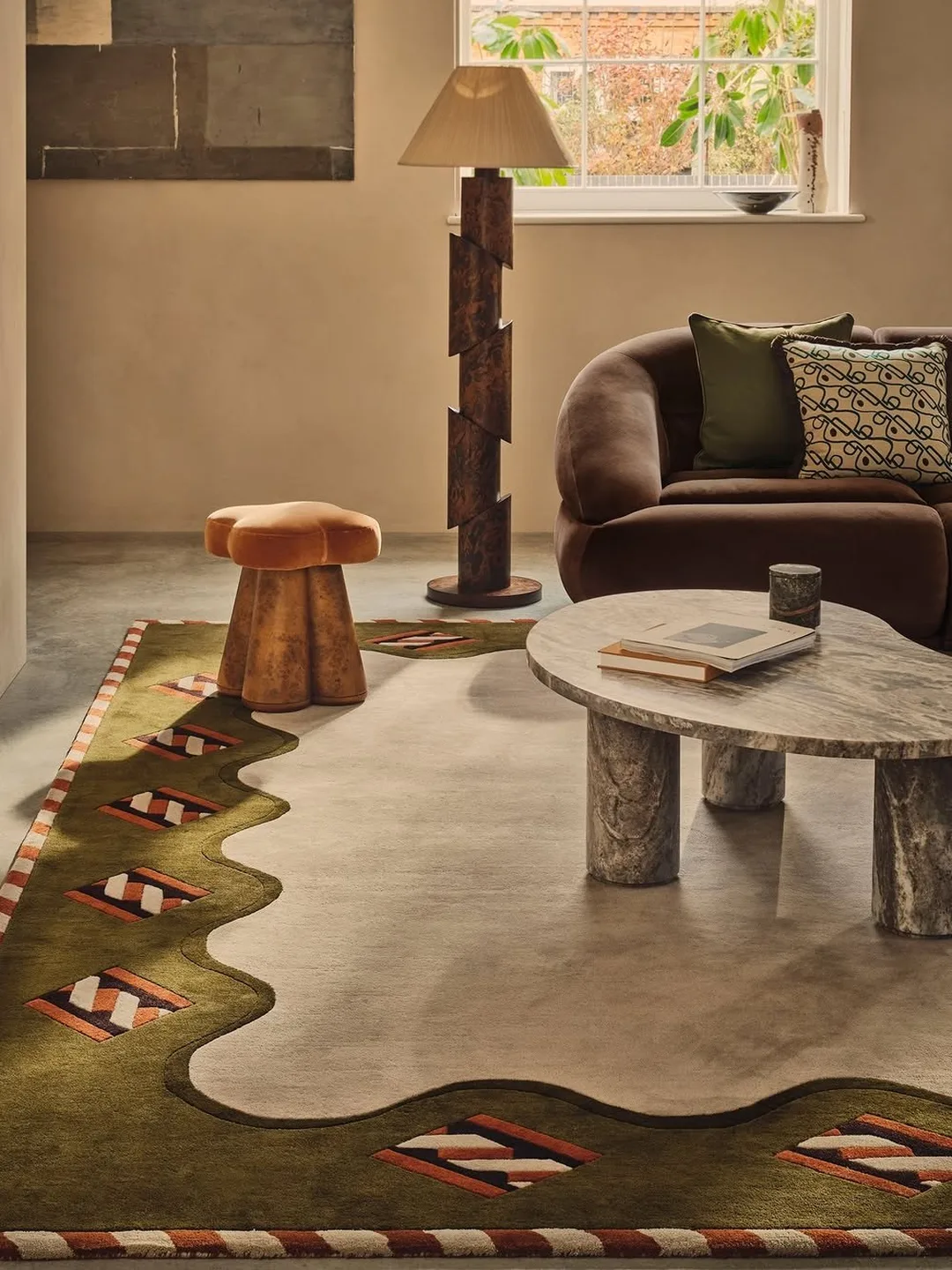
A rug can be the artwork. The warm living room in the photo is built around a wavy abstract rug in cream and olive, and because the floor carries the pattern, the walls and furniture stay calm and simple.
Abstract rugs suit small rooms that lack a focal point. A studio with plain walls and plain seating gains a designed centre the moment the rug lands, and guests remember the room by its floor.
Keep every other textile quiet when the rug performs. Plain cushions in two of the rug’s colors are enough; a patterned throw on top of a patterned rug is a duet nobody asked for.
The common mistake is a statement rug under a statement sofa. One star per room is the rule, and if the sofa already shouts, choose a rug that whispers in texture instead.
Choose a Washable Rug When Life Happens on the Floor
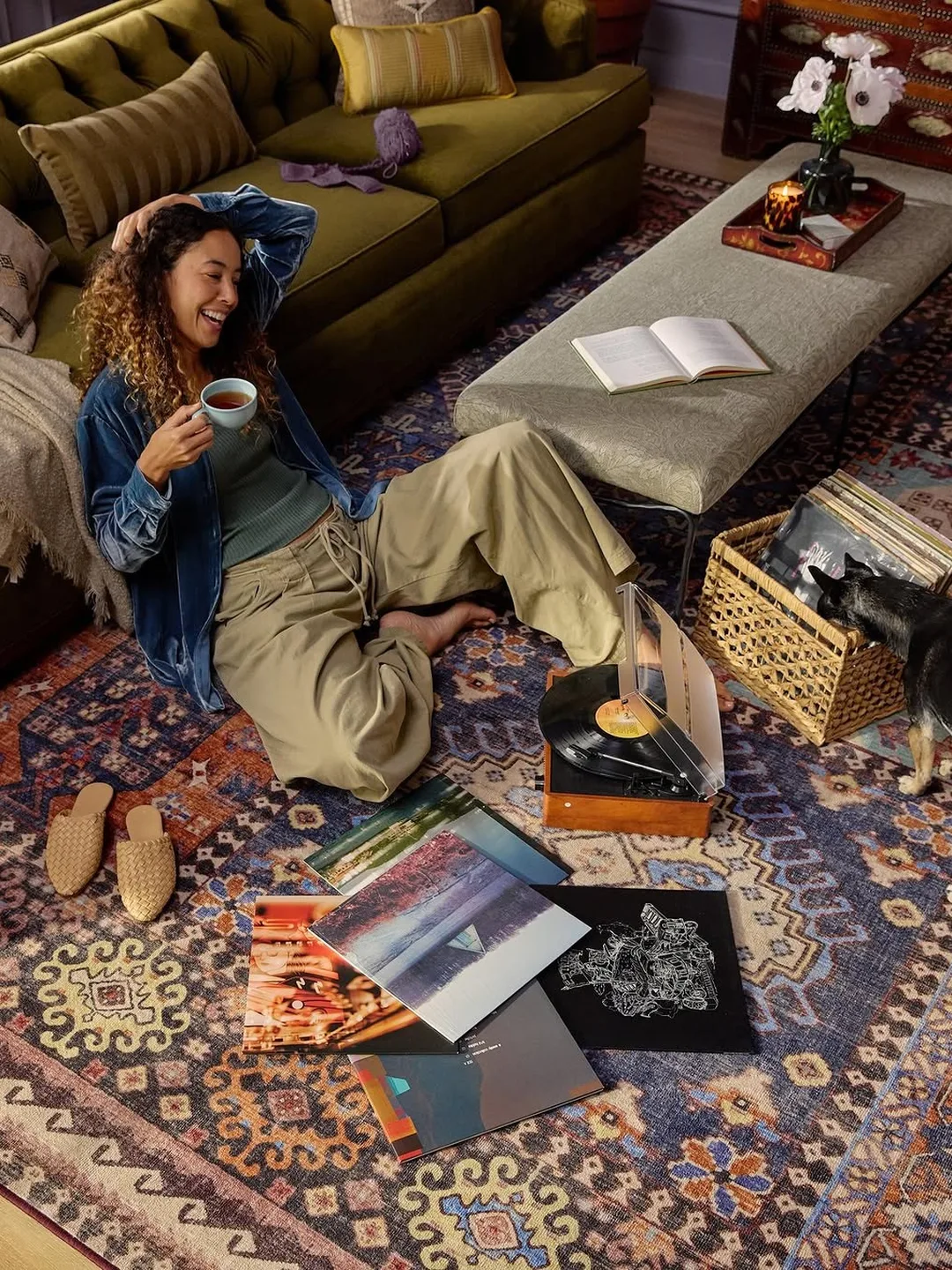
Small apartments host everything in one room: dinner, films, pets, workouts and the occasional spilled drink. The home in the photo has a patterned rug living a real life with records, a dog and a person sitting right on it, which is exactly what washable rugs are made for.
Modern washable rugs fold into a home washing machine and come out flat and fresh. Check the drum size before ordering the largest sizes, and choose low pile versions that dry quickly and let doors swing over them.
Washable does not have to mean thin and sad. Look for a little weight and a non slip backing or a separate pad, so the rug stays put when the dog launches off the sofa.
The common mistake is washing too hot or tumble drying on high heat, which can shrink the backing. Cool wash, air dry, and the rug will survive years of small apartment life.
Use a Bright Striped Rug to Wake Up a Plain Corner
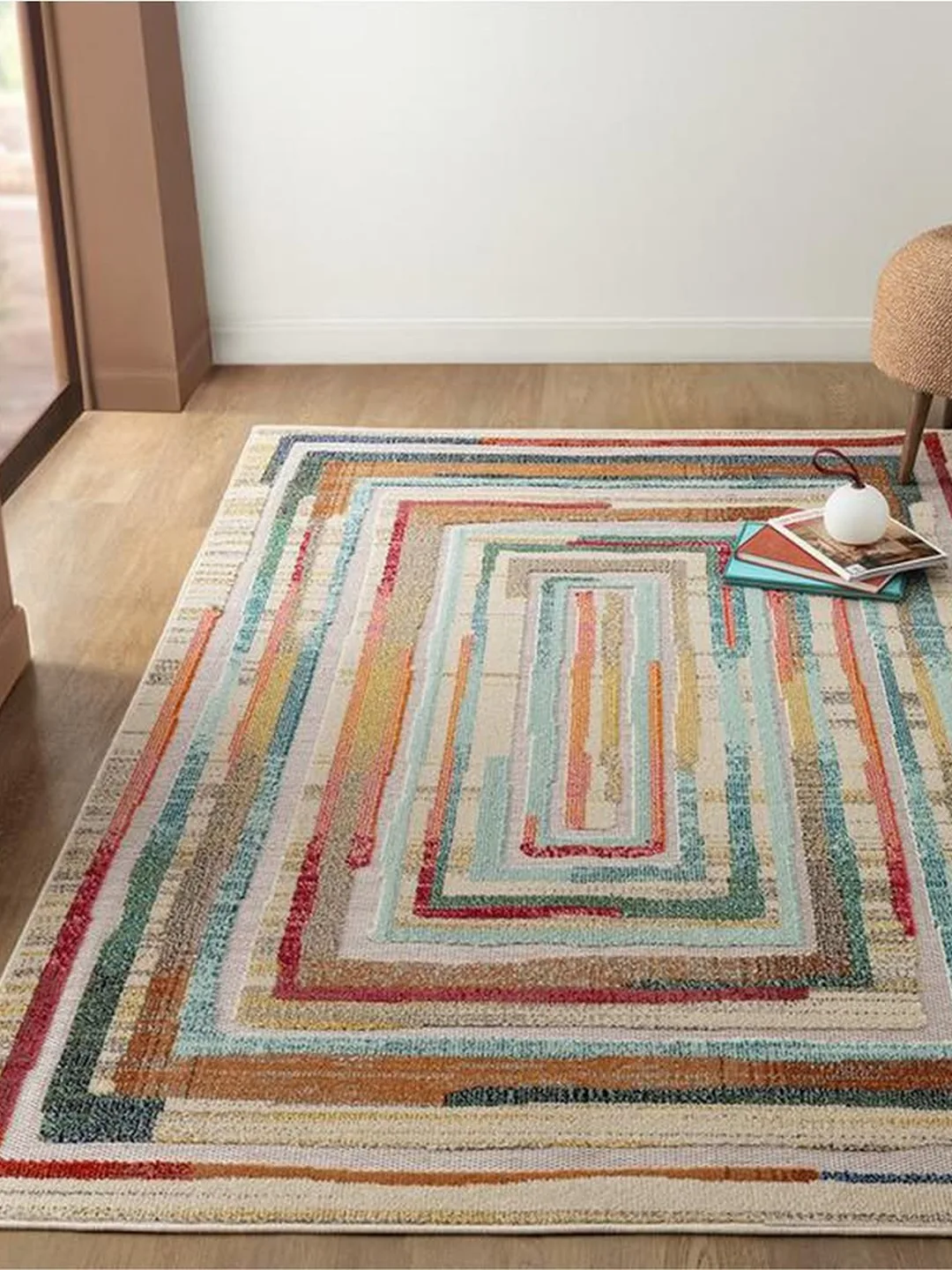
Some corners need energy more than they need calm. The striped rug in the photo brings rainbow order to an empty corner with a pouf and a book, and a dead space becomes the spot everyone photographs.
Stripes also stretch a room. Run them along the longer direction of a narrow space and the eye travels further, which makes hallways, galley living rooms and studio edges feel longer than they measure.
A bright rug is a renter’s best friend because it changes nothing structural. When you move, the color rolls up and leaves with you, and the plain room returns to the landlord exactly as found.
Keep the walls and big furniture plain around a bright rug. The common mistake is answering a loud floor with loud cushions, and the corner that should sparkle just starts to shout.
Match a Classic Pattern With Traditional Furniture
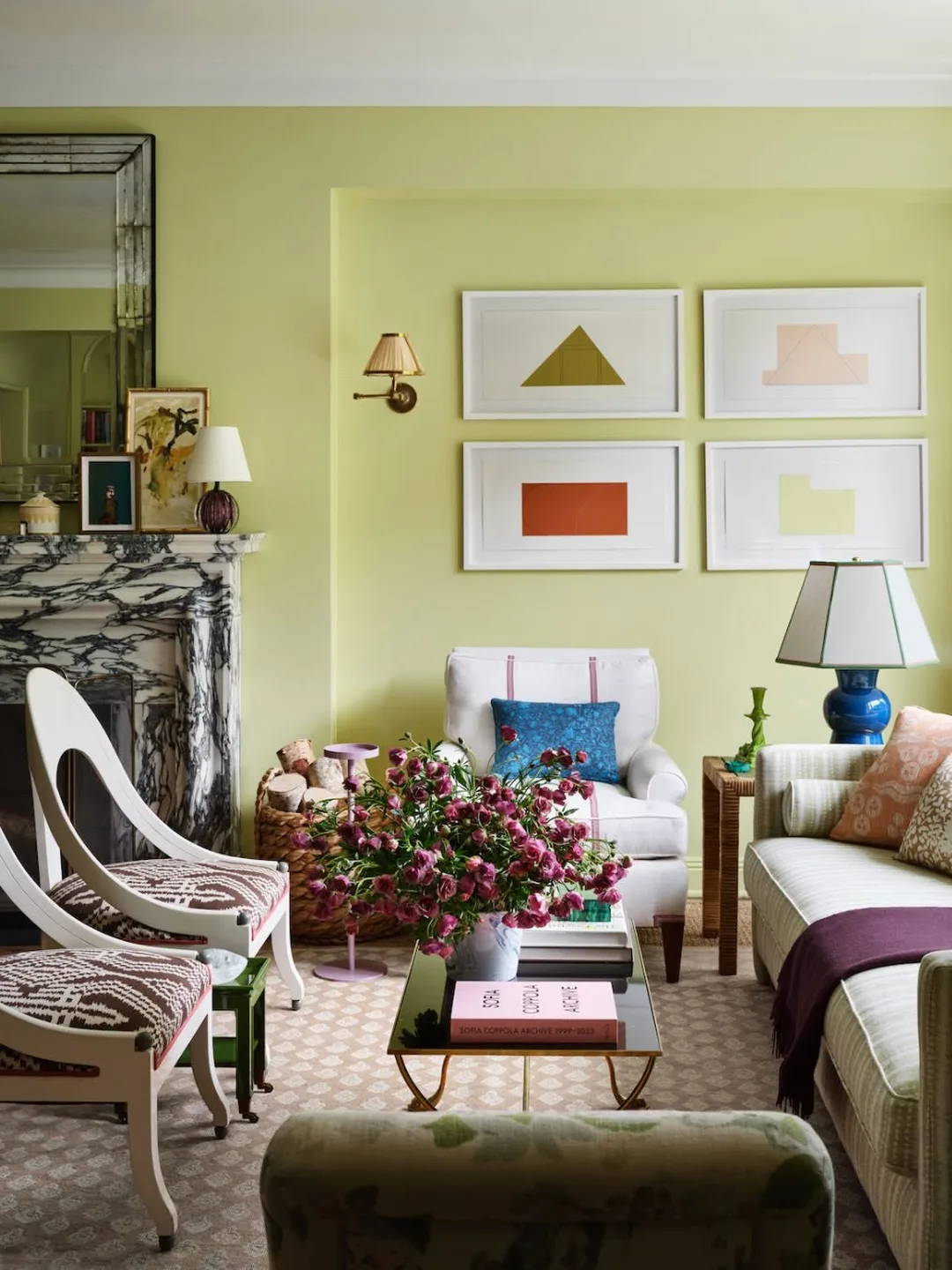
Classic rooms and classic rugs belong together. The traditional living room in the photo pairs carved chairs and a fireplace with a patterned rug in softened tones, and the rug’s age of pattern matches the furniture’s age of style.
If your furniture leans traditional, a modern geometric rug will fight it every day. Persian, oriental and faded classical patterns share the furniture’s language and settle the room instead.
Size generously in traditional rooms, because the style expects the rug to host the whole conversation group. Front legs on is the minimum; all legs on is the classic ideal where the floor allows it.
The common mistake is a rug whose colors are right but whose scale of pattern is wrong. Large furniture needs a medium to large pattern repeat; tiny repeats buzz under big chairs.
Traditional rooms also forgive a rug that is slightly worn, because the furniture carries the same sense of history. A small worn patch near the fireplace reads as character here, where the same patch would look tired in a minimal room.
Pick a Large Neutral Rug to Make the Room Feel Bigger
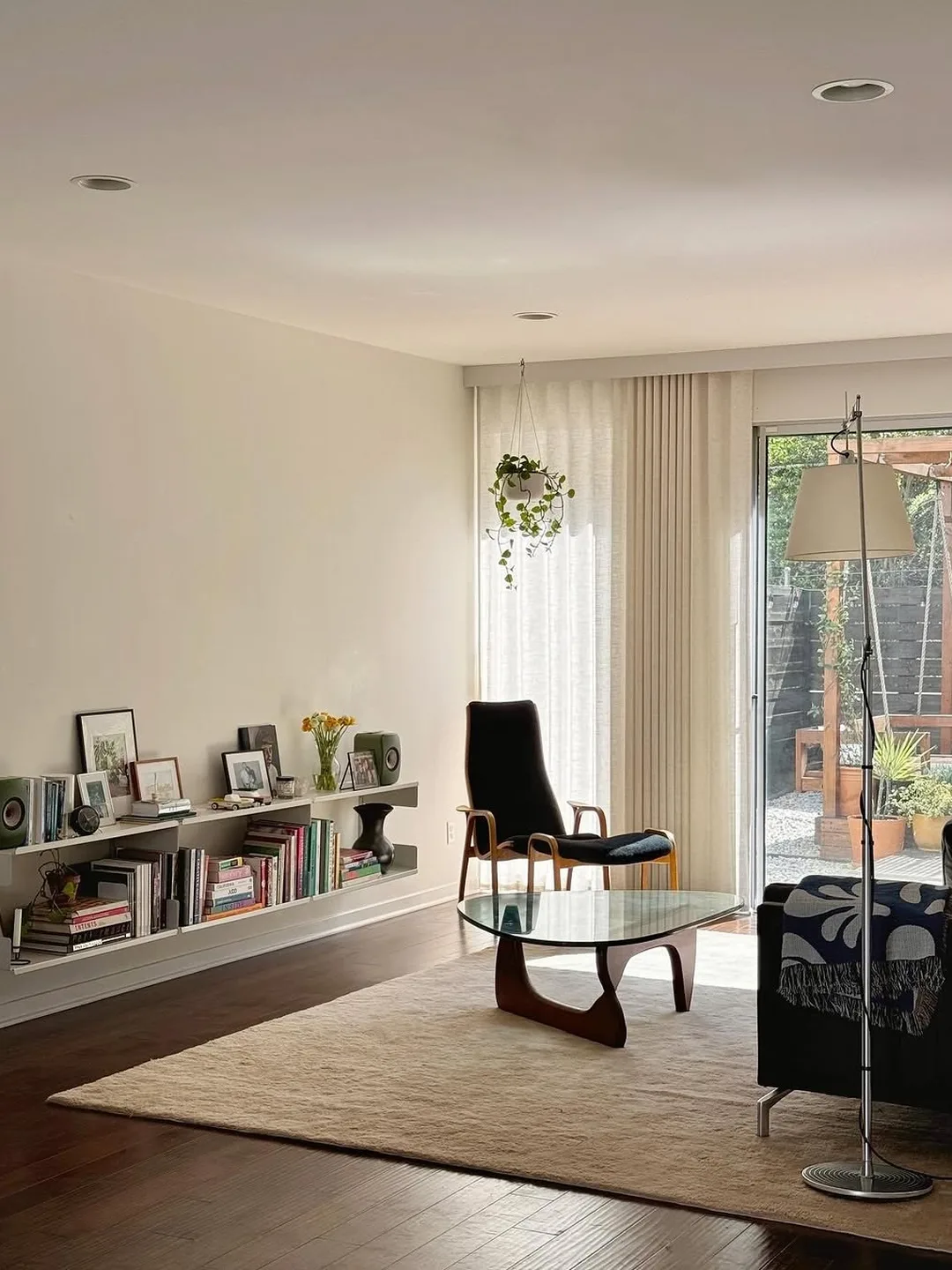
When in doubt, go large and neutral. The living room in the photo rests its seating on one generous pale rug, and the unbroken light surface makes the floor, and therefore the room, feel wider than a patchwork of small rugs ever could.
Neutral does not mean boring. Look for texture: a subtle weave, a low loop, a faint tonal pattern that appears when the light rakes across it. Texture gives a plain rug its interest without adding color noise.
A big pale rug also unifies mismatched furniture. The chair from one home, the sofa from another and the inherited table all calm down when they stand on the same quiet ground.
The common mistake is fearing pale colors with pets and guests. Choose a washable or easy clean weave, keep a simple spot cleaning kit nearby, and the fear usually proves larger than the stains.
Frame the Seating Zone With a Bordered Rug
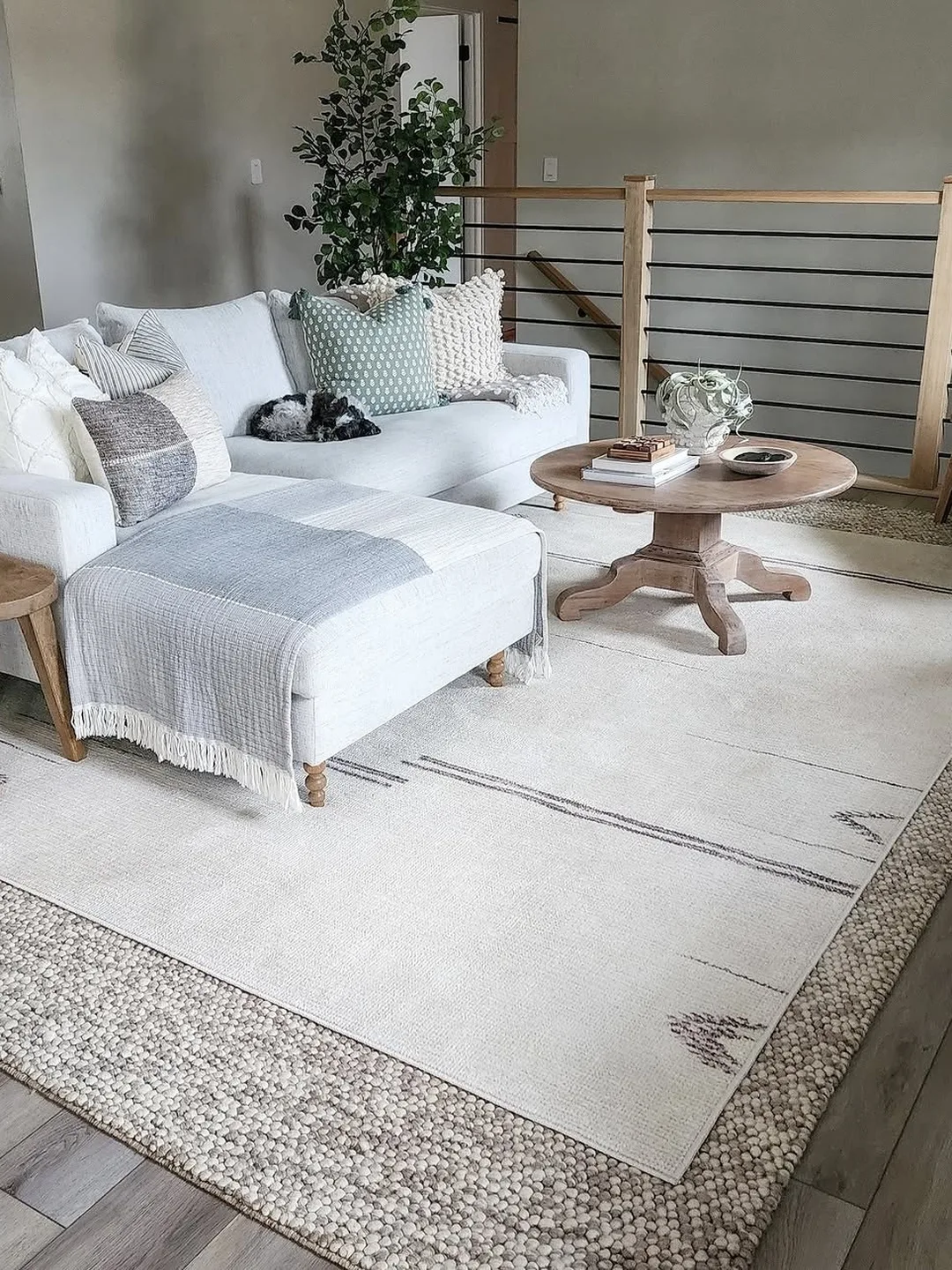
A border is a frame, and a frame makes anything inside it look deliberate. The white living room in the photo uses a bordered rug to outline the seating zone, and the border line does the organising that walls cannot do in an open plan.
Bordered rugs suit renters who need zones without screens or shelving. The border marks where living ends and dining or working begins, while the floor stays one open surface.
Align the border with the furniture edges for the full effect. If the sofa sits half off the border line, the frame breaks and the zone blurs, so measure the group first and buy the border to fit it.
The common mistake is a border plus a busy centre. The classic bordered rug keeps its middle quiet, and that quiet centre is what makes the frame read from across the room.
Layer a Patterned Rug Over a Plain Base
Layering solves the two hardest rug problems at once: the beautiful rug that is too small, and the plain floor that needs warmth. The close view in the photo shows patterned rugs resting over soft neutral bases, which is exactly how the trick looks in real rooms.
Start with a large, flat, neutral base rug that fits the room properly, in jute, sisal or a plain flat weave. Lay the smaller patterned or vintage rug on top, centred under the coffee table or the bed.
Layering also protects. The base takes the traffic and the chair legs, while the treasured top rug lives in the calm centre where feet land softly.
Keep the combined thickness in mind at doors. Two flat rugs stack kindly; a plush top rug over a thick base can catch a swinging door, so test the swing before settling the layers.
The common mistake is two patterns competing. One layer must be plain. Our japandi apartment decor ideas use the same plain base logic to keep calm rooms layered without noise.
Layering is also the kindest plan for an uneven or damaged rental floor. The base rug covers the worst of it honestly, and the smaller rug on top draws the eye to the part of the floor you chose to show.
Overlap Two Small Rugs to Cover More Floor
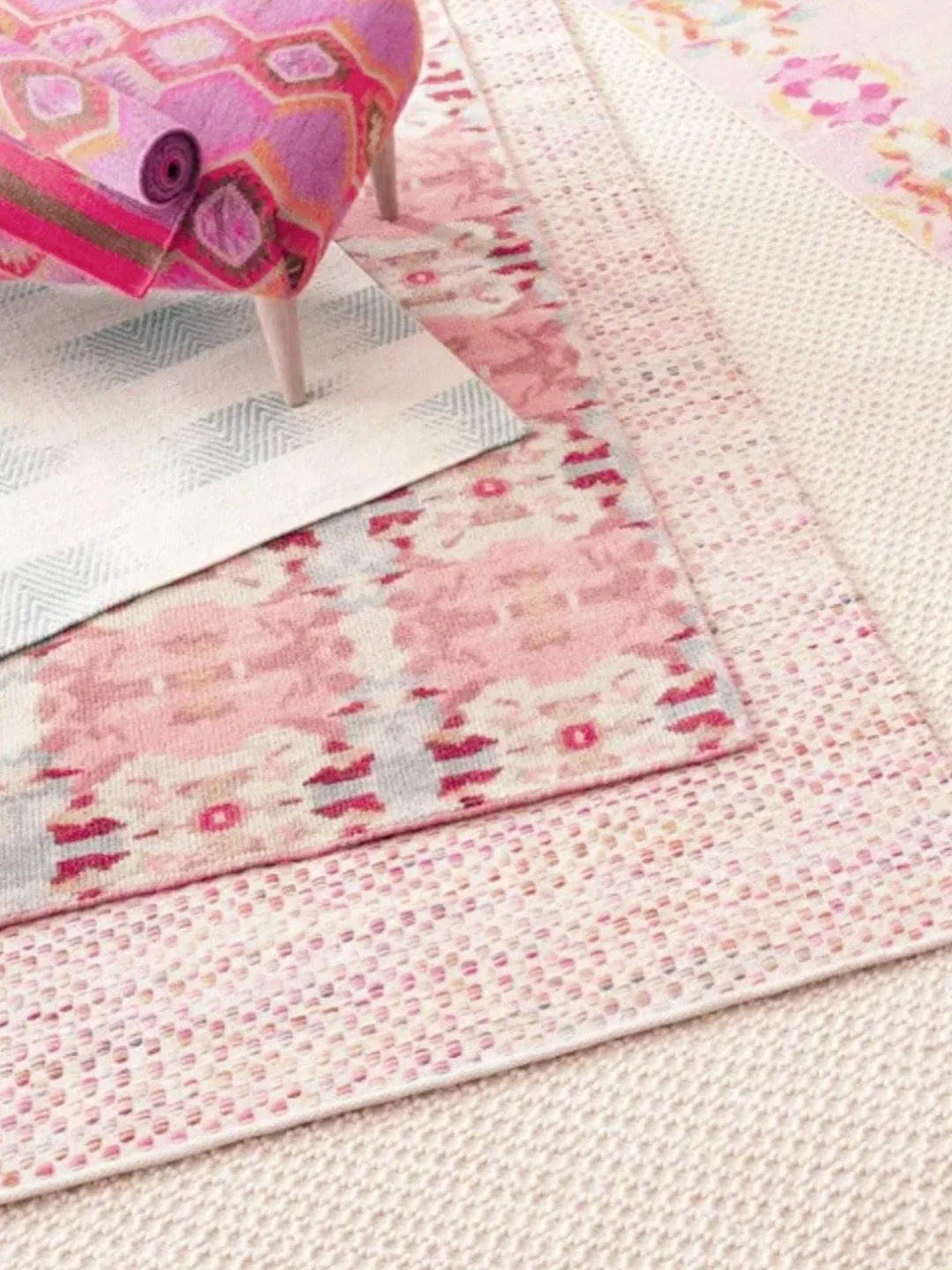
Small rugs are cheaper, easier to find secondhand and easier to wash, and overlapping two of them can cover a floor like one big rug. The layered pink rugs in the photo show how a deliberate overlap turns two modest pieces into one generous, textured field.
Overlap by a third or so, and angle the top rug slightly if the room feels boxy. Keep colors in one family, two pinks, two neutrals, two faded reds, so the pair reads as relatives rather than rivals.
This trick rescues inherited and thrifted rugs that never match the room’s measurements. Instead of hunting for one perfect large rug for months, compose the floor from two good small ones this weekend.
Mind the trip edge where the rugs cross. A little rug tape under the overlap keeps the top rug from creeping, and low pile pairs stack flatter than plush ones.
The common mistake is a timid overlap of a few centimetres, which looks like an accident. Commit to a deep overlap and the floor looks designed.
Anchor a Whole Studio With One Generous Rug
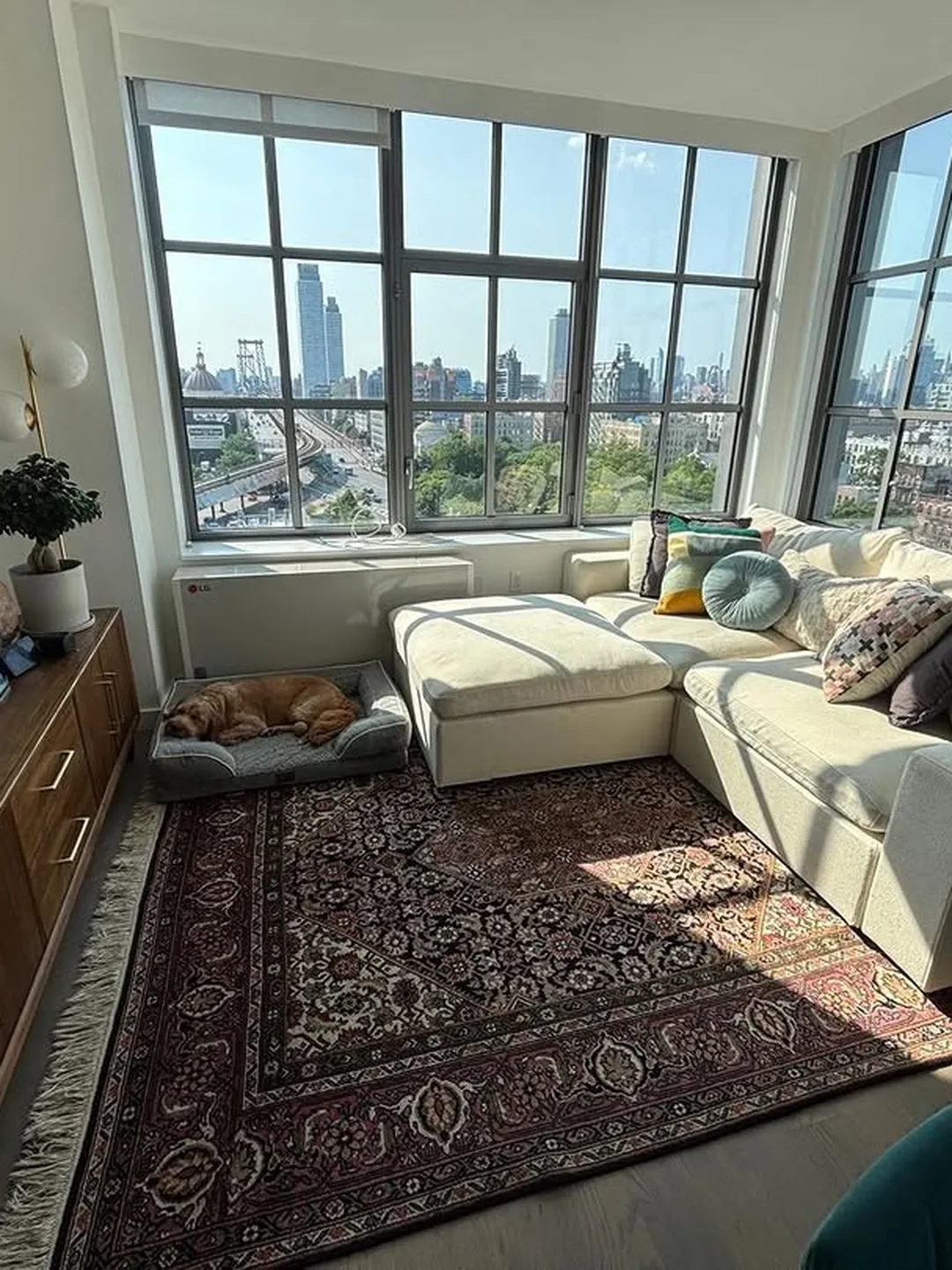
A studio needs its rug to do the work of a wall. The apartment in the photo anchors its whole living zone on one large Persian style rug, and the bed and work areas beyond the rug’s edge read as separate rooms without a single divider.
Choose the rug for the living zone’s full footprint, sofa, chairs and side tables included, and let its edge be the boundary. Stepping off the rug should feel like leaving the room.
In a studio the rug also carries the color story. Pick its palette first and let bedding, cushions and curtains take their tones from it, so the single space feels composed rather than collected by accident.
The common mistake is centring the rug on the whole studio instead of on the living zone. A rug floating between zones anchors nothing. Push it fully under the seating and the zoning appears.
Sound is the hidden studio benefit. One large rug swallows the echo that makes single room homes feel bare and temporary, and downstairs neighbours hear a home instead of a hallway every time you cross your own living room.
Put a Flat Rug Under the Dining Table
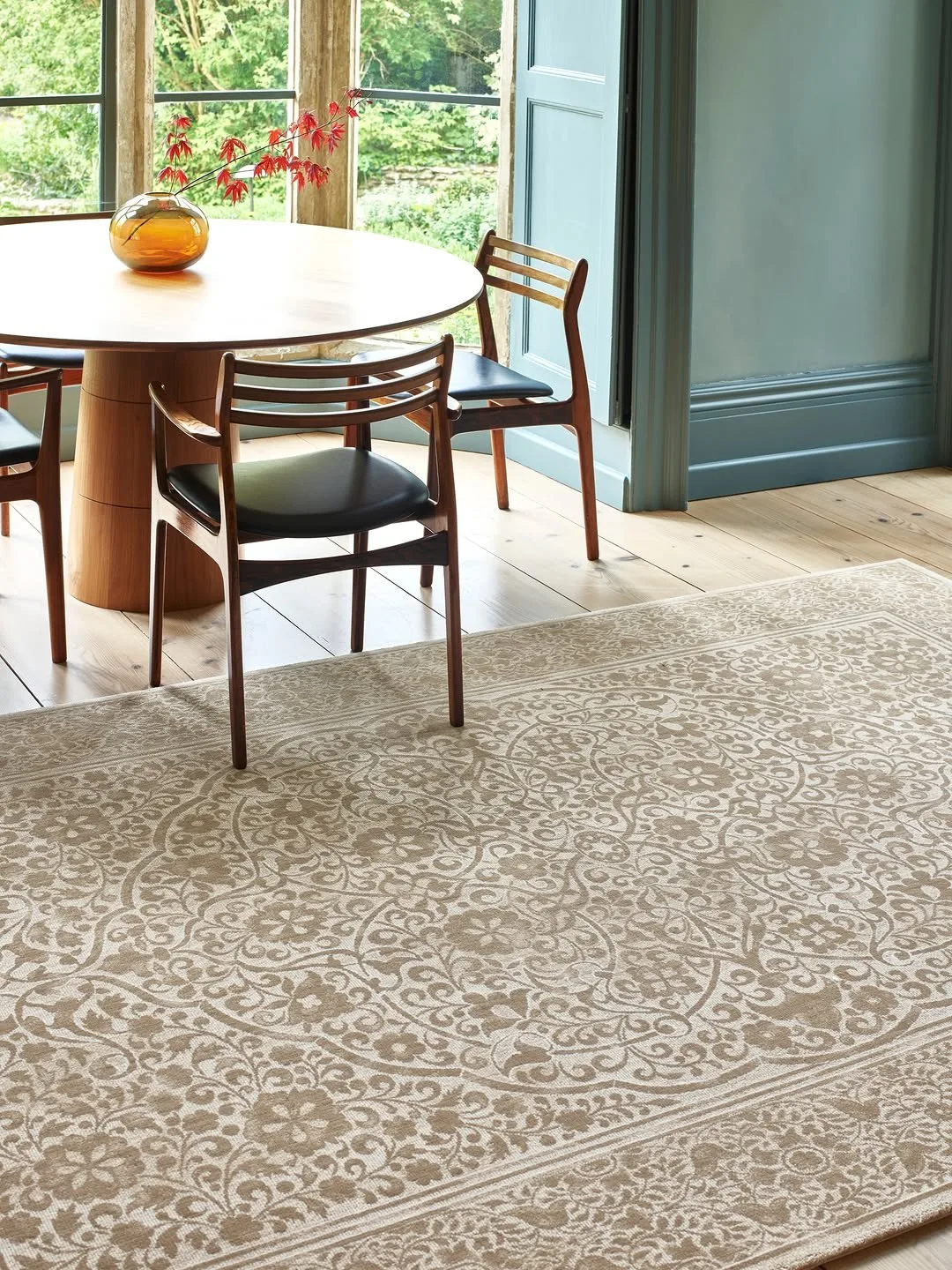
Dining rugs live a hard life of sliding chairs and falling food, and flat is the answer. The dining room in the photo runs a large patterned rug under the table and chairs, big enough that chairs stay on the rug even when pulled out for sitting.
Size for the chairs, not the table. Add at least 60 cm on every side of the table top, so a seated guest’s chair legs never catch the rug’s edge mid meal.
Flat weave and low pile patterns forgive crumbs and wipe clean easily. A busy traditional pattern in mid tones is the hardest working dining rug of all, because it hides a week of dinners between vacuums.
The common mistake is a plush rug under dining chairs. Chairs snag, crumbs vanish into the pile, and every meal ends with someone wrestling a chair leg free.
Let the Rug Bring the Pattern to a Plain Sofa
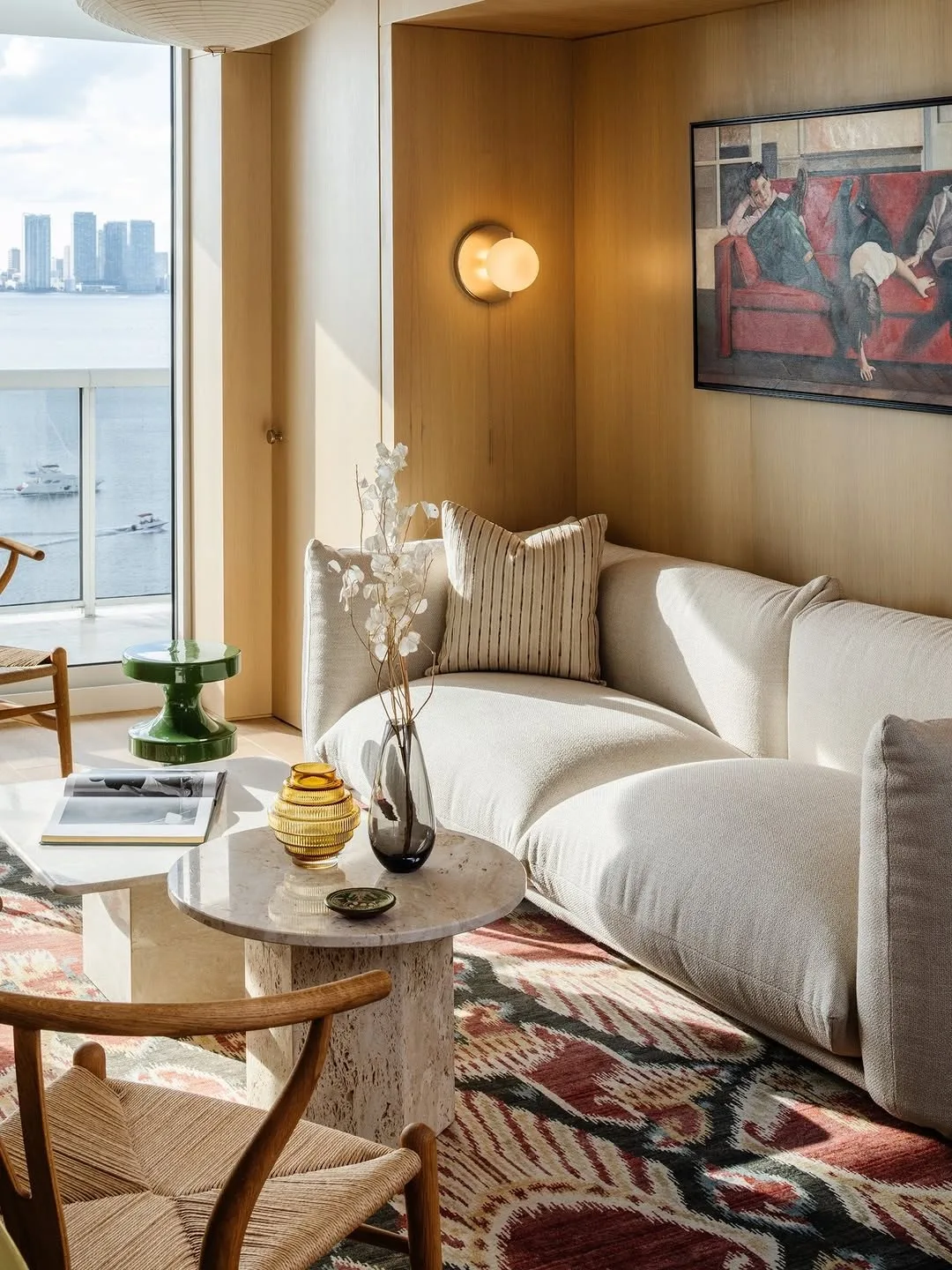
Plain sofas are the small apartment default, and a patterned rug is their best partner. The living room in the photo seats a quiet sofa over a richly patterned rug, and the floor gives the room all the detail the walls are missing.
This pairing is flexible for renters, because the rug can change with your taste while the sofa stays. One year the floor is Persian, the next it is striped, and the room feels renovated each time for the price of a rug.
Repeat one rug color in the cushions and one in the curtains or art, and the pattern joins the room. Leave the rest plain and the pattern stays a pleasure instead of a puzzle.
The common mistake is choosing the rug last from a tiny online photo. Order the largest swatch or the smallest size first if you can, because pattern scale changes completely at full size.
Mix Neutral Textures When You Layer Rugs
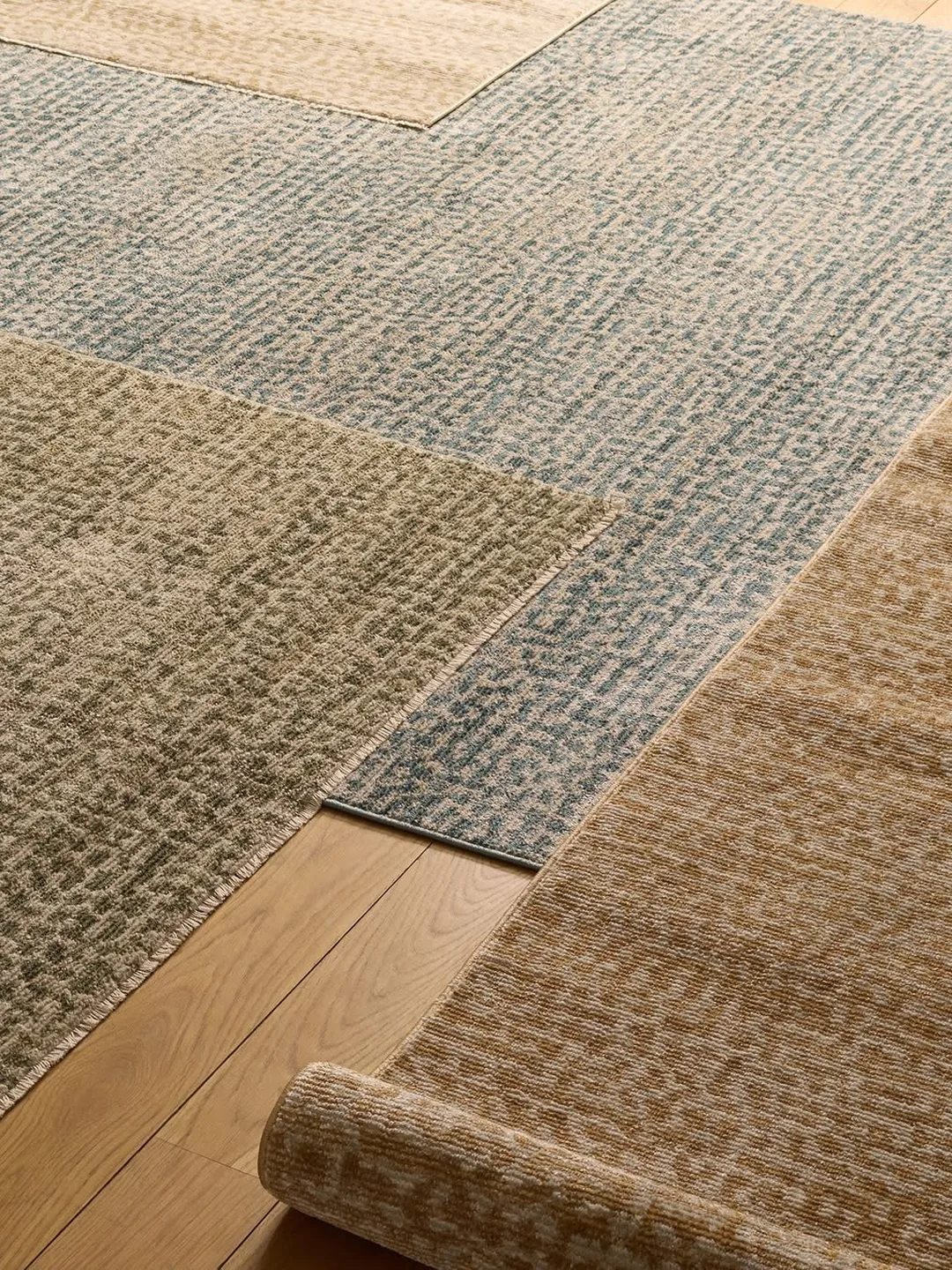
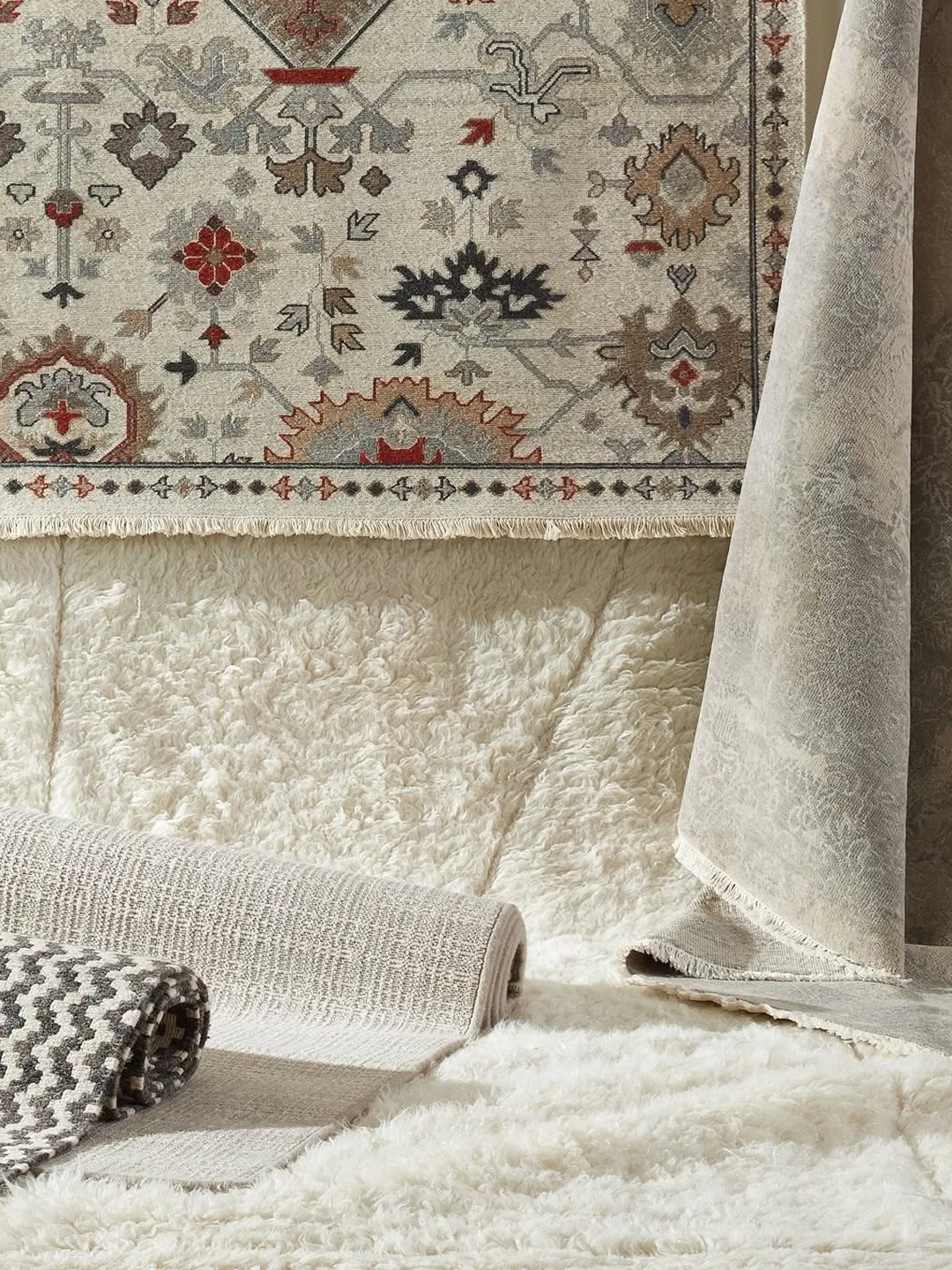
Layering does not need pattern at all. The close view in the photo shows neutral rugs in different weaves being unrolled together, and the mix of loop, flat weave and soft pile gives a calm room depth that color would only disturb.
Texture layering suits quiet styles and small rooms that already hold color in art or furniture. The floor stays restful, but it stops being flat, and bare feet notice the difference before eyes do.
Vary the weave clearly. A chunky jute beside a smooth cotton flat weave reads as a choice; two similar beige rugs just read as a mistake in ordering.
The common mistake is layers that slide. Natural fibres grip each other fairly well, but a thin pad between slippery pairs keeps the composition where you put it.
Neutral layers are also the easiest to extend. When a third small rug appears in the right weave at the right price, it joins the floor without a redesign, and the composition grows the way calm rooms prefer to grow: slowly.
Choose a Distressed Finish That Hides Everyday Marks
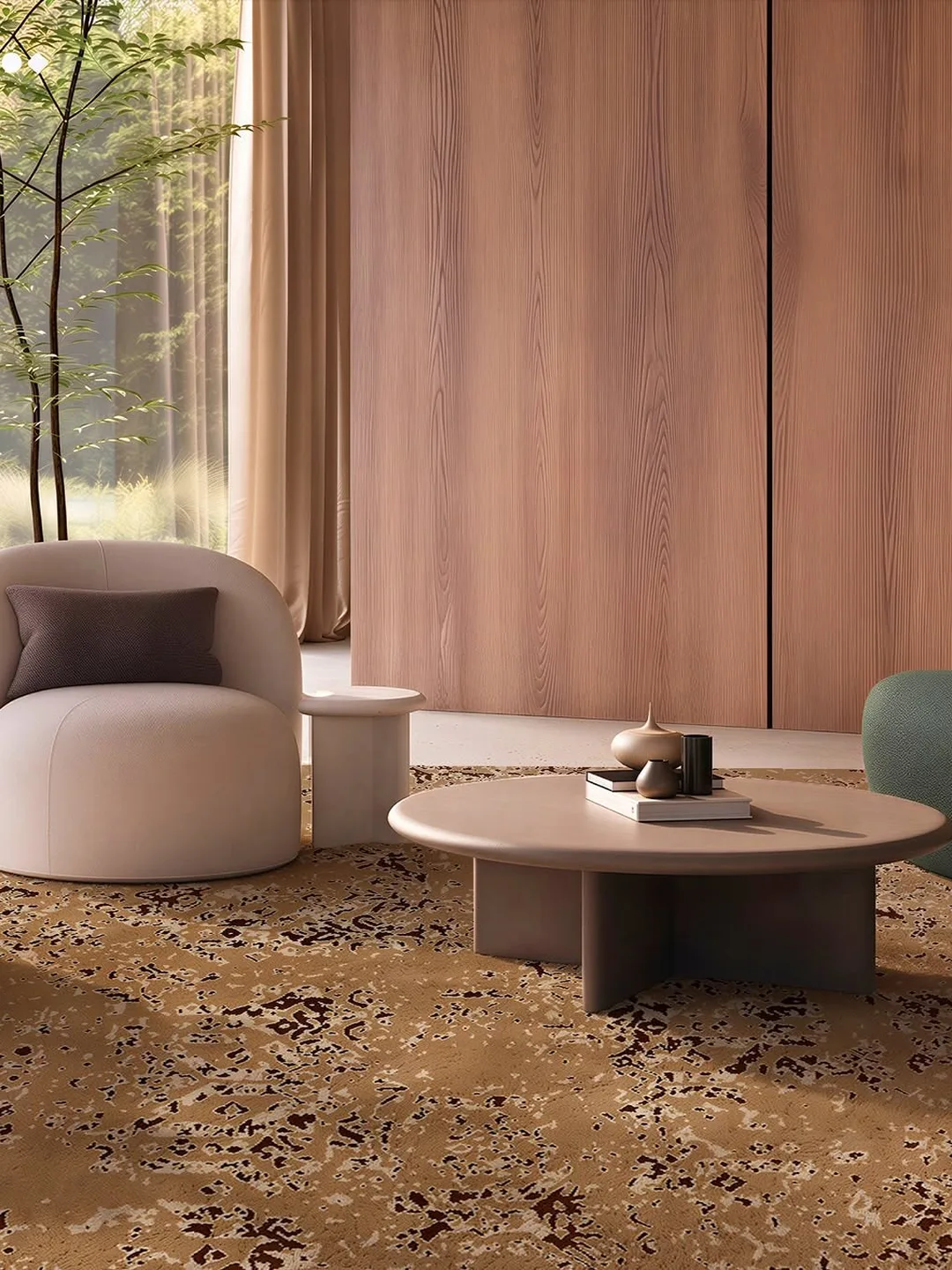
Distressed rugs are printed or woven to look gently worn, and in a small hard working room that is a superpower. The warm minimal room in the photo rests on a mottled, stone washed looking rug whose uneven finish forgives every scuff the week delivers.
Mottled finishes hide the traffic lane between the door and the sofa, the spot where plain rugs age first. In a rental with pale flooring, a distressed rug also covers marks you did not make and never managed to clean.
Keep the distressing tonal, beige on cream, grey on silver, rust on faded red. Strong fake wear with harsh contrasts can look dirty rather than storied, so judge the rug in daylight before committing.
The common mistake is pairing a distressed rug with distressed everything. Let the floor look lived in and keep the furniture honest and simple, and the room reads as relaxed rather than run down.
Common Small Apartment Rug Mistakes to Avoid
Buying the Rug Too Small
The most common rug mistake in small apartments is a rug that fits only the coffee table. It shrinks the seating group and makes the room look mean. Front legs on, always, and size up when torn between two sizes.
Skipping the Rug Pad
A pad stops sliding, softens steps, protects the floor beneath and adds months of life to the rug. In rentals it also protects your deposit, because a creeping rug grinds grit into the landlord’s floorboards.
Placing a Rug Under a Swinging Door
Thick rugs and low doors fight daily. Check every door swing that crosses the rug’s edge, and choose flat weaves or shift the rug so the swing clears it.
Choosing Plush Pile for Busy Zones
Deep pile traps crumbs, flattens in traffic lanes and fights chair legs. Save plush for beside the bed, where bare feet land twice a day and nothing slides across it.
Matching the Rug to the Wall Color Exactly
A rug that matches the walls disappears and takes the room’s structure with it. Contrast a little, in tone or texture, so the floor defines the zone it was bought to define.
Forgetting the Vacuum Test
Some rugs shed, some cannot take a beater brush, and some robot vacuums climb them and give up. Check care before buying, because a rug you cannot clean easily will not survive small apartment life.
Budget-Friendly Rug Tips for Small Apartments
Spend on size before pattern. A plain rug in the right size improves a room more than a beautiful rug that is too small, and plain flat weaves are the cheapest rugs per square metre in every shop.
Shop secondhand for wool. Old wool rugs outlast their owners, appear in markets and listings constantly, and often need only a professional clean to serve another twenty years in your living room.
Layer a small treasure over a big cheap base. The base gives the size, the treasure gives the beauty, and the total cost stays far below one large statement rug.
Use runners and small rugs where traffic actually goes. A runner by the bed and a mat at the door protect the expensive flooring areas, and a studio may need nothing larger for months.
Wait for the sale sizes. Standard sizes like 160 by 230 are discounted far more often than unusual ones, which is one more reason to plan your room around them.
Borrow the tape trick from painters before any purchase. An evening with the outline taped on the floor costs nothing and has ended more rug regrets than any review section ever written.
A Simple Plan to Choose the Right Rug This Week
Day one, measure and tape. Measure the seating group, tape two candidate rug outlines on the floor, and live around the tape for a full day of normal use, chairs, doors and all.
Day two, decide the job. Is this rug anchoring a zone, warming a floor, hiding marks or carrying the room’s pattern? One clear job makes every later choice, size, fibre and color, almost automatic.
Day three, set the palette from the rug outward. If you already own the rug, pull its colors into cushions and art. If you are buying, take cushion covers to the shop or order swatches and judge them at home in your own light.
By the weekend, order the larger size if you are torn. Live with it for the full return window before judging, because rugs settle into rooms over days, and first impressions of a big change are rarely fair.
Keep the tape outline until the rug arrives. Comparing the real rug against the tape you lived with tells you instantly whether the size is right, while there is still time to exchange it unused.
FAQ
Should a small apartment rug go under the sofa or in front of it?
Under the front legs is the rule that works in almost every small living room. It joins the sofa to the chairs and table, stops the rug drifting, and makes the group read as one island in the room.
Are dark or light rugs better for small rooms?
Light rugs open a room up and show less dust than you fear in low pile weaves, while dark rugs ground a pale room and hide marks. Choose by the room’s light: dark floors like a lighter rug, pale floors can carry either.
What rug material suits a rental with pets?
Wool is naturally stain resistant and hard wearing, and washable synthetics forgive accidents completely. Avoid silk and viscose in pet zones, because they watermark and tire quickly under claws and cleaning.
Can I put a rug over carpet in a rental?
Yes, and layering over a tired rental carpet is one of the best renter tricks. Use a flat base layer or a rug on carpet pad so the top rug does not creep, and choose enough pattern to distract from the carpet at the edges.
How do I stop a rug sliding on hard floors?
A proper non slip pad cut slightly smaller than the rug is the real fix. Tape corners help small rugs, but a pad also adds comfort and protects the floor, so it earns its cost on all three counts.
Do I need a rug in a studio apartment?
A studio gains more from a rug than any other room, because the rug draws the living zone that walls cannot. One generous rug under the seating turns a single room into a home with places in it.
Conclusion
The right rug makes a small apartment feel planned: zones appear, furniture gathers, floors warm up and noise goes down. Size is the decision that decides all the others, so tape the outline, trust the front legs rule, and buy the larger rug when you hesitate.
Start with the living room, because that rug works the hardest and teaches you the most. Once one room sits properly on its rug, the bedroom, the hallway and the dining corner become easy repeats of the same simple logic.