
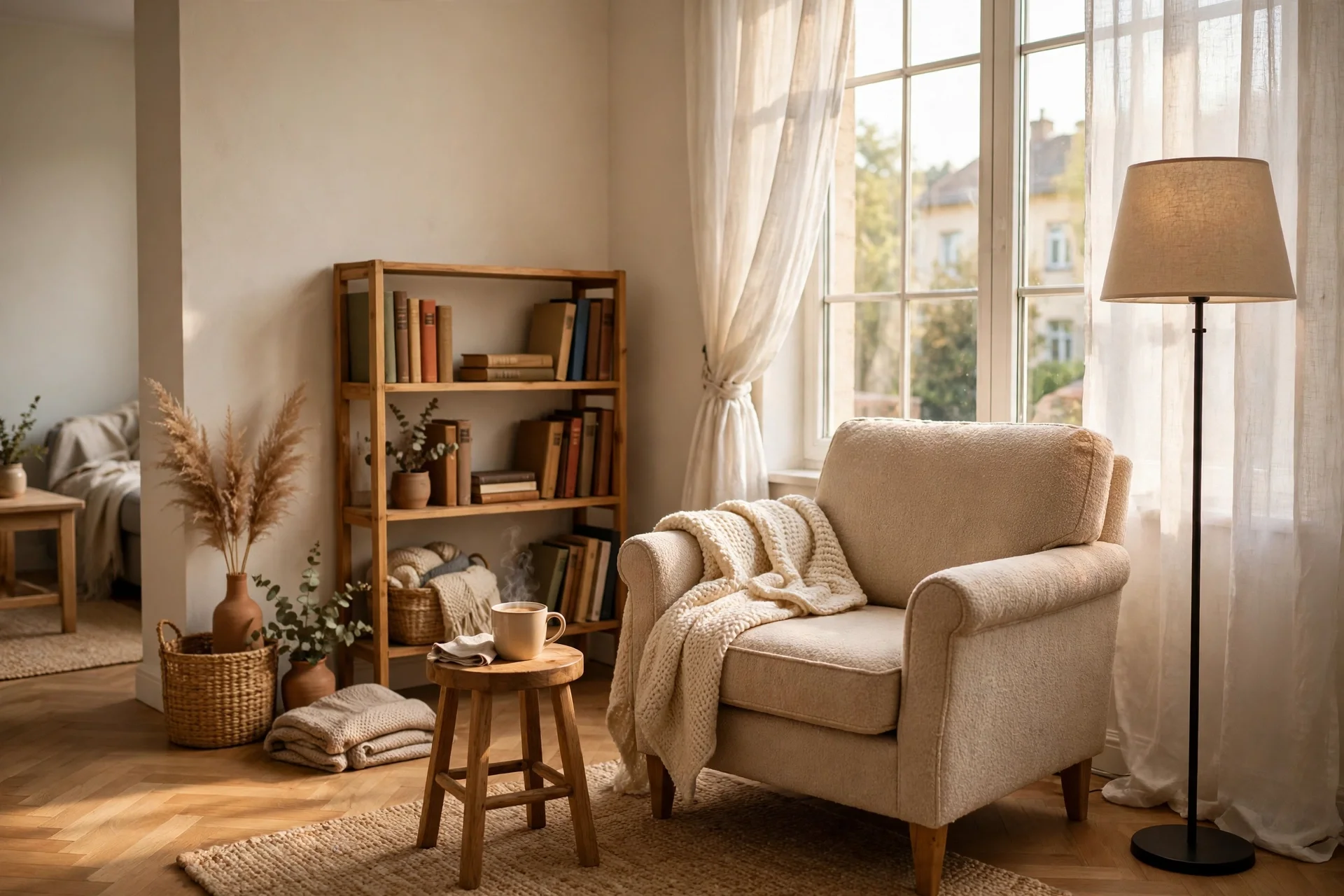

Every reader in a small apartment deserves one seat that belongs to books alone. Not the sofa, where the television argues back, and not the bed, where reading turns into sleeping by page three. A reading nook is a single chair, good light and a place for the book, claimed from a corner you were probably not using.
The good news is how little a nook needs. Most reading nook ideas work in a square meter: a chair angled toward the light, a lamp, a small surface for a drink, and a throw. The corner does the rest, because walls on two sides are what make a seat feel like a retreat.
These 15 reading nook ideas are planned for small apartments and studios, where corners compete with storage and every chair must earn its floor space. Each idea explains what it adds, how to fit it in, and the mistake that most often spoils it, so your nook gets used daily instead of admired occasionally.
What Do You Need for a Cozy Reading Nook in a Small Apartment?
A cozy reading nook in a small apartment needs four things: a chair you can sit in for an hour, light that falls on the page from beside or behind you, a small surface within reach for a drink and the next book, and a throw for the evenings. Everything else, shelves, cushions and plants, is decoration on top of those four.
Place the chair first and build around it. The corner beside a window in the living room is the classic spot, and the ideas in our cozy apartment living room designs show how a nook sits inside a small room without crowding it.
Keep the nook single purpose if you can. A chair that also holds laundry, coats and the ironing never feels like a retreat, and the two minutes of clearing it each evening are what kill the reading habit.
Put the Chair Where the Window Light Falls
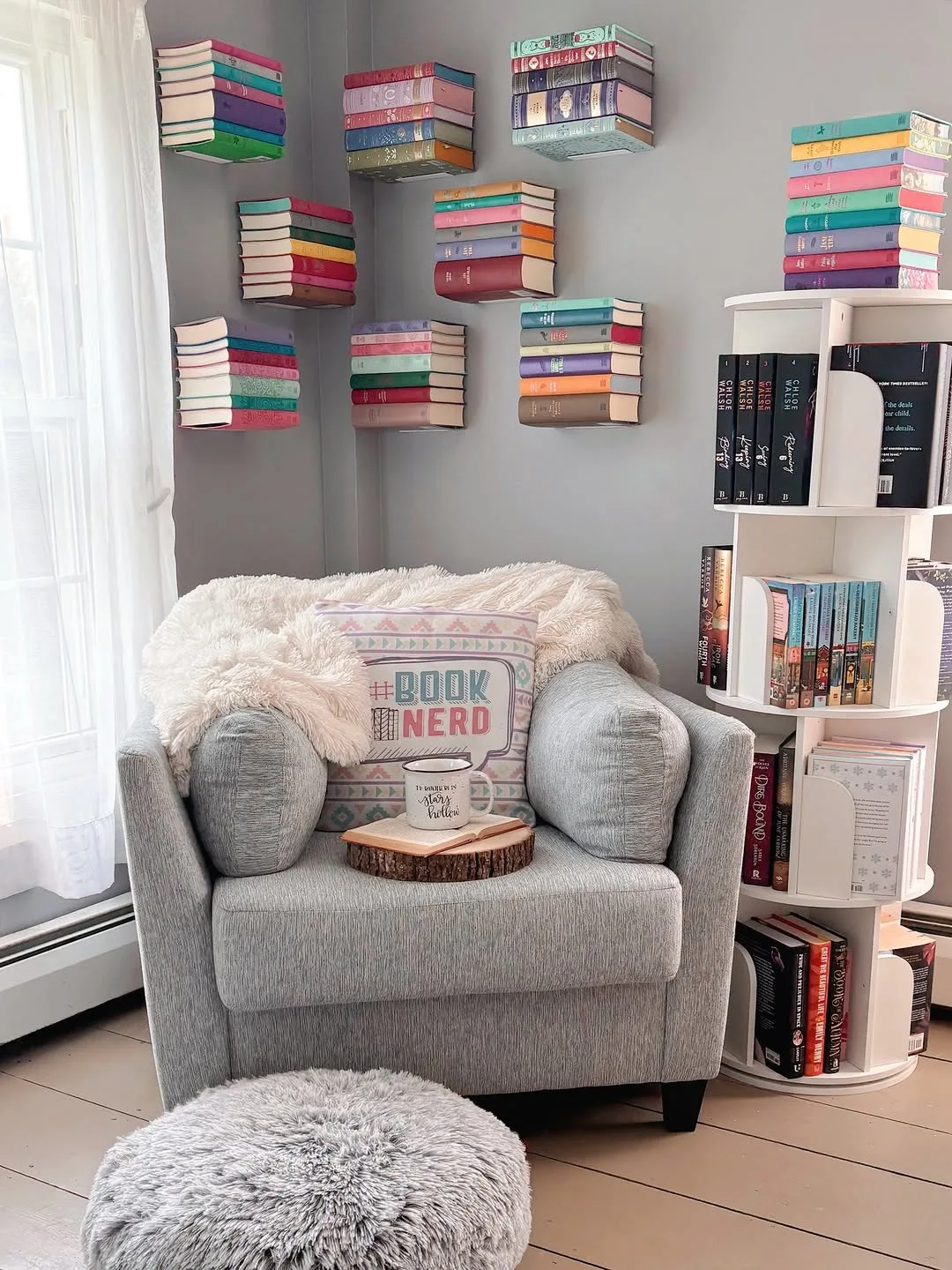
Daylight is the best reading light there is, and it is free. Angle the chair so the window sits beside your shoulder, and the page stays bright without glare while your face stays in soft shade.
The corner in the photo puts a gray armchair directly beside sheer curtains, which filter the sun into an even glow. Sheers matter: direct sun on a page tires eyes as fast as dim light does.
Sit in the spot at three times of day before you commit. Morning light and afternoon light land in different corners, and the right corner for a weekend reader may be the wrong one for an evening reader.
Anyone starting a nook gains the most from this choice, because it costs nothing. The common mistake is placing the chair facing the window, which silhouettes the book and squints the reader. Light over the shoulder, never in the eyes.
Turn the Space Under a Window Into a Seat
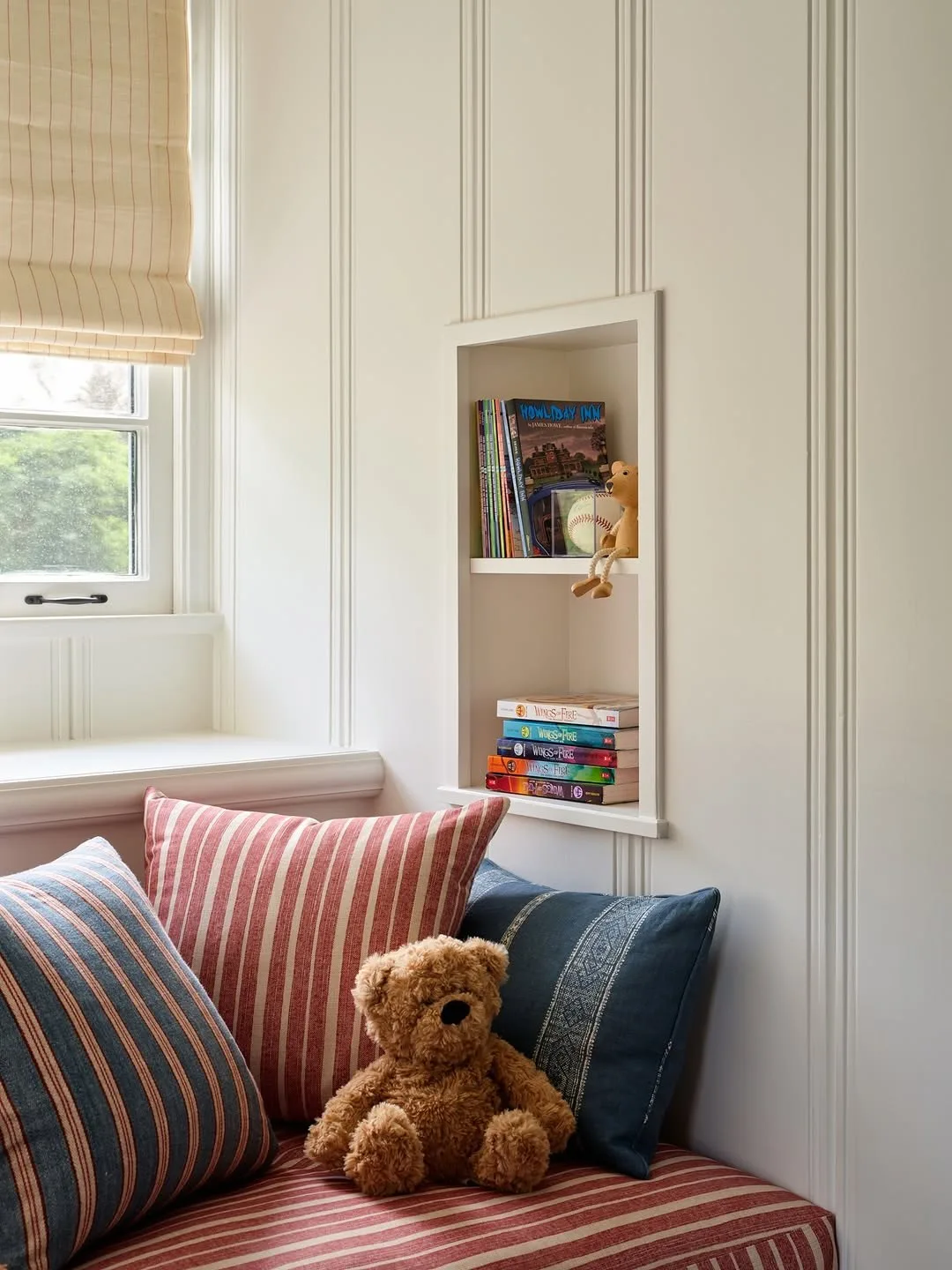
The floor under a window is wasted in most apartments, and it is exactly nook shaped. A low bench, a deep cushion or a storage box with a padded top turns that strip into a window seat with light built in.
A storage bench earns double: blankets and out of season clothes live inside, and the lid carries two cushions and a reader. In a rental, a freestanding bench gives the built in look with no carpentry and no permission needed.
Add a Roman shade or curtains you can pull against glare and cold. Window seats sit in the room’s coldest air in winter, so a throw lives on the bench permanently, not as decoration but as equipment.
Bedrooms and living rooms with a wide window gain the most. The common mistake is a bench so deep that sitting upright needs five cushions of engineering. Aim for a seat depth you can sit on with your back supported and your feet down.
Claim the Space Under the Stairs
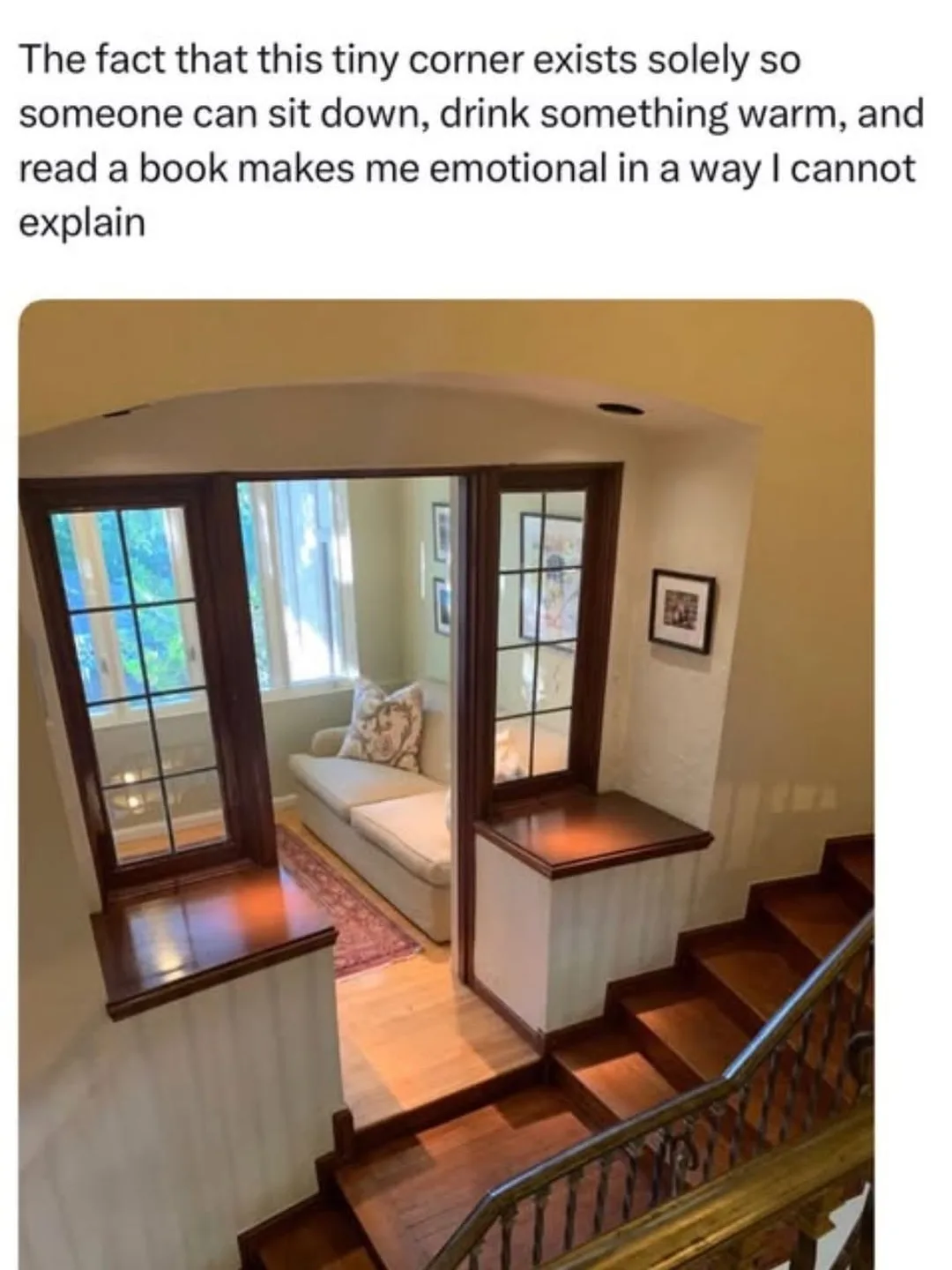
In apartments and duplexes with stairs, the triangle underneath is a nook waiting to happen. It already has the two walls and the low ceiling that make a seat feel enclosed, and it usually holds nothing but boxes and good intentions.
A chaise, a daybed cushion or a deep armchair angled into the slope fits the shape, as the nook in the photo shows. Add a small lamp on the wall side, because under stair corners rarely get window light.
Keep the entry to the nook open. A curtain or a bookcase across the front makes it feel like a cupboard, while an open triangle with a rug reads as a room.
Anyone with dead space under a staircase gains the most. The common mistake is storing the nook full of the things it displaced. Give the boxes another home first, or the nook will quietly become storage again by spring.
Borrow One Corner of the Living Room
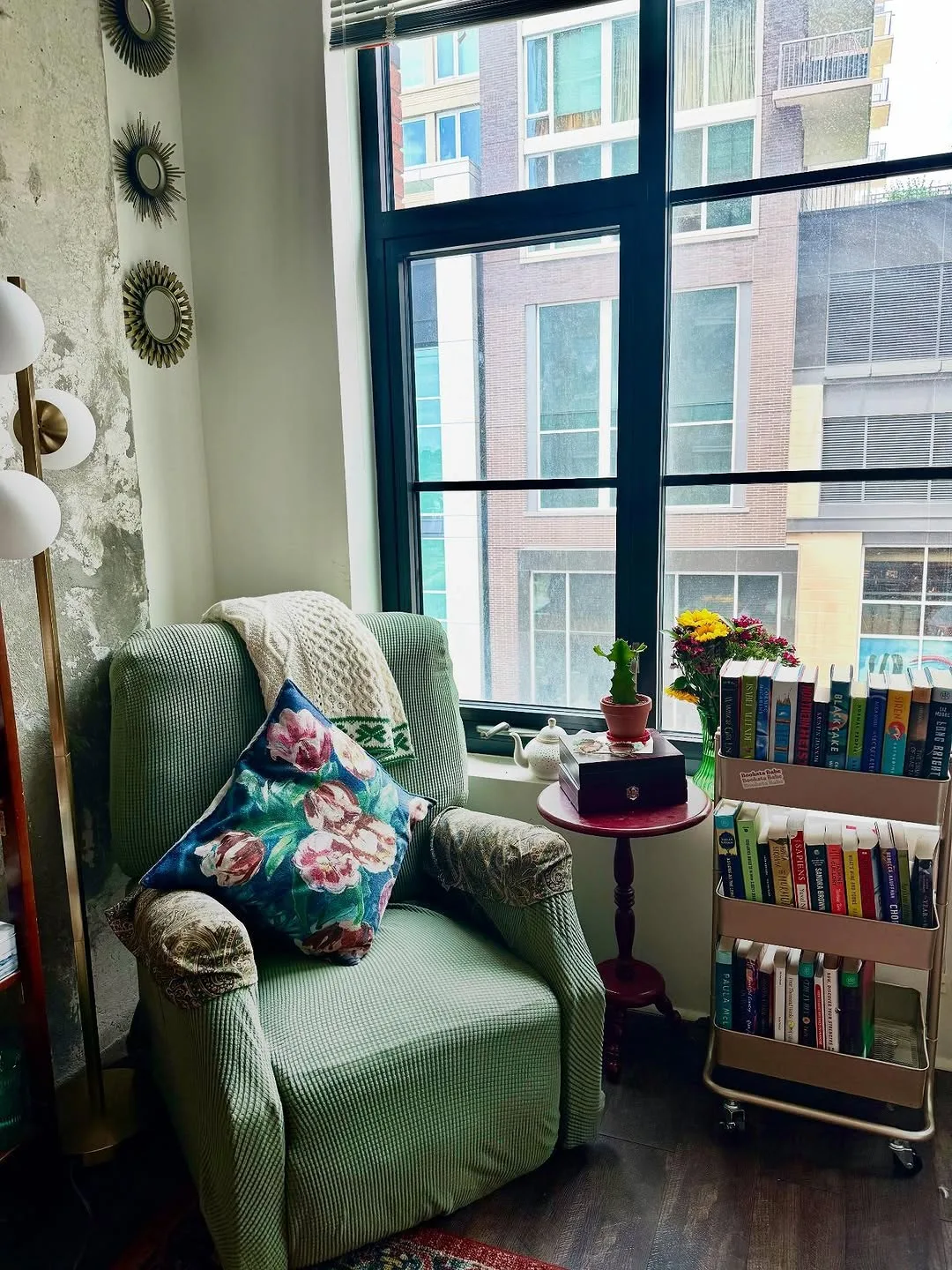
Most nooks are simply a living room corner with a job. Turn one armchair away from the television, angle it toward the window or a bookshelf, and the corner separates itself from the room without a single divider.
A small rug under the chair marks the territory. In an open plan room the rug tells everyone, including you, that this square meter runs on different rules: quieter, slower, and free of screens. Our small apartment living room guide shows how the rest of the room can share the space.
Face the chair partly toward the room rather than fully away. A nook should feel sheltered, not exiled, and a three quarter angle keeps you in the household while the book keeps your attention.
Studios gain the most, because the corner nook gives the single room a second mood. The common mistake is choosing the corner nearest the door, where every arrival crosses your light and your concentration.
Choose a Chair You Can Sit in for an Hour
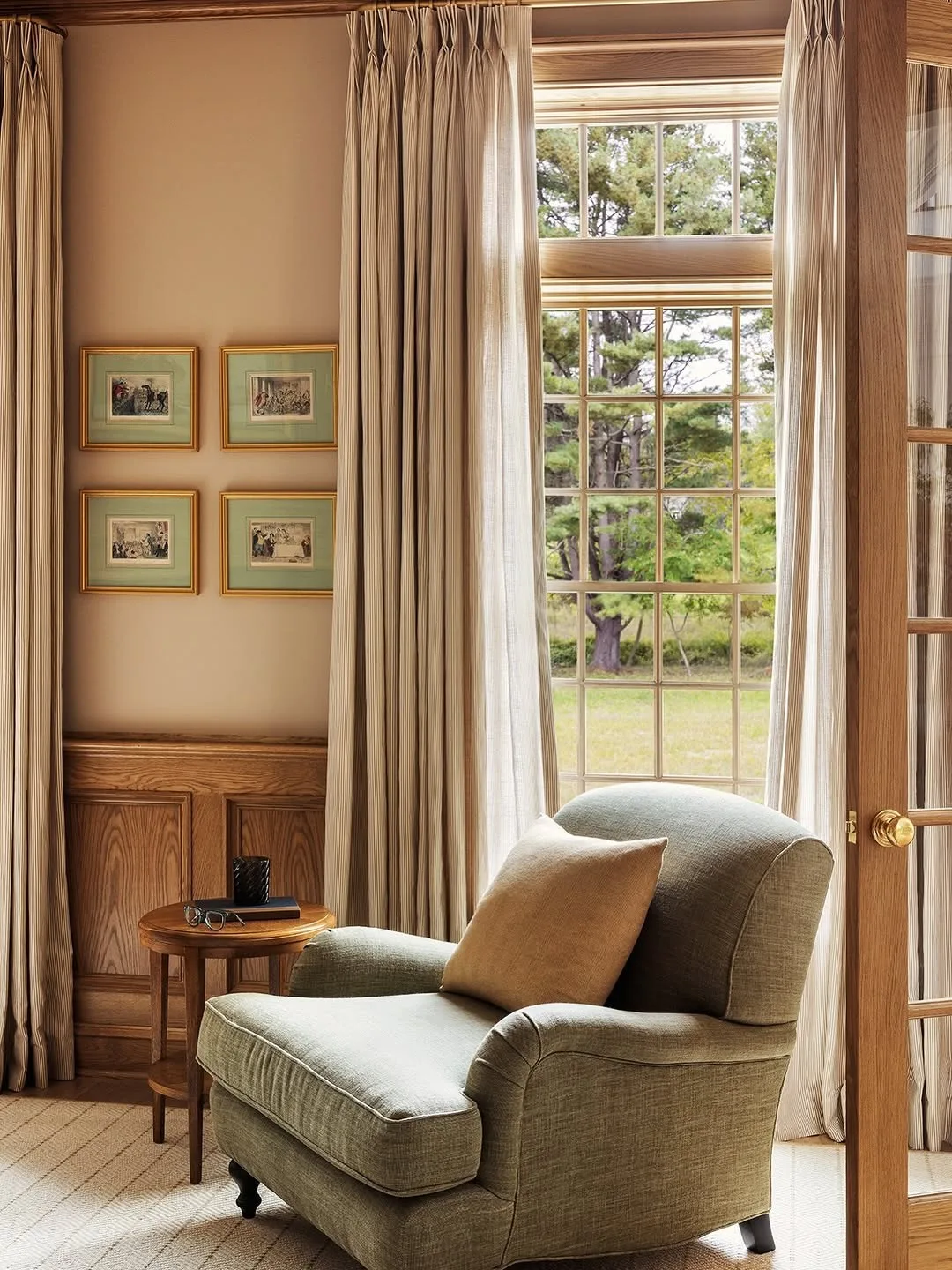
The chair is the nook, and it has one job: disappear under you for an hour. Test chairs by sitting with a book, not by bouncing on the edge in a showroom. Your feet should rest down, your lower back should meet support, and the arms should sit where your elbows actually fall.
Upholstered armchairs with a slightly reclined back suit long reads better than upright dining style chairs. The sage armchair in the photo is the shape to copy: deep seat, soft arms, nothing sharp anywhere.
In a small apartment the chair must also fit the door, the corner and the room’s other furniture. Measure the corner first and buy for it; a wonderful chair that swallows the walkway will be resented daily.
Anyone whose current reading seat is the sofa end gains the most. The common mistake is choosing by looks alone: sculptural chairs photograph well and punish readers by chapter two. Comfort is the entire point of the nook.
Width matters in a small corner. A compact chair around 70 cm wide leaves room for the lamp and the side table in the same square meter, while a generous chair can still work if it replaces, rather than joins, the seating already there.
Add an Ottoman or Footstool
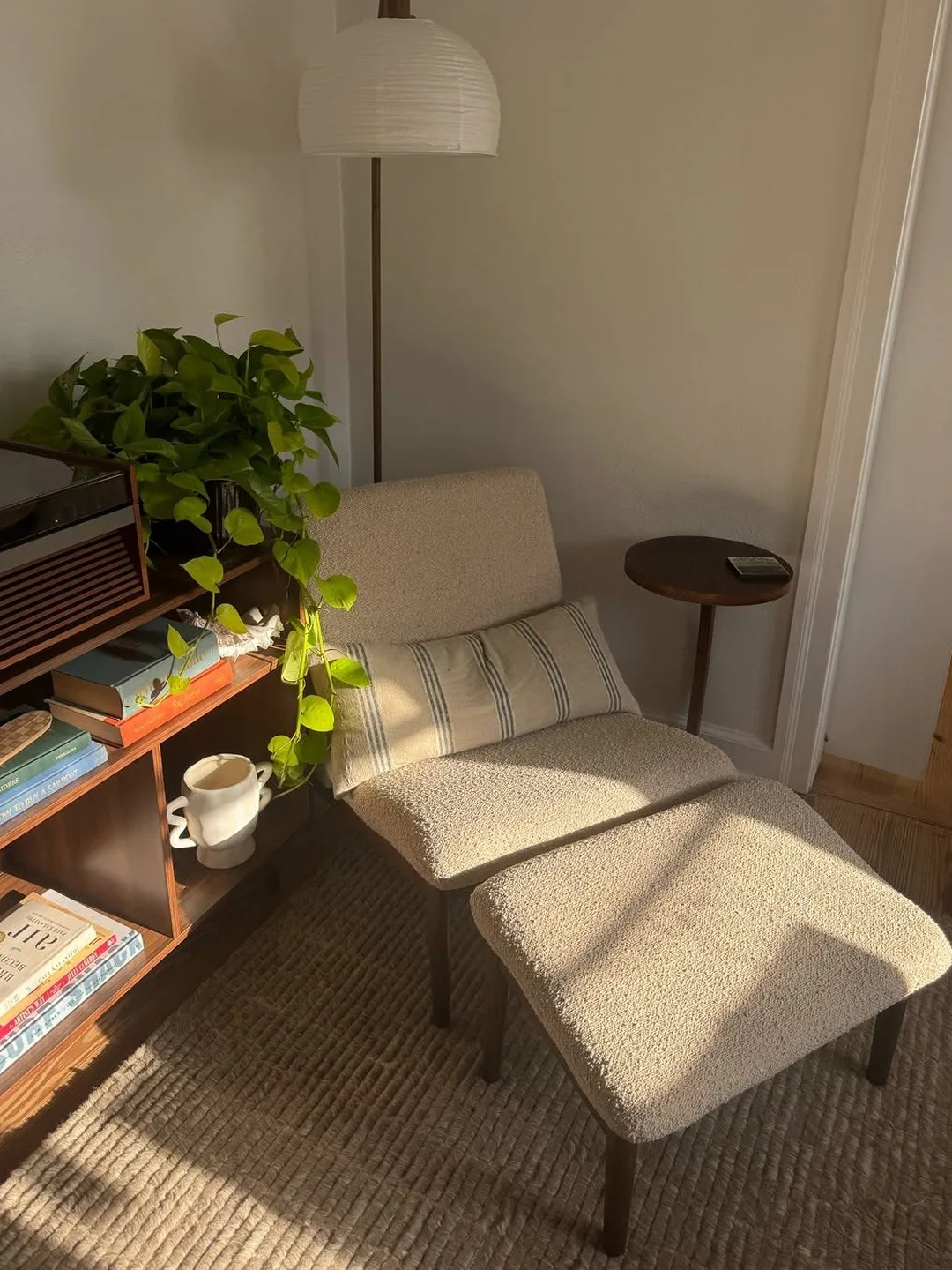
Feet up changes everything. An ottoman turns a good chair into a long stay chair, because legs that rest let the rest of you settle, and settling is what separates reading from perching.
Match the ottoman height to the chair seat so your legs rest roughly level. Too high pushes you back; too low dangles. A storage ottoman adds a home for the throw and the book pile, which keeps the nook tidy without extra furniture.
Small round stools and poufs work where a full ottoman will not fit, and they moonlight as extra seating when guests come, which is how a nook piece justifies itself in a small home.
Evening readers gain the most. The common mistake is a footstool that lives across the room and never gets fetched. The ottoman belongs within the nook’s square meter, touching distance from the chair, every day.
Try an Egg Chair When Floor Space Is Tight
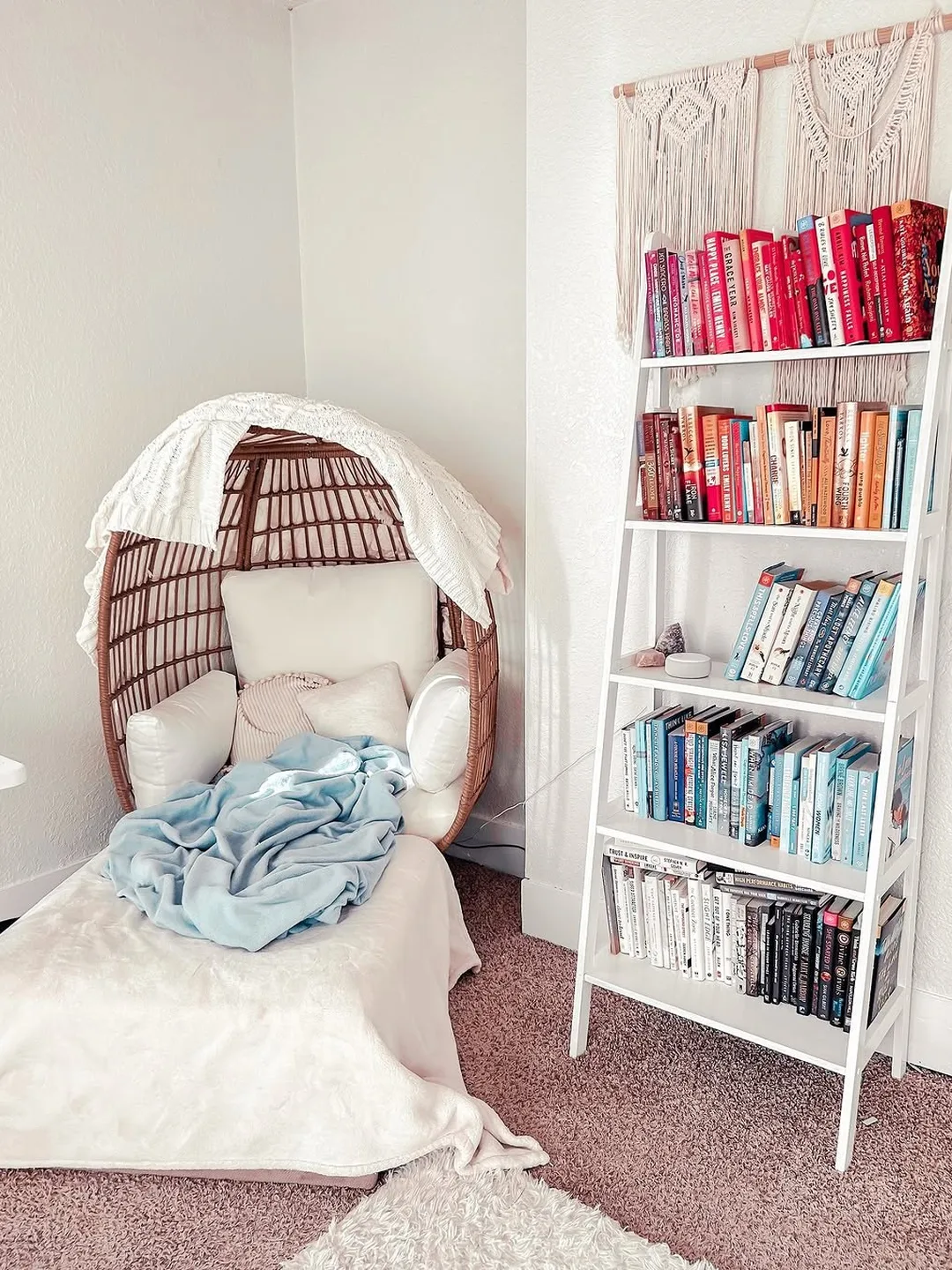
An egg or hanging chair wraps around the reader, and that wrap is the nook feeling in a single piece of furniture. The wicker egg chair in the photo creates walls, shade and shelter in a corner that stays visually light.
Freestanding frames suit renters, because nothing fixes to the ceiling. Check the footprint honestly: the frame’s base is wider than the chair looks in photos, so measure the corner with the swing included.
Cushions make or break it. A seat cushion, a back cushion and one small pillow for the lower back turn the shell into a seat you can read in for an hour.
Corners beside windows gain the most. The common mistake is hanging a chair from a ceiling that was never checked for the load. If there is any doubt, the framed version gives the same cocoon with none of the risk.
Curl Up in a Papasan Chair
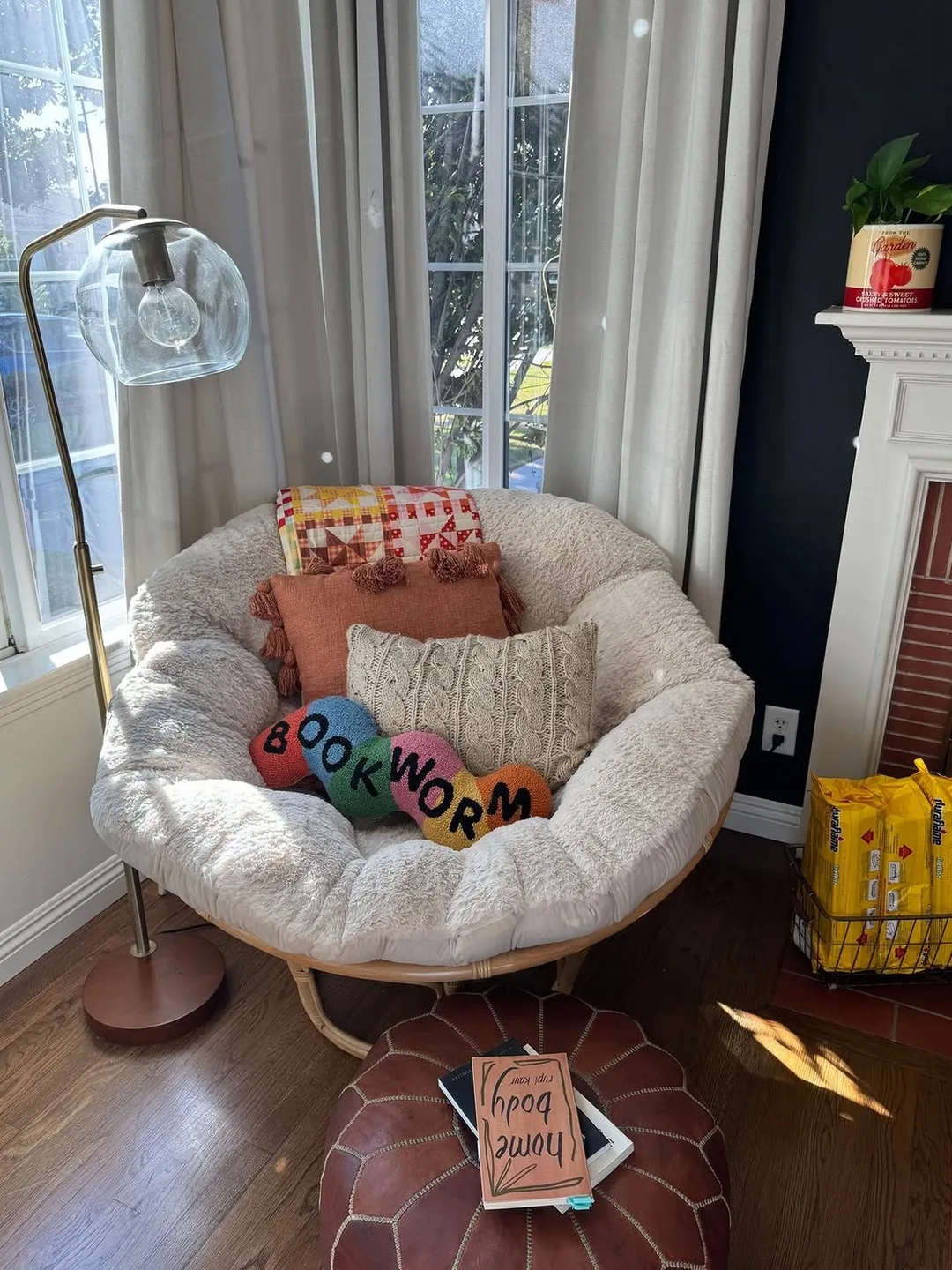
A papasan chair is a bowl you sit in, and for readers who curl rather than sit, nothing else comes close. The round cushion takes any position: upright with a book, sideways with legs over the side, or folded into the corner with a novel and a whole afternoon.
The footprint is the catch: a papasan needs a circle of about a meter. In a small apartment it must replace a chair, not join several. Give it the corner and let other seating stay slim.
Choose a cushion thick enough that the frame never reaches your back, and a cover that washes, because a chair you live in collects crumbs and cat hair in its folds.
Anyone whose reading position changes every ten minutes gains the most. The common mistake is the cheap thin cushion that flattens in a month. The cushion is the chair; spend there and keep the frame simple.
Stand a Floor Lamp Where a Table Will Not Fit
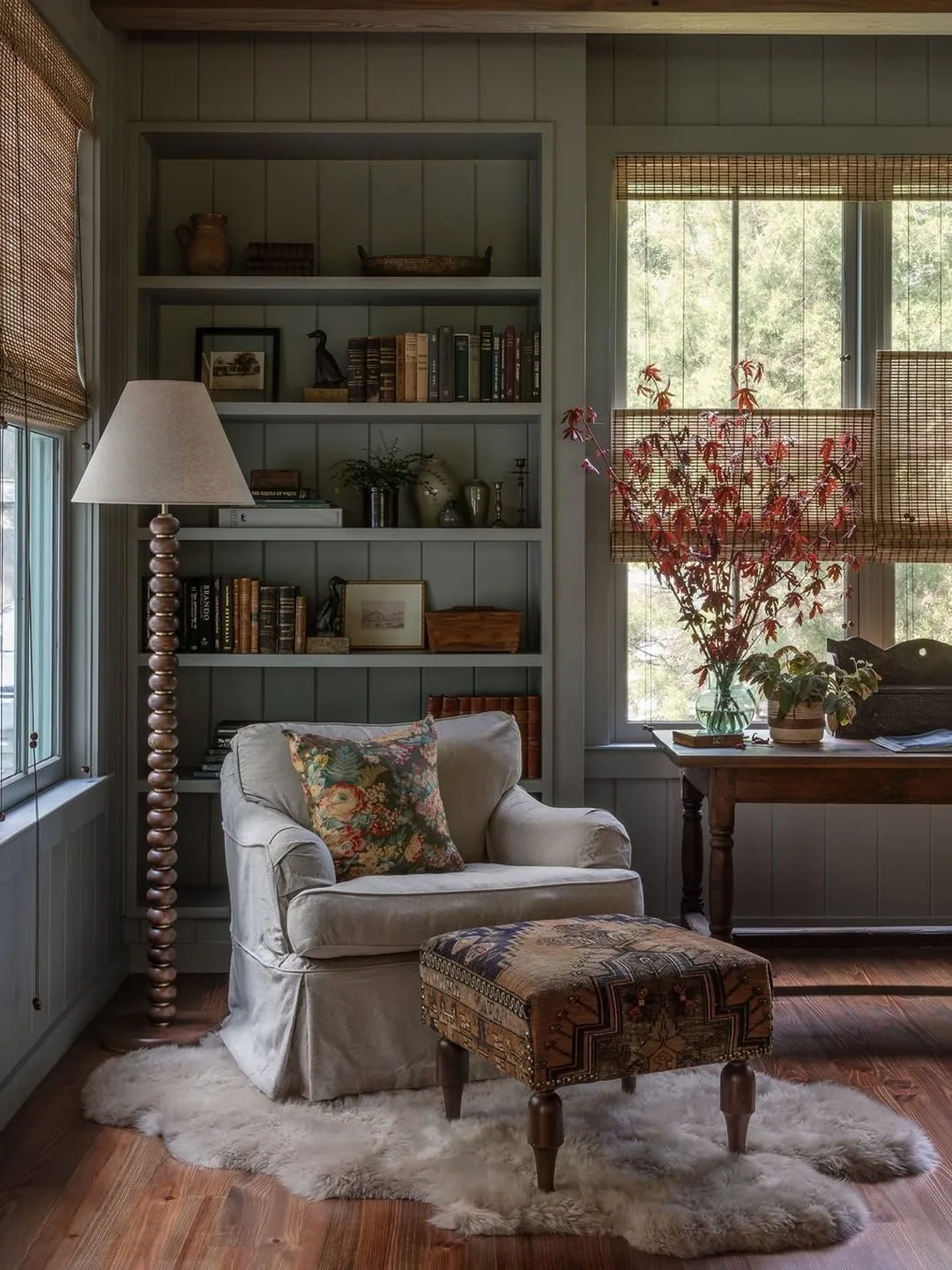
Many corners fit a chair and nothing else, which is where a floor lamp earns its keep. It stands in the sliver of floor beside the chair, needs no table, and puts the light exactly at page height.
Choose a lamp whose light points down or can angle: an arc lamp over the shoulder, or a simple stem with a shade that throws light onto the chair rather than the ceiling. Warm bulbs around 2700K keep the evening glow that nooks are famous for.
The tall lamp in the photo stands between the window and the seat, covering cloudy days and evenings with the same fixture. One good lamp beats a bright ceiling light for reading every time, because the page gets light and the room keeps its mood.
Small corners gain the most. The common mistake is a lamp behind the chair that lights the back of your head and shadows the book. Light should fall over your shoulder onto the page; test it with the book in your hands before you settle the lamp.
Layer String Lights and Lamps for the Evening
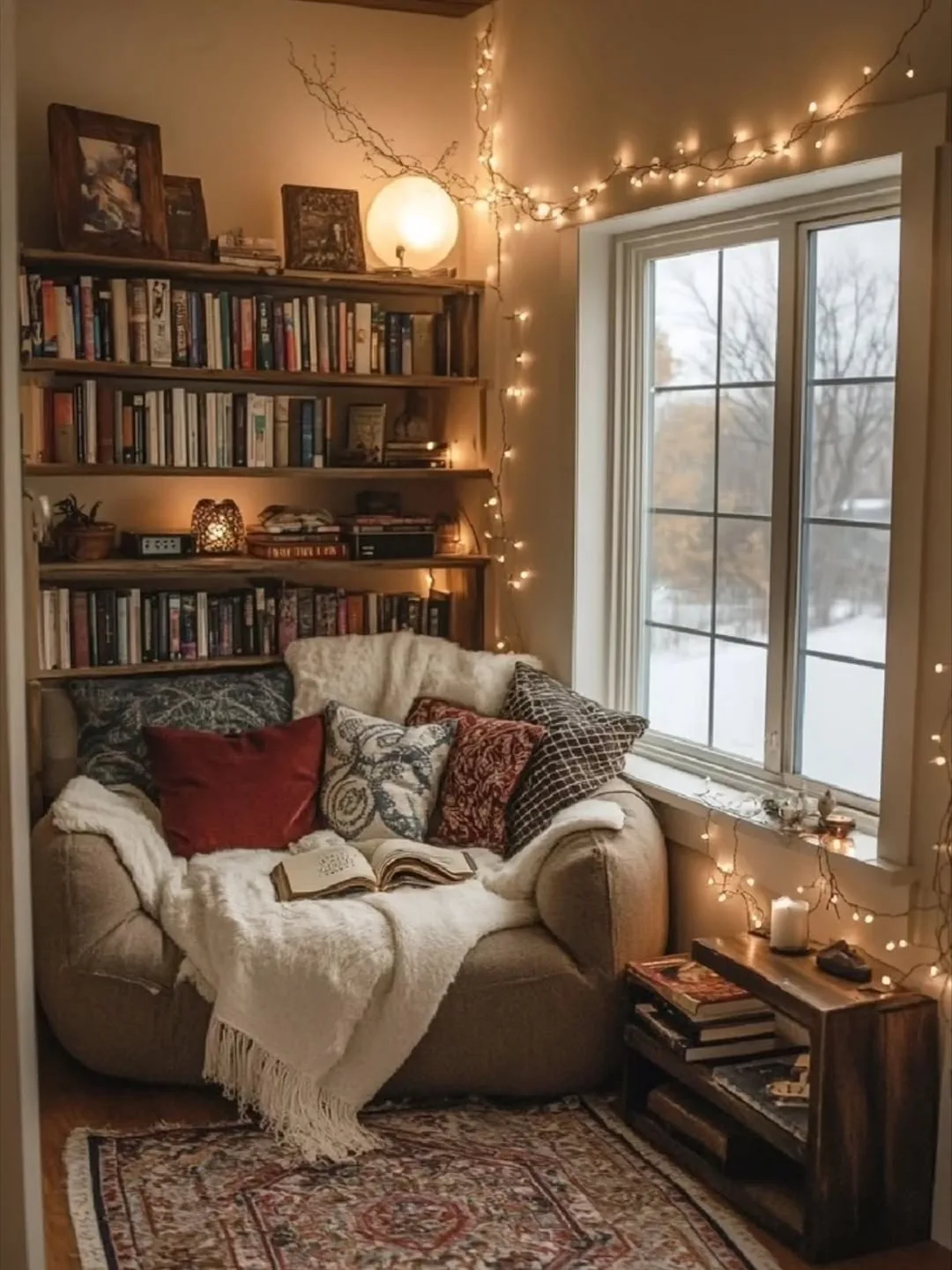
Evening nooks run on layered light: a reading lamp for the page, and something softer for the mood. String lights along a bookshelf, as in the photo, give the corner a glow that tells your brain the day is over and the book is open.
Keep the two lights separate in purpose. The page light must be bright and steady; the mood light can be warm, dim and decorative. Mixing them up gives you either a dim page or a harsh corner.
Battery string lights on a timer suit renters and awkward corners with no socket. Set them to come on at dusk and the nook invites you in before you have decided to read, which is how habits actually form.
Anyone who reads after dark gains the most. The common mistake is fairy lights as the only source, which look lovely and strain eyes within a chapter. Mood lights decorate; a real lamp does the reading work.
Line the Wall Behind With Bookshelves
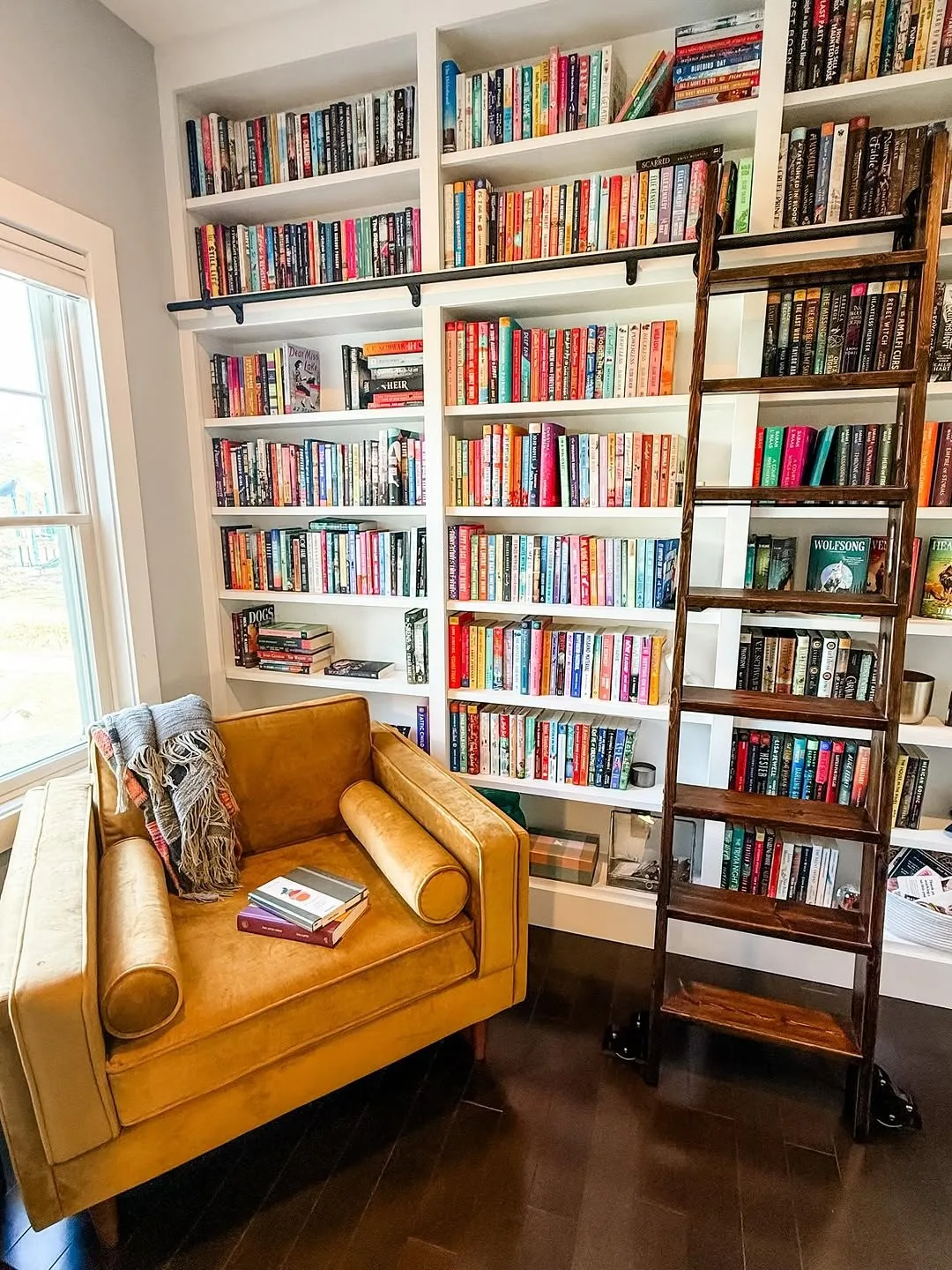
A nook backed by bookshelves needs no other decoration. The books give the corner its color, its texture and its purpose, and the next read is always an arm’s length away, which quietly doubles how much you read.
In a small apartment, one tall bookcase behind the chair is usually enough. Built ins look wonderful in photos, but a freestanding case gives the same wall of books and moves house with you, like the white shelves in the photo.
Arrange the shelves nearest the chair for the current pile: this week’s book, the next two, and the reference you keep returning to. The rest of the library can live anywhere; the nook shelf is a working shelf.
Serious readers gain the most. The common mistake is shelves so styled with objects that the books become the minority. A reading nook’s shelves should be mostly books; that is the whole aesthetic. For styling the rest of your shelves, our boho apartment decor ideas cover the mixed look.
Float Small Shelves Within Reach of the Chair
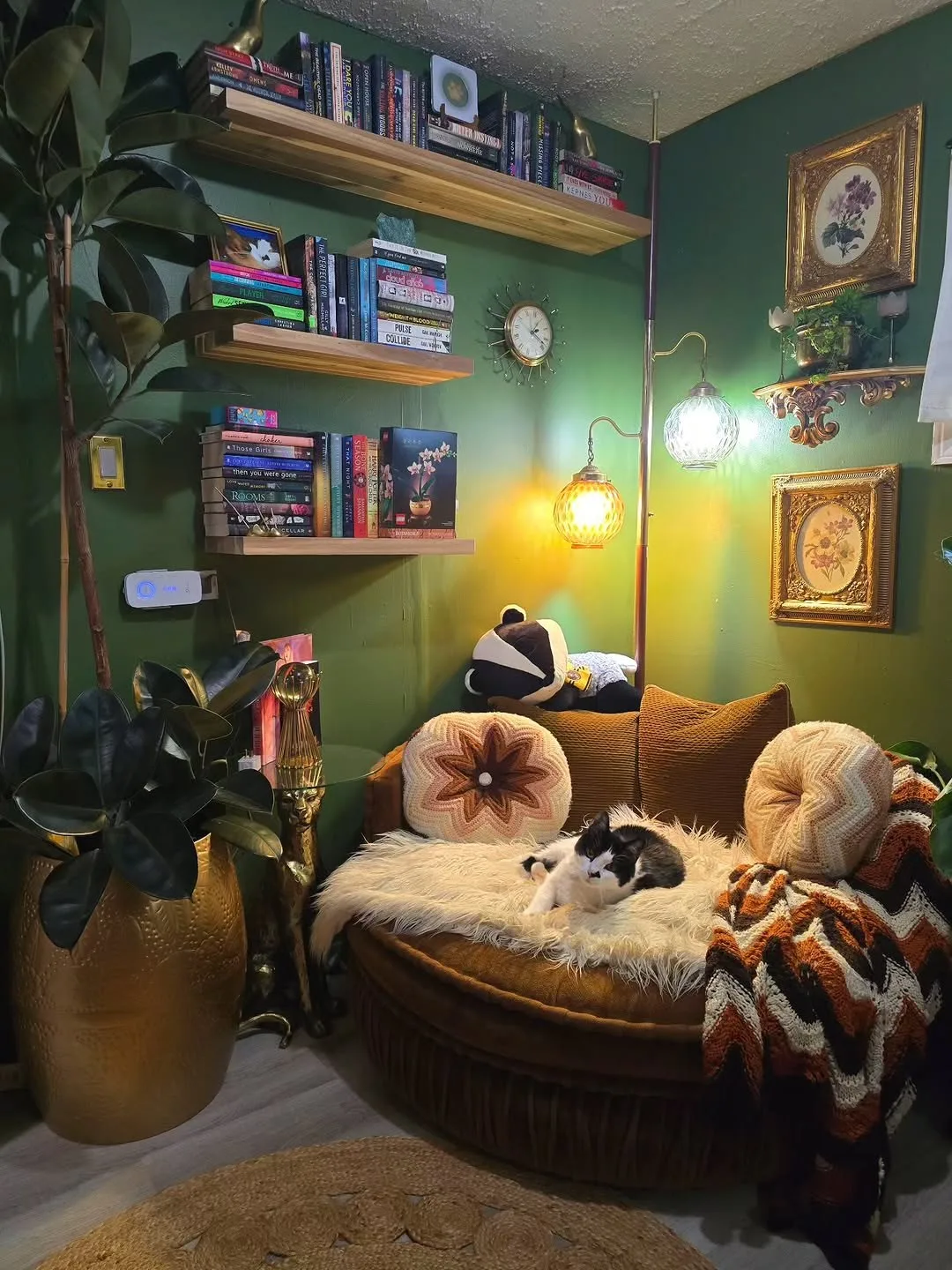
Not every nook fits a bookcase. Two or three small floating shelves on the wall beside the chair hold the current reads, a plant and the reading glasses, and the floor stays completely clear.
Mount the lowest shelf at the height of the chair’s arm, so a book goes back without you standing up. The dark green wall in the photo shows how much storage three modest shelves add to a corner that had none.
Keep the shelves short, 40 to 60 cm, so they never dominate the corner. Small shelves also dodge the renter problem: two screws each, easily filled at moving time, or use a picture ledge that holds books face out.
Tiny corners gain the most. The common mistake is shelves above the chair at standing height, which turns every book swap into a stretch and a wobble. Reach decides everything in a nook; if you cannot touch it seated, it is decoration, not storage.
Keep a Throw and a Cushion on the Chair
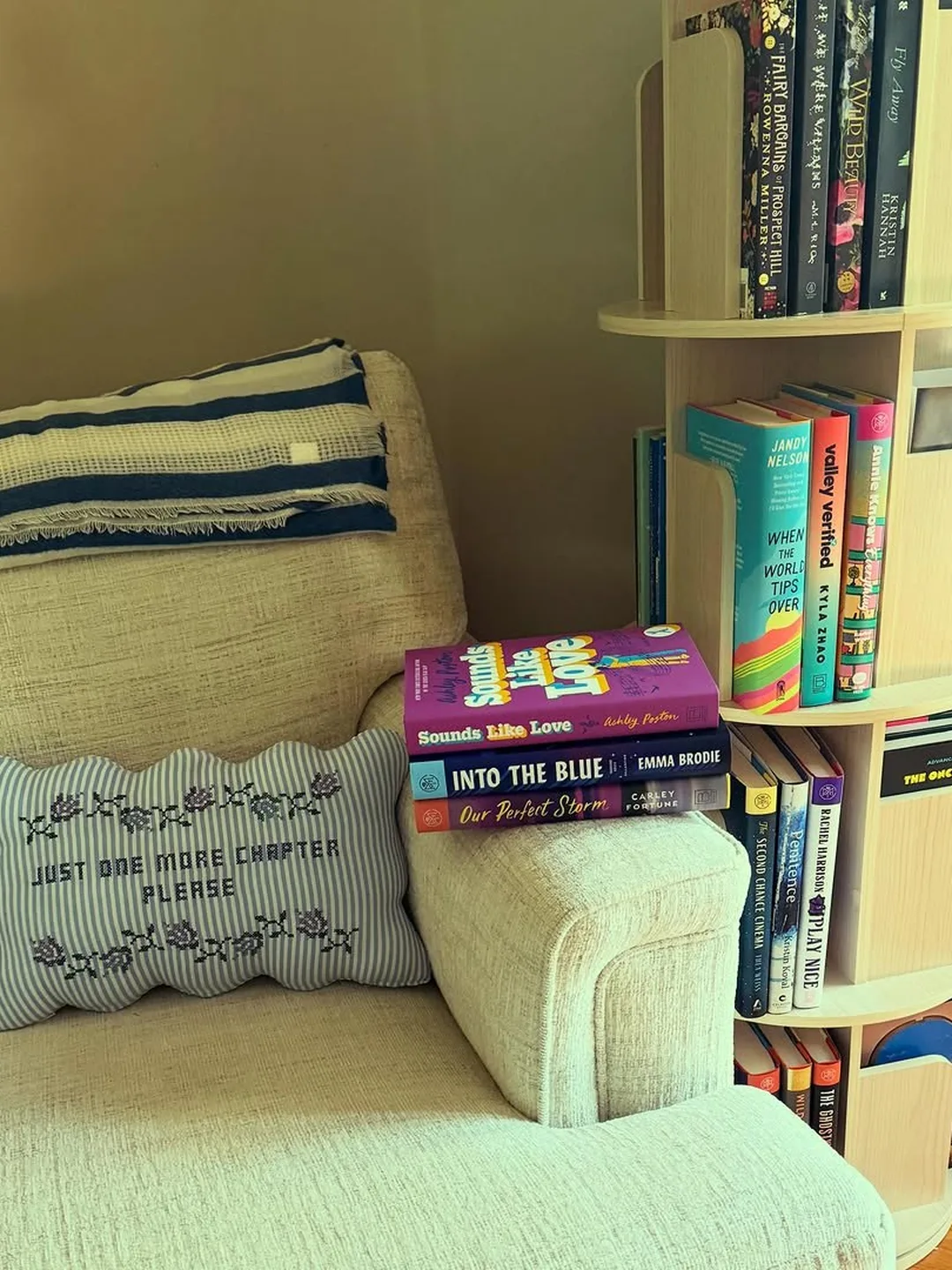
A throw is reading equipment, not styling. Corners sit in the coolest air of the room, and a reader who gets cold at page forty stops at page forty. One warm throw draped over the chair back, as in the photo, is always where the habit needs it.
Add one small cushion for the lower back or for behind the book. A cushion under the book lifts it to a comfortable height and saves your neck on long chapters, which matters more every year.
Choose washable fabrics and keep the pair dedicated to the nook. When the throw migrates to the sofa, the nook loses its welcome, so the nook gets its own, in a color the sofa would not steal.
Evening and winter readers gain the most. The common mistake is five decorative cushions that must be unloaded before sitting. A nook that takes two minutes to enter will be entered tomorrow instead; keep it to one throw and one cushion, ready at a glance.
Pile Pillows to Make a Window Seat Comfortable
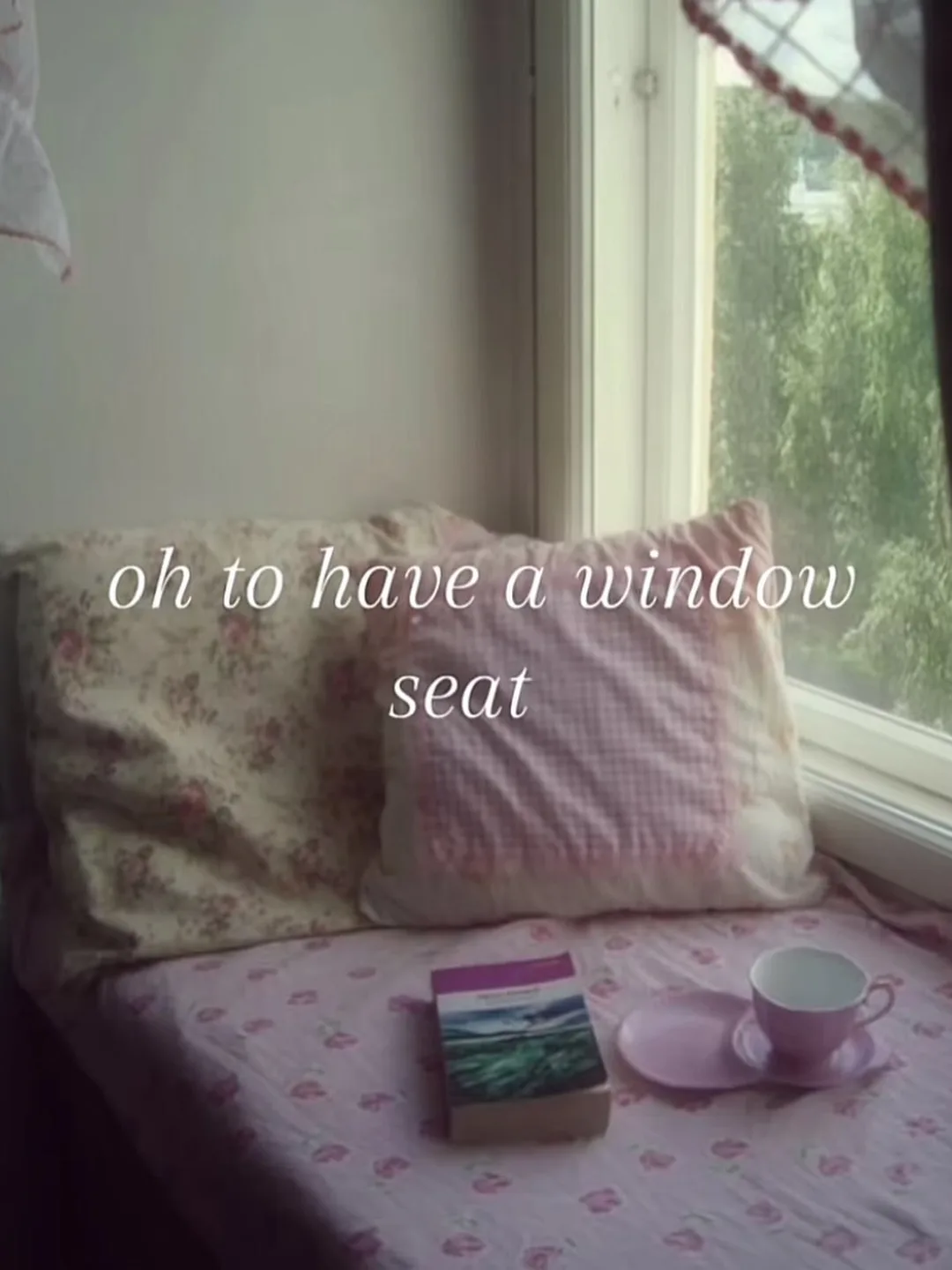
A window seat or a deep sill becomes a real nook with pillows doing the work of a chair back. Two large pillows against the wall, one smaller in front, and the hard corner turns into a seat shaped exactly to you.
Floral or patterned pillows, like the ones in the photo, also give a plain rental corner its personality without touching the walls. Change the covers and the nook changes season without moving a single piece of furniture.
Support matters more than softness: the back pillows should be firm enough to lean a chapter’s weight on. Feather-only pillows collapse by page ten; a firm foam or a pillow with a bolster behind it holds the shape.
Window seats and wide sills gain the most. The common mistake is pillows so deep that the seat becomes a shallow perch. Leave at least 40 cm of sitting depth in front of the pillow wall, or sit sideways with legs along the seat, book club style.
Make It a Two Chair Corner for Reading Together
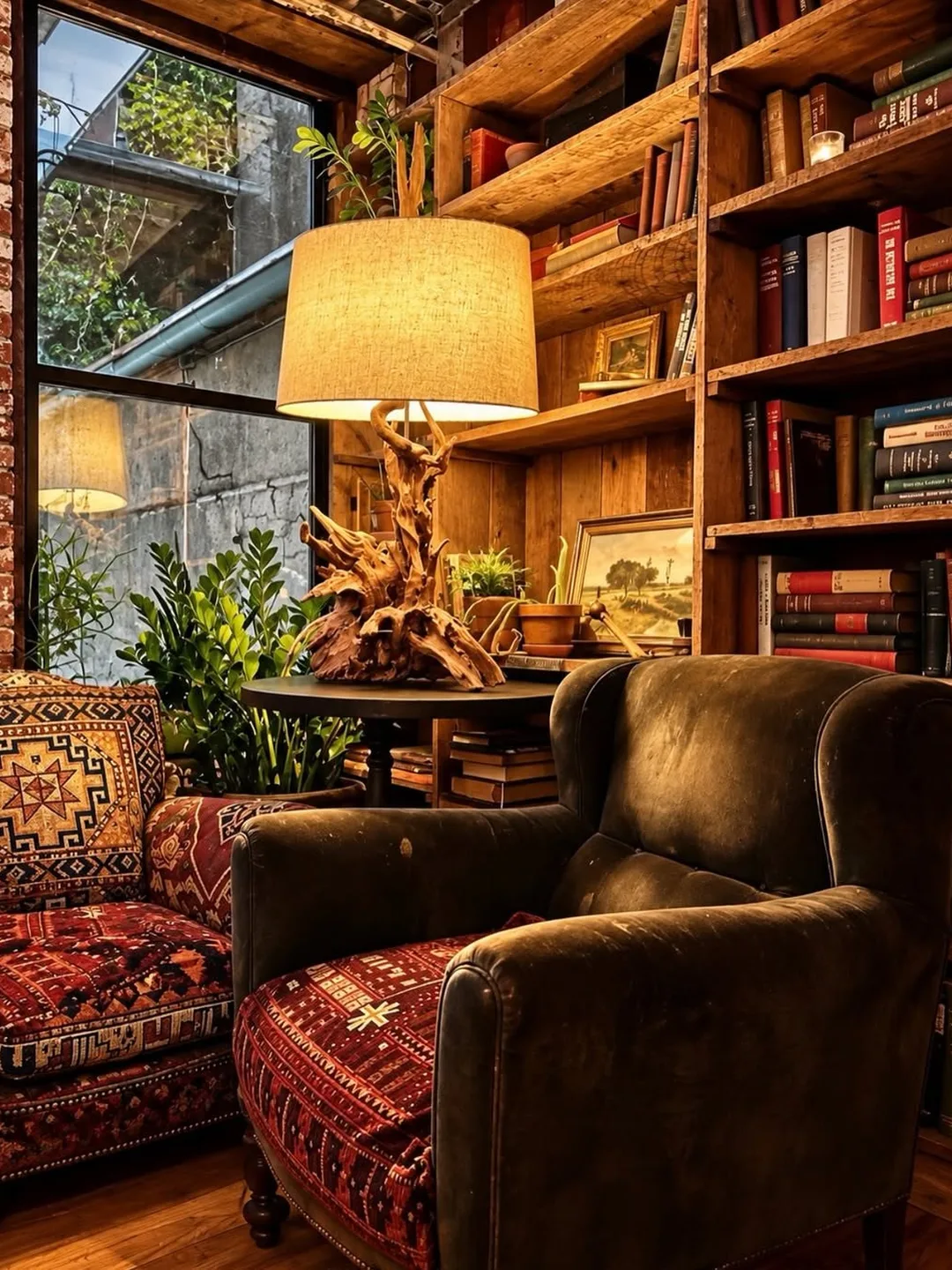
Households with two readers should not have to take turns. Two armchairs angled toward each other with a shared lamp and a small table between them make a nook that holds a couple, a parent and child, or two friends with two books and one pot of tea.
The pair in the photo works because the chairs differ but the corner unites them: shared light, shared rug, matched throws. In a small apartment, the second chair can be the room’s everyday armchair, turned in for the evening.
Give each chair its own throw and its own small light if the readers keep different hours. Shared corners fail when one reader’s lamp keeps the other awake or one throw serves two laps.
Reading households gain the most. The common mistake is two chairs in a row facing the television wall, which is seating, not a nook. Angle them toward each other and the corner becomes a place, not a row.
Common Reading Nook Mistakes to Avoid
Choosing the Chair by Looks Alone
A beautiful chair you cannot sit in for an hour is a sculpture in your corner. Test with a real book, in your real reading position, before the nook is built around it.
Forgetting the Light Until Last
Nooks fail on light more than on anything else. Place the lamp or test the window light before the shelves and cushions, because light decides where the chair can go.
Letting the Nook Become Storage
Coats, laundry and unopened post drift toward any quiet chair. A nook that needs clearing before use gets used rarely; defend the chair like you defend the bed.
Skipping the Side Surface
Without a small table or shelf within reach, the drink goes on the floor and the book pile follows. One tiny surface is the difference between a nook and a chair.
Making It Too Perfect to Use
A styled corner you are afraid to disturb will not be read in. Keep the nook slightly lived in: book open, throw rumpled, glasses on the shelf. Ready beats pretty.
Putting the Nook in a Walkway
A chair in the path of doors, kitchens and bathrooms gets interrupted every few pages. Choose the corner nobody crosses, even if it is smaller.
Budget-Friendly Reading Nook Tips
Start with the chair you already own and a moved lamp. Most nooks begin as rearrangement, not shopping: the armchair from the living room’s far corner, the floor lamp from behind the sofa, and a stool as the table.
Buy the chair secondhand if you need one. Armchairs are the most listed furniture item in any city, because people move and chairs do not fit new rooms. A solid old chair plus a washed throw beats a new chair that was built to a price.
Use a stool, a crate or a stack of large books as the side table while you test the corner. If the nook earns daily use for a month, it has earned a real table; if not, you spent nothing learning.
Spend first on light. A decent reading lamp with a warm bulb improves every chair it stands beside, and it is the one nook purchase that also serves the desk, the bed and the sofa.
Let the library be free: a library card and a swap shelf with friends keep the nook shelf fresh without a book budget. The nook needs the next book waiting; it does not care where it came from.
Borrow the textiles too. A spare throw from the bed and the cushion from the guest pile dress the chair tonight, and the nook can prove itself for a month before a single dedicated purchase is made.
An Afternoon Plan to Build Your Nook
First hour: choose and clear the corner. Test the chair positions with a book at the time of day you actually read, check the light on the page, and remove everything that does not belong to reading.
Second hour: set the furniture. Chair angled to the light, ottoman or stool placed, lamp settled and tested with the book in your hands, rug down if the corner needs its border.
Third hour: stock it. The current book and the next one, the throw, the cushion, a drink coaster and a home for your glasses. Shelves or a small stack of books within reach, nothing more.
Then use it the same evening, on purpose, even for twenty minutes. A nook that gets read in on its first day becomes a habit; a nook that waits for the weekend becomes furniture.
FAQ
How much space does a reading nook need?
About one square meter: a chair, a lamp and a small surface. A corner of 1 by 1.2 meters holds a comfortable armchair angled to the light, and a window seat or under stair nook can work in even less depth if the seat is built in.
What is the best chair for a small reading nook?
A compact upholstered armchair with arms at elbow height and a back you can lean into for an hour. In very small corners, an egg chair or a papasan gives the cocoon feeling in a round footprint. Test any chair with a book before buying; comfort is personal and non negotiable.
Can I make a reading nook in a studio apartment?
Yes, and studios benefit most, because the nook gives the single room a second purpose and mood. Angle one chair away from the bed and the screen, mark it with a small rug, and keep its lamp and throw dedicated so the corner always reads as the reading place. More studio layouts are in our apartment bedroom decor and studio guides.
What light is best for reading?
Bright, warm and from beside or behind your shoulder. Daylight filtered by sheers is ideal by day; by night, a lamp with a warm bulb around 2700K, shaded so the bulb never shines in your eyes, with the light falling directly on the page.
How do I keep a reading nook cozy in winter?
Add the layers: a warm throw on the chair, a cushion behind your back, a rug underfoot if the floor is cold, and the lamp on before dusk. Keep the nook away from the draft line between door and window, or hang a curtain to break the draft.
Can a reading nook work without a window?
Yes, with honest lamplight. Many under stair and hallway nooks have no window at all and work beautifully with a good reading lamp, warm colors and an enclosed feel. What a nook cannot survive is bad light, so spend the window savings on the lamp.
Conclusion
Cozy reading nook ideas for small apartments all rest on the same four pieces: a chair that fits your body, light that fits the page, a surface within reach and a throw within the chair. Get those right in any corner, a window bay, under the stairs or beside the bookshelf, and the nook will be used every day.
Build it from what you own first. Rearranged furniture and a moved lamp create most nooks, and a month of daily reading will tell you exactly which single purchase, if any, the corner still needs.
Claim your corner this week, even if it is only the chair and the lamp. Small apartments reward small territories, and a reader with a territory reads more, which was the point all along.