
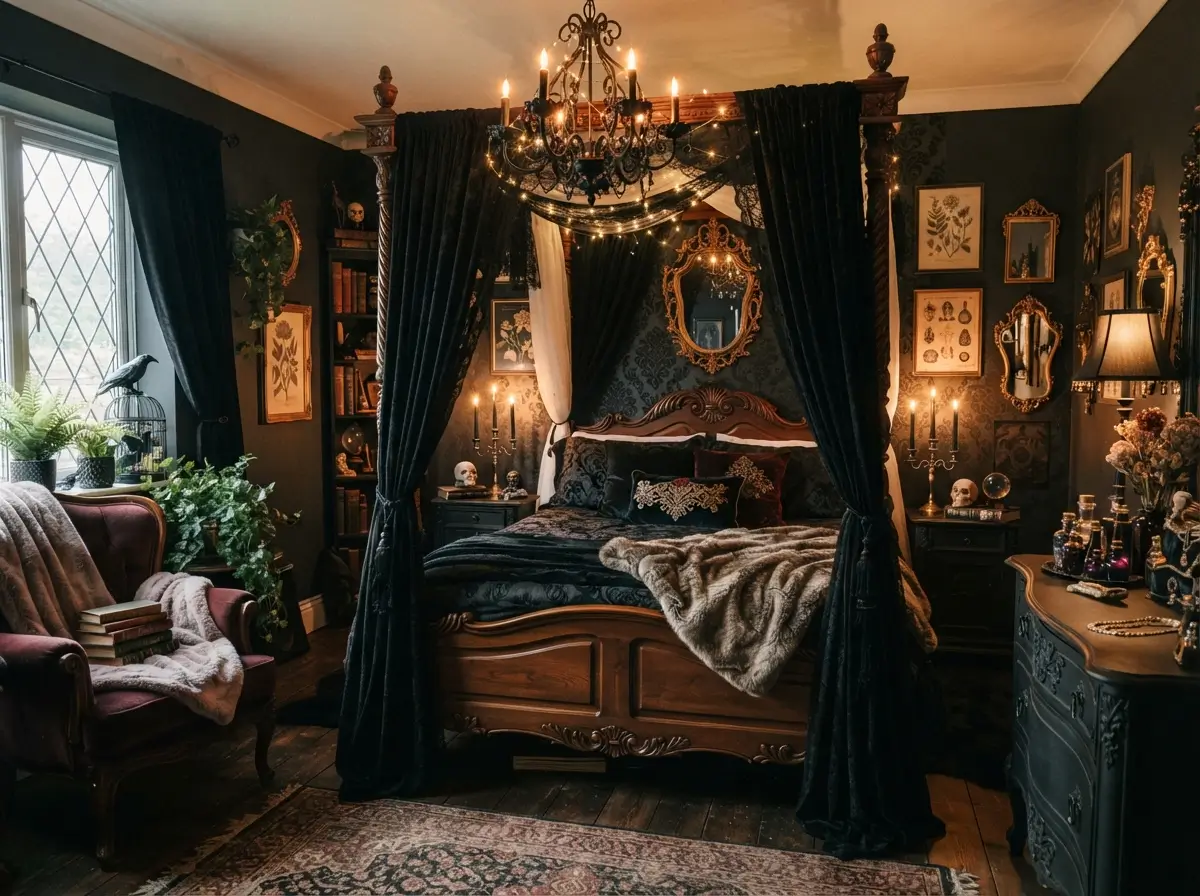

Romantic goth bedrooms combine shadowy colors, graceful furniture, soft fabrics, old-world details, and carefully controlled lighting. Unlike a room filled with random black accessories, a successful gothic bedroom feels layered and personal. Dark colors provide drama, while velvet, lace, warm light, carved wood, flowers, and reflective surfaces keep the room inviting. Every object should help create a comfortable place to sleep rather than turning the bedroom into a theatrical set.
Beginners can build the style gradually without buying a complete furniture collection or painting every wall black. One richly colored wall, attractive bedding, warm bedside lamps, and several coordinated vintage-inspired pieces can establish the direction. Renters can use removable wallpaper, freestanding mirrors, tension rods, and textile panels to make equally effective changes. The following Romantic Goth Bedroom Ideas explain how to balance darkness with comfort, choose practical materials, work with a small floor plan, and avoid expensive decorating mistakes.
What Makes a Bedroom Romantic Goth?
Romantic goth style uses deep color, historic influences, sensual texture, and gentle lighting to create an intimate bedroom. Common elements include burgundy, black, plum, forest green, dark wood, velvet, lace, antique brass, candles, botanical prints, and furniture with curved lines. Successful rooms balance those dramatic features with comfortable bedding, clear walking paths, useful storage, and enough light for ordinary activities.
Can a romantic goth bedroom work in a small or rented room? Yes. Concentrate visual drama around the bed, repeat two or three colors, and use removable or freestanding features. Keeping the remaining floor area simple prevents a small bedroom from feeling crowded.
Build the Room Around a Dark Jewel-Tone Palette
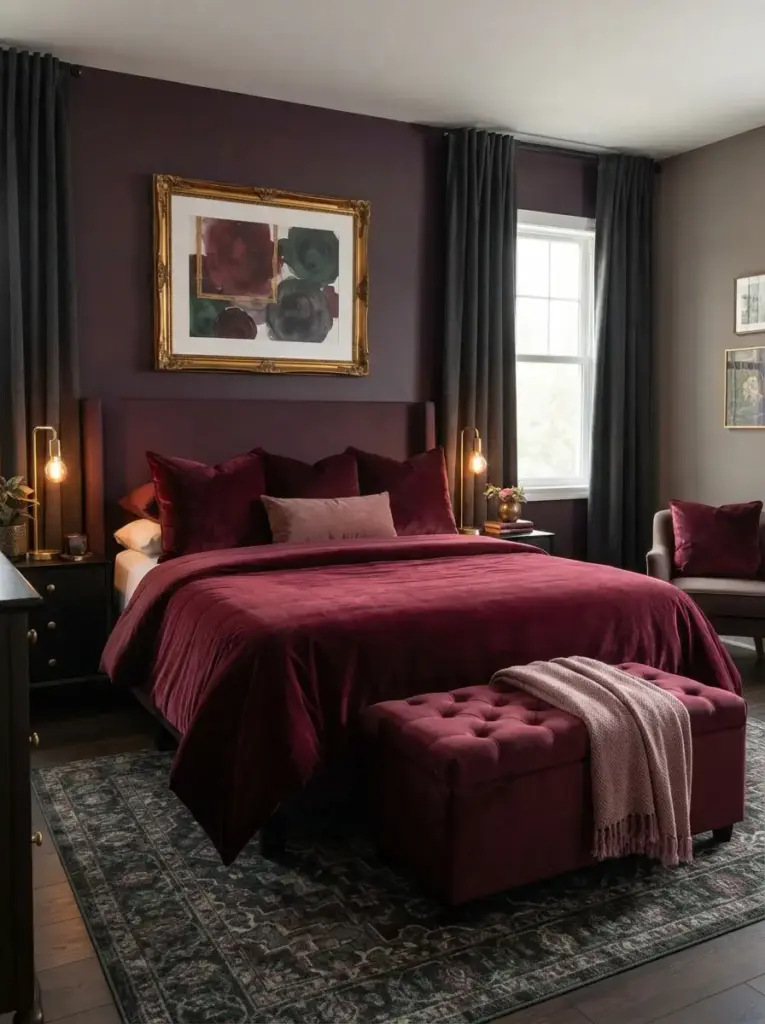
Deep jewel tones create an atmosphere without requiring every surface to be black. Burgundy, aubergine, oxblood, forest green, midnight blue, and dark teal all belong comfortably in a romantic gothic scheme. Choose one dominant color, one darker supporting color, and one lighter accent. A balanced combination might use burgundy bedding, charcoal curtains, and antique gold hardware. Another option pairs forest-green walls with black furniture and muted rose textiles.
Color planning works because repetition makes separate purchases appear intentional. Carry the dominant shade into at least three areas, such as the duvet, artwork, and a chair cushion. Repeat the supporting shade on larger elements, such as curtains or a rug. Limit metallic finishes to one main family. Antique brass generally adds warmth, while aged silver produces a cooler, moonlit character. Mixing bright chrome, yellow gold, copper, and silver throughout one small room can create unnecessary visual noise.
Small bedrooms benefit from placing the deepest shade behind the bed rather than on every wall. Paint the headboard wall aubergine and leave the other walls warm gray, mushroom, or smoky mauve. Dark ceilings can feel intimate in rooms with generous height, but low ceilings usually look better in a slightly lighter tone. Anyone new to dark decorating should test large paint samples during the day and at night because burgundy may turn brown under weak bulbs, while purple can become unexpectedly bright.
Renters can recreate the palette with bedding, curtain panels, a large washable rug, and removable wall panels. Stretch dark fabric over lightweight foam boards and place them behind the bed for a temporary color block. Budget decorators should begin with textiles because they cover more visual space than small ornaments. One wine-red duvet creates a stronger foundation than ten unrelated gothic trinkets.
Use Black as Structure Rather Than the Only Color
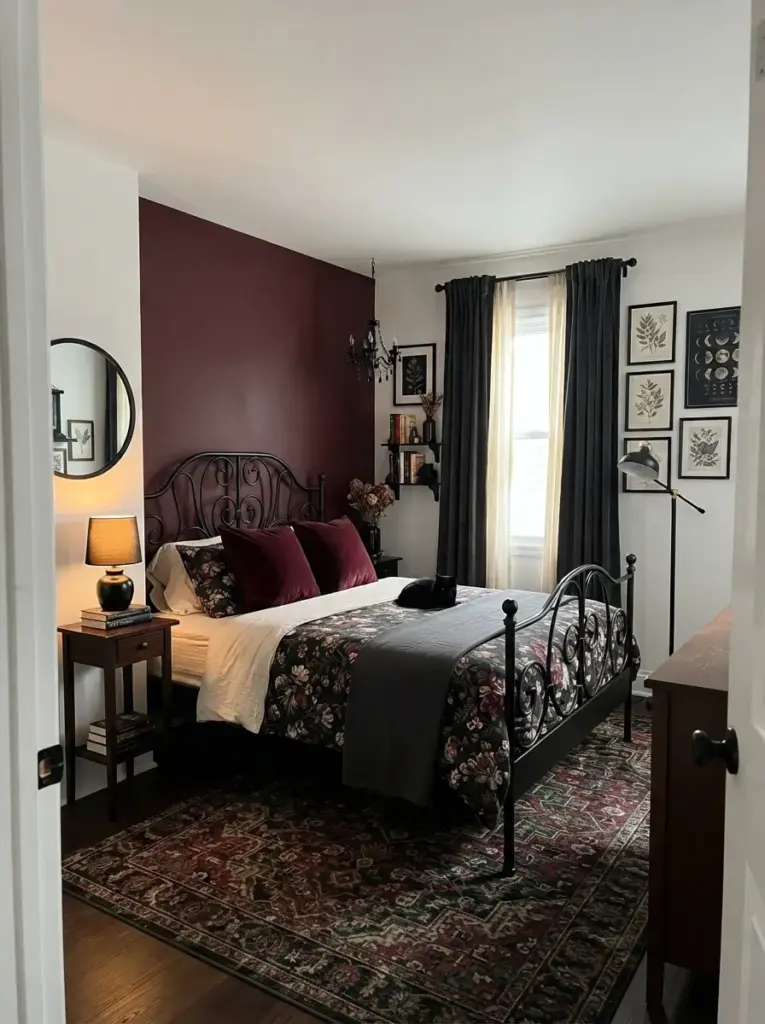
Black gives a romantic goth bedroom definition, but an entirely black room can flatten textures and make useful objects difficult to see. Treat black like an outline. Use it on the bed frame, curtain rods, picture frames, lamps, and narrow furniture. Those repeated lines organize the room while allowing burgundy, cream, green, or plum to remain visible.
Strong contrast explains why a limited amount of black often looks more dramatic than black across the entire surface. A matte-black metal bed against a deep red wall has a distinct silhouette. The same frame can disappear against a solid black wall, particularly at night. Combining several black finishes also creates depth. Matte paint absorbs light, velvet responds softly to it, stained wood reveals grain, and satin metal catches a subtle highlight.
People decorating bright white rentals can use black to connect the room without changing the wall color. Hang black-framed botanical prints, install a black tension curtain rod, add dark bedside tables, and place a charcoal runner along the bed. White walls then become a deliberate contrast rather than an obstacle. Keeping the ceiling and upper wall area lighter can also help a narrow bedroom feel less enclosed.
Avoid placing every black item on one side of the room. A heavy black wardrobe opposite a pale bed will feel visually unbalanced. Distribute the color in smaller amounts around the space. For example, pair a black headboard with black frames above the dresser and a black floor lamp near the window. Beginners should photograph the room from the doorway, where uneven color distribution becomes easier to notice.
Make the Bed the Main Gothic Feature

Beds occupy the largest visual area in most bedrooms, so concentrating detail there produces a clear result with fewer purchases. Start with a tall upholstered headboard, a black metal frame, or a dark wooden bed featuring simple carved details. A gently arched headboard suggests historic furniture without taking up the floor space of an elaborate four-poster frame.
Focusing attention on the bed succeeds because the eye immediately understands the room’s hierarchy. Layer a fitted sheet, duvet, folded coverlet, and two or three decorative cushions. Black sheets may look striking, but they often show lint and pale pet hair. Charcoal, plum, espresso, or dark floral sheets are easier to maintain. Choose breathable cotton or linen for surfaces touching the skin, then reserve velvet and lace for shams, throws, and other decorative layers.
Compact rooms need controlled bedding rather than excessive piles. Use two sleeping pillows, two standard shams, and one lumbar cushion instead of filling half the mattress with decorative pillows. Fold a velvet coverlet across the lower third of the bed to introduce texture without adding bulky storage demands. Leave at least 60 centimeters of walking space on the accessible sides whenever the room allows it.
Anyone who already owns a plain divan can create a temporary headboard. Cut rigid foam board or lightweight plywood to size, pad it, and cover it with burgundy or charcoal fabric. Renters can also hang a quilt, tapestry, or velvet curtain from removable hooks, provided the hooks match the wall type and weight rating. Low-budget shoppers should spend more on comfortable sheets and less on ornamental pillows that must be moved twice every day.
Layer Velvet, Lace, and Washed Linen Carefully
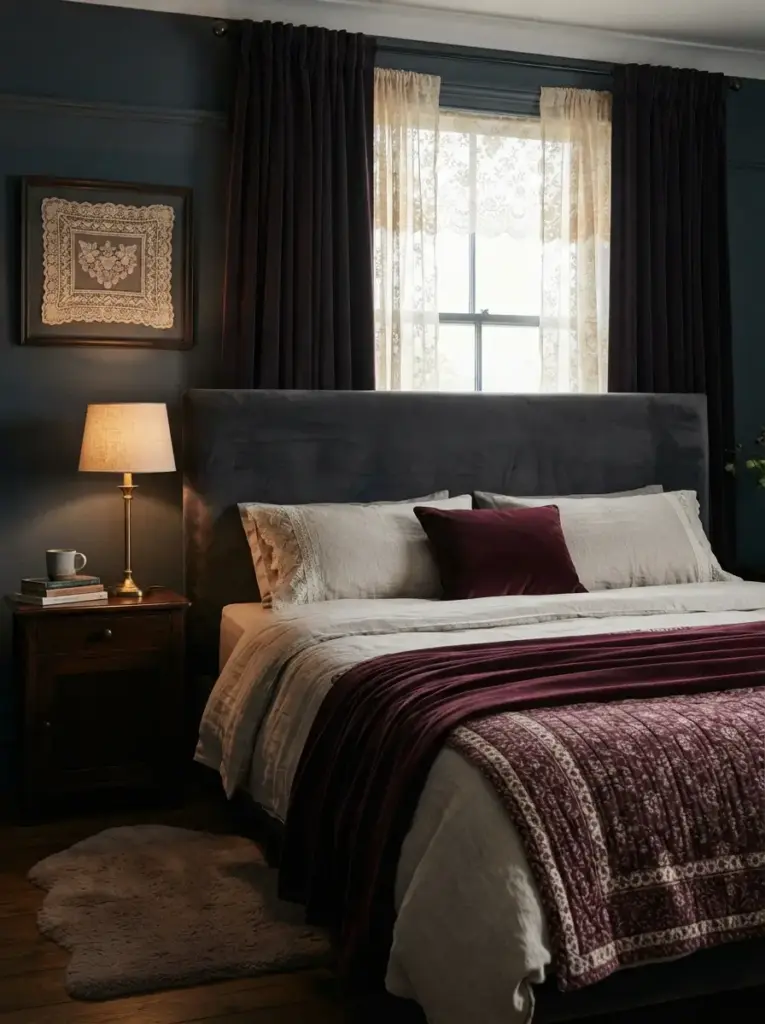
Texture prevents a dark bedroom from looking like a single flat block. Velvet contributes depth, lace introduces pattern, and washed linen keeps the arrangement relaxed. Combine materials in separate zones rather than using every fabric on every surface. Velvet works well on curtains, a headboard, or one throw. Lace suits a small window panel, cushion edge, or table covering. Linen or cotton makes practical everyday bedding.
Material contrast gives dark colors their richness because each surface handles light differently. Velvet changes from near-black to luminous as the pile moves, while lace creates delicate shadows. Crisp satin can add reflection, although a large satin duvet may slide, snag, and feel uncomfortable in warm weather. Upholstery-grade velvet lasts longer on benches and headboards than lightweight fashion velvet.
Pet owners and people with dust sensitivities should choose texture selectively. Heavy velvet curtains collect dust and may require regular vacuuming with an upholstery attachment. Washable cotton velvet or velour provides a simpler alternative. Lace placed near floor level catches on vacuum cleaners and pet claws, so keep it higher on pillow shams or framed textile art.
Budget-friendly layering can come from secondhand curtains, remnant fabric, and existing neutral bedding. Place a narrow velvet runner over a basic duvet instead of replacing the full bedding set. Dye suitable natural-fiber pillowcases burgundy or plum, following the dye manufacturer’s instructions. Best results come from repeating each important texture at least twice, but in different amounts, such as a large velvet headboard paired with one smaller velvet cushion.
Choose Warm, Low-Level Lighting
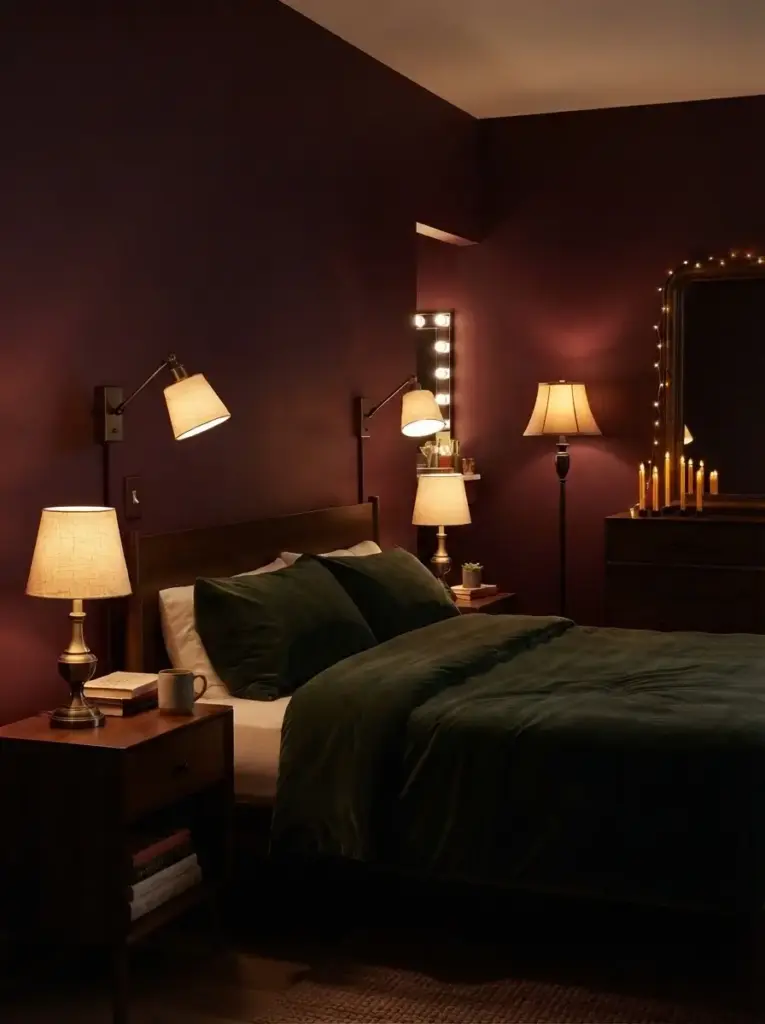
Lighting determines whether dark decor feels comforting or gloomy. Use several low-level sources rather than relying on one bright ceiling fixture. Bedside lamps, a shaded floor lamp, dimmable wall lights, and flameless candles can provide separate layers. Bulbs around 2200K to 2700K create warm light that flatters burgundy, dark wood, and antique brass. Lighting closer to 3000K can work at a vanity or reading area where clearer visibility matters.
Layered illumination helps because dark walls absorb more light than pale ones. Two lamps with modest brightness often produce a calmer and more useful room than one exposed high-output bulb. Choose opaque or fabric shades that direct light gently. Amber glass makes a warm accent but can distort colors, so avoid relying on it near a makeup mirror.
Readers should use adjustable bedside sconces or lamps that direct light toward the page without illuminating the whole room. Place a switch within easy reach of the mattress. People sharing a bedroom will appreciate separate controls on each side. Dimmer-compatible LED bulbs reduce energy use, but the bulb, fixture, and dimmer must all be compatible to prevent flickering.
Renters can use plug-in sconces secured according to the manufacturer’s directions, eliminating the need for new wiring. Hide cords in paintable cable covers instead of leaving loose wires near the bed. Battery-operated taper candles are safer around curtains and bedding than open flames. Common lighting errors include using cool blue-white bulbs, buying bulbs before checking fixture limits, and placing fairy lights randomly around every wall. One structured line around a canopy or mirror looks more intentional.
Frame the Bed With Curtains or a Simple Canopy
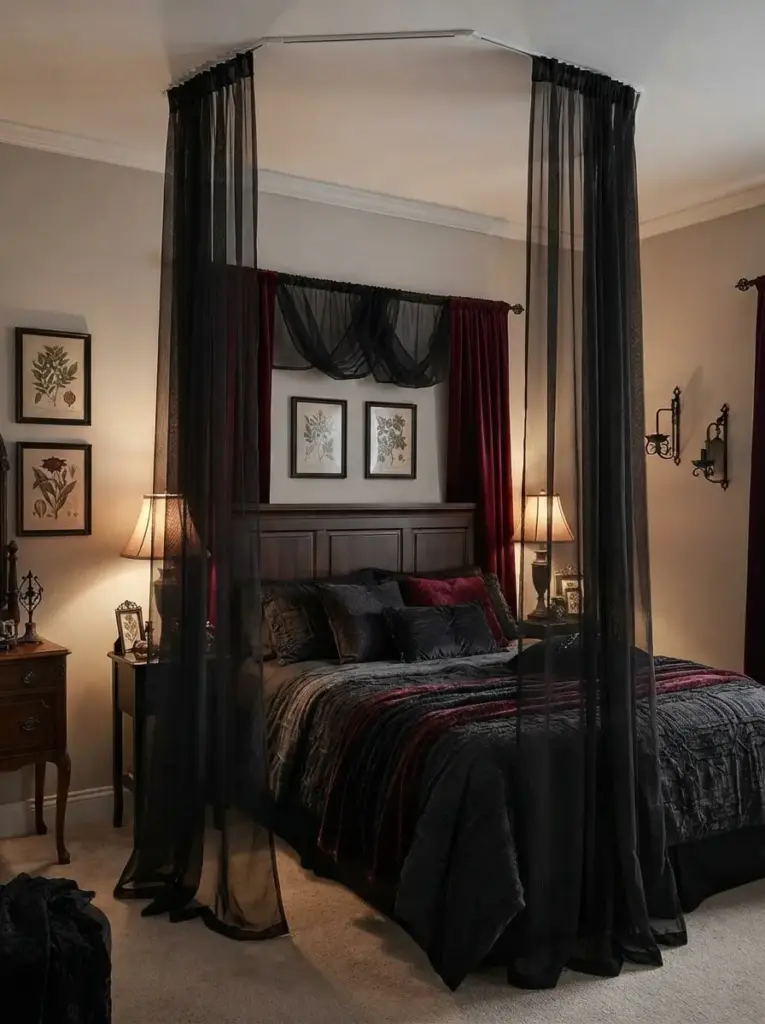
Canopy fabric introduces height and enclosure, two qualities closely associated with romantic Gothic rooms. Full four-poster beds are not necessary. Ceiling-mounted curtain tracks, wall-mounted rods, or a freestanding frame can create a similar effect. Hang panels behind the headboard, frame both sides, or suspend a short fabric section above the bed rather than surrounding the entire mattress.
Vertical fabric works particularly well because it pulls the eye upward and softens hard wall edges. Sheer black voile creates shadow without blocking much light, while burgundy velvet gives stronger drama and greater visual weight. Combining an opaque outer curtain with a sheer inner panel allows more control, but it also adds bulk. Small rooms usually need only two narrow panels behind the headboard.
Safety and maintenance should guide installation. Keep fabric away from bulbs, heaters, ceiling fans, and open candles. Secure ceiling hardware into suitable anchors or structural supports based on the total fabric weight. Long panels should clear the floor or barely touch it; puddled fabric collects dust and becomes a tripping risk beside the bed.
Renters can install a sturdy tension rod inside a shallow alcove or hang lightweight voile from approved removable hooks. A decorative screen behind the bed offers another no-drill option. Budget shoppers can repurpose long curtain panels instead of purchasing a specialized canopy. People with low ceilings should mount fabric close to the ceiling and let it fall in straight lines, avoiding heavy swags that visually lower the room.
Introduce Antique-Inspired Furniture Without Overcrowding
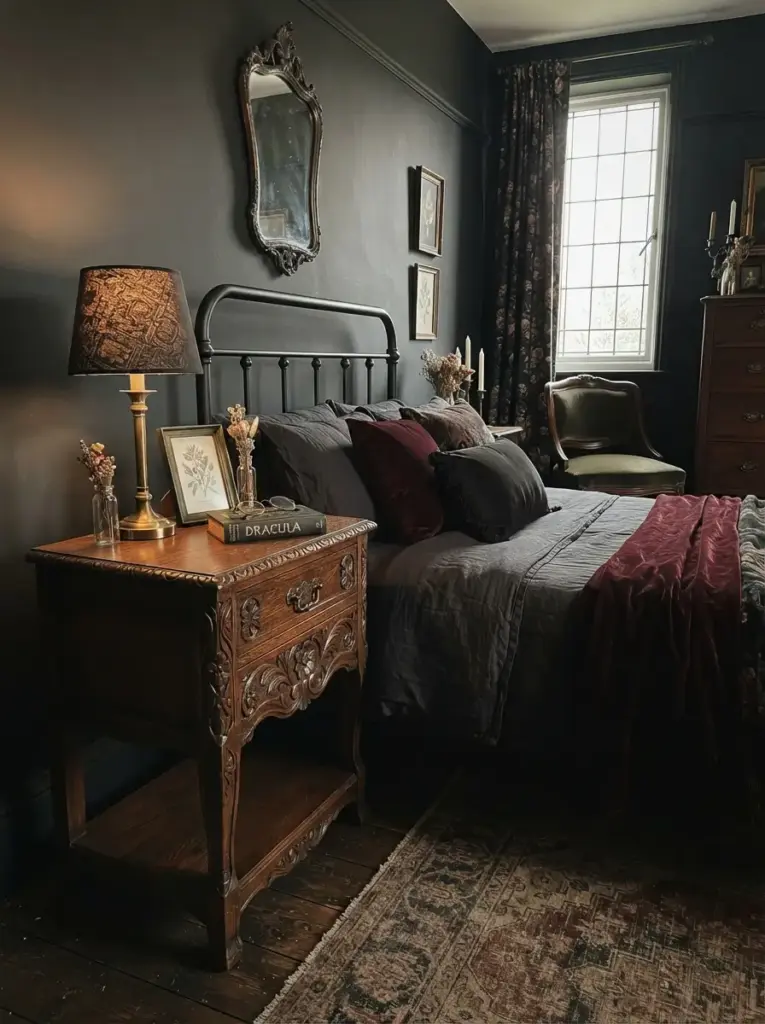
One or two vintage-inspired furniture pieces can establish the historic side of romantic goth style. Consider a carved bedside table, a dark wood dresser, a slipper chair, or a small writing desk with curved legs. Genuine antiques are optional. Well-proportioned secondhand furniture often contributes more character than a matching new bedroom suite.
Selective furniture works because unusual silhouettes become focal points when surrounded by simpler pieces. Pair an ornate dresser with a plain metal bed, or place a carved nightstand beside a straightforward upholstered headboard. Filling a small bedroom with heavily carved furniture can reduce walking space and make dusting difficult. Measure the floor, doorway, and stair route before bringing home any large secondhand item.
Narrow bedrooms benefit from tall storage rather than wide chests. A highboy dresser uses vertical space, while wall-mounted shelves can replace one bedside table. Choose bedside surfaces that sit within roughly 10 centimeters of the mattress height so lamps, glasses, and books remain easy to reach. Rounded corners are useful beside tight walkways.
Furniture buyers should inspect drawers, joints, odors, pests, and wobbling legs. Minor scratches may suit a moody room, but structural damage can become costly. Clean secondhand pieces thoroughly and confirm that old painted surfaces are safe before sanding, especially when the item’s age and finish are unknown. Beginners can update an ordinary table with dark paint and antique-style hardware, though preparation and a durable furniture finish matter more than decorative distressing.
Add Botanical Motifs With a Darker Direction
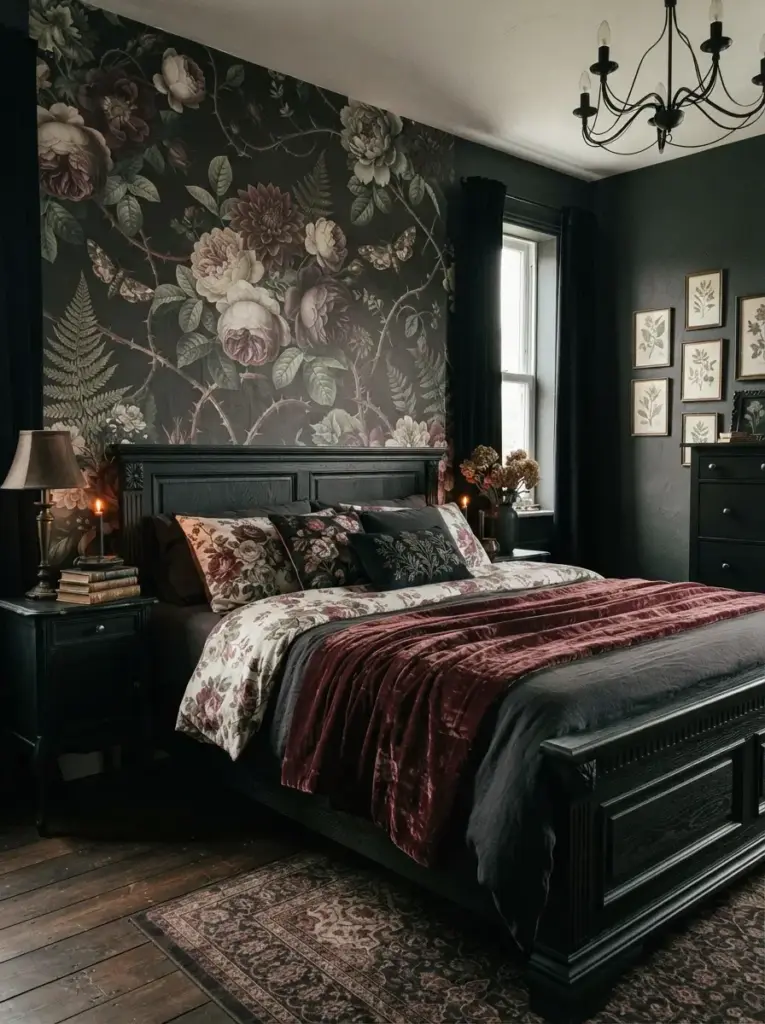
Flowers bring romance to gothic interiors, particularly when the palette feels aged or nocturnal. Choose roses, peonies, dahlias, moths, thorny vines, ferns, medicinal plants, or woodland illustrations. Dark floral wallpaper behind the bed can anchor the entire scheme. Smaller options include framed botanical prints, embroidered cushions, and a floral duvet against solid walls.
Organic motifs soften black furniture and straight architectural lines. Muted backgrounds keep the pattern sophisticated, while controlled repetition prevents it from becoming busy. If the wallpaper contains burgundy, sage, cream, and charcoal, select two of those shades for the bedding and curtains. Pulling colors directly from the pattern removes much of the guesswork.
Pattern scale matters in compact rooms. Large flowers can create a bold mural-like effect on one wall, whereas tiny, dense prints may appear restless across all four walls. Use one dominant botanical pattern, then keep nearby textiles mostly solid. Mixing roses, damask, stripes, celestial prints, and skull motifs at equal intensity usually overwhelms the bed area.
Renters can use peel-and-stick wallpaper after checking whether the product suits their wall finish. Test a small hidden section, follow removal instructions, and avoid applying adhesive products to damaged or freshly painted walls. Framing wallpaper samples or wrapping removable foam panels gives a lower-risk alternative. Budget decorators can press dried flowers from a legal and safe source, frame inexpensive public-domain-style botanical reproductions, or use one floral fabric remnant as art.
Display Mirrors With Aged Character
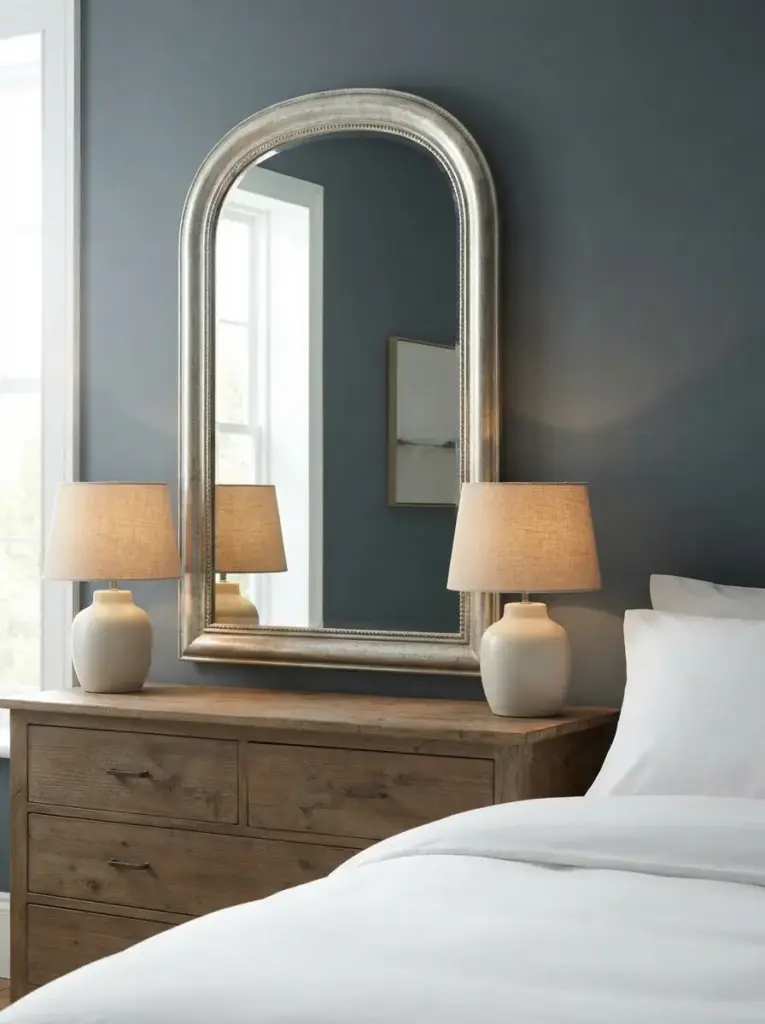
Mirrors return light to a dark bedroom and make narrow spaces feel less closed. Look for arched, oval, shield-shaped, or softly rectangular frames in black, antique gold, or aged silver. One substantial mirror over a dresser usually has more impact than a scattered collection of tiny mirrors.
Reflection makes this feature practical as well as decorative. Position a mirror where it can catch daylight from a window or the warm glow of a lamp, but avoid placing it where reflected bulbs shine directly into the bed. A full-length mirror near the wardrobe supports daily dressing, while a smaller mirror above a vanity should have balanced light on both sides.
Small-space decorators can lean a tall mirror against a wall only when it is secured with appropriate anti-tip hardware. Heavy mirrors require fixings suited to the wall material and item weight. Renters who cannot drill should choose a lightweight over-door mirror, a standing cheval mirror, or mirrored furniture used sparingly. Never rely on ordinary adhesive strips for a heavy-framed mirror unless both the product and surface are explicitly rated for that use.
Affordable frames can be transformed with layered paint. Apply a dark base, add a muted metallic finish to raised areas, and protect it with a suitable clear coat. Avoid making every frame highly ornate. A decorative mirror looks stronger beside simple artwork and clean furniture lines. People who dislike seeing a mirror from bed can angle it toward the window or place it inside a wardrobe door.
Style Windows for Privacy and Softness
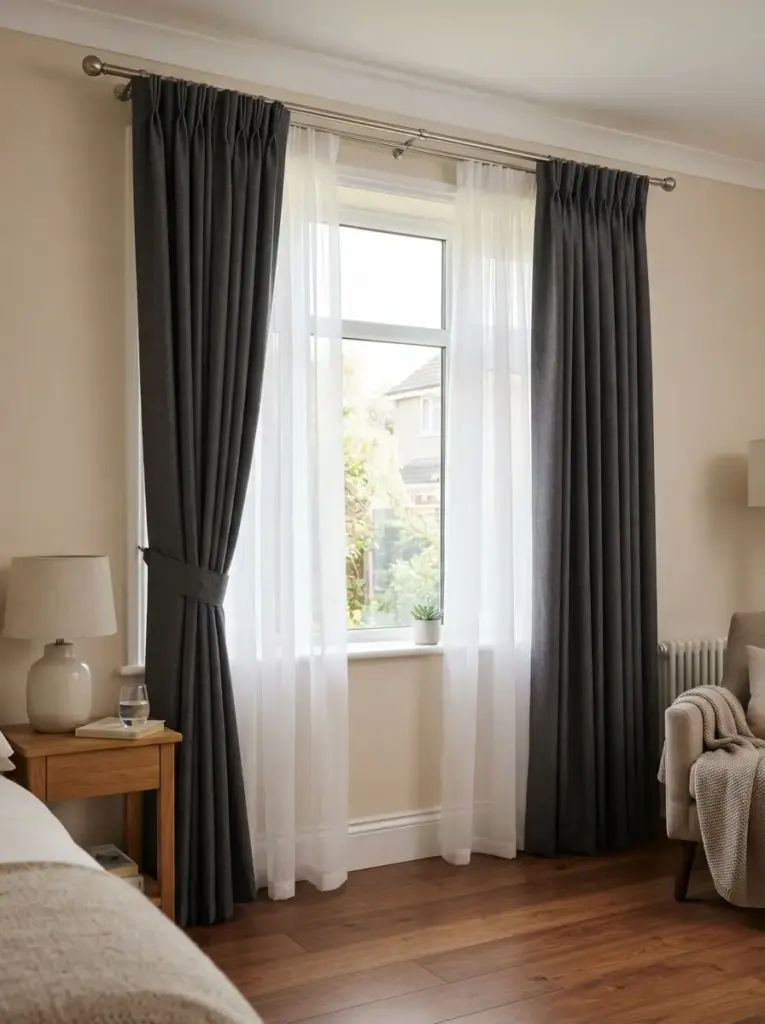
Window treatments control light, privacy, temperature, and the softness of the room. Layer functional blinds or curtains with a decorative panel when possible. Charcoal blackout curtains support sleep, while sheer lace or voile diffuses daytime light. Deep burgundy or forest-green curtains add color without requiring painted walls.
Full-height panels make a room appear taller when the rod sits several centimeters above the window and extends beyond each side. Extra width allows curtains to stack away from the glass, preserving daylight. Panels should look full when closed, so the total fabric width generally needs to exceed the window width. Exact fullness depends on the material, heading, and manufacturer’s recommendations.
People working night shifts or living near streetlights should prioritize a proper blackout lining rather than assuming dark-colored fabric will block light. Anyone in a damp climate should leave airflow around windows and watch for condensation behind heavy curtains. Velvet near a radiator can restrict heat circulation and may not suit every room.
Rental-friendly tension rods work inside some window recesses, while no-drill bracket systems suit certain frames. Always confirm surface compatibility and weight limits. Budget decorators can add a detachable blackout lining to existing curtains or sew dark ribbon trim onto plain panels. Matching the curtain color to the wall produces a quieter effect, whereas contrasting curtains turn the window into a feature.
Create a Focused Gallery Wall
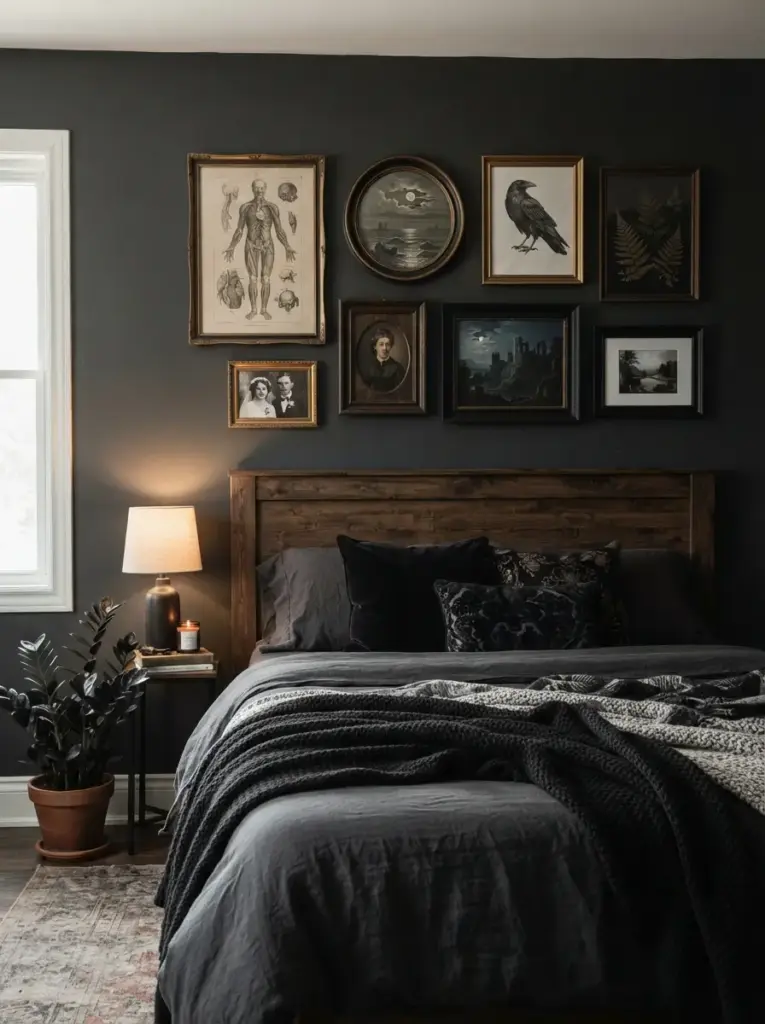
Artwork gives the bedroom personality and can express gothic interests without sacrificing comfort. Build a small collection around a theme such as moonlit landscapes, Victorian portraits, architectural drawings, dark botanicals, ravens, devotional imagery, or antique anatomy illustrations. Personal photographs in black-and-white can sit naturally within the same arrangement.
Curating around one subject or palette creates visual continuity. Choose frames in one or two finishes, then vary their shapes and sizes. Lay the arrangement on the floor before hanging it. Keep gaps consistent, usually around 5 to 8 centimeters for a compact grouping. Center the entire collection over the furniture beneath it rather than centering each frame on the wall.
Bedrooms with low ceilings often look better with a vertical group of three or four works. Wider rooms can support a horizontal arrangement over the headboard or dresser. Avoid hanging heavy glass frames directly above sleeping areas unless they have suitable hardware and secure installation. Lightweight canvases, textile art, or unglazed prints provide safer alternatives above the bed.
Renters can place framed art on picture ledges, dresser tops, or a tall bookcase. Removable hooks may suit lightweight items when applied to compatible, clean surfaces. Budget shoppers can collect secondhand frames and paint them one consistent shade. Restraint matters: leave some visible wall around the gallery so the artwork reads as a composed feature rather than storage for every available image.
Use Candlelight Effects Safely
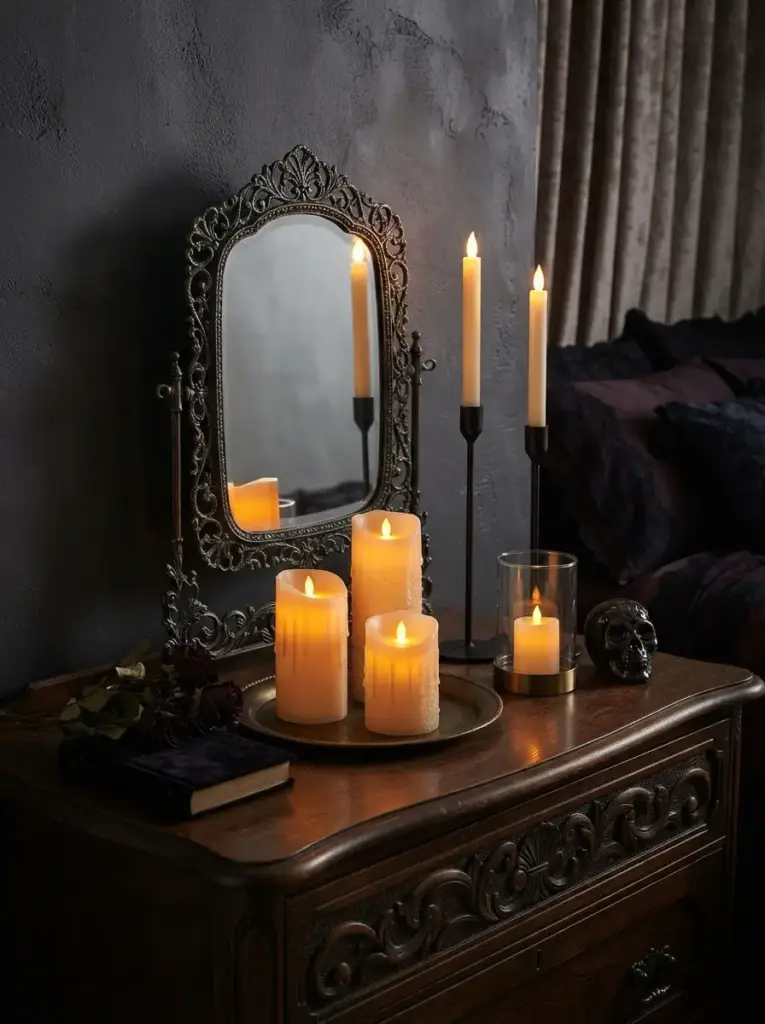
Candlelight belongs naturally in romantic goth decor because its low position and warm color emphasize texture. Bedrooms, however, contain flammable bedding, curtains, paper, and clothing. Flameless LED candles offer the visual effect with far less risk. Select models with warm amber light, irregular flicker, and wax exteriors rather than bright orange plastic flames.
Grouped candles create a stronger composition than single units scattered across every surface. Arrange three heights on a dresser tray, place two tapers in stable holders on a mantel, or line several small votives inside a lantern. Timers and remote controls make battery candles practical for everyday use and prevent unnecessary battery drain.
Decorative success comes from controlled repetition and varied height. Antique brass candlesticks complement warm palettes, while black metal holders suit cooler rooms. Glass hurricanes protect the visual flame and reflect light, although they should still sit on stable surfaces. Mirrors placed behind flameless candles can double the glow without adding more objects.
Households with children or pets should avoid tall, easily knocked candlesticks in traffic areas. Real candles should never burn unattended or near fabric, but flameless options remain the better bedroom choice. Thrifted holders are inexpensive; check them for sharp edges, unstable bases, and residue. People who dislike battery maintenance can use rechargeable LED candles or a small amber table lamp with a flame-effect bulb.
Bring in Dark Wood and Antique Metals
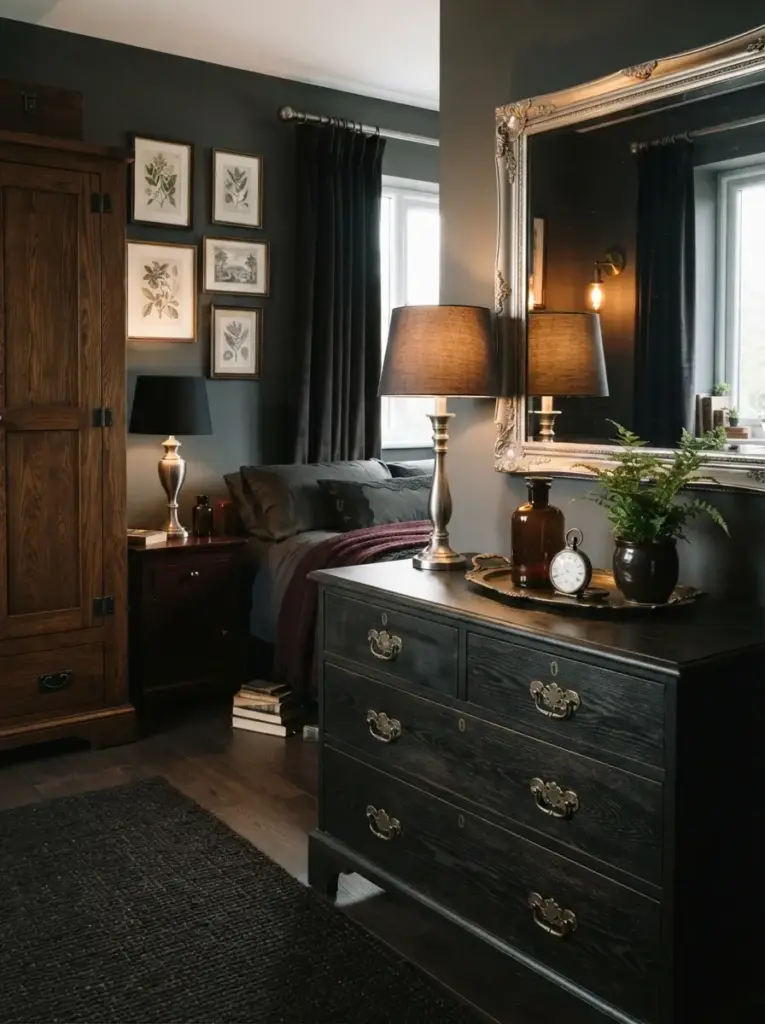
Natural materials keep a goth bedroom from feeling like a collection of synthetic black surfaces. Walnut, mahogany, espresso-stained oak, and ebonized wood provide visible grain and warmth. Antique brass, bronze, pewter, and aged silver add controlled highlights on lamps, handles, frames, and curtain rods.
Wood and metal work together because one absorbs light while the other reflects it. Pair a dark wooden dresser with brass knobs, or place aged silver lamps on black bedside tables. Choose one main metal and one minor supporting finish. Equal amounts of three or four metals can make a small room feel disorganized, especially when the finishes range from highly polished to heavily distressed.
Existing light wood furniture does not always need replacing. Walnut-toned peel-and-stick furniture film can work on certain smooth, inexpensive surfaces, while dark wax or stain may suit unfinished solid wood. Test finishes, prepare the surface correctly, and follow product safety directions. Painting valuable antique furniture can reduce its character and value, so confirm what you own before making irreversible changes.
Budget updates include replacing drawer pulls, adding metal corner details to a plain box, or placing an antique-style tray on a basic dresser. Hardware measurements matter: check the distance between screw holes before ordering replacements. Renters can store original knobs in a labeled bag and reinstall them before moving. Best results suit anyone who wants a gothic character without relying heavily on novelty symbols.
Add a Small Reading or Dressing Corner
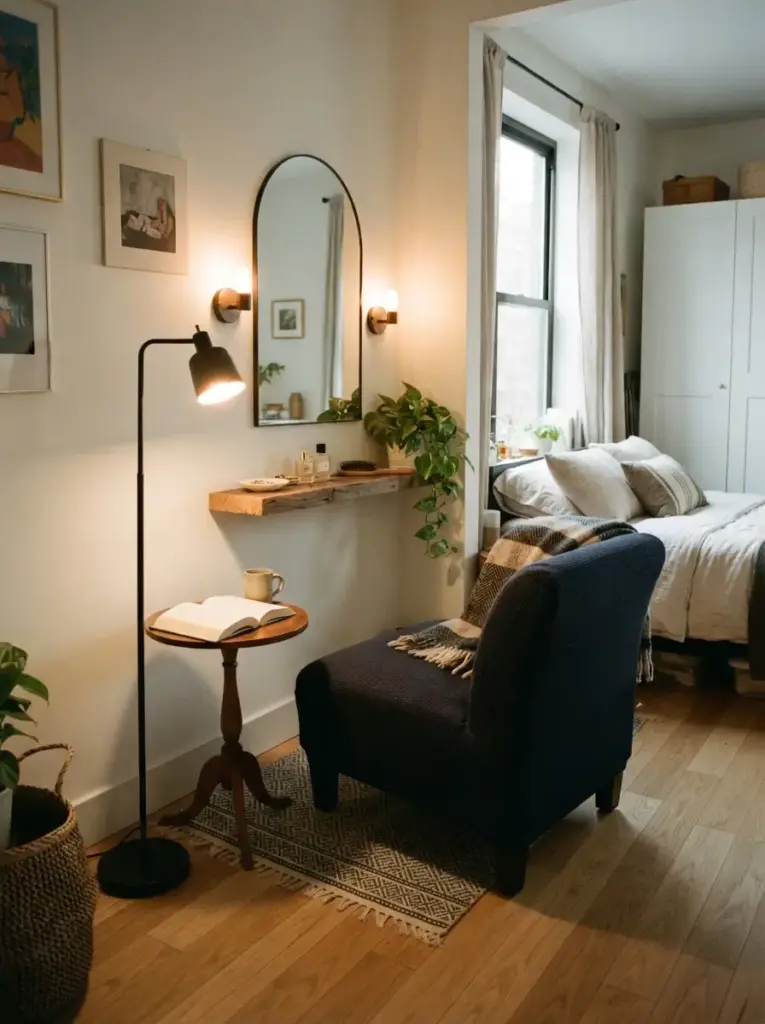
A useful corner makes the bedroom feel inhabited rather than staged. Place a compact chair beside a floor lamp, add a narrow writing desk under a window, or create a dressing station with a wall mirror and shallow console. Choose the function you will genuinely use; decorative furniture that only collects clothing wastes valuable floor area.
Purposeful zones improve small rooms because they assign a role to awkward corners. A slipper chair has no arms and occupies less visual space than a club chair. A wall-mounted desk can double as a vanity, while a storage ottoman offers seating and space for spare bedding. Keep at least one clear route from the door to the bed and wardrobe.
Reading areas need direct light around 2700K to 3000K, enough to prevent eye strain without flooding the room. Add a small table for a drink and book if space permits. Dressing areas need more neutral, even illumination around the face. Lamps placed on both sides of a mirror reduce shadows better than one overhead light.
Apartment dwellers can define a corner with a small rug or freestanding screen instead of painting. Secondhand chairs become suitable after careful inspection and cleaning; a fitted dark slipcover can update a sound but unfashionable seat. Anyone with a room under roughly nine square meters may be better served by a folding chair, wall shelf, or bedside table that performs two functions.
Finish With Personal Objects and Controlled Symbolism
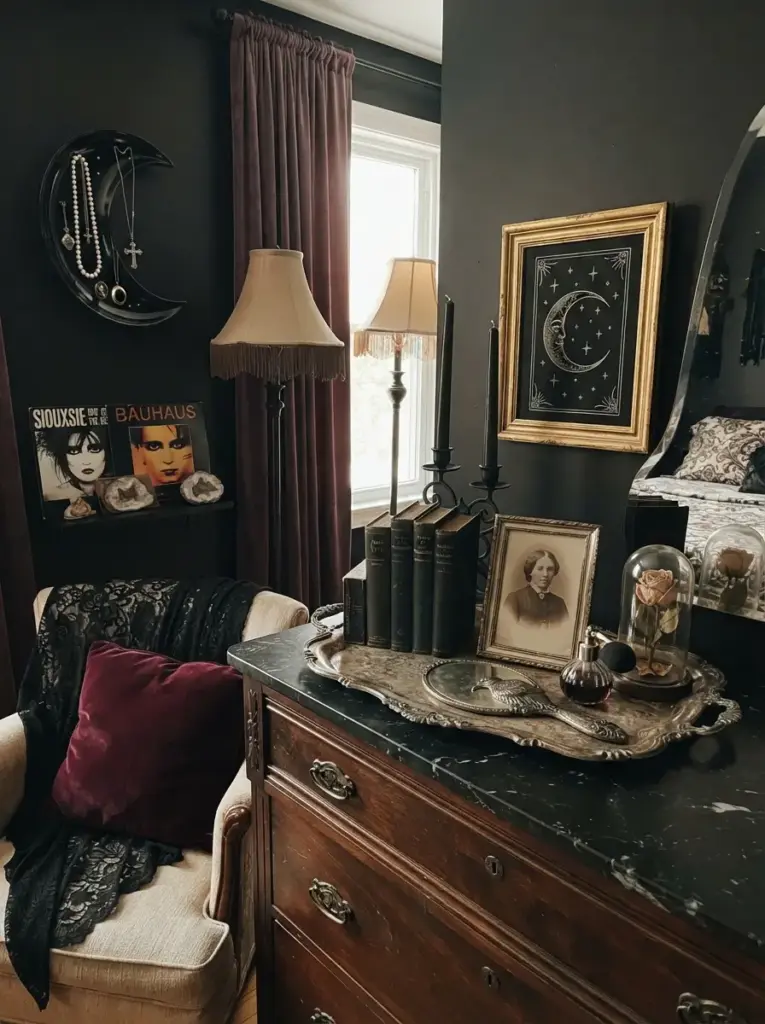
Personal objects make Romantic Goth Bedroom Ideas feel individual. Display a few meaningful books, heirloom jewelry, perfume bottles, records, handmade art, travel keepsakes, or collected natural objects. Gothic symbols such as moons, ravens, skulls, crosses, bats, or occult-inspired motifs can appear, but they do not need to occupy every surface.
Editing makes collections more noticeable. Group related objects on one tray, shelf, or cabinet rather than spreading them throughout the room. Vary height and shape, then leave open space around the arrangement. A stack of three books, one framed photograph, and a small vase will often look more considered than fifteen tiny objects competing for attention.
Dust and storage should influence display choices. Glass-front cabinets protect delicate collections, while trays make dresser tops easier to clean. Keep sharp, unstable, or breakable pieces away from the bed and narrow walkways. Seasonal rotation allows a larger collection to remain interesting without overcrowding the room.
Beginners should complete the major layers before buying themed accessories. Paint, curtains, bedding, lighting, and furniture determine the room’s character; symbols merely reinforce it. Budget decorators can shop their own belongings first, reframe existing photographs, cover books in removable dark paper, or display jewelry on a thrifted dish. Personal meaning gives the style more staying power than trend-driven purchases.
Common Romantic Goth Bedroom Mistakes to Avoid
Overusing black ranks among the most frequent problems. Black walls, flooring, furniture, bedding, and curtains can erase depth and make the bedroom difficult to navigate at night. Introduce variation through charcoal, burgundy, plum, dark green, wood grain, and warm neutrals. Different textures also keep similar colors visually separate.
Buying decor before measuring causes another costly mistake. Oversized bed frames, deep dressers, and large chairs can block doors or leave inadequate walking space. Draw the room on graph paper, mark windows and door swings, and record furniture dimensions. Painter’s tape on the floor offers a quick way to test the footprint before ordering.
Cold overhead lighting weakens the intimate mood and can make red or purple paint look harsh. Replace cool bulbs with warm, high-quality LEDs and add task lighting where needed. Dark rooms still require adequate illumination for cleaning, dressing, and reading. Mood should never come at the expense of function.
Too many motifs can make the bedroom resemble a themed shop. Roses, skulls, bats, moons, crosses, damask, lace, and celestial patterns all have gothic associations, but using all of them equally creates clutter. Select one dominant motif and one smaller supporting motif. Let color, shape, and material carry the rest of the style.
Poor-quality textiles can also undermine comfort. Scratchy lace beside the face, non-breathable satin sheets, and shedding velvet may look attractive briefly, but become frustrating. Place decorative fabrics where they will not interfere with sleep, and use washable natural fibers for the primary bedding.
Ignoring dust and maintenance creates long-term problems. Carved furniture, velvet curtains, open shelves, dried flowers, and small ornaments all require cleaning. Choose a level of detail that suits your routine. Washable curtains, framed prints, closed storage, and fewer larger objects offer a gothic character with less upkeep.
Unsafe installation deserves special attention. Heavy mirrors, canopies, shelves, and frames need appropriate fixings. Loose cords and fabric near heaters or lamps present avoidable hazards. Follow manufacturer guidance, respect weight limits, and ask a qualified professional for help when electrical work or uncertain wall construction is involved.
Budget-Friendly Ways to Build the Look
Start with the surfaces that cover the most area. Bedding, curtains, rugs, and one painted or removable-wallpapered feature wall change the room more effectively than a bag of small accessories. Establish the main palette first, then add decorative objects over time.
Secondhand furniture provides useful character at a lower cost, especially when looking for wood dressers, mirrors, frames, candlesticks, and small tables. Inspect every item carefully. Upholstered furniture requires more caution because odors, pests, and damaged foam can be difficult to correct. Hard furniture is usually easier to clean and refinish.
Paint can unify mismatched frames or inexpensive furniture. Matte black, deep brown, burgundy, or muted metallic paint can make separate finds feel related. Proper cleaning, sanding when appropriate, priming, and curing determine whether the finish lasts. Quick coats over dirty or glossy surfaces tend to chip.
Textile remnants create cushion covers, a bed runner, framed fabric panels, or trim for plain curtains. Choose one strong material and use it in several small places. Half a meter of quality velvet can have more impact than a cheap full-size velvet bedspread.
Printable artwork, pressed botanicals, personal photography, and pages from damaged, nonvaluable books can fill thrifted frames. Check copyright rules before reproducing artwork for public or commercial use. Private bedroom decor offers many affordable options, but original work from independent artists may be worth saving for as the budget grows.
Hardware updates provide another economical improvement. Replacing plain drawer pulls with antique-brass or black handles can shift a dresser’s character quickly. Keep the original hardware, measure hole spacing, and avoid drilling new holes in rental furniture or valuable pieces.
Phased decorating prevents impulse spending. Complete the bed and lighting first, improve the windows next, and add furniture or art last. Living with each stage reveals what the room genuinely needs. A slow approach also makes it easier to find secondhand pieces with the right measurements.
Practical Romantic Goth Bedroom Ideas for Beginners
Begin with three descriptive words for the finished room, such as “warm, historic, botanical” or “dark, elegant, minimal.” Use those words to judge every purchase. A neon plastic accessory may be gothic in subject but wrong for a historic room, while a plain walnut table may support the style through material and shape.
Choose a restricted palette of three main colors plus one metal. Burgundy, charcoal, warm cream, and antique brass form a beginner-friendly combination. Forest green, black, mushroom, and aged silver offer a cooler alternative. Repeating the palette makes affordable items appear coordinated.
Measure before changing the layout. Beds need clear access, drawers need room to open, and curtains should not obstruct heaters. Place the largest furniture first, then add smaller furniture. In a narrow bedroom, position the bed against the longest uninterrupted wall when possible and use shallow bedside shelves.
Test dark colors in the actual room. Paint a large movable sample board and observe it in morning light, afternoon shade, and lamplight. Undertones become more obvious across several hours. Removable wallpaper samples deserve the same test because small online images rarely show accurate scale or color.
Prioritize sleep quality. Blackout curtains, supportive pillows, breathable sheets, and accessible lighting matter more than decorative layering. Keep the mattress area comfortable and free from scratchy trim. Romantic goth style should serve the room’s purpose instead of competing with it.
Leave space for the design to evolve. One empty wall section or clear dresser area gives the eye somewhere to rest. Collected interiors feel richer when objects have room around them. New pieces can be added slowly as interests and budgets change.
Frequently Asked Questions
What colors work best in a romantic goth bedroom?
Burgundy, plum, aubergine, forest green, midnight blue, charcoal, and black form a reliable foundation. Warm cream, smoky mauve, mushroom, and muted blush can lighten the scheme. Antique brass warms the palette, while aged silver creates a cooler result. Choose three main colors and repeat them rather than introducing a new shade with every purchase.
Can romantic goth decor work with white walls?
White walls can provide useful contrast. Use dark curtains, a black or wood bed frame, burgundy bedding, black-framed artwork, and a large charcoal rug to establish the style. Warm-white walls usually blend more naturally than blue-white walls, but lighting and textiles can soften either. Renters can add removable fabric panels behind the bed for more color.
How can I make a dark bedroom feel larger?
Keep the floor visible, choose furniture with legs, use tall curtains, and place a mirror where it reflects daylight. Concentrate dark color on one wall or the lower portion of the room. Clear walking paths and closed storage matter more than trying to make every surface pale. Several warm light sources also prevent dark corners from visually shrinking the room.
Does every romantic goth bedroom need black walls?
Black walls are optional. Deep green, burgundy, navy, plum, charcoal, and even warm neutral walls can support gothic furniture and textiles. Black often works better as an outlining color on frames, lamps, curtain rods, and furniture. Beginners may find a single dark feature wall easier to balance than four black walls.
What bedding is practical for the style?
Cotton, linen, or breathable blends work well for sheets and duvet covers. Add velvet, lace, or satin through washable shams, a narrow runner, and one throw. Dark floral patterns hide lint better than solid black. Check care labels before buying and avoid decorative materials that feel rough against the skin.
How do I create the look without making the room feel cluttered?
Select one focal point, usually the bed, and keep other areas quieter. Limit the palette, repeat frame finishes, group collections, and use closed storage. Choose one major pattern and one supporting motif. Leaving visible wall and tabletop space helps the decorative objects look intentional.
Conclusion
Romantic Goth Bedroom Ideas work best when dark colors support comfort, useful lighting, and a clear layout. Jewel tones, structured black accents, layered fabrics, botanical patterns, aged metals, and antique-inspired furniture can create a rich bedroom without requiring a complete renovation. Concentrating detail around the bed gives beginners a manageable starting point, while warm lamps and practical textiles make the result pleasant to use every day.
Small rooms and rentals can carry the style through removable wallpaper, freestanding mirrors, plug-in lighting, curtains, bedding, and carefully chosen secondhand furniture. Measuring first, limiting the palette, and buying in phases will prevent many expensive mistakes. Personal objects should finish the room after the major functional layers are in place. With thoughtful editing and attention to safety, even a modest bedroom can feel intimate, distinctive, and comfortably gothic.