
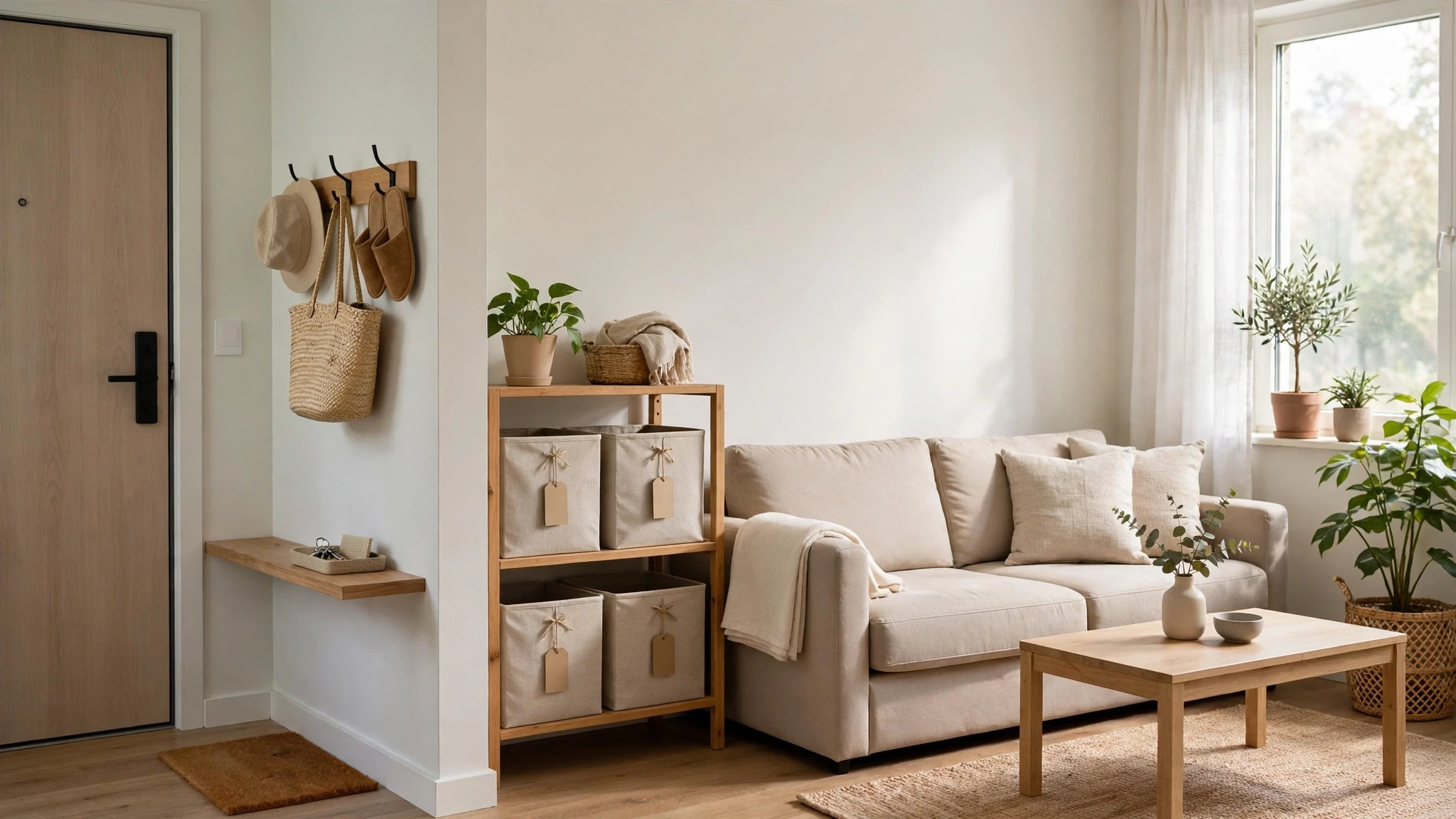

A small apartment rarely feels messy because it is small. It feels messy because everyday things have no fixed home. Keys land on the counter, shoes gather by the sofa, post sits on the dining table, and laundry waits on a chair. Once those loose items start moving around, every room looks fuller than it really is.
Good small apartment organization fixes homes for things before it buys storage for them. A narrow drop zone by the door, flat storage under the bed, risers inside kitchen cabinets, and matching bins can add the feel of an extra cupboard without any large furniture. Most of these changes suit renters too, because they rest, hang, or clip in place instead of needing screws or drilling.
These 15 small apartment organization ideas work room by room, so you can start at the front door and finish at the desk in one weekend. Each idea explains why it works, how to set it up with measurements that suit compact rooms, who it suits best, and the mistake that most often makes it fail. In the smallest homes, like the layouts in this guide to tiny apartment living, the order matters even more than the products.
What Are the Best Small Apartment Organization Ideas?
The best small apartment organization ideas give every daily item one clear home, use vertical and hidden space before floor space, and keep storage in one calm style. An entryway drop zone, over-door racks, under-bed boxes, cabinet risers, a zoned pantry, slim hangers, and labeled bins solve most clutter in a studio or one bedroom flat. A short weekly reset then keeps the system working.
Work in this order: entryway first, then the kitchen, bathroom, and closet, where clutter usually starts. Leave open shelves and styling for last, because shelves only look good once the practical storage underneath them works.
Create an Entryway Drop Zone That Catches the Clutter
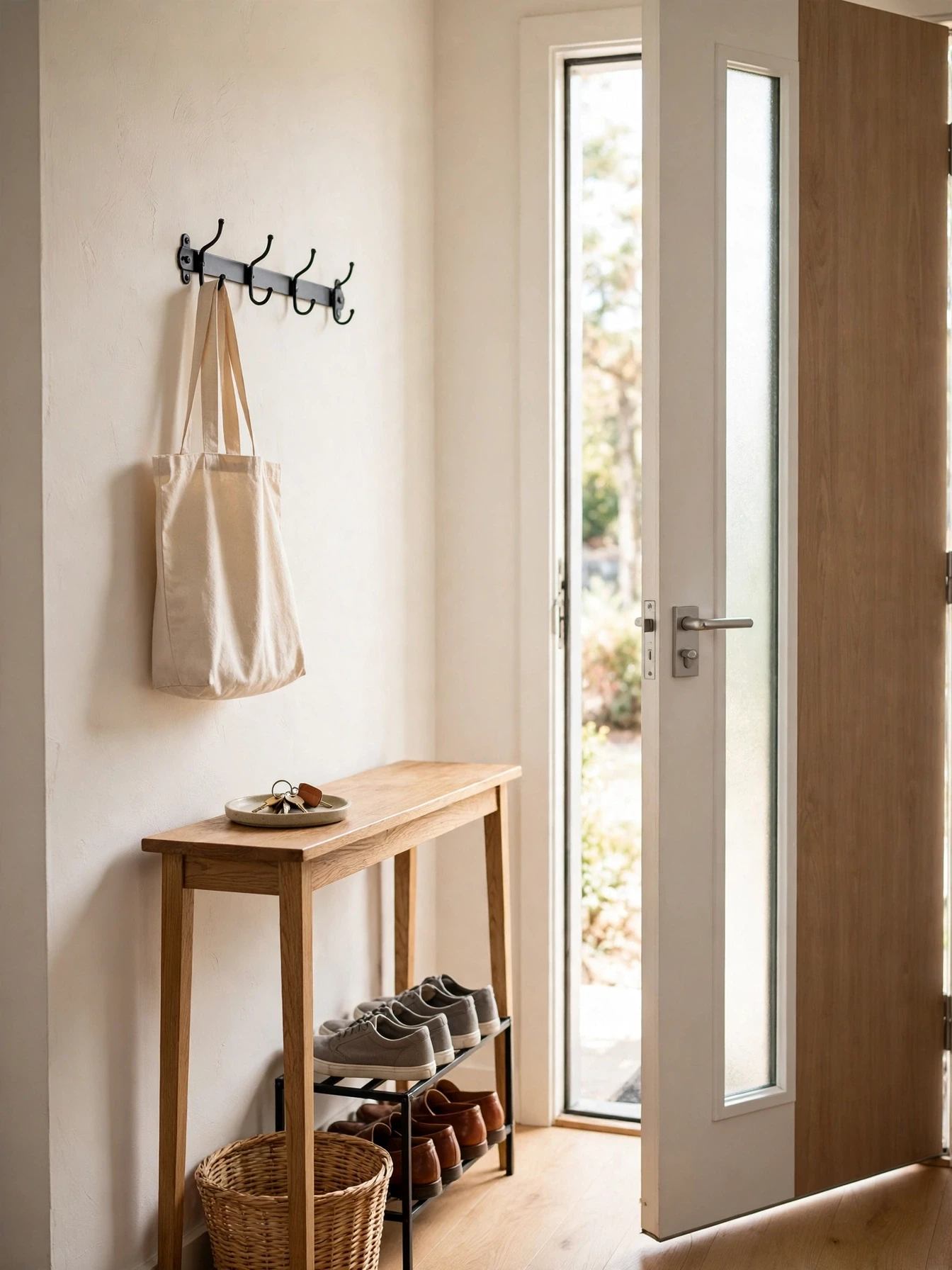
A drop zone gives everything you carry in one fixed place, so the rest of the flat stays clear. Choose a narrow console table, a wall-mounted shelf, or a slim bench by the front door, then add four hooks, a small tray for keys and post, and a bowl for loose change. Keep a pair of indoor shoes or slippers nearby so outdoor shoes do not travel further into the room.
For a small entryway, the drop zone should take up no more than 60 to 90 cm of wall width, with a depth of 20 to 25 cm so it does not block the walkway. A mirror above the shelf adds light and makes the space feel wider, while a small basket below holds dog leads, umbrellas, or reusable bags. If the front door opens straight into the living area, a low open shelf or narrow console marks the boundary without closing it off. These simple moves also help in a hallway that serves as the main route through the flat, and they pair well with these small apartment entryway decor ideas.
This idea suits renters and small households best, because it uses hooks and trays instead of built-in furniture. Set it up in under an hour by measuring the wall, fitting the hooks at shoulder height, and placing the tray where you naturally put your keys down. Keep only daily items here, and move seasonal coats and spare bags to another cupboard.
The mistake: adding more hooks and baskets until the drop zone becomes another cluttered surface. Limit it to one tray, four hooks, and one basket, and clear the tray each evening.
Use Over-Door Storage on Every Door That Swings Freely
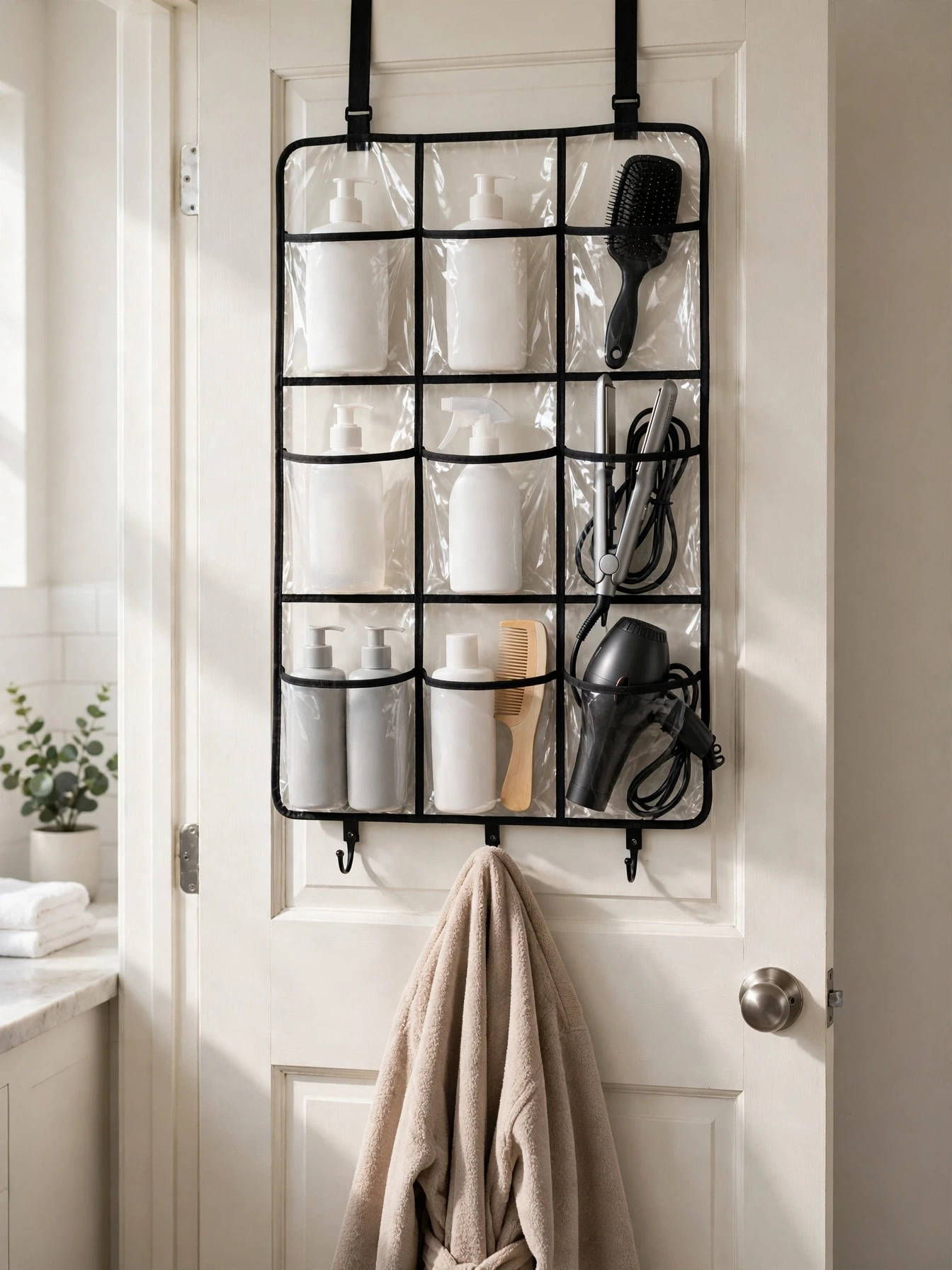
Over-door racks turn wasted space into useful storage without drilling or screws. Hang a rack over the bedroom, bathroom, or cupboard door for shoes, cleaning products, scarves, or pantry packets. Most racks hook over the top of a standard internal door, so they suit rented flats where you cannot fit fixed shelves.
Measure the door first: most internal doors are 35 to 40 mm thick, and the rack should sit flat against the door without catching on the frame when it closes. For a shoe rack, look for 10 to 12 pockets or a wire rack that holds four to six pairs. A clear pocket organizer works well for toiletries, first-aid items, and small cleaning supplies, because you can see everything at a glance. In the kitchen, a rack on the pantry or cupboard door can hold wraps, foil, and spice packets.
This idea suits households with limited wall space and lots of small items. Choose racks with a slim profile so the door still opens fully, and avoid placing heavy items at the top, where they make the door harder to close. If the door leads to a small hallway or bathroom, use the rack for items you need in that room, so you do not need extra furniture nearby.
The mistake: hanging a rack on every door until the flat feels like a shop display. Use one or two racks in the rooms that need them most, and leave the rest of the doors clear. For more ways to use vertical space, see these micro apartment ideas.
Choose Under-Bed Storage That Actually Fits
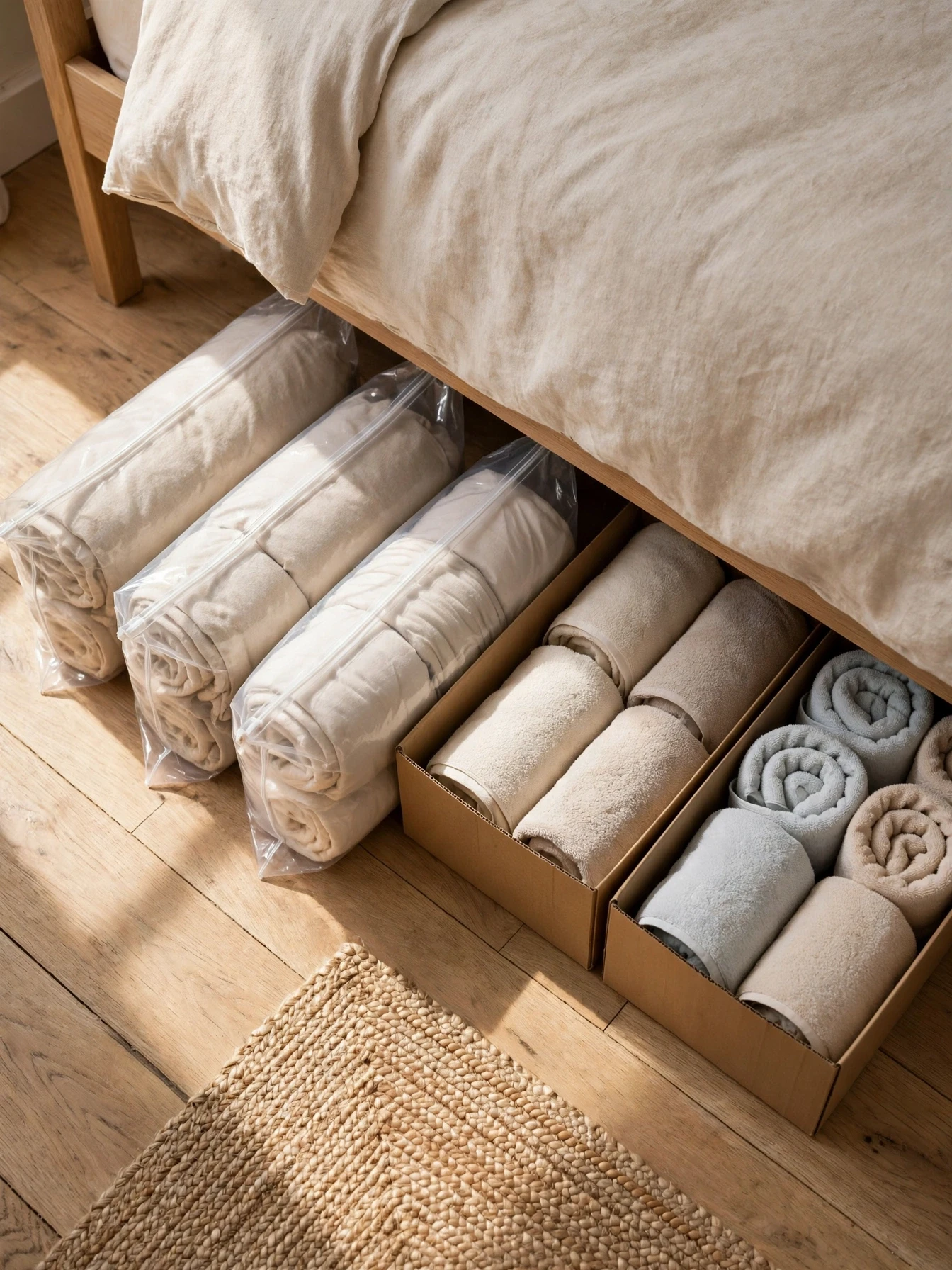
The space under the bed is one of the largest hidden storage areas in a small flat. Flat boxes, vacuum bags, or drawers on wheels can hold out-of-season clothes, spare bedding, or shoes, as long as they fit the gap and slide out easily. Measure the clearance before you buy, because most boxes need at least 15 cm of height and a clear path to pull them out.
Standard under-bed boxes are usually 60 to 80 cm long and 40 to 60 cm wide, with heights from 15 to 20 cm. If the gap is smaller, try vacuum bags that compress bulky items, or shallow trays that slide out from the side. Label each box so you can find things without pulling everything out, and keep a small list of what is inside on your phone or on the lid.
This idea suits anyone with limited wardrobe or cupboard space. Choose boxes with lids and handles, and keep them in matching colors so the room still feels calm. Avoid storing items you need daily under the bed, because it becomes a chore to reach them. Use the space for spare bedding, seasonal clothes, or luggage instead.
The mistake: buying boxes that are too tall or too wide for the gap, then leaving them half under the bed where they collect dust. Measure the clearance first, then buy boxes that fit with a little space to spare.
Put Vertical Shelves in Dead Corners
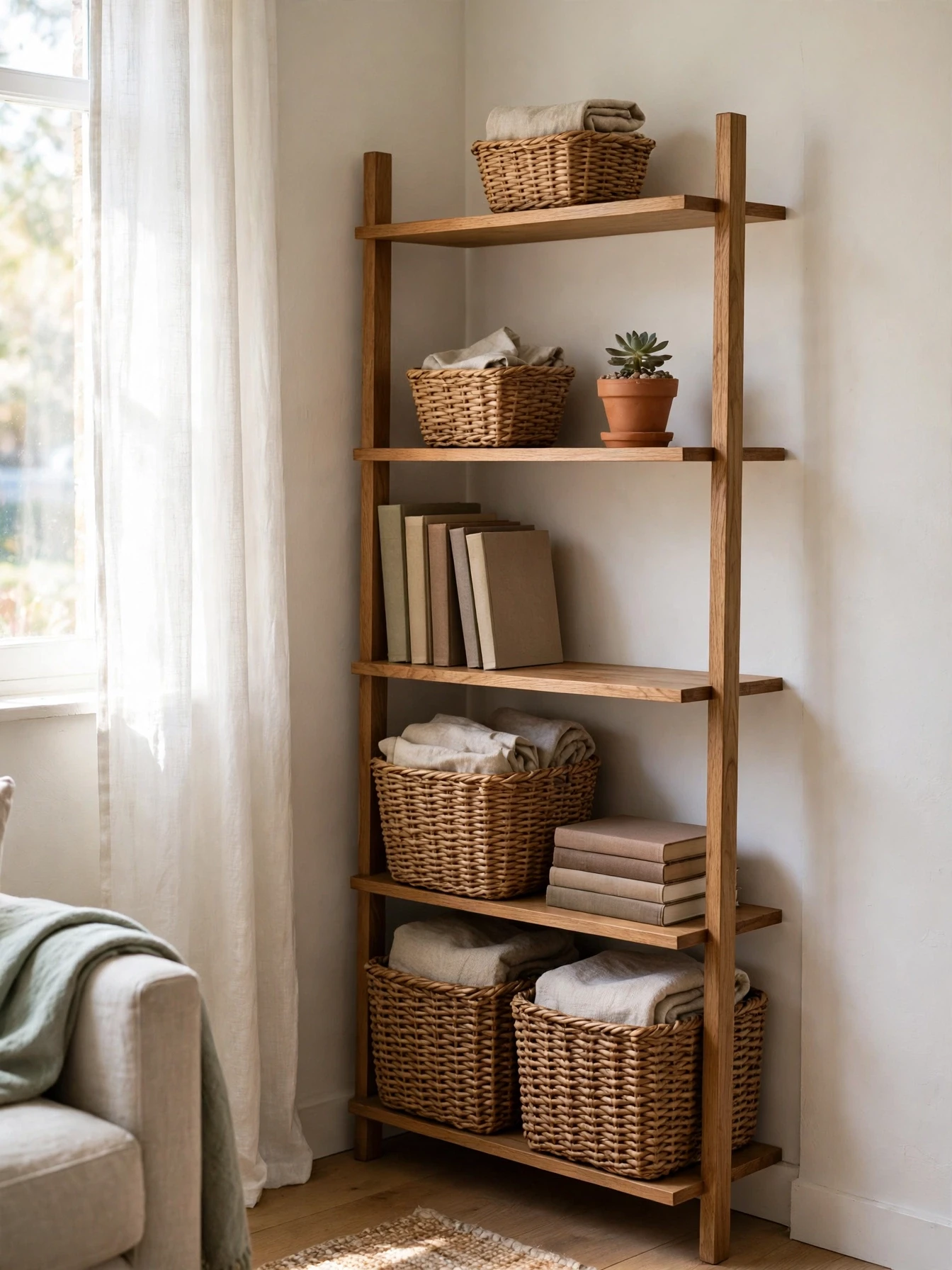
Corners often sit empty because standard furniture does not fit them, yet a slim vertical shelf can use the space well. A tall narrow unit, a floating shelf, or a corner shelf can hold books, plants, or storage baskets, and it draws the eye upward, which makes the room feel taller.
Look for shelves that are 30 to 40 cm wide and 120 to 180 cm high, so they fit in the gap without crowding the room. Use the lower shelves for heavier items and the top for plants or decorative pieces that you do not need to reach often. In the bathroom, a corner shelf can hold toiletries, while in the kitchen it can hold jars or spices. If the corner is near a window, place a plant on the top shelf to make the most of the light.
This idea suits renters and small households because most shelves are free-standing or use small brackets. Choose shelves in the same color as the walls or furniture so they blend in, and avoid overfilling them, because a crowded shelf makes the corner look messy rather than useful.
The mistake: placing a wide shelf in a small corner, where it blocks the walkway or makes the room feel cramped. Measure the corner first, then choose a shelf that leaves at least 60 cm of clear space in front of it.
Add Cabinet Risers and Turntables in the Kitchen
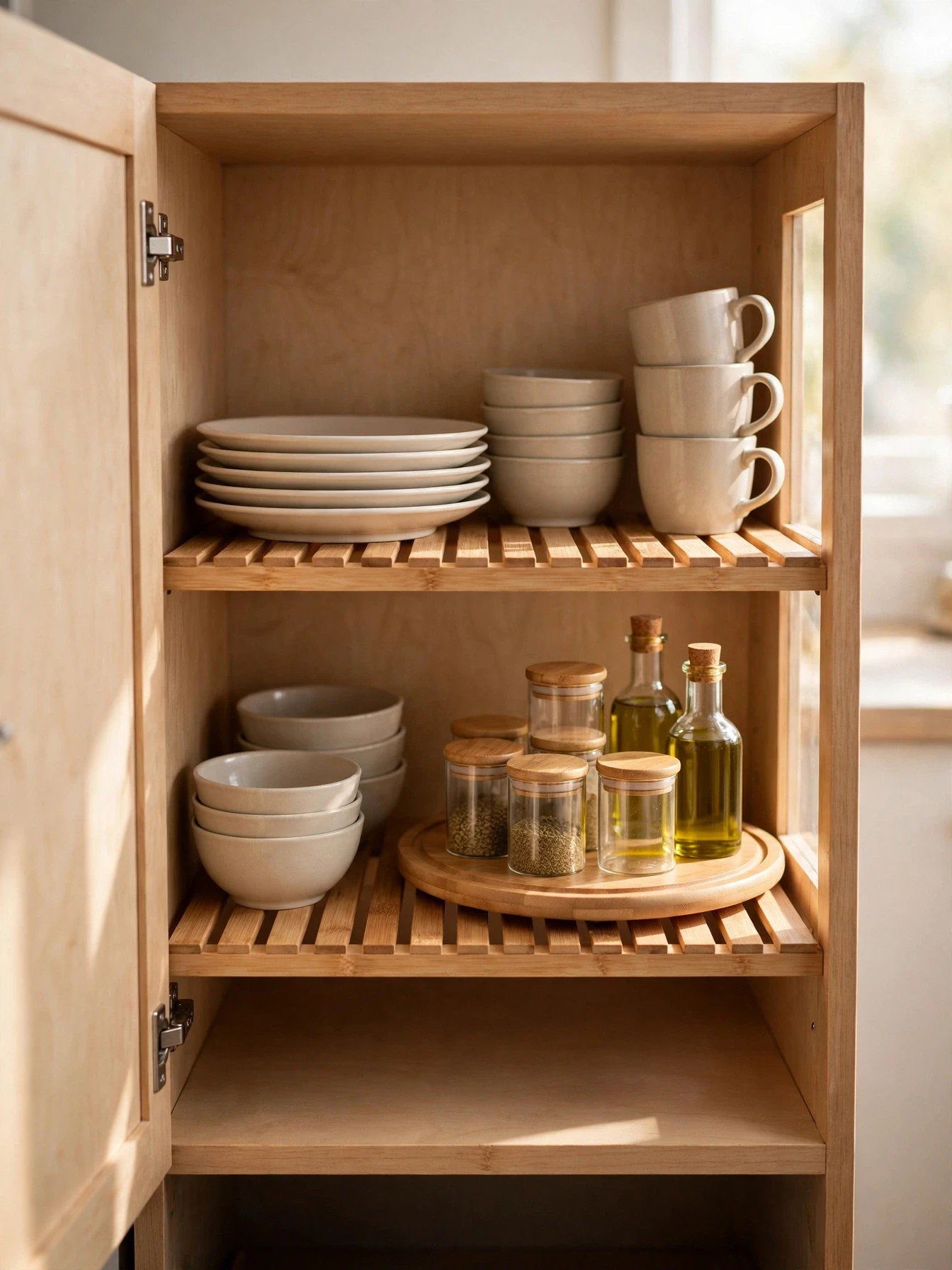
Kitchen cabinets often waste the vertical space inside them, with jars and packets stacked on top of each other. A riser or shelf insert doubles the usable area, while a turntable brings items at the back to the front without moving everything else. Both are cheap, easy to fit, and easy to remove when you move.
A standard cabinet shelf is 60 cm wide, so a riser that is 30 to 40 cm wide will leave room for taller items beside it. Use a turntable that is 25 to 30 cm across for spices, oils, and sauces, and place it on the lowest shelf where it is easy to reach. Stackable risers work well for plates and bowls, while a small step shelf can hold mugs above shorter items.
This idea suits small kitchens with limited cupboard space. Measure the cabinet height first, then choose a riser that leaves enough room for the tallest item you store on it. Keep daily items on the lower shelf and less-used items on the top, so you do not have to reach over things to find what you need.
The mistake: buying a riser that is too tall for the cabinet, so the shelf above no longer closes. Measure the gap between shelves first, then choose a riser that fits with at least 2 cm of space above it.
Build a Tidy Pantry System with Zones
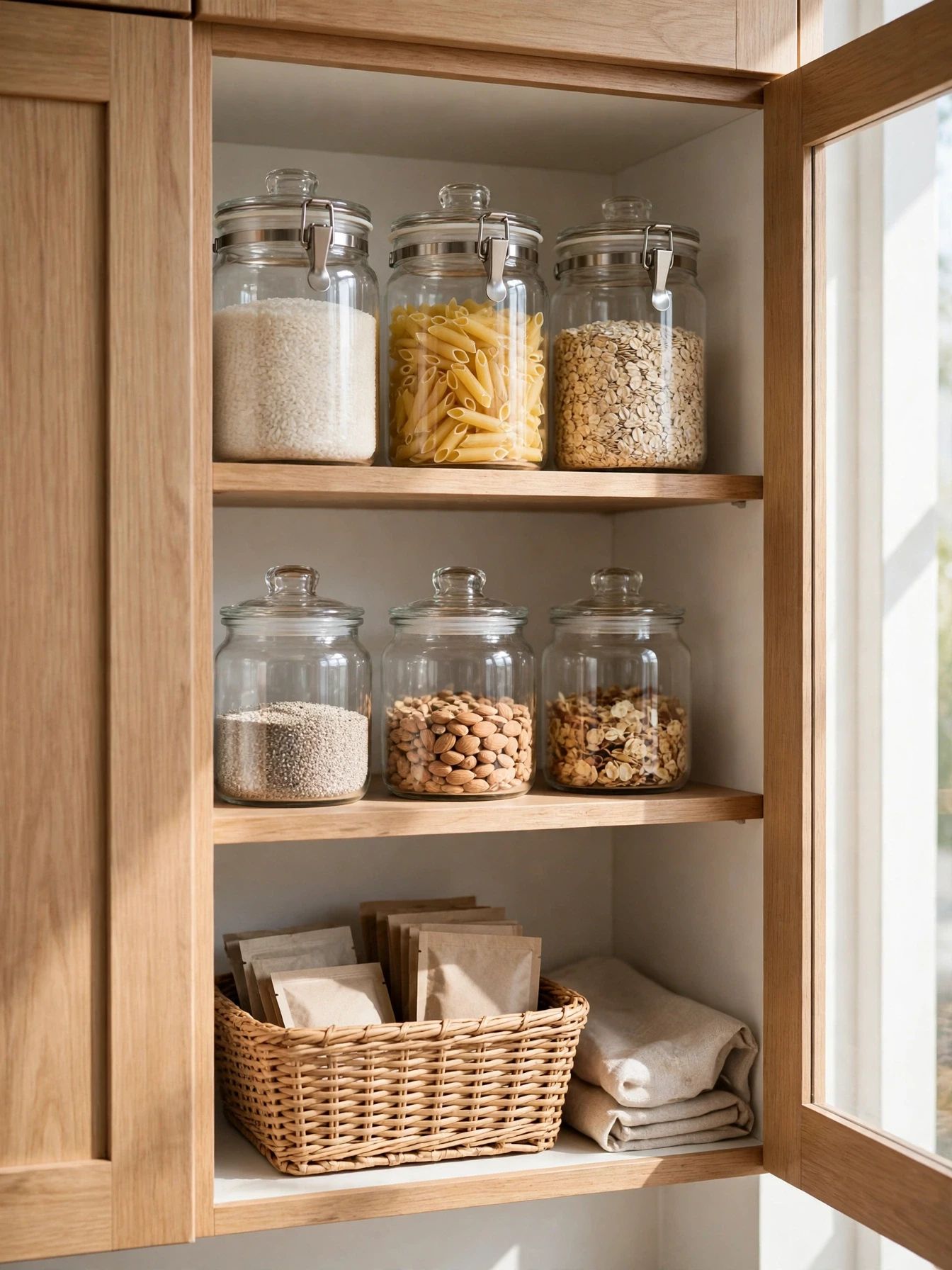
A pantry works best when each type of food has a fixed zone, so you can find things quickly and see what needs replacing. Group items into breakfast, baking, snacks, and cooking zones, and store them in clear bins or jars that show the contents. Label each bin so everyone in the household knows where things belong.
Use stackable bins that are 25 to 30 cm wide and 15 to 20 cm high, so they fit on standard pantry shelves. A lazy Susan or turntable is useful for oils and sauces, while a small tiered shelf can hold cans and jars at different heights. Keep the most-used items at eye level, with heavier items on the lower shelf and lighter items on the top.
This idea suits households that cook at home and want to avoid buying duplicates. Set it up in one afternoon by emptying the pantry, grouping items into zones, and placing bins on each shelf. For a step-by-step plan, see this pantry organization guide.
The mistake: buying bins before you know what needs storing, then ending up with the wrong sizes. Empty the pantry first, group items into zones, and measure the shelf space before you buy any bins.
Store Bathroom Essentials Over the Toilet and on the Door
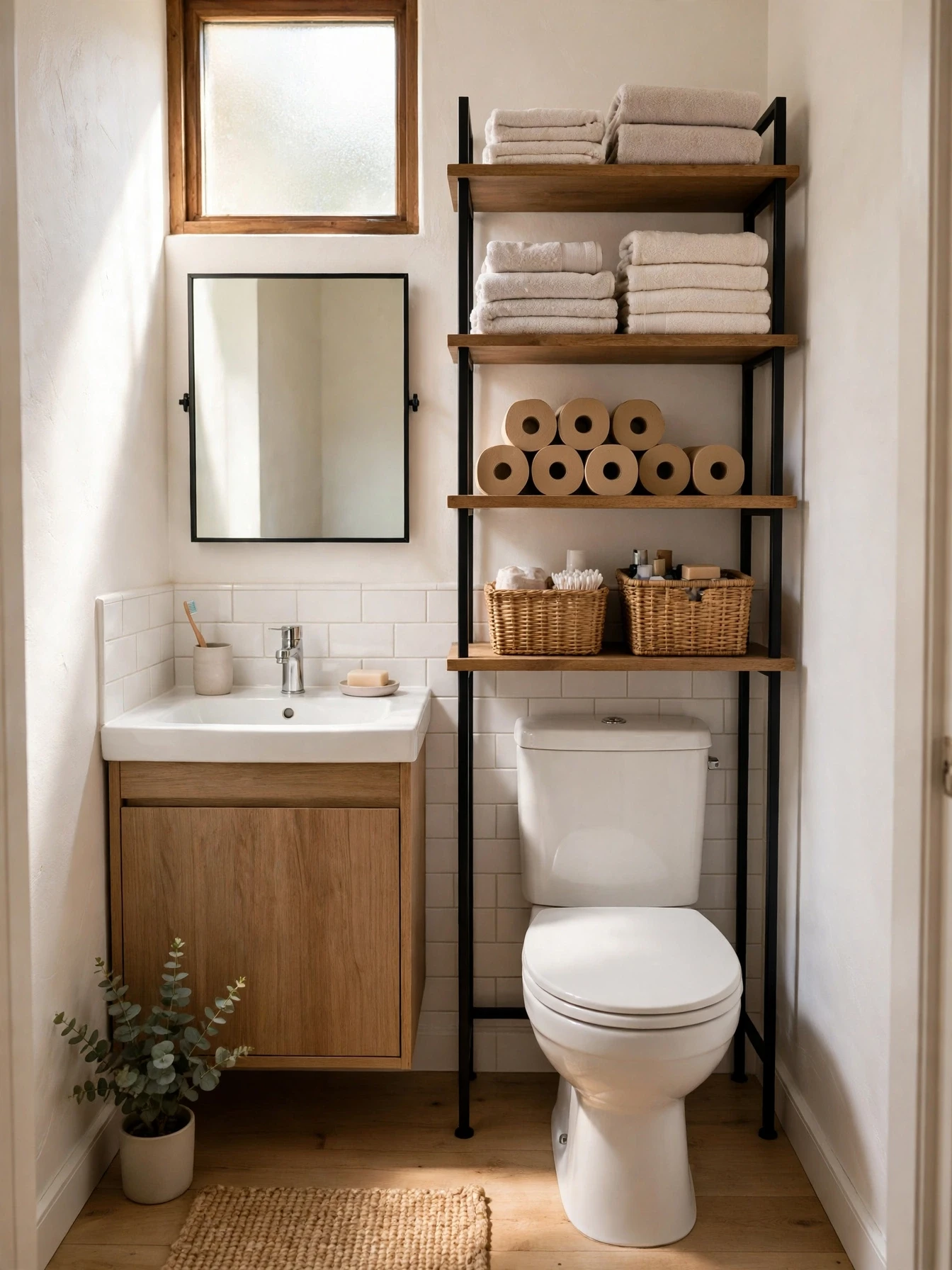
The space over the toilet and on the back of the bathroom door is often unused, yet it can hold towels, toiletries, and cleaning products. A narrow shelf unit over the toilet, or a rack on the door, uses this space without taking up floor space, which is valuable in a small bathroom.
Look for a shelf unit that is 60 to 70 cm wide and 15 to 20 cm deep, so it fits over most standard toilets without crowding the room. Use the lower shelf for items you use daily, such as hand soap and toilet paper, and the top shelf for spare towels or decorative items. A clear pocket organizer on the door can hold hair tools, first-aid items, and small toiletries, and it keeps them out of sight.
This idea suits small bathrooms and shared flats, where counter space is limited. Choose a shelf unit in a light color so the room feels larger, and avoid placing heavy items on the top shelf. For more bathroom storage ideas, see these apartment bathroom organization ideas.
The mistake: placing a shelf unit that is too wide or too deep for the space, so it blocks the toilet lid or makes the room feel cramped. Measure the space first, then choose a unit that leaves at least 10 cm of clearance on each side.
Double-Hang the Closet and Switch to Slim Hangers
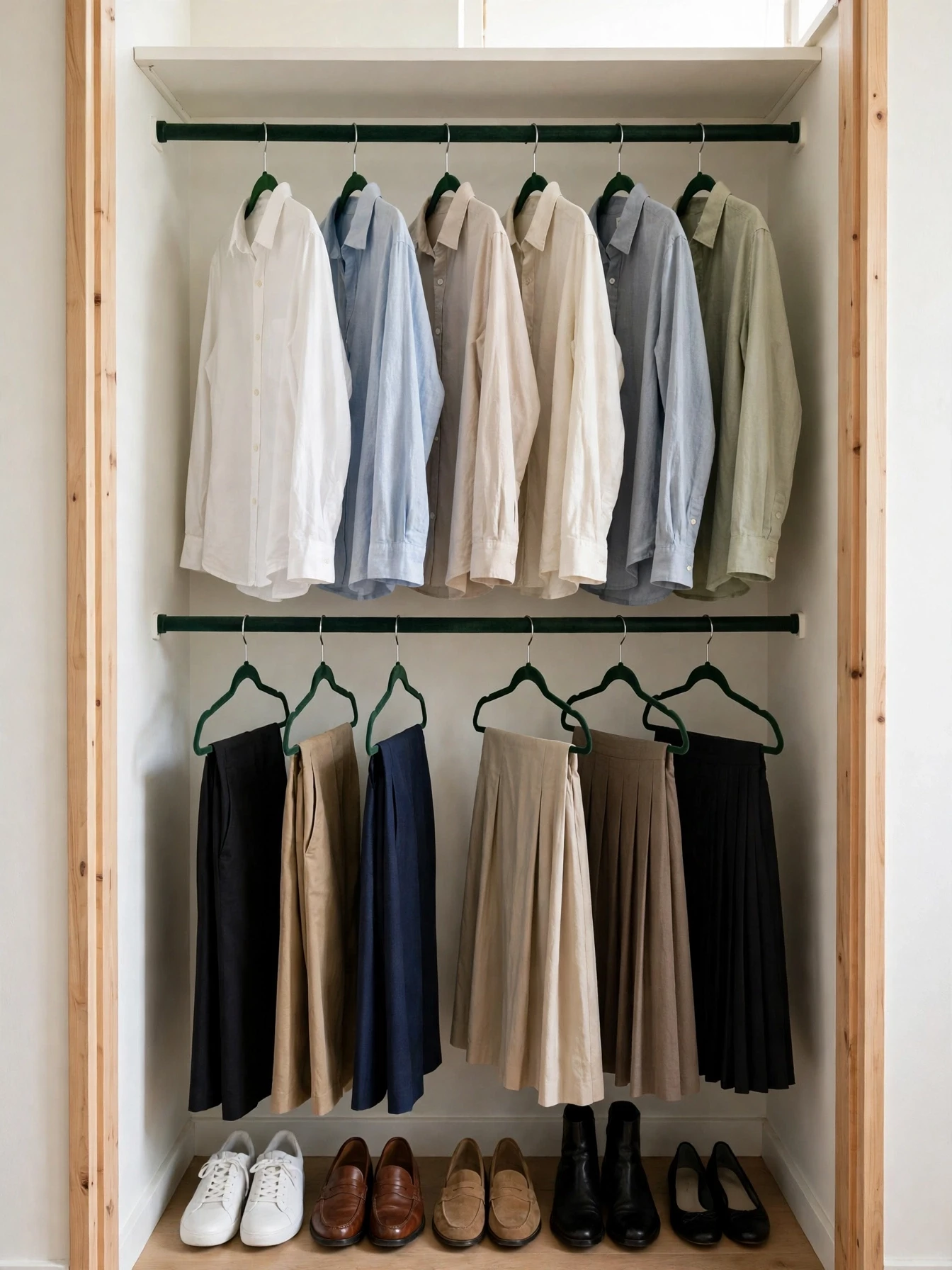
A single closet rail wastes the space below it, yet a second rail can double the hanging space for shirts, blouses, and folded trousers. A double-hang setup works best for shorter items, while longer coats and dresses can hang from the top rail. Slim hangers save even more space, because they are thinner than wooden or plastic hangers and they stop clothes from slipping off.
A standard closet is 60 cm deep and 120 to 180 cm wide, so a second rail at 90 to 100 cm from the floor will fit most shorter items. Use slim velvet hangers that are 40 to 45 cm wide, and hang items in groups by type and color so you can find them quickly. Place a small shelf or basket on the floor for shoes, bags, or folded items.
This idea suits small bedrooms and shared closets, where hanging space is limited. Choose hangers in one color so the closet looks tidy, and avoid overfilling the rails, because crowded clothes crease and are harder to reach. Keep out-of-season clothes in a separate box or vacuum bag.
The mistake: hanging a second rail too low, so clothes touch the floor or the shelf below. Measure the rail height first, then hang the second rail so that the longest item on it clears the floor by at least 10 cm. For more ways to save space in a small bedroom, see these budget small college bedroom storage ideas.
Give the Laundry Corner One Simple System
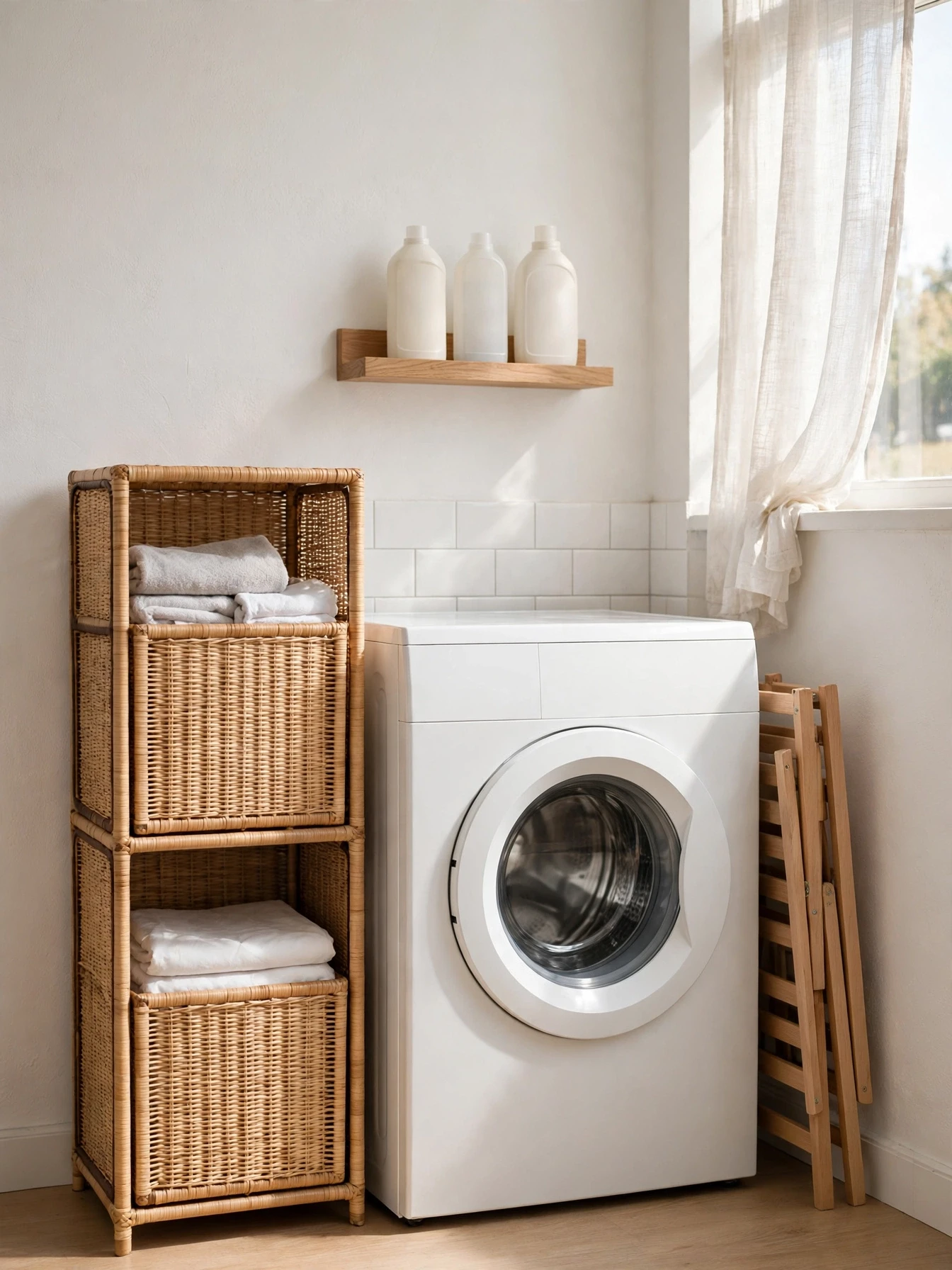
A small laundry corner works best when it has one clear system for sorting, washing, and drying. A narrow rolling cart, a wall-mounted drying rack, or a stackable washer and dryer can fit in a small space, as long as each item has a fixed place. Use baskets or bins to sort laundry by color or type, so you can start a load without sorting through a pile.
Look for a rolling cart that is 30 to 40 cm wide and 60 to 80 cm high, so it fits in the gap beside the washer or dryer. A wall-mounted drying rack that folds flat when not in use saves floor space, while a small shelf above the washer can hold detergent and fabric softener. Keep a small basket for odd socks and a separate bin for items that need hand washing.
This idea suits small flats with limited laundry space. Choose a system that fits the space you have, and keep it simple so it is easy to use. For more ways to make the most of a small laundry area, see this small apartment laundry corner setup.
The mistake: buying a large laundry basket that takes up too much floor space, then leaving it full of clean clothes that never get put away. Choose a basket that fits the space, and fold or hang clothes as soon as they are dry.
Take Control of Desk Cables and Paper
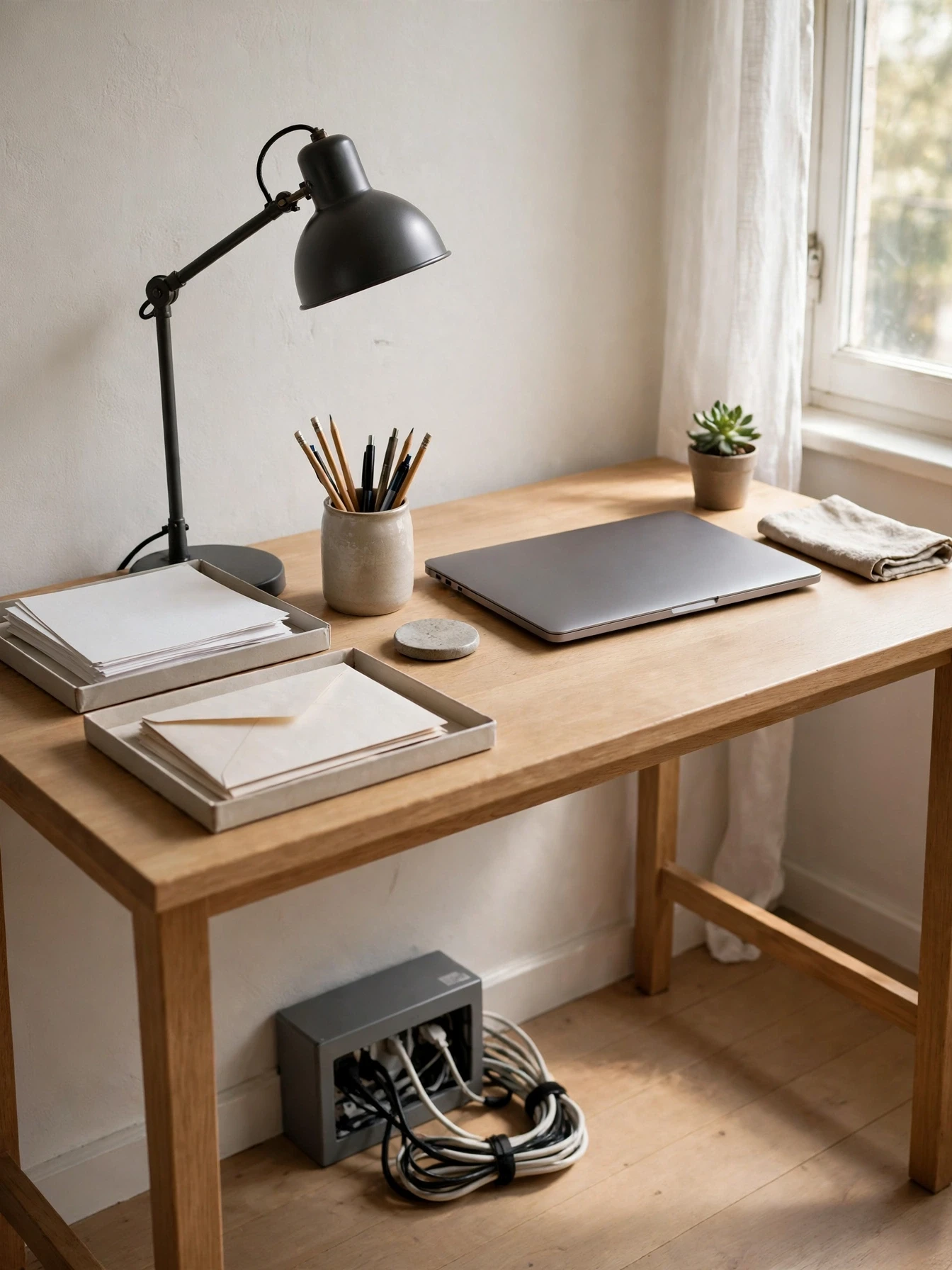
A desk can quickly become cluttered with cables, chargers, and paper, yet a few simple tools can keep it tidy. A cable tray under the desk, a small charging station, and a paper tray for incoming post can reduce visual clutter and make it easier to find what you need. Keep only daily items on the desk, and store the rest in a drawer or shelf.
Use a cable tray that is 30 to 40 cm long and 10 to 15 cm wide, so it fits under most desks without taking up legroom. A small charging station with two or three ports can hold a phone, tablet, and laptop charger, while a paper tray with two or three tiers can sort incoming post, bills, and notes. Label each tray so you know where things belong.
This idea suits anyone who works from home or studies in a small flat. Choose a desk with built-in cable management, or add a tray and a small shelf to keep items off the surface. For more ways to set up a small workspace, see these small apartment desk setup ideas.
The mistake: buying a cable tray that is too small for the number of cables you have, then leaving the extra cables tangled on the floor. Count the cables first, then choose a tray that fits them all with a little space to spare.
Use Labeled Bins in One Matching Style
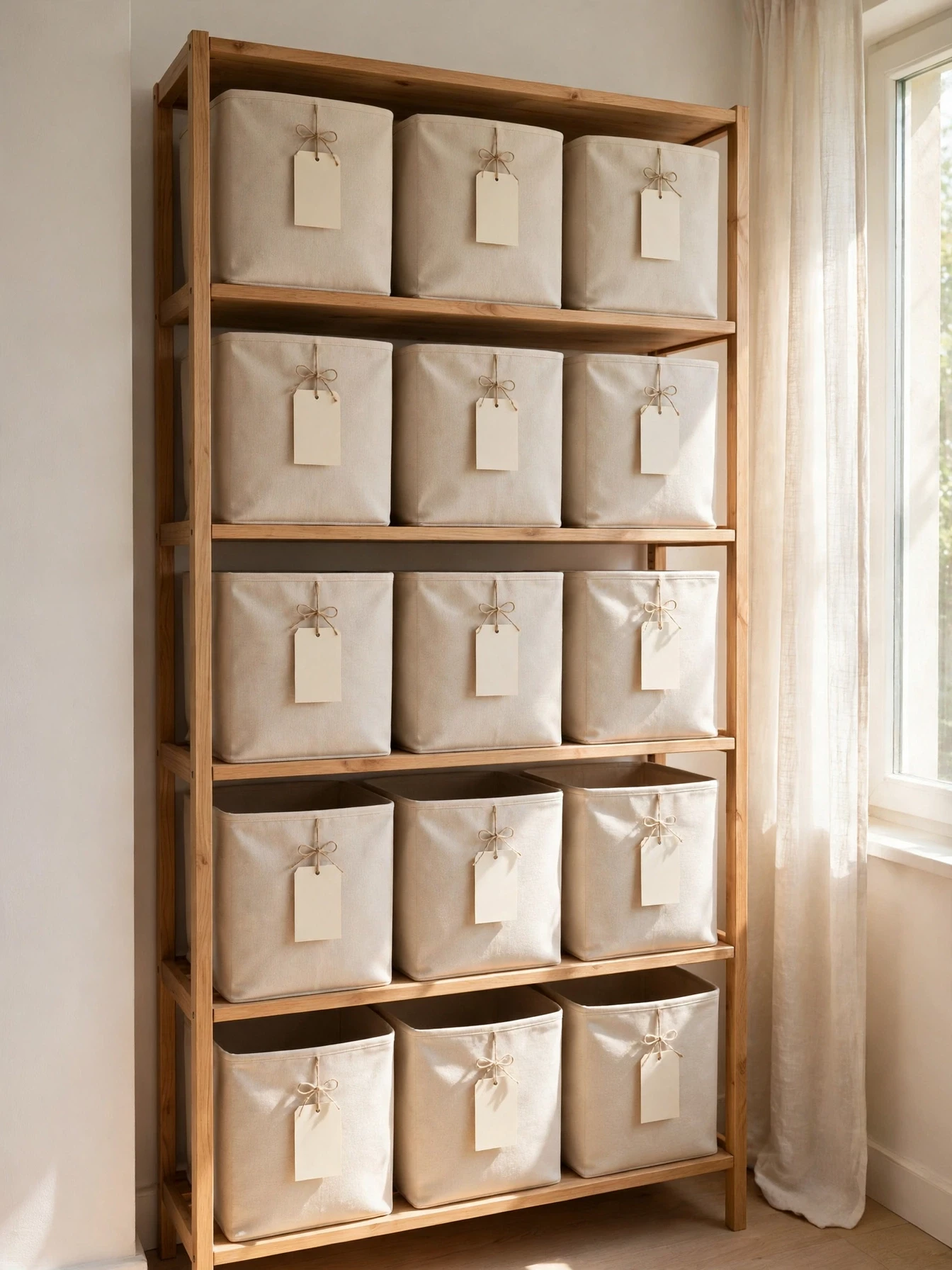
Labeled bins make it easy to find things and put them away, because each bin has a clear purpose. Choose bins in one matching style and color, so the shelves look calm and tidy, even when the bins are full. Use labels that are easy to read, and place them where you can see them without opening the bin.
Look for bins that are 25 to 30 cm wide and 15 to 20 cm high, so they fit on standard shelves. Use clear bins for items you need to see, such as craft supplies or pantry items, and opaque bins for items you want to hide, such as cleaning products or spare parts. Label each bin with a short description, such as ‘Batteries’ or ‘Winter scarves’, so you can find things quickly.
This idea suits any room in a small flat, because bins can be used on shelves, in cupboards, or under the bed. Choose bins in a light color so the room feels larger, and avoid mixing too many styles, because a shelf with mismatched bins looks messy even when it is organized.
The mistake: buying bins in different colors and styles, then ending up with a shelf that looks cluttered. Choose one style and color for all the bins in a room, and use the same labels throughout.
Set Up a Cleaning Supply Caddy Station
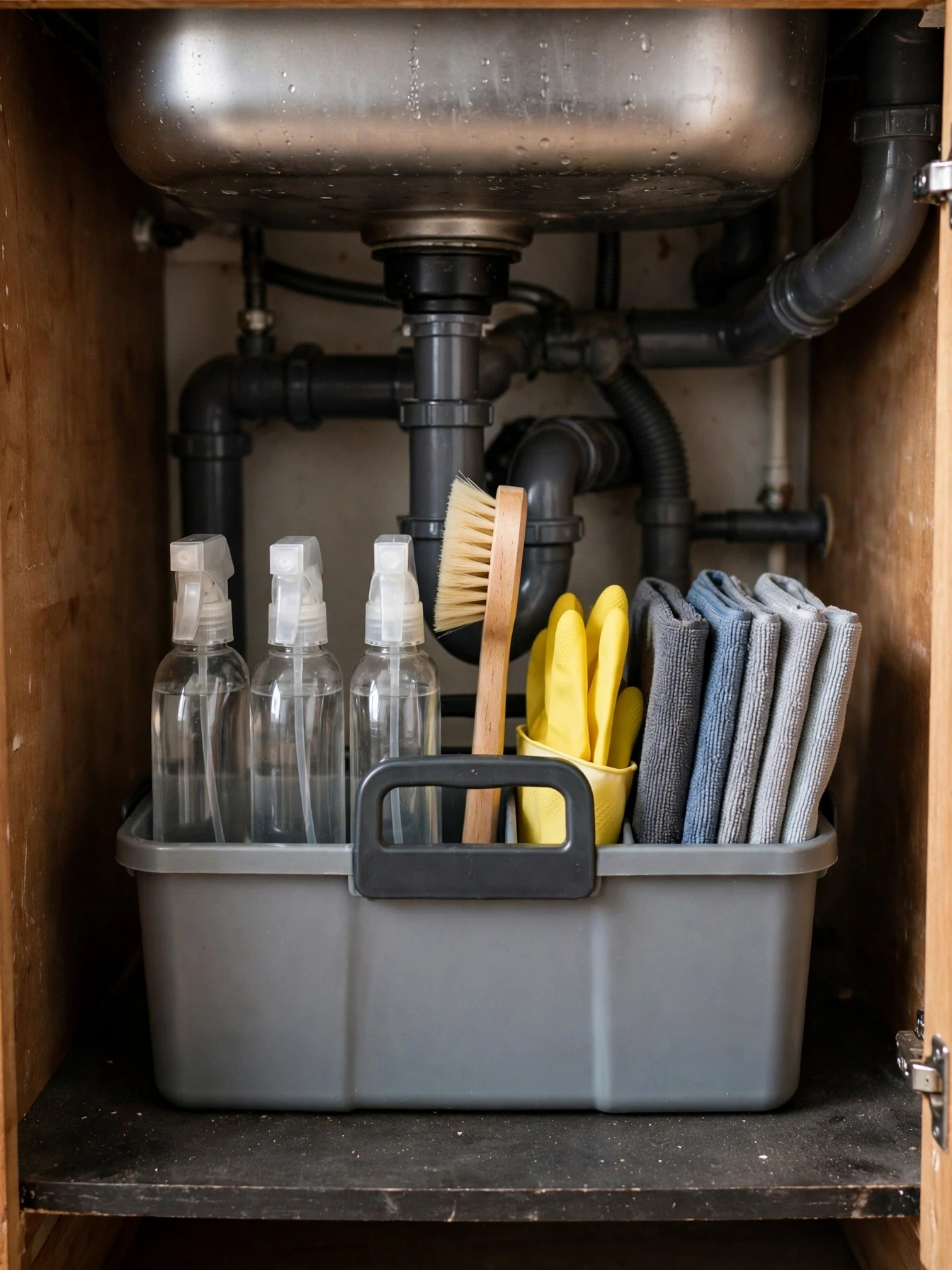
A cleaning caddy keeps all your supplies in one place, so you can carry them from room to room without searching for each item. A small caddy with a handle can hold a spray bottle, cloths, a sponge, and a small brush, while a shelf or cupboard near the front door can store the caddy when it is not in use.
Look for a caddy that is 25 to 30 cm long and 15 to 20 cm wide, so it fits on a shelf or in a cupboard. Use a small caddy for daily cleaning, and a larger one for deep cleaning, with separate compartments for each type of product. Keep the caddy in a fixed place, such as a shelf near the kitchen or bathroom, so you always know where it is.
This idea suits small flats where cleaning supplies are often scattered across different rooms. Choose a caddy with a handle so it is easy to carry, and keep only the items you use regularly in it. Store the rest in a separate box or cupboard.
The mistake: buying a caddy that is too large for the space, then leaving it on the floor where it becomes a trip hazard. Choose a caddy that fits the shelf or cupboard where you store it, and put it away after each use.
Pack Seasonal Rotation Boxes That Earn Their Space
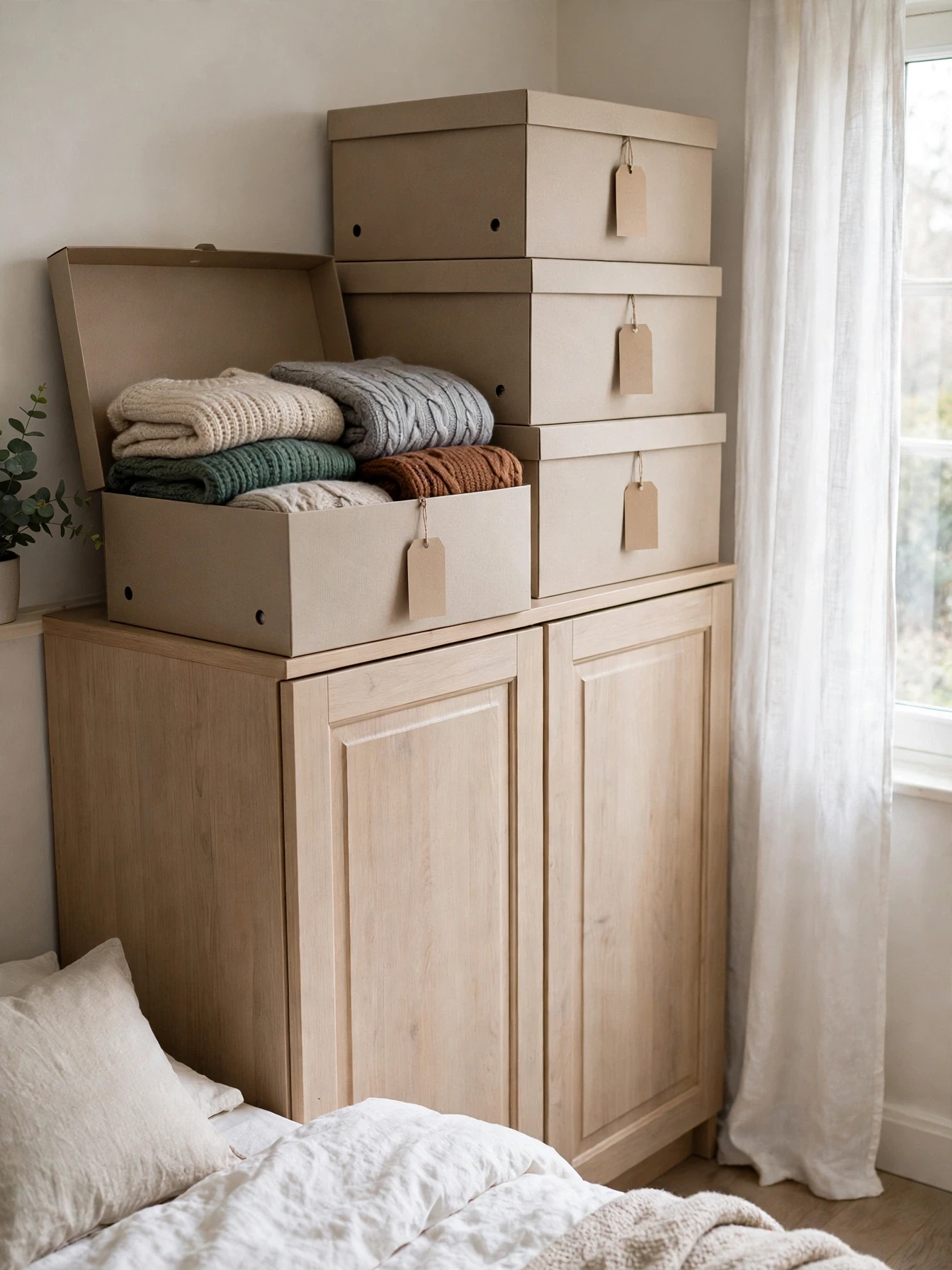
Seasonal items, such as winter coats, holiday decorations, or summer clothes, take up space for most of the year, yet they are only used for a few months. A rotation system keeps these items in labeled boxes, so you can swap them out when the season changes without cluttering your daily storage.
Use boxes that are 60 to 80 cm long and 40 to 60 cm wide, with lids and handles, so they are easy to carry and stack. Label each box with the season and a short list of contents, such as ‘Winter: coats, scarves, gloves’. Store the boxes on a high shelf, under the bed, or in a cupboard, and keep a small list of what is inside on your phone or on the lid.
This idea suits small flats with limited storage, because it keeps seasonal items out of the way until they are needed. Choose boxes in a matching color so the shelf looks tidy, and avoid storing items you use year-round in seasonal boxes, because it becomes a chore to reach them.
The mistake: packing a box with items from different seasons, then having to open it every few weeks to find something. Pack each box with items from one season only, and label it clearly.
Style Open Shelves So Storage Looks Like Decor
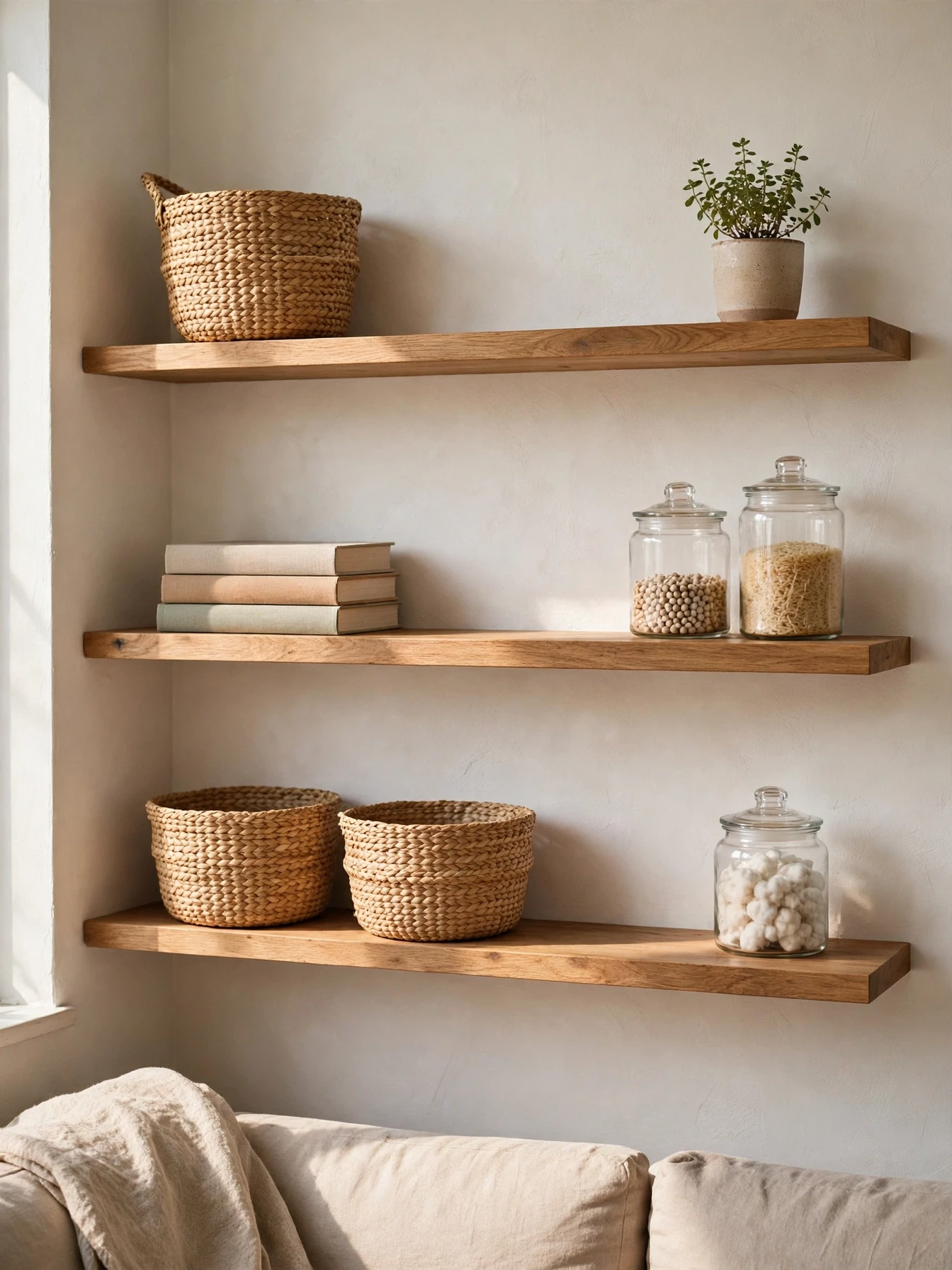
Open shelves can make a small room feel larger, because they do not block light or take up floor space, yet they can also look cluttered if they are overfilled. A few simple styling rules can make the shelves look like decor, with a mix of useful items and decorative pieces that add color and texture.
Use the rule of three: group items in threes, with a mix of heights and textures, so the shelf looks balanced. Place a plant, a book, and a decorative object on one shelf, and a basket, a jar, and a small plant on another. Leave some empty space on each shelf, so the items have room to breathe and the shelf does not look crowded.
This idea suits small living rooms and kitchens, where open shelves can add storage without making the room feel smaller. Choose shelves in a light color so the room feels larger, and use matching baskets or bins to hide items you do not want to display. For more ways to style a small living area, see this studio apartment decor guide.
The mistake: filling every shelf with items until there is no empty space, then the shelves look like a shop display rather than a home. Leave at least one-third of each shelf empty, and rotate items seasonally to keep the display fresh.
Keep the Whole System Alive with a 15-Minute Reset
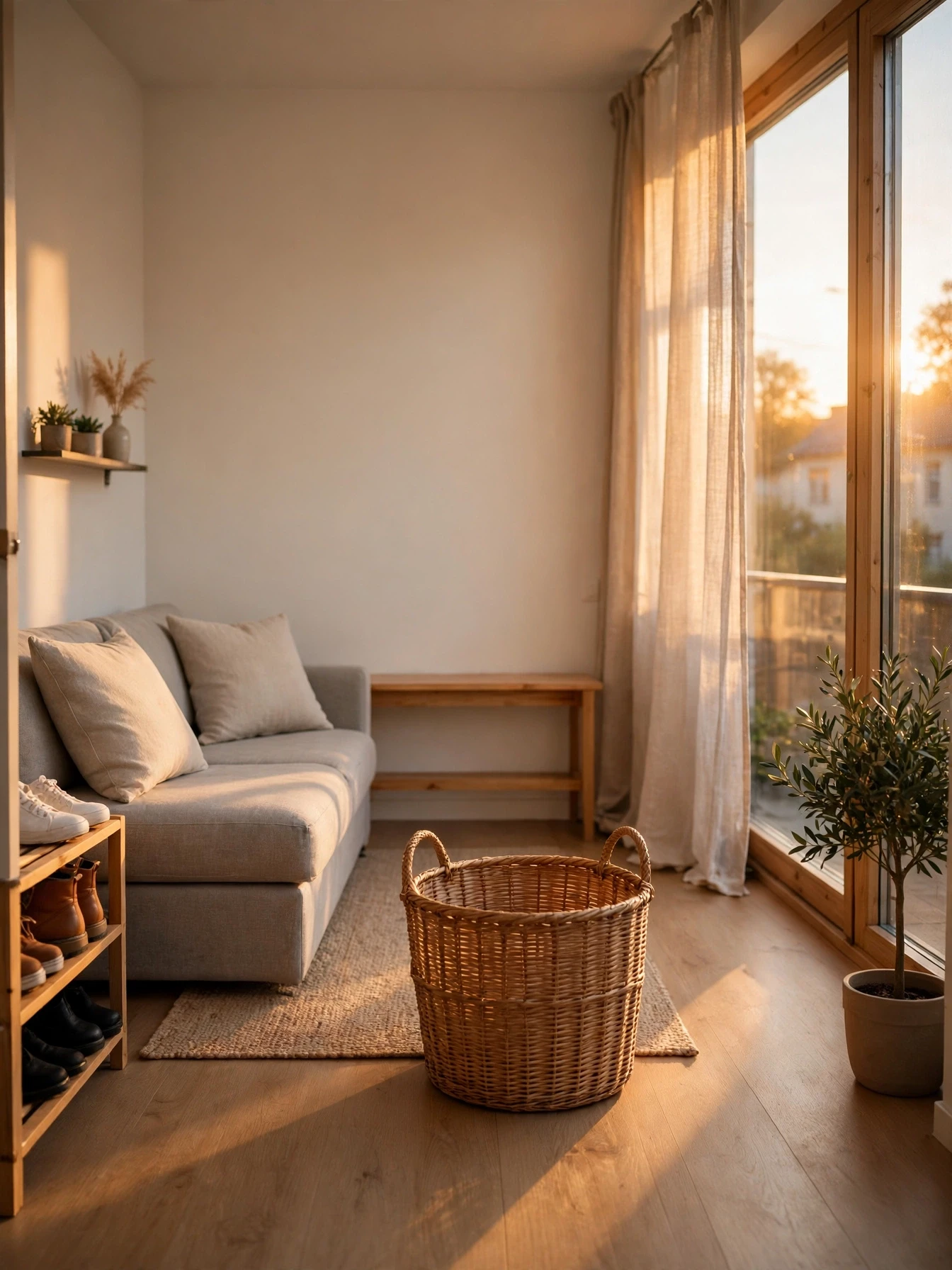
A 15-minute reset is a short daily habit that keeps the whole system working, without spending hours tidying each week. Set a timer for 15 minutes, then walk through the flat and put things back where they belong, starting with the entryway and finishing at the desk. It is a small habit, but it stops clutter from building up.
Start with a small win — choose one idea from this guide, such as the drop zone or labeled bins, and set it up first. Then add a short reset to your daily routine, such as after dinner or before bed, so it becomes a habit. Keep a small basket or tray for items that need to be put away, and empty it each evening.
This idea suits busy households and small flats, where clutter builds up quickly. Use a timer to keep the reset short, and focus on the most visible areas first, such as the entryway, kitchen counter, and desk. For a full plan, see this first apartment move-in checklist.
The mistake: trying to reset the whole flat in 15 minutes, then giving up when it does not work. Focus on one room at a time, and keep the reset short so it becomes a habit you can keep.
Common Mistakes in Small Apartment Organization
Buying Bins Before Measuring
The mistake: buying bins that do not fit the shelf, cupboard, or drawer they are meant for. Always measure first, then buy bins that fit with a little space to spare.
Filling Every Wall and Surface
The mistake: adding shelves, hooks, and baskets to every wall until the flat feels crowded. Leave some walls and surfaces clear, so the room feels calm and spacious.
Hiding the Things You Use Every Day
The mistake: storing daily items in a high cupboard or under the bed, where they are hard to reach. Keep daily items at eye level or within easy reach, and store less-used items out of the way.
Mixing Open and Closed Storage at Random
The mistake: placing open shelves next to closed cupboards without a plan, so the room looks messy. Use open shelves for display items and closed storage for items you want to hide.
Skipping Labels
The mistake: using bins without labels, so no one knows what is inside them. Label each bin clearly, so everyone in the household can find things and put them away.
Starting Without a Plan
The mistake: buying storage products before you know what needs storing, so you end up with the wrong sizes and styles. Start by emptying the space, grouping items, and measuring before you buy anything.
Budget-Friendly Tips for Small Apartment Organization
Start with what you already have: use baskets, boxes, and jars from around the flat before you buy new storage. A shoe box can hold cables, a jar can hold pens, and a basket can hold scarves. Reuse items in new ways, and only buy what you still need.
Shop second-hand first: look for shelves, baskets, and storage boxes at charity shops, car boot sales, or online marketplaces. Many items are in good condition and cost much less than new ones, and you can often find matching sets.
Buy in stages: start with one room, such as the entryway or kitchen, and add storage as you need it. Buying everything at once often leads to buying the wrong sizes, and it costs more upfront.
Use free tools: a measuring tape, a label maker, or a simple list on your phone can help you plan storage without spending money. Measure first, then buy, and label everything so the system lasts.
A Room-by-Room Weekend Organization Plan
Saturday morning: entryway and kitchen. Set up the drop zone, add risers and turntables to the kitchen cabinets, and build the pantry zones. Clear the counters and sort items into bins, so the kitchen feels calm and tidy.
Saturday afternoon: bathroom and closet. Set up the over-toilet shelf and door rack, double-hang the closet, and switch to slim hangers. Sort clothes by type and color, and pack out-of-season items into rotation boxes.
Sunday morning: laundry and desk. Set up the laundry corner, sort cables and paper on the desk, and place labeled bins on the shelves. Clear the desk surface and keep only daily items on it.
Sunday afternoon: final touches. Style the open shelves, set up the cleaning caddy station, and do a 15-minute reset. Walk through the flat and check that each item has a home, then enjoy the calm, tidy space.
FAQ: Small Apartment Organization
What is the best way to organize a small apartment?
Start with a home for every item, use vertical space, and keep storage in one calm style. An entryway drop zone, under-bed boxes, and labeled bins solve most clutter in a studio or one bedroom flat.
How do I organize a small apartment on a budget?
Use what you already have, shop second-hand, and buy in stages. Measure first, then buy bins and shelves that fit the space, and label everything so the system lasts.
How do I organize a small apartment with no storage?
Use over-door racks, under-bed boxes, and vertical shelves to create storage where there is none. A drop zone by the door and a cleaning caddy station can also help, without needing built-in furniture.
How do I keep a small apartment tidy every day?
Do a 15-minute reset each evening: walk through the flat and put things back where they belong, starting with the entryway and finishing at the desk. Keep a small basket for items that need to be put away.
What should I not store in a small apartment?
Avoid storing items you rarely use, such as old magazines, broken appliances, or clothes that no longer fit. Donate, recycle, or sell them, and keep only what you use and love.
How often should I declutter a small apartment?
Do a quick declutter every three months, and a deeper one once a year. Pack seasonal items into rotation boxes, and check that each item still has a home.
Conclusion
Small apartment organization is not about buying more storage; it is about giving every item a clear home, using vertical and hidden space, and keeping the system simple enough to maintain. Start with the entryway, then work through the kitchen, bathroom, and closet, and finish with the desk and open shelves. A short daily reset keeps the system working, so the flat stays calm and tidy.
Choose one idea from this guide and set it up today, then add another next weekend. The system will grow over time, and the flat will feel larger and calmer as each item finds its place.
Print the room-by-room plan, measure the spaces before you buy anything, and start with the drop zone by the front door. The first small change is often the one that makes the biggest difference.