
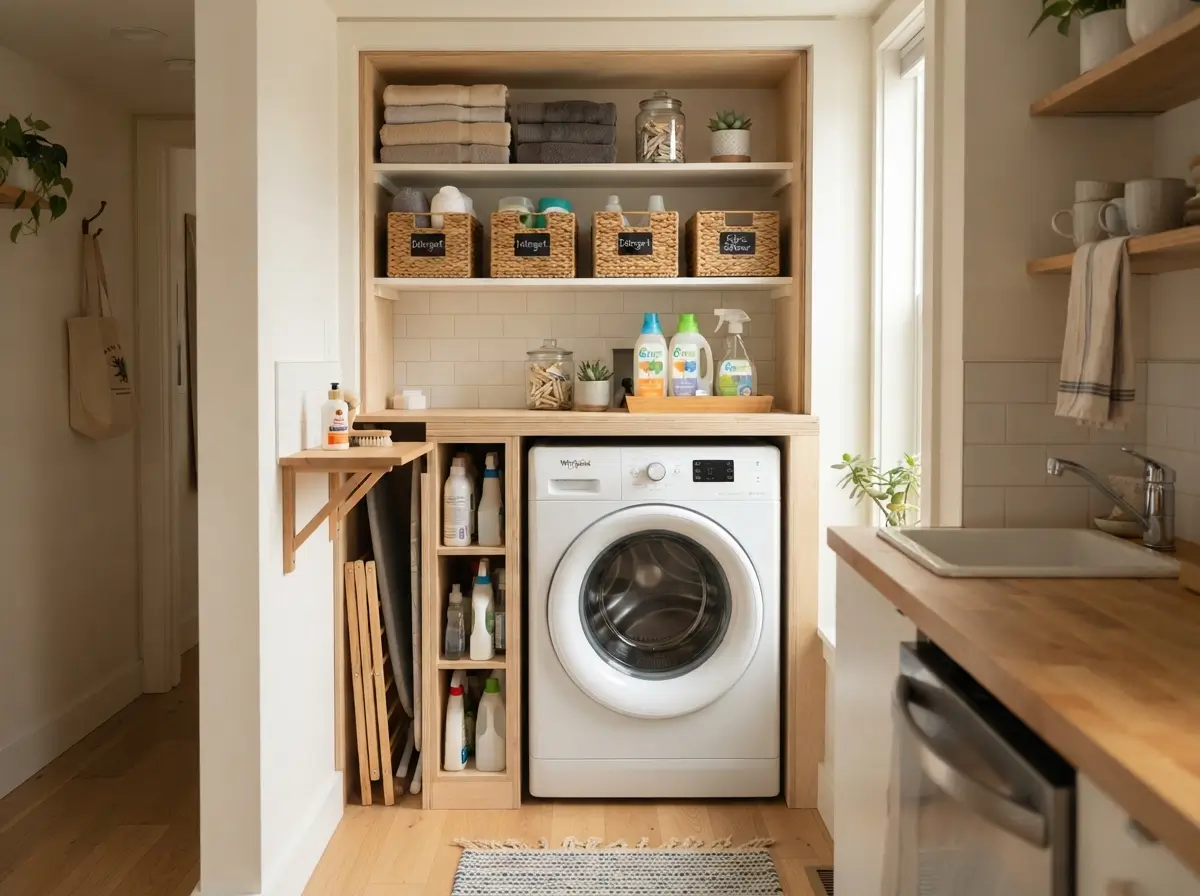

Limited square footage does not mean laundry supplies must spill into the hallway or sit in open piles. Smart planning can turn a narrow wall, unused closet, bathroom recess, or kitchen end panel into a useful wash zone that feels connected to the rest of the home. Good results come from choosing the right storage depth, improving lighting, controlling visual clutter, and keeping daily items within easy reach. Renters can also create a neat setup with freestanding shelves, tension rods, removable hooks, and rolling carts instead of permanent cabinetry. Small Apartment Laundry Corner
Many people treat a laundry nook as a purely functional spot, then wonder why it makes the whole room look messy. Better styling starts with practical choices rather than decorative extras. Matching containers, warm task lighting, clear folding space, and easy access to detergent matter more than expensive finishes. Each idea below explains where it works best, how to set it up, and which mistakes can make a small corner feel tighter than it really is.
Can a Tiny Laundry Corner Really Stay Organized?
Yes, a well-planned Small Apartment Laundry Corner can stay organized when every item has a fixed place, and the storage matches the actual routine. Daily detergent should sit between waist and shoulder height, occasional products can go higher, and bulky extras should move to another closet if possible. Keeping only what you use prevents narrow shelves from becoming crowded. Closed storage helps in open-plan rooms, while labeled baskets work well inside closets where visual calm matters less.
Before buying organizers, measure the washer, dryer, wall width, ceiling height, door swing, hoses, outlets, and ventilation gaps. Leave enough room for appliance access and maintenance. Many failed setups come from adding shelves first and discovering later that lids cannot open, doors hit baskets, or a service panel becomes blocked. Careful measuring costs nothing and protects the layout from avoidable problems.
Use a Slim Shelf Above the Machines
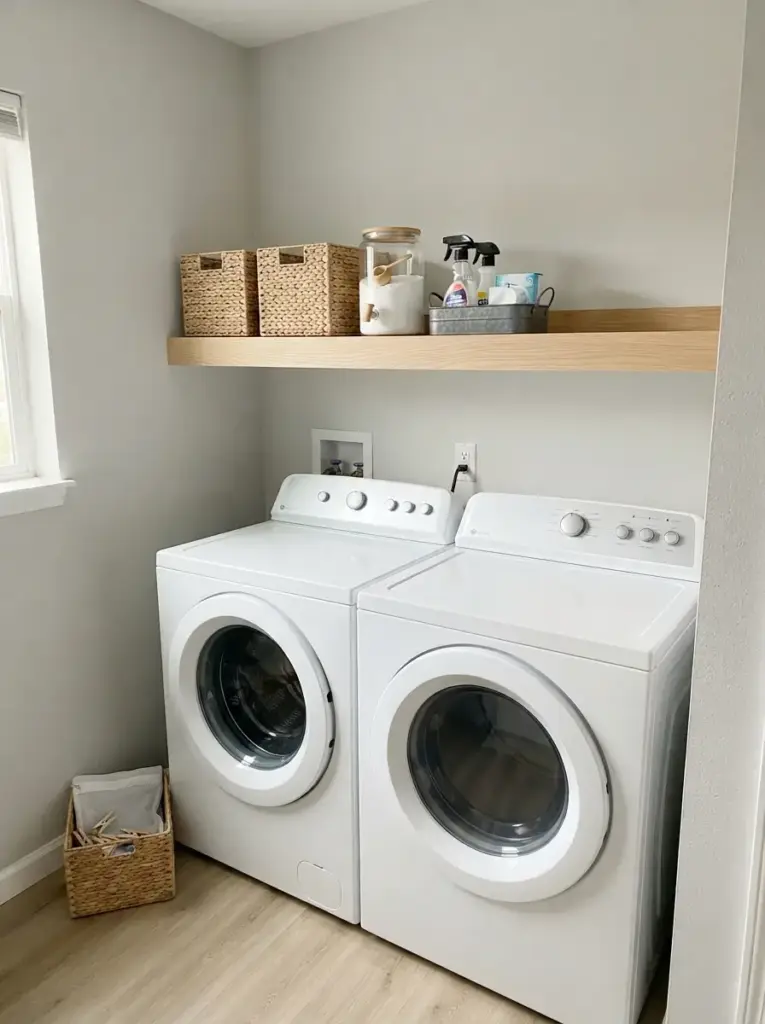
Vertical space above a washer or dryer often goes unused, especially in rentals with basic hookups and no built-in storage. One shallow shelf can hold detergent, stain spray, dryer sheets, and a small basket for clothespins without taking floor space. Choose a depth of about 8 to 10 inches when the machines sit in a tight passage. Deeper shelves may feel heavy and can make front-loading appliances harder to reach.
Better results come from mounting the shelf high enough to keep appliance lids, controls, and ventilation areas clear. White, pale oak, or soft gray finishes blend easily with most walls and reflect light in dark corners. Add a narrow front lip or low rail so bottles do not slide during vibration. Renters can use a sturdy over-appliance shelving unit instead of drilling into the wall.
Practical value appears in the shorter reach and clearer countertop area. People who wash several small loads each week will benefit most because the supplies remain visible and quick to grab. Avoid filling the shelf from edge to edge. Two matching bins, one detergent container, and one stain-care tray usually look cleaner than many original packages in different colors. Small Apartment Laundry Corner
Hide Supplies Behind a Curtain
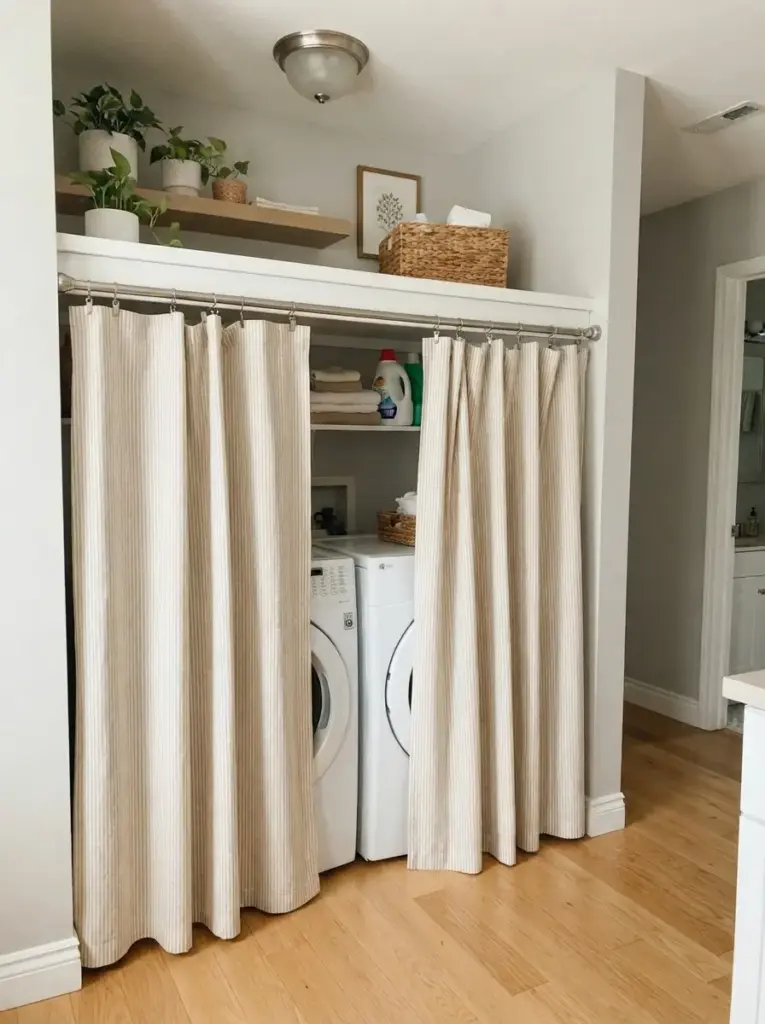
Fabric can soften a utility area without the cost or depth of cabinet doors. Mount a tension rod between two walls, beneath a counter, or across a recessed nook, then hang a washable curtain that reaches close to the floor. Cotton canvas, linen-look polyester, or a simple ticking stripe works well because each option feels more like home decor than a plastic utility cover.
Visual calm improves immediately because hoses, baskets, and mixed packaging disappear behind one continuous surface. Small rooms often feel larger when fewer objects are visible at once. Neutral shades such as warm white, oatmeal, muted sage, and dusty blue are easy to coordinate with kitchens, bathrooms, or hallways. Dark colors can work, but they may make a windowless area feel heavier.
Renters and budget decorators gain the most from this approach. Hem tape can shorten a ready-made curtain, while clip rings make removal easy for washing. Keep the fabric several inches away from appliance vents and never block required airflow. Skip long, puddled fabric, since it collects lint and makes floor cleaning harder. Small Apartment Laundry Corner
Add a Countertop for Folding
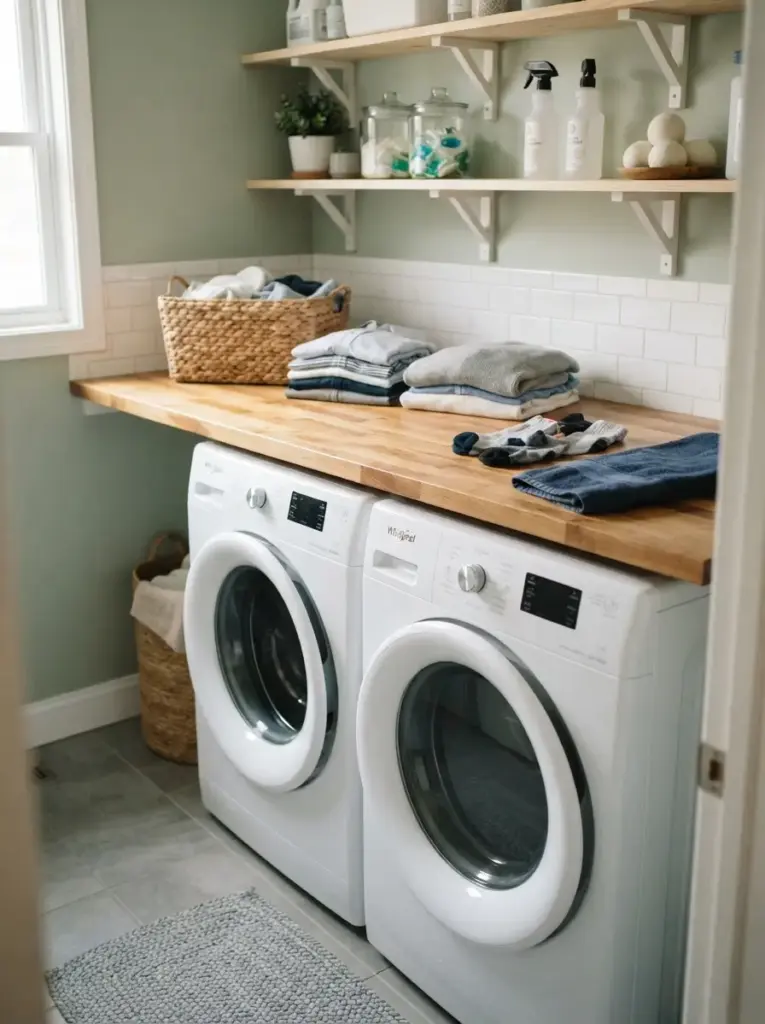
Front-loading machines create a valuable surface that often goes unused. A removable countertop across the washer and dryer provides a stable place for folding clothes, sorting socks, or setting down a laundry basket. Plywood with a sealed edge, butcher block, or a cut-to-size laminate panel can all work. Rubber pads beneath the surface reduce movement and protect appliance tops.
Daily routines become faster because clean clothes can be folded before they leave the laundry zone. That simple change prevents piles from traveling to the bed, sofa, or dining table. People with limited household surfaces will notice the biggest difference. A counter also gives the nook a finished furniture-like appearance, especially when the material matches nearby shelves or kitchen worktops. Small Apartment Laundry Corner
Leave a small gap around the machines for vibration and follow appliance clearance instructions. Never screw a removable counter directly into the appliance. Pale wood warms white machines, while charcoal laminate can connect black or stainless finishes to modern decor. Keep the top mostly clear between loads so the folding space remains useful rather than becoming another storage shelf.
Install a Wall-Mounted Drying Rack
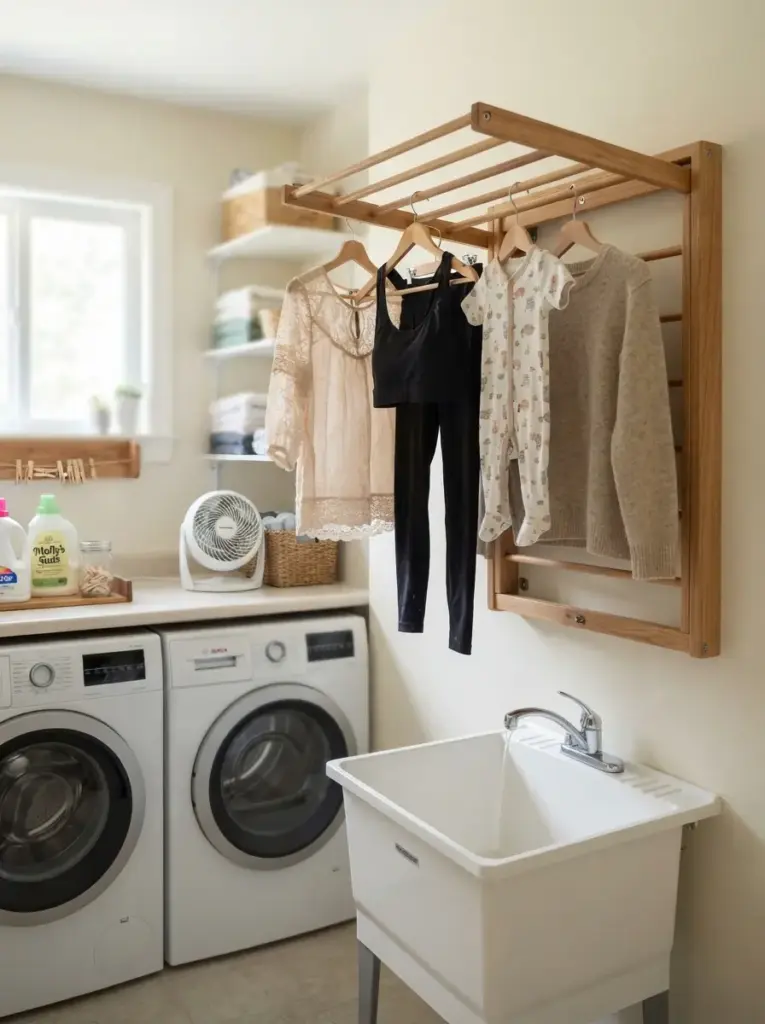
Fold-down drying racks are ideal for delicate clothing, workout wear, baby items, and hand-washed pieces. Closed racks sit almost flat against the wall, while open racks provide several rails without using permanent floor space. Place one beside the washer, above a utility sink, or on the inside wall of a laundry closet where wet clothing can drip safely.
Function improves because air-dry items no longer cover chairs, shower rods, or door handles. Households that own many delicate fabrics will find this especially useful. Wooden racks bring warmth, white metal blends into pale walls, and black hardware suits industrial or modern interiors. Choose a finish that repeats another element in the room rather than adding a completely new color.
Wall strength matters because damp clothing becomes heavy. Use proper anchors or attach the rack to studs when possible. Renters can choose a folding rack that hangs over a door, but the door must still open safely. Avoid placing wet clothes directly over electrical outlets or against walls that cannot handle moisture. Small Apartment Laundry Corner
Air movement deserves equal attention. Leave several inches between hanging garments so fabric dries instead of staying damp for hours. A small, quiet fan placed safely outside the splash zone can help in windowless rooms, but it should never point directly at loose lint. Owners of compact apartments should also check whether bathroom exhaust fans or nearby windows can reduce humidity after hand washing.
Turn a Rolling Cart Into a Mobile Supply Station
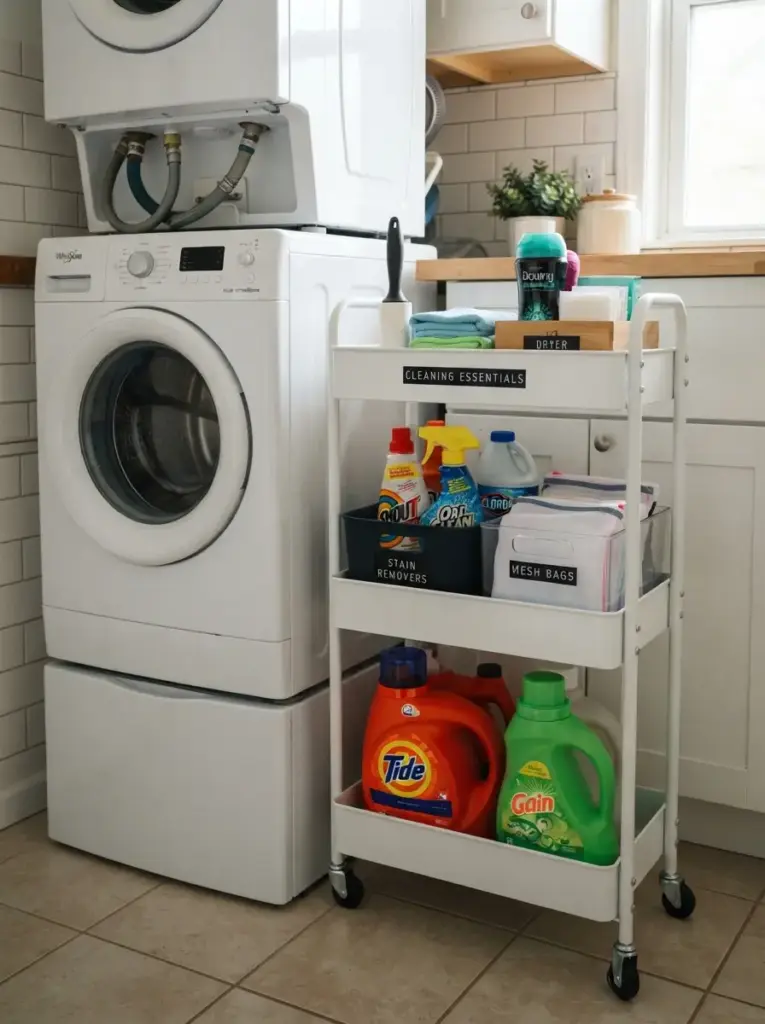
Narrow rolling carts fit into gaps that standard cabinets cannot use. Look for widths between 5 and 10 inches, then store detergent, stain removers, mesh wash bags, lint rollers, and cleaning cloths by category. Wheels allow the cart to slide out during laundry and disappear beside the machine afterward.
Flexible storage makes sense in apartments where the washer sits in a kitchen, bathroom, or shared utility passage. People can move supplies away when guests visit or when access to plumbing is needed. Clear bins help identify small items, while solid baskets hide bright packaging. Labeling each level keeps family members from returning products to random places. Small Apartment Laundry Corner
Stability matters more than appearance. Choose raised edges so bottles do not fall when the cart moves, and place heavier products on the lowest shelf. Keep bleach and strong chemicals away from children or pets. Budget versions made from coated metal or durable plastic work well, but flimsy wheels can wobble under full detergent bottles.
Create Closed Storage With Wall Cabinets
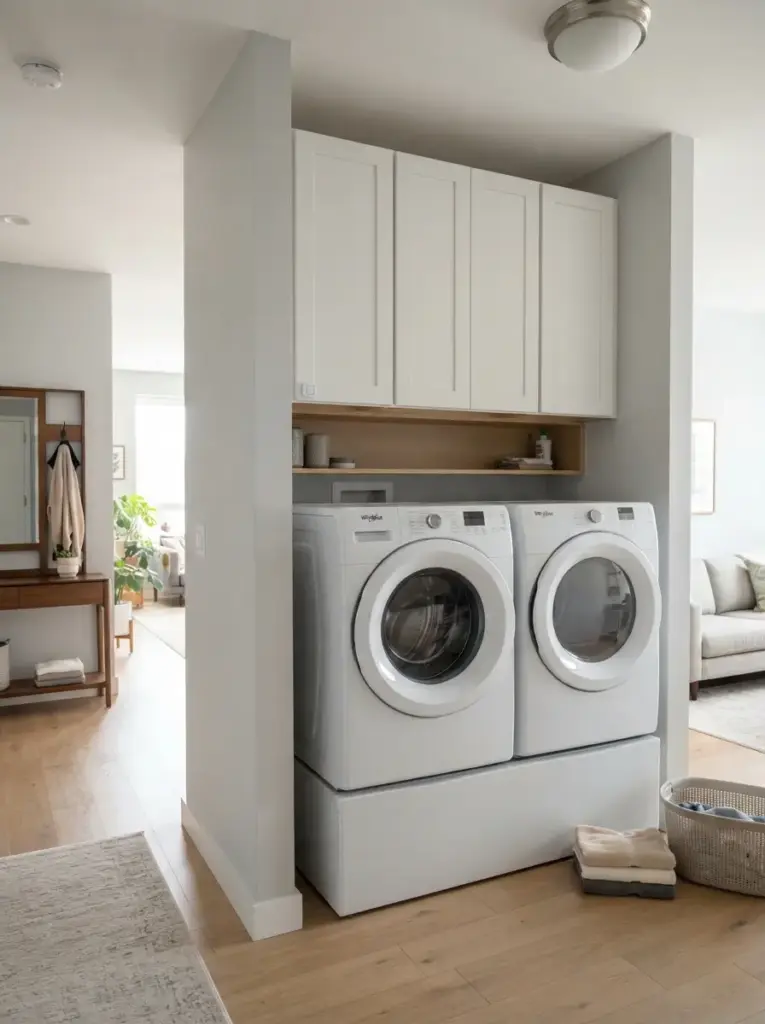
Upper cabinets offer the cleanest solution when the laundry area is visible from a living room, entryway, or kitchen. Doors hide packaging, backup supplies, light bulbs, cleaning tools, and household extras. Shallow wall cabinets between 10 and 12 inches deep usually provide enough storage without projecting too far above the appliances.
Order and safety improve together because products can stay out of reach while the room keeps a quieter visual rhythm. Families with children benefit from cabinets that include magnetic catches or child-safe locks. Flat-panel doors suit modern apartments, simple shaker fronts feel traditional, and handle-free doors reduce visual clutter in very narrow spaces.
Install frequently used items on the lowest shelf and less-used refills higher up. Open each cabinet fully before final mounting to confirm that doors do not hit walls, light fixtures, or appliance lids. Renters can imitate the look with a tall freestanding cabinet beside the machines, provided it does not block ventilation or service access. Small Apartment Laundry Corner
Use Matching Containers for Everyday Products
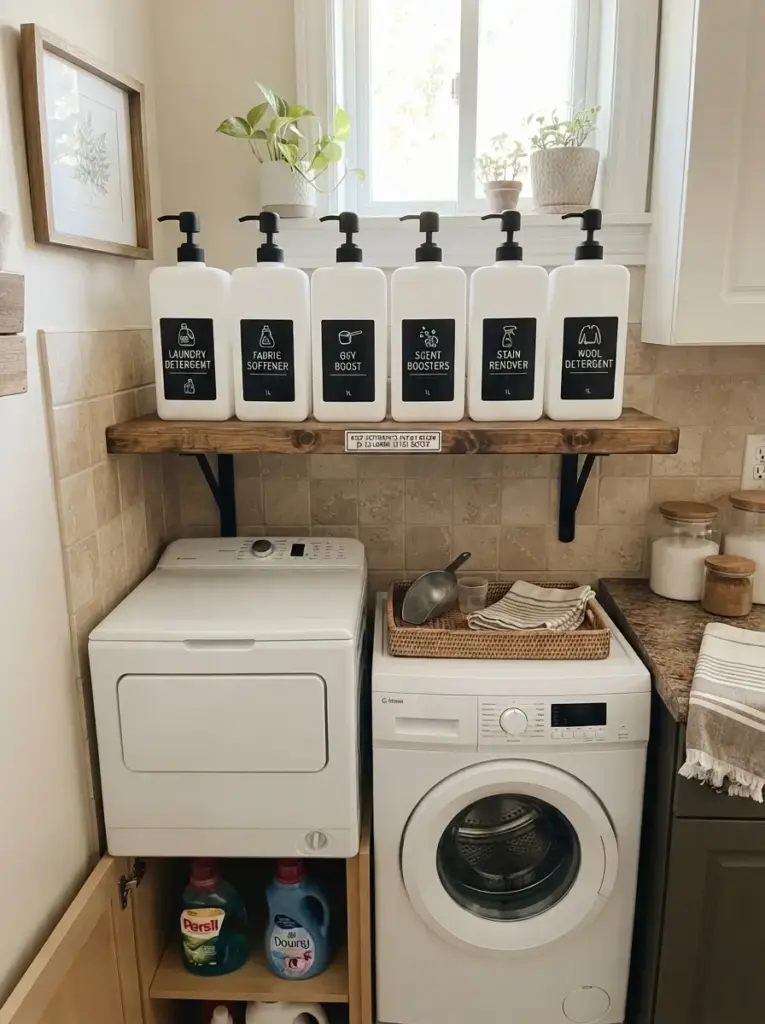
Original detergent bottles come in many shapes, colors, and sizes, which can make even a tidy shelf feel busy. Matching containers create a consistent line and make narrow storage easier to arrange. Choose sealed containers designed for the product being stored, and label them clearly with the product name and safety information.
Consistency helps a Small Apartment Laundry Corner blend with nearby decor instead of reading as a random utility station. Clear containers suit people who want to see refill levels, while opaque white, amber, or matte gray options reduce visual noise. Pump bottles are useful for liquid detergent when the pump delivers a known amount. Scoops should stay inside dry-product containers or in a small tray.Small Apartment Laundry Corner
Safety must guide the styling. Never place chemicals in food or drink containers, and never remove warning information you may need later. Keep the original instructions nearby if you decant a product. Beginners should start with two or three containers rather than transferring everything at once. Uniformity matters, but safe storage matters more.
Add Warm Task Lighting
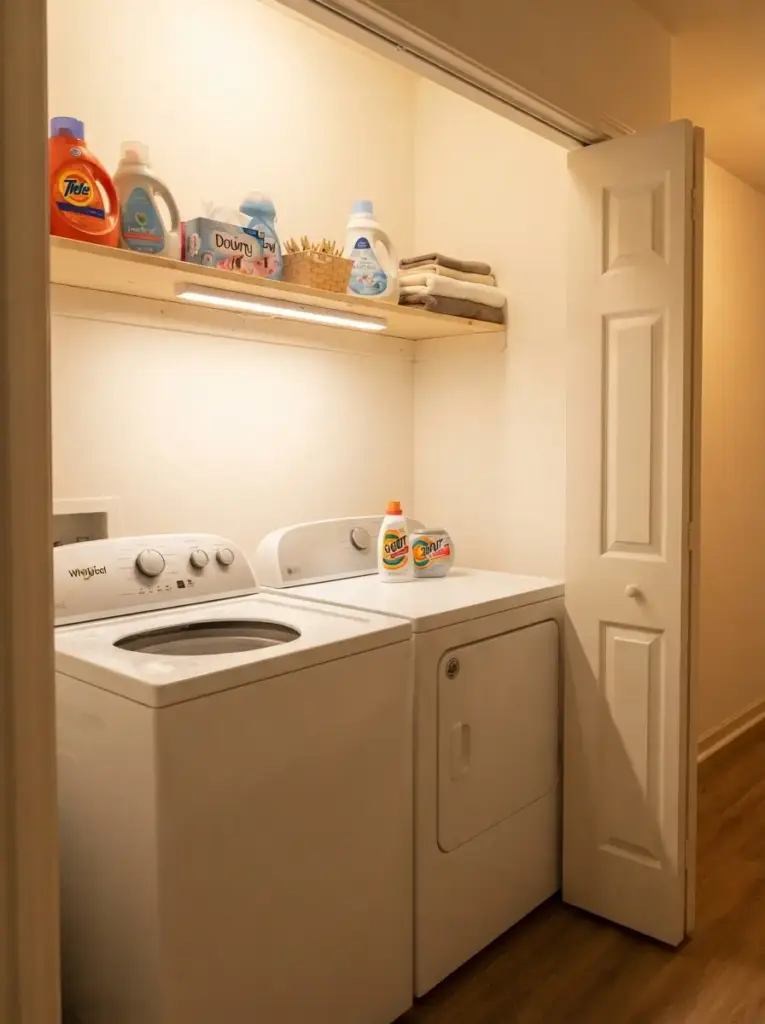
Many apartment laundry areas rely on one harsh ceiling bulb or light from an adjacent room. Under-shelf lighting, plug-in sconces, or rechargeable LED bars can brighten the work area without major electrical work. Aim for a color temperature around 2700K to 3000K for a warm, comfortable appearance, or 3500K when accurate stain checking matters more.
Visibility makes sorting, pretreating, and checking pockets easier. Better lighting also prevents dark shelves from feeling crowded. Place the light toward the front underside of a shelf so illumination reaches the appliance tops instead of shining only on the back wall. Motion-sensor bars work especially well inside closets because they turn on as soon as the doors open.
Rental-friendly adhesive lights should be lightweight and mounted on a clean, dry surface. Avoid placing fixtures near water lines or where heat can build up. Cool blue lighting above 5000K may make white walls look clinical and can exaggerate dust. Warm neutral light usually feels more connected to residential decor.
Build a Pegboard Utility Wall
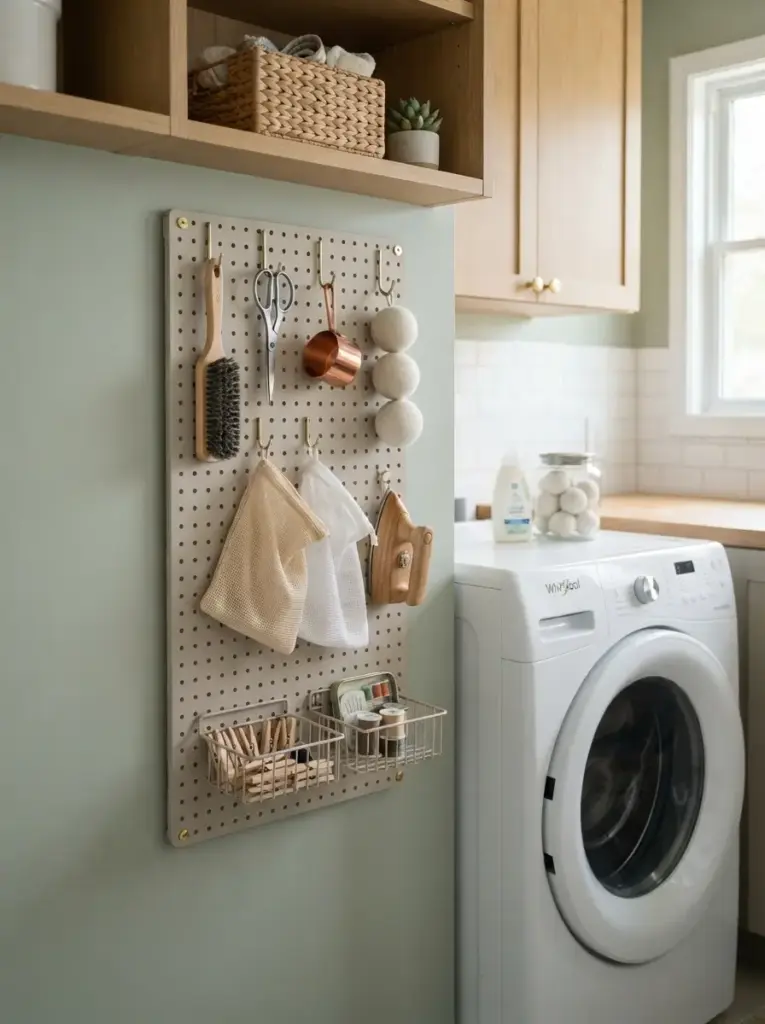
Pegboards organize small tools without filling shelves with loose objects. Hooks can hold lint brushes, scissors, measuring cups, mesh bags, reusable dryer balls, and a small ironing accessory. Baskets attached to the board can store clothespins or sewing supplies. Paint the pegboard the same color as the wall for a subtle result or use a soft accent shade for gentle contrast.
Adaptability gives this idea its strength. Hook positions can change as the routine changes, making the system useful for renters, students, and growing families. A narrow panel beside the machine can be enough; covering the entire wall is not necessary. Repeating the color of nearby cabinet handles or baskets helps the setup look deliberate. Small Apartment Laundry Corner
Leave breathing room between items so the board does not become visually noisy. Heavy irons, full detergent bottles, and bulky equipment need stronger support than standard peg hooks provide. Renters can mount a small board inside a freestanding frame or lean it securely on a shelf rather than fastening it permanently to the wall.
Place the Laundry Zone Behind Folding Doors
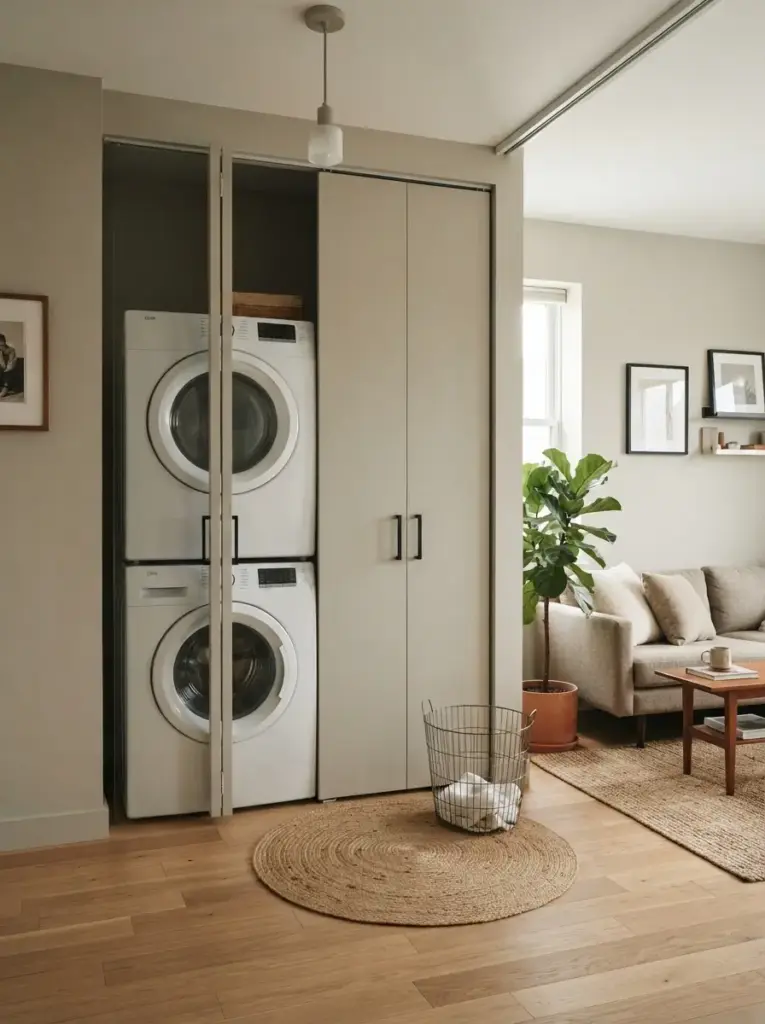
Bi-fold or accordion doors can turn an exposed appliance recess into a compact closet. Closed doors reduce noise, hide laundry clutter, and protect the rest of the room from the visual weight of machines. Louvered designs may support airflow, while solid doors create a cleaner furniture-like surface. Always follow appliance ventilation requirements before enclosing the area.
Open-plan apartments benefit most from concealed laundry zones because living, dining, and utility functions often share one view. Painting the doors the same color as the walls helps them recede. Warm white, pale greige, or muted beige works in many small homes. Simple knobs or low-profile pulls prevent the doors from looking too decorative.
Door clearance requires careful planning. Baskets, carts, and rugs should not block the panels when they fold. Noise may still travel through lightweight doors, so anti-vibration pads beneath the machines can help. Renters should consider a ceiling-mounted curtain track when replacing doors is not allowed. Small Apartment Laundry Corner
Use the Side of a Cabinet for Hanging Storage
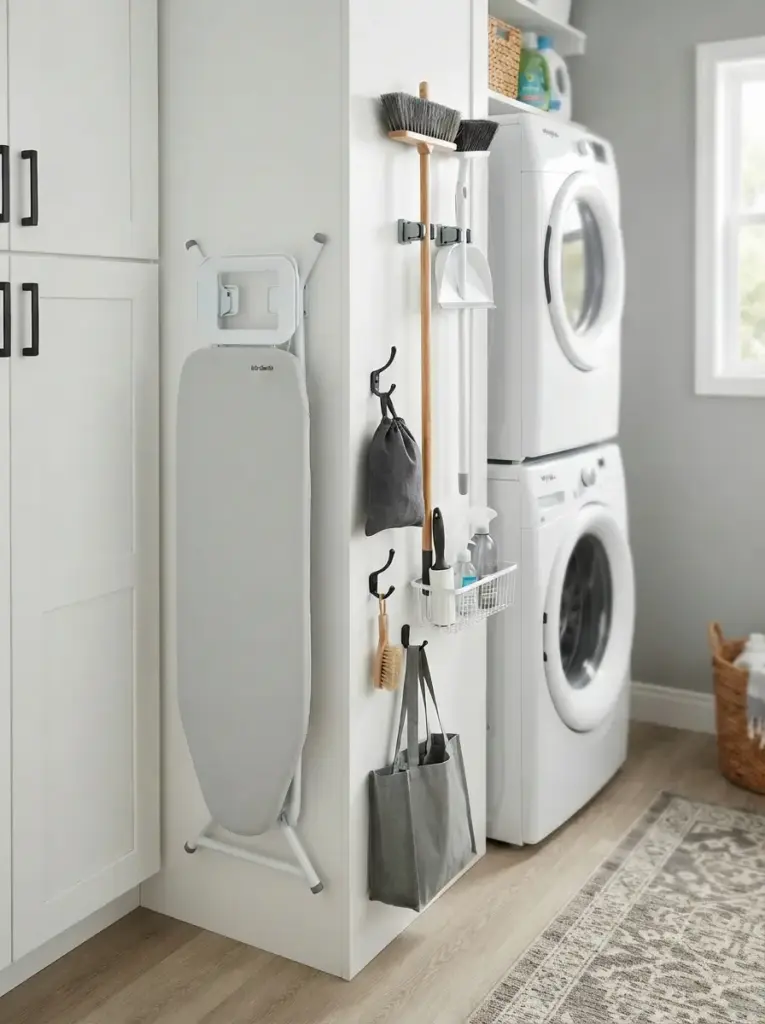
Narrow vertical surfaces often become wasted space. The side of a kitchen cabinet, wardrobe, or freestanding laundry tower can hold a foldable ironing board, broom clips, hooks, or slim wire baskets. Removable adhesive systems work for light items, while heavier tools need screws or manufacturer-approved brackets.
Efficiency increases because tall items stay off the floor and stop falling behind the machines. Small households that own only a few laundry tools will appreciate this method more than a full storage cabinet. Match hooks to nearby hardware for a polished look. White hooks disappear on white panels, while matte black creates a clear modern line.
Weight limits deserve attention. Adhesive hooks may release in humid rooms, especially when installed on dusty or textured surfaces. Clean the panel properly and allow the adhesive to cure before adding weight. Keep hanging items within the cabinet depth so they do not catch on clothing or block a walkway.
Add a Pull-Out Hamper System
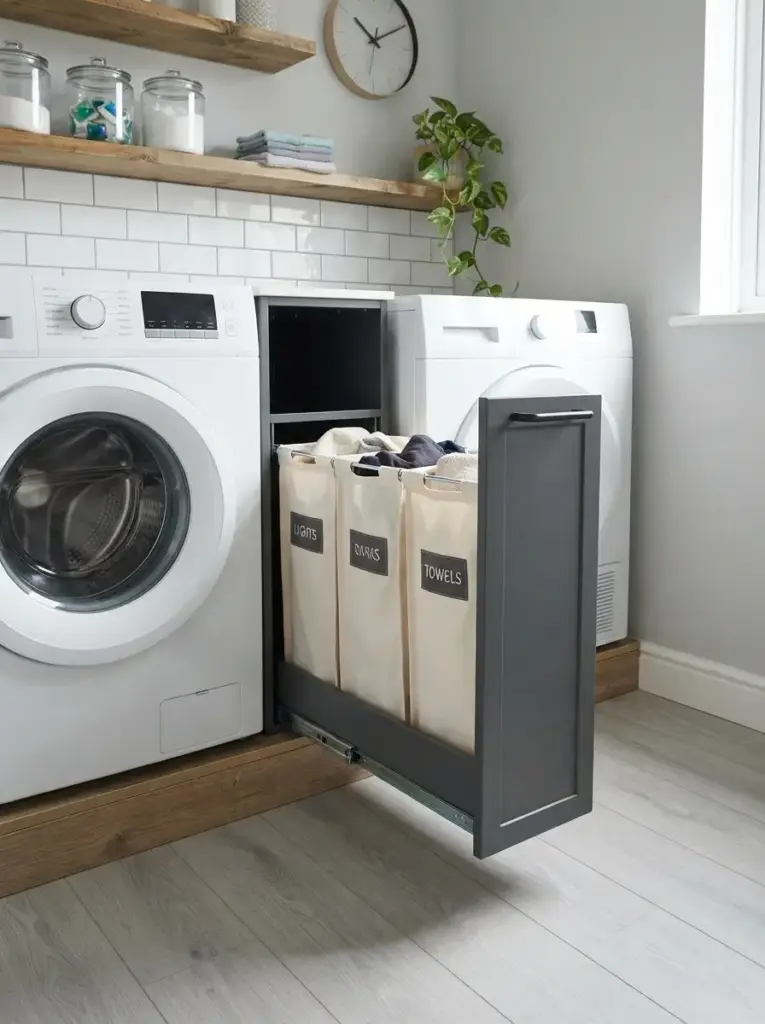
Sorting baskets can consume more floor space than the appliances themselves. A narrow pull-out hamper beside the washer keeps dirty clothing contained and separates lights, darks, or towels before wash day. Look for a freestanding frame with removable fabric bags, a rolling hamper cabinet, or a slim tilt-out unit that fits the available depth.
Pre-sorting reduces extra steps and makes the corner easier to maintain. Couples, roommates, and families benefit most because everyone can use the same simple system. Labels or small color markers help people sort correctly without covering the area in written instructions. Breathable fabric prevents damp clothing from sitting in a sealed plastic box.
Measure the path of the pull-out mechanism, not only the cabinet width. Enough front clearance is needed to remove bags and carry them to the machine. Avoid overfilling, since heavy bags can strain slides and make narrow units tip. Washable liners are worth choosing because laundry hampers collect lint, dust, and moisture.
Continue the Room’s Color Palette
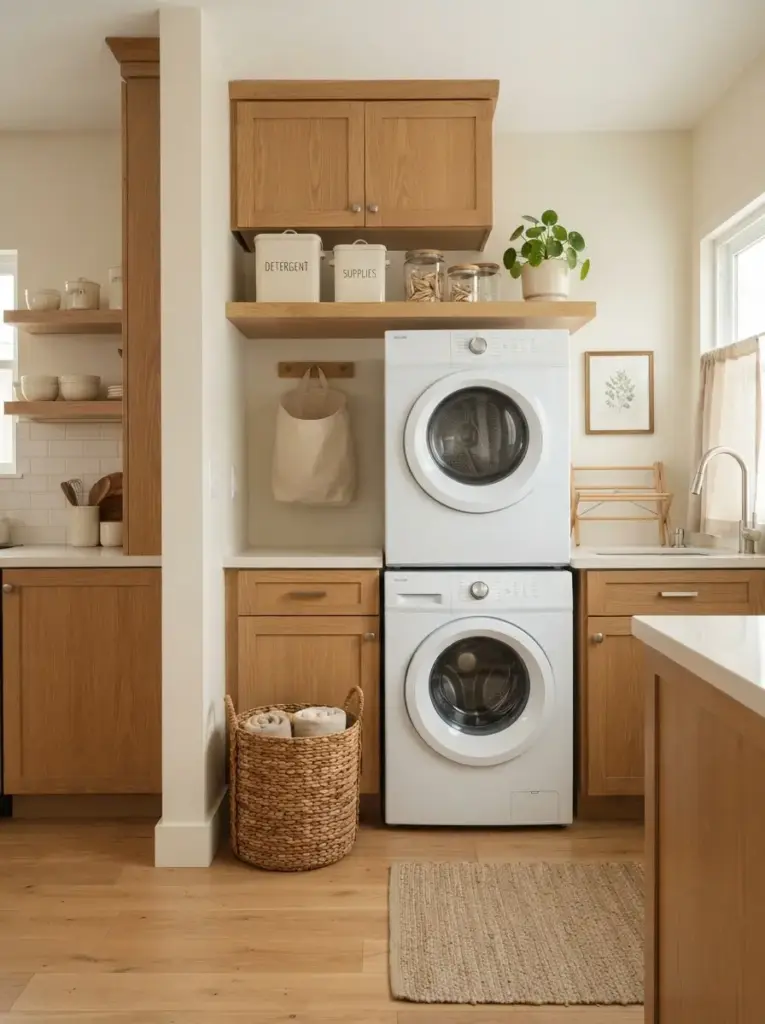
Laundry corners often look disconnected because the machines, baskets, shelves, and wall paint introduce too many unrelated colors. Repeating the room’s main palette makes the utility zone feel intentional. A kitchen with warm oak and cream can use woven baskets, cream bins, and a light wood shelf. A gray bathroom can repeat soft gray, white, and brushed nickel.
Connection is especially important when a Small Apartment Laundry Corner sits in plain sight. Shared colors help the eye read the room as one space rather than several competing zones. Limit the area to two main colors plus one small accent. Natural textures such as rattan, bamboo, canvas, and pale wood can soften metal appliances without adding strong color.
Matching everything exactly is not required. Slight variation keeps the corner from looking staged. Problems begin when bright detergent packaging, colored baskets, patterned curtains, and bold wall art all compete in a very small area. Editing the palette is often more effective than buying more decor.
Use a Removable Backsplash Panel
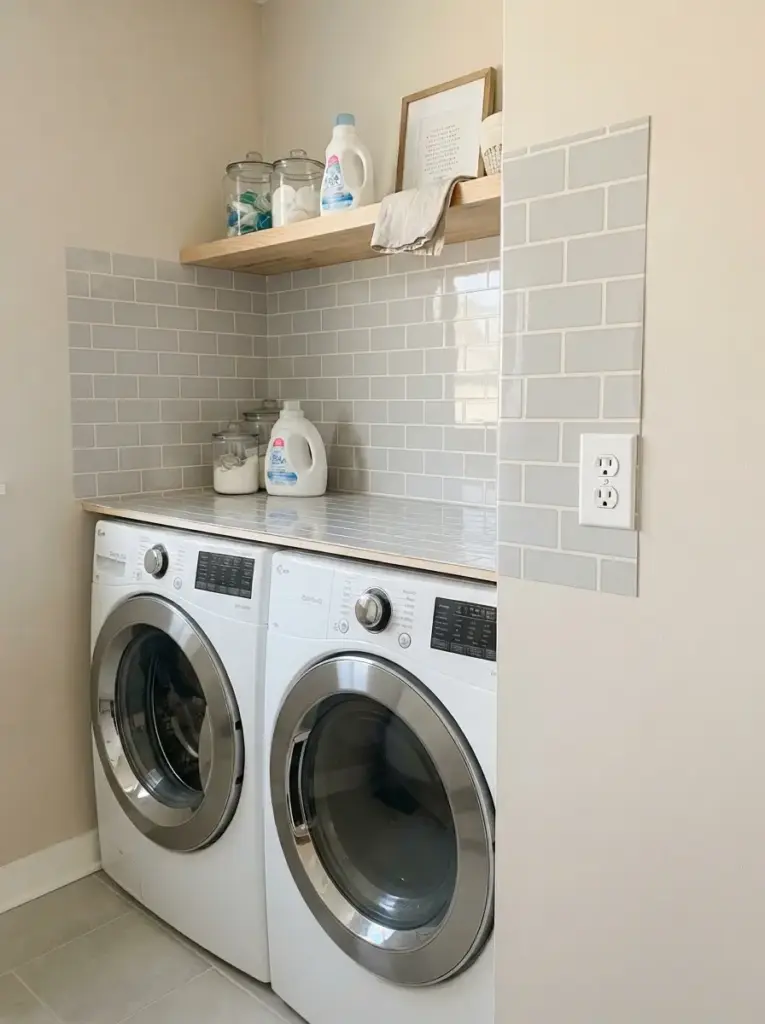
Simple backsplash panels can protect the wall from splashes and give the laundry nook a finished boundary. Peel-and-stick tile, washable vinyl panels, beadboard-look sheets, or a sealed painted panel are common choices. Small patterns work better than large, dramatic prints in tight spaces because the surface is viewed from close range.
Protection explains the practical benefit. Detergent drips and damp items are easier to wipe from a washable panel than from flat wall paint. Renters should test removable products in a hidden spot and check the lease before installation. Warm white subway patterns, light gray stone effects, and soft green vertical lines can add detail without making the corner visually smaller.
Surface preparation matters. Dust, grease, and textured paint can stop adhesive panels from bonding properly. Keep seams away from areas that receive frequent water exposure, and do not cover outlets, vents, or access points. A narrow panel behind the shelf or counter is often enough to create definition.
Finish With One Useful Decorative Detail
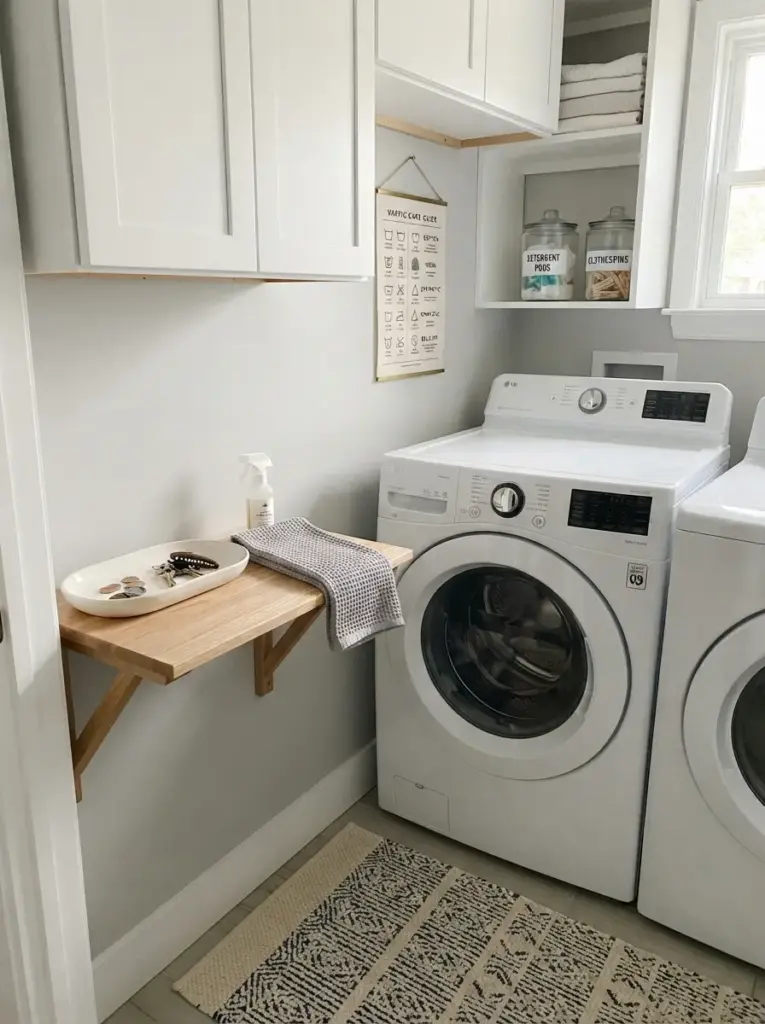
Small laundry zones do not need several signs, framed quotes, plants, jars, and baskets at once. One useful decorative detail can create character without taking up working space. Consider a washable runner, a framed care guide, a small clock, a ceramic tray for pocket items, or a realistic faux plant placed away from heat and moisture.
Restraint keeps the corner functional. A tray can collect coins, keys, buttons, and hair clips found in pockets. A framed fabric-care chart can help beginners choose safer wash settings. A runner adds softness and reduces noise, but it should have a low pile and a non-slip backing. Choose an item that supports the routine instead of decorating an already crowded shelf.
People who enjoy styling will benefit from setting a strict limit before shopping. One medium object often has more impact than five tiny accessories. Keep the appliance tops, folding counter, vents, and controls clear. Practical decor earns its place by making the space easier or safer to use.
Common Mistakes to Avoid
Overfilling shelves is the most common problem in compact laundry areas. Extra detergent, cleaning sprays, paper goods, sewing supplies, and unrelated household items often end up in the same nook. Crowded shelves slow down the routine because people must move several objects to reach one product. Store only active laundry supplies nearby and move bulk refills to a higher cabinet or another closet.
Ignoring appliance clearance can create safety and maintenance issues. Machines need space for hoses, ventilation, movement, and service access. Shelves should not block top-loading lids, and counters should not trap heat. Check the manufacturer’s instructions before installing anything around the appliances. Decorative plans should always fit the equipment, not force the equipment into an unsafe arrangement.
Poor lighting makes the corner look smaller and increases the chance of missed stains or forgotten pocket items. One central ceiling light may cast shadows under shelves. Add a focused task light where pretreating and folding happen. Choose a comfortable color temperature and avoid exposed bulbs that create glare against glossy white machines.
Random containers can also weaken the design. Buying many small organizers without a storage plan often creates more clutter. Measure shelves first, group supplies by function, then purchase only the bins that fit those groups. Rectangular containers usually use narrow shelves more efficiently than round jars.
Blocking airflow with curtains, hampers, or tightly packed cabinetry is another serious mistake. Fabric panels should sit away from vents, and doors must allow the machine to operate safely. Never use decor to hide warning signs such as moisture, leaks, unusual heat, or damaged cords. Good styling should make maintenance easier, not conceal problems.
Forgetting the room around the laundry area leads to visual imbalance. A busy nook beside a calm living room will always feel more cluttered than it is. Repeat nearby colors, materials, and hardware so the utility space belongs to the same home. The strongest Small Apartment Laundry Corner layouts support function while staying visually quiet.
Budget-Friendly Styling Tips
Start by editing what you already own. Remove empty bottles, expired products, duplicate tools, and supplies that belong elsewhere. Clearing space can improve the area more than adding a new organizer. Reuse sturdy boxes inside cabinets, wrap plain containers with removable labels, and move one existing basket into the laundry zone before purchasing a matching set.
Paint offers a low-cost visual reset when the lease allows it. A small wall area requires little paint, so leftover warm white, pale sage, dusty blue, or light greige may be enough. Satin or eggshell finishes are easier to wipe than very flat paint. Renters can create a similar effect with one removable panel or a fabric curtain.
Secondhand shelves, wall cabinets, rolling carts, and narrow tables can work well after careful cleaning and measurement. Focus on solid construction instead of current trends. A basic wood shelf can be sanded and sealed, while a metal cart can be refreshed with a thorough wash and matching bins. Avoid buying large furniture simply because the price is low; wrong dimensions waste money and space.
Matching labels create order for very little cost. Use simple printed labels, chalk markers on reusable tags, or handwritten cards in clear holders. Large text is easier to read from a distance. Keep wording practical, such as whites, darks, delicates, stain care, and cleaning cloths. Decorative labels should never replace safety information on chemical products.
Lighting upgrades can also stay affordable. Rechargeable bars, plug-in puck lights, and motion-sensor strips often cost less than hardwired fixtures. Choose products with warm neutral light and easy charging access. One well-placed fixture is better than several dim lights scattered around the nook.
Plan purchases in stages instead of completing the whole Small Apartment Laundry Corner in one shopping trip. Begin with the item that solves the biggest problem, such as a shelf for supplies or a hamper that clears the walkway. Use the area for two weeks, notice what still feels awkward, then add the next piece. Staged buying reduces impulse purchases and reveals whether the first organizer changed the amount of storage actually needed.
Small Apartment Laundry Corner Tips for Better Daily Use
Keep the daily routine in mind when deciding shelf height. Detergent, stain spray, dryer balls, and mesh bags should remain easy to reach without bending deeply or using a stool. Backup products, seasonal items, and rarely used tools can sit higher. Heavy bottles belong on strong lower shelves rather than above head level.
Create a clear path from hamper to washer to drying area. Even a beautiful setup becomes frustrating when baskets block doors or wet clothing must cross the room. Place the hamper close enough for quick loading, then keep a fold-down drying rack or a small hanger rail nearby. Efficient movement matters more than filling every wall with storage.
Use one basket for items found in pockets. Coins, receipts, hair ties, screws, and small toys can damage machines or disappear during washing. A shallow ceramic tray or divided box gives those objects a temporary home. Empty it weekly so the container does not become permanent clutter.
Schedule a five-minute reset after the final load. Return bottles, wipe the counter, remove lint, fold the drying rack, and put empty baskets away. Small zones lose order quickly because every object remains visible. Regular resets prevent the space from needing a large weekend cleanup.
Photograph the finished setup once, then use that image as a simple guide after future cleaning.
Check hoses, plugs, vents, and nearby surfaces during routine cleaning. Water marks, unusual warmth, loose fittings, or persistent odors should not be hidden behind baskets or curtains. Maintenance belongs in the design plan. Easy access helps renters report problems early and helps homeowners prevent small issues from becoming costly repairs.
Frequently Asked Questions
How do I make a laundry corner look less cluttered
Reduce the number of visible packages, keep the folding surface clear, and group small products inside two or three matching containers. Closed cabinets or a simple curtain can hide backup supplies. Repeating the nearby room’s colors also helps the area feel calmer. Remove anything unrelated to laundry, since narrow spaces become crowded faster than full rooms.
What is the best storage for a very narrow laundry space
Shallow shelves, slim rolling carts, wall-mounted baskets, and over-appliance units usually work best. Measure the smallest gap and the full pull-out path before buying anything. Storage should not block appliance doors, lids, hoses, vents, outlets, or service panels. Vertical systems are useful, but daily products should remain within comfortable reach.
How can renters improve a laundry nook without drilling
Tension rods, over-door racks, freestanding shelves, adhesive hooks for light items, removable backsplash panels, and rolling carts can create useful storage without permanent construction. Always follow weight limits and test adhesive products on a hidden area. Keep access to plumbing and electrical connections clear for inspections or repairs.
Which colors make a small laundry area feel bigger
Warm white, soft cream, pale gray, muted blue, light sage, and natural wood tones reflect light and reduce visual heaviness. One darker accent can add definition through handles, labels, or a slim frame. Too many bright colors in packaging and baskets often make the area feel smaller than the wall color does.
What lighting is best for a compact laundry nook
Warm neutral lighting between 2700K and 3500K works well for most homes. Choose the warmer end for a cozy open-plan room and the brighter neutral end for stain checking and sorting. Under-shelf lights reduce shadows on the work surface. Motion sensors are helpful inside closets and recessed corners.
How much decor should I add
One or two useful pieces are enough in most cases. A small tray, washable runner, framed care guide, or compact faux plant can add personality without reducing function. Keep controls, vents, counters, and shelves easy to access. Decorative items should support the routine or occupy space that would otherwise stay safely unused.
Conclusion
Thoughtful planning can turn even a narrow wall or closet recess into a reliable laundry zone. Start with accurate measurements, clear out unnecessary products, and choose storage that follows the way you actually wash, dry, and fold clothes. Vertical shelves, slim carts, folding racks, concealed cabinets, and warm task lighting can add function without making the room feel crowded.
Strong results do not depend on expensive cabinetry or a large renovation. Rental-friendly curtains, freestanding units, removable lights, and matching baskets can create order on a modest budget. Color repetition and restrained decor help the utility area connect with the rest of the home. The best Small Apartment Laundry Corner is easy to clean, safe to maintain, comfortable to use, and simple enough to stay organized throughout the week.