
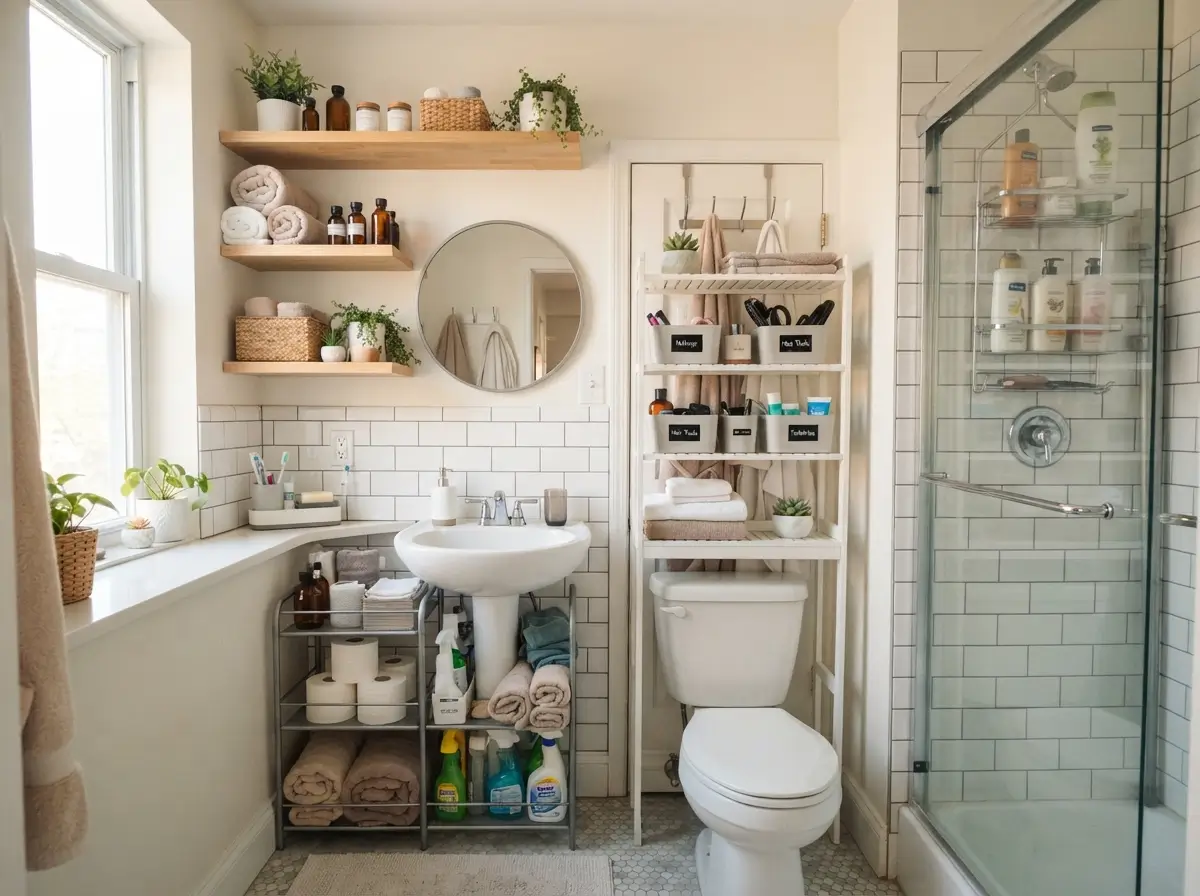

Small apartment bathrooms can become difficult to use when toiletries, towels, cleaning products, and grooming tools compete for the same limited surfaces. Good Apartment Bathroom Organization does more than hide clutter. It places each item where it supports a daily routine, protects clear walking space, and makes cleaning easier.
How Can You Organize a Small Apartment Bathroom?
Start by removing expired products, duplicates, and items used outside the bathroom. Group what remains by routine, such as showering, skincare, hair care, dental care, medicine, and cleaning. Store everyday items within easy reach, place weekly products slightly higher, and move bulk supplies elsewhere when possible. Keep counters mostly clear so the room feels larger and stays easier to wipe down.
Begin With a Complete Bathroom Edit
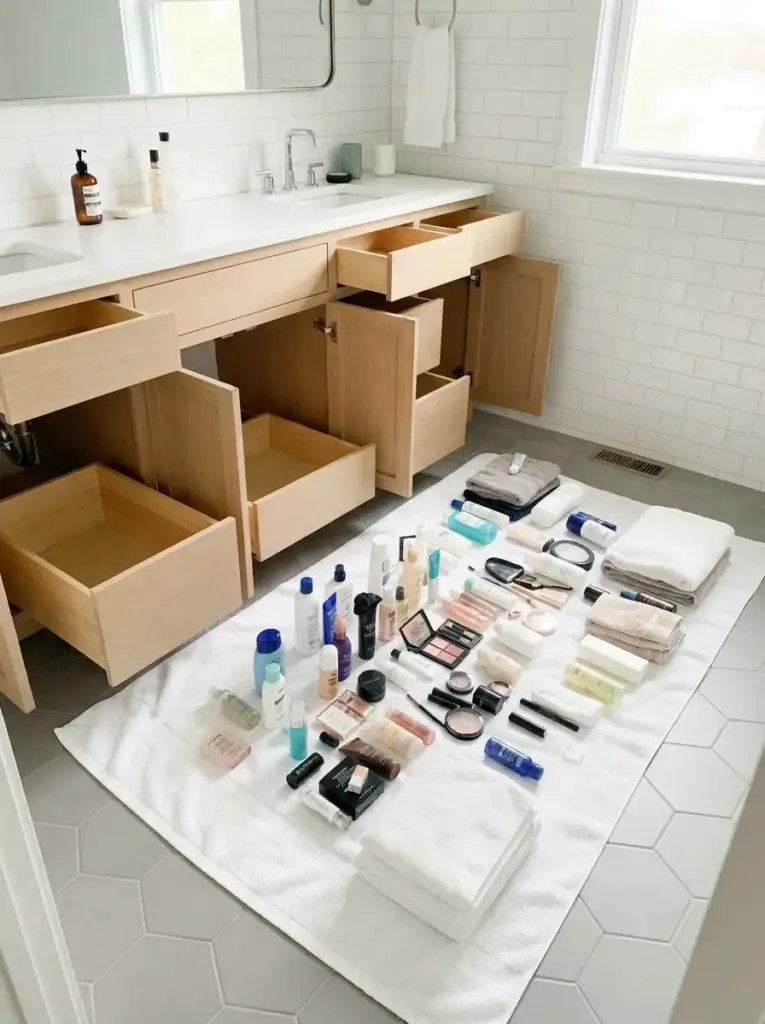
Successful organization begins before any basket or shelf enters the room. Empty drawers, cabinets, shower ledges, and countertop containers, then place everything on a towel or clean floor. Check expiry dates, damaged packaging, dried cosmetics, nearly empty bottles, and products that irritated. Remove items you no longer use instead of storing them more neatly. People moving into a first apartment should also separate bathroom essentials from general household stock, since spare tissues, cleaning refills, and bulk soap can often live in a hall cupboard.
Sorting reveals how much storage the room truly needs. Create groups for daily, weekly, occasional, backup, and disposal. Daily items should remain closest to the sink or shower, while occasional products can occupy higher shelves. Medicine may require a dry, secure location outside a humid bathroom. This method supports Small Bathroom Organization Ideas because reducing volume creates more usable space than adding extra containers.
Store Daily Products in One Easy-Access Zone
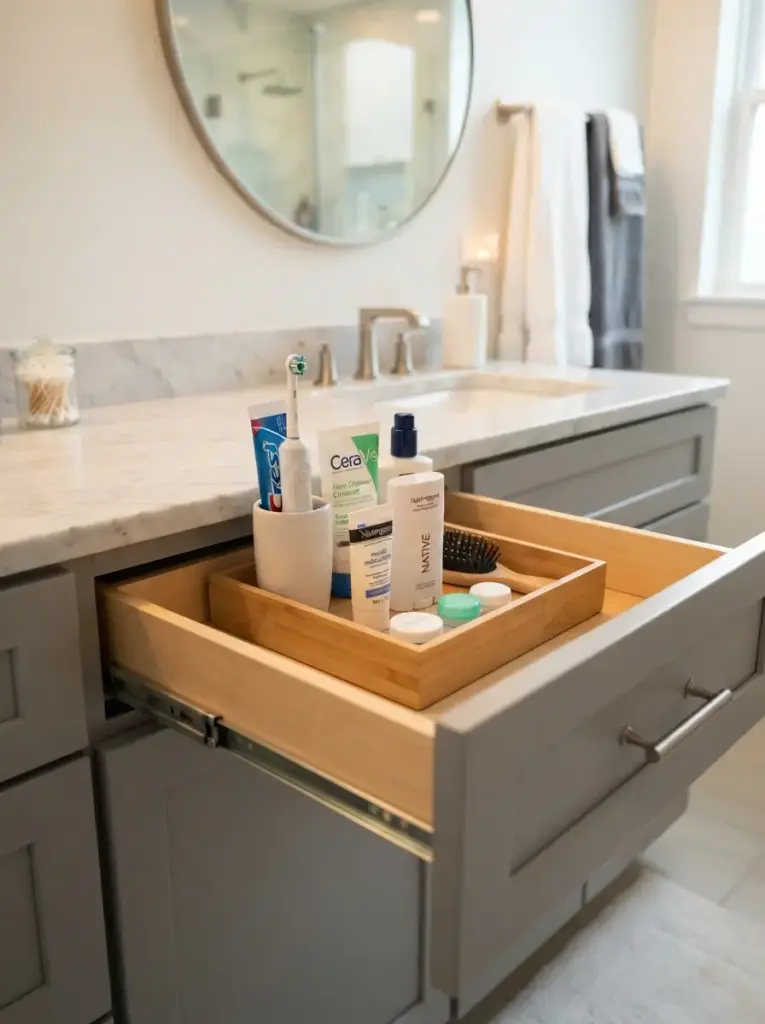
Daily routines become faster when related items stay together. Place toothbrushes, toothpaste, cleanser, moisturiser, deodorant, and other morning basics in one drawer, cabinet shelf, or shallow tray. Avoid dividing frequently used items across several locations because every extra movement makes the system harder to maintain. People with rushed mornings or shared bathrooms benefit most from a single personal zone that can be opened, used, and reset quickly.
Easy access does not mean every product must remain visible. Use a low tray inside a drawer or a small handled caddy inside a cabinet. Pull the entire group forward, complete the routine, then return it in one motion. Households with limited vanity storage can use one caddy per person and keep the containers on a high shelf. Apartment Bathroom Organization works best when storage follows behaviour rather than forcing people to change practical habits. Leave enough room around each group so bottles can stand upright and labels remain readable.
Install Shallow Shelves Above the Toilet
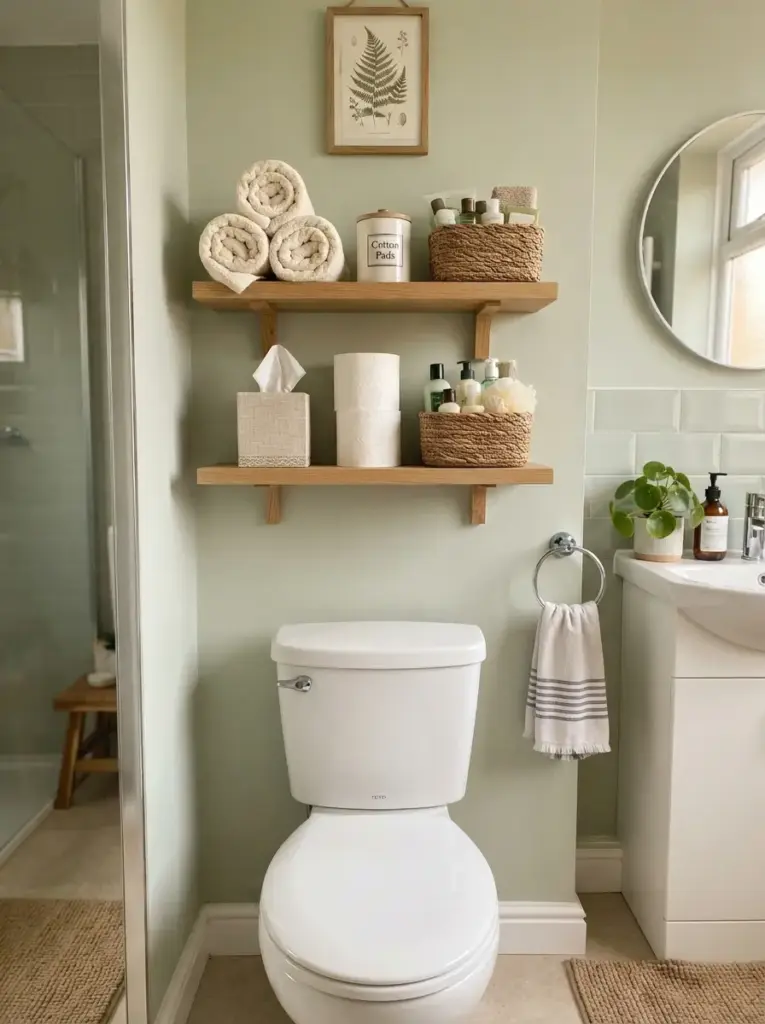
Wall space above the toilet often remains unused even when cabinets are full. Two shallow shelves can hold rolled towels, spare toilet paper, tissue boxes, and a small basket of backup products. Choose a depth between roughly 15 and 20 centimetres so the shelves provide storage without projecting too far over the toilet. People with narrow bathrooms should measure head clearance, toilet-lid movement, and any wall-mounted flush controls before installation.
Open shelving looks orderly when the contents follow a simple colour and container plan. Use two matching baskets for mixed packaging, then display only neat items such as folded towels or uniform jars. Keep heavy bottles and glass containers away from shelf edges. Renters can consider a freestanding over-toilet unit when drilling is not allowed, but it must feel stable and leave space for cleaning. Apartment Bathroom Wall Organization Ideas become more useful when the shelves solve a real storage problem instead of holding several decorative objects with no daily purpose.
Use Drawer Dividers That Fit the Products
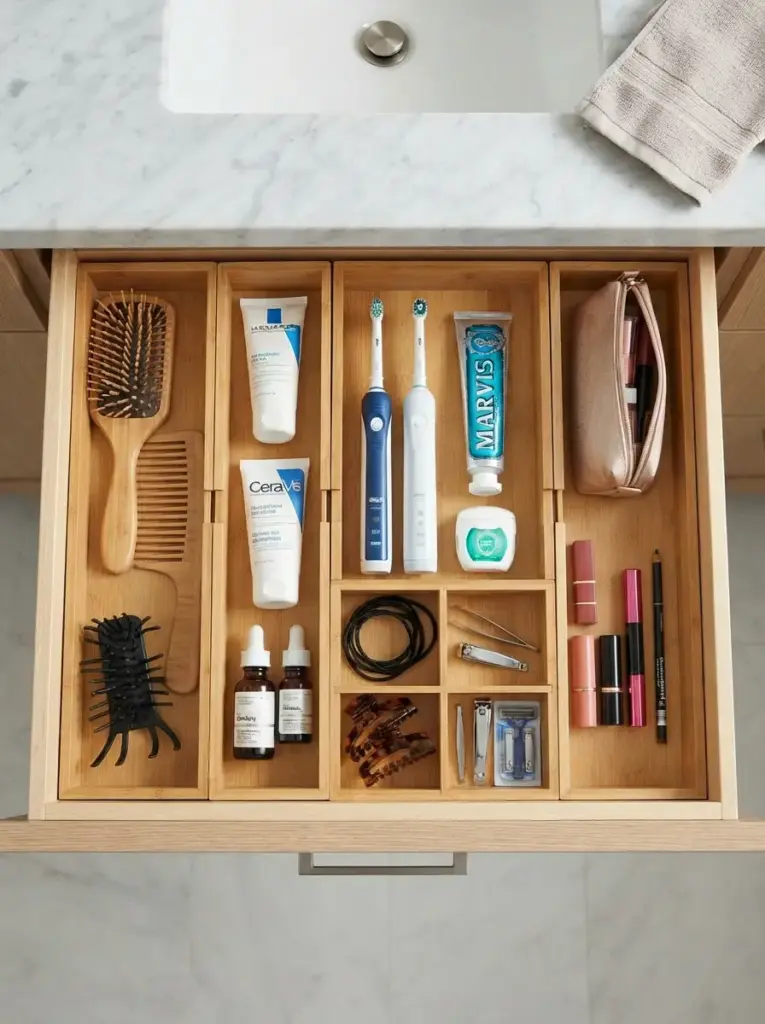
Bathroom drawers quickly become messy because tubes, razors, brushes, and small tools shift whenever the drawer opens. Adjustable dividers create clear sections while using the full width of the drawer. Measure internal height, width, and depth before buying. People with shallow drawers may need low trays designed for cosmetics rather than tall kitchen organizers.
Grouping by task makes the drawer easier to understand. Keep dental items together, place skincare in another section, and separate hair accessories from sharp grooming tools. Long dividers suit brushes and combs, while small square compartments hold clips, floss, and spare blades. Clean the drawer every few months and remove empty packaging. Well-sized dividers prevent products from piling on top of one another, which reduces duplicate purchases caused by forgotten items.
Add a Slim Rolling Cart Beside the Vanity
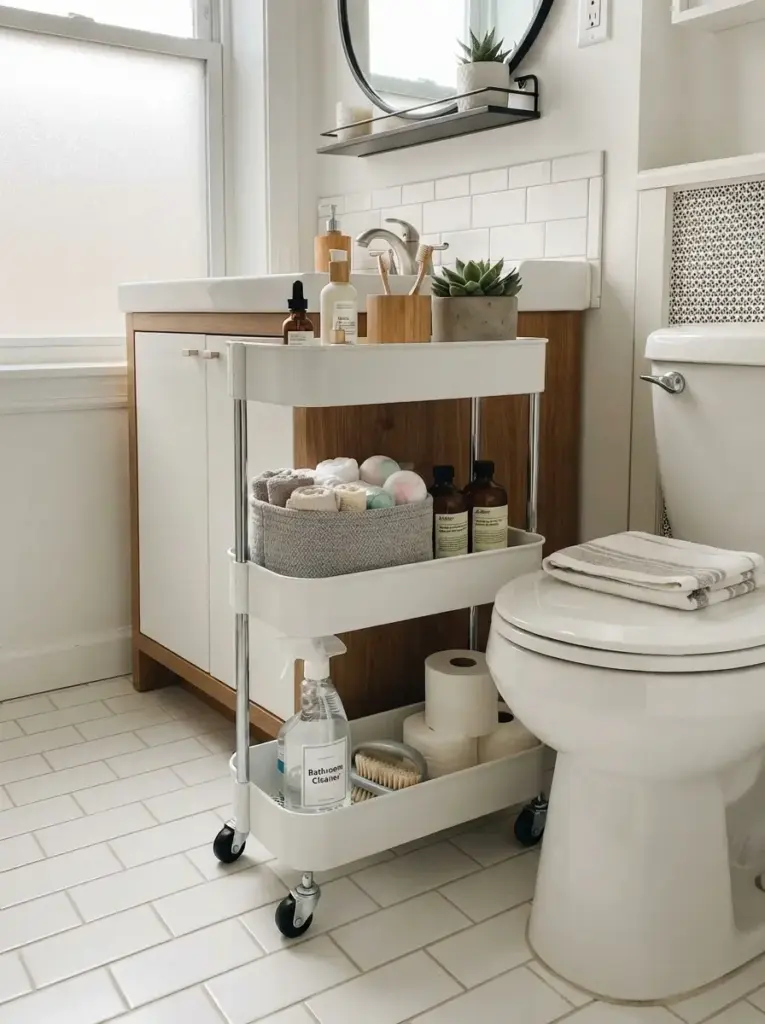
Narrow rolling carts use small gaps that standard cabinets cannot fill. Look for a cart between 15 and 25 centimetres wide if it needs to sit beside a vanity or toilet. Three tiers can separate skincare, hair products, cleaning supplies, or towels. Wheels let you pull the unit forward for access and move it during cleaning. Renters and students often find this option useful because it adds storage without drilling or changing permanent fixtures.
Open carts need careful editing to avoid looking crowded. Place attractive or frequently used products on the top tier, keep mixed bottles inside matching bins on the middle tier, and store heavier supplies near the bottom for stability. Check that the cart does not block doors, radiators, outlets, or walking paths. People interested in Cute Bathroom Organization Ideas can choose rounded shelves or soft-coloured bins, but practical dimensions matter more than decoration.
Hang an Organizer Over the Door
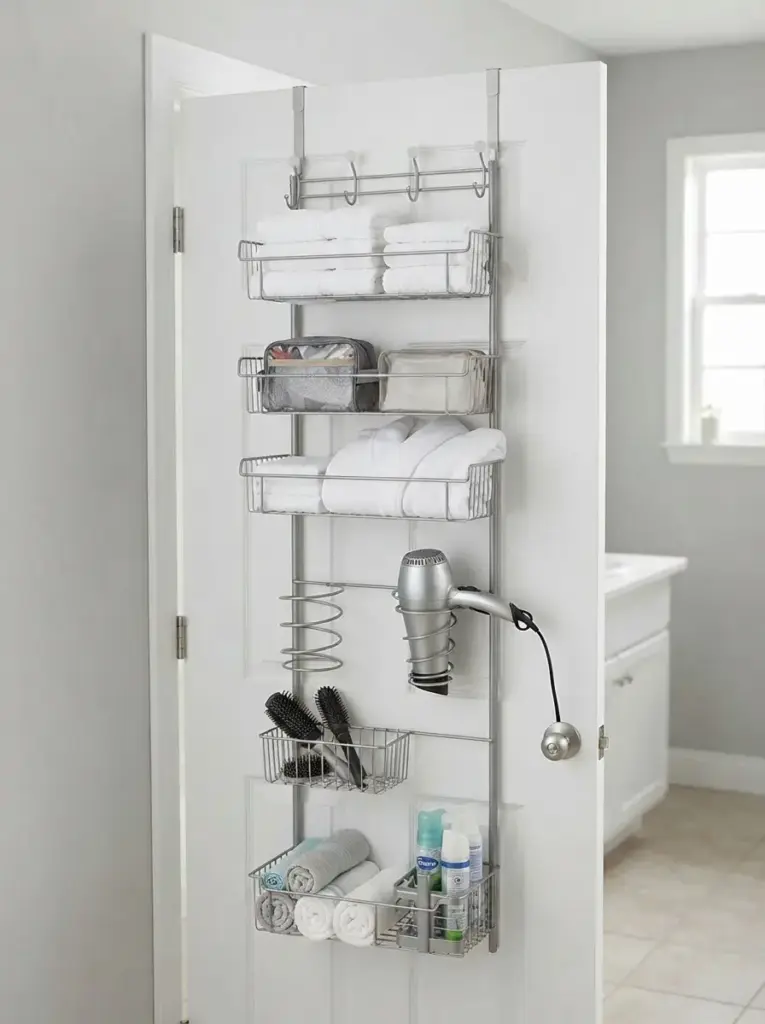
Door backs provide valuable storage for lightweight items. An over-door rack can hold towels, robes, hair tools, toiletry bags, or cleaning cloths without using floor space. Choose a design with thin top brackets so the door still closes smoothly. People with hollow doors or strict rental rules should avoid screw-mounted options and confirm that the frame has enough clearance.
Noise and movement can make poor-quality organizers frustrating. Add soft pads behind the rack to protect the door and reduce rattling. Place heavier objects lower down so the organizer remains balanced. Heat-producing hair tools must cool completely before storage unless the holder is designed for hot tools. A good system keeps doors easy to open and gives every hanging item a defined position. Avoid filling the rack so deeply that it hits wall hooks, shower screens, or nearby furniture.
Use Clear Stackable Bins Under the Sink
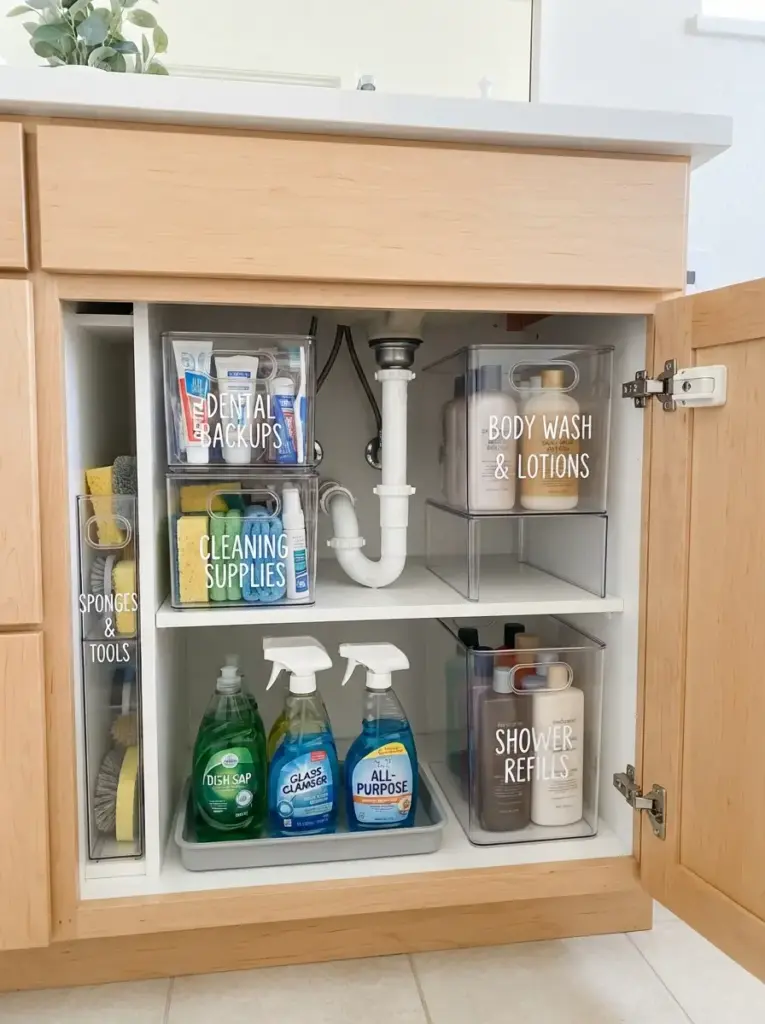
Under-sink cabinets often waste space because plumbing divides the interior into awkward sections. Clear stackable bins can fit around pipes and create levels for small supplies. Measure the cabinet opening as well as the internal space because hinges and door frames may reduce usable width. People with many backup products should choose bins with open fronts or pull-out drawers so lower items remain accessible.
Categories prevent the cabinet from becoming another hidden pile. Store shower refills in one bin, dental backups in another, and cleaning products in a separate section. Labels help shared households return items to the correct place. Keep leak-prone bottles inside washable trays, and avoid stacking heavy containers above delicate plumbing. Child-safe locks may be necessary when cleaning chemicals sit in a low cabinet.
Mount Adhesive Baskets Inside Cabinet Doors
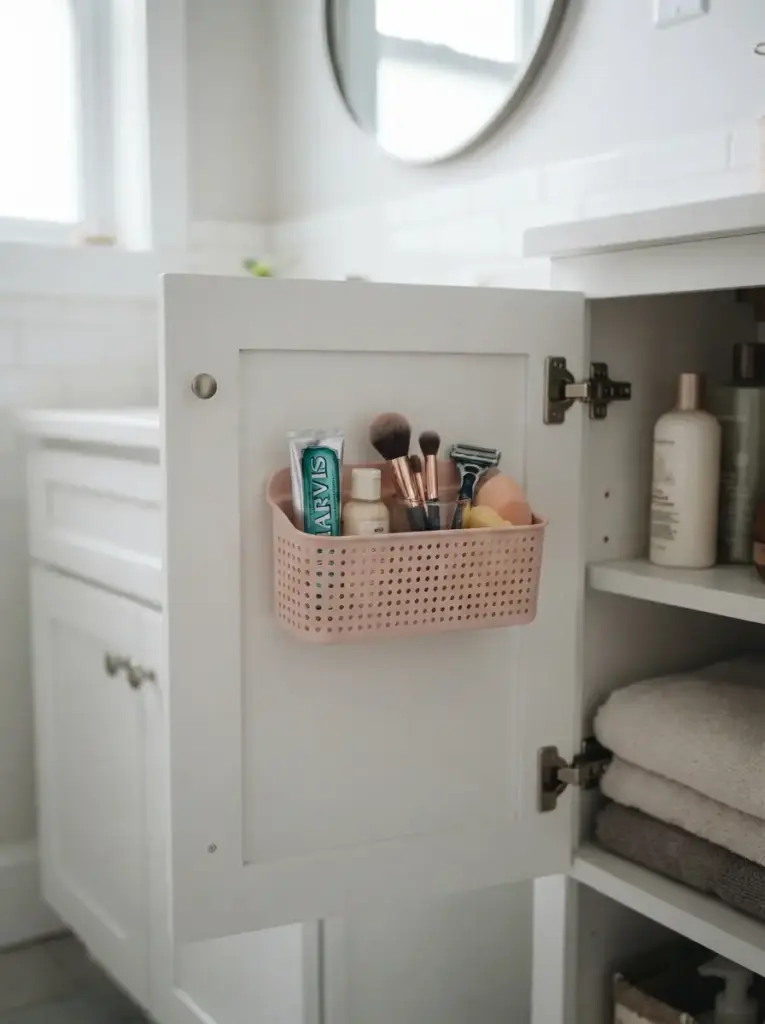
Cabinet doors offer shallow storage for items that otherwise disappear behind larger bottles. Adhesive baskets can hold toothpaste, small lotions, makeup brushes, razors, or cleaning sponges. Select low-profile containers so they do not collide with shelves when the door closes. Renters should test adhesive products on a hidden area and follow weight limits carefully.
Placement determines whether the basket works smoothly. Close the door gently while holding the empty organizer in position to check clearance, then mark the location before attaching it. Clean and dry the surface thoroughly, and allow the adhesive to cure for the recommended time. People who enjoy Girly Apartment Bathroom Organization Ideas can use blush, cream, or clear baskets, but the colour should coordinate with the cabinet rather than attract attention to clutter. Avoid storing heavy glass bottles on adhesive-mounted pieces.
Create a Tidy Shower Storage System
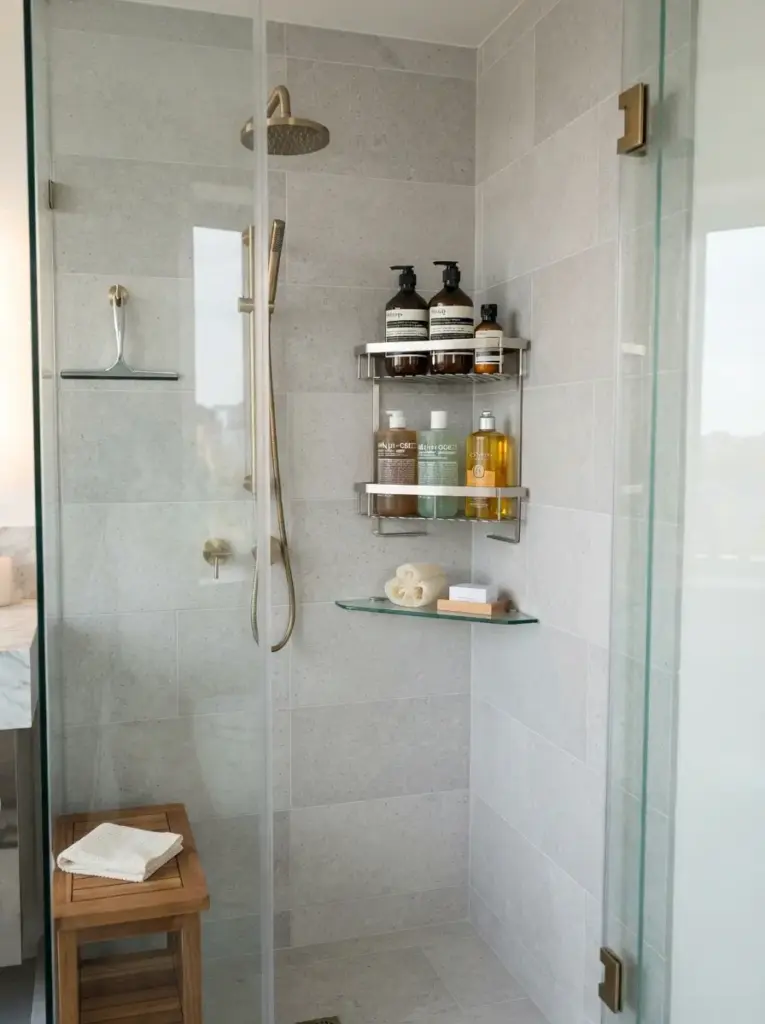
Shower storage should keep bottles off the floor and allow water to drain. Rust-resistant corner caddies, tension-pole units, hanging organizers, and adhesive baskets can all work when matched to the enclosure. People with tiled showers should measure grout lines and wall texture before buying adhesive products, since uneven surfaces may reduce grip.
Keep only current shower products inside the wet zone. Move duplicate shampoos, unopened soap, and occasional treatments to a dry cabinet. Arrange bottles by height or routine, and place frequently used products between shoulder and waist level. Luxury Apartment Bathroom Organization often looks simple because the shower contains fewer, better-positioned products rather than a crowded display.
Store Towels Vertically or in Uniform Rolls
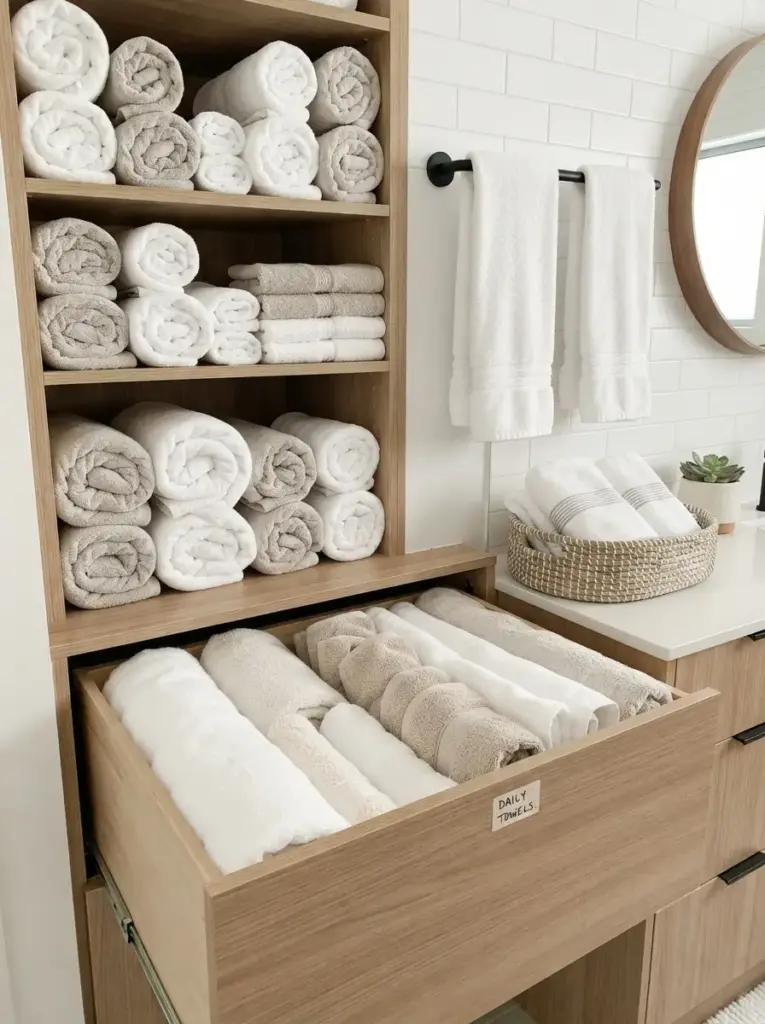
Bulky towel piles can consume an entire cabinet. Vertical folding lets towels stand side by side in baskets or deep drawers, making each piece visible without disturbing the stack. Rolled towels work well on open shelves, but the rolls should remain firm and consistent. People with only two or three sets per person can save space by keeping daily towels in the bathroom and storing spare guest sets elsewhere.
Towel size affects storage more than many beginners expect. Oversized bath sheets feel comfortable but require deeper shelves and longer drying time. Standard bath towels often suit compact bathrooms better. Use one neutral colour or a restrained two-colour palette so open storage looks calm. Place damp towels on rails with enough space for airflow rather than folding them immediately. Neat towel storage supports both hygiene and appearance, while overfilled shelves trap moisture and make clean linens harder to reach.
Add a Narrow Cabinet in an Unused Corner
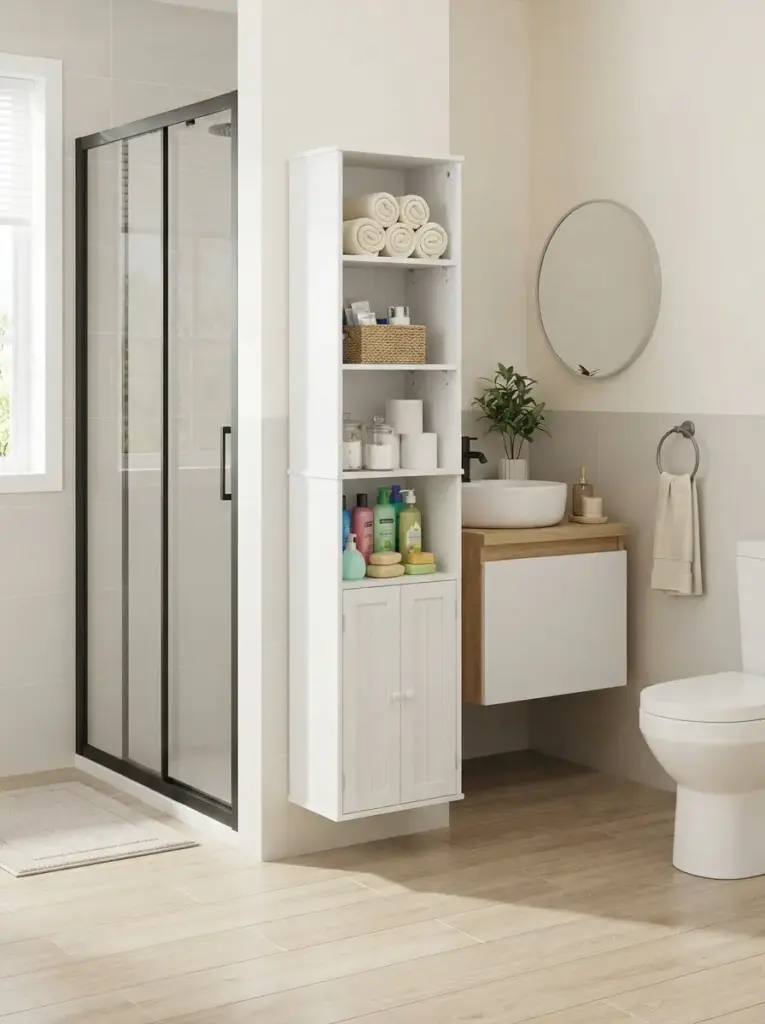
Tall, shallow cabinets provide useful storage without occupying much floor area. Look for widths between 20 and 35 centimetres when working beside a vanity, shower, or toilet. Closed doors hide colourful packaging, while open sections can hold baskets or folded towels. People who own their apartment may choose wall-mounted cabinets that leave the floor visible, creating a lighter appearance and easier cleaning.
Internal shelf spacing should match the contents. Adjustable shelves help accommodate tall bottles, toilet paper, and small bins without wasting vertical gaps. Secure tall furniture to the wall when required, especially in homes with children or pets. Renters should choose freestanding units with anti-tip solutions allowed by the lease. Vertical furniture helps only when it preserves safe movement. Leave room for door swings, radiator heat, electrical outlets, and access to plumbing panels.
Use Matching Labels and Simple Containers
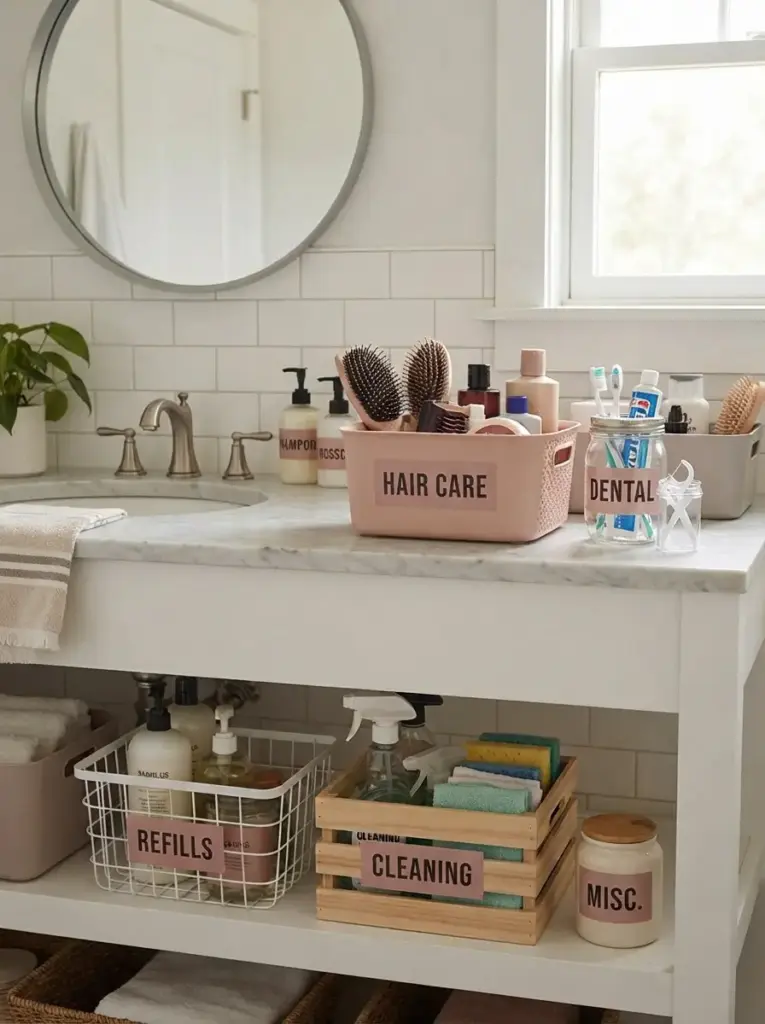
Labels reduce decision-making in shared or busy bathrooms. Clear names such as “hair care,” “dental,” “refills,” and “cleaning” help everyone understand where items belong. Choose waterproof labels or laminated tags that resist splashes. People with visual impairments may prefer larger text and strong contrast rather than decorative script.
Matching containers create visual order, but buying a complete set is not always necessary. Reuse sturdy boxes, jars, or baskets when sizes suit the contents, then add consistent labels to connect them. Pink Bathroom Organization Ideas can include muted rose labels, blush bins, or soft coral accents without turning every storage item pink. Keep functional information easy to read. Over-labelling individual products creates extra maintenance, so label categories instead. Review each container every few months to remove expired items and adjust categories as routines change.
Set Up a Safe Hair Tool Station
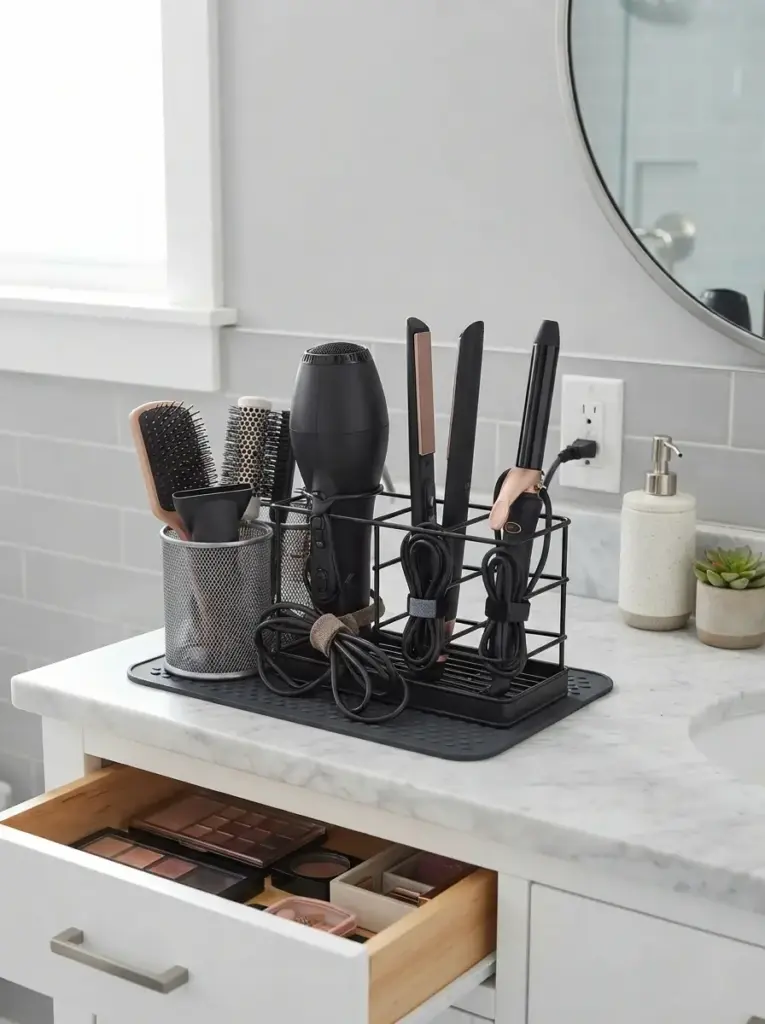
Hair dryers, straighteners, curling tools, brushes, and cords can take over a small vanity. A dedicated station keeps them together and protects other products from heat. Use a heat-resistant countertop holder, a wall-mounted metal rack, or a cabinet-door organizer designed for styling tools. People who use several appliances each morning gain the most from this setup.
Cord control prevents tangles and keeps plugs away from water. Wrap cooled cords loosely with reusable ties, and avoid bending them tightly near the appliance base. Never store a hot tool inside plastic or against towels unless the holder is specifically heat-safe. Position the station near a suitable outlet without creating a tripping line. A metal cup can hold brushes, while a separate compartment stores attachments. Keeping the entire routine in one place frees drawers for smaller items and makes the counter easier to clear after use.
Turn the Mirror Area Into Hidden Storage
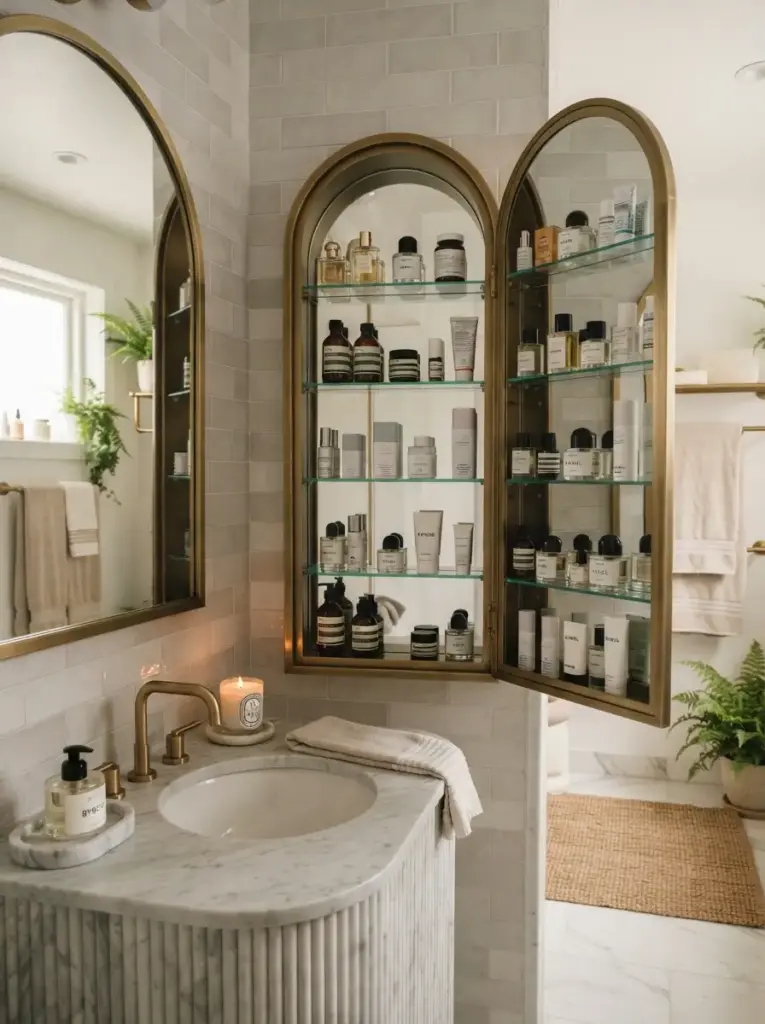
Mirrored medicine cabinets provide two functions in the same wall area. Replacing a plain mirror with a shallow cabinet can add shelves for skincare, dental items, and medicines without taking floor space. Recessed models look streamlined but require wall work, while surface-mounted cabinets are easier to install. Homeowners planning a renovation should check wall studs, wiring, pipes, and ventilation before cutting into the wall.
Renters may use a lightweight mirror cabinet only with permission and secure installation. Adjustable internal shelves improve flexibility, while mirrored interiors make small items easier to find. Keep frequently used products at eye level and place less-used items higher. Luxury Feminine Apartment Bathroom Organization Ideas can include an arched brass cabinet or a fluted-frame design, although storage depth and safe mounting should guide the decision. Humidity-sensitive medicines may still need a cooler, drier location.
Create a Weekly Reset Basket
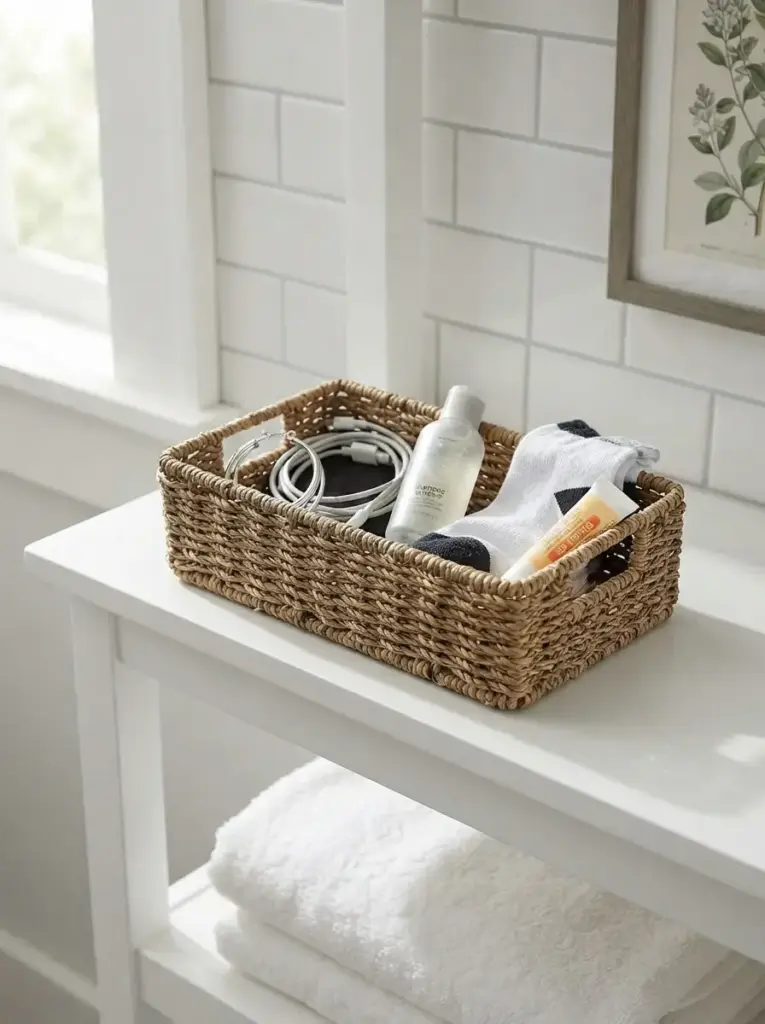
Daily clutter often consists of items that belong elsewhere, such as jewellery, laundry, empty packaging, or products brought in for one routine. A small reset basket gives these objects a temporary home until they can be returned. Place the basket inside a cabinet, on a shelf, or near the bathroom door. People with busy schedules, children, or shared flats may find this simple habit more useful than adding another permanent organizer.
Choose a container small enough to require regular emptying. Large baskets can become long-term clutter zones. Once a week, return each item, refill soap, replace toilet paper, wipe organizers, and check towel supplies. Short maintenance sessions keep the system effective between larger clean-outs. A ten-minute reset protects the systems created throughout the room and highlights when a container no longer fits the household’s needs.
Common Bathroom Organization Mistakes to Avoid
Buying Storage Before Measuring
Attractive organizers can waste space when they are too tall for drawers, too deep for shelves, or too wide for cabinet doors. Measure every storage area in centimetres, including internal dimensions, openings, hinges, pipes, and door clearance. Write the measurements in your phone so they remain available while shopping. People furnishing a new apartment should live with the bathroom for several days before buying large units because routines often reveal needs that are not obvious during move-in.
Keeping Too Many Backup Products
Bulk purchases can save money, but storing every refill in a small bathroom reduces room for daily essentials. Keep one backup of frequently used products nearby and move the remaining stock to a dry cupboard. Check quantities before shopping to prevent duplicate shampoo, toothpaste, and cleaning spray. Small spaces function better when stock levels match realistic use rather than sale-driven buying.
Mixing Daily and Occasional Items
Everyday products become harder to reach when holiday toiletries, guest supplies, and specialised treatments occupy the same shelf. Separate items by frequency. Place daily products at hand level, weekly items higher, and occasional products in labelled containers. Small Bathroom Organization Ideas depend on keeping the easiest locations available for the routines performed most often. Revisit categories when habits change.
Overfilling Open Shelves
Open shelves can look useful in product photos but quickly become untidy when every centimetre is filled. Leave visible space around baskets, towels, and jars. Store colourful packaging inside closed containers and limit decorative pieces. Open shelves need regular dusting and should hold items that tolerate humidity. People who dislike frequent styling may prefer cabinets with doors.
Ignoring Cleaning Access
Storage that blocks the floor, covers plumbing, or sits tightly against the toilet makes routine cleaning more difficult. Choose furniture with legs, wheels, or enough clearance for a mop. Avoid placing baskets where they collect splashes from the sink or shower. Effective organization should reduce cleaning effort instead of creating more objects to move.
Using Unsafe Adhesive Products
Adhesive hooks and baskets can fail on textured tile, damp walls, loose paint, or dirty surfaces. Follow installation instructions, respect curing times, and stay below weight limits. Avoid hanging glass, electrical tools, or heavy bottles from uncertain adhesive mounts. Renters should test removal carefully because strong products can damage paint or veneer.
Decanting Products Without Labels
Matching bottles can look calm, but unlabeled liquids may cause confusion or unsafe use. Keep product names, instructions, expiry information, and warnings available. Do not decant medicines or chemicals into decorative containers. Pump bottles can work for soap, shampoo, and conditioner when clearly identified and cleaned between refills. Safety should remain more important than visual uniformity.
Choosing Style Over Practical Size
Small baskets may look tidy but become frustrating when they cannot hold the category. Oversized bins create wasted gaps and hide products at the bottom. Select containers after counting and measuring the items. Cute Bathroom Organization Ideas should still allow easy access, cleaning, and restocking. Practical proportions make the space feel calmer than decorative containers that constantly overflow.
Budget-Friendly Bathroom Organization Tips
Reuse Containers You Already Own
Strong shoe boxes, gift boxes, food-storage tubs, jars, and small trays can organize drawers and cabinets before you buy anything new. Clean each container thoroughly and test the fit. Use boxes in dry areas, while washable plastic works better near pipes and cleaning products. People on a move-in budget can create a temporary system first, then replace only the containers that fail.
Consistent labels help reused pieces feel coordinated. Wrap dry-area boxes in plain removable paper or choose one label style across different containers. Avoid spending money to make hidden storage perfectly matched. Function matters more inside cabinets, and existing containers allow you to test category sizes before purchasing permanent organizers.
Add Tension Rods Inside Cabinets
One short tension rod can create hanging space under the sink for spray bottles, cleaning cloths, or lightweight baskets. Position the rod so bottles remain above the cabinet floor while leaving room around plumbing. Check the load limit and test stability before relying on it. People with irregular pipe layouts often gain useful vertical space from this inexpensive addition.
Keep heavy bottles on the cabinet base and hang only items with suitable trigger handles. Add a washable liner underneath to catch leaks. Tension rods require no drilling, making them suitable for many rentals, but they should not press hard enough to damage cabinet walls.
Use Small Trays From Other Rooms
Cutlery trays, desk organizers, serving trays, and jewellery dishes can organize bathroom items when their materials tolerate moisture. Narrow cutlery inserts work well for brushes and cosmetics, while desk cups can hold combs or tubes. Repurposing saves money and gives unused household items a practical role.
Check whether the item can be washed and dried easily. Untreated wood and fabric-lined trays may not suit damp drawers. Decorative dishes can hold hair clips or jewellery, but valuable pieces should stay away from wet edges.
Buy Storage in Stages
Begin with the area causing the most frustration, such as the under-sink cabinet or shower. Organize that zone, use it for a week, then decide what the next area needs. Buying everything at once often leads to mismatched sizes and unused containers. Staged purchases also spread costs and allow the system to develop around real habits.
Prioritise products that improve access, such as drawer dividers, shelf risers, or a narrow caddy. Decorative labels and matching jars can wait until the main storage problems are solved. A functional bathroom with mixed containers feels better than a coordinated room that remains difficult to use.
Shop for Multi-Purpose Furniture
One narrow stool can hold folded towels, support a basket, and provide a temporary seat. A mirrored cabinet combines reflection and storage. A rolling cart can move between the bathroom and bedroom. Multi-purpose pieces reduce the total number of objects required in a small apartment.
Check dimensions, moisture resistance, and stability before buying. Furniture should solve at least two genuine needs rather than promise flexibility that you will never use. Refined storage often relies on fewer well-chosen pieces instead of many single-purpose accessories.
Organize With Colour Zones
Colour can guide household members without expensive labels. Assign one basket colour to each person or use different colours for routines. Muted blue might hold dental products, warm beige could hold skincare, and grey could contain cleaning items. Keep the palette limited so open storage remains calm.
Families with children may find colour easier than text labels. Adults can combine colour with small written tags for clarity. People exploring Pink Bathroom Organization Ideas might reserve blush for personal care while using cream or clear containers elsewhere. Too many shades can make shelves look busier, so repeat each colour intentionally.
Apartment Bathroom Organization Tips for Lasting Results
Give Every Item a Clear Home
Storage remains tidy when each object has one obvious destination. Avoid vague containers labelled “miscellaneous” because they attract unrelated clutter. Create categories that match real routines and keep them broad enough to maintain. Dental, hair, skincare, shower, cleaning, and refills usually provide a useful starting structure.
Households should agree on shared locations for toilet paper, towels, and cleaning cloths. Personal products can stay in individual drawers or caddies. Order becomes easier when returning an item requires little thought. Labels may help at first, but consistent placement eventually builds habit.
Keep the Best Storage for Everyday Use
Eye-level shelves, front drawers, and easy cabinet zones should hold items used daily. Do not give prime space to decorative towels, bulk tissue, or products opened once a month. Storage value depends on accessibility, not only size. Move occasional products higher or farther back.
People with mobility limits should avoid low or high storage that requires bending or reaching. Pull-out baskets, large handles, and clear labels can improve access. Good organization supports the user’s body, routine, and available time rather than following a standard layout from a magazine.
Maintain Clear Counter Space
Counters look larger and clean faster when most products stay inside storage. Keep only hand soap, a toothbrush cup, and perhaps one daily-use tray visible. People with small vanities should aim to leave enough open space for washing, grooming, and placing a temporary item.
Trays create boundaries but can also become clutter collectors. Limit the tray to products used every day and return everything else after the routine. Wipe beneath the tray weekly to prevent water marks. Clear counters support Apartment Bathroom Wall Organization Ideas because useful storage moves upward without making the sink area feel crowded.
Review Expiry Dates Every Season
Cosmetics, skincare, medicines, and cleaning products do not need to remain forever. Set a seasonal reminder to check dates, smells, texture changes, damaged containers, and product performance. Dispose of items according to local guidance, especially medicines, aerosols, and chemicals.
Regular reviews keep categories small and prevent old products from hiding new ones. People who test many beauty products may need monthly checks. Mark opening dates on items when the shelf-life symbol matters. Smaller collections make drawers easier to maintain and help you notice what requires replacement.
Use One-In and One-Out for Bulky Items
Towels, hair tools, large bottles, and backup packs quickly consume limited storage. When a new bulky item enters the bathroom, remove or relocate an old one. This rule prevents gradual overcrowding without requiring frequent full decluttering sessions.
Quality matters more than quantity in compact rooms. Two reliable hair tools usually serve better than several rarely used devices. Three towel sets per person may be enough when laundry runs regularly. Adjust the rule to household needs, but keep total volume within the available storage rather than expanding containers endlessly.
Build a Five-Minute Evening Reset
Return products to drawers, hang towels to dry, place laundry in the hamper, and remove empty packaging each evening. Five minutes prevents small messes from becoming weekend projects. Shared households can divide tasks so one person resets the vanity while another checks towels and toilet paper.
Keep cleaning cloths or wipes in an accessible but safe location to handle splashes quickly. The system lasts when maintenance fits naturally into the day. Complicated systems fail when every item needs several steps to put away, so simplify any zone that repeatedly becomes messy.
Frequently Asked Questions
How Do I Organize a Bathroom With No Cabinets?
Use a slim rolling cart, over-toilet shelving, an over-door organizer, adhesive wall baskets, and one lidded hamper. Keep daily items in a handled caddy and move backup supplies to another room. Choose vertical storage while protecting walking space and avoiding heavy adhesive-mounted items.
What Should I Store Under the Bathroom Sink?
Store cleaning products, unopened refills, toilet supplies, and less frequently used toiletries in washable bins. Work around the plumbing with stackable drawers or narrow containers. Keep leak-prone bottles on trays and use child-safe locks when necessary. Avoid storing moisture-sensitive medicines in humid cabinets.
How Can I Make Open Bathroom Storage Look Neat?
Limit the colour palette, use matching baskets for mixed packaging, fold towels consistently, and leave some shelf space empty. Display only items that tolerate humidity and look orderly. Closed containers can hide personal products, while clear jars suit uniform dry supplies used regularly.
Are Adhesive Shelves Safe in a Rental Bathroom?
Adhesive shelves can work on smooth, clean, dry surfaces when installed correctly and kept within their weight limits. Textured tile, damp paint, and uneven grout may reduce adhesion. Test products in a hidden area and avoid storing glass, heavy bottles, or electrical tools on uncertain mounts.
How Many Towels Should Stay in a Small Bathroom?
Keep the towels currently in use plus one clean replacement set when storage is tight. Store guest towels and extra sets in a bedroom or hall cupboard. Standard bath towels take less space and dry faster than oversized bath sheets, making them practical for compact apartments.
How Often Should I Reorganize the Bathroom?
Complete a short reset weekly and review products every season. Reorganize sooner when a routine changes, another person moves in, or one area repeatedly becomes cluttered. Storage should adapt to the household instead of remaining fixed when the system no longer works.
Conclusion
Small bathrooms become easier to use when storage follows daily routines and every item has a clear home. Begin by reducing unnecessary products, then use drawers, doors, walls, corners, and under-sink space more efficiently. Shallow shelves, narrow carts, stackable bins, towel systems, and safe tool storage can create order without a major renovation.
Renters can make meaningful improvements with freestanding furniture, tension rods, over-door racks, and carefully selected adhesive organizers. Homeowners may add wall cabinets, recessed storage, or fitted shelving for a longer-term solution. Strong Apartment Bathroom Organization depends less on buying many containers and more on measuring accurately, protecting clear movement, and maintaining simple habits. A weekly reset and seasonal review will keep the bathroom practical, calm, and ready for everyday use.