
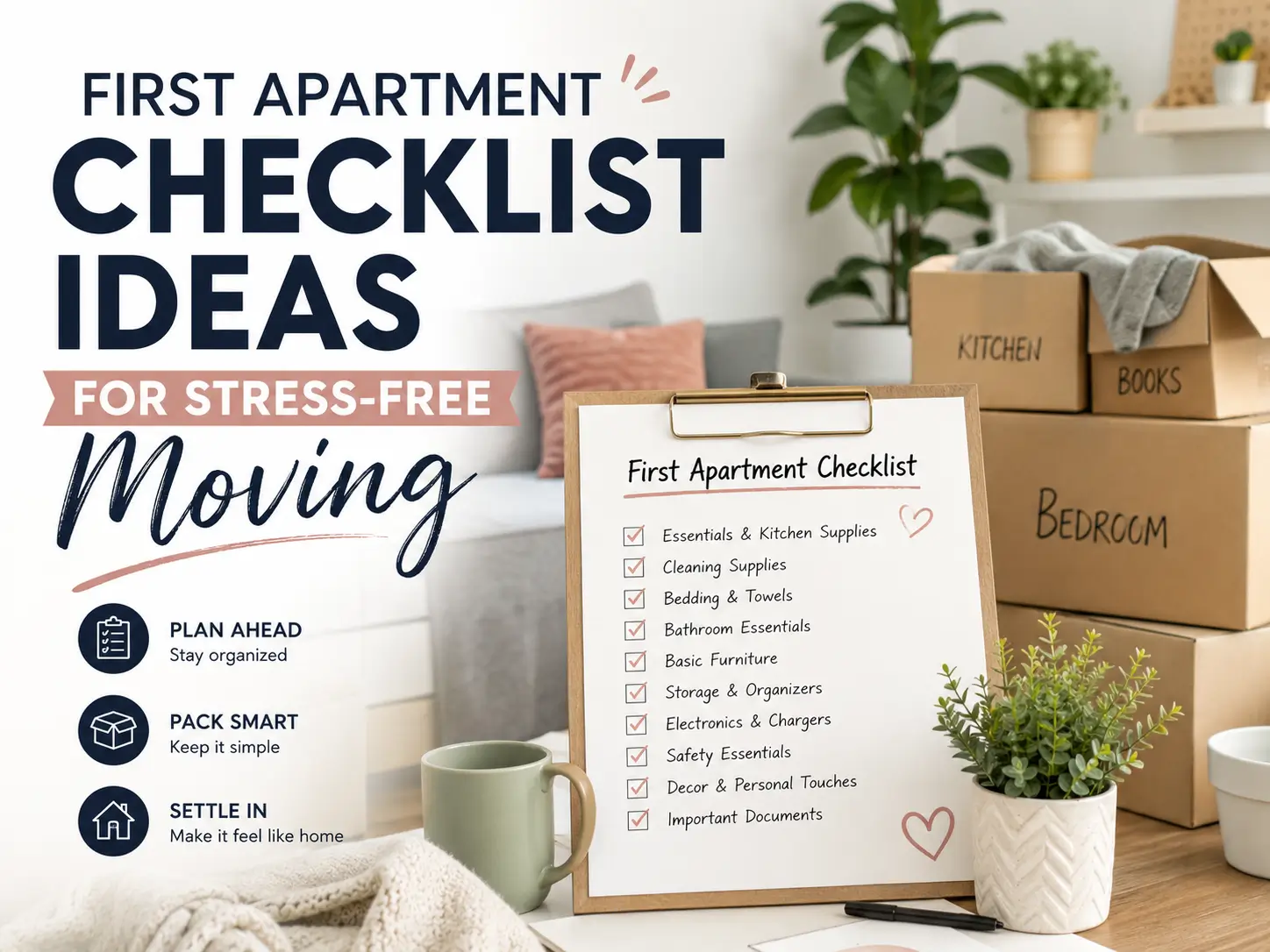

Moving into your first apartment is exciting, but it can also feel overwhelming when you realize how many small details need attention. From choosing furniture that fits your space to organizing daily essentials, every decision affects how comfortable and functional your new home becomes. A good plan helps you avoid unnecessary purchases, reduce moving stress, and create a space that feels personal from the beginning. First Apartment Checklist
A well-prepared First Apartment Move-In Checklist helps beginners understand what they actually need before unpacking dozens of boxes. Instead of buying random items or copying expensive apartment designs, focus on practical pieces that match your lifestyle, available space, and budget. Whether you are moving into a studio apartment, a small rental, or your first one-bedroom home, thoughtful planning makes the transition smoother.
What should you prepare before moving into your first apartment?
Before moving day, prepare essential household items, measure your rooms, plan your furniture placement, and organize your budget. Start with everyday necessities such as bedding, kitchen supplies, storage solutions, lighting, and cleaning products. Decorating should come after understanding your space because a functional layout creates a better foundation for personal style.
Measure Your Apartment Before Buying Furniture
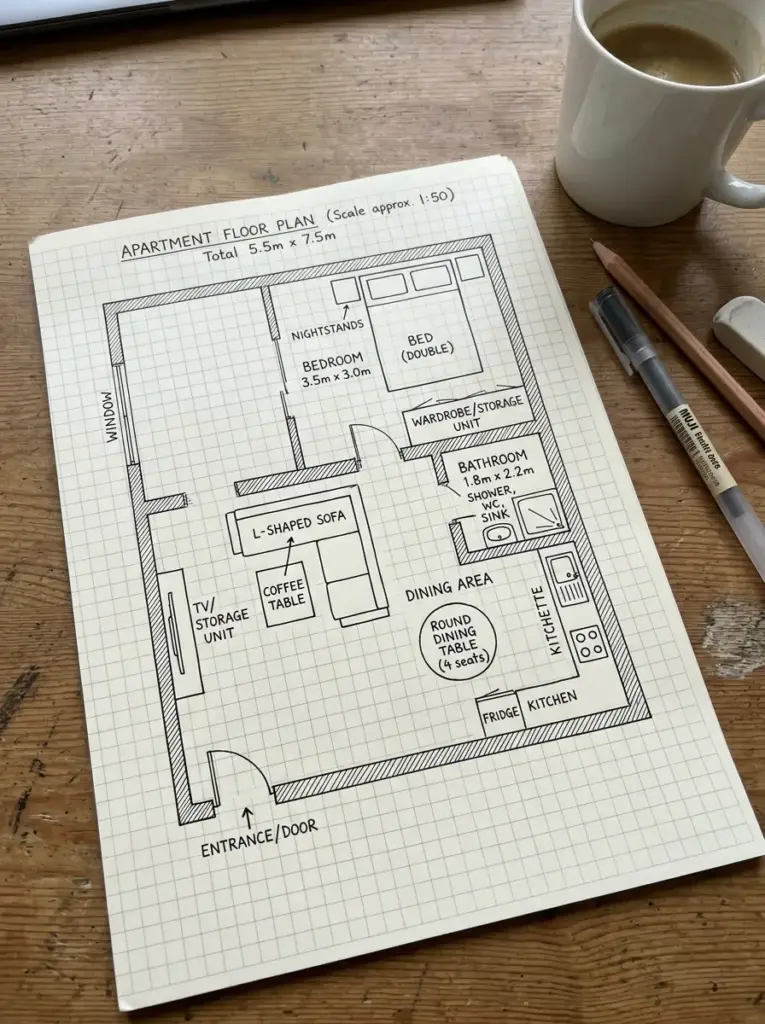
One of the biggest mistakes first-time renters make is purchasing furniture before checking measurements. A sofa that looks perfect online may completely block a walkway or make a small living room feel crowded. Before shopping, measure your walls, doorways, elevator space, and room dimensions.
Create a simple floor plan using paper or a free design app. Mark where your bed, sofa, dining table, and storage pieces will go. This step helps you choose furniture with the right proportions instead of forcing oversized items into a limited area.
This idea works especially well for people moving into studio apartments or compact rentals because every inch matters. For example, a loveseat with a narrow profile may provide enough seating while leaving space for a small coffee table and walking path.
Choose furniture with flexible designs whenever possible. A storage ottoman, extendable dining table, or sofa bed can serve multiple purposes and reduce the number of items you need to buy.
Create a Room-by-Room Essential Shopping List
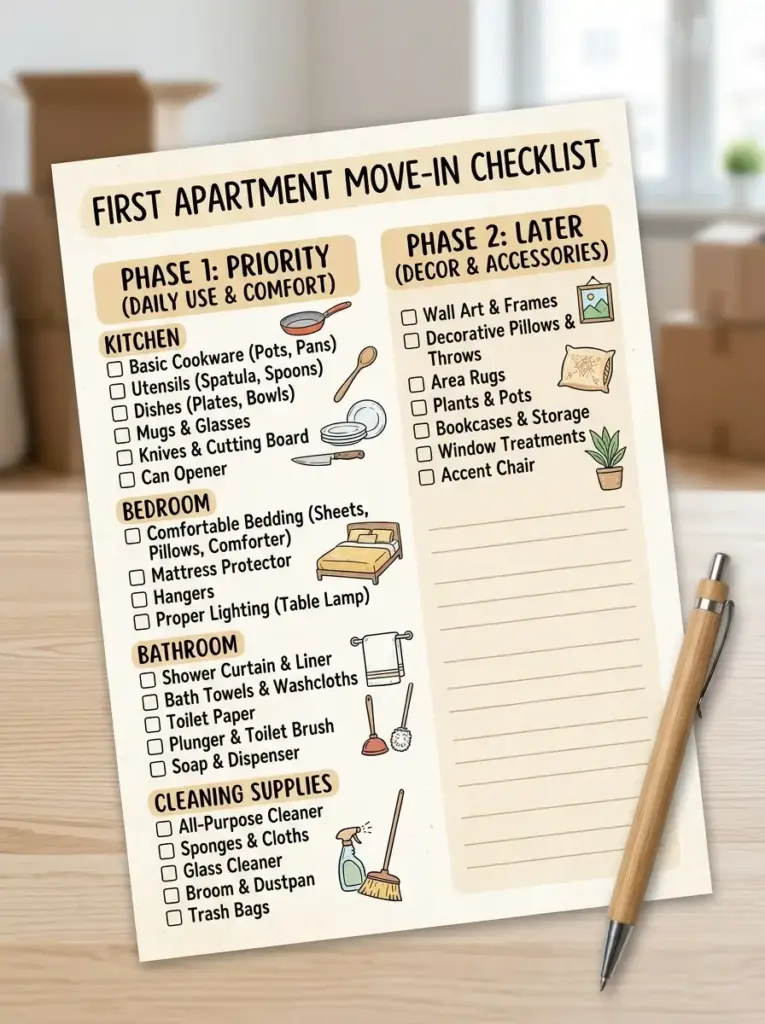
Many beginners spend too much money during their first apartment move because they shop without a clear plan. Walking into a home store can quickly lead to buying decorative items while forgetting important basics like shower curtains, trash bins, or kitchen utensils.
Divide your shopping list by areas such as bedroom, bathroom, kitchen, living room, and cleaning supplies. This organization keeps your spending controlled and makes unpacking easier.
A detailed First Apartment Move-In Checklist should include daily-use items first and decorative pieces later. For example, comfortable bedding, basic cookware, and proper lighting should have priority over wall art or decorative accessories.
This method is best for students, young professionals, and anyone on a limited budget. It allows you to build your apartment slowly instead of creating financial pressure during the first week.
Choose a Simple Color Scheme Before Decorating
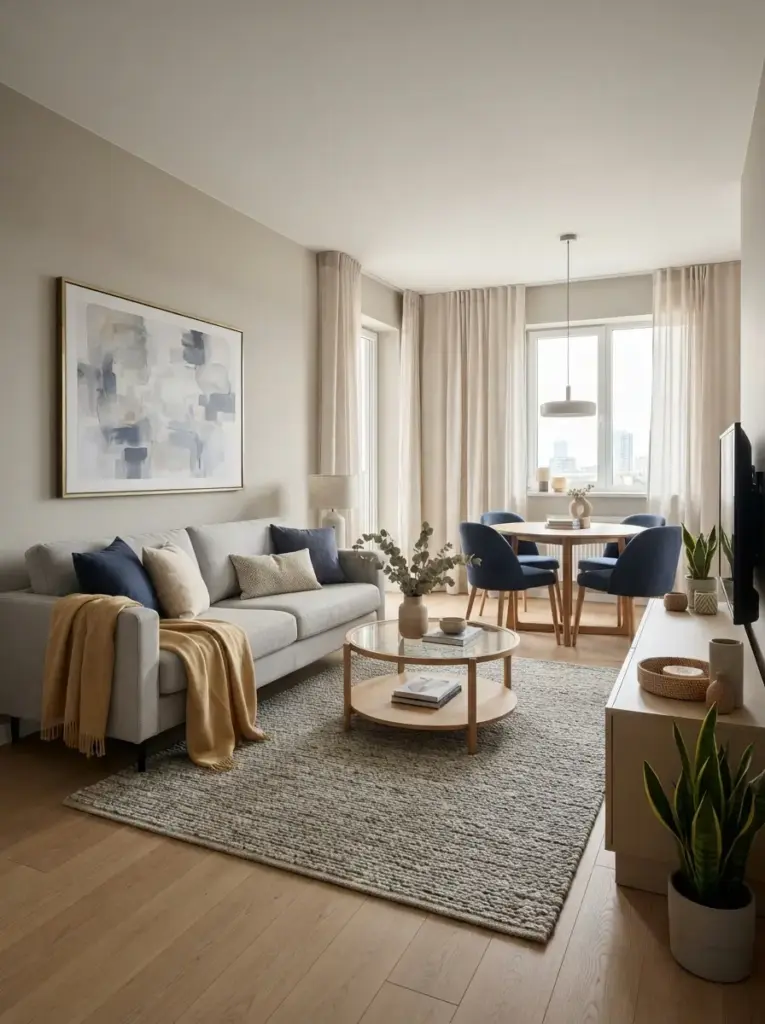
Selecting colors early helps your apartment feel connected instead of filled with random items. Many first apartments become visually messy because every room follows a different style without any connection.
Start with two or three main colors. Neutral shades like warm white, beige, soft gray, or light taupe work well in rental apartments because they create a calm background. Add personality through smaller elements like cushions, rugs, artwork, and curtains.
For example, a small living room can use warm white walls, a beige sofa, and olive green accessories for a natural feel. Bedrooms can include soft blue bedding with warm wood furniture to create a relaxing environment.
This approach is useful for beginners who are unsure about interior design. A consistent color plan makes affordable furniture look more intentional and helps you avoid unnecessary purchases.
Prioritize Good Lighting in Every Room
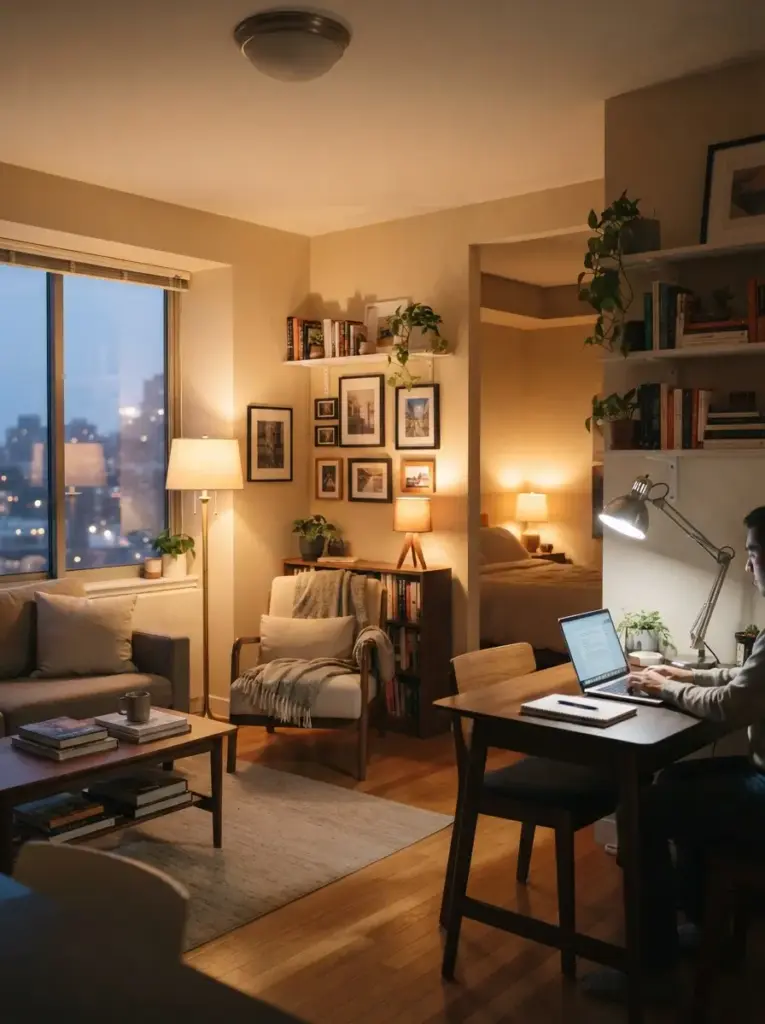
Lighting changes how comfortable and functional an apartment feels. Many rental homes have basic ceiling lights that create harsh shadows, especially in bedrooms and living areas.
Layer different lighting sources instead of depending only on overhead fixtures. Use floor lamps, table lamps, under-cabinet lights, and decorative lighting where needed.
Warm white bulbs around 2700K to 3000K usually create a comfortable residential atmosphere. Cooler lighting around 4000K may work better for workspaces where you need more focus.
This idea benefits people working from home or living in apartments with limited natural light. A small desk lamp, bedside lamp, and corner floor lamp can make a simple apartment feel much more functional.
Avoid placing all lights in one area. Spread illumination throughout the room so every corner feels usable, especially in smaller apartments.
Invest in Storage Before Adding Decorations
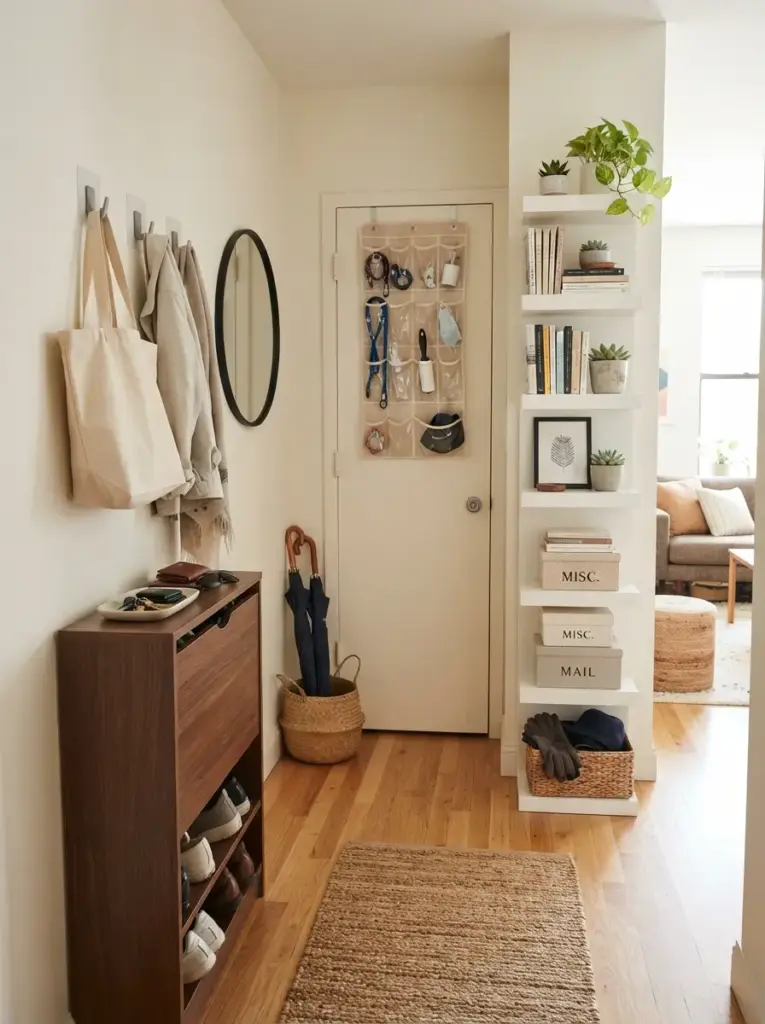
Storage problems are common in first apartments because many renters underestimate how many everyday items they own. A beautiful apartment becomes difficult to enjoy when counters, floors, and furniture surfaces are covered with clutter.
Think vertically when organizing your space. Tall bookshelves, wall-mounted hooks, over-door organizers, and storage baskets help maximize limited areas.
For example, a narrow entryway can include a slim shoe cabinet, wall hooks for bags and jackets, and a small tray for keys. This simple setup prevents daily mess from spreading into other rooms.
This strategy works best for small apartments, studio spaces, and renters who cannot make permanent changes. Removable hooks, stackable bins, and modular shelves provide storage without damaging walls.
Set Up Your Bedroom First for Better Comfort
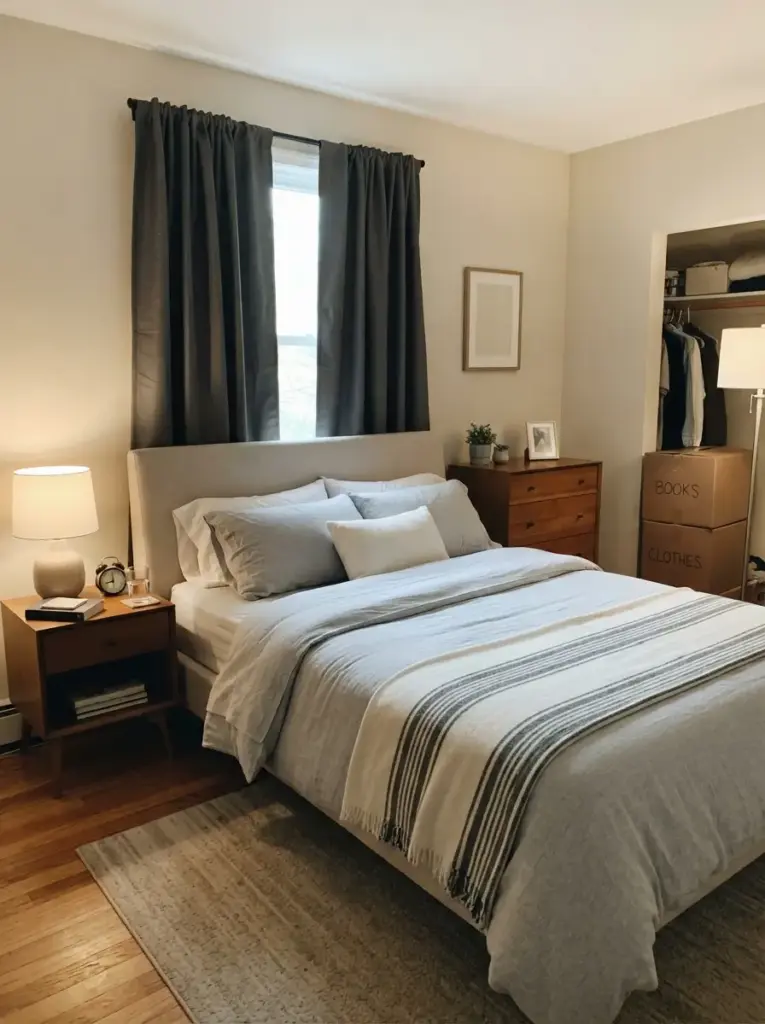
The bedroom should be one of the first areas you complete because it affects your daily routine and rest. Many people focus on decorating the living room but ignore creating a comfortable sleeping environment after moving.
Start with a quality mattress setup, comfortable bedding, blackout curtains, and practical bedside storage. These basics improve your first nights in the apartment and reduce the stress of living among unpacked boxes.
A simple bedroom layout usually works best. Keep enough walking space around the bed and avoid filling the room with unnecessary furniture. A small dresser or under-bed storage container may provide more value than a large decorative cabinet.
This tip is ideal for anyone moving after college, starting a new job, or living independently for the first time because comfort helps the apartment feel like home faster.
Build a Functional Entryway Area
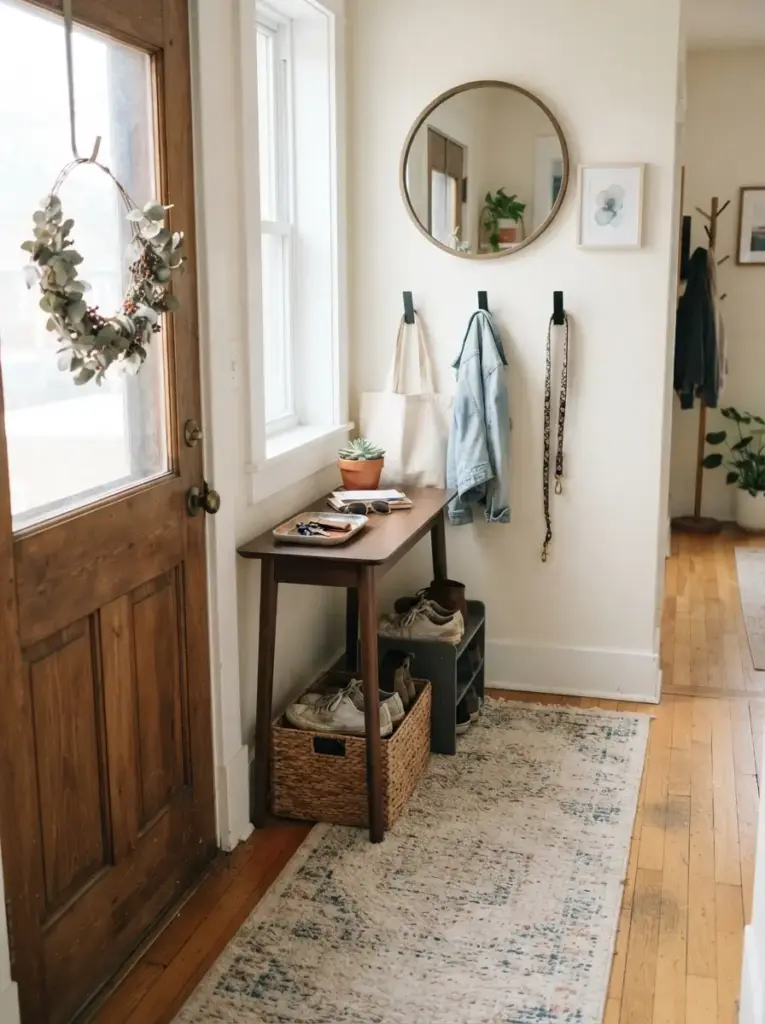
The entryway is the first part of your apartment you use every day, but it is often ignored during the moving process. A small and organized entrance can prevent clutter from spreading throughout your home. Even if you only have a few feet near the door, you can create a useful drop zone for everyday items.
Start with practical pieces such as a narrow console table, wall hooks, a small bench, or a basket for shoes. Renters can use removable hooks instead of drilling into walls. A small tray near the entrance can hold keys, sunglasses, and mail, so these items do not disappear around the apartment.
This idea works well for busy professionals and people living in smaller apartments because it creates an organized routine. For example, placing a shoe rack beside the door and adding a washable runner rug can keep dirt away from your main living area.
The entryway should focus on convenience before decoration. Once the basics are organized, you can add small details like artwork, plants, or a mirror to make the area feel more welcoming without wasting space.
Create a Practical Kitchen Setup
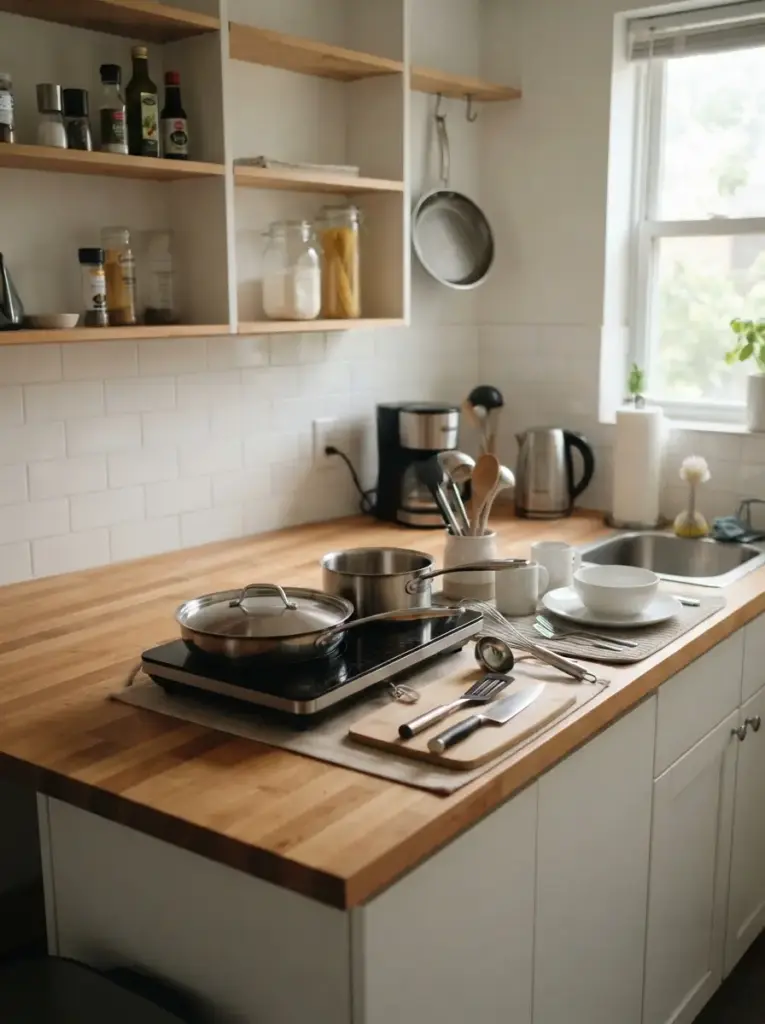
The kitchen often becomes one of the most expensive areas during a first apartment move because people try to purchase everything at once. Instead of buying large collections of cookware and appliances, focus on items you will actually use.
Start with everyday essentials, including a good knife, cutting board, frying pan, saucepan, plates, bowls, glasses, mugs, food storage containers, and basic cooking tools. Add specialized items later when you understand your cooking habits.
A smart First Apartment Move-In Checklist includes kitchen organization because a functional kitchen makes daily life easier. Use drawer dividers, shelf risers, and clear containers to maximize cabinet space.
For example, a small kitchen can benefit from a magnetic knife strip, hanging storage baskets, and stackable containers. These solutions keep counters clear and make the room feel larger.
This approach is especially useful for students and young renters who have limited kitchen space. A smaller collection of high-use items is usually more valuable than cabinets full of rarely used tools. First Apartment Checklist
Select Multi-Purpose Furniture for Small Spaces
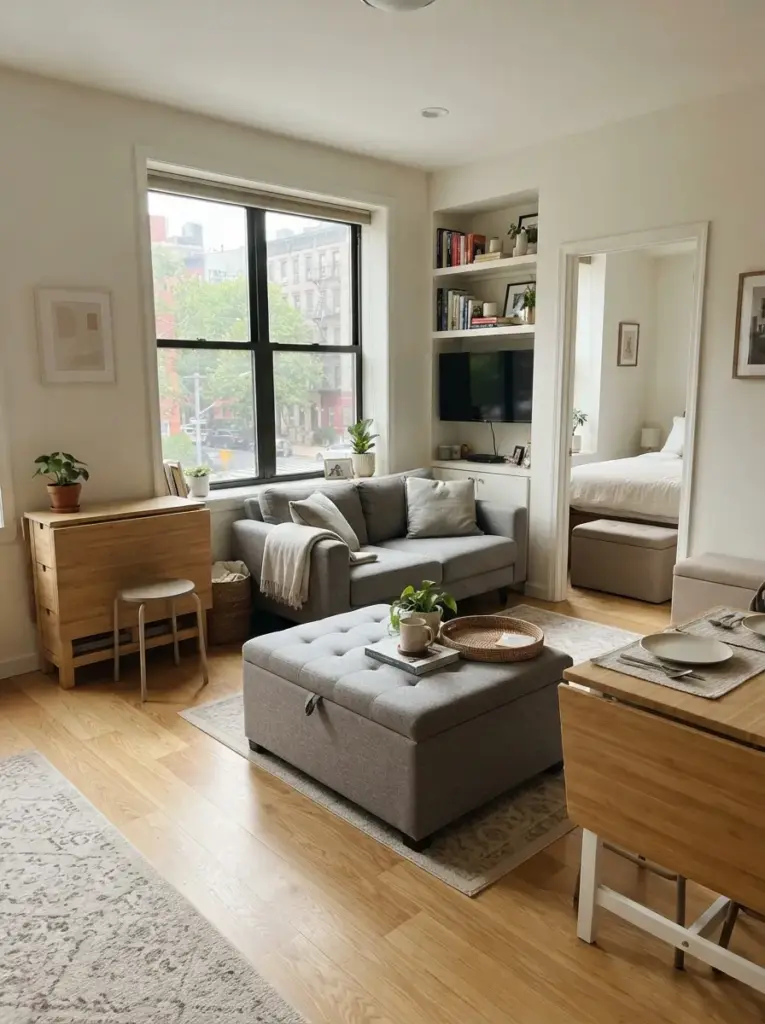
First apartments are often smaller than expected, so furniture should provide more than one function whenever possible. Choosing flexible pieces allows you to adapt your space as your lifestyle changes.
Consider furniture such as storage beds, nesting tables, foldable desks, ottomans with hidden compartments, and extendable dining tables. These items reduce clutter while making your apartment more comfortable.
A small living room, for example, can use a storage ottoman instead of a traditional coffee table. It provides seating, hidden storage, and a surface for daily activities.
This idea benefits renters who expect to move again in the future because flexible furniture can work in different apartment layouts. Instead of buying trendy items that only fit one room, choose practical designs that remain useful over time.
Avoid filling every empty corner immediately. Leaving some open space improves movement and makes your apartment feel calmer. First Apartment Checklist
Add Window Treatments for Privacy and Comfort
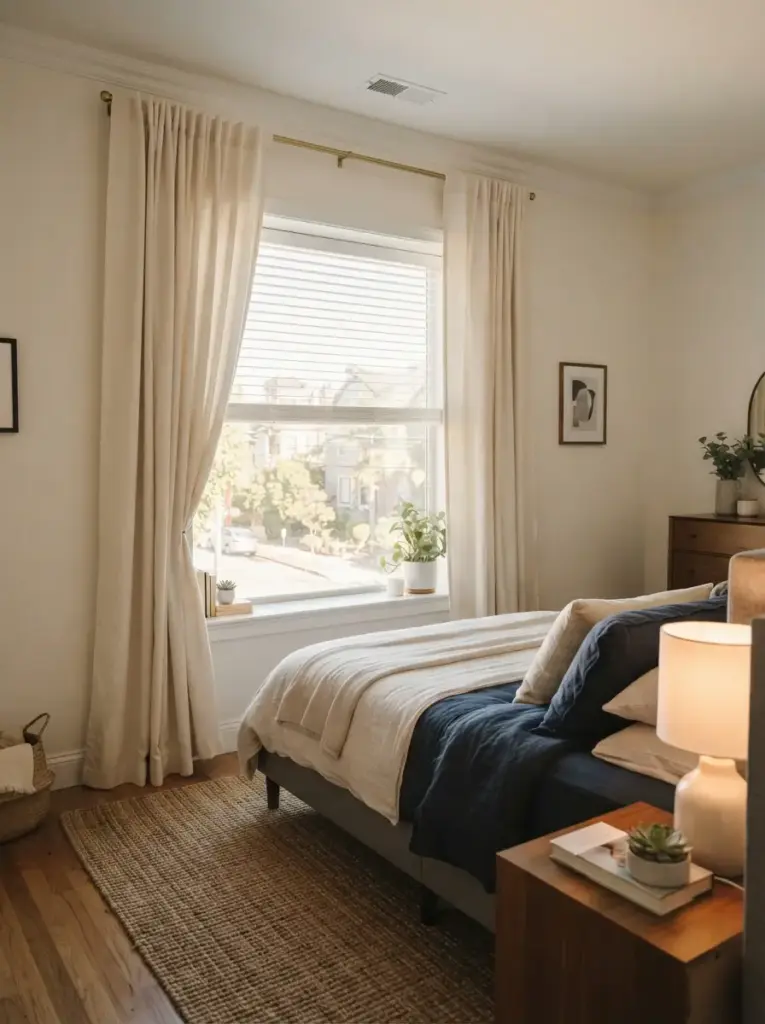
Many first apartments come with basic blinds or no window coverings at all. Window treatments are important because they control sunlight, improve privacy, and influence the overall comfort of your rooms.
Choose curtains based on your needs. Blackout curtains work well in bedrooms, especially for people who work night shifts or need better sleep. Light-filtering curtains are useful in living rooms because they soften sunlight without making the room dark.
For rental-friendly decorating, use tension rods or removable curtain solutions if you cannot install permanent hardware. Select colors that support your existing palette.
For example, cream curtains can make a small room feel brighter, while darker curtains can add warmth to large spaces. Curtains hung closer to the ceiling can also make windows appear taller.
This tip is ideal for renters who want a noticeable improvement without major changes. Simple window updates can make a basic apartment feel more complete.
Organize Your Bathroom With Smart Storage
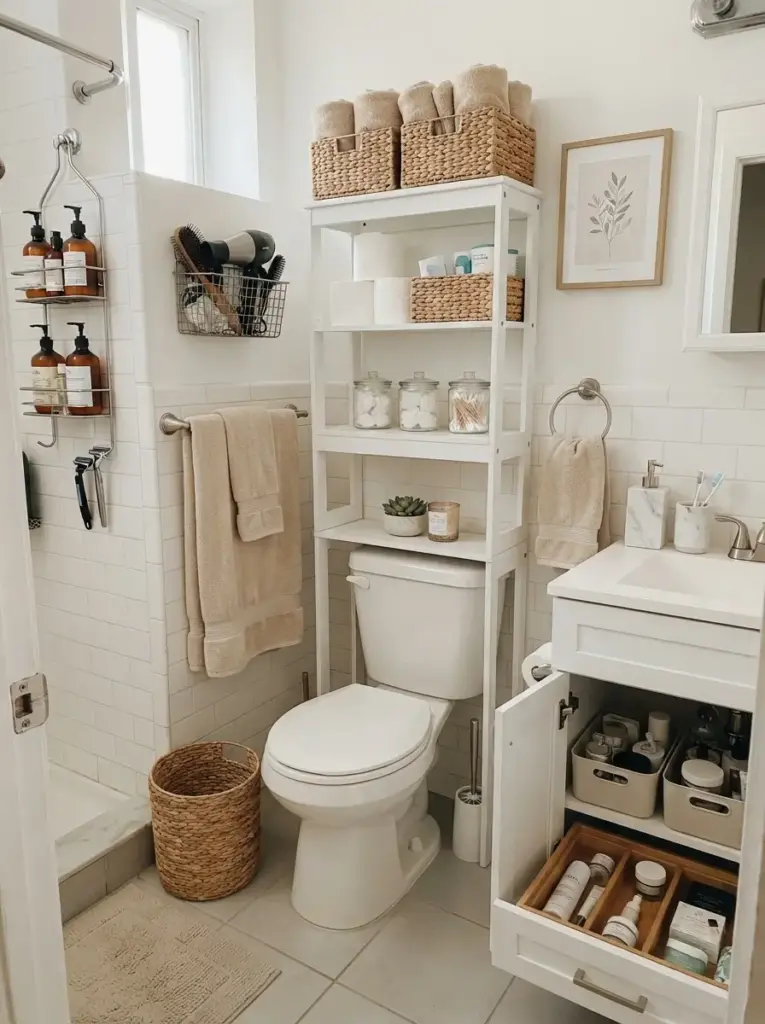
Bathrooms in first apartments are often small, which makes organization extremely important. A cluttered bathroom quickly becomes frustrating because daily essentials compete for limited counter and cabinet space.
Use vertical storage solutions such as over-the-toilet shelves, shower caddies, drawer organizers, and wall-mounted baskets. Keep frequently used products easy to reach and store extra supplies separately.
A practical setup includes matching towels, a laundry basket, a soap dispenser, and containers for small items. These details create organization without requiring expensive renovations.
This idea works best for beginners because bathrooms are usually one of the easiest areas to improve. Even small changes can create a cleaner and more functional space.
Avoid storing too many products at once. Many people bring unnecessary items from their previous home and create clutter immediately after moving. First Apartment Checklist
Create a Comfortable Work or Study Corner
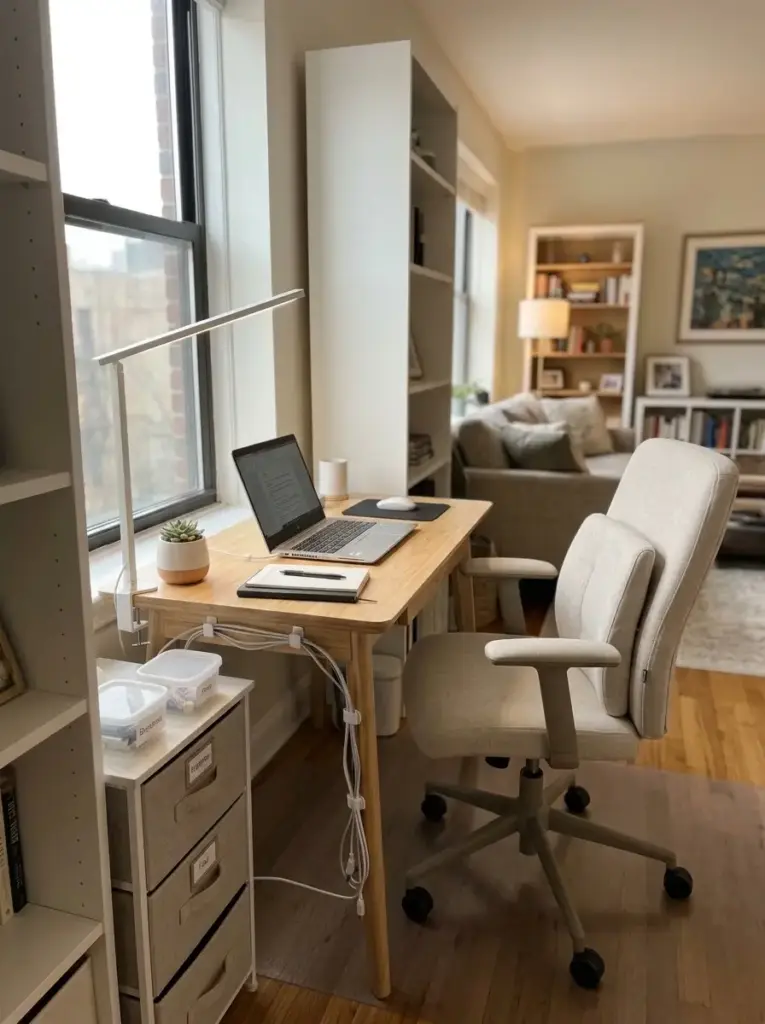
Many people now need a workspace at home, even if they live in a small apartment. Creating a dedicated work area improves focus and prevents your bedroom or dining area from becoming overloaded.
Choose a location with good lighting and minimal distractions. A small desk near a window, a floating desk, or a compact corner workstation can work well.
Use ergonomic basics such as a comfortable chair, proper desk height, and organized cable management. Add task lighting with a focused beam instead of relying only on room lighting.
This idea is especially helpful for students, remote workers, and entrepreneurs. A small workspace does not need expensive furniture. A simple desk, supportive chair, and organized storage can create an effective working environment.
Keep the area visually clean because clutter often affects concentration. Store office supplies in drawers or small containers to maintain order. First Apartment Checklist
Add Plants and Natural Elements Carefully
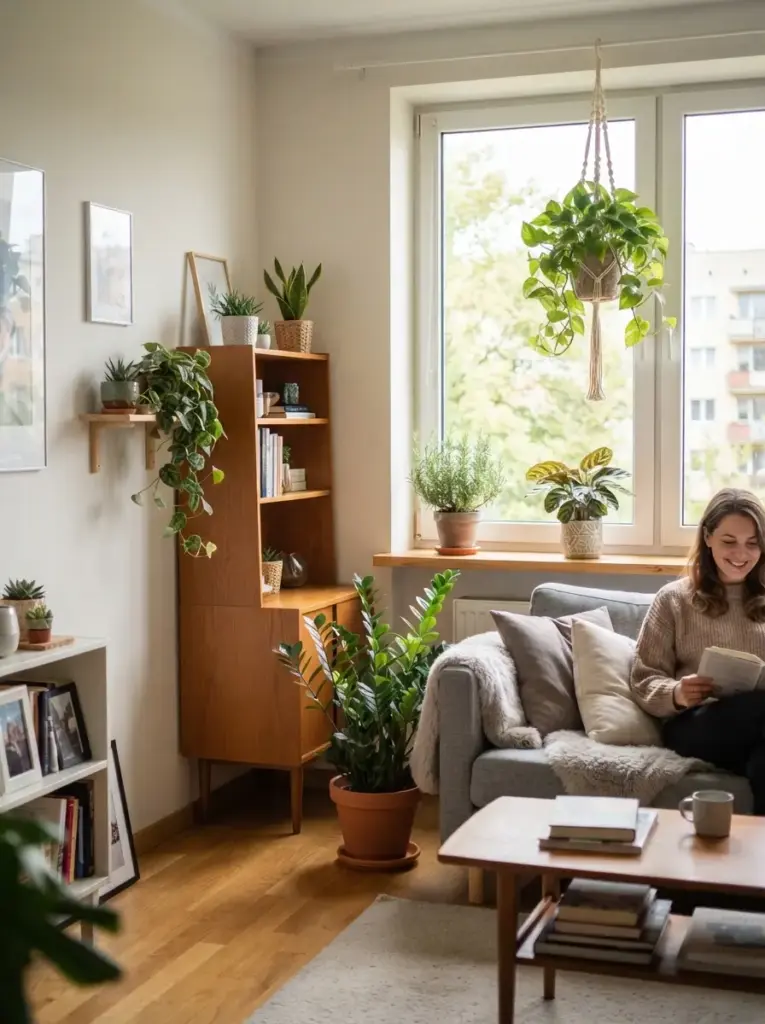
Plants can improve the feeling of an apartment by adding texture and bringing natural elements indoors. However, choosing plants without considering your lighting conditions often leads to frustration.
Select plants based on your apartment environment. Low-light spaces may work better with snake plants, pothos, or ZZ plants, while bright rooms can support herbs or flowering plants.
Use different sizes to create balance. A small plant on a shelf, a medium plant beside a sofa, and a hanging plant near a window can add variety without overcrowding the room.
This idea works well for renters because plants require no permanent changes. They also allow you to personalize neutral apartments without spending heavily on decorations.
Avoid buying too many plants immediately. Start with a few easy-care options and learn their maintenance needs before expanding your collection. First Apartment Checklist
Prepare a Cleaning and Maintenance Station
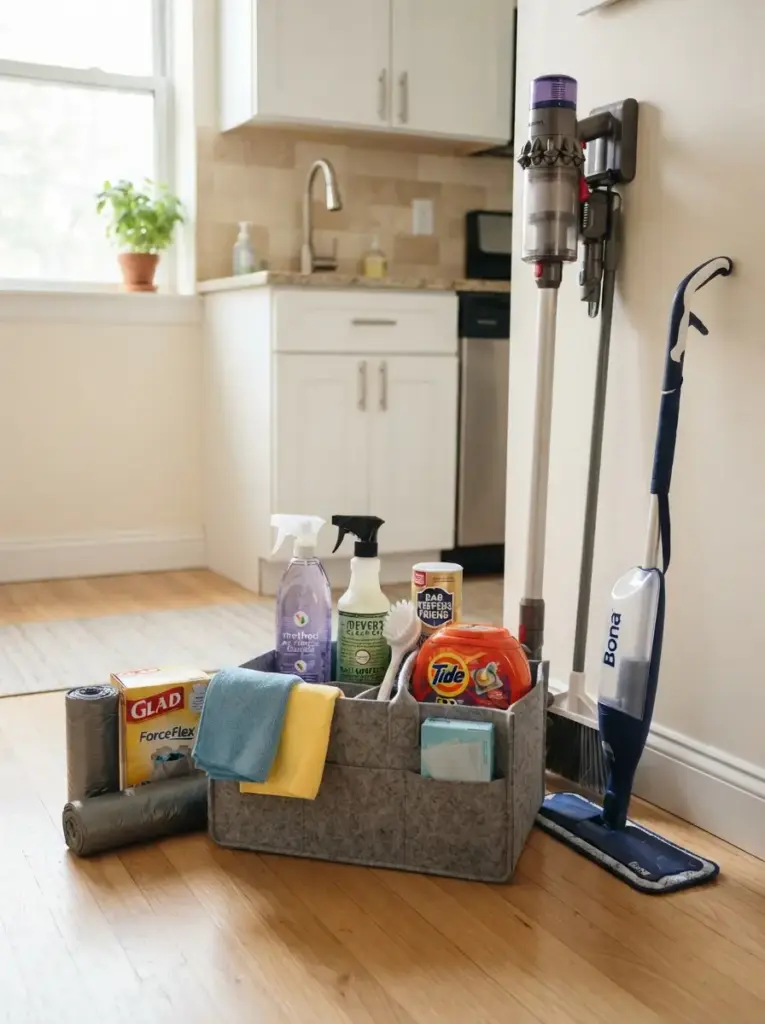
Keeping cleaning supplies organized from the beginning prevents small problems from becoming stressful. Many new renters forget basic maintenance items until something needs immediate attention.
Create a small cleaning area with essentials such as microfiber cloths, multipurpose cleaner, vacuum or broom, mop, trash bags, and laundry supplies.
Store these items together under the kitchen sink, in a closet, or inside a portable cleaning basket. A portable setup allows you to move supplies easily from room to room.
This tip is useful for first-time renters because regular maintenance protects furniture, floors, and appliances. Simple habits like wiping surfaces weekly and cleaning filters regularly can extend the life of your belongings.
Avoid buying large quantities of cleaning products before understanding your storage space. Small apartments benefit from compact solutions. First Apartment Checklist
Personalize Your Apartment Slowly
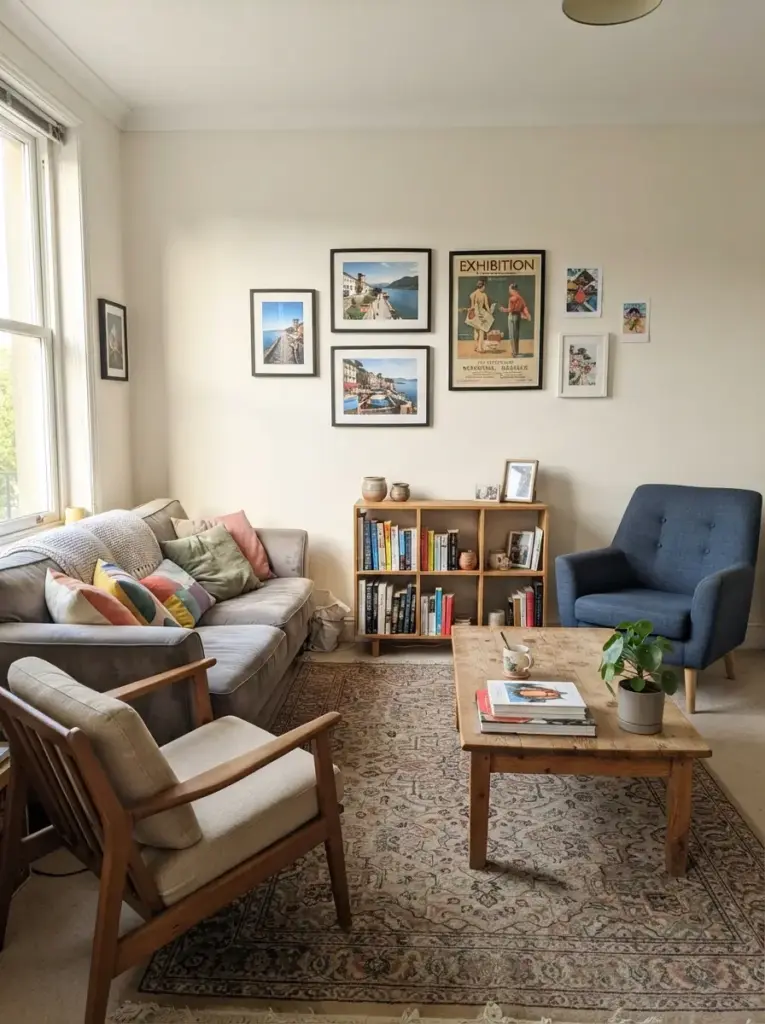
Many people feel pressure to finish decorating immediately after moving in. However, rushing purchases often leads to expensive mistakes and rooms filled with items that do not match.
Live in your apartment for a few weeks before making major decorative decisions. Notice where sunlight enters, how you move through rooms, and which areas need improvement.
Add personality through affordable updates such as artwork, rugs, cushions, books, photographs, and decorative objects that reflect your interests.
This strategy works for everyone because personal style develops naturally over time. A thoughtfully collected apartment usually feels more comfortable than a space decorated in one shopping trip.
A home should support your lifestyle first. Beautiful spaces are created through practical choices, not simply by adding more objects. First Apartment Checklist
Common Mistakes to Avoid
Buying Everything Before Measuring
One common mistake is purchasing furniture without checking dimensions. Large furniture can make small apartments difficult to navigate. Always measure rooms, doorways, and available storage before making expensive purchases.
Spending Too Much on Decorations First
Decorative items are exciting, but they should not come before essentials. Prioritize furniture, lighting, kitchen supplies, and storage before buying accessories.
Ignoring Storage Needs
Many renters underestimate storage requirements. Without proper organization, even a beautifully decorated apartment can become uncomfortable. Plan storage solutions before clutter appears.
Choosing Style Over Comfort
A stylish chair or sofa may look attractive, but become frustrating if it is uncomfortable. Test important furniture pieces whenever possible and choose items that support everyday use.
Forgetting Utility Items
Small items such as extension cords, hangers, cleaning supplies, and trash bins are easy to overlook. Include practical necessities in your moving plan.
Budget-Friendly Tips for Decorating Your First Apartment
Creating a comfortable apartment does not require a large budget. Smart decisions can help you build a stylish and functional home gradually.
Start by buying second-hand furniture from local marketplaces, thrift stores, and community groups. Many quality pieces only need minor updates, such as new fabric, paint, or hardware.
Use affordable textiles to change the appearance of your space. A rug, curtains, cushions, and bedding can transform a room without replacing major furniture.
Focus on one room at a time instead of decorating everything together. Complete your bedroom first, then improve the living room, kitchen, and other areas as your budget allows.
Choose timeless furniture colors such as natural wood, white, beige, gray, or black. These shades are easier to update with seasonal accessories.
DIY projects can also reduce costs. Simple ideas like painting old furniture, creating gallery walls, or organizing shelves with baskets can add personality without expensive purchases.
First Apartment Move In Checklist Tips for a Smooth Start
Moving into your first apartment becomes much easier when you prepare the essentials before unpacking. A detailed First Apartment Move In Checklist helps you organize purchases, avoid forgotten items, and create a comfortable home from the first day.
Bedroom Essentials
The bedroom should be one of your priorities because good rest helps you adjust to a new environment. Prepare a comfortable mattress, mattress protector, pillows, bedsheets, blankets, hangers, laundry basket, bedside lamp, and basic storage solutions.
Choose bedding colors that create a relaxing atmosphere. Soft neutrals like beige, cream, light gray, and muted blue work well because they are easy to match with future decorating changes.
For small bedrooms, avoid oversized furniture. A bed with built-in drawers or under-bed storage can provide extra space without taking additional floor area.
Living Room Essentials
Your living room should support relaxation and everyday activities. Start with practical furniture such as a comfortable sofa, coffee table, seating options, and proper lighting.
A small apartment often benefits from furniture with clean lines and smaller dimensions. For example, a compact sofa paired with nesting tables can create flexibility when guests visit.
Add comfort through affordable items like cushions, throws, and rugs. These pieces can introduce color and texture without requiring major changes.
Kitchen Essentials
A functional kitchen makes daily routines easier. Include basic cookware, utensils, plates, glasses, food storage containers, dish towels, cleaning products, and a trash bin.
Do not purchase large appliance collections immediately. Start with items you use regularly and add more based on your cooking habits.
Organize cabinets by grouping similar items. Keep frequently used tools within easy reach and store occasional items higher or farther back.
Bathroom Essentials
Prepare bathroom basics before moving day so you do not need emergency shopping trips. Include towels, shower curtain, bath mat, toilet brush, soap dispenser, toiletries organizer, and cleaning supplies.
Use matching storage containers or baskets to keep small items organized. This creates a cleaner appearance while making daily routines faster.
Cleaning Supplies Checklist
A clean apartment feels comfortable from the beginning. Prepare:
- Vacuum or broom
- Mop
- Multipurpose cleaner
- Microfiber cloths
- Sponges
- Trash bags
- Laundry detergent
- Disinfectant wipes
- Gloves
Keeping cleaning supplies ready helps you clean before placing furniture and unpacking boxes.
Safety and Utility Items
Many first-time renters forget important safety items. Add these essentials:
- First aid kit
- Flashlight
- Batteries
- Power strips
- Extension cords
- Basic toolkit
- Fire extinguisher if required
- Extra light bulbs
These items may not seem exciting, but they solve problems quickly when unexpected situations happen.
Moving Day Preparation
Prepare a separate box or bag with items you need immediately after arrival. This should include:
- Phone charger
- Toilet paper
- Water bottles
- Snacks
- Basic toiletries
- Cleaning wipes
- Scissors
- Important documents
- Change of clothes
This prevents searching through multiple boxes during the first night.
Frequently Asked Questions
What should I buy first for my first apartment?
Start with essentials that affect daily comfort, including bedding, bathroom supplies, kitchen basics, cleaning products, and basic furniture. Decorative items can be added slowly after you understand your space.
How much should I budget for a first apartment setup?
The budget depends on your lifestyle, apartment size, and what you already own. A practical approach is to prioritize necessities first and gradually add furniture and decorations over time.
How can I decorate my first apartment on a small budget?
Use affordable updates such as second-hand furniture, removable wallpaper, rugs, plants, artwork, and decorative cushions. Small changes can improve your apartment without expensive renovations.
What mistakes should first-time apartment renters avoid?
Avoid buying furniture without measurements, spending too much on decorations, ignoring storage, and purchasing items you rarely use. Planning before shopping saves money and space.
How can I make a small apartment feel bigger?
Use light colors, mirrors, multi-purpose furniture, vertical storage, and proper lighting. Keeping pathways clear also improves the feeling of openness.
When should I start decorating my first apartment?
Begin with the functional setup first. After living in the apartment for a short time, you will better understand your needs and can make smarter decorating choices.
Conclusion
Moving into your first apartment is an important milestone, and thoughtful preparation can make the experience much less stressful. A practical First Apartment Move In Checklist helps you focus on essentials, organize your budget, and create a home that supports your daily lifestyle.
The best apartments are not created by buying everything at once. They develop through smart decisions, comfortable furniture choices, organized storage, and personal details added over time.
Measure your space before shopping, choose flexible furniture, improve lighting, and focus on functionality before decoration. Whether your apartment is large or compact, these simple strategies help you create a comfortable place that feels truly yours.
A successful first apartment setup is about building a space that works for your routine. With patience and planning, your new apartment can become a practical, welcoming, and personalized home.