
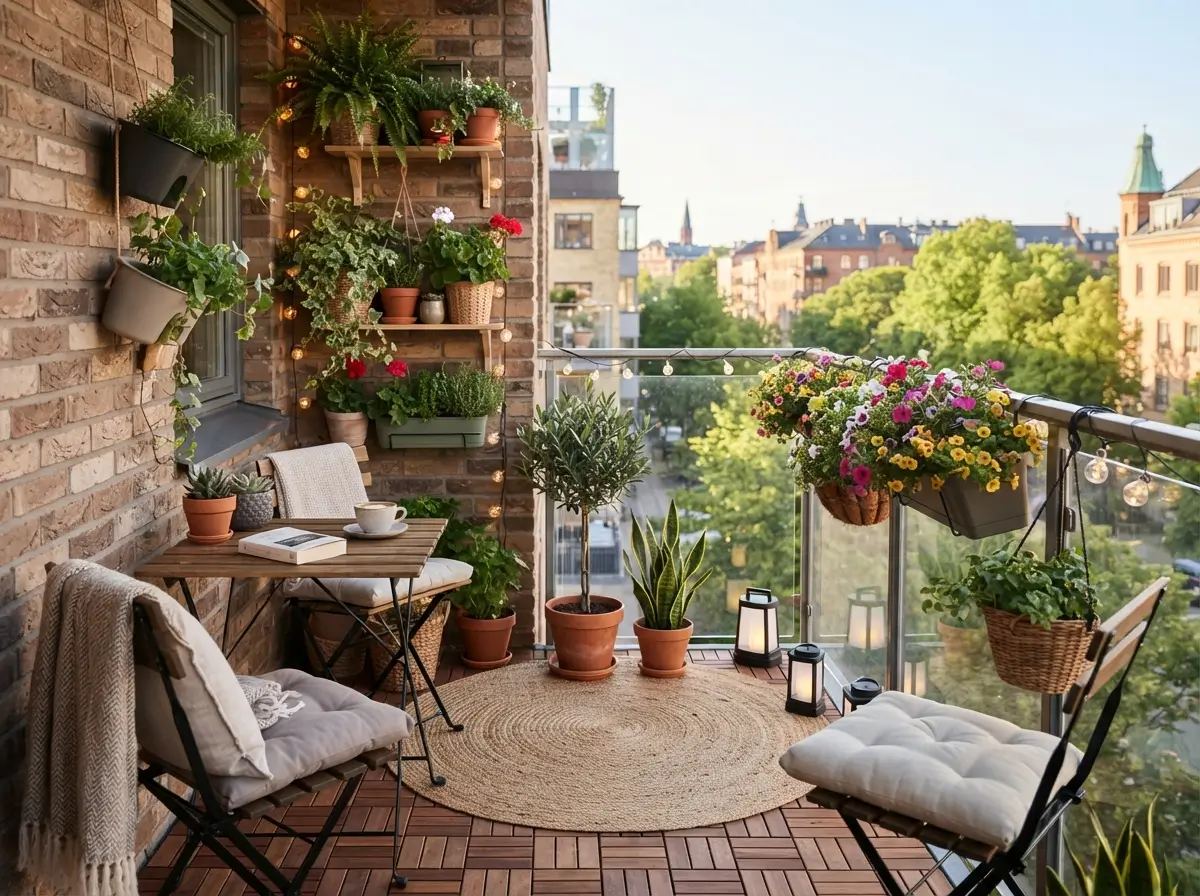

Limited square footage does not have to limit comfort, personality, or usefulness. A Small Balcony can become a breakfast corner, reading spot, plant zone, or evening retreat when every item earns its place. Successful decorating begins with accurate measurements, realistic priorities, and furniture that suits the available depth. Instead of filling the floor with decorative objects, focus on seating, shade, privacy, lighting, and storage in that order. Colors, materials, and plant choices should also respond to the direction of sunlight and local weather. Whether you rent or own, the ideas below show how to create a welcoming outdoor area without making it crowded, expensive, or difficult to maintain.
What Is the Best Way to Decorate a Tiny Balcony?
Start by choosing one main purpose for the Small Balcony, then add compact furniture, vertical storage, weather-safe textiles, and layered lighting. Keep the walking path open, use no more than three main colors, and avoid buying pieces before measuring the floor, railing, and door clearance.
Choose One Main Function Before Shopping
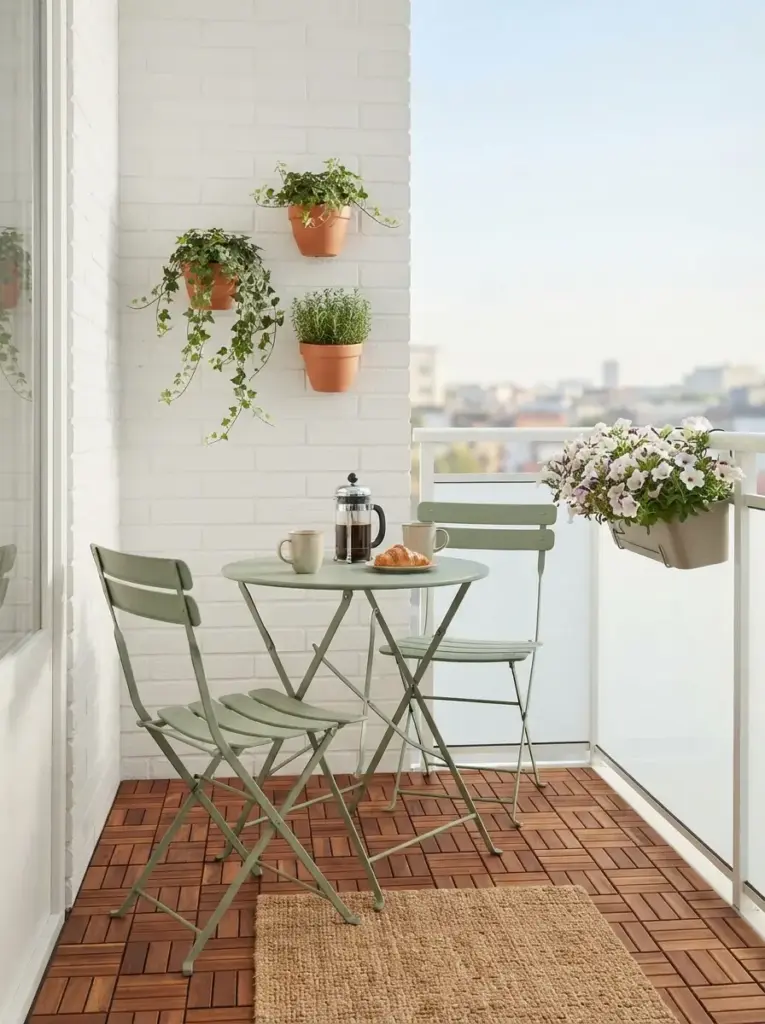
A clear purpose prevents a compact outdoor area from becoming a storage zone filled with unrelated items. Decide whether the space should support morning coffee, casual meals, gardening, reading, or quiet evening relaxation. Trying to fit every activity usually leads to oversized furniture, blocked doors, and little room to move. One primary use can still include a secondary function, but the layout should serve the most important activity first.
Coffee lovers may only need a folding bistro table and two slim chairs. Readers benefit more from one supportive lounge chair, a small side table, and a shaded corner. Gardeners should reserve the brightest wall or railing for planters before adding seating. Renters often gain the most from flexible pieces that fold, stack, or move indoors during bad weather. Purpose-led planning works because it reduces visual clutter and helps every purchase support a practical routine rather than a passing trend.
Measure the Floor, Door, and Railing Carefully
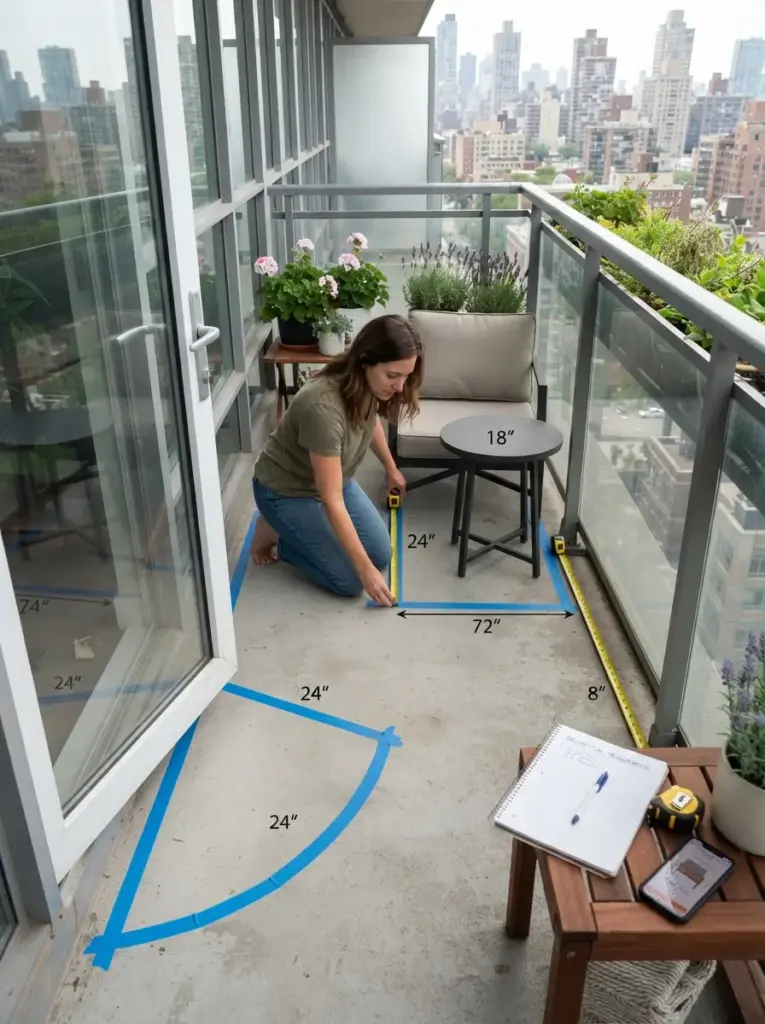
Accurate measurements protect both comfort and money. Record the balcony width and depth, then check the space required for the door to swing or slide freely. Measure railing height, wall sections, corners, outlets, drains, and any fixed pipes. Marking the floor with painter’s tape can show how much room a chair or table will actually occupy before you place an order.
Narrow balconies often need furniture under 18 inches deep, while a slightly wider layout may handle a 24-inch table. Leave a walkway of roughly 24 inches when possible, especially between the door and the main seat. People with outward-opening doors should avoid placing furniture in the swing zone, even when a product photo suggests it will fit. Careful planning is especially useful for beginners because online furniture dimensions can feel smaller than they appear in real life. Good measurements create a layout that feels calm rather than squeezed.
Use Folding Bistro Furniture for Daily Flexibility
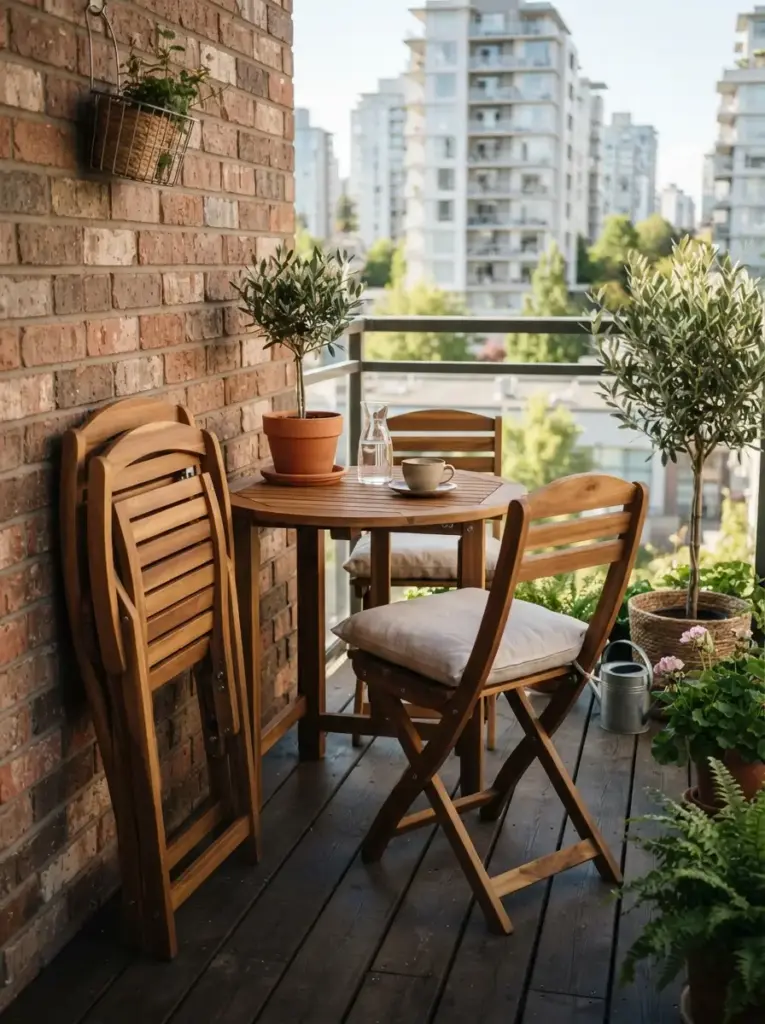
Folding furniture offers one of the easiest ways to balance comfort and floor space. A slim metal or acacia wood bistro set can provide seating for coffee or meals, then fold flat when extra standing room is needed. Look for chairs with curved backs and tables between 20 and 28 inches wide, depending on the available depth.
Powder-coated steel suits modern city apartments and handles moisture better than untreated indoor furniture. Warm wood works well with cream cushions, olive planters, and woven accessories, but it needs seasonal oiling or a protective cover. People who entertain occasionally can keep one chair folded against the wall and open it only for guests. Renters appreciate this approach because no drilling is required, and the furniture can move to a future home. Flexibility makes the space easier to clean, rearrange, and use for more than one simple routine.
Install a Railing Table Instead of a Floor Table
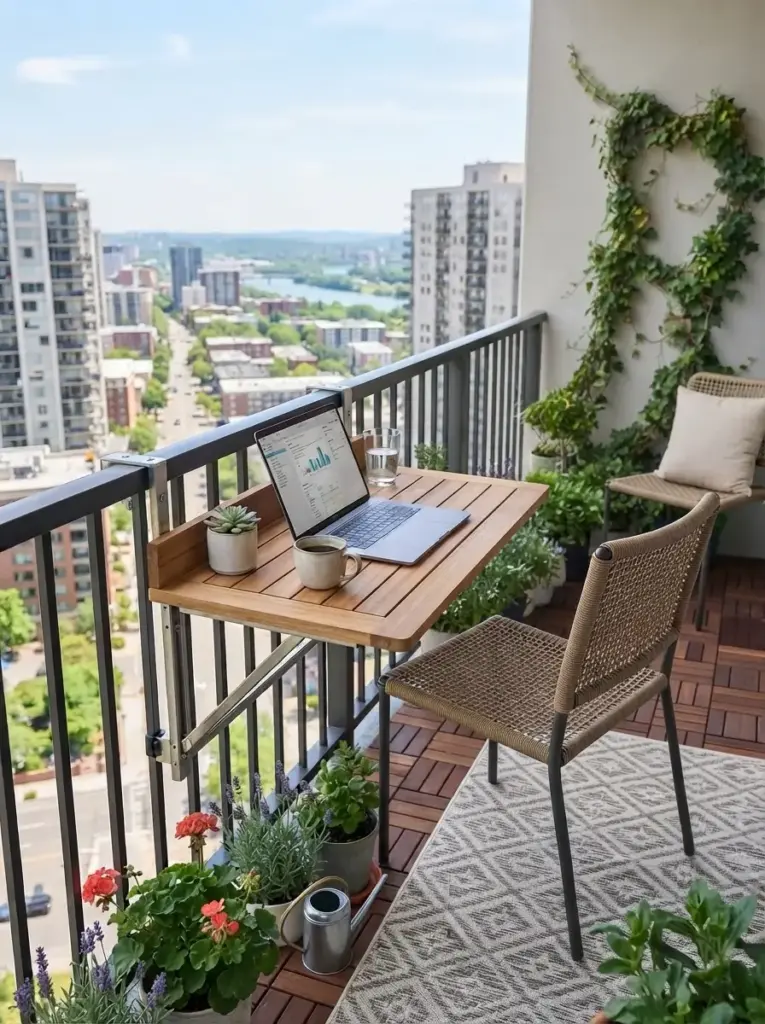
Railing-mounted tables save valuable floor area while creating a useful ledge for drinks, a laptop, or a light meal. Many designs clamp onto metal or concrete railings without permanent installation. Choose a model with adjustable brackets, weather-resistant hardware, and a folding top so it can sit flat when not in use.
Safety matters more than appearance here. Check the manufacturer’s railing requirements, weight limit, and recommended mounting method before placing fragile dishes or electronics on the surface. Buildings with glass railings may need a different bracket system than those with metal bars. Remote workers with a pleasant view can use the table as an occasional outdoor desk, while solo residents may prefer it as a breakfast bar with one stool. Removing table legs keeps the center clear, which makes a narrow balcony feel easier to enter and navigate.
Build Privacy Without Blocking All the Light
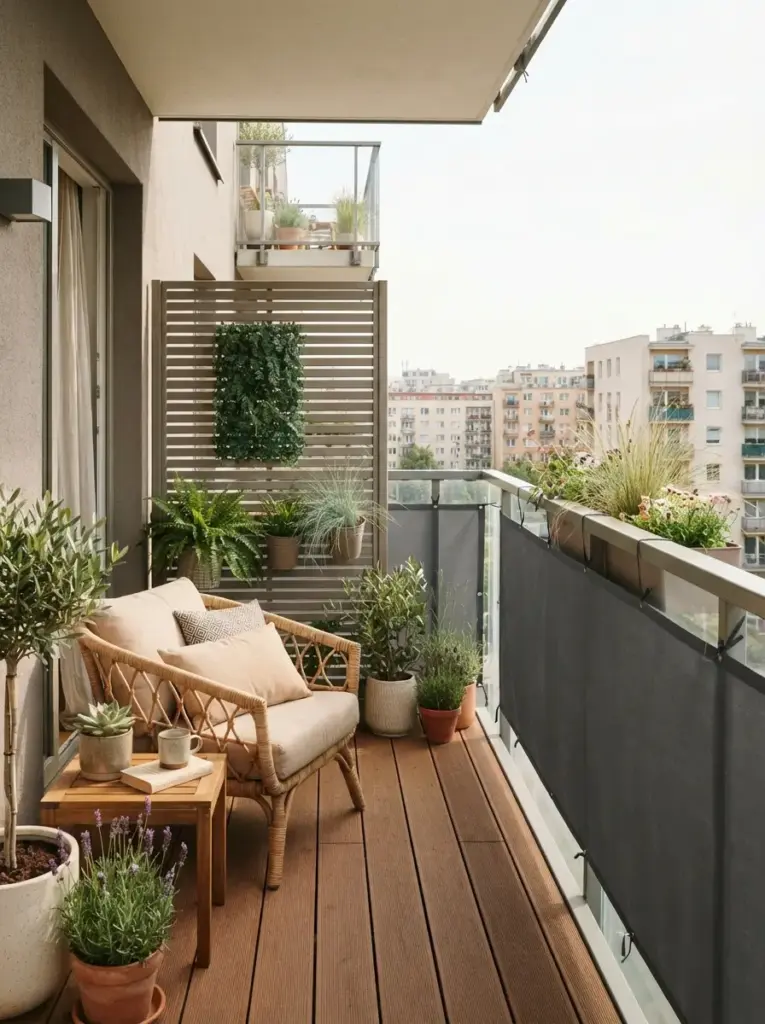
Privacy screens should reduce direct views without turning the area into a dark box. Outdoor fabric panels, reed rolls, faux greenery, and narrow slatted dividers can soften exposure from neighboring buildings. Choose materials that allow some air movement, especially on upper floors where wind pressure can be strong.
Neutral beige, charcoal, muted green, and warm gray blend easily with most exterior finishes. Tall planters with upright grasses can screen a seated area while leaving the upper view open. Renters should use secure ties, removable railing clips, or freestanding screens rather than screws. Local building rules may limit screen height, color, or attachment methods, so review them before installation. Apartment Balcony Privacy works best when coverage is placed only where it is needed, such as beside the chair or along one exposed edge. Selective screening keeps natural light available and avoids a heavy, enclosed feeling.
Turn One Wall Into a Vertical Garden
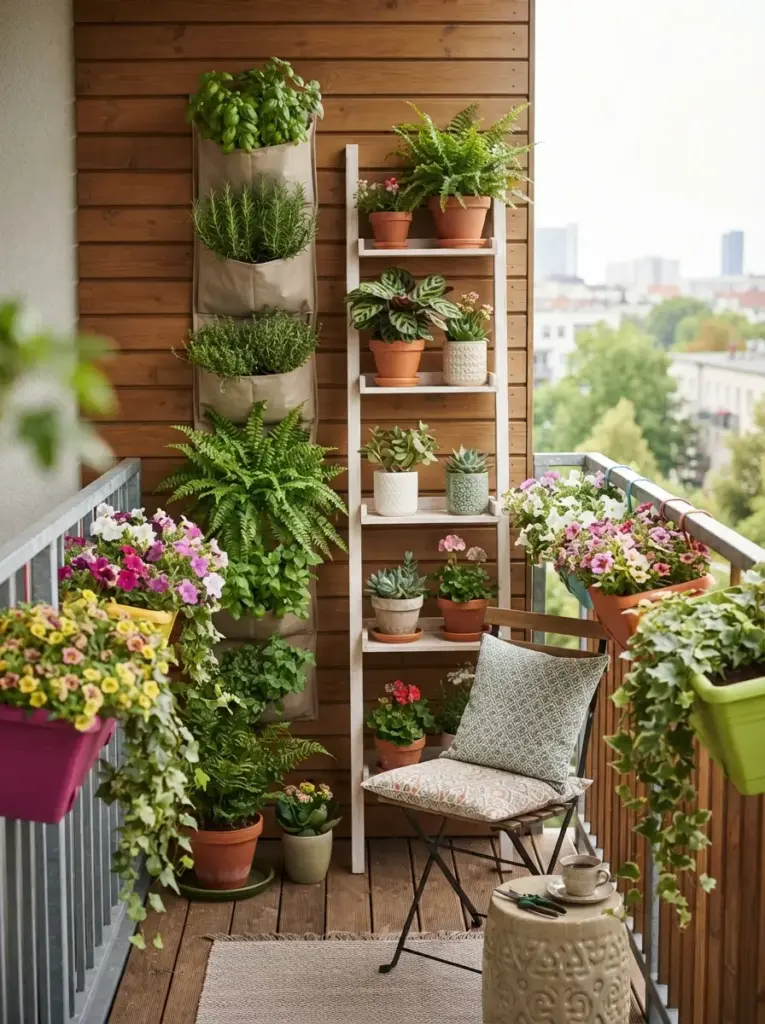
Vertical planting adds life without covering the walking surface. Wall pockets, ladder shelves, narrow plant stands, and railing planters can hold herbs, flowers, or compact foliage at several heights. Group plants by light and watering needs rather than arranging them only by color. Basil and rosemary prefer strong sun, while ferns and calatheas need gentler light and more consistent moisture.
Choose lightweight containers with drainage trays to prevent water from staining the floor or dripping onto neighbors below. Renters can lean a ladder-style shelf against the wall or use over-rail planters that do not require drilling. Beginners should start with three to five reliable plants instead of filling every level immediately. Apartment Balcony Garden planning succeeds when plants match the actual sun exposure, wind, and maintenance schedule. Layered greenery draws the eye upward, softens hard surfaces, and leaves room for seating.
Select Slim Seating With Visible Legs
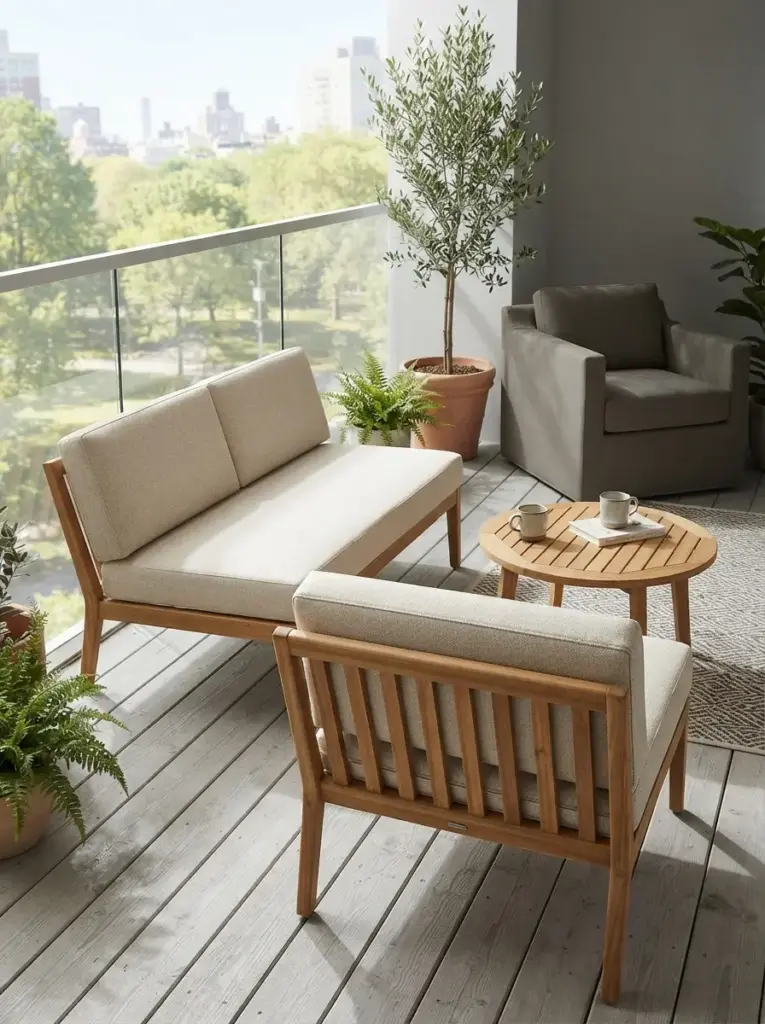
Furniture with exposed legs and open space underneath appears lighter than solid boxy seating. Armless chairs, narrow benches, and compact love seats can provide comfort without visually closing off the floor. Seat depths between 18 and 22 inches usually work better than deep indoor-style lounge furniture on a narrow platform.
Look for firm cushions that support the back rather than oversized pillows that reduce usable seat depth. A bench with a slatted frame can seat two people and still look less bulky than two separate chairs. Taller users should check seat height and back support before buying purely based on size. Visible legs help the eye see more of the flooring, creating a stronger sense of openness. Couples, renters, and people who enjoy long conversations outdoors benefit most from slim seating that combines comfort with a smaller footprint.
Use Built-In or Hidden Storage Seating
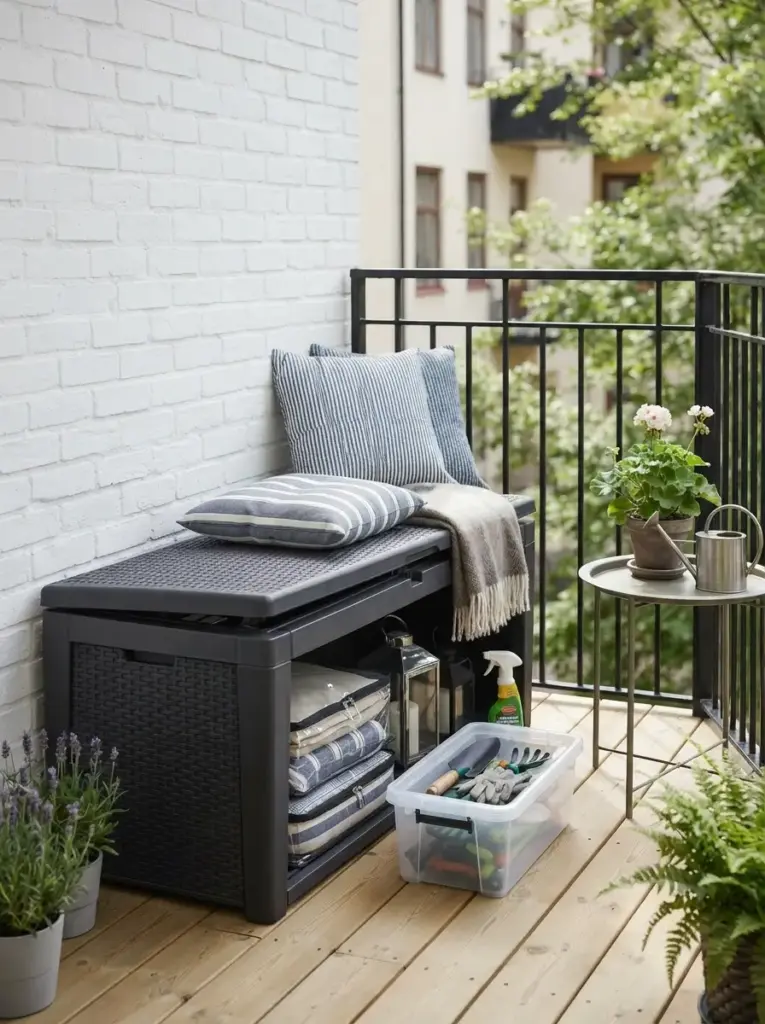
Storage benches solve two problems by providing a seat and a place for outdoor essentials. Compact models can hold cushion covers, gardening tools, lanterns, or cleaning supplies. Select weather-resistant resin, treated wood, or powder-coated metal, and confirm that the lid opens without hitting the railing or wall.
Waterproof does not always mean completely sealed, so store textiles inside zippered bags or lidded containers. People in rainy climates should raise wooden storage slightly above the floor to prevent moisture damage. A narrow bench may also reduce the need for several small cabinets that create visual noise. Hidden storage works particularly well for families, hobby gardeners, and anyone who needs the area to look tidy between uses. Keeping supplies near the place where they are used saves indoor space and makes regular maintenance easier.
Define the Floor With Outdoor Tiles or a Rug
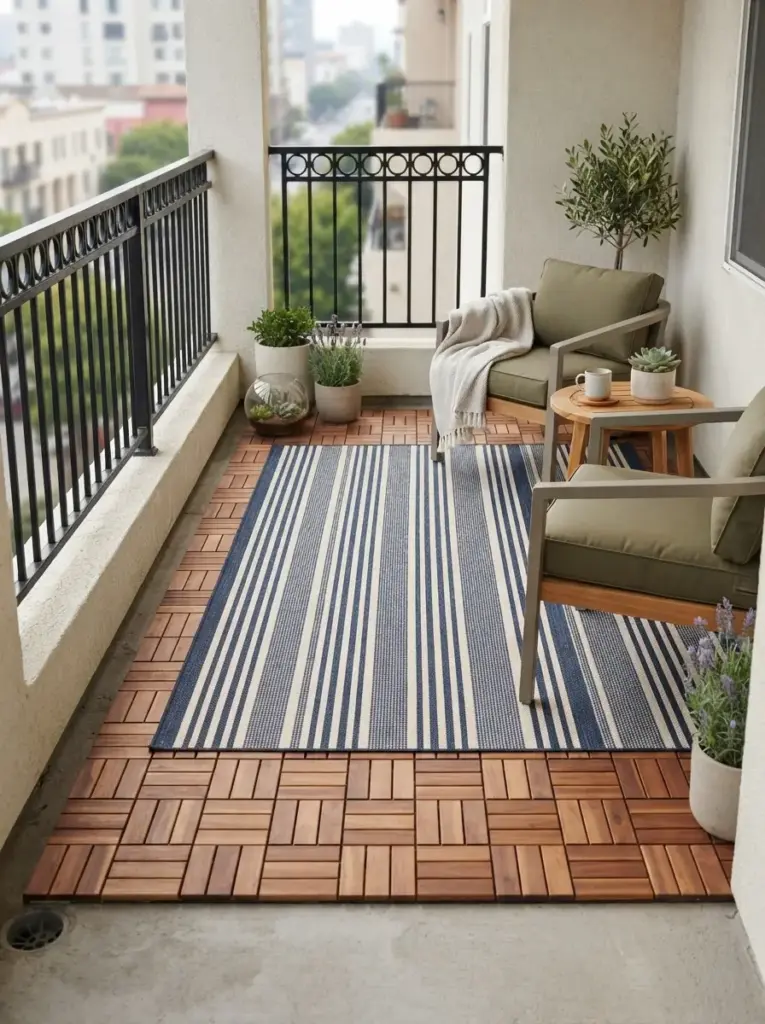
Floor treatment can make a basic concrete surface feel intentional. Interlocking deck tiles add warmth and can often be installed without glue, making them suitable for rentals. Outdoor rugs introduce pattern and softness, but they should leave a visible border around the edges so the platform does not feel wall-to-wall and cramped.
Choose low-pile polypropylene rugs because they dry quickly and resist fading better than indoor fabrics. Stripes running along the longest direction can visually lengthen a narrow layout. Terracotta, sand, navy, olive, and black-and-cream patterns work well with common exterior finishes. Before covering the floor, make sure drainage points remain open, and water can flow toward them. Tiny Balcony Patio styling feels more complete when the floor supports the furniture arrangement rather than acting as an unrelated decorative layer.
Layer Warm Lighting for Evening Use
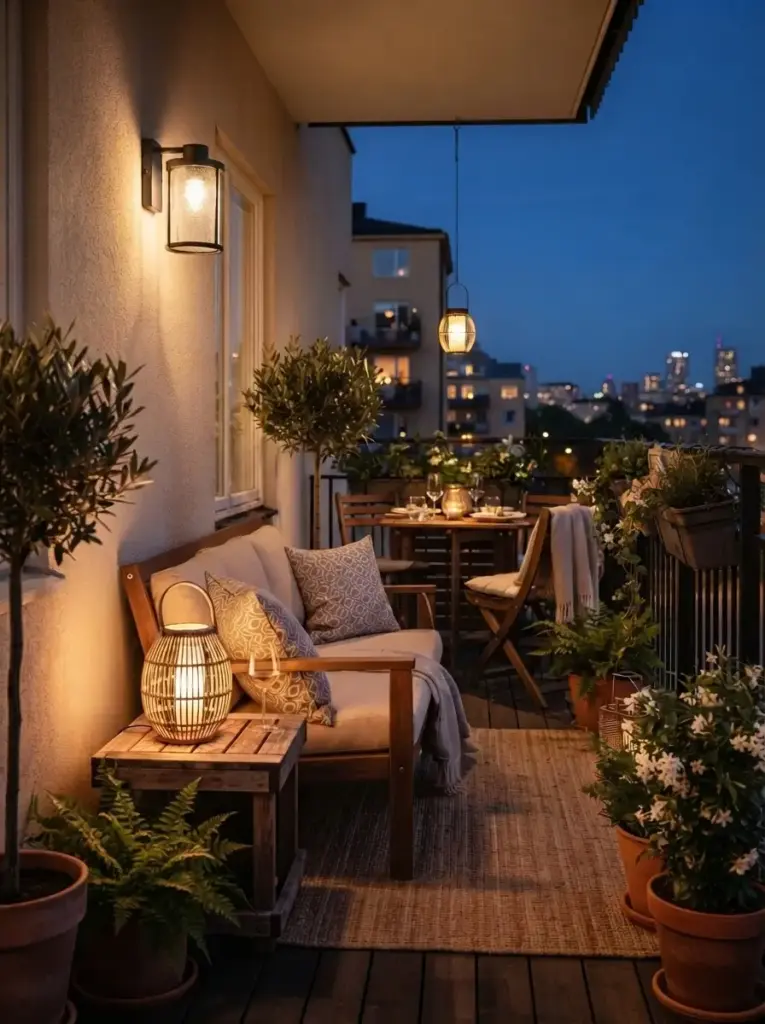
Lighting should make the space usable after sunset without creating glare for neighbors. Combine a soft overhead or wall source with one lower accent, such as a rechargeable table lamp or enclosed lantern. Warm white bulbs between 2200K and 2700K create a relaxed atmosphere and make wood, terracotta, and greenery look richer.
Battery-powered and solar lights offer renter-friendly options, although solar products need enough direct daylight to charge well. Avoid exposed string lights that hang loosely in windy areas or cross the door opening. Secure cables neatly and choose outdoor-rated fixtures for any location exposed to rain. Apartment Balcony Lighting becomes more effective when brightness stays low, and sources sit at different heights. Evening readers may need a focused lamp near the chair, while diners usually prefer softer, wider light around the table.
Create a Calm Color Palette With Three Main Tones
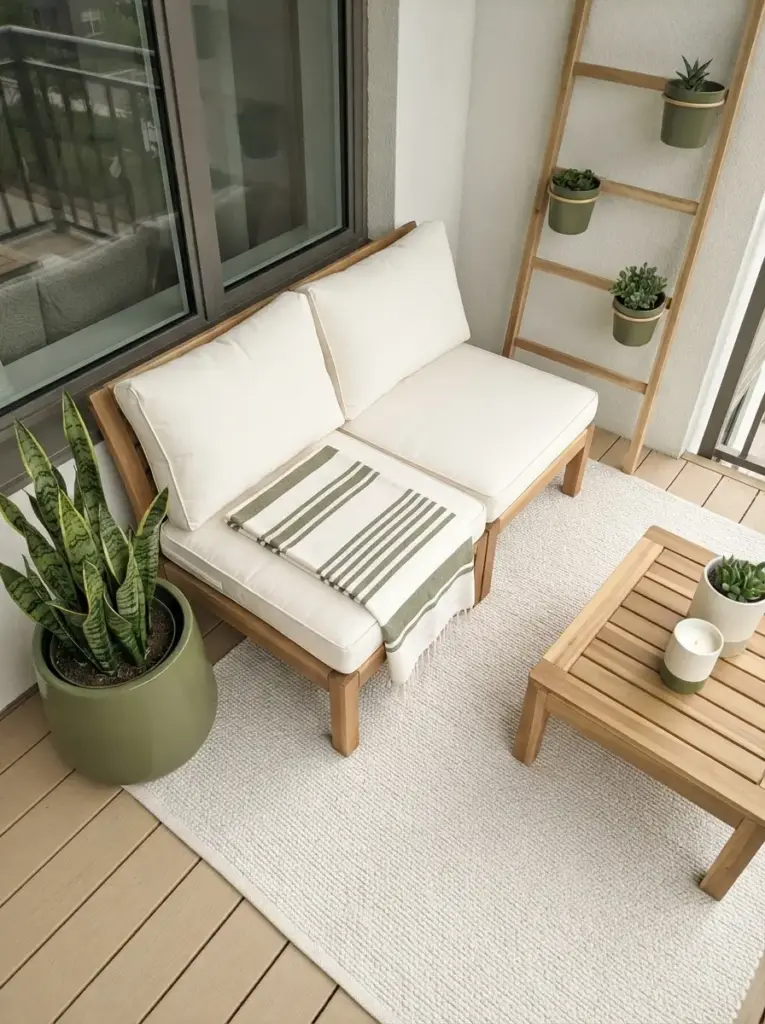
Restricted color palettes help small spaces feel organized. Choose one base color, one supporting shade, and one accent. For example, warm white cushions, natural wood furniture, and olive green planters create a grounded look. Another option combines charcoal metal, pale gray textiles, and muted rust accessories for a modern urban setting.
Repeated colors connect separate objects and reduce the appearance of clutter. Bright hues can still work, but use them in smaller items such as seat pads, pots, or a throw. People who enjoy changing decor seasonally should keep expensive pieces neutral and rotate affordable accents. Balconies with little daylight often benefit from ivory, sand, and soft sage, while sunny areas can handle deeper navy, forest green, or black. Color control supports visual calm and makes budget purchases from different stores feel more coordinated.
Add Weather-Safe Textiles for Comfort
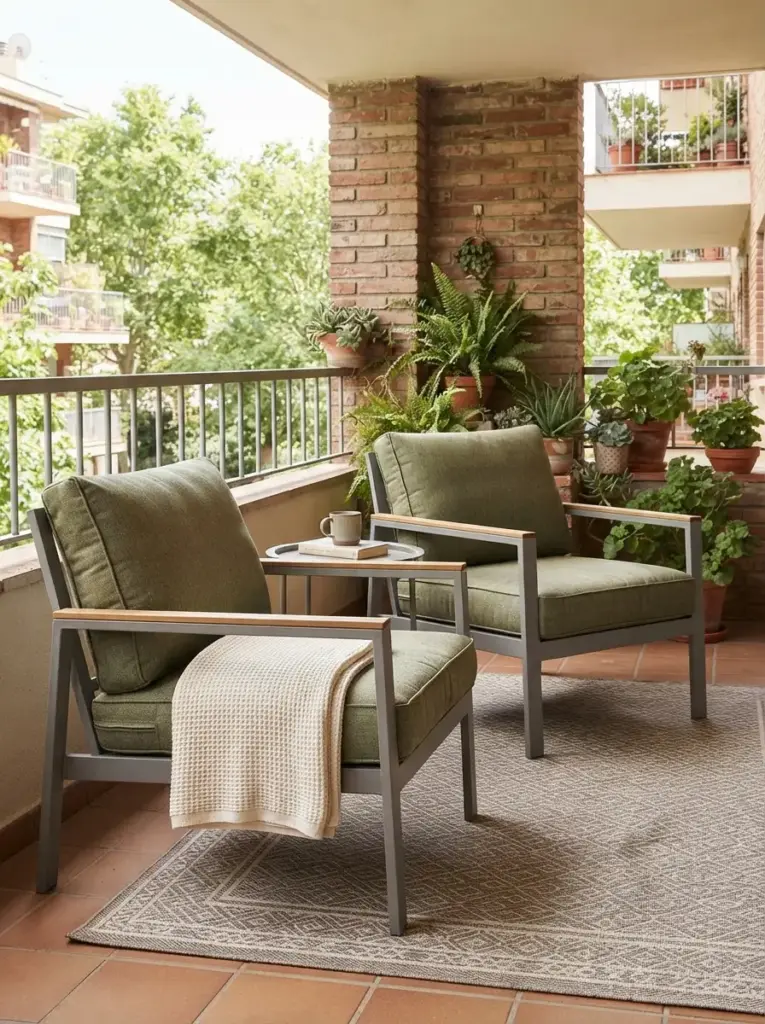
Textiles make outdoor furniture more inviting, yet they must suit the conditions. Select solution-dyed acrylic, polyester, or polypropylene covers that resist fading and dry faster than cotton. Removable zip covers simplify washing and allow damaged inserts to be replaced without buying new furniture.
Use one seat cushion, one back cushion, and perhaps a light throw rather than covering every surface with pillows. Too many textiles require storage and can quickly look untidy. Covered balconies may handle softer fabrics, while exposed platforms need tougher materials and easy indoor storage. People who use the area daily should prioritize seat support over decorative layering. Cream, tan, slate, and muted green hide light dust better than pure white. Practical fabric choices extend the season of use and make compact seating comfortable for longer periods.
Use Corners Instead of Blocking the Center
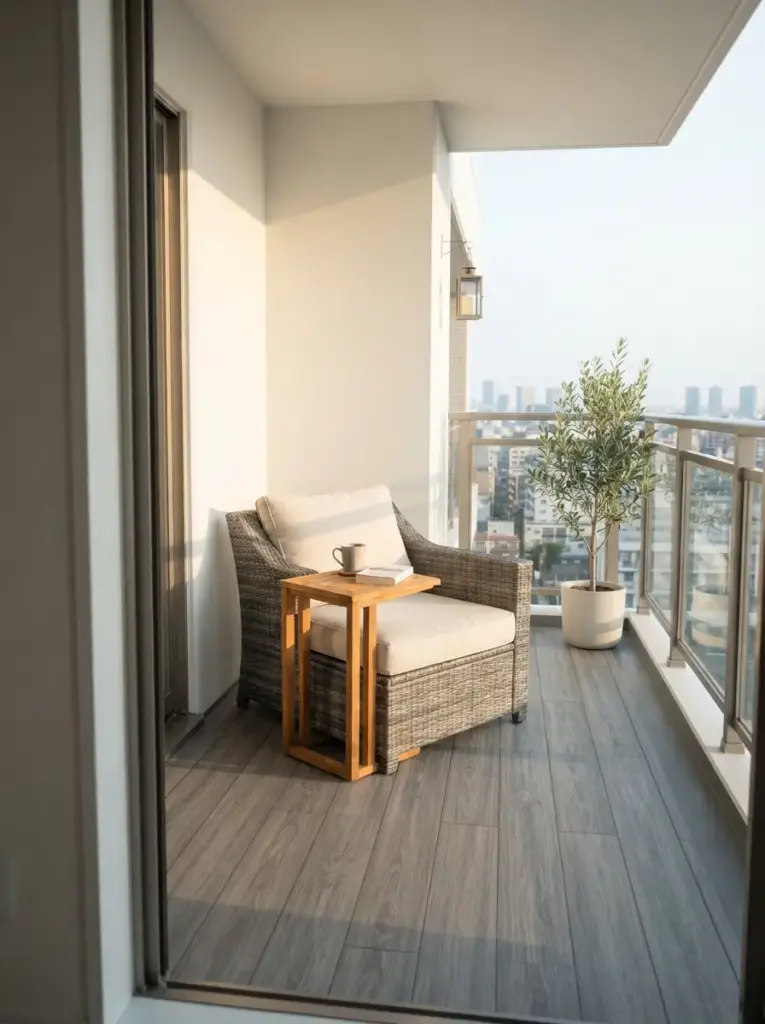
Corner-based layouts preserve movement and create a clearer view from the doorway. Place the largest chair, bench, or plant stand against one end, then keep the center open. L-shaped benches can work on wider platforms, but they should not wrap around so far that users feel trapped or cannot stretch their legs.
Diagonal furniture placement usually wastes space, even when it looks attractive in a large showroom. Straight lines along the railing or wall are easier to navigate and clean. Solo residents may place one lounge chair in a sunny corner with a small C-shaped side table. Families can use a narrow corner bench paired with stackable stools. This arrangement works because open central floor space gives the eye a resting area and makes the balcony feel more generous from inside the room.
Add One Strong Focal Point
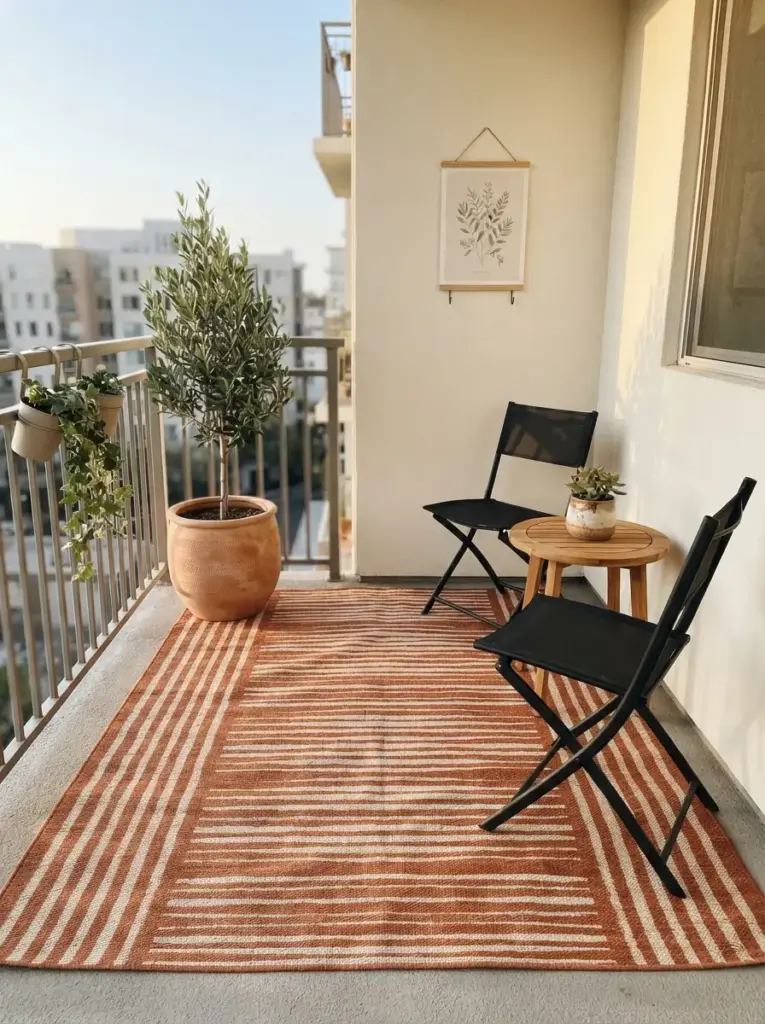
One memorable feature gives the outdoor area character without requiring many accessories. A tall sculptural plant, a patterned rug, a painted folding chair, a ceramic planter, or a compact wall panel can lead the design. Choose a focal point that suits the primary use and can handle the weather.
People with a plain concrete view may use a large planter filled with an upright olive tree or a dwarf evergreen. Color lovers could choose a striped rug in rust and cream, then keep furniture simple. Renters can hang lightweight outdoor art with removable hooks only when the surface and building rules allow it. Several competing focal points make a tight space feel busy, so let one element carry the personality. Focused decoration supports a polished result while keeping shopping lists shorter and maintenance manageable.
Keep Decor Easy to Move and Maintain
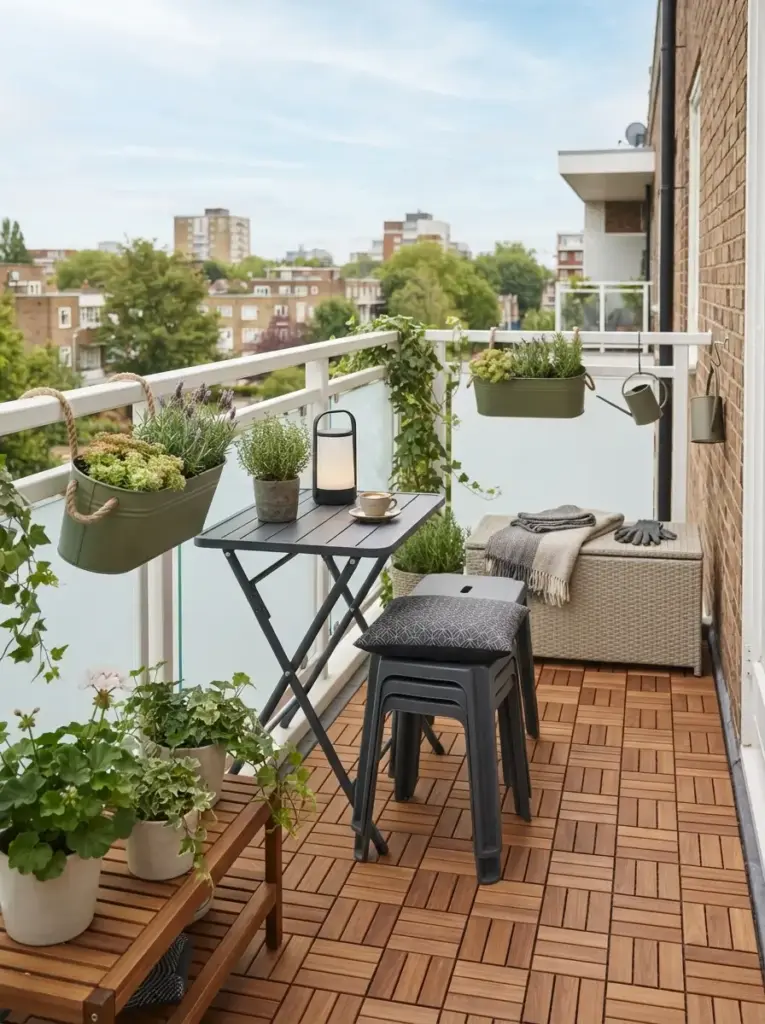
Lightweight, washable, and multipurpose decor makes a compact outdoor area easier to live with. Choose planters with handles, stackable stools, folding tables, and rechargeable lights that can move indoors during storms. Limit small objects that need frequent dusting or can blow away in strong winds.
Maintenance should shape the design from the beginning. Glossy black furniture may show dust quickly, white cushions need regular cleaning, and untreated wood can require yearly care. Busy professionals may prefer resin seating, washable covers, drought-tolerant plants, and one storage box. People who enjoy seasonal changes can use removable cushion covers instead of replacing large pieces. The Small Balcony stays attractive longer when upkeep matches the owner’s actual time, climate, and storage options.
Small Balcony Layout Tips That Improve Daily Use
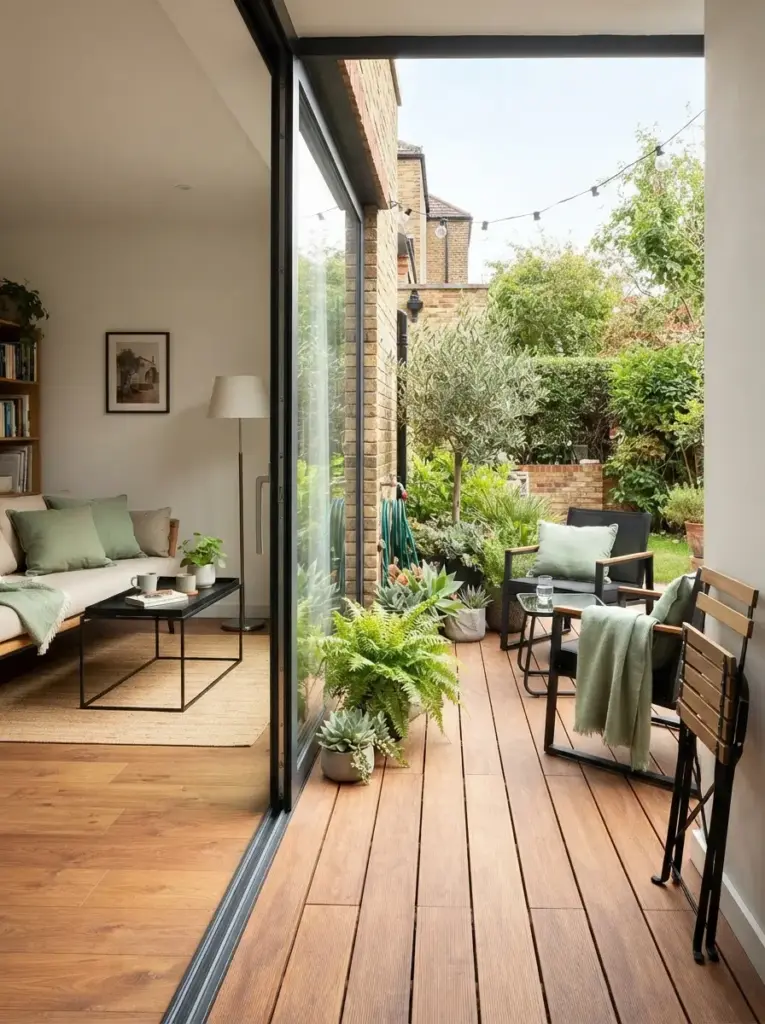
Good circulation matters as much as attractive furniture. Keep the doorway clear and avoid placing tall objects where they block the view from inside. A visible outdoor floor can visually extend the room, especially when interior and exterior colors relate. Repeating warm wood, black metal, or soft green across both areas creates continuity without needing matching furniture.
Place frequently used items within easy reach. Drinks should have a stable surface, plants should sit near water access, and lighting controls should not require moving a chair. Consider how the area looks when empty as well as when occupied. Foldable furniture should have a designated storage position so it does not lean awkwardly against the door. Layout decisions feel successful when entering, sitting, cleaning, and watering all happen without shifting several objects first.
Choose Materials That Suit Outdoor Conditions
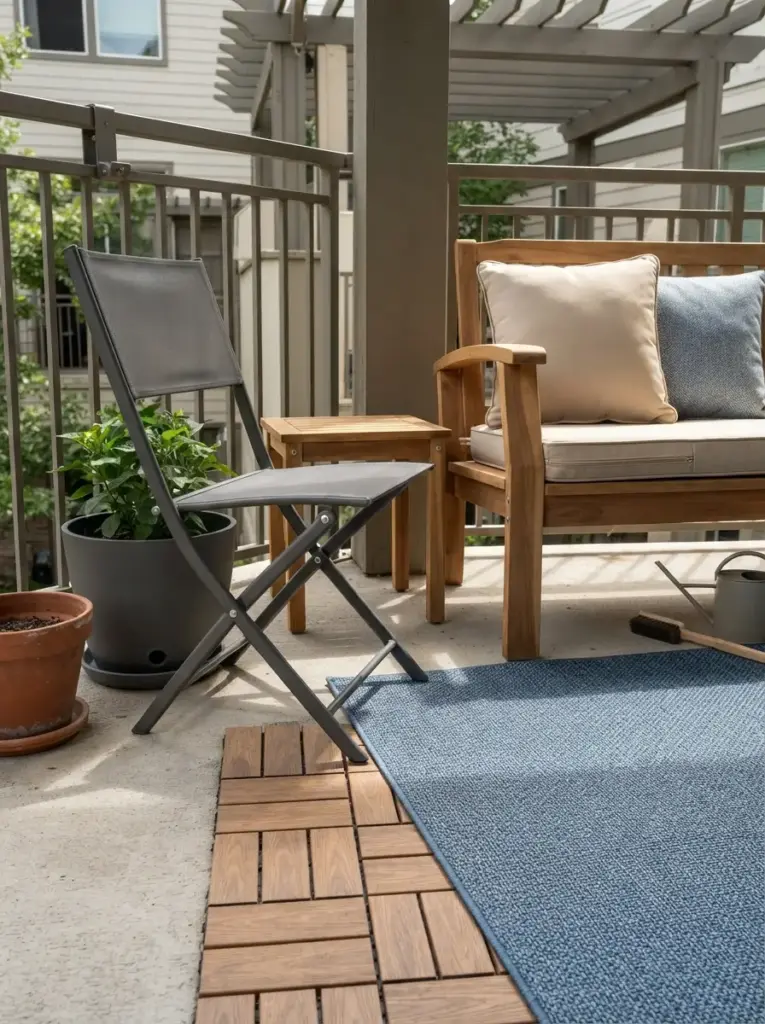
Material selection affects appearance, safety, and long-term cost. Powder-coated aluminum is lightweight, rust-resistant, and easy to move, making it useful for renters or anyone who rearranges often. Steel feels sturdy but needs a reliable protective finish, especially near the coast. Teak and acacia bring natural warmth, although both require cleaning and occasional oiling. Resin furniture is easy to maintain, but thin, low-quality pieces can fade or become brittle. Match the material to rainfall, direct sun, storage access, and the amount of care you can realistically provide. Choose finishes that can be repaired locally, because replacement parts and simple maintenance often matter more than an impressive showroom appearance after several seasons outdoors in practice.
Flooring deserves the same practical review. Wood-look deck tiles can cover worn concrete, yet water must drain freely beneath them. Plastic composite tiles usually need less care and may suit humid climates better. Outdoor rugs feel softer under bare feet, but they should dry quickly and lift easily for cleaning. People with pets should avoid loose weaves that catch claws. Homes exposed to heavy leaf fall or city dust benefit from surfaces that can be swept and rinsed without moving several heavy objects.
Planter materials also change how easy the garden is to manage. Terracotta allows airflow around roots but dries quickly and may crack during freezing weather. Glazed ceramic holds moisture longer, though larger pots become difficult to move. Fiberglass and resin containers offer the look of stone at a lower weight. Dark pots absorb more heat in the strong sun, which can stress roots. Beginners often do well with medium-weight containers, drainage holes, and matching saucers that protect the floor without trapping excess water.
Textile durability depends on both fabric and construction. Tightly woven outdoor covers resist dirt better than loosely woven decorative cloth. Piped edges help cushions keep their shape, while hidden zippers make washing simpler. Foam inserts should drain or dry quickly after rain. Covered areas can support softer textures, but fully exposed platforms need fabrics designed for direct sun and moisture. Store throws indoors when they are not being used, because even outdoor-rated materials last longer when protected from repeated soaking and intense ultraviolet exposure.
Hardware should never be overlooked. Stainless steel screws, coated brackets, and secure fasteners reduce rust marks and looseness. Folding joints need smooth movement without sharp edges or unstable wobbling. Railing accessories must fit the exact railing type and should not rely on improvised cords. Families with children or pets should avoid climbable furniture near the edge. Careful hardware choices may not be the most visible part of the design, but they strongly influence whether the setup remains safe and useful.
Weather protection can extend the life of every purchase. Furniture covers should fit closely enough to resist wind while allowing ventilation underneath. Trapped moisture may cause mold, rust, or unpleasant odors, so avoid wrapping damp items in airtight plastic. During severe weather, bring lightweight pieces indoors rather than trusting a cover alone. Seasonal cleaning with mild soap prevents dirt from becoming embedded. Consistent care costs little and keeps materials looking coordinated instead of worn at different rates.
Plan for Sun, Shade, and Changing Seasons
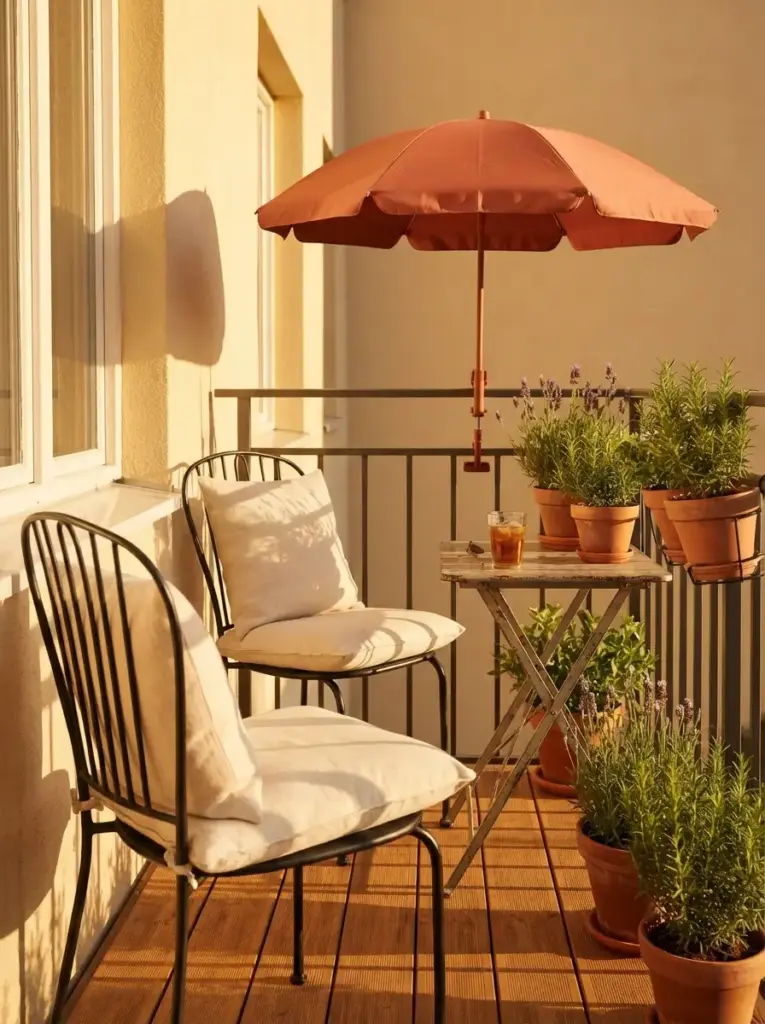
Sun direction should influence seating, plant placement, and color choices. West-facing areas can become uncomfortably hot in late afternoon, while north-facing spaces may stay cool and shaded. Observe the light for several days before purchasing plants or fabric. Pale cushions reflect heat better than black ones, and breathable seating feels more comfortable in the strong sun. A removable umbrella may work on wider platforms, but narrow spaces often benefit from a compact clamp-on shade or building-approved outdoor curtain.
Seasonal changes require flexible storage. Keep a labeled indoor bin for cushion covers, lights, and small gardening tools when winter or storm season arrives. Folding pieces can move behind a sofa, inside a closet, or beneath a bed. Residents in mild climates may use the outdoor area year-round, but even they should inspect fasteners, drainage, and fabric condition every few months. Planning for changing weather prevents the space from turning into a pile of damp furniture when conditions shift.
Common Decorating Mistakes to Avoid
Buying Furniture Before Measuring
Impulse purchases often cause the biggest layout problems. Product photos are usually taken in larger settings, which can make a deep chair or wide table appear compact. Measure the exact footprint and use tape to test it on the floor. Include space for chair legs, door movement, and people sitting down. Returns can be costly, especially for outdoor furniture, so dimensions should guide style choices from the start.
Using Too Many Small Accessories
Small lanterns, tiny pots, signs, trays, and decorative objects may seem harmless, but together they create clutter. Choose fewer pieces with a stronger scale and practical value. One medium planter often looks cleaner than six unrelated pots. One rechargeable lamp can replace several fragile candles. Beginners usually achieve a more polished result by removing two or three accessories after arranging the space.
Ignoring Wind and Weather
Upper-floor balconies can experience stronger wind than ground-level patios. Lightweight rugs, loose cushions, and unsecured screens may move or become unsafe. Use outdoor ties, weighted planters, fitted covers, and furniture that can be folded or stored. Rain exposure also matters, so avoid indoor lamps, untreated fabrics, and materials that trap water. Weather-aware choices protect both belongings and nearby residents.
Blocking Drainage or Airflow
Deck tiles, rugs, storage boxes, and plant trays can block water from reaching the drain. Leave access for cleaning and inspecting the surface after heavy rain. Privacy panels should also allow airflow rather than creating a solid sail against strong wind. Good drainage prevents stains, mold, and standing water, while airflow keeps plants and textiles healthier.
Choosing Plants Only for Appearance
Beautiful plants fail quickly when light and wind needs are ignored. Observe the area at several times of day before buying anything. South- or west-facing spaces may receive intense heat, while shaded north-facing areas need tolerant foliage. Match container size to mature growth and use saucers responsibly. Healthy, suitable plants look better than a crowded collection that constantly needs replacement.
Forgetting Building Rules
Rental agreements and building policies may restrict drilling, hanging objects, open flames, railing planters, or screen heights. Review the rules before installing permanent features. Even removable items should remain secure and should not extend beyond the railing. Responsible decorating avoids damage, complaints, and last-minute removal.
Budget-Friendly Decorating Tips
Start with the item that affects comfort most, usually a chair or bench. A supportive secondhand chair in good condition can offer more value than several cheap accessories. Check local resale listings for folding bistro sets, plant stands, and outdoor storage, but inspect rust, loose joints, and fabric damage before buying.
Repurpose items carefully. A sturdy wooden crate can become a side table after sanding and sealing, while a metal utility cart can hold plants and drinks. Indoor furniture should not move outdoors unless the material can tolerate moisture and temperature changes. Savings disappear when unsuitable pieces warp, rust, or stain the floor.
Use textiles to refresh neutral furniture. New cushion covers cost less than replacing a full set, and one outdoor rug can connect mismatched seating. Choose washable fabrics and standard cushion sizes so future replacements remain affordable. Seasonal sales often provide better value on durable basics than trend-focused decor.
Grow plants from cuttings or start with herbs that serve more than one purpose. Mint, parsley, chives, and thyme can add greenery while supporting cooking. Containers do not need to match exactly, but repeating one color through paint or simple outer covers creates cohesion. Always preserve drainage holes and use weather-safe finishes.
Prioritize rechargeable lighting over extensive electrical work. One good table lamp can serve dining, reading, and decorative needs. Solar lights are useful where direct sunlight is reliable, but inexpensive models may produce weak light. Buying fewer dependable pieces usually costs less than replacing several poor-quality options.
Practical Small Balcony Tips for Beginners
Begin with an empty floor and add only the most important item first. Sit in the chosen chair, open the door, and walk through the space before bringing in plants or accessories. Real use often reveals problems that are not obvious in a mood board. A table may feel too high, a planter may block the view, or a chair may need more room to recline.
Photograph the layout from inside the adjoining room. That view shows whether the outdoor area feels connected or cluttered. Remove anything that interrupts the strongest sight line. Keep the railing visually light when the city view is attractive, and place privacy features only around the seated position when exposure is the main concern.
Review the setup after one week of normal use. Notice which items move constantly, collect water, or remain unused. Replace decorative pieces with practical ones when necessary. Successful compact-space design evolves through daily routines rather than a single shopping trip. Small changes based on real behavior usually improve comfort more than adding another trend.
Frequently Asked Questions
How Can I Make a Small Balcony Look Bigger?
Use slim furniture with visible legs, keep the center open, and repeat a limited color palette. Long stripes on a rug or deck tiles laid in the longest direction can visually extend the floor. Tall plants and vertical shelves draw attention upward, while fewer accessories reduce clutter. Maintaining a clear view from the indoor room also helps the outdoor area feel connected to the interior.
What Furniture Works Best for a Narrow Balcony?
Folding bistro chairs, railing tables, armless seats, narrow benches, and C-shaped side tables usually work well. Check dimensions carefully and keep most pieces under 18 to 22 inches deep when the platform is very narrow. Stackable stools can provide occasional guest seating without occupying permanent floor space. Furniture should allow the door to open and leave a comfortable path to the main seat.
How Do Renters Decorate Without Drilling?
Use freestanding shelves, over-rail planters, clamp-on tables, removable outdoor hooks, weighted privacy screens, and interlocking deck tiles. Folding furniture and washable textiles also move easily to another home. Always test removable products on a hidden area and review building rules before attaching anything to railings, walls, or glass panels.
Which Plants Are Easiest for Beginners?
Herbs such as chives, thyme, mint, and parsley are manageable when their light needs are met. Snake plants, pothos, geraniums, and hardy succulents may also work depending on exposure and climate. Start with a few plants, use containers with drainage, and check soil moisture before watering. Wind and afternoon heat can dry pots faster than expected.
What Lighting Is Safest for Outdoor Use?
Choose fixtures labeled for outdoor or damp locations and keep cords away from doorways and standing water. Rechargeable table lamps and enclosed LED lanterns provide flexible, renter-friendly light. Warm bulbs between 2200K and 2700K suit relaxed seating areas. Open flames are often restricted in apartment buildings, so flameless candles are usually the safer choice.
How Much Decor Is Too Much?
Decor becomes excessive when objects block movement, require constant shifting, or compete with the main function. Keep surfaces partly empty and limit accessories to items that add comfort, light, storage, or greenery. One focal point, a few coordinated planters, and practical textiles are usually enough. Removing an unused piece often improves the layout more than adding something new.
Conclusion
Compact outdoor decorating works best when purpose, measurements, and maintenance guide every decision. Start with one comfortable activity, select furniture that preserves movement, and build privacy, lighting, color, and greenery around that routine. Rental-friendly products such as folding chairs, railing tables, freestanding plant shelves, rechargeable lamps, and removable floor tiles can create a finished space without permanent changes.
Thoughtful editing matters just as much as shopping. Leave breathing room around furniture, choose materials for the real weather, and remove objects that do not support daily use. With patient planning, the Small Balcony can become a practical extension of the home rather than an overlooked storage area.