
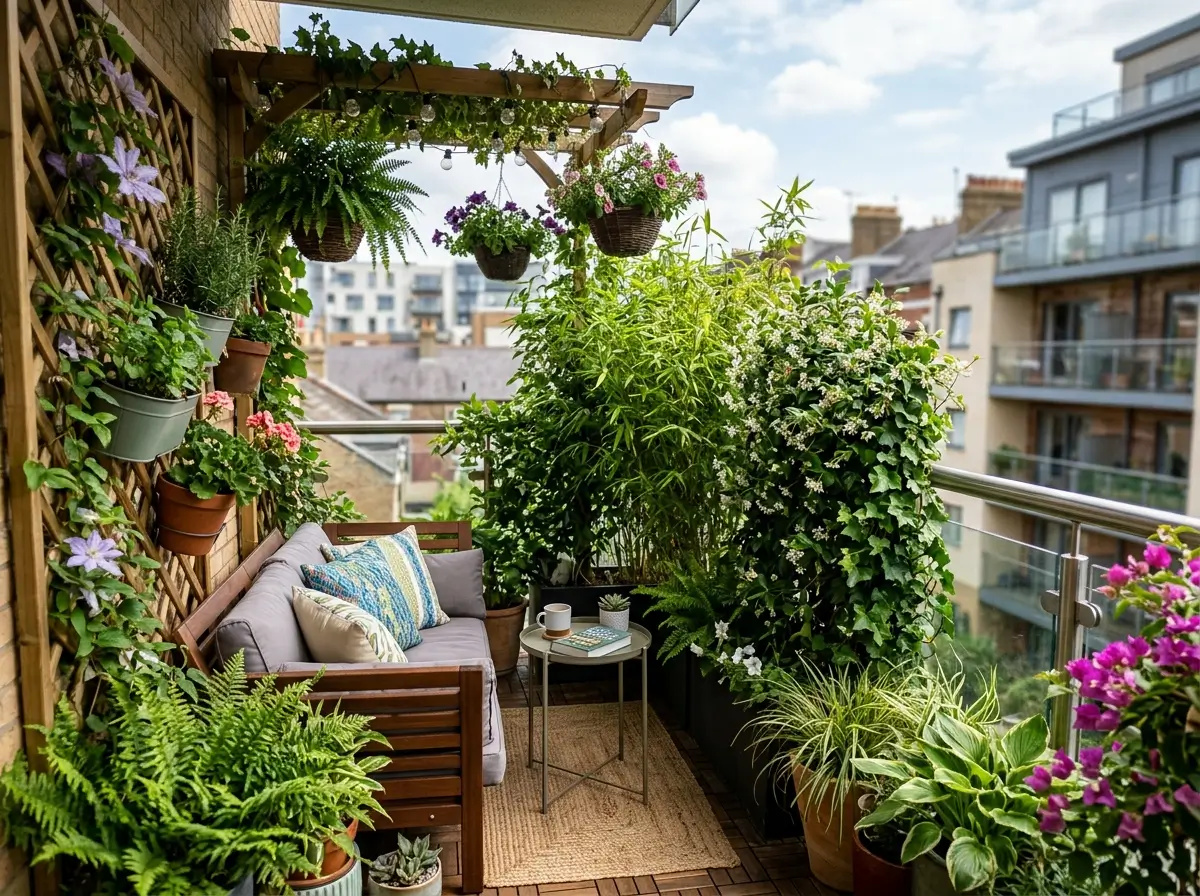

City balconies often feel more exposed than relaxing. Nearby windows, shared courtyards, busy sidewalks, and neighboring towers can make a small outdoor area feel like a stage. Thoughtful Apartment Balcony Privacy changes that experience without turning the space into a dark box. Greenery, lightweight screens, careful furniture placement, and soft lighting can create separation while keeping fresh air and daylight.
Good privacy design also needs to respect small-space limits. Heavy planters may overload a balcony, solid barriers can block airflow, and crowded layouts can make movement difficult. Renters need removable solutions that do not damage railings or walls. Beginners also need plants that match the available sunlight rather than simply choosing the tallest option at the garden center.
Ideas below focus on realistic solutions for narrow balconies, compact patios, and upper-floor outdoor spaces.
How Can You Make an Apartment Balcony More Private?
Apartment Balcony Privacy works best when you create several light layers instead of relying on one bulky barrier. Start with the main sightline, usually a neighboring window, street view, or adjacent balcony. Block that direction first with tall plants, a slim trellis, outdoor curtains, or a partial screen. Add smaller plants and furniture around the lower area so the arrangement feels natural rather than defensive.
Choose materials that suit your weather and rental rules. Breezy balconies need secured screens and weighted planters. Hot balconies need plants that tolerate strong sun. Shaded spaces benefit from foliage plants such as cast iron plants, ferns, and pothos. Keep enough open space for airflow, watering, and safe access to doors and railings.
Build a Layered Wall of Tall Potted Plants
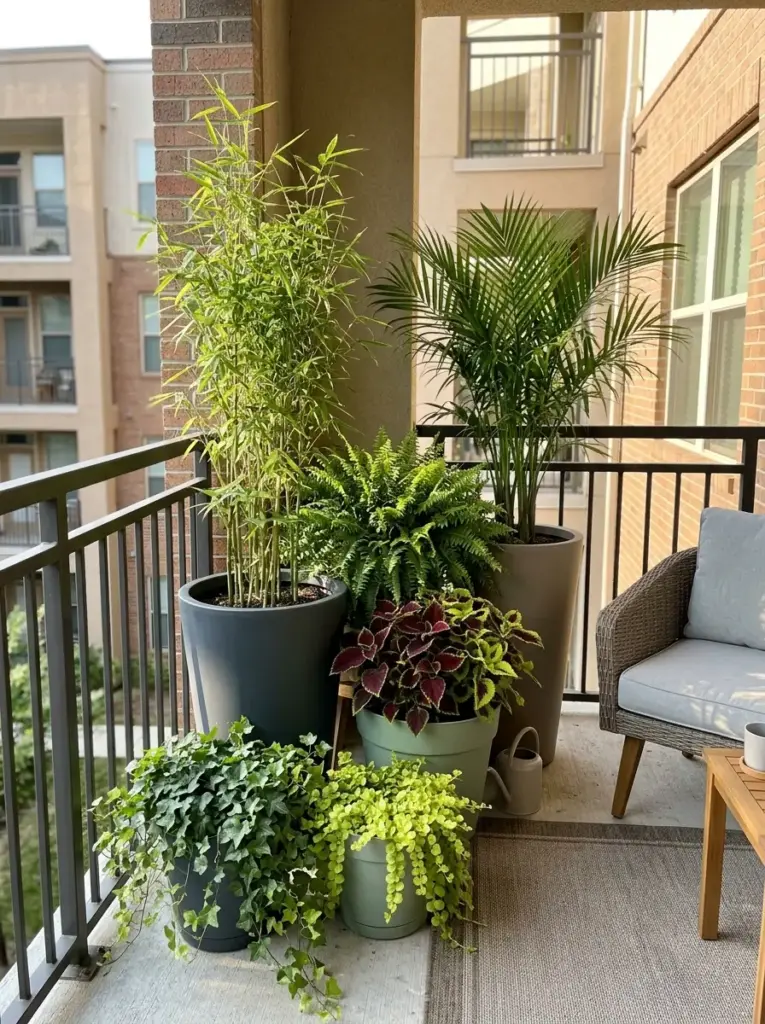
Tall potted plants create privacy without making a balcony feel closed. Combine one or two upright plants with medium-height foliage and trailing greenery. Bamboo, clumping grasses, ficus, areca palms, and dwarf arborvitae can form the upper layer. Ferns, coleus, or compact shrubs can fill the middle. Trailing ivy or creeping Jenny softens planter edges near the floor.
Layering succeeds because leaves interrupt sightlines at several heights. One tall plant may hide your face while leaving chairs and storage visible. Several heights create a fuller visual barrier while still allowing light through. Such an arrangement works especially well for renters who cannot attach panels to walls or railings.
Choose planters in related colors so the balcony looks calm. Matte charcoal, warm taupe, sand, or muted green containers suit modern homes. Lightweight resin pots are easier to move than ceramic. Add heavy stones inside the base of tall containers for stability, but confirm the balcony’s weight limit before using large quantities.
Position the tallest pots near the most exposed corner rather than lining every edge. Leave a clear walking path of at least 24 inches where possible. Similar guidance appears in many Balcony Plants plans, but privacy planting needs extra attention to height, wind, and spacing.
Train Climbing Vines on a Freestanding Trellis
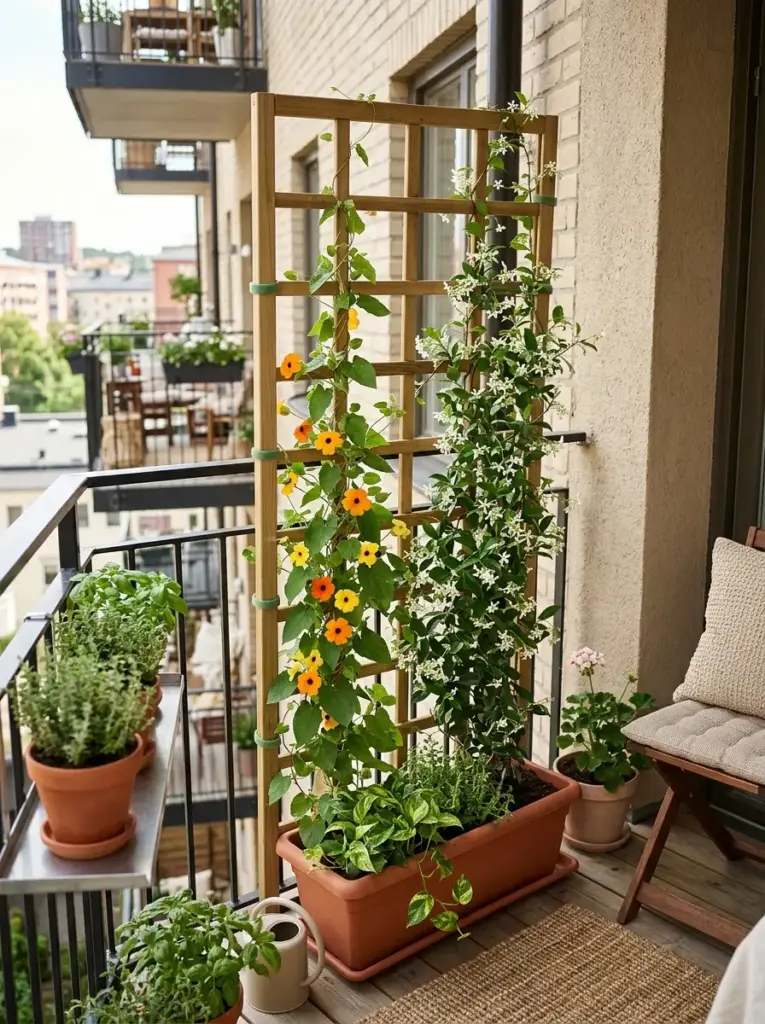
Freestanding trellises offer vertical coverage without drilling into rental walls. Place a narrow planter at the base, insert a lightweight trellis, and guide vines upward with soft plant ties. Star jasmine, black-eyed Susan vine, clematis, sweet peas, and climbing nasturtiums can create seasonal screening. Pothos and philodendron work better in warm, shaded locations.
Vertical growth is useful because it adds privacy without taking much floor area. Narrow balconies often cannot spare space for wide shrubs. Vines use height instead, making this solution suitable for a Tiny Balcony Patio or a slim service balcony beside a kitchen.
Select a trellis that matches the balcony style. Black metal suits industrial or modern decor. Natural wood works with beige cushions, terracotta pots, and woven rugs. White vinyl feels clean in coastal or light contemporary schemes. Keep the structure several inches away from painted walls so damp leaves do not leave stains.
Tie the trellis securely to a weighted planter or approved railing point. Loose panels can become dangerous in strong winds. Avoid fast-growing invasive vines and check building rules before allowing plants to extend beyond the balcony. Water at the soil level to reduce dripping onto neighbors below.
Use Railing Planters as a Living Privacy Edge
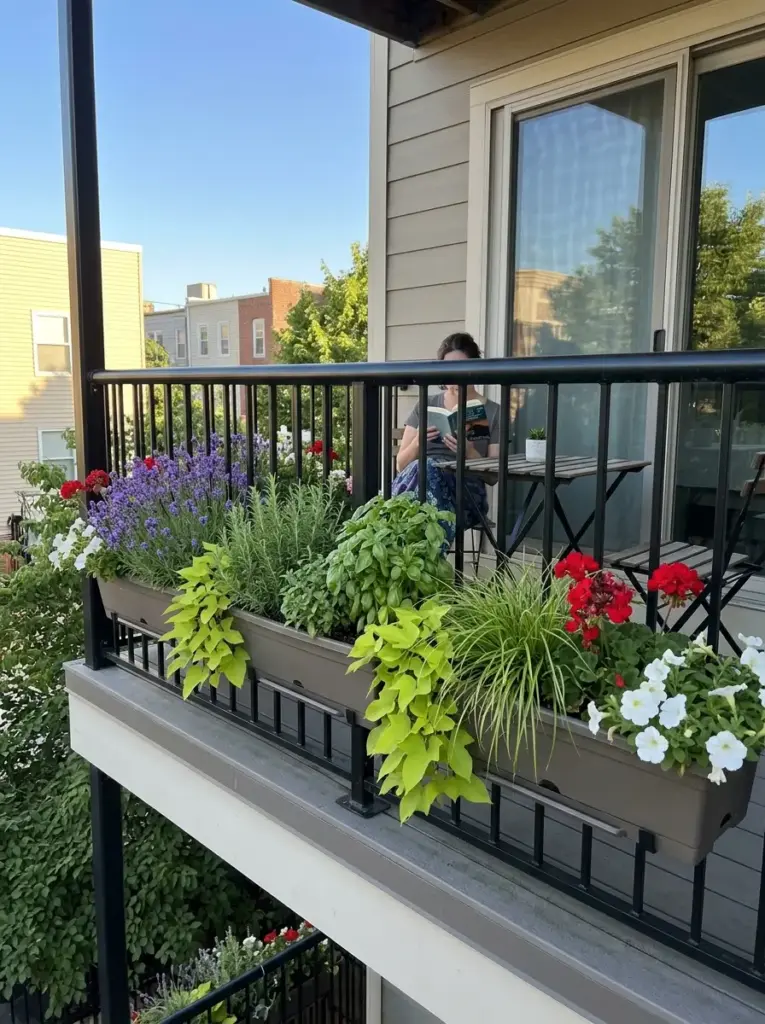
Railing planters can hide the lower half of a balcony while preserving sky views. Fill several matching boxes with dense herbs, flowering annuals, compact grasses, or trailing plants. Rosemary, lavender, geraniums, petunias, basil, carex grass, and sweet potato vine can create a thick but manageable border.
Lower screening matters because nearby pedestrians and seated neighbors often see through open railings. A planted edge interrupts that view while keeping the balcony airy. Families with low seating, floor cushions, or small bistro sets benefit most from this approach.
Secure every box with brackets designed for the exact railing shape. Clip-on planters may loosen on rounded metal rails, while universal brackets can shift during storms. Use lightweight potting mix and avoid overfilling boxes with water. Drainage trays help prevent stains and complaints from people below.
Repeat two or three plant types rather than mixing many unrelated colors. White flowers with green foliage create a fresh look. Purple lavender with silver dusty miller feels softer and more Mediterranean. Red geraniums paired with dark green herbs bring energy to neutral buildings.
Place a Slim Bamboo Screen Behind Greenery
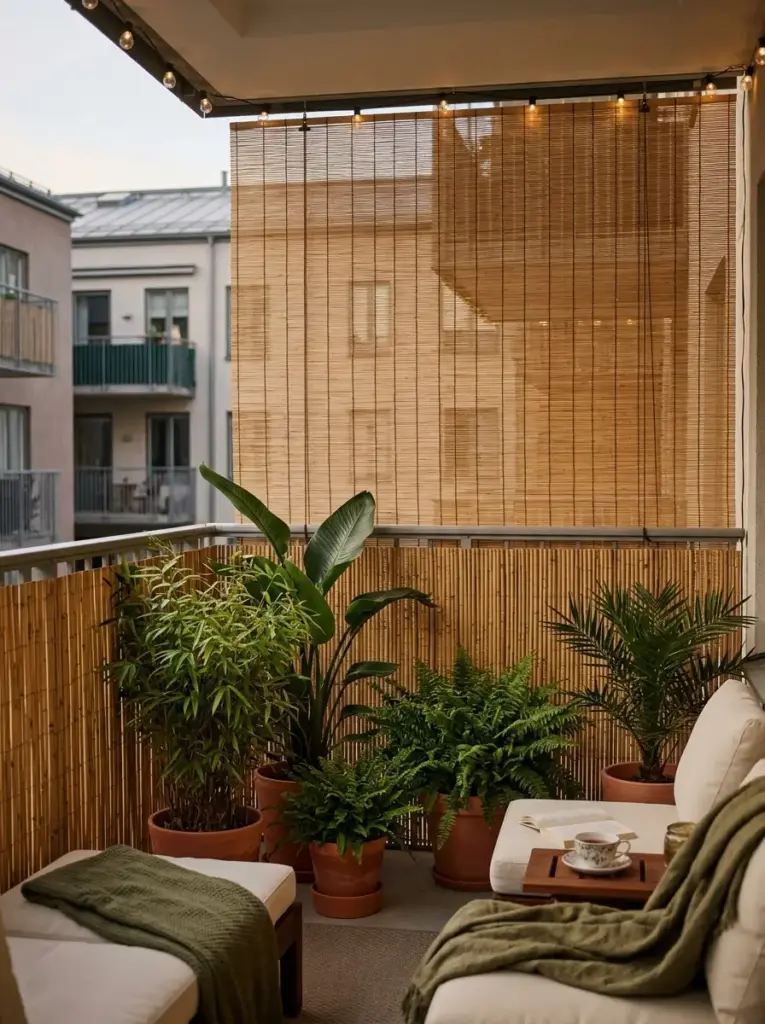
Bamboo screening provides immediate coverage while plants grow. Choose a roll or framed panel that fits inside the railing rather than extending above building limits. Secure it with outdoor-rated ties in several places, then place leafy pots in front to soften the flat surface.
Combined materials feel more welcoming than a screen used alone. Bamboo blocks direct views, while plants reduce the fence-like appearance. Apartment Balcony Privacy becomes more natural when solid surfaces sit behind layered leaves instead of dominating the balcony.
Such a setup suits renters who need quick results and people who do not want to maintain a full plant wall. Use clumping bamboo in pots, bird of paradise, ferns, or dwarf palms in front of the screen. Warm tan bamboo pairs well with cream cushions, olive textiles, and terracotta planters.
Measure the railing carefully before buying a roll. Oversized screening often wrinkles or catches the wind. Keep the bottom slightly raised so rainwater can drain and air can circulate. Check ties each season because sun exposure can weaken cheap plastic. Avoid attaching bamboo to emergency access areas or covering building vents.
Hang Outdoor Curtains from a Removable Frame
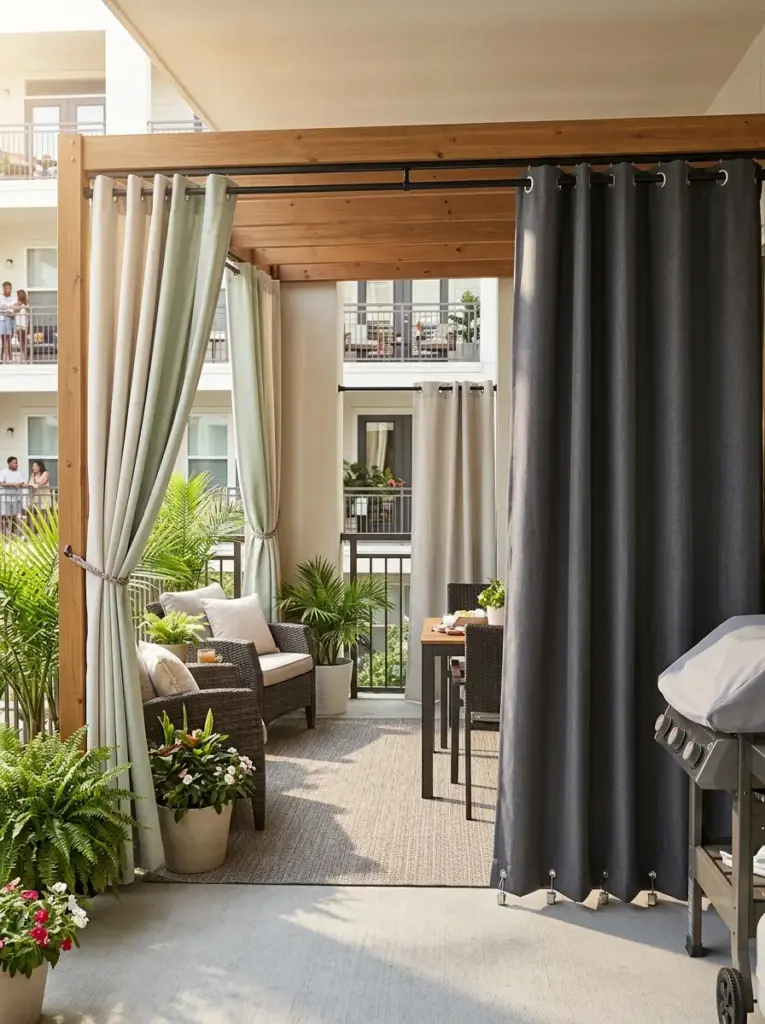
Outdoor curtains offer flexible privacy that can open during the day and close when neighboring balconies become busy. Use a freestanding pergola-style frame, tension rod, or approved ceiling track. Pick weather-resistant fabric rather than indoor cotton, which can absorb moisture and develop mildew.
Movable fabric works because privacy needs change. Morning sunlight may be welcome, while evening dining may require more coverage. Curtains also soften hard concrete surfaces and reduce glare, making them useful for renters who want comfort without permanent construction.
Choose light colors when the balcony receives limited daylight. Warm white, oatmeal, pale sage, and light gray keep the space open. Dark navy or charcoal provides stronger visual separation but may make a narrow balcony feel smaller. Tiebacks prevent fabric from blowing across plants and candles.
Secure the bottom corners with discreet weights or clips. Never allow long fabric to touch a heater, grill, or open flame. Wash panels according to the care label and let them dry fully before storing.
Create a Corner Canopy with Climbing Plants
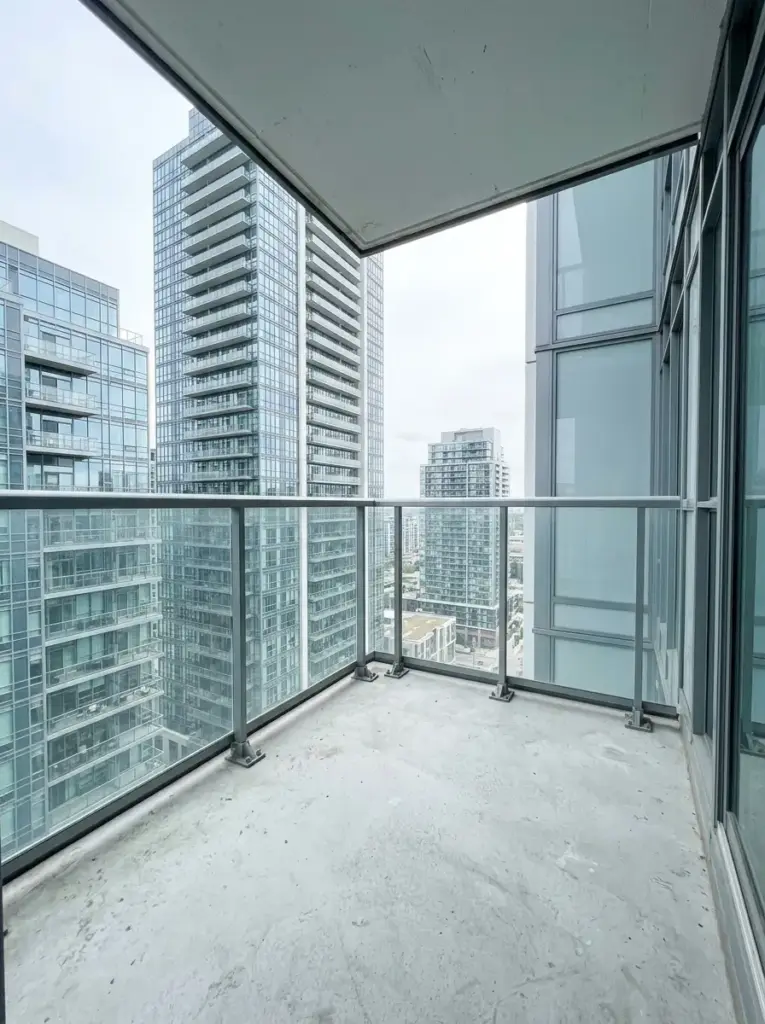
Corner canopies turn one exposed seating area into a sheltered nook. Position two tall planters at right angles, add vertical supports, and connect them with a lightweight overhead frame. Train flowering vines or leafy climbers along the sides and top, leaving the center open enough for airflow.
Partial overhead coverage reduces views from taller buildings, a problem that standard railing screens cannot solve. Leaves above eye level also cast gentle shade and make a small chair or bench feel more enclosed. People living in dense high-rise areas gain the most from this solution.
Keep the canopy shallow so it does not block doors or create a low ceiling. Use narrow metal supports in black, bronze, or green so the frame disappears behind foliage. Jasmine, grapevine, passionflower, and hardy kiwi can work where climate and building rules allow. Annual vines provide lighter seasonal growth and are easier to control.
Check how much soil each climber needs before selecting a pot. Aggressive vines in tiny containers dry quickly and become stressed. Prune growth away from gutters, neighboring balconies, lights, and safety equipment. Similar structures can enrich an Apartment Balcony Garden without consuming the entire floor.
Arrange a Green Privacy Shelf
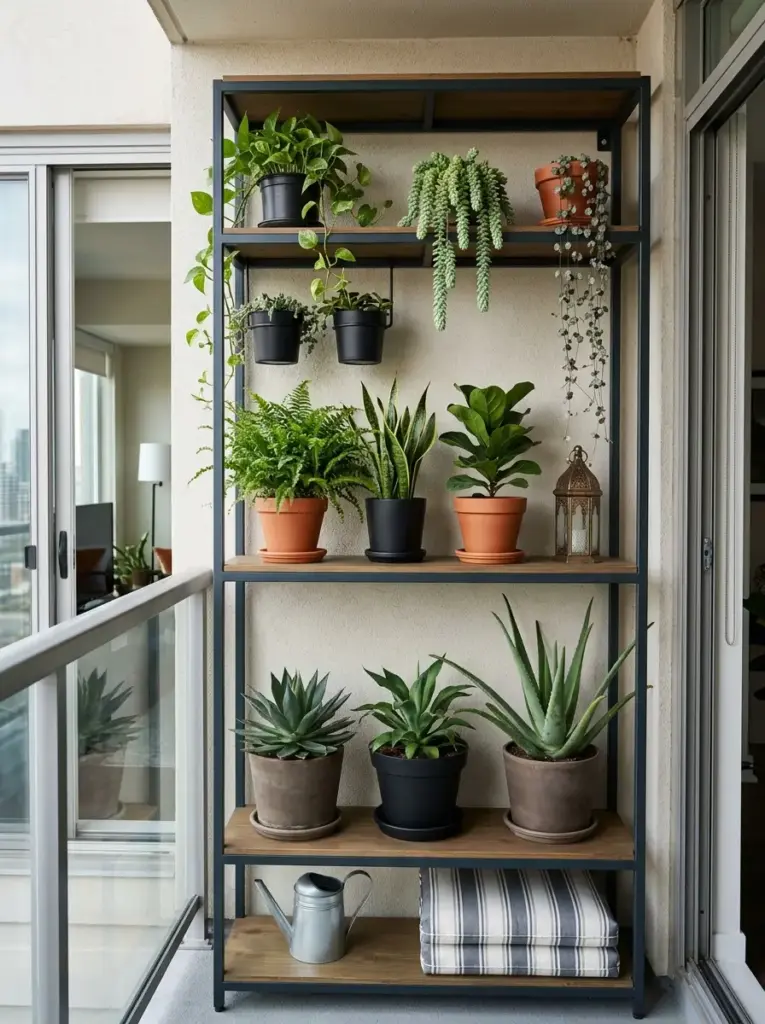
Open shelving can hold plants at several heights while storing small outdoor items. Choose a narrow metal or treated wood shelf with a stable base. Place heavy pots on the bottom, medium foliage in the center, and trailing plants near the top. Keep frequently used items, such as watering cans and folded cushions, on an accessible lower shelf.
Shelving works because it creates a structured green wall without requiring large planters. Gaps between leaves maintain airflow and allow filtered light into the apartment. Beginners who own many small plants but lack one dramatic specimen will find this method practical.
Use an odd number of pots on each level for a relaxed arrangement. Repeat planter finishes, such as black metal and terracotta, so the shelf does not look cluttered. Add one decorative object, perhaps a lantern or weatherproof ceramic bowl, rather than filling every gap.
Anchor the unit according to the manufacturer’s instructions. Strong wind can tip tall shelves, especially when the upper pots dry out and become lighter. Avoid placing fragile glass accessories overhead. Water carefully with a narrow-spout can and use saucers to prevent runoff. Comparable Apartment Balcony Ideas often feature shelves for display, but privacy shelves require denser foliage on the exposed side.
Use Tall Ornamental Grasses for Soft Movement
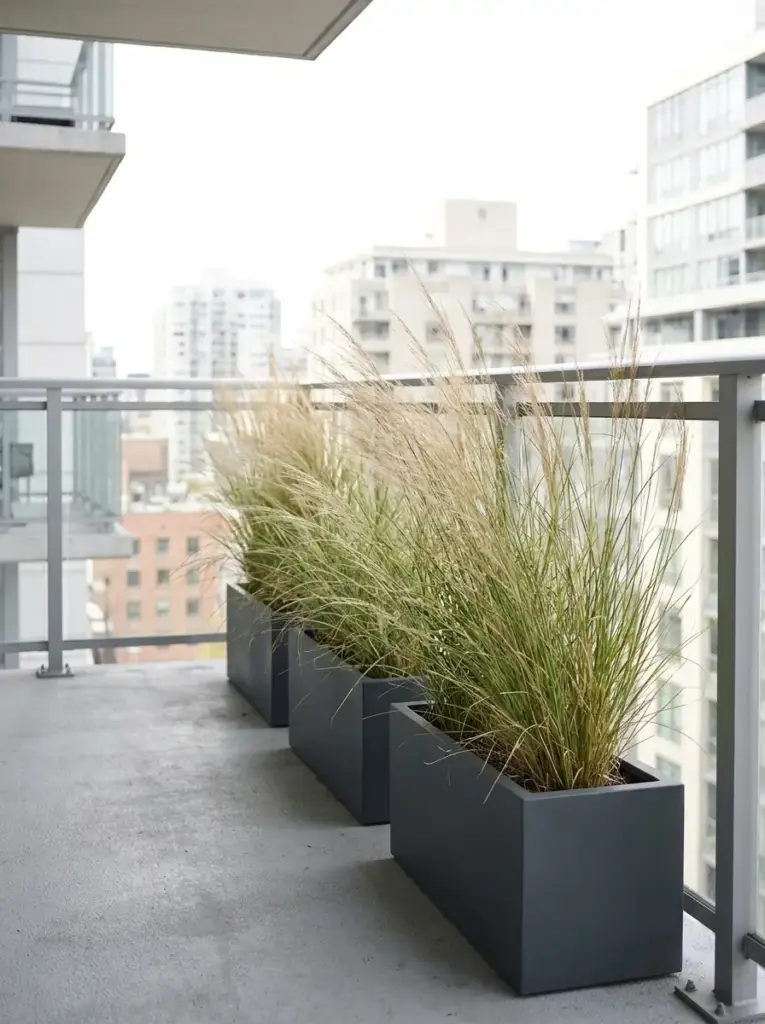
Ornamental grasses form a loose screen that moves gently in the breeze. Feather reed grass, fountain grass, switchgrass, and compact miscanthus varieties can grow tall without the broad canopy of shrubs. Check local climate guidance because some grasses spread aggressively or struggle in containers.
Fine blades blur views rather than blocking them completely. That softness keeps a small balcony bright and makes the boundary feel less rigid. Modern apartments with metal railings, concrete floors, and simple furniture benefit from the contrast between structured architecture and natural movement.
Group three matching rectangular planters along one side. Black, graphite, or cement-look containers create a clean line. For warmer decor, use rust-colored pots with tan cushions and a natural fiber outdoor rug. Grasses also look attractive when mixed with low white flowers or silver foliage.
Cut back dead growth at the recommended season and divide crowded roots when necessary. Dry blades can become messy, so remove loose material before windy weather. Use drip trays and water deeply rather than giving frequent shallow sips.
Combine a Folding Screen with Potted Ferns
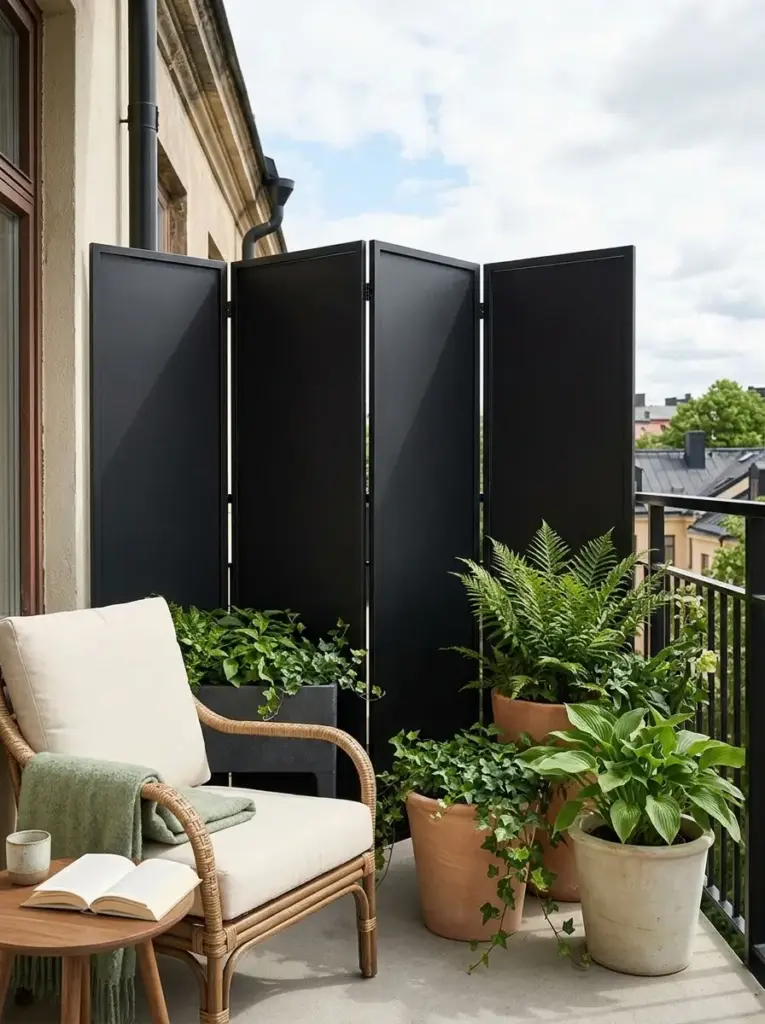
Folding outdoor screens are useful when privacy is needed only occasionally. Place one behind a reading chair or dining table, then fold and store it when open views are preferred. Add potted ferns, hostas, or shade-tolerant foliage in front to blend the panel into the balcony.
Mobility makes the arrangement practical for renters, seasonal users, and anyone with changing sun angles. Screens can also hide utility pipes, air-conditioning units, or storage bins while creating a calmer background for seating.
Choose slatted wood, woven resin, or powder-coated metal that can tolerate outdoor conditions. Indoor room dividers may warp, rust, or fall apart after rain. Soft green foliage looks especially good against dark brown wood or matte black frames. Cream screens pair well with blue-green plants and pale stone pots.
Set the screen parallel to the strongest wind direction rather than broadside when possible. Add approved feet, planter boxes, or weights to improve stability. Never block the balcony exit. Folding panels appear in many Small Balcony Ideas, yet the best results come from treating them as flexible backdrops instead of permanent walls.
Build a Narrow Herb Wall Near the Dining Area
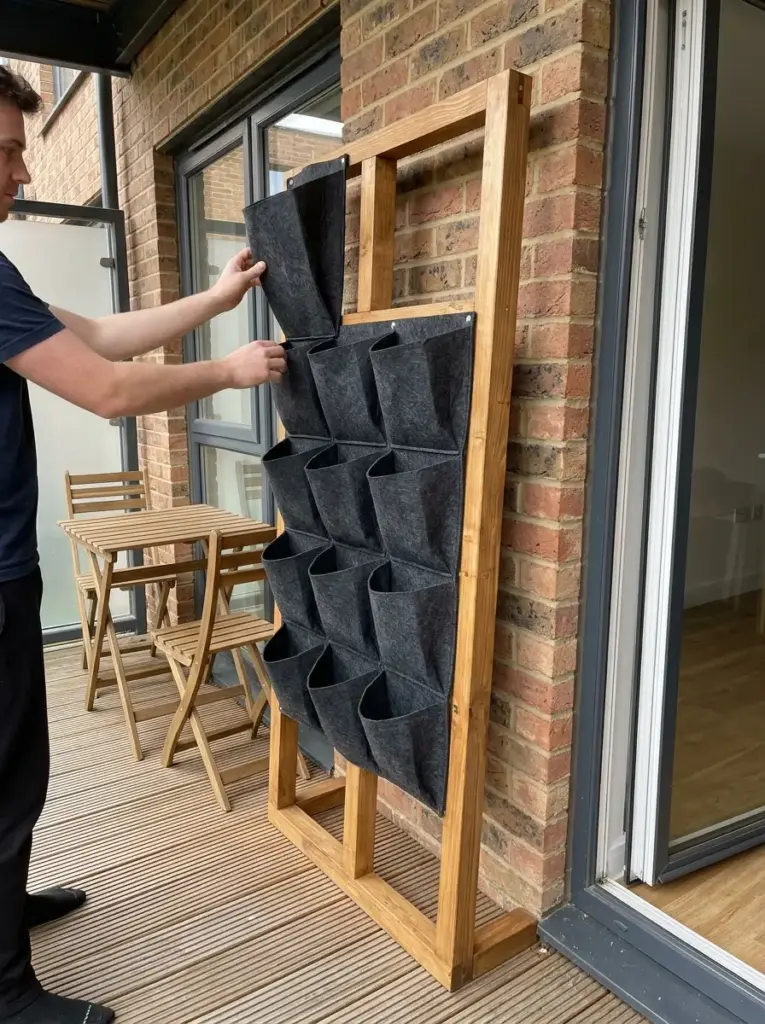
Herb walls combine privacy with useful planting. Mount pocket planters on a freestanding frame or use stacked railing boxes. Grow basil, mint, parsley, thyme, oregano, chives, and compact rosemary according to sunlight. Place taller herbs near eye level and trailing varieties along the edges.
Edible greenery makes sense beside a small dining table because leaves are easy to reach while cooking or serving. Dense herbs also provide fragrance and visual separation. Such a wall is best for home cooks, beginners who want functional planting, and balconies near kitchens.
Keep mint in its own container because it spreads quickly. Group herbs with similar water needs to avoid constant adjustment. Terracotta pots dry faster in strong sun, while glazed containers retain moisture longer. Label plants with simple wooden markers if several seedlings look alike.
Use warm 2700K string lights above the herb wall for evening meals. Avoid bright cool-white lighting, which can make foliage look harsh. Related Balcony Lighting Ideas should support visibility without shining into neighboring windows. Prune herbs often so the wall stays full, and replace weak seasonal plants rather than leaving empty pockets.
Add a Bench with Built-In Planter Ends
Planter benches save space by combining seating and greenery. Choose a narrow bench with planting boxes at one or both ends, or place tall rectangular pots beside a simple storage bench. Upright plants frame the seat and create privacy around the person using it.
Framing the seating area is more efficient than screening the entire balcony. Leaves beside shoulder height reduce side views while keeping the front open. Couples, readers, and people with very narrow balconies can enjoy a protected spot without sacrificing circulation.
Select weather-resistant wood, powder-coated metal, or outdoor-grade resin. Add a slim cushion in olive, rust, navy, or sand. Keep the cushion depth shallow so the bench does not project too far into the walkway. Snake plants suit sheltered, warm balconies, while grasses, compact bamboo, and dwarf evergreens tolerate brighter outdoor conditions depending on the climate.
Check that built-in planters have drainage holes and removable liners. Permanent wet soil can damage wood. Avoid overfilling storage benches with heavy items that make them difficult to move. Thoughtful Balcony Furniture should support privacy, comfort, and access rather than simply filling the available floor.
Grow a Small Potted Tree as a Focal Screen
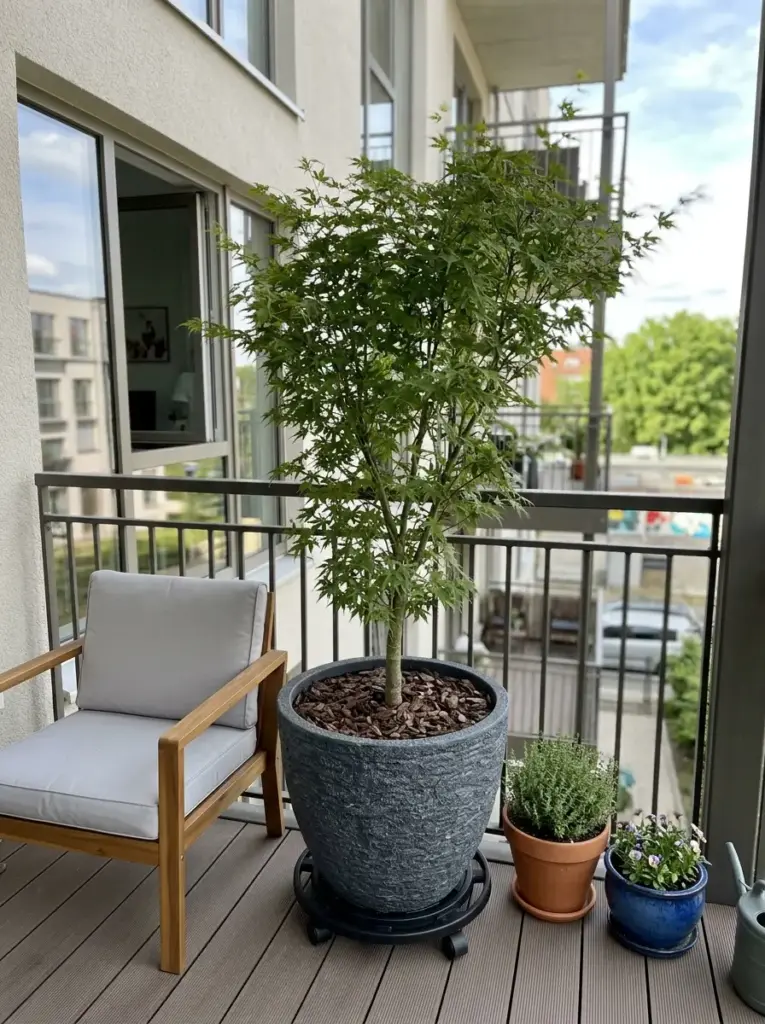
One carefully chosen tree can block a direct sightline while giving the balcony a strong focal point. Olive, bay laurel, dwarf citrus, Japanese maple, ficus, or compact conifers may work depending on climate, wind, and sunlight. Ask a local nursery about container-friendly varieties and mature size.
Trees provide height and a wider canopy than many grasses or vines. Placing one between the chair and a neighboring window may solve the main privacy problem without adding several screens. Homeowners and long-term renters who can maintain a larger container benefit most from this approach.
Choose a planter with enough root space, but avoid excessive weight. Fiberglass and high-quality resin imitate stone without the same load. Top the soil with bark or lightweight mulch to reduce moisture loss. Place the pot on a wheeled caddy rated for outdoor use so cleaning and seasonal movement remain possible.
Prune lightly to maintain shape, but do not force a naturally large tree into a tiny form. Protect roots during freezing weather where needed. Pair the tree with two lower pots rather than surrounding it with clutter.
Use Hanging Baskets to Block Upper Sight lines
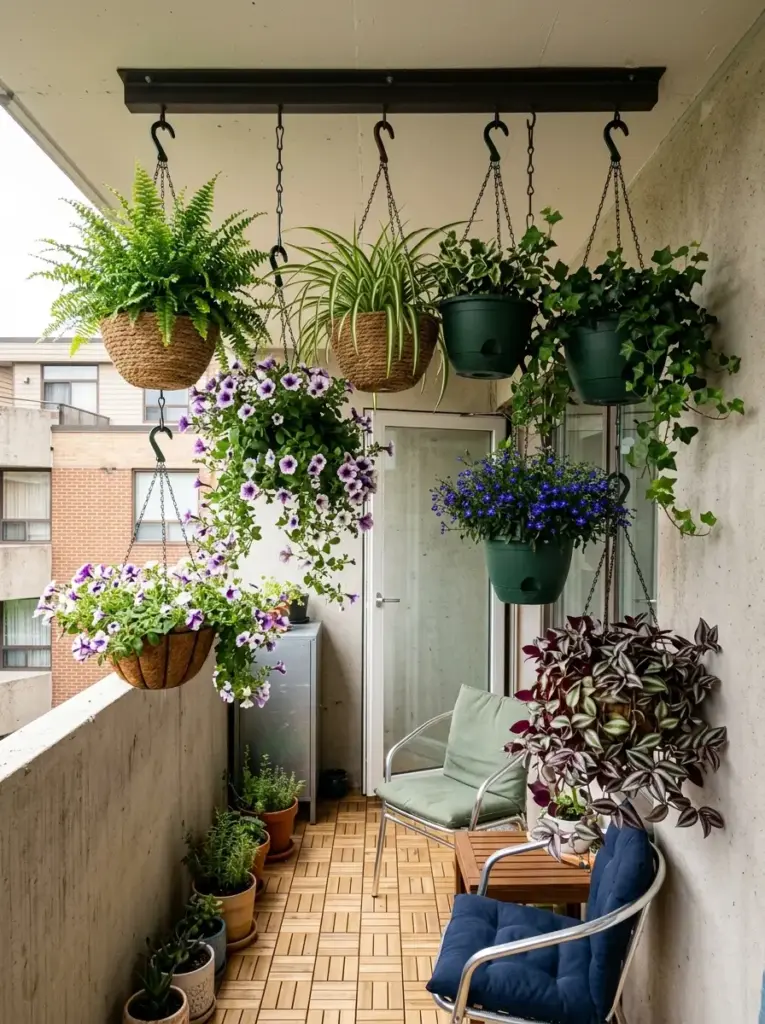
Hanging baskets add greenery where floor space is limited. Suspend several baskets from an approved overhead support or freestanding frame. Boston ferns, trailing petunias, spider plants, ivy, lobelia, and tradescantia can form a loose curtain of leaves and flowers.
Upper greenery helps when neighbors look down from nearby windows or adjacent upper floors. Baskets also draw attention away from plain ceilings and concrete walls. Such a setup works well for compact balconies that already contain chairs, storage, and floor planters.
Stagger basket heights instead of hanging them in a straight line. Keep the lowest basket above head level and away from door swings. Choose lightweight containers with secure hooks and use a moisture-retaining potting mix. Self-watering baskets reduce daily maintenance during hot weather.
Limit the number of baskets so the balcony remains bright. Three medium baskets often look better than seven small ones. Match flower colors to textiles below, such as white blooms with sage cushions or coral flowers with navy seating. Water slowly and check drainage so runoff does not fall onto neighbors.
Design a Plant-Filled Lattice Divider
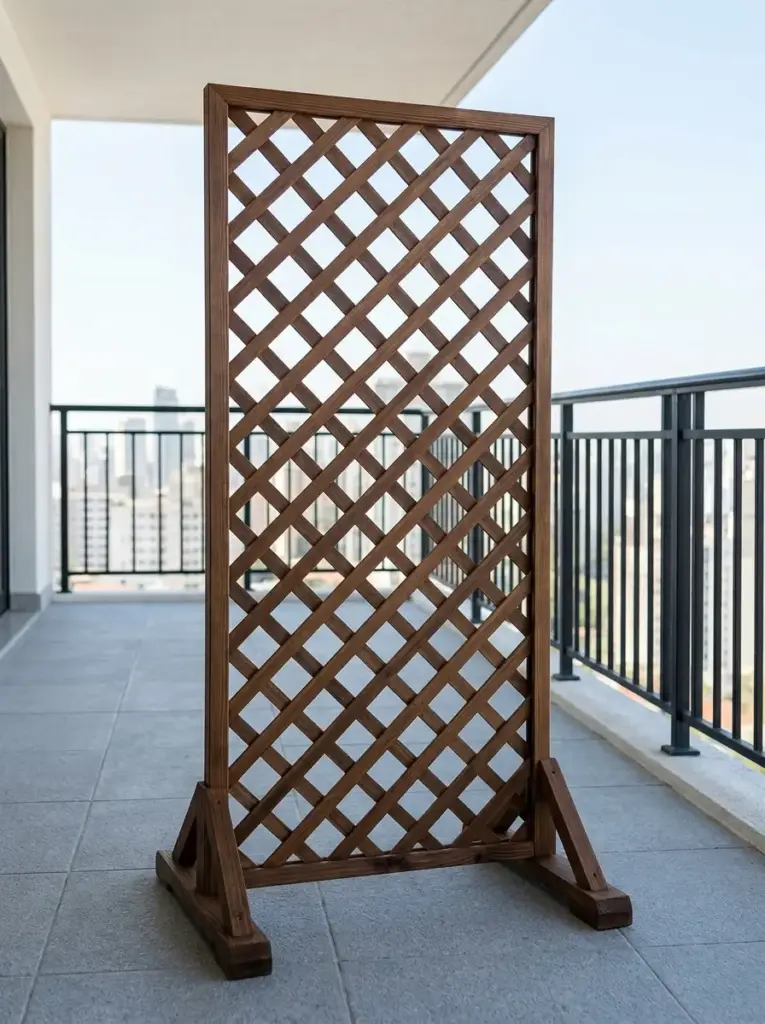
Lattice dividers provide structure for pots, vines, and hanging accessories. Use a freestanding panel with a wide base, or attach a permitted lattice inside the balcony railing. Train climbers through the openings and hang only lightweight planters from strong sections.
Open lattice filters views while allowing wind to pass. It is less visually heavy than a solid panel and easier to decorate in stages. People who enjoy changing plants with the seasons can use the grid for spring flowers, summer vines, autumn foliage, and simple winter greenery.
Paint or buy the lattice in a color that relates to the apartment’s interior. Soft black frames for outdoor views. Warm white brightens shaded balconies. Natural cedar adds warmth beside cream textiles and clay pots. Avoid using many contrasting finishes because small spaces show visual clutter quickly.
Inspect the panel before each windy season and tighten loose fasteners. Keep vines trimmed so they do not become too heavy. Leave railings accessible for safety checks. Apartment Balcony Privacy feels balanced when the divider covers the main view but still reveals small areas of sky and surrounding architecture.
Create a Green Lounge Zone with Offset Seating
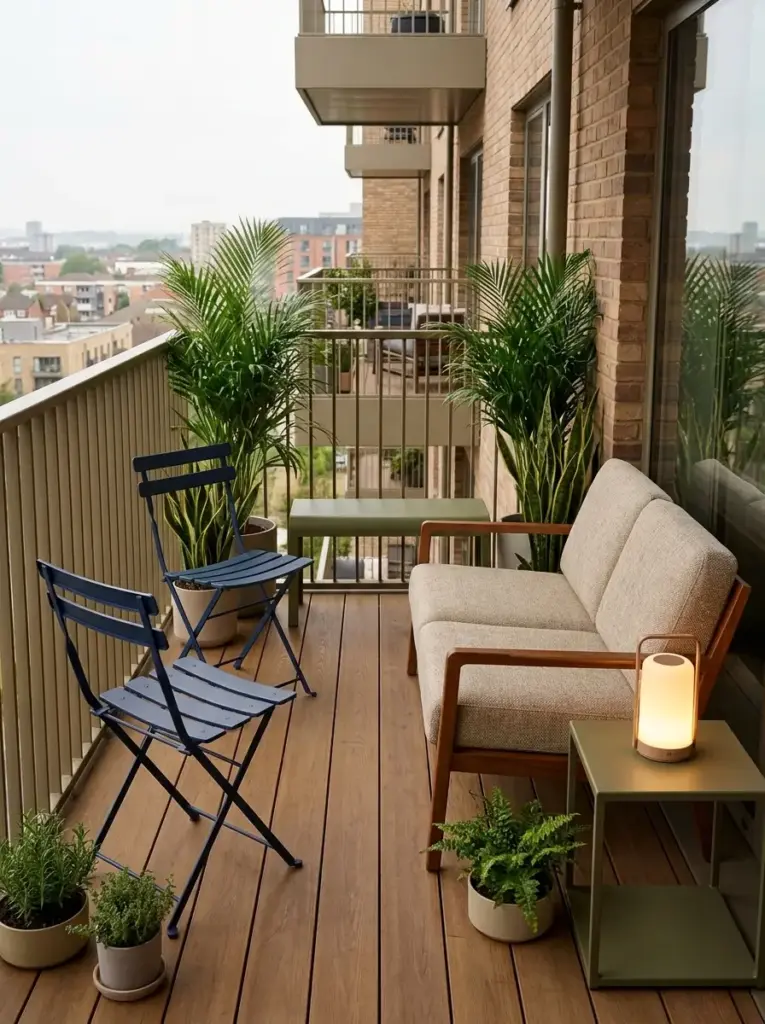
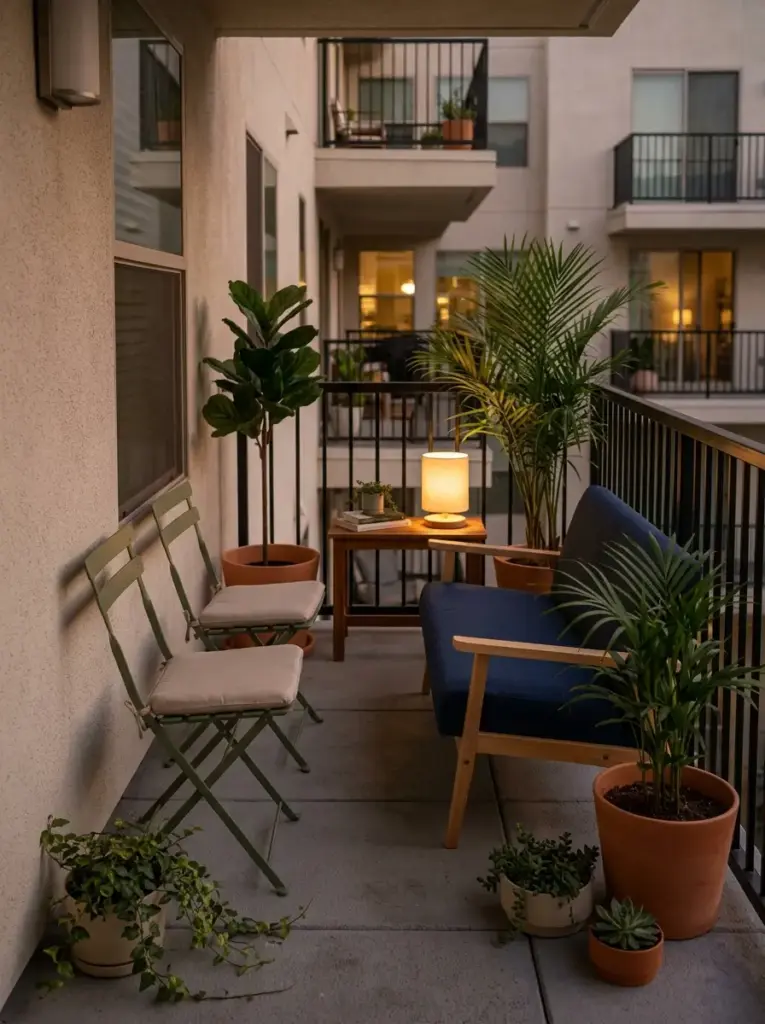
Furniture placement can improve privacy even before screens or plants are added. Turn chairs toward an interior wall, angle a loveseat away from neighboring balconies, or place a small table behind the main seating line. Add tall plants at the outer corners and low pots near the feet.
Offset seating works because direct eye contact often creates the strongest sense of exposure. Rotating the arrangement by even 30 degrees can make conversations feel more private. Such planning is ideal for balconies that cannot support tall screens or where building rules limit attachments.
Use slim furniture with open legs so the floor remains visible. Folding bistro chairs, narrow benches, and compact lounge chairs suit small layouts. Keep colors coordinated with the greenery: olive and beige feel calm, navy adds contrast, and warm wood prevents gray concrete from feeling cold.
Place a 2700K rechargeable lamp beside the seating rather than using a bright overhead fixture. Soft pools of light keep attention inside the lounge zone. For added safety around pets, review the Cat Proof Balcony guidance before placing climbable furniture near railings. Related Apartment Balcony Lighting choices should remain shielded and considerate of neighbors.
Common Mistakes to Avoid
Overcrowding causes the most common balcony privacy problems. Many people place pots along every edge, then lose the ability to walk, clean, or reach plants. Concentrate greenery near exposed sightlines and leave at least one open section.
Ignoring sunlight leads to weak plants and thin coverage. A sun-loving bamboo or citrus tree will not create useful privacy in deep shade. Watch the balcony at several times of day before buying plants. Note direct sun hours, reflected heat, and wind. Choose species for those conditions rather than choosing by appearance alone.
Using unsecured materials creates safety risks. Loose fabric, lightweight screens, tall shelves, and empty planters can move quickly in strong winds. Follow product instructions, use outdoor-rated fasteners, and check building policies. Never attach materials where they interfere with railings, drainage, fire exits, or maintenance access.
Choosing solid barriers without considering airflow can make summer heat worse. Fully covered railings may trap hot air and block cooling breezes. Mix partial screens with plants, lattice, or curtains that can open. Apartment Balcony Privacy should feel sheltered, not sealed.
Forgetting drainage can damage floors and annoy neighbors. Use saucers, trays, and controlled watering. Empty standing water to reduce mosquitoes. Place saucers on risers so the floor can dry. Avoid allowing soil, leaves, or water to fall through railing gaps.
Mismatched decor can make a practical setup look chaotic. Too many pot colors, screen materials, and furniture styles compete in a small area. Limit the palette to two main neutrals and one accent color. Repeat one planter finish or textile color to connect the arrangement.
Budget-Friendly Ways to Add Privacy
Start with the strongest sightline instead of covering the entire balcony. One $30 trellis placed beside a chair may provide more comfort than several cheap panels around every side. Add climbing seeds or young vines rather than buying mature plants. Growth takes time, but the result costs less and adapts naturally to the frame.
Reuse suitable containers by cleaning and painting them with outdoor-safe products. Matching three secondhand pots in one muted color can look more intentional than buying unrelated new containers. Place lightweight nursery pots inside decorative covers, so seasonal plants remain easy to replace.
Choose fast-growing annual vines for warm months. Nasturtiums, morning glories where noninvasive and permitted, black-eyed Susan vines, and sweet peas can cover a narrow trellis at a low cost. Local climate and building rules still matter, especially for plants that spread seeds.
Split larger plants with friends or neighbors. Many grasses, ferns, and herbs can be divided when healthy and mature. Shared cuttings reduce costs and create a more connected balcony garden. Use clean tools and fresh potting mix to reduce disease transfer.
Repurpose a sturdy outdoor clothing rack as a curtain or vine support only when it can be safely weighted and secured. Keep loads light and test stability before regular use. Removable cable ties and reusable straps are useful, but they must be outdoor-rated and checked for sun damage.
Shop at the end of the growing season for planters, outdoor curtains, and patio textiles. Budget purchases should still meet safety and weather-resistance needs. Related Balcony Garden Ideas, Balcony Privacy Ideas, and Balcony Decor can extend planning.
Practical Apartment Balcony Privacy Tips
Measure before buying anything. Record balcony width, depth, railing height, door swing, and the location of drains or utility units. Mark furniture footprints with painter’s tape on the floor. Such testing reveals whether a planter, bench, or screen will block movement.
Study the view from seated and standing positions. Privacy often matters most while sitting, so a lower screen may be enough. Walk inside the room and look outward too. Greenery should improve the indoor view without blocking all daylight.
Build from the corners inward. Corners usually offer the best locations for tall pots because they protect plants from some wind and leave the middle open. Place the tallest element first, then add medium and trailing plants.
Select plants by mature width as well as height. Nursery labels may show a narrow young plant that eventually becomes broad. Container growth can limit size, but roots still need room. Ask about pruning needs and wind tolerance.
Keep a simple maintenance routine. Check soil moisture twice weekly, remove dead leaves, wipe saucers, and inspect ties monthly. Increase checks during heat waves and storms. Privacy fails quickly when plants become sparse or when supports loosen.
Plan for seasons. Deciduous plants may lose coverage in winter, while annual vines disappear after frost. Combine one evergreen or structural screen with seasonal flowers if year-round separation matters. Apartment Balcony Privacy becomes more reliable when at least one element remains in place throughout the year.
Coordinate with neighbors when practical. Let people below know if you are installing railing planters to prevent water runoff. Respect shared views and avoid plants that cross property lines. Considerate design reduces complaints and makes the balcony easier to enjoy.
Frequently Asked Questions
What Plants Are Best for Balcony Privacy?
Suitable choices depend on sunlight, wind, climate, and available container size. Clumping bamboo, ornamental grasses, dwarf evergreens, areca palms, ficus, jasmine, and tall herbs can work well in the right conditions. Shaded balconies may suit ferns, cast-iron plants, pothos, and philodendrons. Check mature size and toxicity before buying.
How Can Renters Create Balcony Privacy Without Drilling?
Freestanding trellises, weighted planters, folding screens, tension rods, outdoor curtains, railing planters, and plant shelves can provide removable coverage. Building rules still apply, especially for items attached to railings or placed above them. Use products designed for outdoor conditions and secure them against wind.
How Tall Should a Balcony Privacy Screen Be?
Screen height should block the main sightline while staying within building rules. Seated privacy may need only 3 to 4 feet of coverage, while standing privacy may need more. Measure the view from your chair before buying. Taller is not always better because it can block light and catch more wind.
Can Artificial Greenery Work on a Balcony?
Outdoor-rated artificial greenery can cover a difficult corner or a shaded area where plants struggle. Choose UV-resistant products and secure them carefully. Mixing a small amount with real potted plants creates a more natural result. Clean leaves periodically because dust quickly reveals artificial materials.
How Do I Keep Balcony Plants Alive in Strong Wind?
Choose flexible or wind-tolerant plants, use wide stable containers, group pots near sheltered corners, and avoid top-heavy growth. Water consistently because the wind dries the soil quickly. Tie tall stems with soft supports and move delicate plants indoors before severe weather when possible.
How Can I Add Privacy Without Making the Balcony Dark?
Use open lattice, grasses, climbing vines, staggered plants, and light-colored curtains. Cover only the most exposed direction and leave other edges open. Pale planters and reflective indoor surfaces can help preserve brightness. Filtered greenery usually feels lighter than solid dark panels.
Conclusion
Lush privacy comes from smart placement rather than filling every inch. Tall plants, vines, curtains, lattice, shelving, and angled furniture can work together to protect the most exposed areas while preserving air and daylight. Start with one main sightline, choose weather-appropriate materials, and add layers only where they improve comfort.
Small changes often make the biggest difference. Rotating a chair, raising plants on a shelf, or adding one narrow trellis can turn an exposed balcony into a usable outdoor room. Apartment Balcony Privacy should support daily life, safe movement, plant care, and good relationships with neighbors.
Choose one idea that fits the current space and budget, then observe how the balcony feels at different times of day. Build slowly, repeat a simple color palette, and leave room for plants to grow. Thoughtful greenery will provide shade, texture, and separation without making the balcony feel crowded.