
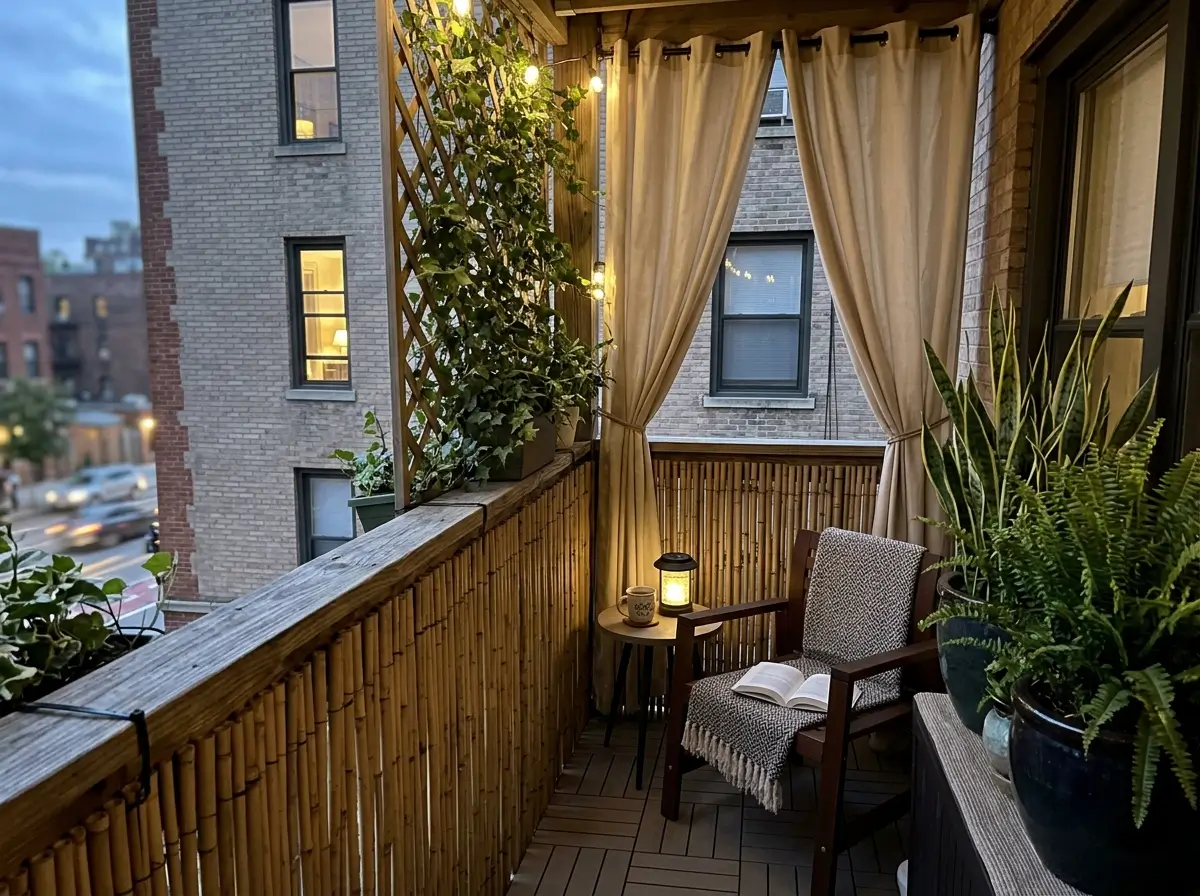

A small balcony can feel exposed when neighbors, street traffic, or nearby windows are too close. That does not mean you have to stop using it. The right Apartment Balcony Privacy Screen can turn even a narrow outdoor space into a calm corner for coffee, reading, plants, or quiet evening air. You do not need a full renovation, expensive materials, or permanent changes. Most balconies only need smart layers, renter-safe fasteners, and a clear plan for how the space should feel and function.
Privacy on an apartment balcony is not only about blocking the view. It is also about controlling light, softening noise, hiding clutter, and making the space feel intentional. A screen can be made from bamboo rolls, outdoor curtains, tall planters, lattice panels, fabric panels, reed fencing, folding screens, or even a row of climbing plants. The best choice depends on your lease rules, balcony size, wind exposure, climate, and how much sunlight your plants or seating area need.
What is the best Apartment Balcony Privacy Screen for a small balcony?
The best Apartment Balcony Privacy Screen for a small balcony is one that blocks the most exposed sightline without taking up too much floor space. For most renters, outdoor curtains, bamboo reed rolls, slim lattice panels, or tall planter screens work well because they are affordable, easy to install, and easy to remove. If your balcony is very narrow, choose vertical privacy instead of bulky furniture. A curtain on a tension rod, a railing-mounted screen, or a tall plant stand can give privacy while keeping the walking path open.
Bamboo Reed Rolls for Warm Natural Privacy
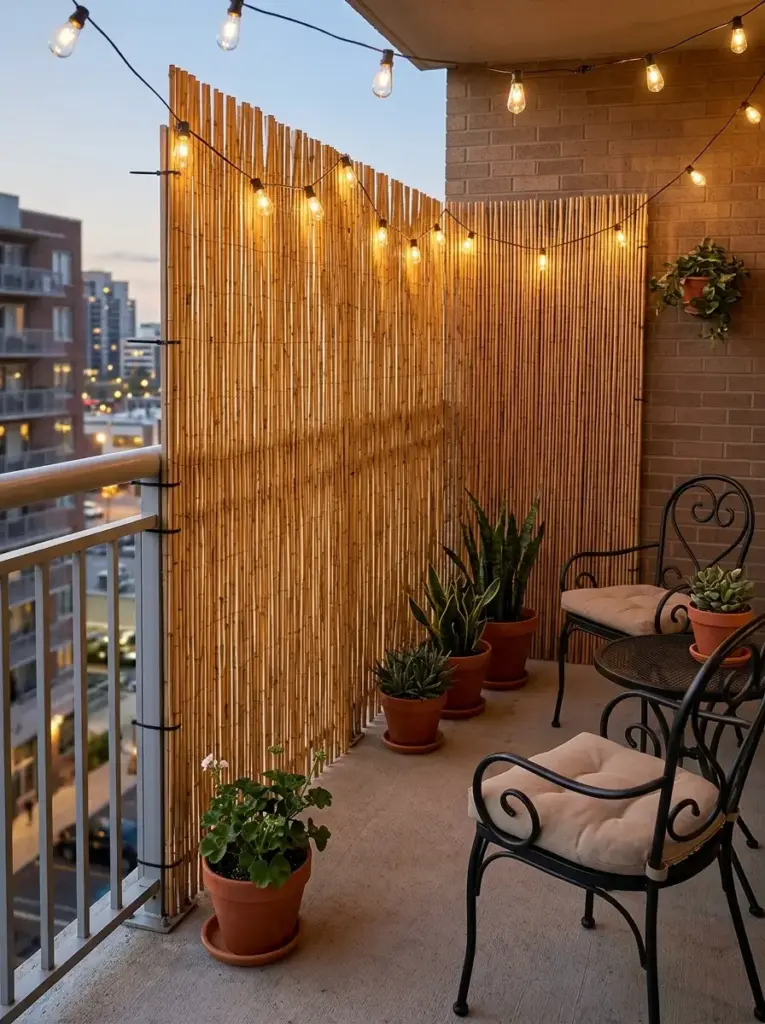
Bamboo reed rolls are one of the easiest ways to create privacy on an apartment balcony because they attach directly to the railing and cover a wide area without needing much space. They work especially well on metal railings with gaps, glass railings that feel too open, or balconies facing another building. Choose a medium-height roll that reaches just above the railing if you only need seated privacy, or a taller roll if people can see in from across the way. Natural bamboo brings warmth to concrete, brick, and metal balconies, and it pairs well with black bistro chairs, terracotta pots, beige cushions, and warm white string lights.
This idea is best for beginners because installation is simple. Use zip ties, garden wire, or reusable railing ties instead of screws if you rent. Before attaching the roll, check where the strongest wind hits your balcony. A tightly secured screen with several connection points will sit flatter and last longer than one attached only at the corners. The useful part of bamboo is that it filters light rather than blocking it completely, so the balcony still feels open during the day. A common mistake is buying the cheapest reed fencing without checking the density. Thin, widely spaced reeds may look nice online, but can still leave you visible from outside. For more privacy, double the layer or choose split bamboo that sits closer together.
Outdoor Curtains for Soft Flexible Screening
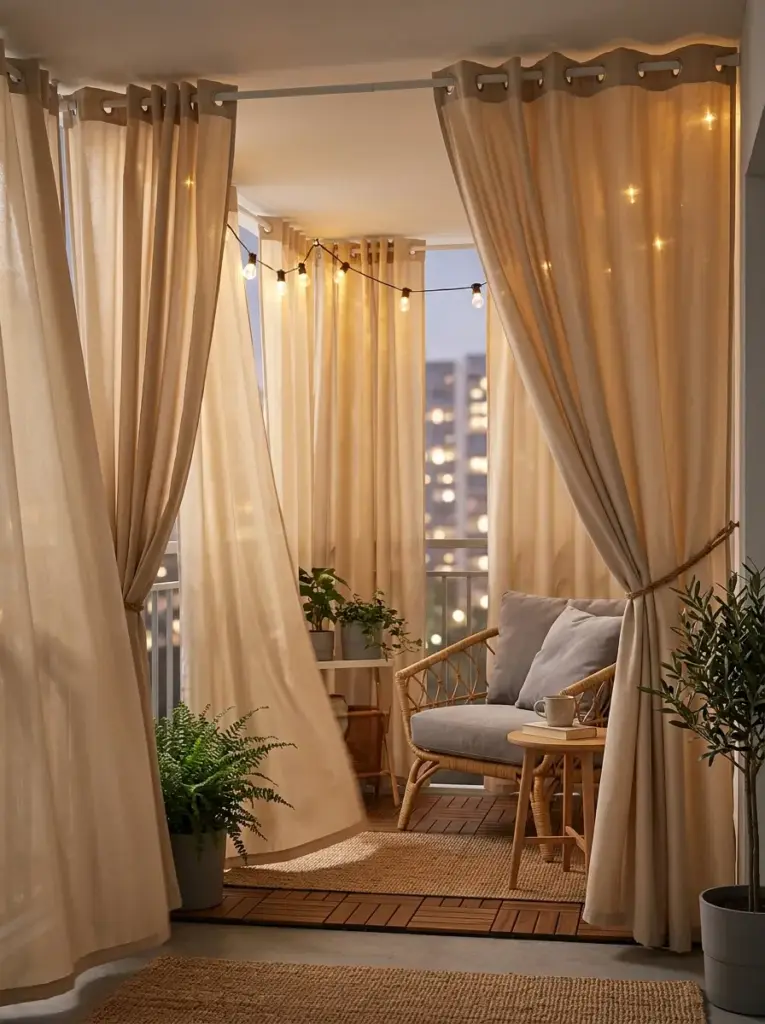
Outdoor curtains are a smart Apartment Balcony Privacy Screen choice when you want control. You can close them when you need privacy, tie them back when you want sunlight, and remove them in bad weather. They work well on covered balconies, recessed balconies, and balconies with a ceiling where you can use a tension rod, curtain wire, or removable adhesive hooks rated for outdoor use. Choose weather-resistant polyester or outdoor fabric, not indoor cotton, because indoor fabric absorbs moisture and can mildew quickly.
For a calm secret nook, use curtains in warm white, oatmeal, sand, soft gray, or muted olive. These colors reflect light without feeling harsh, which helps small balconies feel bigger. If your balcony gets strong afternoon sun, choose a thicker fabric with some UV resistance. At night, pair the curtains with 2200K to 2700K warm white lights so the fabric glows softly instead of looking cold or bluish. This approach is best for renters who want a cozy seating corner but cannot attach panels to the building. The reason curtains work so well is their movement and flexibility; they create privacy without making the balcony feel boxed in. Avoid curtains that are too short. A panel that stops halfway down often looks unfinished and does not block seated sightlines. Let the fabric fall close to the floor, but keep it high enough that rainwater does not soak the hem.
Tall Planter Boxes with Grasses
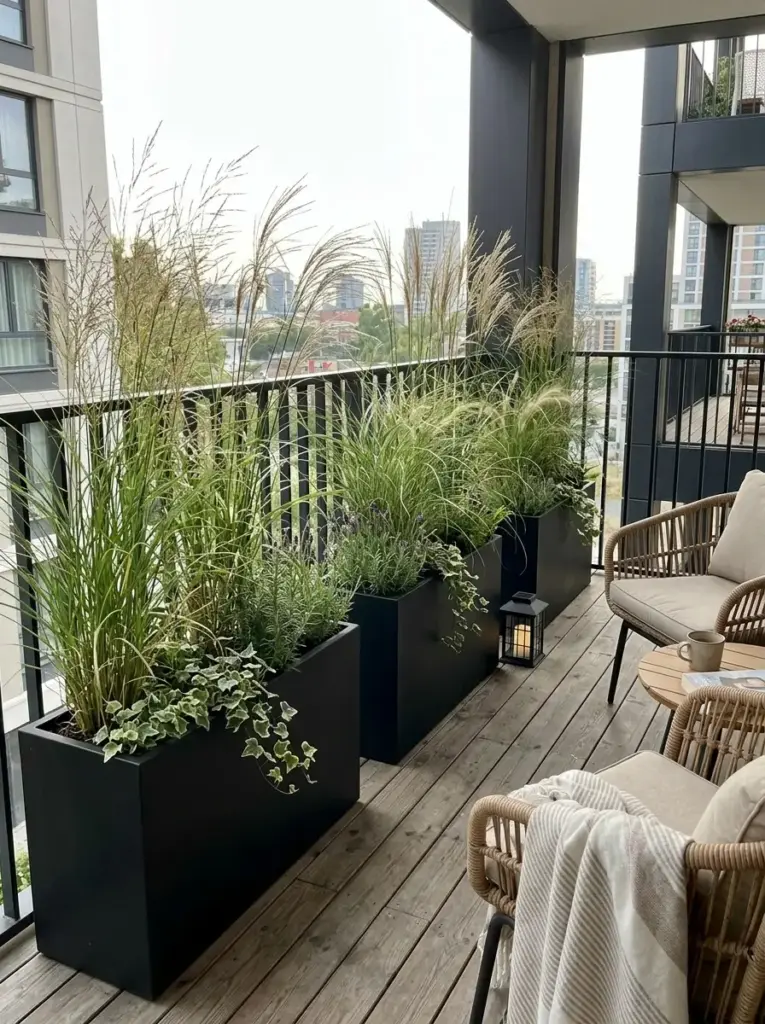
Tall planter boxes are perfect for privacy when you want the balcony to feel alive rather than covered. Place two or three long rectangular planters along the exposed railing and fill them with ornamental grasses, tall herbs, or upright plants. Feather reed grass, fountain grass, lemongrass, rosemary, lavender, and dwarf bamboo can work depending on your climate and light. For renters, lightweight resin or fiberglass planters are better than heavy concrete ones because they are easier to move and safer for balcony weight limits.
The strength of this idea is that it gives partial privacy while keeping air and light moving. It is best for people who enjoy plant care but still want a practical screen. Tall grasses soften hard balcony edges, add movement, and make the seating area feel less exposed. Use planters in matte black for a modern balcony, warm terracotta for a Mediterranean feel, or soft beige for a light neutral look. If your balcony is windy, choose heavier planters or place a few stones at the bottom before adding soil. Do not overcrowd the planter on day one. Plants need room to grow, and packed roots dry out faster. A good layout is to place the tallest grasses at the back, trailing herbs near the front, and a small solar lantern between planters for evening use.
Lattice Panels with Climbing Plants
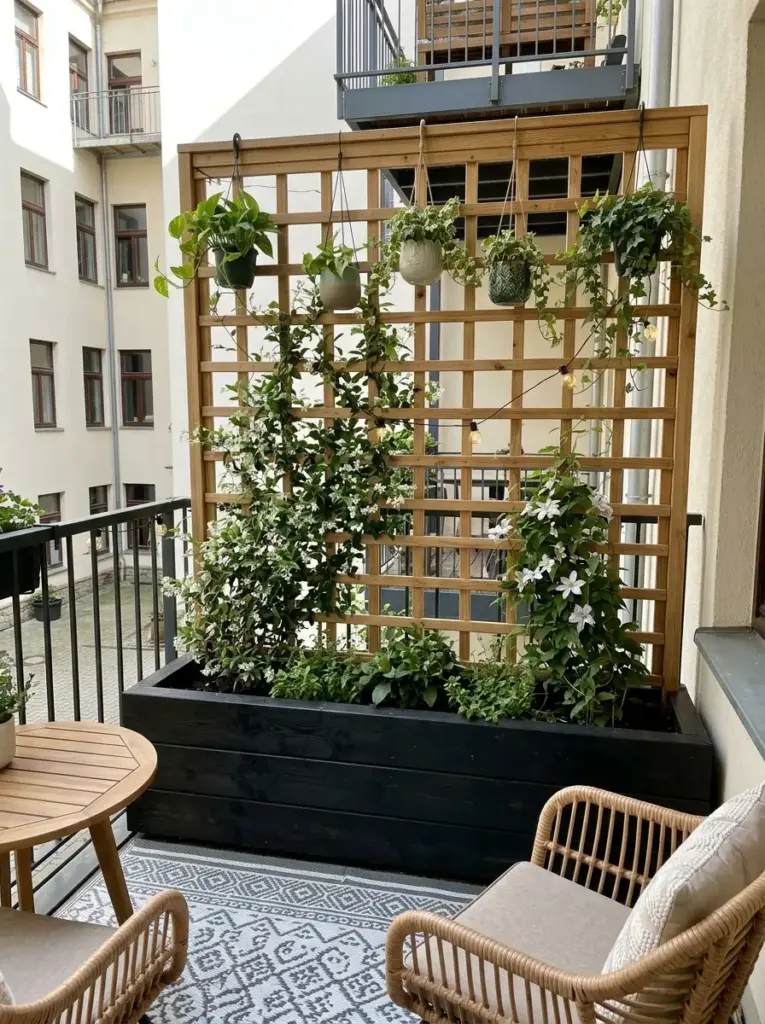
Lattice panels are useful when you need privacy from one specific side, such as a neighboring balcony or a window across the courtyard. A slim wood or vinyl lattice panel can be tied to the railing, mounted inside a large planter, or fixed to a freestanding frame. Add climbing plants like jasmine, pothos in warm climates, clematis, ivy, or climbing roses if your balcony gets enough light. If real plants are hard to maintain, you can use the lattice alone and add a few hanging planters for softness.
This setup suits home decor lovers who like a layered, garden-like balcony. It works because the lattice creates structure while the plants fill gaps over time. You get privacy, texture, and a vertical focal point without using much floor space. Paint or choose lattice in a color that matches your balcony style. White lattice feels bright and cottage-inspired, black looks clean and modern, and natural wood feels warm with rattan furniture. Beginners should start with one panel instead of covering every side. Too much lattice can make a small balcony feel tight. Also, avoid fastening a panel loosely. Wind can turn a lightweight lattice into a problem, so secure it at several points and keep the base stable.
Folding Privacy Screens for Renters
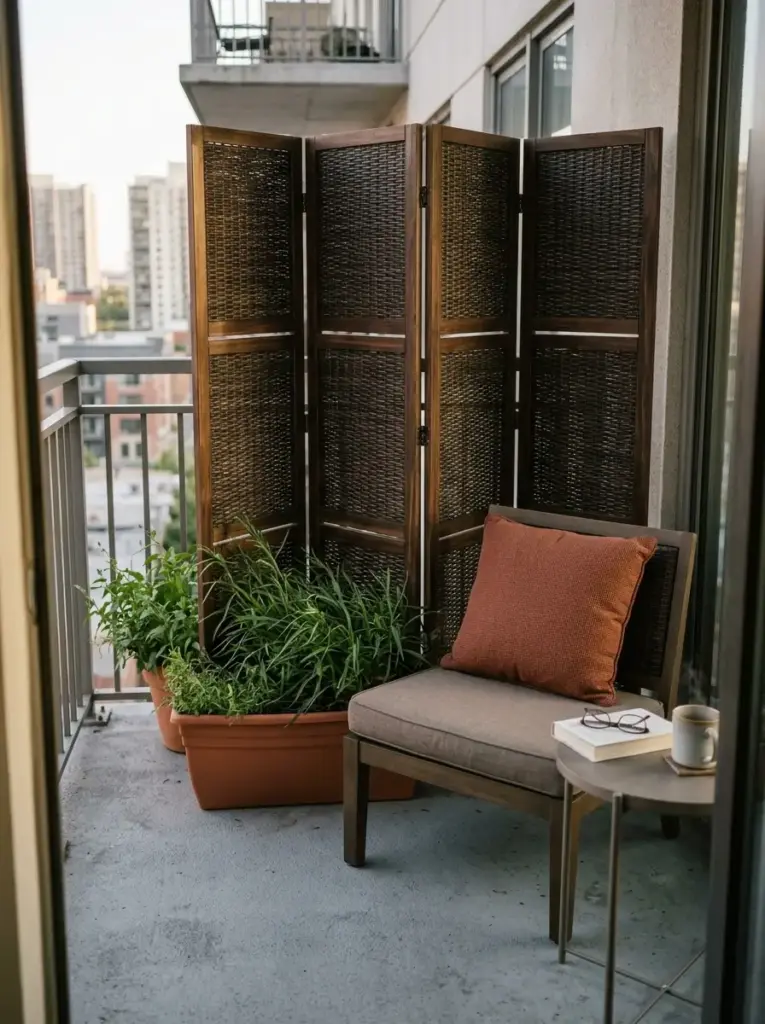
A folding privacy screen is one of the easiest options because it requires no drilling, no railing attachments, and no complicated setup. You simply open it where you need coverage. It is best for renters who move often, people who use the balcony in different ways, or anyone who wants privacy only during certain times of day. Choose an outdoor-rated folding screen made from wood, resin wicker, metal, or weather-resistant fabric. Indoor screens can warp or fade quickly outside, especially in rain or strong sun.
The practical advantage is mobility. You can place the screen beside a lounge chair in the morning, move it near a small dining table at sunset, or fold it away when guests visit. For a secret nook feeling, place the screen behind a low chair, add a small round table, and use one outdoor cushion in a solid color such as rust, moss green, navy, or cream. Keep the screen slightly angled rather than perfectly straight; an angled layout blocks more views and feels more natural. The main mistake is choosing a screen that is too lightweight for a windy balcony. If your balcony gets gusts, place the screen behind a planter, use discreet weights at the base, or bring it indoors when not in use.
Railing Fabric Screens for a Clean Look
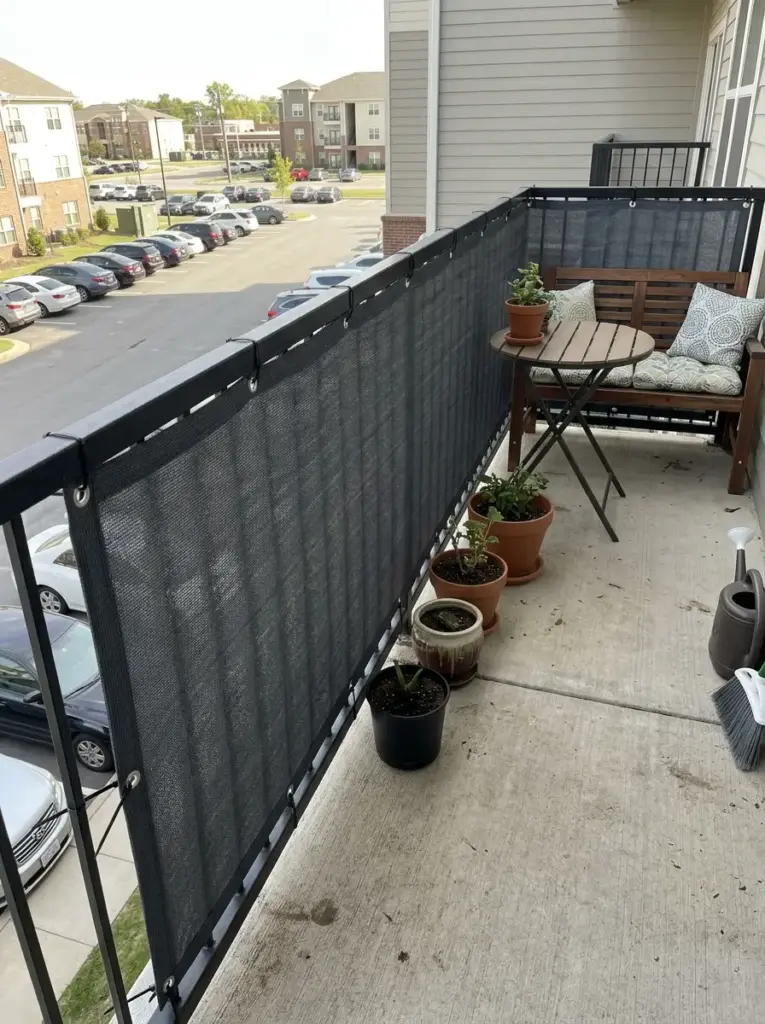
Railing fabric screens are made to cover balcony rails, which makes them practical for apartment living. They often come with grommets and ties, so installation is simple and renter-friendly. These screens are especially useful if you have a railing with wide gaps, a balcony overlooking a parking lot, or a lower floor where people can see your seating area from the street. Look for breathable, weather-resistant fabric that allows airflow. Solid plastic tarps can trap wind and look harsh, while mesh privacy fabric usually sits flatter and feels cleaner.
This idea is best for beginners who want a neat result without designing a full decor scheme. The screen gives instant coverage and makes mismatched furniture or plant pots look more organized. Dark gray, charcoal, taupe, and beige are easy colors to style. Charcoal hides dirt and works with black railings, while beige keeps a small balcony brighter. A railing screen works well with a narrow bench, folding chairs, or a small bistro set because it does not take up floor space. Avoid leaving loose ties hanging in long strands. Trim or tuck them after installation so the screen looks finished. Also, check your building rules, because some apartments limit what can be visible from the outside.
Wooden Slat Panels for a Modern Secret Nook
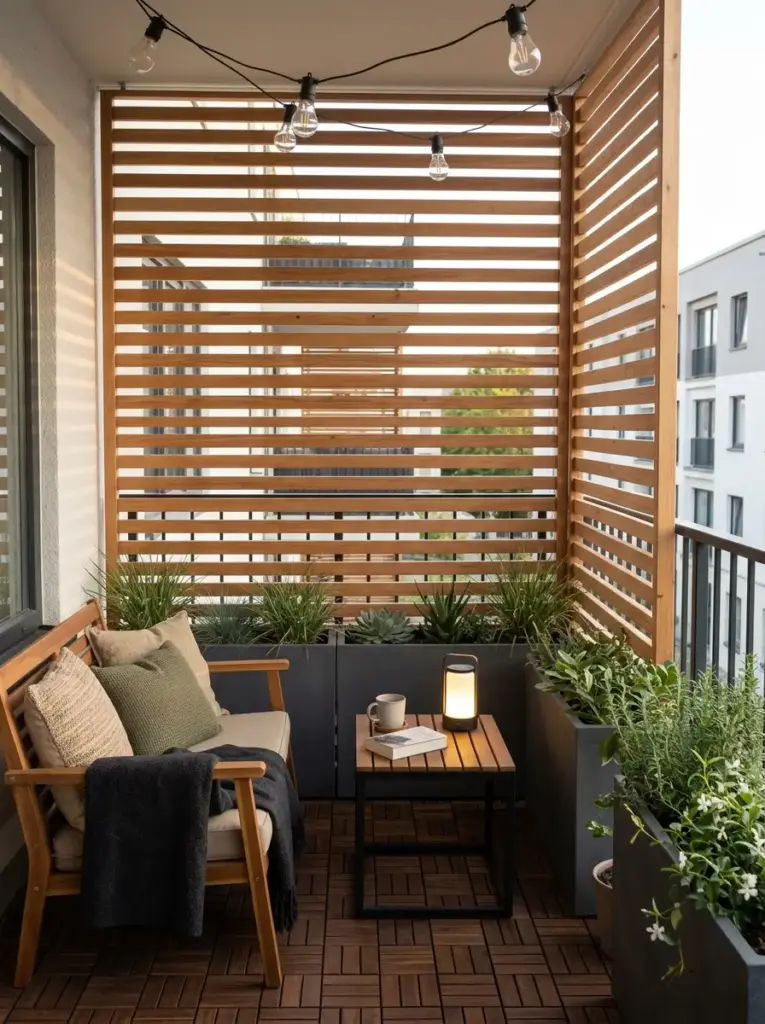
Wooden slat panels give privacy while still allowing light and air to pass through. They are a strong choice if you want a more designed look than reed fencing, but still need something practical. Vertical slats make a low balcony feel taller, while horizontal slats can make a narrow balcony feel wider. Use cedar, acacia, teak, or outdoor-treated wood if the panels will face rain. For renters, look for freestanding slat panels or attach panels to heavy planter boxes instead of drilling into walls.
This idea suits people who like clean lines, neutral colors, and a calm outdoor lounge. The spacing between slats matters. Narrow gaps give more privacy, while wider gaps feel lighter but show more. A good balance is to use a slat panel on the most exposed side, then keep the other sides open. Pair the panel with a low outdoor chair, a square side table, and cushions in beige, clay, olive, or charcoal. Warm white wall lights or battery lanterns around 2700K make wood look richer in the evening. The benefit of slats is that they create privacy without making the balcony feel like a closed box. A common mistake is mixing too many wood tones. If your furniture is already warm acacia, choose a similar panel color or use black accents to tie everything together.
Faux Greenery Panels for Low-Maintenance Privacy
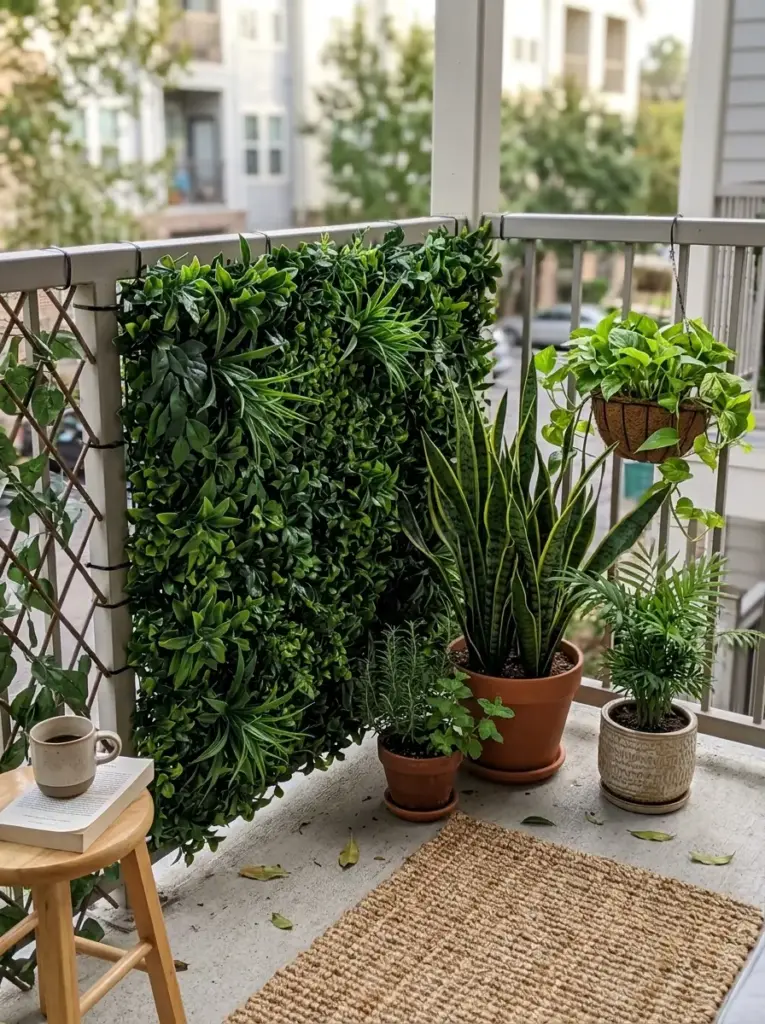
Faux greenery panels can work well when you want plant-like privacy but do not have the time, sunlight, or climate for real plants. They attach to railings, lattices, or freestanding frames and create dense coverage quickly. This option is best for shaded balconies, busy renters, or anyone who travels often. Choose panels with varied leaf sizes and deeper green tones instead of flat, shiny plastic leaves. The more natural the texture, the better the screen will look up close.
The reason this option can be useful is consistency. Real plants change with seasons and need care, but faux greenery gives steady coverage all year. To make it look more believable, do not cover every inch of the balcony with the same panel. Use it on one side, then mix in real potted plants nearby, such as snake plants, pothos, herbs, or small palms. Add a natural material like a jute outdoor rug or a wooden stool to balance the artificial greenery. This approach also helps renters hide unattractive railings or walls without permanent changes. Avoid bright neon green panels, because they can look fake in direct sunlight. Also, check that the product is UV-resistant, or it may fade quickly.
Outdoor Roller Shades for Adjustable Coverage
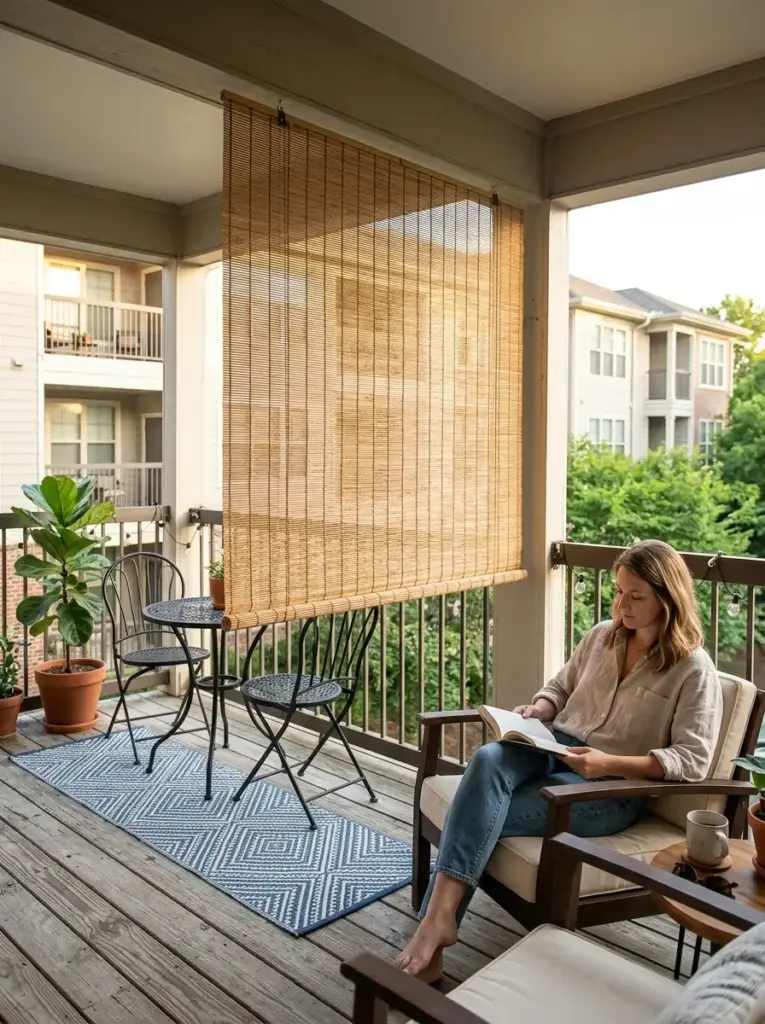
Outdoor roller shades are a practical privacy solution for covered balconies, especially when sunlight and visibility change throughout the day. You can lower the shade when the sun is strong or when neighbors are outside, then raise it when you want a clear view. Bamboo roller shades, woven wood shades, and outdoor mesh shades all work, but each gives a different level of privacy. Woven wood feels warmer, while mesh shades look cleaner and often handle weather better.
This is a good option for people who use their balcony daily and want comfort as much as privacy. A roller shade can reduce glare, protect cushions from fading, and make the space more usable during hot afternoons. For a small dining nook, place a two-chair bistro set behind the shade and use a narrow outdoor rug to define the area. If you like reading outside, place a chair where the shade blocks side glare but still leaves enough daylight. The main thing to check is the installation. Renters should look for tension-mounted options, clamp systems, or ask permission before drilling into a ceiling or beam. Do not choose a shade that is much wider than the space. A poor fit can flap in the wind and look messy.
Privacy Planter Wall with Shelves
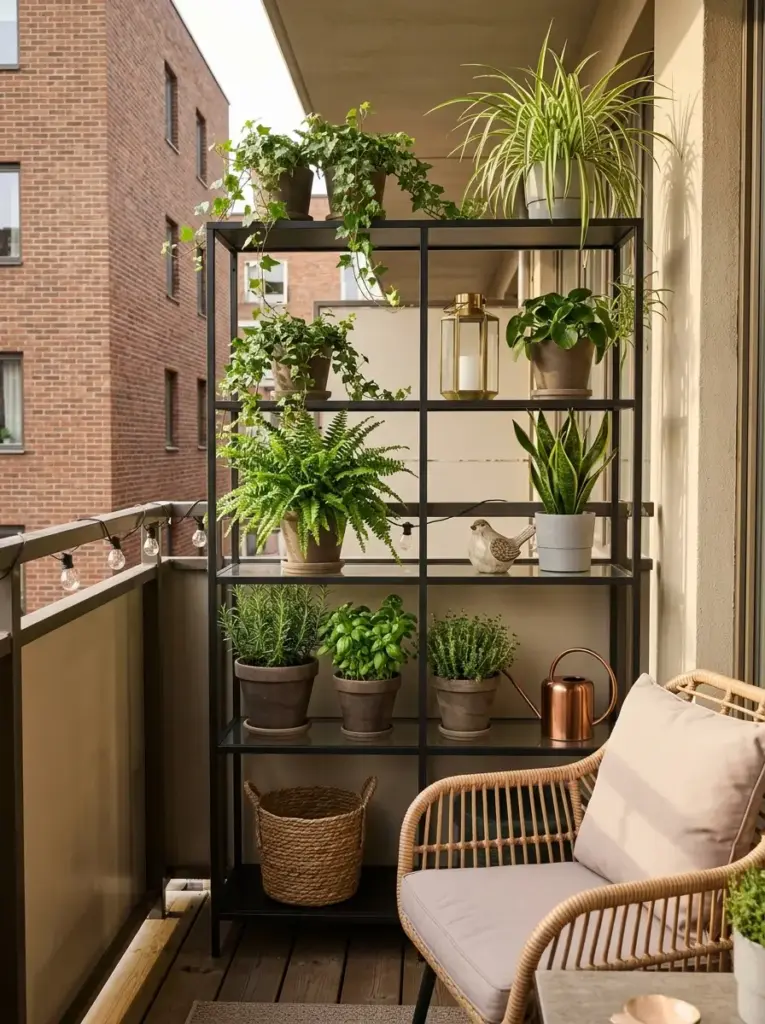
A planter wall combines storage, greenery, and privacy in one vertical setup. You can use a freestanding shelf, a ladder-style plant stand, or a narrow outdoor shelving unit placed along the side of the balcony. Fill it with plants at different heights, such as herbs on the lower shelves, leafy plants in the middle, and taller plants or trailing vines near the top. This works well on balconies where you cannot cover the railing but need side privacy from a neighbor.
This idea is best for small-space decorators who need every item to do more than one job. A shelf creates a privacy layer, holds plants, and gives you a place for lanterns, watering cans, or small decor. Use a metal shelf in black for a modern look, bamboo for a softer, natural feel, or powder-coated white for a bright balcony. Keep heavier pots on the bottom shelf so the unit stays stable. The helpful part is that you can change the arrangement by season. In spring, use herbs and flowers. In winter, use hardy evergreens, lanterns, or weather-safe baskets. A common mistake is placing too many tiny pots on one shelf. It can look cluttered and make watering harder. Choose fewer, larger pots for a calmer secret nook.
Macrame and Fabric Panels for Boho Privacy
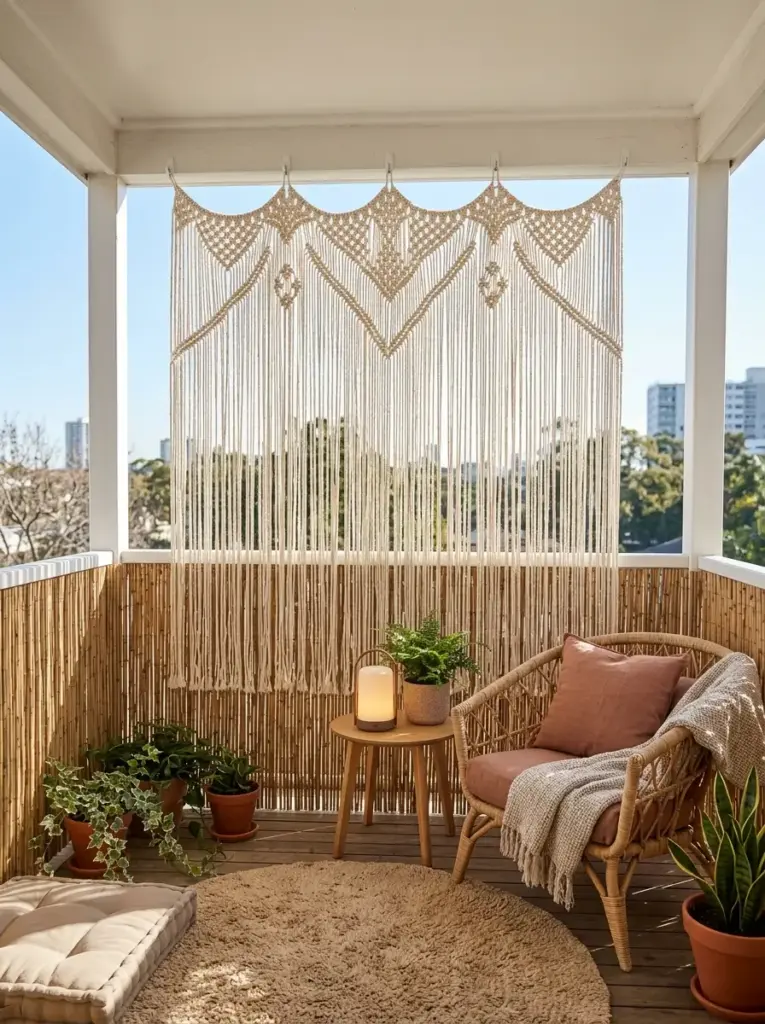
Macrame panels, outdoor fabric hangings, and woven screens can soften a balcony without fully closing it off. They work best when you need light privacy, not total coverage. Hang one large macrame panel from a tension rod, curtain wire, or removable hooks on a covered balcony. If your balcony is exposed to rain, choose outdoor-safe fabric or bring the panel inside when the weather changes. Cream, tan, rust, and muted clay tones work well with plants, wicker chairs, and wood accents.
This choice is best for renters who want texture and privacy but still like an airy space. The open weave filters views and creates a sense of separation while letting daylight through. It is especially useful behind a reading chair or a small floor cushion area. To make it practical, layer the macrame with a railing screen below. The macrame handles eye-level privacy, while the railing screen blocks lower views. Add a warm 2200K lantern or battery candle nearby to bring out the woven texture at night. Avoid using delicate indoor pieces in constant sun and rain. They may stretch, stain, or collect dust. Also, avoid too many hanging items in a tiny balcony, because they can make the space feel busy.
Reed Fencing with String Lights
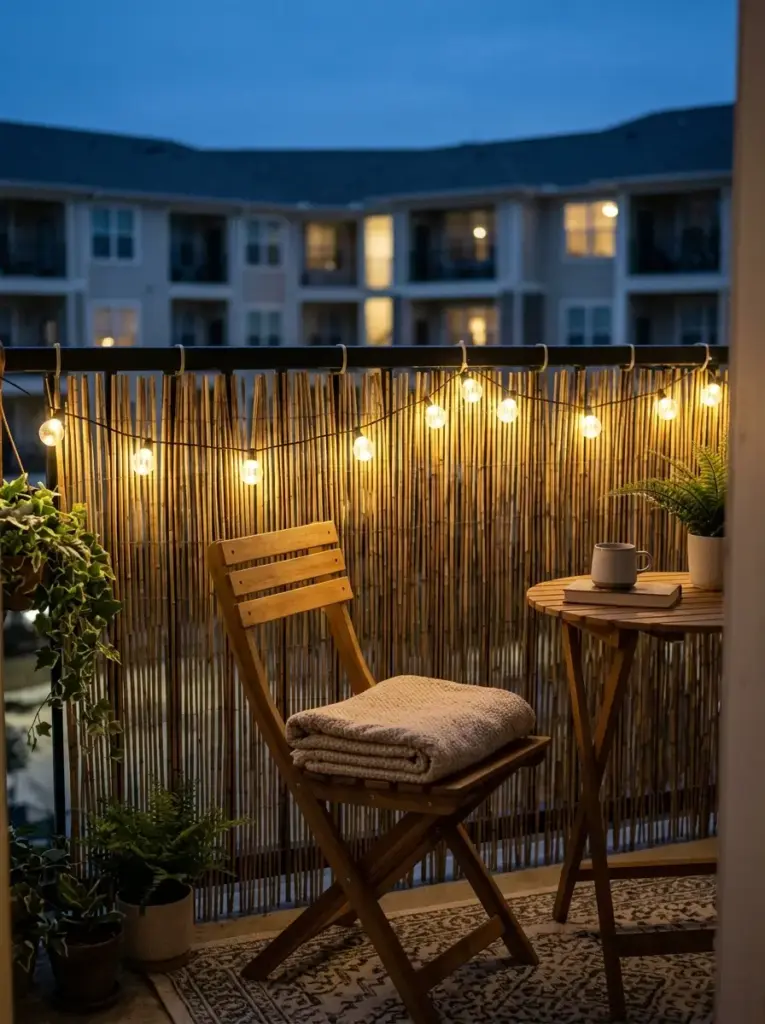
Reed fencing is similar to bamboo but often thinner and more flexible. It is budget-friendly, easy to cut to size, and simple to attach to balcony railings. When paired with string lights, it creates a warm background for evening use. This idea works best for renters who want a quick weekend project and do not need a heavy-duty screen. Choose reed fencing that is tall enough to cover the railing and any direct sightline from nearby balconies.
The value of this setup is that it solves two problems at once: privacy during the day and atmosphere at night. Use warm white string lights between 2200K and 2700K, not cool blue-white lights, because warm light makes reed and wood tones feel softer. Run the lights along the top edge or weave them lightly through the fencing without pulling too tight. For furniture, a folding wood chair, a compact loveseat, or a storage bench works well in front of the screen. The common mistake is using too many lights. A small balcony does not need heavy brightness. One strand is often enough. Also, secure the reed fencing every 12 to 18 inches so it does not sag or flap.
Tall Outdoor Umbrella for Overhead and Side Privacy
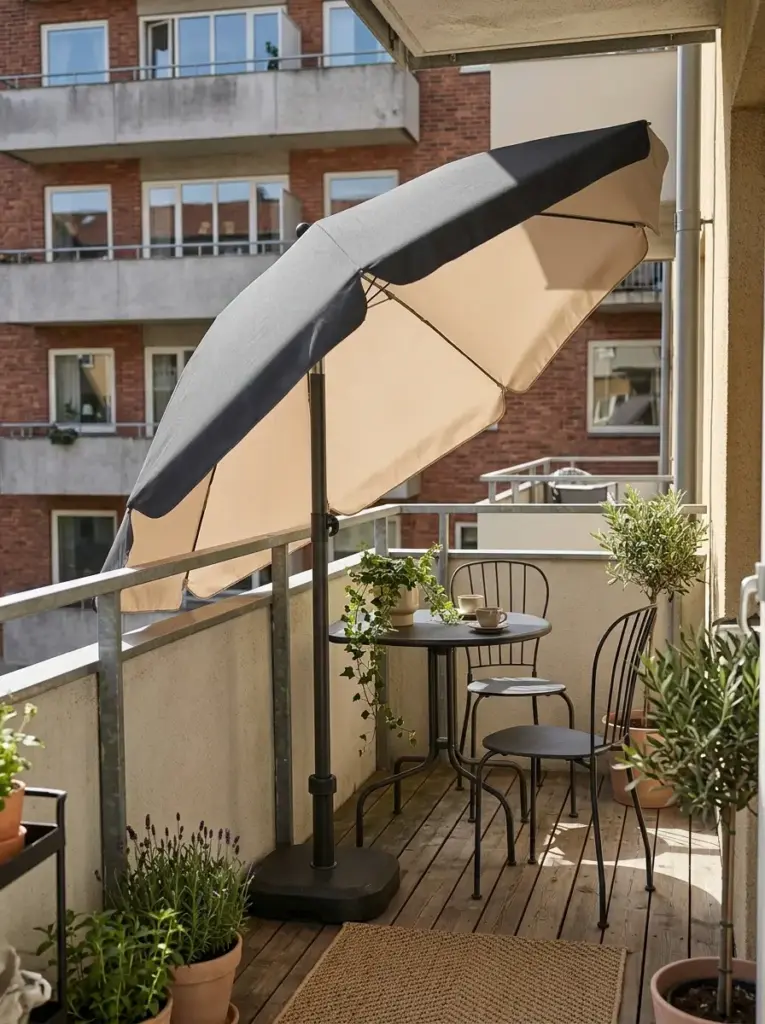
An outdoor umbrella can create privacy from above and from angled views, especially if your balcony is overlooked by higher apartments. A half umbrella or balcony umbrella with a flat back is made for small spaces and can sit close to a wall or railing. Some umbrellas tilt, which helps block low sun and side views. This idea is best for balconies that get strong sun or feel exposed from upper floors.
The practical benefit is shade plus privacy. A fabric canopy makes the balcony feel more protected without building a wall around it. Choose a color that works with your exterior and furniture. Beige, taupe, forest green, and charcoal are easier to style than bright colors and usually look calmer from inside the apartment. Place the umbrella behind or beside your seating, not in the main walking path. A half-round table or compact bistro set can fit under it without crowding the balcony. Do not use a large patio umbrella if your balcony is narrow. It may block the door, catch wind, or overwhelm the space. Use a sturdy weighted base and close the umbrella when you are not outside.
Side Privacy Panels for Neighbor-Facing Balconies
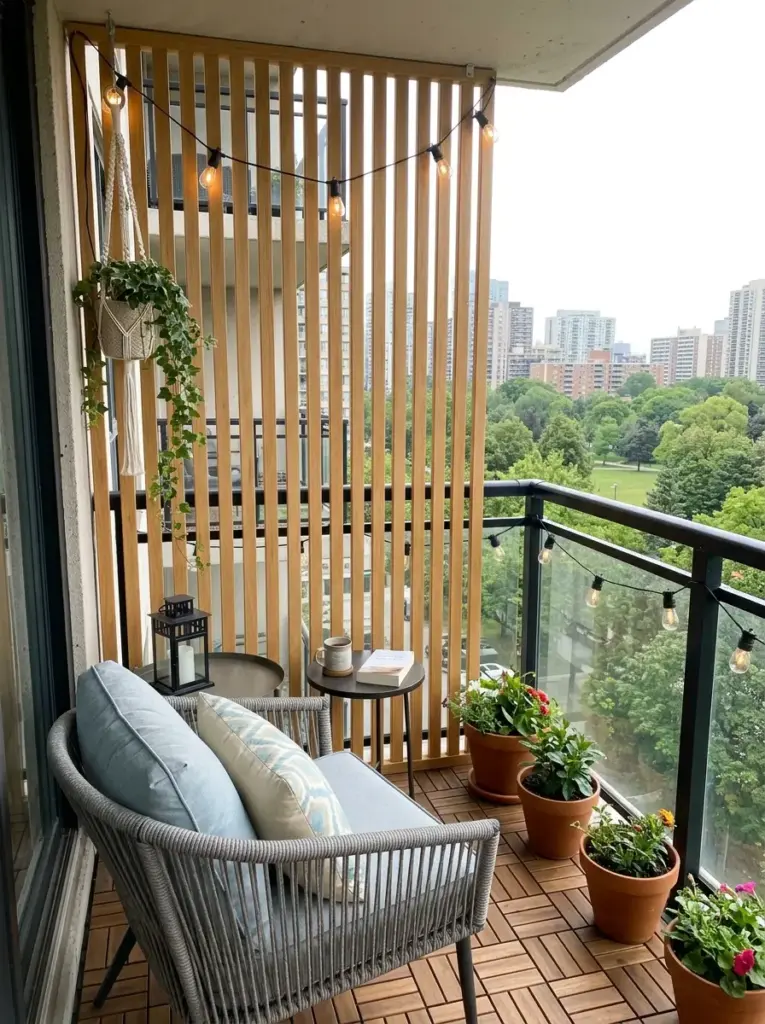
Sometimes you do not need privacy across the whole railing. You only need to block one side where the neighbor’s balcony sits too close. A side privacy panel solves this without making the balcony dark. You can use a narrow bamboo panel, outdoor curtain, lattice screen, slat panel, or fabric divider on just one side. This keeps the view open in front while creating a more comfortable seating corner.
This idea is best for apartment dwellers who want privacy without losing the open feeling of a balcony. The layout matters. Place your chair with its back toward the private side, then angle it slightly toward the view. Add a small side table between the chair and screen so the nook feels intentional. If the screen is plain, soften it with one hanging plant, a lantern, or a slim shelf. The reason this works in small spaces is focus. Instead of covering everything, you solve the exact privacy problem. A common mistake is placing the seating directly in the most exposed corner. Move the chair inward by even 12 inches, and the balcony will often feel more private.
Mixed Privacy Layers for a Real Secret Nook
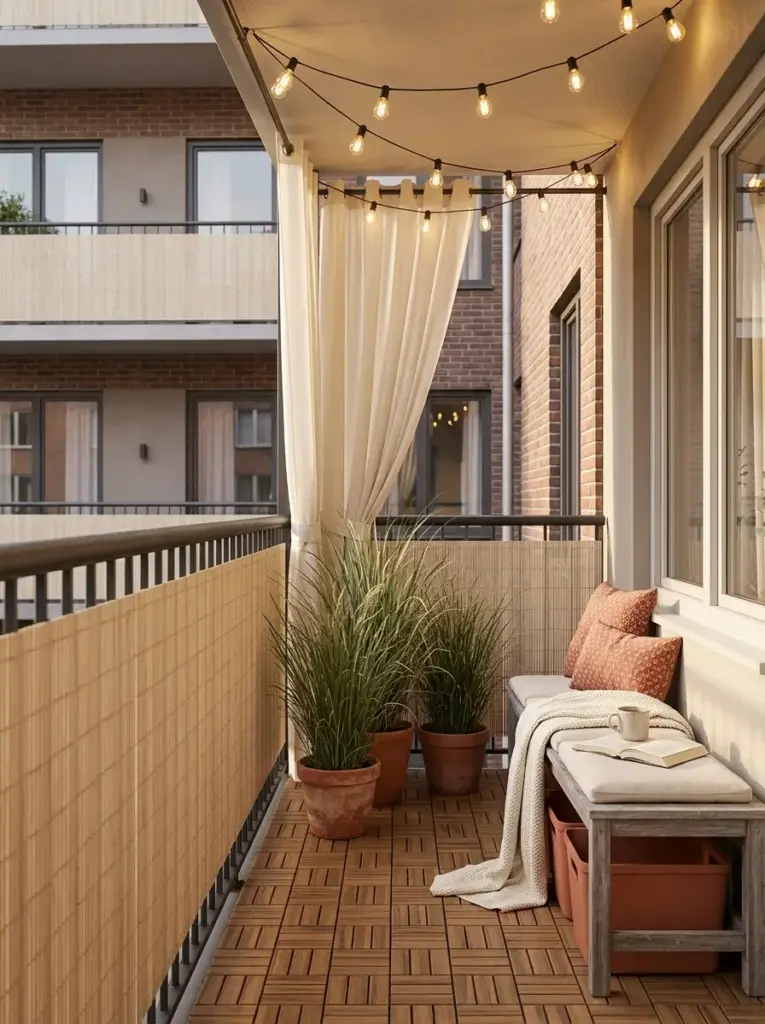
The most comfortable balcony nooks usually use more than one privacy layer. A single screen may block the railing but not the side view. A curtain may soften the space but leave gaps near the floor. A planter may look beautiful, but take time to grow. Mixing layers lets you solve these problems more inherently. For example, use a beige railing screen for lower privacy, a tall planter with grasses for softness, and one outdoor curtain on the side facing neighbors. This creates privacy from different angles without making the balcony feel closed.
This approach is best for people who use their balcony often and want it to feel like a small outdoor room. Start with the biggest privacy issue, then add only what helps. On a narrow balcony, use a railing screen, a slim bench with storage, and two tall plants. On a square balcony, create an L-shaped nook with a folding screen on one side and planters along the railing. For lighting, use one warm string light strand or two battery lanterns rather than bright overhead lighting. The secret to making layered privacy look good is repetition. Repeat one or two colors, such as black and beige, or terracotta and cream. Avoid adding every privacy idea at once. Too many materials can make a small balcony feel crowded.
Common Mistakes to Avoid
One common mistake is choosing a privacy screen before studying the actual sightlines. Sit in the chair you use most, stand near the balcony door, and look at where visibility is coming from. You may find that only one side needs coverage. Covering every railing and wall can make a small balcony darker, hotter, and less pleasant to use. A good Apartment Balcony Privacy Screen should solve a real problem, not just fill space.
Another mistake is ignoring wind. Balconies often get stronger gusts than ground-level patios. Lightweight screens, loose curtains, and tall folding dividers can move or fall if they are not secured. Use several attachment points, weighted bases, heavier planters, or tie-backs. If your balcony is very windy, avoid large solid panels that catch air like a sail. Mesh fabric, slatted wood, and plants that allow airflow are safer choices.
Many beginners also forget about building rules. Some apartments do not allow visible fabric colors, tall screens, or anything attached to exterior railings. Before buying, check your lease or building guidelines. You can often still create privacy with freestanding planters, folding screens, or furniture placement, even if railing covers are not allowed.
Do not block the balcony door or walking path. A secret nook should feel cozy, not cramped. Measure your balcony before buying furniture or screens. Leave enough room to open the door fully and move around without lifting chairs. For narrow balconies, folding chairs, slim benches, railing tables, and wall-hugging planters are usually better than deep lounge furniture.
Another mistake is using indoor materials outside. Indoor curtains, rugs, untreated wood, and regular cushions may look good for a few days, but moisture and sun can damage them quickly. Choose outdoor-rated fabric, weather-resistant rugs, and materials that match your climate. If you already own indoor pieces and want to use them, bring them inside after each use instead of leaving them exposed.
Budget-Friendly Tips
You can create privacy without spending a lot if you focus on the most exposed area first. Instead of screening the whole balcony, cover the section behind your chair or along the neighbor-facing side. A single reed roll, one curtain panel, or two tall planters can make a big difference when placed correctly. This is especially helpful for renters who do not want to invest in custom outdoor panels.
Use what you already own before buying more. A sturdy bookshelf, plant stand, or folding screen may work on a covered balcony if it is protected from the weather. You can also move indoor plants outside during mild seasons, as long as they can handle the light. For a low-cost styling update, use matching pots or baskets to make mixed plants look more planned. Even budget plastic pots look better when grouped by color.
Shop for privacy materials by function, not by trend. Reed fencing, shade cloth, outdoor mesh, bamboo rolls, and simple curtain panels often cost less than decorative, branded balcony screens. If the color is too plain, improve the area around it with lighting, plants, or cushions. A basic beige screen can look polished when paired with a black bistro set and warm white lights.
DIY can help, but keep it safe. You can attach reed fencing with zip ties, hang curtains with a tension rod, or create a planter screen with a simple outdoor shelf. Avoid heavy homemade structures unless you know your balcony’s weight limit and can secure them properly. The cheapest option is not a bargain if it falls, damages the railing, or breaks after one season.
Lighting is another affordable way to make privacy feel intentional. A screen alone can look flat at night. Add one strand of warm white lights, a solar lantern, or a rechargeable table lamp. Choose 2200K to 2700K for a warm glow. Cool white lighting can make fabric and greenery look harsh, especially in a small balcony.
Apartment Balcony Privacy Screen Tips
When choosing an Apartment Balcony Privacy Screen, start with your balcony’s main use. Dreaming of a cozy morning coffee corner? Create a little retreat with comfortable seating, soft privacy, and just enough shade to keep harsh glare away. For quiet evening reading, wrap the space in side screening and warm, gentle light. And when greenery is the goal, choose a screen that offers privacy without stealing the sunshine your plants need to flourish. A screen should support how you live, not make the space harder to use.
Measure everything before buying. Measure railing height, railing length, the distance from the railing to the door, and the width of the walking path. Also, measure how high you need privacy while sitting. Many people buy a screen that looks tall in photos but only covers the railing. If neighbors can see you from a higher angle, you may need curtains, an umbrella, or tall plants instead.
Choose materials that match your weather. Bamboo and reed feel warm but may weather faster in wet climates. Outdoor fabric gives flexible privacy but needs secure tie-backs. Faux greenery gives dense coverage but should be UV-resistant. Wood slats look polished but need outdoor treatment. Metal frames last well but may feel harsh unless softened with plants or fabric.
Think about privacy during both day and night. Some screens look private in daylight but become less private when your balcony is lit at night. If you use lights outside after dark, stand inside and outside the balcony to check visibility. Place lights low, such as on a table or floor lantern, instead of shining bright light from above. Softer lighting helps the nook feel calmer and reduces the feeling of being on display.
Keep the design simple. A small balcony usually looks better with two or three repeated materials. For example, bamboo screen, black metal furniture, and cream cushions. Or beige curtain, wood chair, and green plants. Repetition makes budget pieces look more intentional. Too many colors, patterns, and privacy materials can make the balcony feel smaller.
FAQ
What is the easiest Apartment Balcony Privacy Screen for renters?
The easiest option for renters is usually a railing fabric screen, bamboo reed roll, outdoor curtain, or folding privacy screen. These choices are simple to remove and often do not require drilling. If your lease does not allow anything attached to the railing, use a freestanding folding screen or tall planters instead. Always check building rules before installing anything visible from outside.
How can I make my balcony private without blocking sunlight?
Use partial privacy instead of solid coverage. Slatted wood panels, lattice, tall grasses, mesh fabric, and sheer outdoor curtains can filter views while still letting light through. Place the screen only where people can see in, rather than covering every side. This keeps the balcony brighter and helps plants stay healthy.
What colors work best for balcony privacy screens?
Neutral colors are usually easiest to style. Beige, sand, taupe, charcoal, black, soft gray, olive, and natural bamboo tones work well on most balconies. Light colors make a small balcony feel brighter, while darker screens hide dirt and blend with black railings. Bright colors can work, but they may draw attention to the screen instead of making the space feel calm.
How do I stop a privacy screen from blowing around?
Secure the screen at several points instead of only at the corners. Use outdoor zip ties, railing ties, cord, clamps, or weighted bases, depending on the screen type. For curtains, add tie-backs or curtain weights. For folding screens, place them behind heavy planters or bring them inside during windy weather. Avoid large solid panels on very windy balconies unless they are properly mounted.
Can I use real plants as a balcony privacy screen?
Yes, real plants can make a beautiful and practical privacy screen if your balcony gets enough light and you can care for them. Tall grasses, dwarf bamboo, rosemary, lavender, jasmine, and climbing plants can work well. Use lightweight planters, check drainage, and avoid overloading the balcony with heavy pots. If you are a beginner, start with a few hardy plants rather than trying to build a full plant wall at once.
How do I make a tiny balcony feel like a secret nook?
Choose one comfortable seat, one small table, and one strong privacy layer. Add a second layer only if needed, such as a curtain on the side or plants along the railing. Use warm lighting, soft outdoor cushions, and a simple color palette. Keep the floor clear enough to move around. A tiny balcony feels more private when every item has a purpose.
Conclusion
A good Apartment Balcony Privacy Screen does more than block a view. It helps you use your outdoor space with more comfort, whether your balcony faces a busy street, a neighbor’s window, or a shared courtyard. The best ideas are practical first: they fit your lease, handle your weather, leave enough space to move, and match the way you actually use the balcony.
Give your outdoor space an instant privacy upgrade without upsetting the landlord. Bamboo reed rolls, flowing outdoor curtains, railing fabric, or a stylish folding screen can create a cozy retreat in minutes. For a lush, garden-inspired look, bring in tall planters, climbing vines on lattice panels, or a vertical planter wall. To achieve a more polished finish, add warm wooden slats, sleek roller shades, or layer greenery with soft lighting for a private space that feels both inviting and beautifully designed.
You do not need a large balcony or a large budget to create a quiet nook. You need the right screen in the right place, a few simple materials, and a layout that makes the space feel comfortable instead of crowded.