
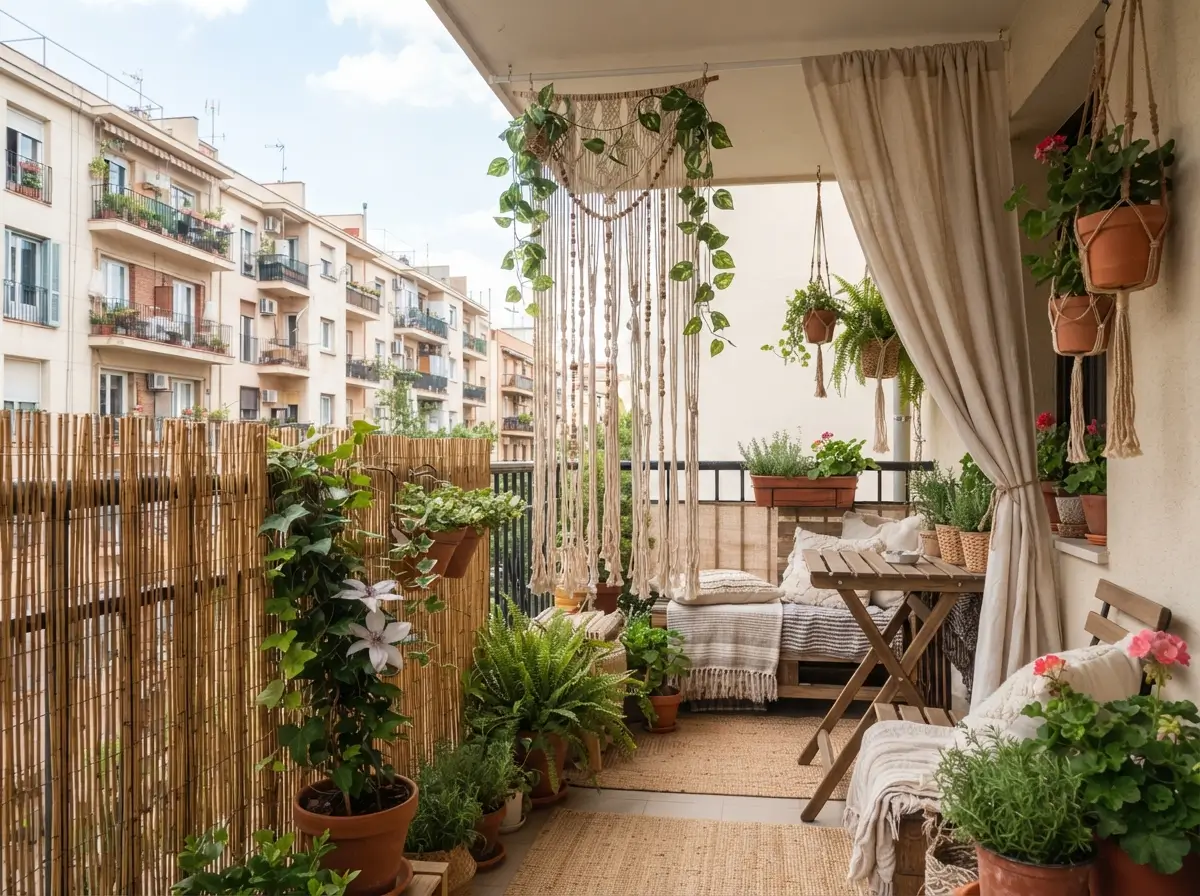

Many small balconies feel exposed because nearby windows, shared walkways, and neighboring buildings sit only a few feet away. Simple materials, careful measurements, and a clear layout can make a balcony feel calmer without blocking every bit of daylight. Apartment Balcony Privacy Screen solutions work best when they match the railing, weather conditions, lease rules, and the way you actually use the space. The ideas below focus on useful choices, realistic costs, and styling details that work in compact city spaces.
What Is the Cheapest Way to Add Balcony Privacy?
Short answer: start with one lightweight barrier along the most exposed side, then support it with plants, fabric, or narrow furniture. Apartment Balcony Privacy Screen projects stay affordable when you cover only the sightline that bothers you instead of wrapping the entire balcony. Measure the railing height and width before buying anything, check whether the building allows exterior attachments, and leave space for airflow. A screen around 4 to 6 feet high is often enough for seated privacy, while taller coverage may be needed when nearby balconies look down into the space.
Use Reed Fencing for Fast Natural Coverage
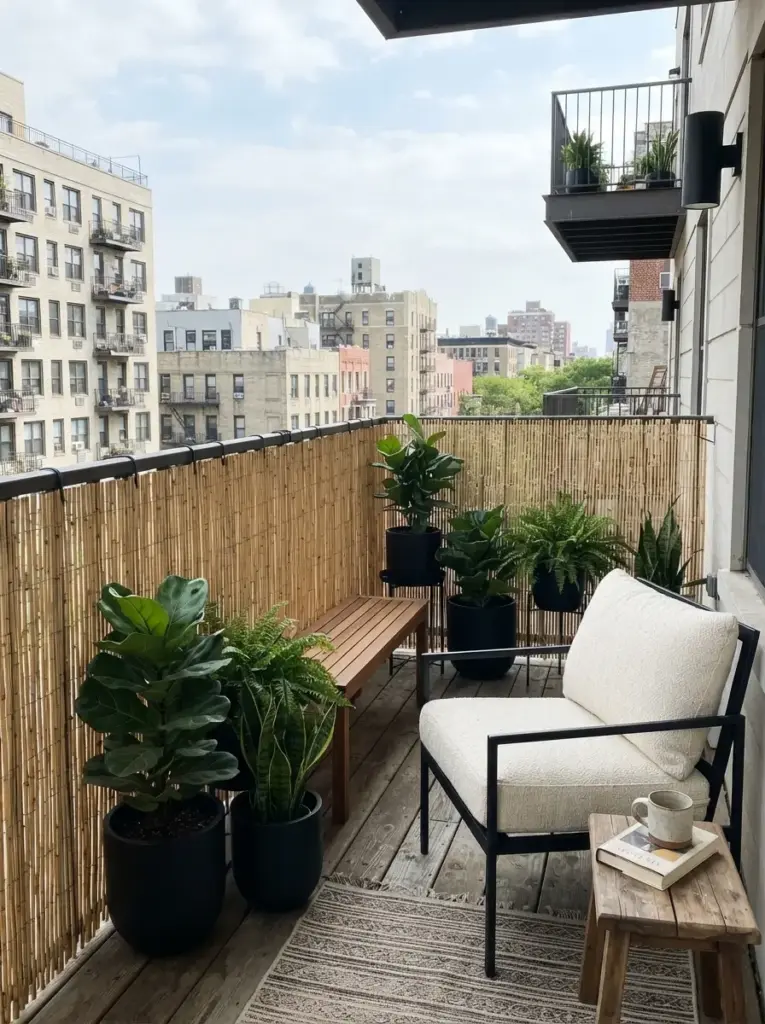
Reed fencing gives broad coverage with very little installation work. Rolls usually come in several heights, so you can match the material to a metal, glass, or concrete railing without cutting too much waste. Attach the roll with reusable outdoor cable ties, soft garden wire, or removable railing clips. Keep the bottom edge one or two inches above the floor so rainwater and debris can drain freely. Natural tan reed looks especially good with cream seat cushions, dark green plants, and matte black planters.
Coverage feels comfortable because the narrow reeds interrupt direct views while still allowing small gaps for moving air. Balcony users in hot climates should avoid layering plastic behind the reeds, since trapped heat can make the seating area uncomfortable. Choose tightly woven fencing when the neighboring building is very close. Looser fencing works when you only need to soften a distant view. Add a slim outdoor bench against the screened side to prevent the material from becoming the only decorative feature.
Hang Outdoor Curtains Without Drilling
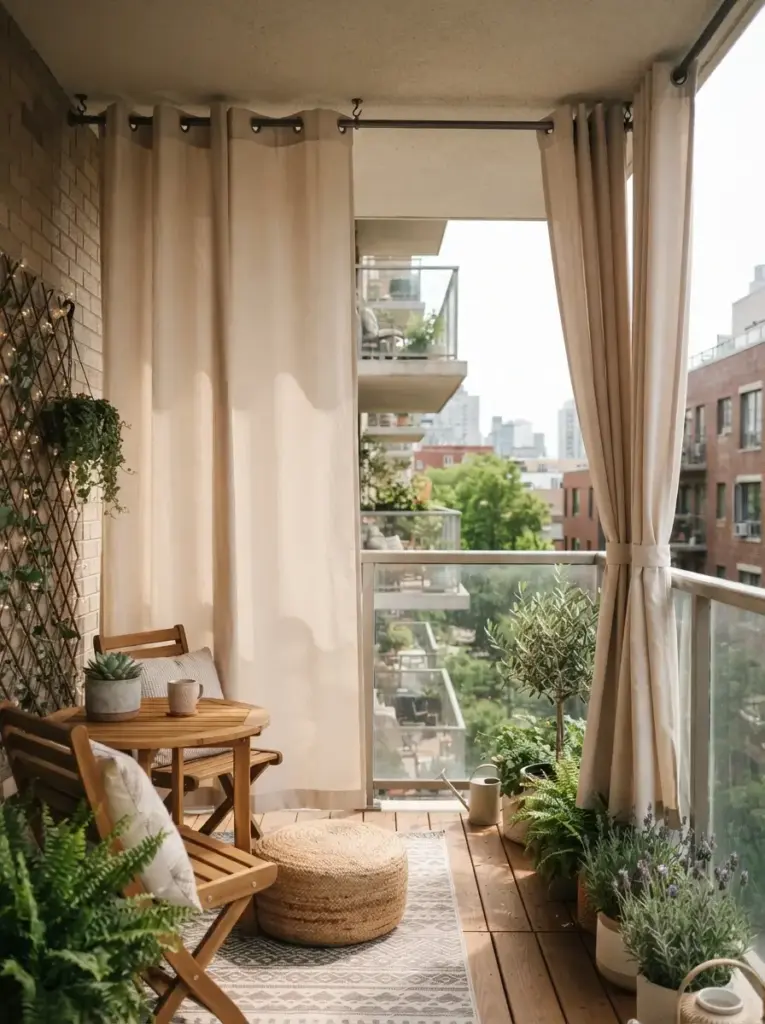
Outdoor curtains create flexible privacy because they can stay open during the day and close only when needed. Use a tension rod between two solid walls, a freestanding pipe frame, or removable ceiling hooks rated for outdoor use. Polyester panels resist moisture better than indoor cotton curtains, and light colors such as sand, warm white, or pale gray keep a small balcony from feeling enclosed. Choose panels long enough to reach near the floor but not drag through puddles. Weighted curtain hems, clip-on tablecloth weights, or discreet magnetic ties help control movement in light wind.
Flexibility makes curtains useful for renters, evening entertainers, and anyone who wants changing levels of privacy. Sheer outdoor fabric softens views but does not fully block silhouettes after dark. Opaque panels offer stronger coverage near bright indoor rooms. Warm lighting between 2200K and 2700K works well behind beige or ivory curtains because it reduces harsh shadows and keeps the seating area inviting. Avoid placing candles next to fabric. During storms, tie the panels firmly or remove them to prevent damage.
Build a Removable PVC Pipe Frame
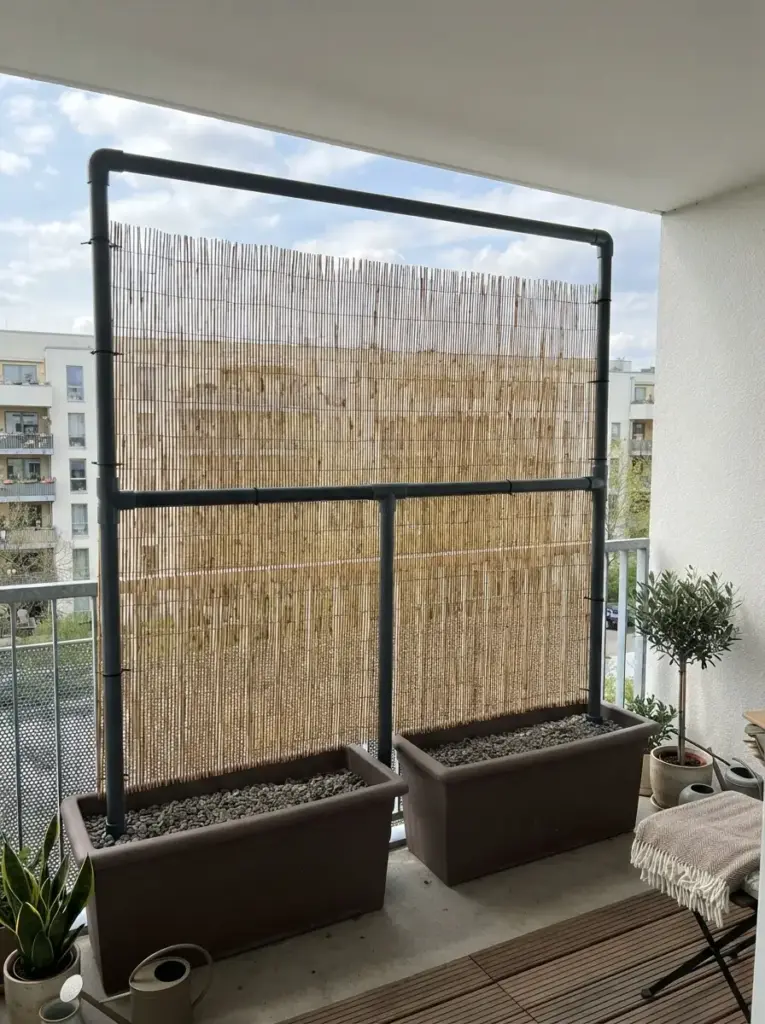
PVC pipe can form a lightweight frame when the balcony has no suitable walls, ceiling, or railing for direct attachments. Build a simple rectangle using half-inch or three-quarter-inch pipe, elbow fittings, and T-joints. Fit the frame inside heavy planters filled with gravel, not loose soil, so the base stays stable. Fabric, bamboo mesh, shade cloth, or faux greenery can then be attached to the frame with cable ties. Charcoal, deep brown, or muted olive usually looks more intentional than bright white.
Structure matters because a separate frame keeps pressure off delicate railings and avoids drilling into rented surfaces. People with irregular balconies or strict lease rules may find this option especially useful. Keep the frame slightly lower than the balcony ceiling to avoid scraping and allow easy removal. Wide fabric panels can act like sails in strong wind, so use mesh materials when the balcony sits above the fifth floor. Add crossbars if the frame feels flexible.
Install a Budget Bamboo Roll Screen
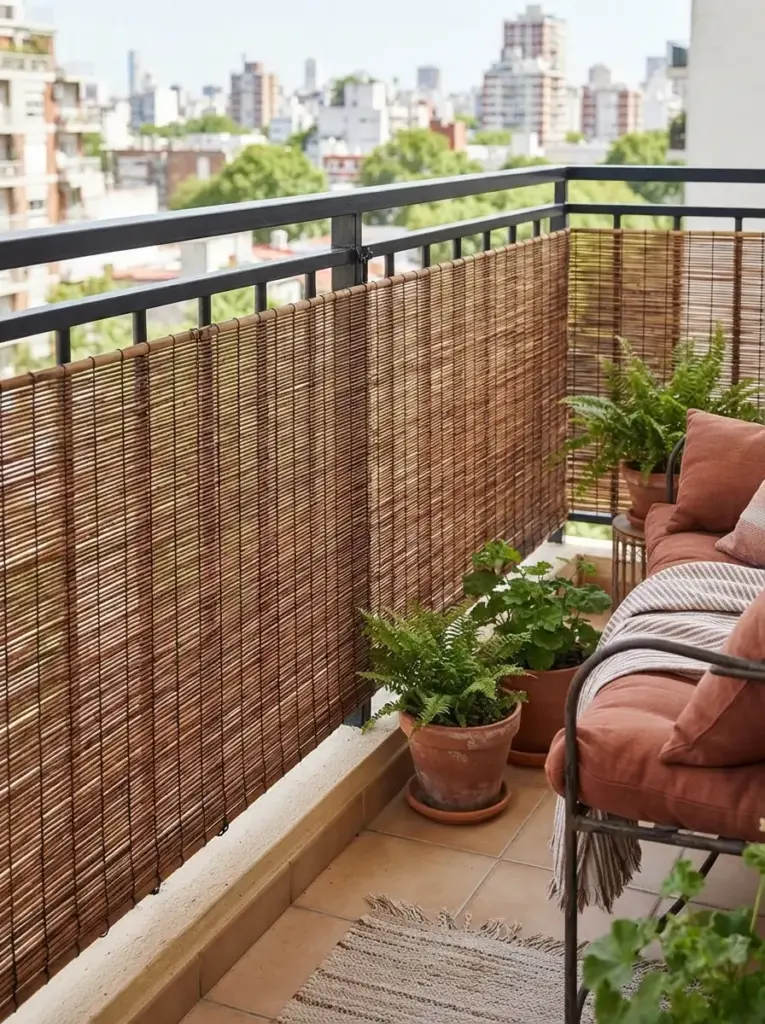
Bamboo roll screens provide a neater, more finished surface than loose reed fencing while remaining relatively affordable. Look for weather-treated bamboo slats connected with an outdoor cord or wire. Mount the roll to the inside of the railing instead of the outer face, since interior placement is safer and easier to maintain. Brown bamboo pairs well with terracotta pots, beige floor tiles, and rust-colored cushions. Black bamboo gives a sharper modern style but may absorb more heat in full sun. Seal untreated bamboo with an exterior clear coat before installation.
Durability improves when the roll does not rest directly on wet flooring. Raise it slightly and fasten the top, middle, and bottom so it cannot flap. Narrow balconies benefit from the screen’s flat profile because it uses almost no floor space. Avoid coating bamboo with thick indoor varnish because it may peel outdoors. A breathable exterior finish lasts longer.
Turn Wooden Lattice Into a Plant Support
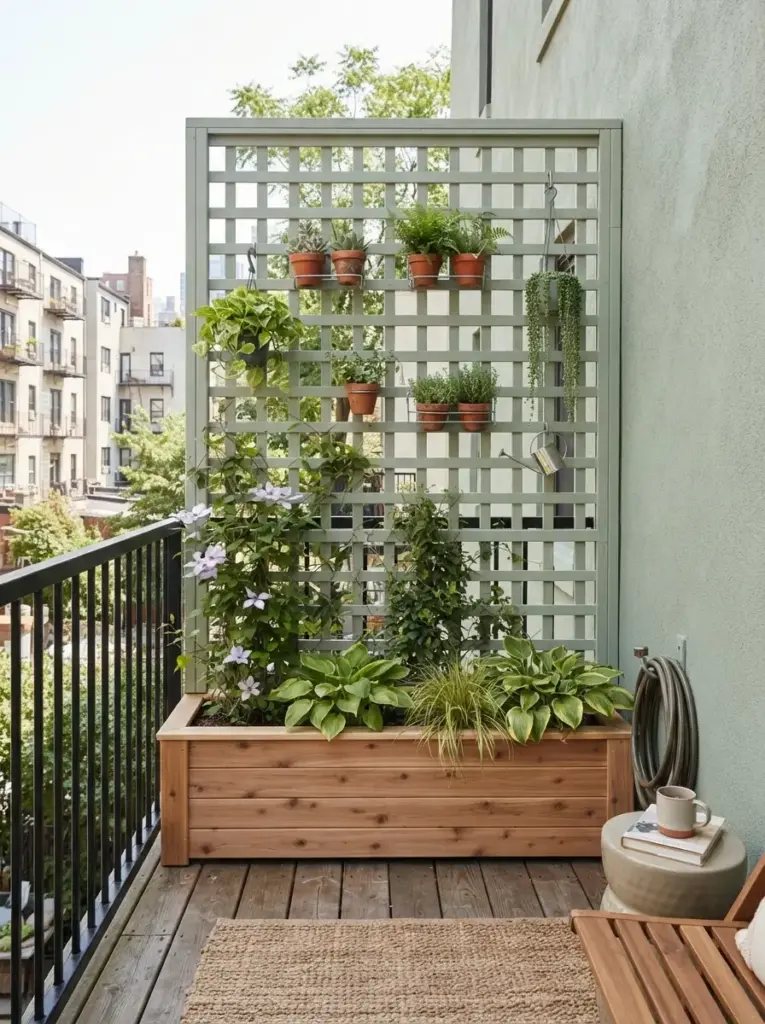
Wooden lattice can provide privacy and vertical planting space at the same time. Choose a thin cedar or pressure-treated panel and cut it to fit the inside width of the railing. Instead of drilling into the building, secure the panel to a freestanding planter box or a weighted wooden base. Paint the lattice soft black, muted sage, or the same color as the exterior wall for a built-in appearance. Climbing plants, lightweight pots, and outdoor hooks can fill the open grid. Leave some gaps uncovered so the balcony still feels bright.
Layered screening works because lattice breaks direct sightlines before plants fully grow. City renters, plant lovers, and balconies with limited floor area gain the most from this setup. Star jasmine, clematis, and compact climbing roses can work where local climate and sunlight allow, while pothos and faux vines suit shaded or temporary displays. Real plants need proper drainage and secure pots. Heavy ceramic containers placed high on the panel can create a fall risk, so use small plastic planters and attach them firmly. Repaint exposed cut edges to protect the wood.
Make a Fabric Panel From a Drop Cloth
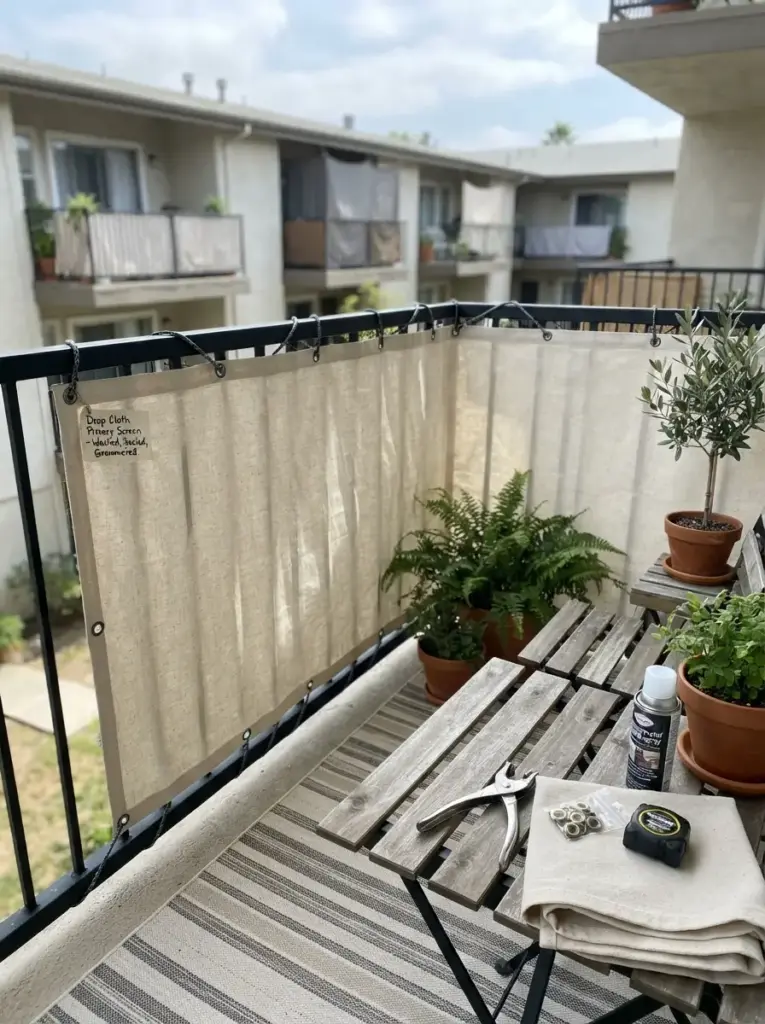
Outdoor-rated canvas is ideal, but a low-cost painter’s drop cloth can work when treated carefully and kept under cover. Wash and dry the cloth first to reduce shrinkage, then cut it to the railing size and sew or use outdoor fabric tape around the edges. Add metal grommets every 12 to 18 inches for even tension. Waterproofing spray helps the material resist light moisture, although it will not make indoor canvas suitable for constant rain. Oatmeal, stone, and faded olive tones hide dust better than bright white.
Custom sizing gives fabric panels an advantage over store-bought screens. People with unusual railing shapes can create coverage without paying for made-to-measure products. Keep prints simple because large patterns can overwhelm a compact space. Remove the panel during heavy rain and winter storage. Never attach fabric where it blocks a required fire escape or building access route.
Stack Tall Planters Along One Side
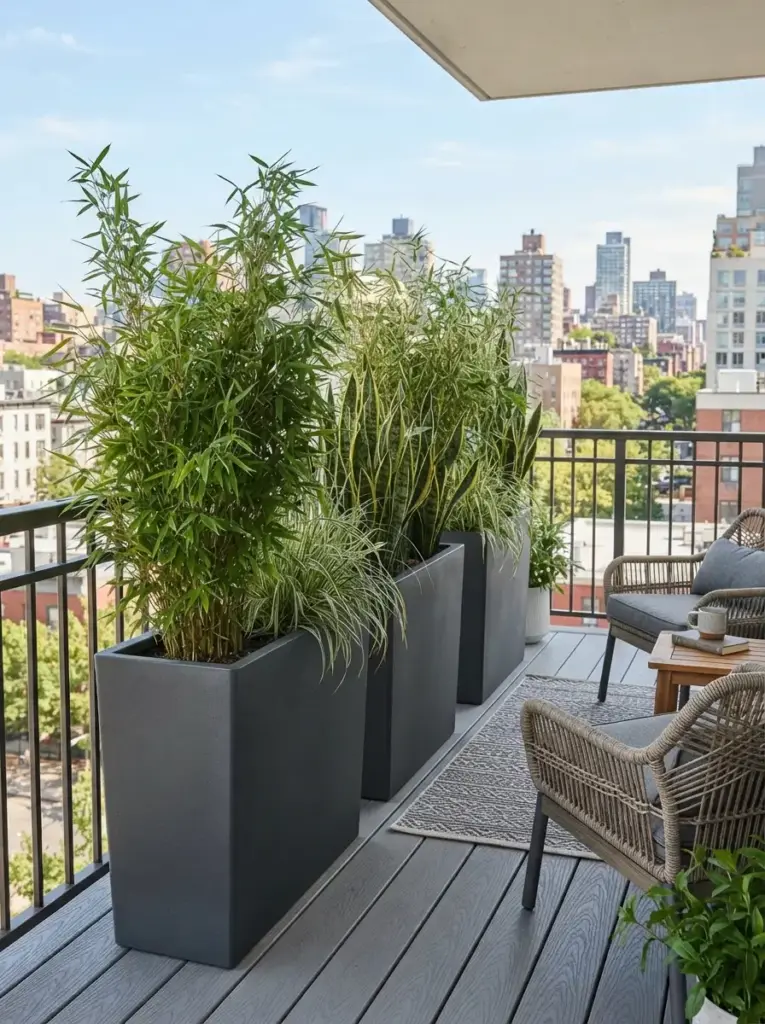
Tall planters can create privacy without looking like a solid wall. Place two or three narrow containers along the exposed edge and fill them with upright plants suited to the balcony’s light. Fiberglass and resin planters are easier to move than stone or concrete, yet they still look substantial in matte finishes. Deep charcoal containers make green leaves stand out, while warm beige pots blend with neutral outdoor furniture. Choose planters with a width of about 10 to 14 inches for compact layouts. Square shapes fit tightly against railings and corners.
Height works because foliage blocks eye-level views while the open space below keeps air moving. Plant-based screening suits balconies protected from severe wind and owners willing to handle regular watering. Clumping bamboo can offer dense coverage, but only use noninvasive varieties in containers and confirm local suitability. Ornamental grasses, dwarf evergreen shrubs, and tall snake plants offer simpler shapes. Building weight limits should guide large container choices.
Create a Faux Green Wall on a Mesh Panel
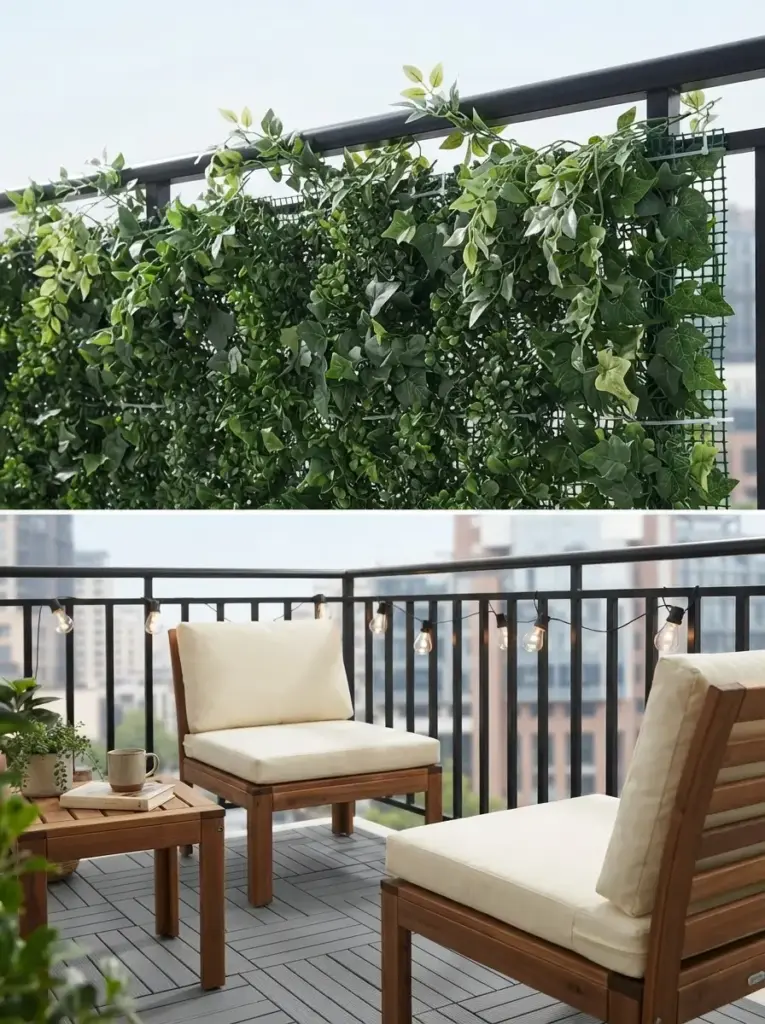
Artificial greenery gives instant coverage when sunlight, watering, or seasonal weather make real plants difficult. Attach interlocking faux hedge tiles to a lightweight plastic mesh panel, then fasten the panel to the inside of the railing. Better-quality leaves use several green shades and varied shapes, which look more natural from nearby seating. Mix in a few realistic trailing stems to soften the edges. Dark green works well with acacia furniture, cream textiles, and warm white lights. Dusty or blue-green panels suit modern gray balconies.
Low maintenance makes faux greenery useful for shaded units, frequent travelers, and beginners who do not want plant care. The mesh behind the leaves allows more airflow than a solid plastic backing. Look for UV-resistant products because cheap leaves can fade or become brittle after one summer. Secure every corner and add ties through the center so the panel does not billow. Avoid placing faux foliage next to grills, heaters, or exposed bulbs.
Repurpose Pallets Into a Slim Divider
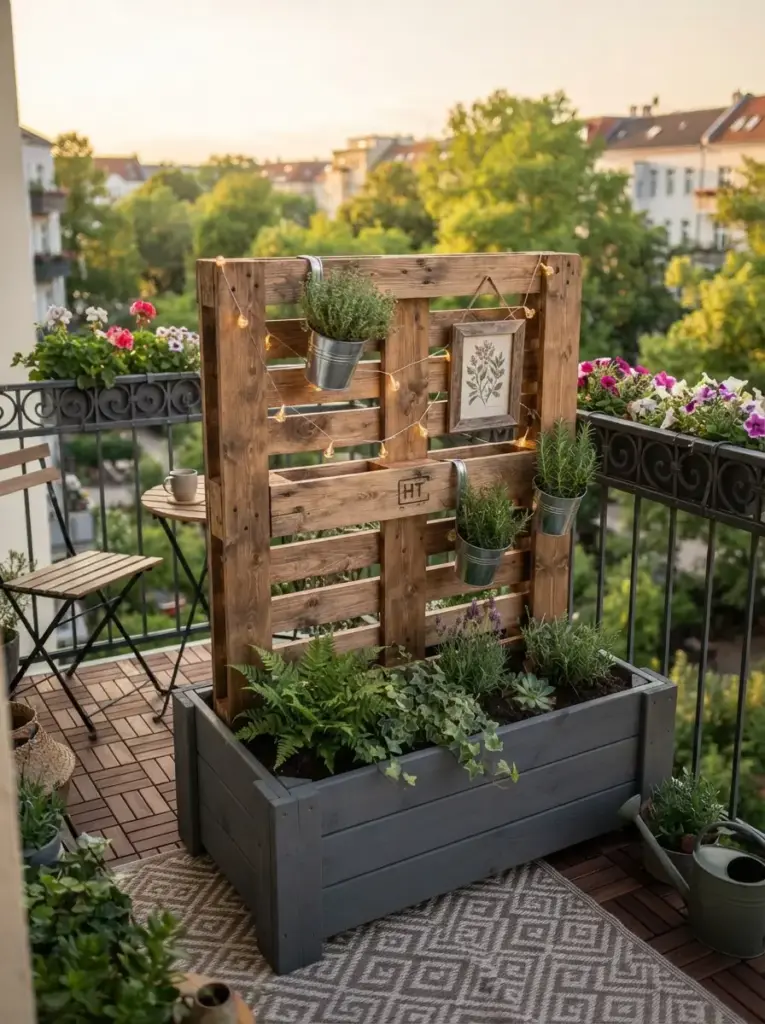
One clean wooden pallet can become a rustic divider when sanded, sealed, and mounted safely. Choose a heat-treated pallet marked HT rather than one with unknown chemical treatment. Stand it vertically inside a wide planter box or attach it to a simple weighted base. Remove loose nails and rough splinters before use. A coat of exterior stain in walnut, weathered gray, or black helps the palette match existing furniture.
Reusing wood lowers material cost and gives the screen more function than a plain panel. DIY beginners with basic tools may enjoy the project, although renters should confirm that freestanding structures are allowed. Pallets can feel bulky on very narrow balconies, so measure the depth before committing. Do not lean an unsecured pallet against a railing because wind or accidental bumps can move it.
Use Shade Cloth for Clean Modern Privacy
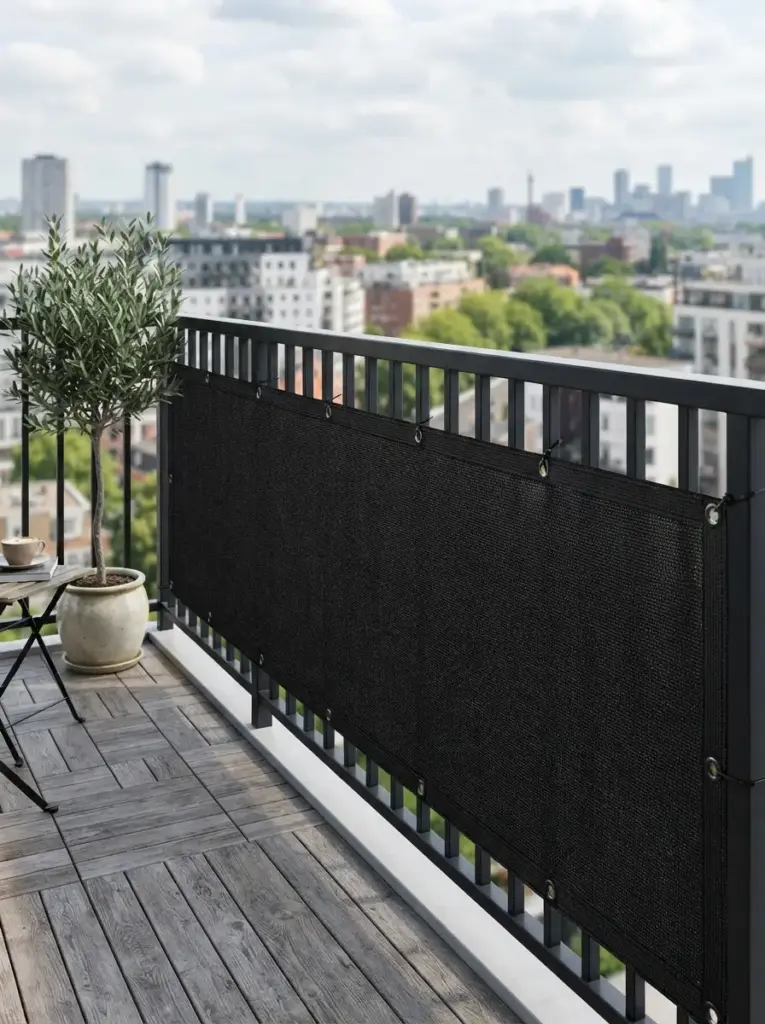
Shade cloth is inexpensive, lightweight, and available in different levels of visibility. A 70% to 90% shade rating usually offers useful privacy while allowing airflow. Cut the material neatly, fold the edges, and add grommets or use clips made for shade fabric. Black looks crisp against modern metal railings, while sand, taupe, and dark green feel softer. Match the cloth to the railing color if you want the screen to recede visually.
Performance comes from the woven structure, which handles wind better than many solid fabrics. Sunny balconies, high-rise units, and people who want a simple backdrop benefit most. Dark cloth may reduce glare but can make a small north-facing balcony feel dim, so lighter tones suit shaded spaces. Stretch the panel evenly without pulling so tightly that the grommets tear. Fold excess material rather than leaving loose edges. Privacy planning should also account for the view from inside the room, because a very dark barrier may block light entering nearby windows.
Arrange Folding Screens for Movable Coverage
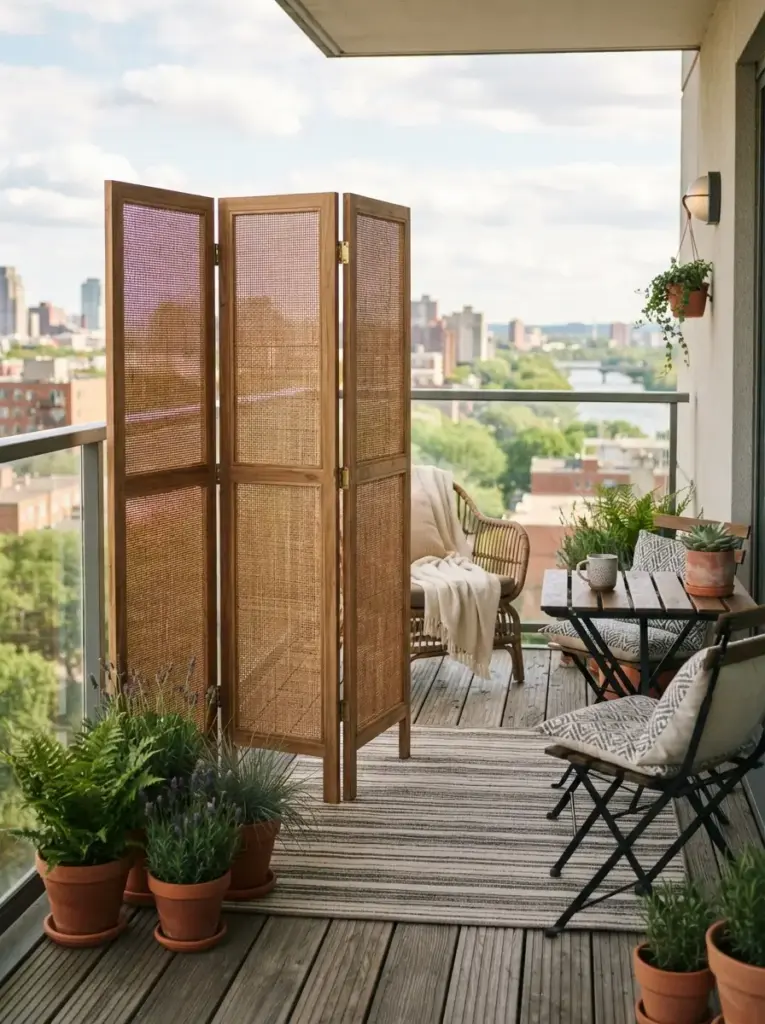
Freestanding folding screens can shift throughout the day and move indoors during bad weather. Choose an outdoor-rated screen made from resin wicker, treated wood, metal, or weather-resistant fabric. Three-panel designs stand more securely when placed in a shallow zigzag rather than a straight line. Position the screen behind a chair, beside a bistro table, or across one exposed corner. Natural wood suits warm neutral decor, while matte black frames work with contemporary furniture. Keep the screen slightly shorter than the balcony width to preserve circulation.
Mobility makes folding screens useful for renters who cannot attach anything to railings. Weighted feet or planters placed beside the frame improve stability, but do not use the screen in strong wind unless the manufacturer confirms outdoor safety. Choose narrow panels when floor space is limited. Large room dividers designed only for interiors may swell, rust, or tip outside. Store the screen indoors during storms and check hinges regularly for looseness.
Add a Trellis Bench for Privacy and Seating
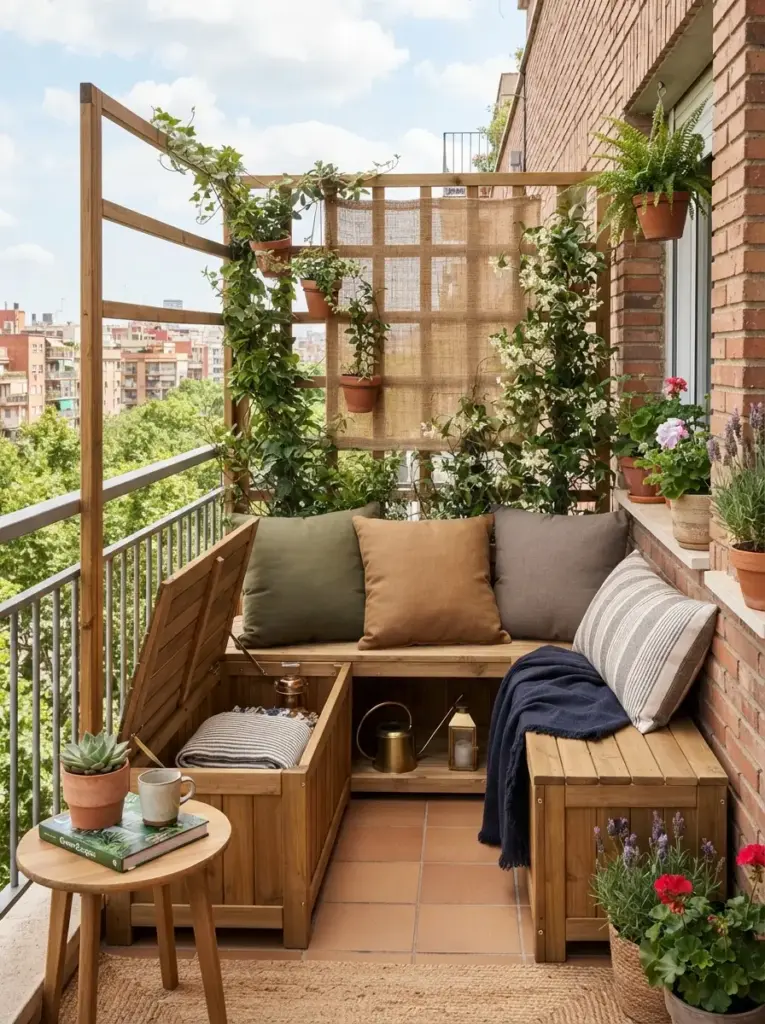
Narrow storage benches with attached trellises combine three needs in one footprint. Position it along the most exposed side, then attach a trellis panel to the back. Seat cushions in camel, olive, navy, or warm gray can connect the piece to the rest of the balcony. Use the storage compartment for folded textiles, watering tools, or lanterns, but make sure the interior has ventilation. Keep the seat depth near 16 to 18 inches for comfort without crowding.
Multifunctional furniture earns its place on balconies where every inch matters. Couples, readers, and renters with limited indoor storage benefit from this arrangement. The trellis can hold climbing plants or a lightweight fabric insert for faster coverage. Avoid building the back too tall or top-heavy. Anchor the trellis to the bench frame, not only to a thin storage lid. Waterproof cushion covers and quick-dry foam handle the weather better than indoor upholstery.
Hang Macramé or Rope Panels
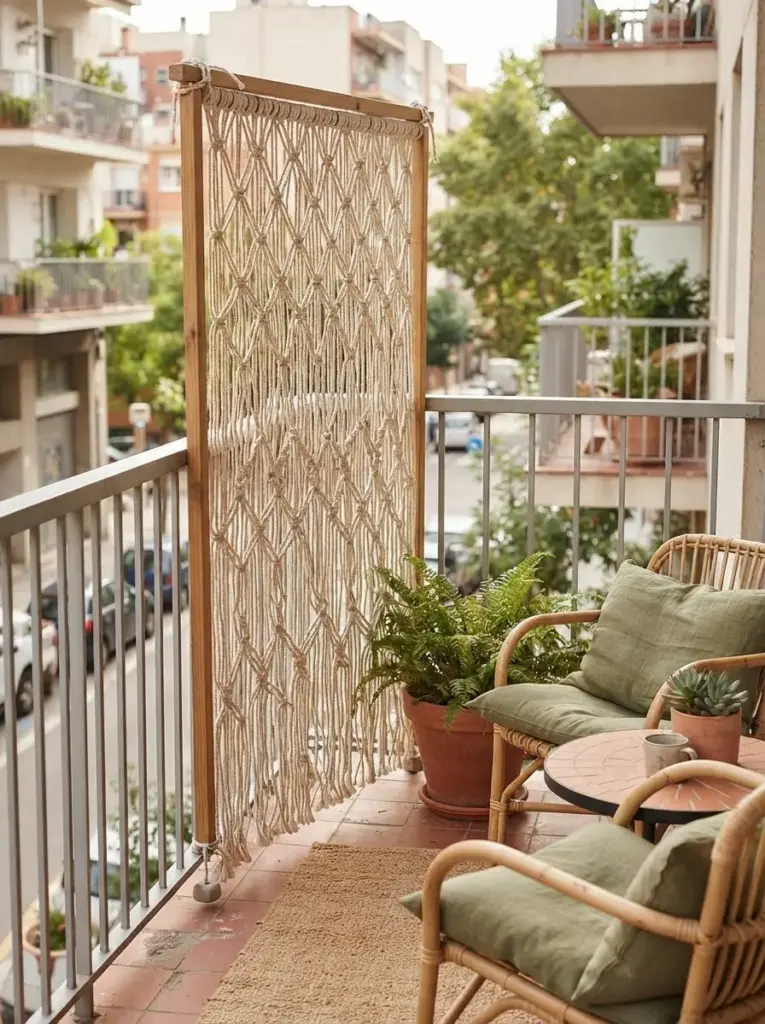
Macramé panels soften a balcony without creating a heavy visual wall. Use outdoor polypropylene rope rather than indoor cotton when the panel will face rain or strong sun. Hang the piece from a tension rod, sturdy frame, or approved hooks. Dense knots provide more privacy, while open geometric patterns mainly break up direct views. Cream rope looks relaxed with rattan chairs and terracotta, although taupe or charcoal hides dirt more effectively. A narrow panel can cover only the seating zone instead of the full railing.
Texture explains the appeal of rope screens in small spaces. Balcony users who want partial privacy and handcrafted decor may prefer them over solid barriers. Open knots let light pass through, making the method useful on shaded balconies. Rope can stretch after rain, so outdoor material and tight attachment points matter. Keep the bottom secured with light weights or ties to prevent tangling. Avoid long, loose tassels near floor drains, pets, or children.
Create Privacy With a Vertical Herb Garden
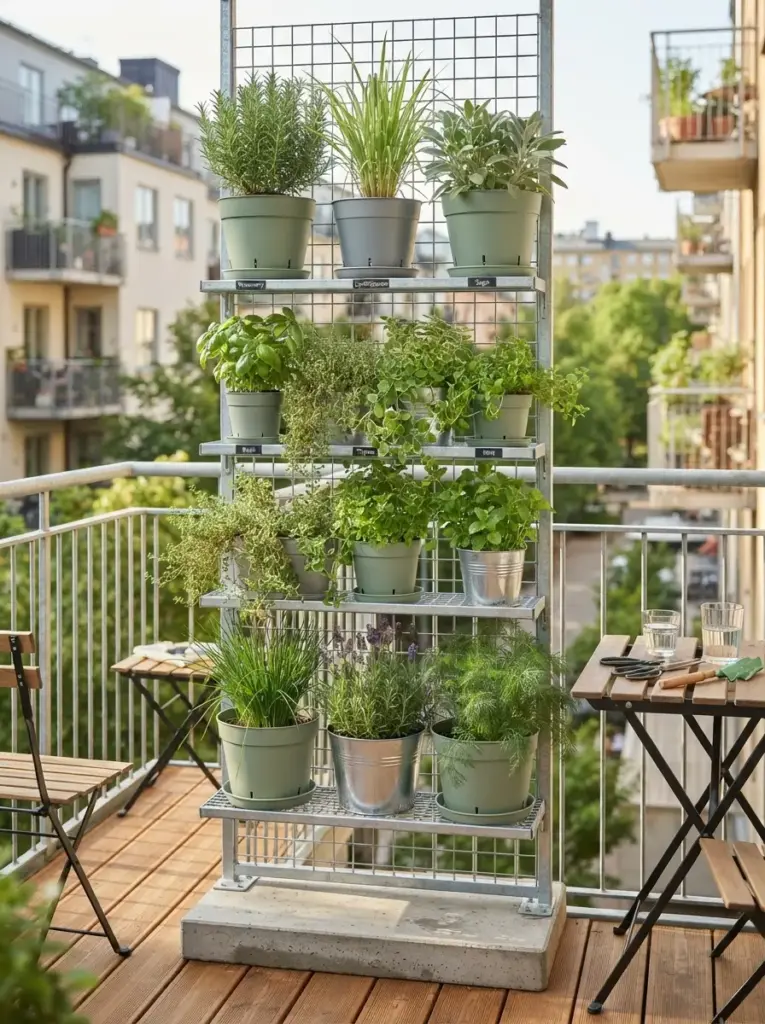
Vertical herb gardens can block views while supplying fresh ingredients. Start with a metal grid, pocket planter, or narrow shelving unit fixed to a weighted base. Arrange taller herbs such as rosemary and lemongrass near eye level, then place trailing thyme or oregano along the edges. Use lightweight plastic containers with drainage holes and saucers. Sage green, galvanized metal, and natural wood create a practical kitchen-garden palette that suits small dining balconies.
Useful planting turns the screen into more than decoration. Home cooks and balconies receiving four to six hours of suitable light may find this setup rewarding. Watering needs vary, so group herbs with similar moisture preferences. Pocket planters can dry quickly in summer, while deep shelving units may block too much light from lower pots. Keep heavy containers on the bottom shelf and lighter ones above. Check building rules before hanging planters outside the railing, since falling objects create serious risks.
Combine Two Low-Cost Methods for Better Results
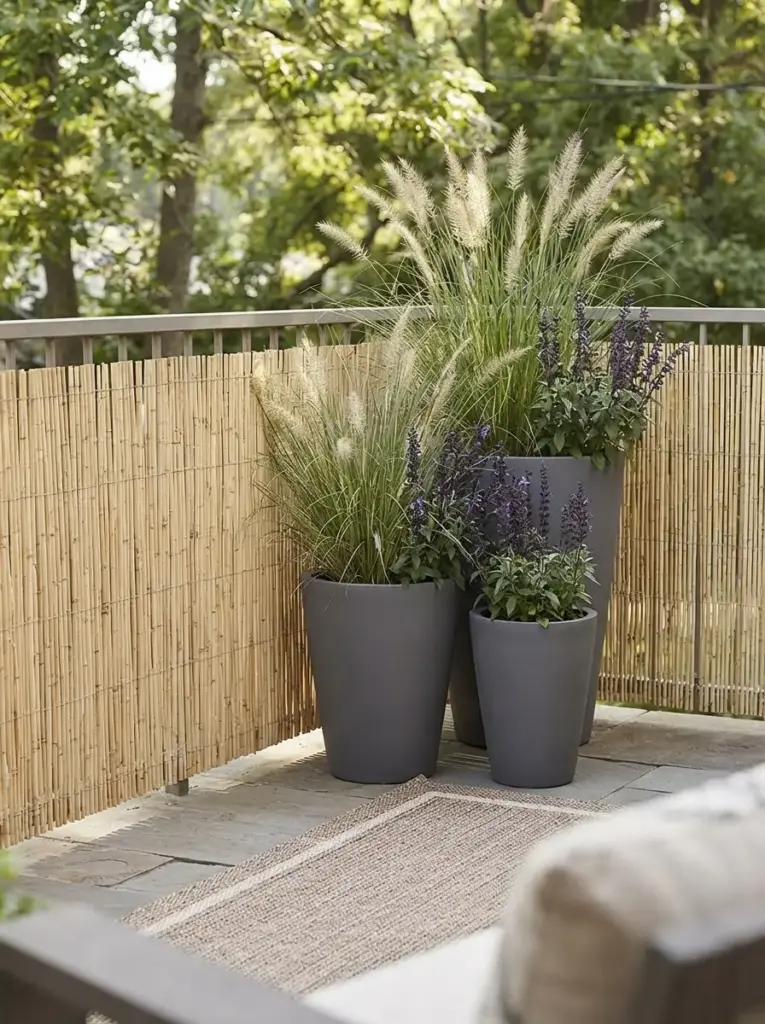
Layering two simple materials often looks better than buying one expensive screen. Pair a waist-high reed roll with tall planters, use shade cloth behind lattice, or hang sheer outdoor curtains in front of a basic mesh panel. Choose one material as the visual background and let the second add texture. For example, dark gray shade cloth can disappear behind pale wood lattice, while green plants break up the flat surface. Limit the palette to two or three colors so the small area does not feel busy.
Balanced layering solves different problems at once. One material can stop direct views while another adds softness, shade, or seasonal interest. Decorators with awkward sightlines benefit most because they can place coverage exactly where needed. Avoid stacking several solid layers, which can reduce airflow and natural light. Start with the cheapest removable layer, sit in the usual chair, and check visibility from nearby angles. Add the second element only where gaps remain.
Common Mistakes to Avoid
Blocking Airflow With Solid Materials
Completely sealed barriers can make a balcony hotter, darker, and less comfortable. Wind also pushes hard against large solid panels, especially on upper floors. Choose slatted wood, mesh, lattice, perforated fabric, or greenery when the location receives strong gusts. Leave a small gap near the floor and avoid sealing every side. Privacy should reduce direct sightlines without turning the balcony into a closed box. Loose materials should never flap near doors, windows, or neighboring spaces.
Ignoring Building and Lease Rules
Building policies may limit screen height, exterior colors, railing attachments, or visible materials. Check the lease, balcony guidelines, and fire safety rules before buying supplies. Removable ties, tension rods, weighted bases, and freestanding frames usually cause less damage than screws or adhesive strips. Some adhesives fail in heat and can leave marks on painted surfaces. Approval matters most when the balcony faces the street or when the building has a uniform exterior design.
Buying Before Measuring Sightlines
Measurements should include more than railing width and height. Sit in your chair, stand near the door, and note where neighbors can see into the space. A four-foot screen may provide seated privacy but leave standing areas exposed. Tall coverage across the entire balcony may be unnecessary when only one corner faces another window. Mark the needed zone with painter’s tape before shopping. Focused screening reduces cost, protects daylight, and leaves room for plants or furniture. Remember to measure around handles, drains, air-conditioning units, and utility access.
Choosing Indoor Materials for Outdoor Use
Indoor curtains, untreated rope, cardboard-backed faux plants, and unfinished wood can deteriorate quickly outside. Moisture causes mildew, swelling, rust, and staining. Look for UV-resistant fabric, exterior paint, sealed wood, and rust-resistant fasteners. Even protected balconies receive humidity and temperature changes. Store removable textiles indoors during severe weather. Cheap materials can still work when they are suited to the environment. Spending slightly more on outdoor cable ties or weatherproof fabric often saves money because the installation lasts longer and stays safer.
Using Too Many Decorative Elements
Small balconies lose function when every wall, corner, and railing holds decor. Choose one privacy feature, one main seating piece, and a limited number of plants or lights. Large patterns, several wood tones, and many bright colors compete in tight spaces. Repeat the same planter finish or textile color to create order. Folding furniture and nesting tables keep the walkway open. Leave the door swing, drain, and emergency access clear. Practical space around the screen matters as much as the screen itself.
Forgetting Wind and Weight
Wind can turn fabric, faux greenery, and folding panels into hazards. Secure materials at multiple points and avoid attaching heavy items above head height. Weighted planters should remain within the balcony’s approved load limit. Wet soil becomes much heavier than dry soil, so do not guess. Lightweight objects also need strong connections. Check ties, hinges, and fasteners after storms. High-rise residents should favor mesh and slatted materials that release wind pressure. Safety should guide every decorative decision, even when the balcony appears sheltered.
Budget-Friendly Ways to Stretch Every Dollar
Start by measuring the exact area that needs coverage and buy only enough material for that section. Hardware stores often sell shade cloth, reed fencing, lattice offcuts, and exterior fabric by the foot. Secondhand folding screens, narrow benches, and planters can also reduce costs, but inspect them for rot, rust, or unstable joints. Matching old pieces with one paint color creates a more coordinated result. Exterior spray paint in matte black, warm white, or muted green can unify mixed materials without requiring a full furniture replacement.
Repurposed items work best when they remain safe and weather-resistant. Clean wooden crates can become planter bases, curtain panels can be cut from an outdoor tablecloth, and a metal clothing rack can support lightweight mesh. Avoid using unstable bookshelves, indoor particleboard, or breakable glass outdoors. Spend money on fasteners, UV resistance, and stable bases before decorative accessories. Functional hardware is less visible but more important. One good screen with two matching planters usually looks more polished than several cheap items placed without a clear plan.
Seasonal sales offer useful savings on outdoor textiles, planters, and privacy materials. Late summer and early fall often bring clearance prices, while basic hardware may cost less during home improvement promotions. Neutral colors remain easier to reuse if furniture changes later. Choose a simple base and update the balcony with cushion covers, small plants, or lights rather than replacing the screen. Warm LED string lights around 2400K can soften an inexpensive setup, but keep cables protected and use products rated for outdoor conditions.
Apartment Balcony Privacy Screen Tips
Privacy planning becomes easier when you design from the chair outward. Place the main seat first, identify the direct view from that position, and cover only the necessary angle. Keep the strongest barrier on the side facing the closest windows, then use lighter materials near the open view. Repeating one color across the screen, planters, and furniture legs makes budget pieces feel connected. Dark frames can visually disappear against black railings, while beige and natural wood keep shaded spaces brighter. Leave at least one open section for fresh air, daylight, and a less confined feeling.
Lighting should support privacy instead of creating strong silhouettes. Bright bulbs behind a thin screen can reveal movement after dark, so use low-level lamps beside seating rather than overhead glare. Warm LEDs between 2200K and 2700K provide comfortable evening light. Place lanterns below eye level and aim small wall lights toward the floor. Frosted covers reduce harsh contrast. Solar lights may work on sunny balconies, but battery-powered lanterns offer more control in shade. Avoid cool blue-white bulbs above 4000K because they can make a compact balcony feel exposed and overly bright.
Furniture placement can improve coverage without adding another screen. Set a high-back chair near the open side, position a narrow console behind the seating area, or use a tall plant stand in the most visible corner. Round bistro tables support easier movement than sharp rectangular tables in tight layouts. Folding chairs suit balconies that need occasional dining space, while a compact bench gives continuous seating along a wall. Keep furniture one or two inches away from fabric and plant screens so air can circulate and surfaces can dry.
Maintenance affects how long a low-cost project stays attractive. Wipe dust from mesh and faux greenery, tighten cable ties, reseal wood when needed, and wash outdoor curtains according to the label. Drainage openings should remain visible and clear. During winter or severe storms, store removable panels, cushions, and lightweight furniture indoors. Take photos of the setup before disassembly, so reinstallation is faster. Small repairs cost less than replacing a neglected screen. Regular checks also help you notice fading, rust, loose knots, or unstable bases before they become serious problems.
Frequently Asked Questions
How Tall Should a Balcony Privacy Screen Be?
Most seated areas feel private with coverage between 4 and 6 feet high, but the right height depends on surrounding buildings and local rules. Sit in the intended chair and ask someone to check visibility from likely angles. Taller is not always better because high screens catch more wind and may reduce light. Building management may also set a maximum height. Focus on the viewing angle rather than covering every inch. A tall planter or narrow upper panel can close a specific gap without raising the entire screen.
Can Renters Install Privacy Screens Without Drilling?
Renters can use tension rods, cable ties, railing clips, freestanding frames, weighted planters, and folding dividers. Removable methods reduce surface damage and make moving easier. Avoid strong adhesive hooks on painted exterior walls unless the manufacturer approves the surface and temperature range. Heat, moisture, and rough textures can cause adhesives to fail. Keep receipts and product details in case building management asks about materials. Written approval is helpful when the screen changes the exterior appearance or stands above the railing.
What Material Works Best in Strong Wind?
Mesh shade cloth, slatted bamboo, reed fencing, and open lattice handle the wind better than solid vinyl or heavy canvas. Materials with gaps allow air to pass through instead of creating strong pressure. Attach the top, middle, and bottom, and inspect all fasteners after storms. Freestanding dividers require stable weighted bases and may still need indoor storage during severe weather. High-floor balconies should follow building guidance because wind behavior can be unpredictable. Never hang unsecured objects over the outside of a railing.
How Can I Keep the Balcony Bright After Adding Privacy?
Choose light-colored fabric, open lattice, narrow slats, or partial-height screening. Cover the direct sightline rather than every side. Pale beige, soft gray, natural bamboo, and warm white reflect more daylight than black or deep brown materials. Mirrors are generally not ideal outdoors because glare and breakage can create problems. Instead, use light planters, slim furniture, and warm reflective surfaces such as sealed pale wood. Keep tall plants away from the main window so the interior room still receives natural light.
Is an Apartment Balcony Privacy Screen Safe for Pets?
Using an Apartment Balcony Privacy Screen can improve visual coverage, but it does not automatically make a balcony pet-safe. Cats and small dogs may climb lattice, push through gaps, chew rope, or knock over light planters. Pet safety usually requires secure balcony netting or a properly enclosed structure designed for the animal. Screen edges, ties, and gaps should be inspected carefully. Never leave a pet unattended based only on a decorative screen. Building rules and professional installation may be necessary for complete enclosure systems.
How Do I Make a Cheap Screen Look More Finished?
Trim uneven edges, repeat one color, hide visible ties, and keep the material taut. Add two matching planters or one narrow bench in front of the screen so it becomes part of the layout. Consistent hardware also helps. Black ties disappear against dark railings, while natural jute-looking outdoor cord blends with bamboo. Avoid covering the screen with many small decorations. Clean lines, balanced spacing, and a limited palette usually make inexpensive materials look intentional. Lighting at a warm temperature can improve the evening appearance without adding clutter.
Conclusion
Practical privacy on a small balcony often comes from careful placement, not expensive construction. Measure the view from seated and standing positions, choose materials that suit wind and weather, and use removable hardware when renting. Reed rolls, curtains, lattice, shade cloth, planters, and simple frames can all work when installed securely. Apartment Balcony Privacy Screen choices should protect comfort while keeping airflow, drainage, daylight, and building rules in mind. Begin with one exposed side, test the result, and add a second layer only when necessary. A restrained color palette, warm lighting, and compact furniture will help the finished balcony feel useful, calm, and connected to the rest of the home.