
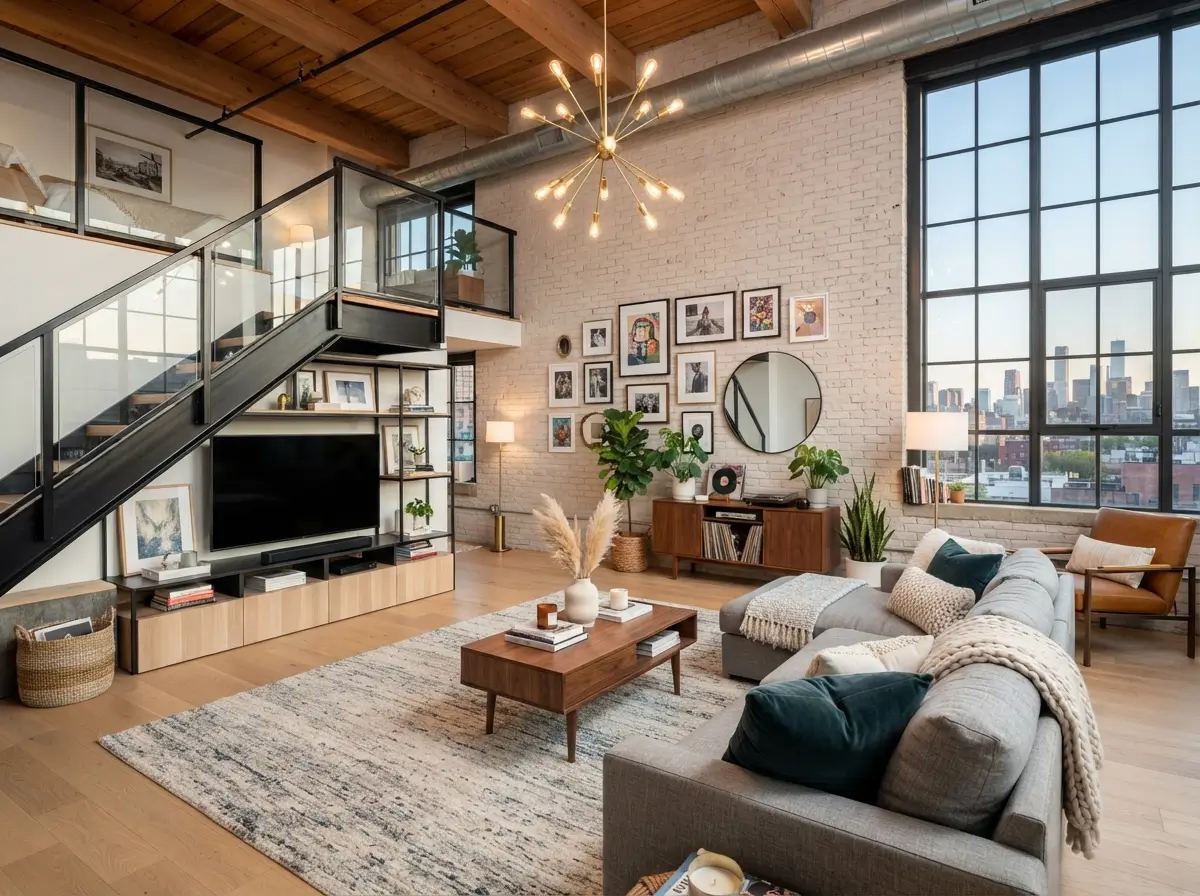

Loft living rooms offer height, character, and open space, but those strengths can also make decorating difficult. Tall ceilings may leave the seating area feeling exposed, hard floors can increase echo, and one large room often needs to support relaxing, dining, working, and entertaining. A thoughtful Loft Apartment Living Room Makeover should solve those everyday problems before adding decorative layers. Good results come from creating clear zones, choosing furniture with the right visual weight, improving light at several levels, and repeating colours or materials so the open plan feels connected.
Rental limits do not have to stop meaningful changes. Plug-in wall lights, freestanding shelves, large rugs, removable wallpaper, tension systems, and flexible furniture can reshape the room without permanent construction. Budget also matters, especially for first-home buyers and college renters moving into converted warehouses or studio lofts. Careful measurements, second-hand furniture, and a few strong focal points often improve the space more than a long list of small purchases.
What Makes a Loft Living Room Feel Newly Designed?
Real Loft Apartment Living Room Makeover results come from better function, not replacing everything. Start by deciding where people walk, sit, work, and store daily items. Then use rugs, lighting, furniture placement, and colour to give each activity a clear place. Strong Loft Apartment Living Room Makeover Ideas also respect original features such as brick, beams, concrete, large windows, and exposed pipes instead of covering every surface. The most effective approach balances industrial structure with soft textiles, warm light, and comfortable furniture.
Define the Seating Zone with a Large Rug
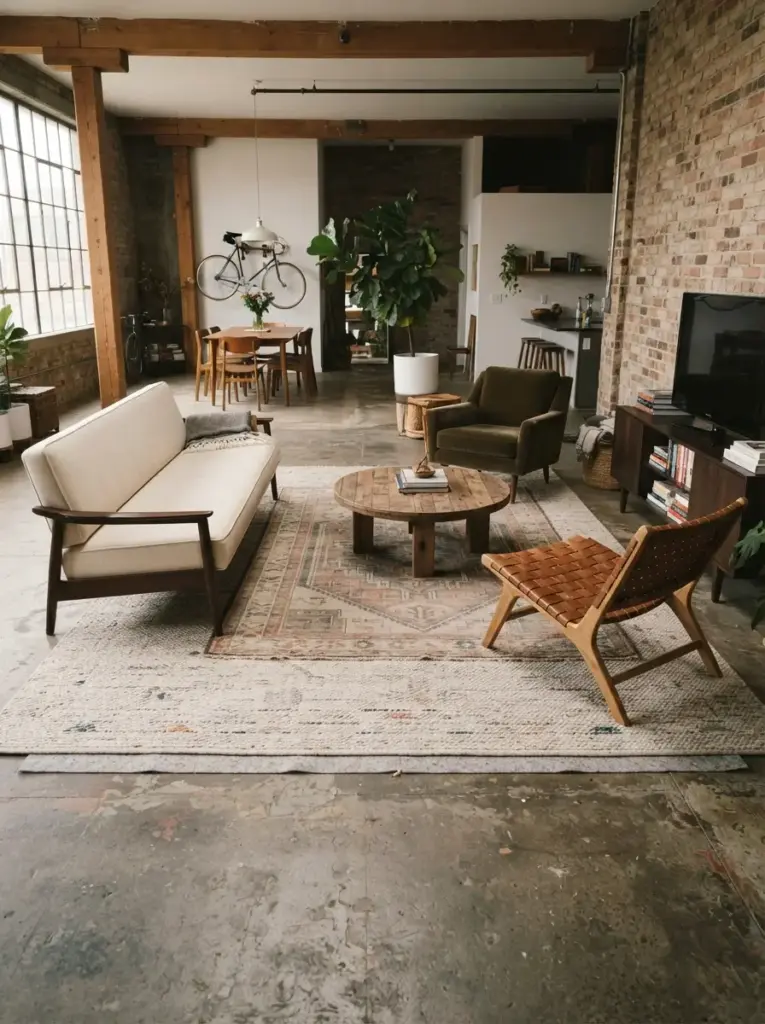
Large rugs create a visual room inside an open loft. Choose a size that lets the front legs of the sofa and all main chairs sit on the rug. In many lofts, 200 by 300 centimetres works better than a small rug floating under the coffee table. Leave a visible border of flooring around the rug so the seating area feels intentional rather than wall-to-wall.
Clear boundaries help the eye understand where the living room begins and ends. Open-plan renters, studio residents, and anyone sharing one large room with a dining table benefit most. Flatwoven wool, low-pile synthetic, or washable rugs handle daily use without making furniture unstable. Cream, warm grey, faded navy, rust, or olive can soften concrete and dark timber while still hiding light wear.
Budget shoppers can layer a smaller patterned rug over a larger plain jute-style base. That method gives scale without paying for one expensive decorative rug. Use a non-slip pad underneath, especially on polished concrete or wood. Avoid a rug that ends directly in front of the sofa legs because it makes the furniture look disconnected and often creates a tripping edge.
Float the Sofa to Divide the Open Plan
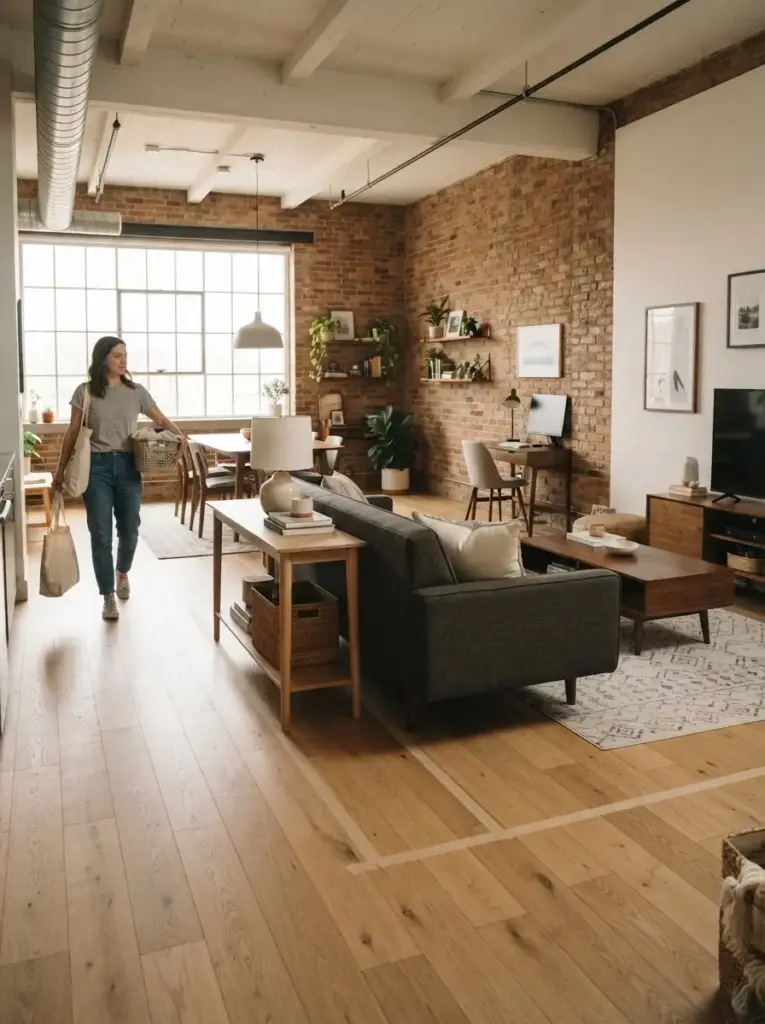
Floating a sofa away from the wall can separate the lounge from dining, sleeping, or work areas. Position the sofa so its back creates a natural boundary, then keep a walkway of roughly 80 to 90 centimetres behind it. A slim console can sit along the back for lamps, books, or charging, provided it does not narrow the route.
Furniture placement succeeds here because it creates architecture without building walls. Long rectangular lofts and apartments with one open ground floor gain the most. Choose a sofa with a neat back, since all sides remain visible. Low-profile models around 75 to 85 centimetres high preserve sightlines and prevent the room from feeling chopped into boxes.
Painter’s tape helps test the arrangement before moving heavy furniture. Mark the sofa, console, dining chairs, and main paths on the floor, then walk through the layout carrying a laundry basket or shopping bag. Avoid placing the sofa where it blocks heat vents, balcony doors, or the strongest natural-light route. Good zoning should improve movement, not simply make a stylish floor plan.
Bring the Ceiling Down with Layered Lighting
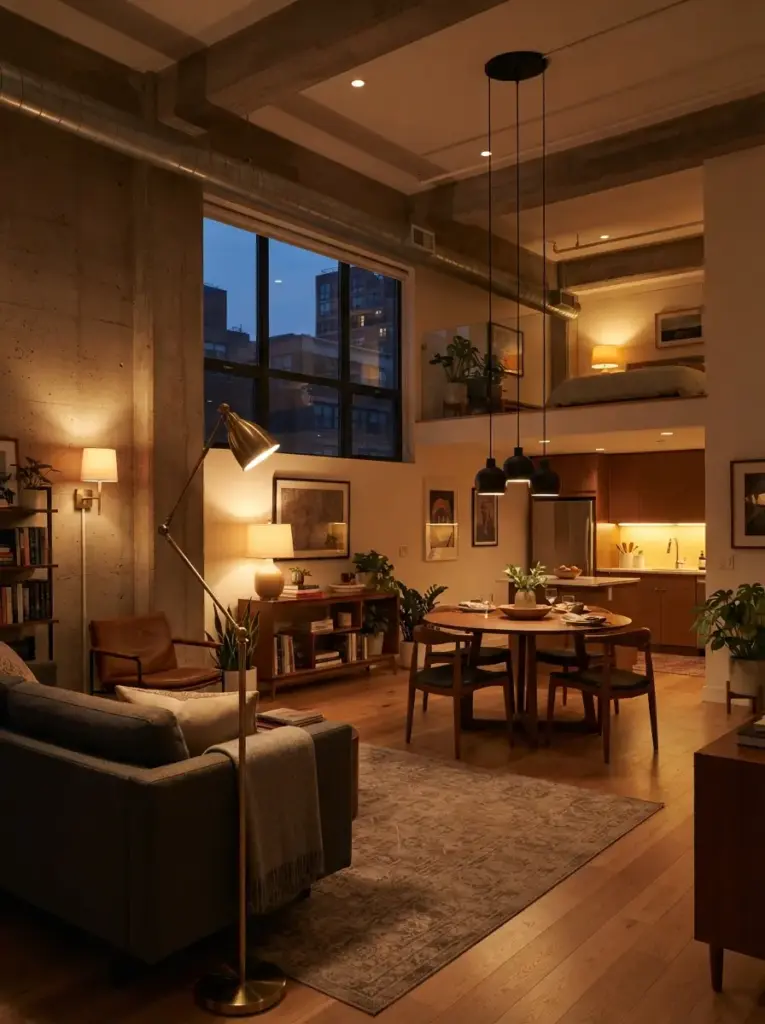
Tall ceilings often make a loft feel dramatic during the day and uncomfortably dim at night. Layer lighting at several heights instead of relying on one overhead fixture. Combine a floor lamp near the sofa, a table lamp on a console, and plug-in sconces beside reading seats. Pendant lights can work over a dining table, but they should hang low enough to define that zone.
Multiple light sources make the room feel closer to human scale. People who work evenings, entertain often, or live in north-facing lofts will notice the biggest improvement. Use bulbs around 2700K for relaxing areas and 3000K for task zones such as desks. Matching temperatures within each zone prevent the room from looking patchy or overly yellow in one corner and blue in another.
Rental-friendly plug-in sconces can mount with small screws or approved removable systems, depending on weight and wall condition. Cable covers painted to match the wall keep cords controlled. Avoid cool 5000K bulbs in the main seating area because they can exaggerate grey concrete and make warm woods look flat.
Balance Industrial Surfaces with Soft Textiles
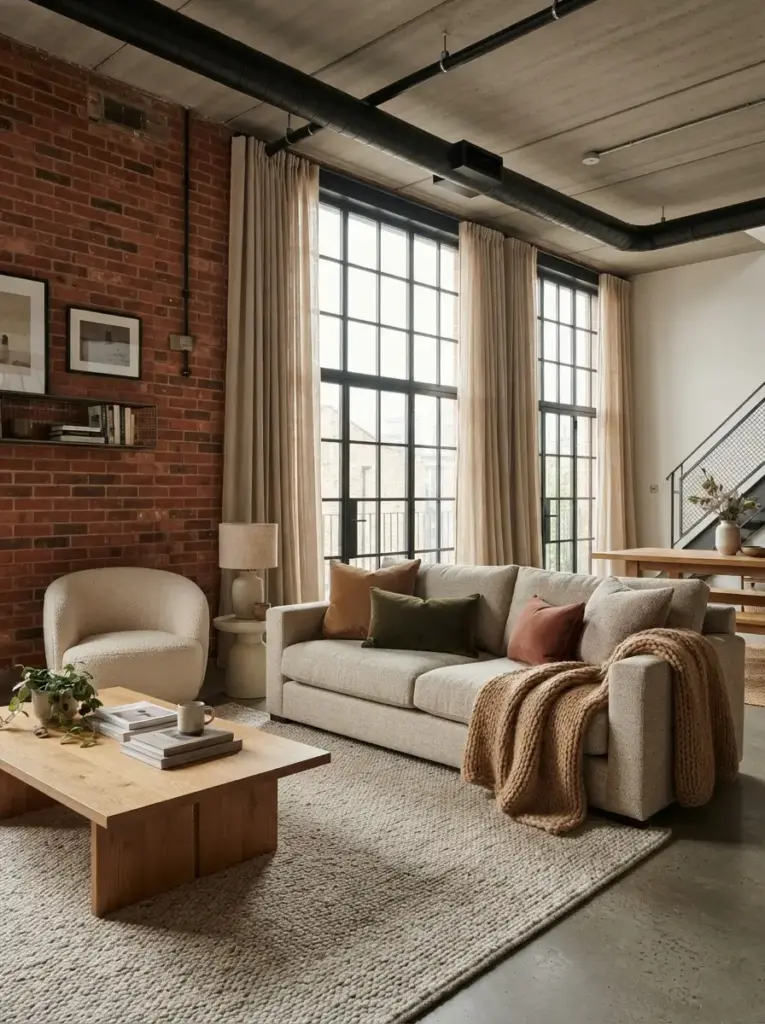
Brick, steel, concrete, and exposed ductwork give lofts character, but too many hard surfaces can create echo and make the room feel unfinished. Add softness through full-length curtains, a substantial rug, upholstered seating, cushions, throws, and fabric lampshades. Focus on a few larger textile areas rather than covering every chair with small accessories.
Sound becomes more comfortable because fabric absorbs some reflected noise. Households with high ceilings, hard floors, pets, or frequent guests benefit especially. Linen-look curtains, bouclé chairs, cotton velvet cushions, and wool-blend rugs offer different textures without needing bright colour. Warm neutrals such as oatmeal, camel, clay, mushroom, and soft olive sit well beside brick and black metal.
Washable covers make the approach practical for renters and beginners. Choose two cushion sizes, repeat one fabric tone, and keep the sofa comfortable enough for daily use. Avoid using only thin throws and tiny cushions, since they add visual clutter without making a large room feel noticeably softer.
Create a Strong Focal Wall
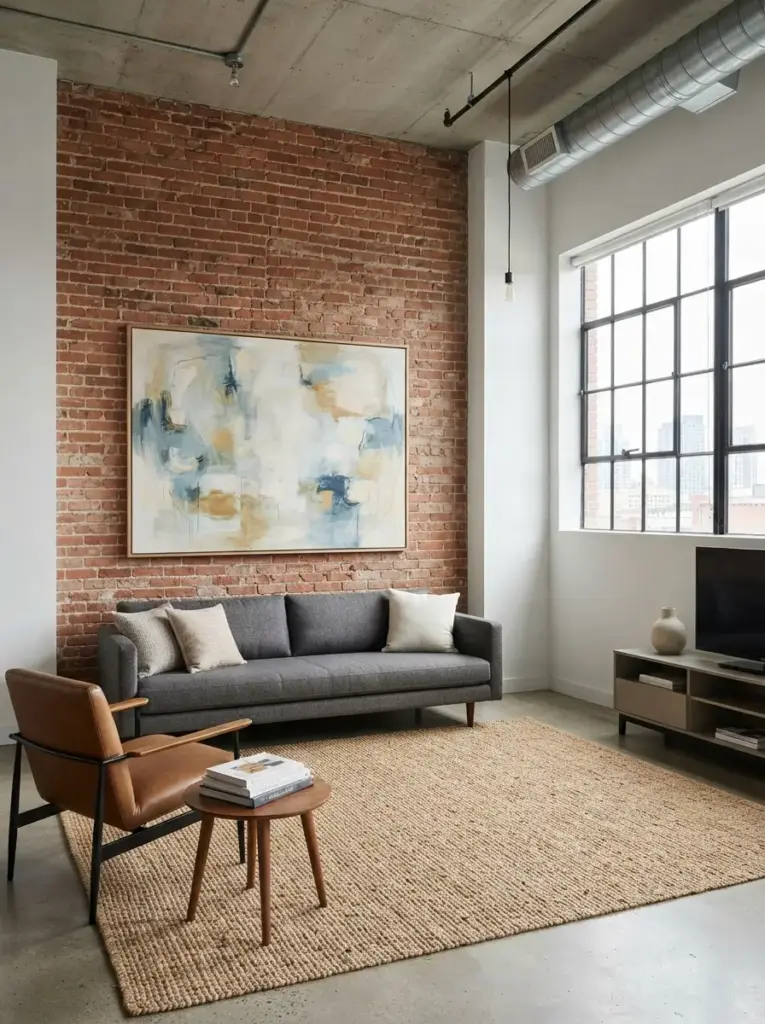
Lofts often have several attention-grabbing features competing at once. Choose one main focal wall, then let other surfaces stay quieter. Original brick may already provide enough interest. Plain walls can hold one oversized artwork, a large textile panel, a wide mirror, or removable wallpaper behind a media unit.
Visual hierarchy makes open spaces easier to read. People with large blank walls or scattered decor benefit most because one strong feature replaces many unrelated pieces. Artwork should relate to the furniture below it. A piece around two-thirds the width of the sofa or console usually feels balanced. Hang the centre near seated eye level rather than close to the ceiling.
Rental-safe picture rails, removable strips for lightweight frames, and leaning art can reduce wall damage. Test adhesives first, especially on old paint or porous brick. Avoid turning every wall into a gallery. Repeated focal points compete with the windows, architecture, and furniture, leaving the room busy rather than finished.
Choose Furniture with Enough Visual Weight
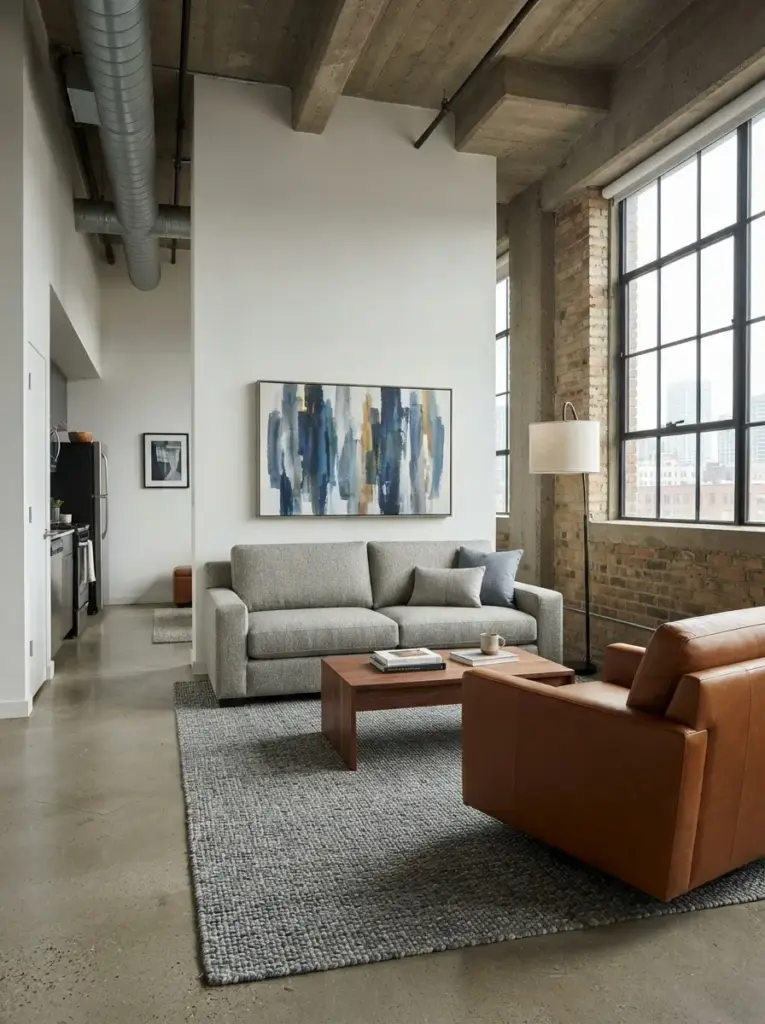
Tiny furniture can look lost beneath a high ceiling, even when the floor area is limited. Choose pieces that are compact in footprint but substantial in shape. A sofa with broad seat cushions, one solid coffee table, or a generously sized armchair can hold its own without filling the room. Keep arms slim and depth controlled so comfort does not block circulation.
Scale works because lofts need furniture that relates to both floor area and vertical volume. Best candidates include people moving from a small flat who plan to reuse petite furniture. Instead of replacing everything, group smaller pieces tightly on one rug and add one larger anchor such as a wide artwork or floor lamp.
Measure the seating zone before shopping. A sofa between 190 and 220 centimetres may suit a medium loft, while a very narrow layout might need 170 to 190 centimetres. Avoid buying an oversized sectional simply because the ceiling is high. Floor space still controls comfort, and deep chaise sections often interrupt the main walkway.
Build a Flexible Media Wall
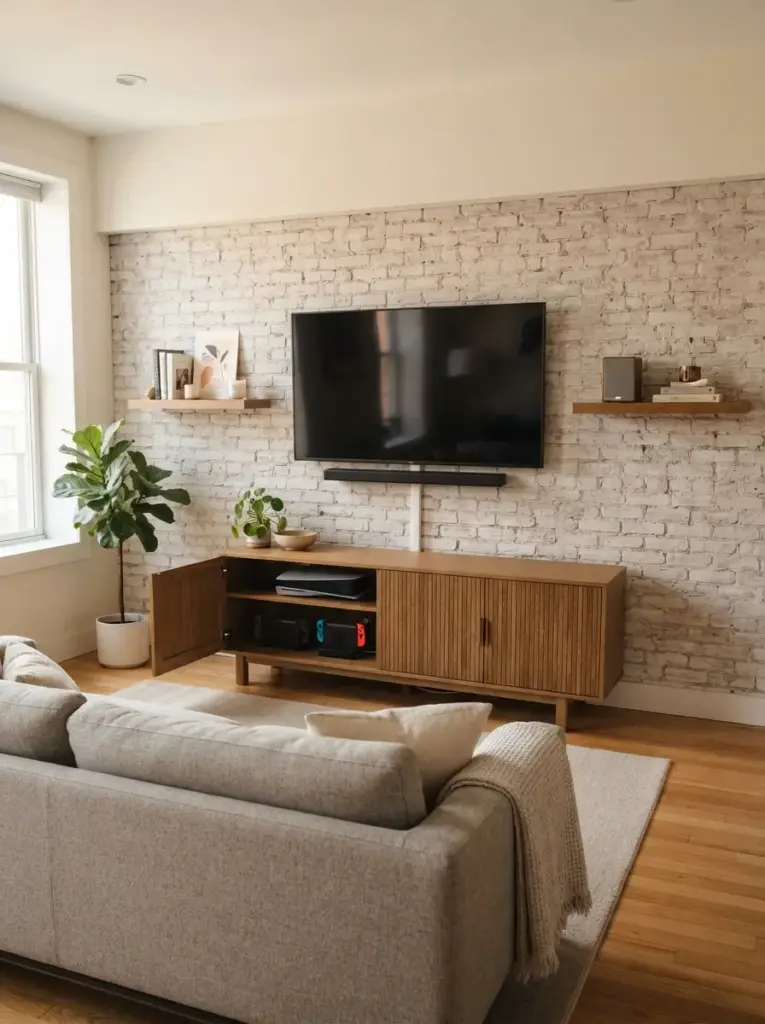
Media storage should organise equipment without becoming the heaviest feature in the room. Use a long, low cabinet with closed doors, then leave some wall space around the television. Floating shelves can hold a few books or objects, while cable channels keep wires from spreading across brick, plaster, or concrete.
Low storage preserves the open feeling and keeps attention at seating height. Gamers, film lovers, and renters with several devices benefit most. Cabinets around 35 to 45 centimetres deep usually hold electronics without pushing too far into the room. Ventilation matters, so leave space around consoles and routers instead of sealing them in tightly.
Wall mounting can save surface space when the lease allows drilling and the wall structure is suitable. Freestanding television stands provide a safer alternative when mounting is uncertain. Avoid placing the screen too high. Seated eye level or slightly above generally feels more comfortable than a television positioned near the ceiling.
Add a Compact Work Zone Behind the Sofa
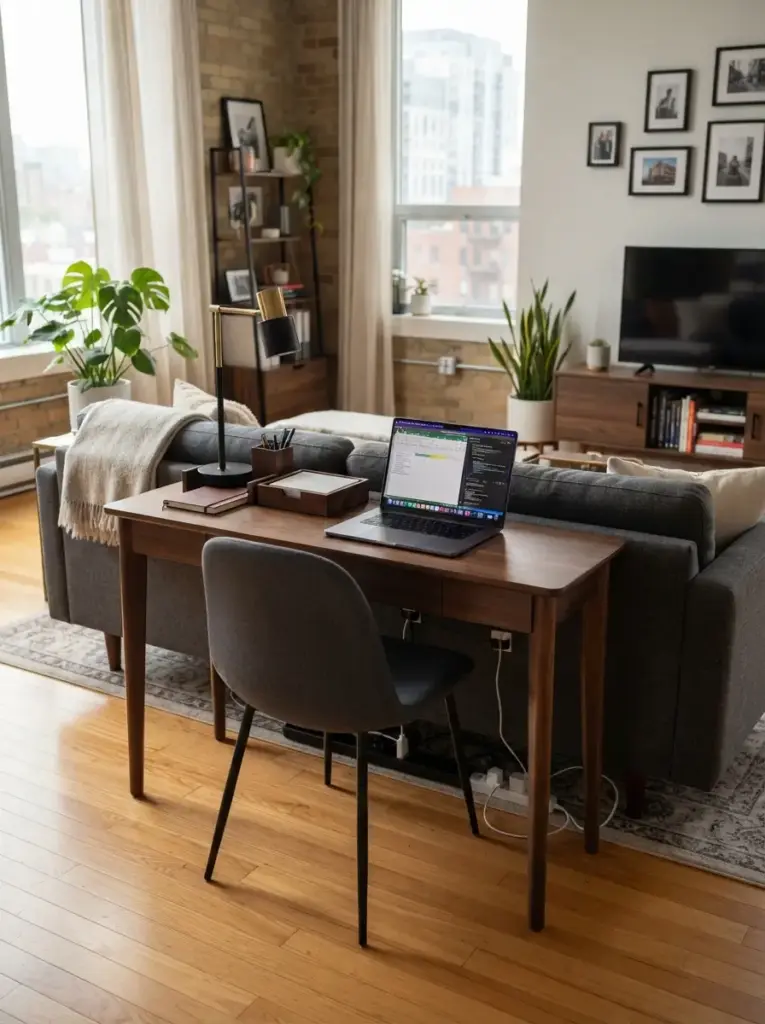
Many lofts need to support remote work or study without a separate office. The area behind a floating sofa can hold a narrow desk or console between 40 and 55 centimetres deep. Pair it with a chair that slides fully underneath, then use a focused task lamp and one small organiser.
Shared placement uses the sofa boundary twice, which saves floor space and keeps work equipment out of the main view. Students, freelancers, and first-home renters gain the most. A desk finish that repeats the media unit or dining table helps the work zone blend into the wider room instead of looking temporary.
Cable trays and adhesive clips keep chargers off the floor. Place the desk where glare from large windows will not hit the screen directly. Avoid turning the whole sofa back into storage. One lamp, one tray, and a closed box for papers create a cleaner transition from work hours to evening relaxation.
Use Tall Storage to Match Loft Proportions
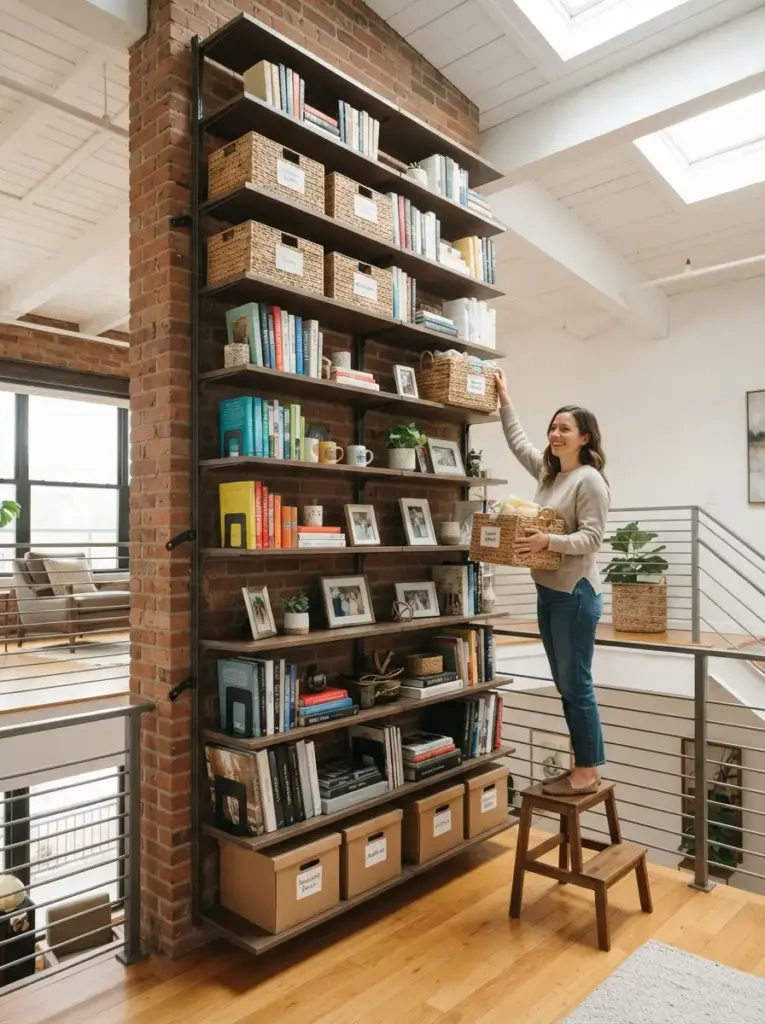
High ceilings provide valuable vertical space, but storage must remain safe and practical. Tall bookcases, modular shelves, and freestanding cabinets can draw the eye upward while keeping the floor footprint controlled. Place frequently used items between waist and shoulder height, heavier belongings low, and lightweight seasonal items higher.
Vertical storage feels natural in a loft because it responds to the architecture instead of fighting it. Readers, collectors, and households with limited closets benefit most. Matching baskets can hide cables, documents, and small supplies, while some empty shelves prevent the unit from looking packed.
Anti-tip hardware is important even in rentals, so use approved fixings and repair small holes later. A library ladder may look appealing but often takes more room than expected and can create safety issues. Avoid filling shelves all the way to the ceiling unless you have a stable step stool and a clear plan for reaching upper items.
Warm the Colour Palette without Hiding Character
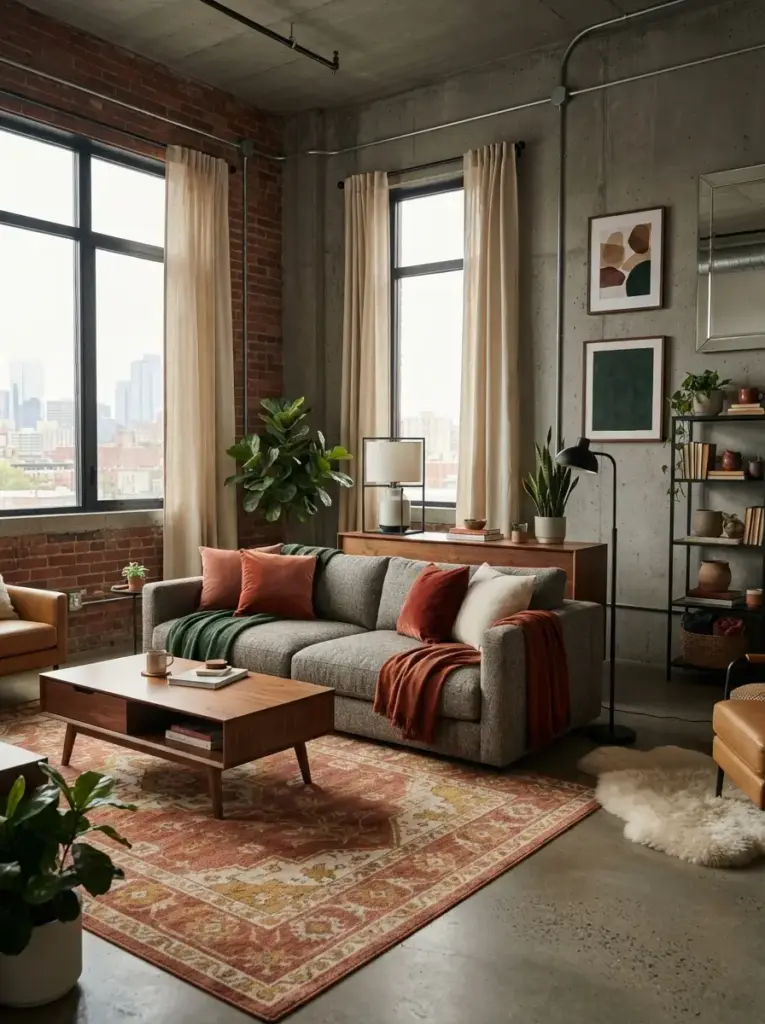
Industrial rooms can feel cold when grey concrete, black steel, and white walls dominate. Add warmth through controlled colours rather than repainting every surface. Camel leather, walnut, terracotta, rust, muted mustard, deep green, and warm cream can soften the setting while leaving original brick or beams visible.
Colour repetition connects the large room. Beginners using Modern Apartment Living Room Ideas can start with one warm wood, one earthy accent, and one dark detail. For example, combine a walnut coffee table, rust cushions, cream curtains, and black lamp frames. Repeat each main tone at least twice so the scheme looks deliberate.
Peel-and-stick samples, fabric swatches, and paint cards should be checked in morning and evening light. Large windows can make colours look cooler during the day, while warm bulbs shift them at night. Avoid mixing several unrelated browns and greys without a linking colour, because the result can feel accidental.
Soften Large Windows with Full-Length Curtains
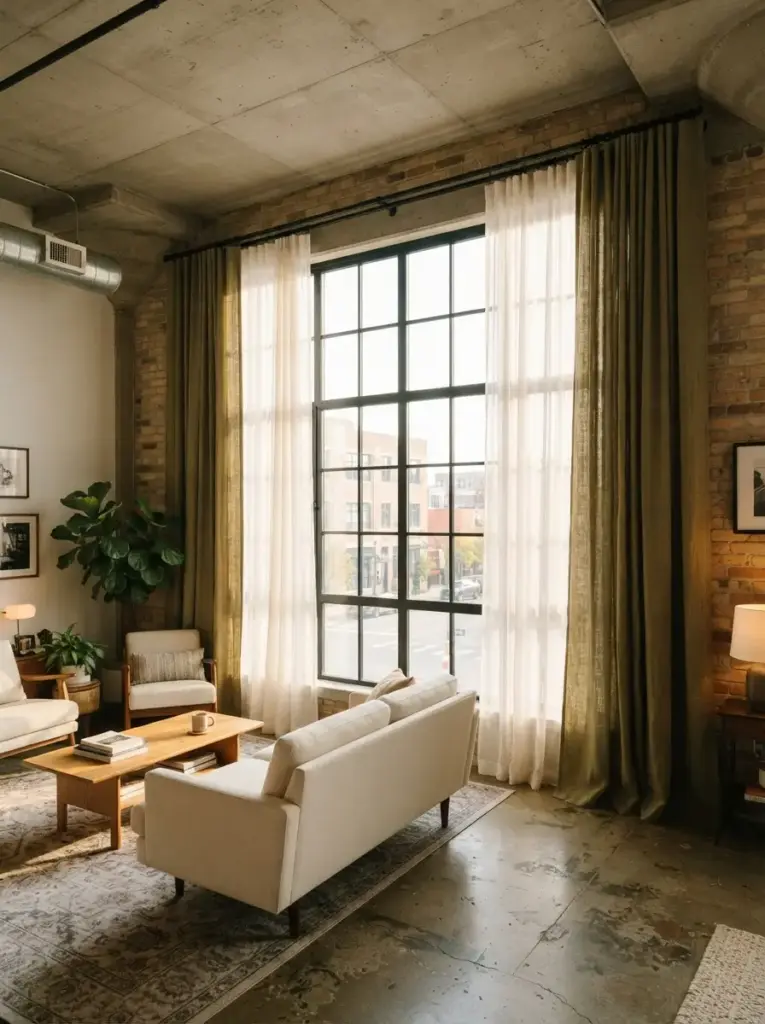
Loft windows deserve attention because they shape the room’s light, privacy, and temperature. Mount curtains close to the ceiling and extend the rod beyond the window edges so fabric can stack away from the glass. Full-length panels create vertical order and prevent tall windows from looking unfinished.
Curtains improve acoustics, reduce glare, and make the seating area feel more contained. Street-level renters, south-facing lofts, and homes with strong afternoon sun benefit most. Sheers can provide daytime privacy, while lined curtains help with evening darkness and winter draughts. Warm white, flax, soft grey, and muted olive usually work well with industrial materials.
No-drill brackets or tension systems may suit some windows, but wide spans often need stronger support. Check the wall and lease before installation. Avoid narrow panels that barely cover the glass. Fabric should look full when closed, usually around one and a half to two times the window width.
Introduce Curves to Break Up Hard Lines
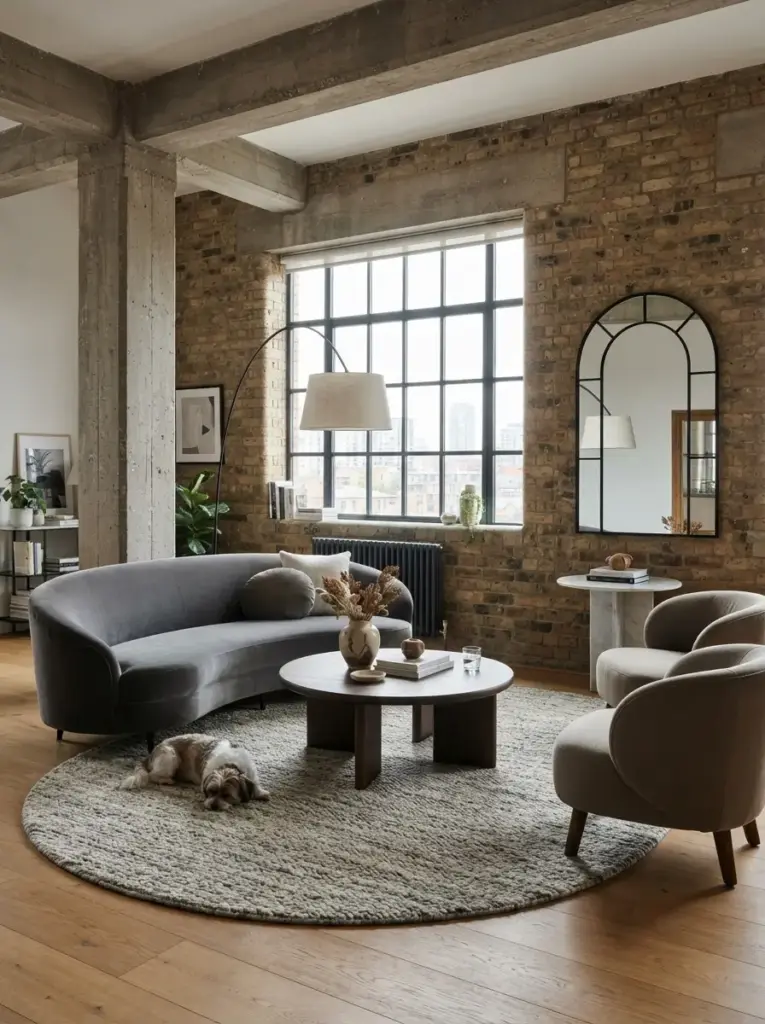
Lofts often contain rectangular windows, square columns, straight beams, and rigid furniture. Curved pieces soften that geometry without changing the architecture. Try a round coffee table, oval rug, arched mirror, curved floor lamp, or chair with a rounded back. One or two shapes are enough to change the visual rhythm.
Curves improve movement around tight seating zones because they remove sharp corners. Families, pet owners, and people with narrow routes between the sofa and table benefit most. A round table between 70 and 90 centimetres wide can provide useful surface area without feeling like a barrier.
Repeat the curve once elsewhere for connection, such as pairing an arched mirror with a round side table. Avoid filling the room with several unrelated curved objects, since the effect can become theme-like. Strong contrast works best when straight architecture remains dominant and softer shapes appear as supporting elements.
Plan Hidden Storage for Everyday Clutter
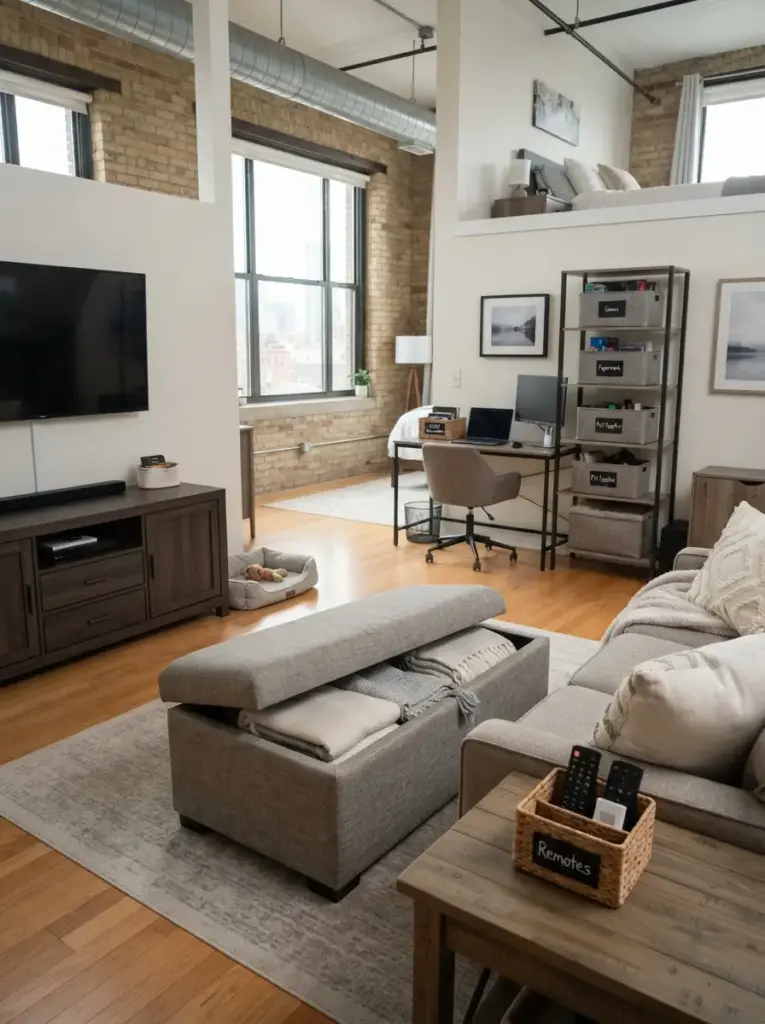
Open lofts expose nearly everything, so small items need clear homes. Choose a storage ottoman, closed media drawers, lidded baskets, or a bench with internal space. Assign categories such as chargers, blankets, games, pet supplies, and paperwork rather than mixing everything in one large container.
Hidden storage supports a calmer room because visual clutter spreads quickly across an open plan. Busy households, roommates, and people who work from home benefit most. Best results come from storage near the point of use. Keep remotes by the sofa, laptop accessories near the desk, and dining supplies close to the table.
Measure internal dimensions before buying organisers. Decorative baskets can waste space when they do not fit shelves properly. Avoid purchasing storage first and deciding what belongs inside later. Edit duplicate items, remove packaging, and keep one empty section available for future needs.
Use Plants at Different Heights
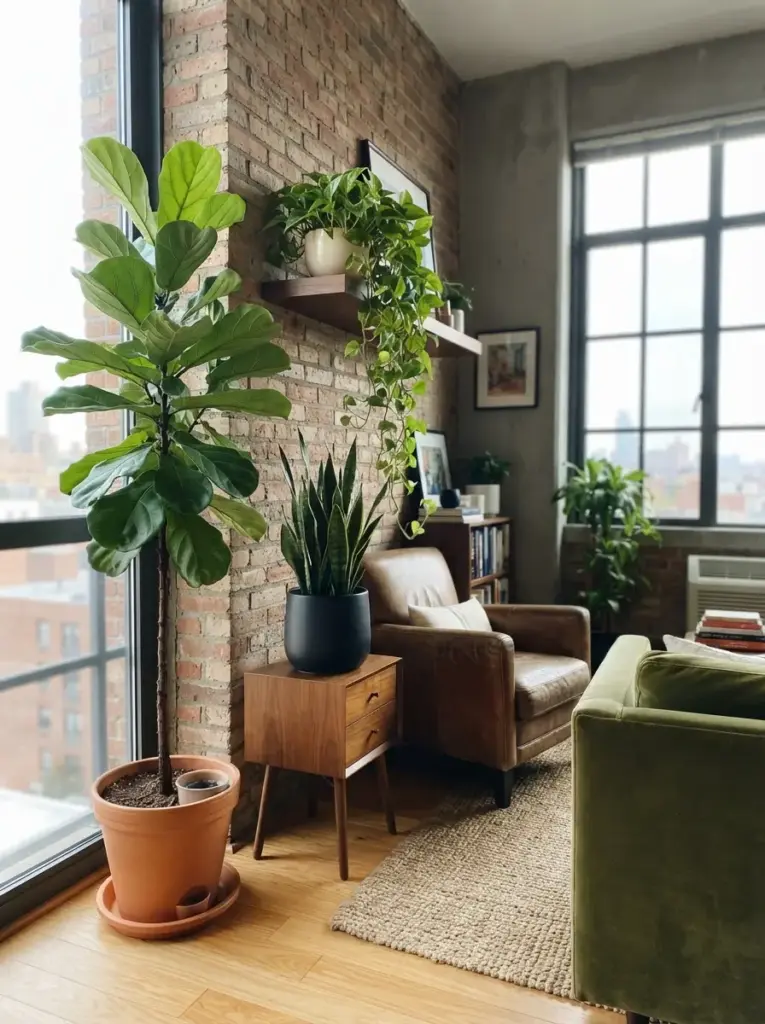
Plants can soften brick, steel, and concrete while filling awkward vertical gaps. Combine one taller floor plant, one medium plant on a stand, and one trailing plant on a shelf. Choose species based on actual light, not only appearance. Snake plants, pothos, ZZ plants, and rubber plants tolerate many indoor conditions, although every room differs.
Layered greenery connects floor level to tall walls and windows. People who want Cozy Apartment Living Room Designs Ideas without adding many soft furnishings may find plants especially useful. Simple pots in terracotta, matte black, stone, or warm white keep the arrangement consistent.
Self-watering inserts and saucers protect rental floors. Group plants near suitable light instead of scattering them evenly around the room. Avoid placing large leaves in busy walkways or directly beside heating vents. Artificial greenery can work in dark corners, but choose fewer, better-made pieces rather than many small plastic plants.
Edit the Room around One Clear Style Direction
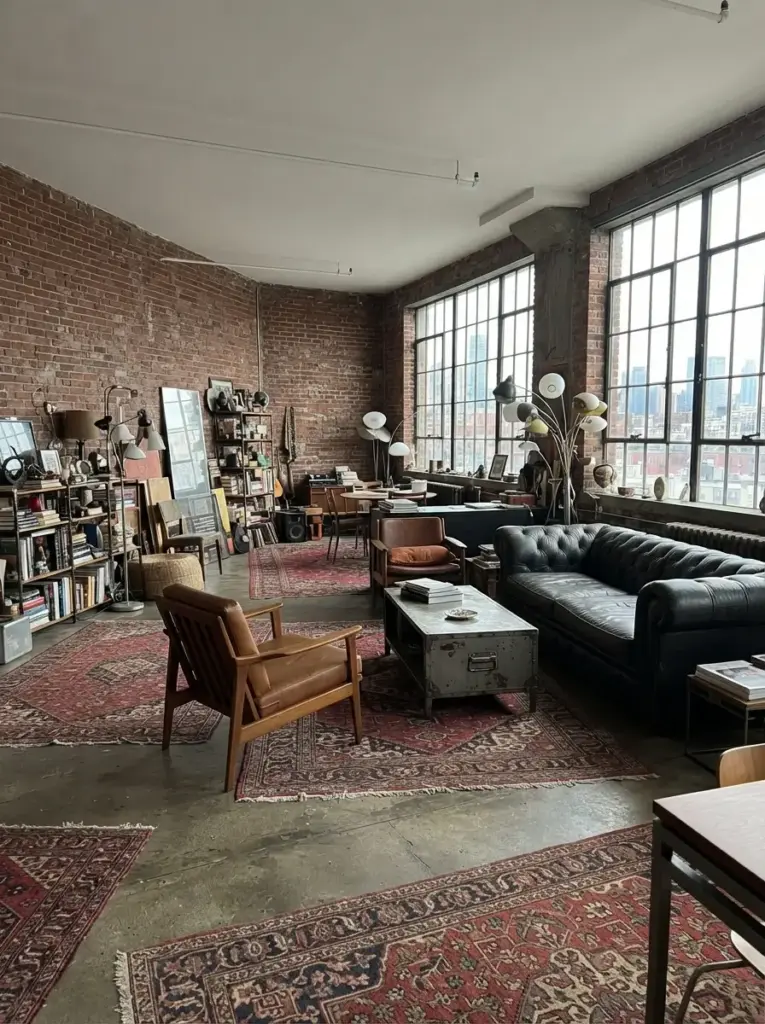
Lofts collect furniture easily because the open floor seems able to hold more. A clear style direction helps decide what should stay. Choose three guiding words such as warm, practical, and industrial, or calm, minimal, and flexible. Use those words when assessing furniture, textiles, lighting, and decorative objects.
Editing creates coherence without requiring a full replacement. Fans of Minimalist Apartment Living Room styling can focus on clean surfaces and closed storage, while people drawn to Small Apartment Living Room Decor may keep more colour and layered texture. Both approaches work when repeated materials and shapes connect the room.
Remove or relocate pieces that block movement, duplicate another function, or have no relationship to the chosen direction. Photograph the room from each corner because pictures reveal crowding more clearly than standing inside it. Avoid buying small accessories until the major layout, lighting, and storage decisions are finished.
Common Loft Living Room Makeover Mistakes to Avoid
Ignoring acoustics is a common mistake. Concrete floors, high ceilings, brick, and large windows can sharpen voices, music, and television sound. Place rugs, curtains, upholstery, fabric art, and bookshelves around the seating zone. Ordinary furnishings often reduce echo without specialised foam panels or permanent treatment.
Choosing furniture only by width causes trouble. Depth, arm thickness, seat height, and back height also affect movement and balance. Measure the full footprint, protect access to doors and radiators, and mark large pieces with painter’s tape before buying or arranging delivery.
Hanging artwork too high makes furniture look disconnected. Keep the centre near normal eye level and relate the piece to the sofa, console, or dining table below. Tall blank wall above it does not require extra decoration or another frame.
Using one ceiling fixture leaves lower areas dark. Add light near seats, worktops, shelves, and storage. Floor lamps bridge tall vertical space, while table lamps make evenings comfortable. Keep bulb temperatures consistent within each zone and use dimmers where the lamp and bulb support them.
Over-zoning fragments an open loft. Too many rugs, screens, shelves, and colour changes create cramped boxes instead of useful rooms. Separate only activities that need boundaries, then repeat flooring, wall colour, furniture finishes, and two or three key materials across the space.
Copying an industrial showroom can sacrifice comfort. Metal stools, bare bulbs, concrete tables, and black frames become harsh when used together. Balance features with upholstered seating, natural wood, lined curtains, and warm light. Loft character should remain visible, but the seating area must also support long evenings, conversation, reading, and daily life.
Budget-Friendly Loft Makeover Tips
Strong Loft Apartment Living Room Makeover planning starts with free layout changes. Rotate the sofa, pull furniture away from the walls, move a lamp into a dark corner, and clear access to the windows. These adjustments can improve flow immediately. Use masking tape to test a new rug size, desk position, or media cabinet before shopping. Free changes also reveal which purchases are genuinely necessary.
Second-hand markets are useful for loft furniture because older pieces often have stronger scale and materials. Search by dimensions, not only style labels. Solid wood tables, large mirrors, floor lamps, metal shelving, and framed art can offer good value. Inspect upholstery carefully for odours, stains, pests, and weak frames before bringing it home.
Textiles can connect mismatched furniture at a lower cost. Repeat two colours through cushion covers, throws, and curtains. A charcoal sofa, warm cream curtains, rust cushions, and a walnut tray can make unrelated pieces feel planned. Washable covers suit college renters, pet owners, and anyone furnishing a first home.
Large artwork does not need to be expensive. Frame a textile, map, poster, architectural print, or removable mural section. One oversized piece usually has more impact than several small decorations. Lightweight frames may work with rental-safe hanging methods, although wall condition and product limits should always be checked.
Lighting upgrades often deliver strong value. Replace mixed or cool bulbs with consistent 2700K or 3000K options, add a plug-in floor lamp, and use a small task lamp near the desk. Look for dimmable bulbs where fixtures allow. Avoid buying many novelty lights that create glare but do not improve reading or general visibility.
DIY projects should solve a real need. Painting a second-hand cabinet, adding new handles, covering a desktop with removable film, or making a simple curtain panel can refresh useful pieces. Skip complicated projects that require expensive tools or materials. Compare the full cost with a ready-made or used alternative before starting.
Practical Loft Apartment Living Room Makeover Tips
Begin with a measured floor plan. Mark windows, columns, vents, outlets, doors, and fixed kitchen elements. Then draw the main walkway before adding furniture. Clear circulation gives every later choice a stronger foundation. Measurements should also include lift size, stair width, and the narrowest doorway, especially when buying large sofas or cabinets.
Choose one anchor for each zone. The living area may use a rug, the dining area a pendant, and the work zone a desk or shelf. Anchors keep activities organised without needing walls. Repeat at least one colour or material between zones so the full apartment still reads as one home.
Plan lighting before decorative accessories. Place lamps where people sit, read, work, and move through the room at night. Tall ceilings do not require brighter bulbs everywhere; they require light closer to the activities. Warm white around 2700K supports relaxation, while 3000K can suit food preparation, study, and detailed tasks.
Keep renter-friendly changes genuinely reversible. Test removable wallpaper and adhesive hooks in hidden areas. Save instructions, packaging, spare hardware, and paint information. Small drilled holes may sometimes be easier to repair than peeled paint, so read the lease and consider the wall condition before choosing a mounting method.
Spend more on items that affect daily comfort. A supportive sofa, durable rug, effective curtains, and good task lighting usually matter more than decorative objects. Save on side tables, baskets, frames, and accessories through second-hand shopping or simple DIY updates. Balanced spending protects the budget without making the room feel temporary.
Move-In Checklist for a Loft Living Room
Measure before ordering furniture. Record floor size, ceiling height, windows, doors, columns, radiators, and outlets. Check lift, stair, and doorway widths because delivery routes can rule out otherwise suitable sofas or cabinets.
List first-week essentials separately from later decor. Seating, privacy, basic lighting, charging access, and one useful surface come first. Rugs, art, plants, and extra chairs can wait until daily habits reveal what the room needs.
Test sound after move-in by speaking and playing music at a normal level. Add rugs, curtains, upholstery, and bookshelves before buying specialised acoustic products. Ordinary soft furnishings often reduce the strongest echo.
Check sunlight from morning through evening. Large windows can cause glare, fading, and heat. Note direct sun before placing screens, art, plants, or delicate fabric, then use layered curtains or shades where needed.
Create one landing zone for keys, bags, post, and headphones. A narrow console, approved wall hooks, or a closed basket near the entrance stops daily clutter spreading across the open room.
Review the layout after two weeks. Notice narrow paths, cluttered surfaces, glare, and missing light. A successful Loft Apartment Living Room Makeover should make routines easier rather than forcing careful movement around a staged arrangement.
How to Connect Loft Style with Small-Space Practicality
Loft architecture can handle bold scale, but compact plans still need discipline. Use Small Apartment Living Room Ideas such as nesting tables, storage ottomans, and shallow desks, then add one larger visual anchor.
Warmth should come from useful layers. Cozy Apartment Living Room Designs Ideas favour substantial rugs, full curtains, upholstery, and warm lighting over piles of small accessories.
Modern styling should support organisation. Modern Apartment Living Room Ideas combine low storage, clean-lined seating, controlled colour, and warm wood or fabric that balances industrial surfaces.
Minimal rooms still need practical storage. Minimalist Apartment Living Room planning gives cables, paperwork, games, and supplies closed homes instead of relying on empty-looking surfaces.
Decor must suit the exact room. Small Apartment Living Room Decor may include vintage art, colour, plants, or handmade objects, but repeated materials keep the mix connected.
Frequently Asked Questions
How Can I Make a Loft Living Room Feel Warmer?
Use soft materials, warm light, and natural finishes. Full-length curtains, a large rug, upholstered seating, and fabric lampshades reduce hardness. Bulbs around 2700K create a warmer evening setting, while walnut, oak, camel, rust, cream, and olive balance concrete or black metal. Keep original brick or beams visible, then soften the areas people touch and use most.
What Furniture Works Best in a Small Loft?
Choose furniture with a controlled footprint and enough visual weight. Slim arms, moderate seat depth, visible legs, and clean backs help circulation. One substantial sofa can work better than several tiny chairs. Nesting tables, storage ottomans, shallow desks, and low media units add flexibility without filling the floor. Measure every route before ordering.
How Do I Divide a Loft without Building Walls?
Float the sofa, use a large rug, hang a pendant over the dining table, or place a narrow open shelf between activities. Keep sightlines open so daylight can travel through the room. Repeat colours and materials across zones to maintain connection. Avoid using several tall dividers because they can make the loft darker and more fragmented.
Which Colours Suit an Industrial Loft Living Room?
Warm neutrals and earthy accents usually balance industrial materials well. Cream, mushroom, camel, clay, olive, rust, deep green, and muted mustard work beside brick, concrete, steel, and black frames. Cooler blue-grey can also work when paired with warm wood or fabric. Test colours in daylight and evening light before committing.
Can Renters Complete a Loft Apartment Living Room Makeover?
Renters can make major visual changes with rugs, curtains, plug-in lighting, freestanding storage, movable furniture, removable wallpaper, and large leaning art. Check the lease before drilling or mounting heavy items. Test adhesives on hidden areas, protect floors with pads, and keep repair supplies for move-out. Reversible updates should still be safe and properly installed.
How Much Should I Budget for a Loft Living Room Refresh?
Costs depend on what you already own and whether large furniture needs replacing. Begin with free layout changes, then prioritise a rug, lighting, curtains, or storage based on the room’s main problem. Second-hand furniture can stretch the budget, while new upholstery and large rugs often cost more. Build the room in stages instead of buying everything during move-in week.
Conclusion
Careful planning turns loft character into a comfortable home. A successful Loft Apartment Living Room Makeover uses clear zones, measured furniture, layered lighting, sound-softening textiles, practical storage, and a focused colour palette. Each decision should improve movement, comfort, or organisation before it adds decoration.
Freshness does not require replacing every item. Better placement, stronger scale, warmer bulbs, full curtains, and one clear focal point can change how the room feels and functions. Rental-friendly methods and second-hand finds keep the process realistic for beginners, students, and first-home decorators.
Strong results come from observing daily habits after move-in. Adjust pathways, lighting, and storage before adding more accessories. When architecture, comfort, and routine work together, the room feels new without losing the qualities that made the loft appealing in the first place.