
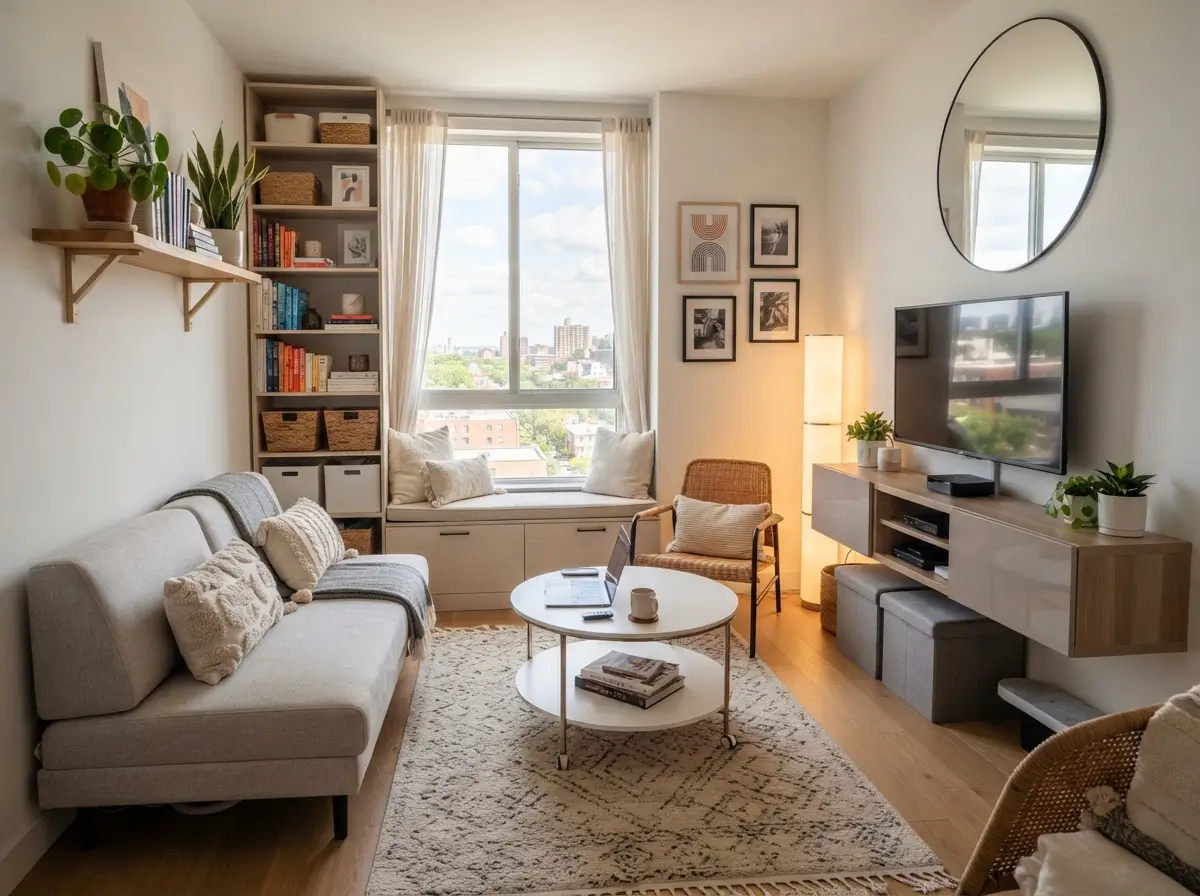

Small living rooms can work beautifully when every item earns its place. Limited square footage does not mean you must live with bare walls, cramped seating, or furniture that feels temporary. Good planning helps a compact room support studying, relaxing, entertaining, eating, and storage without looking overloaded. Many Living Room Ideas for Small Apartments succeed because they improve movement first and styling second. That order matters, especially in a college apartment or first home where furniture often comes from several places and may not match.
Renters also need choices that can move to another home. Removable hooks, plug-in lighting, modular seating, washable covers, and freestanding storage offer flexibility without risking a security deposit. Budget matters too, so each idea below includes realistic ways to spend less, reuse what you own, and avoid buying furniture that solves only one problem. Measurements, lighting temperature, furniture depth, colour balance, and common layout errors all play a role in making a small living room comfortable.
What Is the Best Way to Arrange a Small Apartment Living Room?
Best results usually come from choosing one clear walkway, placing the largest useful piece first, and keeping bulky furniture away from doors and windows. Strong Living Room Ideas for Small Apartments use visual breathing room, flexible furniture, and storage that goes upward instead of spreading across the floor. Start by measuring the room, marking outlets and vents, and deciding which activity matters most. Students may need a study-friendly setup, while couples may care more about conversation seating or movie nights.
Before You Decorate Measure the Room Properly
Accurate measurements prevent expensive mistakes. Record wall lengths, window width, sill height, door swing, radiator depth, outlet positions, and the space needed to open cabinets. Painter’s tape can outline a sofa, coffee table, or media unit on the floor before you buy anything. Live with the taped layout for a day, then notice whether knees, bags, and doors have enough room. Aim for roughly 75 to 90 centimetres in main walkways and at least 40 centimetres between seating and a coffee table when possible.
Planning also helps you choose the right visual weight. Slim legs, open bases, and lower backs usually feel lighter than blocky furniture with thick arms. Scale matters more than the number of pieces. One compact sofa and two movable stools may function better than a tiny loveseat, oversized chair, side table, and floor lamp crowded together. Keep the room’s main purpose in mind, then let every purchase support that purpose.
Choose a Sofa with a Shallow Depth
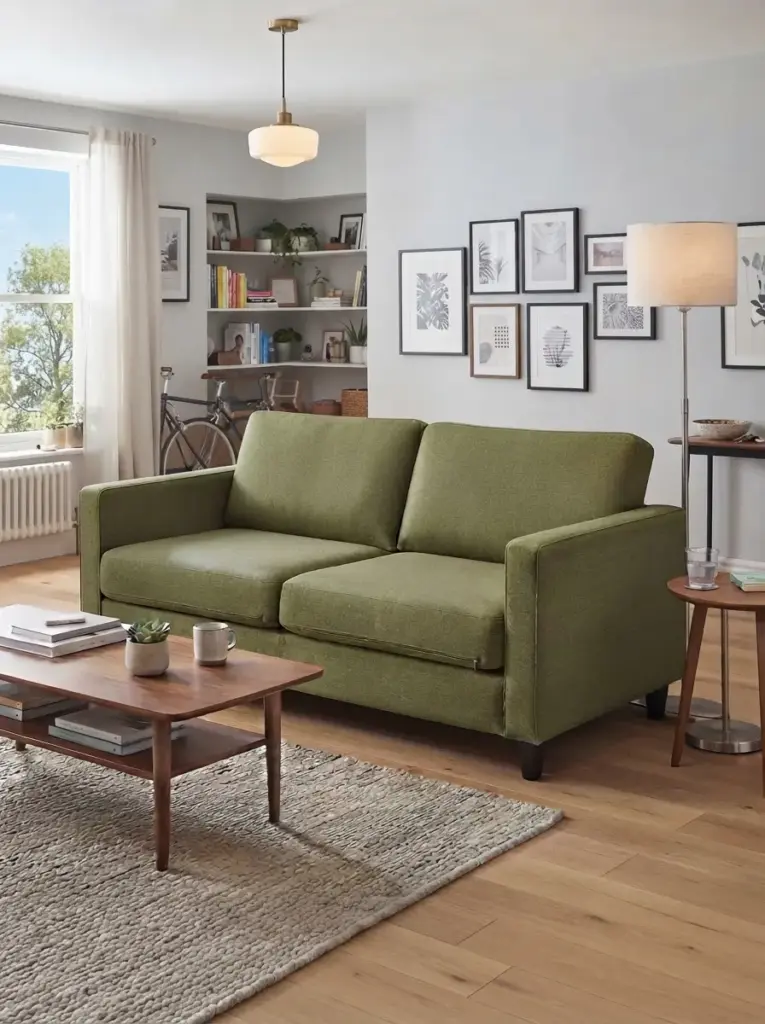
Compact sofas create more usable floor area without reducing comfort as much as many beginners expect. Look for a seat depth around 50 to 56 centimetres and an overall depth near 80 to 90 centimetres. Narrow arms can save another 15 to 25 centimetres compared with rolled or padded arms. Apartment-size sofas between 165 and 190 centimetres wide often seat two people comfortably while leaving space for a side table or reading lamp.
Shallow seating works because it protects circulation. Wider walkways make the entire room feel calmer, even when the actual floor area stays the same. College renters, studio residents, and anyone moving frequently benefit most because smaller sofas are easier to carry through stairwells and narrow doors. Choose removable cushion covers in mid-tone grey, olive, navy, or warm taupe, since those colours hide everyday wear better than pure white.
Float Furniture Away from the Wall
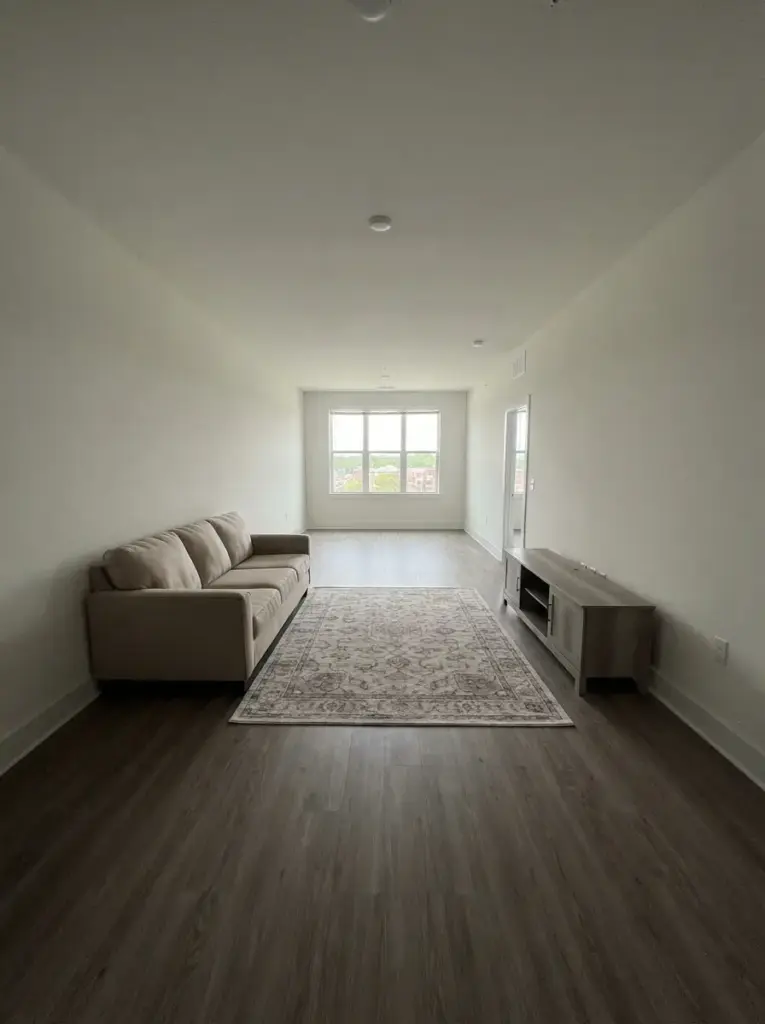
Pushing every item against the perimeter can make a room feel like a waiting area. Pull the sofa forward by 10 to 20 centimetres when space allows, then place a slim console, lamp, or basket behind it. Even a small gap creates depth and stops the room from looking flat. In a long room, floating the sofa can also divide the lounge from a dining or study zone without installing a partition.
Depth improves because the eye sees layers rather than one hard edge around the room. Best candidates include open-plan apartments and rectangular living rooms where furniture tends to line the walls. Avoid floating a large sofa in the centre of an extremely narrow room, since it may interrupt movement. Test the idea with tape first, and use felt pads so the furniture can shift easily during cleaning or move-out day.
Use a Storage Ottoman Instead of a Coffee Table
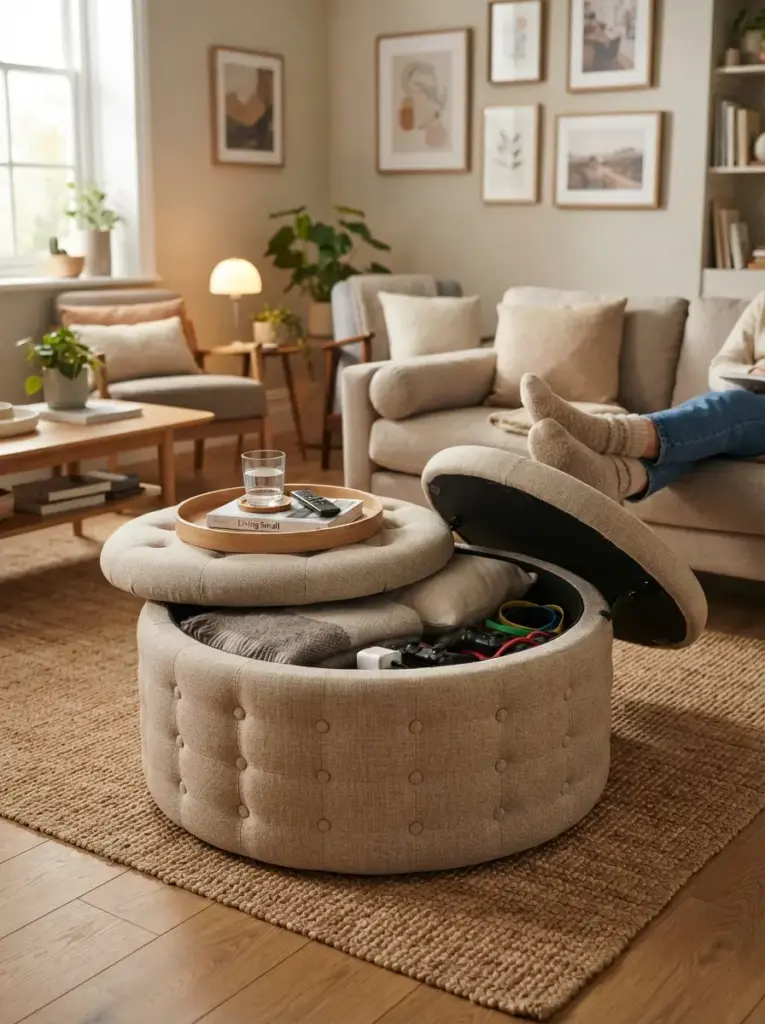
Storage ottomans handle several jobs in one footprint. They can act as a coffee table, extra seat, footrest, or hidden storage box for blankets, chargers, game controllers, and exercise bands. Choose a firm, flat top if you regularly place drinks on it, or add a lightweight tray that can move when guests need seating. Round or oval styles soften tight layouts because they remove sharp corners from busy walkways.
Multifunction furniture reduces the number of separate objects competing for space. People with limited closets, children, or frequent overnight guests gain the most from this option. Look for hinged lids that stay open safely, washable upholstery, and internal storage at least 30 centimetres deep. Budget shoppers can repurpose a sturdy wooden chest with a fitted cushion, provided the hinges are secure and the surface remains stable.
Mount the Television or Use a Narrow Media Stand
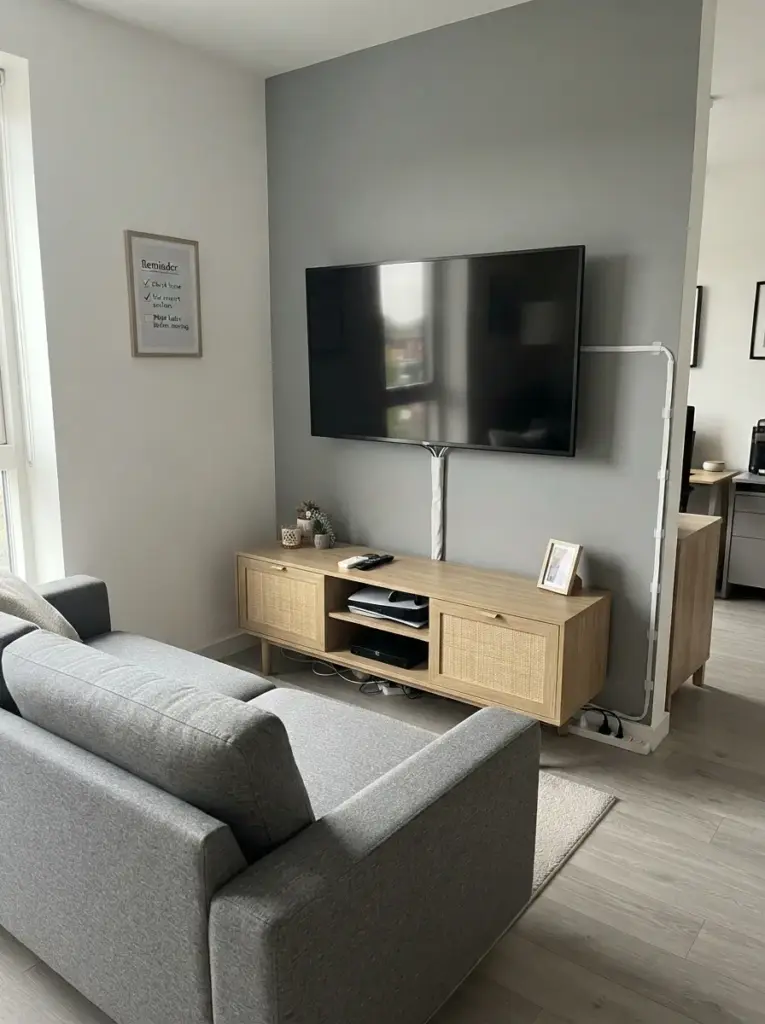
Wall-mounting a television can free the top of a media unit and reduce visual clutter. Renters should check the lease before drilling, use the correct anchors, and plan to patch holes before moving out. When mounting is not allowed, choose a stand around 30 to 40 centimetres deep rather than a bulky entertainment centre. Closed drawers hide cables and devices, while one open shelf prevents the unit from looking too heavy.
Less furniture depth gives the seating area more room and shortens the distance between the sofa and screen. Movie lovers and gamers benefit from careful placement, especially in narrow rooms. Centre the screen near seated eye level instead of hanging it close to the ceiling. Cable sleeves, adhesive clips, and a labelled power strip keep wires controlled without permanent changes. Avoid stands wider than the wall area, because overhang makes the layout look crowded.
Add Vertical Storage Above Eye Level
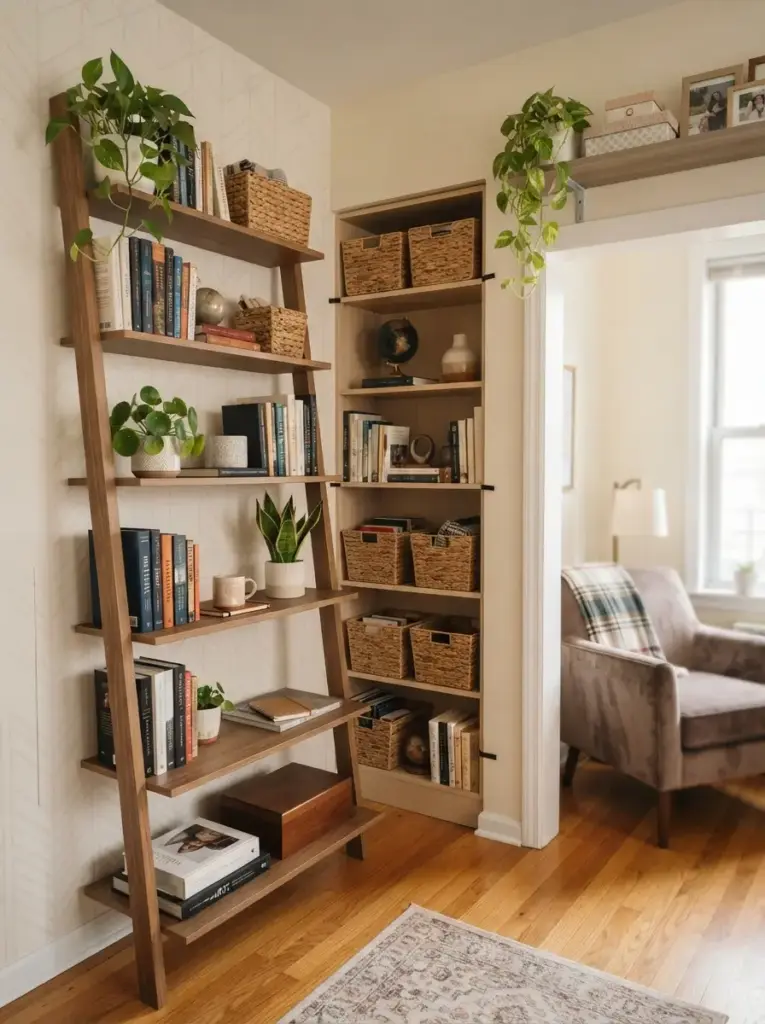
Walls provide storage without taking over the floor. Tall bookcases, narrow ladder shelves, and shelves above doorways can hold books, baskets, plants, and seasonal items. Keep everyday objects between waist and shoulder height, then place rarely used belongings higher. Matching baskets create order, but leave some shelf space empty so the wall does not feel packed from edge to edge.
Vertical storage works by drawing attention upward and concentrating belongings in one organised zone. Readers, collectors, and students with textbooks often find this especially useful. Rental-friendly options include tension-pole shelving, freestanding étagères, and bookcases secured with approved anti-tip hardware. Paintable peel-and-stick wallpaper behind one shelf can add depth without covering the entire room. Keep heavy objects low and lighter decor high for safety and balance.
Pick Nesting Tables for Flexible Surface Space
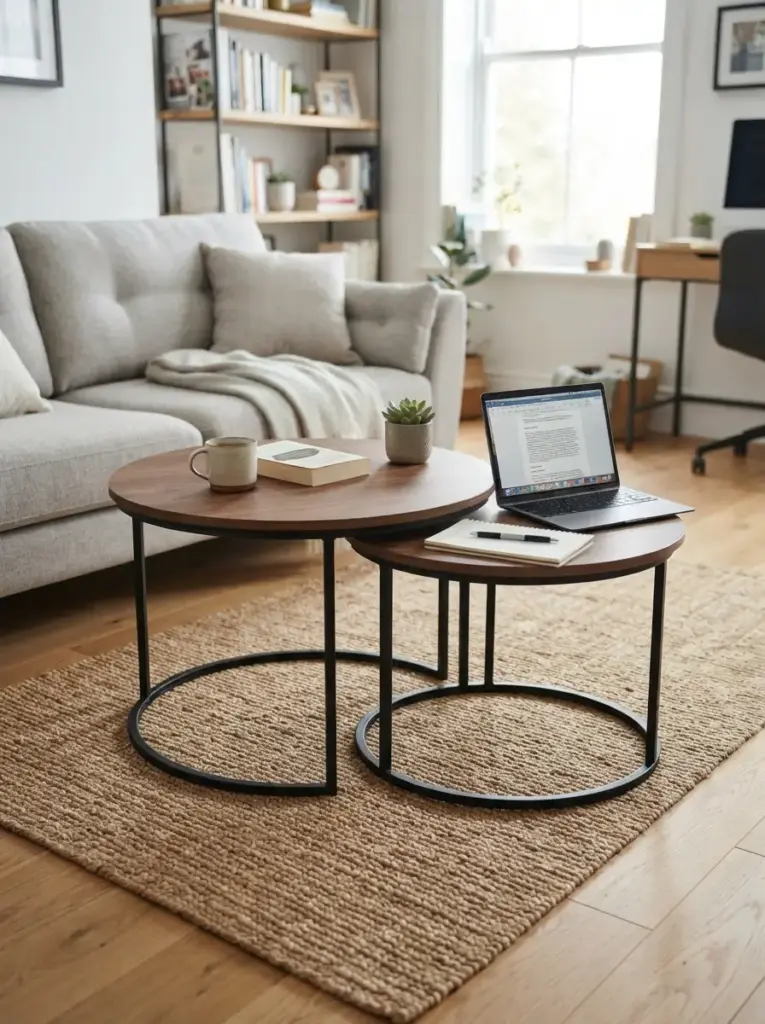
Nesting tables offer more surface area only when you need it. Keep the smaller tables tucked under the largest one during daily use, then pull them out for snacks, laptops, or guests. Round sets with thin metal legs usually feel lighter than solid cube tables. Two-table sets are often enough for a small apartment, while three can become difficult to store neatly.
Flexibility makes these tables effective in rooms that change function throughout the day. Students can spread out notes during study sessions, then stack the tables before friends arrive. Renters also appreciate furniture that moves easily between homes. Choose tops at slightly different heights so they slide together smoothly, and check that the smallest table remains stable. Avoid glass tops in very busy households unless the edges are rounded and the room has safe circulation.
Create Zones with a Rug Rather Than Furniture
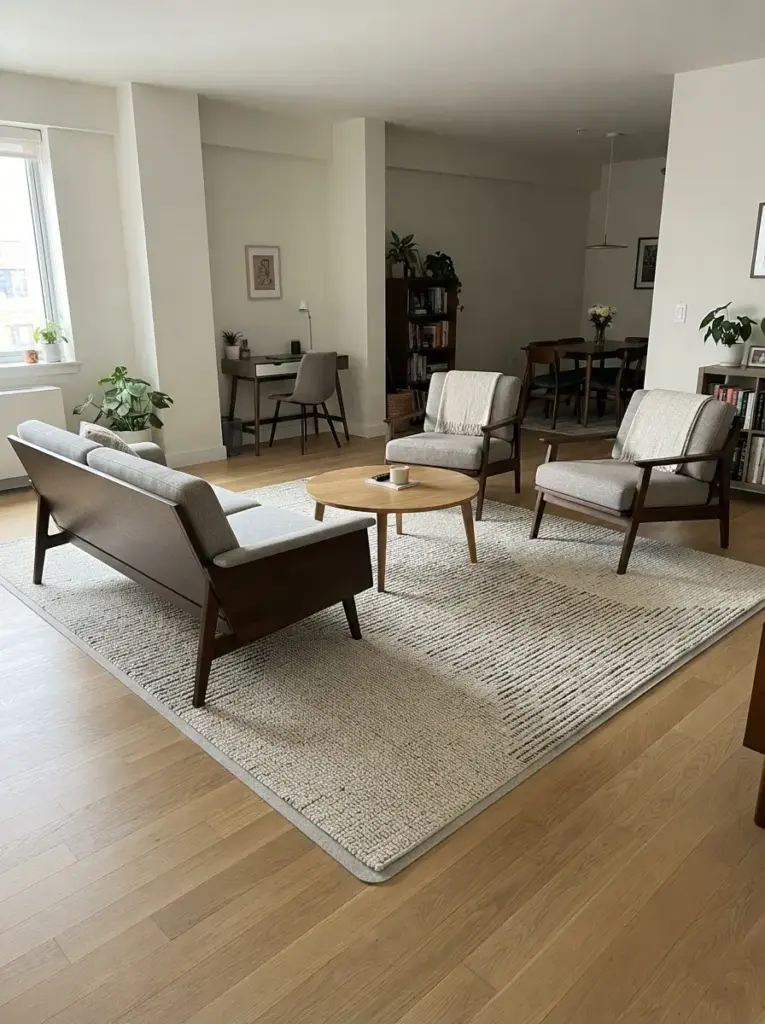
Rugs can define a living area without adding bulky dividers. Choose a size that allows at least the front legs of the sofa and chairs to rest on it. In many small rooms, a 160 by 230 centimetre rug works better than a tiny mat floating under the coffee table. Keep the rug centred on the seating group rather than the whole room, especially in open-plan apartments.
Clear zoning helps the room feel intentional. People who combine a lounge, study corner, and dining area in one space benefit most. Low-contrast patterns, narrow stripes, or subtle checks add interest without chopping up the floor visually. Washable rugs suit college apartments and pet owners, while flatweaves make doors and chairs easier to move. Use a thin rug pad to prevent slipping and protect rental flooring.
Replace a Floor Lamp with Plug-In Wall Lights
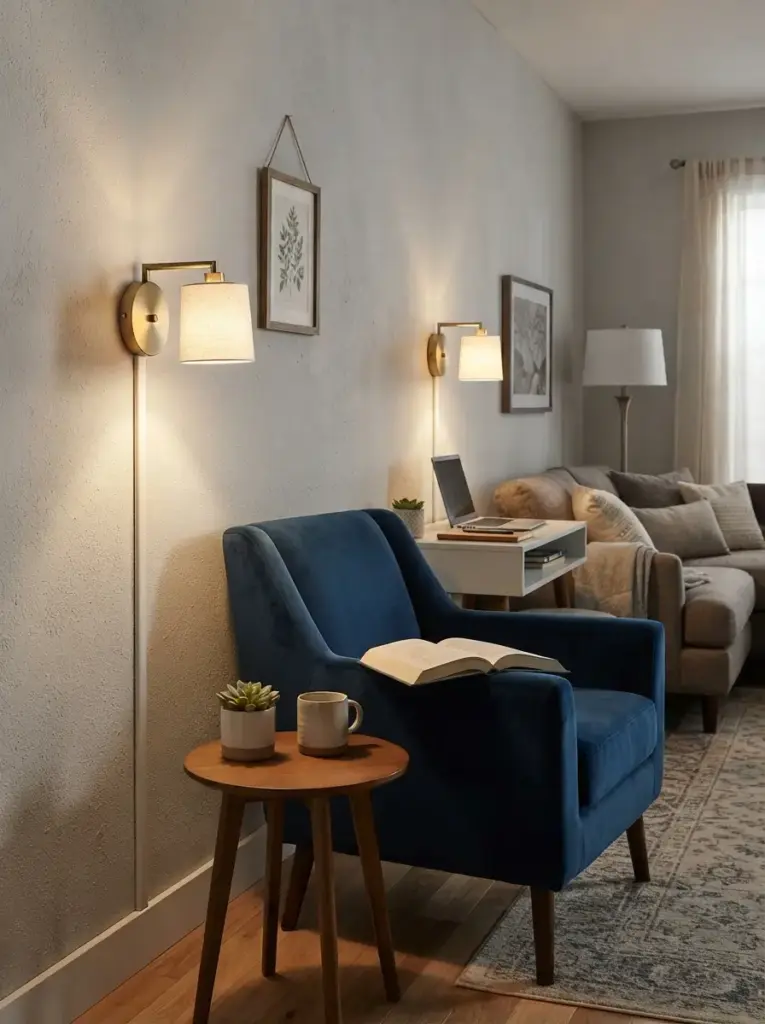
Plug-in wall sconces save floor and table space while improving task lighting. Mount them beside a sofa, above a reading chair, or near a desk. Many renter-friendly models use screws that leave small, repairable holes, while lightweight lights may work with approved removable mounting systems. Keep cords tidy with paintable cable covers or clips that match the wall.
Layered lighting improves comfort because one ceiling fixture rarely serves every activity. Warm white bulbs around 2700K create a relaxed evening setting, while 3000K offers a slightly clearer light for reading and homework. Students and renters with dark corners gain the most from this change. Choose dimmable bulbs when possible, and avoid cool 5000K bulbs in the main lounge because they can make warm furnishings look harsh.
Use Curtains to Make the Ceiling Feel Higher
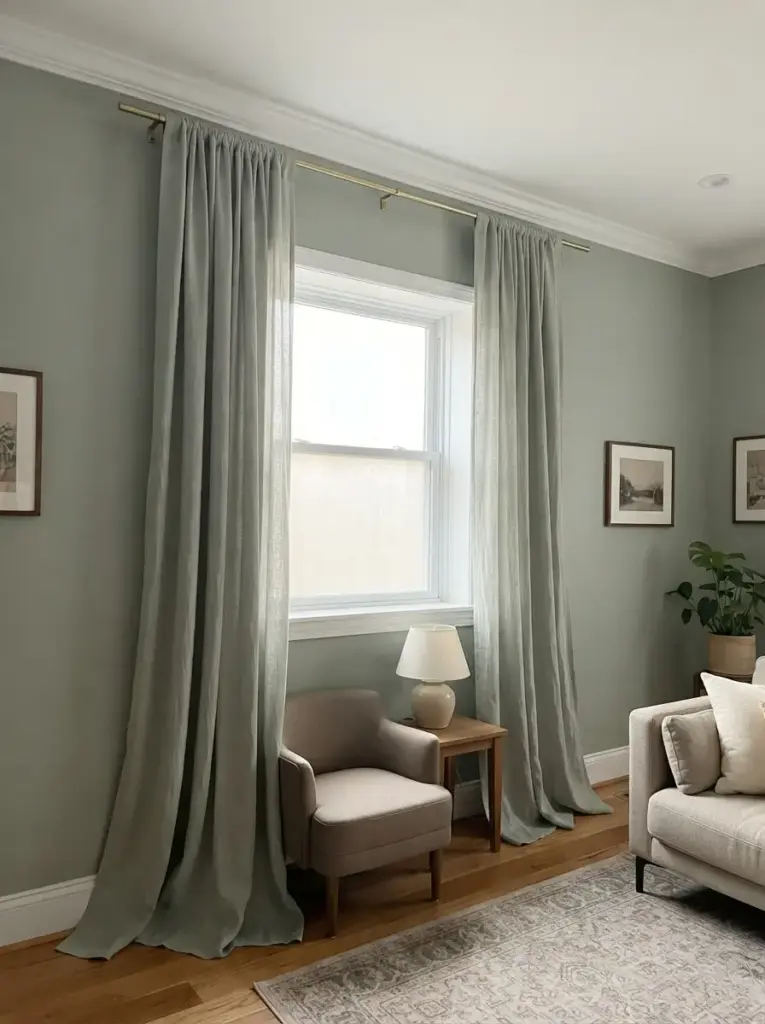
Curtains can change the proportions of a room without taking floor space. Hang the rod close to the ceiling and extend it 15 to 25 centimetres beyond each side of the window. Floor-length panels create one long vertical line, making short walls appear taller. Lightweight linen-look fabric, cotton blends, or lined sheers soften the room while still allowing daylight to spread.
Height perception improves because the eye follows the fabric from ceiling to floor. Low-ceiling apartments and rooms with small windows benefit most. Renters can use tension rods inside a recess, no-drill brackets, or removable rod supports where suitable. Choose curtains close to the wall colour for a quiet effect, or use muted sage, clay, or blue-grey for gentle contrast. Avoid short panels that stop at the sill unless furniture blocks the lower wall.
Choose Furniture with Visible Legs
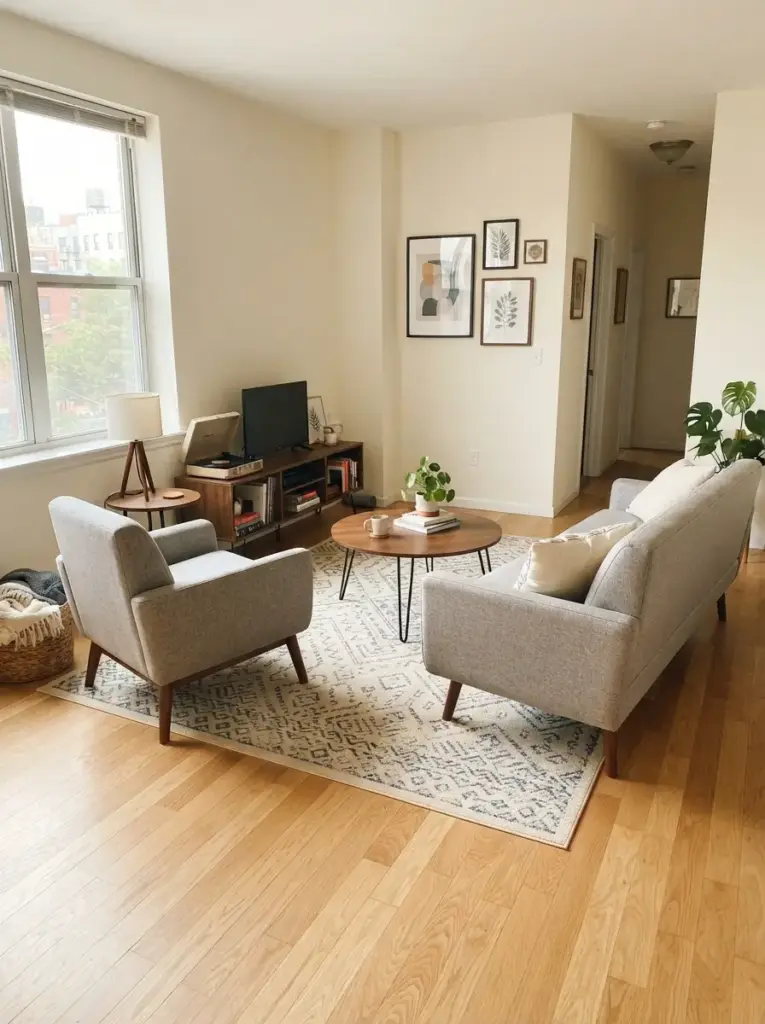
Furniture raised on legs allows more floor to remain visible. Sofas, chairs, cabinets, and side tables with 15 to 20 centimetres of clearance feel less bulky than pieces that sit directly on the ground. Visible space underneath also makes vacuuming easier, which matters in rooms used every day. Mid-century-inspired shapes often suit this approach because they combine slim frames with practical seating.
Openness helps the room appear less crowded because visual lines continue under the furniture. Beginners building Small Apartment Living Room Decor can use this principle to mix affordable items without creating a heavy look. Best results come from repeating similar leg finishes, such as black metal, light oak, or walnut. Too many different finishes can make second-hand furniture look random, so connect pieces with one repeated colour or material.
Build a Compact Study Corner
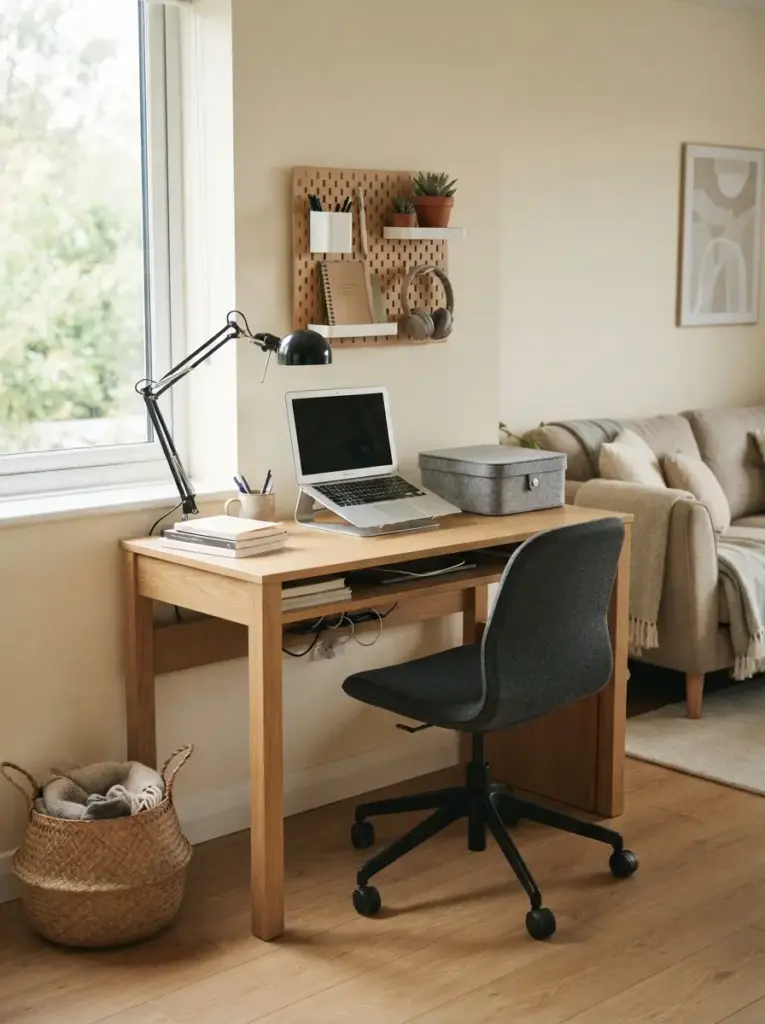
Small apartments often need a desk even when no separate office exists. A wall-mounted drop-leaf desk, narrow console, or 80-centimetre writing desk can fit beside a window or behind a sofa. Pair it with a chair that slides fully underneath. Add one task lamp, a cable tray, and a small wall organiser rather than covering the desktop with storage containers.
Dedicated study space supports focus and keeps schoolwork off the sofa. College residents searching for Small Apartment Living Room Ideas usually benefit from this setup because it separates work from rest without requiring another room. Choose a desk depth of 40 to 50 centimetres for light laptop use. Keep the background simple for video calls, and use a lidded box to hide notebooks when the workday ends.
Add a Mirror Across from Daylight
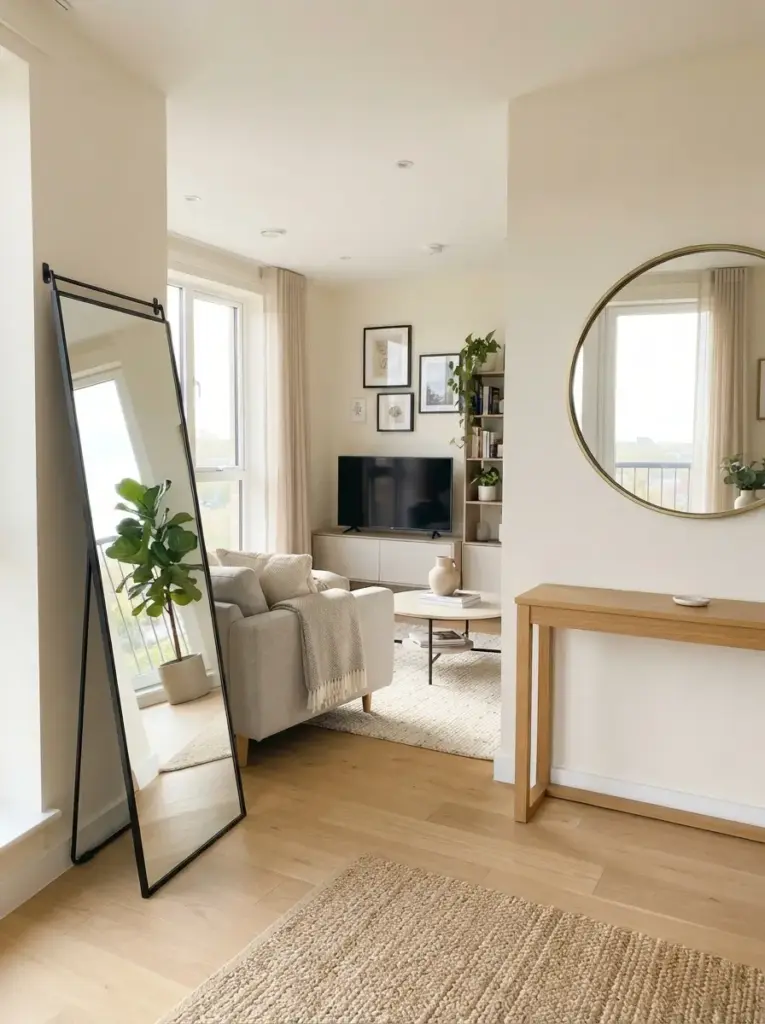
Mirrors can brighten a small room when they reflect a window or light-coloured wall. Place one beside or across from the main daylight source rather than directly opposite clutter. Tall mirrors create a strong vertical line, while a wide mirror above a console spreads light across a darker wall. Leaning mirrors are rental-friendly, but they should be secured safely to prevent tipping.
Reflected light makes corners feel more connected to the rest of the room. North-facing apartments and rooms with one small window gain the most. Simple black, brass, oak, or frameless designs fit many Modern Apartment Living Room Ideas without dominating the decor. Avoid placing a mirror where it reflects a television, messy kitchen, or busy entry because repeated clutter can make the room feel more crowded.
Keep the Colour Palette Focused
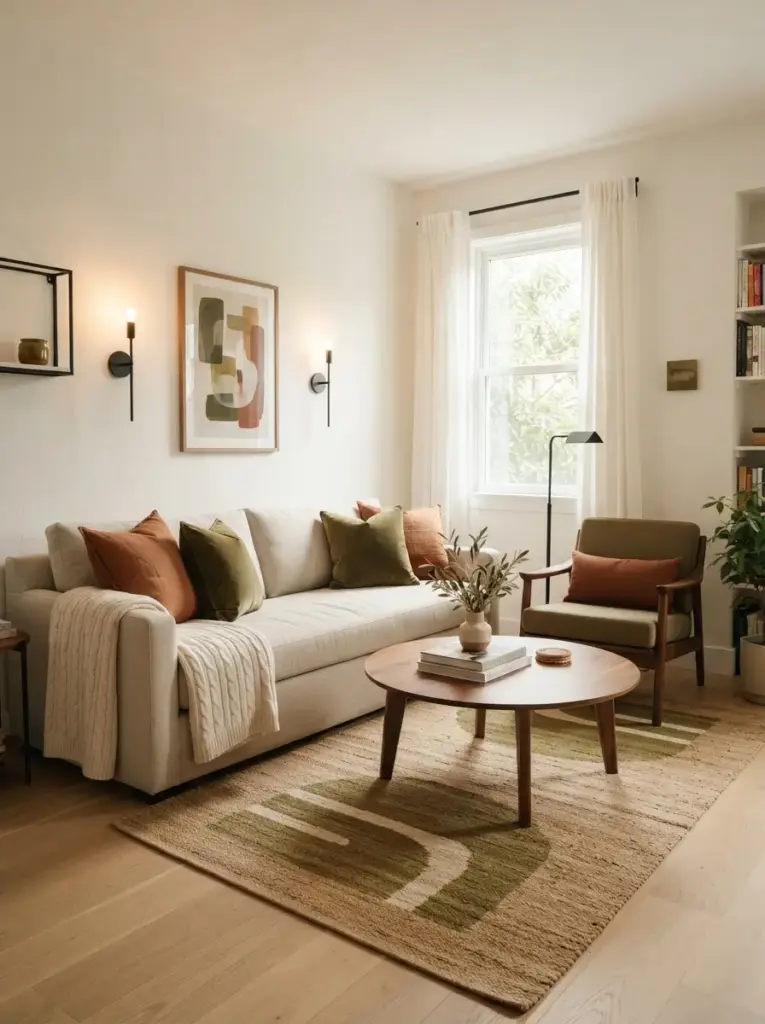
Small rooms usually feel more settled when the palette includes one main neutral, one supporting colour, and one darker accent. Warm white walls with oatmeal upholstery and olive accents create a calm base. Soft grey walls with navy textiles and black details feel cleaner and more structured. Repeating each colour at least twice helps the room look connected rather than pieced together.
Colour control works because fewer abrupt changes allow the eye to move smoothly. Beginners and first-home decorators benefit most from this method. Fans of Cozy Apartment Living Room Designs Ideas can add warmth through rust cushions, walnut wood, cream throws, and 2700K lighting rather than filling every surface with decor. Avoid matching every item exactly; varied textures in the same colour family create depth without visual noise.
Use One Large Artwork Instead of Many Small Pieces
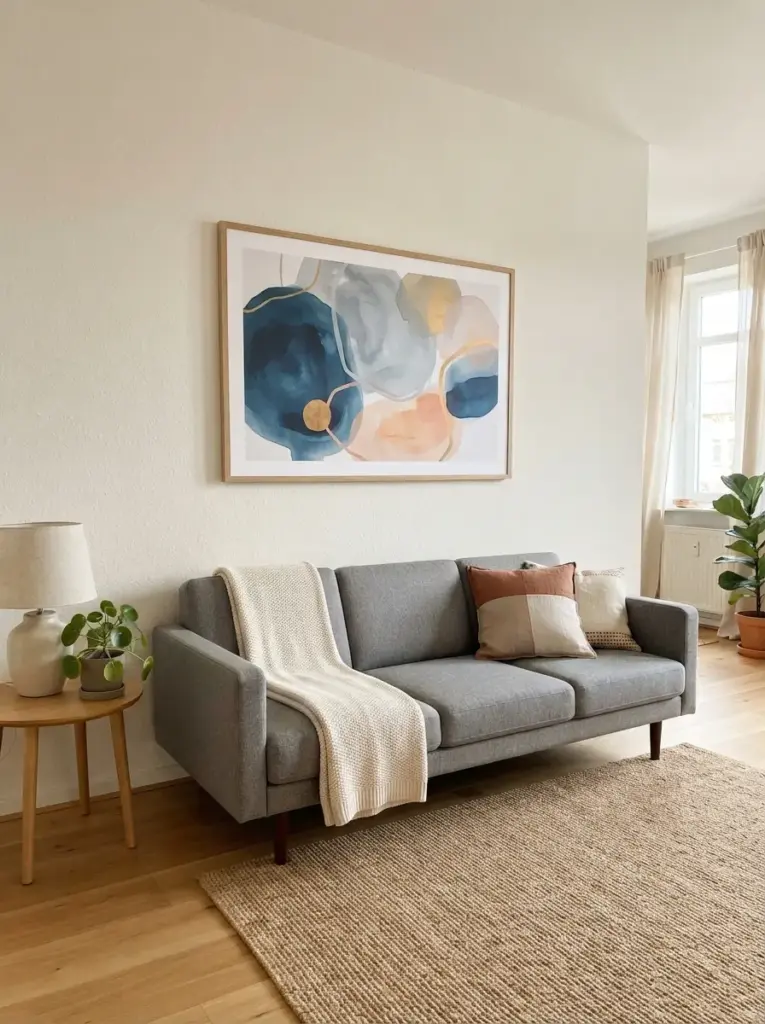
One large print, textile, or framed poster can give a small wall structure without creating dozens of visual breaks. Choose artwork around two-thirds the width of the sofa or console below it. Hang the centre near eye level, usually around 145 to 155 centimetres from the floor, then adjust for the furniture height. Lightweight frames and removable picture strips can keep the approach rental-friendly.
Larger scale often feels calmer than a scattered gallery wall. People who own few decorations or dislike constant styling decisions will appreciate this idea. Affordable options include downloadable prints, fabric panels, framed maps, or a favourite poster placed in a simple frame. Leave enough blank wall around the piece so it can stand out. Crowding it with shelves, clocks, and signs weakens the effect.
Edit Surfaces and Store Similar Items Together
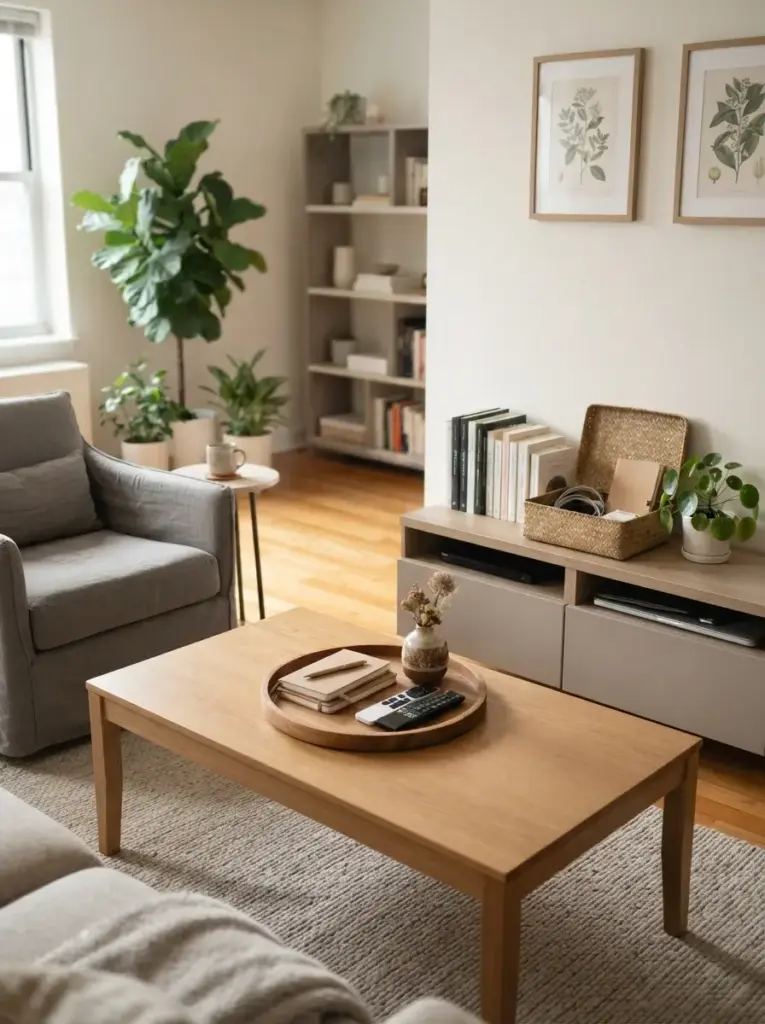
Open surfaces need limits in a small room. Keep the coffee table to one tray, one useful object, and perhaps one decorative item. Group remote controls, chargers, and notebooks in a shallow box rather than spreading them across several tables. Place books together, plants together, and small electronics together so the room has fewer visual categories.
Editing works because the brain reads grouped objects as one unit. People drawn to a Minimalist Apartment Living Room will find this especially helpful, but the method also suits colourful homes. Use a ten-minute reset at the end of the day, returning each group to its assigned place. Avoid buying organisers before deciding what needs storage, since extra baskets can become clutter themselves. Empty space should remain part of the plan.
Common Small Living Room Mistakes to Avoid
Oversized furniture causes more problems than dark paint or bold decor. Deep sofas, wide recliners, and large media consoles can block walkways even when they technically fit against the wall. Measure the usable floor area, not just the wall length. Door swings, radiator clearance, and the distance needed to pull out dining chairs often remove more space than expected. Prioritise movement over the number of seats, then add folding chairs for occasional guests.
Tiny rugs also make compact rooms feel smaller. A rug that sits only under the coffee table separates the furniture into unrelated islands. Choose the largest practical rug within budget, or use a flatweave that reaches under the front legs of the main seating. When a larger rug costs too much, search second-hand listings or place a plain natural-fibre rug under a smaller patterned one.
Too many small storage units create visual noise. Several narrow cabinets, carts, and baskets can occupy more floor area than one tall bookcase. Consolidate storage whenever possible, and leave at least one section of wall open. Visible clutter often comes from duplicated items, packaging, and belongings without a home rather than a true shortage of storage.
Poor lighting can make even a thoughtful layout feel uncomfortable. One bright ceiling light creates glare and leaves corners dull. Add at least two lower light sources, such as a plug-in wall light and a table lamp. Use matching bulb temperatures so the room does not shift between yellow and blue light. Around 2700K suits relaxing, while 3000K balances comfort and clarity.
Decorating before deciding the room’s main function leads to wasted purchases. A large coffee table may look useful but become annoying if the room doubles as a workout area. An extra armchair may feel welcoming but block access to a balcony. Write down the three activities that happen most often, then design around them. Secondary activities should use foldable, movable, or temporary furniture.
Budget-Friendly Decorating Tips
Second-hand shopping works best when you search by dimensions rather than style names. Save the maximum width, depth, and height in your phone, then check measurements before arranging pickup. Solid wood side tables, bookcases, mirrors, and lamps often offer better value used than new. Sofas deserve more caution, so inspect frames, odours, stains, and pests before bringing one home.
Textiles can refresh a room without replacing furniture. Washable cushion covers, a throw, and curtains can connect mismatched pieces for less than the cost of a new chair. Choose two or three colours already present in the room. For example, a grey sofa can work with cream curtains, olive cushions, and one rust throw. Repeating those shades across the room creates a planned look.
Paint is not always necessary in a rental. Removable wallpaper on one bookcase backing, peel-and-stick tiles around a non-heated decorative area, and temporary window film can add character with less commitment. Always test removable products in a hidden spot, because adhesives react differently to matte paint, old plaster, and humid walls. Keep packaging and removal instructions until move-out.
Free changes often deliver the biggest improvement. Remove one unnecessary table, rotate the rug, move a lamp into a dark corner, and clear the window area. Rehang curtains higher if the hardware allows. Swap decor between rooms before buying anything new. Many Living Room Ideas for Small Apartments cost little because they rely on better placement, editing, and lighting rather than a complete furniture replacement.
Practical Living Room Ideas for Small Apartments Tips
Start with function, then build a shopping list. Rank needs as essential, useful, or decorative. A sofa, task light, and hidden storage may be essential, while matching side tables can wait. Buying in stages helps you notice how the room actually works. It also prevents impulse purchases during move-in week, when empty space can feel like a problem that must be filled immediately.
Keep one flexible area open whenever possible. A clear section of floor can support exercise, luggage packing, extra seating, or a folding dining table. Movable furniture makes that space more useful, so choose lightweight stools, nesting tables, and chairs with handles or slim frames. Felt pads help pieces move without damaging rental floors.
Plan storage by frequency. Daily items should stay easy to reach, weekly items can sit behind doors or inside ottomans, and seasonal items belong high up or under the bed. Clear categories reduce search time and stop surfaces from becoming temporary storage. Labels inside cabinets can help roommates maintain the same system.
How to Combine Style with Practicality
Style feels stronger when repeated through shape, colour, and material. Curved tables can echo a round lamp and arched mirror. Black metal legs can connect a sofa, desk, and shelf. Light oak can appear in picture frames, a side table, and a tray. Three repetitions usually feel intentional without becoming overly matched.
Practical choices should still reflect personality. Modern Apartment Living Room Ideas may use cleaner lines, black accents, and structured storage, while Small Apartment Living Room Decor can include vintage finds, colourful textiles, or handmade art. Cozy Apartment Living Room Designs Ideas often rely on soft layers and warm lighting, whereas Minimalist Apartment Living Room styling depends more on editing and hidden storage. Small Apartment Living Room Ideas work best when the style supports daily habits rather than competing with them.
Move-In Checklist for a Small Living Room
Measurements should come before shopping. Record the room width, wall lengths, ceiling height, window position, door swing, and the narrowest doorway on the route into the apartment. Add outlet, radiator, vent, and internet connection locations to a quick sketch. Compare every furniture listing with those numbers, including packaged dimensions when ordering online. Use painter’s tape to test the main pieces. These simple checks make Living Room Ideas for Small Apartments easier to apply because they turn vague inspiration into a layout that fits.
Seating comes next because it determines most of the room’s circulation. Start with one sofa or two compact chairs, depending on how many people use the room daily. Add occasional seating only after living in the space for a week. Folding chairs, stackable stools, and floor cushions can handle visitors without permanently occupying the room. Check seat height as well as width; a very low sofa may feel awkward beside a standard desk or dining table.
Lighting deserves a place on the move-in list before decorative accessories. Bring warm white bulbs, one task lamp, and an extension lead with surge protection if the lease permits it. Check whether the ceiling fixture uses a standard bulb or an integrated fitting. Dark apartments may need lighting in opposite corners to reduce shadows. Keep lamp cords away from walkways, and avoid plugging several high-draw devices into one basic extension lead.
Storage should match the belongings you actually own. Count books, gaming equipment, blankets, shoes, paperwork, and shared items before buying baskets. One tall shelving unit, one closed media cabinet, and storage inside an ottoman may be enough. Choose containers only after measuring the shelf openings. Matching boxes look organised, but clear labels inside closed cabinets often work better for roommates who need to find and return items quickly.
Essentials for the first week include seating, a lamp, curtains or privacy film, a small surface, charging access, and somewhere to place daily clutter. Decorative cushions, artwork, extra plants, and matching furniture can wait. Living with the basic setup reveals where you naturally drop keys, charge a laptop, or set down a drink. Those habits should guide later purchases more than a staged room photograph.
Styling supplies can stay simple during move-in. Keep removable hooks, felt pads, a tape measure, cable clips, a basic tool kit, and wall-safe cleaning products together in one box. Felt pads protect flooring and make layout changes easier. Cable clips stop chargers from falling behind furniture. Removable hooks can hold lightweight art or headphones, but follow the stated weight limit and test the wall finish before using several.
Roommates should agree on shared zones before unpacking everything. Decide which shelf holds communal items, where guests place coats, and whether the living room will support studying after a certain hour. One small basket for each person can prevent loose belongings from spreading across tables. Shared rules may sound formal, but they reduce daily friction and help a compact room stay functional when several people use it differently.
Frequently Asked Questions
How Can I Make a Small Living Room Look Bigger?
Keep pathways clear, expose more floor, and reduce the number of small visual breaks. Furniture with visible legs, full-length curtains, one larger rug, and a mirror near daylight can all help. Use a focused colour palette and avoid filling every wall. Better scale usually makes a bigger difference than choosing only pale colours. Dark accents can still work when they appear in controlled amounts.
What Sofa Colour Works Best in a Small Apartment?
Mid-tone neutrals such as warm grey, taupe, olive, denim blue, and camel handle everyday use well and coordinate with many styles. Very pale upholstery can brighten a room but may require more cleaning. Dark navy or charcoal can look grounded when walls and curtains stay lighter. Choose fabric based on lifestyle first, then colour. Removable covers are valuable for students, pet owners, and frequent movers.
Should a Small Living Room Have a Coffee Table?
Coffee tables are optional. A storage ottoman, nesting tables, or two small stools may provide more flexibility. Households that eat, study, or work from the living room may prefer a firm surface, while narrow layouts often benefit from movable pieces. Keep around 40 centimetres between seating and the table when possible. Rounded corners reduce bumps in tight walkways.
What Lighting Is Best for a Small Living Room?
Use at least three layers when possible: general light, task light, and soft accent light. Pair a ceiling fixture with a reading lamp and a small table or shelf lamp. Bulbs around 2700K create a warmer evening atmosphere, while 3000K supports reading and homework. Dimmers or smart bulbs can help one fixture handle several tasks. Keep bulb temperatures similar across the room.
How Do Renters Decorate Without Damaging Walls?
Removable hooks, tension rods, freestanding shelves, leaning mirrors, plug-in sconces, and no-drill curtain hardware can reduce permanent changes. Test adhesive products first and follow weight limits carefully. Small nail or screw holes may be easier to repair than adhesive damage on weak paint, so check the lease and wall condition. Photograph existing marks before move-in and keep leftover paint information when available.
Which Living Room Ideas for Small Apartments Work Best for College Housing?
Shallow seating, storage ottomans, nesting tables, washable rugs, plug-in lighting, and a compact study corner usually offer the best balance. Those pieces support changing schedules, roommates, and frequent moves. Choose furniture that fits through narrow doors, breaks down easily, and works in another layout. Avoid expensive custom pieces unless you know they will suit your next home.
Conclusion
Thoughtful Living Room Ideas for Small Apartments begin with measurement, movement, and real daily habits. Smaller furniture is not automatically better; properly scaled furniture is. Flexible pieces, focused colours, layered lighting, and vertical storage allow a compact room to support more activities without feeling overfilled.
Move slowly, test layouts with tape, and buy only after you understand the room. Rental-friendly choices can still feel personal, while budget finds can look connected through repeated materials and colours. Strong small-space decorating comes from clear priorities, not from filling every corner.