
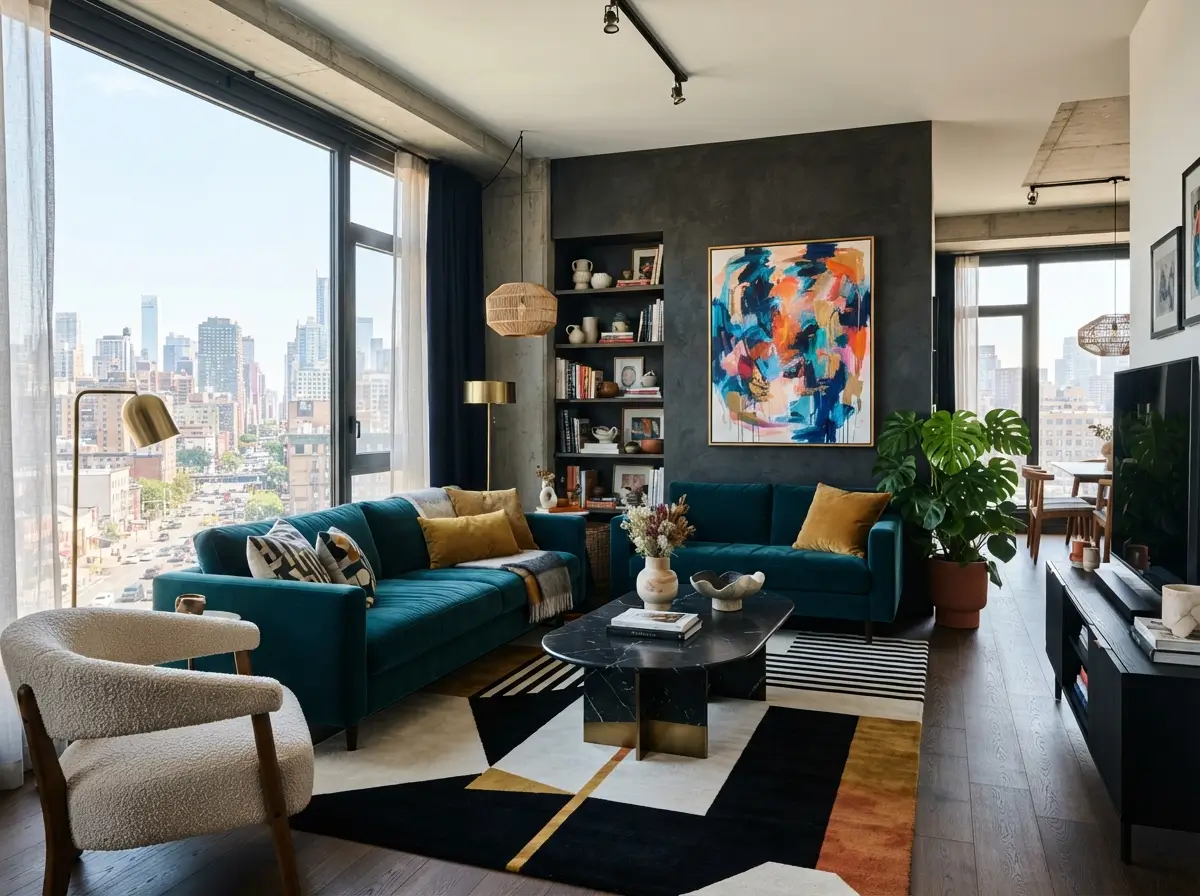

Living in an apartment does not mean settling for bland furniture, empty walls, or a layout that feels temporary. Strong design comes from making a few clear decisions about scale, colour, lighting, and storage, then repeating those decisions across the room. Whether you are furnishing your first home or refreshing one room at a time, a Modern Apartment Living Room can feel considered without becoming expensive, crowded, or difficult to maintain.
Can a Small Apartment Living Room Feel Bold and Practical?
Yes. A Modern Apartment Living Room feels bold when one or two elements carry visual weight while everything else supports them. Choose a strong rug, oversized artwork, a sculptural lamp, or a deep accent colour, then keep surrounding furniture simpler. Practical planning still comes first: protect walkways, use furniture that fits the room, add several light sources, and give everyday items a place to live. Bold design works best when it improves focus rather than adding clutter. Beginners should start with one statement feature, live with it for a week, and add smaller details only after the layout feels comfortable.
Start With Measurements Before Buying Furniture
Room measurements prevent more decorating mistakes than any trend, shopping list, or mood board. Record the wall lengths, ceiling height, window widths, door swings, radiator depth, electrical outlets, and the narrowest part of each walkway. Sketch the room on graph paper or use painter’s tape to mark the footprint of a sofa, coffee table, media unit, and dining furniture. Leave at least 76 centimetres for main walkways and roughly 45 centimetres between the sofa and coffee table. Anyone moving into a first apartment should complete this step before ordering furniture, because return fees and oversized pieces can quickly consume a starter budget.
Planning also helps you choose where bold details belong. Large visual features need breathing room, so place statement art on the longest uninterrupted wall and keep tall storage away from the brightest window. Furniture should follow the room’s natural circulation rather than forcing people to squeeze around corners. Open-plan apartments often work better when the sofa defines the living zone instead of sitting flat against a wall. Careful measurements create the structure behind successful Modern Apartment Living Room Ideas, especially when every square metre must serve more than one purpose.
Build a Calm Base With One Confident Colour
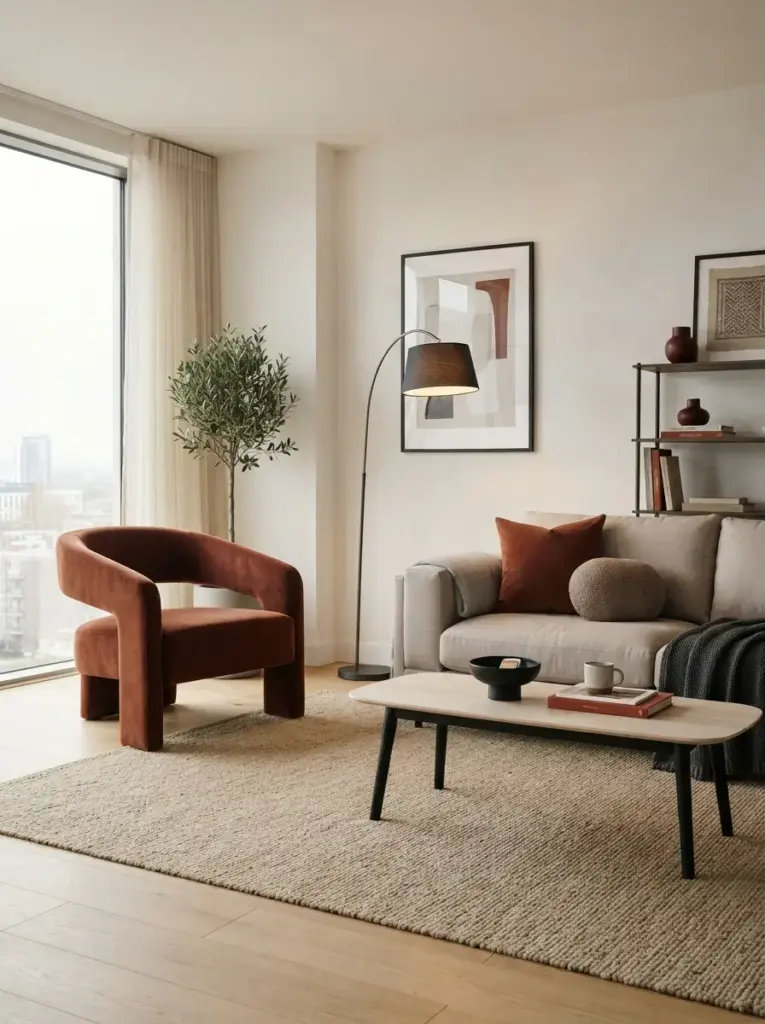
Neutral rooms look modern when the palette has depth, not when every item matches beige. Begin with warm white, mushroom, soft grey, sand, or pale taupe across the largest surfaces. Add one confident colour through a chair, rug, curtain, or painted section. Olive green, rust, cobalt blue, oxblood, aubergine, and deep teal work well because they remain rich under both daylight and warm lamps. Renters can introduce colour through washable slipcovers, removable wallpaper, framed fabric, and large textiles instead of permanent paint. Colour-sensitive beginners should collect five or six material samples and view them together at morning, afternoon, and night.
Strong colour succeeds because it creates a focal point without requiring many decorative objects. Keep the accent near 15 to 25 percent of the visible room, then repeat it in two smaller places such as a book spine, cushion stripe, or ceramic bowl. Repetition makes the choice appear intentional while avoiding a theme-heavy result. Pale rooms need black, dark brown, or charcoal details to define lamps, frames, and furniture legs. People who prefer Minimalist Apartment Living Room styling will find this approach especially useful because one controlled accent can replace several unnecessary accessories.
Choose a Sofa With the Right Visual Weight
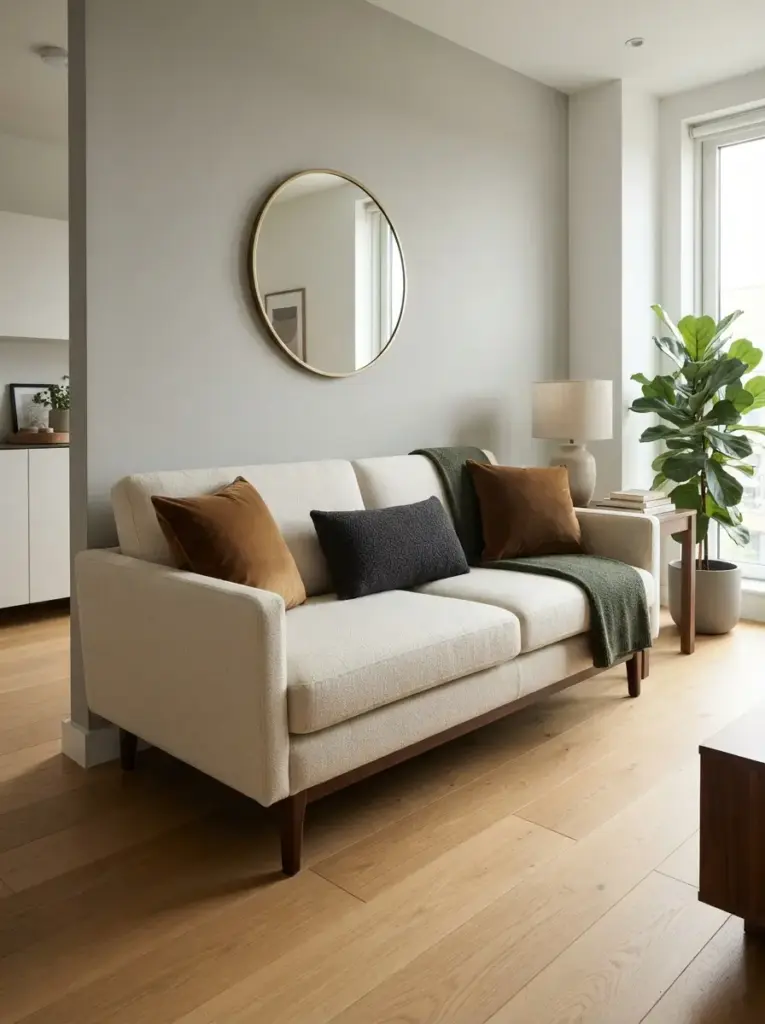
Sofa size should relate to the wall and the room, not the number of seats printed in a product description. Compact apartments usually benefit from a sofa between 180 and 220 centimetres wide, with arms no wider than 15 centimetres. Raised legs reveal more floor and make the piece appear lighter, while a low back keeps sightlines open in an open-plan layout. Curved corners soften rooms filled with square doors and cabinets, but very rounded sofas may waste usable seating depth. New homeowners should prioritise seat comfort, removable cushion covers, durable fabric, and frame quality before selecting an unusual shape.
Bold designer character can come from fabric rather than size. Tobacco velvet, textured cream, charcoal bouclé, dark green chenille, or a subtle woven stripe creates presence without adding bulk. Households with children or pets should check abrasion ratings and choose tightly woven, cleanable upholstery. Renters who already own a basic sofa can upgrade it with a fitted cover, a long lumbar cushion, and a tailored throw placed over the back rather than scattered across the seat. That controlled styling looks sharper and keeps valuable sitting space clear.
Use Oversized Art Instead of Many Small Frames
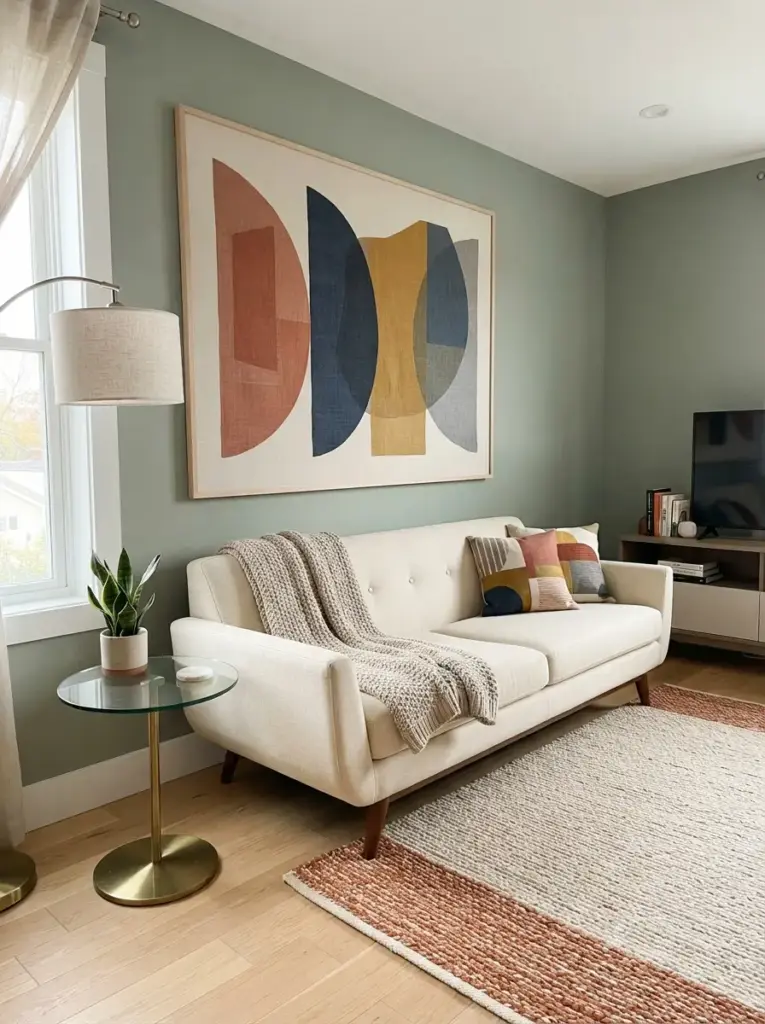
Large artwork gives a compact room a clear visual centre and often makes the wall feel bigger. Aim for art that covers around two-thirds of the furniture width beneath it. Over a 200-centimetre sofa, a piece or grouped composition between 120 and 150 centimetres wide usually feels balanced. Hang the centre roughly 145 centimetres from the floor, adjusting slightly when the sofa has a high back. Canvas, textile panels, framed posters, photography, and lightweight relief work can all create impact. Budget-minded decorators can frame wallpaper remnants, vintage maps, wrapping paper, or fabric with a strong repeat.
Scale explains why one large piece often looks calmer than twelve unrelated prints. Fewer edges reduce visual noise, while a broad composition leads the eye across the wall. Renters can use removable picture-hanging strips for lightweight pieces, but should follow weight limits carefully and test the adhesive in a hidden area. Large foam-board prints, magnetic poster rails, and fabric hangings offer safer options when drilling is prohibited. Art lovers working with Small Apartment Living Room Decor should choose subject matter they enjoy rather than buying generic prints solely because the colours match.
Layer Lighting at 2700K to 3000K
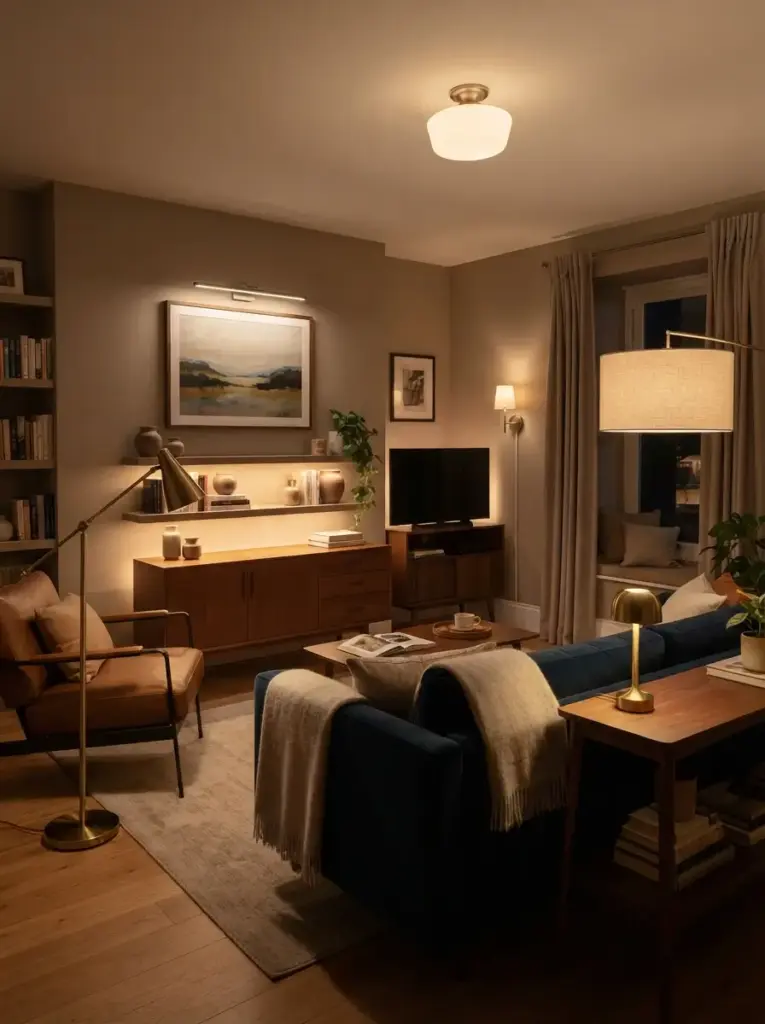
Single ceiling lights create flat shadows and make even good furniture feel unfinished. Combine ambient light, task light, and accent light across different heights. Ambient light may come from a ceiling fitting or shaded floor lamp. Task light belongs near reading chairs, desks, and the sofa. Accent light can wash a wall, illuminate shelving, or highlight artwork. Bulbs between 2700K and 3000K produce a warm, comfortable tone for living rooms, while 4000K bulbs often feel harsh at night. Use bulbs with matching colour temperatures so the room does not look patchy.
Lamp placement should support real routines. Position a reading lamp so the shade sits near shoulder height when seated, and keep television lighting to the side or behind the screen to reduce glare. Plug-in wall lights free floor space and bring a fitted look without rewiring. Cord covers painted to match the wall make rental installations cleaner. Dimmers, smart plugs, and rechargeable lamps help beginners adjust mood and function without changing fixtures. Lighting earns its place because it improves comfort every evening, not merely because a lamp has an interesting shape.
Anchor the Seating Area With a Properly Sized Rug
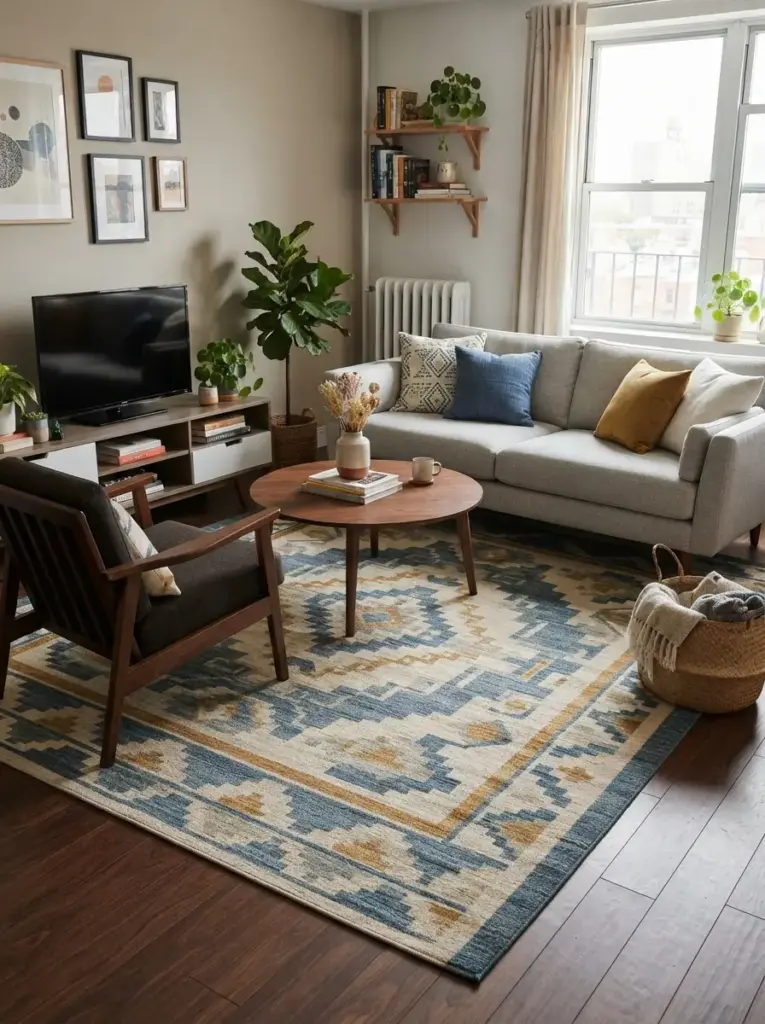
Rugs often look disappointing because they are too small, not because the pattern is wrong. Front legs of the sofa and chairs should rest on the rug, creating one connected seating zone. Many apartment living rooms need at least a 160 by 230 centimetre rug, while wider rooms may suit 200 by 300 centimetres. Leave a visible border of flooring around the edges rather than pushing the rug wall to wall. Low-pile wool blends, flatweaves, and washable synthetic rugs are easier to maintain than deep shag in busy households.
Pattern offers a safe place for boldness. A large geometric design, broken stripe, modern floral, or high-contrast border adds movement below eye level without crowding the walls. Rooms with patterned sofas need quieter rugs, while plain upholstery can support stronger graphics. Underlay stops movement, adds softness, and protects rented flooring from abrasion. People gathering Small Apartment Living Room Ideas should measure with newspaper or tape before buying, because online product photographs often make rugs appear much larger than they are.
Create a Slim Storage Wall
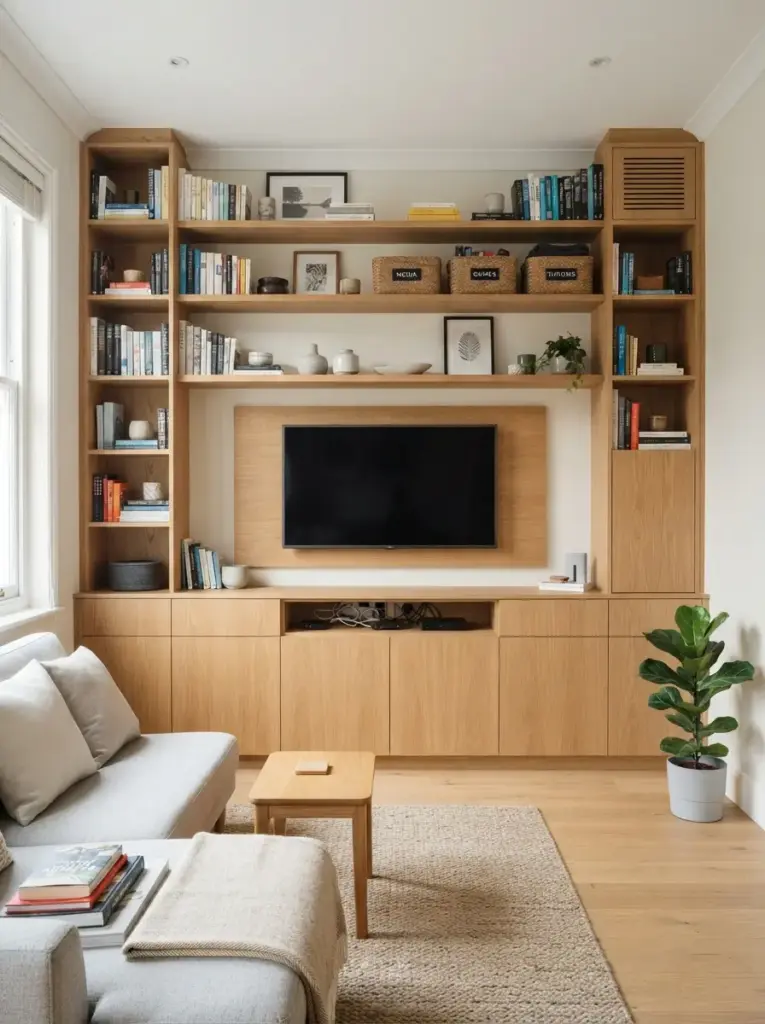
Clutter becomes visible quickly in a small room, so storage should look integrated rather than scattered. Choose a shallow media console, wall-mounted cabinet, or modular shelving system that uses vertical space. Depths between 30 and 40 centimetres often hold books, games, electronics, and serving pieces without projecting too far into the room. Closed lower cabinets hide visual noise, while open upper shelves display a controlled selection of objects. Tall units should finish close to the ceiling when possible, because a short cabinet with space above can make the wall look fragmented.
Designer detail comes from alignment. Keep shelf edges, cabinet doors, and the television centred on a shared vertical or horizontal line. Repeat one material, such as oak, walnut, black metal, or painted MDF, across the storage system. Renters can combine freestanding bookcases and bridge them visually with matching paint-safe peel-and-stick panels behind the units. Cable boxes, labelled baskets, and ventilated doors prevent the storage wall from becoming a hiding place for tangled wires. Organisation works here because it protects the calm base established elsewhere in the room.
Paint or Wrap One Architectural Feature
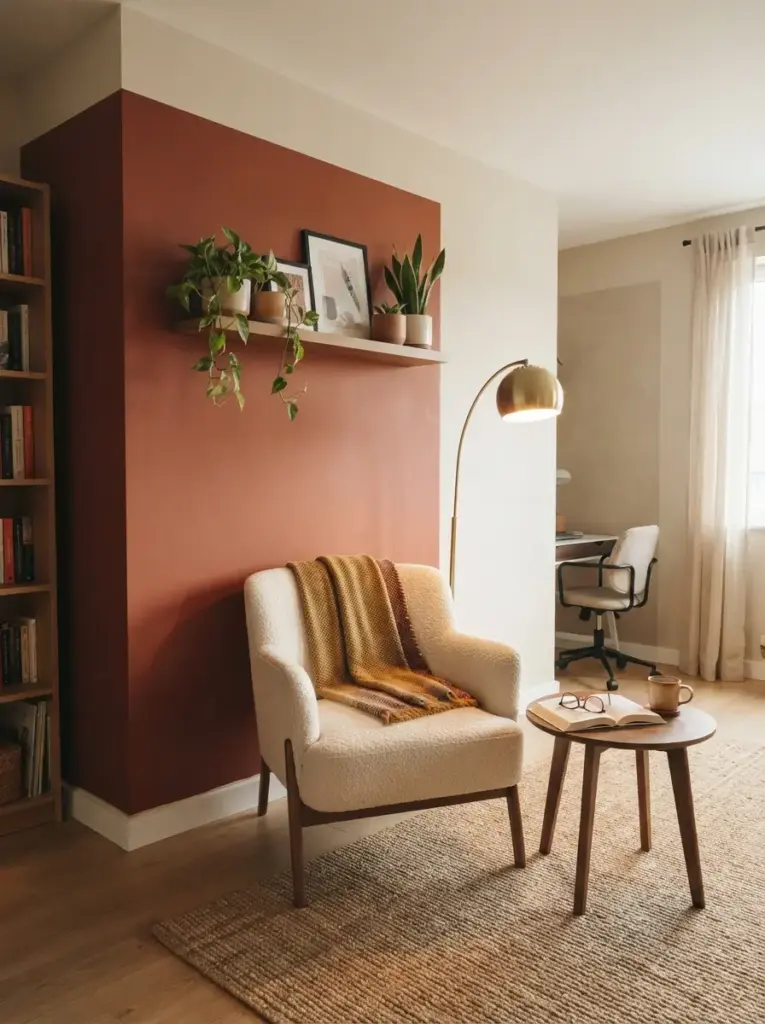
Whole-room colour can feel risky in a rental, but a focused block of colour adds architectural definition. Paint the wall behind the sofa, the inside of a recessed shelf, a narrow column, or the media zone. Colour blocking can also frame a desk in an open-plan room. Deep shades look especially effective when the painted shape follows real edges rather than stopping randomly. Use low-tack tape, measure carefully, and apply two thin coats for a cleaner line. Confirm lease rules before painting, and keep the original paint reference for move-out repairs.
Removable vinyl and peel-and-stick wallpaper can create the same effect without paint. Matte finishes usually look more convincing than shiny plastic surfaces, especially in strong daylight. Test a sample for several days because some adhesives react badly with fresh or poorly prepared paint. First-home decorators who want Cozy Apartment Living Room Designs Ideas can try warm terracotta, muted clay, olive, or chocolate behind a reading corner. Focused colour works because it gives a functional area its own identity without dividing the room with bulky furniture.
Mix Three Materials for Designer Depth
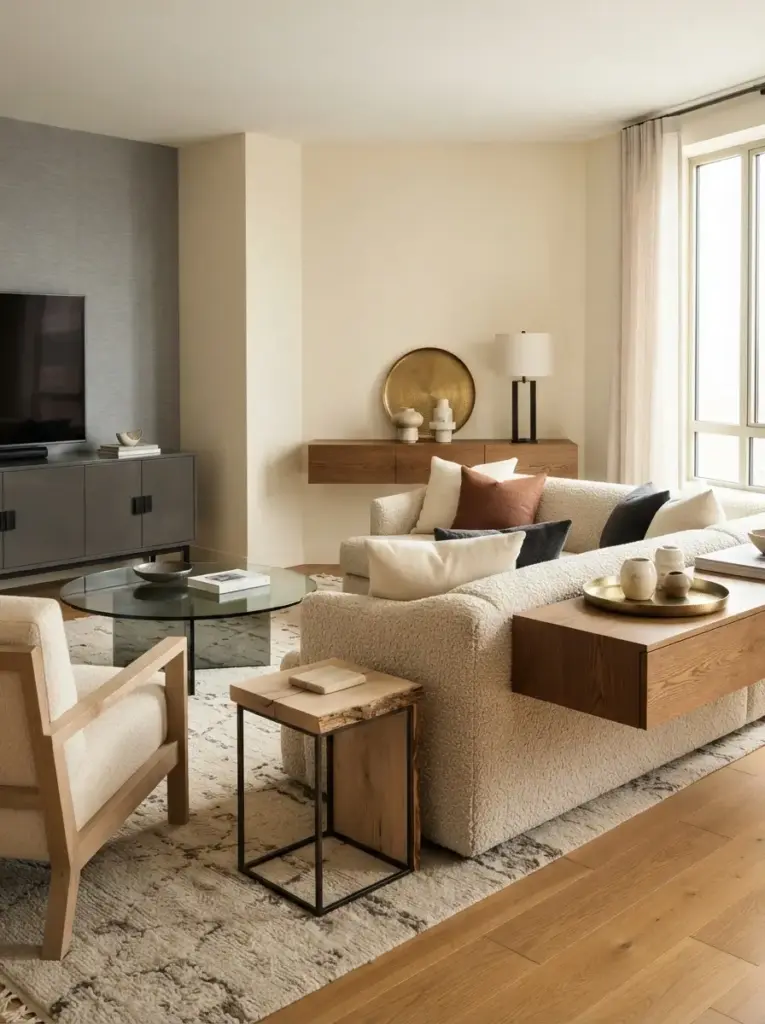
Rooms feel flat when every surface shares the same finish. Combine three main materials, then repeat each one at least twice. A reliable formula might include warm wood, brushed metal, and textured fabric. Another could use pale oak, smoked glass, and blackened steel. Stone or stone-look surfaces add weight, while cane, linen, and wool soften hard apartment architecture. Keep the undertones compatible: warm oak pairs more naturally with cream, brass, and rust, while grey timber works better with nickel, charcoal, and blue-based colours.
Material contrast helps simple furniture look more considered. Place a glass coffee table beside a chunky woven sofa, or pair a smooth lacquered cabinet with a rough wool rug. Avoid buying a complete matching furniture set, because identical finishes make the space resemble a showroom and limit future changes. Beginners can build depth gradually through trays, lamp bases, frames, cushions, and side tables. Anyone using these apartment styling principles should treat material balance as a practical tool for creating interest without adding more objects.
Float Furniture to Improve the Layout
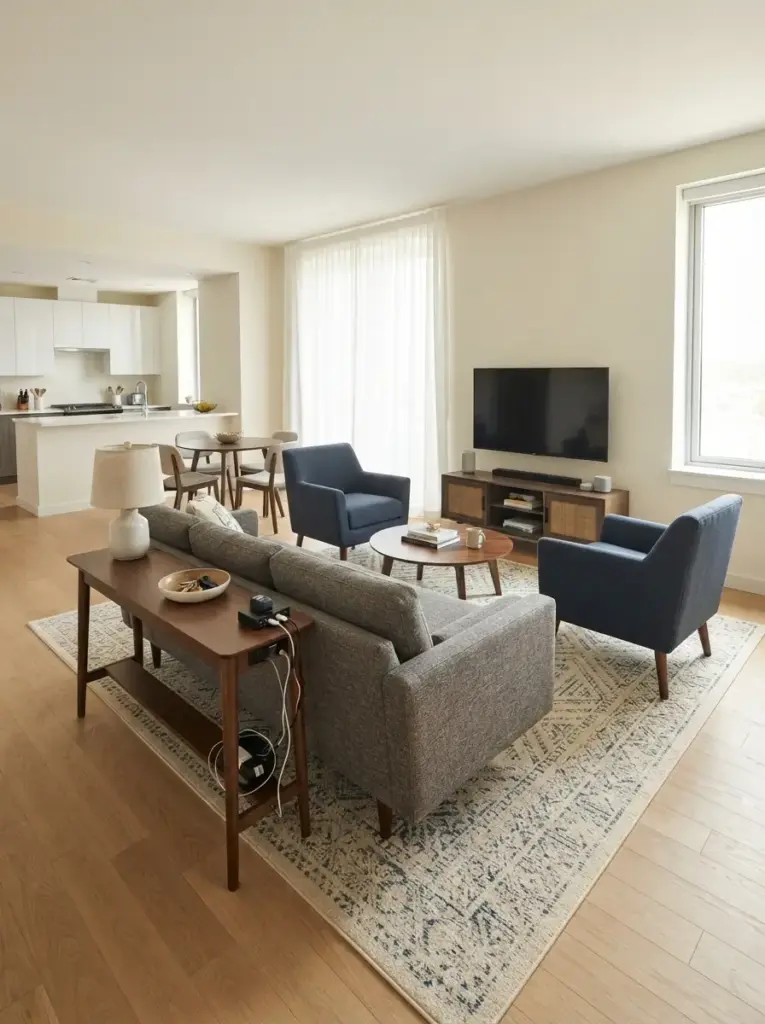
Pushing every item against a wall can leave an awkward empty centre and make conversation difficult. Move the sofa forward by 10 to 20 centimetres, or place it across the room to define the living area in an open-plan apartment. A slim console behind the sofa can hold lamps, keys, and charging points while creating a deliberate boundary. Chairs should angle slightly toward the sofa rather than face the television in a rigid row.
Floating furniture works because it turns negative space into part of the design. The gap behind a sofa allows curtains to hang freely and prevents upholstery from rubbing against walls. Open-plan homes gain a clearer separation between cooking, dining, and relaxing without partitions. Narrow rooms may still require furniture against walls, so test the layout with cardboard or tape before moving heavy pieces. Best results come to renters and first-time buyers who own fewer, better-scaled pieces rather than several small items with no shared arrangement.
Place Mirrors Where They Reflect Something Useful
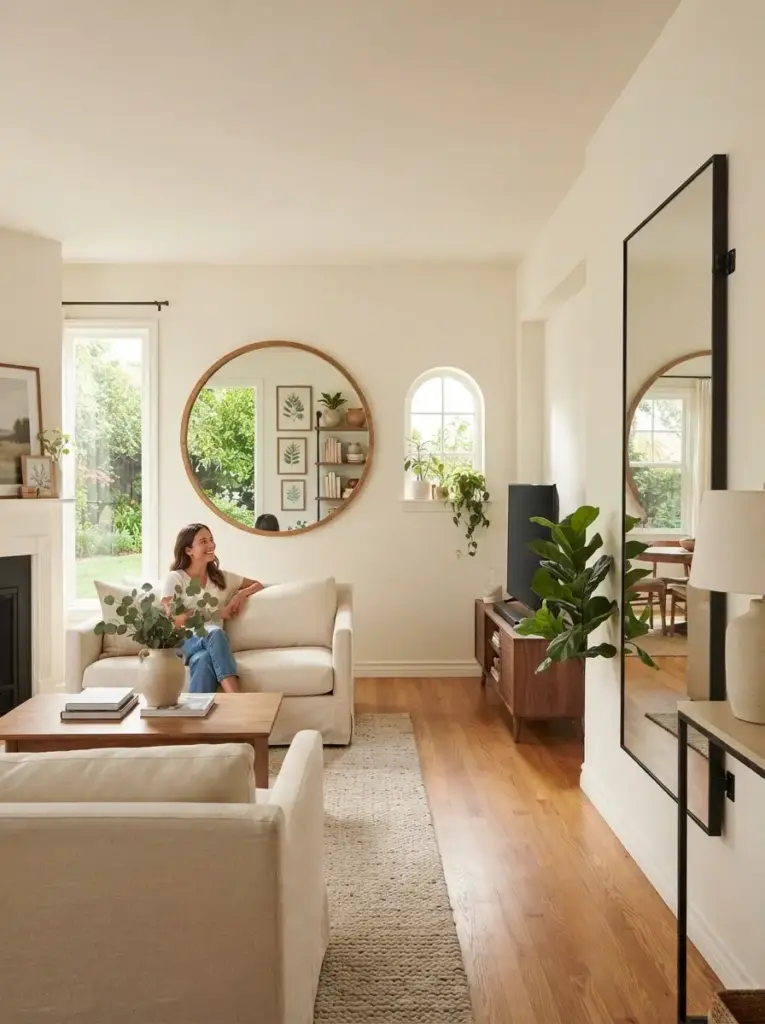
Mirrors can spread light and deepen a view, but random placement often reflects clutter, a blank ceiling, or the television. Position a mirror opposite or beside a window so it catches daylight without creating uncomfortable glare. Reflect artwork, greenery, or a well-styled shelf when possible. Large rectangular mirrors suit structured rooms, while round and arched mirrors soften sharp architecture. Floor mirrors should be secured properly, especially in homes with children or pets. Check the reflection from seated height before fixing anything to the wall.
Add One Sculptural Side Table
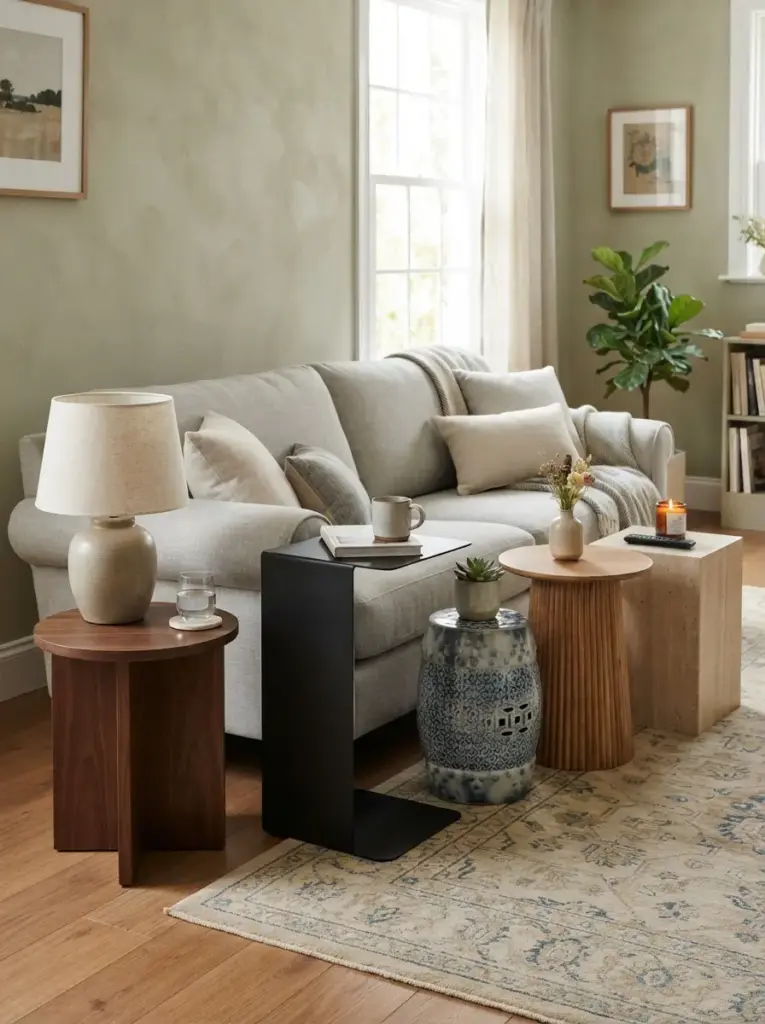
Side tables offer an easy way to introduce a bold shape because they occupy little space and can move as needs change. Try a drum table, C-shaped metal table, ceramic stool, fluted timber pedestal, or compact stone cube. Height should sit within roughly five centimetres of the sofa arm so drinks and lamps remain easy to reach. Round tables reduce sharp corners in tight walkways, while nesting tables provide extra surface only when guests arrive. Choose a stable base and test whether it can support a lamp without wobbling.
Hang Curtains High and Wide
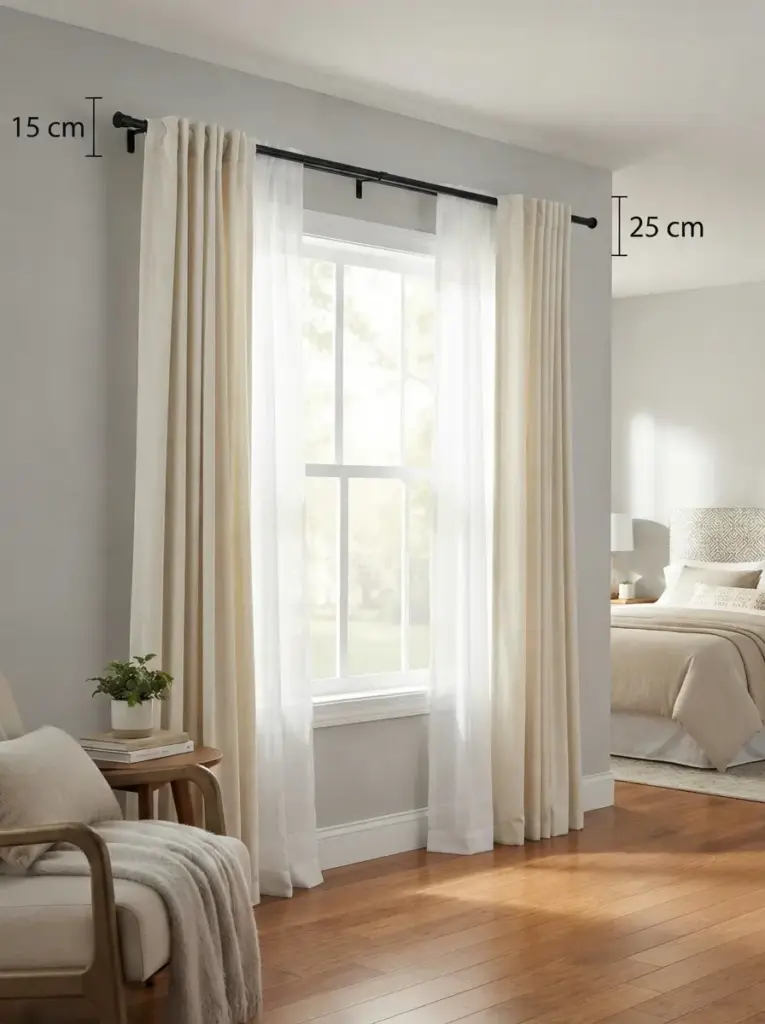
Curtains change the perceived proportions of a room more than many people expect. Mount the rod 10 to 20 centimetres above the window frame and extend it 15 to 30 centimetres beyond each side. Wider placement lets the panels sit mostly outside the glass when open, which protects daylight and makes the window appear larger. Floor-length curtains should lightly touch the floor or finish about one centimetre above it. Short curtains usually cut the wall visually unless a radiator, desk, or built-in element requires them.
Layer sheer panels with lined curtains when privacy and light control both matter. Linen-look polyester gives a relaxed texture with easier care, while velvet adds weight and absorbs some sound. Tension rods, no-drill brackets, and ceiling tracks with removable fixings can support rental-friendly installations, depending on the wall surface and panel weight. Neutral curtains can blend with the wall, while a narrow contrast border adds a tailored designer detail. People creating a first-home move-in checklist should include accurate curtain measurements before shopping, because standard lengths vary widely.
Style Surfaces With Changes in Height
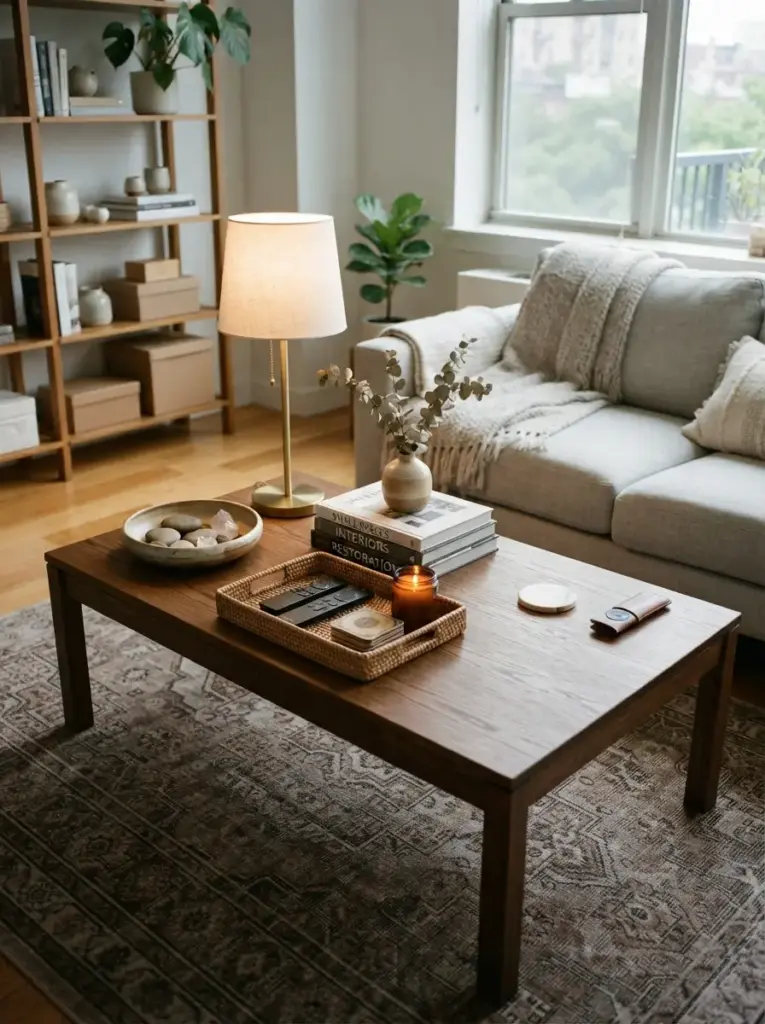
Coffee tables and consoles look crowded when every item has the same height or when small objects spread across the entire surface. Group items in a loose triangle: one taller piece, one medium object, and one low element. A lamp, stacked books, and a shallow bowl form a useful example. Leave at least one-third of the surface empty so there is room for daily life. Trays can collect remotes, coasters, and candles, making cleanup faster without hiding everything.
Personal objects give the room credibility, but editing matters. Display a travel find, inherited bowl, favourite book, or handmade ceramic instead of filling shelves with anonymous décor. Rotate items seasonally rather than keeping every possession visible. Open shelving should mix books, closed boxes, and negative space, with heavier items on lower levels. Households using Small Apartment Living Room Decor need surfaces that stay functional, so avoid delicate arrangements where drinks, laptops, or meals regularly land.
Use Furniture That Performs Two Jobs
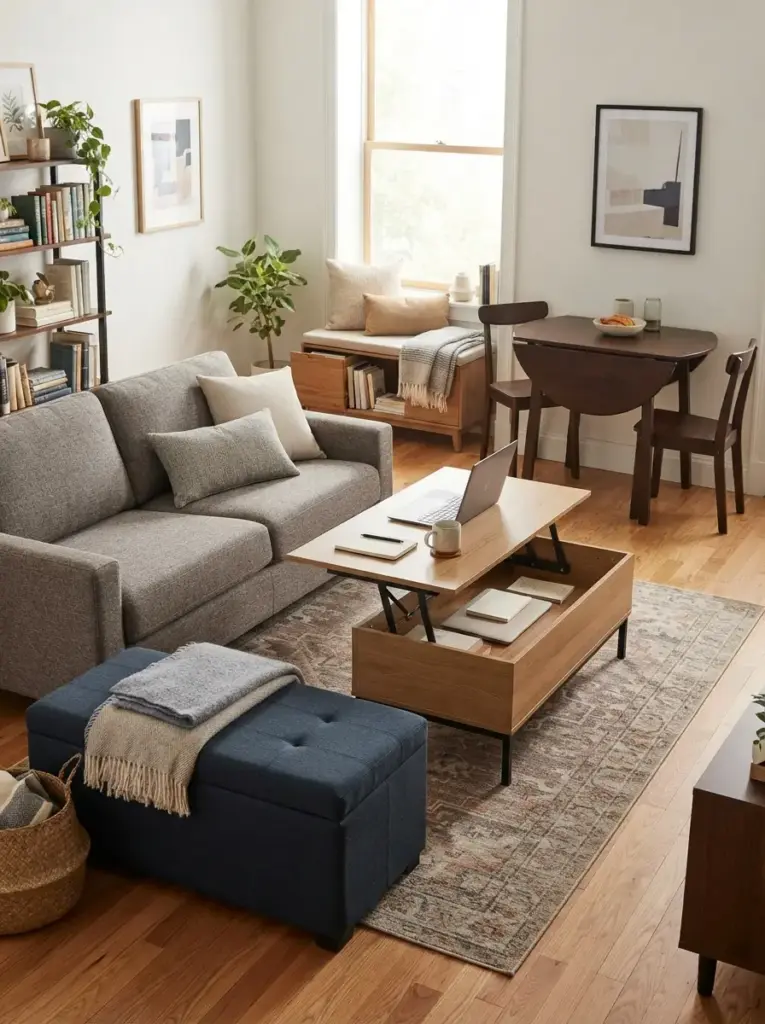
Multifunctional furniture reduces the number of pieces competing for floor space. Storage ottomans can hold blankets and serve as footrests or extra seating. Lift-top coffee tables create a temporary work or dining surface. Benches fit under windows and provide hidden storage, while sleeper sofas support overnight guests. Drop-leaf dining tables suit open-plan apartments where the living room also handles meals. Quality hinges, smooth mechanisms, and realistic dimensions matter more than the number of advertised functions.
Dual-purpose furniture works best when both uses feel comfortable. A hard storage cube may be too low for seating, and a bulky sofa bed may dominate the room every day. Test moving parts in person when possible, then check the clearance needed to open them. Budget shoppers should search second-hand marketplaces for solid benches, trunks, and extendable tables, but inspect mechanisms and upholstery carefully. Beginners benefit most from choosing one or two flexible pieces rather than turning the whole room into a collection of folding furniture.
Finish With Plants and Tactile Layers
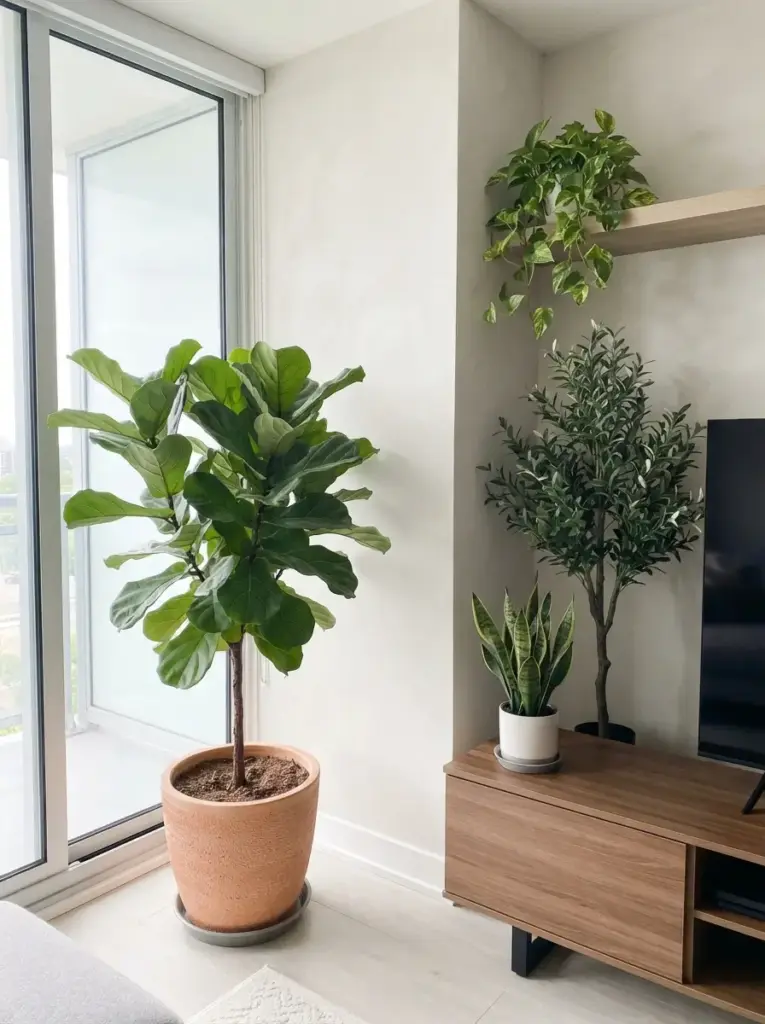
Greenery adds shape, colour, and softness to rooms dominated by plaster, glass, and straight furniture lines. Choose plants according to actual light rather than appearance. Snake plants, ZZ plants, and pothos tolerate lower light, while ficus, citrus, and many succulents need brighter conditions. Place plants near windows but away from strong heaters and cold draughts. Use saucers or waterproof liners to protect rented floors and furniture. Artificial plants can work in dark corners, although realistic leaf variation and properly scaled pots make a noticeable difference.
Textiles complete the room by improving comfort and sound absorption. Combine two or three textures, such as linen curtains, a wool-blend rug, and a knitted throw. Keep cushion numbers controlled so the sofa remains usable; two cushions on a small sofa or three on a larger one are often enough. Choose removable covers and washable fabrics for easier maintenance. Texture succeeds because it softens modern lines without requiring more colour, which makes it especially helpful for people who prefer restrained rooms but still want warmth.
Common Mistakes to Avoid
Buying Furniture Before Confirming the Layout
Impulse purchases create expensive layout problems. A sofa may fit the wall yet block a balcony door, while a coffee table may leave too little knee room. Measure first, mark footprints, and check delivery routes through lifts, stairs, and doorways. Include skirting boards and radiators in your measurements because they reduce usable depth. Move-in excitement often encourages people to furnish the room in one weekend, but living in the space for several days reveals where you naturally walk, charge devices, place bags, and sit.
Using Only One Overhead Light
Harsh ceiling light flattens colour and produces strong shadows under eyes and furniture. Add at least two lower light sources, ideally on different sides of the room. Matching lamps are not required, but their bulb temperatures should be consistent. Exposed bulbs can cause glare when seated, so choose shades or diffusers. Portable rechargeable lamps help when outlets are limited. Lighting should support reading, conversation, television, and cleaning rather than forcing one brightness level for every activity.
Choosing Too Many Small Decorative Items
Tiny décor can make a compact room feel busier than it is. Replace several small objects with one larger vase, one broad art piece, or a substantial lamp. Collections look better when grouped tightly on a tray or shelf rather than scattered across every surface. Keep practical items within reach, then hide packaging, spare cables, and paperwork. Editing does not mean removing personality; it means giving meaningful pieces enough space to be noticed.
Prioritising Style Over Maintenance
White bouclé, pale rugs, and delicate glass can suit some homes, but they create stress in others. Match materials to pets, children, eating habits, and cleaning routines. Performance fabric, washable covers, rounded corners, and stain-resistant rugs may support daily life better than fragile finishes. Good design should make the room easier to use, not create constant anxiety about spills and scratches.
Budget-Friendly Ways to Add Designer Detail
Spend More on High-Use Pieces
Allocate the largest part of the budget to the sofa, rug, window coverings, and lighting because these items affect comfort and visual scale. Save on side tables, frames, trays, and decorative objects, which are easier to replace later. A £1,200 room budget might reserve roughly £500 for seating, £220 for a rug, £180 for lighting, £150 for curtains, and the remaining £150 for storage or accessories. Actual prices vary, but setting category limits reduces impulse buying.
Upgrade Second-Hand Furniture
Solid timber furniture often responds well to sanding, oiling, paint, or new hardware. Search for simple shapes with stable frames rather than chasing a specific brand. Replace dated knobs, shorten overly ornate legs, or add a stone offcut to a sturdy side table. Upholstered furniture requires more caution; inspect seams, smells, stains, and pest risk before bringing it home. Local collection can reduce delivery costs, but measure your vehicle and access route first.
Use Fabric for Large-Scale Impact
Curtains, slipcovers, tablecloths, and framed textiles cover large areas for less money than new furniture. A pair of full-length curtains can add colour and softness, while a fitted sofa cover can unify mismatched upholstery. Fabric remnants work well for cushion fronts, bench pads, and simple wall hangings. Choose washable materials and prewash natural fibres before sewing, because shrinkage can alter the final fit.
Modern Apartment Living Room Tips for First Homes
Create a Move-In Essentials List
Start with items that make the room usable on day one: seating, a lamp, window privacy, a small table, extension leads, basic storage, and cleaning supplies. Artwork, extra cushions, and decorative objects can wait. Include felt pads, cable clips, removable hooks, a tape measure, spare bulbs, and a simple tool kit. These low-cost items protect floors, control cords, and make installation easier. A practical checklist stops new homeowners from spending the entire budget on visible furniture while forgetting the small parts that make the room function.
Set One Clear Design Direction
Choose three words that describe the room, such as warm, graphic, and calm. Use them to judge purchases. A chrome side table may suit “graphic” but conflict with “warm” unless repeated with softer materials. Clear direction is more useful than copying a full inspiration photo because apartments differ in light, ceiling height, and storage. The best Modern Apartment Living Room plan adapts ideas to real routines, existing possessions, and lease limits rather than following a rigid style label.
Test Colour in Real Light
Paint chips and online photographs can mislead because screens, shop lighting, and camera editing change colour. Tape large samples to several walls and observe them throughout the day. North-facing rooms may make cool grey appear blue, while warm evening bulbs can turn cream noticeably yellow. Test upholstery and curtain samples near the floor as well as at eye level. Bold colour should still look acceptable under the room’s least flattering light, not only during a bright afternoon.
Protect Flexible Space
Leave one area that can change with your needs. A lightweight chair, nesting table, or ottoman can move aside for exercise, guests, children’s play, or work. Avoid overfilling corners simply because they are empty. Negative space supports circulation and makes bold furniture look more intentional. Flexible planning is especially useful in studios and rentals, where one room may serve as lounge, office, dining room, and guest area during the same week.
Keep Rental Changes Reversible
Photograph walls, floors, and fixtures before making changes. Store screws, handles, shades, and other original parts in labelled containers. Test adhesives in hidden areas and avoid placing removable products over damaged or freshly painted surfaces. Freestanding shelves, tension rods, plug-in lights, large art, and textile panels offer strong visual change with less risk. Lease-safe design feels deliberate when temporary additions follow the same colour and material plan as permanent furniture.
Frequently Asked Questions
What Colours Make an Apartment Living Room Look Larger?
Warm whites, pale greige, soft taupe, and light grey can reflect more light, but colour alone does not determine spaciousness. Consistent wall and curtain colours reduce visual breaks, while darker accents add depth and definition. Painting skirting boards and walls in a similar tone can make low walls appear calmer. Deep colours also work in small rooms when used with good lighting and limited clutter. Choose the shade that suits the room’s daylight rather than defaulting to bright white.
How Much Furniture Should a Small Living Room Have?
Keep enough furniture to support regular activities, then remove pieces that duplicate a function. Most small rooms need a sofa, one additional movable seat, a coffee table or ottoman, lighting, and some storage. Extra side tables, occasional chairs, and display units should earn their floor space. Measure walkways and test whether doors, drawers, and sofa beds can open fully. Comfort comes from usable space between items, not from fitting the maximum number of seats.
Which Sofa Style Works Best in an Apartment?
Compact sofas with narrow arms, raised legs, and moderate seat depth usually provide the best balance of comfort and scale. Modular sofas help with difficult stairs and can adapt after a move. Low backs preserve open sightlines, while removable covers simplify cleaning. Sleeper sofas suit regular guests, but check the open dimensions and mattress comfort. Choose a sofa based on room measurements and daily use before selecting colour or trend-led details.
How Can Renters Add Bold Details Without Painting?
Large art, coloured curtains, patterned rugs, removable wallpaper, fitted slipcovers, plug-in wall lights, and sculptural furniture can all create impact. Repeat the chosen colour or material in two smaller places so the feature looks connected to the room. Temporary additions should still follow a clear palette. Keep packaging and original fittings when possible, and test adhesives before covering large areas.
What Lighting Is Best for a Living Room?
Layered lighting gives the most flexibility. Combine a ceiling or broad ambient source with reading lamps and smaller accent lights. Bulbs between 2700K and 3000K suit most living rooms because they feel warm without turning very yellow. Choose a high colour-rendering rating when accurate fabric and artwork colours matter. Dimmers and smart plugs help the room shift between cleaning, working, entertaining, and relaxing.
How Do I Make a Minimal Room Feel Warm?
Warmth comes from texture, natural materials, varied lighting, and personal objects rather than a high quantity of décor. Combine wood, woven fabric, and one soft rug, then add lamps at different heights. Use warm white walls instead of stark blue-white paint. Display a few books, ceramics, or photographs with meaning. Controlled layers keep the room calm while preventing it from feeling empty or impersonal.
Conclusion
Bold apartment design depends on restraint, scale, and practical planning. One strong colour, a properly sized rug, layered lighting, oversized art, or a sculptural table can change the room more effectively than many small purchases. Measurements protect your budget, while repeated materials and clear sightlines keep the layout coherent. Rental-friendly solutions can still look polished when cords, fixings, and storage receive careful attention. A successful Modern Apartment Living Room should support daily habits, adapt to changing needs, and show personality without sacrificing comfort. Start with the layout, improve the lighting, choose one confident detail, and let the rest of the room grow gradually