
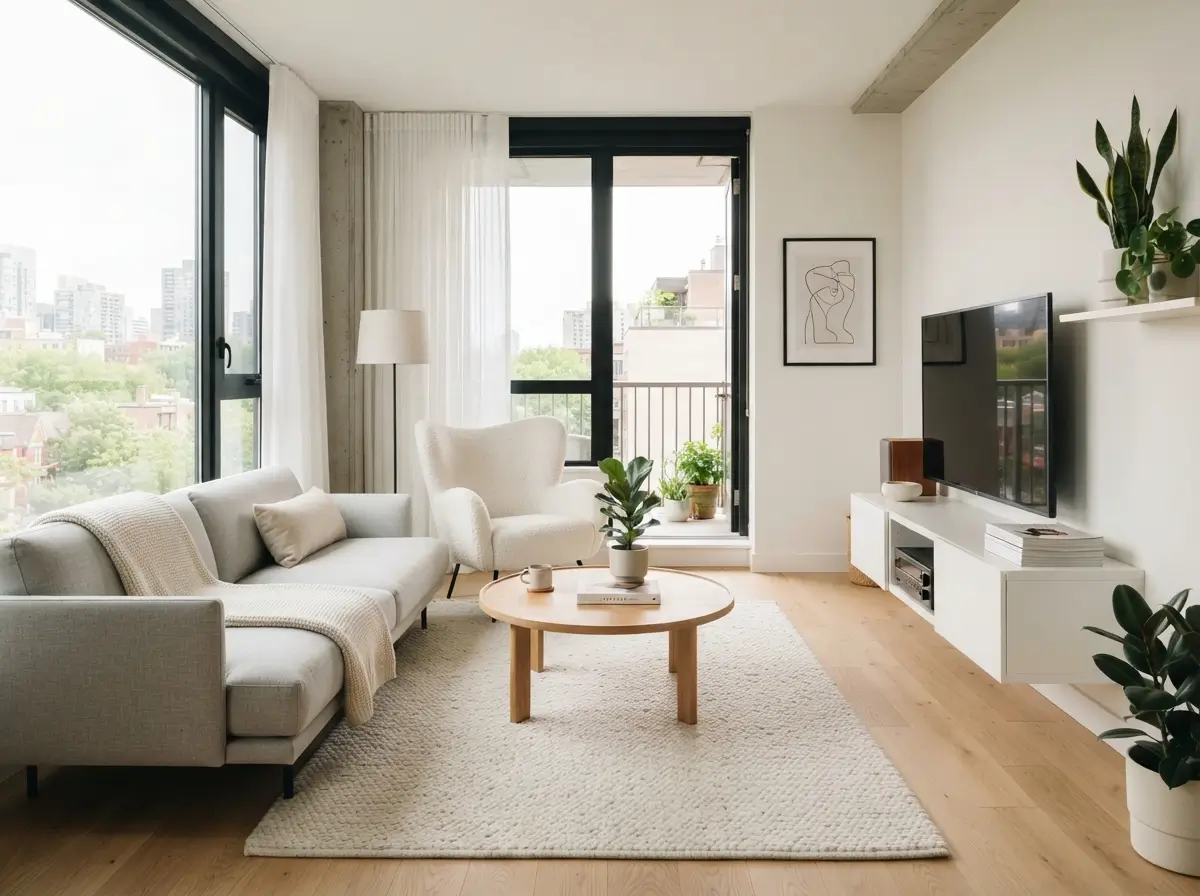

Small homes feel easier to manage when every piece has a purpose, enough breathing room, and a clear place to belong. Minimalist Apartment Living Room Designs are not about owning almost nothing or making a room feel cold. They focus on sensible furniture, controlled colour, practical storage, comfortable lighting, and layouts that support daily routines. For renters, first-time movers, and anyone decorating on a limited budget, minimalism can reduce unnecessary spending because it encourages slower, more deliberate choices.
Good design begins with how the room must work. Some people need a quiet place for reading, while others need seating for friends, hidden storage, a compact desk, or space for children to play. Measuring the walls, doorways, windows, and traffic paths before shopping prevents expensive mistakes. Keeping a simple plan also helps you avoid filling a small room with items that look attractive online but interrupt movement once they arrive.
Prepare the Room Before Choosing a Style
Measure more than the obvious wall lengths. Note the ceiling height, skirting boards, sockets, radiators, vents, curtain depth, and the direction each door opens. Photograph every wall and add the measurements to the images on your phone. These records make shopping easier because you can check proportions without guessing. Minimalist Apartment Living Room Designs depend heavily on accurate scale, and even a difference of ten centimetres can determine whether a chair feels comfortable or blocks a walkway.
Observe natural light for one full day before deciding on colour. East-facing rooms receive brighter morning light, while west-facing rooms often become warmer later in the day. North-facing spaces may need warmer paint undertones and stronger lamps. South-facing rooms can usually handle slightly deeper neutrals. Paint sample cards are useful, but larger painted sheets or removable sample patches show colour more accurately. Move them around the room and view them beside the sofa, flooring, and curtains.
List everything the living room must store. Remote controls, chargers, books, shoes, toys, work equipment, blankets, and paperwork need specific homes. Grouping those items by frequency helps you select suitable storage. Daily essentials should sit in easy-to-reach drawers or baskets, while seasonal items can go higher or deeper. Avoid buying storage before sorting possessions because extra cabinets often encourage people to keep objects they no longer use.
Set a realistic spending order rather than one large decorating budget. Essential repairs and comfortable seating come first, followed by lighting, privacy, storage, and a rug. Artwork, cushions, plants, and decorative objects can wait. People furnishing a first apartment often feel pressure to finish every corner immediately, yet a slower approach usually produces a more useful room. Keeping part of the budget unspent also covers delivery problems, replacement bulbs, curtain hardware, or other small costs.
Simple Move-In Checklist for a Minimalist Living Room
Begin with safety and basic function. Check smoke alarms, sockets, window locks, loose floorboards, and furniture stability before styling. Confirm where internet equipment will sit and identify the nearest power points for lamps, television equipment, or a work desk. Extension leads should never become permanent solutions for overloaded sockets. Cable boxes and clips can make necessary wires less visible without hiding heat-producing equipment in enclosed spaces.
Next, create one comfortable sitting position before arranging the entire room. Place the sofa or main chair where it receives useful daylight without causing screen glare. Add a lamp, a nearby surface, and a temporary basket for daily items. Living with this small setup for several days reveals the natural walking route and shows whether the chosen position supports conversation, television viewing, reading, or work.
Finally, unpack decor last. Books, framed pictures, cushions, throws, and ornaments should enter the room only after large furniture and storage are settled. Lay every decorative item together, choose the strongest pieces, and store or donate the rest. Minimalist Apartment Living Room Designs become easier to maintain when each visible object has enough space and a clear reason to remain. That decision is more valuable than following a fixed number of belongings.
Record the room before changing anything. A few photographs from each doorway help you notice blocked sightlines, uneven furniture placement, and clutter that becomes invisible during daily use. Repeat the photographs after rearranging, then compare them before purchasing new pieces.
Images often reveal whether the rug is too small, the curtains hang too low, or one corner carries too much visual weight. Beginners can also create a simple phone album for paint samples, product dimensions, receipts, and warranty details. Keeping those records together reduces duplicate purchases and makes returns easier. Practical documentation may sound uncreative, but it protects the budget and supports more confident decorating decisions throughout the move-in process over time, too. Minimalist Apartment Living Room Designs
Can a Minimalist Apartment Living Room Feel Comfortable?
Yes. Minimalist Apartment Living Room Designs can feel warm, relaxed, and personal when they include soft textures, supportive seating, warm-white lighting, and a few meaningful objects. Comfort comes from choosing the right scale and materials, not from adding more furniture. A compact sofa with a deep enough seat, a washable rug, a side table within reach, and layered lamps will usually make daily life easier than a crowded room filled with decorative pieces.
Build the Layout Around One Daily Priority
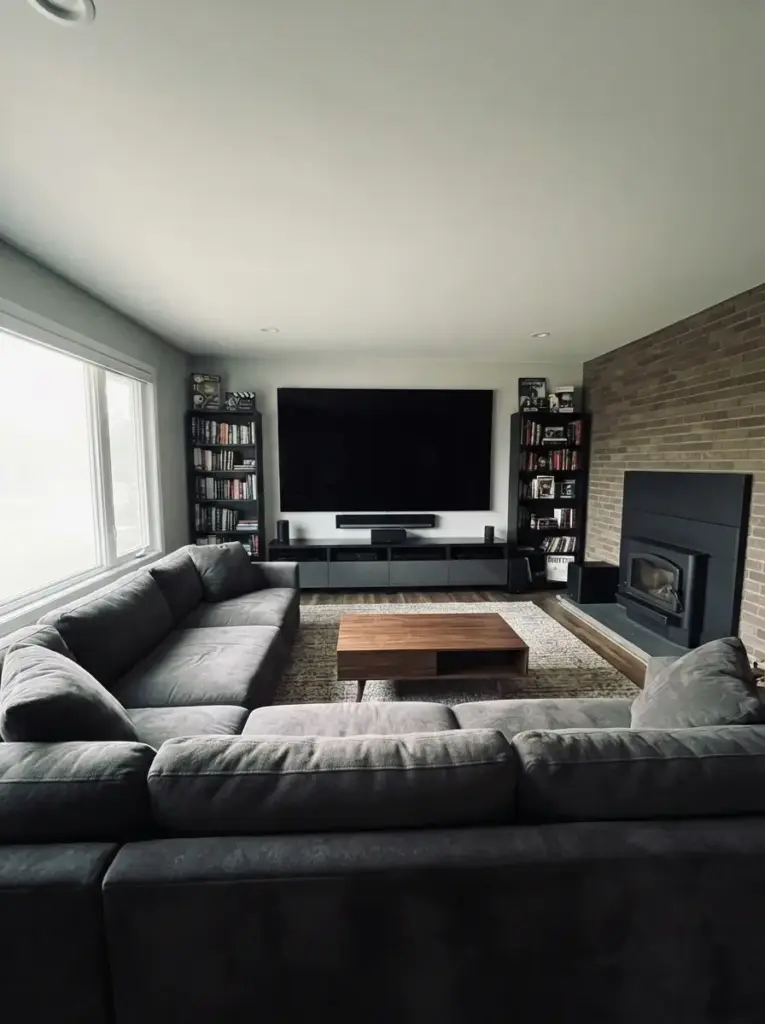
Start by deciding what happens most often in the room. Movie lovers may place the sofa directly opposite the television, while readers may angle seating toward a bright window. People who work from home can reserve one wall for a slim desk and keep the centre open. Choosing one main priority prevents the room from becoming a collection of competing zones that never feel fully useful.
Clear priorities work because they simplify furniture decisions. Someone living alone may only need a two-seat sofa and one occasional chair, while a couple who often hosts friends may benefit from a compact sectional with an ottoman. Mark the furniture footprint on the floor with painter’s tape before buying. This rental-friendly step shows whether drawers can open, doors can swing, and people can walk through without turning sideways.
Choose a Calm Base Colour With Warm Undertones
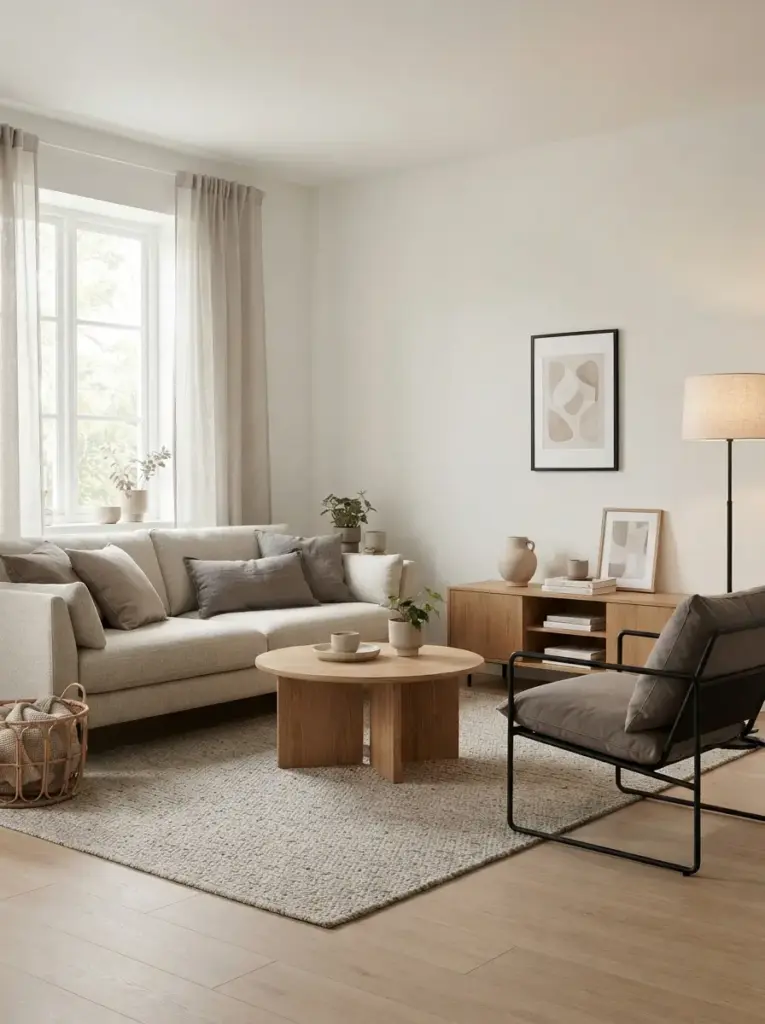
Soft off-white, light greige, muted taupe, pale clay, and warm grey create a quiet background without making the room feel clinical. Cooler whites can appear harsh in north-facing rooms, especially under blue-toned bulbs. Warm undertones soften shadows and pair well with wood, linen, rattan, black metal, and simple artwork. Renters who cannot paint can bring the same effect through curtains, rugs, cushions, and removable fabric panels.
Colour restraint supports visual order because fewer strong contrasts allow the eye to rest. Try a 60-30-10 approach: about 60 per cent neutral base, 30 per cent natural or mid-tone colour, and 10 per cent darker accents. For example, use cream walls, an oatmeal sofa, oak furniture, and small black details. Beginners who feel nervous about colour will find this method easier than matching many unrelated shades.
Use a Sofa With a Light Visual Footprint
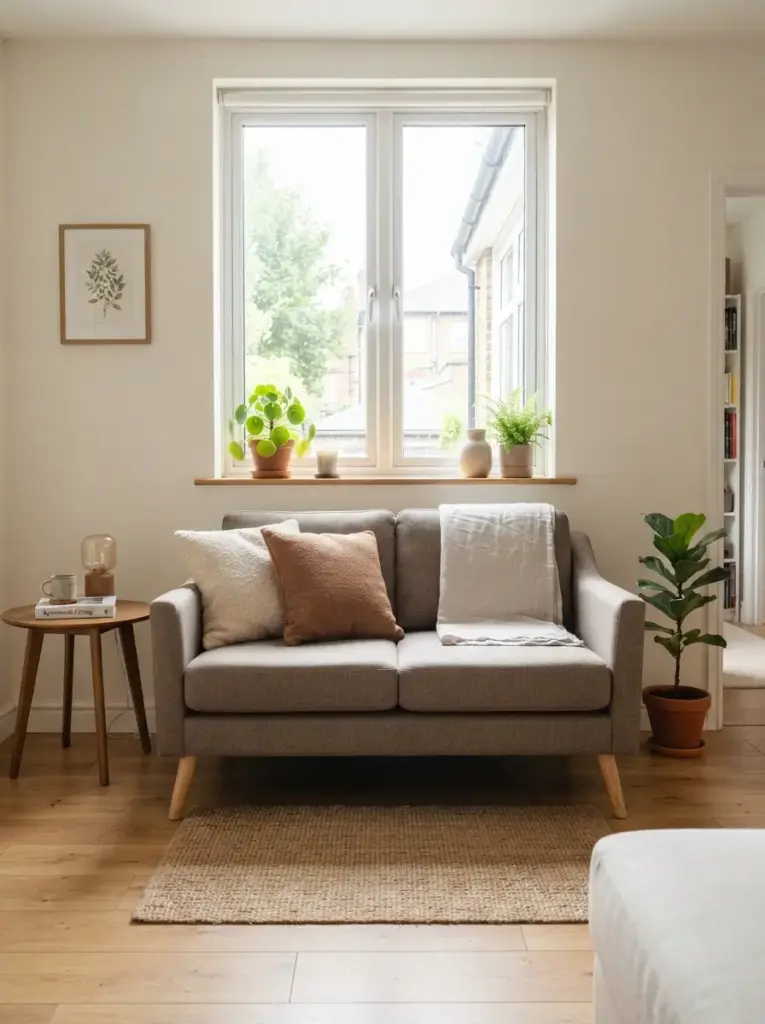
Bulky arms, tall backs, and heavy bases can make a compact room look smaller than it is. Look for sofas with narrow arms, visible legs, and a back height that stays below the centre of the window where possible. Two-seat or apartment-size sofas between roughly 160 and 190 centimetres wide often fit better than full three-seat models. Always check seat depth, because an overly shallow sofa may look neat but feel uncomfortable.
Raised legs reveal more floor, which creates a stronger sense of openness. That small detail helps the room feel lighter without reducing seating. People furnishing a first home should choose durable, easy-clean upholstery in a mid-tone neutral such as stone, mushroom, or warm grey. Very pale fabric shows stains quickly, while very dark fabric can dominate a tiny room. Removable cushion covers add practical value for busy households and pet owners.
Replace a Large Coffee Table With Flexible Pieces
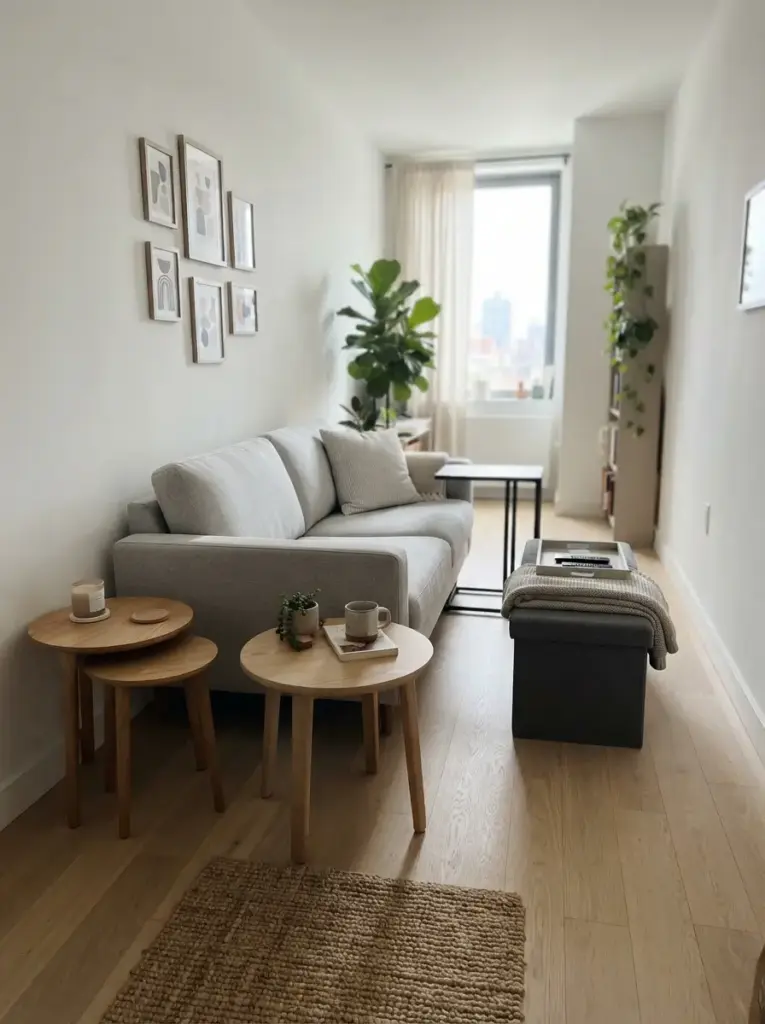
One oversized coffee table can block movement, especially in a narrow living room. Nesting tables, two small round tables, a storage ottoman, or a C-shaped side table provide more flexibility. Round edges are particularly useful near tight walkways because they reduce sharp corners and make circulation feel smoother. Lightweight pieces can move when guests arrive, when you exercise, or when you need extra floor space.
Flexible furniture earns its place by doing more than one job. A storage ottoman can hold blankets, support a tray, and provide extra seating. Two nesting tables can separate beside different chairs or tuck together after use. This idea suits renters and students who move often because smaller pieces are easier to carry and adapt to another floor plan. Avoid buying a table wider than two-thirds of the sofa. Minimalist Apartment Living Room Designs
Create Hidden Storage Along One Wall
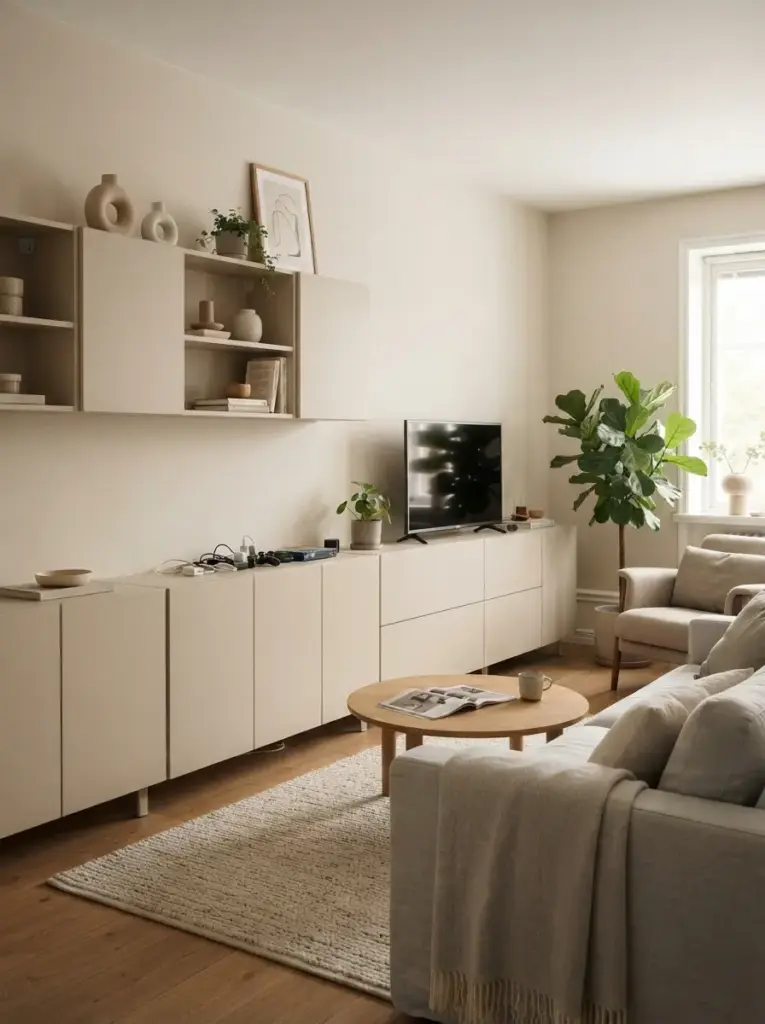
Scattered baskets and small cabinets can make a room feel busier than a single organised storage zone. Choose one wall for a low media unit, closed shelving, or a modular cabinet system. Keeping storage in one area creates a clear boundary between displayed items and everyday clutter. Doors and drawers hide chargers, paperwork, games, spare cables, and cleaning supplies that would otherwise remain visible.
Concentrated storage works well because it reduces visual interruptions across the room. A low cabinet in the same colour family as the wall will appear quieter than several contrasting units. People with limited budgets can combine two simple flat-pack cabinets and add matching handles for a more finished look. Renters should use anti-tip straps where required and follow the landlord’s rules before fixing tall furniture to walls.
Let One Rug Define the Seating Area
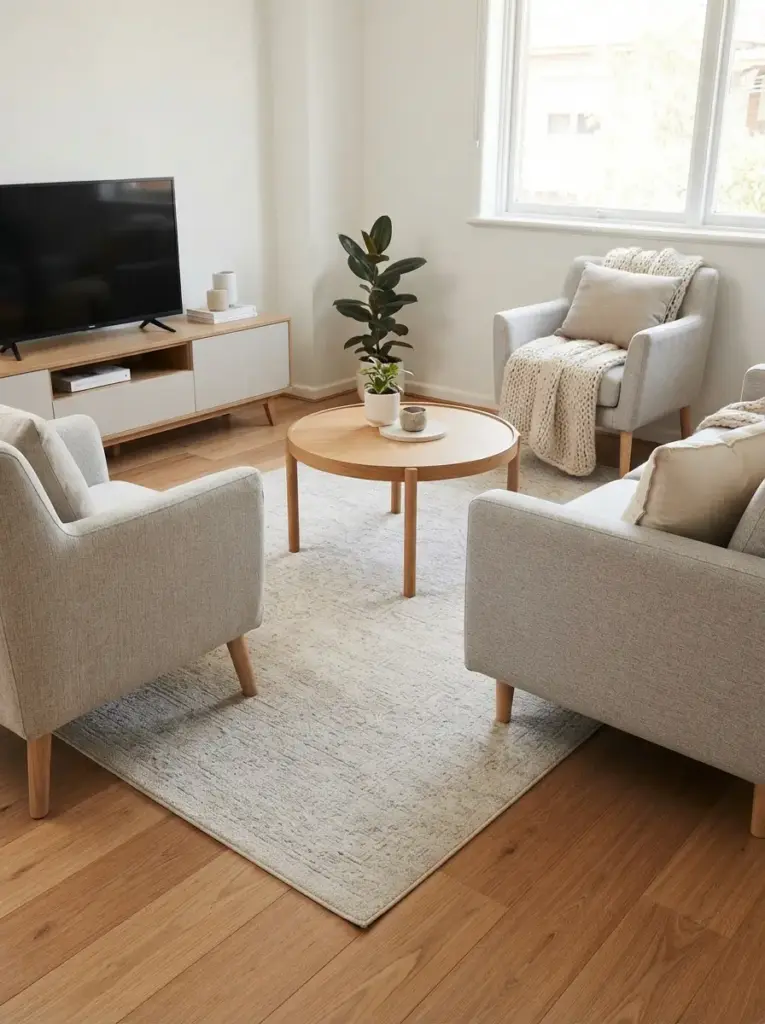
Rugs help a small room feel organised when they connect the main furniture rather than floating alone in the centre. Choose a size large enough for at least the front legs of the sofa and chairs to rest on it. In many apartments, a rug around 160 by 230 centimetres or 200 by 300 centimetres works better than a tiny mat. Measure before buying, because the right proportion matters more than the pattern.
Grounding the seating area makes the layout feel deliberate. Low-contrast designs, subtle stripes, faded geometric patterns, or solid textured rugs support minimalism without looking empty. Flatweave and low-pile options are easier to vacuum and suit homes with pets or robot cleaners. Anyone choosing between Small Apartment Living Room Decor ideas should prioritise a practical rug before buying several decorative accessories, since it influences comfort, sound, and visual balance.
Use Warm Layered Lighting Instead of One Ceiling Light
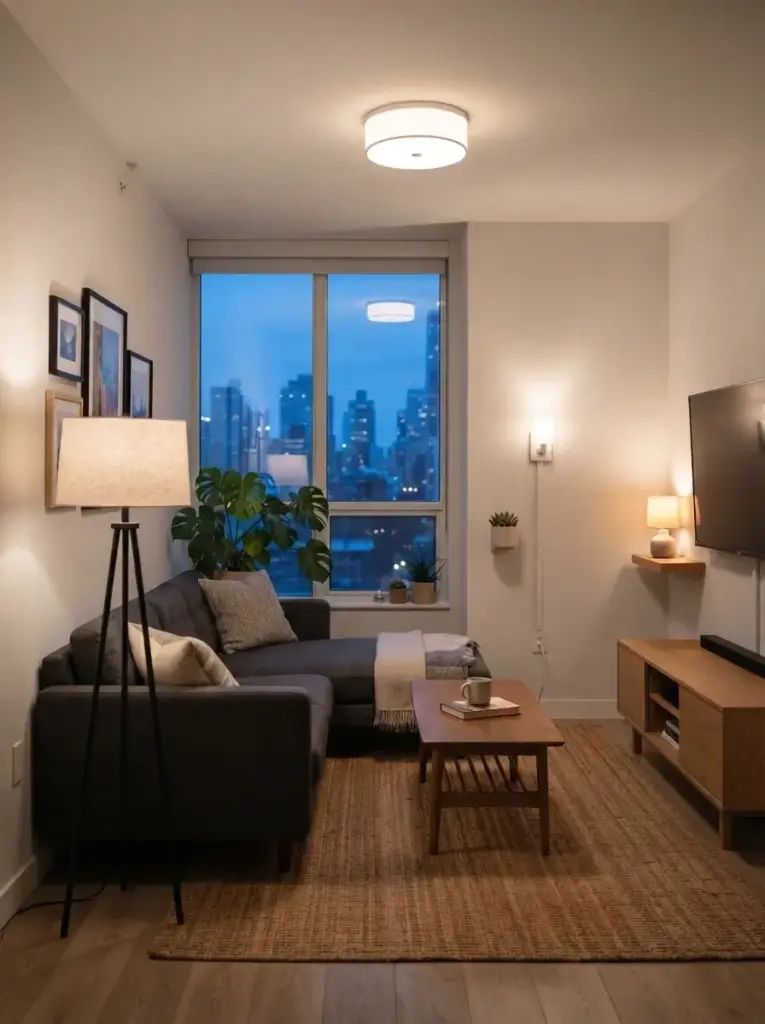
Ceiling lights often create flat illumination and strong shadows. Combine a central fixture with a floor lamp, table lamp, or wall-mounted plug-in sconce. Warm-white bulbs between 2700K and 3000K usually create a comfortable evening atmosphere, while 3000K to 3500K can work well for reading or task lighting. Matching the colour temperature across lamps prevents the room from looking uneven.
Layered lighting improves everyday use because each activity needs a different level of brightness. A floor lamp beside the sofa supports reading, while a small lamp near the television reduces eye strain at night. Plug-in sconces suit renters because many models require no electrical work. Cord covers, cable clips, and furniture placement can keep wires tidy. Dimmable bulbs also help one room move easily from daytime work to relaxed evening use. Minimalist Apartment Living Room Designs
Keep Window Treatments Simple and Full Length
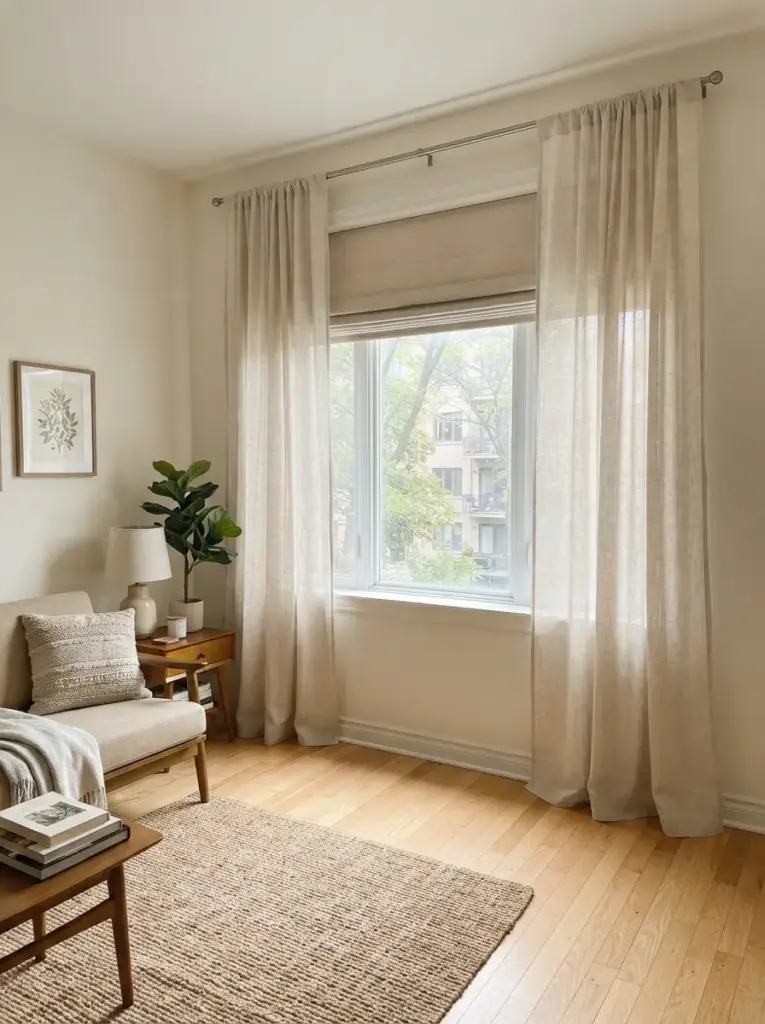
Short curtains can cut the wall visually and make ceilings feel lower. Hang full-length curtains close to the ceiling and let them fall just above the floor. Choose linen-look fabric, cotton blends, or lightweight textured panels that filter daylight without adding heavy volume. Curtain width should usually total one-and-a-half to two times the window width so the panels still look generous when closed.
Vertical fabric lines guide the eye upward and make the room appear taller. That effect is useful in older rentals with low ceilings. People who need privacy can combine sheer panels with simple roller blinds. Tension rods, no-drill brackets, and removable hooks offer renter-friendly alternatives, though weight limits must be checked carefully. Avoid overly shiny fabric, dramatic puddling, or complex valances because they add maintenance and visual weight.
Display Fewer Objects With More Intention
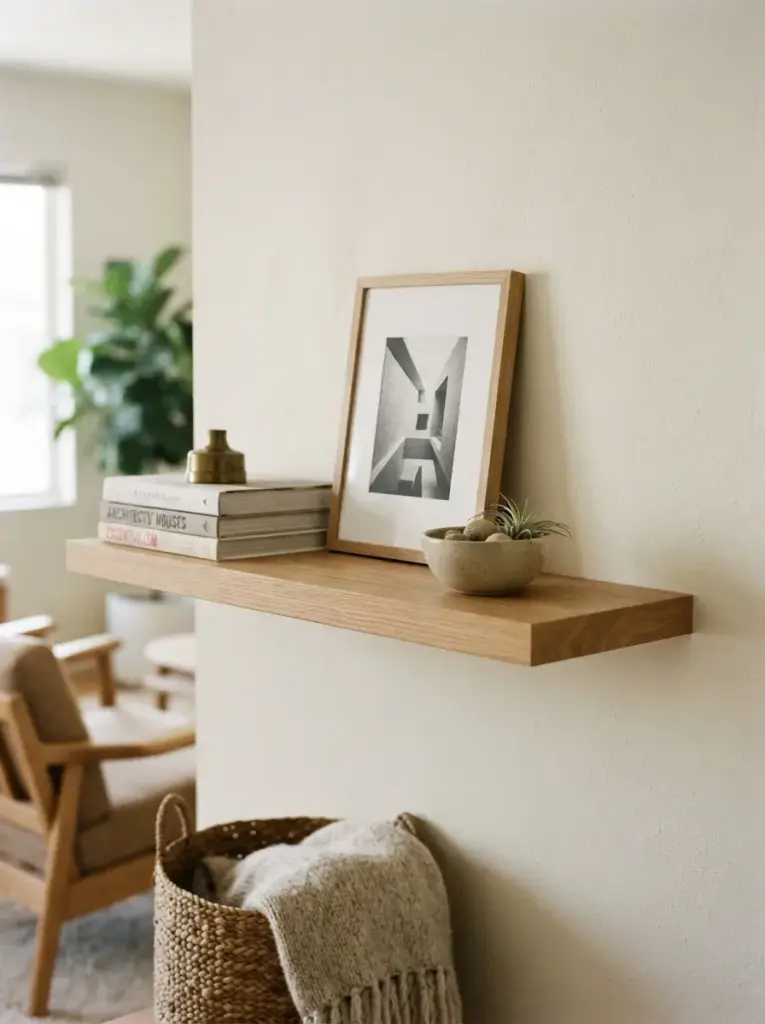
Minimal rooms still need personality, but every shelf does not need to be full. Choose a small group of items that vary in height and shape, such as a framed print, a ceramic bowl, and one stack of books. Leave open space around each group so the display feels considered. Rotating objects seasonally keeps the room interesting without increasing clutter.
Edited displays feel calmer because the eye can recognise each object clearly. People who collect souvenirs or family photographs can keep most items stored and show only a few at one time. This approach protects meaningful pieces from becoming background noise. Anyone drawn to Cozy Apartment Living Room Designs Ideas can add warmth through texture and memory rather than quantity, using handmade ceramics, woven baskets, framed photographs, or one favourite blanket.
Add Natural Materials for Warmth
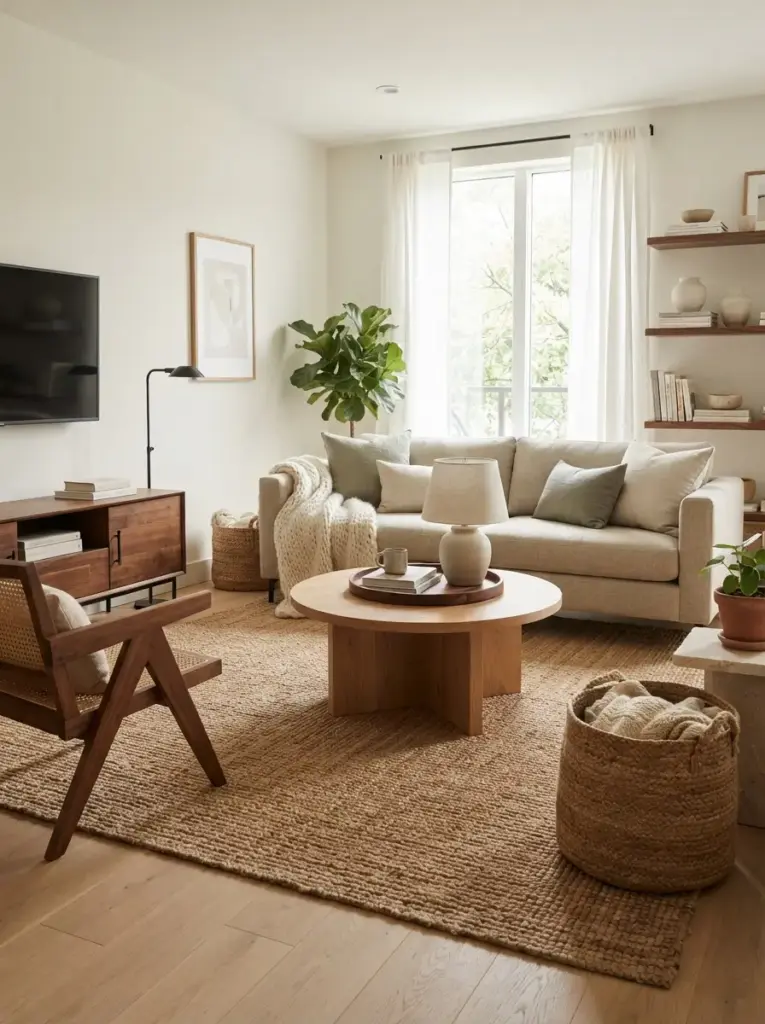
Wood, linen, cotton, wool, cane, jute, and stone bring softness and variation to a simple room. Even one oak side table or a linen cushion cover can stop a neutral scheme from feeling flat. Keep the finishes related rather than identical. Light oak, warm walnut, and black metal can work together when repeated in small amounts across the room.
Natural texture adds depth without relying on busy colour or pattern. Beginners often try to solve a plain room by buying more ornaments, but material contrast usually works better. A wool-blend rug, cotton curtains, matte ceramic lamp, and wooden tray can create enough variety. Budget shoppers can use second-hand wood furniture, washable cotton covers, and jute baskets. Check rough fibres carefully if children crawl on the floor or pets like to scratch. Minimalist Apartment Living Room Designs
Use Vertical Space Without Crowding Every Wall
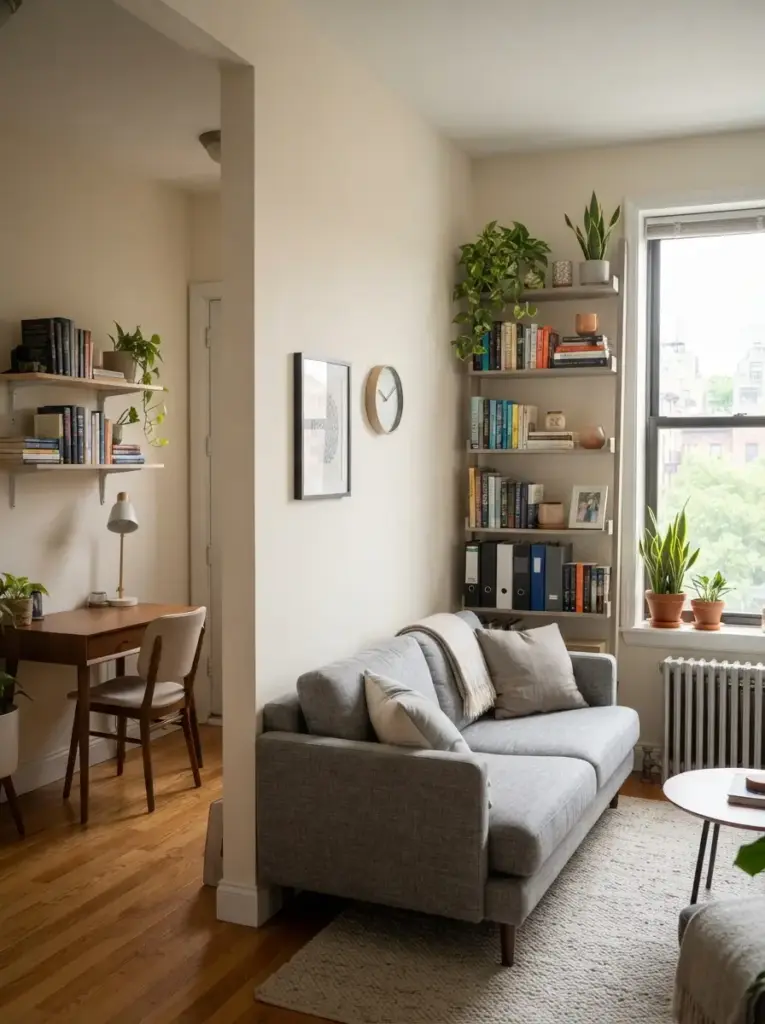
Tall storage, slim bookcases, and wall-mounted shelves can free floor area, but too many vertical elements make a small room feel boxed in. Select one or two wall zones for height and keep the remaining surfaces quieter. A narrow bookcase beside the sofa, floating shelf above a desk, or tall plant near the window can draw the eye upward without covering every wall.
Controlled vertical storage is valuable because it uses space that often goes unused. Renters can choose freestanding ladder shelves or tension-pole systems when drilling is restricted. Keep heavier objects on lower shelves and lighter decor above. Group books by size or colour only when it helps you find them; function should come first. People searching for Small Apartment Living Room Ideas should avoid placing tall units directly beside every doorway, since that can make entrances feel narrow.
Choose Artwork That Matches the Wall Scale
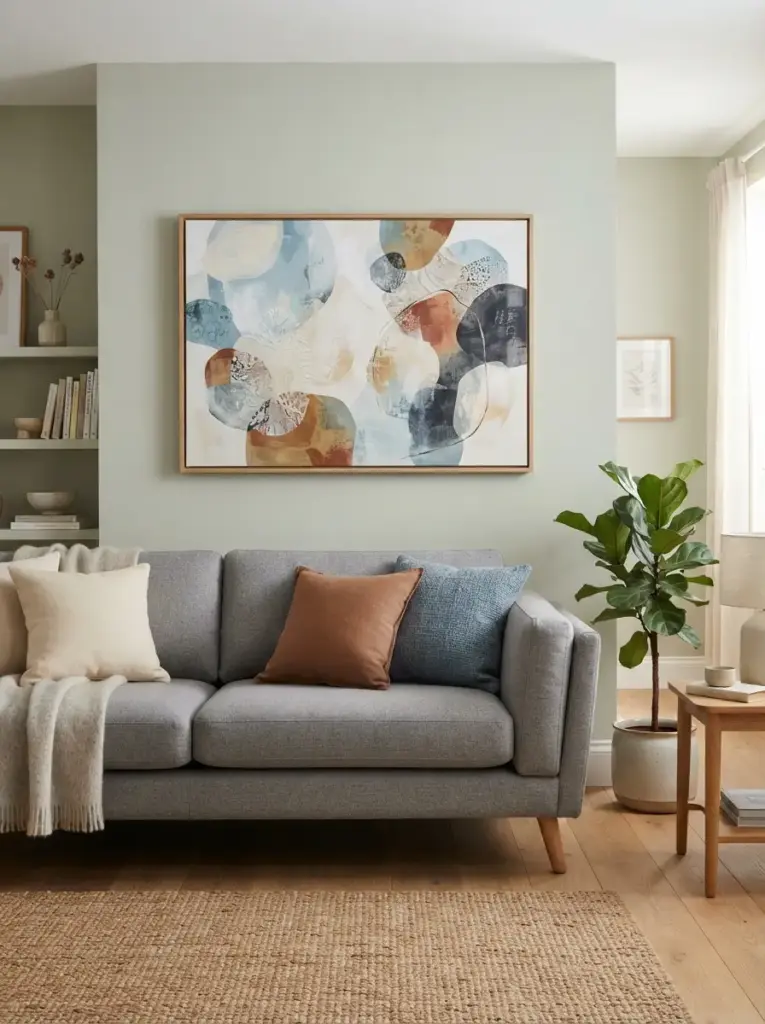
Tiny frames spread across a large wall can create visual clutter. One medium or large piece, a balanced pair, or a tightly arranged group usually feels calmer. Artwork above a sofa should often measure around two-thirds of the sofa width, though the exact scale depends on the room. Hang the centre near eye level and leave enough space above the sofa so the picture does not feel disconnected.
Proper scale creates confidence and reduces the need for extra decoration. Renters can use lightweight frames with removable hanging strips, provided the surface and weight limits are suitable. Printable art, textile hangings, and framed wrapping paper offer affordable options. Choose colours already present in the room, then add one subtle contrasting tone. Avoid generic art bought only to fill space; meaningful images make a minimalist room feel more personal.
Make the Television Area Quiet and Balanced
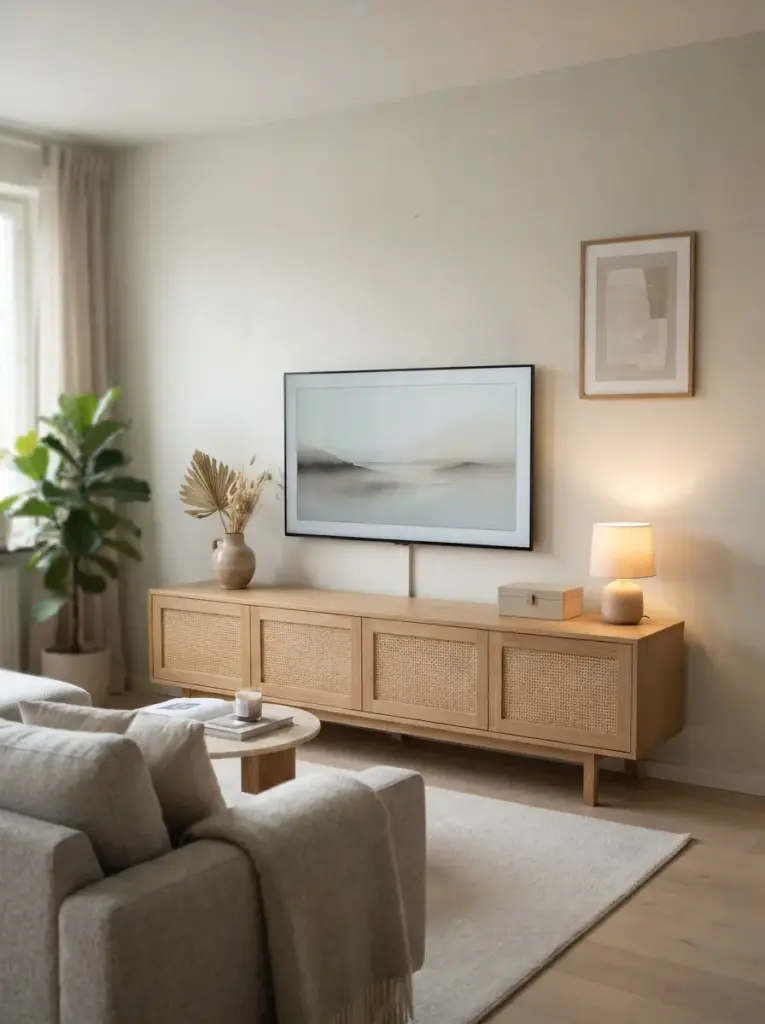
Televisions often become the darkest, strongest rectangle in a small living room. Reduce that visual weight with a low media unit wider than the screen, simple cable management, and limited accessories. Avoid stacking many small objects around the television. A single vase, low lamp, or closed box on each side is usually enough.
Balance improves because the screen starts to feel integrated rather than placed randomly. Matte wall colours and soft lamps nearby reduce glare. Households following Modern Apartment Living Room Ideas can use a slim black frame television, light wood cabinet, and one neutral artwork nearby for a cleaner result. Wall mounting can save surface space, but renters should get permission first. Freestanding television easels also work in some layouts, though cables need careful control.
Create a Small Comfort Zone Near the Window
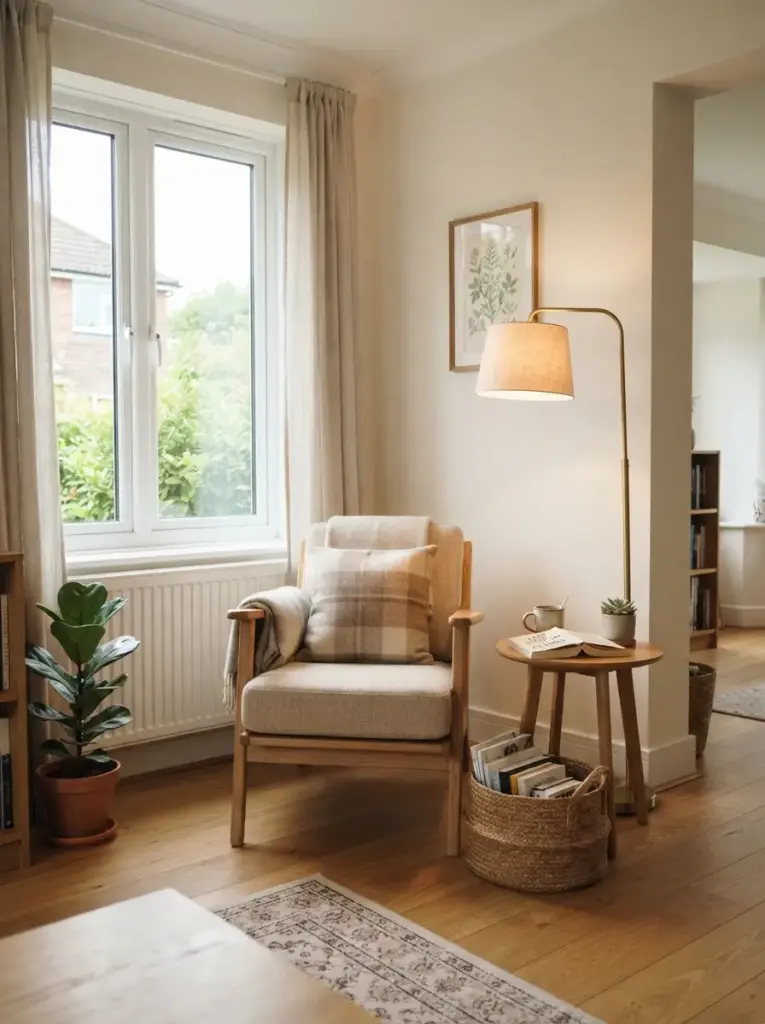
Unused corners often become storage piles, yet many can support one useful activity. Place a compact chair, small side table, floor lamp, and basket near a window to create a reading or coffee spot. Choose a chair with open arms or visible legs so it does not feel heavy. Even a dining chair with a seat cushion can work when space is very limited.
Dedicated comfort zones make the room feel generous because they add function without requiring a full second area. People who live alone, read often, or need a quiet break from screens will benefit most. Keep the setup simple and leave at least 60 centimetres for nearby movement where possible. Avoid oversized accent chairs that block curtains or radiators. Foldable stools and slim benches offer flexible alternatives for very narrow rooms.
Leave Intentional Empty Space
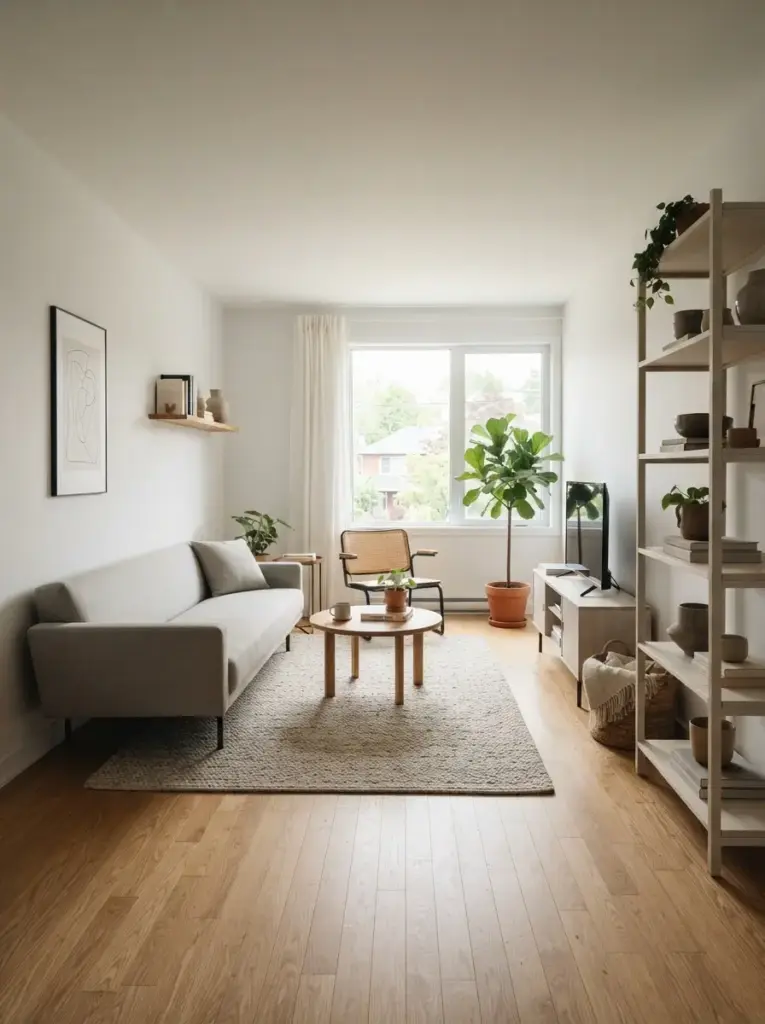
Space is not wasted space. Clear floor around furniture, open wall sections, and breathing room on shelves make a compact apartment easier to clean and visually calmer. Try removing one small piece from each crowded area before buying anything new. The room may feel more complete once unnecessary objects disappear.
Intentional space supports movement and makes useful furniture stand out. Families may need more storage than single occupants, so minimalism should adjust to real life rather than follow a strict object count. Minimalist Apartment Living Room Designs succeed when the room supports daily habits without constant rearranging. Keep pathways open, leave tabletops partly clear, and resist placing furniture against every wall. People with mobility concerns will especially benefit from wider routes and fewer low obstacles.
Common Mistakes to Avoid
Buying Furniture Before Measuring
Excitement after moving often leads to rushed purchases. Measure wall lengths, door widths, lift access, stair turns, and the distance between windows before ordering large pieces. Record those numbers on your phone and compare them with product dimensions. A sofa that technically fits the wall may still block a socket, radiator, balcony door, or natural walkway.
Choosing Everything in the Same Neutral Shade
Monochrome rooms can look flat when every surface has the same colour and texture. Use related neutrals instead of exact matches. Cream, sand, mushroom, warm grey, and light oak create gentle variation. Add contrast through black metal, dark wood, or muted green. Texture should carry part of the design through woven fabric, smooth ceramics, soft rugs, and natural wood grain.
Using Too Many Small Storage Pieces
Several narrow drawers, baskets, trolleys, and side cabinets may appear practical, yet together they create clutter. Combine storage where possible. One larger closed cabinet often works better than four small units. Review what must stay in the living room and move rarely used items elsewhere. Storage should solve a specific problem rather than become another object that needs organising.
Pushing Every Piece Against the Walls
Wall-hugging furniture can leave a strange empty centre and weaken conversation. Pull the sofa forward slightly when space allows, or use a rug to connect seating. Even a gap of 10 to 20 centimetres can make the arrangement feel intentional. In narrow rooms, keep the main path on one side rather than forcing people to move around several pieces.
Relying Only on Decorative Cushions for Comfort
Soft cushions cannot fix a sofa with poor seat depth, weak support, or an uncomfortable back angle. Test furniture in person when possible. Check whether your feet reach the floor, whether the seat feels supportive, and whether the arm height suits your habits. Two or three useful cushions are better than a row that must be moved every time someone sits down.
Ignoring Cleaning and Maintenance
White boucle, deep-pile rugs, glass tables, and open shelving may look attractive but require frequent care. Choose surfaces that match your routine. Washable covers, low-pile rugs, wipeable paint, closed storage, and matte finishes are easier for busy households. Good minimalism reduces chores rather than creating a room that only looks tidy immediately after cleaning.
Budget-Friendly Ways to Create a Minimalist Living Room
Start with the layout before spending money. Moving the sofa, removing one unused table, and clearing the main walkway can improve the room at no cost. Shop your own home for lamps, baskets, frames, and textiles that could work better in the living room. Reusing existing pieces helps you see what is genuinely missing.
Second-hand furniture can provide better quality than very cheap new items. Look for solid wood side tables, compact cabinets, mirrors, and dining chairs in local marketplaces or charity shops. A £20 used table can be cleaned, lightly sanded, and fitted with a new handle or protective top. Check joints, odours, fabric condition, and signs of pests before bringing anything home.
Textiles offer one of the easiest low-cost updates. Change cushion covers rather than complete cushions, use a washable throw to soften an older sofa, and choose full-length curtains in a simple neutral. Ready-made curtains can sometimes be joined or hemmed with iron-on tape. Keep fabric colours connected to the rug and sofa so the room feels deliberate.
Lighting upgrades do not need to be expensive. Replace mismatched cool and warm bulbs with a consistent 2700K or 3000K set, then add one affordable floor or table lamp. Plug-in dimmers and smart bulbs can provide more control, though compatibility should be checked. A well-placed £25 lamp often improves comfort more than several decorative purchases.
Paint and removable finishes can create a strong change when allowed. One warm neutral wall, peel-and-stick wallpaper inside a shelving unit, or removable vinyl on a worn tabletop can refresh the room. Test removable products in a hidden area first because some surfaces react differently. Renters should photograph the original condition and keep leftover materials for repairs.
Practical Minimalist Apartment Living Room Designs Tips
Plan purchases in stages. Start with seating, lighting, storage, and one rug before adding artwork or accessories. Living in the room for two or three weeks reveals where clutter collects, which lamp is missing, and whether extra seating is genuinely necessary. Slower decorating protects the budget and creates a room that matches real habits.
Keep a simple one-in, one-out rule for visible decor. When a new vase, cushion, basket, or frame enters the room, remove or relocate another item. The rule prevents shelves and surfaces from filling gradually. People who enjoy seasonal changes can store a small rotation box and switch a few pieces every few months.
Use repeated materials to create unity. Matching every item is unnecessary, but repeating oak, black metal, linen, or warm ceramic in three places makes the room feel connected. For example, combine oak sofa legs, an oak tray, and a slim oak picture frame. Repetition gives the eye a pattern to follow without making the scheme rigid.
Protect clear surfaces for daily life. Leave part of the coffee table open for a drink, keep one side of the media unit free, and avoid covering every shelf. Open space makes cleaning quicker and reduces the need to move objects constantly. Minimalist Apartment Living Room planning works best when convenience shapes the styling.
Review the room every few months. Remove items that no longer support your routine, repair loose furniture, wash textiles, and reassess storage. Small apartments change as work, hobbies, and household needs change. Flexible choices such as nesting tables, modular cabinets, and movable lamps adapt more easily than fixed arrangements.
Frequently Asked Questions
What Colours Work Best in a Minimalist Apartment Living Room?
Warm neutrals are usually the easiest starting point. Cream, soft white, light taupe, greige, pale clay, and warm grey reflect light without feeling stark. Add natural wood and one darker accent for structure. Muted green, dusty blue, rust, or charcoal can provide controlled colour. Room direction matters, so test samples during morning and evening light before making a final choice.
How Can I Make a Minimalist Living Room Feel Cosy?
Use texture, warm lighting, and comfortable proportions. Combine a soft rug, cotton or linen curtains, one supportive throw, and a few cushions with different weaves. Keep bulb temperatures around 2700K to 3000K for relaxed evenings. Warmth should come from materials and light rather than excessive decoration. Personal photographs, books, and handmade objects can add character in small, edited groups.
What Furniture Should I Buy First for a New Apartment?
Begin with a sofa or main chair, practical lighting, essential storage, and a surface for drinks or meals. Wait before purchasing accent chairs, decorative tables, and extra shelving. Measure every piece and mark the footprint with tape. People following a move-in checklist should prioritise comfort and function first, then add decor after understanding how the room is used.
Can Minimalism Work for Families With Children?
Yes, but the room needs durable materials and accessible storage. Use rounded furniture, washable covers, closed cabinets, low baskets, and a clear play area. Minimalism for families does not mean removing toys; it means limiting what stays visible and making tidy-up routines easier. Rotate toys, label storage, and keep fragile decor above reach.
How Do I Mix Minimalism With Modern Style?
Choose clean-lined furniture, simple shapes, limited colour, and a few current materials such as black metal, light oak, ribbed glass, or matte ceramics. Modern Apartment Living Room Ideas often use strong contrast, while minimalism controls how much contrast appears. Repeat one or two modern details and keep the rest restrained. Avoid buying every trend at once.
How Often Should I Update the Room?
Seasonal updates are optional. Most rooms only need a review every three to six months. Wash textiles, clear expired paperwork, rotate a few accessories, check furniture stability, and move items that interrupt daily routines. Larger purchases should happen only when a clear need appears. Consistent small reviews prevent clutter from returning.
Conclusion
Comfortable minimalism depends on thoughtful choices rather than strict rules. Measure first, define the room’s main purpose, choose furniture with a lighter footprint, and keep storage concentrated. Warm neutrals, natural materials, layered lighting, and full-length curtains can make a compact space feel calmer without removing personality. Practical decisions also help renters and first-time buyers avoid wasting money on pieces that do not fit.
Every home has different routines, so the final room should support the people living there. Keep what is useful, display what is meaningful, and leave enough open space for easy movement. Minimalist Apartment Living Room Designs work best when they reduce effort, improve comfort, and make ordinary days simpler. With steady editing and careful purchases, a small living room can feel organised, welcoming, and ready for real life.