
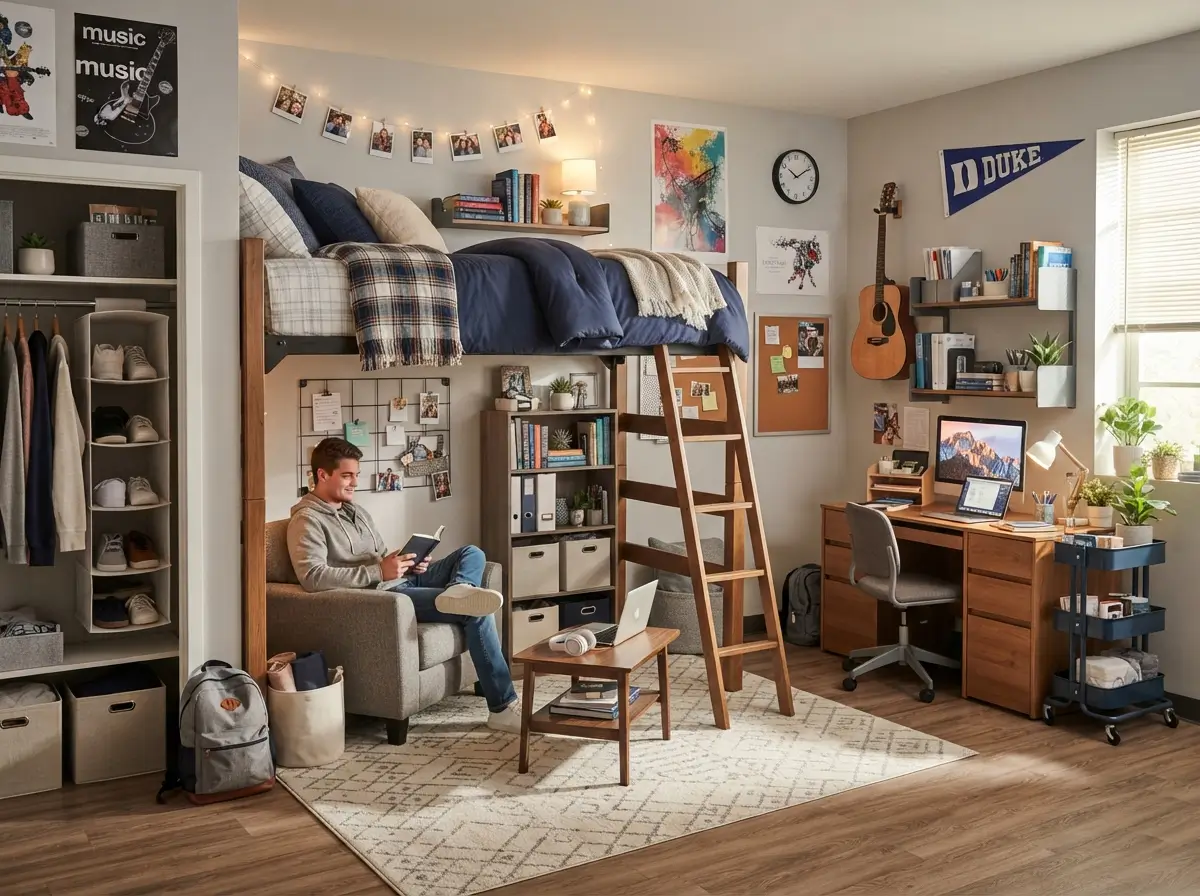

College rooms often look simple on move-in day, yet they become crowded very quickly. Bedding, shoes, textbooks, sports gear, snacks, laundry, chargers, and everyday clothes all compete for a limited amount of floor space. Good decorating solves more than a style problem. It creates clear places for daily items, makes studying easier, and helps the room feel calmer after a busy day. Every choice should support at least one practical need, whether that means adding storage, improving lighting, reducing visual clutter, or making a hard dorm bed more comfortable.
Planning a boy’s dorm room works best when comfort and organization receive equal attention. Oversized furniture can block movement, while too many decorative items can make cleaning difficult. Small rooms benefit from pieces that fold, stack, hang, roll, or serve more than one purpose. Color choices also matter because darker tones can make a narrow space feel heavy when used everywhere. Balanced combinations such as navy, warm gray, olive, tan, white, and natural wood create a grounded look without making the room feel closed in.
How can a small dorm feel comfortable without becoming crowded?
Start with the bed, use vertical storage, keep the main walkway open, and choose furniture that performs two jobs. Comfort comes from supportive bedding, warm lighting, and a clear layout. Organization comes from assigning one storage zone to each category, such as school supplies, clothes, food, electronics, and laundry. Matching bins and repeatable habits matter more than filling every empty corner with another shelf.
Successful rooms usually follow a simple order. Large essentials come first, storage comes second, and decoration comes last. Measure the open space before buying a chair, cart, or drawer unit. Check residence rules for wall attachments, raised beds, extension cords, cooking devices, and window coverings. Best results come from working with the room rather than forcing a full bedroom setup into a temporary campus space.
Raise the Bed to Create Hidden Storage
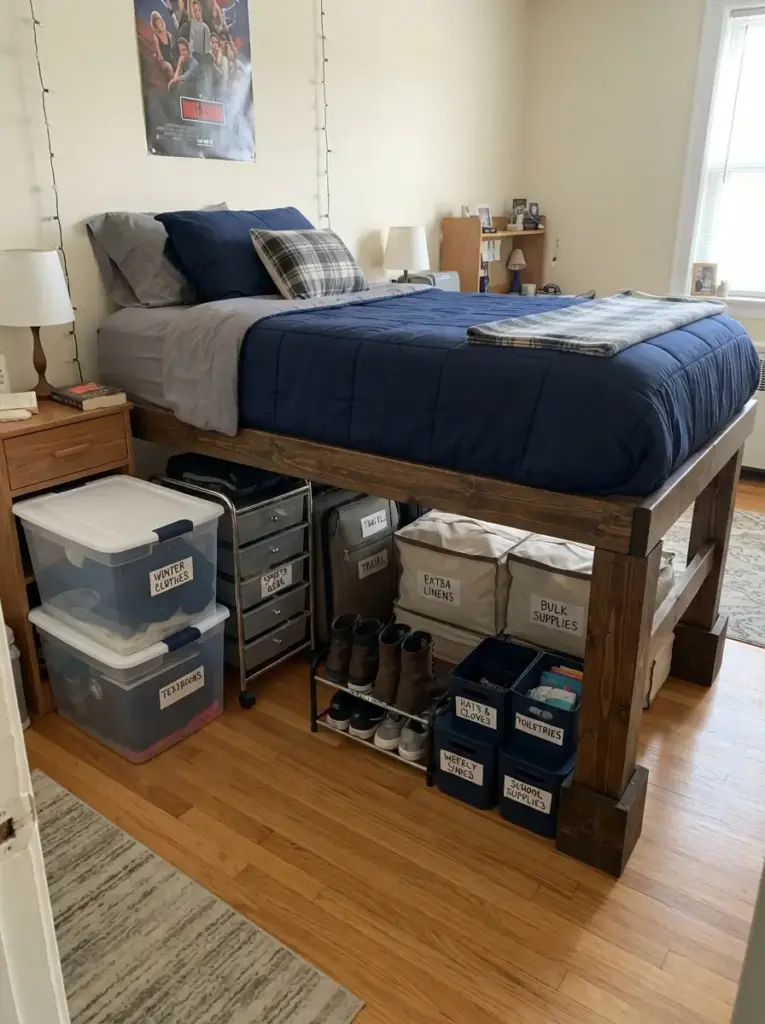
Bed risers turn unused space into one of the most valuable storage zones in a small room. Choose sturdy risers that match the bed frame and meet housing rules. Low risers around three to five inches work well for shallow boxes, while taller approved risers can fit rolling drawers, luggage, or seasonal clothing. Clear boxes make items easy to identify, but solid gray or navy bins create a cleaner visual line. Label the front of every container so nothing disappears under the mattress for an entire semester.
Raised storage is especially useful for students who bring sports equipment, extra shoes, winter coats, or bulk supplies. Place rarely used items toward the wall and keep weekly essentials near the outer edge. Soft-sided zip bags work better than rigid bins when the under-bed height is uneven. Leave enough room for air movement and avoid packing the area so tightly that cleaning becomes impossible. Practical success comes from using the bed footprint twice without taking away any walking space.
Choose Bedding That Adds Comfort Without Bulk
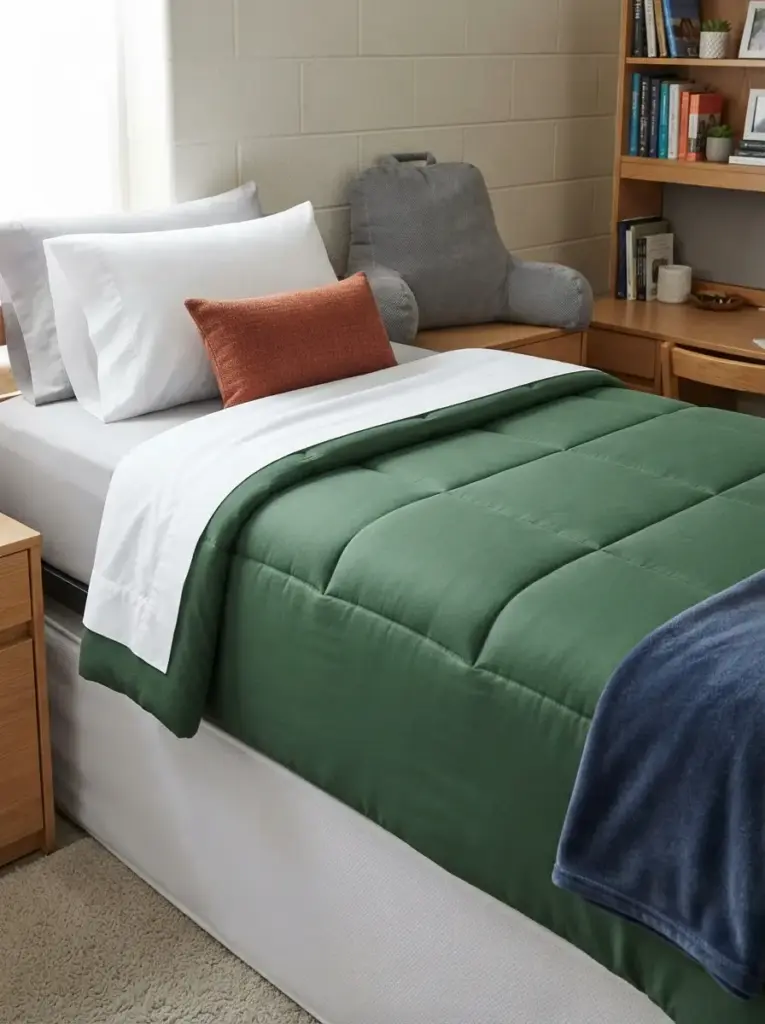
Dorm mattresses often feel firm, thin, or worn, so bedding deserves a larger share of the decorating budget. Start with a breathable mattress protector, then add a two-inch foam or fiber topper based on personal comfort. Use fitted sheets with deep pockets so layers stay secure. Cotton percale feels crisp and cool, while jersey feels softer and warmer. A medium-weight comforter is usually easier to wash and store than an oversized duvet, especially when campus laundry machines have small drums.
Color can make the sleeping area look organized even when the room is busy. Navy, charcoal, forest green, rust, sand, and muted blue hide minor marks and pair easily with white or light gray sheets. Limit the bed to two sleeping pillows and one small lumbar cushion rather than filling it with decorative pillows. Students who study in bed benefit from a firm backrest pillow, but it should fit inside the storage plan. Comfort improves when every layer serves a clear purpose.
Use a Slim Rolling Cart Beside the Bed
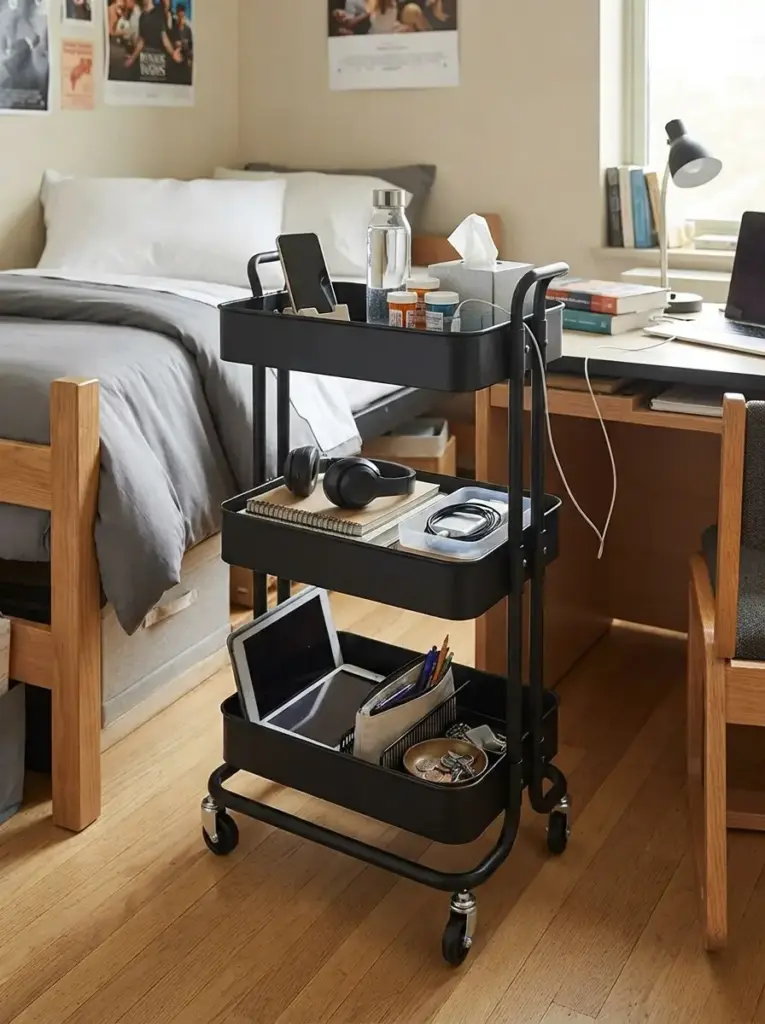
Narrow rolling carts fit between a bed and desk, where standard nightstands often feel too bulky. Three tiers provide space for a phone, water bottle, medicine, tissues, headphones, notebooks, and charging accessories. Metal carts feel durable and clean easily, while plastic carts weigh less and cost less. Pick black, white, dark green, or gray so the cart blends with other furniture. Add small trays inside each level to stop cables, pens, and coins from mixing.
Mobility gives the cart an advantage over fixed furniture. Roll it beside the desk during study sessions, move it near the bed at night, or shift it out of the way while cleaning. Students who share a room can keep personal items together without spreading them across communal surfaces. Locking wheels prevents movement on uneven floors. Better organization comes from grouping daily essentials in one compact station rather than creating small piles on the desk, windowsill, and mattress.
Build a Wall Storage Zone Without Damage
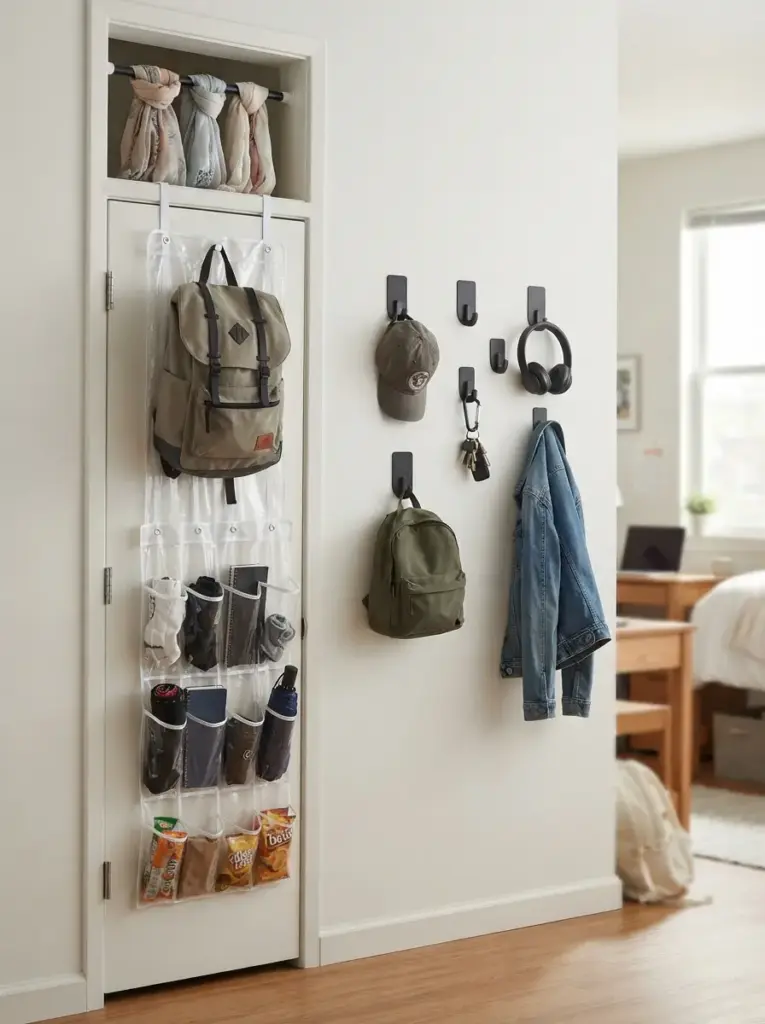
Vertical surfaces can hold lightweight belongings without permanent drilling. Over-the-door organizers, removable hooks, adhesive clips, tension rods, and approved hanging strips create useful storage while protecting painted walls. Use hooks for caps, keys, a backpack, headphones, and a light jacket. Pocket organizers can hold shoes, cleaning supplies, snacks, or bathroom products. Keep heavier objects low and follow the weight limit printed on every adhesive product. Clean the wall before installation and wait the recommended time before hanging anything.
Rental-friendly wall storage works best for students who need clear floor space or tend to misplace small items. Arrange hooks in one controlled area rather than scattering them across every wall. Repeating the same finish, such as matte black or brushed metal, makes inexpensive pieces look more coordinated. Remove adhesive slowly at the end of the year to reduce paint damage. Function improves because frequently used items remain visible, easy to reach, and off chairs or floors.
Create a Focused Desk Setup
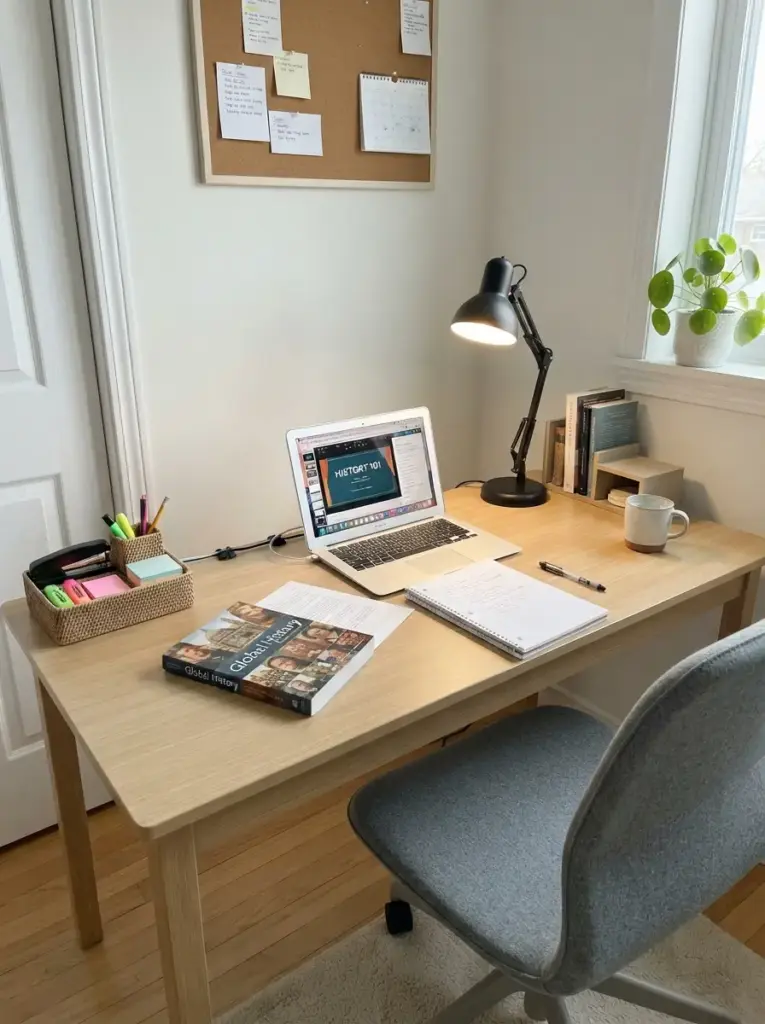
Desk surfaces become cluttered when they try to store books, food, grooming items, cables, and schoolwork at the same time. Reserve the main surface for a laptop, lamp, notebook, and current course materials. Move extra supplies into a drawer organizer, small shelf, or portable caddy. Position the desk so the chair can pull out without blocking the entrance or roommate’s path. Keep at least one clear section available for writing, reading, or placing a textbook beside the computer.
Students who attend online classes need stronger lighting and cleaner backgrounds. Use a desk lamp with an adjustable arm and a bulb between 3500K and 4000K for alert, neutral light. Warmer bulbs around 2700K can cause sleepiness during late study sessions, while very cool 5000K light may feel harsh in a small room. Cable clips along the desk edge keep cords from falling. Concentration improves when the work zone has fewer visual distractions and only the tools needed for current tasks.
Add a Compact Lounge Chair That Folds
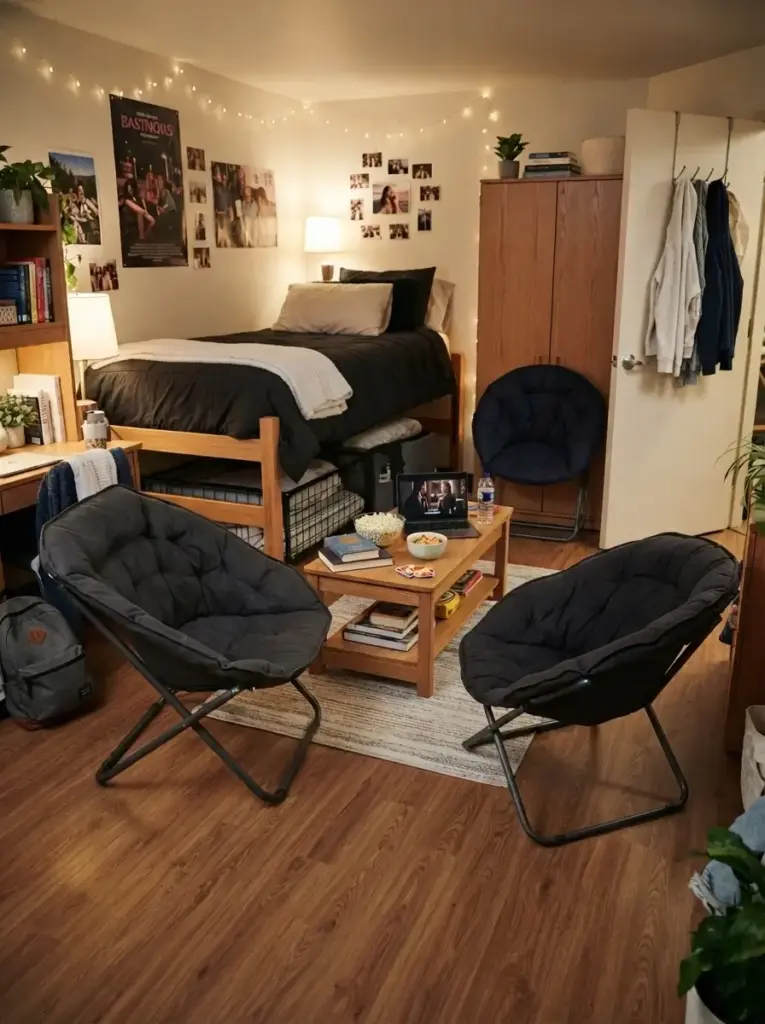
Extra seating makes the room more social, but large lounge chairs quickly consume valuable floor space. Folding saucer chairs, compact butterfly chairs, or low-profile floor chairs provide comfort without becoming permanent obstacles. Measure the open floor area with the chair fully expanded before buying. Look for washable fabric, supportive padding, and a frame that folds flat enough to slide under the bed. Dark neutral upholstery handles everyday wear better than cream fabric in a shared campus setting.
Flexible seating suits students who host friends, play games, read, or watch movies in the room. Store the chair vertically behind a door or beside a wardrobe when more floor space is needed. Avoid oversized beanbags unless the room has a generous layout, because they rarely provide structured support and can be difficult to move. Usable comfort comes from seating that appears when needed and disappears when the room needs to function as a study or dressing area.
Install an Over-the-Bed Shelf Safely
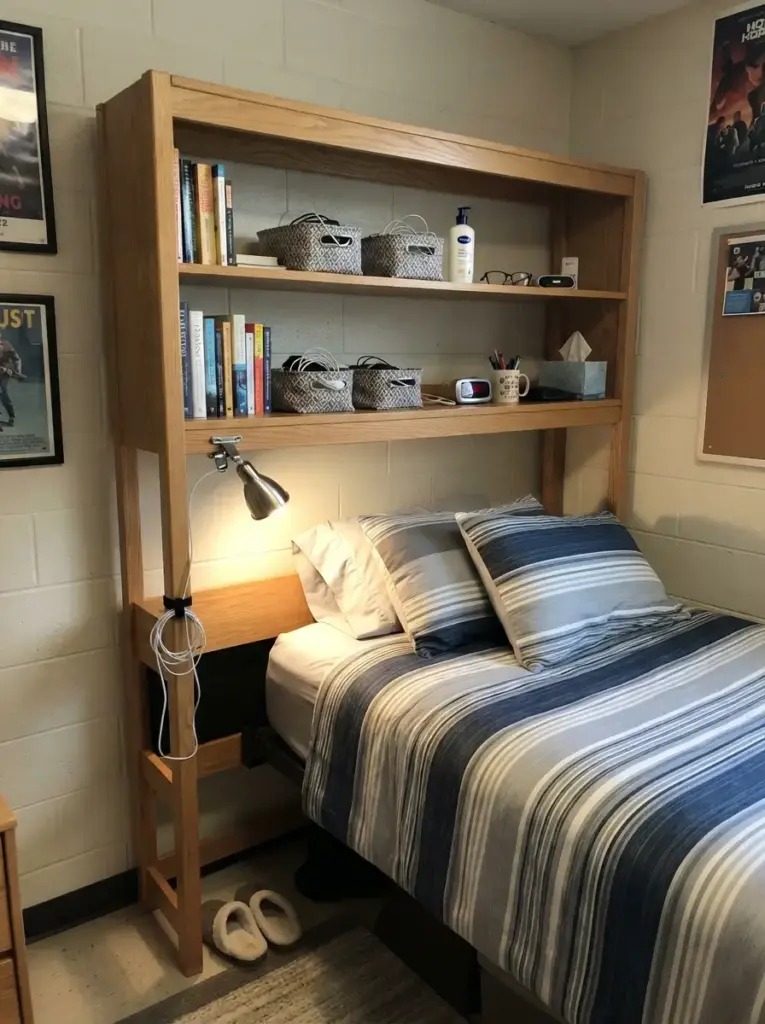
Over-the-bed shelving can provide storage for books, a clock, tissues, and small personal items, but safety should guide every decision. Freestanding headboard shelves or narrow units designed for dorm beds are safer than improvised heavy shelves. Confirm that the unit fits the bed width and does not wobble. Keep dense objects on lower levels, avoid glass, and never place heavy speakers or large frames directly above the pillow. Secure cords so they cannot fall across the sleeping area.
Students with limited desk storage benefit most from this setup. Use shallow baskets to group chargers, reading materials, and nighttime essentials. A small clip lamp can attach to the shelf if residence rules allow it, freeing the desk lamp for study use. Maintain several inches of clearance above the mattress so sitting up remains comfortable. Space becomes more efficient because the shelf uses vertical room while keeping the floor and bedside area open.
Organize Clothes with a Simple Closet System
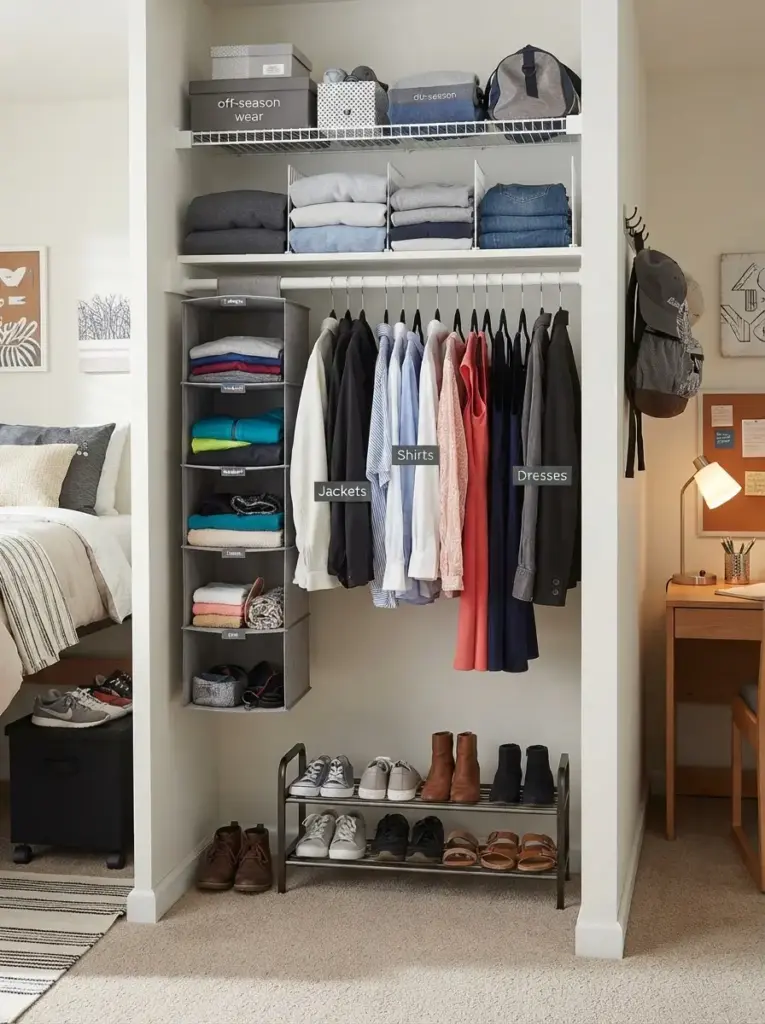
Dorm closets often include one hanging rod and a narrow shelf, which encourages messy stacks. Add a hanging fabric organizer for folded shirts, workout clothes, towels, or accessories. Slim velvet hangers save more horizontal space than thick plastic hangers and help shirts stay in place. Place a low shoe rack beneath hanging clothes, then store less-used footwear in under-bed boxes. Shelf dividers stop sweatshirts and jeans from collapsing into one pile.
Closet systems help students who want quick morning routines and less laundry confusion. Group clothes by category rather than color, because category sorting makes daily dressing faster. Keep frequently worn pieces between waist and eye level. Store formal clothing, extra bedding, and off-season items higher or farther back. Avoid filling every inch on move-in day, since new team shirts, event clothing, and cold-weather gear may arrive later. Order lasts longer when the closet leaves a small amount of breathing room.
Use One Storage Ottoman for Seating and Supplies
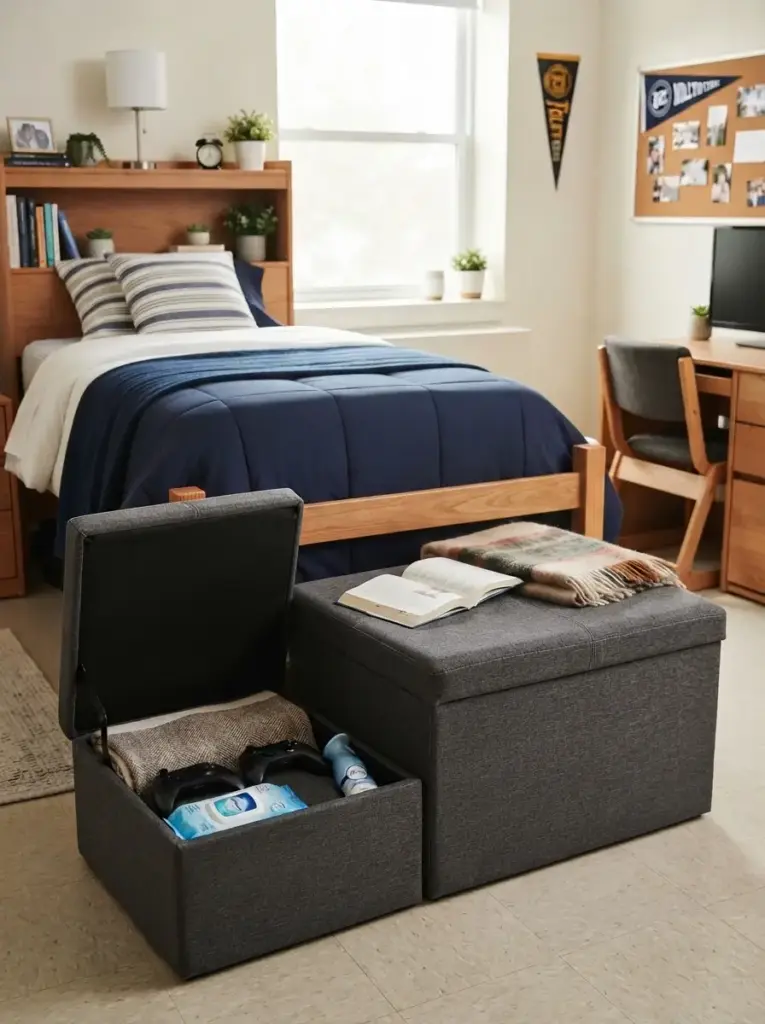
Storage ottomans provide a seat, a footrest, and a hidden compartment in one small footprint. Choose a cube or narrow bench based on available space. A firm lid works better as seating than a soft, collapsing top. Inside, store extra blankets, game controllers, cleaning supplies, or unopened toiletries. Upholstery in charcoal, navy, brown, or textured gray hides wears and coordinates with most dorm furniture. Foldable models cost less and pack easily at the end of the year.
Students who need occasional guest seating gain the most value from this piece. Position the ottoman at the foot of the bed only when it does not narrow the main walkway. It can also slide under a lofted bed or sit beside a desk. Avoid using it as a random catchall, since mixed items quickly become hard to find. Strong results come from assigning one category to the interior and keeping the top clear for sitting or setting down a backpack.
Set Up a Controlled Snack and Drink Station
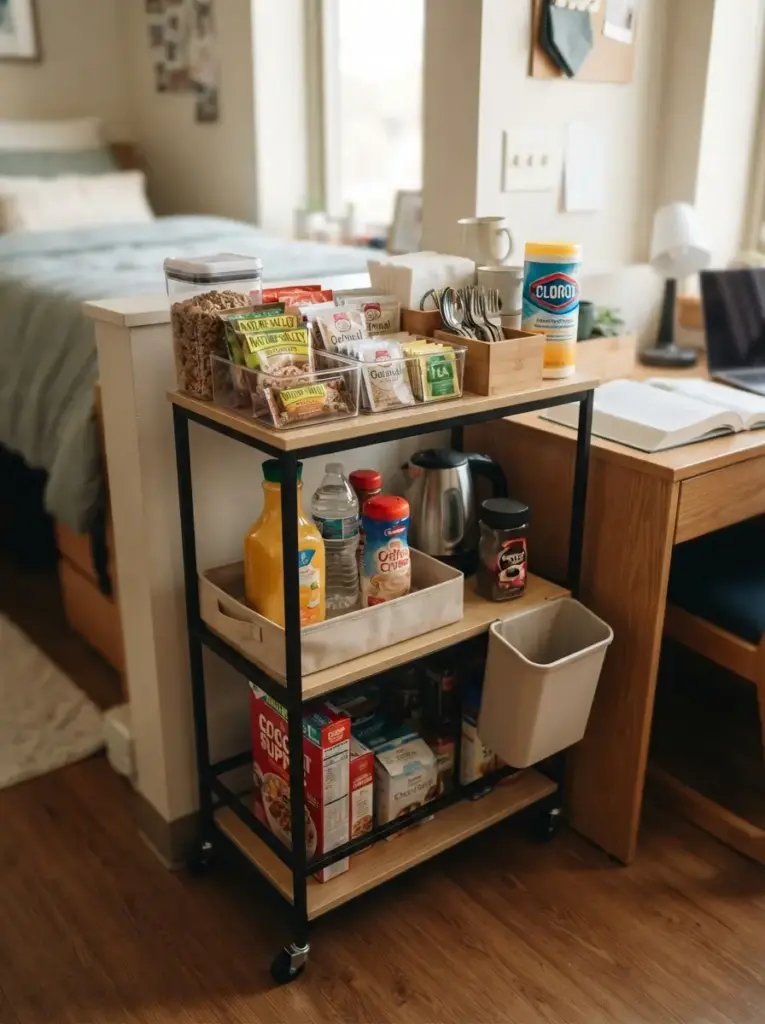
Food storage often spreads across desks, drawers, and windowsills unless the room has one dedicated zone. Use a narrow cart, a small shelf, or the top of an approved mini fridge for sealed snacks, cups, napkins, and drink supplies. Keep open food in airtight containers to reduce odors and pests. Place heavier bottles on lower shelves. A washable tray under drink items protects furniture from spills and creates a clear boundary for the station.
Busy students, athletes, and anyone with early classes benefit from organized food access. Choose clear containers for cereal bars, oatmeal packets, or tea, but avoid buying more food than the shelf can hold. Check housing policies before adding appliances. Keep cleaning wipes nearby and remove trash daily. Order matters because a defined station prevents snacks from entering the study zone or getting buried under clothing. Good placement also makes it easier to notice when supplies need restocking.
Improve Lighting with Three Small Sources
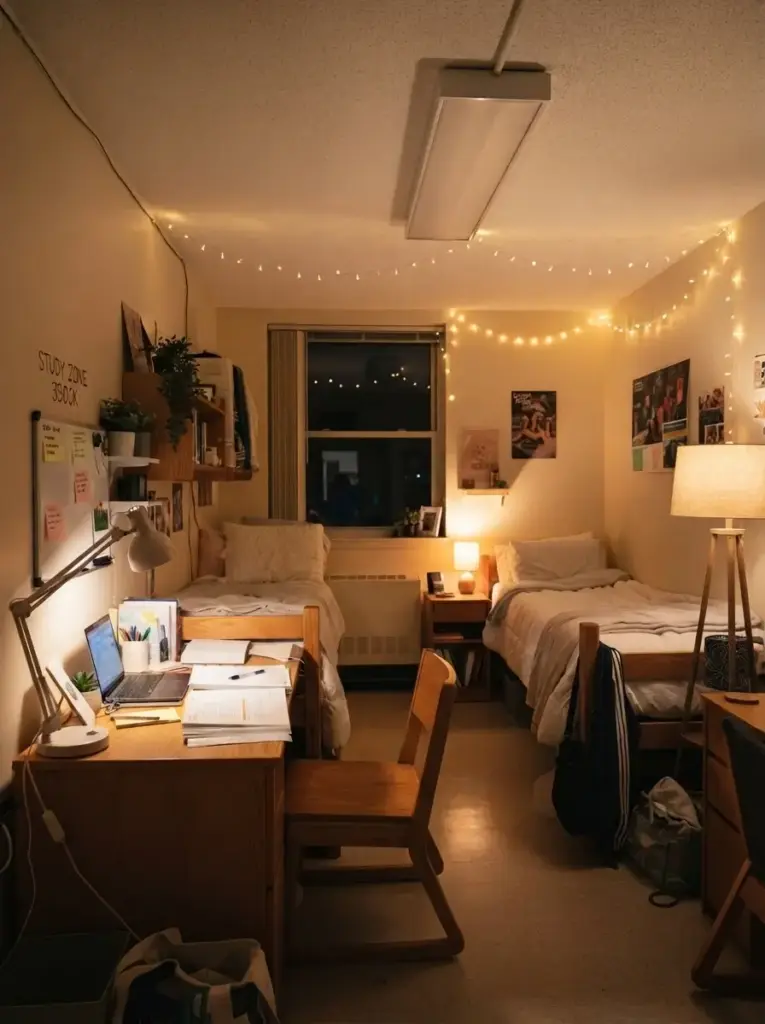
Single overhead fixtures often create flat, harsh light. Layering three smaller sources gives the room more flexibility. Use a neutral desk lamp for work, a warm bedside lamp for evening, and approved string lights or a floor lamp for general comfort. Choose bulbs around 3500K for studying and 2700K to 3000K for relaxing. LED bulbs produce less heat and use less energy. Avoid uncovered bulbs that shine directly into a roommate’s bed.
Lighting layers are valuable for roommates with different schedules. One student can study while another rests, especially when lamps have focused shades or dimming controls. Clip lights save surface space, and plug-in timers help prevent lights from staying on overnight. Keep cords against walls and away from walking paths. Room quality improves because adjustable light supports multiple activities without requiring furniture changes. Warm evening light also helps the space feel less institutional after sunset.
Use a Large Rug to Define the Floor
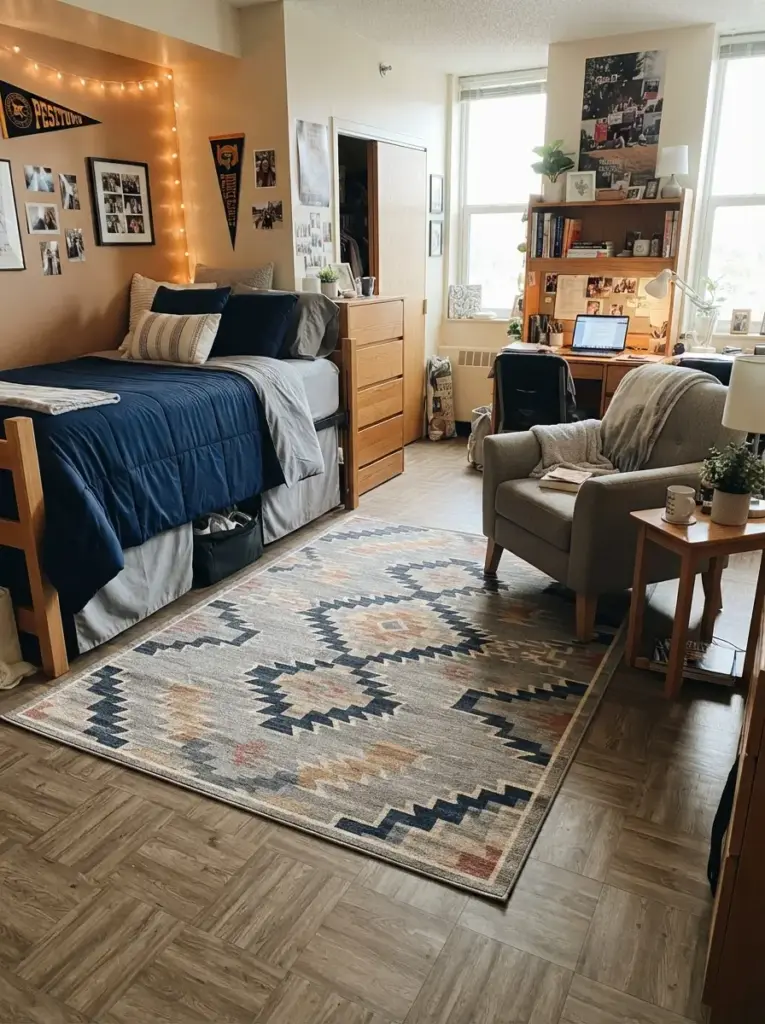
Cold tile or worn carpet can make a dorm feel uncomfortable, while a rug softens sound and adds warmth underfoot. Choose a low-pile flatweave because it is easier to vacuum and less likely to trap crumbs. Common sizes such as 4 by 6 feet or 5 by 7 feet work in many rooms, but measurements should guide the purchase. Position the rug so the front legs of the bed or chair rest on it without blocking doors.
Rugs suit students who want the biggest visual change from one item. Patterns with gray, navy, tan, olive, or muted red hide minor stains better than solid pale colors. Washable rugs are practical when laundry access allows proper cleaning, while inexpensive indoor-outdoor rugs handle spills well. Use a non-slip pad if the floor is smooth and housing rules permit it. Cohesion comes from connecting separate furniture pieces with one grounded surface rather than adding many small decorations.
Display Personal Items in One Curated Area
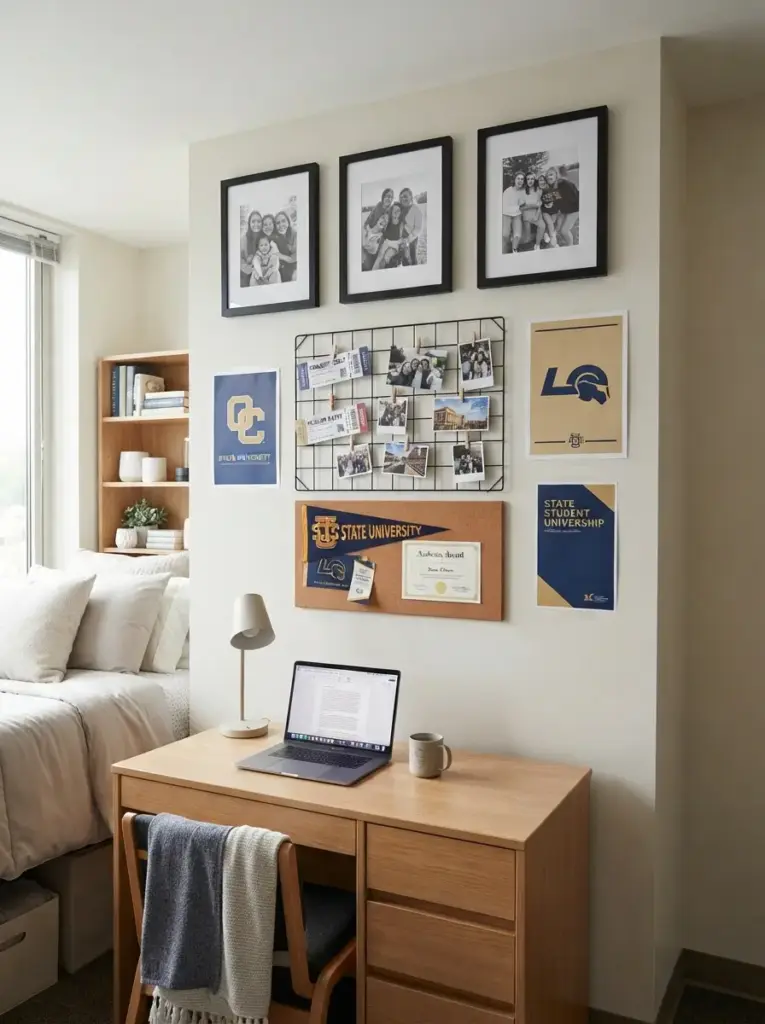
Photos, team items, posters, awards, and souvenirs make the room feel familiar, but spreading them across every surface can create visual noise. Choose one wall or shelf as the personal display zone. Use matching frames, a wire photo grid, a corkboard, or removable poster strips. Limit the color palette by selecting images with similar tones or using black-and-white prints. Leave open space around each group so the arrangement looks intentional.
Students living away from home for the first time often appreciate this idea most. Rotate photos or event tickets during the year instead of adding new pieces endlessly. Keep valuable collectibles away from the bed edge, heater, or open window. Personal style feels stronger when objects are edited and grouped rather than scattered. Focused displays also make move-out easier because wall decor stays in one location, and removable hardware can be taken down carefully.
Hide Cables with a Charging Station
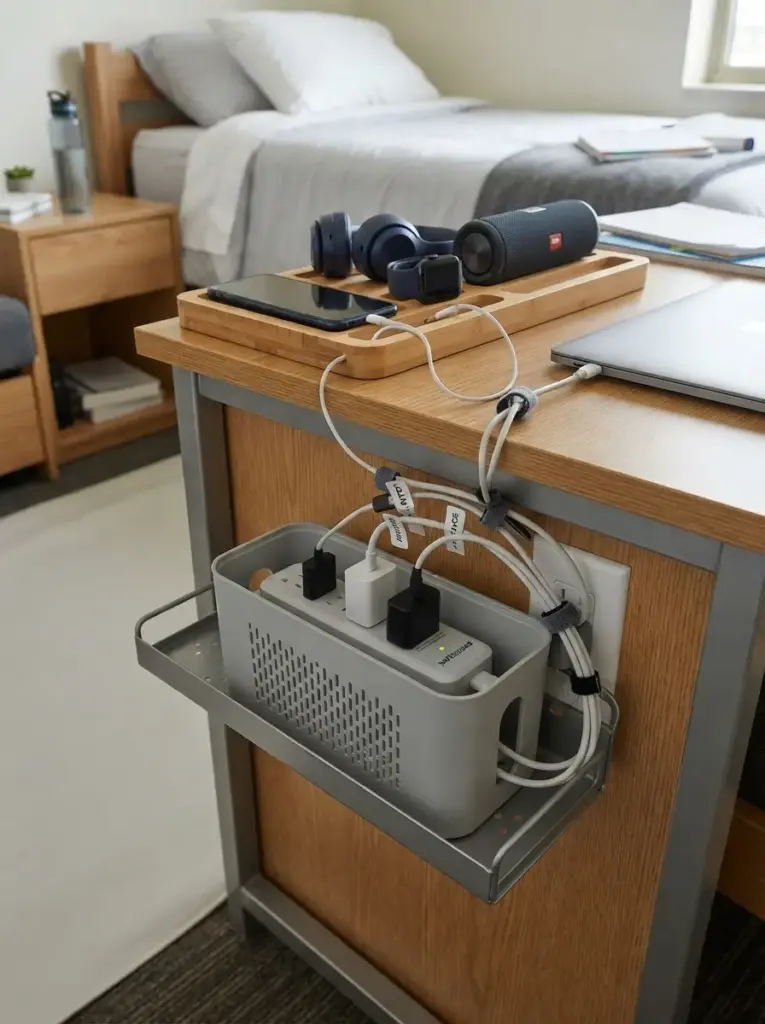
Phones, laptops, headphones, watches, speakers, and game controllers can create a web of cords around the bed and desk. Choose one charging point near a safe wall outlet. Use a surge protector approved by the residence, then attach cable clips or reusable ties to keep each cord separate. Label both ends when several black cables look alike. Place the power strip where air can circulate and never cover it with bedding, clothing, or rugs.
Tech-heavy students gain immediate value from this setup. A small box with ventilation openings can contain adapters without trapping heat, while a divided tray can hold devices during charging. Keep water bottles away from the station and unplug rarely used chargers. Daily routines become easier because electronics return to one location every night. Cleaner cable control also protects cords from chair wheels, prevents tripping, and keeps the desk surface available for studying.
Divide the Room into Clear Activity Zones
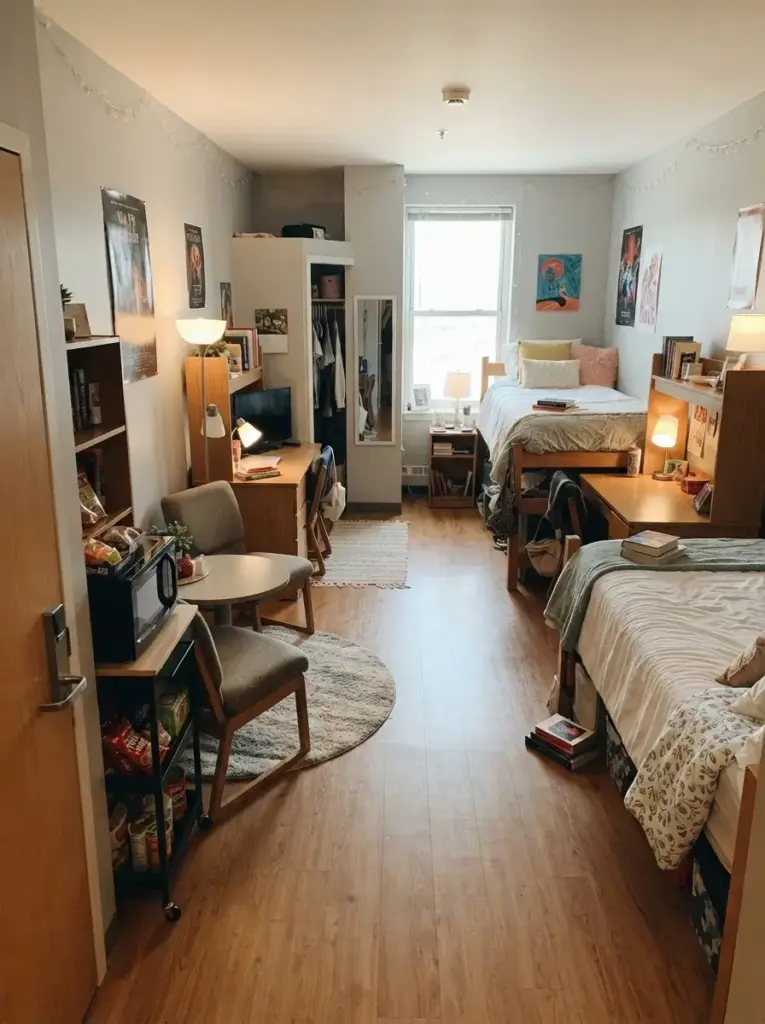
Even a narrow room works better when each area has a defined purpose. Mark a sleep zone around the bed, a study zone around the desk, a dressing zone near the closet, and a shared zone for food or seating. Furniture placement should protect the main route from the door to the bed and desk. Use a rug, lamp, cart, or small shelf to signal each zone without adding walls or bulky dividers.
Roommates benefit most when both people agree on boundaries early. Shared items should stay in the shared zone, while personal belongings remain beside each student’s bed or desk. Avoid placing one person’s storage in front of the other person’s closet. Clear zones reduce arguments, shorten cleaning time, and make the room feel larger because each object has a logical home. Strong layouts rely on open movement rather than filling every visible gap.
Common Dorm Decorating Mistakes to Avoid
Buying furniture before measuring causes many move-in problems. Product photos can make chairs, carts, and drawer units look smaller than they are. Measure the floor, wall width, under-bed clearance, closet depth, and door swing before shopping. Mark dimensions with painter’s tape at home to understand the real footprint. Leave enough room for drawers to open and chairs to move. Compact furniture only helps when it fits the actual layout.
Using too many storage containers creates another kind of clutter. Bins should match specific categories, not simply hide mixed piles. Transparent boxes work for supplies that need quick identification, while opaque baskets work for visual calm. Keep labels simple and readable. Empty containers also take up space, so avoid buying complete sets before knowing what needs storage. An organization stays useful when every container has a purpose and a regular place.
Ignoring cleaning access makes a stylish room difficult to maintain. Floor-length fabric, deep piles under furniture, and crowded shelves collect dust quickly. Keep a clear path for a broom or small vacuum. Choose washable bedding and removable covers. Store cleaning wipes, trash bags, and a lint roller together. Easy maintenance matters because busy weeks leave little time for complicated room care.
Overdecorating the walls can make a small room feel restless. Large posters, flags, photo grids, lights, and shelves compete when every wall carries a different theme. Select one main wall for visual interest and keep the remaining surfaces calmer. Repeat two or three colors across bedding, rug, and accessories. Controlled repetition looks more finished than buying unrelated items simply because each piece seems appealing on its own.
Choosing style over sleep comfort is another common mistake. Thin pillows, rough sheets, and an unsupportive topper affect daily energy more than decorative signs or novelty lights. Spend first on the mattress layer, pillow, sheets, and task lighting. Add visual details only after the basic setup feels comfortable. Students spend many hours sleeping, studying, and recovering in the room, so physical support deserves priority.
Forgetting roommate needs can create tension. Bright lights, loud fans, scented products, shared food, and oversized furniture affect both people. Discuss sleep schedules, temperature preferences, cleaning habits, and shared purchases before move-in. Separate personal storage clearly and agree on who owns communal items. Respectful planning produces a better room than any single decorating choice.
Budget-Friendly Ways to Decorate and Organize
Set a spending order before shopping. Bedding comfort, safe lighting, and essential storage should come before wall art or extra seating. Divide the budget into needs, upgrades, and optional decor. For example, spend most on a topper and sheets, a smaller amount on bins and a lamp, then use the remaining money for a rug or personal display. Clear priorities prevent small impulse purchases from consuming the entire budget.
Shop at home before buying new items. Spare baskets, desk organizers, neutral pillowcases, small lamps, and storage boxes may already exist in closets or garages. Matching everything is unnecessary when shapes and colors coordinate. Spray paint is rarely practical for dorm use, but removable labels, fabric covers, and simple trays can make older items feel consistent. Reusing sturdy pieces saves money and reduces move-in waste.
Secondhand furniture can work well when it is easy to inspect and clean. Metal carts, plastic drawers, lamps, and solid storage cubes are usually safer choices than upholstered items with unknown stains or odors. Check dimensions carefully and test moving parts. Avoid damaged electrical products. Wipe hard surfaces with the correct cleaner before bringing them into the room.
Wait until after move-in for nonessential purchases. Dorm layouts often differ from online floor plans, and roommates may bring duplicate items. Live in the room for several days, notice where clutter forms, then buy only the storage that solves a real problem. Delayed shopping often prevents unnecessary drawer units, extra lamps, and oversized seating. Budget control improves when purchases respond to actual habits.
Use color to create style without buying many decorations. One dark anchor color, one medium accent, and one light neutral can guide the whole setup. Navy bedding, olive accessories, and warm white storage create a calm combination. Charcoal, rust, and tan feel warmer. Black, gray, and muted blue suit a clean modern room. Repeating colors across useful items makes the space feel planned without extra decor.
Practical Boy Dorm Room Tips for Daily Life
Daily habits determine whether a boy’s dorm room stays organized after the first week. Keep a small basket near the door for keys, wallet, student card, and earbuds. Place the laundry hamper where clothes naturally come off, not where it looks best in photos. Store school supplies beside the desk and snacks away from electronics. Good placement follows behavior instead of expecting behavior to change around inconvenient storage.
Weekly resets should take less than twenty minutes. Empty trash, return dishes, wipe the desk, gather laundry, restock toiletries, and clear the floor. Use one open basket for items that belong elsewhere, then empty it at the end of the reset. Short routines work better than occasional deep cleaning because clutter never gains enough time to spread across the room.
Seasonal storage also needs attention. Move heavy coats, extra blankets, or sports equipment forward when the weather changes, then push summer items farther back. Review supplies before holiday breaks so expired food and forgotten laundry do not remain in the room. Small adjustments keep the limited storage useful throughout the year.
Privacy can improve comfort in a shared room. Headphones, sleep masks, bed curtains approved by housing, and small desk screens can create personal boundaries. Avoid blocking ventilation or emergency equipment. Respectful privacy solutions support rest and concentration without making the room feel divided or unfriendly.
Scent should remain subtle. Strong sprays, candles, and plug-in fragrances may violate rules or bother a roommate. Use regular trash removal, clean bedding, shoe deodorizer, and ventilation first. Unscented odor absorbers can help in closets or near shoes. Clean air comes from maintenance more reliably than from covering odors with fragrance.
Move-In Day Setup Order
Move-in becomes easier when the room is organized in a practical sequence. Place the bed and desk first, then confirm that doors, drawers, and closets open fully. Build the sleep area before unpacking decorations so there is a comfortable place to rest. Next, install closet organizers, under-bed bins, and the laundry hamper. Finish by setting up electronics, lamps, and personal displays. Keeping tools, cleaning wipes, labels, and trash bags in one accessible tote prevents repeated searching through packed boxes.
Room setup should also include a quick safety check. Test lamps, inspect cords, keep vents uncovered, and confirm that storage does not block exits or sprinklers. Photograph the room before unpacking to document existing damage. Review the boy’s dorm room layout again after every major item is placed, because a plan that looked efficient on paper may feel crowded in person. Move duplicate or unnecessary pieces back home before classes begin. Early editing creates more usable space and makes later cleaning much simpler.
Pack an overnight bag with toiletries, chargers, medicine, and sleepwear so essential items stay easy to reach.
Frequently Asked Questions
What Colors Work Best in a Small Male Dorm Room?
Medium and light neutrals paired with one darker accent usually work best. Warm white, light gray, tan, muted blue, and natural wood keep the room open, while navy, olive, charcoal, or rust add depth. Avoid using black or very dark colors across bedding, rugs, curtains, and walls at the same time. Balanced contrast keeps the setup grounded without making the room feel smaller.
How Can I Add Storage Without Drilling Holes?
Removable hooks, over-the-door organizers, hanging closet shelves, tension rods, rolling carts, under-bed boxes, and freestanding shelves provide useful storage without permanent changes. Follow residence rules and product weight limits. Clean surfaces before applying adhesive strips, and remove them slowly according to the instructions. Lightweight items work best on walls, while heavy items should stay on the floor or sturdy furniture.
What Should I Buy First for a Boy’s Dorm Room?
Start with a mattress protector, topper, pillow, sheets, comforter, desk lamp, laundry hamper, hangers, and basic under-bed storage. Add a rolling cart, rug, extra seating, or wall decor after seeing the real room. Early purchases should solve sleep, study, clothing, and hygiene needs. Decorative items become easier to choose once the main color palette and furniture layout are clear.
How Do I Make a Dorm Bed Feel More Comfortable?
Use a supportive topper that matches personal sleep preferences, then add a breathable protector and a deep-pocket fitted sheet. Choose a pillow based on sleeping position rather than appearance. Side sleepers often need a thicker pillow, while stomach sleepers usually prefer a thinner one. Wash bedding regularly and avoid piling the bed with cushions that must be moved every night.
How Can Roommates Keep the Room Organized Together?
Agree on shared zones, cleaning routines, quiet hours, and ownership of communal items. Keep personal storage on each person’s side and label shared supplies when needed. Use one trash location, one cleaning caddy, and one food area to reduce duplication. Brief weekly resets work well when both roommates complete a few clear tasks rather than waiting for one person to manage the whole room.
Which Furniture Is Not Worth Bringing?
Large nightstands, full-size lounge chairs, bulky bookcases, extra dressers, and oversized beanbags often use too much space. Dorm furniture should fold, roll, stack, or provide storage. Skip pieces that block drawers, doors, closets, or walking paths. Measuring first helps identify what can fit, while waiting until move-in prevents duplicate furniture.
Conclusion
Comfortable dorm decorating depends on practical decisions more than expensive products. Bed storage, layered lighting, controlled cable management, flexible seating, and clear activity zones solve common small-space problems. Personal items still matter, but they look stronger when grouped with intention. Every purchase should improve sleep, study, storage, or daily movement before it adds decoration.
Well-planned boy dorm room design supports real student life. Start with accurate measurements, follow residence rules, protect shared space, and buy only what fits a clear need. Small improvements such as a labeled rolling cart, a better desk lamp, or a structured closet can make everyday routines easier. Calm rooms grow from consistent systems, useful furniture, and habits that keep belongings from spreading beyond their assigned zones.