
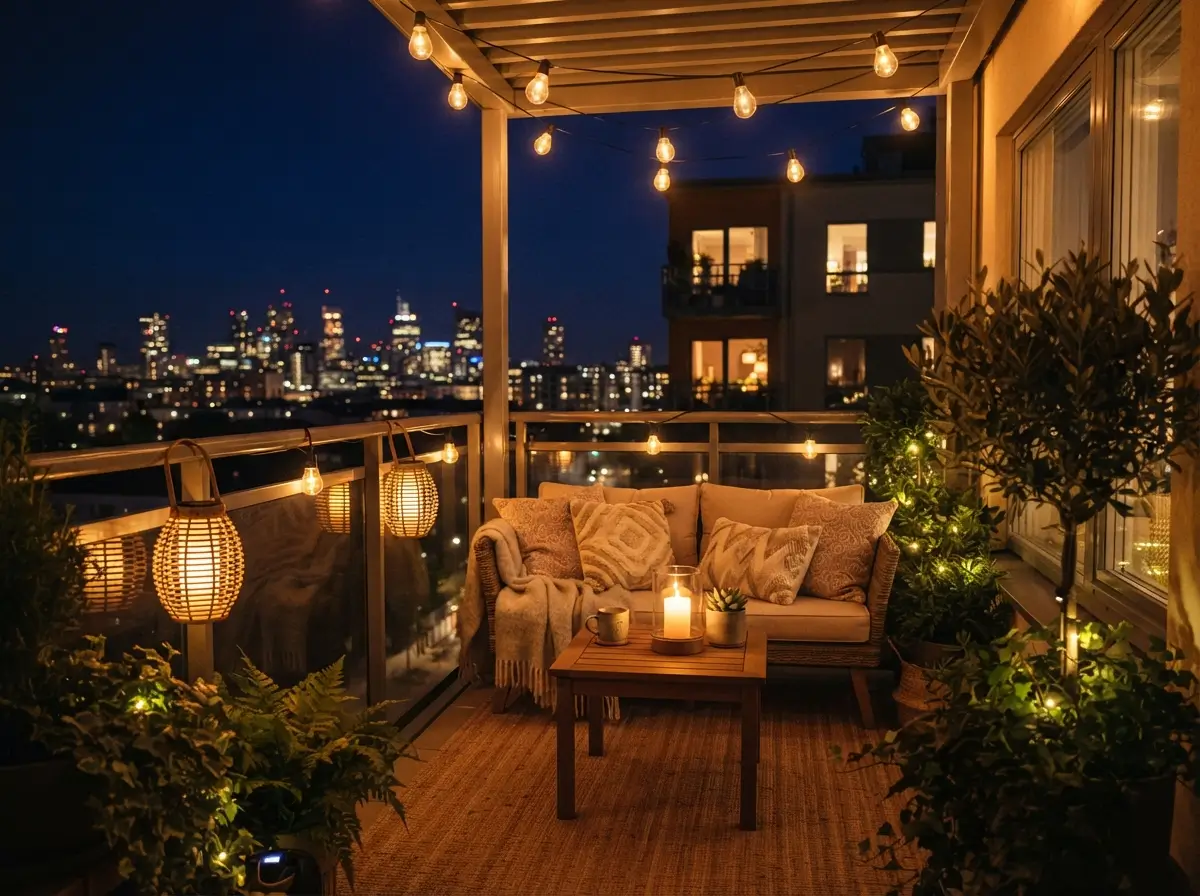

Balconies often become forgotten after sunset because one harsh ceiling bulb makes the space feel exposed, cold, or unfinished. Apartment Balcony Lighting can change that experience without requiring expensive electrical work. Warm light helps define seating, highlights plants, improves visibility, and makes even a narrow outdoor ledge feel comfortable enough for reading or dinner. Good results depend less on buying many fixtures and more on placing a few suitable lights at different heights. Renters can also create a polished setup with rechargeable lamps, removable hooks, weighted floor lights, and solar options that leave walls and railings undamaged.
What Is the Best Lighting for an Apartment Balcony?
Warm, layered lighting usually works best because it provides enough visibility without creating glare for you or nearby neighbors. Combine one general light source with one task light and one decorative accent. Bulbs between 2200K and 3000K create a soft amber or warm-white effect, while fixtures rated for outdoor or damp locations handle changing weather more safely. Small balconies benefit from wall-mounted or railing lights that preserve floor space. Larger balconies can support portable floor lamps, lantern groups, or a lighted dining zone. Choose the layout according to how you actually use the balcony rather than copying a setup designed for a much larger terrace.
Hang Warm White String Lights Along the Ceiling
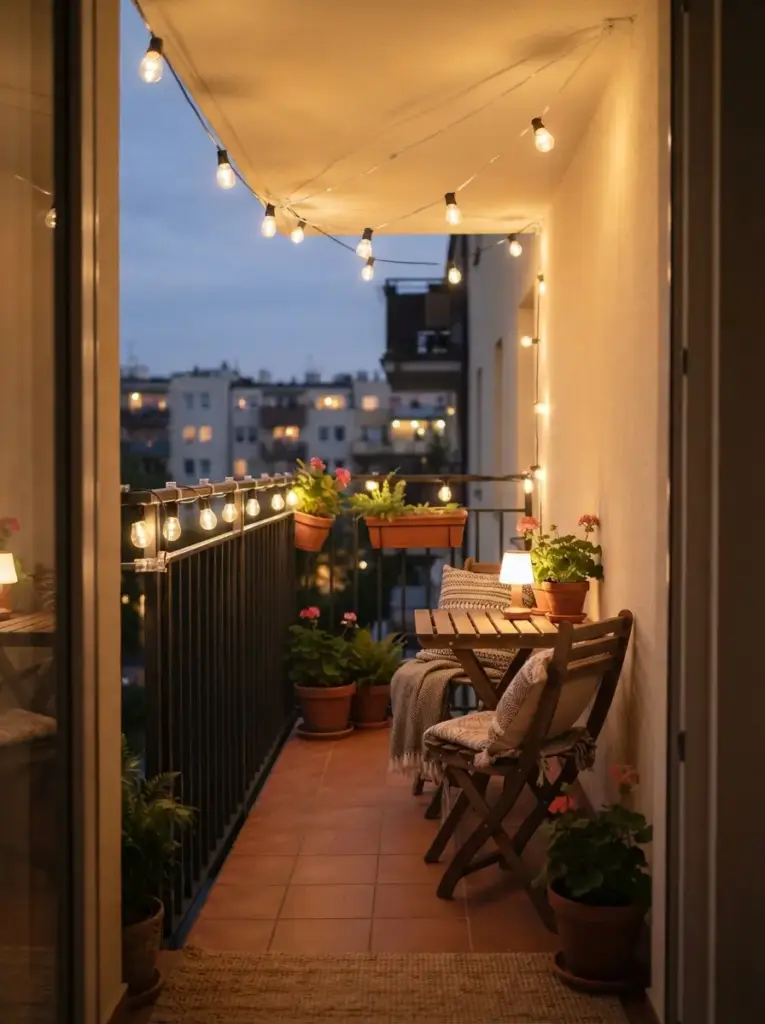
String lights remain popular because they spread gentle light across a broad area while taking up almost no usable space. Run them in one straight line along the outer edge, create a simple zigzag overhead, or frame the doorway for a cleaner look. Warm-white LEDs around 2400K to 2700K suit cream walls, wood furniture, terracotta pots, and woven textiles. Clear cable blends into pale ceilings, while black cable works better against dark metal railings. Renters should use outdoor-rated adhesive clips, removable hooks, or existing railing joints rather than nails. Avoid stretching the cable tightly because slight slack reduces stress on plugs and connection points.
Balanced overhead lighting works especially well for renters, first-time decorators, and anyone with a narrow balcony that cannot hold floor lamps. Even spacing prevents bright clusters and dark gaps, so measure the route before purchasing. A ten-foot balcony may need a twelve- to fifteen-foot strand depending on bends and vertical drops. Keep bulbs above eye level when seated to limit glare. Pair the string lights with a small table lamp if you plan to read or serve food. For Tiny Balcony Patio layouts, one carefully placed strand often looks more organized than several competing decorative lights.
Wrap Micro Lights Around the Balcony Railing
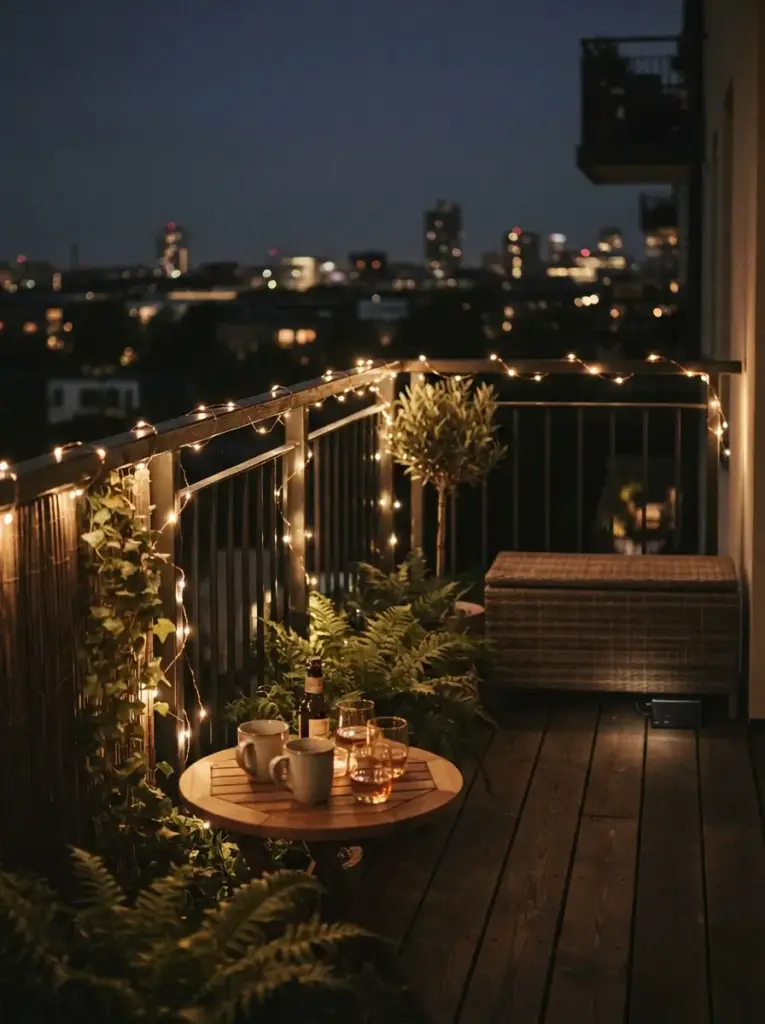
Micro lights create a finer, quieter glow than large string bulbs. Wrap them loosely around the inside of the railing rather than the outside, where wind and rain can damage the wire more quickly. Copper-wire versions disappear among wood, bamboo screening, or leafy plants. Green-wire versions blend into artificial foliage and balcony gardens. Battery-operated models eliminate long extension cords, although rechargeable packs are more economical than disposable batteries. Select a timer function so the lights turn off automatically after several hours. Secure the battery box under a table or inside a weather-resistant storage bench where it remains accessible but protected.
Rail-level light adds depth because it illuminates the edge of the balcony without shining directly into your face. Couples who enjoy evening drinks and apartment dwellers who want a subtle background glow will find this option useful. Keep light density moderate; tightly wound wire can resemble a holiday decoration instead of year-round decor. Wider spacing produces a calmer effect and allows the railing material to remain visible. Check building rules before attaching anything to exterior-facing surfaces. Where Apartment Balcony Privacy screens are already installed, micro lights can follow the top edge and make the screen feel intentional after dark.
Place Rechargeable Table Lamps Near Seating
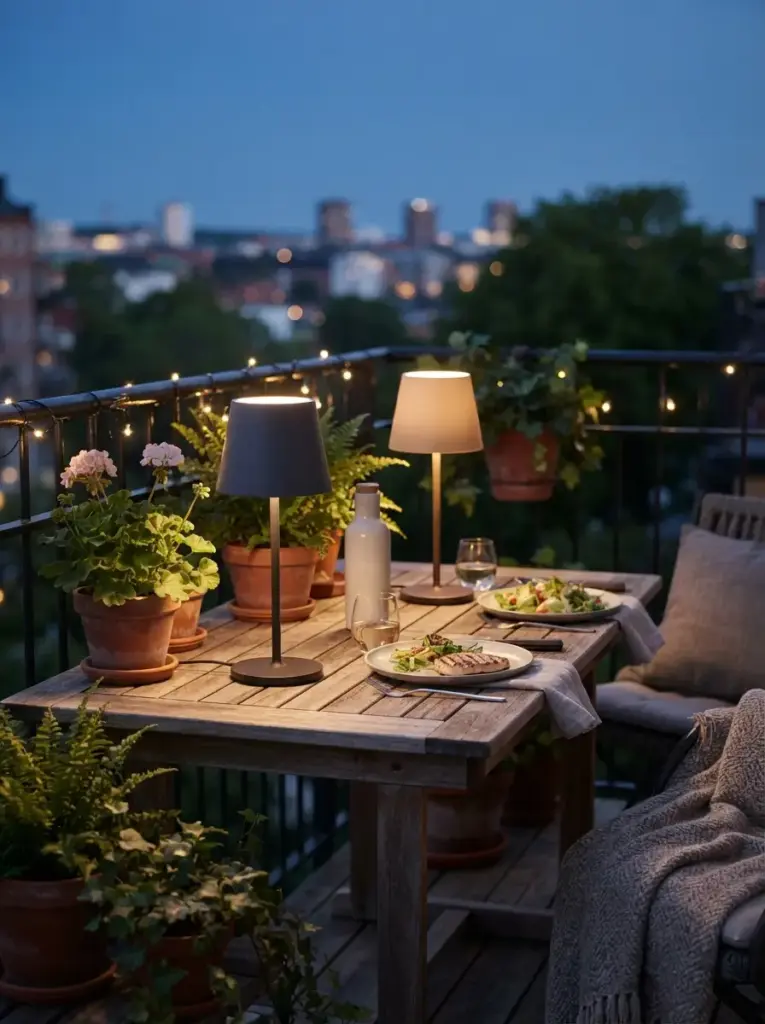
Rechargeable table lamps offer the flexibility of indoor lighting without requiring an outdoor socket. Choose a stable metal or weighted resin base that will not tip during light wind. Shades made from coated metal, acrylic, or weather-resistant fabric are easier to maintain than paper or untreated natural fiber. Dimmable models provide bright light for eating and lower light for conversation. A color temperature near 2700K feels warm without making food colors look muddy. Best for renters and balconies without outlets.
Use Solar Lanterns Where Sunlight Is Reliable
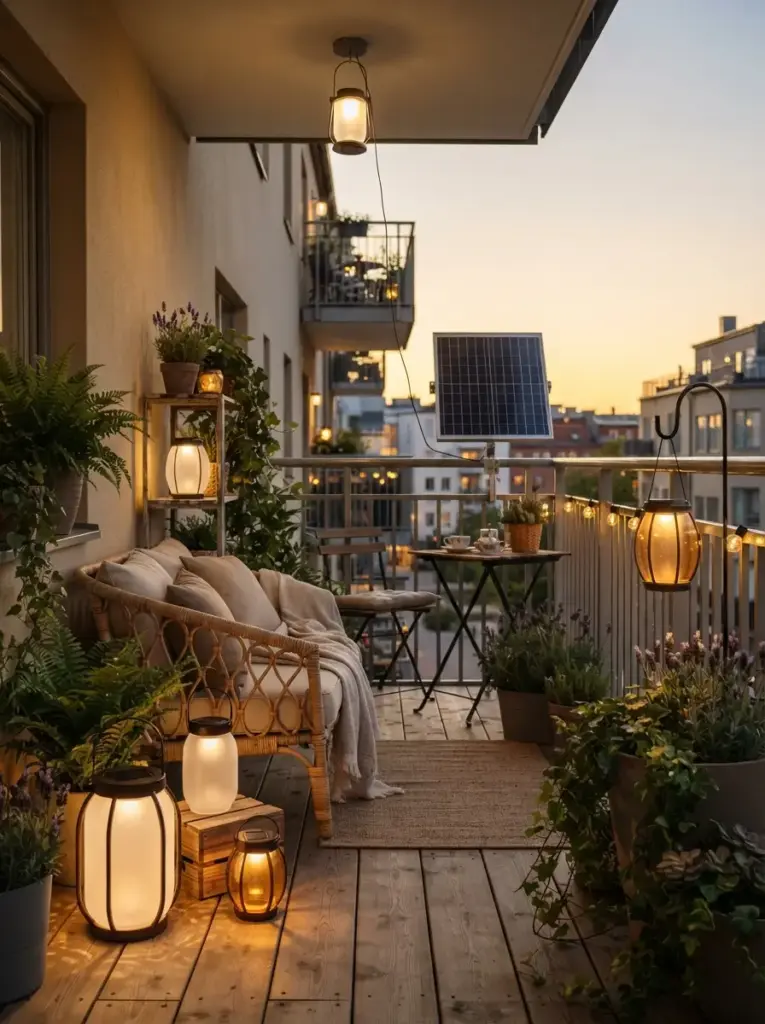
Solar lanterns reduce cable clutter and work well on balconies that receive several hours of direct sun. Position the solar panel where nearby walls, roof overhangs, or taller buildings will not shade it during the strongest daylight. Lanterns with separate panels provide more placement freedom because the light can sit under cover while the panel remains exposed. Look for warm LEDs, replaceable rechargeable batteries, and a weather-resistant rating suitable for your climate. Clean the panel every few weeks because dust and pollen can reduce charging performance. During winter or long cloudy periods, expect shorter operating times and keep a backup rechargeable lamp available.
Energy-conscious decorators and balconies used mainly for relaxed conversation benefit most from solar lighting. Lanterns can sit on the floor beside a chair, hang from a shepherd’s hook in a planter, or line a low shelf. Grouping three different heights creates visual interest, but leaves walking paths clear. Amber or frosted lenses soften the individual LED points and make inexpensive lanterns look more refined. Solar fixtures should not be your only safety light near steps or door thresholds because charging varies. Their strongest role is decorative background illumination around an Apartment Balcony Garden or casual lounge corner.
Add Flameless Candles Inside Weatherproof Lanterns
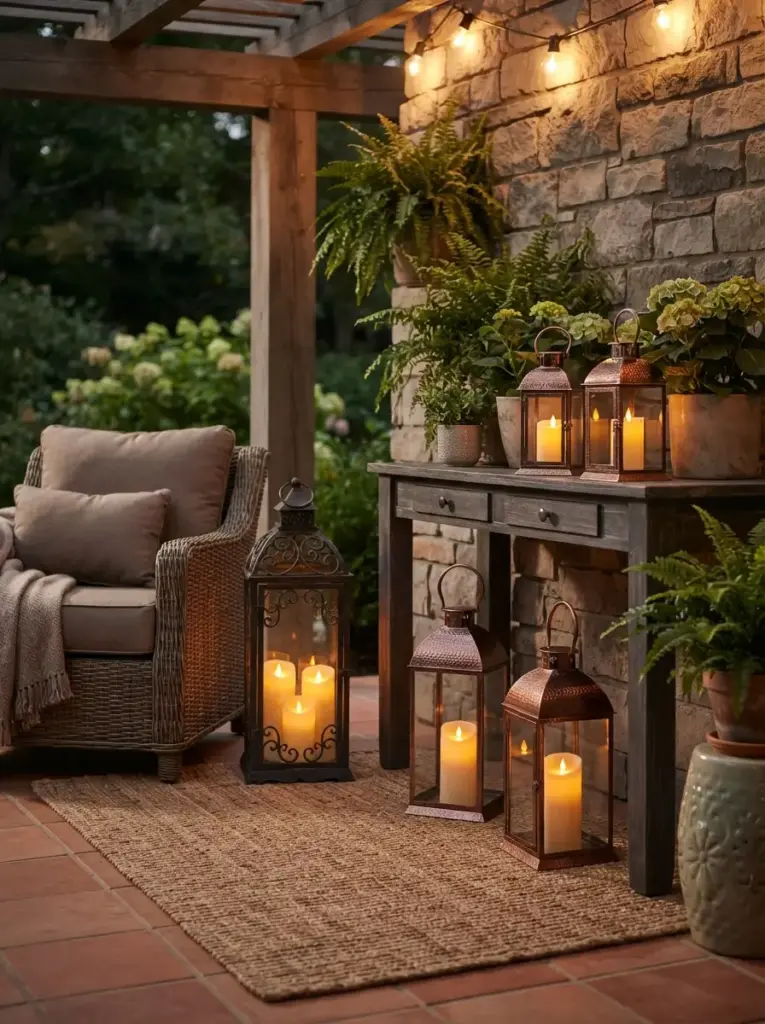
Flameless candles create a candlelit effect without open flames, hot wax, or smoke. Select outdoor-rated LED candles with sealed battery compartments and realistic warm flicker. Place them inside metal, glass, or resin lanterns that shield the flame-shaped bulb from wind and moisture. Mixed heights look more natural than identical candles arranged in a straight row. Try one tall lantern near a chair and two smaller lanterns under a console or plant stand. Timers are valuable because they prevent batteries from draining overnight. Choose ivory candles for traditional decor and warm beige or taupe for softer contemporary palettes. Best for homes with children, pets, or strict flame rules.
Install Renter-Friendly Wall Sconces
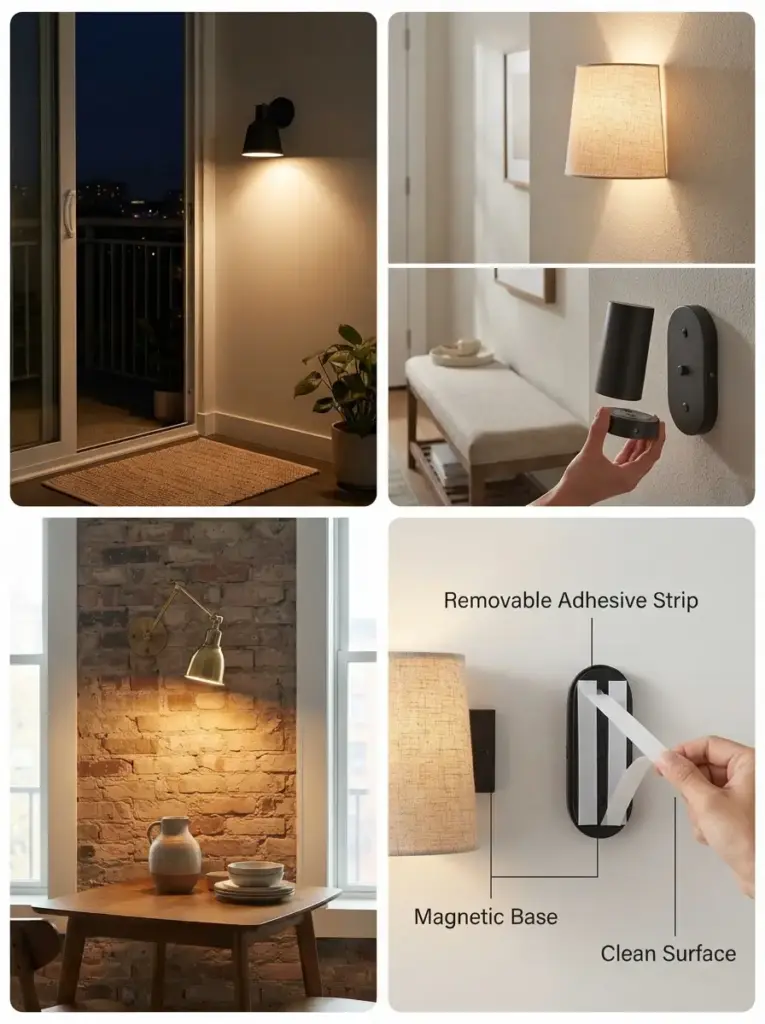
Battery-powered or rechargeable wall sconces can imitate built-in lighting without permanent wiring. Mount them beside the balcony door, above a narrow bench, or on the wall behind a dining table. Fixtures with magnetic backplates make charging simple because the lamp detaches while the mounting plate stays in place. Use removable outdoor adhesive strips only on clean, compatible surfaces and follow the stated weight limit. Rough brick, dusty concrete, and textured stucco may require a freestanding alternative because adhesive products often fail there. A downward-facing beam reduces glare and highlights the wall texture, while a shaded diffuser produces broader ambient light. Best for renters seeking a built-in appearance.
Highlight Plants With Small Uplights
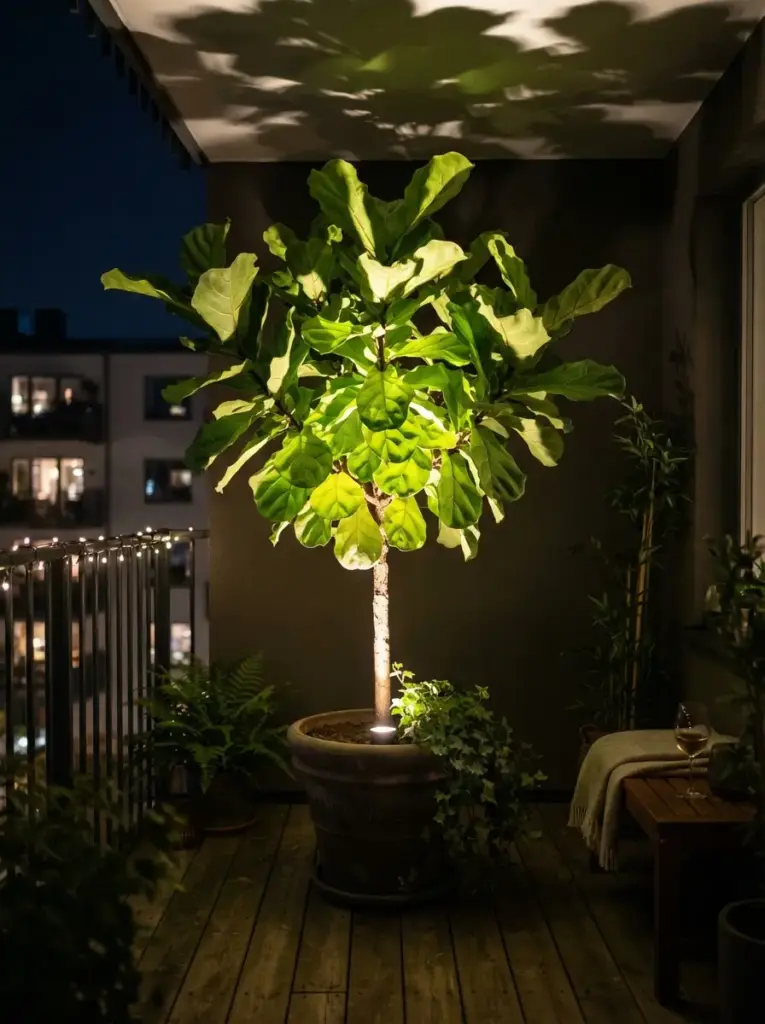
Low-voltage, battery, or solar uplights can turn ordinary foliage into an evening focal point. Position a narrow-beam light near the base of a tall plant and aim it through the leaves rather than directly at the wall. Shadows add movement and depth, especially with palms, olive trees, bamboo, or large-leaf tropical plants. Warm-white light keeps green leaves natural, while very cool light can make them look gray. One or two uplights are usually enough for an apartment balcony. Hide the fixture behind the pot rim or a smaller plant so the source disappears and the illuminated leaves receive attention. Best for plant lovers with one or two large specimens.
Light the Floor With Low Path Markers
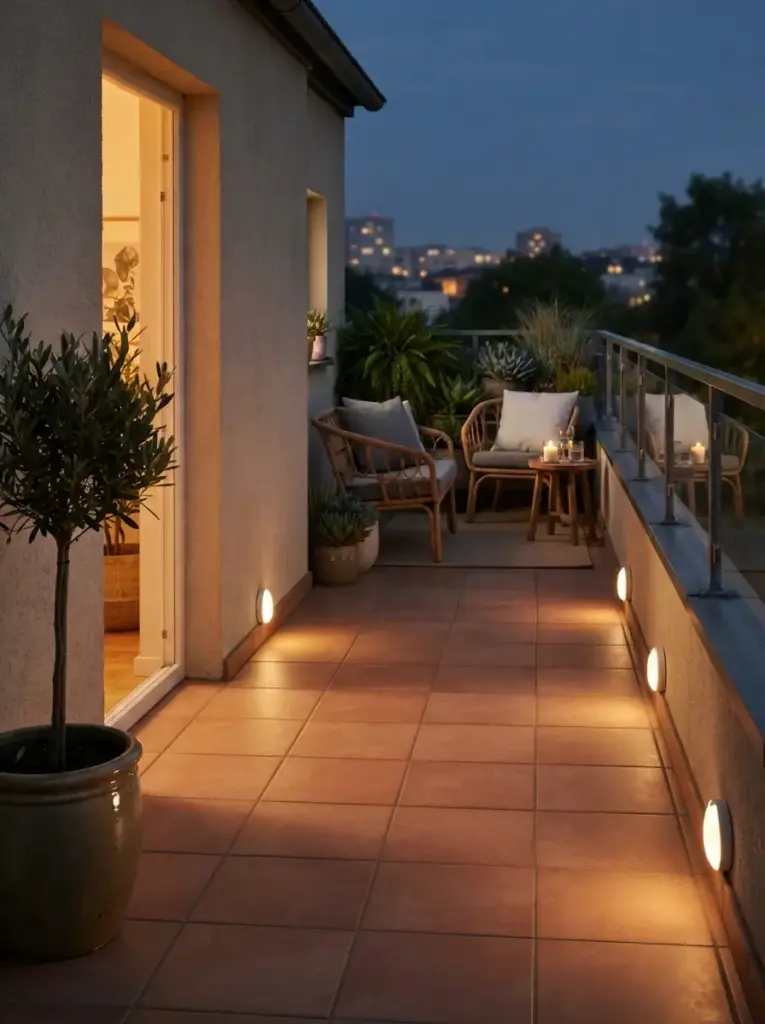
Low path lights help define movement from the door to the seating area. Slim rechargeable markers, small solar stakes placed inside heavy planters, or flat puck lights beside the wall can guide without bright overhead glare. Use them sparingly along one edge rather than creating two parallel rows, which may make the balcony resemble a walkway. Warm light around 2200K to 2700K stays gentle near the floor. Frosted covers spread light more evenly and prevent sharp points from reflecting on the tile. Keep every fixture outside the main walking line to reduce tripping hazards. Best for long layouts and step-down thresholds.
Use a Pendant-Style Rechargeable Light
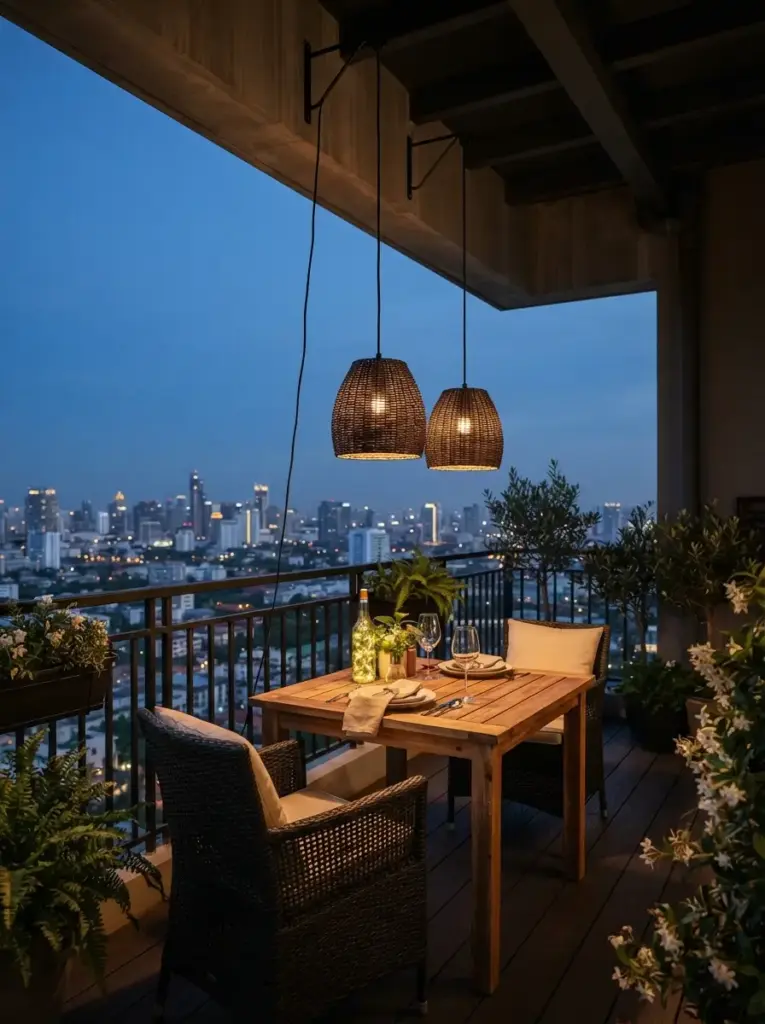
Portable pendant lights bring illumination down toward a dining or lounge area, creating a defined zone on balconies with high ceilings. Rechargeable pendants often hang from a hook and include a long cord with no electrical connection. Position the bottom of the shade high enough that standing guests will not hit it, yet low enough to light the tabletop. Woven synthetic shades soften the beam and add texture, while metal dome shades direct more light downward. Choose outdoor-safe materials because natural rattan can fade, swell, or mildew when exposed to weather. Best for compact dining areas with overhead clearance.
Create a Reading Corner With a Floor Lamp
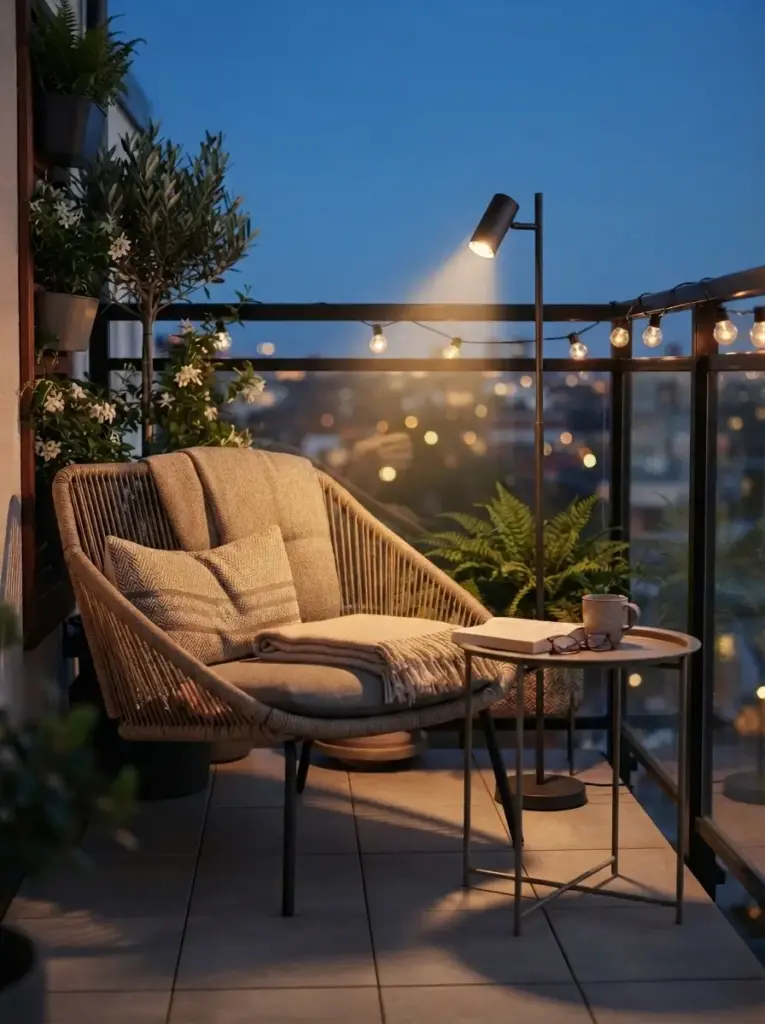
Outdoor-rated floor lamps make a balcony feel like an extension of the living room. Choose a narrow base that slides behind a chair and a weighted bottom that resists tipping. An adjustable head works better than a fixed shade for reading because the beam can reach the page without lighting the whole balcony. Rechargeable designs avoid extension cords, while plug-in models should connect only to protected outdoor outlets. Place the shade slightly behind the reader’s shoulder to reduce shadows across the book. A 2700K bulb with moderate brightness supports comfort without appearing clinical.
Readers, remote workers, and anyone who uses the balcony for focused activities will appreciate the extra task light. Pair the lamp with a compact lounge chair, lumbar cushion, and small side table. Foldable chairs save space but may not provide enough support for longer reading sessions. For Small Balcony Ideas, select an arc lamp with a short reach or a slim upright model rather than a wide tripod base. The design succeeds because it assigns one corner a clear purpose, making the overall balcony easier to furnish and less likely to collect random decor.
Mount LED Strip Lights Under a Railing
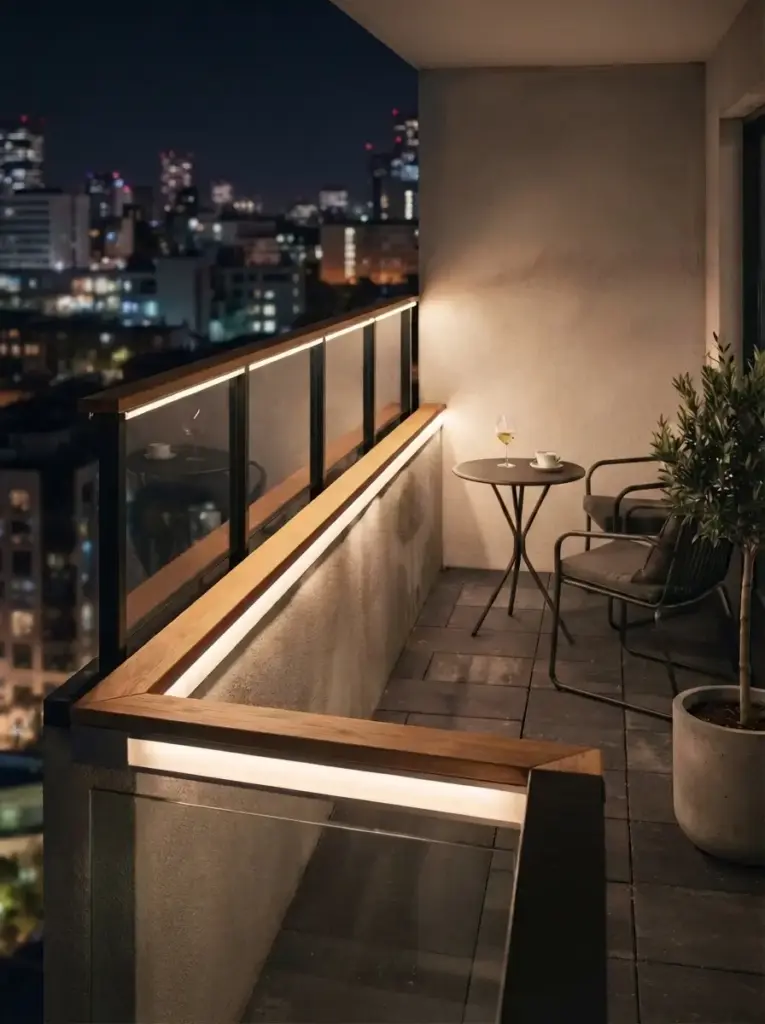
Outdoor-rated LED strips can create a clean line of indirect light beneath a railing cap, bench edge, or shelf. Install the strip where the individual diodes remain hidden from seated eye level. Aluminum channels with frosted covers improve heat management and turn dotted light into a continuous glow. Warm-white strips between 2400K and 3000K look more residential than bright blue-white versions. Measure corners and use manufacturer-approved connectors rather than sharply bending the strip. Clean the mounting surface first, then add clips because adhesive backing alone may weaken in heat, cold, or humidity.
Minimalist homes and balconies with modern metal or concrete finishes suit this approach. Indirect light gives enough orientation for conversation while keeping the ceiling visually quiet. Dimmable controls help prevent the railing from becoming too bright, especially when reflective glass panels are present. Avoid multicolor chase effects for everyday use because moving light can disturb neighbors and compete with the calm setting. A soft single color usually looks more polished. Apartment Balcony Lighting feels spacious when hidden sources wash surfaces gently instead of filling the area with visible fixtures.
Add Clip-On Lights to Shelves or Railings
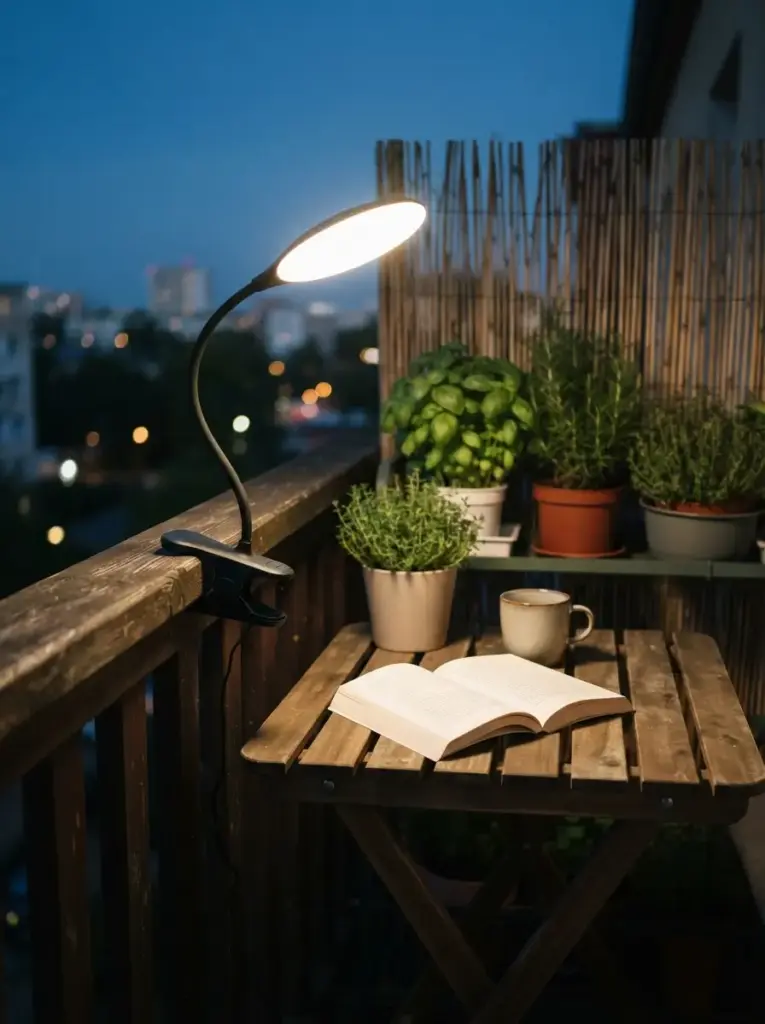
Clip-on lamps provide targeted light where permanent mounting is impossible. Attach one to a sturdy railing, plant shelf, folding table, or privacy screen frame. Rubber-lined clamps protect finishes and improve grip. Flexible necks let you aim the light toward a book, serving tray, or herb planter. Rechargeable versions are easiest to move, but inspect the charging-port cover before leaving the lamp outdoors. Select a broad diffused head rather than a narrow exposed LED if the fixture will sit close to eye level. Test the clamp by gently shaking the support before using the lamp. Best for students and flexible multipurpose layouts.
Turn a Storage Bench Into a Lighted Feature
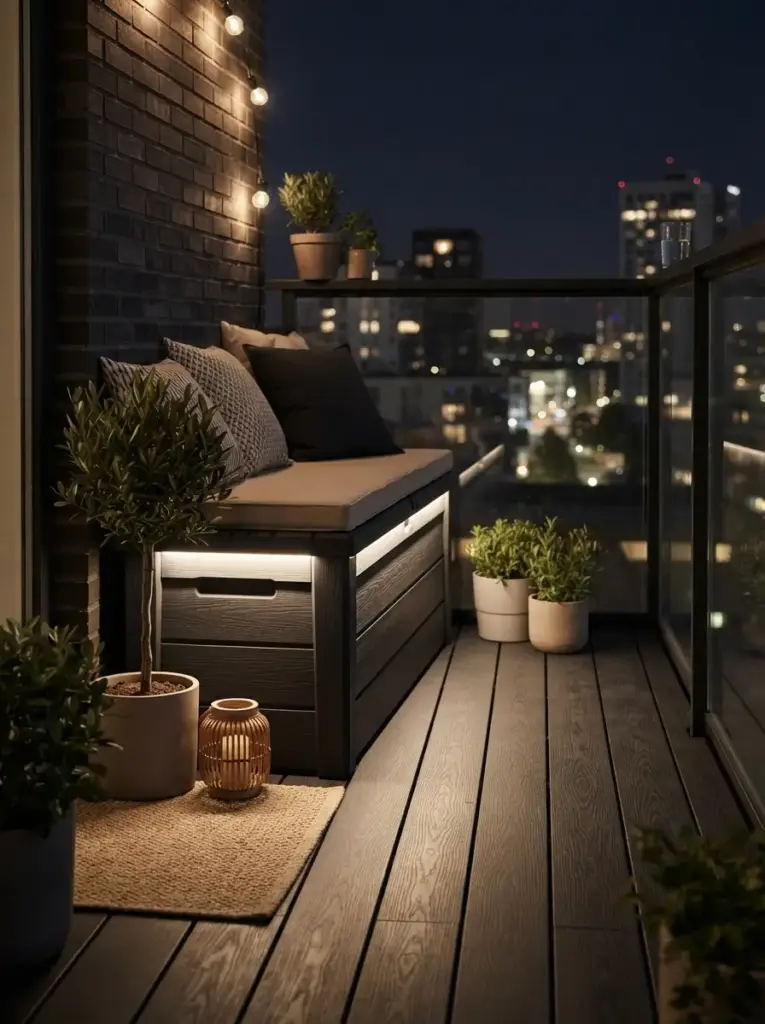
Storage benches can hold cushions by day and become a softly illuminated seating element at night. Attach a protected LED strip beneath the front edge or place rechargeable puck lights under the seat overhang. Hidden light should wash the floor rather than shine outward. Choose a bench with ventilation and weather-resistant construction, then keep battery packs inside a separate dry compartment. Warm light pairs well with teak, acacia, faux wood, and beige upholstery. Dark charcoal benches can handle slightly brighter warm-white light because their surfaces absorb more illumination. Best for balconies that need seating and storage.
Frame a Privacy Screen With Soft Back-lighting
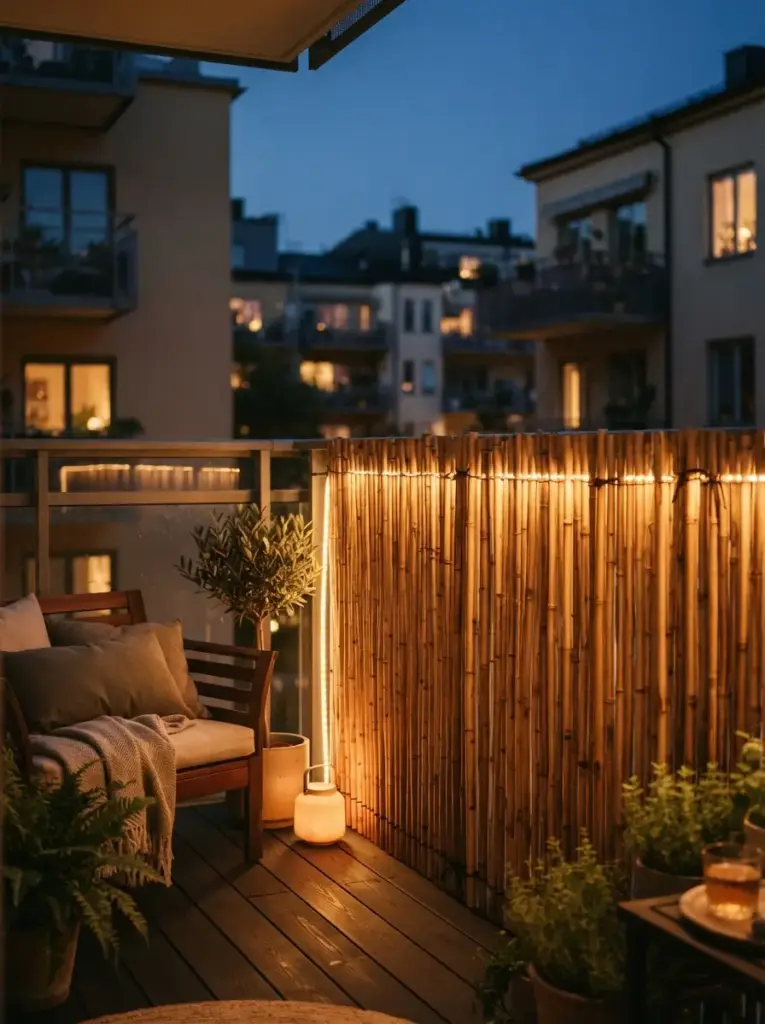
Backlighting can make a bamboo, wood-slat, reed, or outdoor-fabric privacy screen feel lighter and more dimensional. Place a warm LED strip or spaced micro lights behind the screen, leaving a small gap between the light and the material. The glow should leak gently through openings instead of outlining every edge. Check that the screen is securely attached before adding fixtures. Use only low-heat LEDs and keep electrical components clear of dry natural materials. Backlighting works best on one main screen rather than every wall because a single luminous surface creates a visual focal point. Best for overlooked balconies facing nearby homes.
Layer Three Light Sources for a Finished Setup
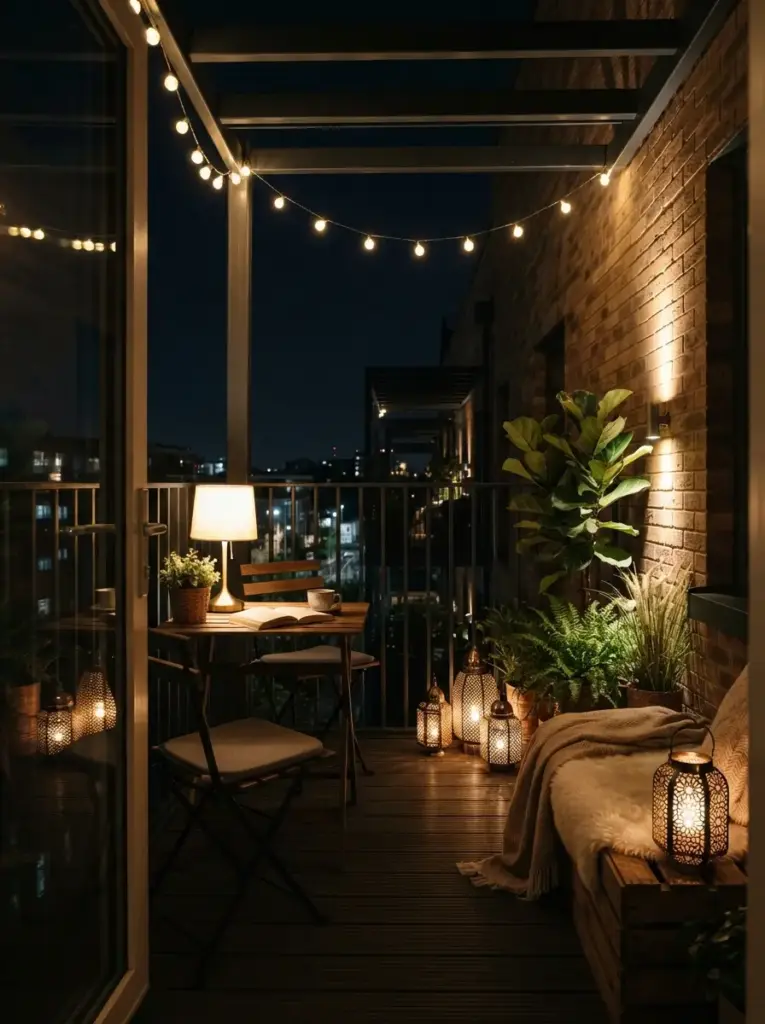
Layering combines ambient, task, and accent light so the balcony can support different activities. Ambient light may come from overhead string lights or a pendant. A task light may be a rechargeable table lamp beside dining or reading furniture. Accent light may highlight a plant, lantern group, or privacy screen. Each layer should have a separate switch or dimmer whenever possible. Start with the lowest brightness, then add only what the activity requires. Matching color temperatures keeps the setup unified; mixing orange 2200K candles with harsh 5000K task lights often feels disconnected.
Homeowners and renters who use the balcony frequently will gain the most from this flexible plan. A narrow balcony might need only one strand, one clip lamp, and one lantern. A larger balcony could divide lighting between the dining and lounge zones. Apartment Balcony Lighting looks intentional when every source has a role and empty areas remain slightly darker. Photograph the balcony at night from the doorway to spot glare, uneven spacing, and visible wires. Small adjustments in angle or height often improve the result more than buying another fixture.
Common Balcony Lighting Mistakes to Avoid
Choosing Light That Is Too Cool
Cool-white bulbs above 4000K may provide visibility, but they can make beige walls, wood, skin tones, and evening meals appear flat. Warm-white bulbs between 2400K and 3000K usually feel more comfortable in residential outdoor spaces. Keep task lighting near 2700K or 3000K when you need clearer detail. Decorative lights can sit closer to 2200K for an amber effect. Check the packaging before buying because terms such as soft white and warm white vary between manufacturers. Comparing Kelvin numbers gives a more reliable result than relying only on descriptive names.
Using Too Many Visible Bulbs
More fixtures do not automatically create better lighting. Numerous exposed bulbs can produce glare, visual clutter, and reflections in balcony doors. Begin with one primary source, then add task or accent lighting only where dark spots affect comfort or function. Frosted shades, lantern enclosures, and indirect strips make each source gentler. Sit in every chair after installation and look toward the doorway, railing, and neighboring buildings. Any bulb that feels sharp at eye level should move higher, lower, or behind a diffuser. Restraint helps a small balcony remain calm and spacious.
Ignoring Weather and Electrical Ratings
Indoor fixtures may look suitable under a covered balcony, yet wind-driven rain, humidity, dust, and temperature changes can still reach them. Use products marked for outdoor, damp, or wet locations according to the actual exposure. Keep plugs and extension connections raised from the floor and protected by approved weather-resistant covers. Never run cords through doors where frames can crush them. Inspect wires for cracks before each season. Building rules may also restrict exterior wiring or attachments, so review the lease and property guidance before installing lights on railings, walls, or ceilings.
Creating Trip Hazards With Loose Cords
Cords crossing a doorway or narrow walking route become dangerous when the lighting is low. Route cables along walls, under protected furniture edges, or through outdoor-rated cord covers. Secure extra length instead of leaving coils on the floor. Battery and rechargeable fixtures often solve layout problems where outlets sit far from the seating zone. Check the path after moving chairs because furniture legs can expose previously hidden wires. Guests should be able to enter, sit, and leave without stepping over equipment. Safe cable planning matters as much as fixture style in a compact outdoor room.
Pointing Bright Light Toward Neighbors
Balconies sit close together, so one poorly aimed spotlight can shine directly into another home. Direct beams downward, toward your own wall, or through plants that soften the output. Dimmers and timers reduce disturbance later at night. Test the view from outside the balcony when possible, or stand near the railing and look back at the fixtures. Motion-activated lights should use a narrow detection zone so passing cars, birds, or neighbors do not trigger them repeatedly. Considerate placement improves your own comfort and helps avoid complaints or building restrictions.
Forgetting Daytime Appearance
Wires, clips, battery boxes, and oversized lanterns remain visible during the day. Plan cable routes along architectural lines and choose clips that match the wall or railing. Hide charging packs beneath furniture while keeping them ventilated and reachable. Limit decorative pieces to sizes that suit the balcony. A huge pendant or dense strand arrangement can make a small ceiling feel lower. Daytime testing also reveals whether fixtures interfere with plants, folding furniture, doors, or cleaning. Strong balcony design should look organized both when the lights are on and when they are off.
Budget-Friendly Ways to Improve Balcony Lighting
Start by deciding which activity needs the light the most. Dining may require one rechargeable table lamp, while conversation may need only a warm string-light strand. Spending on one useful fixture usually produces better results than buying a bundle of small novelty lights. Compare brightness, runtime, charging method, replacement batteries, and weather rating before looking at decorative details. A slightly higher initial cost can save money when the fixture lasts several seasons. Keep receipts until you have tested brightness at night because product photos often make small lights appear stronger than they are.
Buy lighting in stages. Install one ambient source and use the balcony for several evenings before adding more. Notice where you reach for your phone flashlight, where faces fall into shadow, and whether the doorway feels safe. Those observations show whether you need a task light, a path light, or a brighter bulb. Seasonal clearance sales can reduce costs on outdoor lamps, but check return policies and battery condition. Keeping all lights within the same warm color range also makes mixed low-cost fixtures look coordinated rather than random.
Choose rechargeable equipment when the balcony lacks an outlet and the lights will be used often. Rechargeable batteries reduce ongoing waste and usually cost less than repeated disposable replacements. A small charging station near the balcony door keeps lamps ready and prevents lost cables. Label similar charging cords and follow manufacturer guidance to protect battery life. Solar lights can also reduce operating costs where direct sunlight is dependable. Shaded balconies may gain little benefit from solar models, so assess daylight before purchasing several fixtures that cannot fully charge.
Use textiles and reflective surfaces to increase the effect of existing light. Pale seat cushions, a light outdoor rug, cream planters, and a small metal tray reflect more glow than black fabric and deep matte finishes. Reflection does not mean choosing glossy furniture everywhere. One or two lighter surfaces can spread light gently and reduce the need for extra fixtures. Mirrors are usually unsuitable on exposed balconies because of glare, heat concentration, breakage, and mounting concerns. Safer reflective details include glazed pots, stainless serving trays, and light-colored walls already present.
Apartment Balcony Lighting Tips for Better Results
Plan the Balcony in Zones
Map the balcony according to entry, movement, seating, plants, and storage. Give the brightest practical light to the activity zone, then keep circulation visible with softer illumination. Decorative accents should sit at the edges rather than in the center of the walking path. A bistro table near the door may use a rechargeable lamp, while plants at the far end receive one uplight. Zoning prevents every fixture from competing for attention. It also makes future purchases easier because each dark area has a known purpose instead of receiving random decoration.
Match Light Scale to Furniture Scale
Small café chairs need compact lamps, fine string lights, or narrow sconces. Deep lounge chairs and a storage bench can support larger lanterns or a broader pendant. Scale matters because oversized fixtures reduce headroom and floor space, while tiny lights may disappear beside bulky furniture. Measure the table diameter before selecting a lamp and check the pendant width against the seating arrangement. Fixtures should support the furniture rather than dominate it. Repeating one material, such as black metal or frosted acrylic, can connect different light types without requiring exact matching sets.
Control Brightness With Dimmers and Timers
Dimming allows one fixture to serve dinner, reading, and quiet conversation. Timer functions improve convenience and prevent lights from remaining on all night. Smart plugs can control approved plug-in outdoor fixtures, provided the plug and connection remain protected. Keep controls simple enough that every household member can use them. Several separate apps and remotes often create frustration in a small space. One dimmable ambient source plus manually switched task lights usually provides enough flexibility. Set decorative lights to turn off at a considerate hour, especially in buildings where balconies face bedrooms.
Test Color Temperature Before Buying Sets
Purchase one bulb or one fixture before ordering several matching units. View it after sunset beside your walls, flooring, cushions, and plants. Warm beige surfaces may appear orange under 2200K light, while gray concrete may feel more inviting near 2700K or 3000K. Camera images can exaggerate warmth, so judge the light with your eyes. Keep Kelvin values close across visible sources, usually within a few hundred degrees. Flameless candles can remain warmer than task lamps because they serve different purposes, but the overall scene should still feel related.
Maintain Clear Access for Cleaning and Watering
Balconies collect dust, leaves, pollen, and water, so every fixture should be easy to lift, wipe, or disconnect. Avoid weaving wires through plant branches that need pruning. Leave room to empty drainage trays and move pots without pulling on cables. Recharge lamps on a regular schedule and inspect solar panels for dirt. Remove lightweight fixtures before storms or high winds. Seasonal maintenance extends fixture life and keeps the balcony safe. A beautiful arrangement that prevents basic cleaning will quickly become inconvenient, especially in a small area where every object affects access.
Coordinate Lighting With Privacy and Planting
Privacy screens, curtains, and tall plants change how light spreads. Dense materials absorb light, while pale fabric and open slats reflect or filter it. Place lights behind slatted screens for a soft glow or in front of dense greenery when you need stronger visibility. Never let hot fixtures touch fabric or dry leaves. Outdoor curtains should remain tied back from lamps and plugs. Lighting and privacy work best when planned together, because both occupy walls and edges. Coordinated placement keeps the center open and helps the balcony feel larger after dark.
Frequently Asked Questions
What Color Temperature Is Best for a Balcony?
Warm white between 2400K and 3000K works well for most balconies. Values near 2400K create a more amber, relaxed effect, while 2700K to 3000K provide clearer visibility for dining and reading. Avoid very cool 5000K light unless you need temporary task illumination, because it can feel harsh in a small residential setting. Matching color temperatures across the main fixtures creates a calmer and more coordinated result.
How Can Renters Hang Balcony Lights Without Drilling?
Use removable outdoor hooks, adhesive clips rated for the fixture weight, railing ties, magnetic mounts on compatible metal, or tension rods where structurally appropriate. Clean and dry the surface before applying adhesive, then allow the recommended curing time. Avoid attaching lights to sprinkler systems, pipes, fragile trim, or rough surfaces that cannot hold adhesive securely. Review the lease and building rules because exterior attachments may require approval even when they do not involve drilling.
Are Solar Lights Effective on Apartment Balconies?
Solar lights work when the panel receives several hours of strong direct sunlight. Balconies facing open south or west exposures often perform better than deeply shaded or covered spaces, although local conditions vary. Separate-panel designs can place the panel in the sun while keeping the lamp under cover. Dust, winter daylight, and cloudy weather reduce runtime. Use solar fixtures mainly for decorative glow and keep a rechargeable task lamp available when reliable brightness matters.
How Many Lights Does a Small Balcony Need?
Most small balconies need two or three purposeful sources rather than many decorative fixtures. One ambient source can light the general area, one task lamp can support reading or dining, and one accent can highlight plants or a screen. Fewer lights reduce clutter, charging needs, and glare. Begin with one source, test the space at night, and add another only when a specific dark area affects safety or use.
Can Indoor Lamps Be Used on a Covered Balcony?
Indoor lamps should not stay outdoors unless the manufacturer rates them for the balcony’s conditions. Covered spaces can still experience humidity, condensation, dust, temperature changes, and wind-driven rain. Rechargeable indoor lamps may be carried outside temporarily during dry weather, then returned indoors immediately afterward. Outdoor-rated fixtures remain the safer choice for regular use. Never expose indoor plugs, fabric shades, or unsealed battery compartments to moisture.
How Can Balcony Lights Avoid Disturbing Neighbors?
Aim lights downward or toward your own walls, select frosted or shielded fixtures, use lower brightness, and turn decorative lighting off at a reasonable time. Avoid flashing effects and bright beams directed through railings. Sit in the neighboring sightline within your balcony to check glare. Timers make consistent shutoff easy. Apartment Balcony Lighting should improve your private outdoor area without sending unnecessary light into nearby homes.
Conclusion
Warm balcony lighting begins with understanding how the space is used after sunset. String lights can provide soft coverage, a rechargeable lamp can support meals or reading, and one accent can bring plants or a privacy screen to life. Safe ratings, controlled brightness, clear walking routes, and considerate aiming matter more than the number of fixtures. Renters can achieve a complete setup through removable hooks, portable lamps, battery sconces, and solar lanterns. Strong Apartment Balcony Lighting combines function with restraint, giving every light a clear job while leaving enough darkness for the evening to feel calm.