
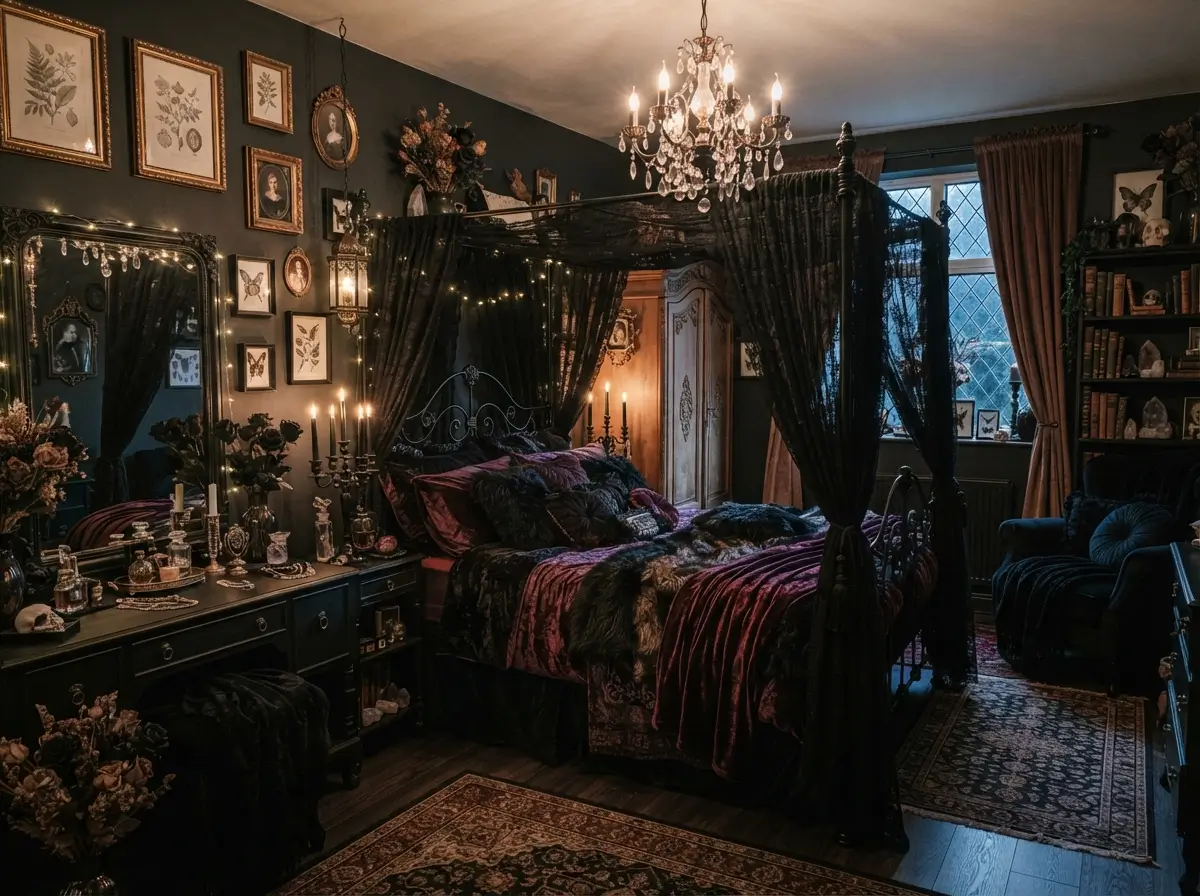

Dark feminine decorating feels most successful when romance and drama share the room without making it gloomy, cramped, or theatrical. A Romantic Goth Bedroom can combine black, plum, oxblood, charcoal, antique gold, lace, velvet, and moody artwork while still feeling comfortable enough for everyday life. Balance matters more than buying themed decor. Soft lighting, clear walking paths, useful storage, and a controlled color palette keep the style elegant. Beginners often assume every surface must look dark, but contrast creates depth. Pale bedding, warm wood, muted metallics, and carefully placed mirrors can make dark colors look richer instead of heavier.
Small bedrooms need extra planning because dramatic furniture, heavy curtains, and dark walls can quickly overpower limited floor space. Start with one strong feature, such as a painted headboard wall, a carved mirror, or deep burgundy bedding, then build around it slowly. Rental-friendly choices can produce the same mood through removable wallpaper, tension-rod curtains, plug-in sconces, peel-and-stick molding, and thrifted accessories. Budget decorators can focus on fabric, paint, lighting, and secondhand frames before investing in expensive furniture. Each choice should support sleep, storage, movement, and visual balance rather than serving only as decoration.
Comfort should guide the final edit. Sit on the bed, open every drawer, walk around the room, and check whether lamps can be reached without stretching across furniture. Look at the space during morning, afternoon, and evening because dark colors change as natural light moves. Remove any object that blocks a routine or requires constant rearranging. Decorative restraint does not weaken the style; it allows carved shapes, rich fabrics, and aged finishes to stand out. Rooms that feel usable usually remain attractive longer because the design supports real habits instead of demanding a carefully staged appearance every day. Careful editing leaves room for future finds, seasonal bedding changes, and personal objects that carry meaning over time.
What Is the Best Way to Create a Romantic Goth Bedroom?
Choose a dark but limited palette, add soft fabrics, and use warm layered lighting instead of relying on black decor alone. The best Romantic Goth Bedroom usually includes one dominant dark shade, one romantic accent color, and one lighter balancing tone. For example, charcoal walls can work with wine-red bedding and warm ivory sheets. Add antique-style details through frames, mirrors, lamps, and hardware, but keep large furniture simple if the room is small. Prioritize a comfortable bed, hidden storage, and enough open floor area before adding decorative objects.
Build the Room Around Charcoal Instead of Pure Black
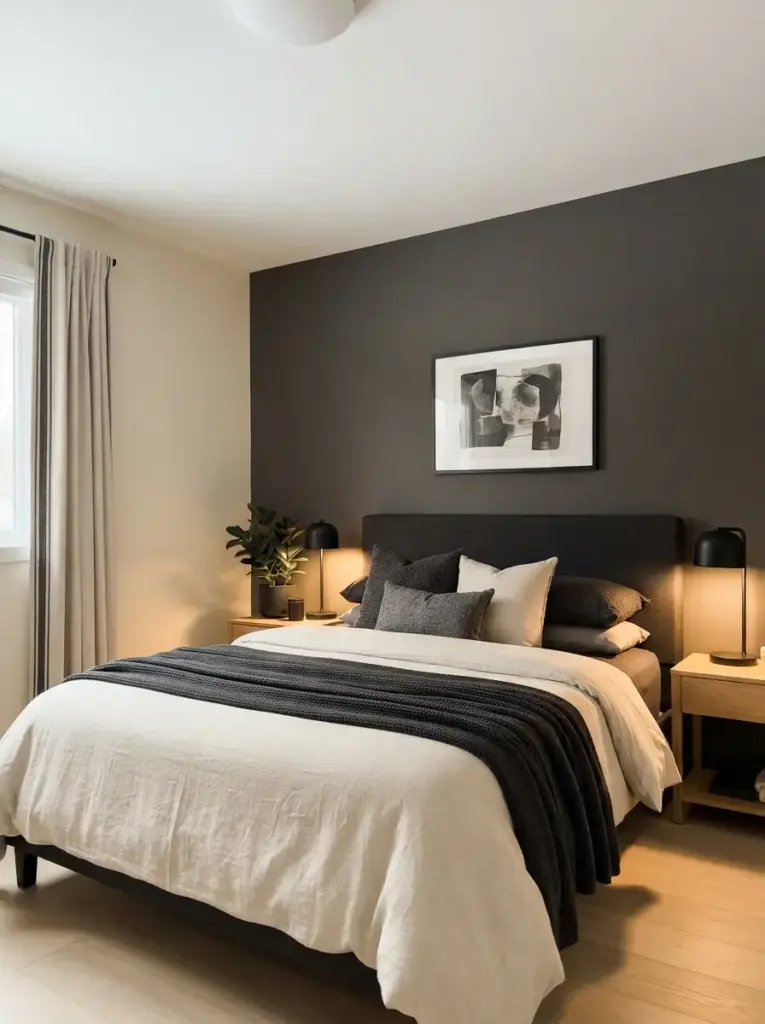
Charcoal gives a room depth without absorbing as much light as flat black. Choose a shade with a slightly warm undertone, especially when the room faces north or receives weak daylight. Paint one wall behind the bed, then leave the remaining walls in mushroom, soft gray, or muted cream. That arrangement creates a clear focal point while keeping the edges of the room open. Renters can use charcoal peel-and-stick wallpaper or hang a large dark fabric panel behind the headboard. Matte finishes usually look calmer than glossy ones and hide minor wall flaws more effectively.
Color restraint makes this approach practical for beginners. Repeat charcoal in two or three smaller places, such as curtain trim, a bedside lamp, or picture frames, so the feature wall feels connected to the rest of the room. Keep the ceiling light and avoid painting every surface dark in a tiny bedroom. Warm white bulbs around 2700K will prevent the gray from looking blue or cold at night. This idea suits anyone who likes gothic depth but worries that a full black room will feel narrow, dim, or difficult to change later.
Pair Oxblood Bedding with Soft Neutral Sheets
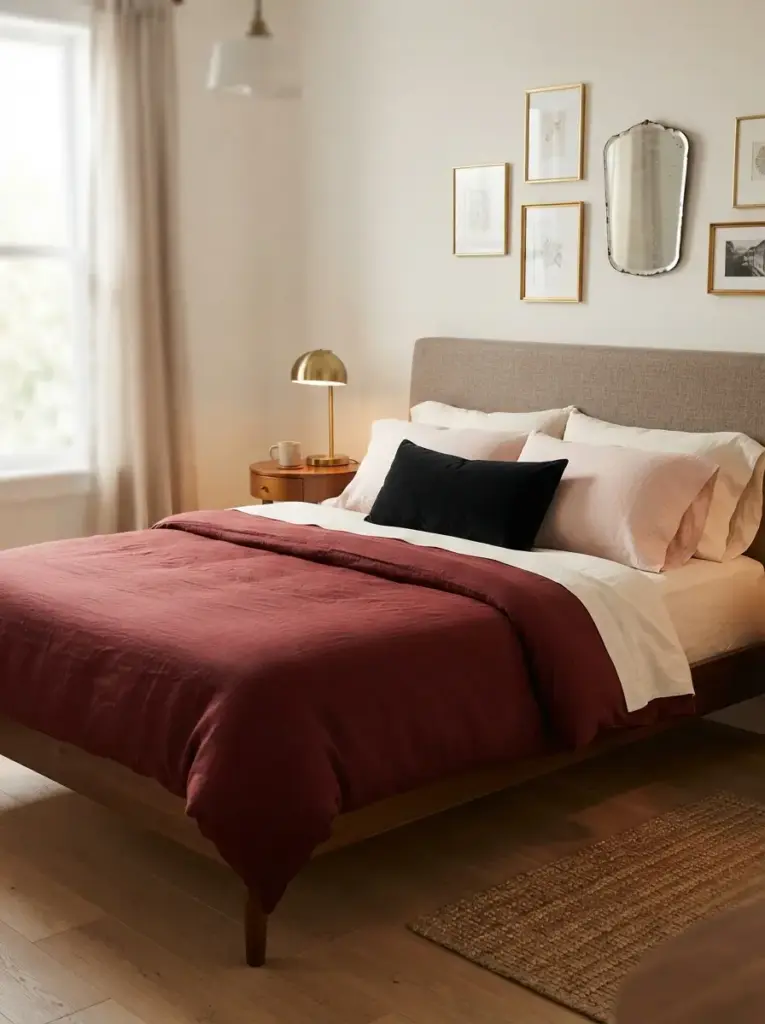
Oxblood creates a romantic effect because it sits between deep red, brown, and wine. Use it on a duvet cover, quilt, or upholstered headboard rather than spreading the color across every wall. Layer the bed with warm ivory, faded blush, or taupe sheets to soften the contrast. Linen, washed cotton, and velvet can all work, but limit velvet to one or two pieces so the bed remains breathable and easy to maintain. A dark red duvet with ivory pillowcases and one black lumbar cushion often looks more refined than an entire bed covered in matching burgundy fabric.
Practical balance explains why the combination works. Neutral sheets give the eye a resting place and make the deeper red appear richer. People with small rooms should choose a simple bed frame with visible legs because the floor space showing beneath the frame reduces visual weight. Storage beds also work well when the base has clean lines. Avoid shiny satin sets, which can look costume-like and show wrinkles quickly. This option is especially useful for renters who cannot paint but still want a major color change that can move with them.
Add a Tall Curved Mirror to Increase Light
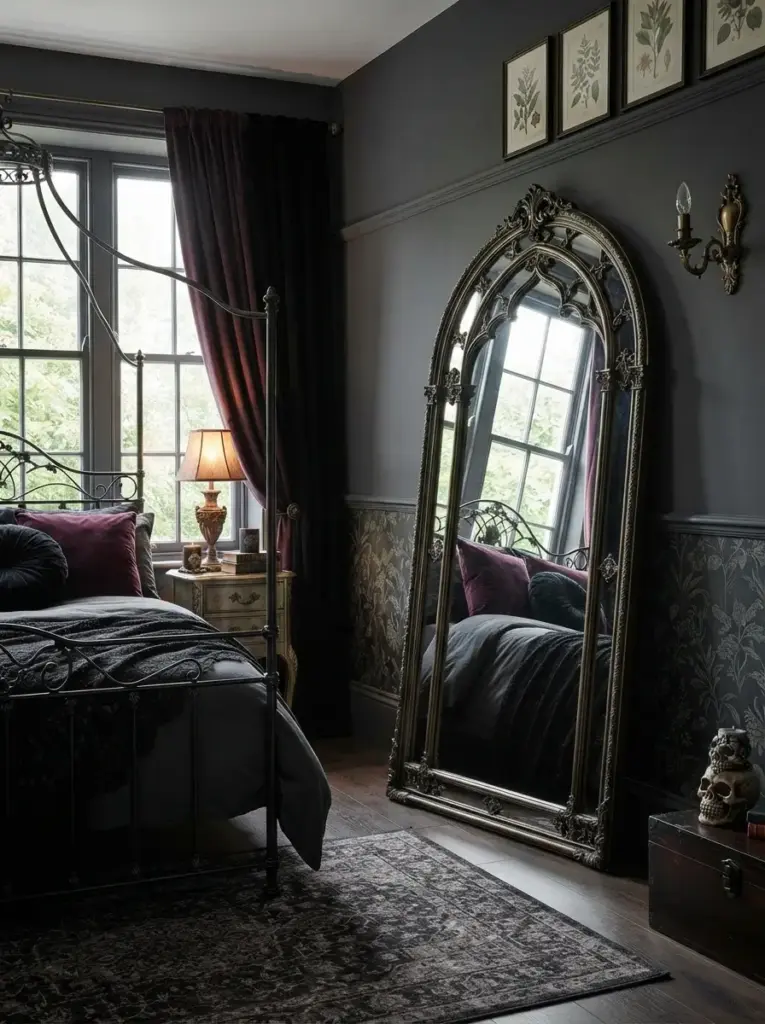
Tall mirrors with arched, scalloped, or lightly ornate frames introduce gothic architecture without using permanent construction. Place it opposite a window when possible, or angle it near a lamp so it catches warm light after sunset. Black, antique brass, dark bronze, and distressed silver frames all fit the style. Leaning mirrors feel relaxed, but secure them with anti-tip hardware. Narrow wall-mounted mirrors are safer for tight walkways and can make low ceilings appear taller when hung a few inches above the floor.
Reflection gives a Romantic Goth Bedroom more breathing room, which is important when the palette includes charcoal, plum, or black. Mirrors also reduce the need for several small decorative items because one strong piece fills the vertical space. Beginners should avoid hanging a mirror directly across from a cluttered shelf, open closet, or television. It will duplicate the mess and weaken the atmosphere. Choose this idea for narrow rooms, basement bedrooms, or spaces with only one small window where dark finishes need help from reflected light.
Use Candlelight Effects Without Open Flames
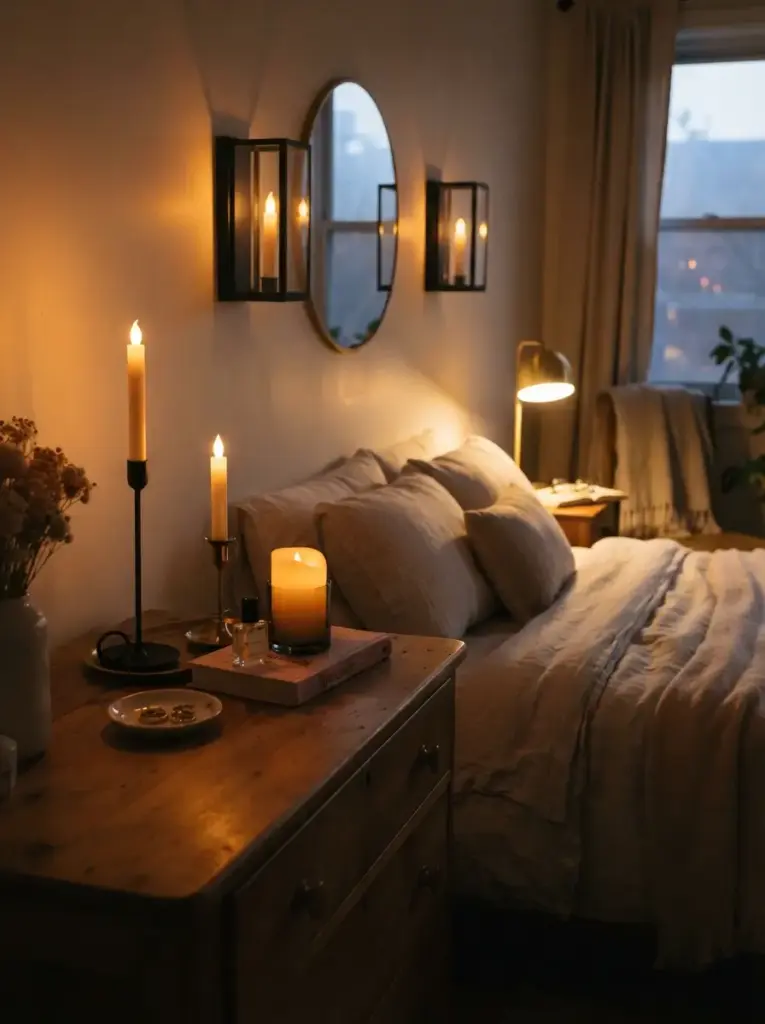
Warm points of light create romance more effectively than one bright ceiling fixture. Use flameless taper candles, rechargeable table lamps, or LED pillar candles in black, brass, or smoked-glass holders. Group three candles at different heights on a dresser, but leave enough room for daily items. Wall-mounted candle sconces can frame a bed or mirror, while battery-operated versions avoid wiring and suit rentals. Choose LEDs with a warm amber tone rather than cool white light, and select models with timers so the room settles into a softer mood automatically each evening.
Safety makes this approach better than filling a bedroom with real candles. Bedding, curtains, books, dried flowers, and fabric lampshades can sit dangerously close to an open flame. Flameless options deliver the same low glow without smoke, heat, or wax damage. Keep the main reading light brighter, around 3000K, while decorative lights can sit closer to 2200K or 2400K. Anyone who reads, applies makeup, or works in the bedroom should maintain task lighting instead of sacrificing function for darkness.
Frame the Bed with Velvet Curtains
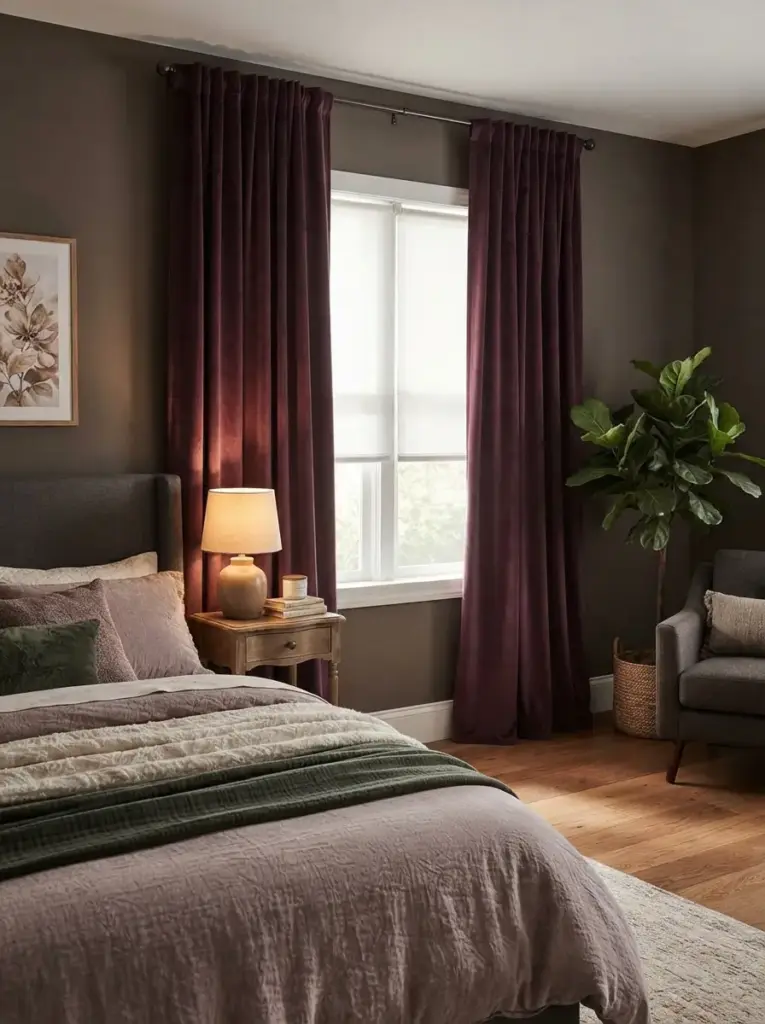
Velvet curtains bring softness, sound absorption, and visual weight to a dark, feminine room. Deep plum, black cherry, forest green, and charcoal are easier to live with than pitch black because they reveal color when daylight hits the folds. Hang the rod close to the ceiling and extend it beyond the window frame to make the window appear wider. Curtains should skim the floor rather than pile heavily on it, especially in a compact bedroom. Lined panels improve privacy, while unlined velvet can feel lighter and may suit rooms that already have blinds.
Vertical fabric draws the eye upward and makes the bed area feel enclosed without adding furniture. Renters can install a tension rod inside the window recess or use damage-minimizing curtain brackets designed for existing trim. Budget shoppers can buy plain velvet-look panels and replace the standard grommets with clip rings for a more tailored finish. Avoid combining heavy curtains with a large canopy, oversized headboard, and bulky bedding in the same small room. One substantial fabric feature usually creates enough drama.
Choose a Slim Metal Bed Instead of a Bulky Frame
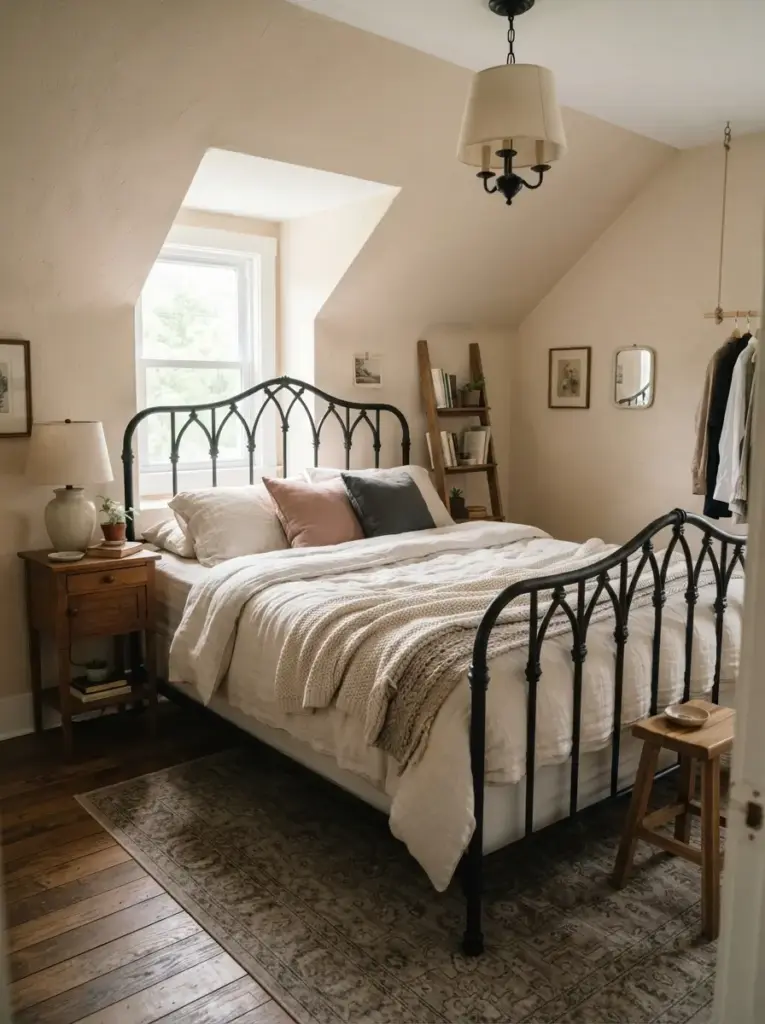
Black iron or dark bronze beds bring gothic structure through curved rails, spindle details, and a strong silhouette. Slim metal frames preserve more visual space than deeply upholstered beds or thick wooden sleigh designs. Look for a headboard with open sections so the wall remains visible. In narrow rooms, skip the footboard because it can block movement and make the mattress feel boxed in. A simple platform base with an ornate metal headboard can also provide the style without taking up extra inches at the foot of the bed.
Open construction keeps the room from feeling crowded, while the dark outline still reads clearly against pale or medium-tone walls. Dust and check joints regularly because inexpensive metal beds can squeak if the bolts loosen. Felt pads between connecting parts can reduce noise. People decorating studio apartments, attic rooms, or bedrooms with sloped ceilings will benefit most from the lighter footprint. Pair the frame with soft bedding to prevent the space from looking harsh, and avoid matching every piece of furniture in black metal.
Create a Vintage Gallery Wall with Controlled Spacing
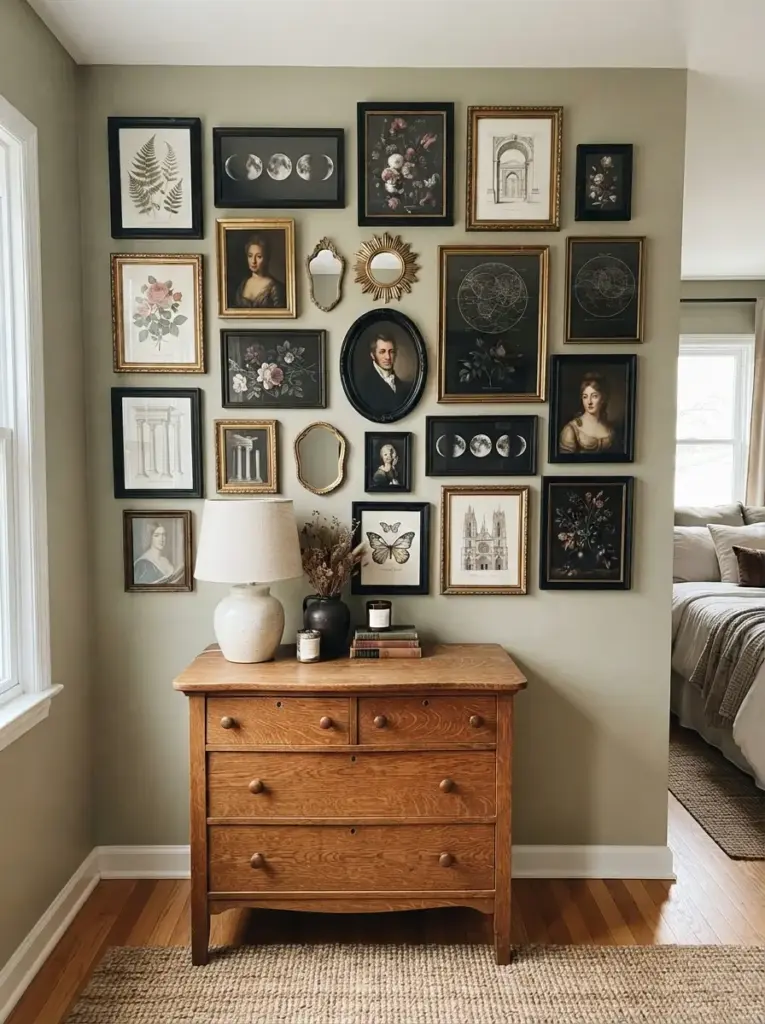
Build a gallery wall from botanical prints, moon studies, antique portraits, dark florals, architectural sketches, and small mirrors. Choose frames in two related finishes, such as black and antique gold, rather than using many unrelated colors. Lay the arrangement on the floor first and keep gaps between frames consistent at roughly two to three inches. Center the entire group over a dresser, desk, or bed so it connects to furniture below. Removable picture strips can support lightweight frames in rentals, though heavier mirrors still need secure wall hardware.
Repeated frame shapes turn varied artwork into one organized composition. That order matters in a small bedroom because dark pictures can feel busy when scattered around every wall. Thrift stores often sell inexpensive frames that can be painted with matte black or rubbed with metallic wax. Print public-domain style artwork at home or use pages from damaged vintage books that have no collectible value. Best results come from leaving at least one wall mostly clear, giving the gallery room to feel intentional rather than crowded.
Add Lace Through Small, Useful Layers
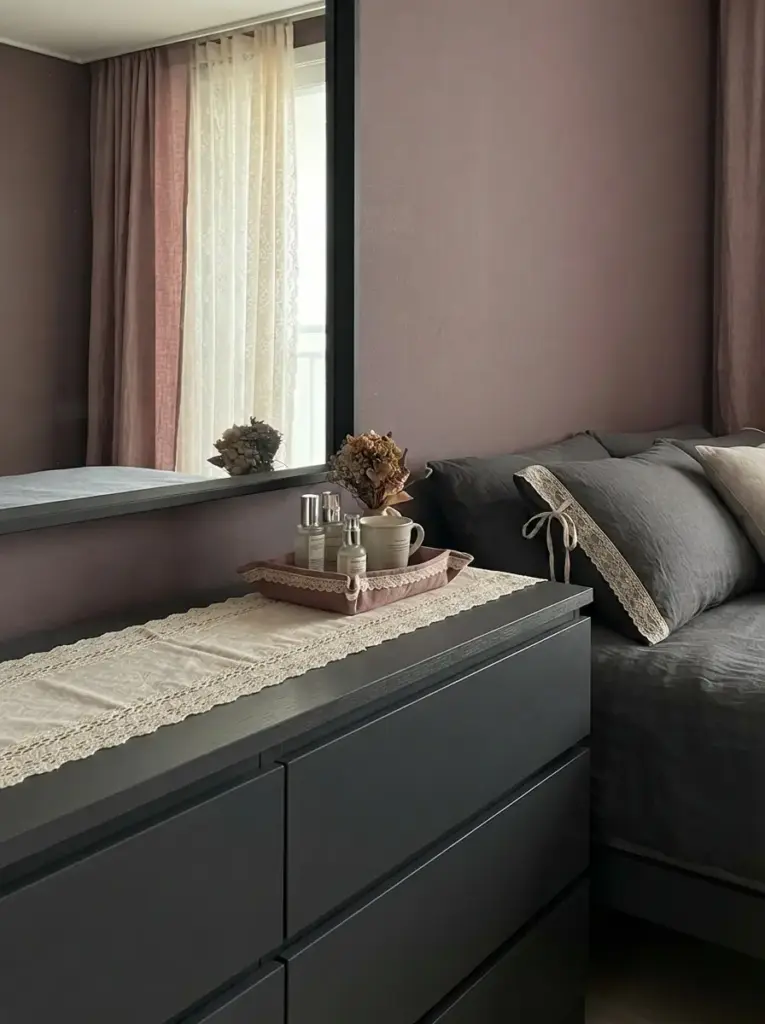
Lace can soften dark furniture and strong colors, but large amounts may push the room toward costume decor. Introduce it through a narrow table runner on a dresser, a sheer curtain panel behind heavier drapes, pillow edging, or a fabric cover for a bedside tray. Black lace looks dramatic against dusty rose, ivory, or muted plum. Cream lace gives more contrast against charcoal furniture and works well in rooms with limited daylight. Choose washable fabric whenever the piece sits near skincare, makeup, drinks, or candles.
Texture creates the romantic side of the room without requiring expensive furniture. Small lace details also suit beginners because they are easy to remove when the room begins to feel too decorative. Avoid using lace simultaneously on the canopy, duvet, curtains, lampshades, and every cushion. Pick one main placement and one smaller repetition. This strategy is best for people who already own simple modern furniture and want to introduce softness without replacing large pieces.
Use Dark Floral Wallpaper on One Defined Area
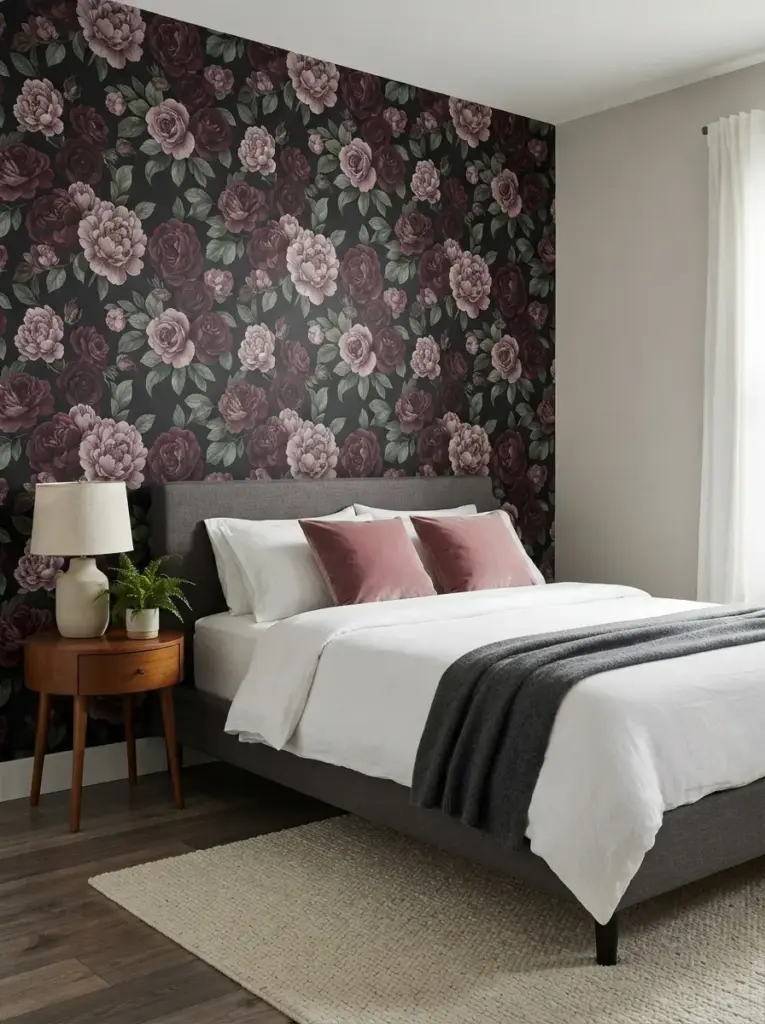
Dark floral wallpaper can supply color, pattern, and mood in one move. Choose designs with visible negative space and medium-scale flowers rather than tiny, crowded prints. Black backgrounds with burgundy roses, faded mauve peonies, or muted green leaves work well behind a bed or inside a shallow alcove. Peel-and-stick options suit renters, but test a sample for at least a week because some adhesives react poorly with textured or freshly painted walls. Measure carefully and order extra material from the same batch to reduce color variation.
Patterned walls work because they provide detail at eye level while letting furniture stay simple. Keep adjacent walls quiet and repeat only one wallpaper color in bedding or curtains. For example, pull a dusty pink from the flowers into two pillow covers rather than buying a matching floral duvet. People with low ceilings should use a pattern that moves upward through stems or vines. Avoid covering all four walls in a tiny room unless the print has generous spacing and the room receives strong daylight.
Install Plug-In Sconces Beside the Bed
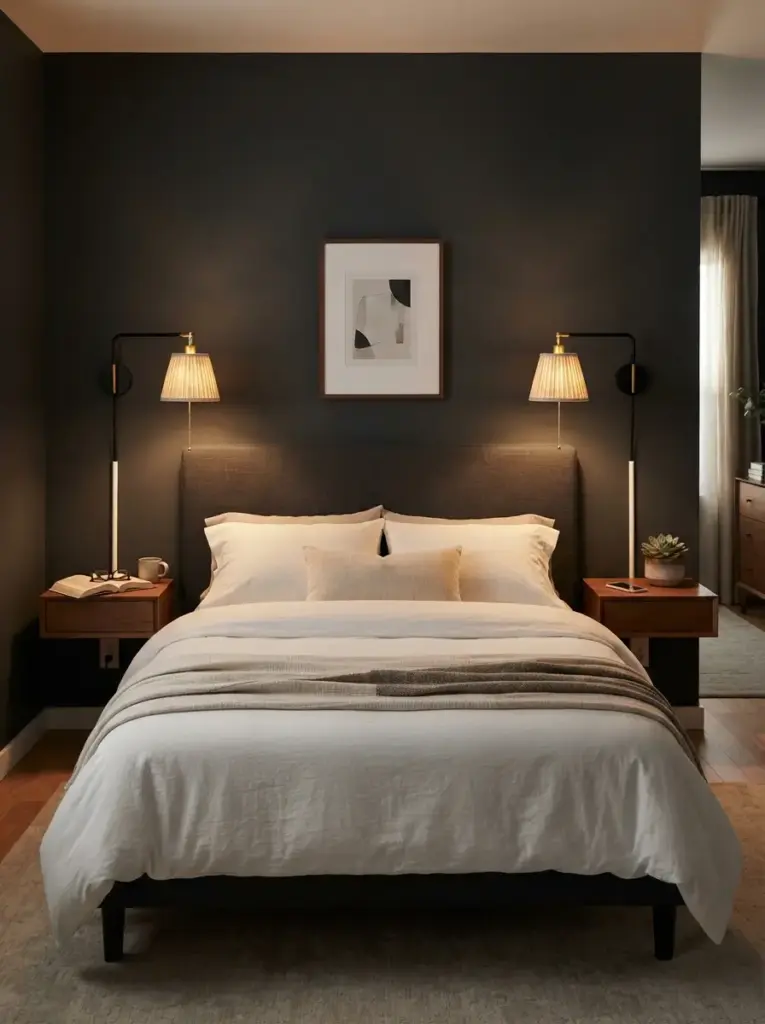
Plug-in sconces, free bedside tables, and create symmetrical light around the bed. Choose slim swing-arm designs, pleated shades, ribbed glass, or small black metal fixtures with warm brass details. Mount them high enough to illuminate a book without shining directly into the eyes. Most beds work well when the bulb sits about twenty to thirty inches above the mattress, though reading position should guide the final height. Hide cords with paintable cord covers or run them neatly along the bed frame using removable clips.
Balanced lighting makes dark walls feel deliberate rather than dim. Separate controls also let one person read without lighting the whole room. Bulbs around 2700K to 3000K offer warmth while keeping text readable, and 450 to 800 lumens is usually enough for bedside use, depending on the shade. Renters should select lightweight fixtures that attach with minimal holes. This solution is especially useful in compact rooms where nightstands are narrow, floating, or replaced by small wall shelves.
Bring in Antique Gold Through Hardware
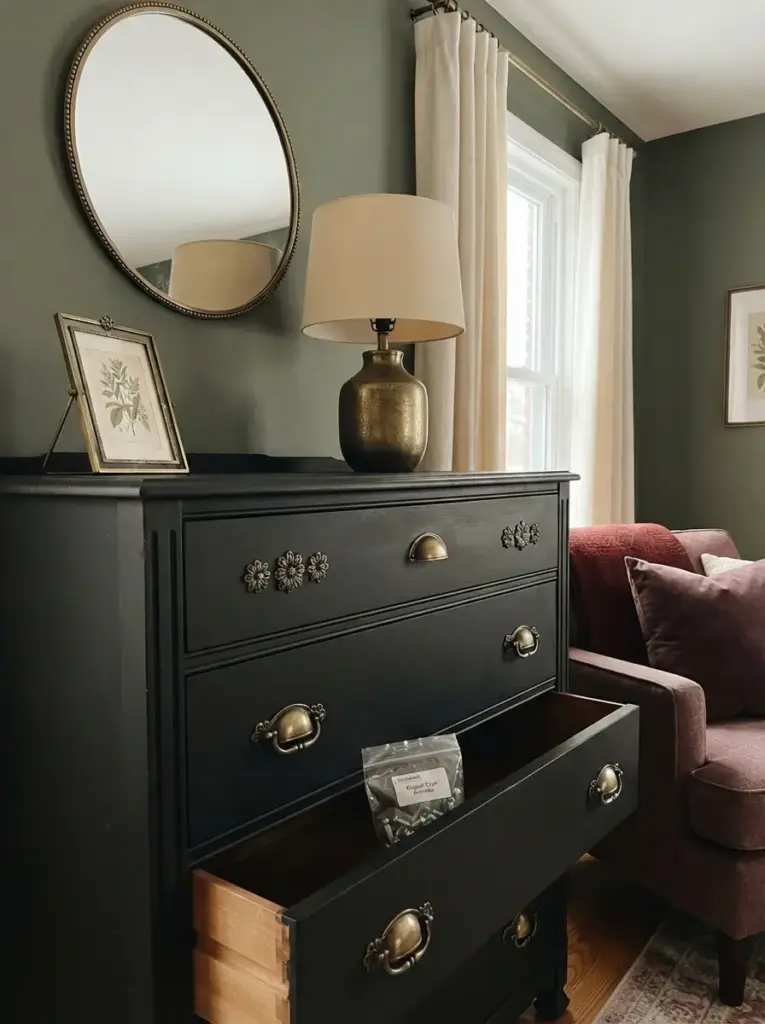
Antique gold adds warmth, but large shiny pieces can dominate a restrained room. Use the finish on drawer pulls, lamp bases, curtain rings, mirror edges, or small picture frames. Replace basic knobs on a secondhand dresser with aged brass cup pulls or floral handles. Keep original hardware in a labeled bag so rental furniture or inherited pieces can be restored later. Wax-based metallic finishes can update frames and lamp details at low cost, though surfaces should be cleaned and sealed properly before use.
Small metallic highlights catch low light and stop black furniture from blending into one dark block. The finish also connects well with oxblood, plum, forest green, and warm ivory. Mixing metals is possible, but repeat each finish at least twice so the result appears intentional. Beginners should avoid bright yellow gold, mirrored gold furniture, and glittery accessories because they compete with the softer, aged character of the room. Choose this technique when existing furniture feels plain but remains useful and well-proportioned.
Style a Dark Wood Dresser as the Main Storage Piece
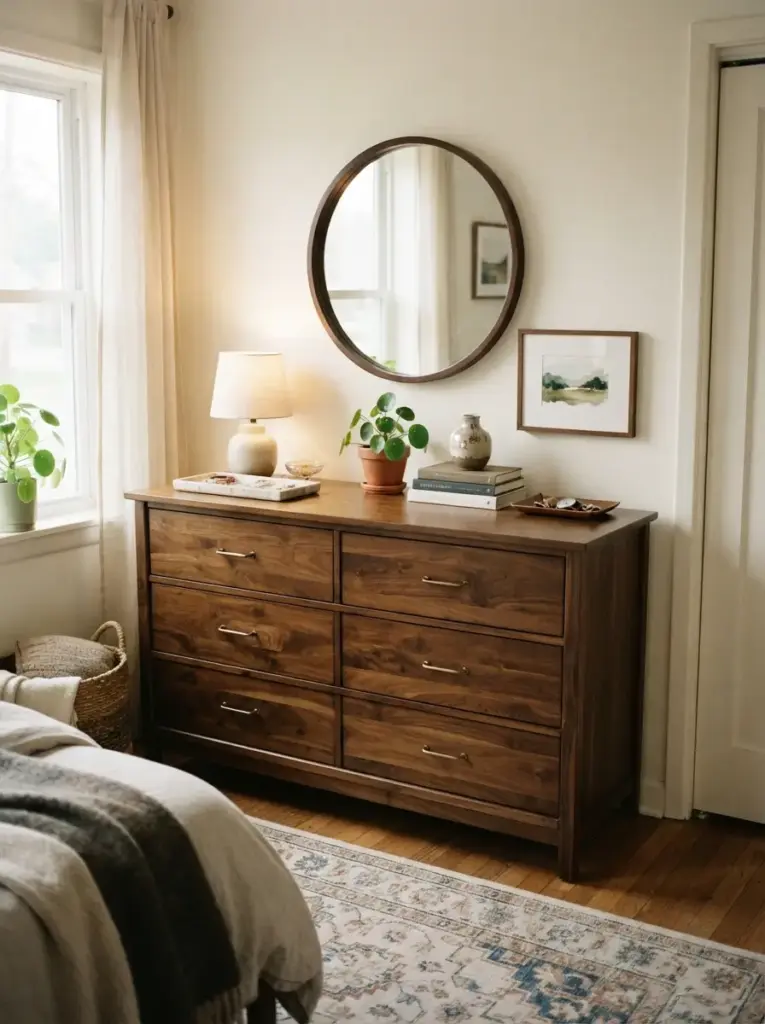
Dark walnut, espresso, or stained oak brings natural warmth that painted black furniture sometimes lacks. Select a dresser that fits the wall with enough clearance for drawers and walking space. In a narrow bedroom, a tall chest may work better than a wide six-drawer unit. Keep the top functional by dividing it into zones, such as a tray for jewelry, a lamp, and one decorative object. Hang a mirror or artwork above it rather than filling the surface with many small pieces.
Wood grain introduces variation, which prevents the room from looking flat. Secondhand dressers often provide stronger construction than inexpensive new pieces, though drawers, odors, and hardware should be checked before purchase. Renters can use a removable liner inside drawers and avoid permanent refinishing. Anyone needing serious clothing storage will benefit from making one substantial dresser the anchor rather than adding several small cabinets. Do not push oversized furniture into a corner where drawers cannot open fully or where it blocks heating vents.
Add a Bed Canopy Without Crowding the Ceiling
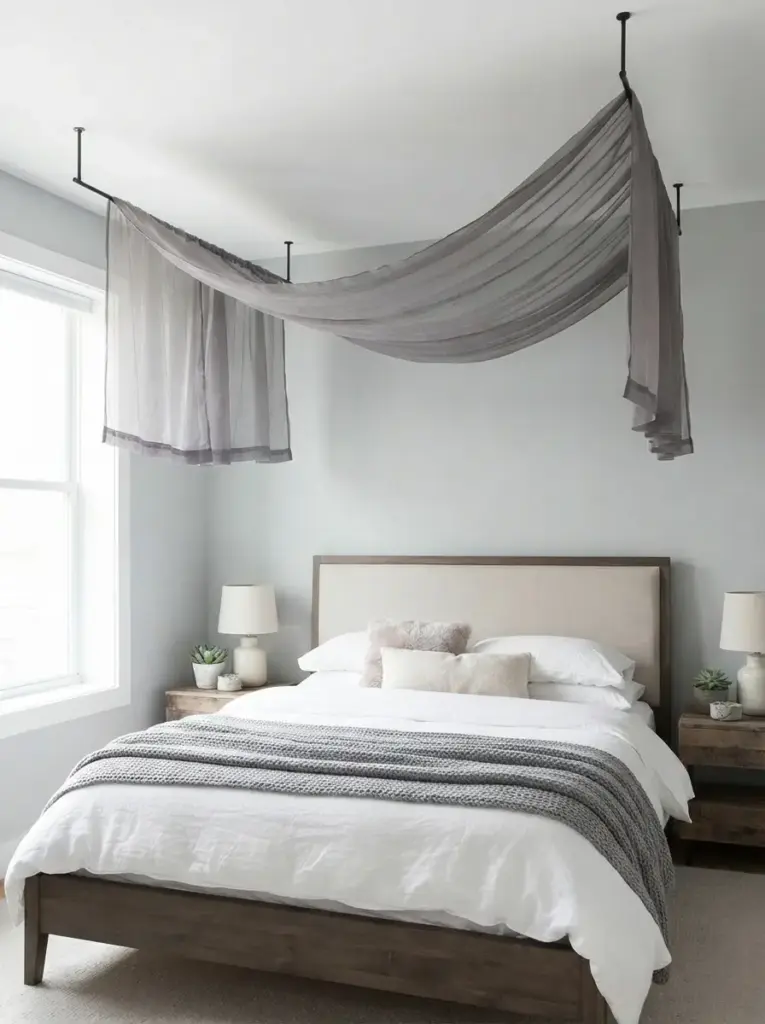
Canopies can feel romantic, but compact bedrooms need a light version. Suspend two narrow curtain rods above the bed and drape sheer black, smoky gray, or deep wine fabric across them. Keep the sides open so air and light move freely. Rooms with low ceilings should avoid heavy fabric gathered directly overhead. Another option uses a single ceiling hoop placed above the headboard rather than the center of the mattress, creating softness without enclosing the entire bed.
Partial coverage gives the bed a defined zone while preserving headroom and reducing dust. Lightweight voile or gauze is easier to wash than velvet and places less strain on ceiling anchors. Renters may use a freestanding canopy frame or removable hooks only when the ceiling surface can safely support them. This idea suits larger bedrooms or beds positioned away from windows and fans. Skip it when the room already contains strong wallpaper, heavy drapery, and an ornate headboard, since too many focal features compete.
Use Plum and Dusty Rose as Supporting Colors
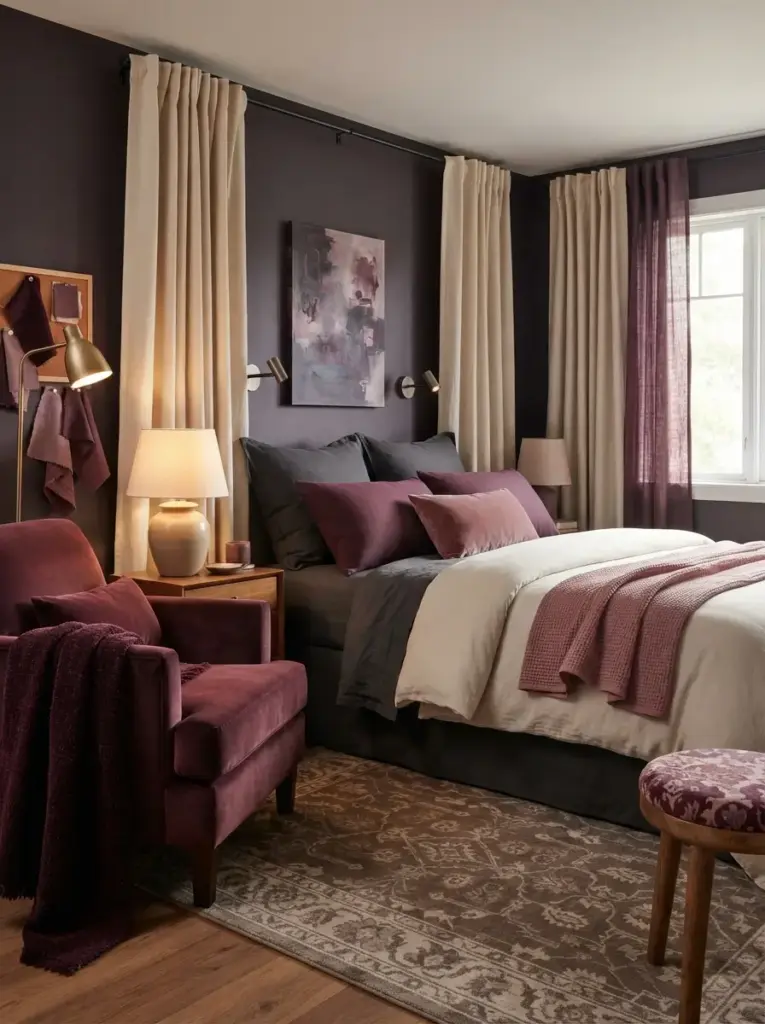
Plum carries depth, while dusty rose adds softness without turning the room bright or sugary. Apply plum to a throw, bench, curtain, or upholstered chair, then use dusty rose on smaller textiles such as pillow covers or a folded blanket. Charcoal, mushroom, and warm cream can form the base. Keep red undertones consistent; a blue-purple plum beside an orange coral pink may look disconnected. Fabric swatches should be checked in daylight and under the room’s evening bulbs before buying several matching pieces.
Related colors create a gradual contrast, making the palette easier on the eye than black paired with vivid red. People who dislike pure black can use deep aubergine as the darkest shade and still achieve a moody result. Budget decorators can dye cotton pillow covers or recover a small stool with remnant fabric. Avoid buying every item in the same plum tone, because slight changes in depth make the room more layered. Keep one pale neutral visible across bedding, walls, or a rug to maintain balance.
Ground the Layout with a Faded Traditional Rug
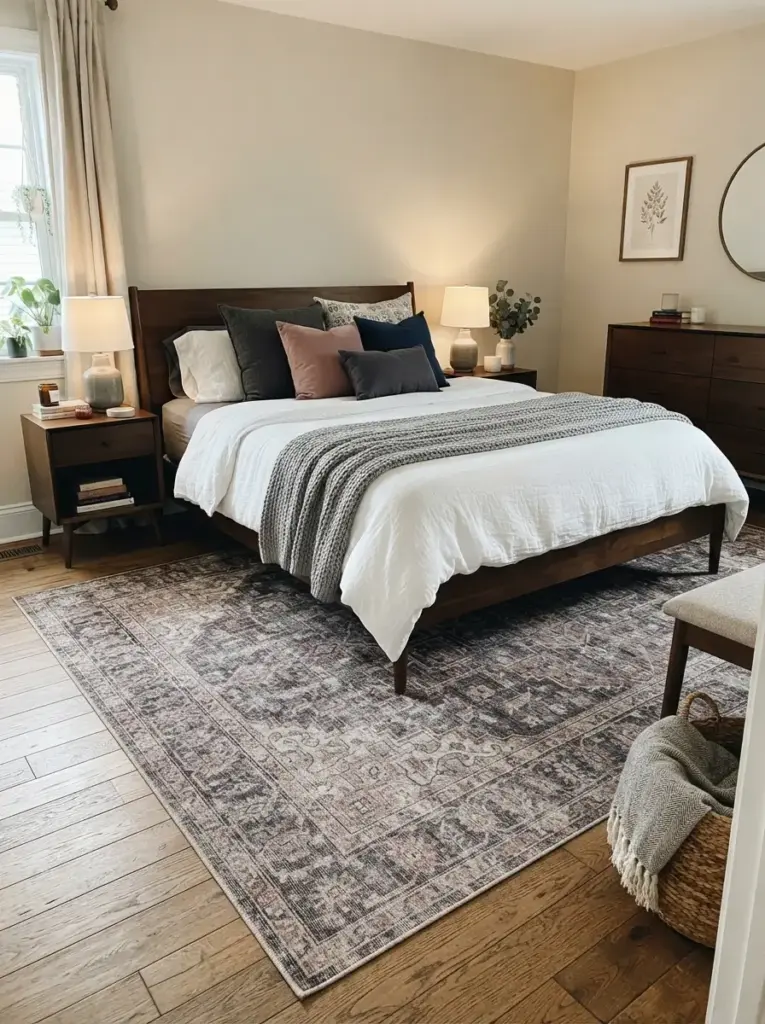
Faded Persian-style or traditional floral rugs add pattern near the floor and link dark furniture with lighter bedding. Choose colors such as charcoal, wine, muted navy, dusty rose, and beige. For a queen bed, an eight-by-ten rug usually allows generous exposure around the sides, while a five-by-eight rug can sit under the lower two-thirds of the bed in a tighter room. Measure doors, vents, and furniture clearance before ordering. Low-pile rugs are easier to vacuum and allow drawers or doors to move smoothly.
Floor pattern makes separate colors feel related, helping the finished space look collected rather than assembled from matching sets. A rug also softens footsteps and improves comfort beside the bed. Washable options suit pet owners and renters, though very thin rugs need a nonslip pad. Avoid a rug that is too small to extend beyond the bed, as it can look like a floating mat. People with patterned wallpaper should select a quieter rug so the two designs do not compete.
Common Mistakes to Avoid
Overloading every surface with themed objects is the most common problem. Skulls, ravens, crosses, dried flowers, candles, books, ornate frames, and potion-style bottles may fit the concept individually, but displaying all of them together creates clutter. Choose a few meaningful objects and leave open space around them. Functional items should remain easy to reach, and cleaning should not require moving dozens of decorations. Good gothic styling relies on shape, color, texture, and lighting more than novelty accessories.
Using only black creates another issue. Without changes in tone and material, furniture, walls, bedding, and curtains merge into one flat mass. Mix matte charcoal, soft black, dark wood, warm metal, glass, velvet, cotton, and one pale neutral. Dark paint also needs adequate lighting. One central ceiling fixture cannot support reading, dressing, and relaxation, so add task and accent lighting. Bulbs with mismatched color temperatures can make the room feel disjointed; keep most sources between 2700K and 3000K.
Ignoring scale can make dark feminine decor uncomfortable. Oversized headboards, deep nightstands, wide benches, and heavy canopies consume valuable inches. Measure pathways and leave roughly twenty-four inches where possible beside the bed and in front of drawers. Avoid blocking windows with tall furniture, especially when natural light is limited. Furniture sets are not necessary. Combining one ornate piece with simpler storage often looks more personal and keeps the room easier to arrange.
Forgetting everyday habits also weakens the design. Makeup needs clear light, clothing needs storage, phones need charging, and books need a reachable surface. Plan these functions before decorating. Keep a small tray for daily items, provide concealed cable management, and choose washable textiles where skin or hair products may transfer. Style should support routines rather than making them harder.
Budget-Friendly Decorating Tips
Start with paint or textiles because they create the largest visible change for the least money. One charcoal accent wall, a deep red duvet cover, and two secondhand frames can establish the palette before any major furniture purchase. Shop your home for mirrors, lamps, trays, and picture frames that can be reused. Matte black paint, antique-effect wax, new knobs, or dark fabric can update pieces, but avoid altering valuable antiques without understanding their condition.
Thrift stores, estate sales, and local resale listings often carry wooden dressers, brass lamps, curved mirrors, and traditional rugs. Check measurements before leaving home and inspect furniture for odors, pests, water damage, and unstable joints. Small flaws such as scratched varnish or dated hardware are usually easier to fix than structural damage. Set a clear budget for cleaning supplies, transport, replacement hardware, and safety brackets so a low purchase price does not become unexpectedly expensive.
Rental-friendly decorating can rely on removable wallpaper, picture ledges, tension rods, plug-in sconces, command-style hooks, and fabric panels. Always test adhesives in a hidden area and follow weight limits. Store original knobs, shades, and hardware in labeled containers. Layered gothic decor can develop over time, so there is no need to buy everything in one weekend. Prioritize bedding and lighting first, then add art, a rug, and decorative details after living with the layout.
DIY projects should remain simple and useful. Frame downloadable vintage-style art, sew ribbon or lace trim onto plain cushion covers, cover a storage box with dark floral paper, or create a bedside tray from a thrifted frame. Finish one project carefully rather than starting several unfinished pieces. Clean edges, secure attachments, and washable materials make homemade decor look more convincing and last longer.
Romantic Goth Bedroom Tips for Small Spaces
Keep the darkest color behind the bed or below eye level so the room retains visual depth. Tall mirrors, high curtain rods, vertical artwork, and narrow storage draw attention upward. Furniture with visible legs lets more floor show, while wall-mounted lights and shelves reduce pressure on small nightstands. Use the area under the bed for labeled bins, seasonal clothing, or spare bedding, but avoid stuffing loose items underneath where they collect dust and become difficult to reach.
Choose one main pattern and one supporting texture. Dark floral wallpaper can pair with plain velvet curtains, while a patterned rug works better with solid walls. Too many prints shrink a small room visually. Limit the palette to three main colors plus one metal finish. Charcoal, oxblood, warm cream, and antique brass form a reliable combination. Plum, mushroom, faded pink, and dark bronze create a softer alternative.
Make every decorative piece earn its place. A mirror should increase light, a bench should provide storage, and a tray should organize daily items. Open shelving needs restraint because visible clutter competes with ornate details. Closed drawers, boxes, and baskets keep necessities nearby without making the room feel busy. Review the layout from the doorway and from the bed; both views should show a clear focal point and an open path.
Natural light should remain usable. Avoid covering the window with heavy fabric during the day, and consider layering blackout panels over sheer curtains. The sheer layer protects privacy while allowing light, and the heavier layer supports sleep. Clean windows, mirrors, and lampshades regularly because dust noticeably reduces brightness in a dark room. Small adjustments in reflection and light often improve the space more than adding another accessory.
Frequently Asked Questions
What Colors Work Best for Romantic Gothic Decor?
Charcoal, soft black, oxblood, plum, aubergine, forest green, dusty rose, mushroom, and warm ivory work well together. Choose one dominant dark color, one romantic accent, and one pale balancing shade. Antique brass, bronze, or distressed silver can appear in small amounts. Test colors in both daylight and evening light because deep shades often shift dramatically under cool bulbs.
Can Gothic Bedroom Decor Work in a Very Small Room?
Yes, provided the layout remains simple. Use dark color on one feature wall, choose furniture with slim profiles, and keep at least one wall visually quiet. Mirrors, high curtain rods, under-bed storage, plug-in sconces, and floating shelves can protect floor space. Avoid oversized canopies, deep benches, and several ornate furniture pieces in the same room.
How Can Renters Create the Style Without Painting?
Use peel-and-stick wallpaper, removable molding, dark curtains, a deep-colored duvet, framed art, plug-in sconces, and a large mirror. Fabric panels can cover a wall without paint, while removable hooks can support lightweight decor. Test adhesives first, respect weight limits, and keep original hardware so the room can be restored before moving out.
What Lighting Temperature Is Best for a Dark Bedroom?
Warm white lighting between 2700K and 3000K suits most bedrooms. Decorative LEDs can be warmer, around 2200K to 2400K, for a candlelike effect. Reading lights need enough brightness to prevent eye strain, so do not rely only on dim accent lamps. Matching bulb temperatures across the room creates a more consistent atmosphere.
How Do I Keep Dark Feminine Decor from Looking Cluttered?
Limit decorative categories and repeat materials instead of adding more objects. For example, use three antique-gold frames rather than several unrelated metallic accessories. Leave clear space on dressers and nightstands, hide cables, and store small daily items in trays or drawers. One strong mirror, one gallery wall, and one patterned textile can provide enough visual interest.
Which Furniture Should I Buy First?
Begin with a comfortable bed and practical storage. Choose a bed frame that suits the room’s scale, then add a dresser or wardrobe based on clothing needs. Bedside lighting comes next because it affects daily comfort. Decorative chairs, benches, and display cabinets should wait until essential pathways and storage have been resolved.
Conclusion
Successful dark feminine decorating depends on balance, not the number of gothic objects in the room. Color, fabric, lighting, furniture scale, and storage should work together to support rest and everyday routines. Start with one strong decision, such as charcoal paint, oxblood bedding, or dark floral wallpaper, then add softer layers gradually. Pale sheets, warm bulbs, reflective surfaces, and visible floor area will keep deeper colors from feeling oppressive.
Every Romantic Goth Bedroom should feel personal, comfortable, and easy to maintain. Use vintage-inspired details where they serve a purpose, and combine them with simple modern pieces when space is limited. Measure before buying, test colors under real lighting, and leave room for the design to evolve. Thoughtful restraint usually creates more atmosphere than filling every wall and surface at once.