
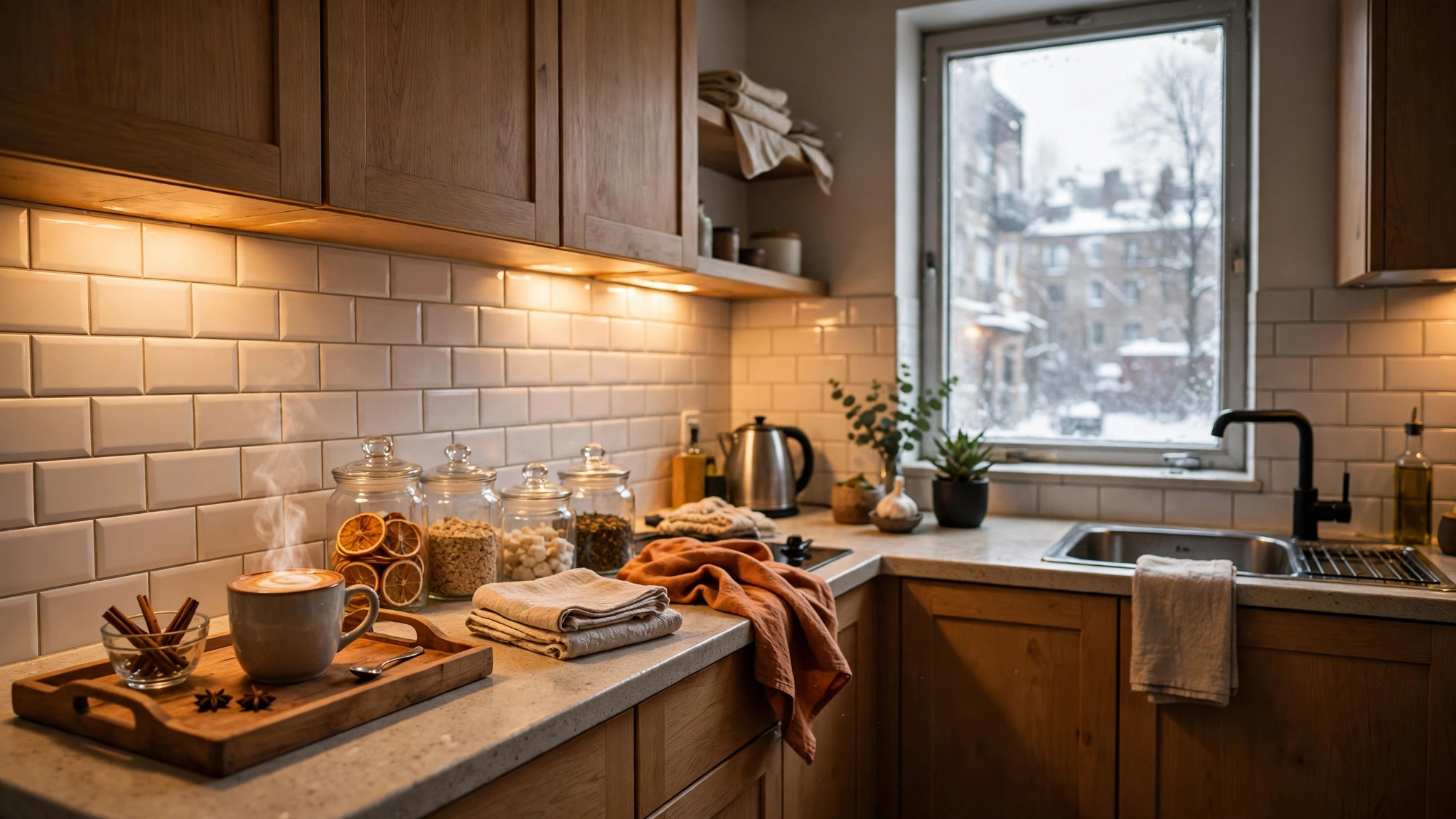

The kitchen changes character in winter. Mornings start in the dark, cooking shifts to soups and slow dishes that fill the room with steam, and the kettle works harder than any other appliance in the apartment. In a small kitchen, that heavier use shows fast if the space is not set up for the season.
Good winter apartment kitchen ideas respect the work first, exactly as they do at Christmas, but the winter version runs for three months instead of three weeks. It needs warm light for dark mornings, a floor that does not freeze bare feet, ingredients where the cook can see them, and counters that stay clear for the big pots the season demands.
These 15 winter apartment kitchen ideas are planned for compact apartment kitchens, including galley layouts and studio kitchen corners. Each idea explains what it changes, how to fit it into a small space, and the mistake that most often spoils it, so your kitchen feels warm and works hard all winter.
What Are the Best Winter Apartment Kitchen Ideas for a Small Space?
The best winter apartment kitchen ideas for a small space start with light and warmth: under cabinet lighting for dark mornings and a runner for cold floors. Then come the working changes, a hot drink station on one tray, soup ingredients visible and ready, and jars that make baking supplies part of the display. Finish with counters kept clear for slow cooking, and the kitchen runs the whole season without strain.
Add the ideas in that order over a week or two, because a small kitchen shows every change immediately and you need to cook a few real meals between additions. The whole apartment version of the same thinking lives in these winter apartment decor ideas, and the festive season’s kitchen rules sit in the christmas apartment kitchen decor guide this article follows on from.
Build a Hot Drink Station on One Tray
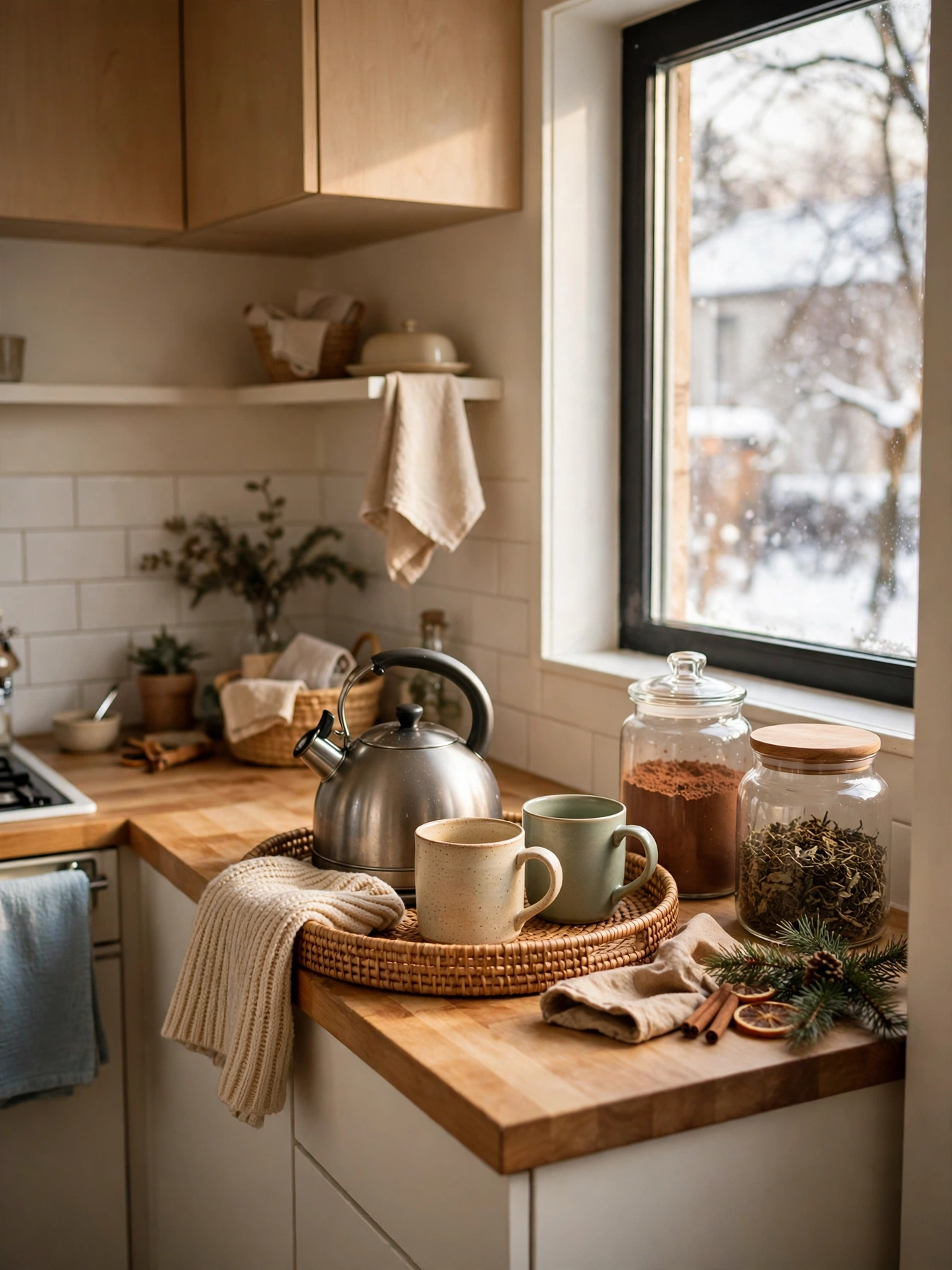
Winter runs on hot drinks, and a small kitchen makes every cup a small expedition through cupboards. One tray holding the kettle or beside it, with mugs, tea, cocoa, and coffee in jars, turns that expedition into a single corner where everything lives together.
Keep the tray to about 30 to 40 cm and place it near the kettle’s socket, because the station fails the first time the kettle has to travel. Everything for the drink gets made, sweetened, and carried from one spot.
Choose jars that seal properly, since tea and coffee stale fast in a steamy kitchen. Two mugs live on the tray permanently, washed and returned, rather than migrating through the dishwasher queue.
Heavy tea and cocoa drinkers gain the most. The common mistake is a station that grows into a second counter display of syrups, tins, and novelty mugs. The tray is the border, and what does not fit on it lives in the cupboard.
Keep a Simmer Pot for Winter Scent
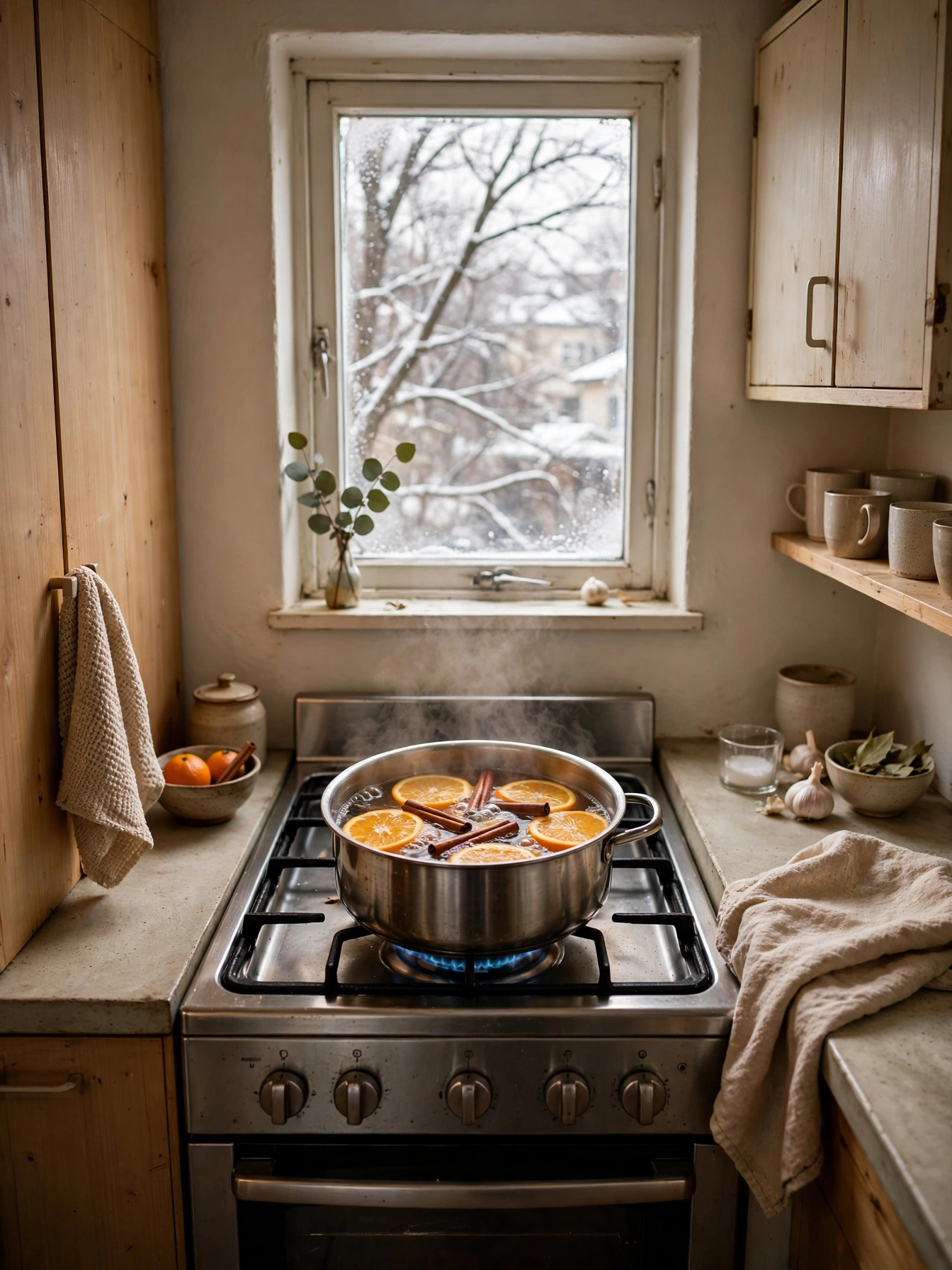
A simmer pot scents the whole apartment for the price of an orange peel and a few spices. Water, citrus slices, cinnamon sticks, and cloves on the lowest heat give a small home that warm winter smell that candles promise and rarely deliver in a kitchen.
Start the pot when you begin cooking, and let it share the meal’s hour on the stove. Top up the water whenever you pass, because a pot that boils dry stops being scent and starts being a hazard. Rest the lid beside the pot while it simmers, and its presence reminds everyone in the house that the pot is a project in progress, not a forgotten pan.
Use the leftovers the kitchen already makes: orange peel from breakfast, apple cores, the last cinnamon stick in the jar. The pot should cost nothing on an ordinary week, or it becomes a habit that fades by January.
Apartments that feel flat in winter gain the most. The common mistake is leaving the pot unattended for hours. It runs while you are in the kitchen, and it rests when you are not, without exception.
Swap In Warm Colored Tea Towels
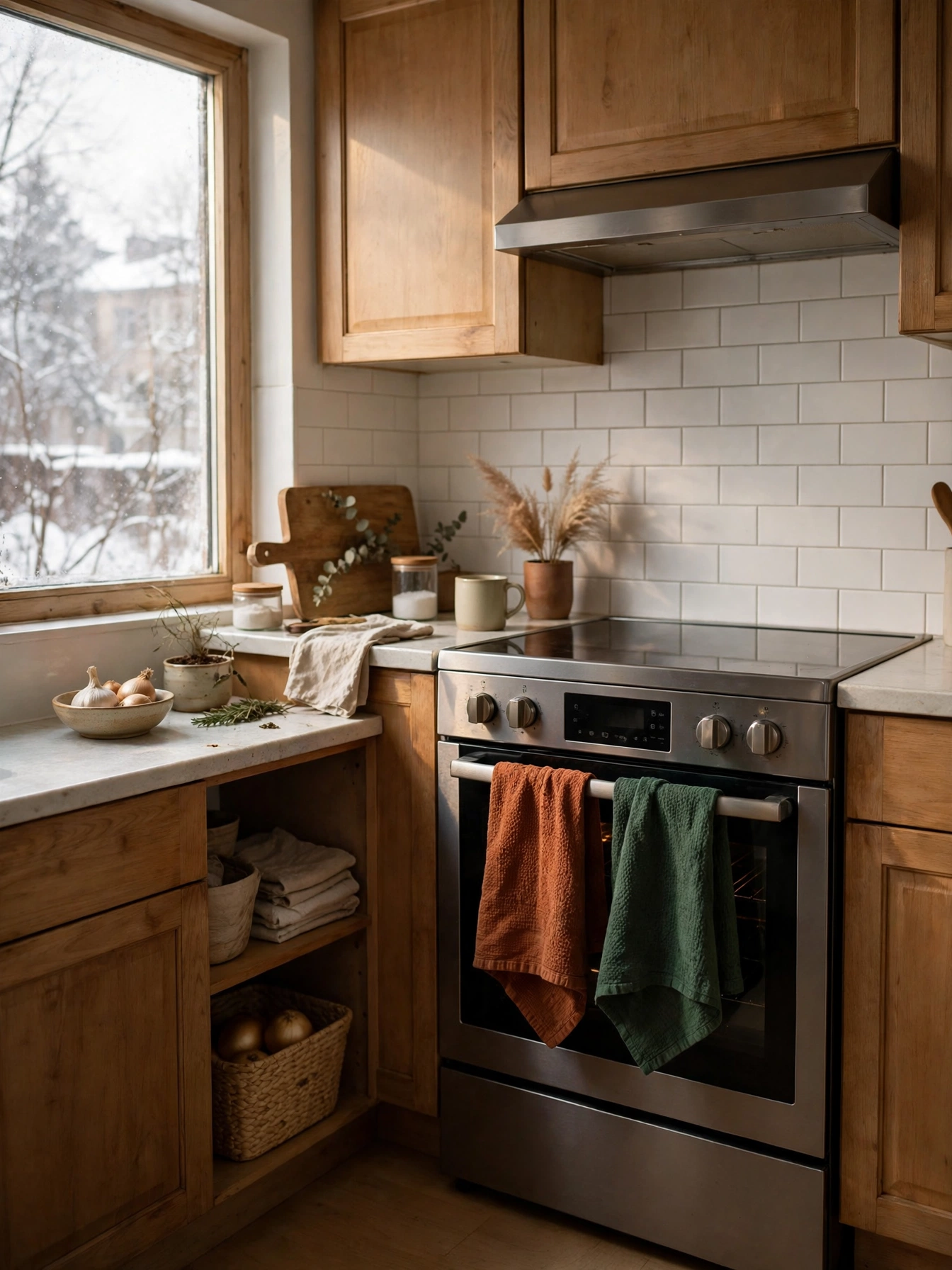
Tea towels are the kitchen’s textiles, and winter is their season to carry the room’s color. Two or three towels in rust, deep green, or a warm plaid change how the whole kitchen reads, and they work for their living every day drying dishes and hands.
Hang them folded on the oven handle and by the sink, where they are used. A towel folded neatly reads as part of the room, while the same towel slung in a heap reads as laundry, so the fold is the whole trick.
Choose cotton or linen that actually dries. Decorative towels that push water around get abandoned on the counter, while good towels in winter colors get used, washed, and hung back up daily.
Small budgets gain the most, because this is the cheapest seasonal change in any room of the apartment. The common mistake is thin novelty towels bought for their print. Winter involves heavy pans and constant hand drying, and the towels must work before they decorate.
Add a Runner or Mat for Cold Floors
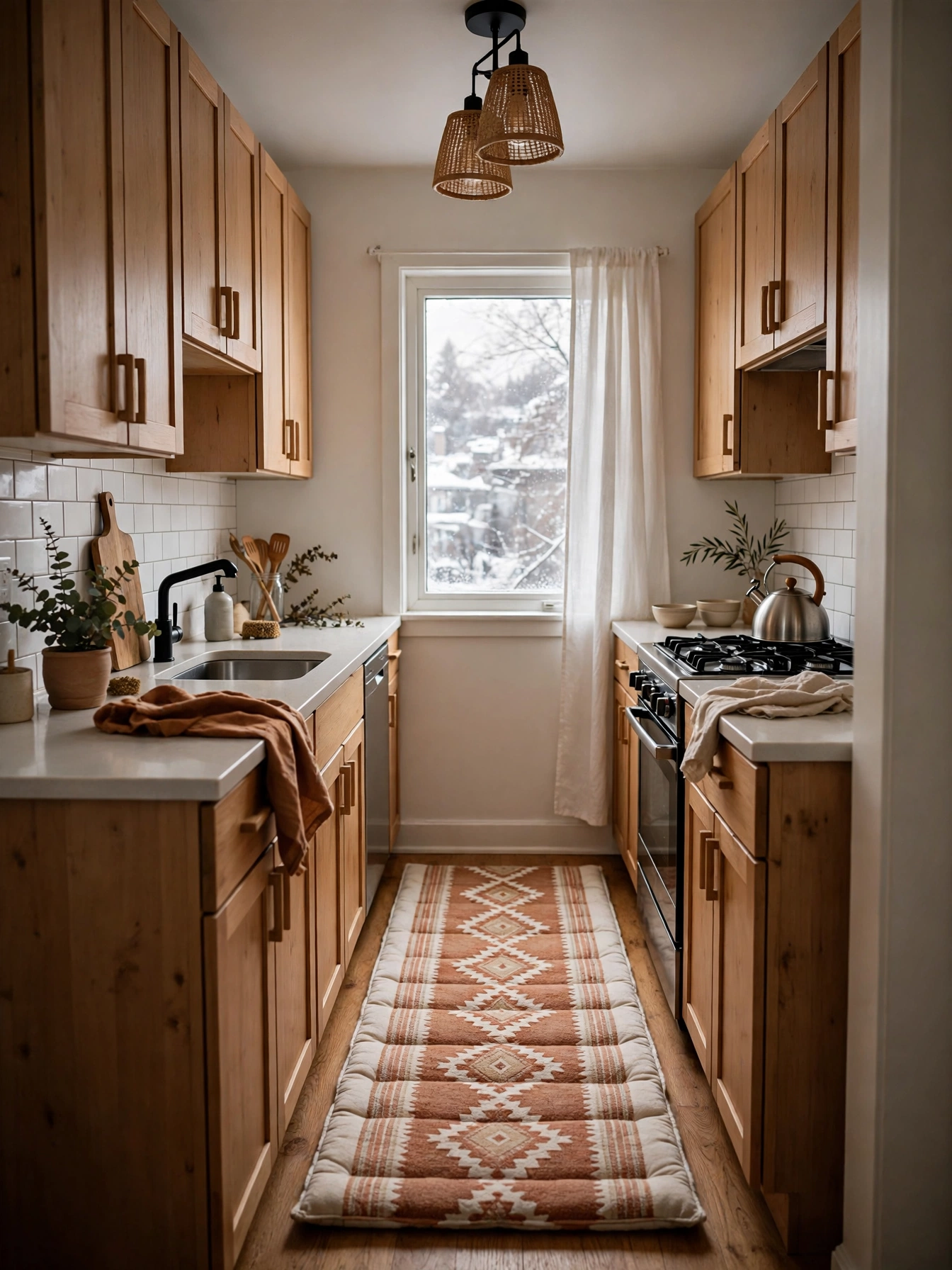
Kitchen floors are the coldest in the apartment, and winter cooking means standing on them for an hour at a time. A cushioned runner or mat in front of the stove and sink warms the feet, softens the standing, and catches the drips that winter’s big pots throw.
Choose a washable, low profile mat long enough to cover the stove to sink route in a galley kitchen, or a single mat at the sink in a small corner layout. Dark colors and patterns forgive the splashes between washes.
Check the mat lies flat with no curling edge, because a curled corner in a room where people carry boiling water is a genuine hazard. Non slip backing matters more in the kitchen than anywhere else in the home.
Anyone who cooks daily gains the most. The common mistake is a thick plush rug that soaks up spills and smells by February. Kitchen mats must wash easily and dry fast, or they become the room’s problem instead of its comfort.
Use Under Cabinet Light for Dark Mornings
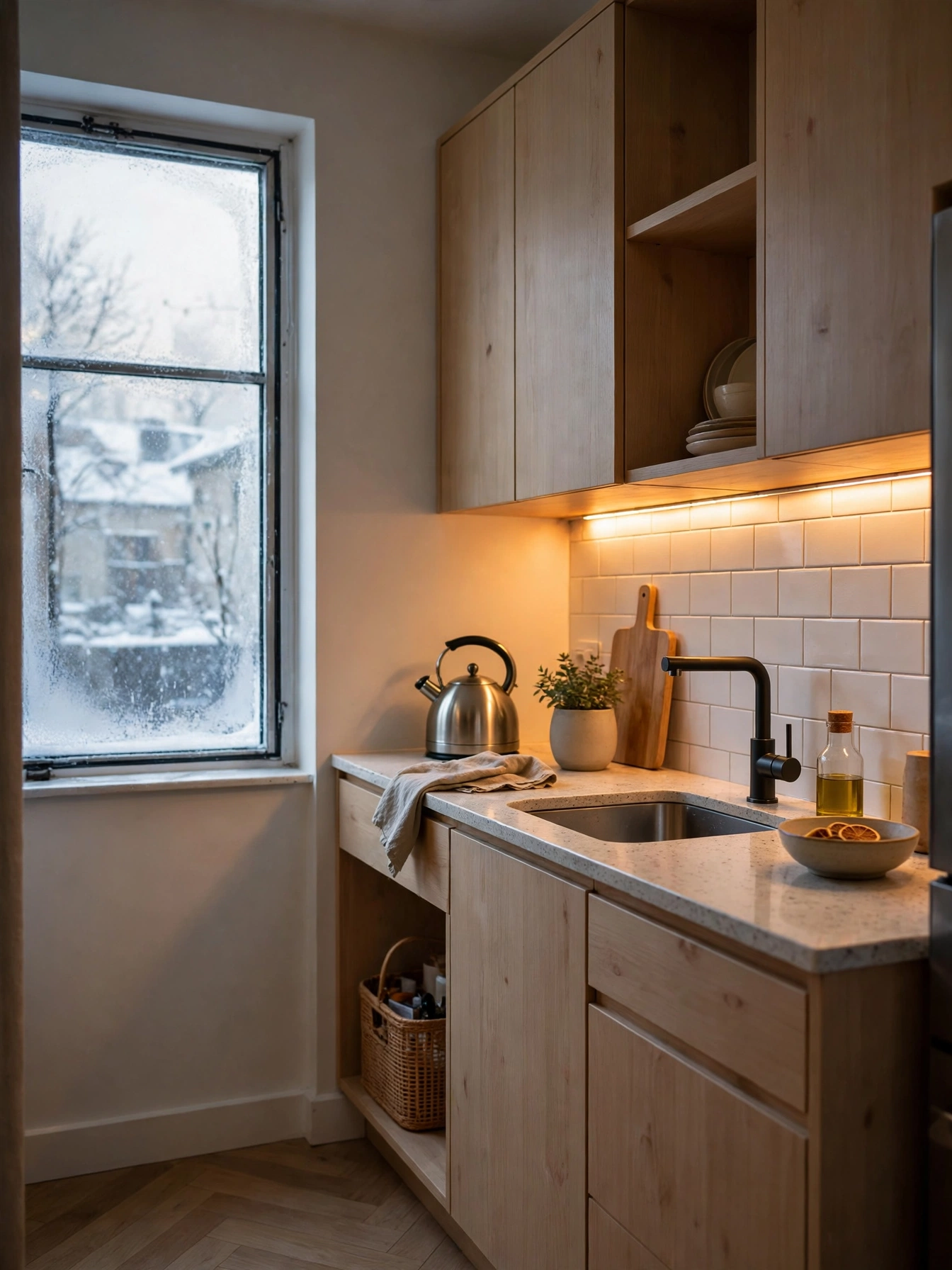
Winter mornings and evenings happen in the dark, and a small kitchen’s single ceiling light leaves the counters in the shadow of the cook. A strip of warm light under the cabinets fixes the working light exactly where the chopping and stirring happen, and makes the room feel welcoming at breakfast.
Battery and plug in LED strips fit most cabinets without wiring, and renters can mount them with adhesive pads that remove cleanly. Choose warm white around 2700K so the light flatters food instead of bleaching it.
Run the strip along the front edge of the cabinet underside, angled slightly toward the backsplash, and the whole counter lights evenly without glare in the cook’s eyes.
Early risers and evening cooks gain the most. The common mistake is cold blue toned strips that make the kitchen look like a laboratory and raw chicken look grey. Warm light is the entire point.
Style Jars of Winter Baking Supplies
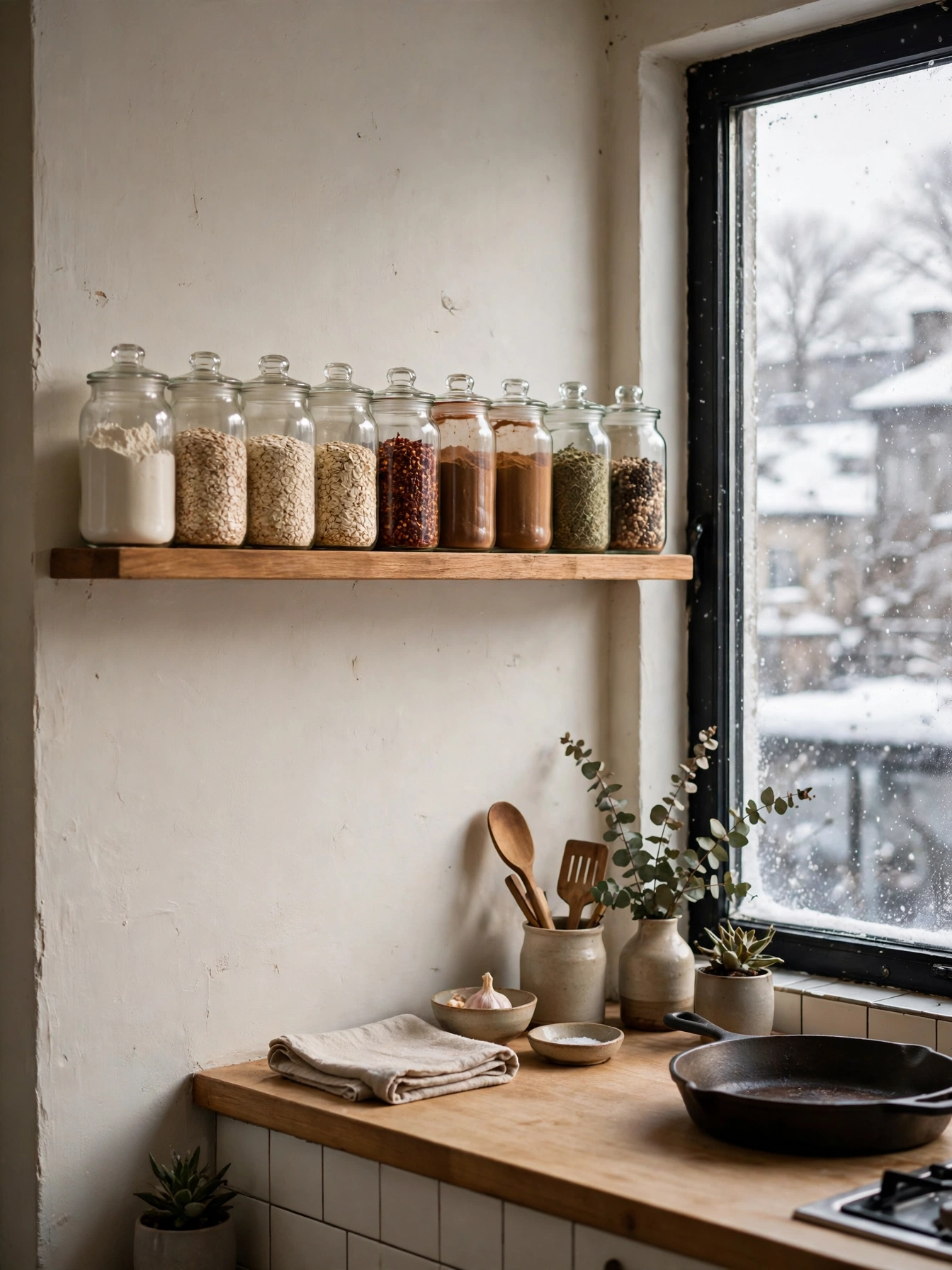
Winter baking fills cupboards with flour, oats, sugar, and spices that usually live in torn bags. Decanted into glass jars on one shelf or a stretch of counter, the same supplies become the kitchen’s display, and the cook can see at a glance what is running low.
Keep the jar count honest, five to eight that you actually use weekly. Match the jars so the shelf looks calm, and choose lids that seal against kitchen steam, which cakes flour and sugar fast.
Place the jars where baking happens, not in the prettiest corner across the room. A display the cook has to cross the kitchen to use gets dismantled within a month. Keep one spare empty jar in the cupboard for the ingredient that always appears mid recipe, and the shelf stays complete instead of improvised.
Bakers gain the most. The common mistake is jars of decorative ingredients nobody cooks with, bought for their color. Winter jars should empty and refill all season, because a working display stays fresh and a static one gathers dust. The storage system behind it matches these apartment kitchen storage ideas.
Set Out a Bowl of Citrus and Winter Fruit
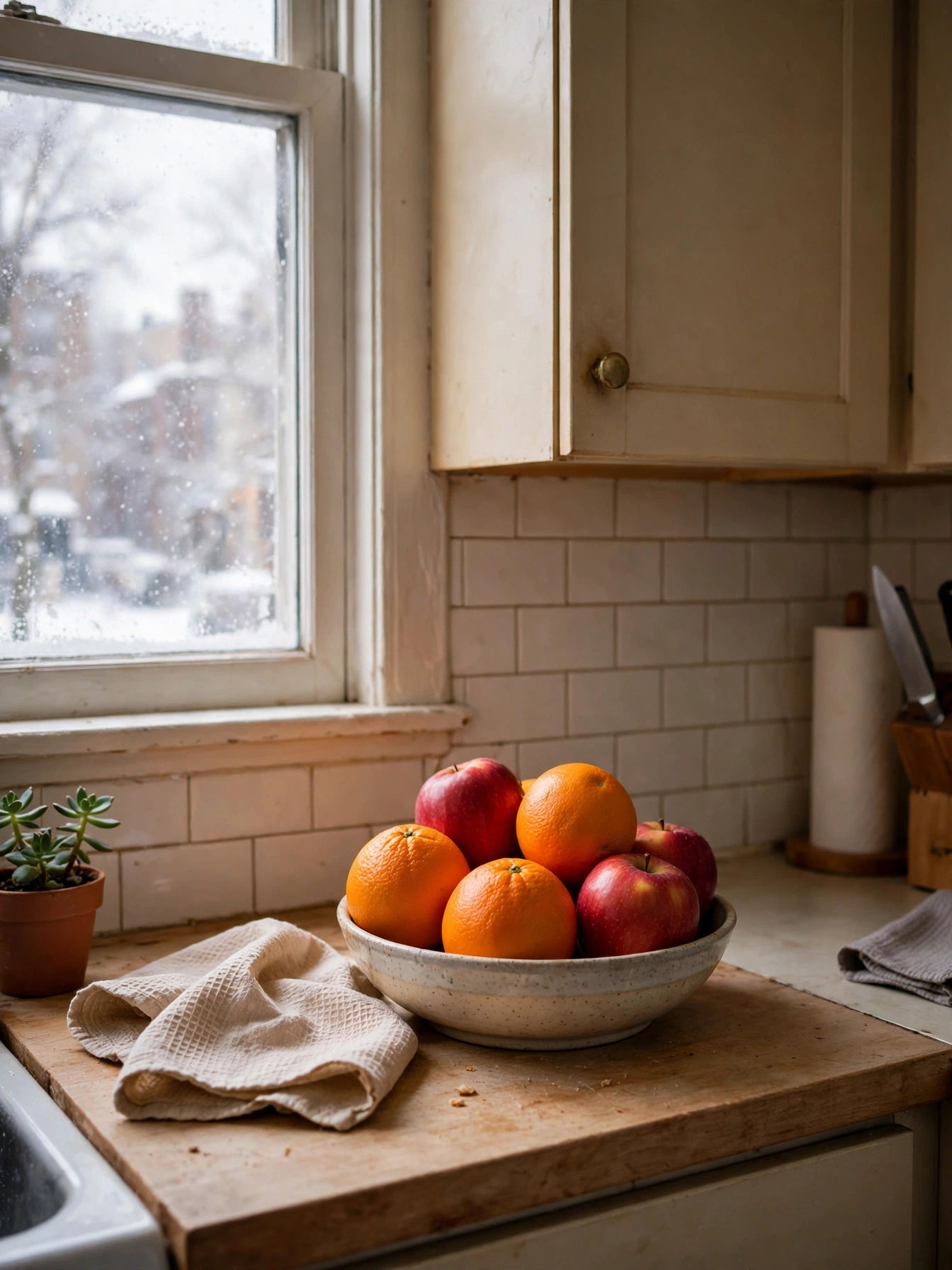
A bowl of oranges, lemons, and apples is the oldest kitchen decoration there is, and winter is when it earns its place. Citrus is in season, cheap, and bright against winter’s dark mornings, and the bowl decorates the room with food that will actually be eaten.
Keep the bowl where fruit stays cool and out of the steam path, usually the end of the counter away from the stove. Refill it from the top and eat from the bottom, so nothing old hides underneath.
Choose a bowl wide and low enough that fruit sits in one or two layers. Fruit piled deep bruises at the bottom, and the bruised ones scent the room in the wrong way by the end of the week.
Small kitchens gain the most, because the bowl does two jobs at once. The common mistake is a decorative bowl of fruit nobody is allowed to eat, slowly aging for show. Winter fruit is decor with a deadline, and meeting the deadline is the cook’s pleasure.
Hang a Small Wreath or Garland at the Window
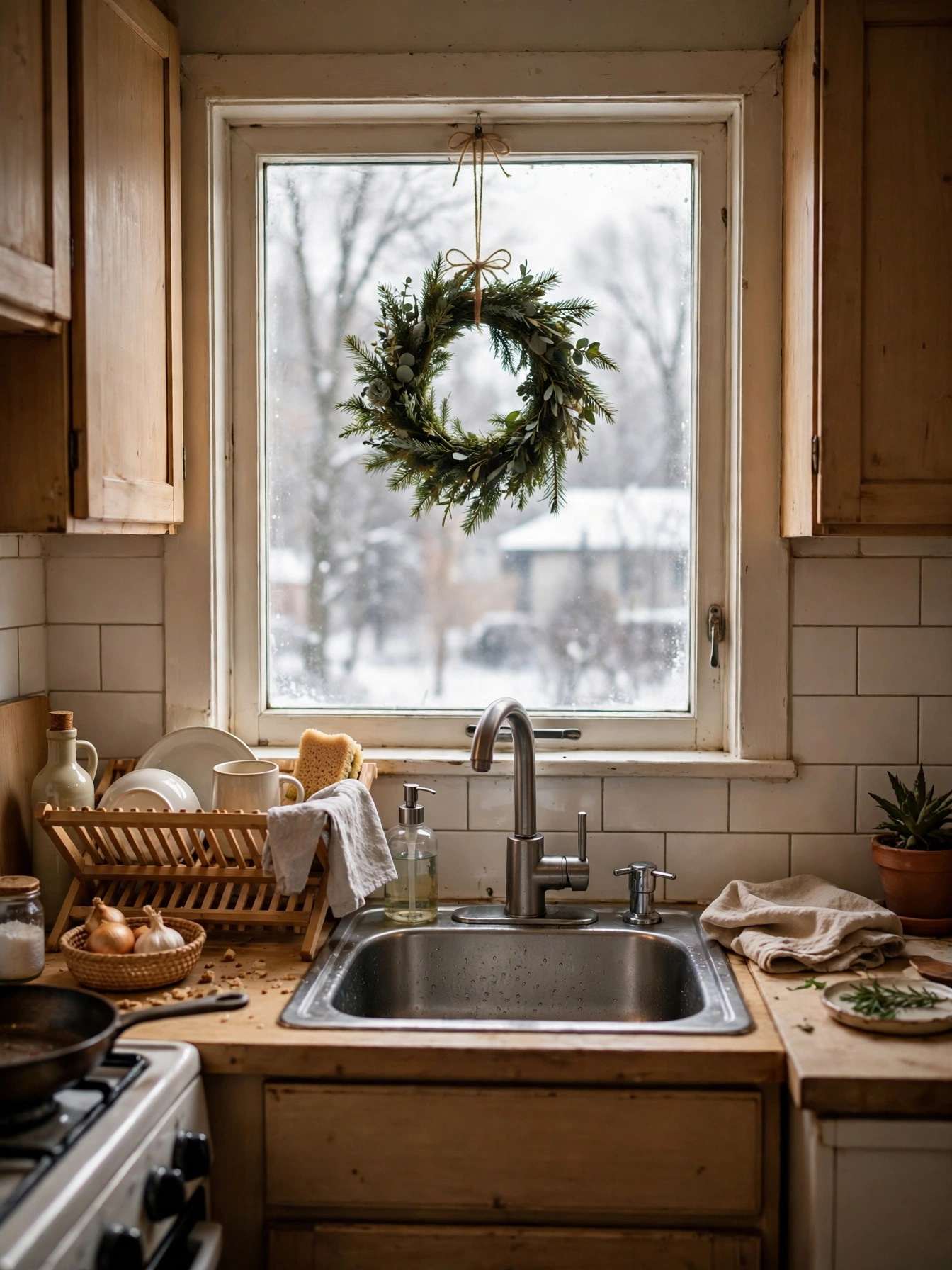
The kitchen window is the room’s picture, and in winter it frames bare branches and early darkness. A small wreath or a short garland along the frame gives the window a finished edge and greets everyone who stands at the sink, which in winter is everyone, often.
Faux greenery survives kitchen steam and splashes better than real stems, and a suction hook on the glass or a ribbon over the frame hangs it without fixings. Keep it clear of the stove’s steam path and the splash zone behind the taps.
A plain green wreath with no festive trim carries from November to March without ever looking like a leftover decoration. Add a bow in your towel color and it ties to the room.
Windowless kitchens can hang the same wreath on a cabinet door or the fridge side. The common mistake is a wreath so wide it blocks the window’s light, which a dark winter kitchen cannot spare. Small and flat wins.
Keep Soup Ingredients Visible and Ready
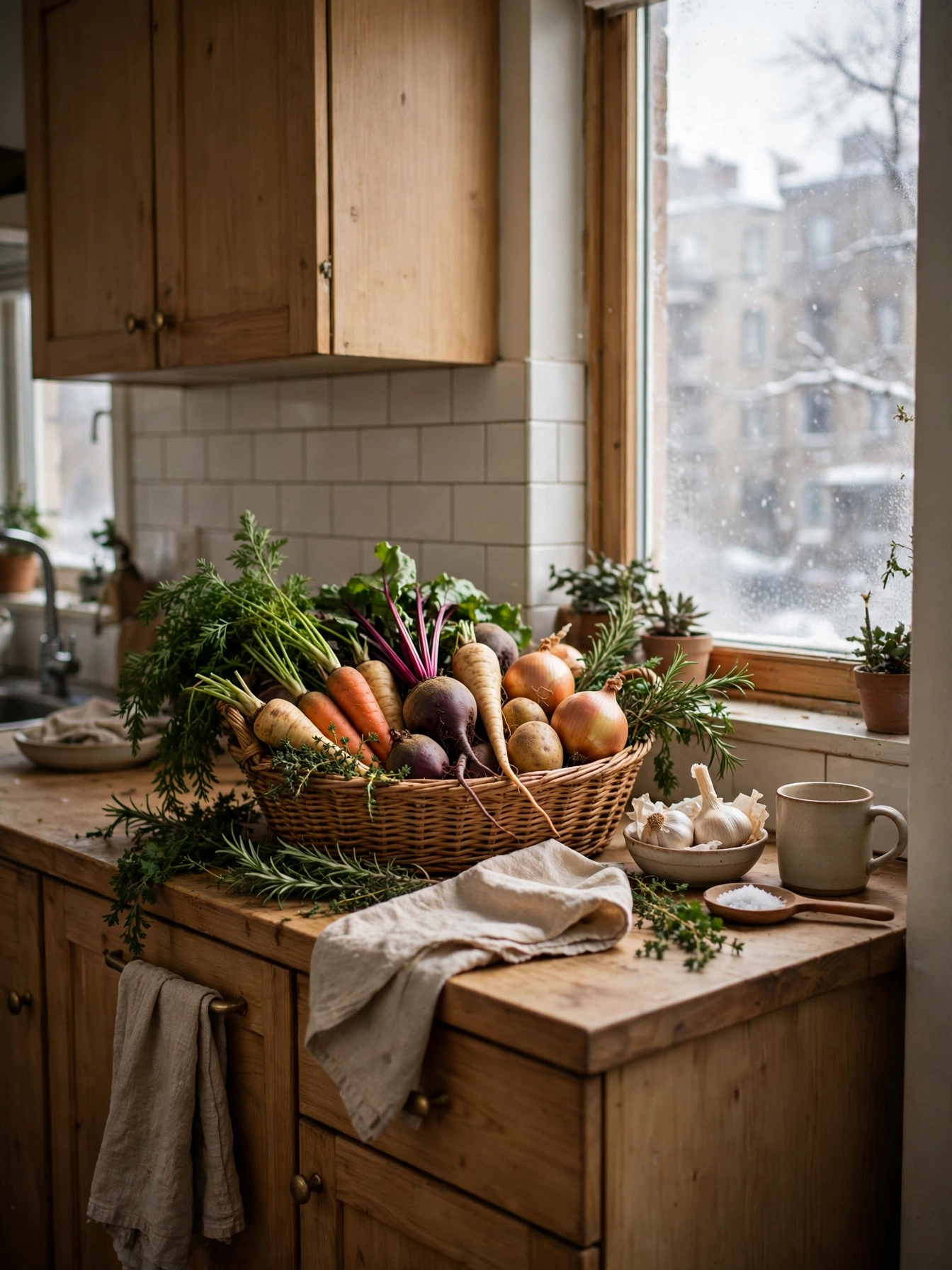
Winter cooking runs on soup, and soup runs on a handful of humble ingredients: onions, root vegetables, garlic, stock, and tins of beans and tomatoes. Keeping those visible in one basket or on one shelf makes the season’s easiest meal the path of least resistance on tired evenings.
A basket of onions, carrots, and potatoes near the stove, with stock and tins on the shelf above, is the whole system. What the eye sees at six in the evening decides what dinner becomes, so put the soup where the eye lands.
Rotate the basket weekly and use the oldest vegetables first. Winter roots keep for weeks in a cool spot, but only if the basket gets a glance when the shopping comes in.
Busy households gain the most. The common mistake is ingredients buried in cupboards behind the slow cooker and the blender, where they age unseen. Visible and grouped beats stored and forgotten all winter.
Add a Kettle Corner for Tea and Cocoa
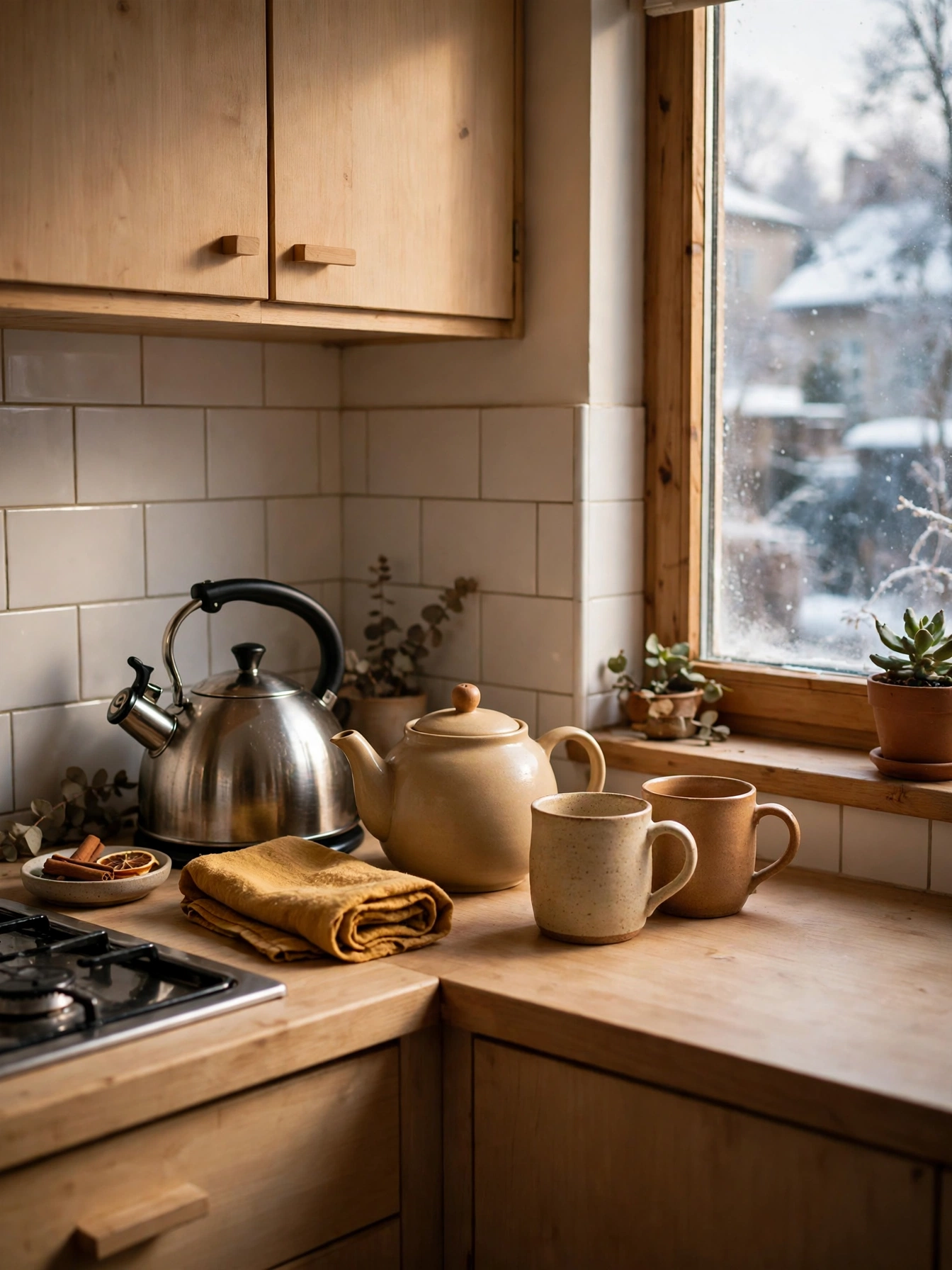
In homes where the kettle boils six times a day, it deserves a planned corner rather than a wandering life between sockets. A kettle corner groups the kettle, the teapot or cafetiere, and the mugs on hooks or a small rack, all within one step of the water and the sink. In the smallest kitchens the corner may be just the end of one counter, and that is enough, because the corner’s value is grouping rather than size.
Mount mug hooks under a cabinet if counter space is tight, and the corner takes almost no surface at all. Keep only the mugs in daily rotation here, usually four, and store the rest.
Wipe the corner daily in winter, because constant boiling throws a fine mist of limescale dust and drips over everything nearby. A tray under the kettle catches most of it and lifts away for rinsing.
Heavy hot drink households gain the most, and in studios this corner often serves the living area too, pairing with the sofa side station in these cozy winter living room ideas. The common mistake is a kettle corner far from the sink, which guarantees a trail of drips across the floor all season.
Use Warm Wood Boards as Everyday Decor
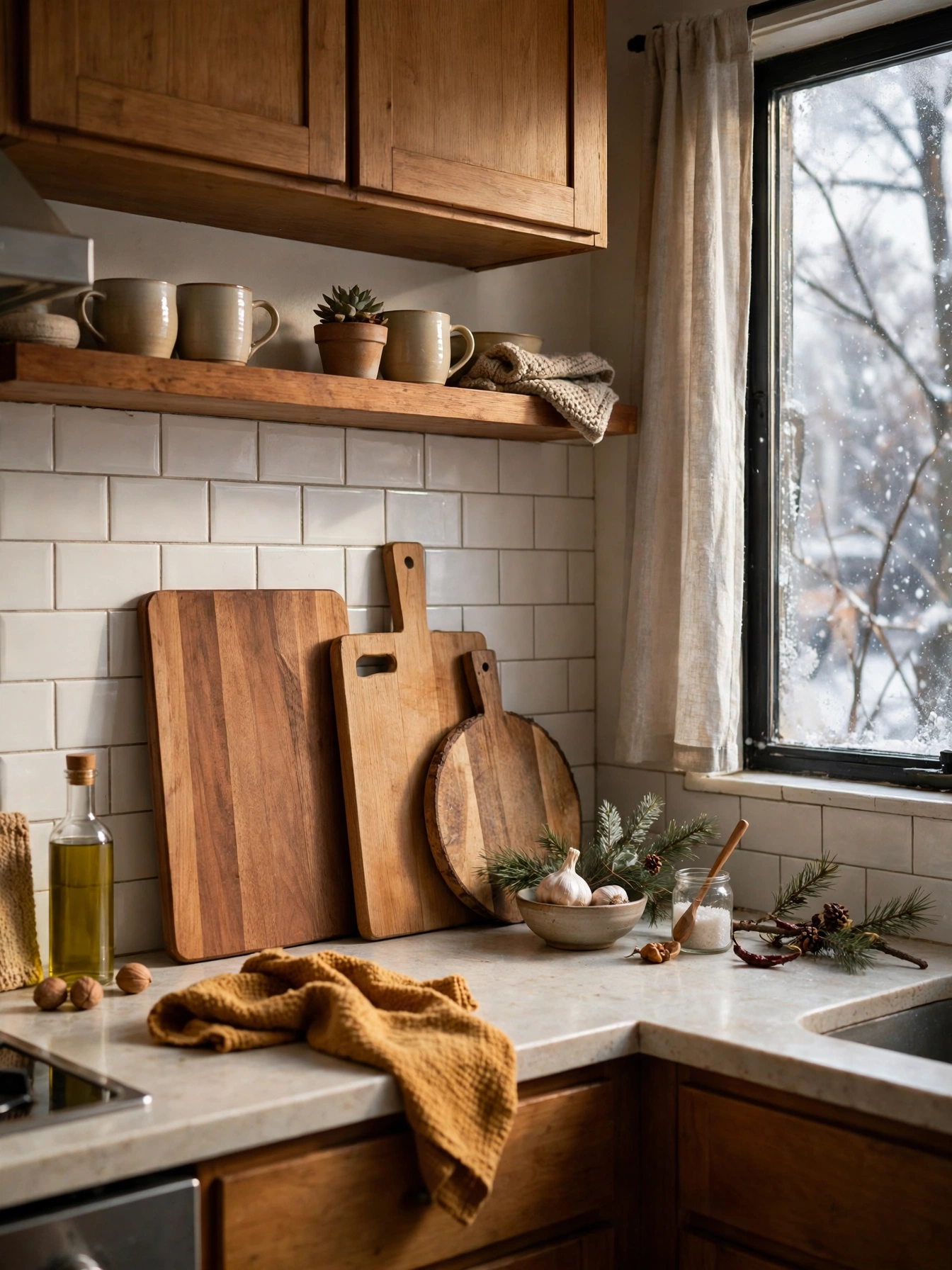
Wooden chopping boards are the rare kitchen item that looks better the more it is used. Leaned against the backsplash in warm tones, two or three boards give a small kitchen texture and warmth while staying ready for work, which is exactly what winter decor in a working room should do.
Choose boards in warm wood and rest them on their long edge where they dry fully between uses. Oil them once at the season’s start and they repay it with color all winter.
Keep the display to the boards you genuinely chop on. A wall of boards that cannot be used because they are arranged is the kitchen equivalent of a chair nobody may sit on. The boards also soften the sound of a small hard surfaced kitchen, a quiet benefit nobody expects until the first calm morning with them in place.
Anyone with plain white or grey cabinets gains the most, because wood warms the room instantly. The common mistake is boards stored damp against the wall, which mildew at the base. Stand them where air reaches every surface after washing.
Line a Shelf With Cookbooks and Greenery
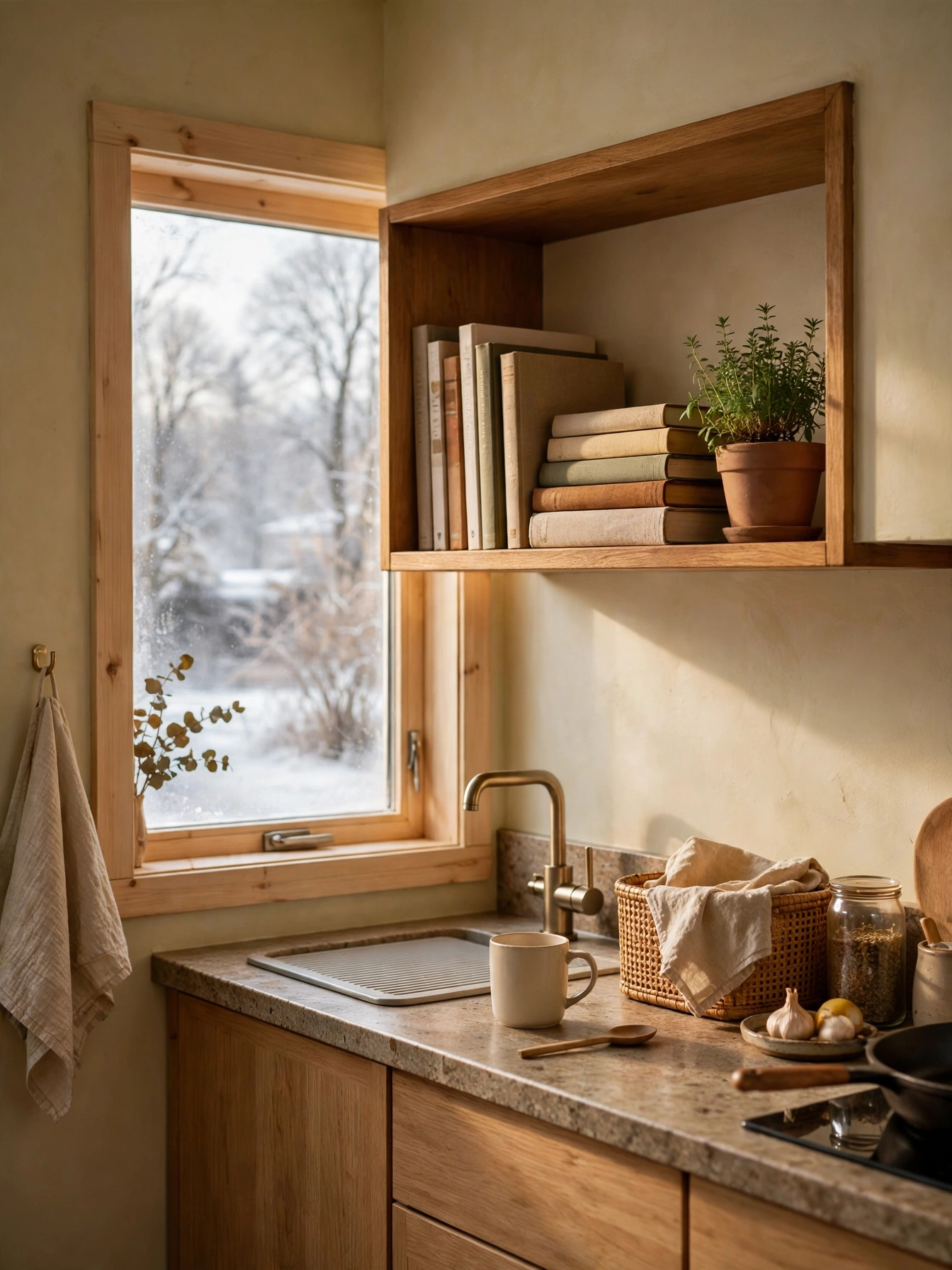
Open shelves and cabinet tops collect winter clutter unless they are given a calm arrangement. A short row of cookbooks with a small plant or a jar of greenery at the end gives the shelf a finished look and keeps the season’s most used recipes at hand height.
Keep the row short, six to ten books you actually open, with the winter titles at the front. Books in a kitchen gather grease slowly, so this shelf should sit away from the stove’s direct steam and splash line.
A small rosemary or a pot of herbs earns the greenery spot by being useful, scenting the shelf and seasoning the soups a few steps below. Faux stems suit shelves above the steam zone better.
Small kitchens with one open shelf gain the most. The common mistake is styling the shelf so fully that the working items, the scales, the oil, the salt, lose their homes and colonize the counter instead.
Keep Counters Clear for Slow Cooking Days
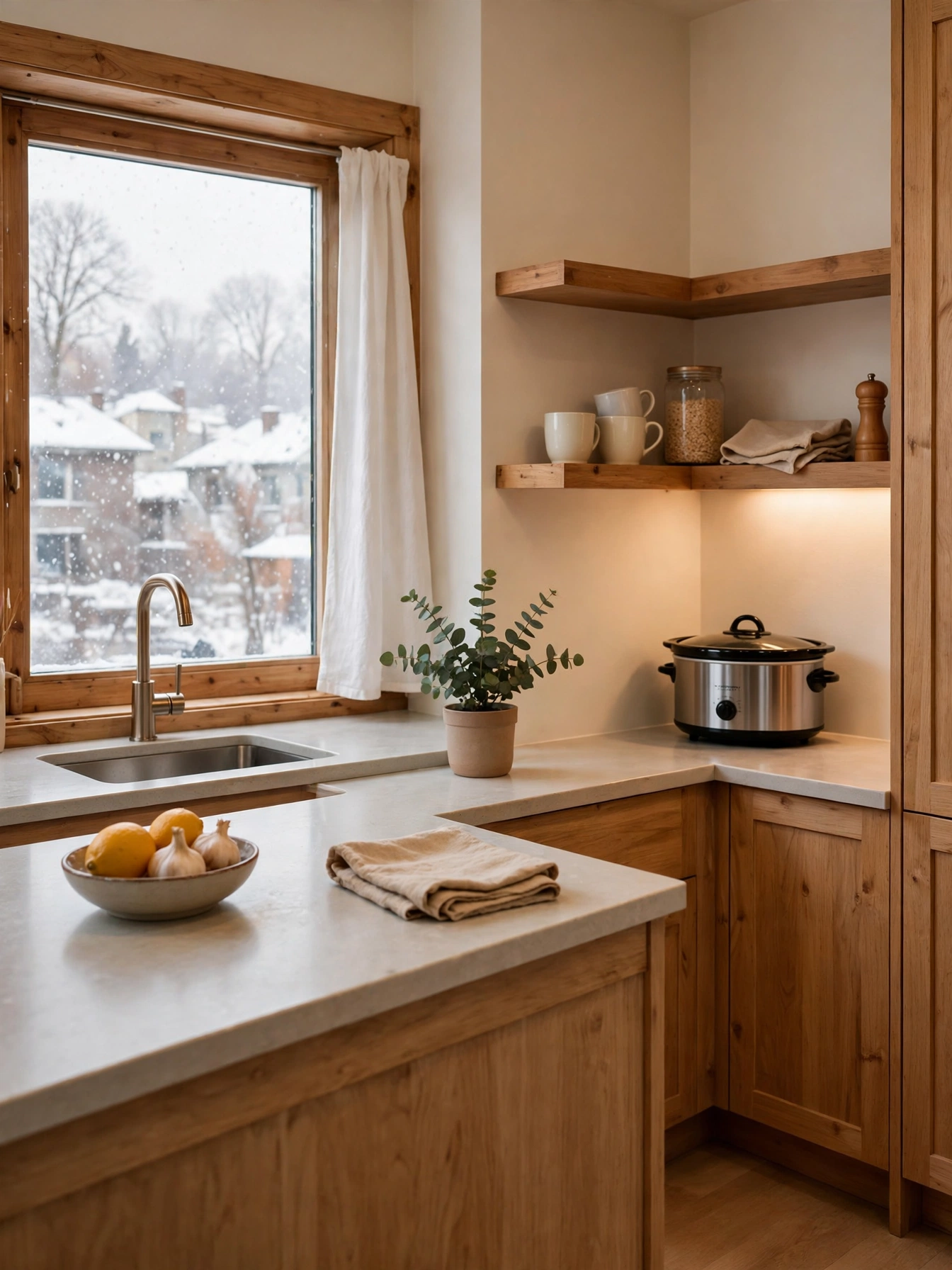
Winter meals are bigger and slower than summer ones, and they need room: a slow cooker bubbling all day, a pot for soup, boards for roots and bread. Counters that start clear absorb all of it calmly, while counters that start decorated turn every big cooking day into a relocation exercise.
Give every counter item a test: if it does not help cook, serve, or clean, it lives in a cupboard for the season. The fruit bowl and the hot drink tray pass the test because they work. Pure decoration fails it in a winter kitchen.
Keep a clear away habit on big days, the same one the festive season teaches: a basket or a tray that gathers the small things into one temporary home while the meal takes the room over.
Serious cooks in small kitchens gain the most. The common mistake is treating clear counters as a one time tidy rather than a system. The system is the test, applied every time something new tries to move onto the surface.
Add a Small Lamp or Candle Glow at Night
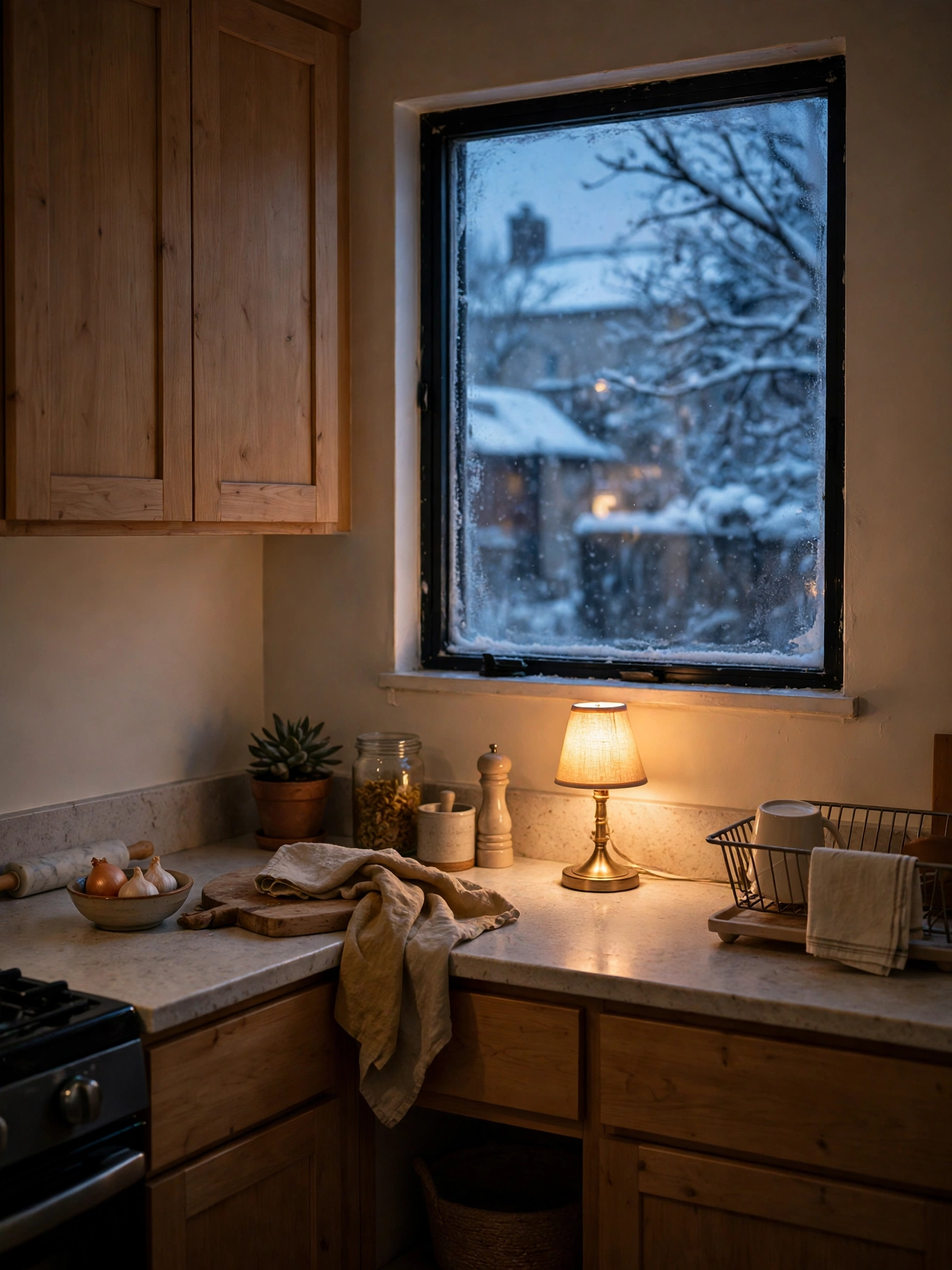
After dinner, a kitchen lit only by its ceiling light feels like a workplace waiting for the next shift. A small lamp on the counter or a candle lantern on the windowsill softens the room for the evening, so the kitchen you pass through still feels like part of the home’s warm end of the day.
A compact lamp with a warm bulb suits the counter corner farthest from the sink. Battery candles in a lantern give the same glow where sockets and water make a lamp unwise, and a timer switches them off after bedtime.
Keep flames and lamp cords well clear of the stove and the sink’s splash zone, and never let a candle sit where a towel hangs above it. Warmth is the goal, and caution is what lets it stay.
Anyone whose kitchen opens onto the living room gains the most, because the evening glow links the two spaces. The common mistake is skipping this layer because the kitchen is a workroom. Winter evenings are long, and the kitchen deserves its share of the calm.
Store Bulky Winter Appliances Smartly
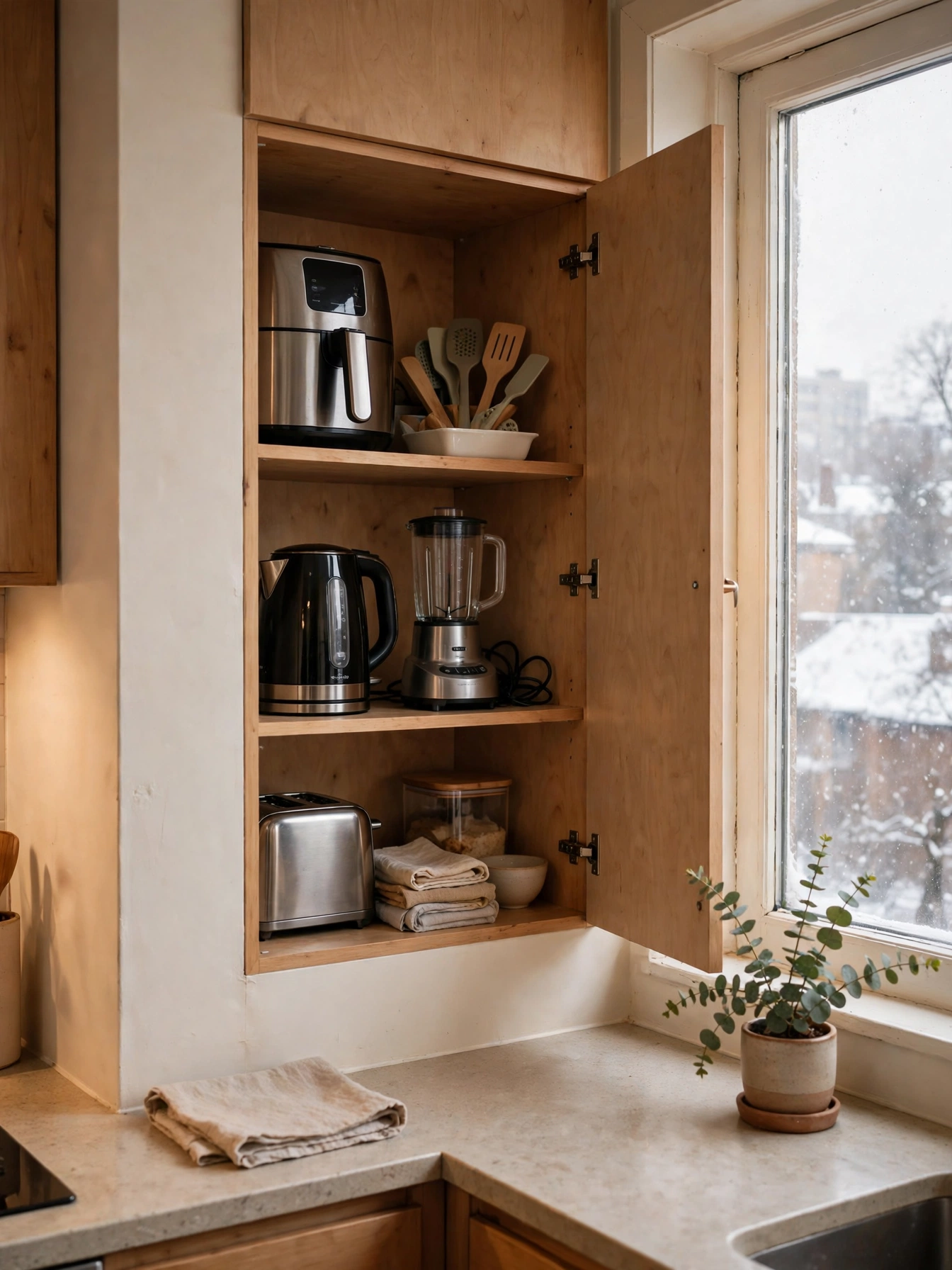
Winter pulls out the big machines: the slow cooker, the soup maker, the big stockpot, the bread maker some households swear by. Each one left on the counter steals the room the season’s cooking needs, so winter appliances need a storage plan rather than permanent residence.
Store the daily one, usually the slow cooker, in the easiest cupboard at waist height, and the weekly ones lower or higher. An appliance that takes two hands and a stretch to reach quietly stops being used, and its meals stop happening.
Use the inside of a cupboard door or a low shelf for the lids and boards that otherwise colonize the counter. A seasonal swap helps too: the summer blender’s prime spot can belong to the slow cooker until spring.
Small kitchens gain the most, because one appliance more or less changes the whole room. The common mistake is buying a new winter appliance without choosing its home first. In a small kitchen, storage is the real price of every machine.
Common Winter Kitchen Mistakes to Avoid
Decorating the Work Surfaces
Winter kitchens cook too hard for counter displays. Keep decoration on walls, windows, shelves, and textiles, and leave every surface free for the season’s biggest pots.
Blocking the Stove Zone
Towels, greenery, and jars creep toward the stove all season. Nothing fabric, paper, or trailing belongs near burners or in the steam path, and lights near cooking should be battery powered and clear of heat.
Leaving Every Appliance Out
A counter lined with machines has no room left for cooking. Store all but the daily appliance, and give the slow cooker the one prime spot the season justifies.
Forgetting the Cold Floor
People warm the room’s look and ignore the floor their feet stand on for an hour. A washable mat at the stove and sink does more for winter cooking comfort than most decor.
Scent That Fights the Food
Strong candles and diffusers battle with soup and baking all winter. Let the simmer pot and the cooking itself scent the kitchen, and keep bought fragrance out of the room.
A Cluttered Sink Area
Bottles, brushes, and cloths colonize the sink corner until washing up becomes a shuffle. Give cleaning items one small caddy or tray, and the corner stays calm and quick to wipe.
Budget-Friendly Winter Kitchen Tips
The winter kitchen runs on cheap working pieces. Tea towels in warm colors, a washable mat, and a bowl of seasonal fruit deliver most of the seasonal change for very little money.
Spend first on light. An under cabinet strip costs little, works every dark morning and evening for months, and makes every other change in the room look better.
Use the food itself as the display. Jars of baking supplies, a basket of roots, and a bowl of citrus decorate the room with things you were buying anyway, so the decor budget is effectively zero. It also means the display never gathers dust around objects nobody uses, because everything on show passes through hands and washing up every week.
Choose one appliance upgrade per winter rather than a seasonal splurge. A better kettle or a slow cooker that suits your household outlasts a shelf of decorative pieces bought in one trip. It also gets used weekly for years, which makes its cost per use the lowest in the room.
Buy textiles and mats in the sales after the season for next year. Warm colored towels and washable runners sell at their cheapest in spring, and plain colors and checks never date.
A One Hour Plan for a Winter Ready Kitchen
Start with a full clear and clean. Empty the counters, wipe every surface, wash the mat’s spot on the floor, and put back only what cooks, serves, or cleans. Winter cooking on a cluttered base fails before it starts.
Fit the light and the floor next: the under cabinet strip along the front edge, checked from the cook’s position, and the runner laid flat where you stand at the stove and sink. These two changes alter every hour you spend in the room.
Build the working corners: the hot drink tray by the kettle’s socket, the soup basket near the stove, and the jars lined up where baking happens. Swap the tea towels last, because they are the finishing color note.
Finish with the evening layer: the wreath at the window, the small lamp or lantern in its corner, and a simmer pot started with today’s peelings. Then cook something slow in your winter kitchen, because it was set up to be used, not photographed.
FAQ
How do I keep counters clear in a small winter kitchen?
Apply one test to everything: if it does not help cook, serve, or clean, it lives in a cupboard. The hot drink tray and the fruit bowl pass because they work daily, and everything else earns scrutiny.
Are these winter kitchen ideas renter friendly?
Yes. Adhesive light strips, towels, trays, mats, and suction hooks need no fixings and leave no marks. Everything in this article installs in an afternoon and removes in minutes at the end of a lease.
What is the cheapest winter kitchen update with the biggest effect?
Under cabinet lighting, closely followed by warm colored tea towels. The light changes every dark morning and evening, and the towels change the room’s color for the price of a coffee.
How do I make a dark galley kitchen feel warm in winter?
Warm light at counter level, warm textiles, and wood tones do most of it. Keep the scheme tight, one warm color repeated in towels, boards, and the fruit bowl, and the narrow room feels wrapped rather than dim.
Is a simmer pot safe to use every day?
Yes, with simple discipline: plenty of water, the lowest heat, and only while you are in the kitchen. It runs alongside cooking, never overnight and never in an empty home.
How do I fit a hot drink station in a studio kitchen corner?
Shrink the tray, not the idea. A 25 cm tray with the kettle, two mugs, and one jar each of tea and cocoa covers the daily drinks, and hooks under the cabinet hold the extra mugs.
Conclusion
Winter apartment kitchen ideas succeed when they warm the room’s light, floor, and corners while leaving its work surfaces alone. A hot drink tray, visible soup ingredients, jars that work as display, and clear counters turn a small kitchen into the room that carries the whole apartment through the cold months.
Add the layers in working order and stop when the room feels right. A small kitchen shows excess immediately, and winter cooking will punish anything that only looks good.
Give the kitchen its hour this week. By the second dark morning, with the counters lit and the kettle corner ready, you will feel the season working for you instead of against you.