
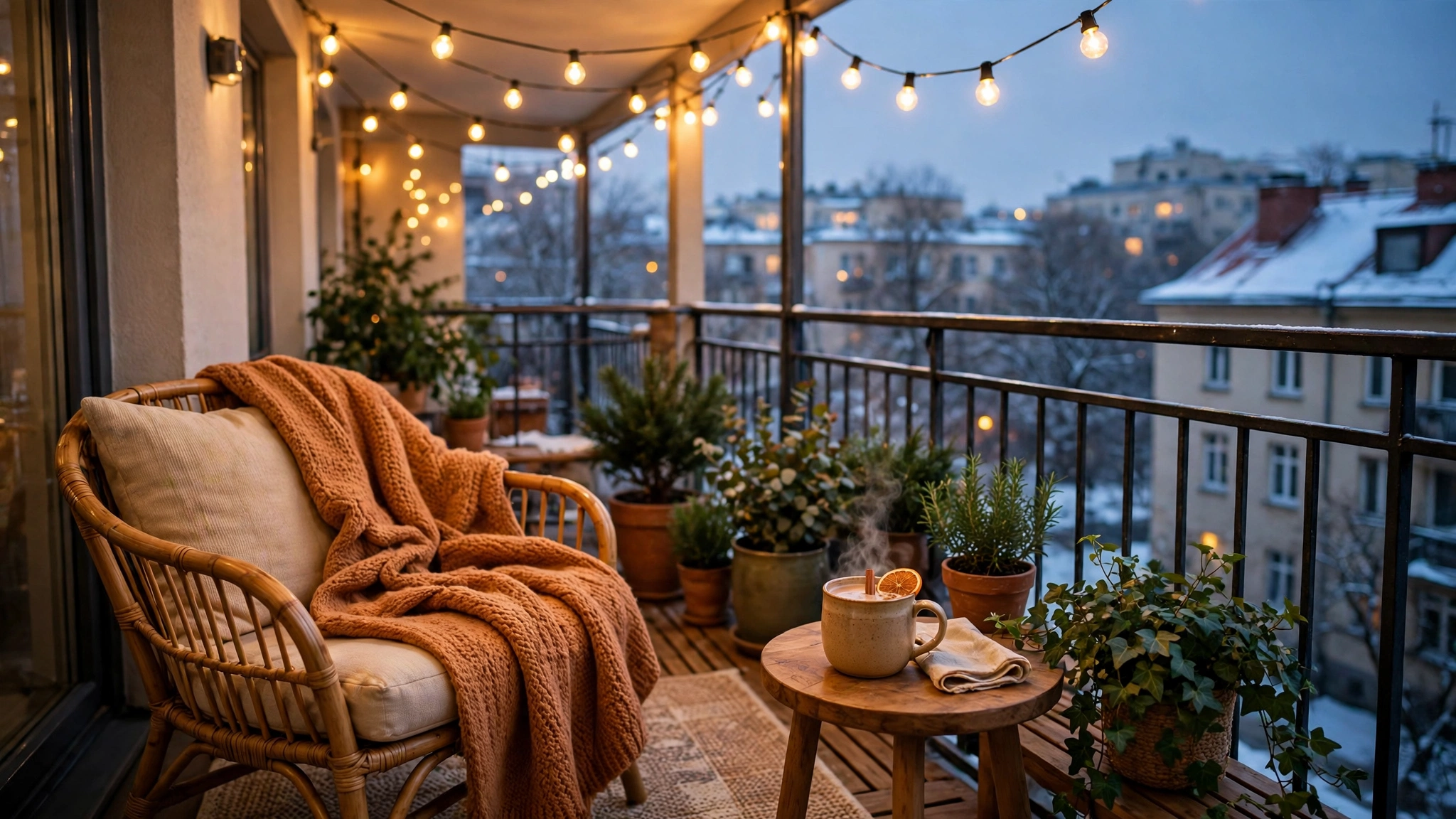

Most balconies close for business in November. The chairs fold away, the pots empty, and the smallest room in the apartment spends four months as a grey view through the glass. That is a waste, because a winter balcony does not need to host dinner parties to earn its place. It needs to hold light, green, and one good seat for a hot drink.
Good winter balcony ideas work with the season instead of pretending it is summer. Weatherproof lights replace candles that blow out, heavy pots replace light ones that blow over, and textiles chosen for outdoor life survive the weather that ruins indoor cushions in a week.
These 15 winter balcony ideas are planned for small apartment balconies, from proper walk out terraces to Juliet rails with room for two pots and a folding chair. Each idea explains what it adds, how it survives real winter weather, and the mistake that most often spoils it, so your balcony stays part of the home until spring.
What Are the Best Winter Balcony Ideas for a Small Apartment?
The best winter balcony ideas for a small apartment start with light and weight: weatherproof string lights along the railing and winter greens in heavy pots that the wind cannot move. Then add one comfortable seat with outdoor cushions, an outdoor rug over the cold tiles, and a small table for hot drinks. That short list turns a storage ledge into a room you step into daily, even if only for ten minutes at a time.
Build it before the coldest weeks, while working outside is still pleasant, and the balcony will be ready when you want it most. The indoor half of the same season lives in these cozy winter living room ideas, and the balcony’s festive version sits in the christmas balcony decor guide.
String Weatherproof Lights Along the Railing
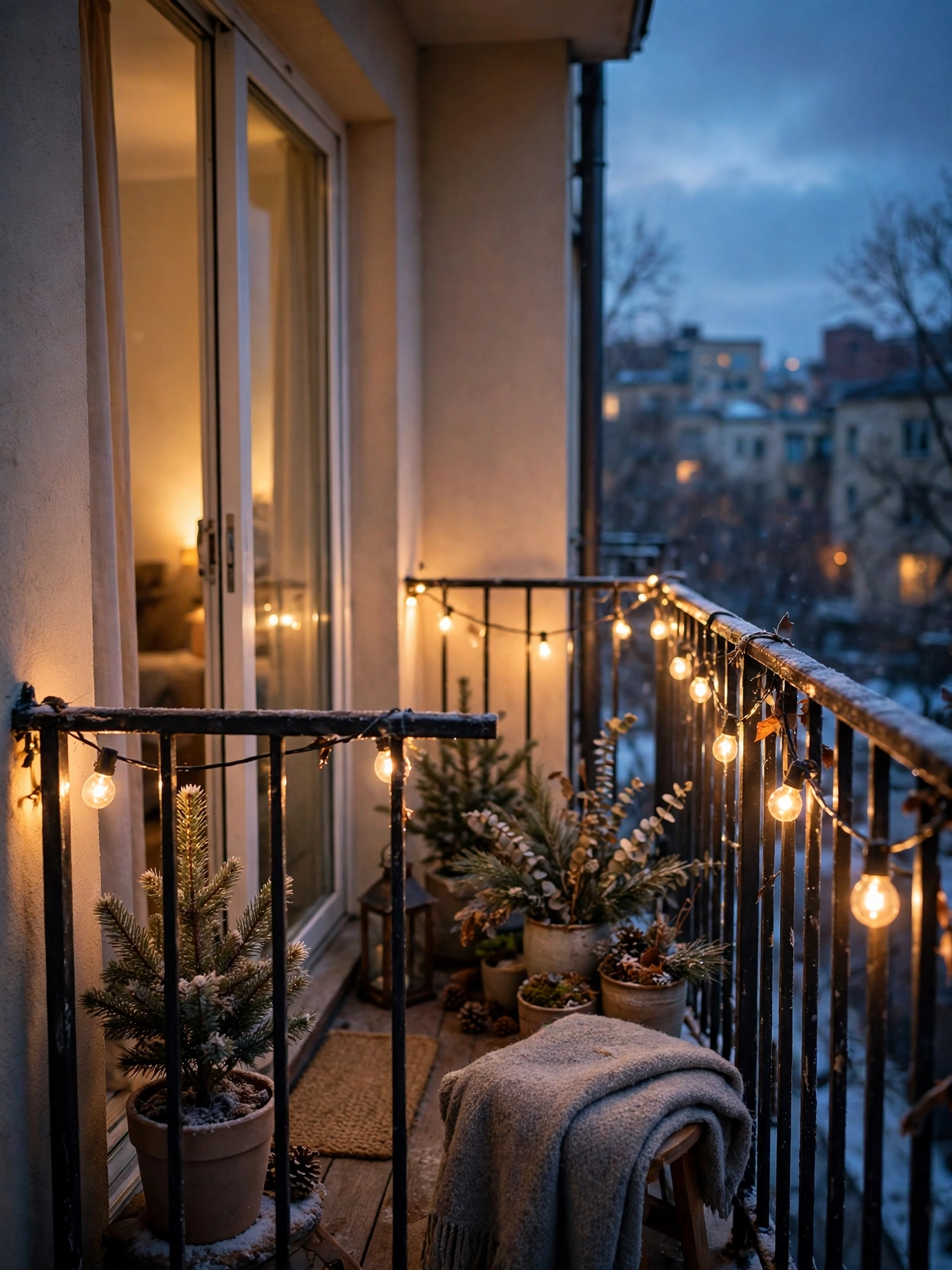
Lights are the winter balcony’s reason to exist after dark, which in midwinter means from late afternoon. A string of weatherproof lights along the railing outlines the space, reflects softly in the glass door, and makes the balcony glow like a lantern for the room inside as well as for anyone standing outside.
Choose lights rated for outdoor use with sealed bulbs, and run them along the top rail where they clear cushions and plant pots. One warm white string suits most small balconies; two crossing strings suit longer ones. Run the string in gentle swags rather than one straight tight line, because swags forgive the small movements of the railing in a storm and look softer from the room inside.
Battery strings with a timer avoid the socket problem entirely and suit renters, while solar versions struggle in winter’s short days and often fade by nine. Plug in strings need the cable run planned so the door still closes fully on it.
Anyone whose balcony faces the living room gains twice, because the lights decorate both spaces. The common mistake is indoor fairy lights pressed into outdoor service. One wet week kills them, and the failure usually takes the string down mid season.
Set Out Lanterns With Battery Candles
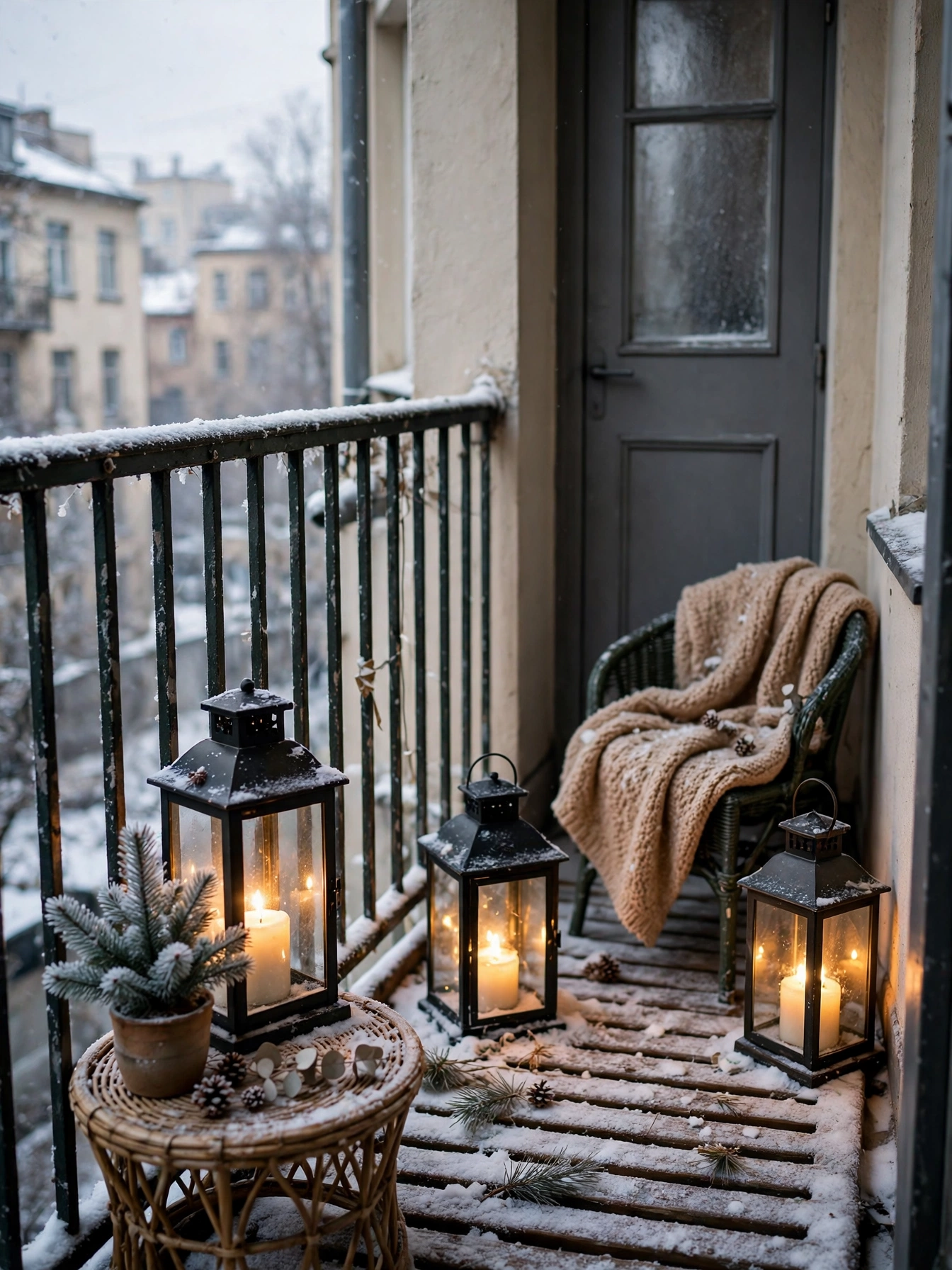
Lanterns give the balcony a second, lower layer of light that string lights cannot. Two or three lanterns on the floor or the table, holding battery candles, pool warm light at seat level and keep glowing through wind that would murder a real flame in seconds.
Group lanterns in uneven numbers and mixed heights near the seat rather than spacing them evenly along the railing. Light where people sit does more than light spread thin for show.
Choose lanterns in metal or treated wood that can live outside all season, with glass or clear panels that keep the candle dry. Bring cheap decorative lanterns in each night or accept that they are a one season purchase.
Small balconies gain the most, because two lanterns change the whole space. The common mistake is real candles on a balcony, where wind, dry plants, and wooden furniture make open flames a poor risk. Battery candles with timers give the glow with none of the watching.
Choose Cushions in Weatherproof Fabric
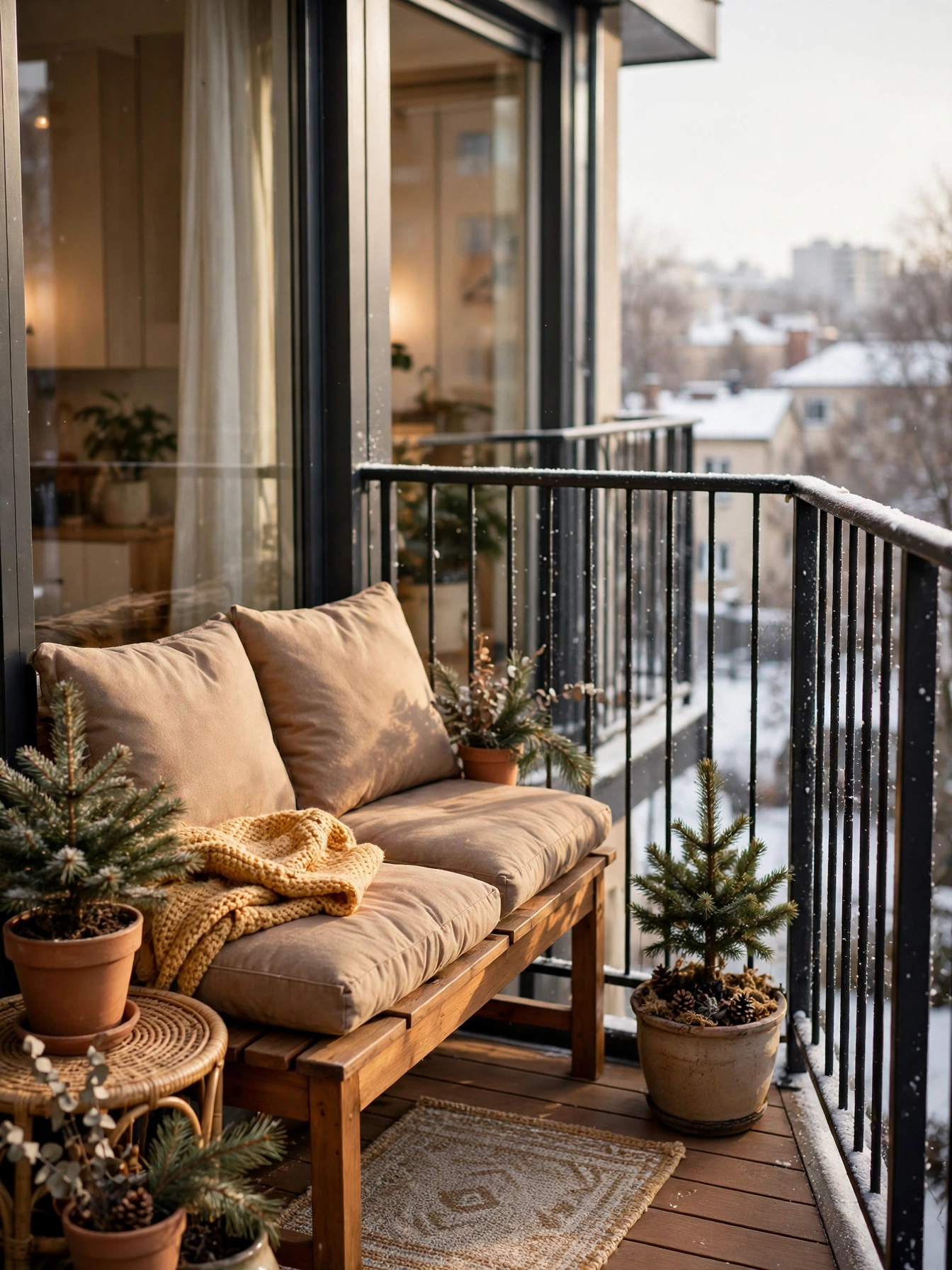
The seat decides whether the balcony gets used, and cushions decide the seat. Weatherproof fabric cushions in deep winter colors, rust, forest, or a warm plaid, make a cold chair sittable in minutes and survive the damp that turns indoor cushions musty within a fortnight.
Look for covers that unzip for washing and fabric that sheds water rather than soaking it. One seat cushion and one back cushion per chair is enough; a pile of cushions on a small balcony stores more weather than comfort.
Bring cushions in during long wet spells even when they are weatherproof, because days of rain defeat any fabric eventually. A storage box on the balcony, covered later in this list, makes that a ten second job.
Anyone who actually wants to sit out in December gains the most. The common mistake is indoor cushions carried out for a photo and left to the weather. They drink the damp, smell by January, and teach everyone that the balcony seat is unpleasant.
Layer an Outdoor Rug Over Cold Tiles
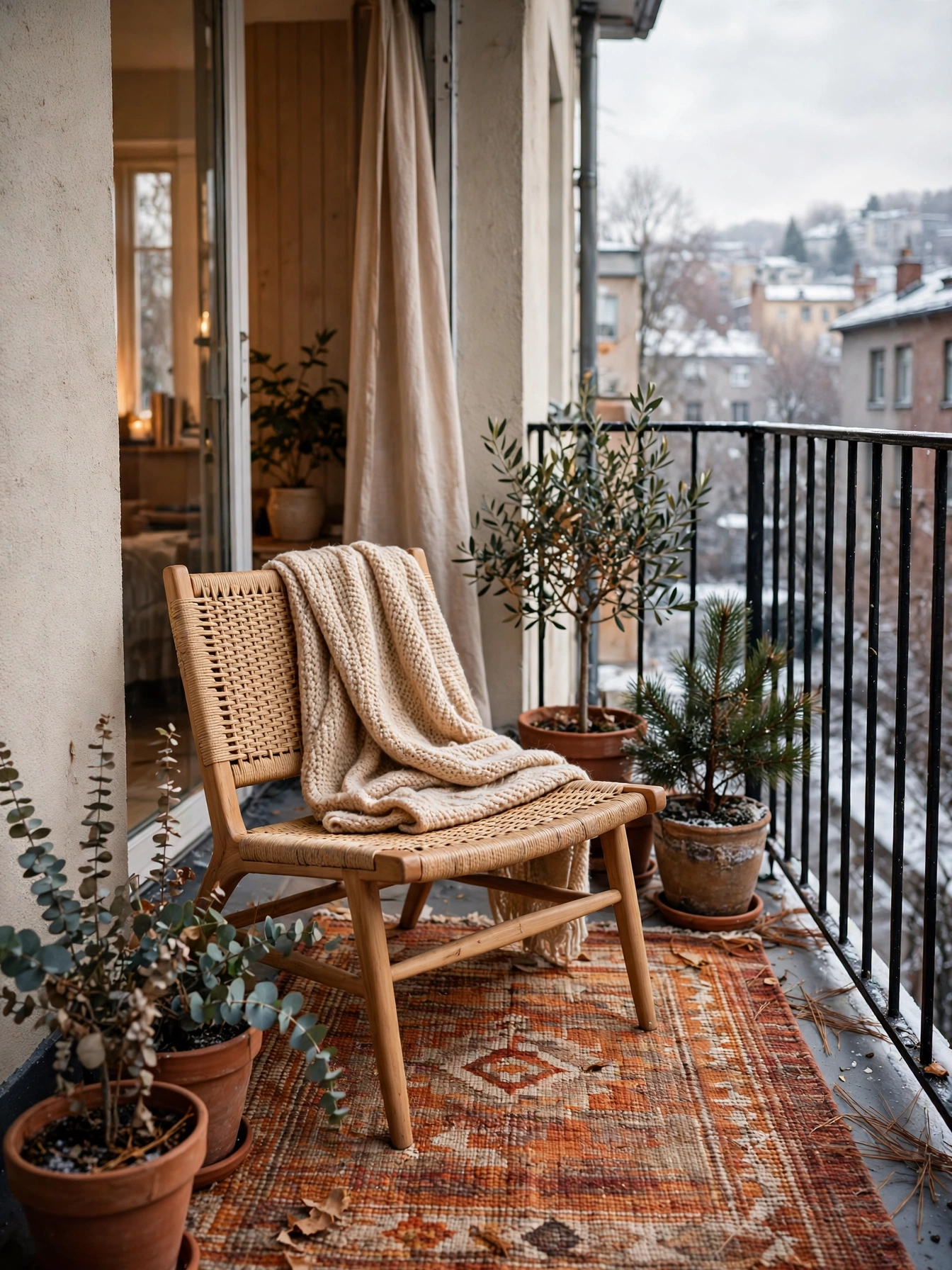
Balcony tiles and concrete hold winter cold like a fridge shelf, and the chill climbs through shoes in minutes. An outdoor rug in a flat weave covers the cold, defines the seating area, and gives the balcony the finished look of a room rather than a ledge.
Choose a rug made for outdoor use that water passes through or sheds, sized to sit under the chair and table with a border of tile showing. Flat weaves dry fastest after rain and store rolled in a corner.
Shake and lift the rug on dry days so the floor beneath dries fully. A rug left flat on a wet balcony for weeks can hold moisture against the tiles and mark them, which matters for renters and their deposits.
Small square balconies gain the most, because one rug covers most of the floor. The common mistake is an indoor rug pressed into service, which soaks up rain, weighs a tonne, and molds underneath. Outdoor rugs exist precisely because winter is wet.
Keep a Foldable Chair That Stores Flat
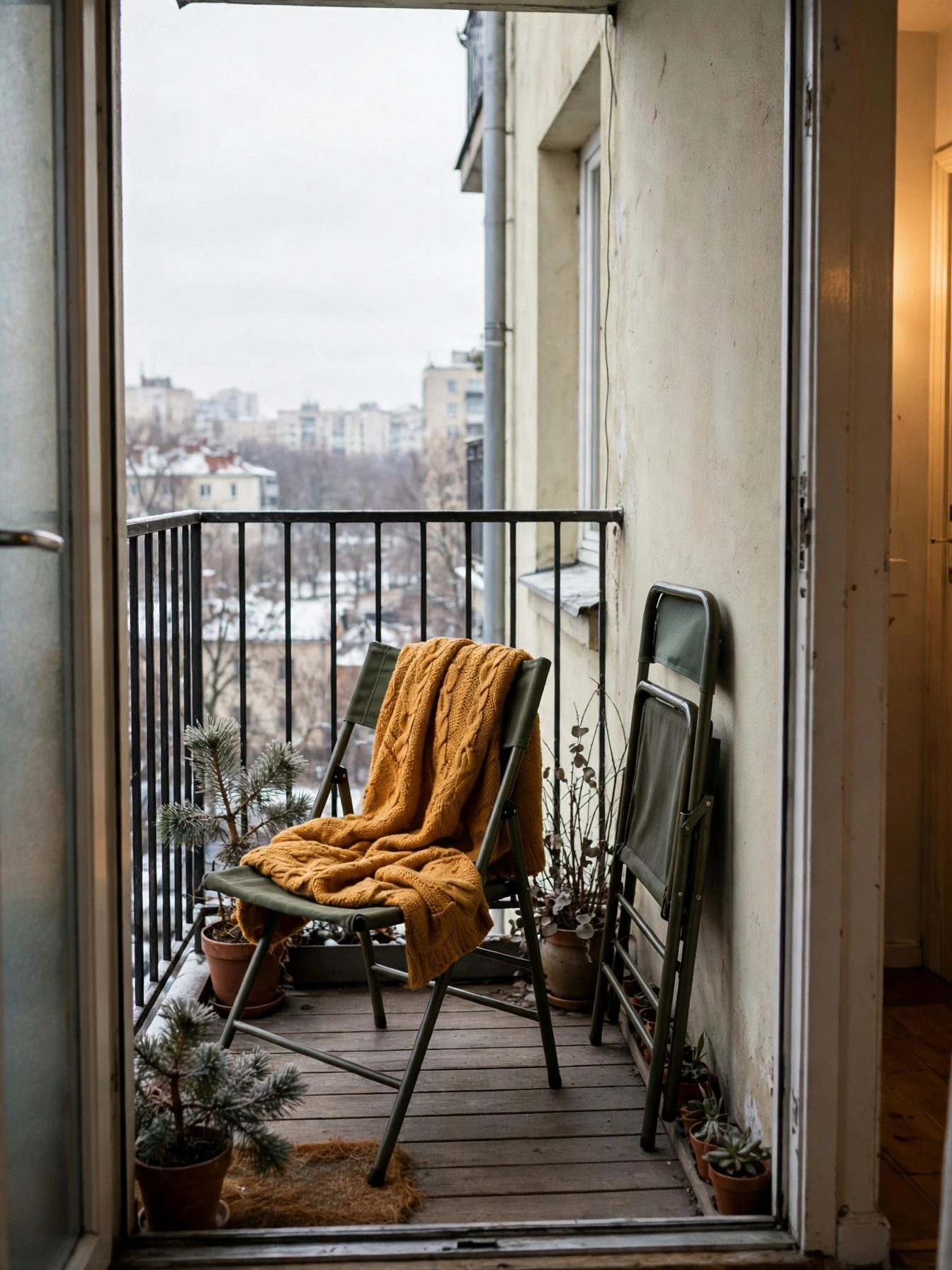
A small balcony often needs its floor back for drying laundry, storing the bike, or simply opening the door fully. A good folding chair gives you a real seat when you want one and vanishes flat against the wall or behind the door when you do not.
Choose a chair with a proper back and a seat at normal height, in treated wood or metal that tolerates weather. Test its comfort honestly, because a chair that punishes sitting will not be unfolded twice.
Store it folded in the same spot every time, hooked or leaned where one hand can free it. The balcony seat that takes effort to reach loses to the sofa every cold evening.
Studios and one bedroom flats gain the most, where the balcony floor does several jobs. The common mistake is fixed bulky furniture on a tiny balcony, which turns the space into storage with a view. One fixed seat is the limit for small spaces; everything else should fold.
Plant Winter Greens in Heavy Pots
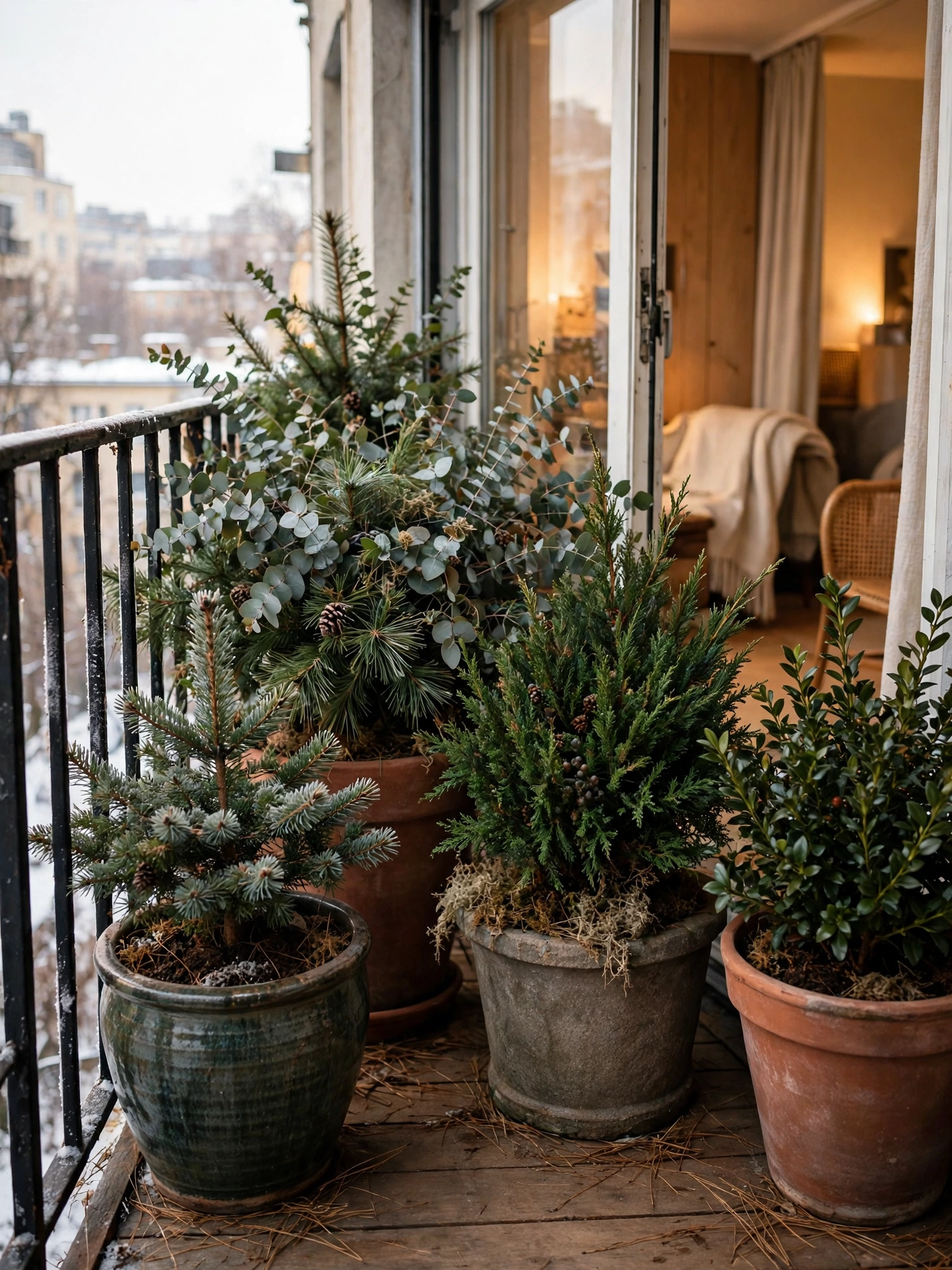
A winter balcony without green is just outdoor storage. Winter greens, ornamental cabbage, heather, winter pansies, and hardy herbs, keep the pots alive through the cold months and give the railing line something better to frame than empty soil.
Plant into heavy pots, terracotta with thick walls, stone effect, or metal with weight, because winter wind on an upper floor balcony is stronger than anyone expects in October. A light plastic pot that survives summer can travel across a balcony in one storm.
Group pots in the corners and along the wall side, where they shelter each other and leave the view open at the railing. Raise them slightly on feet so drainage holes stay clear of the cold floor.
Anyone above the second floor gains the most from the weight rule. The common mistake is leaving summer plants to die slowly in their pots all winter. A balcony of dead stems depresses the view from inside too, so replant or clear by November.
Add Potted Conifers for Year Round Green
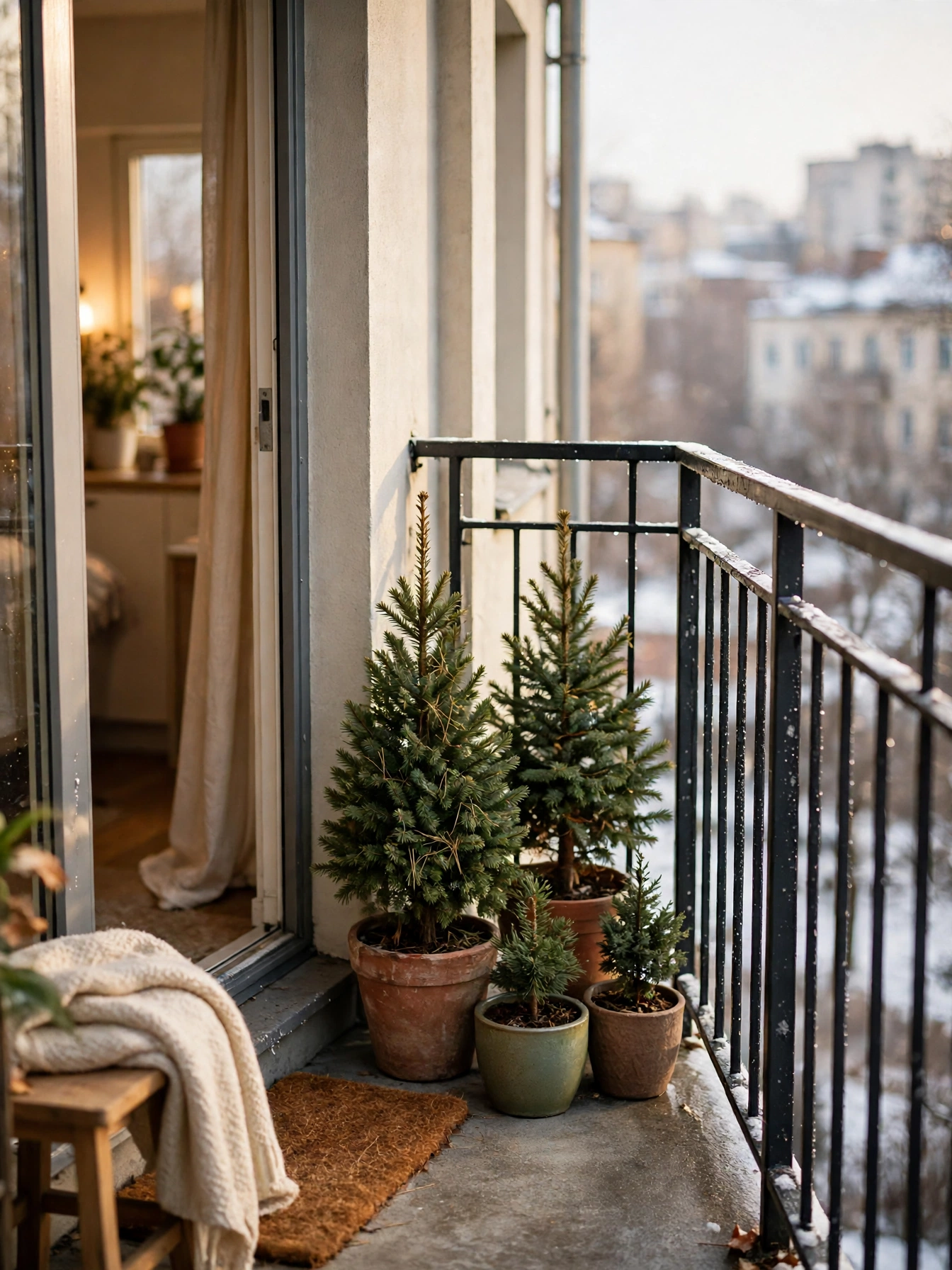
One or two small conifers give a balcony its winter backbone: green in every month, a shape the wind moves gently, and a spot of height in a space that is usually all railing and floor. Dwarf spruce, small pines, and box alternatives all live happily in pots for years.
Choose the biggest pot the balcony can carry, because conifers in small pots dry out and blow over. A pot of 30 to 40 cm across suits a young tree and gives its roots room to grow into spring.
Water potted conifers through winter whenever the soil dries, which surprises people. Wind dries pots even in cold weather, and a thirsty conifer in a frozen looking pot is the season’s quietest casualty. In a hard freeze, cluster the pots together against the wall, where they shelter each other and share what little warmth the building gives off.
Long term renters and owners gain the most, because the trees improve yearly. The common mistake is planting a fast growing conifer that outgrows its pot and its balcony in two seasons. Read the final height on the label and believe it.
Hang a Windproof Privacy Screen
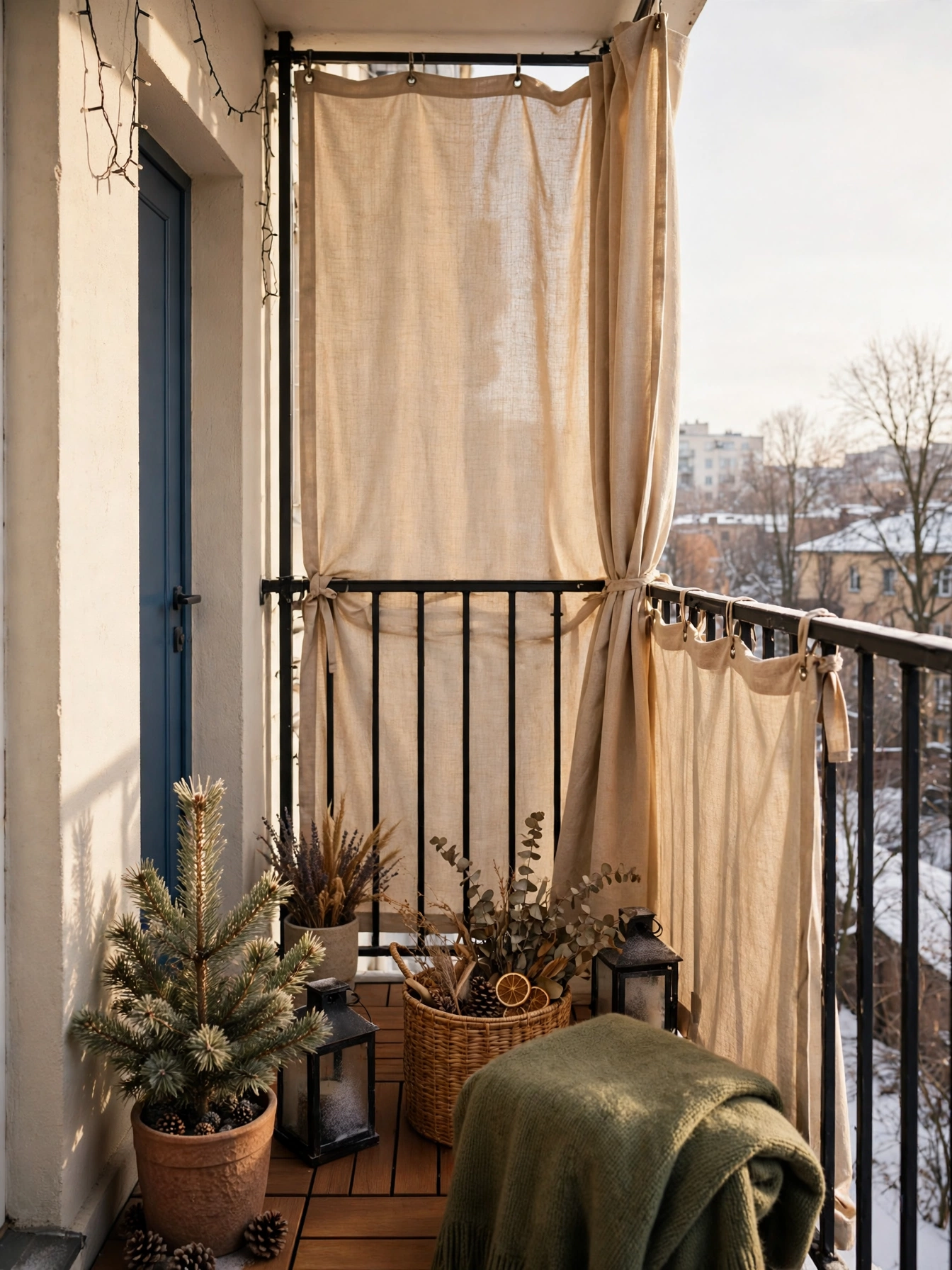
Winter strips the leaves that hide a balcony in summer, and close neighbors suddenly share your morning coffee. A fabric privacy screen along the railing restores the shelter, blocks the worst of the side wind, and makes the seat feel like a room rather than a stage.
Choose a screen with reinforced edges and ties or eyelets every short interval, and fix it at top and bottom rails. A screen fixed only at the top becomes a sail in the first storm, and a flapping screen keeps the whole building awake.
Check your building’s rules before fitting, because some blocks restrict balcony screens or their colors. Neutral tones that match the building rarely draw complaints.
Overlooked balconies gain the most. The common mistake is a screen so tall and solid it takes the light and the view with the privacy. Match the railing height, and you keep the sky while losing the audience.
Create a Hot Drink Corner for Cold Evenings
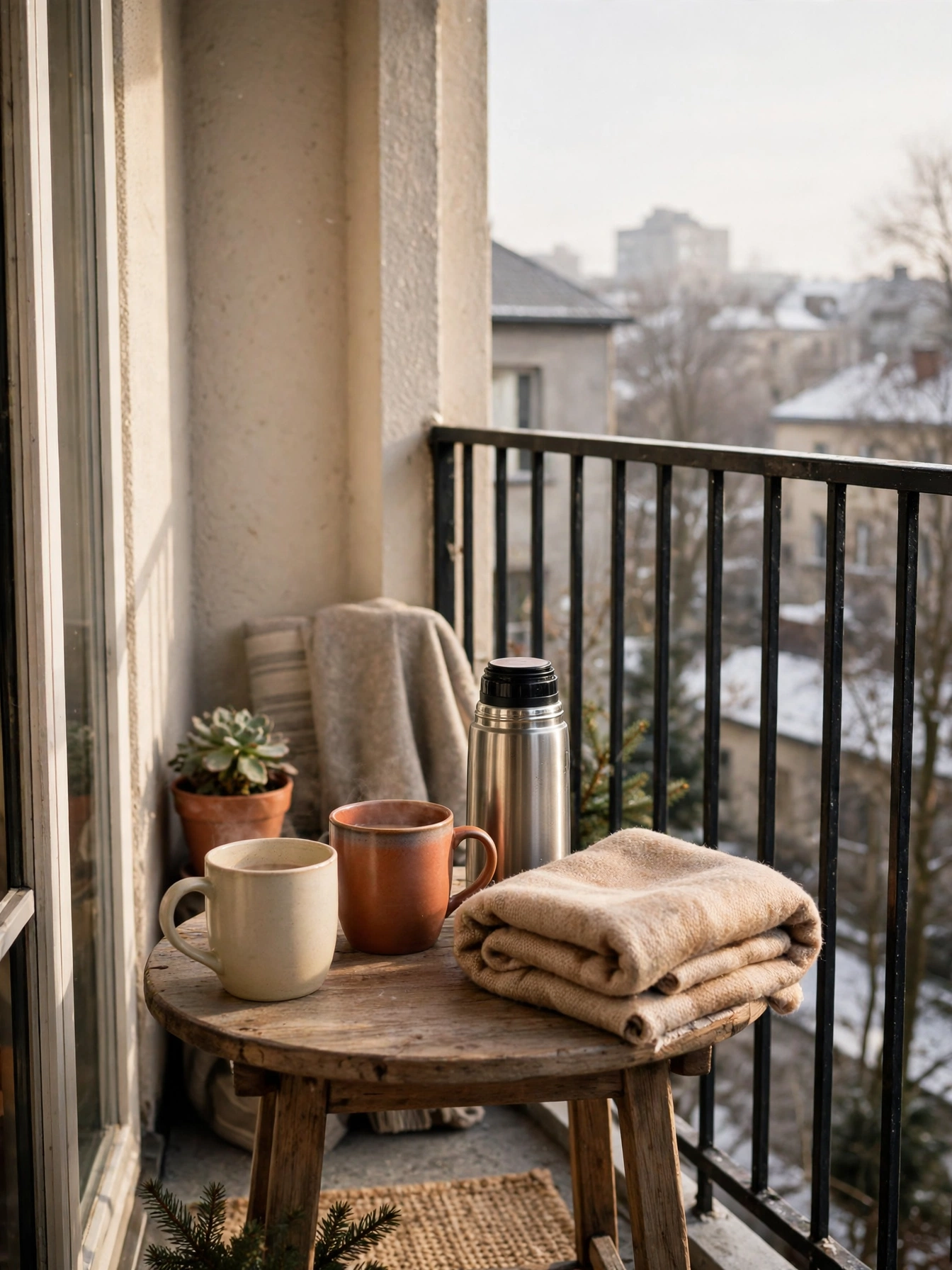
The ritual that brings people onto a winter balcony is a hot drink in cold air. A small stable table holding a thermos, two mugs, and room for a plate turns the balcony into a destination for ten minute breaks that reset a whole evening indoors.
Choose the table for stability first: a folding side table with a wide base or a heavy small round table that wind cannot walk across the tiles. Everything on it in winter is hot, so wobble is not a charming flaw.
Keep the corner stocked from inside: the thermos filled after dinner, mugs on a hook by the door, and the balcony blanket in its dry bag beside them. When the whole ritual takes one trip, it happens nightly.
Anyone working from home gains the most, because the balcony break replaces the office coffee run. The common mistake is glass and ceramic left out all winter, where frost can crack them and storms can throw them. The corner assembles in a minute and clears in the same.
Use a Storage Box That Doubles as a Seat
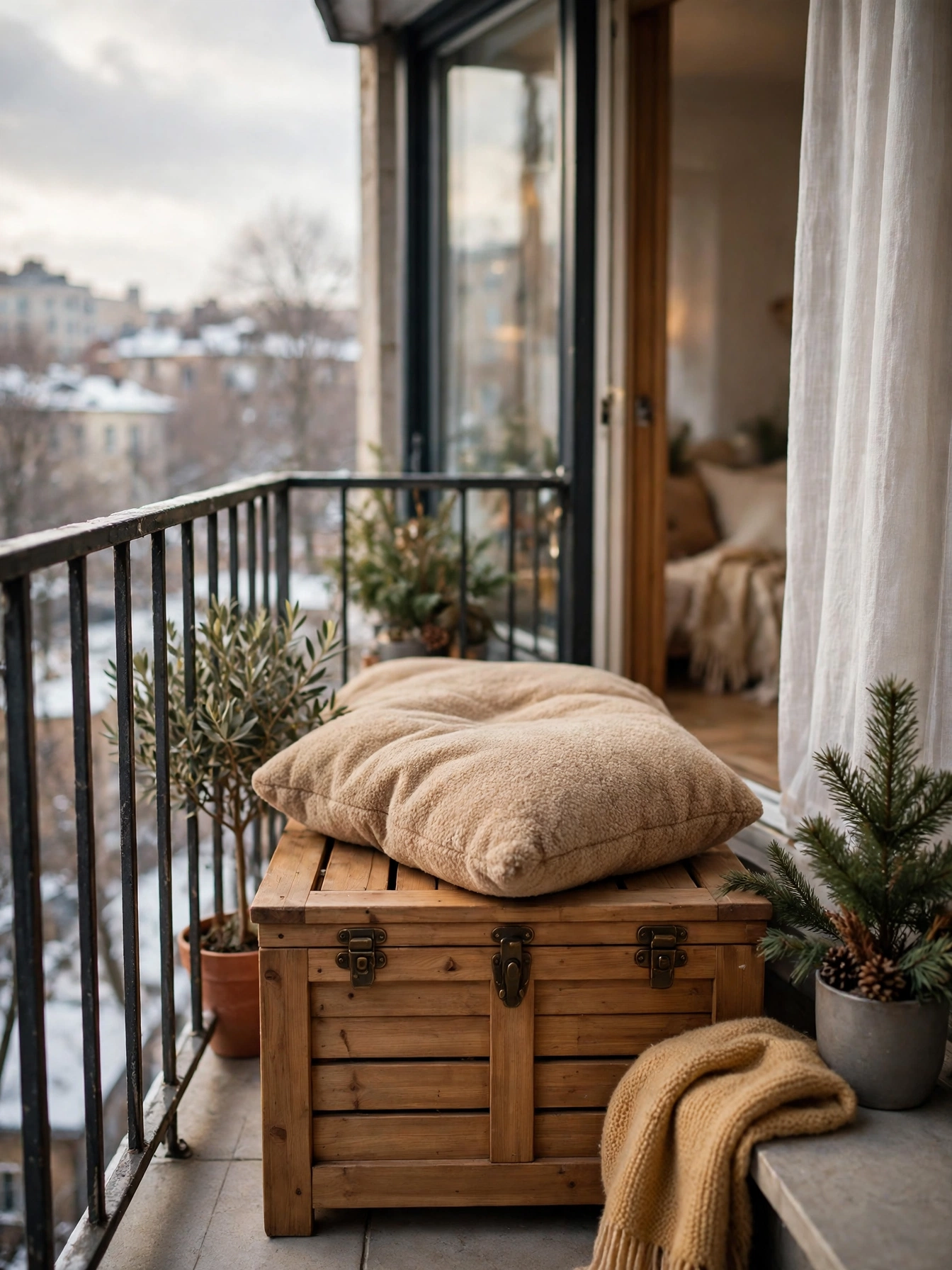
Balcony gear multiplies in winter: cushions, blankets, lanterns, plant feed, and the watering can all need a dry home. One storage box with a flat, strong lid holds the lot, keeps it dry, and serves as the second seat or the footrest the small balcony could never fit as furniture.
Choose a box rated for outdoor use with a lid that sheds water away from the seal. Size it to the cushions first, because they are the bulkiest tenants, and let everything else arrange itself around them.
Stand the box along the wall side where it shelters behind the railing’s wind shadow. A box in the middle of a small balcony becomes the thing everyone walks around, which defeats its purpose by February.
Small balconies gain the most, because the box is two pieces of furniture in one footprint. The common mistake is a box without a waterproof seal bought cheap in summer. One wet month inside it ruins every cushion it was bought to protect. The same storage first thinking runs through the whole home approach in these winter apartment decor ideas.
Dress the Door and Window From Inside
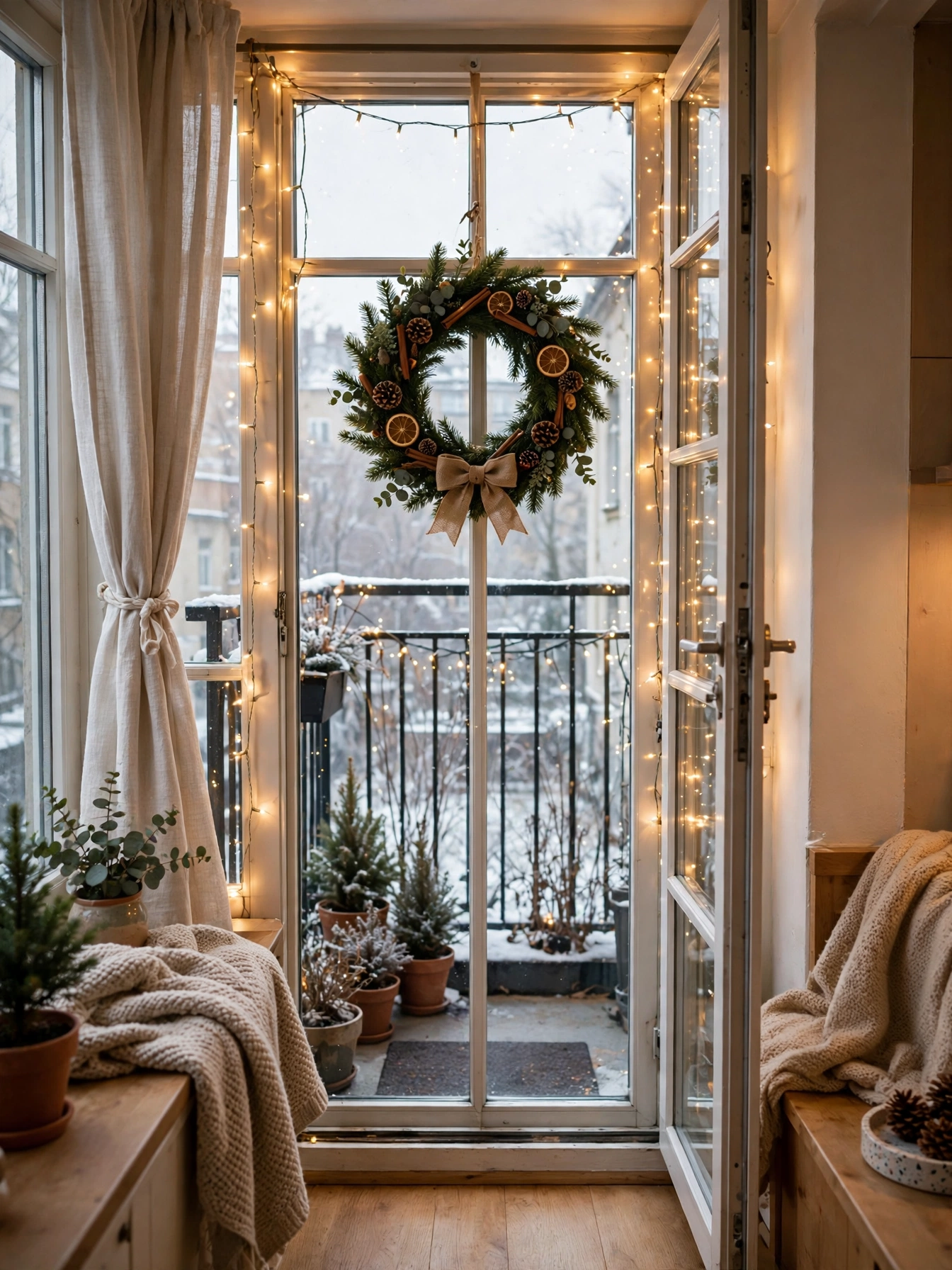
Half of a balcony’s winter value is the view of it from the sofa, and the glass door is the frame. A wreath on the inside of the glass, a string of lights around the frame, and the balcony’s own glow beyond it turn the door into the room’s best picture on dark evenings.
Hang the indoor pieces where they never block the door’s swing or its handle. Suction hooks on glass and removable strips on the frame keep everything renter friendly and reversible in minutes.
Keep the glass itself clean through winter, which sounds obvious and gets forgotten. Clean glass doubles the effect of every light outside it, while smeared glass mutes the whole scene.
Anyone whose living room faces the balcony gains the most. The common mistake is decorating only for the street’s view and forgetting the audience of one sofa inside. Dress the door for the people who see it daily, not for the street below.
Add a Bird Feeder for Winter Life
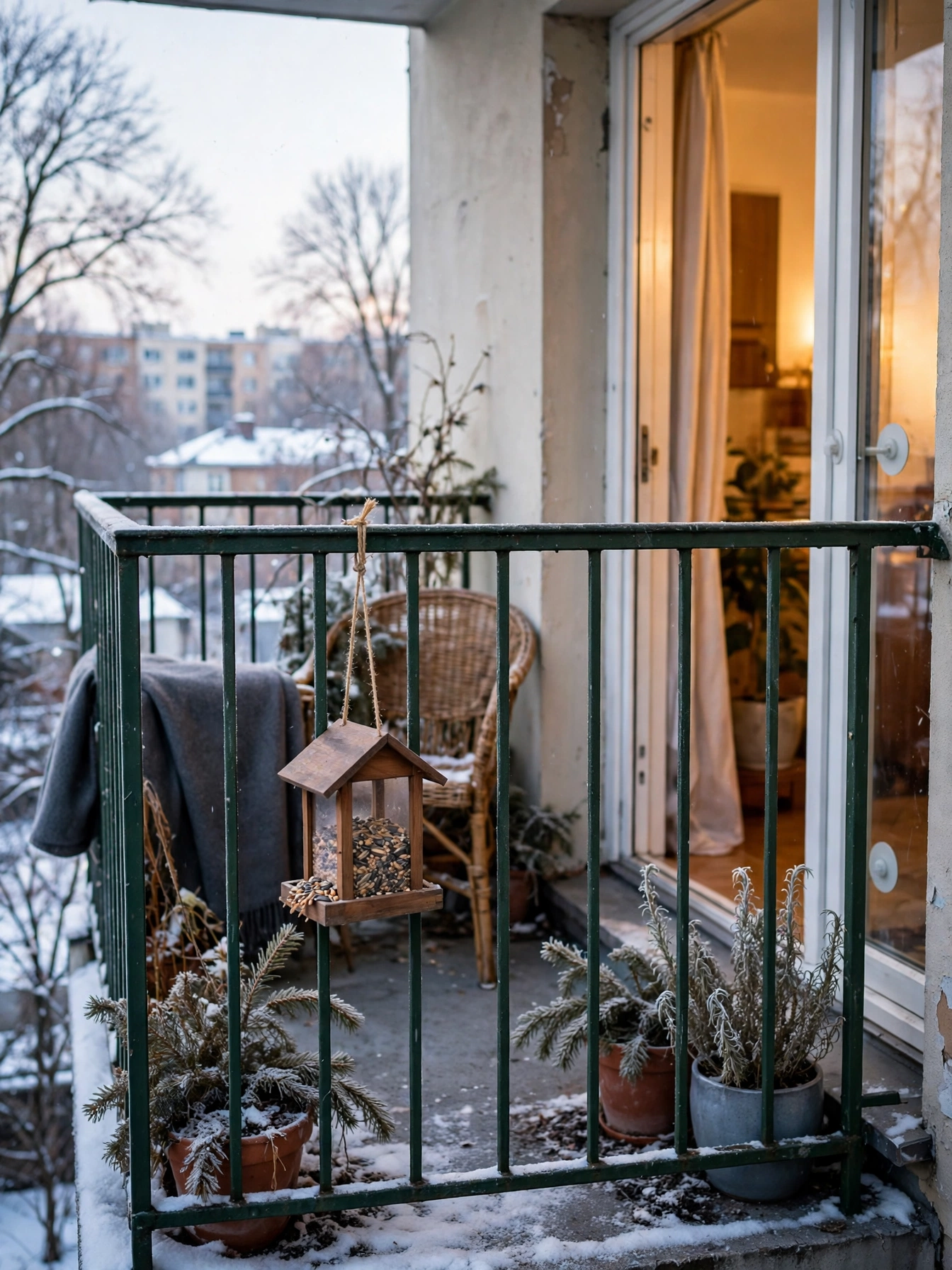
A winter balcony can feel still and empty, and a bird feeder fixes that in a week. Small birds find a new feeder fast in the cold months, and their visits give the balcony movement and life that no decoration can imitate, watched from the warm side of the glass.
Hang the feeder from the railing or a bracket where you can see it from your seat inside, and where dropped seed falls on the balcony rather than the one below. A tray feeder or a suet holder suits small spaces and messy eaters best.
Check your building’s rules first, because some blocks ban feeding, and keep the feeder clean and the seed fresh. A feeder that is allowed, clean, and filled beats a large one that draws complaints. Refill little and often in the coldest weeks, because fresh seed in hard weather is the difference between a busy feeder and an ignored one.
Nature lovers and home workers gain the most. The common mistake is placing the feeder where it sprays seed and droppings over the seating area. Birds and coffee corners both deserve their own ends of the balcony.
Keep One Warm Throw in a Dry Bag
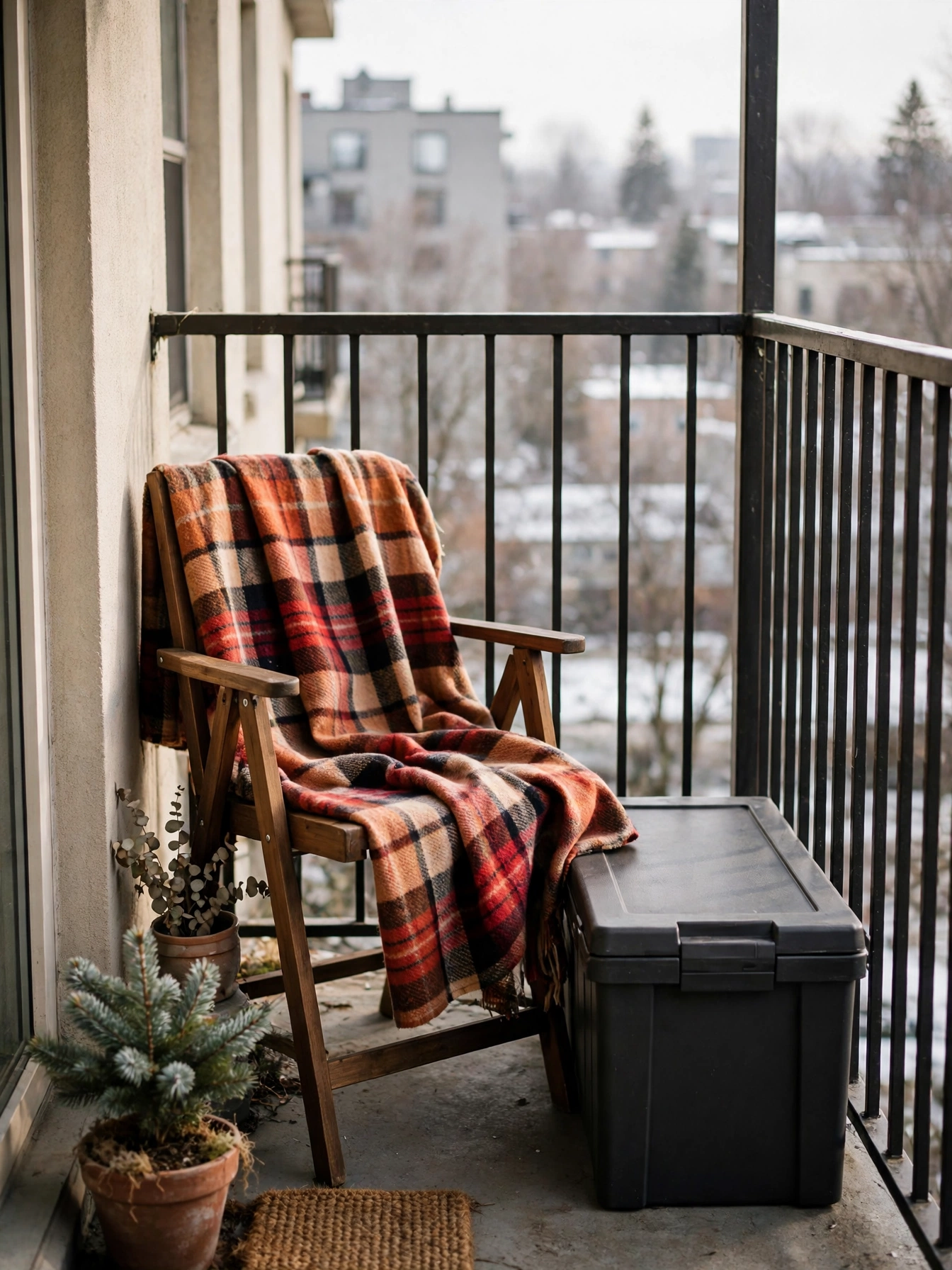
Sitting outside in winter is a blanket activity, and the blanket has to live where the sitting happens. One warm throw kept in a dry bag inside the storage box means the balcony seat is ready in the time the kettle takes, with no trip through the apartment gathering supplies.
Choose a throw that washes easily and dries fast, in a fabric that tolerates a little damp air. Wool and fleece both serve well; delicate indoor knits belong to the sofa and will smell of storage by January if they live outside.
Shake the throw out after each use and never seal it away damp. Two minutes of air saves the wash cycle and keeps the bag fresh for the whole season.
Anyone who uses the balcony in short daily bursts gains the most. The common mistake is the good indoor throw migrating outside and living there, damp and fading, while the sofa loses its best layer. The balcony gets its own throw, bought for the job.
Light the Balcony From the Room Side Too
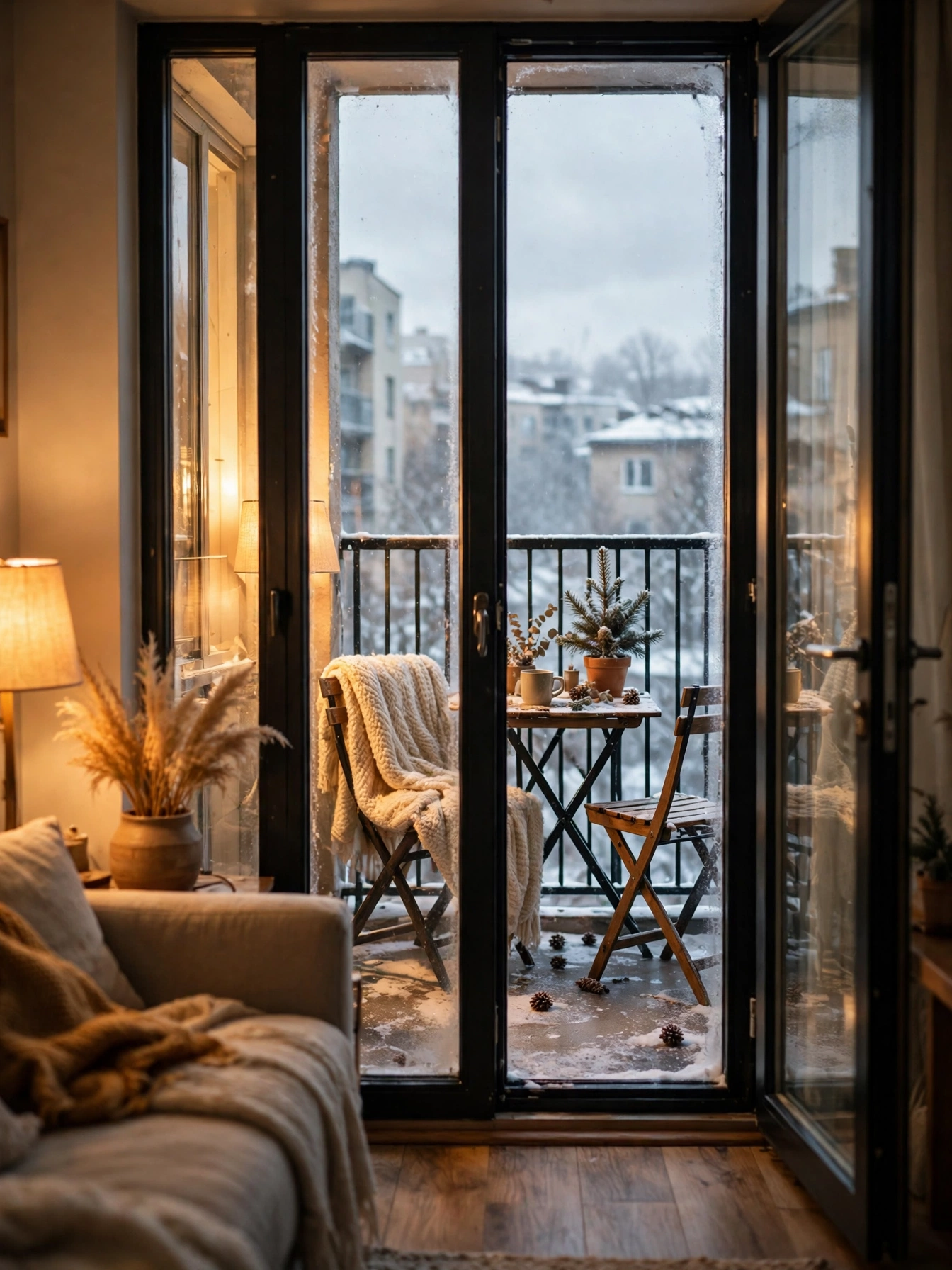
A balcony lit only from outside can still look like a dark hole from the sofa if the room behind the glass is dim. Warm light inside the room, aimed generally toward the door, plus the balcony’s own lights, blends the two spaces into one long warm room with a glass wall in the middle.
A floor lamp near the door inside does most of this work, bouncing light off the ceiling and out through the glass. When you sit on the balcony, that indoor glow behind you is what makes the seat feel sheltered instead of exposed.
Keep one light source visible from the balcony seat itself, because a lit interior reads as company and safety on a dark evening. It also lights your path back in with full hands.
Evening users gain the most. The common mistake is a bright white indoor light against the warm balcony glow, which makes the glass a mirror and hides the balcony entirely. Match the warmth on both sides of the glass.
Set a Small Table for Morning Coffee
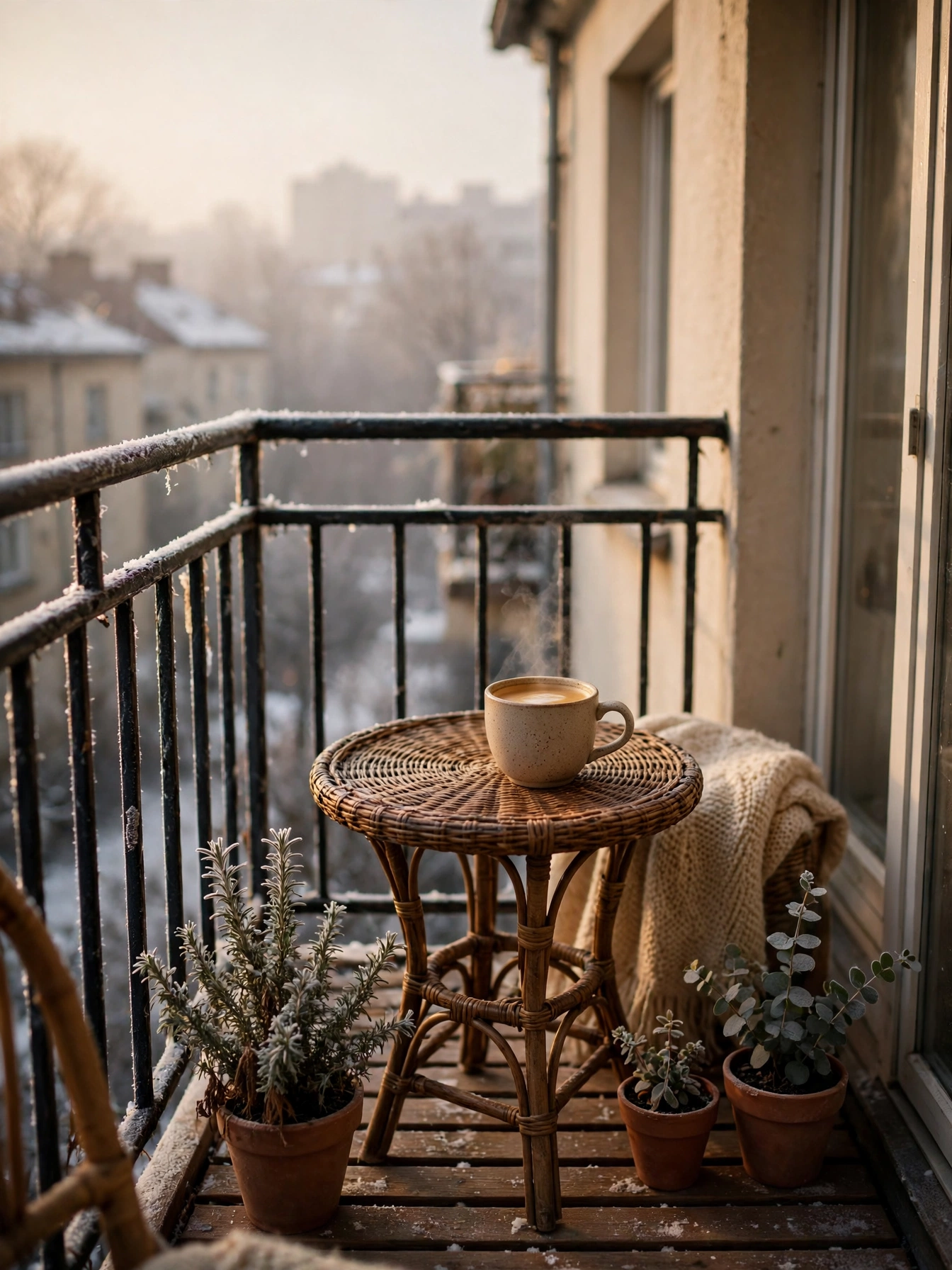
Winter mornings are the balcony’s quietest gift: cold bright air, a hot coffee, and ten minutes before the apartment wakes. A small table set for that ritual, at the spot that catches the earliest sun, gives the day a starting line that feels chosen rather than stumbled into.
Find the sun spot by watching the balcony over one weekend morning, because winter sun arrives at a low angle and lands in surprising corners. The table goes there, even if it is not where summer put it.
Keep the setup minimal and daily: the table, the chair turned toward the light, and nothing else stored on either. A ritual spot that needs clearing before use stops being a ritual within a week.
Early risers gain the most, and the habit pairs with the morning routines in a full january apartment reset when the new year starts. The common mistake is facing the chair at the view you loved in summer. Winter light matters more than the view, so face the sun.
Common Winter Balcony Mistakes to Avoid
Using Indoor Textiles Outside
Indoor cushions and throws drink damp, smell within weeks, and fade fast. Outdoor fabrics and a dry storage bag cost a little more and survive the whole season.
Light Pots That Blow Over
Upper floor wind is stronger than it feels from inside. Heavy pots, grouped in sheltered corners, survive storms that scatter light plastic pots across the balcony and the street below. Covered balconies can stretch cheaper pots a little further, because the wind that destroys lightweight pots rarely reaches them at full strength.
Blocking the Drainage
Balconies drain through small outlets that rugs, boxes, and leaf piles love to cover. Blocked drainage pools water against the door. Keep the outlet corner clear all winter and check it after storms.
Forgetting Building Rules
Screens, feeders, and even lights are restricted in some blocks. One quiet check of the rules before buying saves the cost and the argument later.
Real Candles in the Wind
Open flames on a windy balcony near dry plants and wooden furniture are a poor risk for a small gain. Battery candles in lanterns give the same glow and can be left to their timer.
Overfilling a Tiny Balcony
Every piece added to a small balcony takes floor from all the others. One seat, one table, pots in the corners, and clear floor between them beats a balcony furnished like a shop display.
Budget-Friendly Winter Balcony Tips
Lights come first in the budget, because they change the balcony every single evening for the price of one plant. A single weatherproof string with a timer does more than any other purchase at its price.
Pots and plants come second. Winter greens are cheap in season, and heavy pots bought once serve for years, unlike the light ones replaced after every storm.
Use furniture you already own where it can survive. A folding chair from inside works for the first month while you learn whether the balcony habit sticks, and then the outdoor purchase is a proven one.
Textiles wait for the sales or the secondhand shops. Outdoor cushions in plain colors appear constantly, and a wash puts them back in service for a fraction of the new price.
Skip anything that serves only December. The winter balcony should run from November to March, and pieces that work all season earn their storage space in a small home.
A Weekend Plan for a Winter Ready Balcony
Start Saturday morning with a full clear and sweep. Take everything off the balcony, sweep out the summer’s dust and leaves, check the drainage outlet is clear, and wash the tiles while the space is empty.
Fit the fixed pieces next: the privacy screen if you are using one, the string lights along the railing, and the storage box in its wall side spot. Test every light after dark on Saturday, while there is still a day to fix what fails. Note which corner the wind hits hardest while you are out there, because that corner decides where the seat should not go on Sunday.
Place the plants and furniture on Sunday: heavy pots in the corners, conifers where they frame the door, the seat and rug in the sun spot, and the table beside the chair. Stand inside and judge the view from the sofa, because that view is half the result.
Finish by stocking the ritual: cushions in the box, the throw in its dry bag, lanterns charged or with fresh batteries, and the thermos by the kitchen door. Then take the first hot drink outside on Sunday evening and let the balcony open for the season.
FAQ
Can a small balcony really be used in cold weather?
Yes, in short comfortable bursts. A good seat, a warm throw, shelter from the worst wind, and a hot drink make ten to thirty minutes outside pleasant through most of winter, and that is all the balcony needs to earn its place.
Are these winter balcony ideas renter friendly?
Mostly, yes. Lights on timers, pots, rugs, folding furniture, and storage boxes need no fixings. Privacy screens and feeders depend on your building’s rules, so check those two before buying.
What plants survive winter on a balcony?
Hardy greens do best: dwarf conifers, heather, winter pansies, ornamental cabbage, and tough herbs like rosemary in sheltered spots. Heavy pots and occasional watering on dry spells carry them through.
How do I keep balcony lights safe in winter weather?
Use lights rated for outdoor use with sealed bulbs, keep connections off the wet floor, and prefer battery strings with timers where sockets are awkward. Never run a cable where the door crushes it nightly.
What if my balcony is only a Juliet rail?
Scale the list down, not out. Two heavy pots on the floor inside the rail, lights along the rail itself, a wreath on the glass, and the room’s warm light behind it give the same effect in miniature.
How much should I spend on a winter balcony?
Less than on any room inside. Lights, two heavy pots of greens, and one good cushion transform most small balconies, and the rest can follow over the season as the habit proves itself.
Conclusion
Winter balcony ideas succeed when they respect the weather and reward short visits. Lights that survive rain, pots too heavy for the wind, one honest seat, and a hot drink ritual turn the smallest outdoor space into a room the apartment uses from November to March.
Build it in that order and stop when the seat calls you outside on a cold evening. A small balcony fills fast, and the clear floor between the pieces is what makes it feel like a room rather than storage with a railing.
Set yours up this weekend. The first frosty morning coffee, taken in cold bright air while the apartment stays warm behind the glass, will explain the whole idea better than this article can.