
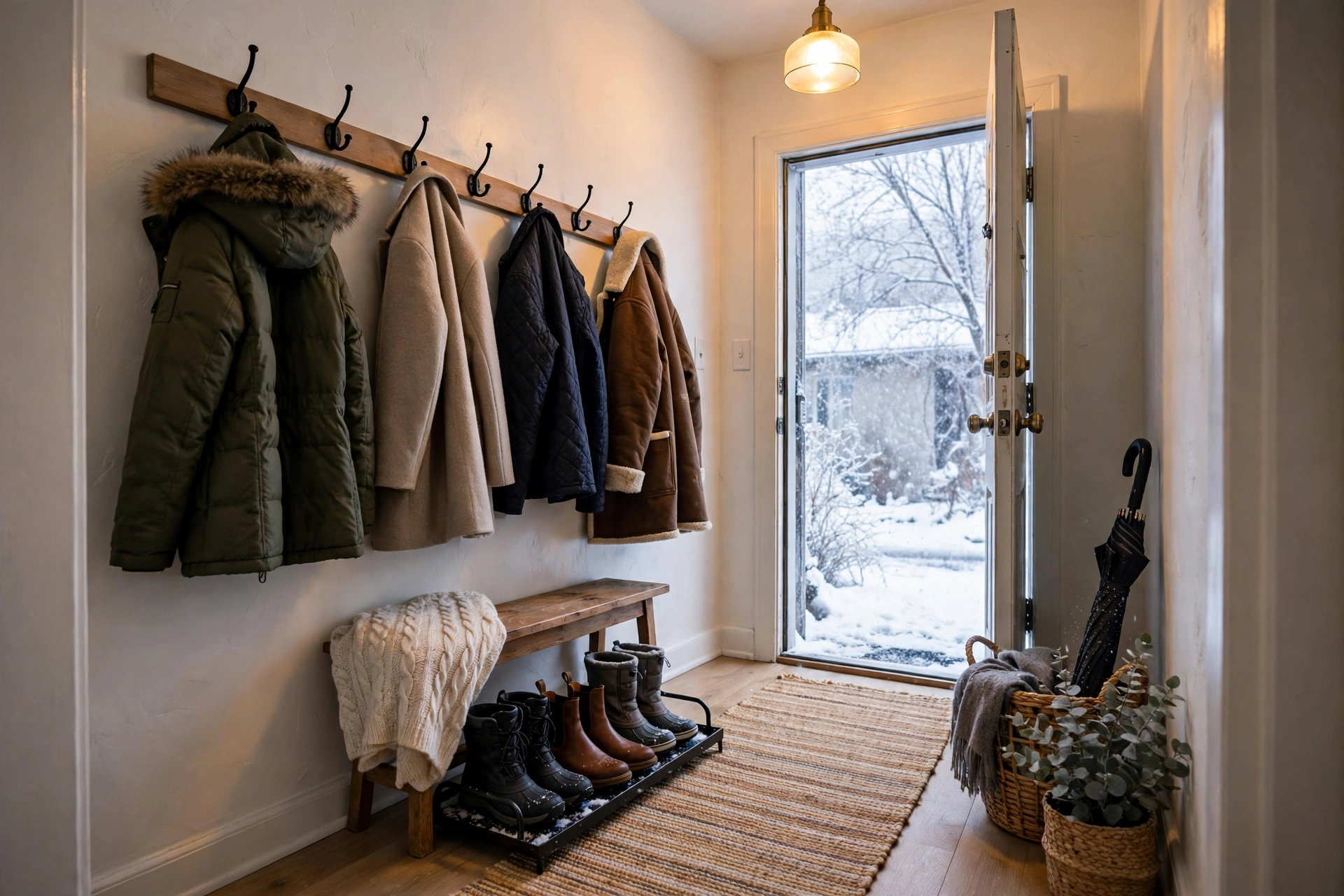

The entryway does the hardest work of any space in winter. Every arrival brings a coat, a scarf, wet boots, and a puddle, and in a small apartment all of it lands in the same two square meters where you also need to walk, close the door, and find your keys.
Good winter entryway ideas are not about making the door area pretty. They are about giving water, wool, and clutter a planned route so they stop spreading into the rest of the home. A tray for the boots, a hook for every coat, a mat that actually absorbs, and the entry stops being the apartment’s daily problem.
These 15 winter entryway ideas are planned for real small entryways, including the tricky kind that is really just a wall beside the living room door. Each idea explains what it solves, how to fit it into a small space, and the mistake that most often spoils it, so your arrivals feel calm from the first cold week to the last.
What Are the Best Winter Entryway Ideas for a Small Apartment?
The best winter entryway ideas for a small apartment handle three things in order: water, coats, and small items. A washable runner and a boot tray catch the meltwater, a row of strong hooks takes every coat and scarf, and one basket holds hats and gloves. Add warm light and a two minute nightly reset, and even a door wall stays tidy all winter.
Set the system up once, before the worst weather arrives, and it runs itself for the season. The same calm approach works for the whole home in these winter apartment decor ideas, but the entryway deserves its own plan because it fails first and gets judged by every guest who walks in.
Lay a Washable Runner That Catches Meltwater
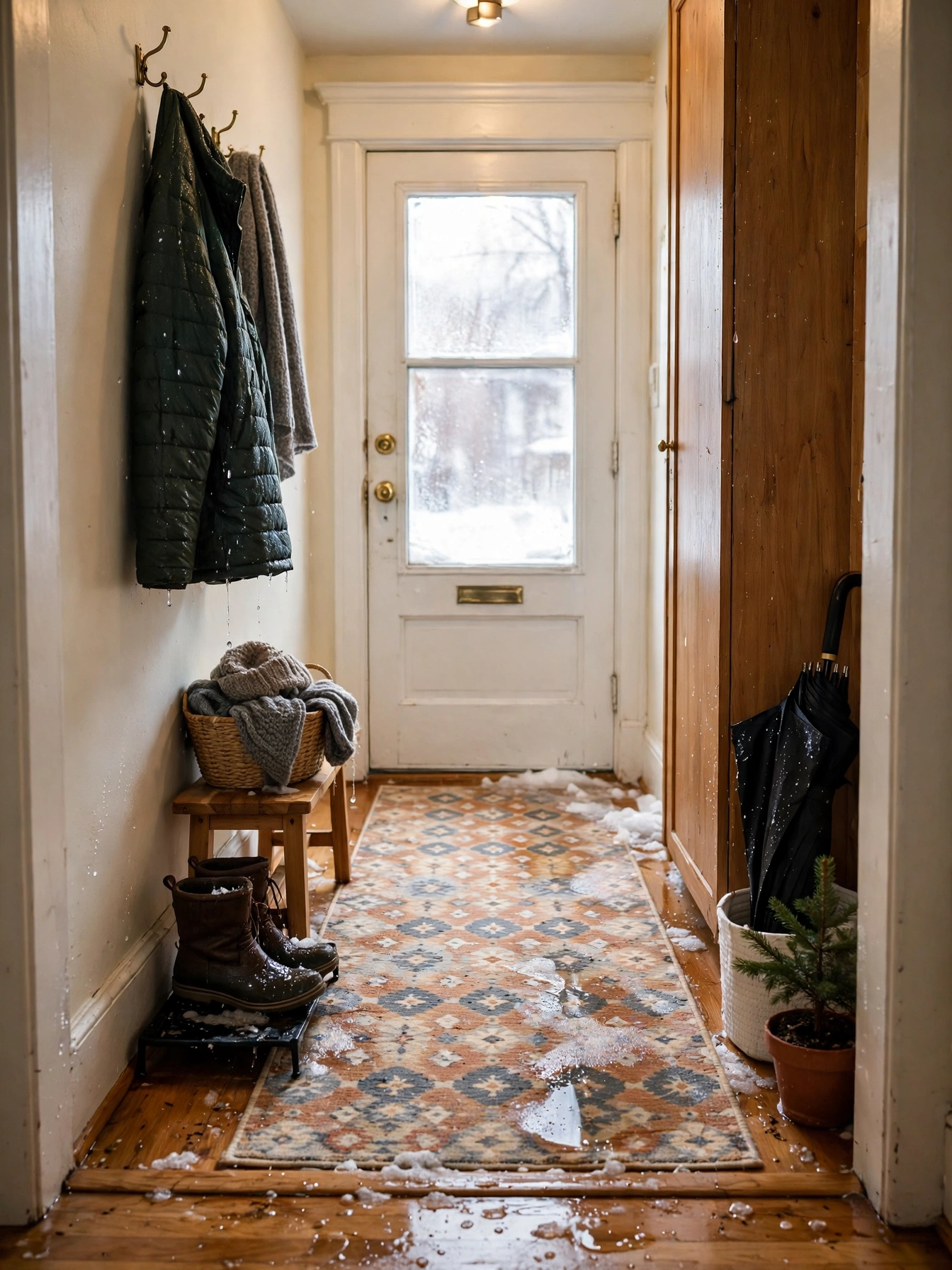
Snow and slush melt off boots for a full hour after you come home, and the puddle travels across hard floors faster than anyone expects. A long washable runner in the entry gives that water somewhere to land and keeps it off the flooring and out of the living room.
Choose a low pile, machine washable runner long enough to cover the path from the door to where boots come off, usually at least 150 cm in a small entry. Dark patterns forgive winter grime between washes, which in the worst weeks can be weekly.
Place the runner so its first step sits exactly where the door opens. If feet land on bare floor before they reach it, the runner protects the wrong patch of ground and the puddles win anyway.
Apartments with pale floors gain the most. The common mistake is a beautiful thick rug that will not fit in the washing machine. Winter entry rugs live a hard life, and washability beats beauty every time.
Set a Boot Tray by the Door
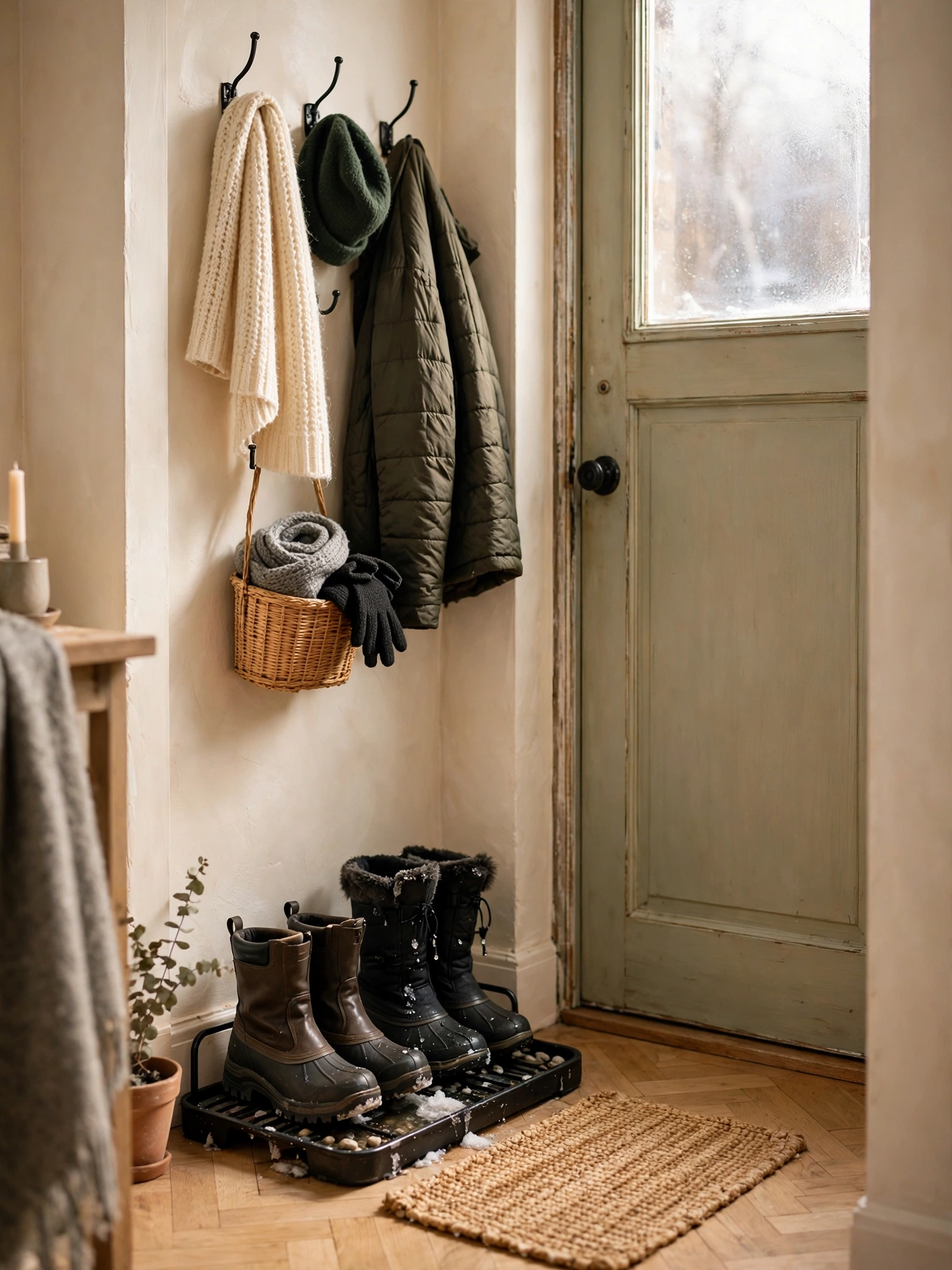
A boot tray is the smallest purchase with the largest effect on a winter entryway. Boots stand on the tray, the meltwater stays inside its raised edge, and the floor around the door stays dry and clean instead of ringed with gritty puddles by February.
Choose a tray that fits your household’s real boot count, with room for one guest pair. Rubber and rigid plastic trays rinse clean under a tap in seconds, and a layer of small stones inside stops boots sliding and looks tidy.
Place the tray against the wall nearest the door, where boots come off naturally. A tray across the room from the door never gets used, because nobody carries dripping boots further than they must.
Anyone with more floor than patience gains from this one. The common mistake is skipping the tray in a mild week and letting the first snow arrive to bare floor. The tray belongs by the door from the first forecast, not after the first puddle. A tray with a small raised lip also lifts out easily for rinsing, which keeps the whole system pleasant enough to maintain through the worst weeks.
Hang a Row of Strong Hooks for Coats
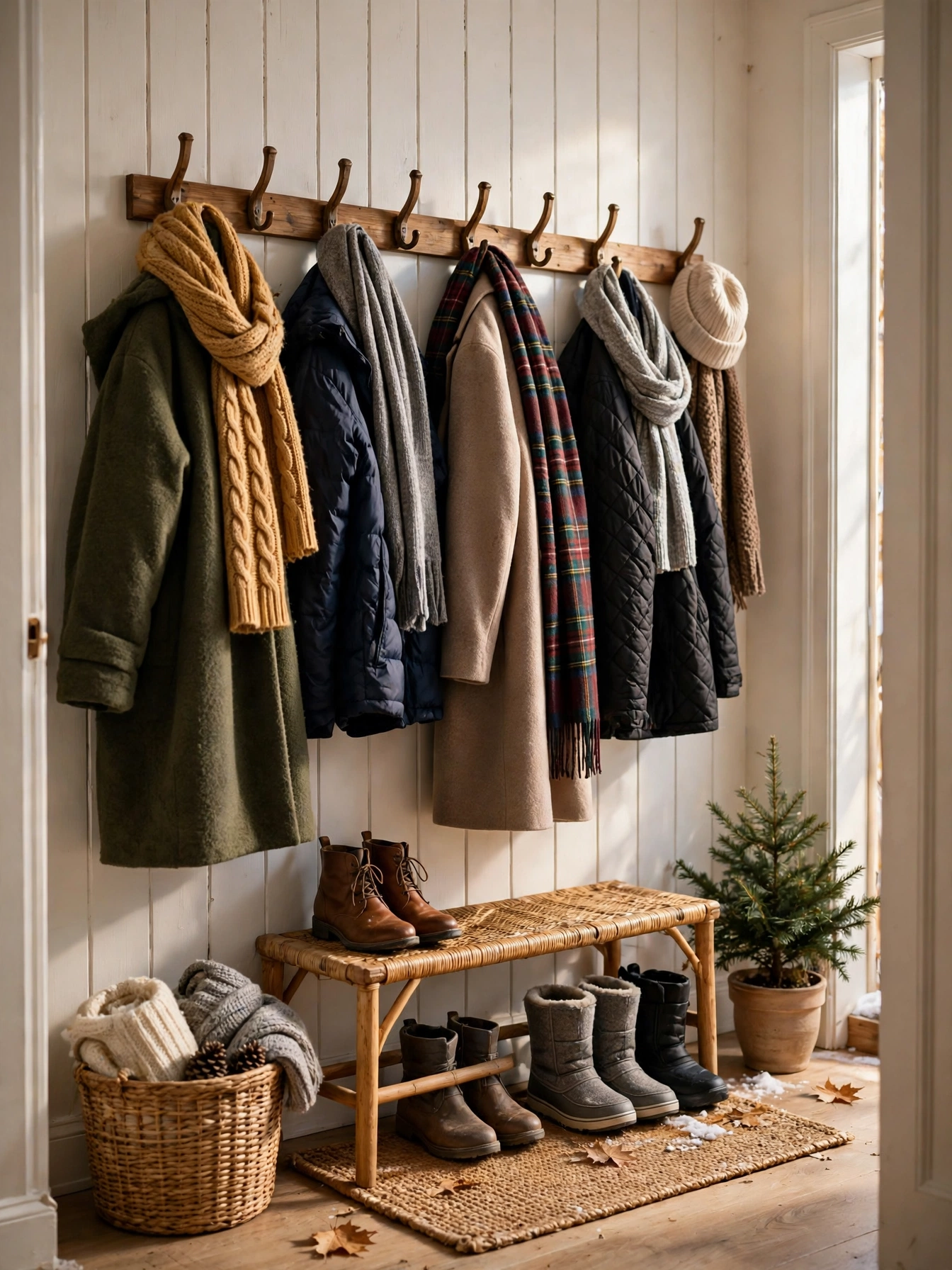
Winter coats are heavy, bulky, and worn daily, and a small entryway closet fills with them by December. A row of strong hooks on the entry wall takes the overflow within arm’s reach of the door, where coats actually get hung instead of draped over chairs.
Fit four to six hooks at mixed heights if children or shorter adults use them, with the main row around 170 cm. Double hooks that take a coat and a scarf together earn their space twice in a small entry.
Renters should choose a hook rail that fixes with two screws into one board, or use heavy duty removable hooks rated for winter coat weight. One rail leaves two small holes to fill, not six.
Households of three or more gain the most. The common mistake is hooks too weak or too shallow for padded coats, which slide off by morning. Buy hooks rated well above a wet coat’s weight, because wet wool is heavy. More renter safe storage tricks live in these renter friendly apartment decor ideas.
Add a Slim Basket for Hats and Gloves
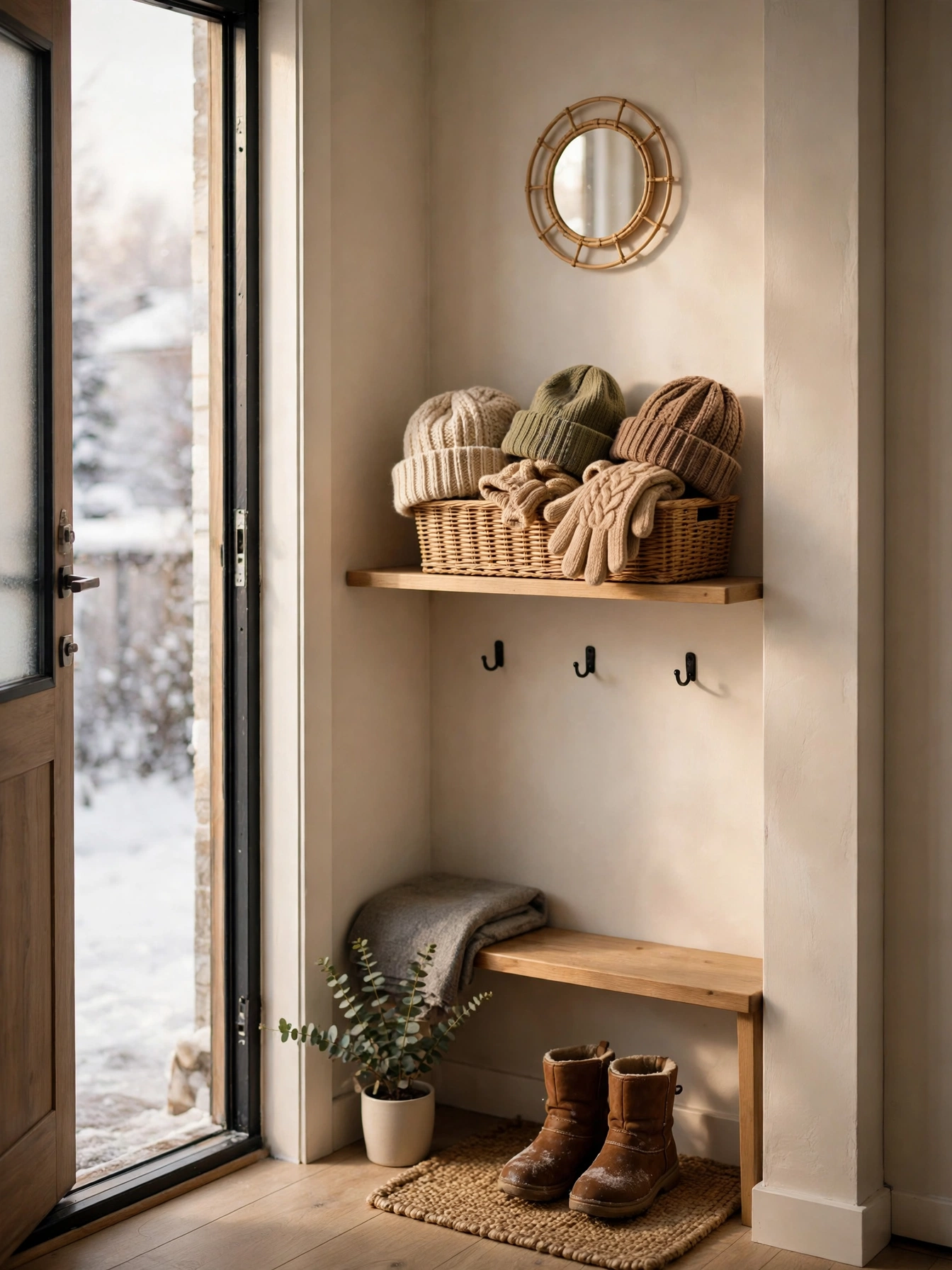
Hats, gloves, and scarves are small enough to lose and essential enough to panic about on a cold morning. One slim basket at the entry, on a shelf or hanging from a hook, gives every small winter item a single home the whole household can learn.
Choose a basket narrow enough for the shelf or wall space you have, with an open top so items drop in one handed while the other hand holds the door. A lid is the enemy of a system used in a hurry.
Give each person a section or a small pouch inside the basket if mornings get competitive. Finding your own gloves without emptying everyone else’s is the difference between a system and a lucky dip.
Families gain the most. The common mistake is one basket per category scattered along the hallway. One basket, one spot, everything in it: the rule only works when it is simple enough to follow half asleep.
Use an Over Door Rack When Wall Space Is Gone
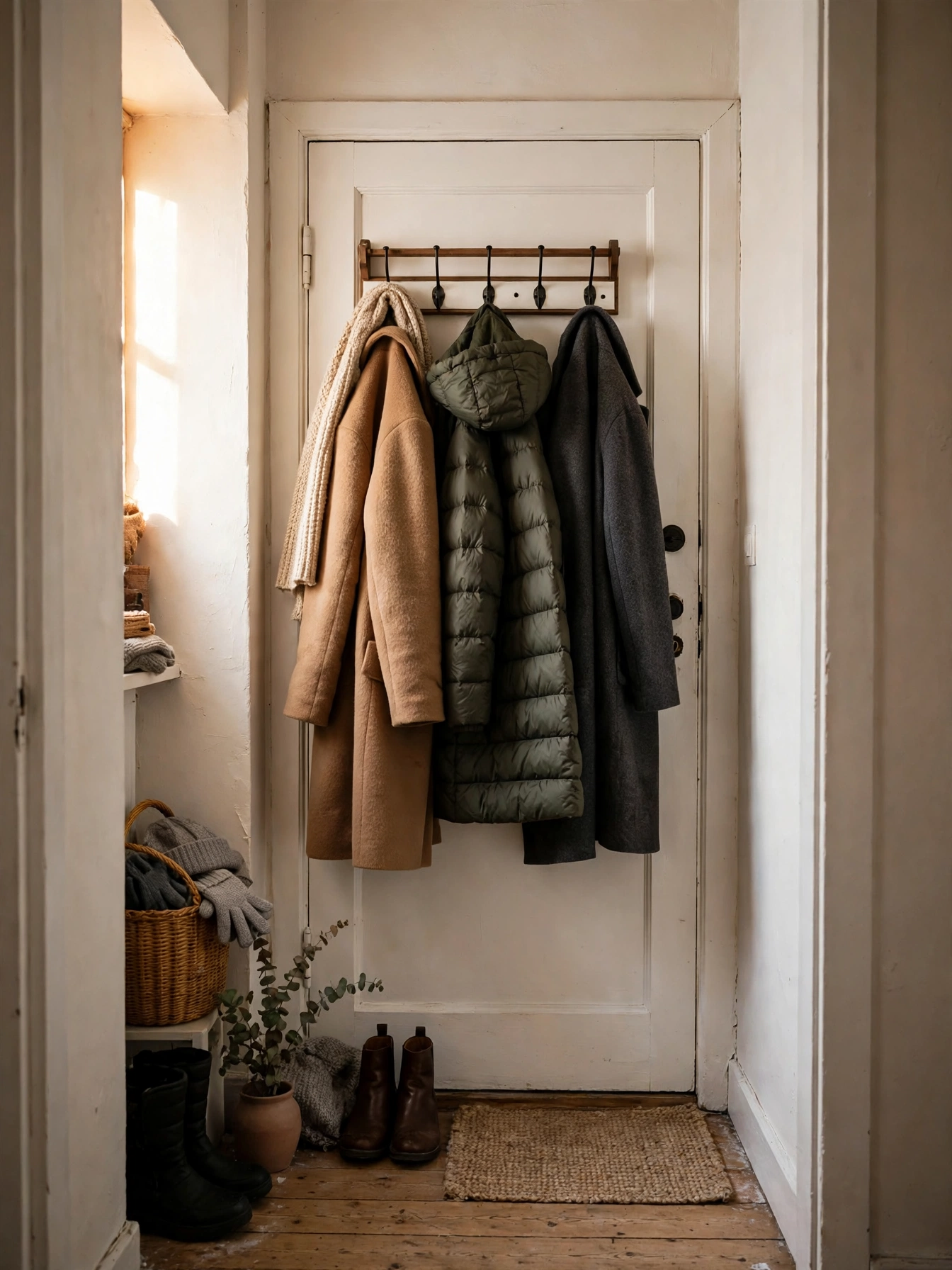
Some entryways have no free wall at all, because the door, the closet, and a radiator divide the space between them. An over door rack turns the back of the door itself into storage, hanging coats and bags on hooks that need no screws and leave no marks.
Choose a rack with padded hooks or a felt strip where it meets the door, so it hangs silently. Thin racks rattle every time the door closes, and the noise teaches everyone to stop using it within a week.
Hang the daily coats here and keep the heaviest wet items on the wall hooks if you have both. Door racks hold plenty, but a door carrying four soaked coats swings heavily and drips onto the floor behind it.
Studio apartments gain the most, where the entry door often backs the bathroom or the wardrobe. The common mistake is a rack so bulky the door stops closing fully. Measure the gap above the door before buying, because some frames leave almost no clearance.
Place a Small Bench or Stool for Boots
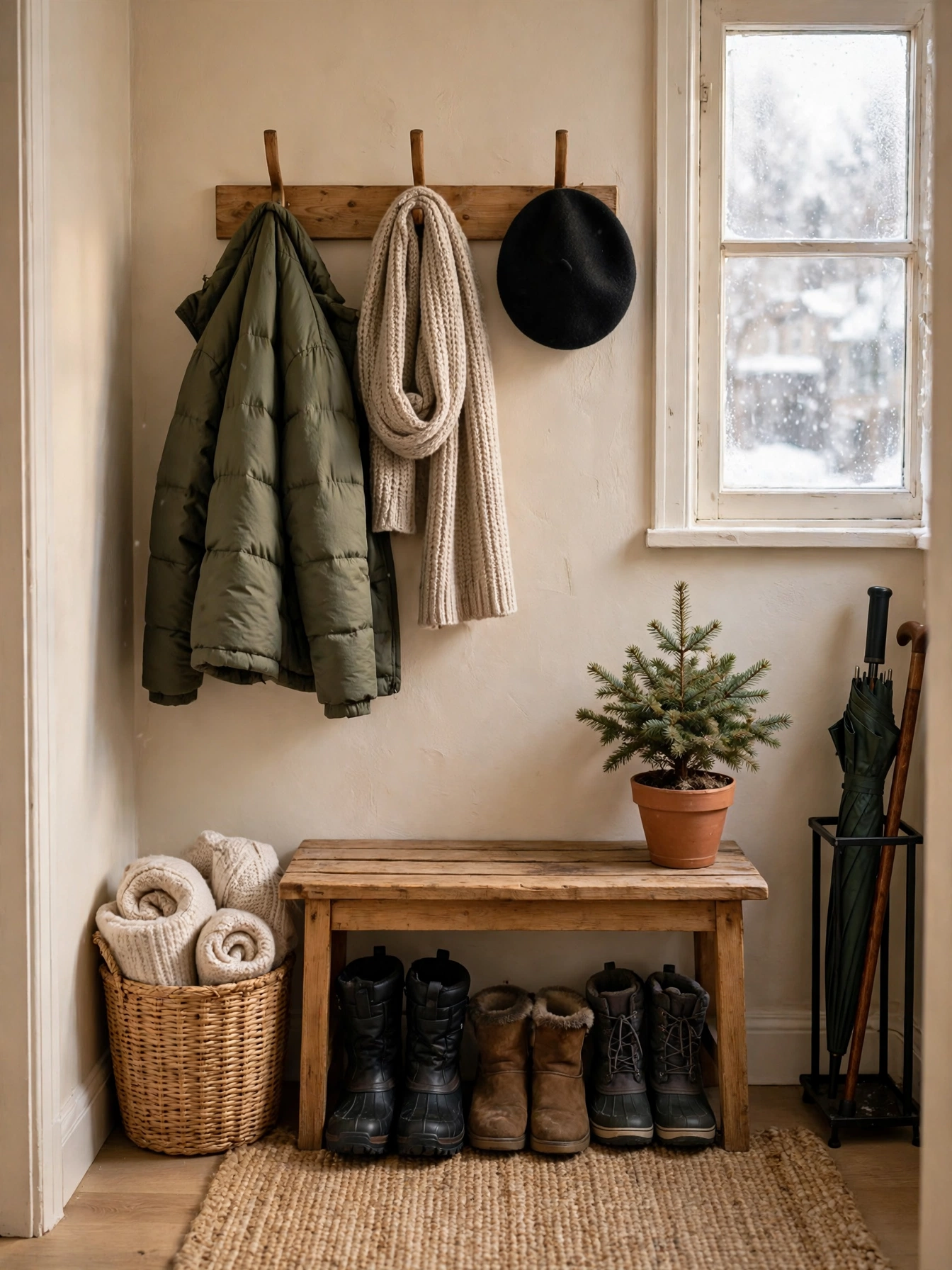
Pulling off winter boots while standing is a small daily misery, and it ends with someone sitting on the floor or hopping against the wall. A small bench or sturdy stool at the entry gives boots a civilized routine and gives the space a piece of furniture that earns its keep twice.
A bench around 80 to 100 cm wide suits most small entries, with boots stored underneath and the boot tray beside it. In the narrowest entries, a single stool that tucks against the wall does the same job.
Choose wood or another wipeable material, because the bench will meet wet gloves, damp bags, and the occasional snow covered parcel. Upholstered benches look lovely and stain by January.
Older relatives and anyone with stiff knees gain the most. The common mistake is a bench so deep it blocks the door swing or the walkway. Measure the door’s full arc before choosing, and keep the bench inside the wall’s line.
Keep a Towel Ready for Wet Floors
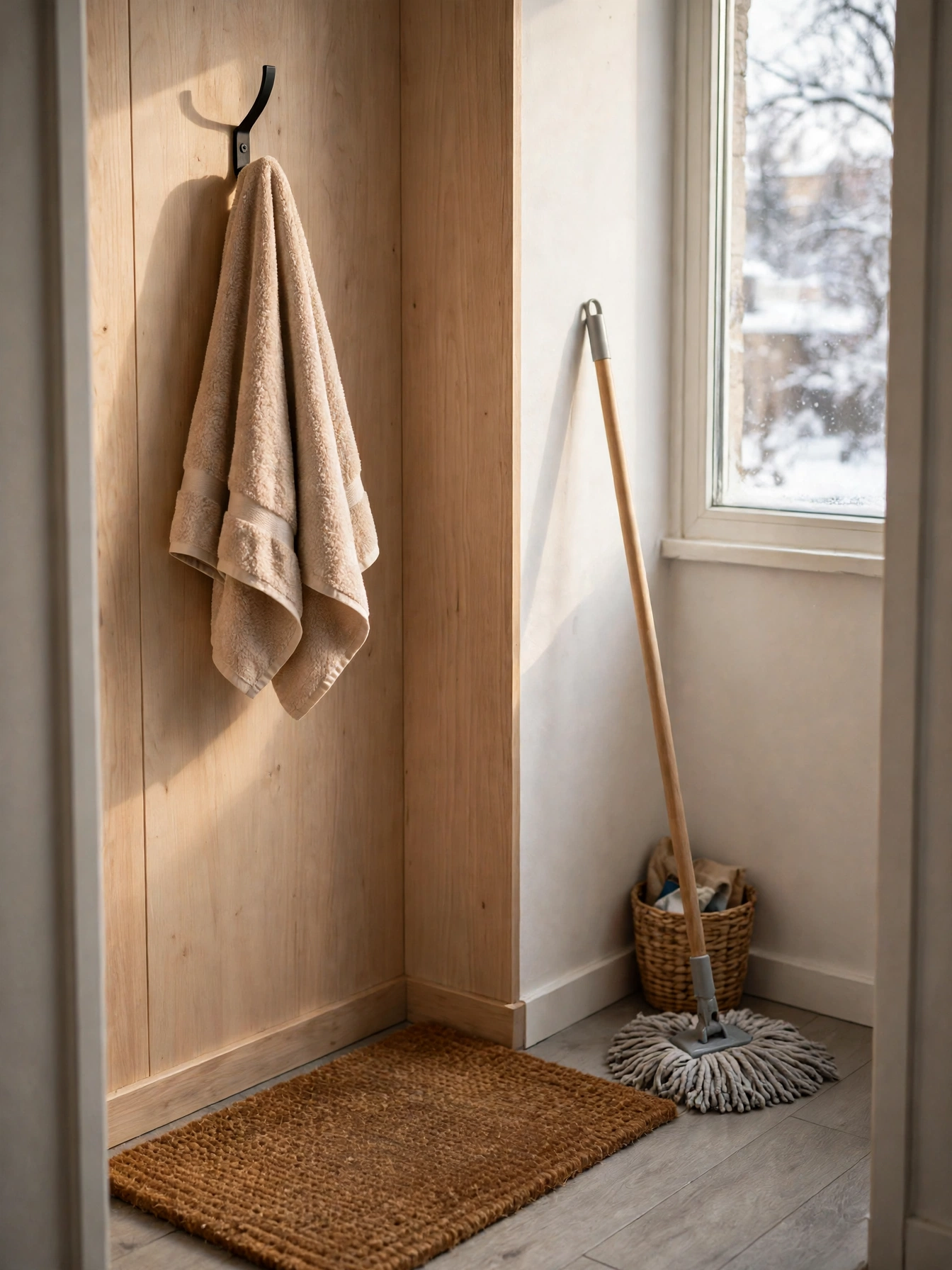
Even with a runner and a tray, the worst winter days beat the system, and meltwater reaches the floor. One old towel kept on a hook at the entry exists for exactly that moment, ready to mop the puddle in ten seconds before it spreads or someone slips.
Use a dark towel you do not mind staining, because entryway floors carry grit and road salt that mark pale fabric permanently. The towel’s job is speed, not beauty, and it should hang where a wet handed person can grab it.
Wring and rehang it after each use, and wash it with the runner. A towel left in a wet heap on the floor becomes part of the problem and starts to smell by the weekend.
Households with dogs gain double, since paws bring in as much water as boots. The common mistake is relying on kitchen roll or the good bathroom towels. Give the entry its own towel and the whole system stays independent.
Add a Mirror to Borrow Light
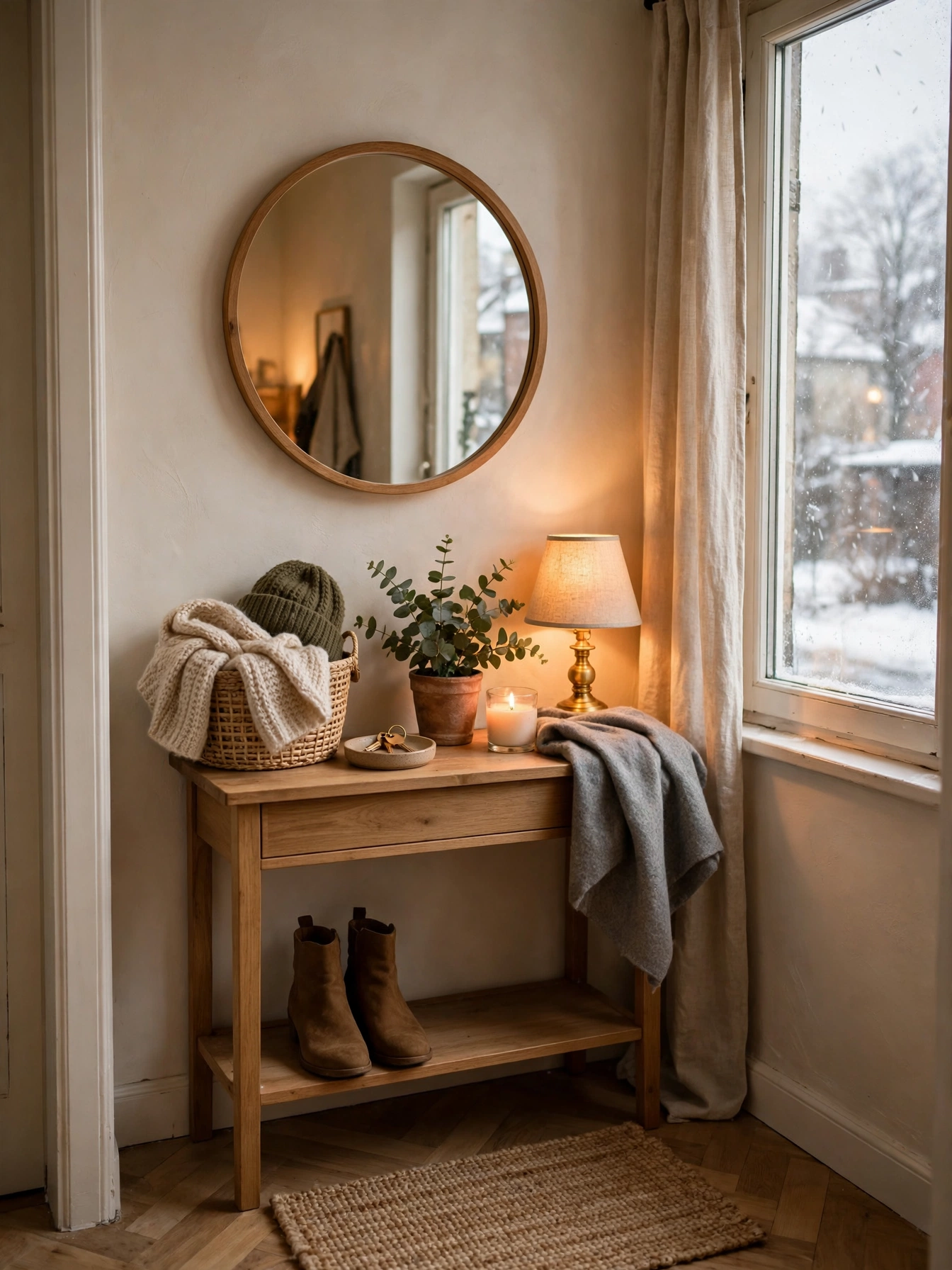
Entryways are often the darkest part of the apartment, with no window and one weak bulb. A mirror above a small shelf or console borrows light from the nearest room, doubles the effect of the entry lamp, and gives you the last check of hat and scarf before you leave.
A round mirror softens a narrow entry full of straight lines, and a size around 50 to 60 cm is large enough to use without crowding the wall. Hang it so its center sits at standing eye level for the household’s average height.
Renters can lean a mirror on a console shelf or hang it from a single strong removable hook if the mirror is light. Check the rating twice with mirrors, because glass is heavier than it looks.
Anyone whose entry opens off a brighter room gains the most. The common mistake is hanging the mirror where it reflects the coat pile. Point it at light and space, not at the busiest wall, or it doubles the clutter instead of the calm. In a windowless entry the mirror also gives the lamp somewhere to send its light, which makes the whole space feel twice as bright.
Use a Closed Cabinet for Visual Calm
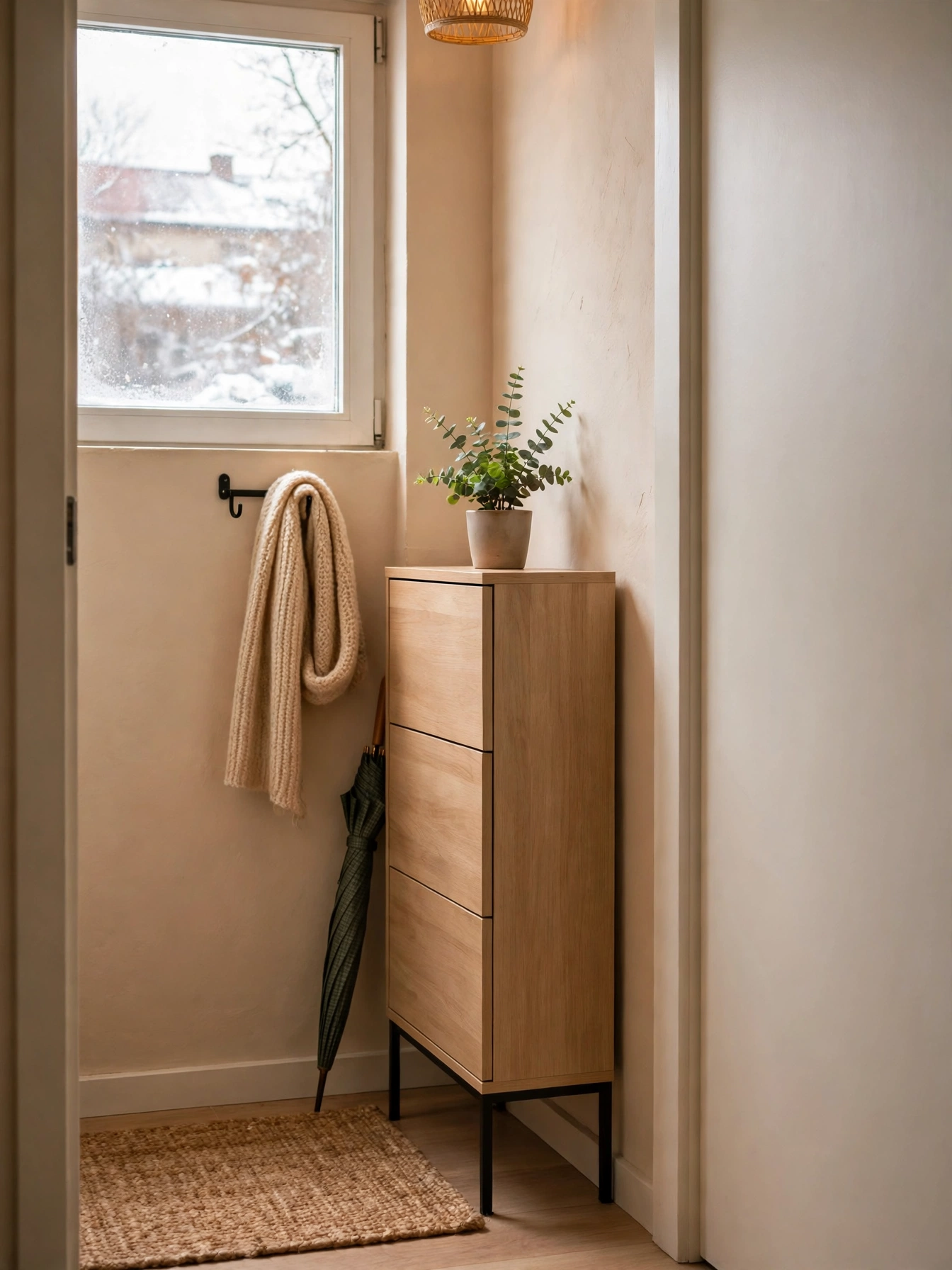
Open shoe racks work in summer and look like a jumble sale in winter, when every pair is bulky, dark, and damp. A slim closed shoe cabinet hides the winter footwear lineup behind doors, and the entry looks calm even on the days when five pairs are drying out.
Choose the slimmest cabinet that fits your pairs, often only 17 to 25 cm deep, and check that winter boots fit its compartments before buying. Many slim cabinets take shoes happily and refuse boots entirely.
Stand the boots that are drying on the tray, and store only dry pairs inside. A closed cabinet full of damp boots smells by the weekend and mildews by the month, so the tray and the cabinet work as a pair.
Small entries that double as the living room wall gain the most. The common mistake is a cabinet door that opens into the walkway and ambushes shins daily. Sliding or top opening compartments suit tight spaces better.
Label One Spot for Each Person
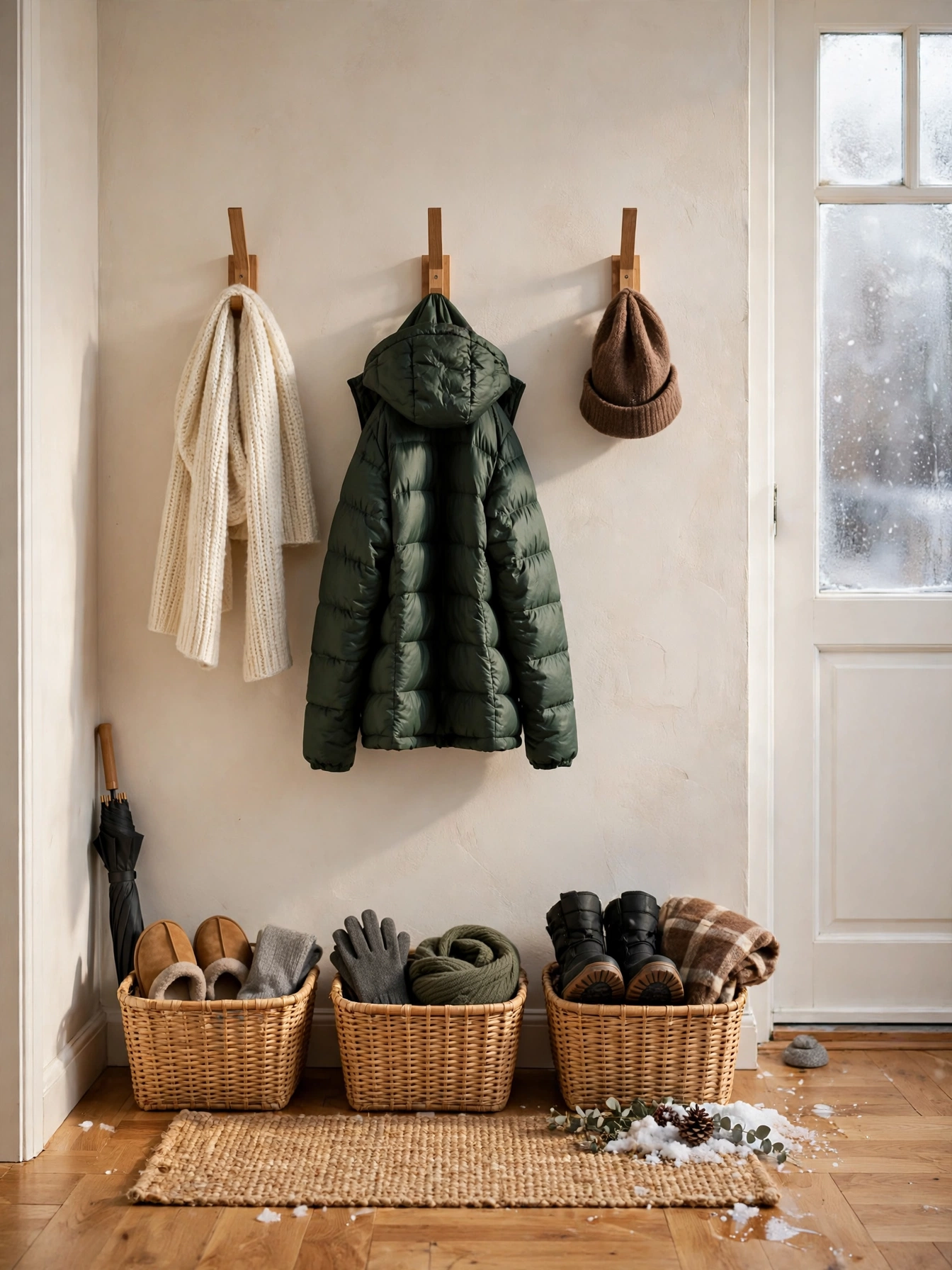
Shared entryways fail when storage is communal and responsibility is not. Giving each person one hook, one basket section, and one boot space makes the system self policing, because a missing glove has exactly one owner and one place it should be.
Mark the spots simply: hooks in a row in age order, or a small tag on each basket. Young children learn their spot in a day, and guests get the spare hook without a briefing.
Keep the rule gentle and total. Everything winter lives in your spot or it lives in your room, and the entry stops accumulating one partner’s scarf collection and the other partner’s four pairs of gloves.
Shared flats gain the most. The common mistake is assigning spots and then storing your own things wherever they land. The system survives only if the person who set it follows it on the tired evenings too. This is the same one home discipline that powers a full january apartment reset later in the season.
Stand an Umbrella in a Tall Narrow Bin
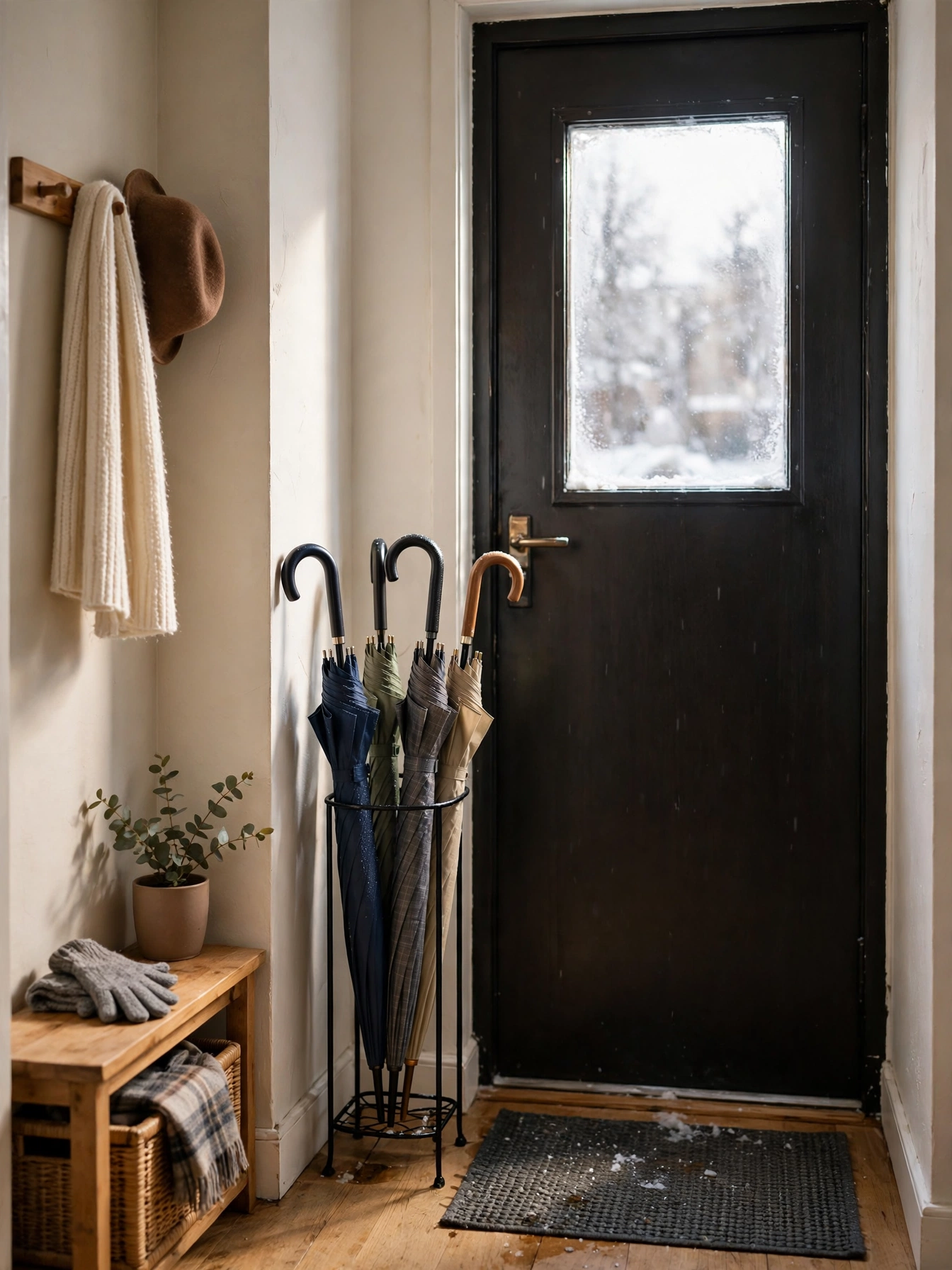
Winter rain joins winter snow in most climates, and a dripping umbrella leaned in a corner leaves a ring on the floor and a stain on the wall. A tall narrow bin or stand at the entry catches the drips and keeps umbrellas upright, visible, and grabbable on the way out.
Choose a stand at least 50 cm tall so long umbrellas stand without tipping, with a drip tray or a waterproof base. In the smallest entries, a tall narrow waste bin does the same job for a fraction of the price.
Place it in the corner the door opens toward, where a wet umbrella arrives first. Empty the base weekly, because standing water goes stale and rusts cheap stands from the inside.
Anyone in a rainy winter climate gains the most. The common mistake is a stand so wide it eats the entry’s only corner. Tall and narrow is the whole point, and the footprint should stay under a dinner plate’s width if it can. A slim stand also leaves room for the boot tray to slide in beside it, which keeps the entry’s wettest items sharing one easy corner.
Add Warm Light at the Door
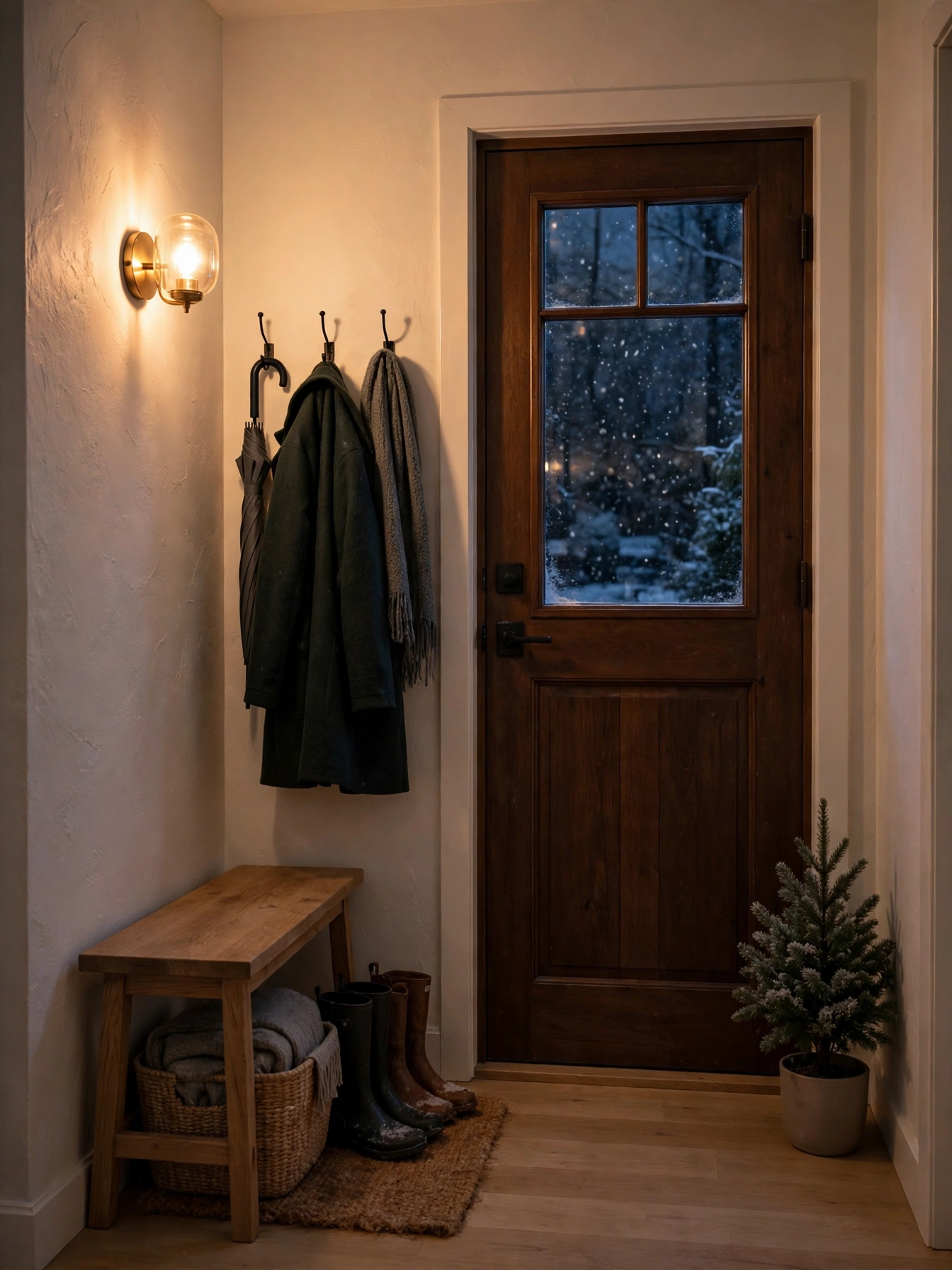
Arriving home to a dark entry in winter, arms full of bags and gloves, is a miserable daily moment. Warm light at the door, from a small wall lamp, a shelf lamp, or a battery light on a sensor, turns the arrival into a welcome and makes every other system here easier to use.
A sensor light is the renter’s best friend, switching on as the door opens and off after you pass, with no wiring and no switches to find with full hands. Warm white keeps the glow kind rather than clinical.
Point light down the entry rather than into the eyes of the person arriving. A lamp at shelf height, shaded, lights boots and hooks without glare.
North facing and windowless entries gain the most. The common mistake is one cold blue bulb in a ceiling fitting, which makes wet coats and tired faces look worse. One warm bulb changes the whole arrival.
Keep a Doormat Outside and Inside
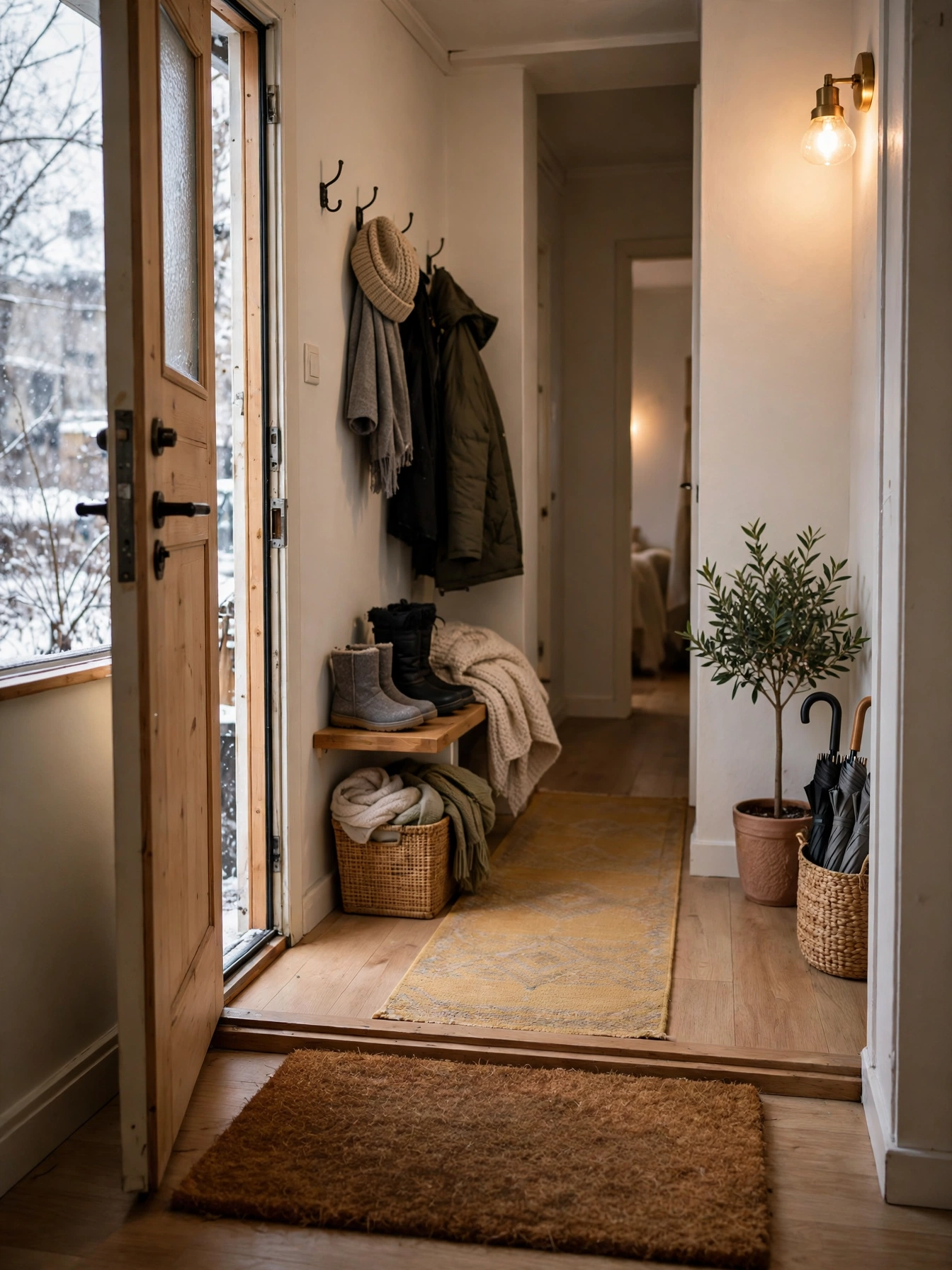
One mat cannot do both winter jobs. The outside mat needs to scrape snow and grit off boots with a rough surface, while the inside mat needs to absorb the melt that remains. Two mats in a row, each built for its own job, stop most of the dirt before it ever reaches the runner.
A coir or rubber scraper mat belongs outside the door where the building allows it, and a washable absorbent mat just inside. Shake the outside mat weekly and wash the inside one with the runner.
Check the inside mat is thin enough for the door to clear it through its whole swing. A mat the door drags on gets kicked into a ridge within days, and ridges trip people carrying bags.
Anyone with light colored flooring gains the most. The common mistake is one decorative mat with a winter greeting doing both jobs badly. Charm is welcome, but scraping and soaking come first, and the greeting can live on the wall instead.
Dry Wet Gear Away From the Heater
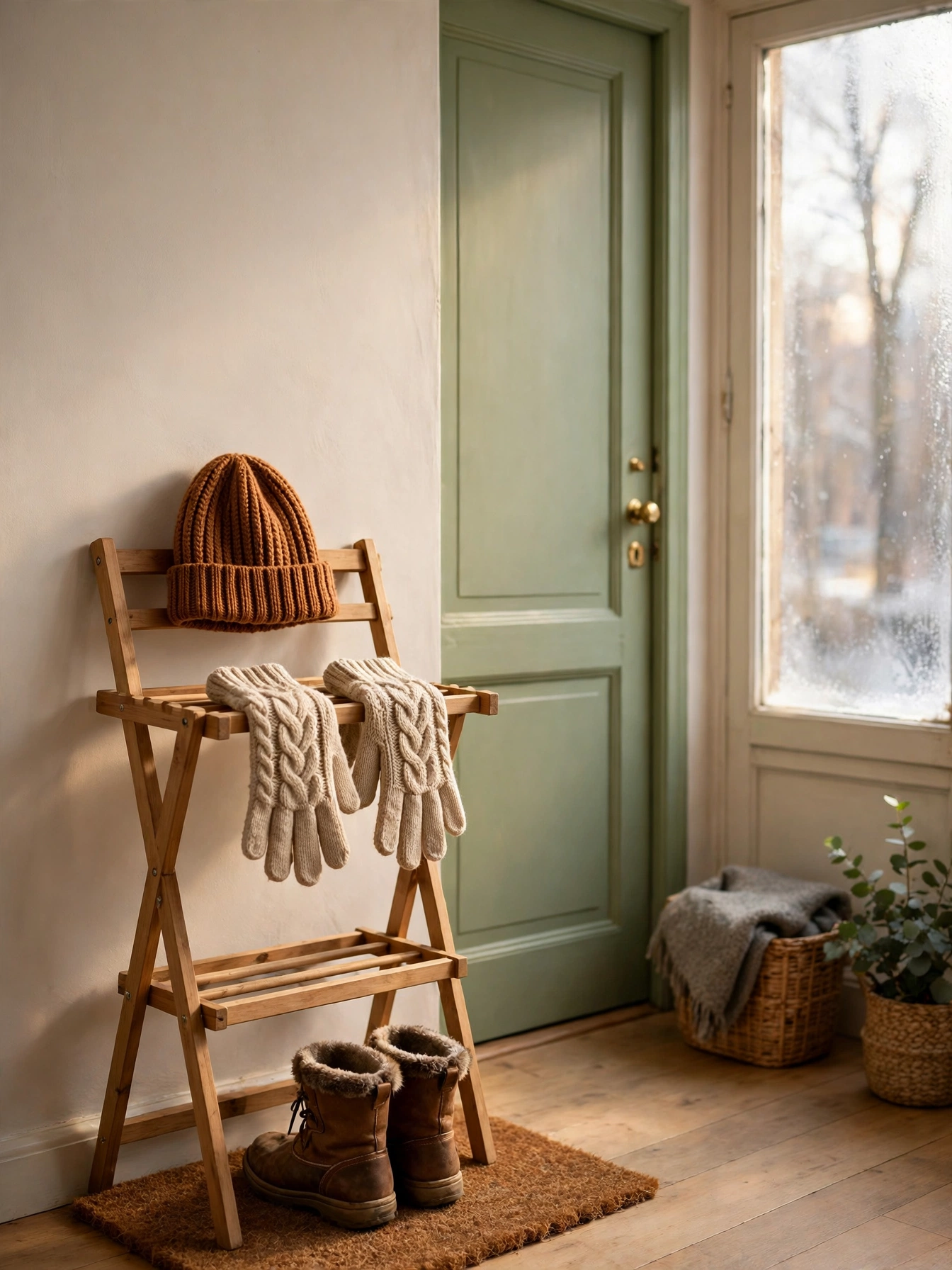
Wet gloves, hats, and boots need drying every evening, and the radiator looks like the obvious answer. Direct heat damages leather, cracks boot linings, and cooks wool into stiffness, so a small folding rack or a rail near, not on, the heat does the job kindly overnight.
A slim folding rack stands beside the radiator in the evening and folds flat behind the door by morning. Boots dry best upside down on short pegs or with newspaper inside, which pulls the moisture out by morning.
Keep the drying spot inside the entry zone rather than migrating wet gear to the bathroom and the kitchen chairs. Winter gear that tours the apartment spreads its drips and its smell to every room.
Households with school age children gain the most, because their gear arrives wettest and most often. The common mistake is sealed plastic boxes for damp items. Airflow dries, plastic ferments, and the difference is obvious by Friday.
Do a Two Minute Nightly Reset
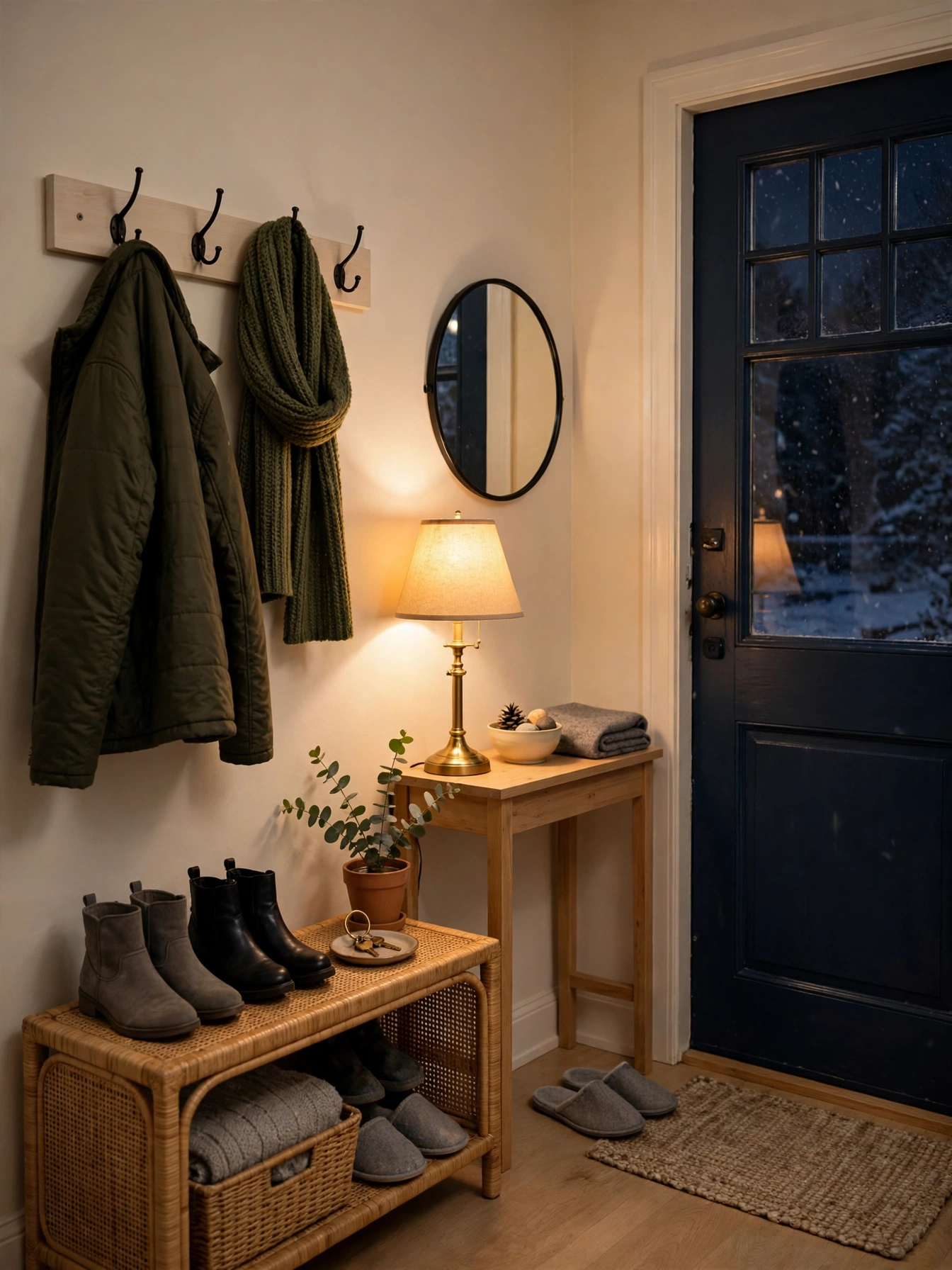
Entryways do not collapse in a day; they drift, one scarf and one pair of boots at a time. A two minute nightly reset stops the drift: shoes onto the tray or into the cabinet, coats onto hooks, small items into the basket, and the floor towel shaken over the mat.
Pair the reset with an existing habit, like locking up or switching the entry light off, and it survives tired evenings. Two minutes is short enough that nobody negotiates with it.
The reset also sets up the morning. Boots dry and waiting, gloves in the basket, keys in their dish, and the coldest part of the day starts calmly instead of with a search party.
Everyone gains, but busy households gain most. The common mistake is the weekly heroic tidy instead of the nightly small one. A week of drift takes an hour to undo, while seven two minute resets cost fourteen minutes total. It also keeps the door area guest ready through the festive weeks covered in the christmas apartment decor guide.
Common Winter Entryway Mistakes to Avoid
One Mat Doing Both Jobs
A single pretty mat neither scrapes boots clean nor soaks up meltwater properly. Give each job its own mat, rough outside and absorbent inside, and the floors stay clean weeks longer.
Coats on the Door Handle Pile
When hooks are missing or full, coats migrate to door handles, chair backs, and the sofa. Every coat needs a hook it can reach in the first three steps inside the door.
Wet Boots on the Bare Floor
Boots left on bare floor ring the entry with gritty puddles that walk through the whole apartment. The boot tray is a small, unglamorous purchase that prevents most of it.
Blocking the Door Swing
Benches, cabinets, and umbrella stands placed inside the door’s arc get hit daily and teach everyone to squeeze past. Measure the full swing and keep every piece of furniture outside it.
Hooks Too High or Too Weak
Hooks that children cannot reach and hooks that drop wet coats both end the same way: everything on the floor. Fit hooks at honest heights and ratings, and the system holds.
Storing Everything at the Entry
The entry should hold daily winter gear only. Ski kit, spare coats, and summer shoes stored there steal the space the daily system needs to breathe.
Budget-Friendly Winter Entryway Tips
Most of the winter entryway runs on cheap workhorses. A boot tray, a washable runner, and one basket cost little and solve the water and clutter problems that make the space feel expensive to fix.
Hooks are the second best spend. A solid rail of hooks costs less than one good coat and serves every coat in the house for years, including the heavy wet ones that break cheap individual hooks.
Skip the furniture until the basics work. A bench is lovely, but a tray and hooks change daily life more, and a stool you already own can test the bench idea for a month before you buy.
Use what the apartment already has. A tall waste bin becomes the umbrella stand, a spare towel becomes the floor towel, and a storage box becomes the glove basket while you learn what the entry really needs.
Buy winter entry pieces in early autumn or the January sales. Trays, mats, and hook rails sell at their cheapest just outside the season, and plain dark colors never date.
A Weekend Plan for a Winter Ready Entryway
Start on Saturday morning with a full clear out. Take everything out of the entry, including the summer shoes and the things that live there by accident, then clean the floor properly while it is empty for once.
Fit the fixed pieces next: the hook rail or over door rack, the mirror, and the light. These change where things live, so they go in before anything returns to the space.
Lay the water defenses in order: outside mat, inside mat, runner, and boot tray. Then walk the route in socks, from the door to the hooks, and adjust anything your feet tell you is in the wrong place. That short walk is the cheapest design tool you own, because an entryway tells the truth through your feet faster than through your eyes.
Finish on Sunday by loading the system: coats on hooks, boots on the tray, basket filled, towel hung, and keys given a dish. Walk out and come back in once, using everything as a stranger would, and fix whatever fails that test.
FAQ
How do I organize a winter entryway with almost no floor space?
Go vertical and use the door. Hooks on the wall, a rack on the door’s back, a slim basket on a hook, and a boot tray tucked against the wall handle everything without a single piece of furniture.
Can renters fit strong coat hooks without drilling?
Yes. Heavy duty removable hooks rated for coat weight, over door racks, and hook rails that hang from two fixings all work. Check the rating against a wet winter coat, not a summer jacket.
How do I stop puddles forming by the front door?
Combine three small things: a scraper mat outside, an absorbent mat inside, and a boot tray where boots come off. Add the floor towel for the worst days, and the puddle never gets started. A nightly shake of the inside mat takes ten seconds and keeps most of the grit from ever reaching the runner.
How many hooks does a small entryway need?
At least one per person plus two spare, one for a guest and one for the bag or scarf of the day. Six hooks serve most small households through the whole winter. Fit two of them at a lower height if children hang their own coats, and the morning routine speeds up for everyone.
What can I use instead of a mudroom in an apartment?
Build a mudroom’s jobs into the entry wall: a tray for wet boots, hooks for coats, a basket for small items, and a towel for the floor. The jobs matter, not the room.
How do I keep the entryway smelling fresh with wet gear around?
Airflow and nightly drying do most of it. Dry gear on a rack rather than in closed boxes, wash the runner and towel weekly, and empty the umbrella stand’s base before it goes stale.
Conclusion
Winter entryway ideas succeed when they plan for water first and tidiness second. A runner and a tray catch the melt, hooks take the coats, one basket swallows the small things, and two minutes each night keeps the whole system honest until spring.
Build the route in the order you use it: door, mat, tray, hooks, basket. When every winter item has a place inside the first three steps, the rest of the apartment stays clean and calm almost by itself.
Set it up before the next cold week arrives. The first time you come home through snow to a dry floor and an empty hook waiting for your coat, the small effort will feel fully paid back.