
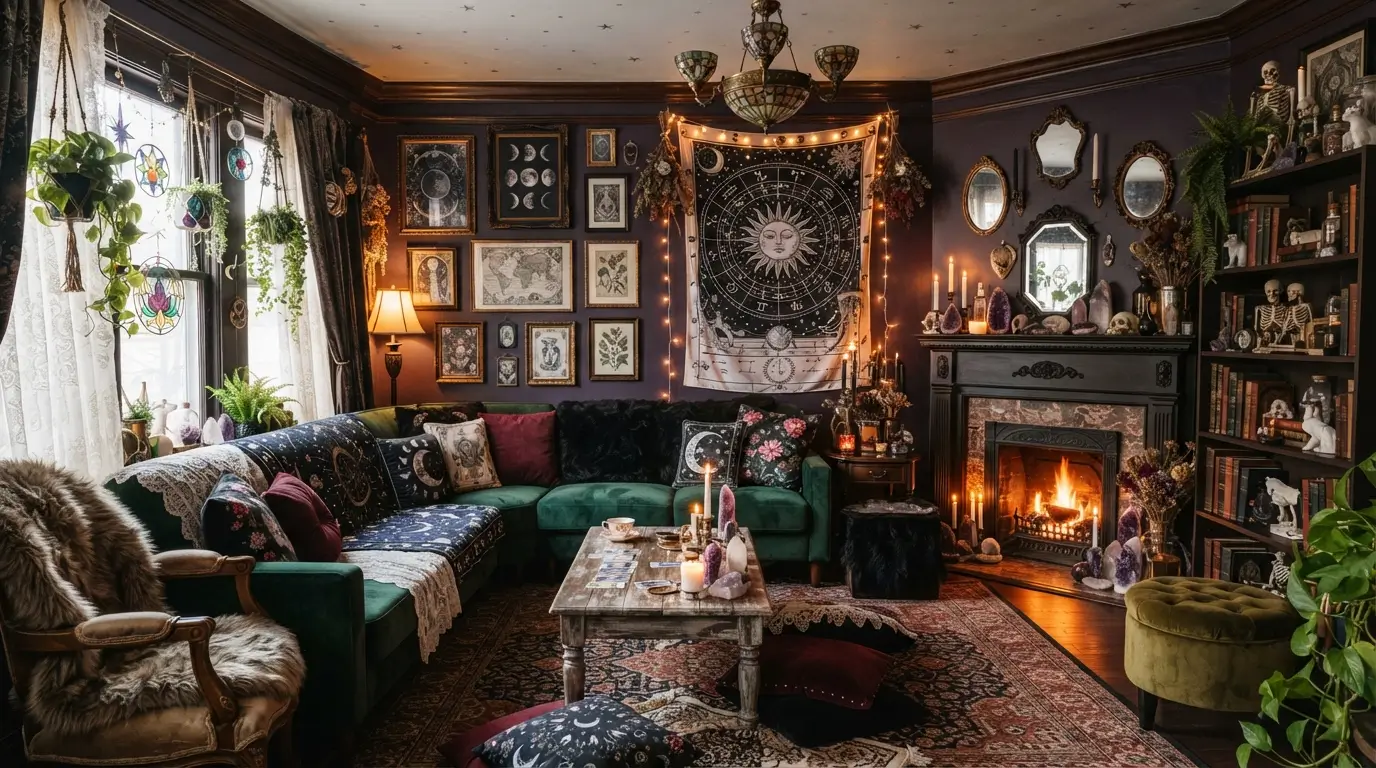

Whimsigoth apartment style blends the mystery of gothic interiors with the softness of vintage bohemian decor. Instead of filling every corner with black furniture and novelty symbols, the look relies on deep color, warm light, curved shapes, celestial details, aged finishes, and objects that feel collected over time. Beginners should start with one color story and repeat it through textiles, lighting, and artwork. That approach keeps the apartment expressive while preventing clutter from taking over.
What Is the Easiest Way to Style a Whimsigoth Apartment?
Start with a dark but controlled palette, add warm layered lighting, and mix vintage-looking furniture with soft fabrics. Choose two deep colors, one warm neutral, and one metallic finish. For example, pair plum and forest green with cream walls and antique brass. Use removable wallpaper, thrifted frames, renter-safe hooks, and washable slipcovers to make changes without risking a deposit. Keep large furniture practical and let smaller pieces carry the theme. Someone decorating a studio can use a plain sofa, a dark green throw, a carved side table, and a cluster of framed celestial prints rather than buying an oversized Gothic set.
Build a Deep Color Palette Before Shopping
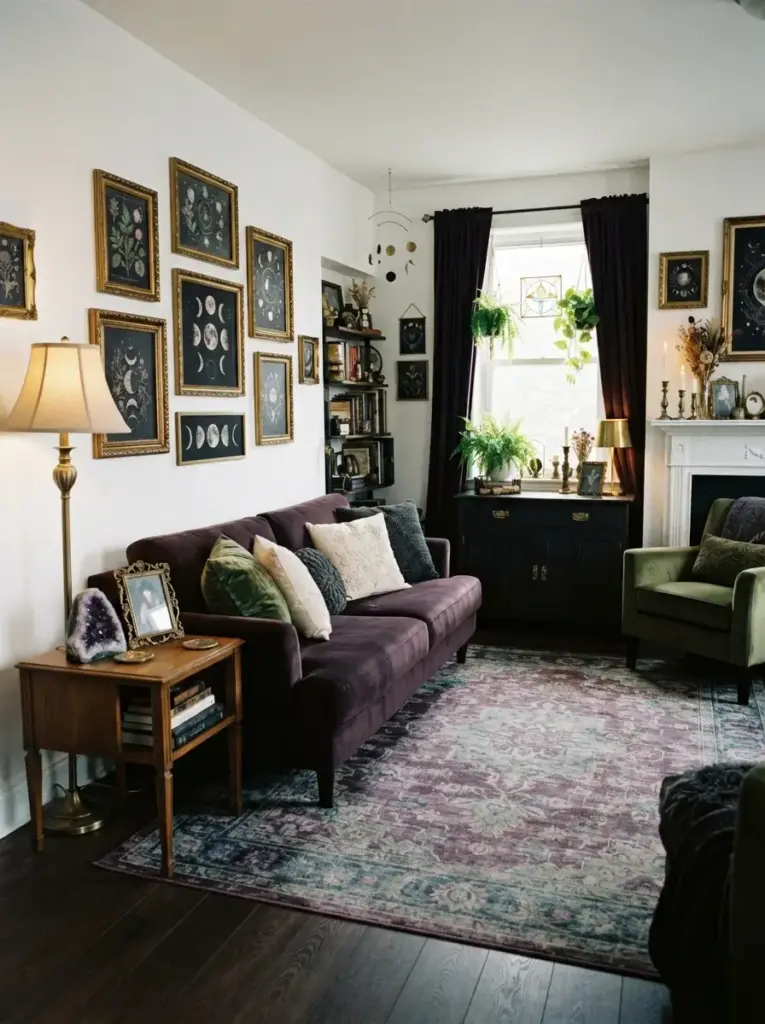
Color planning prevents a Whimsigoth Apartment from looking like a collection of unrelated dark objects. Choose two main shades, one lighter balancing color, and one metal finish before buying decor. Strong combinations include aubergine with moss green, midnight blue with burgundy, or charcoal with muted teal. Cream, mushroom, dusty rose, and warm beige can keep the room from feeling closed in. Antique brass, aged gold, blackened bronze, or pewter work better than mixing every metallic finish in the same space. Renters with white walls can still create depth by using dark curtains, rugs, bedding, and art instead of paint.
Visual repetition makes the palette convincing. Place the darkest color in at least three areas, such as a rug, two cushions, and a framed print. Repeat the metal finish on lamp bases, picture frames, and cabinet knobs. Someone who loves purple might use plum velvet curtains, a faded floral rug with violet details, and two amethyst glass candleholders. Avoid buying every item in the same shade because the room can feel flat and overly matched. Varying tones within the same family create a layered, lived-in result. Color planning is especially useful for beginners who tend to make impulse purchases and later struggle to make the pieces work together.
Use Warm Layered Lighting Instead of One Ceiling Light
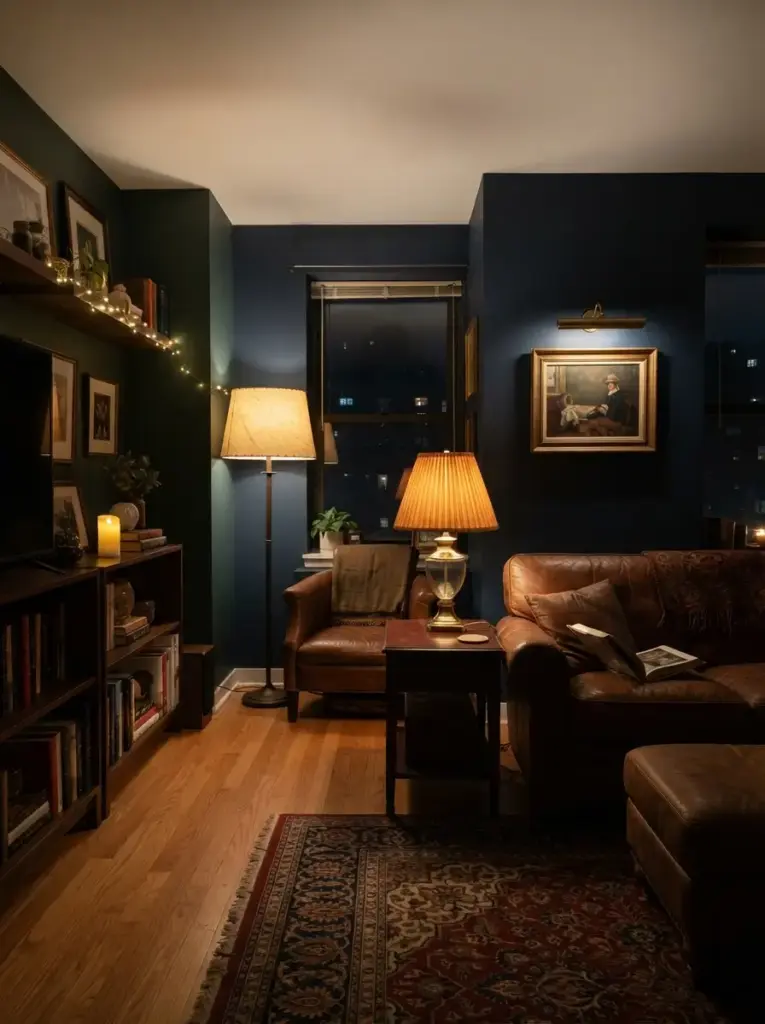
Lighting determines whether dark decor feels inviting or gloomy. Replace reliance on a single overhead fixture with three levels of light: general light, task light, and accent light. General light can come from a dimmable ceiling bulb or a shaded floor lamp. A task light belongs beside a sofa, reading chair, desk, or bed. Accent light can come from a small table lamp, battery-powered picture light, or LED candle. Bulbs between 2200K and 2700K create a warm glow that flatters plum, green, navy, and antique wood. Cooler bulbs around 4000K often make a gothic room feel harsh and can expose every mismatch in the color palette.
Lamp shades matter as much as bulbs. Pleated fabric shades, amber glass, smoked glass, and parchment-style shades soften the light and add character. Renters can use plug-in wall sconces with cord covers instead of hardwired fixtures. Small apartments benefit from wall-mounted or narrow floor lamps because they save surface space. Try placing one lamp near eye level and another lower on a shelf to avoid a flat lighting scheme. Candlelight effects also work well, but flameless candles are safer around curtains, pets, and crowded shelves. Layered lighting suits anyone who wants the apartment to feel calm at night without making daytime tasks difficult.
Create a Gothic Gallery Wall With Personal Meaning
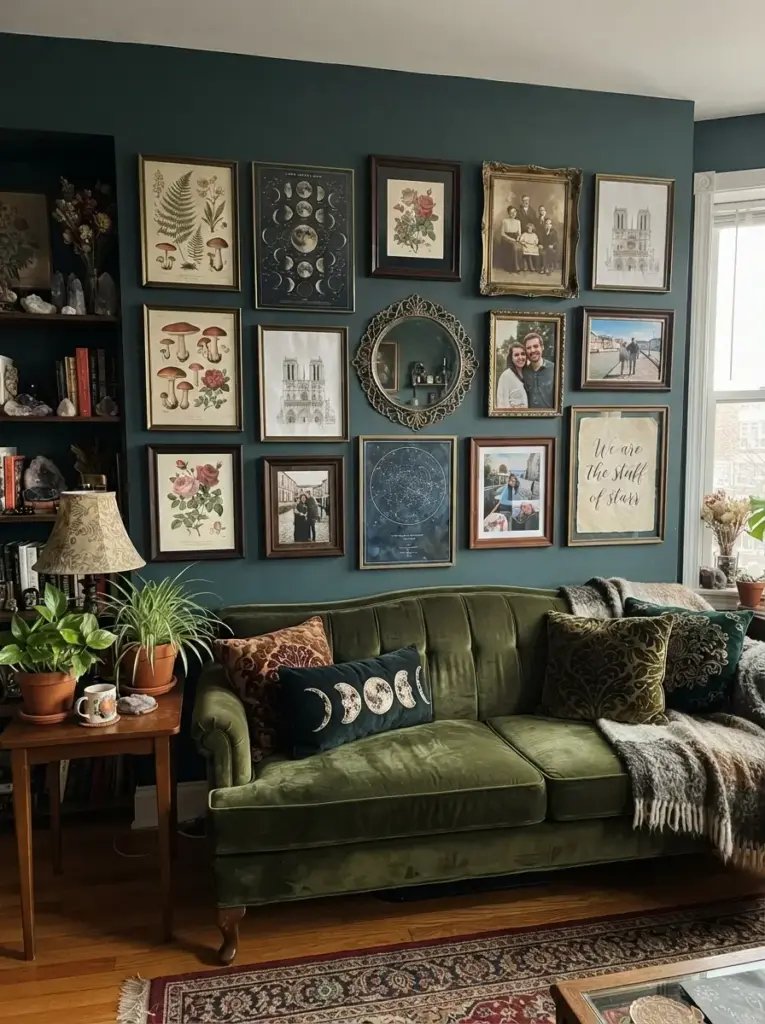
Gallery walls give a Whimsigoth Apartment personality while using very little floor space. Combine botanical illustrations, moon charts, vintage portraits, architectural sketches, antique mirrors, and personal photographs. Real meaning matters more than filling the wall with random occult graphics. Someone interested in astronomy could frame public-domain star maps, a photograph of the night sky, and a handwritten quote from a favorite book. Another person might mix family photos with pressed flowers and old postcards. Keeping one shared feature, such as black frames or antique brass accents, helps different subjects feel connected.
Layout planning keeps the display from becoming chaotic. Trace each frame onto paper, tape the shapes to the wall, and adjust the arrangement before hanging anything. Leave roughly two to three inches between most pieces. Center the grouping over a sofa, console, bed, or desk rather than floating it in an unrelated corner. Removable picture strips work for lightweight frames, while heavier mirrors may need approved anchors. Gallery walls work best for renters, collectors, and beginners who want a strong focal point without buying large furniture.
Add Velvet in Small Controlled Doses
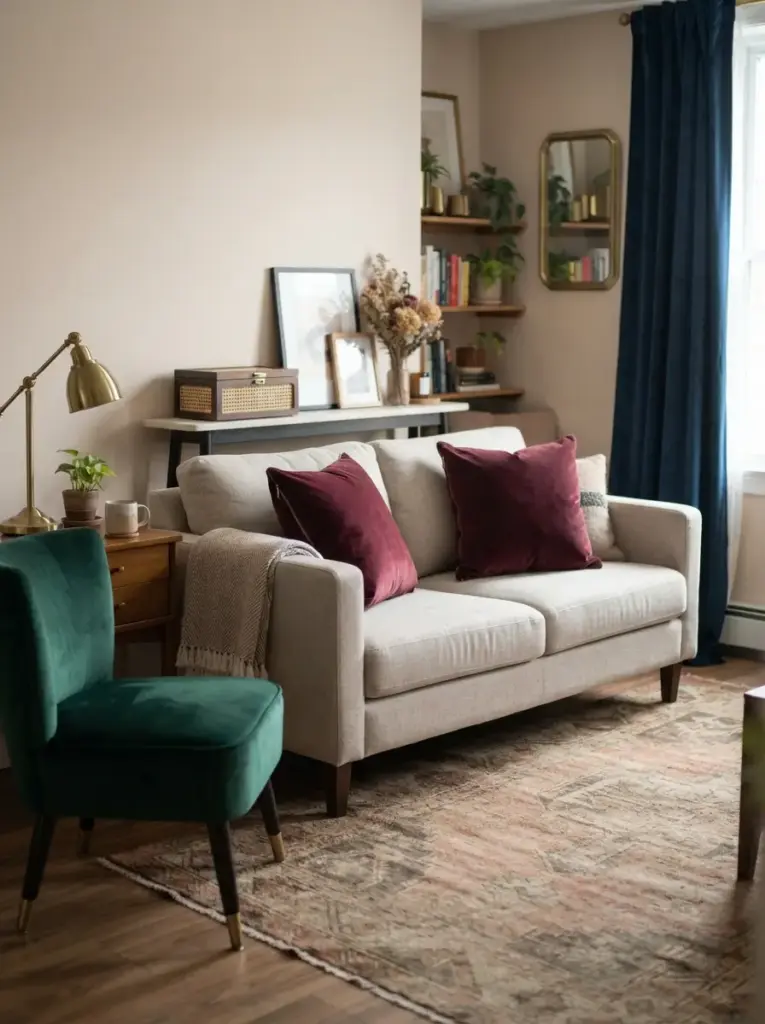
Velvet brings depth because its surface changes as light moves across it. Large velvet sofas can look beautiful, but they are expensive, heavy, and difficult to maintain in a small rental. Smaller applications offer the same richness with less risk. Use velvet cushion covers, a narrow bench, a headboard cover, curtains, or a single accent chair. Deep green, oxblood, plum, midnight blue, and warm brown are practical choices because they pair easily with wood and brass. Washable or zippered covers are worth choosing in homes with pets, children, or frequent guests.
Texture balance stops velvet from making the room feel too formal. Pair it with washed linen, cotton, wool, cane, or unfinished wood. For example, place two burgundy velvet pillows on a neutral linen sofa and add a faded kilim-style rug beneath it. Keep shiny synthetic velvet away from strong daylight if possible because the fabric can look uneven and may fade. Someone decorating on a budget can buy secondhand velvet curtains and turn the best sections into cushion covers. Controlled use suits small-space decorators who want richness without sacrificing practicality or making every surface feel heavy.
Choose Curved Furniture and Vintage Silhouettes
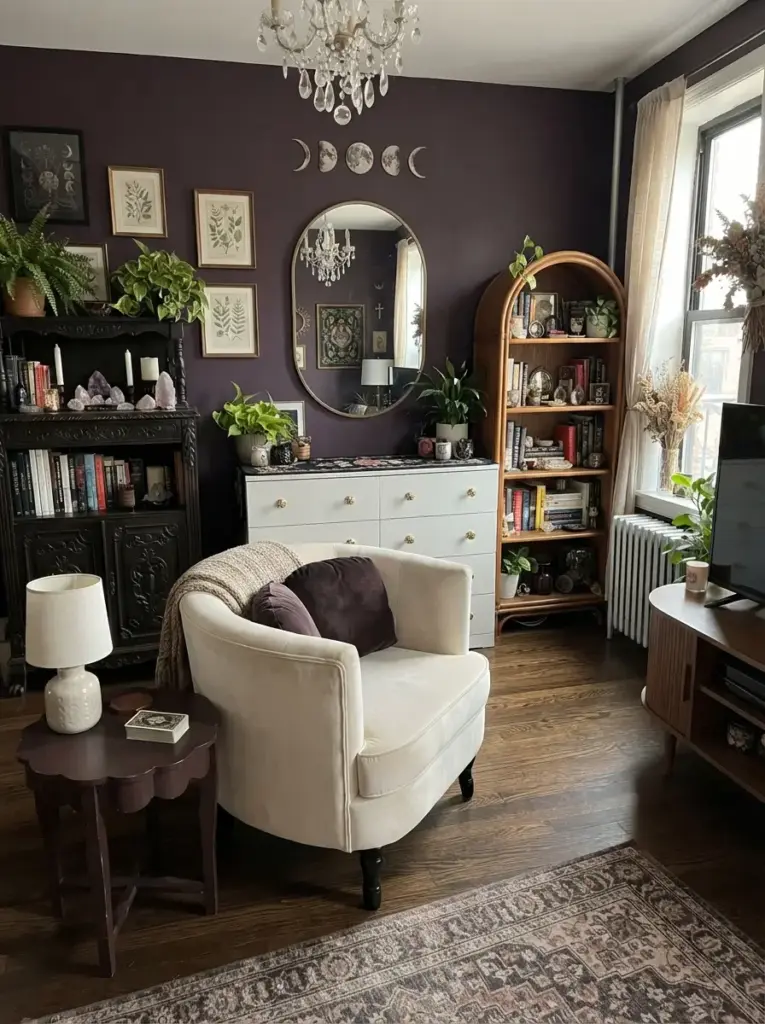
Whimsigoth interiors feel more convincing when furniture includes curves, carved edges, or unusual profiles. Straight modern pieces can remain, but one or two softer silhouettes will change the room. Look for a round pedestal table, a scalloped side table, an arched bookcase, a curved-back chair, or a vintage-style headboard. Furniture does not need to be genuinely antique. A simple modern dresser can work when paired with ornate knobs, an oval mirror, and a dark runner. Small apartments should prioritize pieces that provide storage, such as a carved cabinet, a lift-top coffee table, or a bed with drawers.
Scale remains essential. Oversized wingback chairs and massive wardrobes can block movement and make a rental feel smaller. Measure doorways, walking paths, and wall widths before shopping. Leave at least 30 inches for major walkways when possible, and keep furniture away from radiators or air vents. Someone with a narrow living room might choose a compact curved chair instead of a full chaise. Vintage silhouettes are best for people who want character but still need the apartment to function for daily life.
Layer Rugs to Add Depth Without Permanent Changes
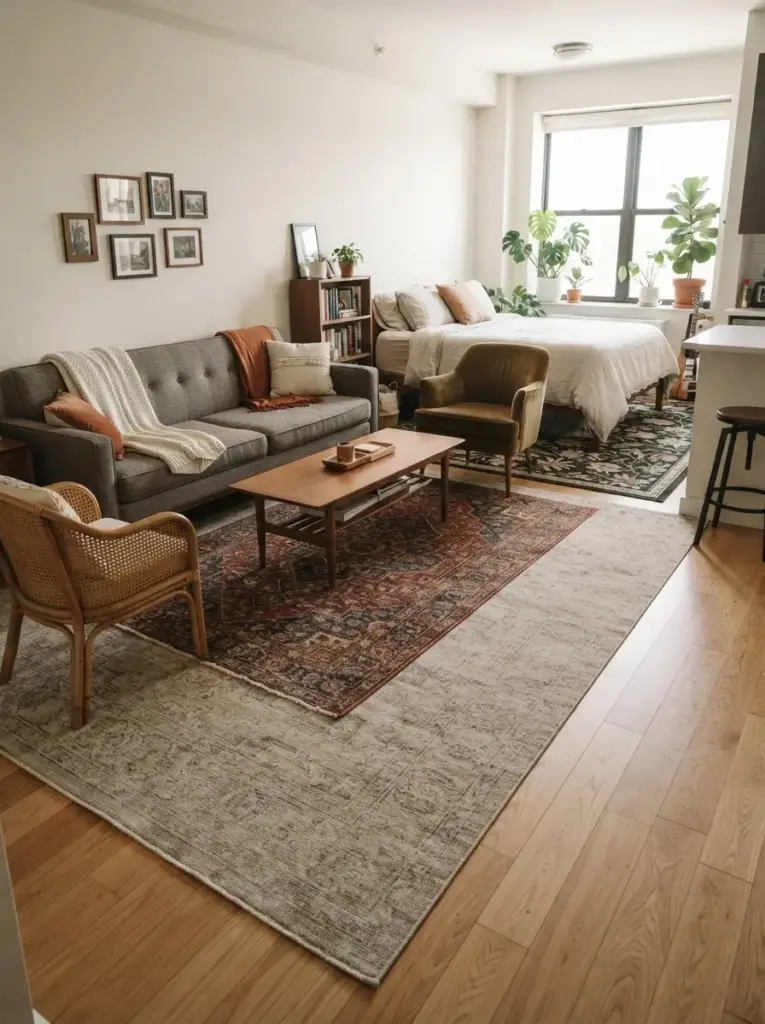
Rugs are among the most useful rental-friendly tools because they cover plain flooring, define zones, and introduce color. Choose a large neutral or faded base rug, then layer a smaller patterned rug where you want extra focus. In a studio, one rug can define the seating area while another marks the bed or reading corner. Persian-inspired patterns, distressed florals, muted geometrics, and dark botanical motifs fit the style without looking like costume decor. Low-pile rugs are easier to clean and less likely to interfere with doors.
Correct sizing improves the room immediately. In a living area, at least the front legs of the sofa and chairs should sit on the rug. Tiny rugs floating in the center make furniture look disconnected. Under a bed, the rug should extend far enough to feel comfortable when stepping down, usually 18 to 24 inches on exposed sides. Use non-slip pads to prevent bunching and protect the floor. Budget decorators can layer a smaller vintage rug over an inexpensive jute or flatweave base.
Bring in Dark Botanical Patterns
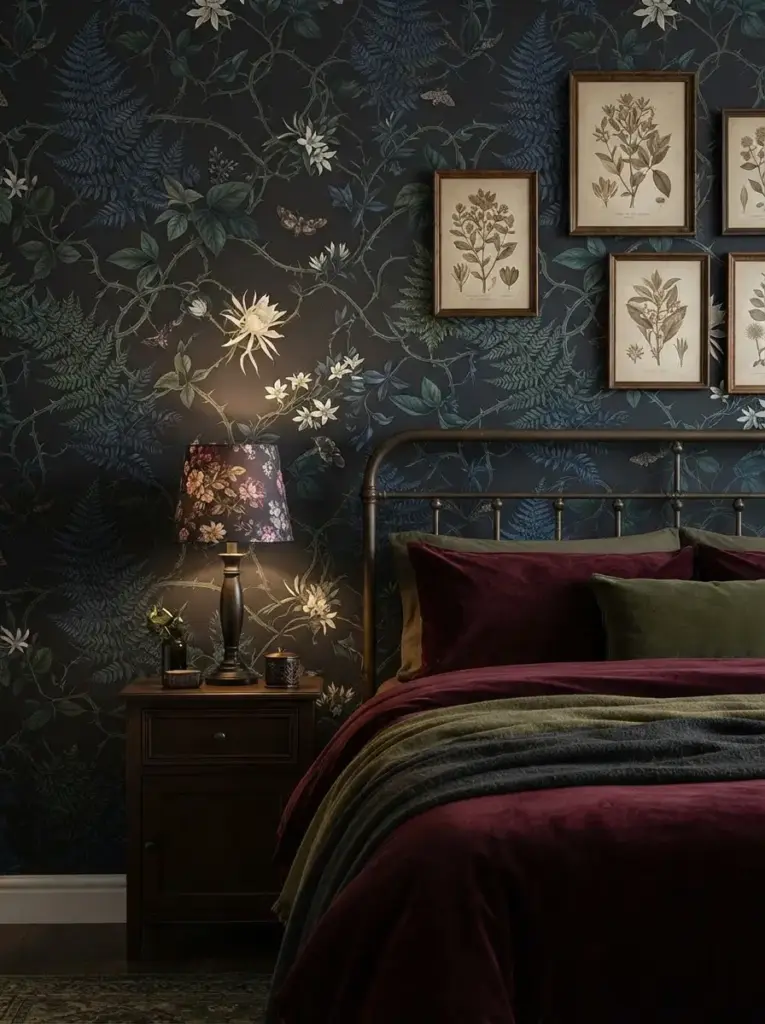
Botanical patterns connect the natural and mysterious sides of Whimsigoth decor. Choose designs with ferns, moths, mushrooms, climbing vines, night-blooming flowers, or dense woodland scenes. Use the pattern on one or two surfaces rather than covering the entire apartment. Removable wallpaper behind a bed, dark floral curtains, botanical bedding, or framed plant studies can provide enough detail. Smaller rooms often benefit from a single concentrated pattern because repeating several busy prints can reduce visual breathing space.
Pattern scale should match the surface. Large floral wallpaper works well on a broad, uninterrupted wall, while smaller motifs suit cushions or lampshades. Match at least one color from the print to an existing solid item in the room. For example, pull olive green from a floral curtain into a throw blanket and use burgundy from the same fabric in a cushion. Renters should test removable wallpaper in a hidden area because some products react differently to matte, textured, or recently painted walls. Dark botanicals suit plant lovers and anyone who wants a gothic character without relying on skulls or overt symbols.
Style Shelves With Books, Objects, and Empty Space
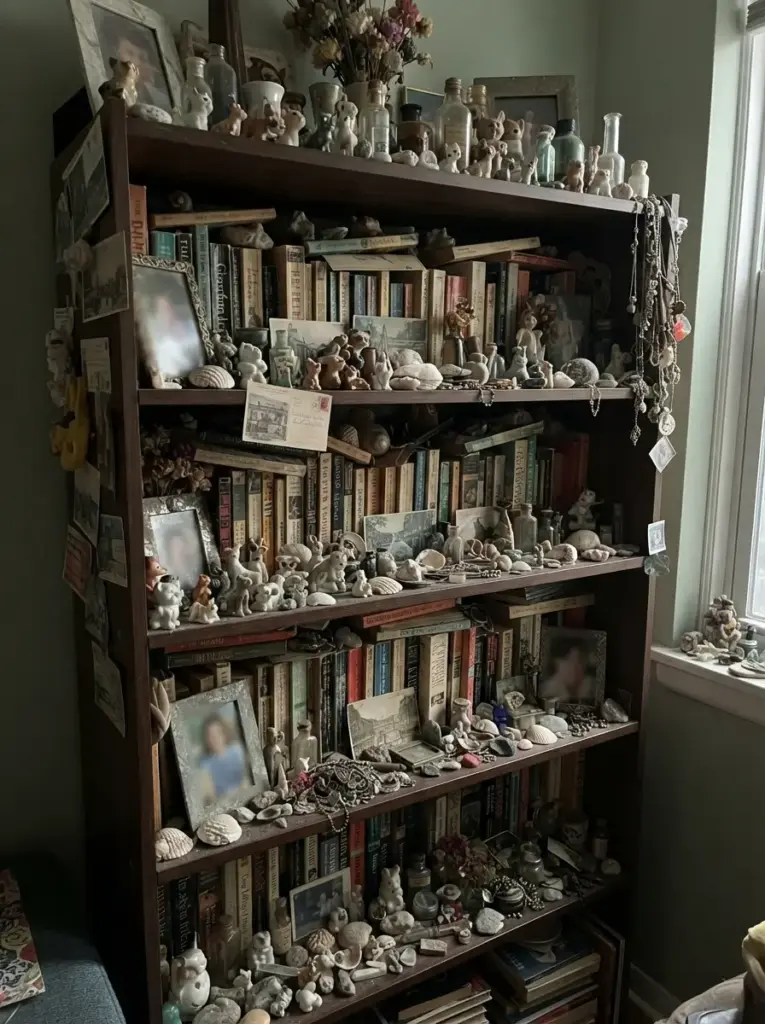
Shelves can easily become crowded in a themed apartment, so treat them as small compositions rather than storage for every decorative object. Group items in odd numbers, vary their heights, and leave some open space around them. Combine useful and decorative pieces, such as books, a small lamp, a ceramic box, framed art, and one trailing plant. Turn a few books horizontally to create a platform for a candleholder or small sculpture. Keep the heaviest visual items near the lower shelves so the unit feels stable.
Editing creates the effect. Remove items that do not support the color palette or serve a practical purpose. Rotate seasonal objects rather than displaying everything at once. Someone with a narrow bookcase could arrange burgundy and green book spines together, add a brass reading lamp, and place a framed moth print on the middle shelf. Avoid scattering many tiny crystals, bottles, and figurines across every level because dust builds quickly, and the display loses focus. Shelf styling works best for collectors who need a system that protects the room from visual overload.
Use Mirrors to Expand Light and Add Shape
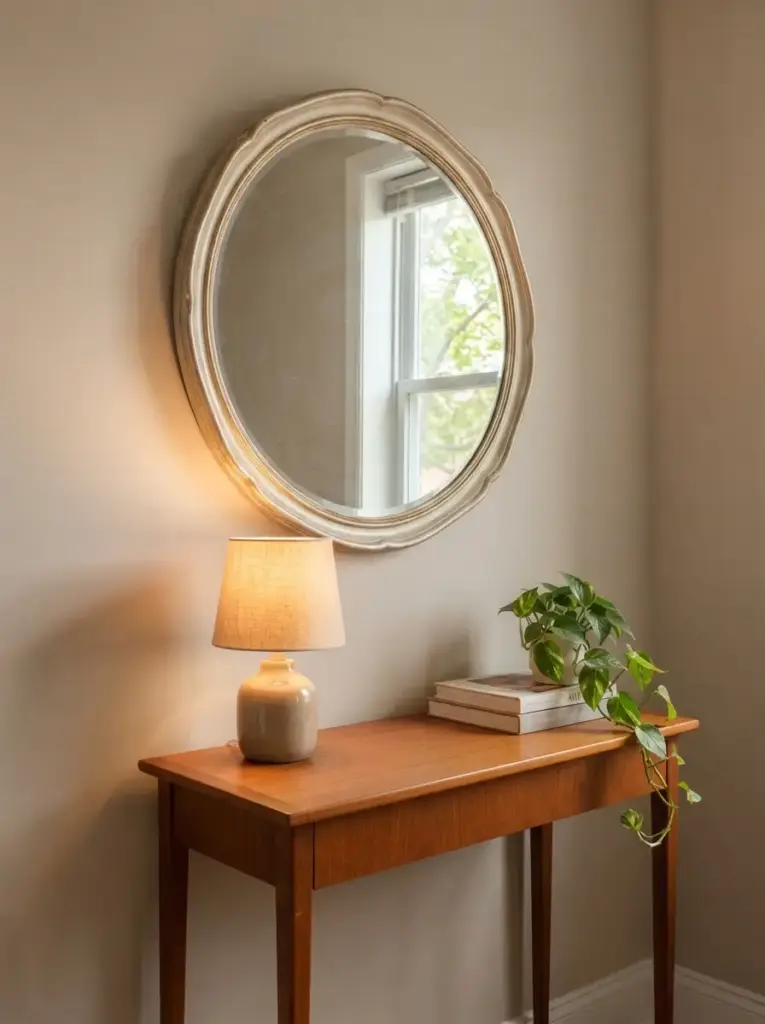
Mirrors help a dark apartment feel larger by reflecting light and repeating interesting details. Choose an arched, oval, sunburst, or softly ornate frame rather than a plain rectangle when you want the mirror to act as decor. Position it across from a window, near a lamp, or where it reflects artwork instead of clutter. A tall floor mirror can visually extend a narrow bedroom, while a smaller antique-style mirror works over a console or dresser. Renters can lean heavy mirrors safely against a wall when the base is stable, and anti-tip hardware is used where allowed.
Frame finish should connect with other elements. Antique brass pairs well with warm bulbs and wood, while black frames support a cooler charcoal or navy palette. Avoid placing mirrors where they reflect a messy kitchen counter, open bathroom door, or direct glare from an exposed bulb. This strategy is useful for basement apartments, north-facing rooms, and studios that need more reflected light but cannot change the windows.
Add Celestial Details With Restraint
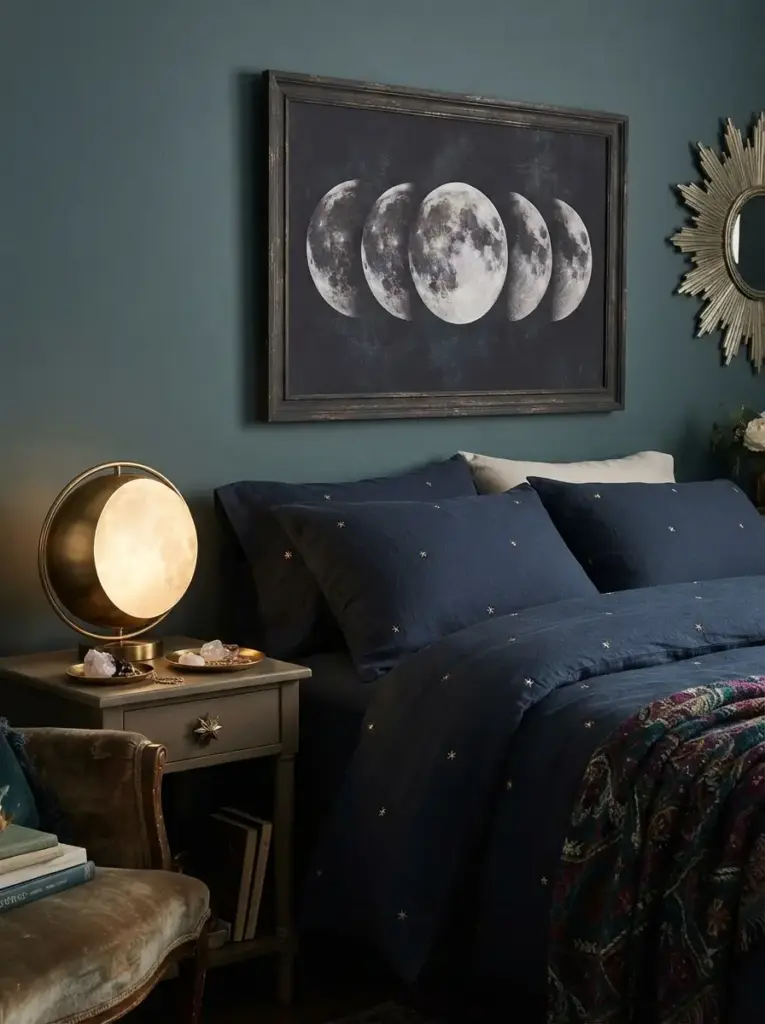
Celestial motifs are closely linked with Whimsigoth style, but restraint keeps them from feeling childish or overly themed. Choose a few well-made pieces, such as a moon-phase print, star-shaped drawer pulls, a sunburst mirror, embroidered constellations, or a brass zodiac dish. Repeat the motif in subtle ways rather than covering every wall with moons and stars. A bedroom could include one lunar art print, navy bedding with tiny embroidered stars, and a round brass lamp that echoes the shape of the moon.
Material quality makes a difference. Consider personal relevance when choosing zodiac or astronomy pieces. Someone who tracks moon phases might use a small wall calendar, while a casual decorator may prefer abstract star patterns. Focused use is best for beginners who love the theme but want a home that still feels mature and easy to live in.
Mix Real and Faux Plants for a Shadowy Garden Feel
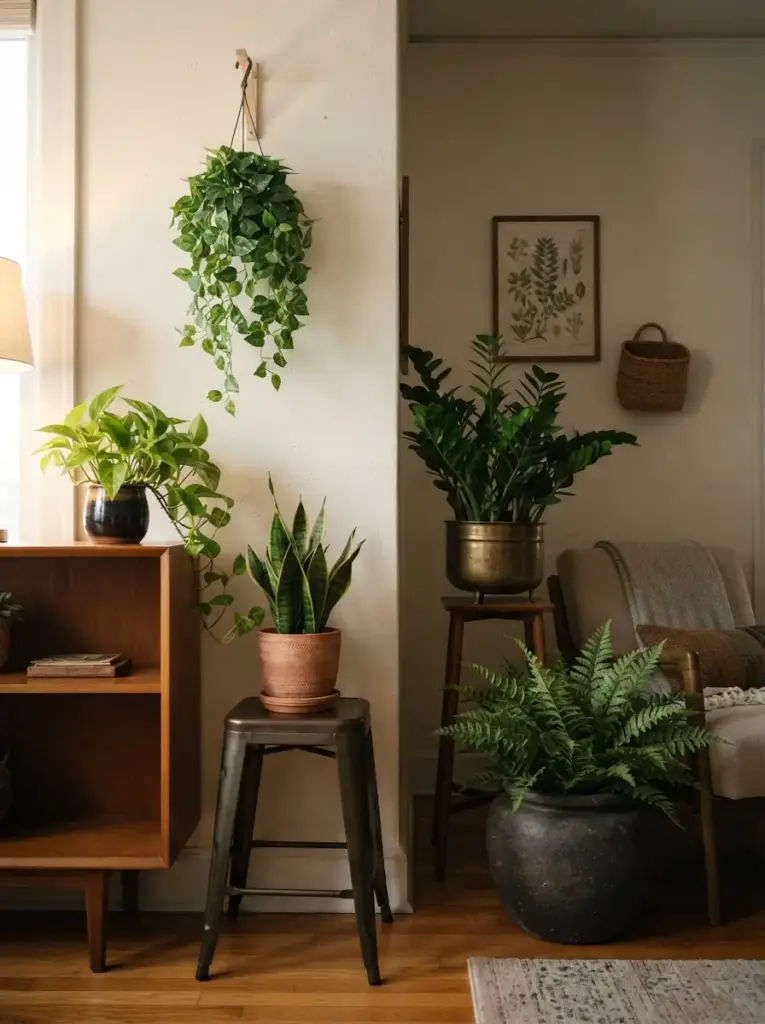
Plants soften dark rooms and add shape, but not every apartment has enough light for a large indoor garden. Use real plants where conditions support them and high-quality faux greenery in dim corners. Pothos, snake plants, ZZ plants, and heartleaf philodendrons tolerate lower light better than wide, dramatic tropical varieties, though every real plant still needs appropriate care. Ferns can work in humid bathrooms with indirect light.
Planters should reinforce the palette without competing with the foliage. Choose aged brass, dark ceramic, terracotta, stone, or simple black pots. Place plants at different heights using a stool, shelf, hanging planter, or narrow stand. Rental-friendly ceiling hooks may not support heavy pots, so use wall brackets only when permitted and keep lightweight faux vines for delicate placements. Avoid placing plants where they block walkways or touch hot radiators. Mixed greenery is ideal for people who want a lush interior but have limited windows, travel often, or are still learning plant care.
Create a Moody Reading Corner
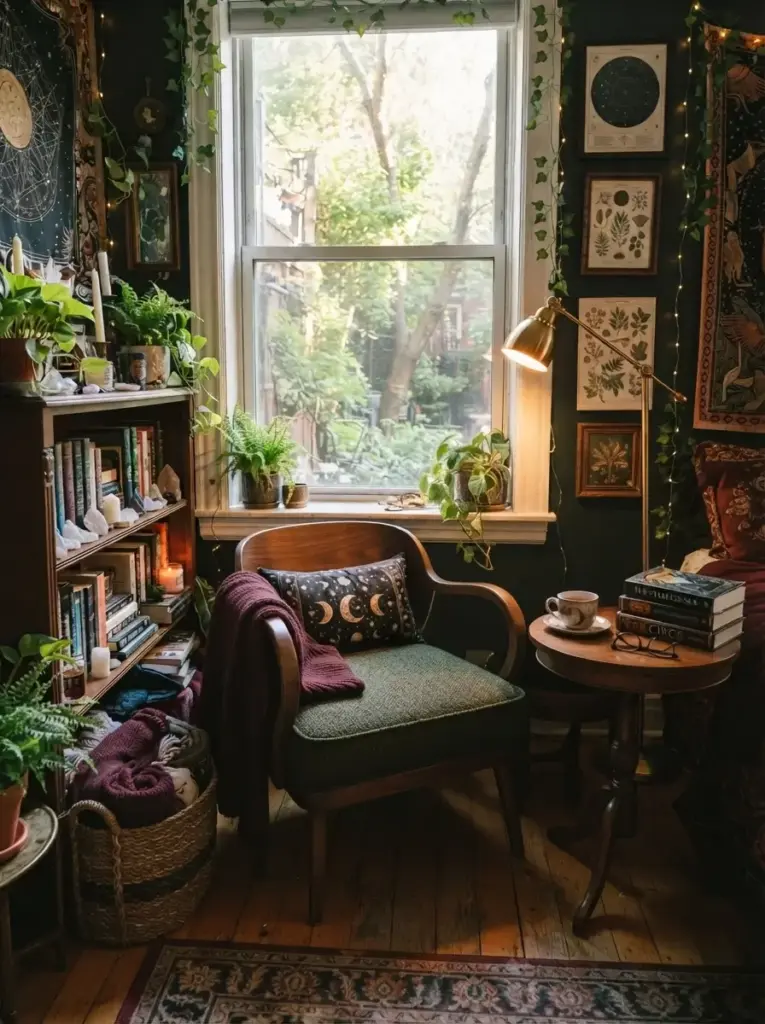
Reading corners make use of awkward areas and give the Whimsigoth Apartment a practical focal point. Select a supportive chair, a warm task lamp, a small table, and nearby storage for books or blankets. Compact slipper chairs, bentwood chairs with cushions, and narrow armchairs fit better than oversized recliners in small rooms. Place the chair near a window for daytime reading, then add a lamp around shoulder height for evenings. A 2700K bulb offers warm light without turning the page yellow enough to strain the eyes.
Comfort depends on placement. Leave enough room to sit down without hitting a wall or table, and keep a clear route to the chair. A small round table often works better than a square one in a tight corner because it has no sharp edges. Add one lumbar cushion and a washable throw instead of piling on decorative pillows. Someone on a budget can repurpose a dining chair, add a thick seat pad, and use a clamp lamp on a nearby shelf. Reading corners suit studio dwellers, book lovers, and anyone who needs a calm activity zone without adding a full room divider.
Upgrade Rental Fixtures With Reversible Details
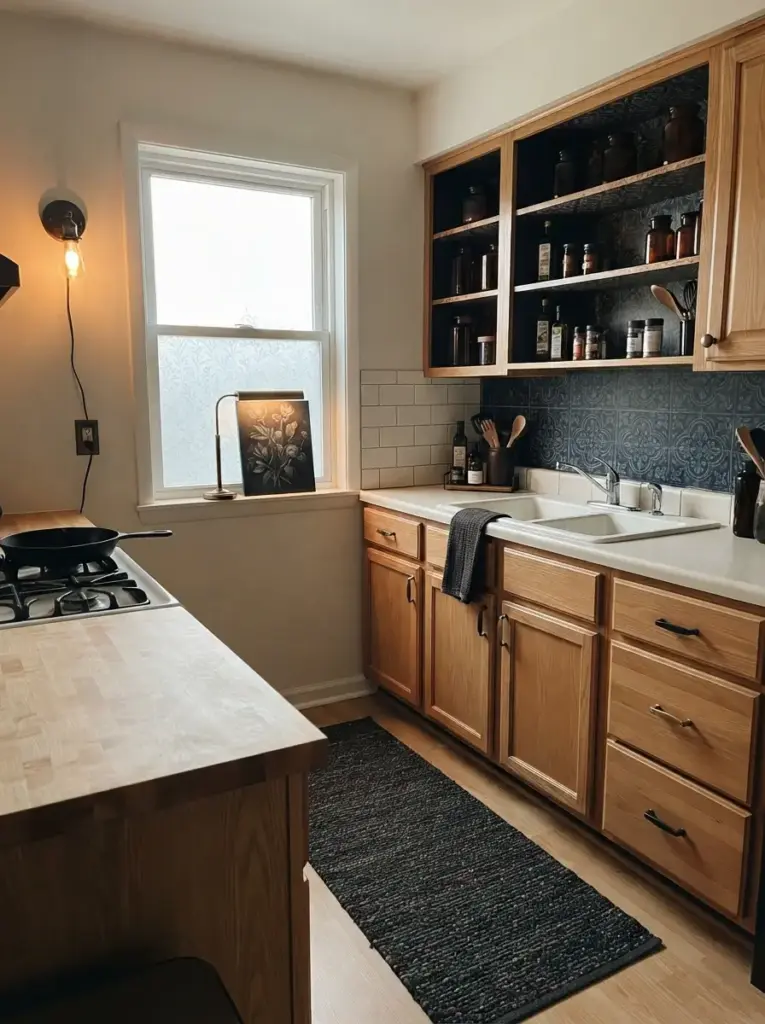
Rental kitchens and bathrooms often include finishes that do not match a dark, romantic interior. Reversible changes can reduce the contrast without damaging surfaces. Replace cabinet knobs with antique brass, blackened bronze, or ceramic options, then store the original hardware in a labeled bag. Use peel-and-stick backsplash tiles only after checking the lease and testing removal. Cover open shelves with a removable liner, add a dark washable runner, and use amber or smoked glass containers for frequently used items.
Temporary upgrades should remain easy to clean. Fabric sink skirts may hide storage, but they can collect moisture in bathrooms and grease in kitchens. Contact paper works best on smooth, sealed surfaces and should not cover damaged laminate. Plug-in sconces, battery picture lights, and removable window film can change a room without electrical work. Someone who rents a newer apartment might simply swap the shower curtain, bath mat, and hardware finish rather than forcing a major transformation. Reversible details are best for renters who want consistency across rooms while protecting their security deposit.
Use Curtains to Control Height, Color, and Softness
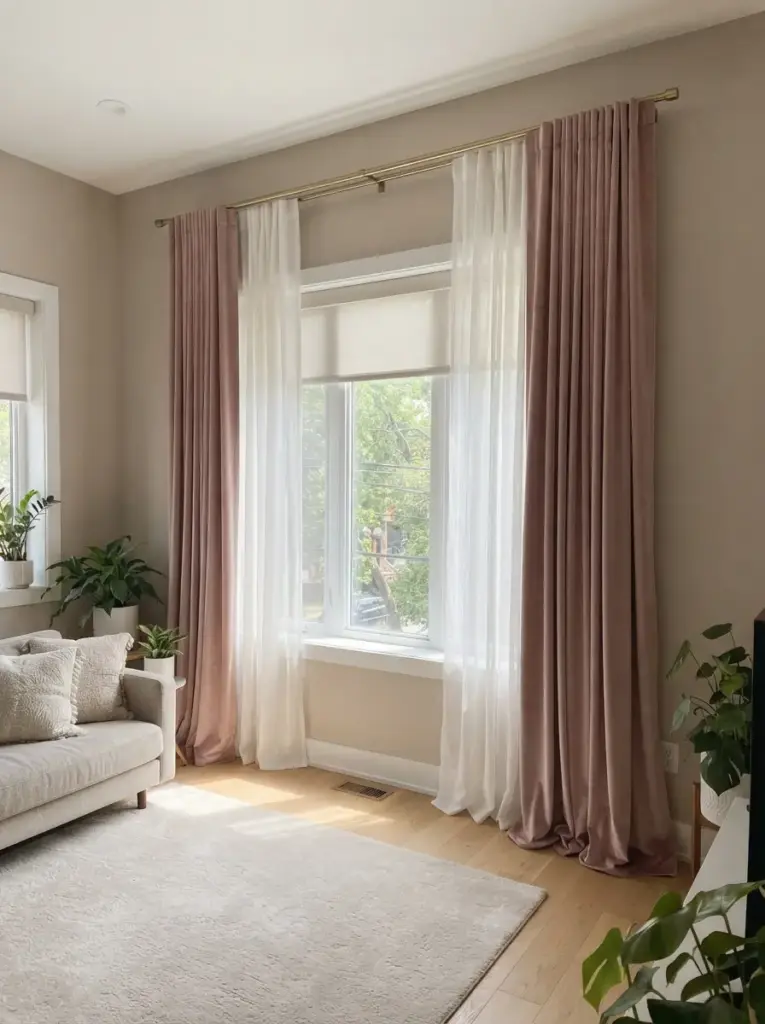
Curtains can make ceilings appear higher, and windows look wider when hung correctly. Mount the rod several inches above the frame and extend it beyond both sides so the panels do not block much daylight when open. Floor-length curtains in velvet, cotton, linen blend, or dark floral fabric can add softness and reduce the echo common in apartments. Deep colors work well when the room receives strong daylight, while dusty mauve, olive, or warm taupe may suit darker rooms better.
Layering improves function. Pair decorative panels with sheer curtains for privacy and filtered light, or add a blackout liner in bedrooms. Tension rods and no-drill brackets can help renters, though they must match the weight of the fabric. Avoid curtains that stop several inches above the floor awkwardly because they can make the room look shorter. Panels should either just touch the floor or break slightly for a relaxed vintage effect. Window treatments are especially helpful for apartments with basic blinds, street-facing windows, or weak architectural detail.
Design Small Zones Instead of Theming Every Inch
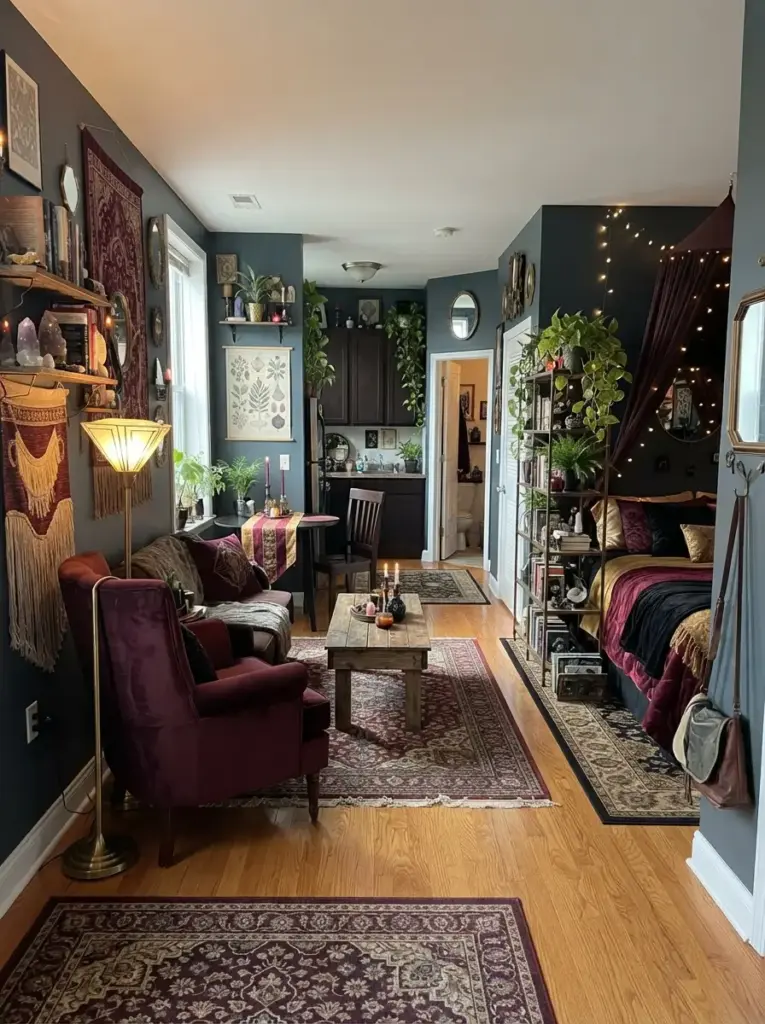
Zoning keeps a Whimsigoth Apartment organized and prevents the style from becoming overwhelming. Divide the home into a few purposeful areas, such as a reading corner, sleeping zone, dining nook, or entry station. Give each zone one strong feature and repeat the main palette across the room. The reading area might use a burgundy chair and brass lamp, while the dining area carries the same colors through a runner and framed print. Repetition creates unity without requiring identical furniture.
Furniture placement can define zones without walls. Turn the sofa to create a boundary, place a narrow bookcase perpendicular to a wall, or use rugs to separate activities. Open shelving works as a divider when it remains visually light and safely anchored. Keep pathways clear, especially between the entrance, kitchen, and bathroom. Someone living in a studio should avoid placing every decorative item around the bed because the entire apartment may start to feel like one sleeping area. Zoning works for small-space residents who need their home to support work, rest, storage, and entertaining in limited square footage.
Common Whimsigoth Apartment Mistakes to Avoid
Overusing black is one of the most common mistakes. Black can provide structure, but too much of it absorbs light and hides the details that make the style interesting. Mix black with plum, green, blue, brown, cream, or faded rose. Add reflective materials such as brass, glass, and mirrors to prevent dark areas from becoming flat. Dark paint also looks different throughout the day, so test large samples before committing. Renters can create the same effect with textiles and furniture when paint is not allowed.
Buying too many small themed objects creates another problem. Shelves filled with moons, mushrooms, crystals, bottles, and miniature frames can look busy instead of collected. Choose fewer items with stronger shape, material, or personal meaning. Leave breathing room around objects and keep practical surfaces usable. Coffee tables should still hold a drink, desks should support work, and kitchen counters should remain easy to clean.
Ignoring scale can make a small apartment uncomfortable. Large canopy beds, deep sofas, oversized coffee tables, and tall cabinets may look appealing online, but block circulation in real rooms. Measure before buying and mark the furniture footprint on the floor with painter’s tape. Check door swings, drawer clearance, and walking space. Furniture that looks slightly smaller in a showroom often feels much larger once placed in a studio or one-bedroom apartment.
Using only dim decorative lighting can also cause frustration. Warm lamps create atmosphere, but cooking, cleaning, reading, and getting dressed still require clear task lighting. Add focused light where work happens and use dimmers or smart bulbs when possible. Avoid placing exposed bulbs directly in the line of sight. Good lighting should support daily life first and decoration second.
Forgetting storage leads to visible clutter. Whimsigoth rooms often include books, textiles, candles, art supplies, and collected objects, so closed storage is valuable. Use beds with drawers, storage ottomans, lidded baskets, and cabinets with doors. Keep decorative displays limited to items you enjoy seeing and store backups elsewhere. Rotating objects every few months can make the apartment feel fresh without buying anything new.
Budget-Friendly Ways to Build the Style
Secondhand shopping offers the best value for frames, mirrors, lamps, side tables, and wooden furniture. Search by material and shape instead of trend labels. Terms such as carved wood, oval mirror, brass lamp, floral rug, velvet chair, and pedestal table often produce better results than searching only for Whimsigoth decor. Inspect furniture for odors, pests, loose joints, and water damage. Lamps should have intact cords and safe plugs, and upholstered items should be cleaned before use.
Textiles can carry the room when furniture must stay basic. Change cushion covers, throws, curtains, table runners, and bedding before replacing large pieces. Remnant fabric can become a small curtain, framed textile panel, or cushion front. Dark flat sheets can sometimes work as inexpensive curtain panels when hemmed and hung with clip rings. Washable materials reduce long-term costs because they are easier to maintain than delicate decorative fabrics.
Paint can transform inexpensive secondhand pieces, but preparation matters. Clean, sand, prime, and seal furniture according to the surface. Deep green, brown-black, muted plum, and charcoal can make a plain table feel more intentional. Keep some natural wood visible so the apartment does not become visually heavy. Renters should paint only movable items and protect floors during the process.
Printable art and repurposed frames provide low-cost wall decor. Use public-domain botanical drawings, astronomy charts, old family photographs, or pages from damaged books that have no collectible value. Print on matte paper and vary the frame sizes. Avoid copying living artists’ work without permission, even for personal decorating.
Small changes often make the largest difference. Warm bulbs, matching hardware, a properly sized rug, and well-hung curtains can improve the room more than a cart full of novelty accessories. Set a monthly decor budget and finish one zone before starting another. Waiting also gives you time to find better secondhand pieces and reduces impulse purchases.
Practical Whimsigoth Apartment Tips for Small Spaces
Keep the largest furniture visually quiet. A neutral sofa, simple bed, and plain storage cabinet create a flexible base. Add the style through lamps, textiles, frames, and smaller furniture. Large themed pieces can be difficult to replace when your taste or lease changes. Quiet, foundational furniture also makes moving easier because it can work in another apartment.
Use vertical space without overcrowding the walls. Tall narrow bookcases, wall-mounted shelves, over-door storage, and hanging planters can free the floor. Place frequently used items between waist and eye level, and keep heavier objects lower. Leave some wall area empty so the apartment does not feel compressed. Vertical storage works especially well near desks, entryways, and beds where floor space is limited.
Limit each room to one main focal point. A dramatic gallery wall, dark botanical headboard wall, ornate mirror, or velvet chair can lead the design. Supporting pieces should repeat the colors and materials without competing for attention. Multiple focal points in a small room can make it hard to know where to look and can weaken the effect of every special item.
Choose multi-use furniture whenever possible. Storage benches can hold blankets, drop-leaf tables can serve as desks and dining tables, and nesting tables can separate when guests arrive. A narrow console may work as an entry station, vanity, and laptop surface. Multi-use pieces cost more attention during planning but save money and floor area over time.
Protect daylight during the day. Dark interiors need natural light to show texture and color variation. Open heavy curtains fully, keep tall furniture away from windows, and clean glass regularly. A Whimsigoth Apartment should feel moody because of intentional color and lighting, not because the windows are blocked.
Frequently Asked Questions
Can a Whimsigoth Apartment Work With White Walls?
White walls can create useful contrast and make dark furniture, textiles, and artwork stand out. Warm white or cream looks softer than blue-white, but renters often cannot choose the paint. Bring warmth through 2200K to 2700K bulbs, wood furniture, brass accents, and richly colored fabrics. Large curtains, rugs, gallery walls, and removable wallpaper can reduce the amount of visible white without permanent changes. Keep some white space around dark objects so the room still feels open.
What Colors Work Best for Whimsigoth Decor?
Deep jewel tones and earthy shades work especially well. Plum, burgundy, moss, forest green, midnight blue, charcoal, tobacco brown, and muted teal create depth. Balance them with cream, mushroom, taupe, dusty rose, or faded gold. Small rooms usually benefit from two deep colors rather than five or six. Repeat those colors throughout the apartment so the design feels connected.
How Do I Make the Style Rental-Friendly?
Focus on removable and reversible changes. Use peel-and-stick wallpaper after testing it, plug-in sconces, no-drill curtain brackets, removable picture strips, washable slipcovers, rugs, and temporary cabinet hardware. Store original knobs and fixtures carefully. Read the lease before drilling, painting, or applying adhesive products. Photograph the apartment before making changes so you can restore it accurately when moving out.
Does Whimsigoth Decor Have to Include Witchy Symbols?
Symbols are optional. The style can come through color, lighting, old-world shapes, botanical patterns, curved furniture, books, and layered textiles. Someone who prefers subtle decor might use an arched mirror, velvet cushions, brass lamps, dark florals, and a faded rug. Personal objects should reflect your interests rather than a checklist of moons, stars, or mystical signs.
How Can I Prevent a Dark Apartment From Feeling Smaller?
Use dark colors in focused areas and balance them with lighter surfaces. Keep pathways open, choose furniture with visible legs, hang curtains high, and place mirrors near light sources. Warm layered lighting prevents corners from disappearing at night. A large rug often makes a seating area feel bigger than several small rugs. Closed storage also reduces clutter, which is especially important in compact rooms.
Which Whimsigoth Upgrade Should I Try First?
Lighting is usually the best first step because it changes how every color and texture appears. Replace cool bulbs with warm ones, add a table lamp near seating, and include a task light where you read or work. Next, choose one textile change, such as curtains, bedding, or a rug. Those two updates create a strong base before you spend money on decorative objects.
Conclusion
Whimsigoth apartment decor works best when mystery and comfort support everyday function. Deep colors, layered warm lighting, vintage shapes, botanical patterns, velvet, books, mirrors, and celestial details can create a distinctive home without permanent renovation. Small spaces need careful editing, accurate measurements, useful storage, and clear pathways. Rental-friendly hardware, removable wall treatments, secondhand furniture, and affordable textiles make the style easier to build gradually.
Thoughtful choices matter more than the number of decorations. Begin with a palette, improve the lighting, complete one zone, and add personal objects over time. Keep surfaces usable and choose pieces that serve a purpose as well as a visual role. A well-planned Whimsigoth Apartment can feel rich, calm, and individual while remaining practical enough for work, rest, cleaning, and daily routines.