
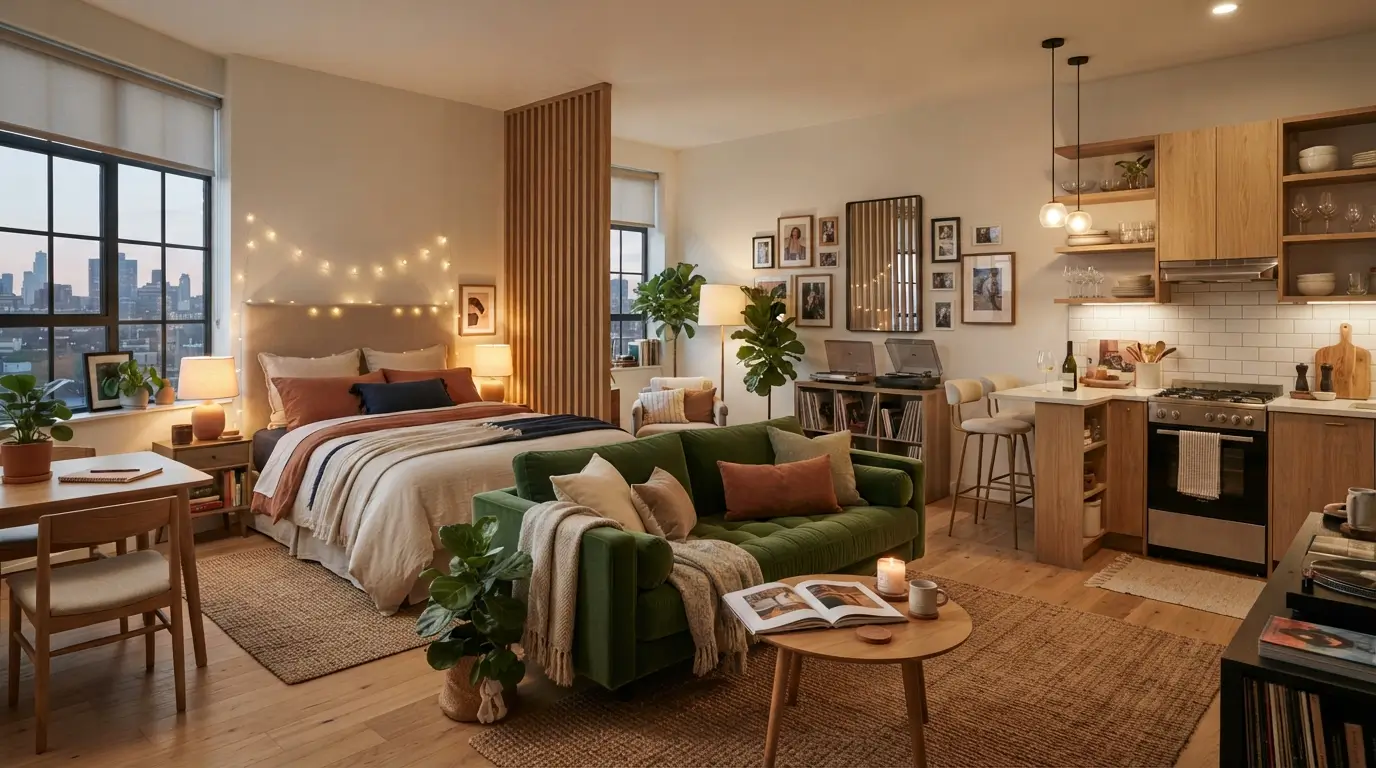

Sharing a studio apartment for couples can feel warm and personal, but it also asks two people to sleep, relax, work, dress, cook, and store belongings inside one open room. Good decorating solves those everyday problems before it adds cushions or wall art. Couples need clear zones, enough storage, comfortable lighting, and furniture that supports both partners instead of favoring only one routine.
Thoughtful choices also prevent the apartment from feeling like a bedroom with a kitchen attached. Color, scale, furniture placement, and hidden storage can create visual order without permanent renovations. Rental-friendly methods matter because many studio residents cannot drill large holes, repaint dark walls, or replace built-in fixtures. Budget matters too, especially when two households are being combined. The following ideas focus on practical changes that make a Studio Apartment for Couples easier to share, simpler to clean, and more comfortable to live in every day.
Before choosing decor, photograph the room from each corner and note where clutter gathers by evening. Those photos reveal blocked paths, empty vertical areas, and surfaces doing too many jobs. They also help couples compare priorities calmly. Moving a shelf or replacing one lamp often improves daily use more than buying several decorative accessories at once for both partners.
Can a Studio Apartment Work Well for a Couple
Yes, a studio apartment can work well for a couple when both people agree on how the space should function. Comfort depends less on square footage than on planning. One person may wake early, work from home, or own more clothes, while the other may cook often, prefer low lighting, or need quiet in the evening.
Layout decisions should reflect those habits. Start by listing the activities that happen most often, then give each activity a defined place. Bed placement, seating, storage, and lighting should support daily routines without creating obstacles. Couples who communicate before buying furniture usually avoid duplicate items, oversized pieces, and cluttered corners. Even a 350-square-foot studio can feel organized when the bed does not block the main path, storage uses vertical space, and every large item serves a clear purpose.
Divide the Sleeping Area Without Building a Wall
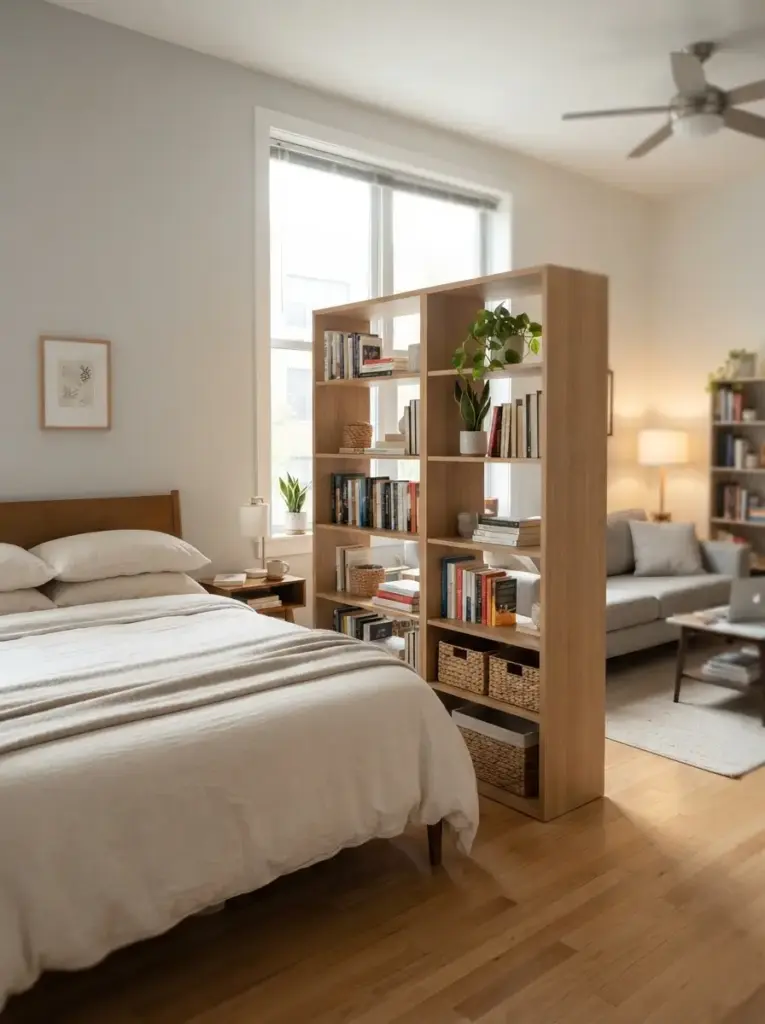
Open studios often feel tiring because the bed stays visible from every angle. Creating a soft boundary around the sleeping area helps the room feel more like a small home and less like one large bedroom. Place an open bookcase, slatted screen, ceiling-mounted curtain, or folding divider between the bed and living zone.
Open shelving works especially well because light can pass through, while books, baskets, and plants add privacy. Keep the divider between 48 and 72 inches high so the ceiling still feels open. Couples in rental apartments can use a tension-rod curtain or freestanding screen instead of drilling into walls.
Neutral linen in warm white, oatmeal, or light gray prevents the divider from looking heavy. Such separation supports different routines, since one partner can read or work while the other rests. It suits couples who want privacy but cannot change the floor plan. Avoid solid, dark partitions in a narrow studio because they can block daylight and make the sleeping area feel boxed in.
Choose a Bed With Built-In Storage
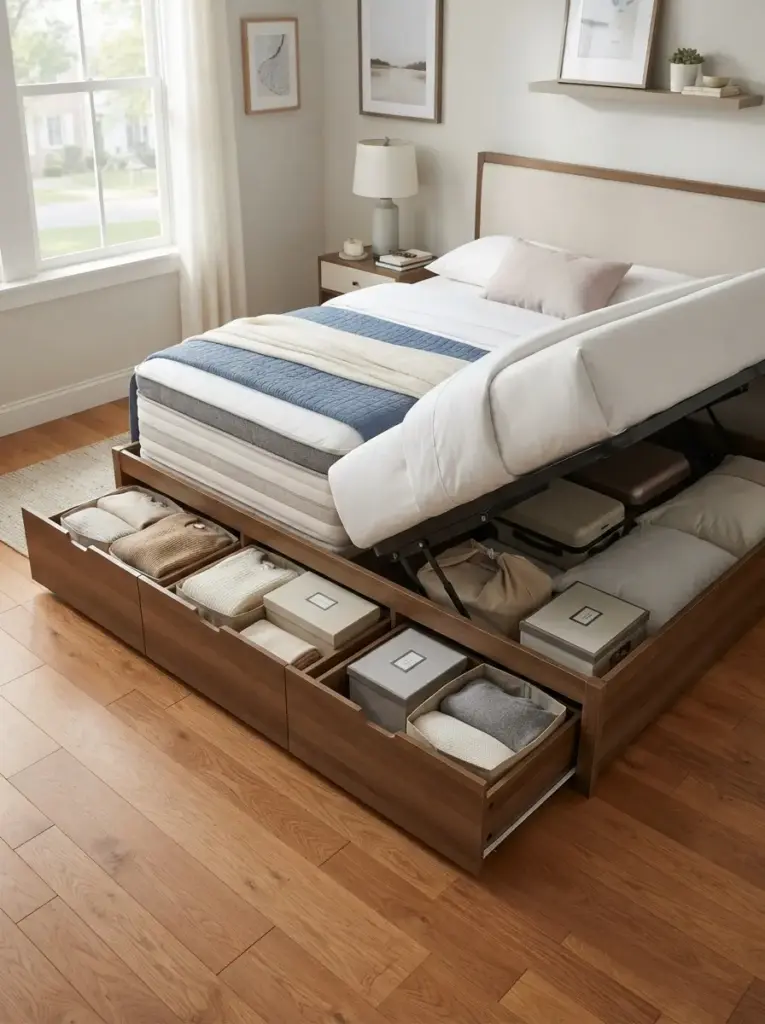
Storage under the bed can replace a bulky dresser and free valuable wall space. Select a platform bed with deep drawers, a lift-up mattress base, or at least 10 to 12 inches of clearance for matching storage bins. Drawers work best when there is enough space beside the bed to open them fully, while a hydraulic lift bed suits tighter layouts where side access is limited. Store seasonal clothing, extra bedding, luggage, and rarely used shoes below the mattress. Use fabric bags or lidded boxes so dust does not collect on loose items.
Couples with limited closets benefit most because each person can claim one side or divide the space by category. Built-in storage succeeds because it uses an area that otherwise remains empty, reducing visible clutter without adding another piece of furniture. Measure the full bed footprint before purchasing, including drawer clearance. Common mistakes include choosing a tall frame that makes the bed dominate the room or filling the storage with random items that become difficult to find.
Use Matching Bedside Shelves Instead of Tables
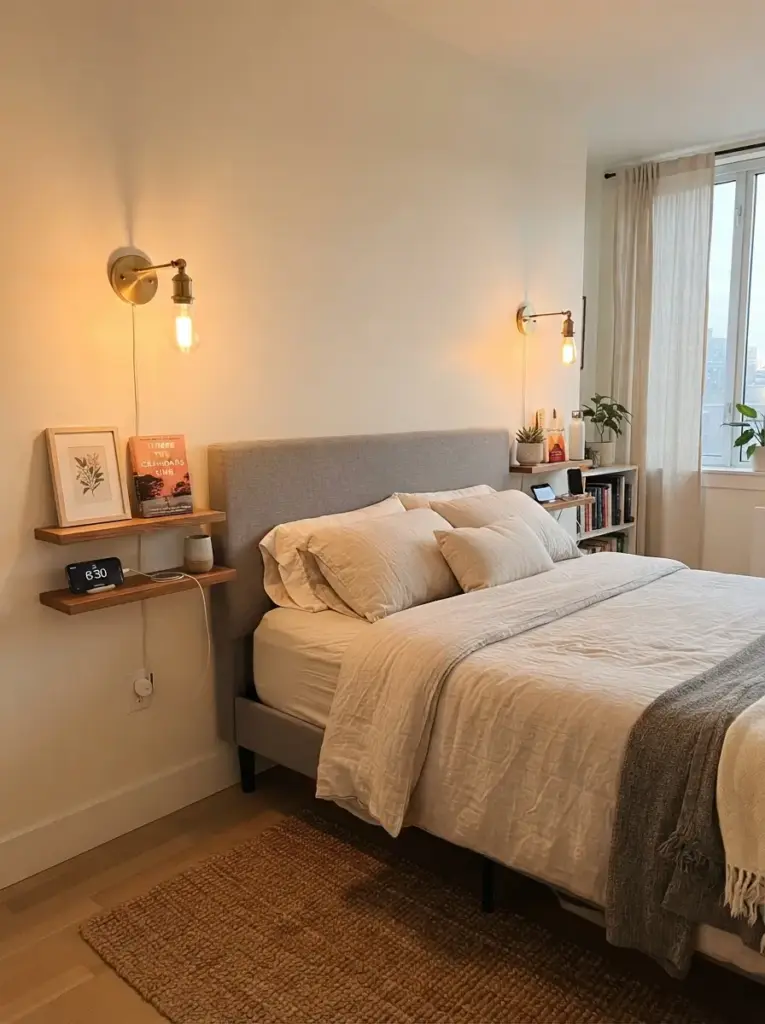
Traditional nightstands often take up 18 to 24 inches on each side of a bed, which can consume the width of a small studio. Slim floating shelves or narrow wall-mounted ledges provide enough room for a phone, a water glass, a book, and a small lamp without crowding the floor. Rental-friendly versions can attach with removable heavy-duty strips when the shelf is lightweight, though weight limits must be followed carefully. Couples should install one shelf on each side whenever possible, even if the shelves are only 8 to 10 inches wide.
Equal access makes the sleeping area feel balanced and prevents one partner from reaching across the other for essentials. Plug-in wall sconces above the shelves save even more surface space. Choose fixtures with independent switches and warm 2700K bulbs for comfortable evening light. The arrangement is especially useful for couples who read at different times. Visual symmetry also makes a compact bed zone look intentional. Keep cords clipped neatly along the wall, and avoid oversized lampshades that extend into the narrow walking path.
Build the Layout Around Clear Walking Paths
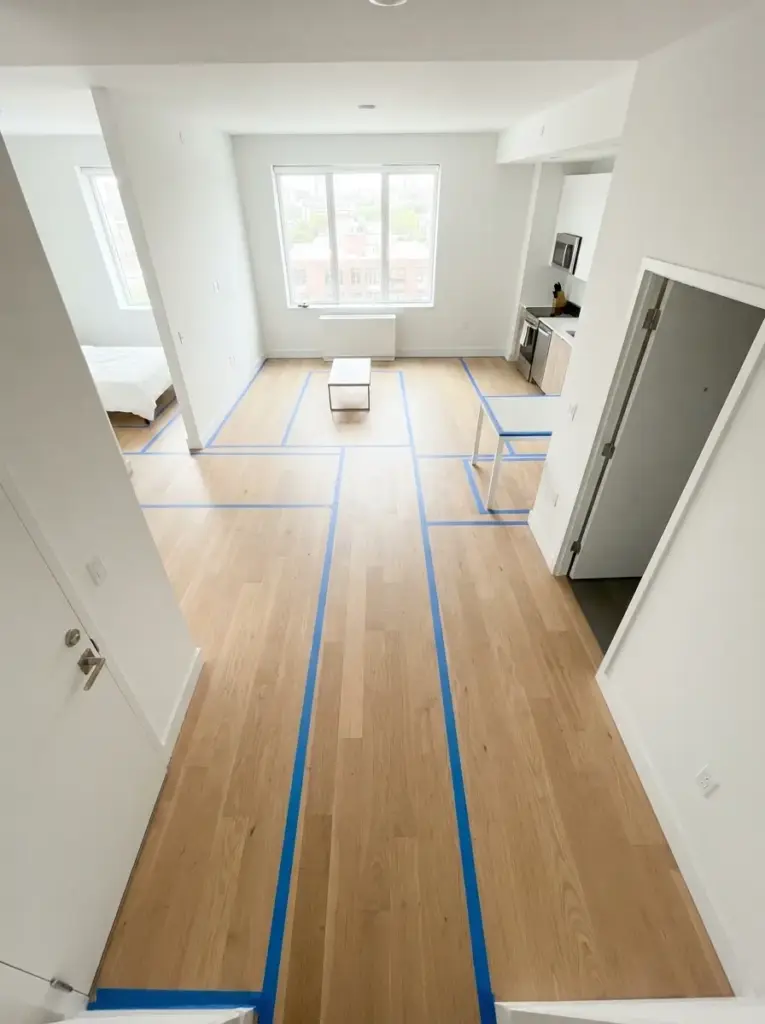
Furniture should never force either person to turn sideways, step over bags, or squeeze between the bed and table. Begin with the main route from the entrance to the kitchen, bathroom, window, and bed. Aim for a walkway of at least 30 inches, with 36 inches preferred where two people often pass each other. Place large furniture along the walls or use it to define zones without blocking these routes. Painter’s tape can mark the proposed outline of a sofa, table, bed, and storage unit before anything is purchased.
Living with the taped layout for a day reveals tight corners and awkward door swings. Couples who entertain, work different schedules, or move around the apartment at the same time gain the most from this approach. Clear circulation works because the studio feels calmer when movement is easy and predictable. Avoid pushing every item against the walls without thought, since a narrow console or open shelf placed perpendicular to a wall may create better zoning while preserving access.
Pick a Compact Sofa With a Light Visual Profile
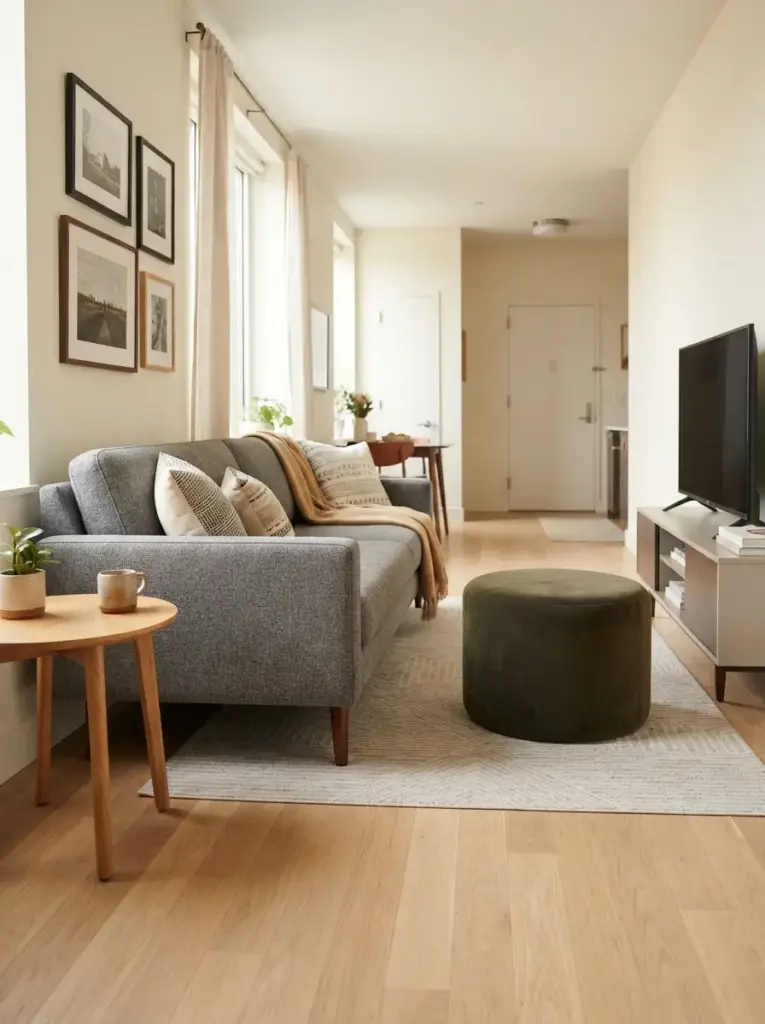
Bulky rolled arms, deep seats, and low skirts can make a small sofa look heavier than its actual measurements. Look for a loveseat or apartment sofa between 60 and 72 inches wide, with raised legs, narrow arms, and a seat depth of 21 to 23 inches. An exposed floor beneath the frame creates more visual space and makes cleaning easier. Couples who watch television together should test the seat in person because some compact sofas save space by reducing comfort. Performance fabric in medium gray, olive, camel, or textured beige hides minor marks better than pure white upholstery.
A sofa bed may help frequent hosts, but its mechanism adds weight and often reduces under-seat storage, so buy one only when guests truly stay overnight. Good scale matters because the sofa usually becomes the largest object in the living zone after the bed. Pair it with one movable stool or pouf rather than a second chair. Such flexibility suits couples who want comfortable seating without sacrificing the path through the apartment.
Replace the Coffee Table With Nesting Tables
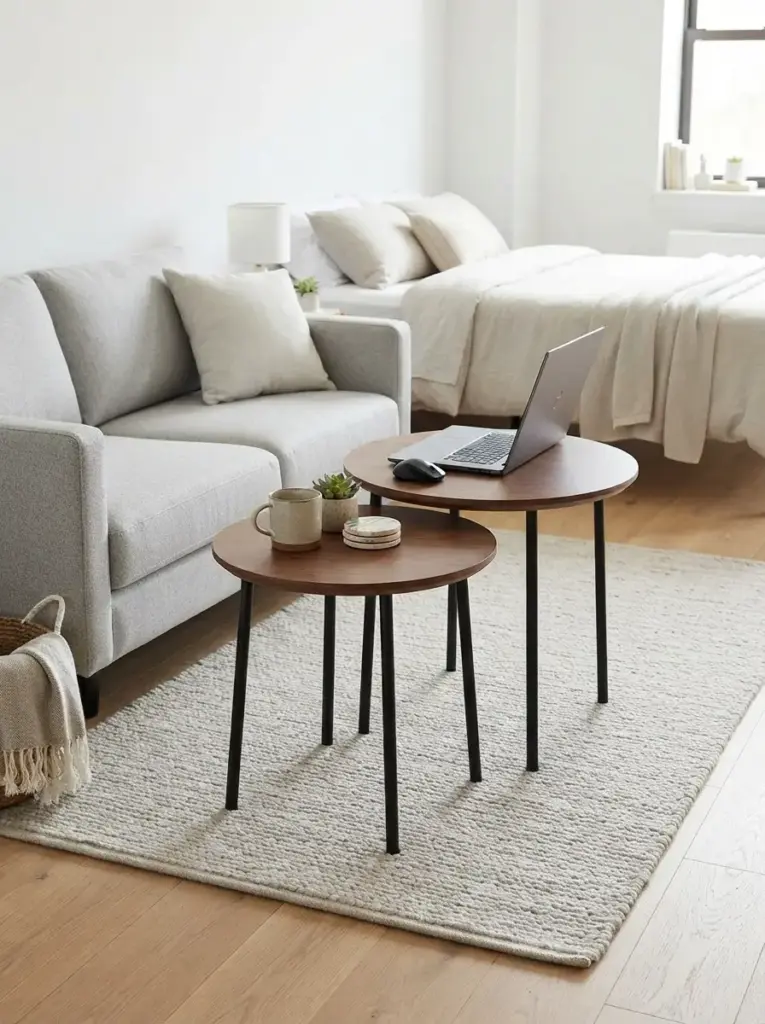
One large coffee table can interrupt circulation and collect clutter. Nesting tables offer separate surfaces when needed and slide together when the floor should remain open. Choose a set with rounded corners, especially when the gap between the sofa and bed is narrow. A height of 16 to 20 inches works beside most sofas, while a slightly taller table can double as a laptop surface. Couples can separate the tables during meals, game nights, or work sessions, then stack them near the sofa afterward. Lightweight wood, metal, or acrylic designs are easier to move than solid stone.
The concept works because shared studios need furniture that changes purpose throughout the day. It is best for renters and beginners who do not want to commit to one fixed arrangement. Avoid sets with unstable legs or glass tops that require constant cleaning. Budget shoppers can combine two mismatched thrifted side tables in similar finishes. Keeping the diameter under 20 inches prevents the tables from taking over the center of the room.
Create a Two-Person Dining Spot With a Drop-Leaf Table
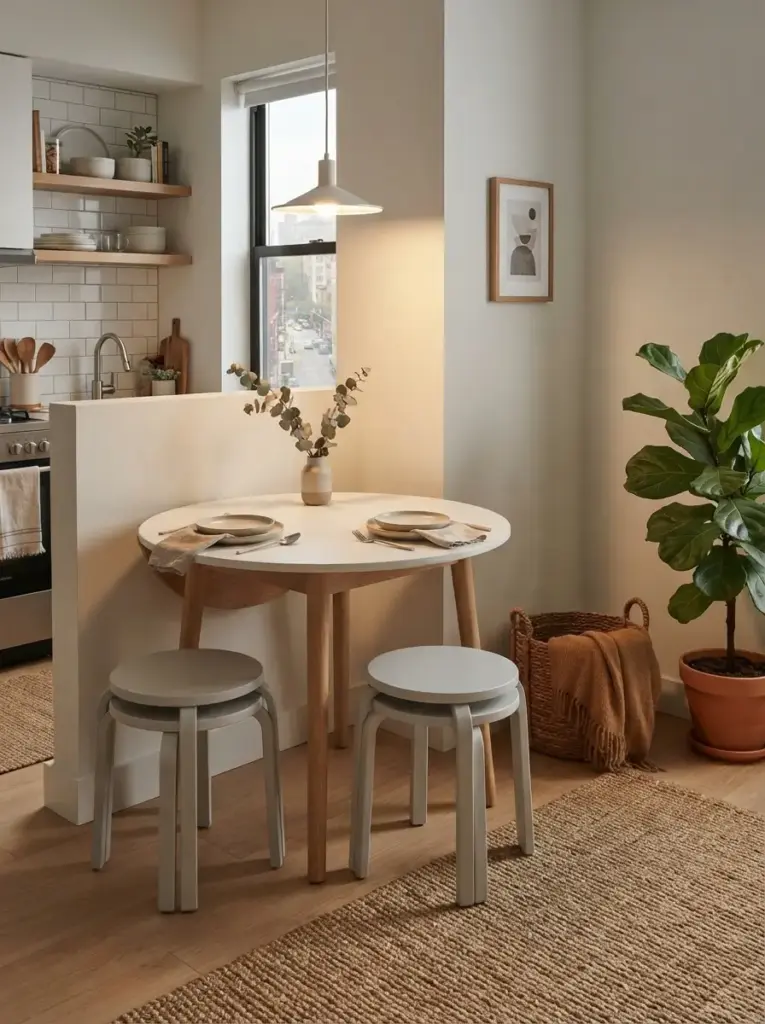
Meals feel more comfortable when they have a surface that is not the bed or sofa. A wall-mounted drop-leaf table, gateleg table, or narrow bistro table can create a dining area without remaining fully open all day. Allow about 24 inches of table width per person and at least 30 inches behind a chair when possible. Folding chairs can hang on wall hooks or slide into a closet, while stackable stools fit under the table. Couples who cook often will appreciate a washable tabletop placed close to the kitchen.
Dining zones also help separate work, eating, and relaxation, which makes the studio feel more organized. White oak, walnut, matte black, and warm white finishes blend easily with many decorating styles. Rental residents can use a freestanding drop-leaf model instead of mounting one to the wall. Avoid placing the table in a main walkway or buying a round top that is too wide for the corner. A 30- to 36-inch round table generally seats two comfortably without overwhelming a small room.
Layer Lighting for Different Routines
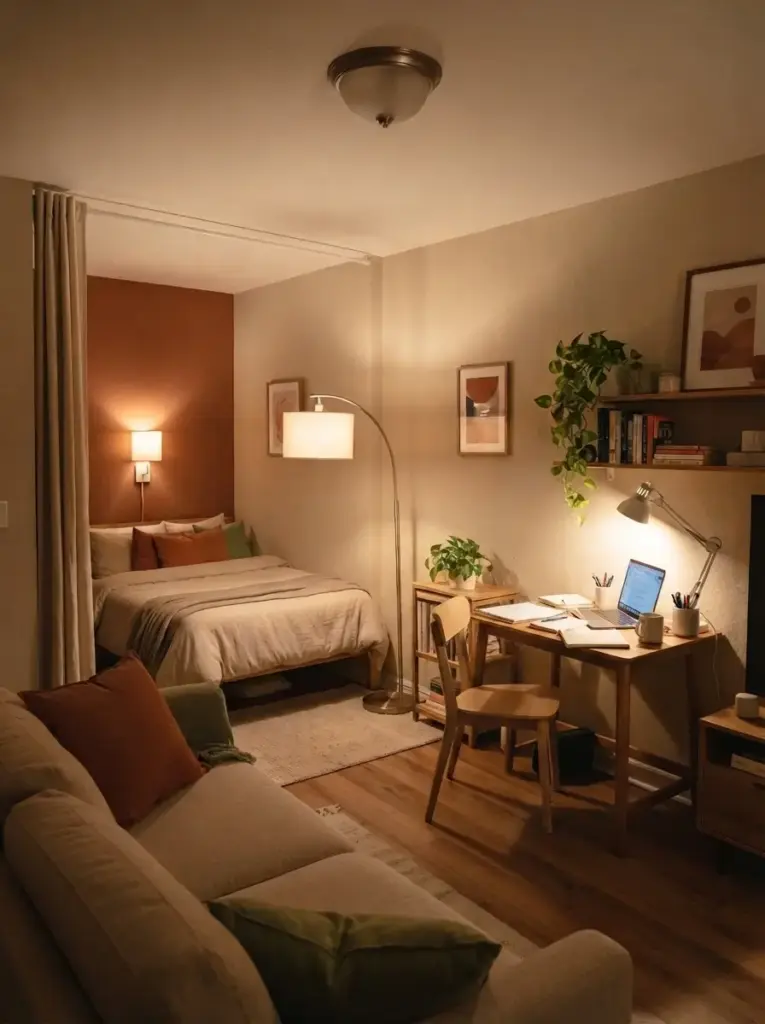
One bright ceiling fixture rarely meets the needs of two people. Combine general, task, and accent lighting so each partner can control the mood and brightness. Use a ceiling light or floor lamp for overall illumination, plug-in sconces near the bed, and a focused lamp for reading, cooking, or working. Warm white bulbs between 2700K and 3000K suit evenings and make beige, wood, terracotta, and soft green tones feel inviting.
Neutral white bulbs around 3500K can help at a desk or kitchen counter, but they should not dominate the sleeping area. Smart bulbs or plug-in dimmers allow separate scenes without rewiring, which is useful in rentals. Layered lighting improves the studio because it creates boundaries even when walls do not exist. Couples with different sleep schedules benefit most, since one person can use a small task light rather than flooding the whole room. Avoid cool 5000K bulbs in living areas, exposed cords across walkways, and multiple lamps with mismatched color temperatures.
Use One Calm Color Palette With Personal Accents
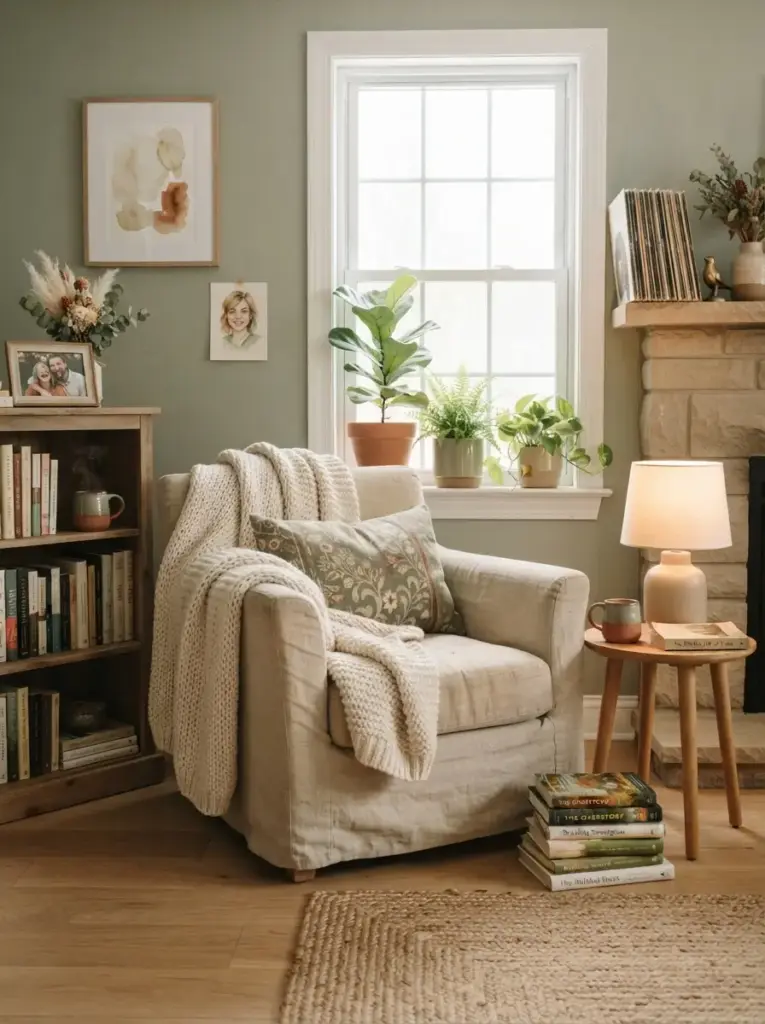
Shared homes feel more cohesive when large surfaces follow one restrained palette. Select one light base color, one grounding neutral, and two accent colors that both partners enjoy. Warm white walls, light oak furniture, charcoal textiles, and muted rust accents create a balanced scheme. Soft greige, walnut, cream, and dusty blue offer another flexible combination. Keep expensive pieces such as the sofa, rug, curtains, and bed frame neutral, then express individual tastes through pillows, framed prints, books, ceramics, and throws.
One partner might add deep green, while the other introduces ochre in smaller amounts. Color consistency works because the eye moves smoothly across an open studio instead of stopping at unrelated zones. It is ideal for couples combining furniture from two previous homes. Rental-friendly peel-and-stick panels can add color behind a desk or bed, but test them in a hidden area before covering a large wall. Avoid using every favorite color equally, since the result can look busy. Repeating each accent at least twice creates a connection without forcing exact matching.
Place One Properly Sized Rug to Anchor the Living Zone
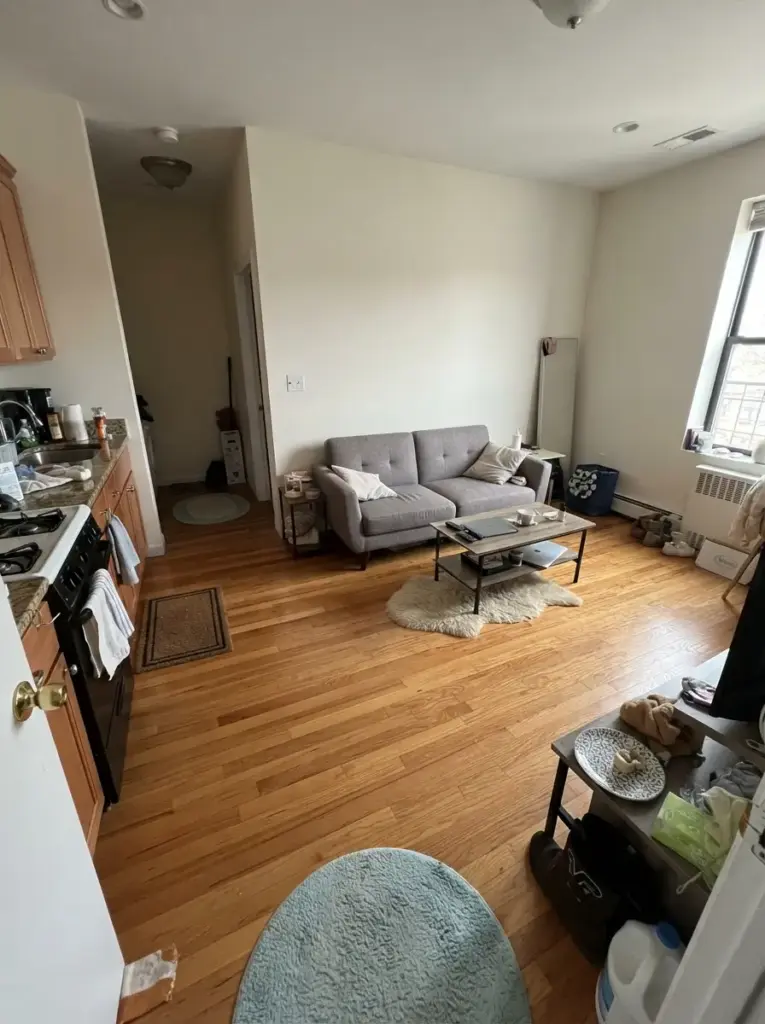
Small rugs scattered around a studio can make the floor look chopped into pieces. One larger rug under the sofa and living furniture creates a clear zone and often makes the room appear wider. For most compact sofas, a 5-by-8-foot rug works when the front legs of the sofa and nearby seating rest on it. A 6-by-9-foot rug suits a larger studio or a floating furniture arrangement. Leave some exposed flooring around the edges so the rug does not resemble wall-to-wall carpet.
Low-pile or flatwoven styles are easier to vacuum and allow chairs or tables to move smoothly. Couples with pets, frequent guests, or limited cleaning time should choose patterned rugs in mid-tone colors rather than solid cream. Rug placement succeeds because it visually groups furniture without adding a physical divider. Renters can use a non-slip pad instead of tape. Avoid a tiny rug centered in front of the sofa, since it tends to make both the sofa and the room look smaller.
Turn Vertical Wall Space Into Shared Storage
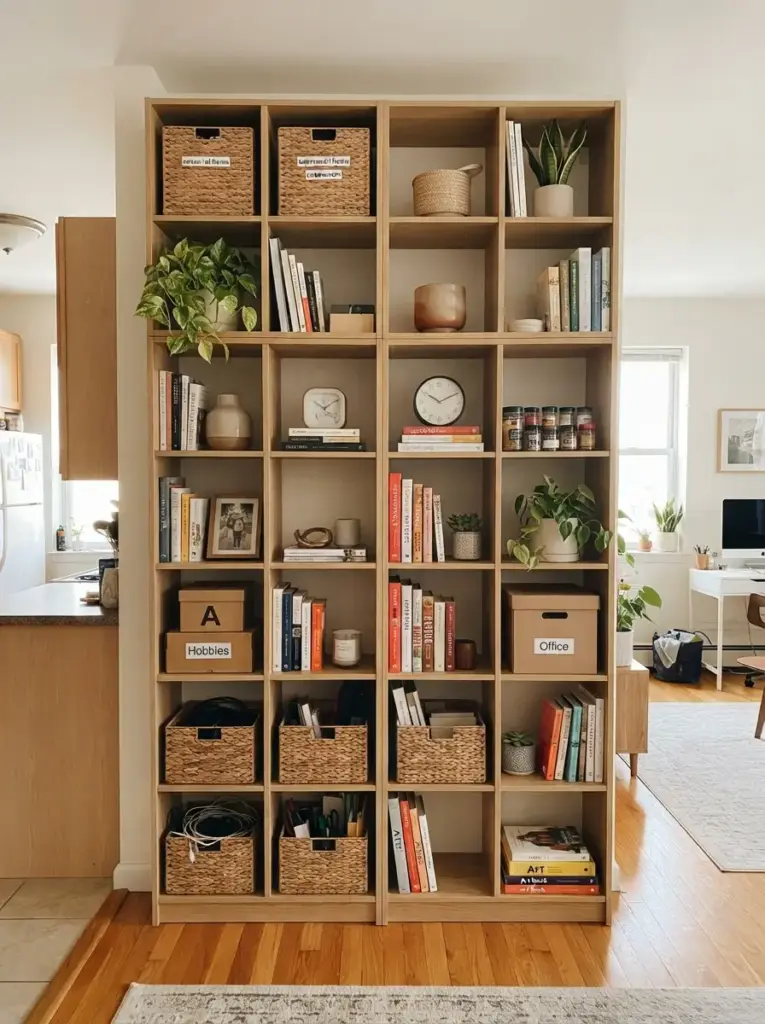
Walls can hold items that would otherwise crowd the floor, countertops, and closet. Install tall bookcases, modular shelves, pegboards, over-door organizers, or wall rails where permitted. Place heavier items on lower shelves and lighter baskets or decorative objects higher up. Couples can divide a tall unit by shelf, category, or activity so both people know where belongings belong.
Closed boxes on upper shelves hide paperwork, cables, and seasonal items, while open shelves can display a smaller number of books and meaningful objects. Vertical storage is effective because it uses the full height of the room and keeps daily essentials visible without adding wide cabinets. It works best for couples with hobbies, home-office supplies, or limited kitchen storage. Rental-friendly tension-pole shelving and over-door systems avoid permanent holes. Keep the top third of shelving visually light to prevent the room from feeling top-heavy. Avoid filling every shelf edge to edge; leaving some space makes the unit easier to use and less stressful to look at.
Set Up a Compact Work Zone for One or Two
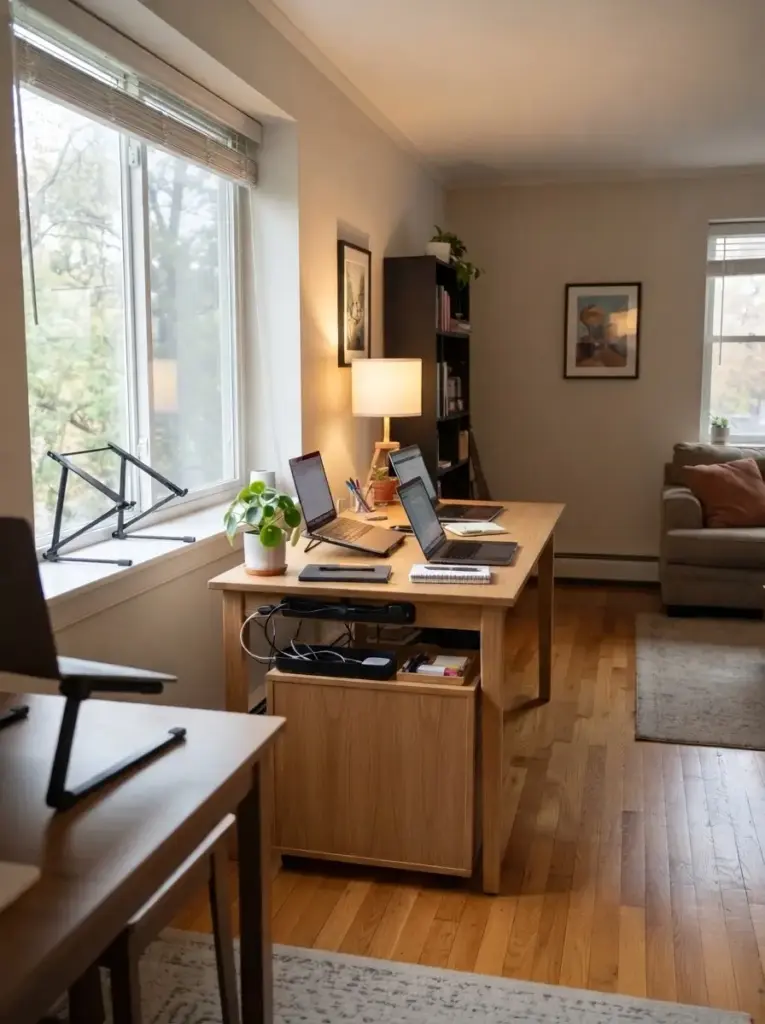
Remote work becomes difficult when laptops, chargers, and papers are spread across the dining area. A narrow desk between 36 and 48 inches wide can create a dedicated work zone, while a wall-mounted folding desk helps when floor space is limited. Couples who both work from home may prefer a longer 60-inch desk with two small chairs, provided each person has enough elbow room and cable access.
Another option uses one permanent desk and one portable laptop stand that moves to the dining table only when needed. Position the desk near daylight, but angle screens to reduce glare. Add a 3500K task lamp, a cable tray, and one drawer unit for shared supplies. Defined workspace improves concentration and makes it easier to stop working at the end of the day. It suits couples with hybrid schedules or side projects. Avoid placing the desk directly beside the bed when another wall is available, since unfinished tasks can interfere with rest. Closed storage helps the area disappear visually after work hours.
Use Curtains to Add Height and Soften the Room
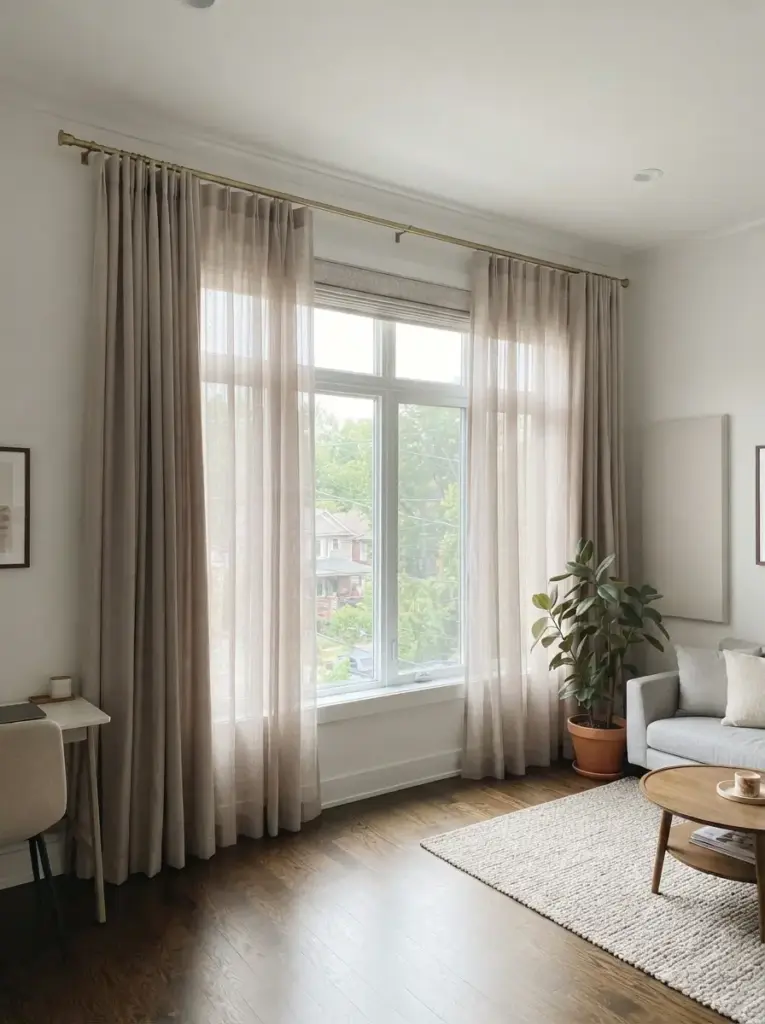
Curtains can make a studio feel taller when the rod sits close to the ceiling and extends several inches beyond the window frame. Choose panels that reach the floor or stop about half an inch above it. Hanging them too short breaks the vertical line and makes the window look smaller. Light-filtering curtains provide privacy during the day, while lined panels or a roller shade improve sleep.
Couples with different sleep preferences can layer both. Warm white, flax, mushroom, or soft taupe fabrics blend with most palettes and reduce visual noise. Ceiling-to-floor fabric also softens echoes, which is helpful when two people share one open room. Rental-friendly tension rods work inside deep window frames, though they do not create the same width as an outside-mounted rod. Removable brackets may suit lightweight panels. Avoid thick, dark curtains in a studio with one small window because they can absorb too much light. Washable polyester-linen blends offer the look of natural fabric with easier care and a lower price.
Add Mirrors Where They Reflect Light, Not Clutter
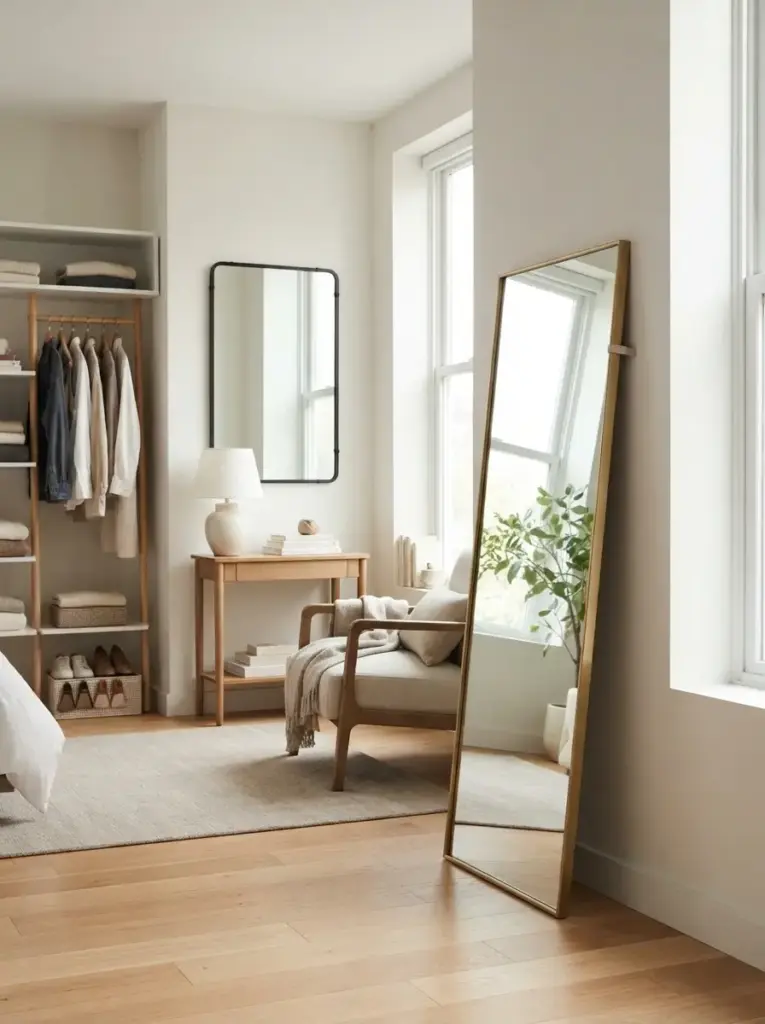
Mirrors make the biggest difference when they reflect a window, lamp, clear wall, or attractive section of the room. Positioning one opposite a pile of shoes or an open kitchen shelf simply doubles the visual clutter. A full-length mirror near the wardrobe supports daily routines for both partners, while a large rectangular mirror above a low console can spread daylight through the living zone. Leaning mirrors are convenient for renters, but they should be secured with an anti-tip strap when possible.
Acrylic mirror tiles provide a lighter option, though seams remain visible. Couples in darker studios benefit most from a mirror placed near the main source of daylight. Reflection helps because it moves light deeper into the apartment and adds a sense of depth without taking up usable floor space. Choose a thin frame in black, brass, pale wood, or the same finish as nearby furniture. Avoid covering several walls with mirrors, which can feel busy and expose every untidy corner.
Keep Decor Meaningful and Easy to Maintain
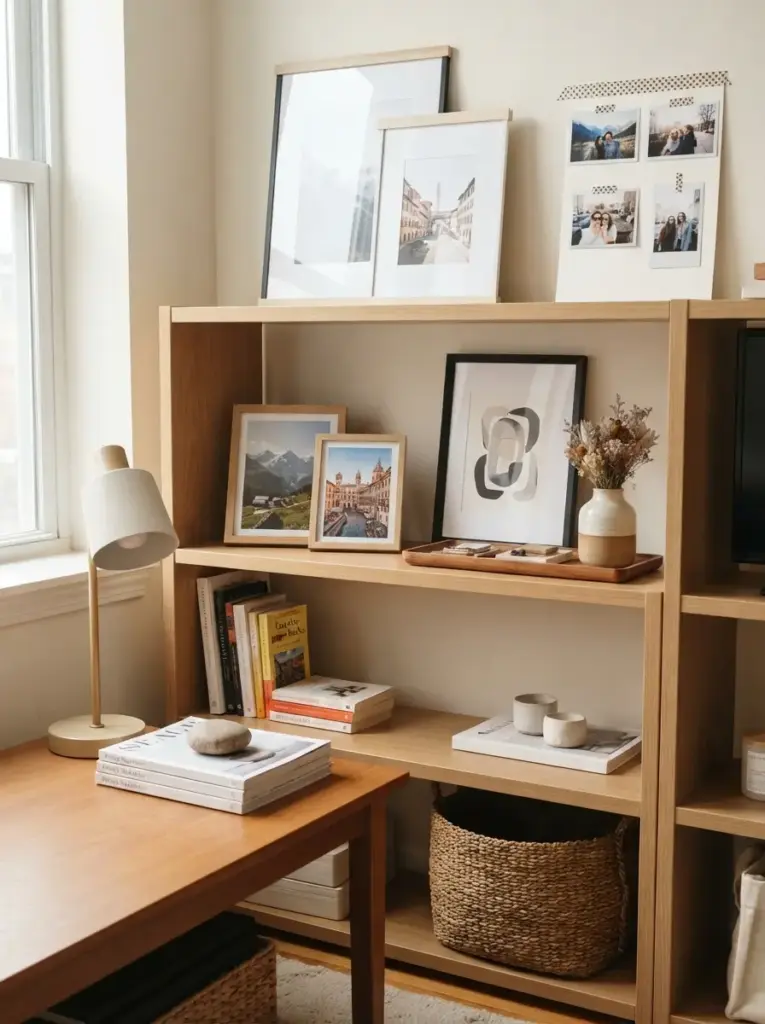
Shared studios do not need many decorative objects; they need a smaller collection that represents both people. Choose framed travel photos, one shared art piece, favorite books, handmade ceramics, or objects connected to hobbies. Group small items on a tray or shelf rather than spreading them across every surface. A simple rule can limit each open surface to one useful item and one decorative group. Couples who have recently moved in together should edit duplicates before buying more decor. Two sets of vases, lamps, cushions, and kitchen accessories quickly create clutter.
Meaningful decorating works because personal items add warmth without competing with daily function. It is best for couples who want the studio to feel shared rather than designed around one person’s taste. Removable picture strips, leaning frames, and washi-tape photo arrangements protect rental walls. Avoid tiny ornaments that require constant dusting or sentimental pieces placed in risky locations. Rotating a few objects seasonally keeps the apartment fresh while storage remains manageable.
Common Mistakes to Avoid
Oversized furniture causes the most expensive layout problems. A deep sectional, king bed, wide dining table, or heavy storage cabinet may fit through the door but still consume the apartment’s useful floor area. Measurements should include walking clearance, open drawers, chair movement, and door swings. Couples also make mistakes when they buy furniture before discussing routines. One partner may expect a dining table while the other prioritizes a desk, leaving too many surfaces competing for the same corner.
Another problem comes from using open storage everywhere. Open shelves can look attractive in photographs, but real homes need closed places for medicine, documents, cables, cleaning supplies, and personal items. Mixing too many wood tones, metal finishes, and unrelated colors can also make the studio feel unsettled. Limit visible finishes and repeat them across zones.
Poor lighting often makes a well-planned room feel uncomfortable. One harsh ceiling bulb creates shadows and gives both partners only one level of brightness. Several smaller lamps with consistent color temperature offer better control. Clutter near the entrance creates another common issue because bags, shoes, keys, and coats spread into the main room. A narrow shoe cabinet, hooks, and a small tray can prevent that buildup.
Couples should also avoid placing every item around the perimeter without creating zones. Strategic furniture placement can define a bedroom, living area, and workspace while keeping paths clear. Finally, do not treat the bed as the default sofa, dining seat, office, and storage surface. Even one comfortable chair, a small table, and a dedicated work spot can protect rest and make the studio feel more functional.
Budget-Friendly Ways to Improve a Shared Studio
Money goes further when couples improve the apartment in stages. Start with the changes that solve daily irritation, such as poor lighting, insufficient storage, or blocked walkways. Rearranging furniture costs nothing and may reveal that a new purchase is unnecessary. Painter’s tape, cardboard templates, and free room-planning apps help test dimensions before spending. Secondhand shops, local marketplaces, and estate sales often carry solid wood side tables, mirrors, shelves, and lamps at lower prices than new flat-pack furniture. Check stability, odors, pests, and drawer condition before bringing used pieces home. Soft furnishings such as cushion covers, curtains, and bedding can update the palette without replacing large furniture. Matching pillow inserts with new covers costs less than buying complete cushions.
Rental-friendly upgrades can also remain affordable. Plug-in sconces, removable hooks, peel-and-stick backsplash panels, tension rods, and adhesive cable clips add function without major installation. Test adhesive products on a hidden area and follow removal instructions because some paints lift easily. LED bulbs in the correct temperature provide a noticeable lighting improvement for little cost. Storage boxes look more coordinated when they share one material or color, even when they come from discount stores.
Couples can assign a fixed monthly decor budget and purchase one useful item at a time. Spending slowly reduces impulse buys and gives both people time to decide what the apartment genuinely needs. Paintable thrifted furniture can work well, but proper cleaning, sanding, primer, and curing time matter. Cheap furniture becomes expensive when it fails quickly, so prioritize sturdy frames, smooth hardware, and practical dimensions over decorative details.
Studio Apartment for Couples Tips for Easier Daily Living
Shared-space success depends on systems as much as style. Give each person clearly defined storage, even when the division is not exactly equal. One partner may need more hanging space while the other needs drawers, but both should know where personal belongings belong. Use labeled bins inside closets and under the bed so items do not migrate into random corners. Create a ten-minute evening reset that includes clearing the dining surface, folding throws, putting away chargers, and returning shoes to the entry. Short routines prevent small messes from taking over the entire room.
Privacy also deserves attention. Headphones, a folding screen, separate bedside lights, and agreed quiet hours can reduce tension when schedules differ. Couples should discuss which surfaces must stay clear and which areas can hold ongoing projects. One person may need a desk left undisturbed, while the other wants the kitchen counter empty every night. Seasonal editing keeps storage under control, so review clothes, duplicate kitchen tools, and unused decor every three or four months.
Guests should have a plan as well. Stackable stools, nesting tables, and a folding chair can expand seating without permanently crowding the studio. Clear communication makes every decorating choice more useful because the apartment supports two real routines rather than an imagined lifestyle.
Frequently Asked Questions
What Is the Best Layout for a Studio Apartment for Couples
Best layouts place the bed away from the entrance, keep the main walkway open, and group furniture by activity. Position the living area near the strongest daylight when possible, then use a rug, open shelf, or curtain to separate it from the sleeping zone. Keep dining or work surfaces close to the kitchen wall or window so they do not interrupt circulation. Exact placement depends on door swings, radiator locations, outlets, and window position. Measuring those fixed features before moving furniture prevents wasted space.
Which Bed Size Works Best for a Couple in a Studio
Queen beds offer a practical balance for many couples because they provide more shared sleeping space than a full bed without the width of a king. A full bed can work for smaller rooms or couples comfortable with less space. Storage beds add function but may sit higher and feel visually larger. Leave at least 24 inches on one side when both sides cannot remain open, and try to provide access from both sides whenever the layout allows. Mattress comfort should take priority over decorative bed frames.
How Can Couples Create Privacy in One Open Room
Privacy can come from visual separation, sound control, and routine. Use a curtain, slatted divider, tall open bookcase, or folding screen around the bed or desk. Add rugs and curtains to reduce echo, and use headphones when one person works or watches media. Separate lamps allow one partner to sleep while the other reads. Agreed quiet times and designated personal storage also protect a sense of independence. Full walls are not always necessary when the space includes clear boundaries and considerate habits.
What Colors Make a Studio Apartment Feel Larger
Light warm neutrals usually reflect more light and create a continuous background. Warm white, pale greige, soft beige, light gray-green, and muted blue work well on large surfaces. Darker colors can still appear in small amounts through cushions, frames, lamps, or one compact accent area. Keeping the ceiling light and using similar colors on curtains and walls can make boundaries feel less abrupt. Contrast should remain controlled rather than eliminated, since a few darker elements add depth and prevent the room from looking flat.
How Much Furniture Should a Couple Keep in a Studio
Furniture should match the activities that happen regularly. Most couples need a bed, comfortable seating, a dining or work surface, bedside storage, and enough closed storage for daily belongings. Extra chairs, large display cabinets, duplicate side tables, and rarely used guest furniture often create more problems than value. Multifunctional pieces help, but every item does not need to transform. A comfortable sofa that fits properly is better than a complicated convertible piece that is difficult to use. Empty floor space also has value because it improves movement and cleaning.
How Can Renters Decorate Without Damaging Walls
Renters can use tension rods, freestanding shelves, leaning mirrors, removable picture strips, plug-in sconces, over-door organizers, and washable rugs. Adhesive products should be tested first because paint quality varies. Lightweight art is safer than heavy framed pieces on removable hooks. Furniture can provide color through upholstery, bedding, curtains, and accessories when repainting is not allowed. Keep original hardware and fixtures in labeled bags if replacements are permitted, then reinstall them before moving out. Lease rules should always guide any change that involves drilling or surface coverings.
Conclusion
Living together in one open room becomes easier when decorating choices solve real problems. Clear walking paths, layered lighting, balanced storage, compact furniture, and simple zoning allow both partners to use the apartment without constantly moving each other’s belongings. Neutral foundations can keep the room visually calm, while personal art, favorite colors, and meaningful objects make it feel shared. Rental-friendly products and secondhand furniture can support the same goals without a large budget. Couples should measure carefully, discuss routines honestly, and buy slowly. A well-planned Studio Apartment for Couples does not depend on expensive decor or a flawless layout. It depends on useful furniture, respectful habits, and enough flexibility for two people to feel comfortable at home.