
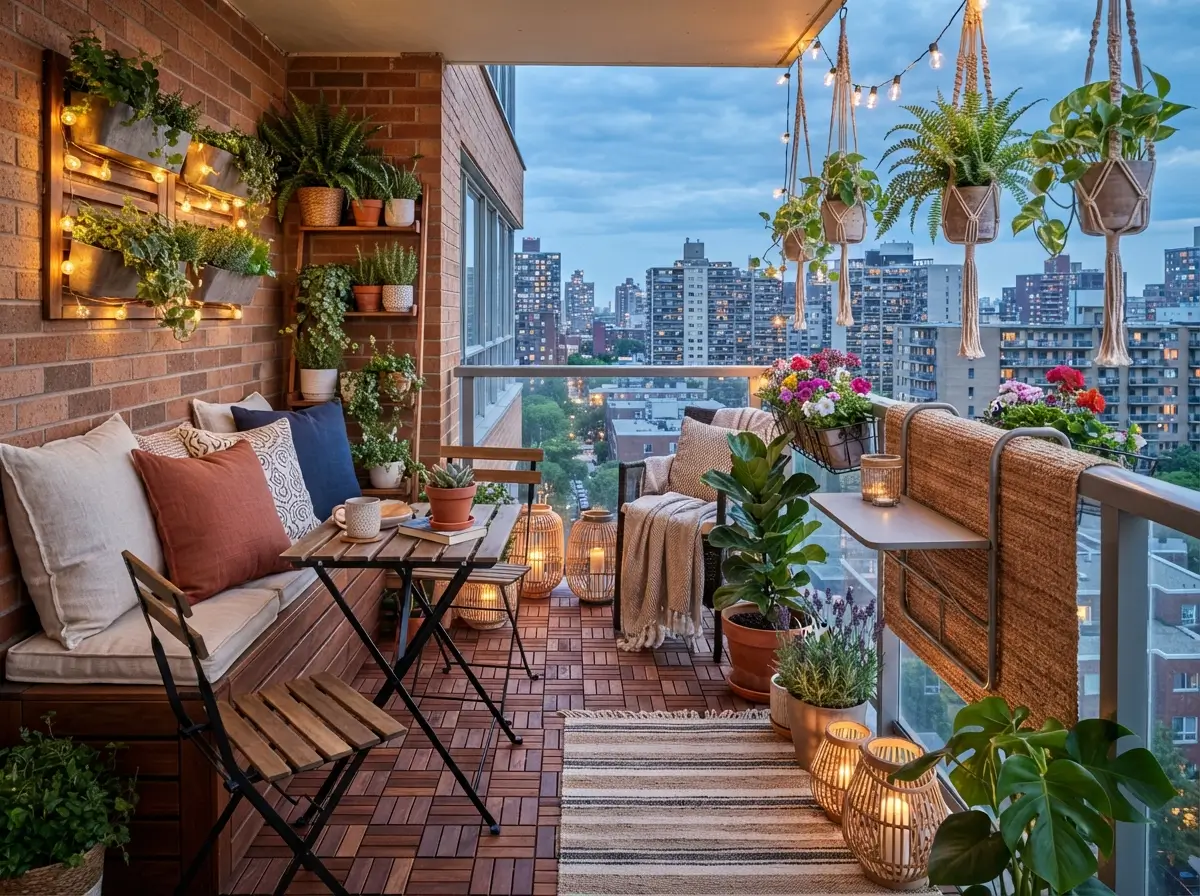

Small apartment balconies can be tricky to decorate because every inch matters, especially when the space is long, slim, exposed, or shared with neighbors. Good Narrow Balcony Decor is not about filling the balcony with many pretty things. Better results come from choosing the right furniture scale, creating privacy without blocking light, using weather-safe materials, and making the area useful for daily life. Even a balcony that only fits one chair can become a comfortable coffee spot, reading nook, mini garden, or quiet place to get fresh air after work. Simple choices such as a folding bistro chair, warm 2700K lighting, a slim outdoor rug, and vertical planters can make the space feel finished without making it feel crowded.
What is the best way to decorate a narrow balcony?
The best way to decorate a narrow balcony is to start with one clear purpose, then choose slim furniture, vertical storage, soft lighting, weather-friendly textiles, and renter-safe privacy features. Narrow Balcony Decor works best when the walking path stays open, furniture folds or stacks when needed, and decor adds comfort without stealing floor space.
Start With One Main Balcony Purpose
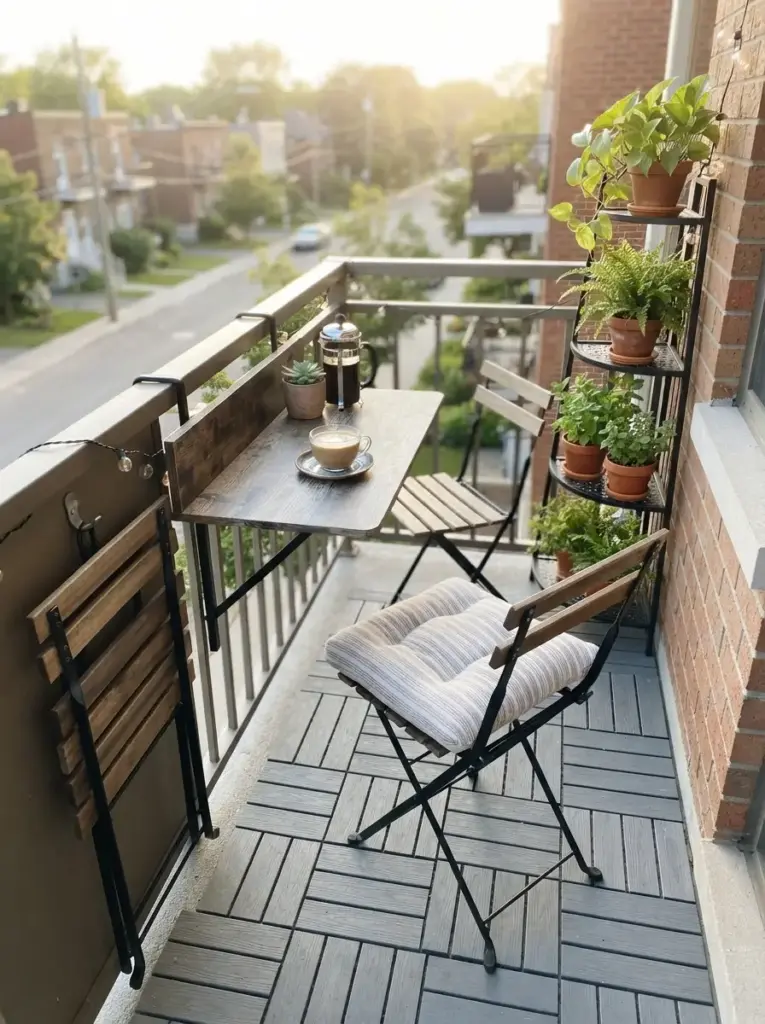
Small balconies become harder to style when they try to do too many things at once. Decide whether the balcony should work as a morning coffee area, plant corner, reading spot, tiny dining setup, pet-friendly fresh air zone, or quiet evening retreat. A clear purpose helps you avoid buying random decor pieces that look nice in stores but do not fit your actual routine. For example, someone who drinks coffee outside every morning needs a stable side table and a comfortable chair more than a large plant shelf. Someone who grows herbs needs sunlight access, easy watering, and containers that do not drip onto neighbors below.
Purpose-led Narrow Balcony Decor is useful because slim spaces do not have room for guessing. Beginners often start with string lights, cushions, and plants, then realize there is nowhere to sit comfortably or place a cup. Better planning starts with daily use. For a coffee balcony. Place one narrow bistro table against the railing and use two folding chairs that can hang on wall hooks when not in use. For a reading balcony, choose one deep but narrow lounge chair. a small waterproof side table, and a clip-on lamp if outlets are limited. For a plant balcony, use tiered shelves against one short wall instead of spreading pots across the floor.
Apartment renters benefit from this approach because it reduces clutter and avoids unnecessary drilling. Most rental balconies have rules about weight, railing attachments, and visible exterior changes, so a focused layout keeps the setup easier to remove later. The best audience for this tip includes beginners, renters, and anyone who has bought balcony decor before but still feels the space does not work. One common mistake is copying a large patio setup on a thin balcony. Instead of forcing a full outdoor room into a small strip, treat the balcony like a single-purpose corner with carefully chosen layers.
Choose Slim Furniture With Open Legs
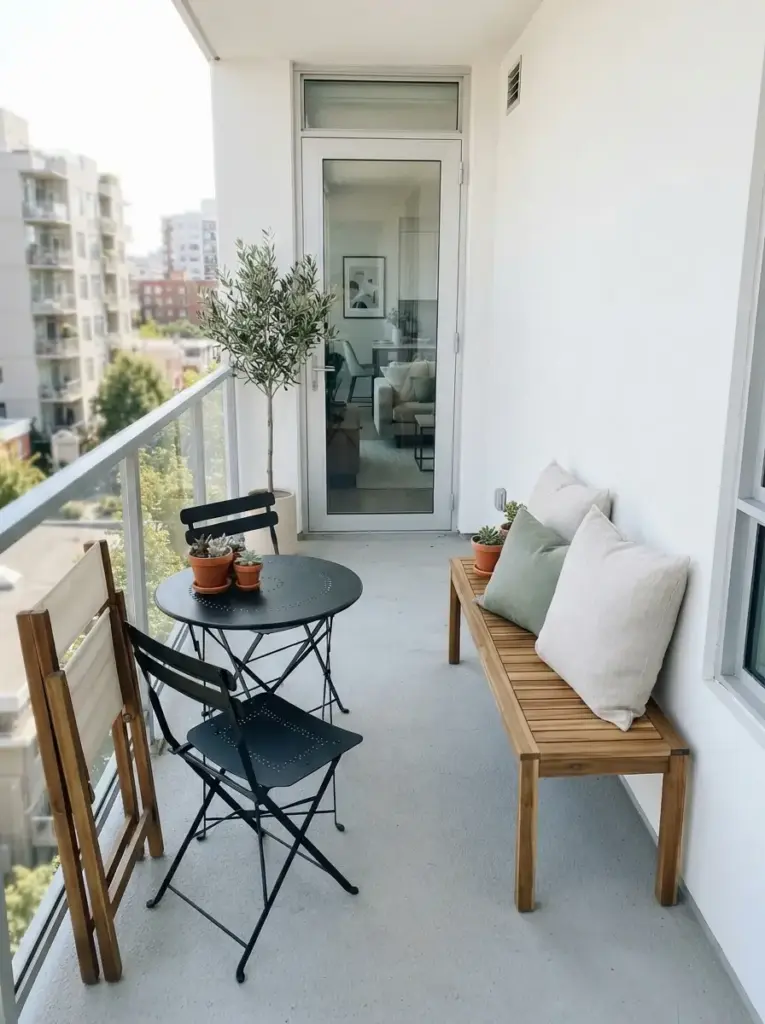
A furniture scale can make or break a narrow balcony. Bulky chairs, thick bases, and wide coffee tables take up visual space even when they technically fit. Slim furniture with open legs lets light pass through, keeps the floor visible, and makes the balcony feel less boxed in. Look for metal bistro chairs, folding wood chairs, narrow benches, compact stools, or armless outdoor chairs. Pieces around 16 to 20 inches deep often work better than lounge chairs that need 28 inches or more. When shopping, measure the balcony width first, then leave at least 24 inches for walking space if the balcony connects to a door, storage closet, or laundry area.
Open-leg furniture is smart for Narrow Balcony Decor because it keeps the layout light. Heavy furniture blocks sightlines and makes a narrow area feel like a storage zone. Black metal frames can look crisp against white walls, natural wood warms up concrete balconies, and light beige or muted sage cushions soften modern apartment railings. For a balcony that is only three feet wide, try one folding chair and one small C-shaped side table instead of a full table set. For a longer balcony, place a slim bench along the wall and add one movable stool that can work as extra seating or a plant stand.
Renters should choose furniture that can fold, stack, or move indoors during bad weather. Powder-coated steel, treated acacia wood, resin wicker, and weather-resistant plastic are practical options, but cushions should still be stored in a waterproof box or brought inside during rain. Budget-friendly buyers can search for secondhand bistro sets, repaint old metal chairs with outdoor spray paint, or use a sturdy indoor stool temporarily if the balcony is fully covered. The best fit for this idea includes apartment dwellers who want seating but cannot sacrifice walking room. Avoid chairs with flared arms, wide rocking bases, or thick lounge frames unless the balcony has unusual depth.
Use a Narrow Outdoor Rug to Define the Space
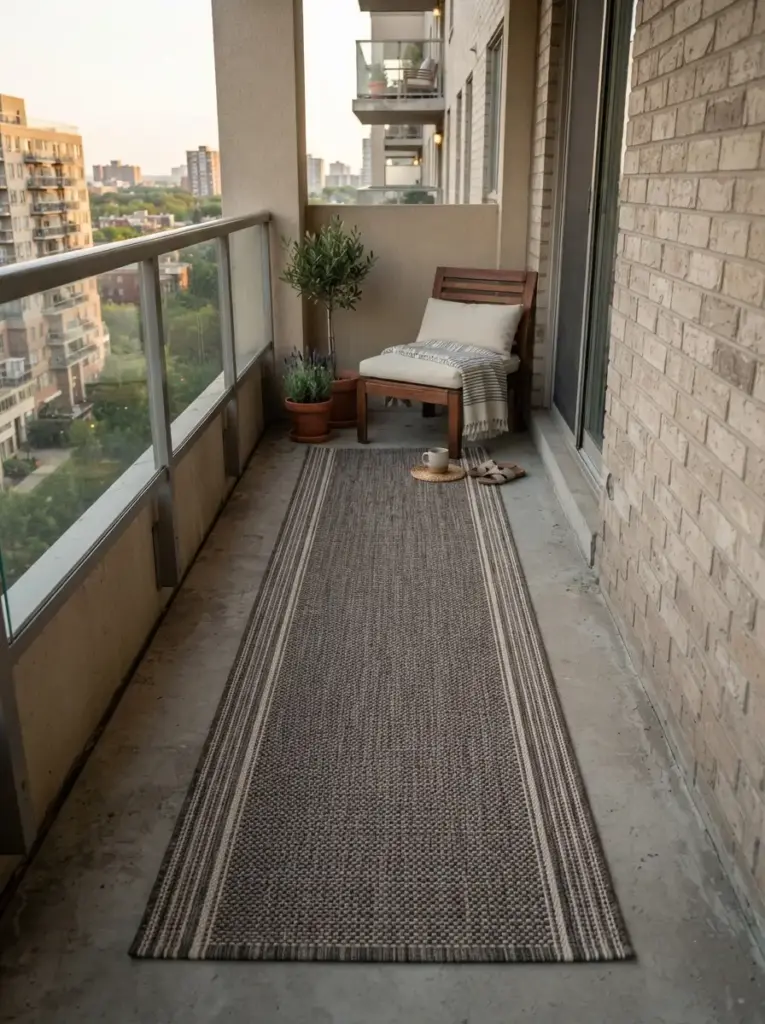
Concrete balcony floors often feel cold, dusty, or unfinished. A narrow outdoor rug instantly gives the area a planned look while making bare feet more comfortable. Choose a rug made from polypropylene, recycled plastic, or another outdoor-safe material that dries quickly and resists mildew. Runner-style rugs work especially well because they follow the long shape of a slim balcony. A 2-by-6-foot rug, a 2-by-8-foot rug, or a custom-cut outdoor mat can add warmth without forcing furniture into awkward positions. Patterns with thin stripes, small geometric shapes, or subtle texture hide dirt better than flat white or solid black rugs.
Floor definition matters because narrow balconies can look like leftover exterior space instead of part of the apartment. Rug placement tells the eye where the seating zone begins and ends. In Narrow Balcony Decor, a rug also adds color without taking up any usable space. Soft gray, tan, terracotta, olive, charcoal, and navy are practical shades because they work with common apartment materials like glass railings, steel railings, brick walls, and beige stucco. For a bright balcony, a natural jute-look outdoor rug gives texture without the maintenance problems of real jute. For a shaded balcony, a patterned rug can prevent the space from looking dull.
Rental-friendly rug tips are simple but important. Use a rug pad designed for outdoor use if the floor gets slippery, and avoid adhesives that can leave residue. Shake the rug weekly, lift it after heavy rain, and check underneath for trapped moisture. Budget decorators can use interlocking outdoor deck tiles in a small section instead of a full rug, but rugs are usually cheaper and easier to remove. Best use case includes balconies with plain concrete floors, renters who cannot paint, and beginners who want a fast upgrade. A common mistake to avoid is buying a rug that is too wide. Edges that curl against walls or railings make a narrow balcony look cramped and can become a tripping hazard.
Add Warm Layered Lighting
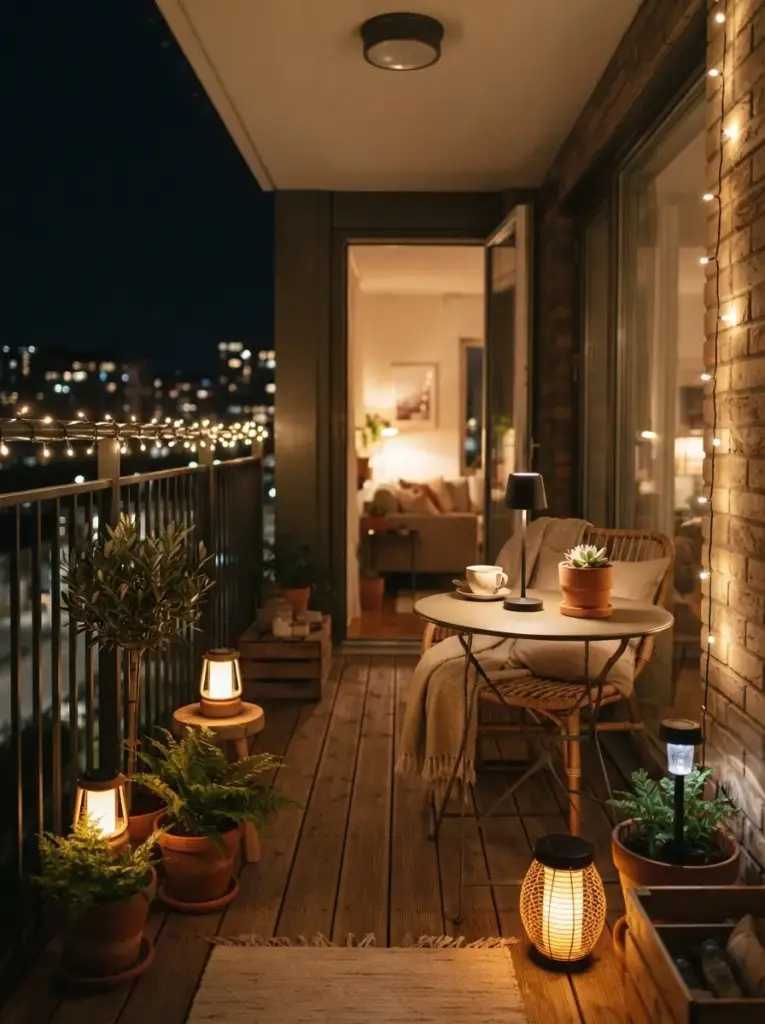
Balcony lighting should feel comfortable, not harsh. Many apartment balconies only have one ceiling light or no light at all, so layered lighting can change how usable the space feels at night. Warm white bulbs around 2700K to 3000K create a softer glow than cool white bulbs. Battery lanterns, solar stake lights in planters, rechargeable table lamps, low-voltage string lights, and clip-on railing lights all work well in narrow spaces. Place lighting at different heights, such as one lantern near the floor, one small lamp on a table, and string lights along the wall or railing if allowed.
Layered light supports Narrow Balcony Decor because slim balconies need atmosphere and function without bulky fixtures. An overhead light alone can cast strong shadows and make the balcony feel exposed. Softer light at eye level makes seating more comfortable and helps the balcony feel connected to the indoor room behind it. For example, a small black rechargeable lamp on a bistro table can make evening tea practical, while two lanterns near plant pots can highlight greenery without adding clutter. Warm lights also flatter natural materials like wood, rattan, terracotta, and beige cushions.
Renters should check building rules before attaching string lights to railings or exterior walls. Removable outdoor command hooks may work on smooth surfaces, but they can fail in heat, rain, or humidity. Freestanding lanterns and rechargeable lamps are safer when rules are strict. Budget-friendly lighting can be as simple as two solar lanterns and one battery candle inside a weather-safe holder. The best audience for this idea includes renters without balcony outlets, people who use their balcony after sunset, and anyone who wants comfort without major changes. Avoid flashing lights, colored party lights for everyday use, or cool 5000K bulbs unless the balcony needs task lighting for plants or cleaning.
Build Privacy Without Blocking Air
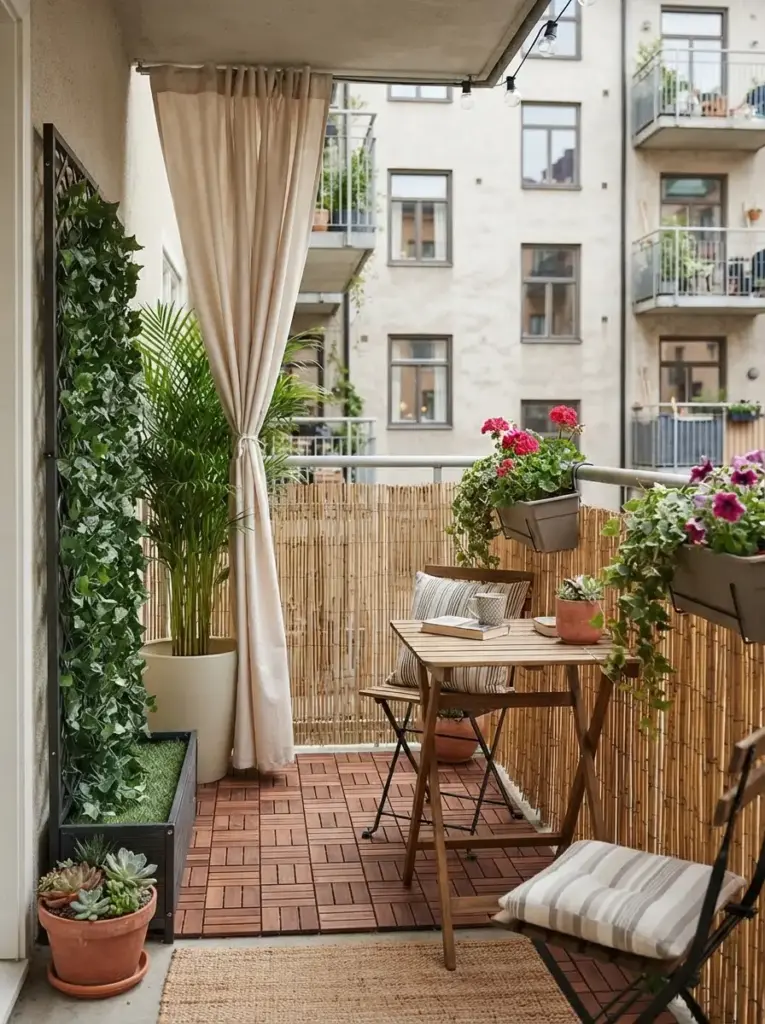
Privacy is one of the biggest challenges in apartment balconies. Nearby windows, opposite buildings, and shared railings can make people avoid using the space. Good privacy decor should soften exposure while keeping airflow and natural light. Bamboo screens, reed fencing, outdoor curtains, tall planters, railing planters, and slim trellises can all help. Choose materials that suit the building exterior. Bamboo and reed screens feel natural, dark mesh panels look modern, and outdoor curtains in beige or light gray soften the edges. For a narrow balcony, privacy should stay close to the railing or one side wall so it does not steal floor space.
Privacy upgrades improve Narrow Balcony Decor because people use spaces more often when they feel comfortable. Blocking the entire railing with heavy fabric can make the balcony feel smaller, hotter, and darker, so partial screening usually works better. Cover only the lower railing if the main issue is street view. Add a tall planter on one side if the problem is a neighbor’s balcony. Use an outdoor curtain only along the open side where people can see directly in. For example, two tall planters with bamboo palms or faux boxwood panels on a slim trellis can create side privacy while keeping the view open.
Rental-friendly privacy requires care. Many apartment buildings do not allow anything visible from the exterior or attached permanently to railings. Zip ties may be allowed in some places, but always check the lease rules before installing screens. Freestanding planters, weighted trellises, and tension rods inside the balcony frame can be easier to remove. Budget options include reed rolls, thrifted outdoor curtains, or tall grasses in lightweight resin pots. Best fit includes balconies facing neighbors, busy streets, or parking areas. Avoid fully covering glass railings with dark material if the indoor room depends on the balcony light. Good privacy should make the balcony more usable without turning it into a closed box.
Go Vertical With Plants
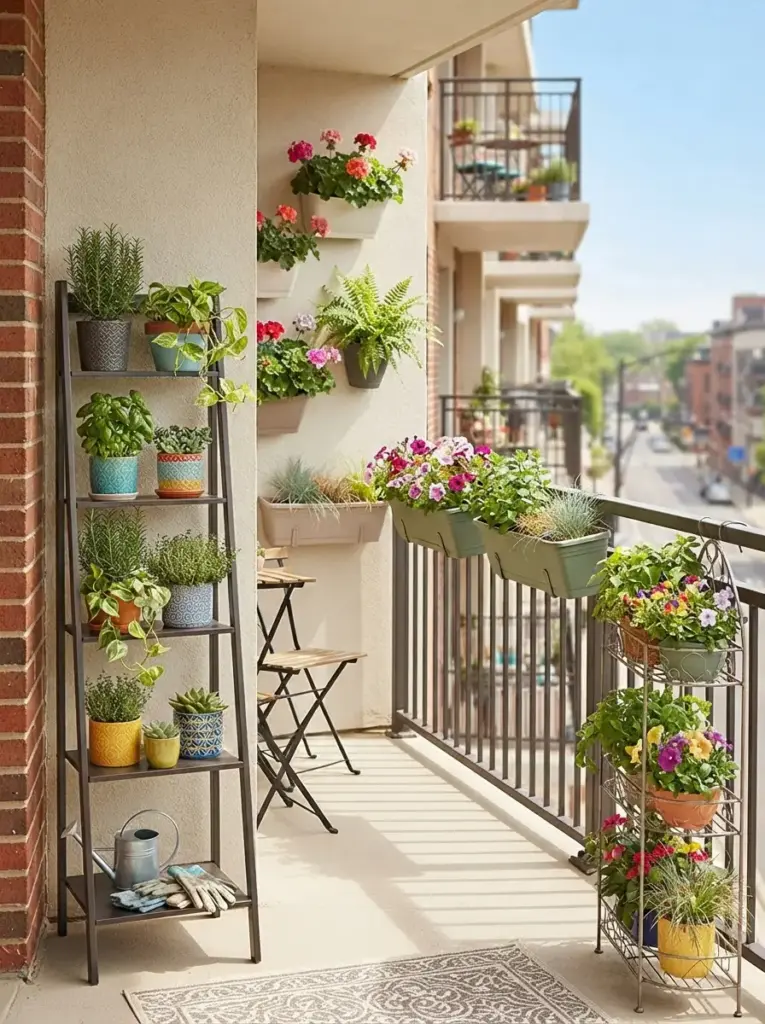
Plants can bring life to a narrow balcony, but floor pots can quickly block movement. Vertical plant displays solve that problem by using walls, railings, ladders, shelves, and hanging systems. A slim ladder shelf against the short wall can hold herbs, succulents, trailing plants, and small flowers. Railing planters can hold rosemary, mint, petunias, or compact ornamental grasses. Wall-mounted planters may work for owners, while renters can use freestanding plant stands or over-the-rail containers if building rules allow them. Before buying plants, watch the balcony for a full day to understand the sun, wind, and shade.
Vertical greenery works well for Narrow Balcony Decor because it draws the eye upward and keeps the floor open. Tall lines make a slim balcony feel more intentional. For a sunny balcony, try lavender, rosemary, basil, dwarf citrus, geraniums, or succulents. For a shaded balcony, consider ferns, pothos, peace lilies in protected areas, caladiums, or snake plants if temperatures stay suitable. Windy balconies need sturdy pots and resilient plants, not delicate stems that break easily. Use lightweight resin or fiberglass containers instead of heavy clay if weight limits are a concern, but add enough stability so pots do not tip.
The best audience for this idea includes home decor lovers who want color and beginners who want an easy plant plan. Start with three to five plants instead of twenty. Group plants by watering needs, and place saucers under pots only if water will not collect and create pests. Budget-friendly decorators can propagate pothos, grow herbs from small starter plants, or use one large statement plant instead of many tiny pots. Renters should avoid drilling plant hooks into exterior walls without permission. A common mistake to avoid is placing plants across the entire balcony floor. Even beautiful plants become annoying when you have to step around them every day.
Try a Wall Bench or Slim Storage Bench
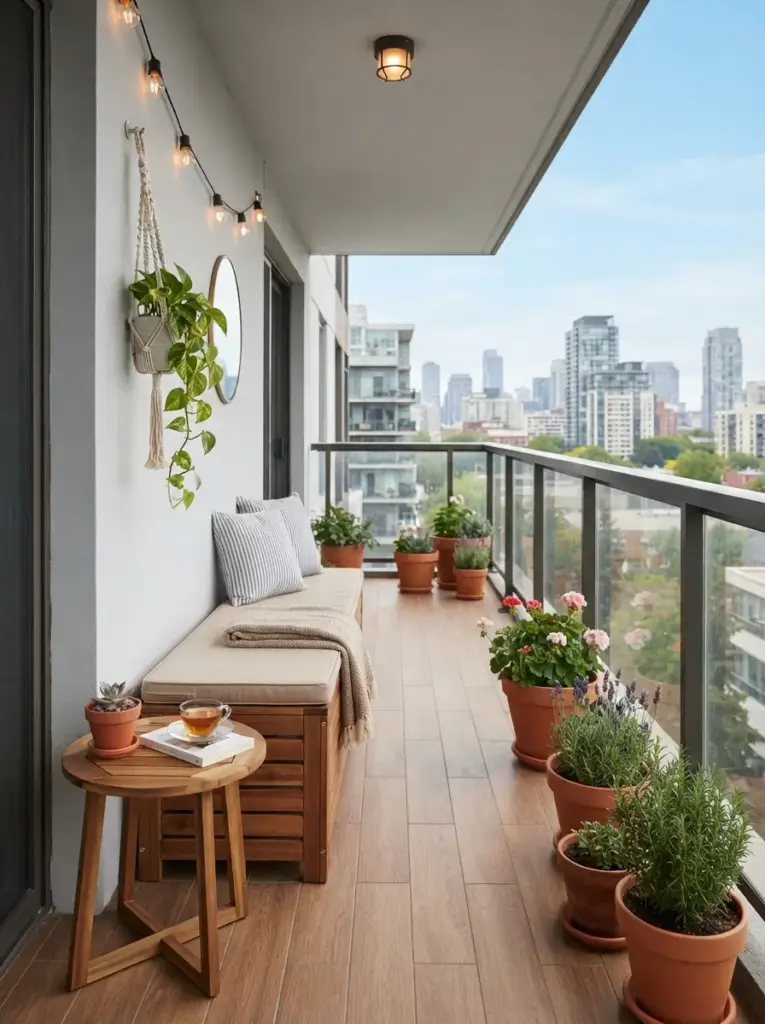
Long, narrow balconies often work better with seating along the wall rather than facing the railing. A slim bench creates more seating than individual chairs and can double as storage if it has a lift-up seat. Look for benches around 12 to 16 inches deep when space is tight. A storage bench can hold cushions, gardening gloves, lanterns, small tools, and outdoor blankets. Choose weather-resistant materials and make sure the lid opens fully without hitting the wall or railing. Add a thin outdoor cushion and two small pillows, but keep the cushion depth aligned with the bench so it does not spill into the walkway.
Bench seating is effective because it follows the natural shape of a narrow balcony. Chairs often need room behind them for pulling out and adjusting, while a bench stays fixed against the wall. In Narrow Balcony Decor, fixed seating also creates a calmer layout because everything has a place. For a modern apartment. Try a black metal bench with charcoal cushions and a small wood side table. For a warmer style. Use an acacia wood bench with beige cushions and terracotta planters. For a renter-friendly setup, choose a freestanding bench that does not attach to walls.
Storage benches are best for people who want the balcony to look tidy with minimal effort. They are also useful for pet owners who need to store toys, plant lovers who need small supplies, and renters who bring cushions indoors during storms. Budget-friendly options include a narrow outdoor storage box with a cushion on top, but check the weight rating before using it as seating. Avoid oversized deck boxes that take up half the balcony. Also, avoid indoor benches unless the balcony is fully covered and protected from moisture. A slim bench should improve comfort while keeping the walkway clear.
Create a Tiny Coffee Corner
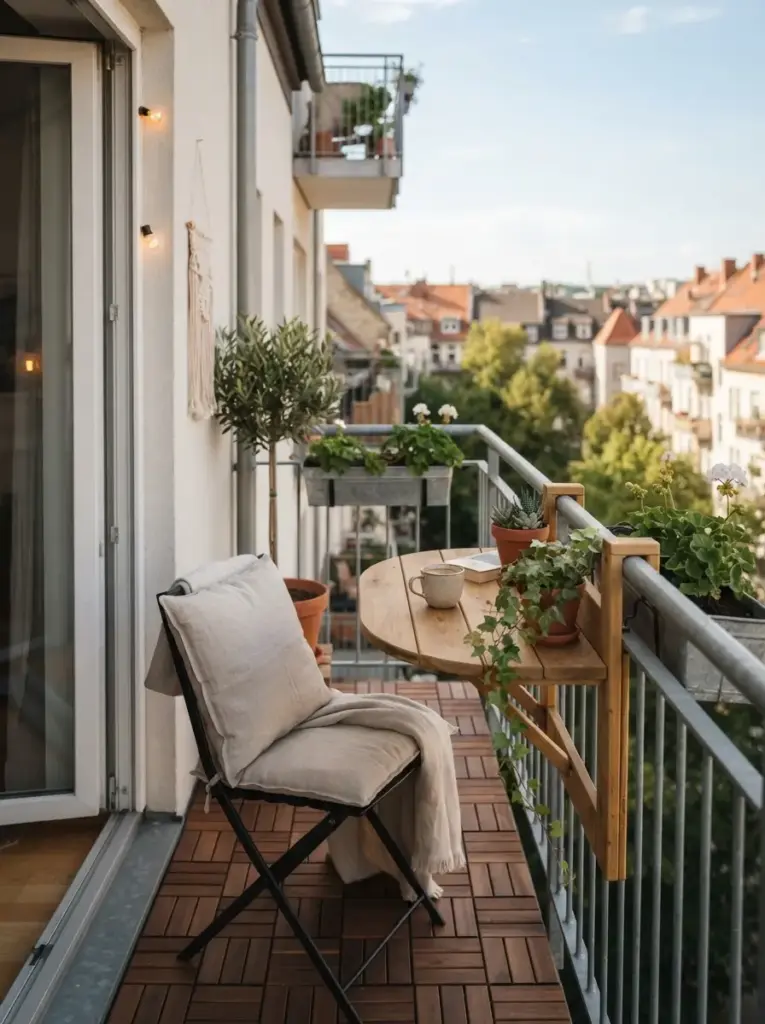
Coffee corners are popular because they do not need much space to feel useful. A folding bistro table, one compact chair, and a small tray can turn a bare balcony into a daily routine spot. Round tables are easier to move around than square tables in tight areas, but half-moon railing tables are even better when floor space is limited. Railing tables attach over the rail and fold down when not in use, though renters should confirm they are allowed. Keep the setup simple with one cup-friendly surface, one comfortable seat, and one soft detail such as a cushion or washable throw.
Tiny coffee setups support Narrow Balcony Decor because they give the balcony a clear job without clutter. People often avoid decorating slim balconies because they assume the space is too small for real use. Coffee corners prove that a small balcony can still serve a daily purpose. For a balcony under four feet wide, use a folding chair placed diagonally near the door and a narrow wall-mounted or railing-mounted table. For a longer balcony, place the table near the best view and keep plants at the opposite end so the sitting area does not feel crowded.
The best audience includes beginners, renters, and anyone who wants a low-cost upgrade. Choose colors that connect with the indoor room so the balcony feels like an extension of the apartment. Beige cushions with a wood table feel relaxed, black metal with white cushions feels clean, and muted green accessories pair well with plants. Budget tip: Use a small outdoor stool as a table before investing in a full bistro set. Avoid placing mugs, candles, or decor directly on railings because wind can knock them down. Keep the corner practical first, then add style through washable textiles, one plant, and warm lighting.
Use Foldable and Stackable Pieces
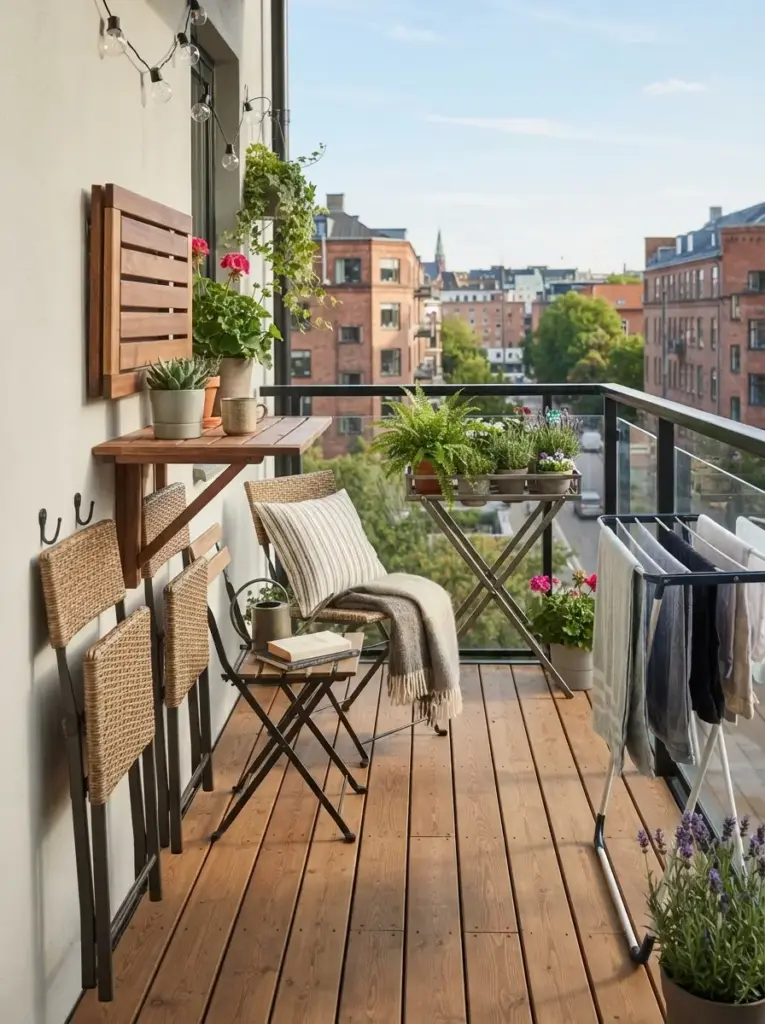
Foldable furniture is one of the most practical choices for narrow apartment balconies. Folding chairs, drop-leaf tables, collapsible plant stands, stackable stools, and nesting side tables give you flexibility when the balcony needs to change from seating area to drying area, cleaning zone, or open walkway. Instead of choosing fixed furniture that stays in the way, pick pieces that can disappear when not needed. Wall hooks, storage benches, and indoor closets can hold foldable chairs during winter or rainy weeks. Slim folding furniture is especially helpful for balconies that also serve as laundry or utility areas.
Flexible furniture fits Narrow Balcony Decor because small spaces need movement. A balcony may feel comfortable for sitting at night, but cramped when watering plants in the morning. Folding pieces let you open the floor quickly. For example, a drop-leaf table can sit flat against the wall during weekdays and open for weekend breakfast. Stackable stools can serve as seats, plant stands, or side tables depending on the day. A folding lounge chair can come out for reading and go away when guests arrive.
Renters benefit because foldable pieces are easy to move during inspections, storms, or relocations. Budget shoppers can often find folding bistro sets at seasonal sales or secondhand marketplaces. When buying, test the hinges and check whether the chair feels stable on outdoor flooring. Lightweight furniture is convenient, but very light pieces can blow over on windy balconies. Best fit includes multipurpose balconies, small families, and anyone unsure how they want to use the balcony long term. Avoid buying cheap folding chairs with uncomfortable backs if you plan to sit outside often. Comfort still matters, even when the furniture folds.
Add Color Through Small Repeated Accents
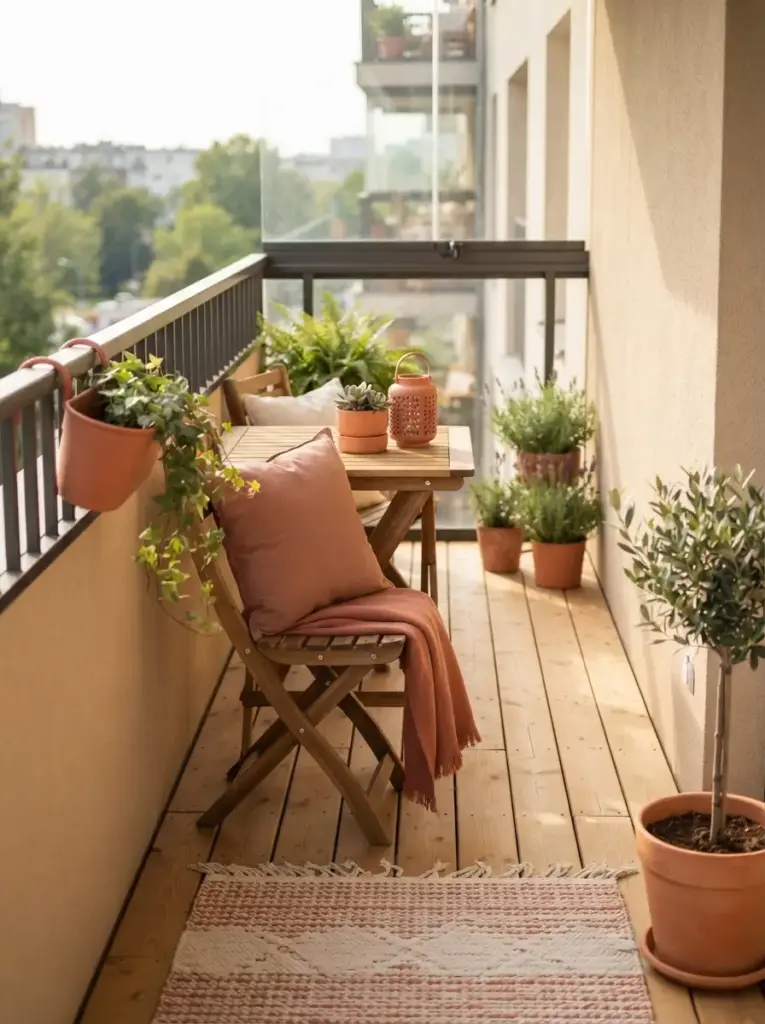
Color can make a balcony feel personal, but too many colors can overwhelm a narrow space. Choose one main neutral, one accent color, and one natural texture. For example, use warm beige as the base, muted terracotta as the accent, and natural wood as the texture. Another easy palette is soft gray, sage green, and black metal. Navy, white, and tan can work well for coastal-inspired apartments. Repeating the accent color in two or three places, such as a cushion, planter, and lantern, makes the balcony feel connected without looking busy.
Controlled color improves Narrow Balcony Decor because slim spaces show every item at once. Unlike a large patio, a narrow balcony does not have separate zones to hide mismatched pieces. Small repeated accents help beginners decorate with confidence. Terracotta planters can warm up gray concrete. Sage cushions can soften black railings. Mustard pillows can add energy to a balcony with white walls and wood flooring. Keep larger pieces neutral if you like changing colors seasonally. Cushions, plant pots, outdoor rugs, and lanterns are easier to swap than furniture.
The best audience includes home decor lovers who enjoy styling but do not want clutter. Budget decorators can repaint old pots, sew simple cushion covers, or choose one colorful outdoor pillow instead of buying an entire new set. Renters can use color to personalize the balcony without changing walls or floors. Avoid neon-heavy palettes unless that is truly your style, because bright colors can reflect harshly in small sunny spaces. Also, avoid using five different accent colors in a tiny area. Color works best when it guides the eye, not when it competes for attention.
Make the Railing Useful
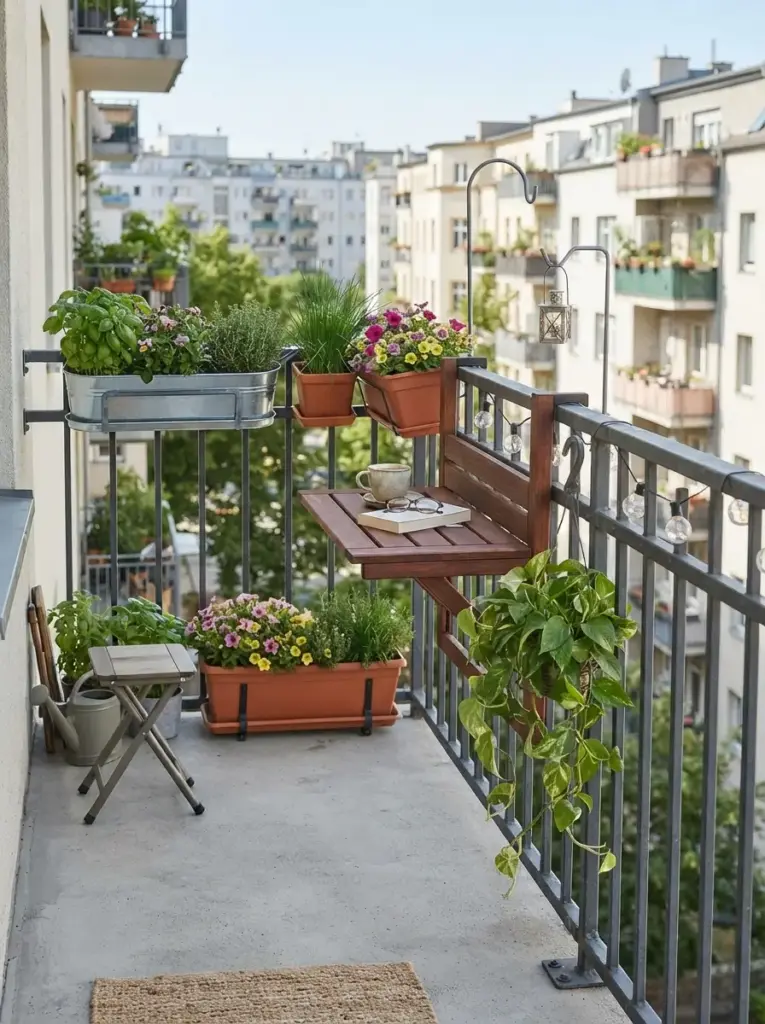
Balcony railings are valuable space, but many people ignore them or overload them. Railing planters, clip-on tables, narrow shelves, and light clips can add function without taking up floor area. Railing planters are useful for herbs, flowers, and trailing greenery. Fold-down railing tables can hold coffee, a book, or a laptop for short use. Some renters use railing hooks for lightweight lanterns, but safety matters more than style. Anything attached to a railing must be secure, weather-safe, and allowed by the building.
Railing use supports Narrow Balcony Decor because it frees the floor. Instead of placing a table in the walkway, a railing table can create a surface exactly where it is needed. Instead of using several floor pots, railing planters add greenery at eye level. For a sunny balcony, plant basil, thyme, chives, or compact flowers in railing boxes. For a shaded balcony, use trailing pothos in a protected planter or shade-loving annuals suited to your climate. Choose planters with proper drainage and secure brackets, and place drip trays where needed.
Best fit includes very narrow balconies, renters with limited floor space, and people who want more function without buying large furniture. Budget-friendly options include basic metal railing planters or a single foldable rail table instead of a full dining set. Before installing anything, check whether your lease or building management allows visible railing attachments. Avoid placing heavy pots on narrow rail caps or hanging items outward where they could fall. Safety is part of good decorating, especially in apartment buildings. A useful railing should make daily life easier without creating risk for neighbors below.
Use Mirrors Carefully in Shaded Balconies
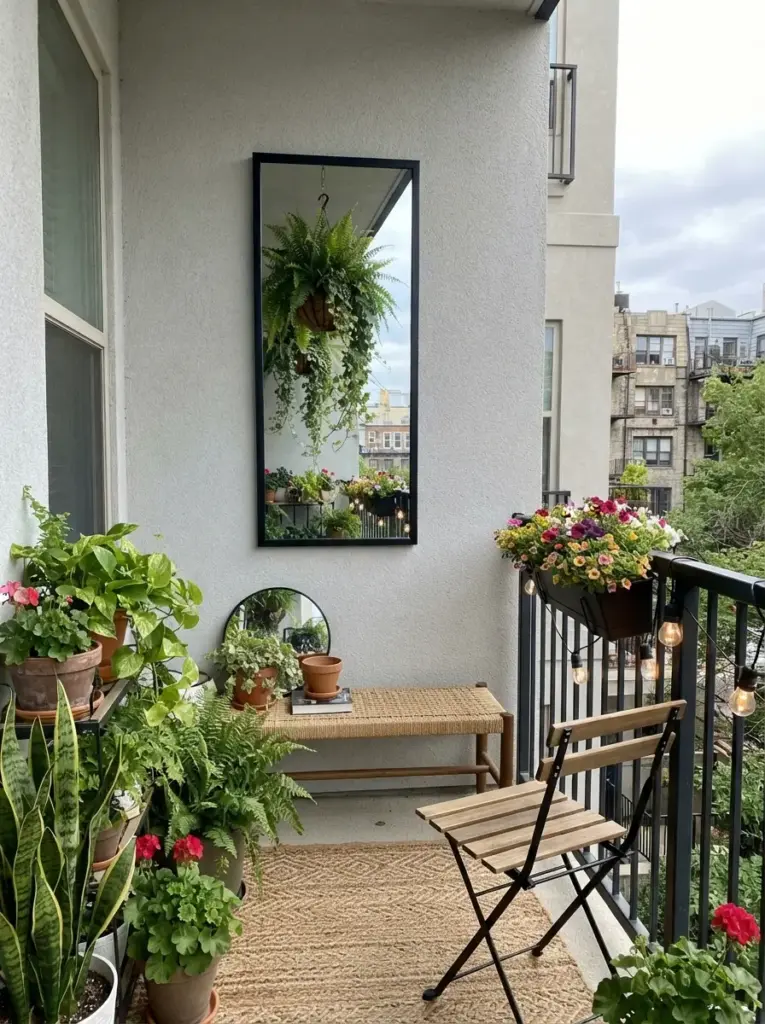
Mirrors can help some narrow balconies feel brighter, but they need careful placement. A weather-safe outdoor mirror on a shaded wall can reflect greenery and light, making the balcony feel less closed in. Small round mirrors, slim vertical mirrors, or windowpane-style outdoor mirrors work better than oversized glass panels. Place the mirror where it reflects plants, sky, or the indoor room, not clutter or a blank opposite wall. Avoid mirror placement that reflects direct strong sunlight into neighboring windows, seating areas, or plant leaves.
Careful mirror use works for Narrow Balcony Decor because it adds depth without using floor space. Shaded balconies often feel flat, especially when walls are dark or railings block light. A mirror can brighten the mood when used with plants and warm lighting. For example, a narrow black-framed outdoor mirror above a slim bench can reflect a hanging plant and make the wall feel less heavy. A small round mirror near a plant shelf can bounce light into a dark corner. Pair mirrors with natural textures so the balcony does not feel like an indoor hallway placed outside.
The best audience includes renters with covered balconies, shaded city apartments, and decorators who want a visual trick without major changes. Use removable outdoor-rated hooks only if the mirror is lightweight and the surface allows it, but a leaning mirror on a secure shelf may be safer in some rentals. Budget-friendly mirrors can come from thrift stores, but they should be sealed or designed for outdoor use. Avoid mirrors on windy balconies or exposed walls where they could fall. Also, avoid placing mirrors where birds may be confused by reflections. Mirrors are optional, not essential, but they can help when used responsibly.
Layer Textiles That Can Handle Real Weather
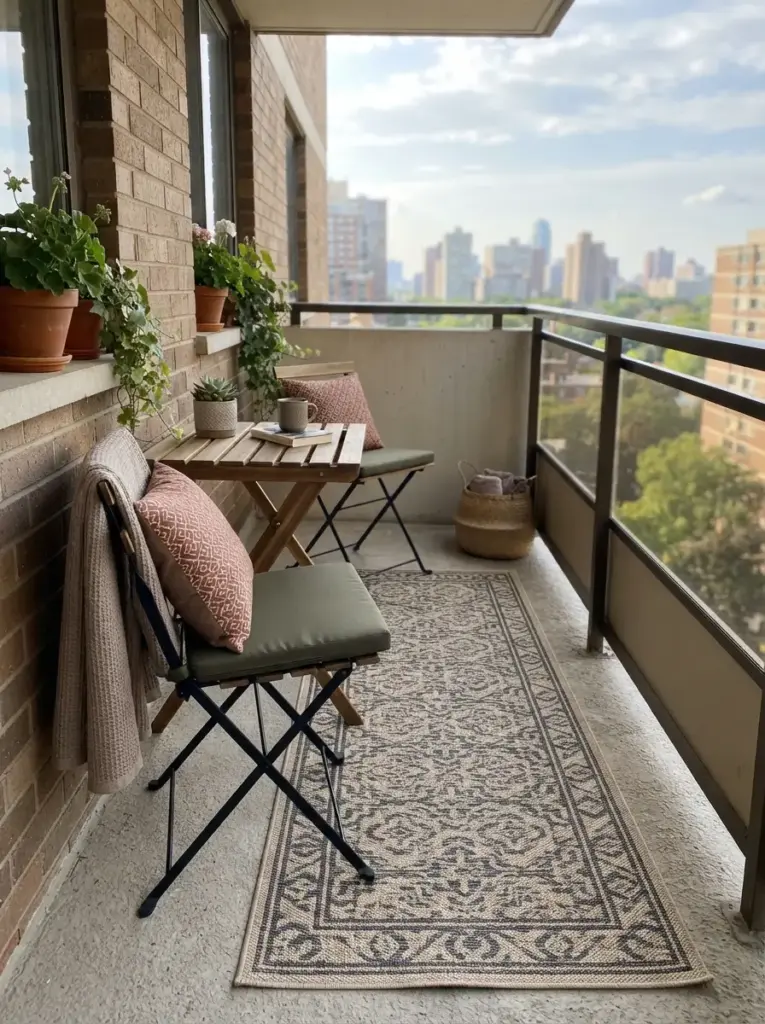
Textiles make a balcony more comfortable, but outdoor spaces need fabrics that can handle dust, sun, and moisture. Choose outdoor cushions with removable covers, washable throws, quick-dry seat pads, and rugs made for exterior use. Light beige, taupe, olive, charcoal, and rust hide everyday dust better than pure white. For hot climates, cotton throws may feel nice during use, but should come inside after each sitting. For rainy areas, store cushions in a waterproof bench or an indoor basket when not in use. Thin seat pads are easier to dry than thick cushions.
Practical textiles improve Narrow Balcony Decor because they soften hard surfaces. Apartment balconies often have concrete floors, metal railings, glass panels, and plain walls. Fabric adds comfort without requiring renovations. A single seat cushion can make a metal chair usable for longer than ten minutes. A narrow outdoor rug reduces the cold feeling of concrete. A washable throw can add warmth for evening use. Keep textile layers limited so the balcony does not become a laundry pile. One rug, one seat cushion per chair, and one or two pillows are usually enough for a slim balcony.
The best audience includes beginners who want comfort, renters who cannot change finishes, and budget decorators who want a visible impact without buying new furniture. Affordable upgrades include cushion covers instead of new cushions, outdoor pillowcases on sale, or a small washable mat. Avoid indoor velvet, untreated cotton pillows left outside, and thick foam cushions that trap water. Also, avoid too many pillows on seating that already has limited depth. Textiles should make the balcony easier to use, not create more cleaning work than the space is worth.
Keep Storage Hidden and Slim
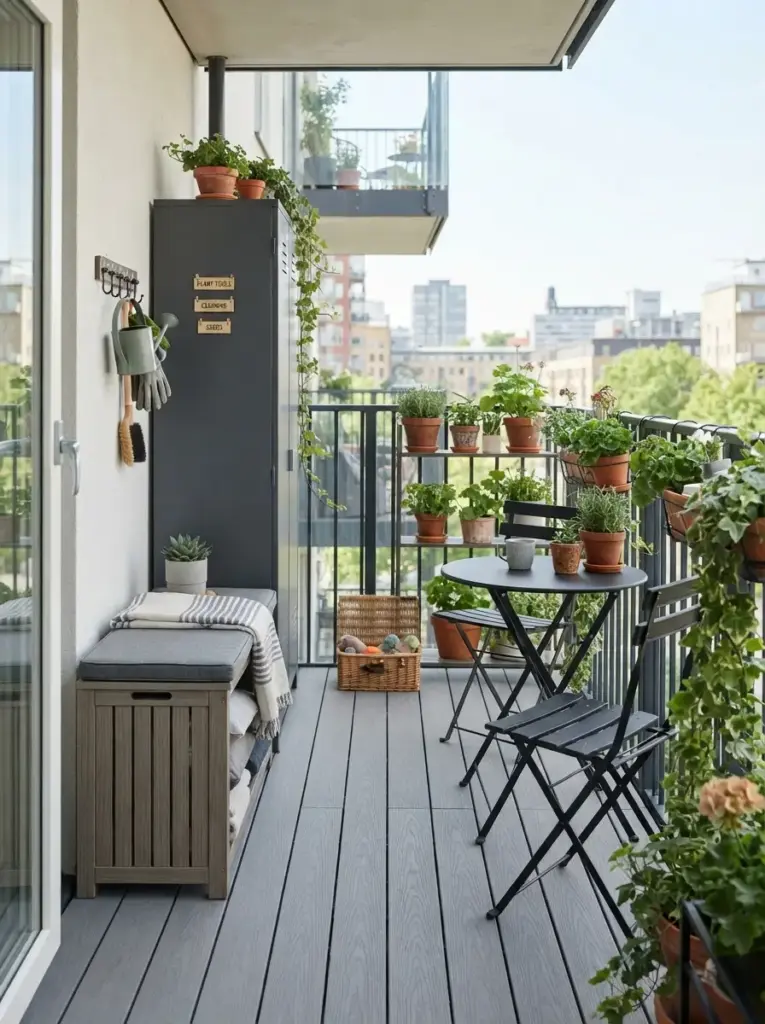
Storage is rarely the first thing people think about when decorating, but it often decides whether a balcony stays neat. Narrow balconies collect plant tools, extra pots, cleaning brushes, pet items, cushions, and seasonal decor. Without storage, these items end up on the floor and ruin the layout. Choose slim storage that fits against a wall, under a bench, or in a corner. Vertical cabinets, narrow deck boxes, lidded baskets for covered balconies, and storage benches can all work. Measure the door swing and walking space before buying anything.
Hidden storage supports Narrow Balcony Decor because clutter feels bigger in narrow spaces. One watering can and two unused pots can make a slim balcony look messy. A storage bench keeps soft goods dry and makes the seating area look finished. A narrow cabinet can hold gardening supplies without spreading them across the floor. Choose storage in the same color family as the furniture so it blends in. Black storage works with black railings, wood-look storage warms up concrete, and light gray storage suits modern apartments.
Best fit includes plant lovers, pet owners, families, and renters with limited indoor closets. Budget options include a lidded outdoor tote tucked under a bench or a small shelving unit with matching baskets. Use labels if multiple people share the space. Renters should choose movable storage and avoid drilling cabinets into walls unless allowed. Avoid storing heavy items near the railing or placing storage where it blocks drainage. Also, avoid using the balcony as a general dumping zone for things that do not belong inside. Good storage should support the balcony’s purpose, not turn it into a hidden closet.
Connect the Balcony to the Room Inside
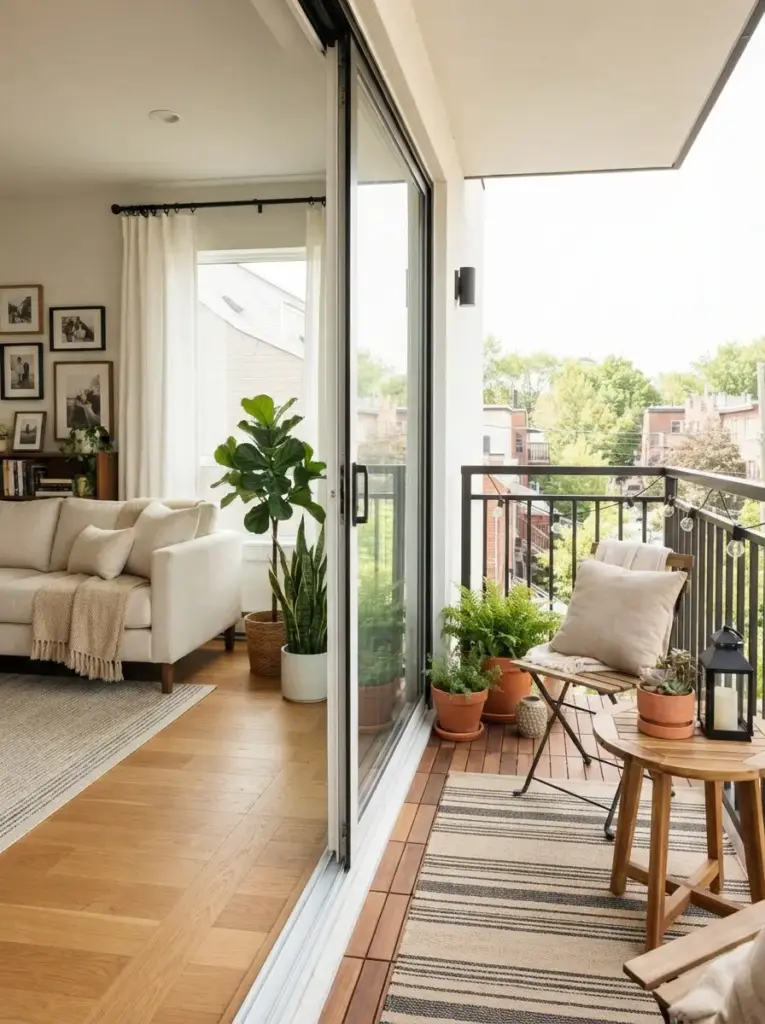
A narrow balcony feels more spacious when it relates to the room behind it. Use similar colors, materials, or lines so the indoor and outdoor areas feel connected. If the living room has warm wood, add a small wood side table or an acacia chair outside. If the bedroom has soft gray bedding, choose gray outdoor cushions or a rug with gray tones. Keep the door area clear so the eye moves naturally from inside to outside. Clean glass doors and simple curtains can make the balcony feel like part of the home, even when the balcony itself is small.
Visual connection matters for Narrow Balcony Decor because apartments often rely on sightlines. A balcony seen through sliding doors becomes part of the room’s view. When the balcony looks cluttered or mismatched, the room can feel messier too. Matching does not mean everything must be identical. Instead, repeat one or two details. Black indoor curtain rods can connect with black balcony furniture. Terracotta indoor decor can connect with outdoor planters. Cream indoor textiles can connect with beige outdoor cushions. Even one repeated material can create a smoother transition.
The best audience includes renters who want the apartment to feel larger, home decor lovers who care about styling, and beginners who feel unsure about mixing pieces. Budget-friendly ways to connect spaces include moving one indoor-safe plant near the balcony door, using similar cushion colors, or choosing a rug tone that matches the room. Avoid blocking the balcony door with large furniture inside or outside. Also, avoid treating the balcony like a separate storage area if it is visible from the main room. Connected styling helps the whole apartment feel more considered.
Common Mistakes to Avoid
The biggest mistake in Narrow Balcony Decor is buying furniture before measuring. Always measure balcony width, railing height, door swing, and the space needed to walk. Many people buy a cute bistro set only to discover the chairs cannot pull out comfortably. Another common mistake is placing decor along both long sides of the balcony. When both sides are filled, the middle walkway becomes too tight, and the space feels like a narrow aisle in a shop. Choose one main decorated side and leave the other side mostly open whenever possible.
Overdecorating also causes problems. Too many pillows, too many plants, too many lanterns, and too many colors can make a slim balcony harder to use. Small spaces need editing. Keep the best pieces and remove anything that does not support seating, privacy, lighting, plants, or storage. Another mistake is ignoring the weather. Indoor rugs, untreated wood, and regular cushions may look good for a few days but fade, mildew, or smell when exposed to moisture. Choose outdoor-safe materials or store delicate pieces indoors.
Poor lighting choices can make the balcony uncomfortable at night. Cool, bright bulbs can feel harsh in a small outdoor area, while weak lights may not help you read or eat. Warm 2700K to 3000K lighting usually works for relaxation. Safety mistakes matter too. Heavy pots on railings, loose screens, unstable mirrors, and candles near fabric can create real risks. Decor should never be more important than safety, especially in apartment buildings. Lease mistakes are also common. Before adding screens, drilling hooks, painting floors, or hanging visible items outside the railing, check building rules.
Budget-Friendly Tips for Narrow Balcony Decor
Budget-friendly balcony decorating starts with buying fewer pieces and choosing items that do more than one job. A storage bench can provide seating and hide cushions. A stool can work as a side table, plant stand, or extra seat. A runner rug can cover plain concrete and define the whole area. Instead of buying a full matching set, choose one strong anchor piece and build around it slowly. For example, start with a folding chair and a narrow table, then add a rug next month, plants after that, and lighting when you know where you sit most often.
Secondhand shopping can work well for balcony decor, especially for metal chairs, small tables, plant stands, and outdoor lanterns. Check stability before buying, and repaint metal pieces with outdoor-safe spray paint if they are scratched but sturdy. Plant lovers can save money by starting with small plants, cuttings, herbs, or seeds instead of large mature plants. Repeating affordable terracotta pots can look better than buying many mismatched decorative containers. For renters, removable upgrades give the best value because they can move with you.
Affordable textiles can make a big difference. Replace faded cushion covers instead of buying new cushions. Use outdoor pillow covers on existing inserts when the balcony is covered, but bring them inside during rain. Solar lights, rechargeable lamps, and battery candles can be cheaper than hiring anyone to add wiring. For privacy, one reed screen or two tall plants may be enough instead of covering every side. The best budget mindset is to solve the most annoying problem first. If the balcony feels exposed. Start with privacy. If it feels unusable at night. Start with lighting. If it feels uncomfortable. Start with seating.
Extra Narrow Balcony Decor Tips for Beginners
Successful Narrow Balcony Decor depends on clear space, visual calm, and daily usefulness. Keep at least one clear walking path from the door to the far end if the balcony is long. Place the biggest item against the wall, not in the center. Use vertical lines through plants, shelves, or tall lanterns to balance the narrow floor shape. Choose two or three materials and repeat them. Wood, black metal, and beige fabric create a simple, warm-modern look. White metal, sage green textiles, and terracotta pots create a softer garden look. Charcoal, teak, and warm lighting create a more mature apartment style.
Lighting temperature matters more than many beginners realize. Warm 2700K lights feel relaxing for evening seating, while 3000K can look clean and still comfortable. Cool 4000K to 5000K lighting may work for task areas, but can make a small balcony feel less inviting. Furniture depth matters too. Deep lounge seating may look comfortable online, but it can block the door or walkway. Look for armless chairs, folding chairs, backless benches, and compact tables. Always test the layout with painter’s tape or cardboard before buying large pieces.
Plant placement should match real conditions, not wishful thinking. Sunny balconies need heat-tolerant plants and regular watering. Shaded balconies need plants that can handle low light. Windy balconies need heavier bases and sturdy stems. Privacy should solve a specific view problem rather than cover everything. Storage should be slim and closed. Decor should be easy to clean because outdoor dust builds up quickly. Beginners often improve faster when they decorate in stages. Start with function, then comfort, then style. That order keeps the balcony useful instead of just decorative.
FAQ
How do I decorate a very narrow apartment balcony?
Decorating a very narrow apartment balcony starts with measuring the space and choosing one main purpose. Use folding chairs, a railing table, a slim bench, or stackable stools instead of bulky furniture. Keep decor on one side when possible and use vertical plant shelves or railing planters to save floor space. Warm lighting, a narrow outdoor rug, and one repeated accent color can make the balcony feel styled without crowding it.
What furniture works best for Narrow Balcony Decor?
Best furniture for Narrow Balcony Decor includes folding bistro chairs, armless outdoor chairs, slim benches, storage benches, nesting tables, C-shaped side tables, and railing-mounted tables. Open-leg designs usually feel lighter than solid blocky pieces. Furniture that folds, stacks, or serves more than one purpose works especially well for renters and small apartments.
How can renters decorate a narrow balcony without damage?
Renters can decorate with freestanding furniture, outdoor rugs, storage benches, potted plants, rechargeable lamps, solar lanterns, and removable privacy screens. Avoid drilling into exterior walls, painting floors, or attaching heavy items to railings unless the lease allows it. Tension rods, weighted trellises, and furniture-based layouts can add style while staying easy to remove.
Which colors make a narrow balcony look bigger?
Light neutrals such as warm white, beige, soft gray, and taupe can make a narrow balcony feel more open. Muted accent colors like sage green, terracotta, dusty blue, or olive add interest without overwhelming the space. Repeating one accent color in cushions, planters, or lanterns creates a cleaner look than mixing many bright colors.
How do I add privacy to a narrow balcony?
Privacy can come from reed screens, bamboo panels, outdoor curtains, tall planters, slim trellises, or railing planters. Cover only the area that needs privacy so the balcony still gets air and light. Freestanding planters and weighted trellises are good rental-friendly options. Always check building rules before attaching screens or curtains to railings.
How can I decorate a narrow balcony on a small budget?
Small-budget balcony decorating works best when you prioritize comfort and function. Start with one chair, one small table, and one outdoor rug or mat. Add plants from cuttings or small starter pots, use solar lights, repaint secondhand furniture, and choose cushion covers instead of new cushions. Buy slowly so every item fits the space and serves a purpose.
Conclusion
Narrow Balcony Decor works best when every item has a reason to be there. A slim balcony does not need expensive furniture or major changes to feel useful. Strong results come from measuring first, choosing one main purpose, keeping the walkway open, using vertical space, adding warm lighting, and selecting decor that can handle real weather. Rental-friendly choices such as folding furniture, outdoor rugs, potted plants, rechargeable lamps, and freestanding privacy screens can upgrade the balcony without permanent changes.
A good balcony design should support daily life. Morning coffee, evening reading, herb growing, fresh air breaks, and quiet city views all become easier when the layout is practical. Start small, solve the biggest problem first, and build the space in layers. With the right furniture scale, storage, color, plants, and lighting, even the narrowest apartment balcony can become a comfortable part of the home rather than an unused strip outside the door.