
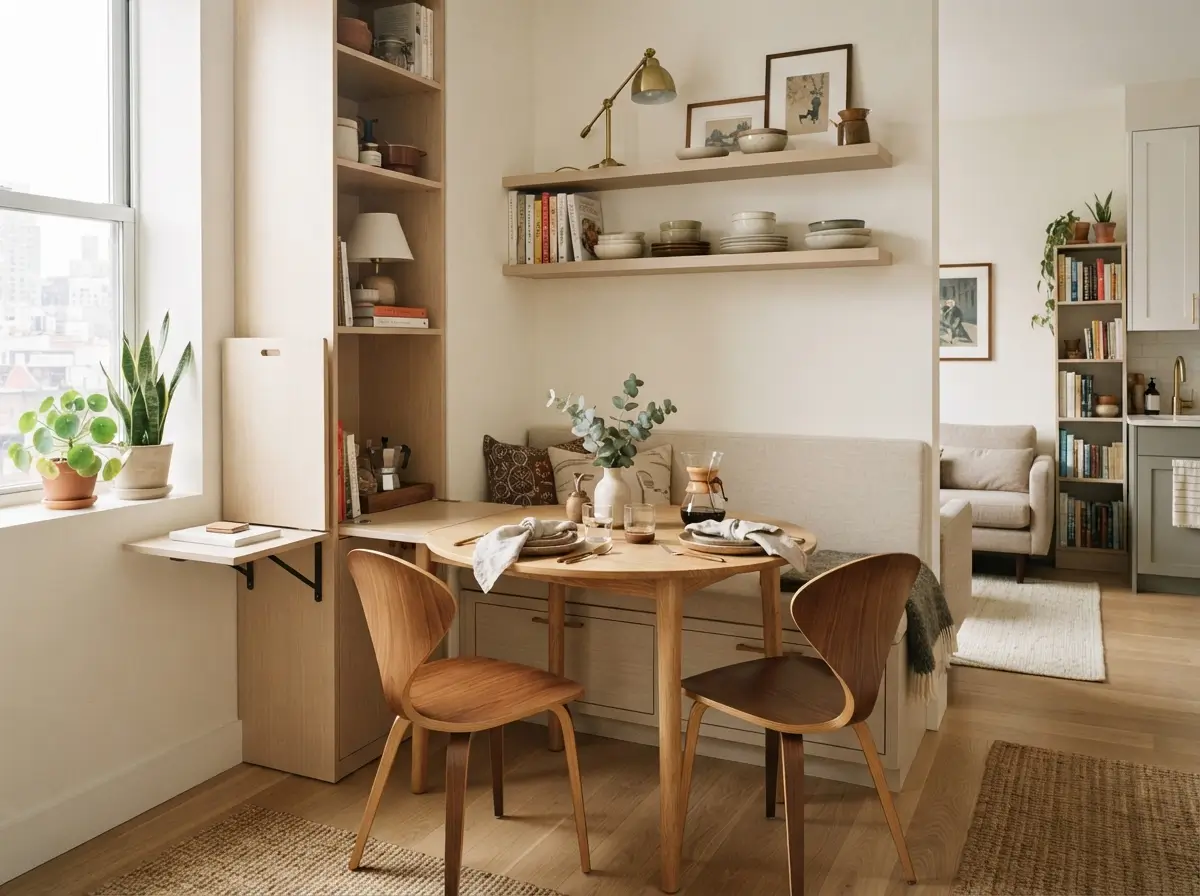

Small apartments often require creative thinking because every corner needs to serve a purpose. Dining areas can become one of the hardest spaces to design when floor space is limited, but a well-planned Tiny Apartment Dining Nook can turn an unused corner into a comfortable place for meals, coffee breaks, work sessions, and conversations.
Many people assume a dining area needs a large table and several chairs, but small homes benefit from smarter choices. The right furniture size, thoughtful lighting, practical storage, and a balanced layout can create a dining spot that feels comfortable without making the apartment feel crowded.
A Tiny Apartment Dining Nook should not only look attractive but also function well in everyday life. Choosing furniture that fits the room, using vertical space, adding flexible pieces, and avoiding unnecessary clutter can make even the smallest dining corner useful.
Whether you live in a studio apartment, a compact rental, or a small city home, these ideas can help you create a dining nook that feels organized, inviting, and practical.
How Can You Make a Tiny Apartment Dining Nook Feel Bigger?
The best way to make a small dining nook feel larger is to focus on proportion, flexibility, and visual simplicity. Select furniture that matches the scale of the room instead of filling the area with oversized pieces.
Light colors such as soft white, warm beige, pale gray, sage green, or light wood tones can make the dining corner feel open. Furniture with slim legs creates more visible floor space, while wall-mounted options reduce the amount of furniture sitting on the ground.
Lighting also plays an important role. A warm white bulb between 2700K and 3000K can create a comfortable dining atmosphere without making the area feel harsh. Adding a mirror near the dining space can reflect light and give the impression of extra room.
Choose a Wall-Mounted Dining Table
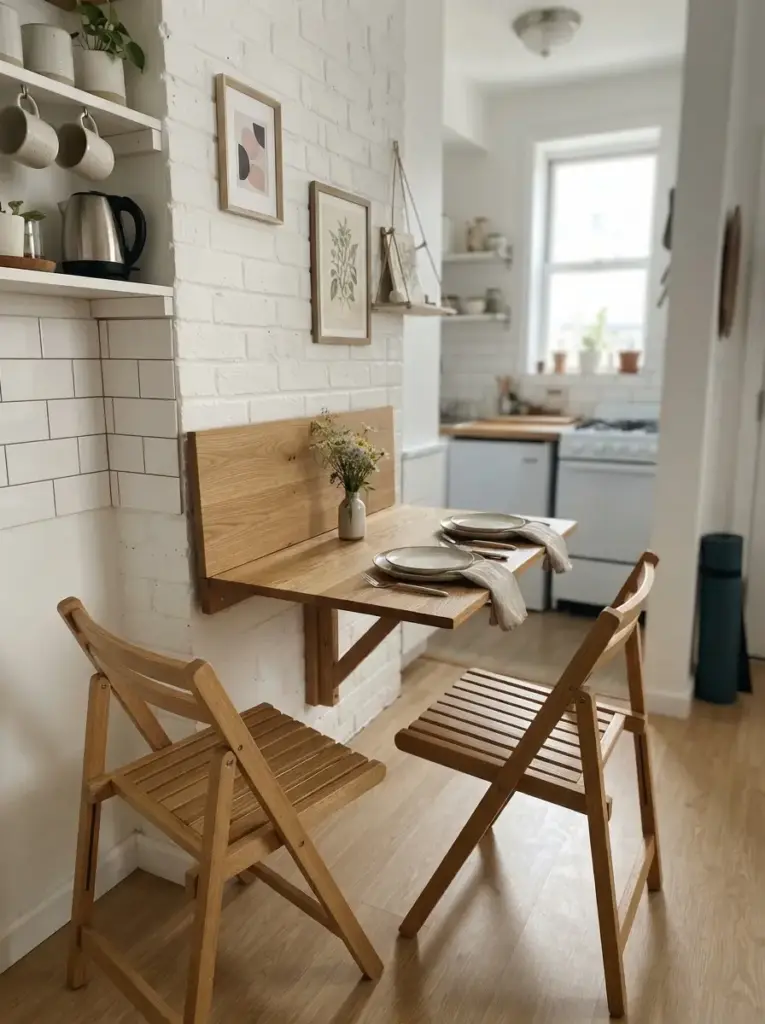
Wall-mounted dining tables are one of the most useful solutions for a Tiny Apartment Dining Nook because they save valuable floor space. These tables attach directly to the wall and can often fold down when needed.
A foldable wooden table works well in kitchens, narrow hallways, or studio apartments where every inch matters. For example, a small oak wall table paired with two folding chairs creates a simple dining area without permanently taking up walking space.
The approach works especially well for renters and people who use their dining area for multiple purposes. When the table is not needed, the space can become a workspace, yoga corner, or open walkway.
Choose a table finish that matches your existing decor. Light oak creates a natural feeling, while white laminate can make a small room look cleaner and brighter.
Use a Built-In Corner Bench
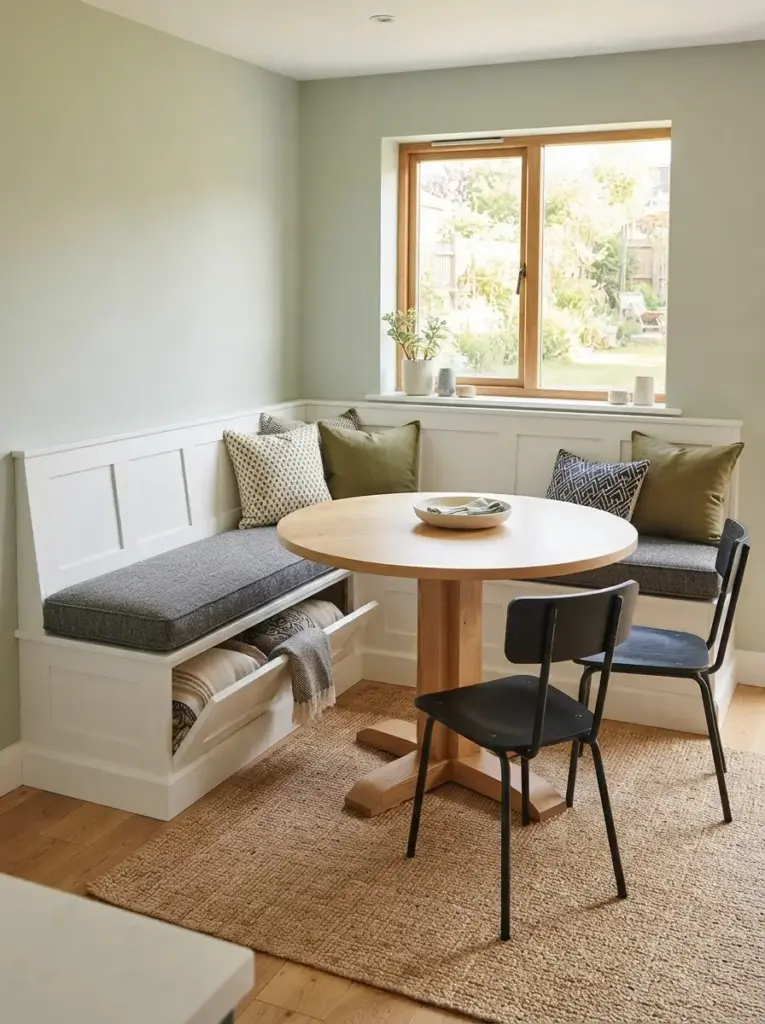
Corner benches help maximize seating because they use areas that are often wasted. A built-in bench placed against two walls can provide more seats than traditional chairs while keeping the center of the room open.
The design is useful for families, couples, or anyone who enjoys hosting occasional guests. A small L-shaped bench with hidden storage underneath can store table linens, kitchen supplies, board games, or seasonal items.
For renters, a permanent built-in structure may not be possible. A simple alternative is using a freestanding storage bench or a wooden bench with removable cushions.
Choose cushion fabrics carefully. Durable materials such as cotton blends or washable covers are practical for everyday dining. Neutral colors like cream, charcoal, or olive green can blend with different decorating styles.
Select a Small Round Dining Table
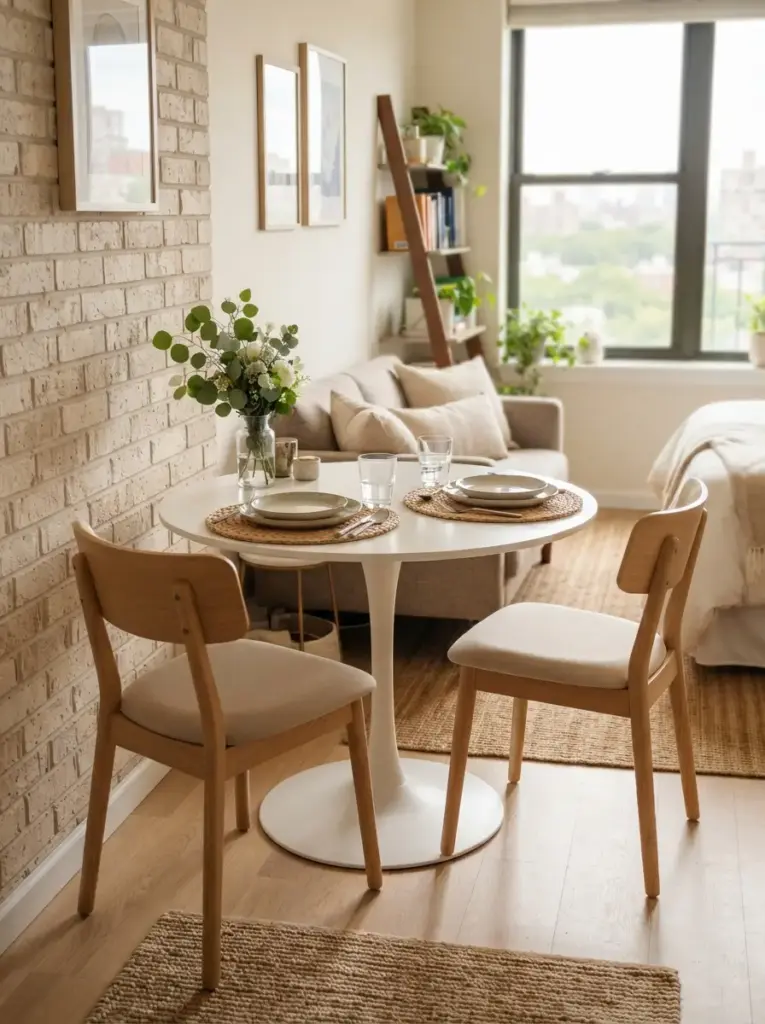
Round tables are excellent choices for compact dining areas because they remove sharp corners and improve movement around the space.
A 30 to 36-inch round table can comfortably fit two to four people, depending on the design. The curved shape allows easier walking paths compared with a rectangular table placed in a tight corner.
This option is ideal for studio apartments or narrow rooms where furniture placement feels challenging. A small pedestal table is especially useful because it provides more legroom than tables with four corner legs.
Avoid choosing a table that is too large. Many small apartment owners make the mistake of buying furniture based on appearance rather than measurements.
Add Floating Shelves Above the Dining Area
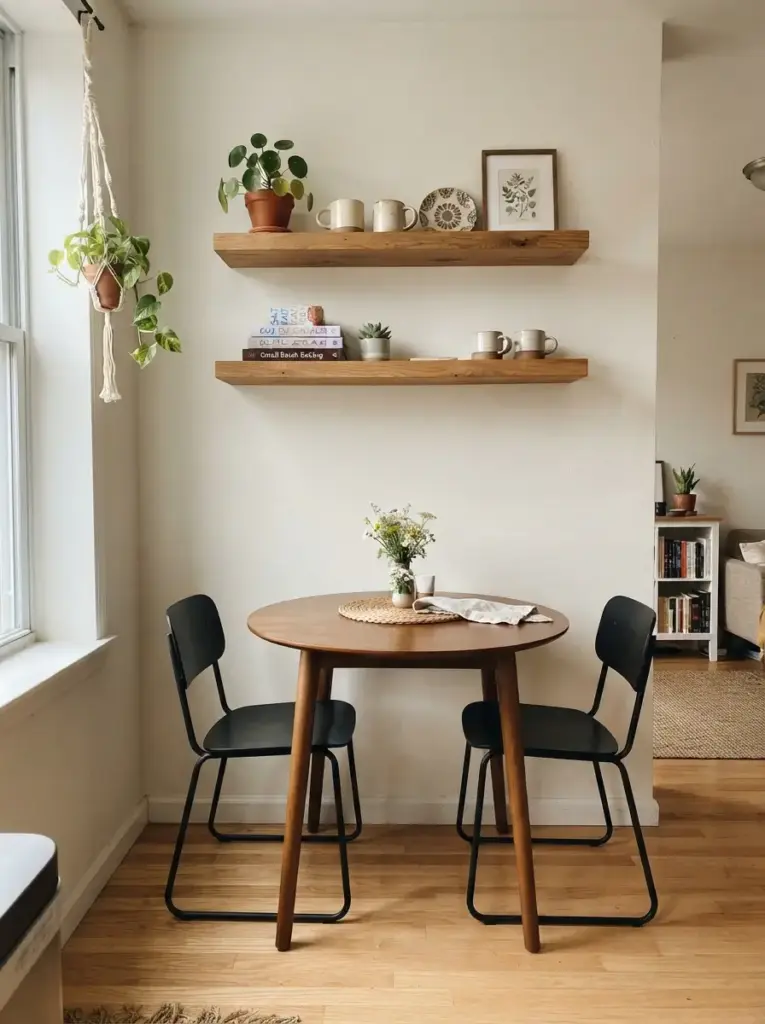
Vertical storage helps a Tiny Apartment Dining Nook stay organized without reducing seating space. Floating shelves above the table create storage and decoration opportunities without adding bulky cabinets.
Shelves can hold small plants, coffee cups, decorative plates, cookbooks, or artwork. For example, two wooden shelves above a dining table can create a functional display area while keeping the tabletop clear.
The idea works well for people who enjoy decorating but have limited floor space. Keep the shelf arrangement simple because too many objects can make a small nook feel crowded.
Use lightweight shelves and removable mounting solutions if you live in a rental apartment. Always check weight limits before placing heavy dishes or glass items.
Create a Dining Nook Near a Window
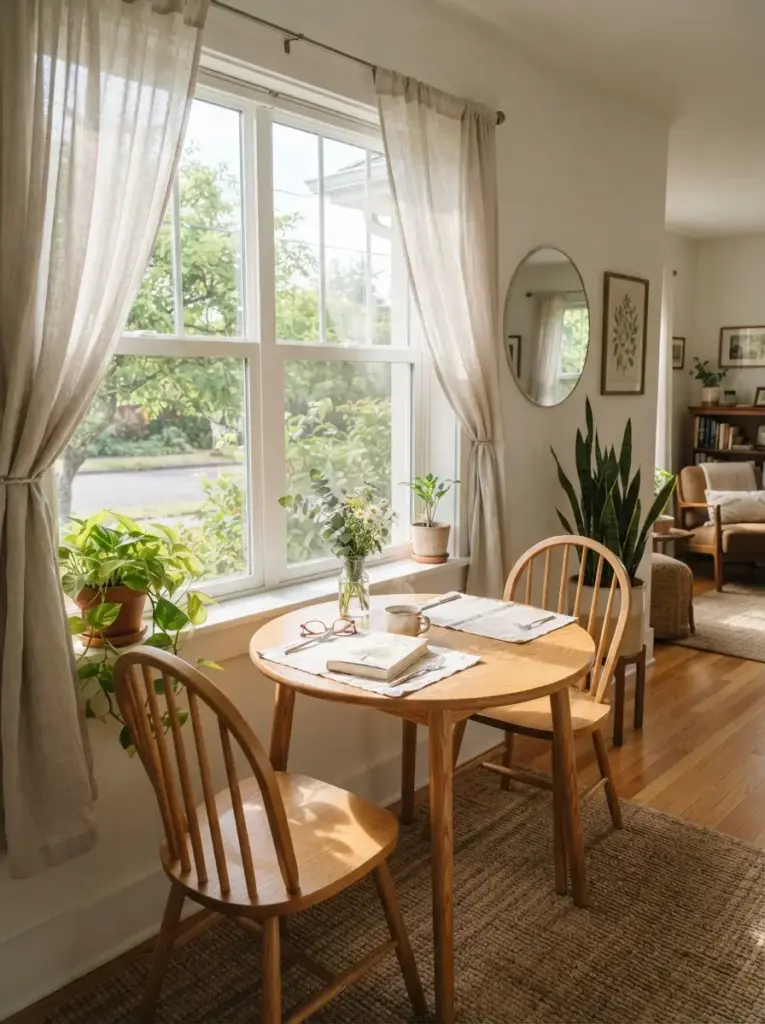
Natural light can make a small dining area feel more comfortable and open. Placing a dining table near a window allows daytime brightness to improve the overall atmosphere.
A window-side dining nook works well for people who enjoy morning coffee, reading, or working from home. A small table beside a bright window can serve multiple functions throughout the day.
Use simple window treatments such as linen curtains or light-filtering blinds. Heavy, dark curtains may block natural light and make the area feel smaller.
Add plants that tolerate indoor conditions, such as pothos or snake plants, to bring life into the corner without requiring complicated maintenance.
Use Bench Seating Instead of Multiple Chairs
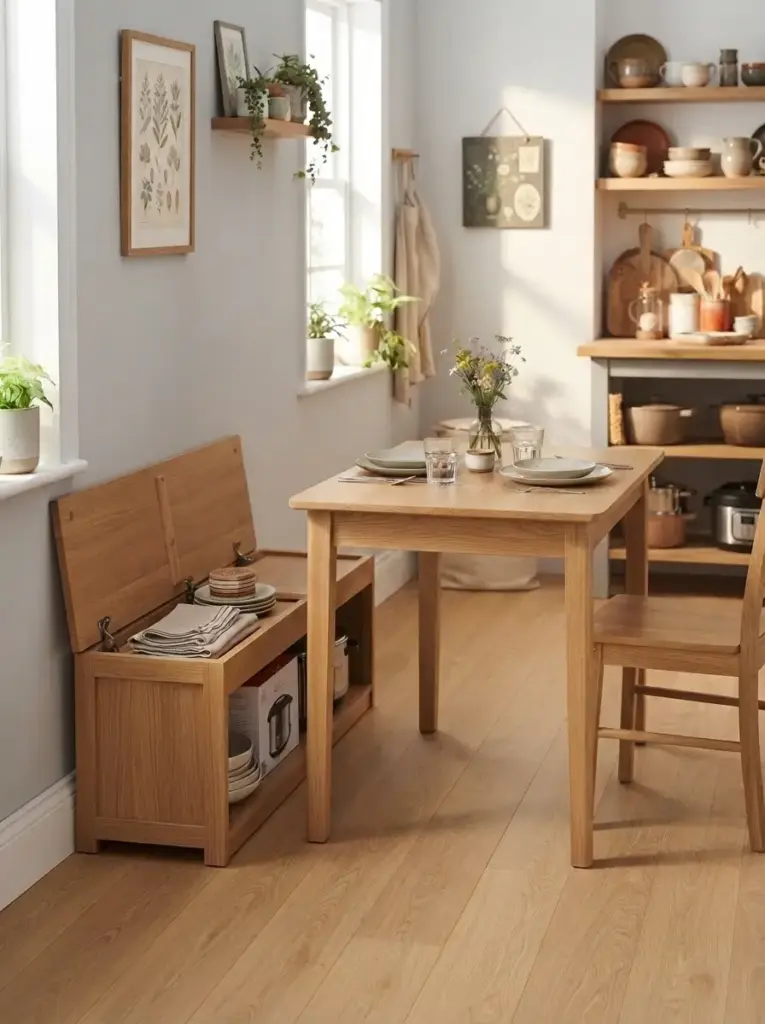
Replacing individual chairs with a bench can instantly improve space efficiency. Chairs require more movement area, while a bench stays neatly against the wall.
A narrow wooden bench paired with a compact table creates a clean layout. The setup is useful for couples, roommates, and small families who need flexible seating.
Storage benches provide additional value because they hide items that would otherwise create clutter. A bench with drawers or a lift-up seat can store extra kitchen tools, napkins, or small appliances.
Choose a bench height carefully. Standard dining seating is usually around 17 to 19 inches high, so the table and bench should work together comfortably.
Add Smart Lighting Above the Table
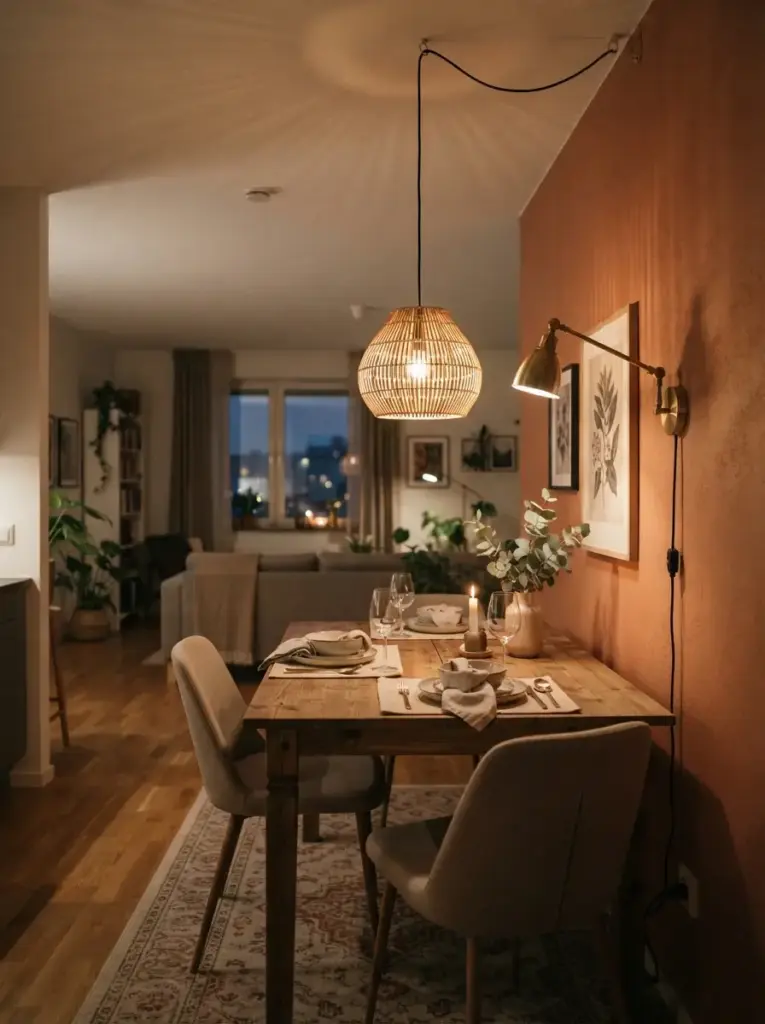
Lighting can define a dining nook without requiring major renovation. A small pendant light or wall-mounted lamp creates a dedicated dining zone in an open apartment.
Warm lighting between 2700K and 3000K works well because it creates a comfortable environment for eating and relaxing. Cool white lighting may feel too harsh for a dining area.
Renters can use plug-in pendant lights or adjustable lamps instead of installing permanent fixtures. These options provide similar benefits without changing electrical wiring.
A common mistake is relying only on overhead apartment lighting. Adding focused lighting near the table makes the area feel more intentional.
Use Multipurpose Furniture
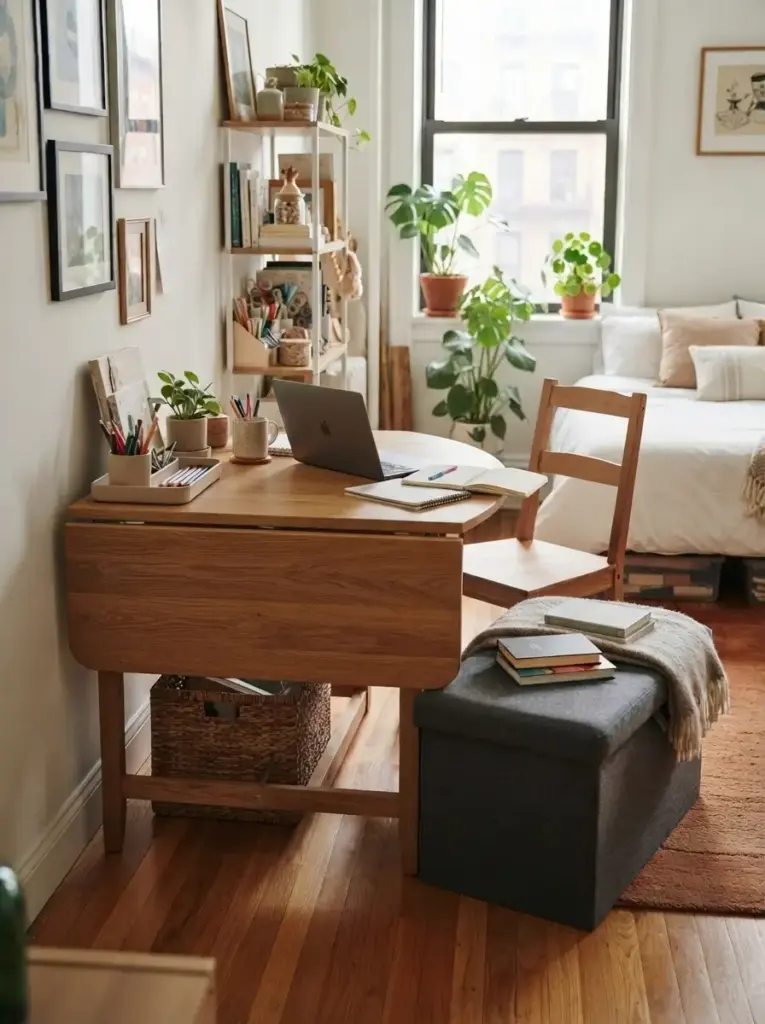
Small apartments benefit from furniture that serves more than one purpose. A dining table can become a home office desk, craft station, or study area when designed correctly.
Drop-leaf tables are practical because they expand during meals and fold down when extra space is needed. Storage ottomans can provide extra seating while keeping items hidden.
The approach is best for people living in studios or one-bedroom apartments. Select durable furniture that can handle daily use rather than pieces designed only for decoration.
Create a Minimal Scandinavian-Inspired Nook
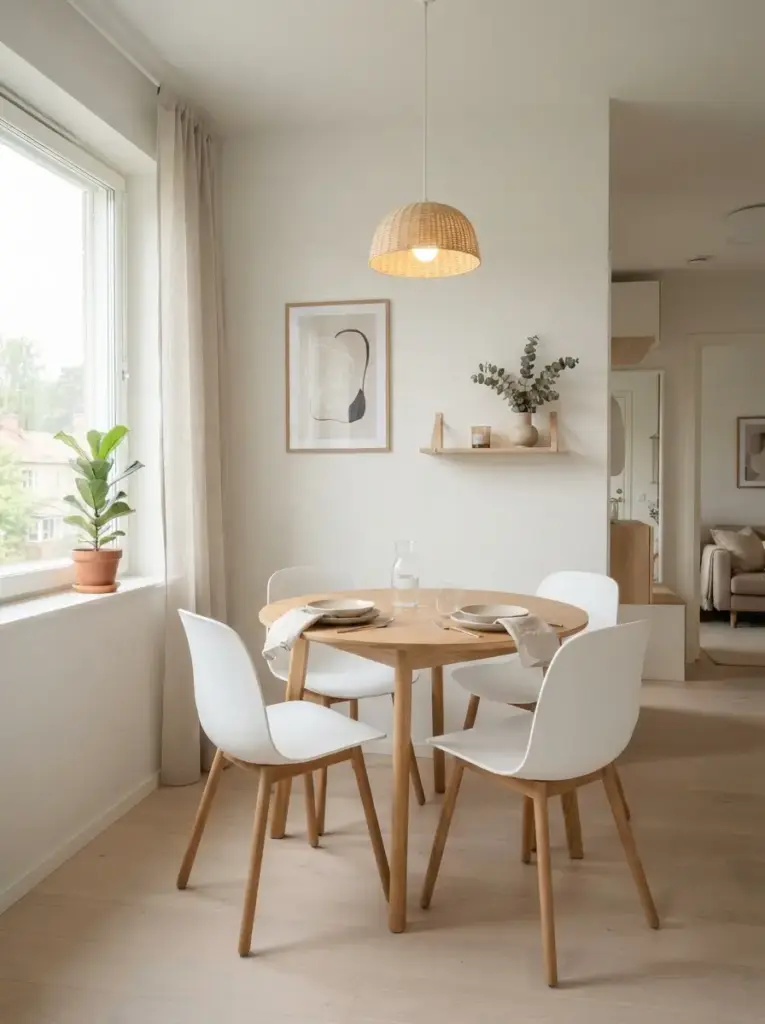
Simple design principles can make a small dining space easier to manage. Scandinavian-inspired decorating focuses on light colors, natural materials, and functional furniture.
A small wooden table, white walls, neutral textiles, and simple artwork can create a calm dining environment. The style works because fewer visual distractions make compact areas appear more spacious.
Avoid filling shelves and tabletops with too many accessories. Small spaces usually benefit from carefully selected items rather than large collections.
Add a Mirror to Expand Visual Space
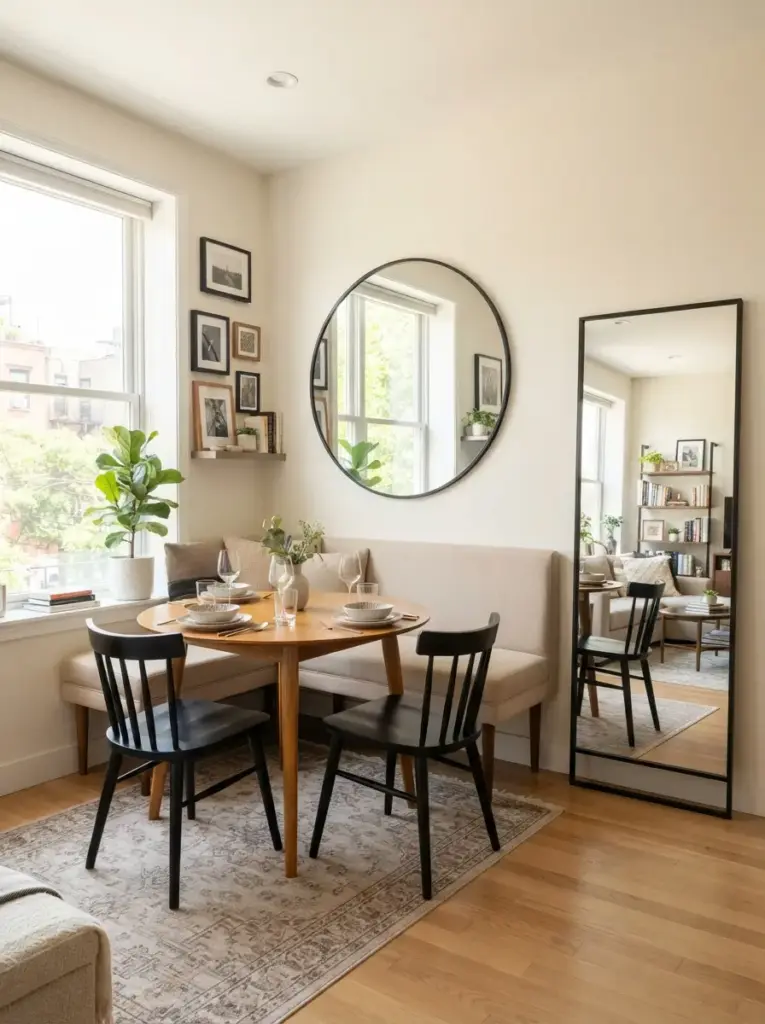
Mirrors are practical tools for small apartment decorating. A properly placed mirror can reflect light and create the feeling of additional depth.
A round mirror above a dining bench or a tall mirror beside the dining area can improve the room’s balance. The technique works especially well in apartments with limited windows.
Choose a frame that matches your furniture. Black frames create contrast, while wood frames add warmth.
Avoid placing mirrors where they reflect clutter or unattractive areas because they will highlight those elements.
Use Color to Define the Dining Zone
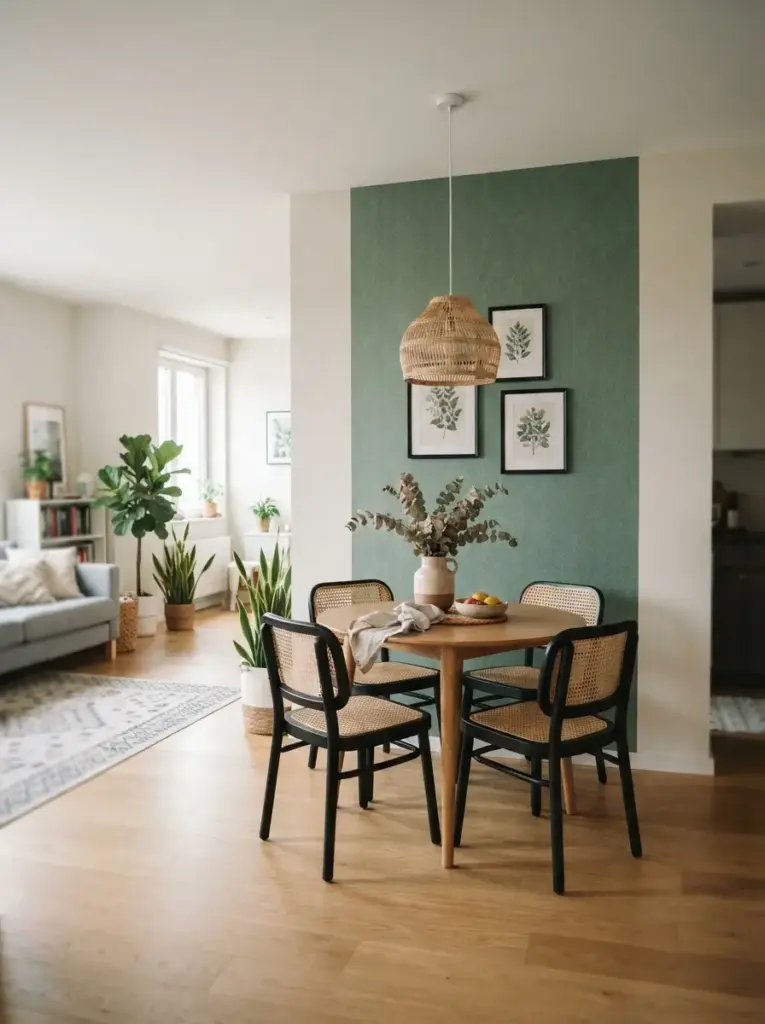
Color can separate a dining nook from the rest of an open apartment without adding walls. Painting one wall section or adding a different wallpaper area can visually create a separate zone.
Soft colors such as muted blue, warm beige, or dusty green can make the area feel comfortable. Darker colors can work too when used carefully on a small accent wall.
The technique suits renters who can use removable wallpaper or temporary wall decals. These options allow personality without permanent changes.
Choose Slim Dining Chairs
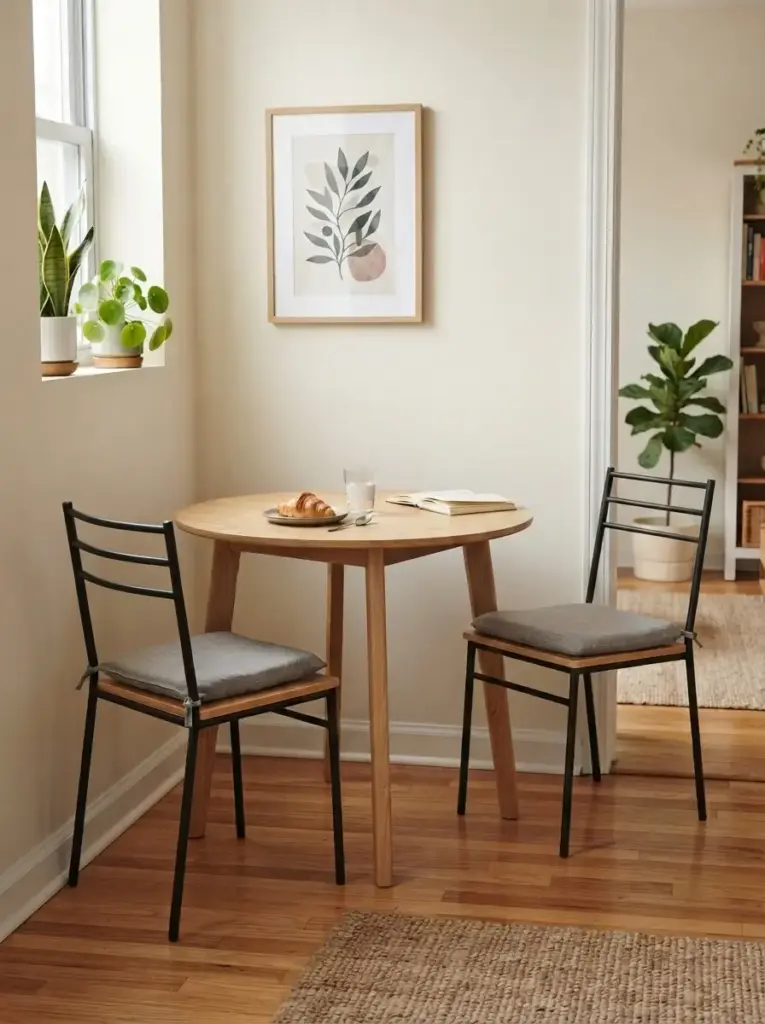
Large upholstered chairs can overwhelm a small dining corner. Slim chairs with narrow frames keep the area visually lighter.
Metal chairs, wooden chairs with open backs, or stackable designs work well in compact apartments. Two simple chairs can create enough seating without making the area feel packed.
Comfort still matters. Add small cushions or supportive seat pads if the chairs feel too firm.
Add Hidden Storage Around the Nook
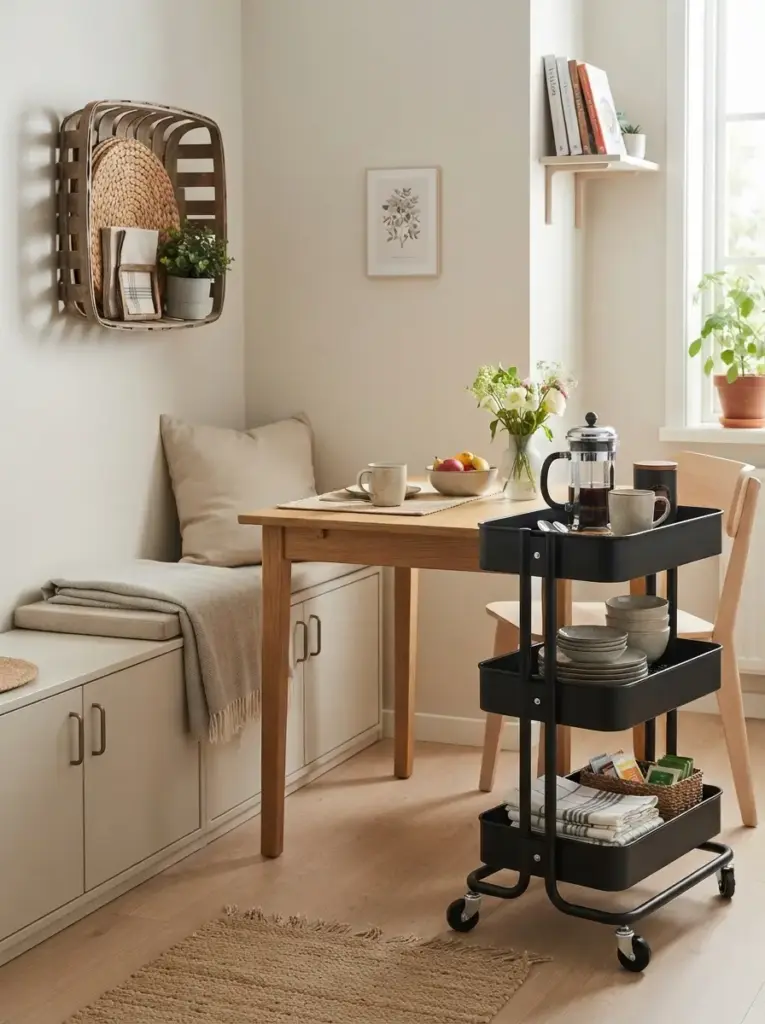
Storage problems often make small dining areas feel messy. Using hidden storage helps maintain a cleaner appearance.
Ideas include benches with compartments, narrow cabinets, wall baskets, or rolling carts that can move when needed.
A small rolling cart can store coffee supplies, dishes, or serving items. It works well for renters because it does not require installation.
Keep frequently used items accessible and store rarely used items elsewhere to avoid unnecessary clutter.
Use Rugs to Create a Dining Area
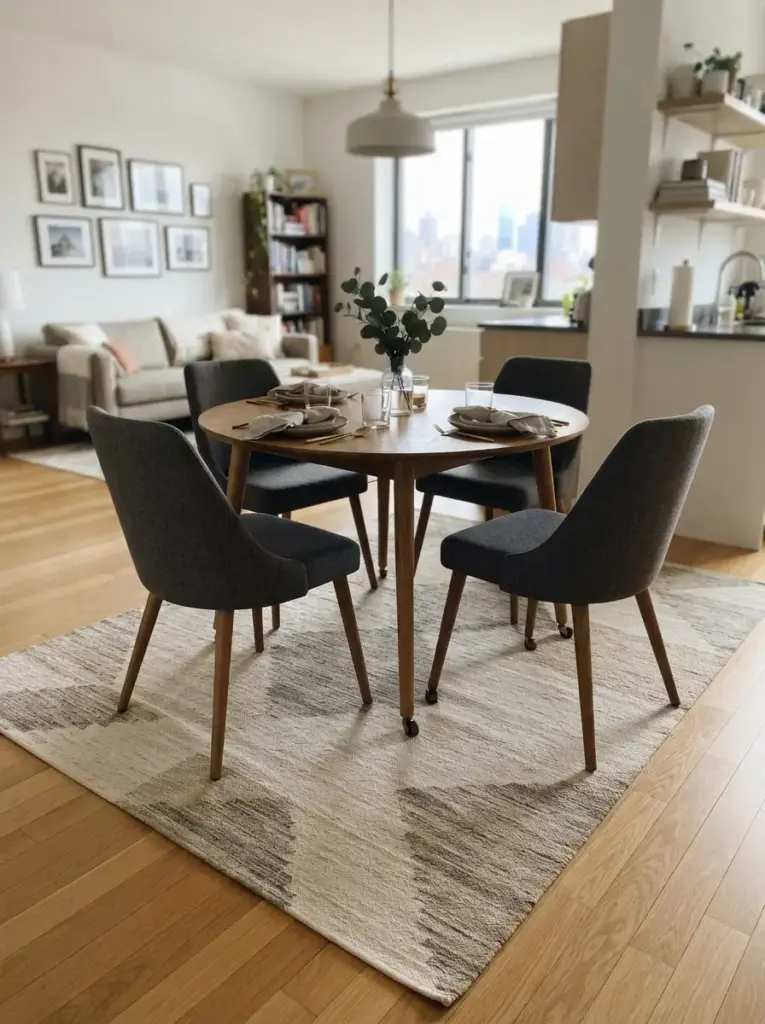
A rug can visually separate a dining nook from the rest of the apartment. It helps define the space, especially in open layouts.
Choose a rug large enough for chairs to remain on the surface when pulled out. Flat-weave rugs are practical because they are easier to clean under dining tables.
Neutral patterns work well in small spaces because they add interest without overwhelming the room.
Avoid thick rugs that make chairs difficult to move or collect too much dirt.
Make Use of Unusual Corners
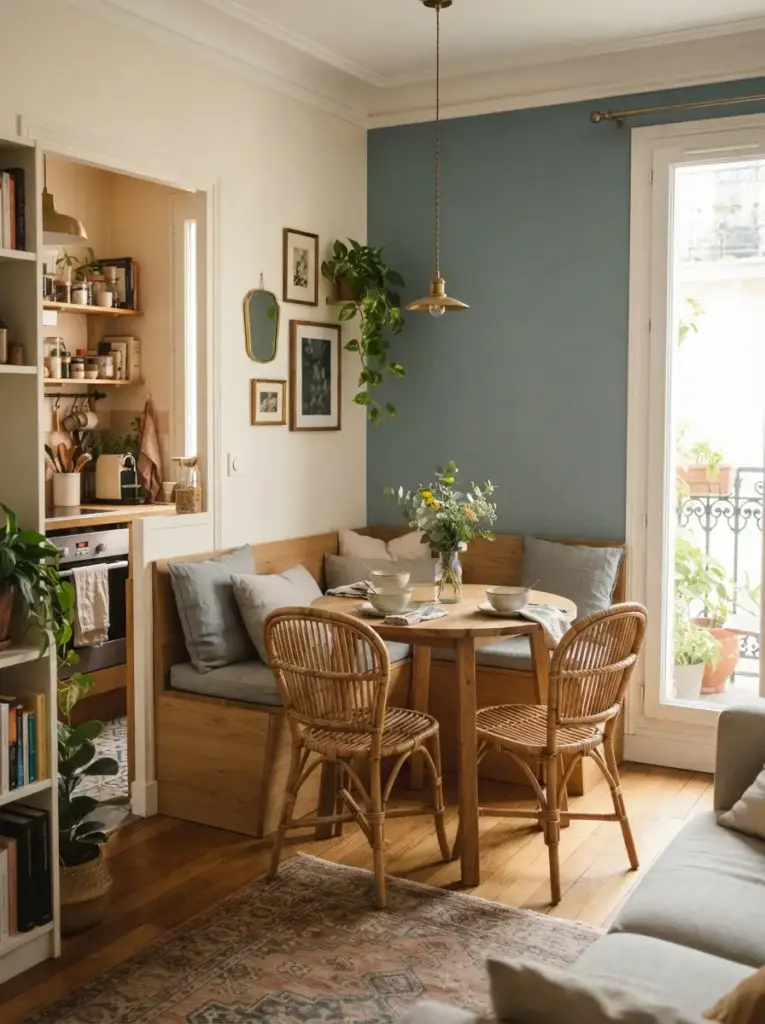
Unused corners near kitchens, balconies, or living rooms can become valuable dining areas. Many apartments have small spaces that only need the right furniture arrangement.
A narrow table along a wall, a corner bench, or a small bistro setup can transform an overlooked area.
The idea works best for creative homeowners who are willing to experiment with layouts. Measure the space first and consider walking paths before purchasing furniture.
Common Tiny Apartment Dining Nook Mistakes To Avoid
Choosing oversized furniture is one of the biggest mistakes in small dining areas. Large tables and bulky chairs may look attractive in a showroom, but can make an apartment difficult to move through.
Ignoring lighting is another common problem. A dining nook without proper lighting can feel disconnected from the rest of the home.
Adding too much decoration can also reduce functionality. Small spaces need breathing room, so focus on useful pieces instead of collecting unnecessary accessories.
Poor measurement creates many problems. Always measure the table size, chair clearance, wall space, and walking areas before buying furniture.
Budget-Friendly Tips For A Small Dining Nook
Creating a stylish dining area does not require expensive furniture. Secondhand stores, online marketplaces, and local furniture shops often have affordable tables and chairs that can be updated.
Painting old furniture can completely change its appearance. A basic wooden table can look modern with a coat of matte paint and new hardware.
DIY solutions can also save money. Simple floating shelves, removable wallpaper, and handmade cushions can add personality without a large budget.
Focus spending on items that improve daily use. A comfortable chair, quality lighting, and a practical table are usually better investments than decorative items.
Tiny Apartment Dining Nook Tips For Beginners
Start by measuring your available area before buying anything. Understanding the space prevents expensive mistakes and helps you choose furniture that fits properly.
Select one main style direction, such as modern, rustic, minimalist, or Scandinavian. Mixing too many styles can make a small room feel disorganized.
Prioritize function first. A beautiful dining nook should still allow comfortable eating, cleaning, and movement.
Choose flexible pieces whenever possible. Foldable tables, storage benches, and movable carts allow the area to adapt as your needs change.
FAQ About Tiny Apartment Dining Nook Ideas
What size table works best for a tiny apartment dining nook?
A small round table between 30 and 36 inches usually works well for compact spaces. Drop-leaf and wall-mounted tables are also excellent options when flexibility is important.
How can renters decorate a dining nook without permanent changes?
Renters can use removable wallpaper, peel-and-stick hooks, freestanding shelves, plug-in lighting, and movable furniture to create a personalized dining area.
What colors make a small dining area look bigger?
Light shades such as white, beige, soft gray, and pastel tones can make a small space feel more open. Natural wood finishes also add warmth without making the area heavy.
Is a bench better than chairs for a small dining nook?
A bench often saves space because it fits closely against walls and can provide additional seating. Storage benches offer even more functionality.
How much lighting does a small dining nook need?
A combination of natural light and warm artificial lighting usually works best. Pendant lights or wall lamps with 2700K to 3000K bulbs create a comfortable dining environment.
Can a dining nook also be used as a workspace?
Yes. Many small apartments benefit from multipurpose furniture. A compact table can serve as both a dining surface and a work desk when organized properly.
Conclusion
A Tiny Apartment Dining Nook can become one of the most useful areas in a small home when designed with careful planning. Smart furniture choices, practical storage, suitable lighting, and thoughtful layouts allow limited space to serve everyday needs.
Small dining areas do not require complicated designs. Simple solutions such as wall-mounted tables, compact seating, flexible furniture, and renter-friendly upgrades can create a comfortable place for meals and relaxation.
The best dining nook reflects the way you actually live. Measure your space, choose pieces that support your routine, and focus on creating a balanced area that feels functional, welcoming, and easy to maintain.