


College life often brings long study sessions, spontaneous movie nights, shared meals, and friends dropping by after dark. Your College Apartment Living Room needs to support all of those moments without feeling crowded or expensive. Limited floor space, rental rules, mismatched furniture, and a small decorating budget can make the room feel difficult to plan. Smart choices solve most of those problems. Warm lighting, flexible seating, hidden storage, durable fabrics, and a clear layout can turn an ordinary rental into a comfortable place where everyone can relax.
Practical decorating matters more than filling every wall or copying a showroom. College homes work best when furniture can move, surfaces are easy to clean, and every item earns its place. Many Small Apartment Living Room Ideas focus only on appearance, but late-night use also requires charging access, snack storage, soft lighting, and enough personal space for different activities. Each idea below explains how to make those details work in a real rental while protecting your deposit and keeping costs manageable.
How Do You Make a College Living Room Cozy for Late-Night Hangouts?
Warmth comes from layers rather than clutter. Combine one comfortable sofa, movable extra seating, a soft rug, 2700K lamps, washable textiles, and a clear place for drinks or devices. Keep the centre open enough for people to move safely. In a College Apartment Living Room, flexible pieces usually perform better than oversized furniture because the same space may host studying, gaming, eating, and relaxing within one evening.
Plan the Layout Around Conversation
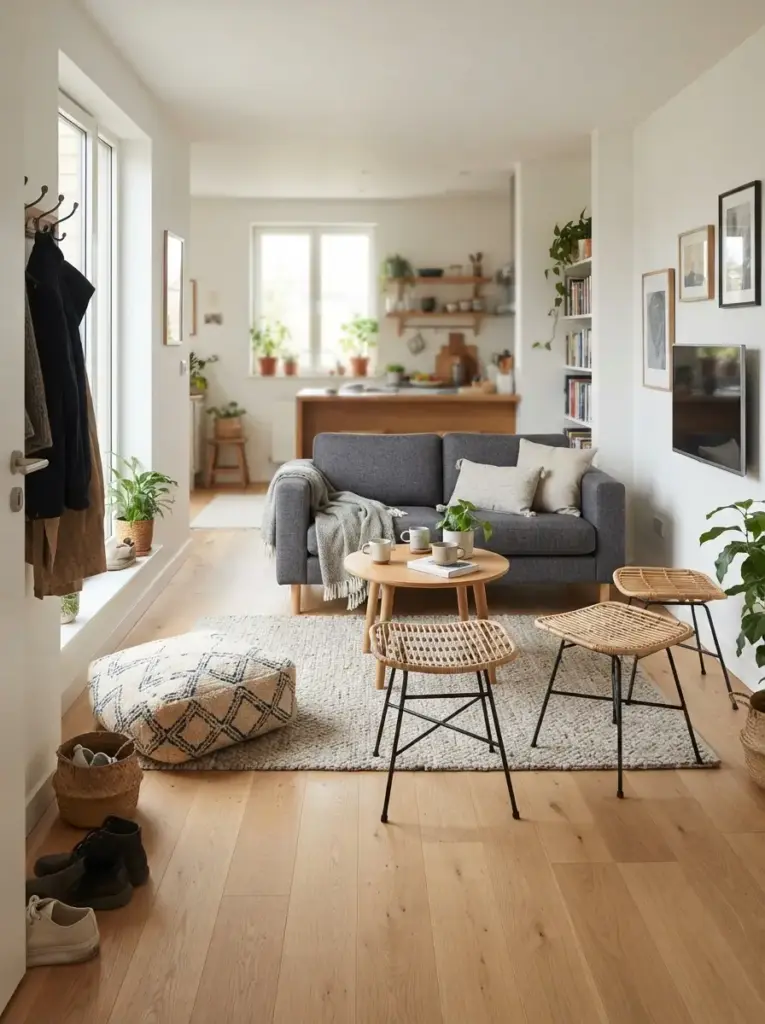
Start with the way people will actually sit and talk. Place the sofa facing the room rather than pushing every seat toward the television. Add one chair, pouffe, or floor cushion at a slight angle so guests can see each other without turning awkwardly. Leave a walkway of about 75 to 90 centimetres between the entrance and the main seating area. Clear circulation makes a small room feel calmer and prevents bags, shoes, and snack trays from becoming trip hazards during crowded nights.
Conversation-focused layouts work because people naturally gather in a loose circle. Best results come in square or narrow rooms where every centimetre matters. Try placing a compact sofa on the longest wall, then use two lightweight stools opposite it. Renters with an open-plan kitchen can turn the sofa perpendicular to the wall, creating a gentle boundary between cooking and relaxing zones. Avoid placing every item against the perimeter, since that can leave an empty centre without creating a useful social arrangement.
Use Warm Layered Lighting Instead of One Ceiling Light
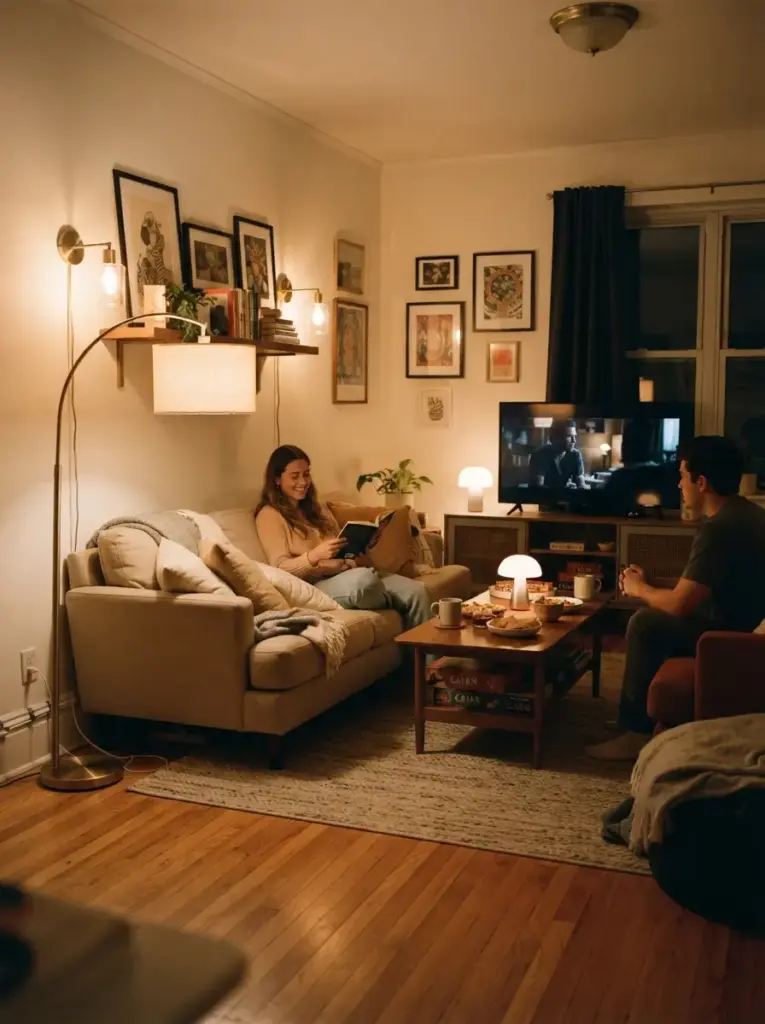
Replace harsh overhead lighting with several smaller light sources. Choose bulbs around 2700K for table lamps and floor lamps, since that temperature gives the room a warm, relaxed glow without making colours look muddy. Place one lamp beside the sofa for reading, another near the television to reduce screen contrast, and a small rechargeable lamp on a shelf or coffee table. Soft pools of light help guests feel comfortable while still providing enough visibility for food, games, and late study sessions.
Layered lighting supports different moods without requiring electrical work. Students who share the room with flatmates benefit most because one person can read while others watch a film. Plug-in wall sconces, clamp lamps, and battery-powered picture lights are useful rental-friendly options. Keep cords against skirting boards with removable cable clips, and avoid exposed string lights over busy walkways. Many Cozy Apartment Living Room Designs Ideas succeed because the lighting feels intentional, not because the furniture is expensive.
Choose Compact Seating That Can Move
Look for a two-seat sofa, apartment-size loveseat, or small modular sectional with narrow arms. Thick rolled arms can use 20 to 30 centimetres of valuable seating width, while slim arms provide more usable space. Measure the doorway, stairwell, and lift before buying. Furniture that fits the room but cannot enter the building becomes an expensive problem. Neutral shades such as warm grey, oatmeal, olive, or deep navy also hide everyday wear better than bright white upholstery.
Movable seating keeps the room adaptable. Best suited to students who host different group sizes, a light chair or armless module can shift between conversation, gaming, and study layouts. Avoid buying a huge corner sofa only because it appears comfortable online. Oversized seating can block radiators, windows, and storage doors. Compare the sofa depth with your available floor area, and mark its footprint with painter’s tape before purchasing. That simple test reveals whether the room will still feel open.
Add Washable Floor Cushions for Extra Guests
Floor cushions give friends a comfortable place to sit without permanently filling the room. Choose firm, generously sized cushions around 60 centimetres wide, preferably with removable covers. Store them under a console, beside the sofa, or in a large basket when not needed. Dark green, rust, mustard, chocolate, and patterned covers handle stains better than pale cream. Mixing two solid colours with one subtle pattern creates interest without making the room feel chaotic.
Flexible floor seating works especially well for game nights, takeaways, and casual film marathons. Students who move frequently benefit because cushions are easier to transport than bulky chairs. Add a folded blanket behind each cushion for back support against the wall. Skip very thin cushions, since they flatten quickly on hard floors. Budget shoppers can insert firm bed pillows into oversized zip covers or reuse clean sofa back cushions. Washable materials keep the setup practical after spills.
Create a Simple Snack and Drink Station
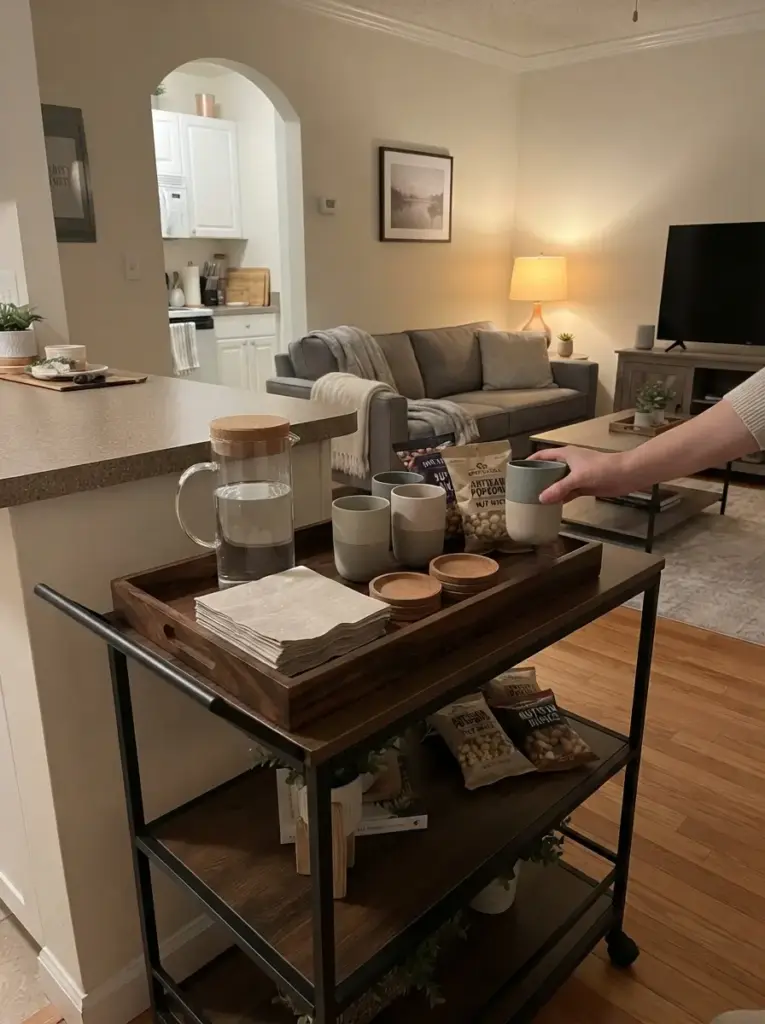
Late-night hangouts run more smoothly when guests do not constantly cross the room for cups, napkins, or snacks. Use one tier of a rolling trolley, narrow sideboard, or open kitchen shelf as a small serving station. Keep coasters, paper napkins, reusable cups, a water jug, and sealed snacks together. Position the station near the kitchen edge rather than beside electronics. A tray helps contain crumbs and allows everything to move quickly when the surface is needed for studying.
Organised refreshment storage reduces clutter on the coffee table and makes hosting feel effortless. Best for open-plan apartments or homes with a tiny kitchen, the idea creates a clear boundary between food and soft furnishings. Avoid storing strong-smelling food in the living room or leaving open packets overnight. Wipeable trays in metal, melamine, or sealed wood handle spills better than fabric baskets. A second-hand trolley often costs less than £30 and can later serve as bathroom, bedroom, or craft storage.
Ground the Room With a Large Rug
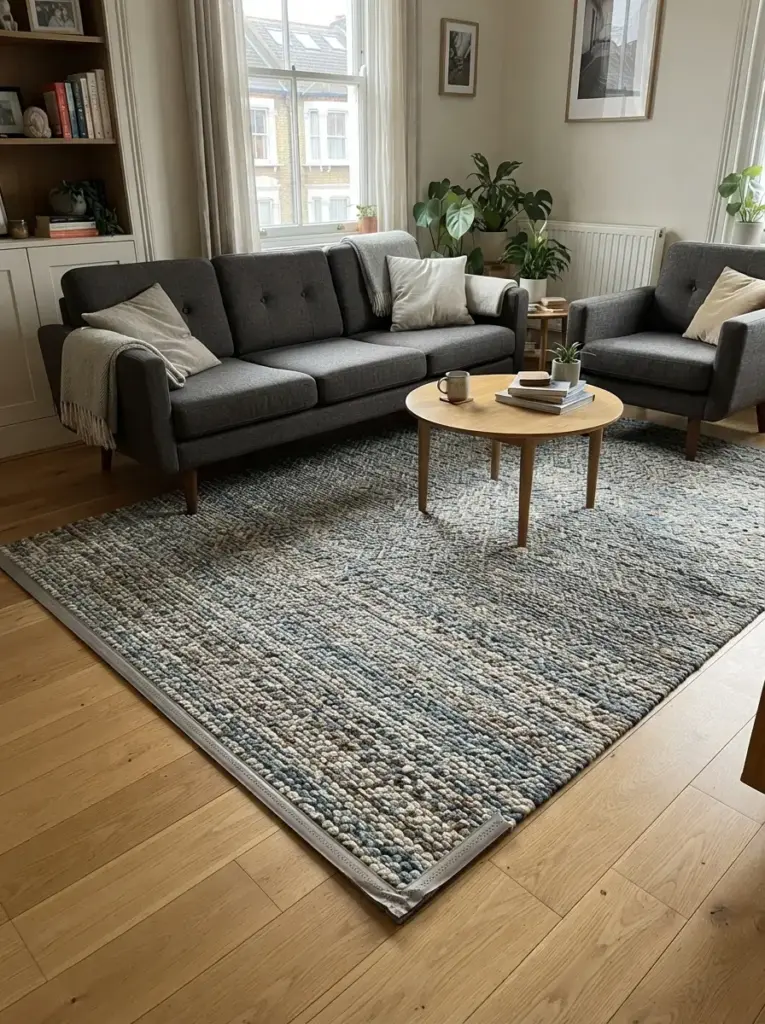
Choose a rug large enough for at least the front legs of the sofa and chairs to rest on it. Small floating rugs visually break the floor into pieces and can make a compact room seem even smaller. In many rentals, a size around 160 by 230 centimetres works well, but measure first. Low-pile polypropylene, washable flatweave, and indoor-outdoor rugs are practical for shared spaces because they resist stains and allow easier vacuuming.
Rugs soften sound, warm cold flooring, and make the seating zone feel connected. Students living above neighbours may also appreciate the small reduction in footstep noise. Patterns with mid-tone colours hide crumbs and marks better than solid pale rugs. For budget savings, place a simple jute-look rug underneath a smaller washable patterned rug. Avoid thick shag styles near food and drinks, since they trap debris and are harder to clean. Secure corners with removable rug grippers to prevent slipping.
Build a Removable Gallery Wall
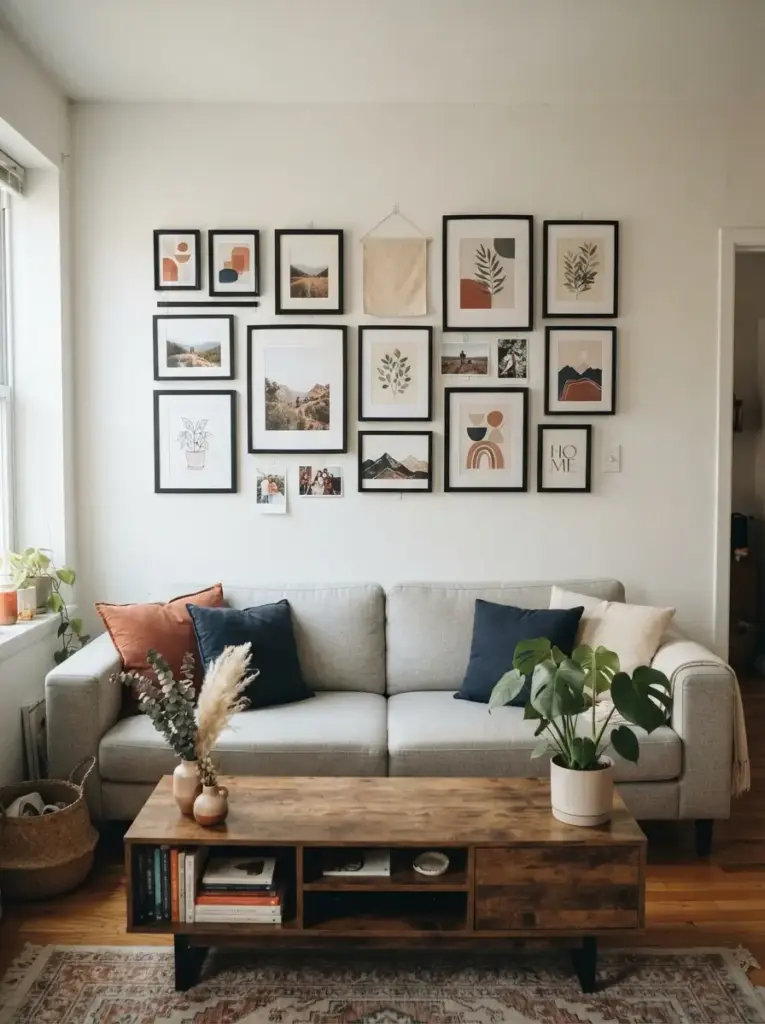
Blank rental walls can feel impersonal, but permanent holes are not always allowed. Create a gallery using lightweight frames, poster rails, postcards, fabric panels, or printed photographs. Plan the arrangement on the floor first, then attach pieces with renter-approved removable strips that match the weight. Keep the display within the width of the sofa or media console so it feels related to the furniture below. Repeating one frame colour helps mixed artwork look organised.
Personal wall displays work because they bring identity into a temporary home without needing expensive art. Best for creative students and shared flats, the gallery can include one section for each resident. Choose images with a limited palette, such as terracotta, navy, cream, and muted green, to prevent visual noise. Several Small Apartment Living Room Decor schemes use vertical wall space to add character while protecting valuable surfaces. Check adhesive instructions carefully and test a hidden area before installation.
Use a Slim Coffee Table or Nesting Tables
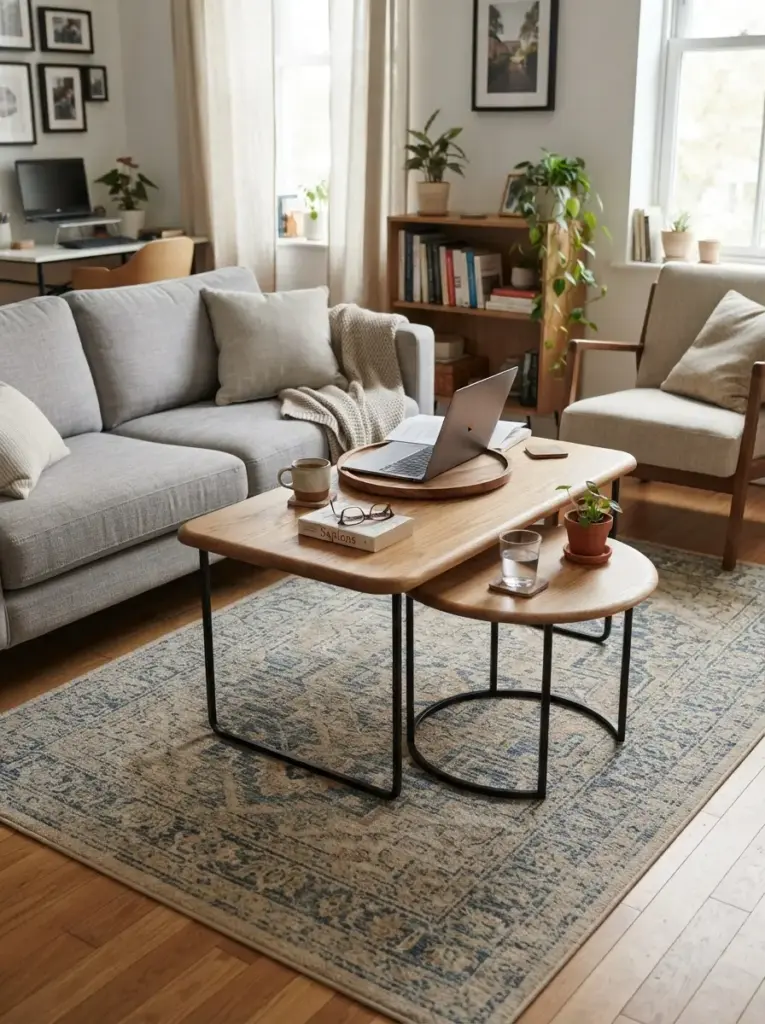
Select a coffee table with rounded corners, open legs, and a depth that leaves comfortable circulation. Narrow rectangular tables suit long rooms, while round tables improve movement in tight square spaces. Nesting tables provide two or three surfaces when friends visit, then slide together after the gathering. Look for finishes that tolerate rings and scratches, such as laminate, powder-coated metal, sealed wood, or a second-hand piece you do not mind using heavily.
Flexible surfaces support drinks, laptops, cards, and takeaway containers without dominating the room. Best for apartments where the living area also becomes a study zone, nesting tables can separate work from snacks. Leave about 40 to 45 centimetres between the sofa and main table. Avoid glass tops in high-traffic student homes because fingerprints show quickly and edges may feel risky during busy gatherings. Trays and coasters make cleaning faster while adding structure to loose items.
Set Up a Shared Charging Hub
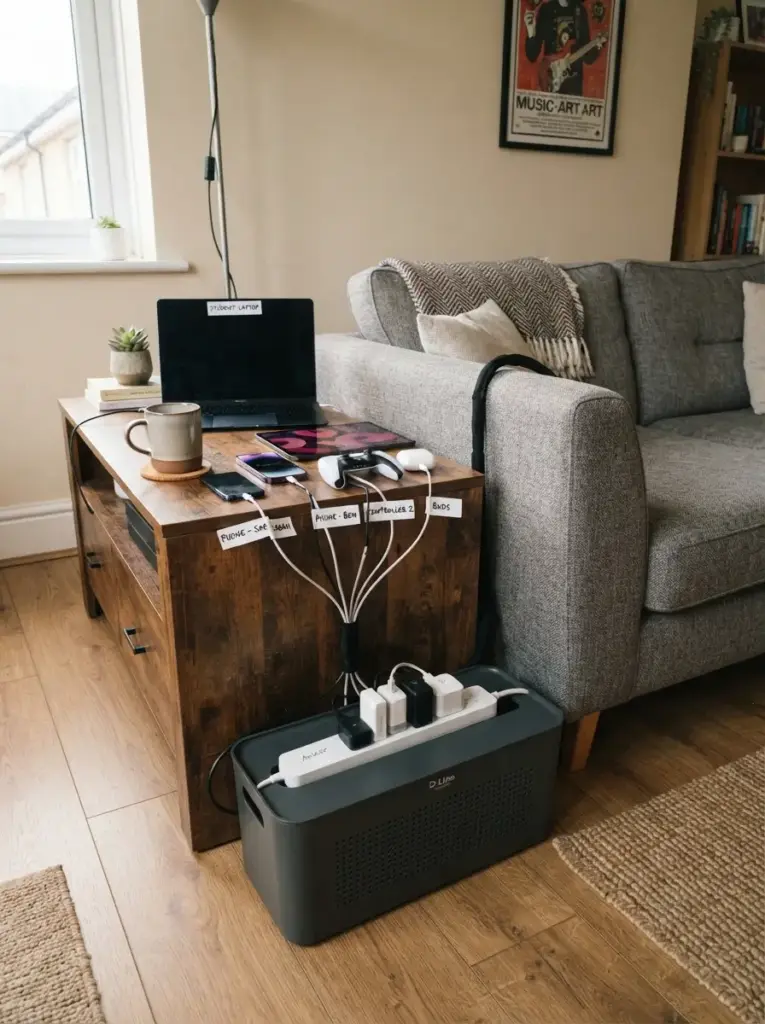
Phones, headphones, controllers, tablets, and laptops often compete for the nearest socket. Create one charging point beside the sofa or media unit using a surge-protected extension lead with enough space between plugs. Place it inside a ventilated cable box or attach it beneath a table with secure mounting strips. Label cables with small tags so flatmates can identify them quickly. Keep the hub away from drinks and do not cover adapters with blankets or cushions.
Dedicated charging reduces cable clutter and stops guests from moving lamps or furniture to reach sockets. Tech-heavy households, gamers, and students who study in the living room gain the most value. Choose a hub with USB-C ports if several devices use the same standard, but check power requirements before connecting laptops. Cable sleeves in black, white, or beige can blend with skirting boards. Good organisation makes a College Apartment Living Room feel more functional without changing its overall style.
Create a Flexible Movie and Projector Zone
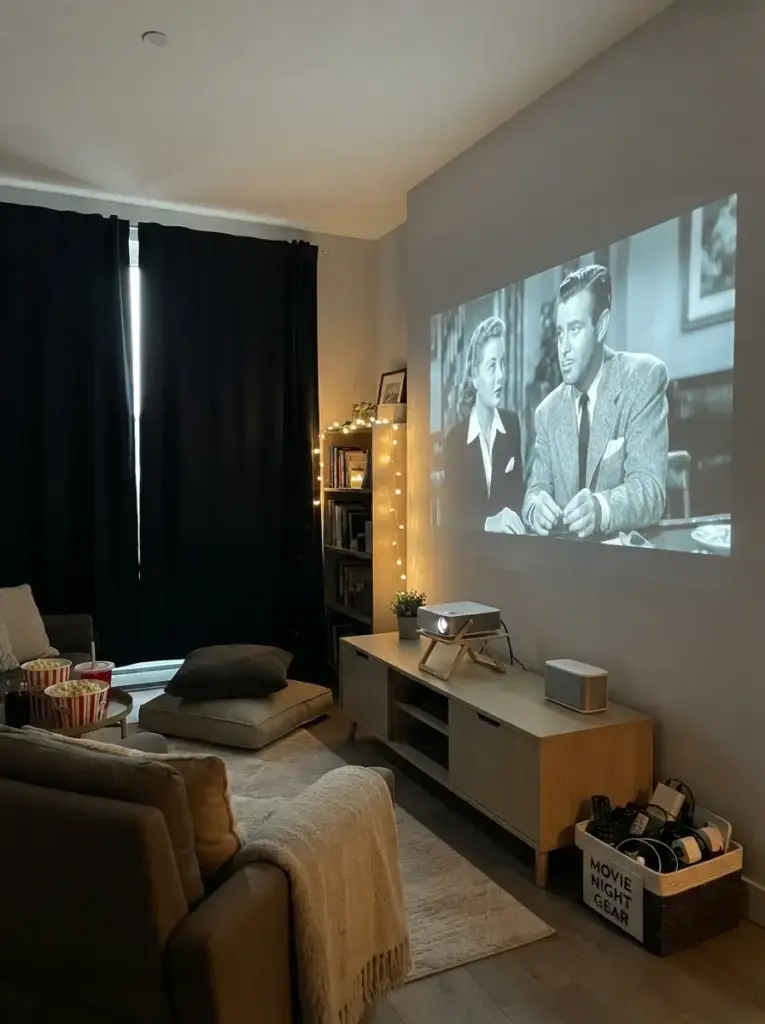
Televisions can consume space and budget, so a compact projector may suit some rentals. Use a smooth white wall, pull-down screen, or tightly stretched blackout fabric as the viewing surface. Place the projector on a stable shelf or portable stand, and confirm the throw distance before buying. Blackout curtains improve picture quality, while a small speaker placed near the seating keeps sound clear without excessive volume. Store remotes and adapters in one labelled box.
Movie zones succeed when setup and packing take only a few minutes. Best for film lovers and students who host weekend watch parties, portable equipment leaves the wall free during the day. Projectors are not ideal for every room, especially bright spaces with no curtain control. Avoid placing cables across walkways and keep vents uncovered. Households using a television can still apply the same principle by mounting it on a slim stand and keeping the media unit visually light.
Soften Echoes With Curtains and Fabric
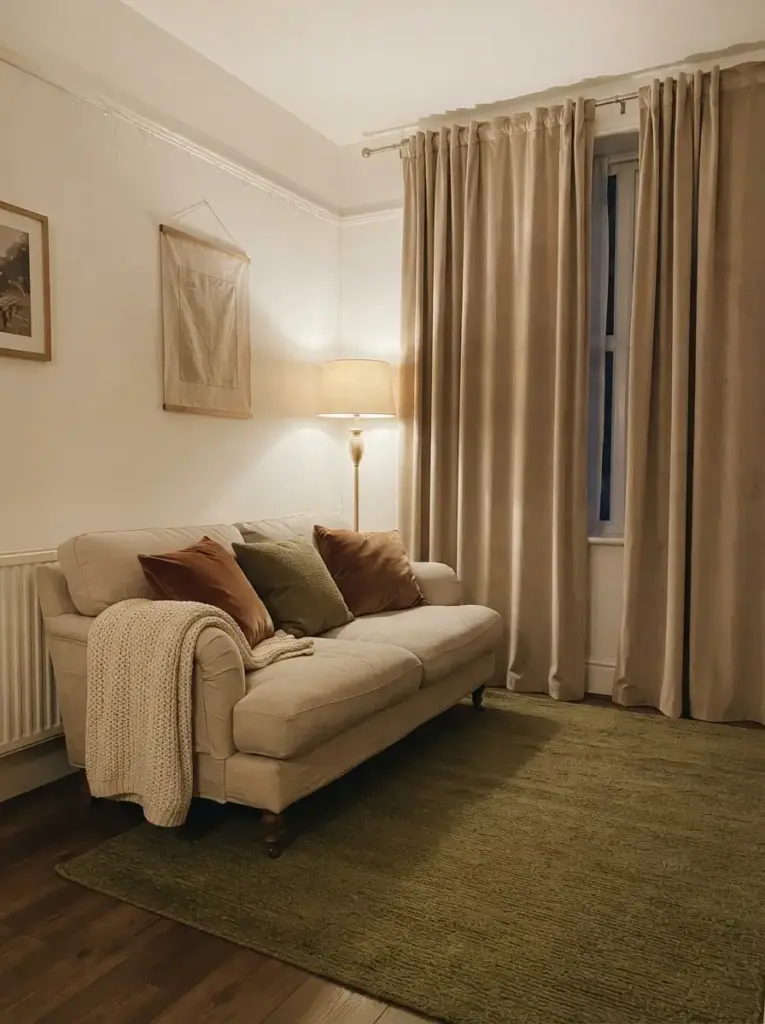
Bare walls, hard floors, and uncovered windows can make conversations sound sharp, especially late at night. Hang full-length curtains close to the ceiling and extend the rod slightly beyond the window frame. Use removable tension rods where drilling is restricted, provided the window shape allows secure placement. Add one rug, several cushions, and a throw to absorb more sound. Medium-weight cotton, velvet-look polyester, and lined curtains usually soften the room better than thin sheer panels alone.
Textiles improve comfort while helping sound feel less harsh. Students in echo-prone new builds or shared apartment blocks benefit most. Choose curtains that just touch the floor to avoid dust collection and tripping. Avoid heavy fabric directly over radiators or heaters. Matching every textile is unnecessary; repeat two or three colours instead. For example, combine warm beige curtains, an olive rug, rust cushions, and one cream throw. That controlled mix feels relaxed without looking overly coordinated.
Add Lightweight Side Tables for Every Seat
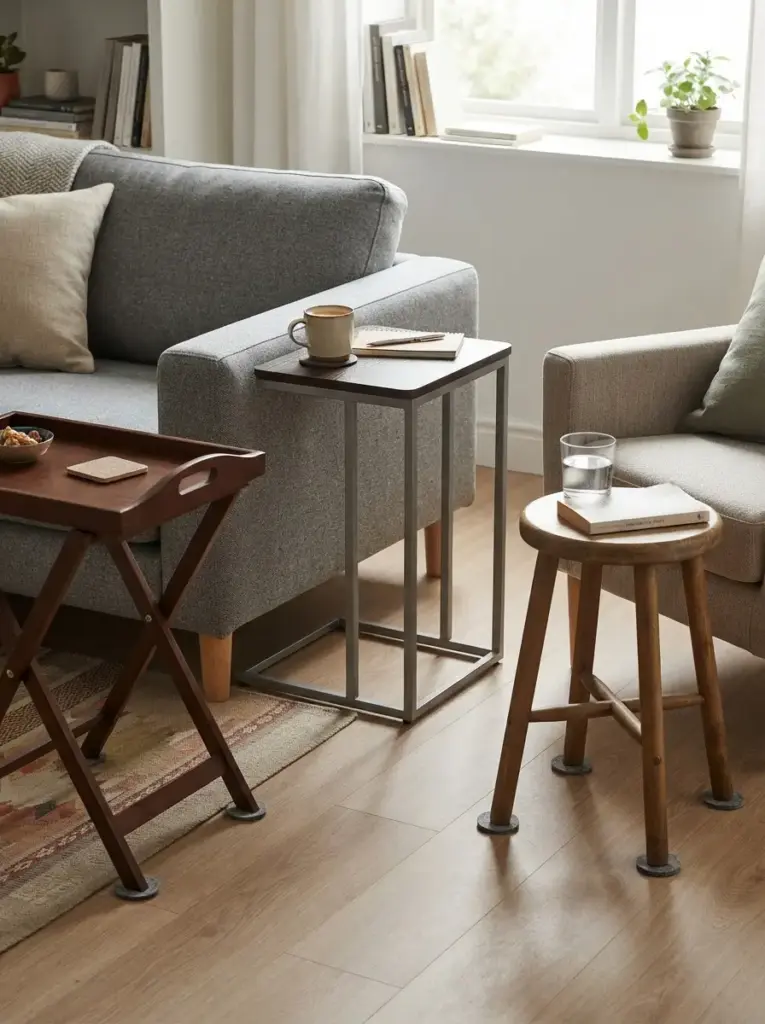
Guests need somewhere to place drinks without leaning across the room. Use compact C-shaped tables, folding tray tables, stools, or small nesting pieces beside seats. C-tables slide partly under a sofa and work well for laptops. Stools can serve as tables, plant stands, or emergency seating. Keep surfaces around 40 to 55 centimetres wide, so they remain useful without blocking movement. Rounded edges are safer in narrow paths.
Multi-purpose side tables make small rooms easier to use because they bring surfaces to people instead of forcing people toward one central table. Best for study groups and gaming nights, the setup also reduces spills from balancing cups on sofa arms. Look for second-hand wood stools or simple metal tables under £25. Avoid unstable three-legged designs on thick rugs. Test each piece by pressing lightly on the edge before buying, and add felt pads to protect rental flooring.
Hide Clutter in a Storage Ottoman
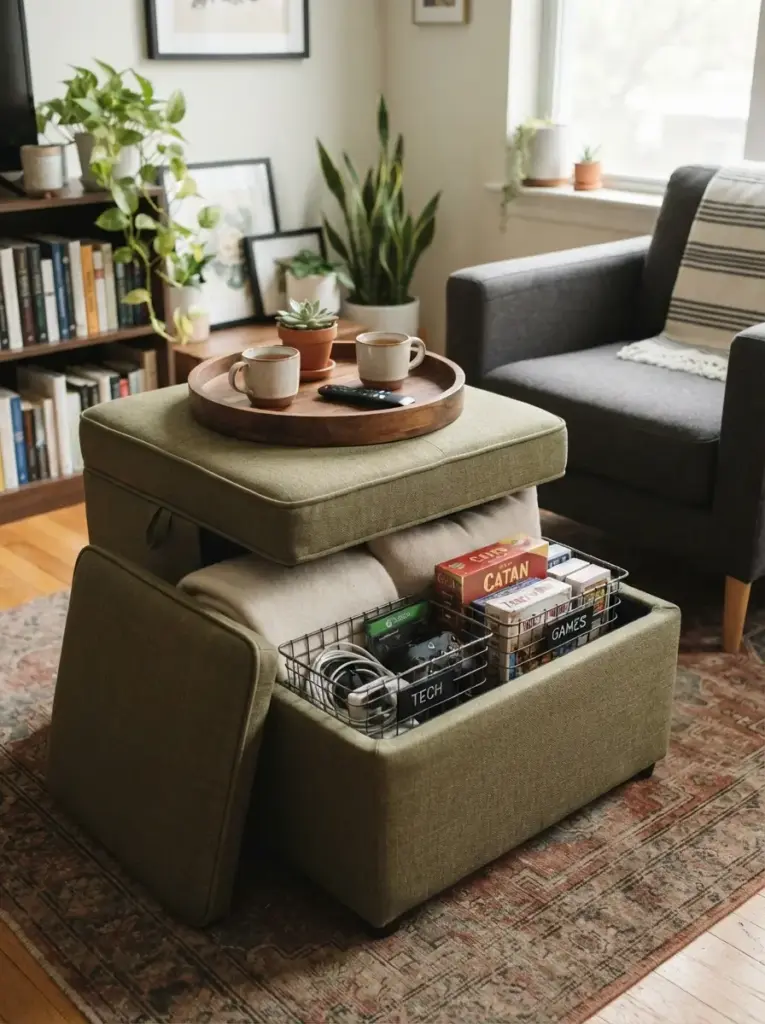
Storage ottomans can hold blankets, controllers, board games, extension leads, and spare cushions while also serving as a footrest or extra seat. Choose a sturdy model with a hinged or removable lid and enough internal depth for the items you actually own. Upholstery in charcoal, brown, olive, or textured beige handles regular use well. Place a firm tray on top when using it as a table, and remove the tray before anyone sits down.
Closed storage supports a calmer room because visual clutter makes limited space feel smaller. Students with few built-in cupboards benefit most. Sort the contents into simple categories rather than filling the ottoman with random objects. One basket for chargers and another for games prevents digging. Avoid overloading a lightweight folding ottoman with heavy books, since its base may bow. Strong second-hand pieces can often be cleaned and recovered with washable fabric for less than buying new furniture.
Pick Durable Fabrics and Easy-Clean Finishes
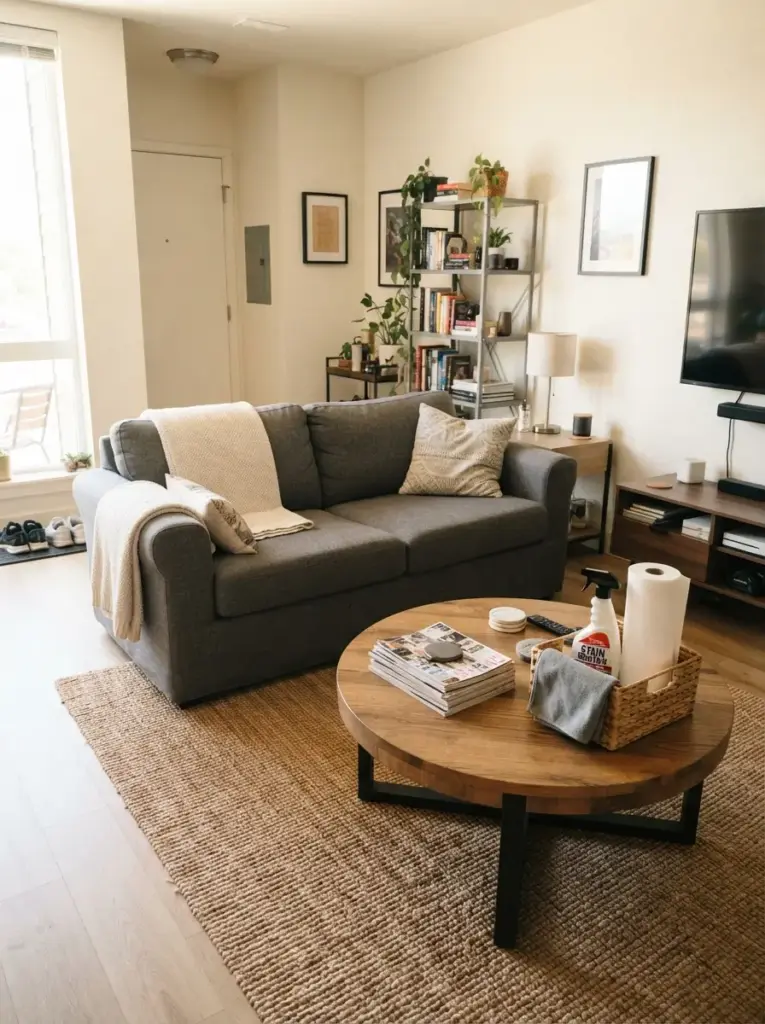
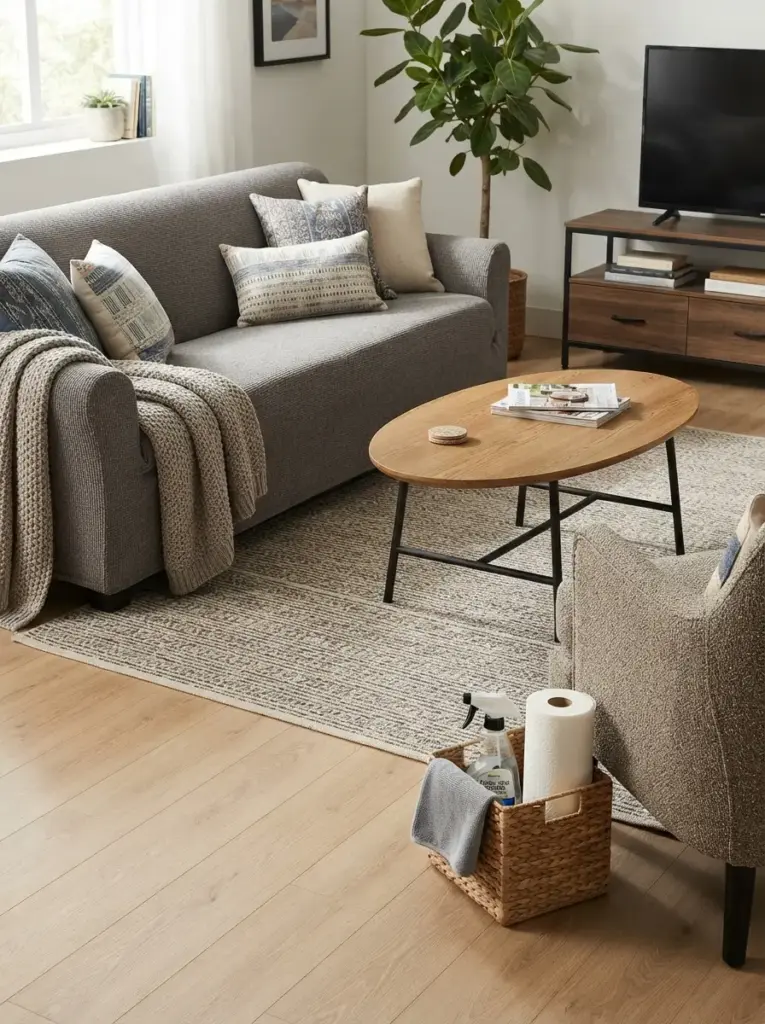
Shared living rooms need materials that tolerate drinks, food, shoes, and frequent use. Choose sofa covers, cushion cases, and throws that can enter a standard washing machine. Mid-tone woven fabrics hide wear better than smooth pale upholstery. For tables, sealed wood, laminate, and metal are easier to maintain than untreated timber. Keep a small cleaning basket nearby with a microfibre cloth, fabric-safe stain solution, and paper towels for quick action after spills.
Durable finishes save money because they reduce the need for replacements. Best for busy households, pet owners, and students who regularly host friends, practical materials also lower stress during gatherings. Check care labels before purchasing and avoid products that require specialist cleaning. Washable slipcovers can refresh an inexpensive sofa and allow colour changes later. Many Modern Apartment Living Room Ideas look polished because surfaces are consistent and well maintained, not because every item is new.
Reserve One Quiet Corner for Late-Night Study
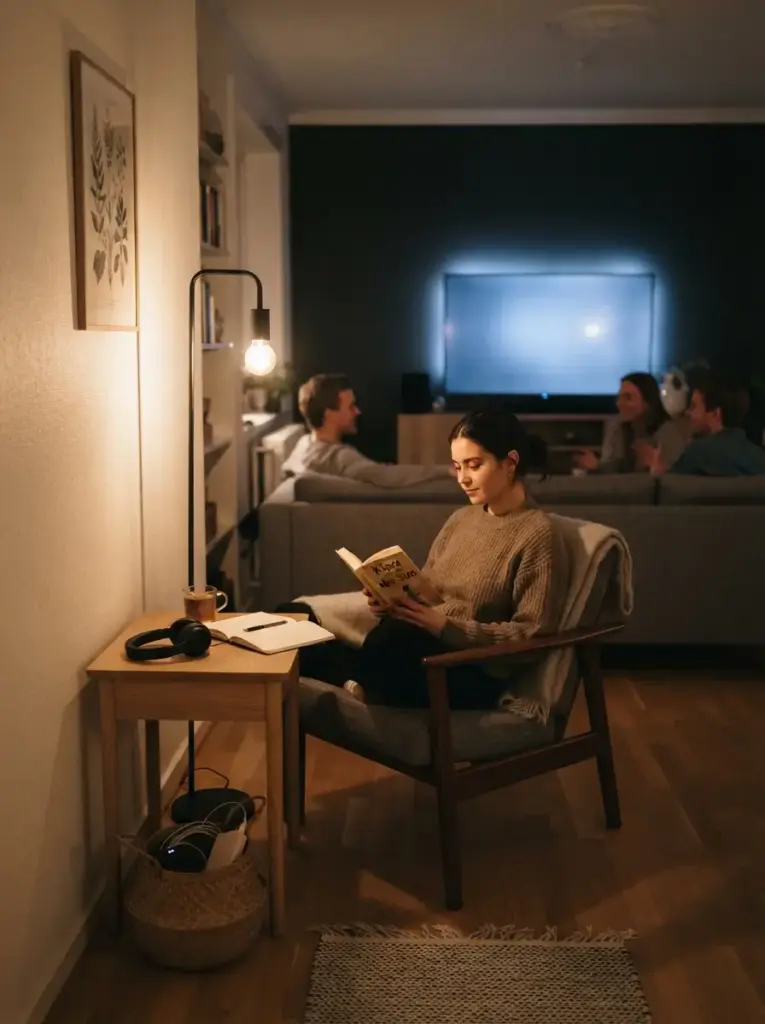
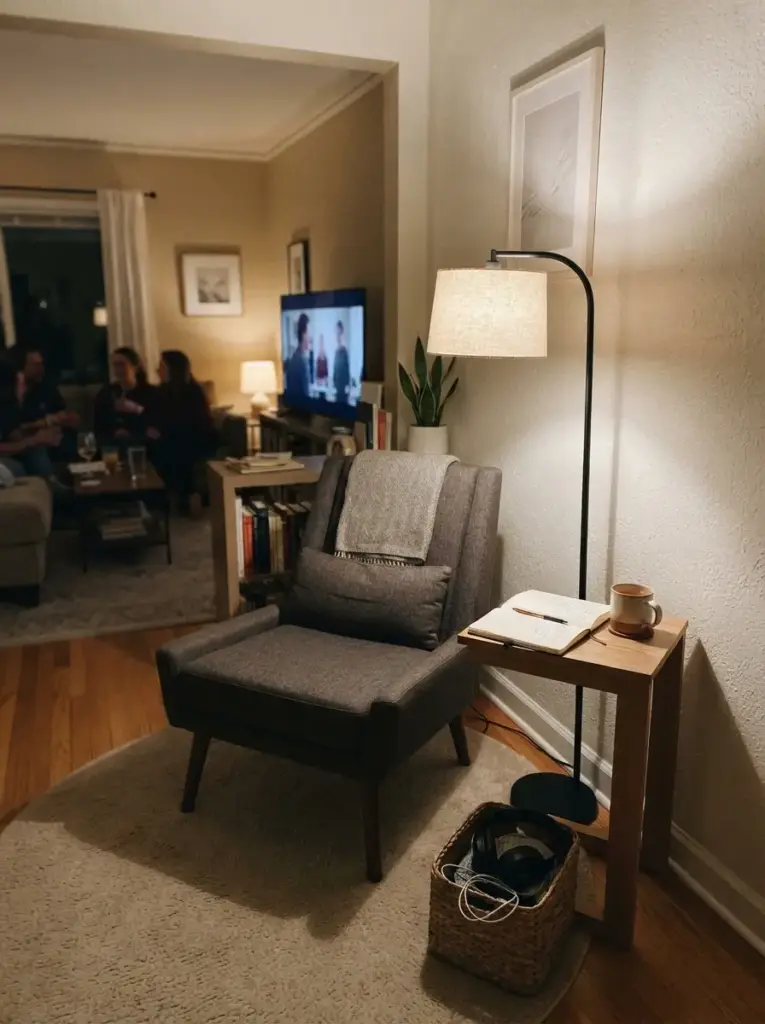
Not every late-night gathering involves loud conversation. Create a small corner where someone can read, study, or decompress while others use the main seating area. Position a supportive chair near a floor lamp and add a narrow side table for a notebook or drink. Use a basket for headphones and chargers. Facing the chair slightly away from the television creates psychological separation without adding a wall or screen.
Quiet corners make a shared room more inclusive. Best for introverts, early exam periods, or flatmates with different routines, the setup allows multiple activities to happen comfortably. Keep the area simple so it does not become a dumping ground for bags and laundry. A compact chair with an upright back supports study better than a deep lounge seat. Fans of a Minimalist Apartment Living Room can use one chair, one lamp, and one table to create a complete zone without visual clutter.
Common Mistakes to Avoid
Buying Furniture Before Measuring
Large furniture can make a rental feel cramped and may not fit through doors or stairwells. Measure the room, doorways, ceiling height, radiators, windows, and fixed cupboards before ordering. Mark furniture dimensions on the floor with painter’s tape and walk around the outline. Include space for drawers and doors to open. Impulse purchases often create more frustration than comfort, especially when delivery and return fees are involved.
Depending Only on Overhead Lighting
Single ceiling lights often create glare and deep shadows. Add at least two lower light sources so the room remains useful for reading, conversation, and films. Match bulb temperatures where possible, since mixing cool white and warm white can make the room feel visually unsettled. Extremely dim lighting is not always cosy; guests still need to see steps, drinks, and charging cables safely.
Filling Every Empty Surface
Too many objects make cleaning harder and leave no room for daily activities. Keep at least half of the coffee table clear and limit shelves to a few useful or meaningful pieces. Rotate decorations instead of displaying everything at once. Open space gives the eye a place to rest and helps a small apartment feel more manageable during busy weeks.
Ignoring Sound and Neighbours
Late-night gatherings can disturb people in nearby rooms or apartments. Keep speakers away from shared walls, lower bass settings, close windows, and place rugs under seating areas. Agree on a reasonable quiet time with flatmates before inviting friends. Soft furnishings reduce some echo, but they do not soundproof a room. Respectful volume matters more than decorative fixes.
Choosing Delicate Materials
White boucle, untreated pale wood, and fragile glass may look attractive but require careful maintenance. Shared student spaces usually perform better with washable woven fabrics, wipeable tables, and replaceable covers. Choose items based on real routines rather than idealised photos. Practical finishes let people relax without worrying about every crumb, ring, or scuff.
Forgetting Rental Rules
Drilling, painting, changing fixtures, or attaching heavy items may breach the tenancy agreement. Read the rules before making changes and ask for written permission where necessary. Keep original hardware in labelled bags so it can be reinstalled later. Photograph the room before decorating and test removable adhesives in hidden areas to reduce the risk of wall damage.
Budget-Friendly Styling Tips
Set a clear spending limit before shopping and divide it by function. Prioritise seating, lighting, a rug, and one useful surface before buying decorative extras. A basic budget might place £120 toward a second-hand sofa, £40 toward lamps, £50 toward a rug, and £30 toward cushions or storage. Prices vary by area, but the order of importance remains useful. Comfort and function should come before matching accessories.
Second-hand marketplaces, charity shops, student moving groups, and family storage can provide solid furniture at low cost. Check items carefully for odours, pests, loose joints, and damaged wiring. Hard furniture is usually easier to clean than upholstered pieces. Arrange safe collection with help, measure transport space, and avoid paying a deposit to an unknown seller without reasonable protection.
Textiles create visible change without large furniture costs. One large washable throw can cover a worn sofa, while two cushion covers can introduce colour. Choose a limited palette so inexpensive finds still look connected. Navy, tan, olive, rust, cream, and charcoal combine easily with common rental finishes. Wash second-hand textiles before use and follow care instructions.
Lighting upgrades often deliver the strongest improvement for the least money. A table lamp from a charity shop, a new safe bulb, and removable cable clips may cost under £20. Confirm that plugs and cords are undamaged. Rechargeable lamps cost more initially but work well where sockets are limited. Avoid decorative lights with poor-quality adapters or exposed wiring.
Colour planning can also prevent waste. Save photos of the room in daylight and at night, then compare potential cushions, rugs, and artwork against the existing flooring and walls. Buy one sample or low-cost item before committing to several matching pieces. Shared households should keep receipts and packaging until everyone agrees that the colour works. Students who expect to move again can choose portable accents instead of furniture in unusual shades. Neutral large pieces travel easily between future homes, while affordable covers, prints, and throws can change the mood. Careful testing protects the budget and reduces unwanted purchases.
DIY projects should remain reversible and safe. Cover sturdy boxes with removable paper for shelf storage, frame postcards instead of buying large art, or use fabric remnants as simple wall panels. Skip projects that alter electrical fixtures, block vents, or create unstable furniture. Budget decorating works best when the result is easy to clean, move, and repair.
College Apartment Living Room Tips for Move-In Week
Move-in week is the right time to solve layout and storage problems before clutter builds. Photograph every wall, measure the main furniture zones, and decide where bags, shoes, coats, chargers, and cleaning products will live. Place large furniture first, then add lighting and smaller surfaces. Waiting to buy some pieces can be helpful because the room may function differently once everyone has settled in.
Shared rooms need clear agreements as much as attractive decor. Discuss who owns each item, how costs will be split, what happens when someone moves out, and which surfaces must stay clear. Agree on guest expectations, cleaning routines, quiet hours, and food storage. Written notes in a shared household document can prevent confusion later. Respectful systems protect friendships and keep the room usable.
First-home essentials should include a surge-protected extension lead, basic lamp, coasters, washable throw, bin, small vacuum or brush, cleaning cloths, and a simple tool kit. Add seating only after checking how many people usually gather. Fans of Small Apartment Living Room Ideas often benefit from buying fewer pieces at first, then filling genuine gaps after two or three weeks.
Personal style can develop gradually. Start with one palette and repeat it through practical items rather than purchasing themed decor immediately. Warm neutrals with olive and rust suit cosy spaces, while charcoal, navy, and light wood support cleaner Modern Apartment Living Room Ideas. Rental rooms look more settled when colour appears in several places, such as the rug, cushions, artwork, and storage baskets.
Furniture placement should keep windows, heaters, doors, and emergency routes clear. Avoid leaning large mirrors where they can tip or placing candles near curtains. Battery-operated candles provide a safer soft glow for crowded nights. Check smoke alarms and building rules before hosting. Small safety decisions matter more when people are tired, carrying drinks, or moving through a dim room.
Styling Directions for Different Personalities
Warm and Relaxed
Use oatmeal seating, rust cushions, olive accents, warm wood, and 2700K lamps. Add a striped or geometric rug to keep the palette from feeling flat. Students who enjoy long conversations, reading, and casual dinners often prefer this direction. Keep surfaces practical with trays, coasters, and washable textiles.
Clean and Contemporary
Choose charcoal, cream, black metal, and light oak finishes. Limit decorative pieces and repeat simple shapes across lamps, frames, and tables. Fans of Minimalist Apartment Living Room styling should still include softness through a rug, curtains, and one textured throw. Without fabric, clean rooms can feel echoey and uncomfortable.
Colourful and Social
Build the room around two strong colours rather than many unrelated shades. Cobalt and orange, forest green and mustard, or burgundy and blush can work well with neutral furniture. Best for outgoing households, the approach feels lively while remaining controlled. Repeat each colour at least twice so the choices appear deliberate.
Soft and Calm
Combine pale grey, dusty blue, muted sage, and warm white. Use low-contrast patterns and natural-looking textures. Students who become overwhelmed by visual clutter may find this palette easier to maintain. Darker accents in navy or walnut keep the room from appearing washed out, especially under warm evening light.
Frequently Asked Questions
What Furniture Is Essential for a College Apartment Living Room?
Start with comfortable seating, one reliable light source, a useful table, and storage for daily clutter. Add a rug if the floor feels cold or noisy. Extra chairs, media units, and decorative shelves can wait until you understand how the room is used. Flexible furniture usually offers better value than large matching sets.
How Can Renters Decorate Walls Without Damage?
Use lightweight frames, removable picture strips, poster rails, tension rods, and freestanding shelves. Follow weight limits and preparation instructions carefully. Test adhesives in a hidden place and remove them slowly according to the manufacturer’s directions. Keep heavy mirrors and shelves off walls unless the landlord permits secure installation.
Which Lighting Colour Is Best for Late-Night Hangouts?
Bulbs around 2700K create warm light that suits conversation and films. Reading corners may use 3000K if slightly clearer light feels more comfortable. Keep most visible bulbs within the same temperature range to avoid a mismatched effect. Dimmable lamps provide useful flexibility, but confirm bulb and fitting compatibility.
How Do You Make a Small Living Room Fit More People?
Use a compact sofa, floor cushions, stools, storage ottomans, and folding chairs that can move or store easily. Keep the centre walkway open and provide small side tables for drinks. Avoid oversized furniture and deep coffee tables. Flexible seating allows the room to handle both daily life and occasional gatherings.
How Can Flatmates Share Decorating Costs Fairly?
List essential shared items, agree on a maximum budget, and record who paid for each piece. Decide whether ownership remains with the buyer or whether the group will divide resale value later. Avoid splitting expensive purchases without discussing move-out plans. Clear agreements reduce conflict and make future transitions easier.
How Do You Keep the Room Tidy After Friends Visit?
Place a bin, laundry-safe throw, coaster tray, and cleaning cloth within easy reach. Ask guests to keep shoes, bags, and cups in designated places. Spend ten minutes resetting the room before bed by collecting rubbish, wiping surfaces, folding blankets, and returning charging cables. Small routines stop mess from becoming a larger task.
Conclusion
Successful college decorating depends on honest planning rather than expensive trends. Flexible seating, warm layered lighting, easy-clean surfaces, hidden storage, and clear walkways create a room that can handle study sessions, films, meals, and conversations. Each choice should support the habits of the people who live there. A well-planned College Apartment Living Room feels welcoming because it is comfortable, organised, and easy to use.
Start with the biggest practical needs, then add colour and personality slowly. Measure before buying, respect rental rules, choose washable materials, and keep neighbours in mind during late-night gatherings. Borrow ideas from Small Apartment Living Room Decor, Cozy Apartment Living Room Designs Ideas, and Modern Apartment Living Room Ideas, but adapt them to your actual floor plan, budget, and routine. Thoughtful details will make the space feel settled without sacrificing flexibility.