
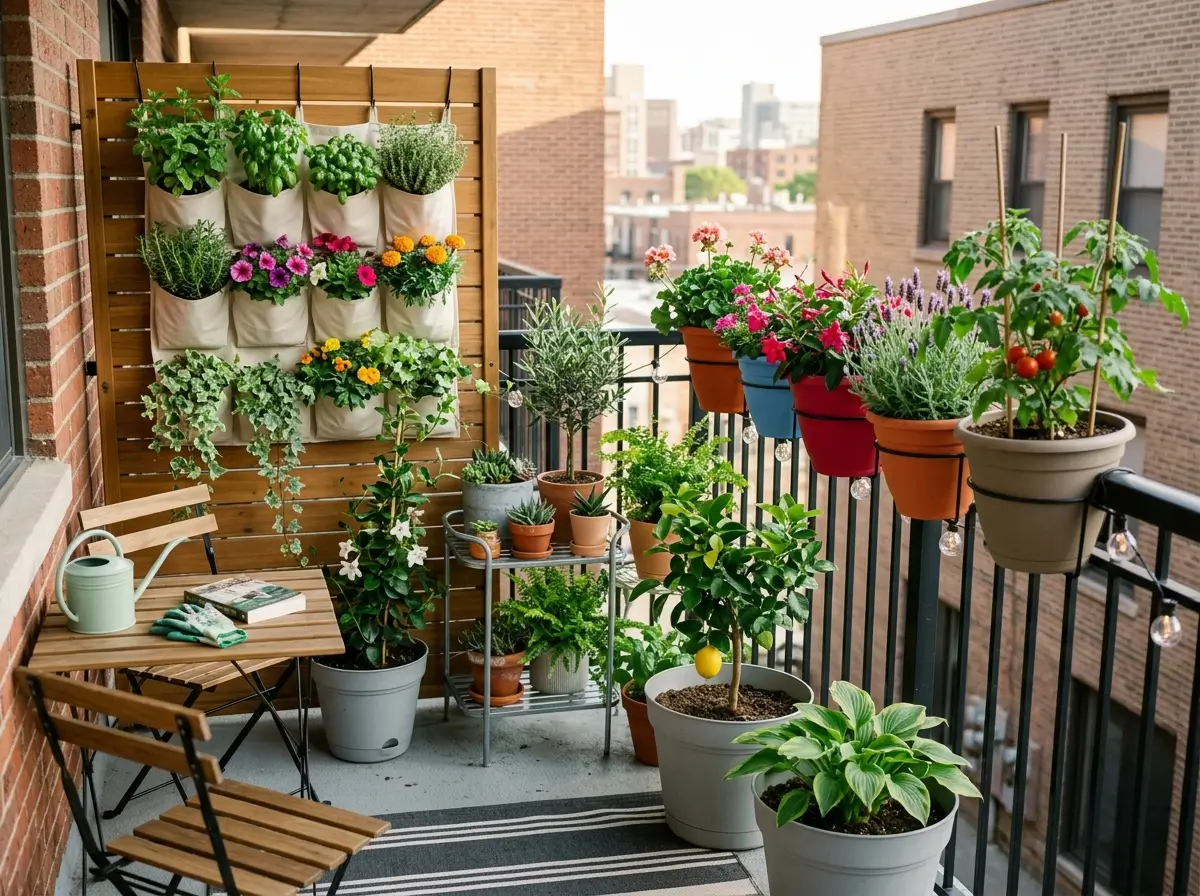

Balcony gardening can feel difficult when you rent, especially when the space is narrow, shaded, windy, or controlled by building rules. Drilling into walls may be banned, drainage must stay tidy, and every item may need to move at the end of the lease. Careful planning solves most of these limits. A well-organized Apartment Balcony Garden can give you greenery, herbs, privacy, and a comfortable place to sit without permanent construction.
Good results depend more on layout than on buying many plants. Measuring the floor, checking sunlight, understanding wind, and choosing lightweight containers will save money and prevent clutter. Renters also benefit from foldable furniture, planters with saucers, and accessories attached with removable hooks or freestanding frames. The following ideas focus on practical choices that look intentional while remaining easy to maintain, rearrange, and remove.
Anyone collecting Apartment Balcony Ideas should begin with everyday use. Decide whether the balcony should support morning coffee, evening reading, herb growing, pet safety, or extra privacy. One clear purpose keeps the design useful. Trying to fit dining, lounging, storage, gardening, and entertaining into a tiny area usually creates a crowded walkway and makes watering harder.
Can Renters Create a Useful Balcony Garden?
Yes. Renters can create a productive and attractive balcony garden by using portable planters, freestanding supports, compact furniture, controlled drainage, and plants matched to the available sunlight. Permanent wall fixtures are rarely necessary. Most features can sit on the floor, clip to a railing where permitted, or hang from removable outdoor-rated hooks.
Successful Balcony Garden Ideas also respect weight limits, fire exits, neighbors, and property rules. Before buying large pots or heavy soil, read the lease and ask management about railing planters, privacy screens, grills, hanging baskets, and floor coverings. Written approval protects you from misunderstandings and helps you choose options that can stay for the full rental period.
Layout testing can happen without spending anything. Carry two dining chairs outside, place cardboard where future planters may sit, and walk through the arrangement several times. Open the door, reach the railing, and pretend to water every marked container. Such a trial shows whether the planned Apartment Balcony Garden supports normal movement or only looks good on paper. People with sliding doors should keep the handle and track clear, while outward-opening doors need a larger empty zone. Test the setup in daylight and after dark because shadows, cords, and low planters may create different hazards at night. Move anything that feels awkward before ordering permanent-sized pieces.
Measure the Balcony Before Buying Anything
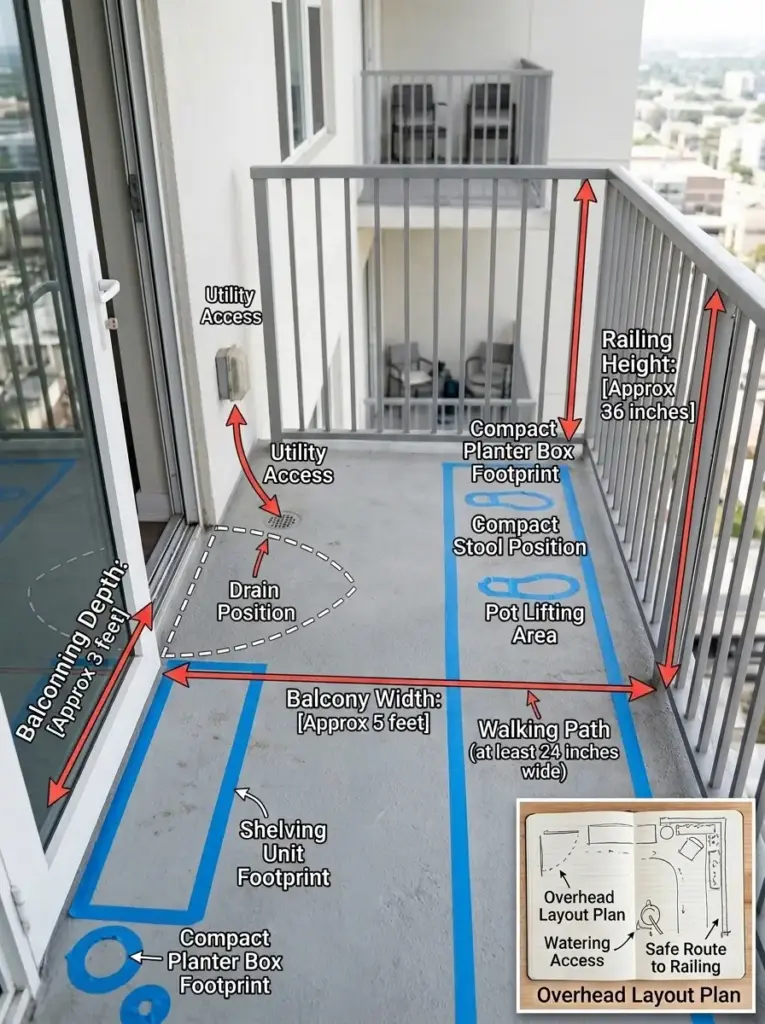
Precise measurements prevent the most common small-space mistake: filling the floor before testing how people will move. Record the balcony width, depth, railing height, door swing, drain position, and any utility access. Mark a walking path at least 24 inches wide where possible. Painter’s tape can show the footprint of chairs, shelves, and planters before you spend money.
Planning works because every object receives a job and a location. Renters with narrow balconies benefit most from this step, since even a few extra inches can determine whether the door opens properly. Photograph the empty area from several angles, then sketch a simple overhead plan. Include watering access and enough room to lift pots without knocking over furniture.
Look through Small Balcony Ideas with your real dimensions beside you. Images often use wide-angle lenses that make furniture appear smaller than it is. Compare listed product measurements rather than copying a full setup. A 16-inch round stool may work where a 24-inch lounge chair will not, while a 36-inch bench may block the only safe route to the railing.
Build Upward with a Freestanding Plant Shelf
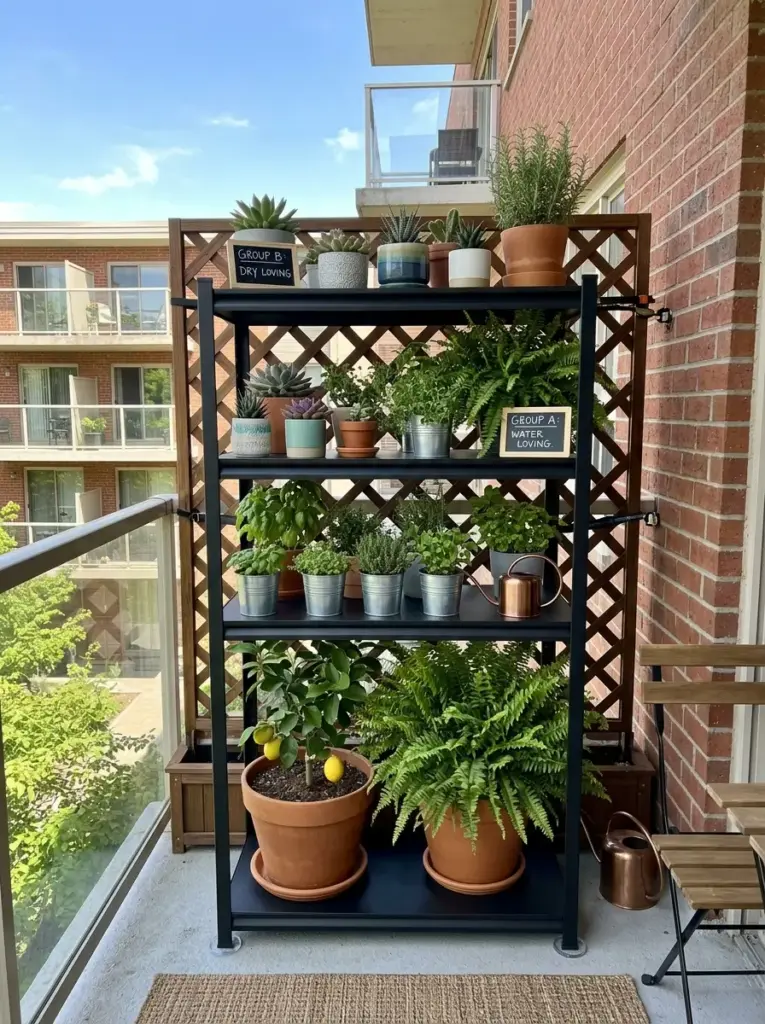
Vertical shelving gives plants more sunlight while preserving valuable floor space. Choose a powder-coated metal, cedar, bamboo, or outdoor resin shelf with a stable base. Narrow ladder shelves work well against a protected wall, while tiered corner stands suit balconies with awkward unused edges. Place heavier pots on the lowest level to reduce tipping.
Height creates visual depth because leaves appear at several eye levels rather than forming one low row around the floor. Beginners with many small herb pots or succulents will find this arrangement especially manageable. Group plants by watering needs, keeping thirstier varieties together so one watering session does not soak drought-tolerant pots.
Rental safety matters more than style. Avoid leaning unstable furniture against glass railings, and add removable anti-slip pads under each foot. Windy balconies may need a wider shelf with a low center of gravity. Skip tall lightweight racks that become sails during storms. Where building rules allow, secure the shelf to a freestanding weighted trellis instead of drilling into the exterior wall.
Use Railing Planters Only with Secure Hardware
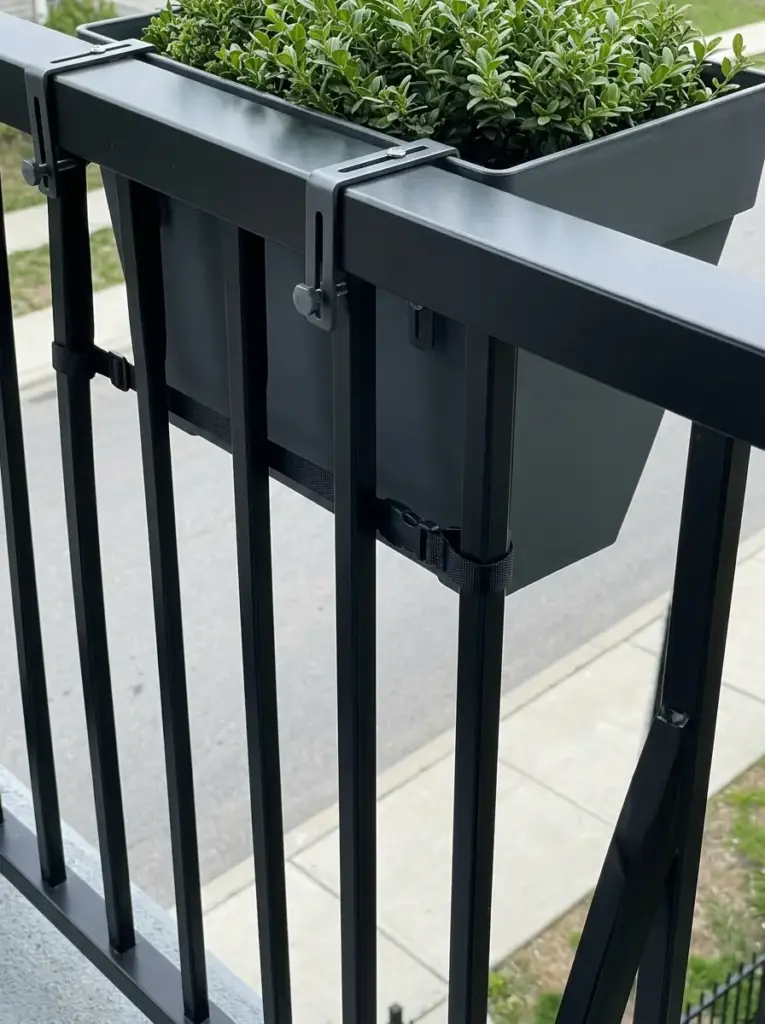
Railing planters free the floor and bring flowers closer to eye level. Models with adjustable brackets fit more securely than basic hook-over baskets. Choose boxes with locking clips, deep lips, or secondary safety straps, and install them on the inside of the railing whenever possible. Interior placement protects pedestrians and neighbors below from falling containers.
Color can make the arrangement feel connected to the apartment. Matte charcoal boxes suit modern black railings, warm terracotta works with brick, and muted sage blends with leafy planting. Renters who want seasonal color can plant white bacopa, pink geraniums, trailing sweet potato vine, or compact herbs, depending on local sun and heat.
Rules vary widely, so confirm permission before installation. Some buildings ban outward-facing boxes, while others require safety ties. Drainage also needs control. Use inserts with reservoirs, line the base correctly, and place absorbent mats where runoff might stain concrete. Responsible watering keeps the setup neighbor-friendly and prevents complaints that could end the project early.
Choose Lightweight Containers with Proper Drainage
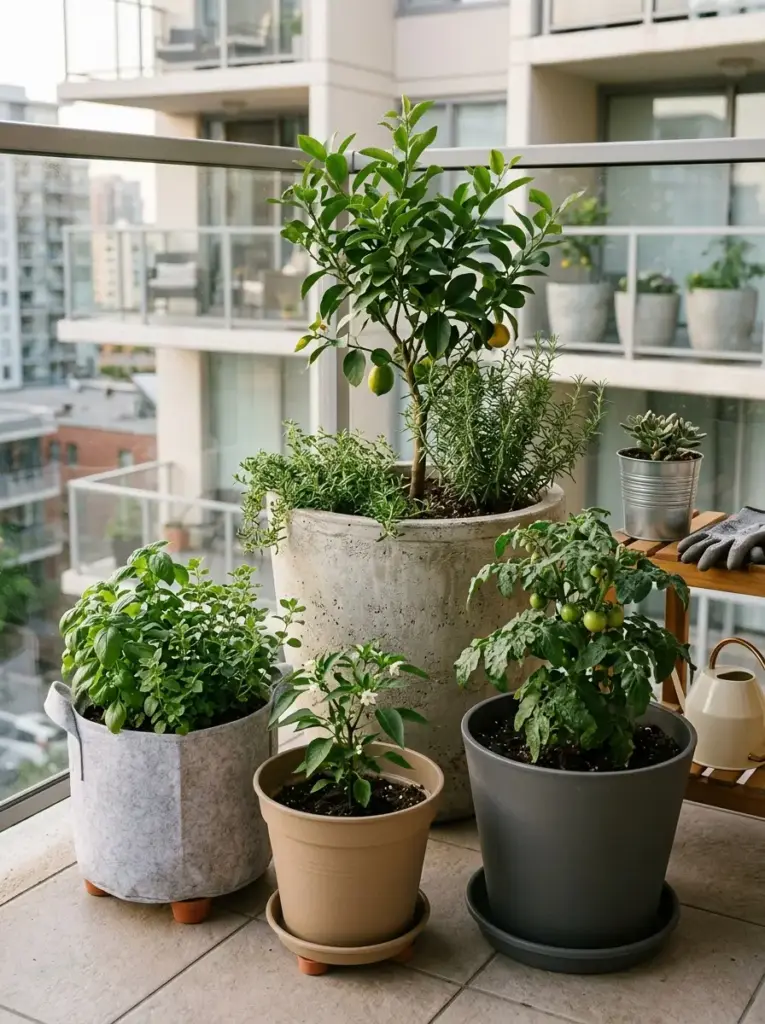
Large ceramic pots look substantial, but they become extremely heavy after adding moist soil. Fiberglass, resin, recycled plastic, fabric grow bags, and thin metal cachepots reduce the load and make moving easier. Select UV-resistant finishes so the containers do not crack or fade after one season. Neutral colors also let foliage become the main feature.
Healthy roots need drainage holes, yet uncontrolled water can create stains or drip onto lower balconies. Pair every pot with a fitted saucer, planter tray, or self-watering insert. Raise containers slightly on pot feet so trapped moisture can evaporate. Empty standing water after rain to discourage mosquitoes and root problems.
Beginners searching for practical Balcony Plants should match the pot size to the mature root growth. Herbs may start in six-inch containers, but tomatoes, peppers, dwarf citrus, and shrubs need more soil volume. Undersized pots dry quickly and tip in the wind. Oversized pots cost more, add weight, and can remain wet too long in shade.
Create a Compact Herb Station Near the Door
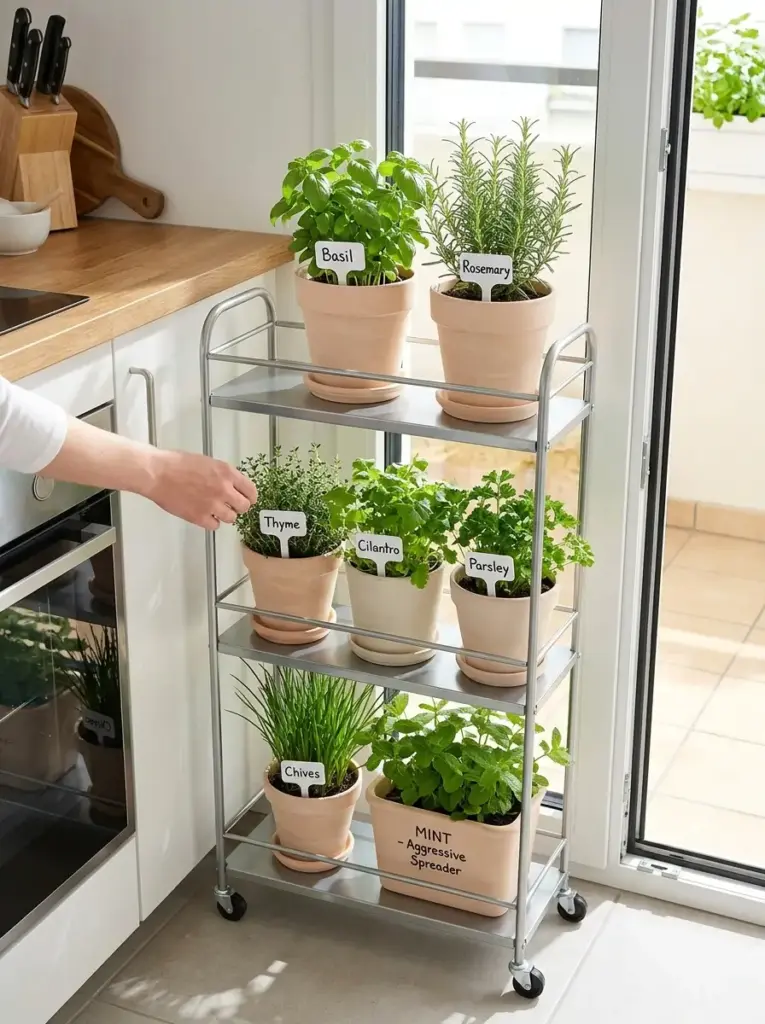
Keeping herbs near the balcony door makes harvesting easier during cooking. Arrange rosemary, thyme, mint, parsley, basil, chives, or cilantro on a narrow cart, shelf, or stepped stand. Put the most frequently used herbs at waist height. Mint should stay in its own container because its roots spread aggressively and can overwhelm neighboring plants.
Convenience improves care. Plants that are visible from the kitchen are less likely to be forgotten, and a rolling cart can move between sun and shelter. Home cooks, beginners, and renters who want useful greenery rather than purely decorative planting will gain the most from this setup. Label pots with reusable markers to avoid confusing similar seedlings.
Sun requirements still matter. Basil and rosemary usually need stronger light, while parsley and mint tolerate some shade. Watch the balcony for a full day before choosing varieties. Where summer heat is intense, pale containers and morning sun can protect roots from overheating. Harvest little and often to encourage compact growth instead of weak, leggy stems.
Add a Folding Bistro Set for Flexible Seating
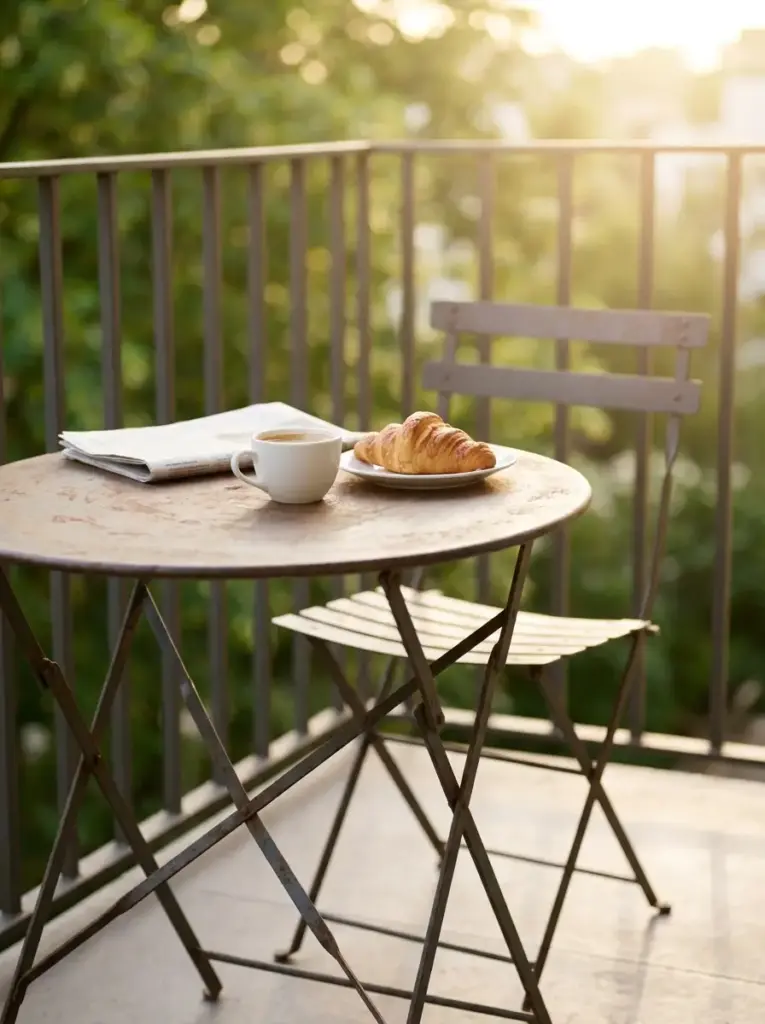
Folding furniture lets the balcony change function quickly. A slim bistro table can support breakfast, repotting, laptop work, or drinks, then fold against the wall when more floor space is needed. Look for rust-resistant steel, sealed wood, or outdoor-grade plastic. Chairs with open backs feel visually lighter than bulky solid seats.
Scale keeps the garden comfortable. Tables between 20 and 28 inches wide often suit small balconies, though actual measurements should guide the purchase. Renters who use the space alone or as a pair will find bistro sets more practical than a full outdoor dining collection. Add seat pads with ties so wind cannot lift them easily.
Thoughtful Balcony Furniture should survive weather and remain easy to carry through the apartment. Check whether the folded pieces fit in a closet during winter. Dark frames hide dust, while natural wood brings warmth beside green foliage. Avoid oversized armchairs that trap you behind the table or make plant care feel like an obstacle course.
Make Privacy with Freestanding Green Screens
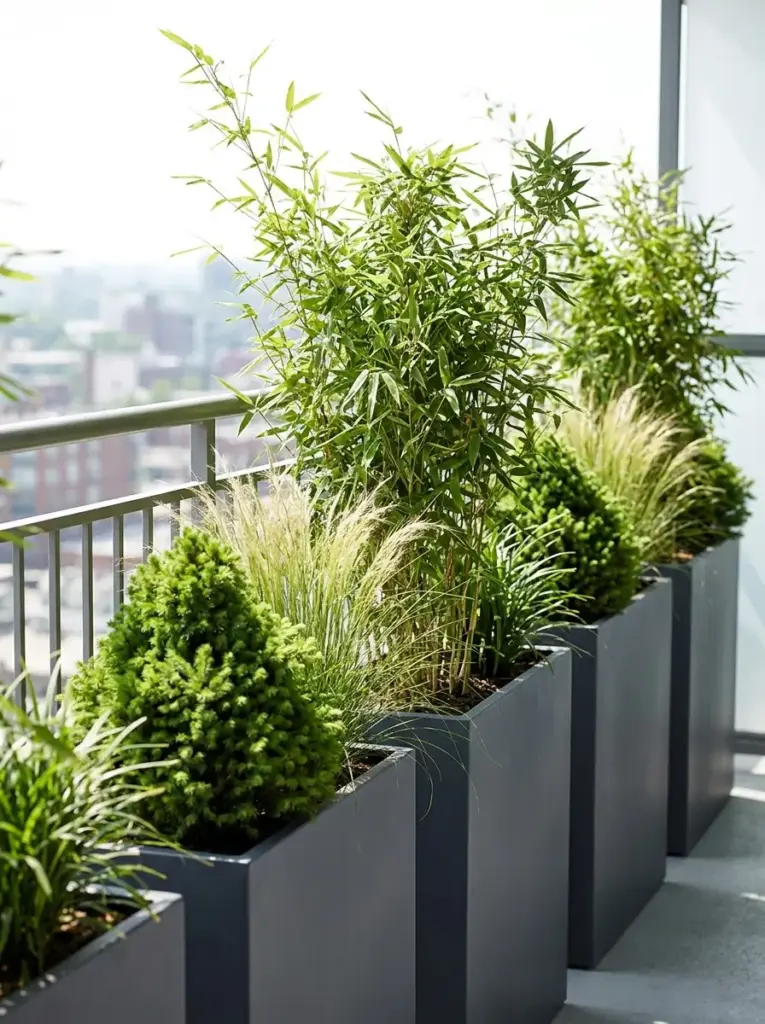
Privacy can come from plants, fabric, or a combination of both. Place tall planters along the most exposed edge and grow clumping bamboo varieties, ornamental grasses, compact evergreens, or trellised vines suited to container life. Select plants that tolerate the balcony’s sunlight and wind rather than choosing only by height.
Freestanding screens work because they block direct sightlines without attaching permanently to the building. People facing another apartment, a busy road, or a shared courtyard benefit most. Several medium-height plants often handle wind better than one top-heavy specimen. Staggering heights also look softer and leave gaps for airflow.
Many Balcony Privacy Ideas fail when dense material covers every railing opening. Solid screens can catch strong wind, reduce light, or conflict with fire codes. Use breathable outdoor fabric, reed panels attached only where permitted, or a weighted frame with climbing mesh. Keep the screen below the required heights and make sure it never blocks exits, drains, sprinklers, or emergency access.
Install a No-Drill Trellis for Climbing Plants
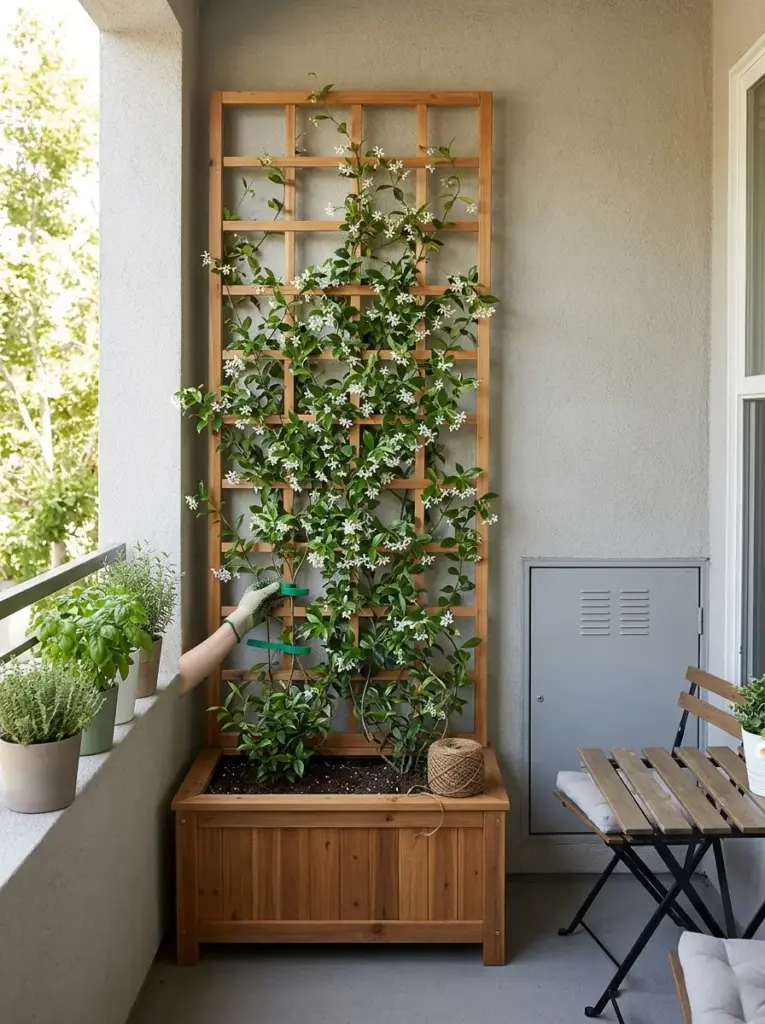
One freestanding trellis turns a plain wall into a growing space without screws. Choose a planter-and-trellis combination, a weighted metal frame, or tension poles rated for outdoor use. Climbing plants such as star jasmine, black-eyed Susan vine, compact clematis, or edible peas can soften hard surfaces and provide seasonal shade.
Support encourages upward growth, which leaves the floor available for seating. Renters with long blank walls or unattractive service panels will find this approach especially useful, provided access panels remain reachable. Guide new stems loosely with soft plant ties. A tight wire or rough string can cut into tender growth as the wind moves the vines.
Maintenance should shape the plant choice. Fast growers may need weekly tying and pruning, while slower vines take longer to cover the structure. Check whether the species drops flowers, stains surfaces, attracts many insects, or becomes invasive in the local climate. Container planting limits roots, but seeds can still spread beyond the balcony.
Style One Strong Corner Instead of Every Edge
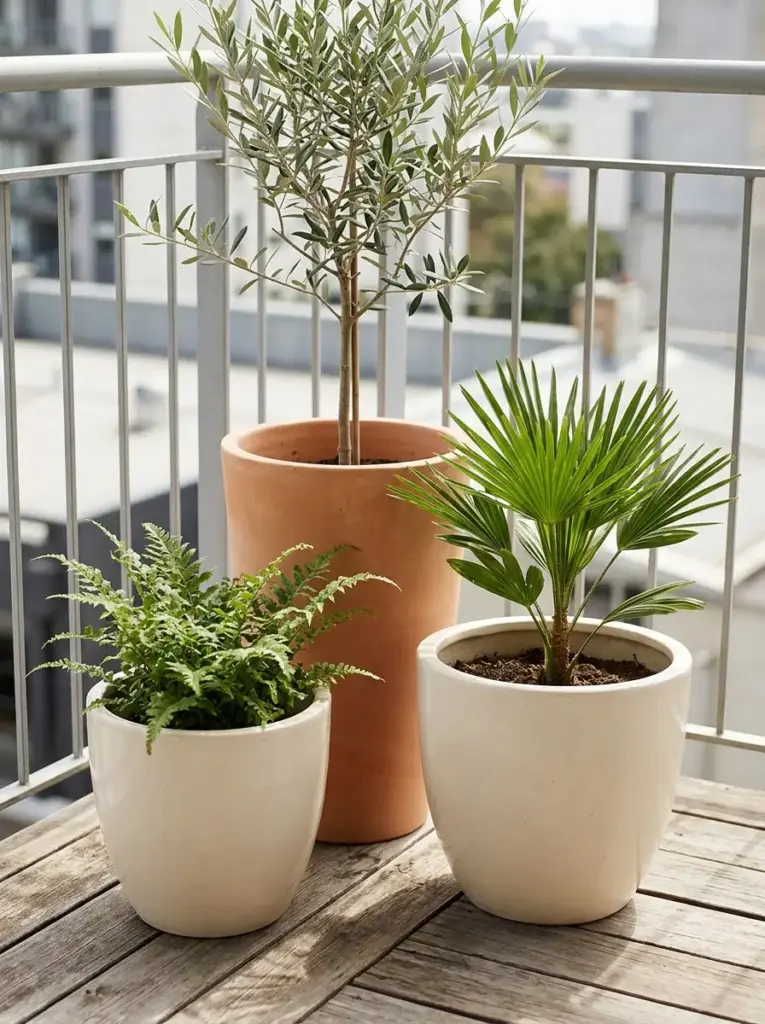
Concentrating plants in one corner creates a clear focal point and leaves breathing room elsewhere. Start with one taller plant, add two medium containers, then place a trailing or low plant near the front. Odd-numbered groups usually feel relaxed, but container size and leaf shape matter more than following a strict rule.
Layering succeeds because the eye reads the group as one composition. Renters with very limited budgets can make three carefully chosen pots look more polished than ten mismatched purchases. Repeat one container color, such as warm white, sand, black, or olive, while varying heights. A wooden stool or overturned crate can raise one pot temporarily.
Restraint improves Balcony Decor by reducing visual noise. Leave an open floor around the arrangement and keep the main walkway clear. Avoid lining every wall with identical small pots, which can resemble storage rather than intentional styling. Rotate containers monthly so plants receive balanced light, and the corner remains attractive from inside the room.
Use Outdoor Rugs That Dry Quickly
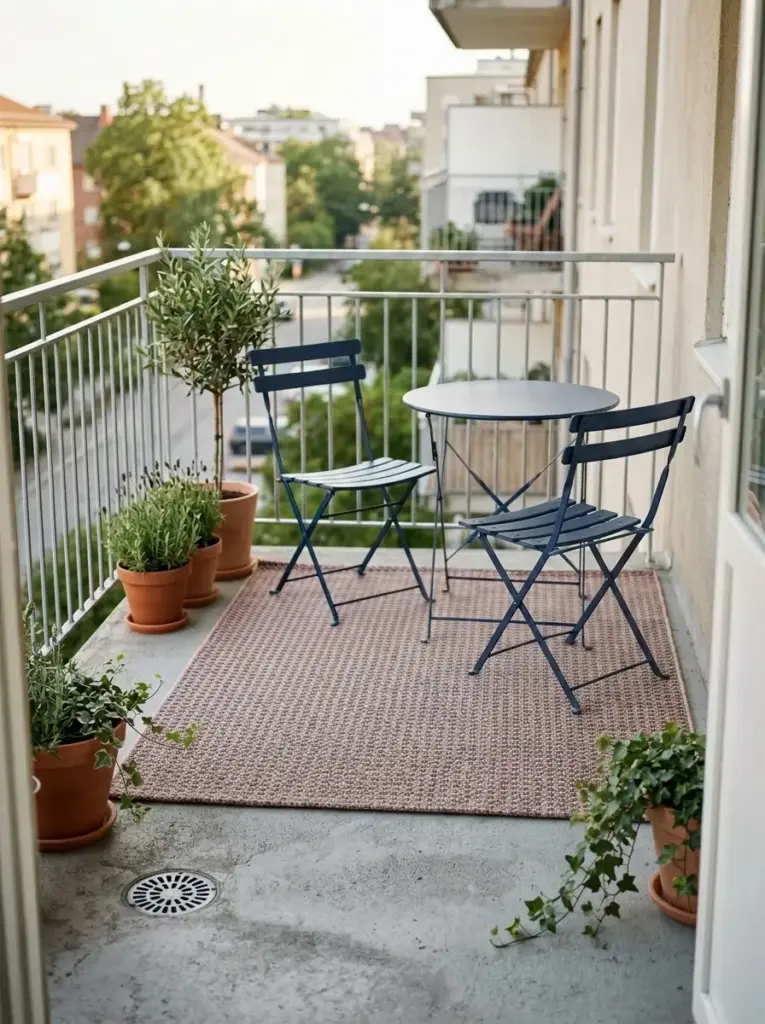
One outdoor rug can define the seating zone, soften concrete, and introduce color without permanent changes. Flatwoven polypropylene, recycled plastic, or breathable woven vinyl usually dries faster than thick indoor rugs. Select a size that leaves the balcony drain exposed and allows air to move beneath the edges.
The pattern helps hide soil marks. Narrow stripes can visually lengthen a short balcony, while small geometric patterns disguise dirt better than a solid pale surface. Renters with cold or rough flooring may appreciate the extra comfort underfoot. Terracotta, navy, olive, and cream work easily with common planter colors, though very light rugs need frequent cleaning.
Moisture is the main concern. Never place absorbent indoor carpet outdoors, and do not cover cracked surfaces that need inspection. Lift the rug after heavy rain and clean trapped leaves. Buildings with strict fire rules may require approved materials, so confirm the policy. A smaller washable runner can be safer than full-floor coverage.
Plan Lighting Around Warm, Low-Glare Sources
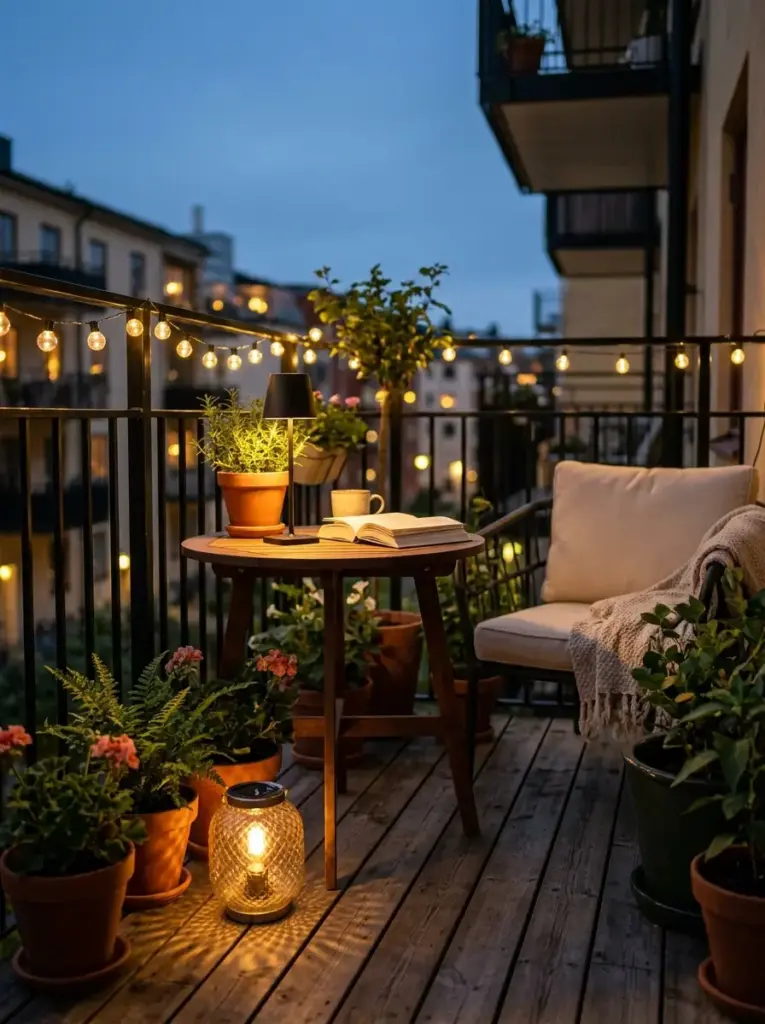
Soft lighting makes the garden usable after sunset. Choose outdoor-rated rechargeable table lamps, solar lanterns, or removable string lights if the lease allows them. Warm white bulbs between 2200K and 2700K create a calm appearance and flatter wood, terracotta, and foliage. Brighter cool-white light can feel harsh in a compact area.
Layered light is more comfortable than one intense fixture. Place a small lamp on the table, add a lantern near the floor, and use subtle string lights higher up. Evening readers may need a focused rechargeable lamp around 3000K, while people using the balcony mainly for conversation can stay closer to candle-like warmth.
Safe Balcony Lighting Ideas avoid loose cords, unprotected plugs, and flashing decorative modes that disturb neighbors. Keep fixtures away from watering zones and select weather ratings suitable for exposure. Solar lights need several hours of direct sun, so shaded balconies may perform better with USB-rechargeable options. Remove lightweight lanterns before strong winds.
Build a Simple Self-Watering System
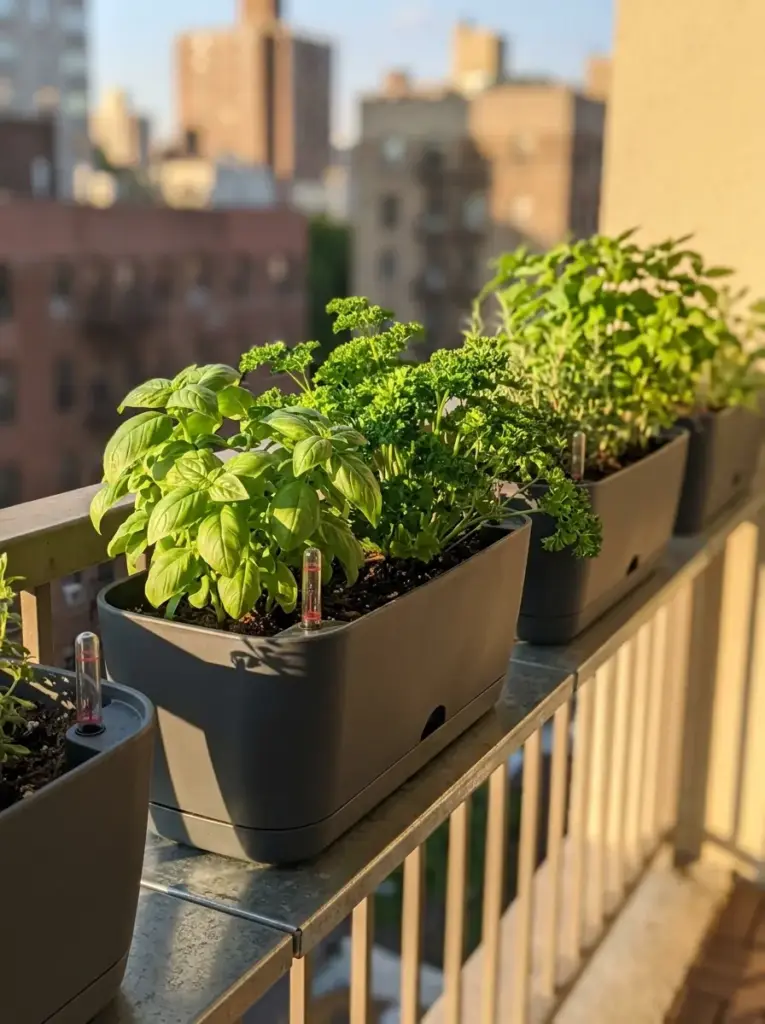
Self-watering planters reduce daily maintenance and keep soil moisture more consistent. Reservoir models allow roots to draw water as needed, while simple wick systems can support herbs and compact flowers. Clear indicators help beginners see when refilling is necessary. Always follow the planter instructions because overfilling can block airflow around roots.
Consistency supports plant health during hot weeks or short trips. Busy renters, frequent travelers, and balconies exposed to afternoon sun benefit most. Grouping pots by water needs also makes care easier. Thirsty basil, coleus, and parsley can share one zone, while rosemary, thyme, and succulents stay in a drier area.
Reservoirs do not remove the need for observation. Rain may fill them faster than expected, and some plants dislike constantly moist soil. Flush the container occasionally to reduce mineral buildup. Test the system for several weeks before relying on it during travel, and arrange a backup watering plan for long absences.
Select Plants for the Actual Microclimate
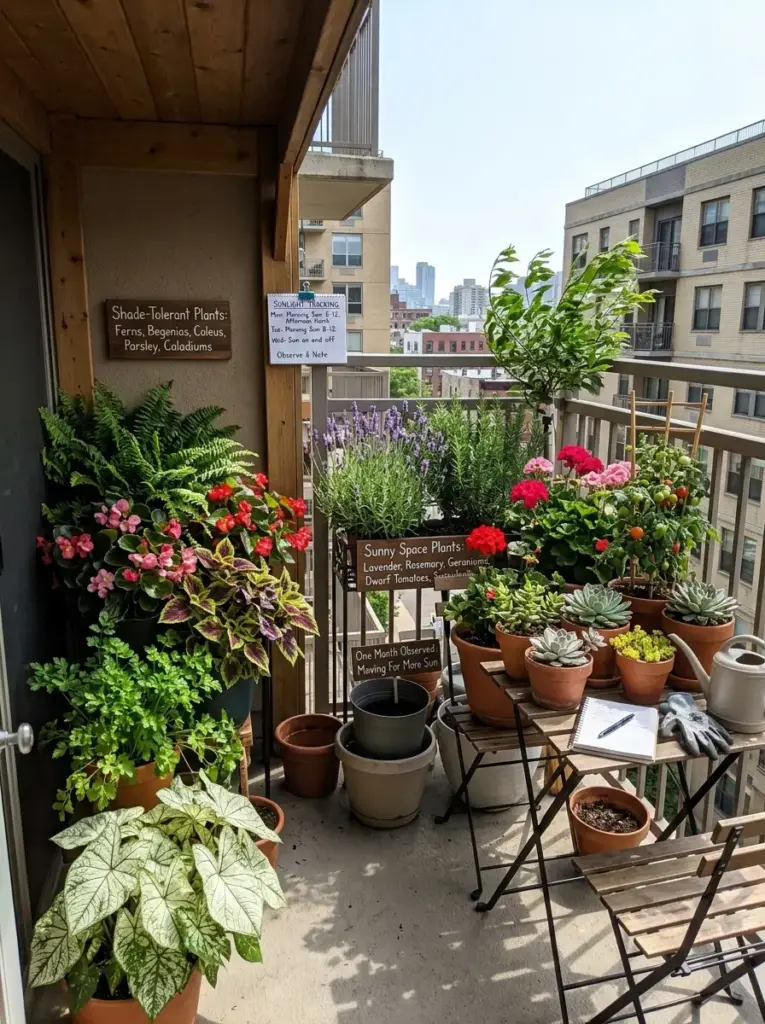
Balconies create stronger conditions than ground-level gardens. Upper floors may receive intense wind, reflected heat, deep shade, or sudden temperature changes. Track direct sunlight for several days, noting morning and afternoon exposure separately. Four hours of gentle morning sun is different from four hours of harsh late-day heat.
Right-plant selection saves more money than any decorative trick. Shade-tolerant choices may include ferns, begonias, coleus, parsley, and certain caladiums. Sunny spaces can support lavender, rosemary, geraniums, dwarf tomatoes, and many succulents. Local climate, building orientation, and seasonal heat should guide the final list.
People planning a Tiny Balcony Patio often buy too many varieties before understanding the conditions. Start with three to five dependable plants, then add more after one month of observation. Watch leaf color, soil drying speed, wind damage, and flowering. Moving pots a few feet can make a major difference in growth.
Create a Safe Garden for Cats
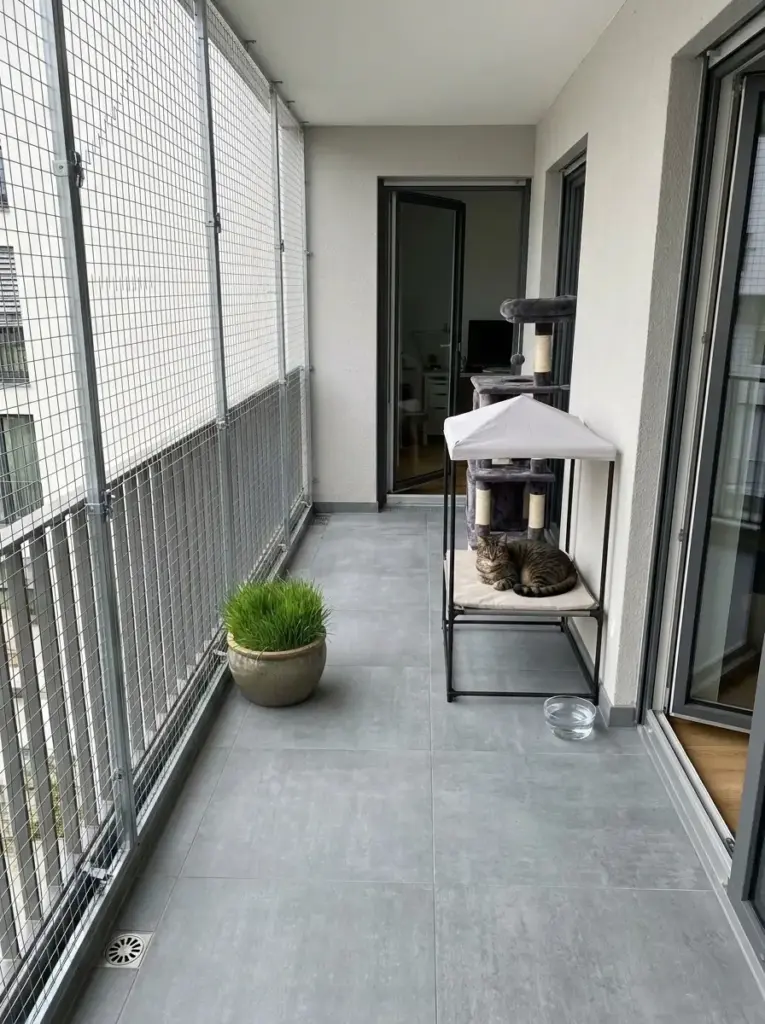
Pet safety requires more than adding netting. Check every plant against reliable veterinary toxicity guidance, secure tall furniture, remove sharp wire, and close gaps where a cat could squeeze through. Railings that appear narrow may still be dangerous for a curious or frightened animal. Balcony access should remain supervised unless a professionally installed enclosure is approved.
A properly secured cat-proof balcony usually needs a full-height barrier designed for the specific structure. Temporary mesh attached loosely with clips may sag, tear, or leave escape routes. Renters should seek written permission before installing any enclosure and avoid drilling unless management approves the method. Doors, vents, drains, and emergency access must remain functional.
Comfort also matters. Provide a shaded bed, stable platform, fresh water, and cool flooring during hot weather. Never leave a pet outside in extreme heat, storms, or strong winds. Cat grass in a heavy pot can offer safe chewing, but it does not replace supervision. Avoid lilies completely because they are highly dangerous to cats.
Design for Easy Seasonal Changes
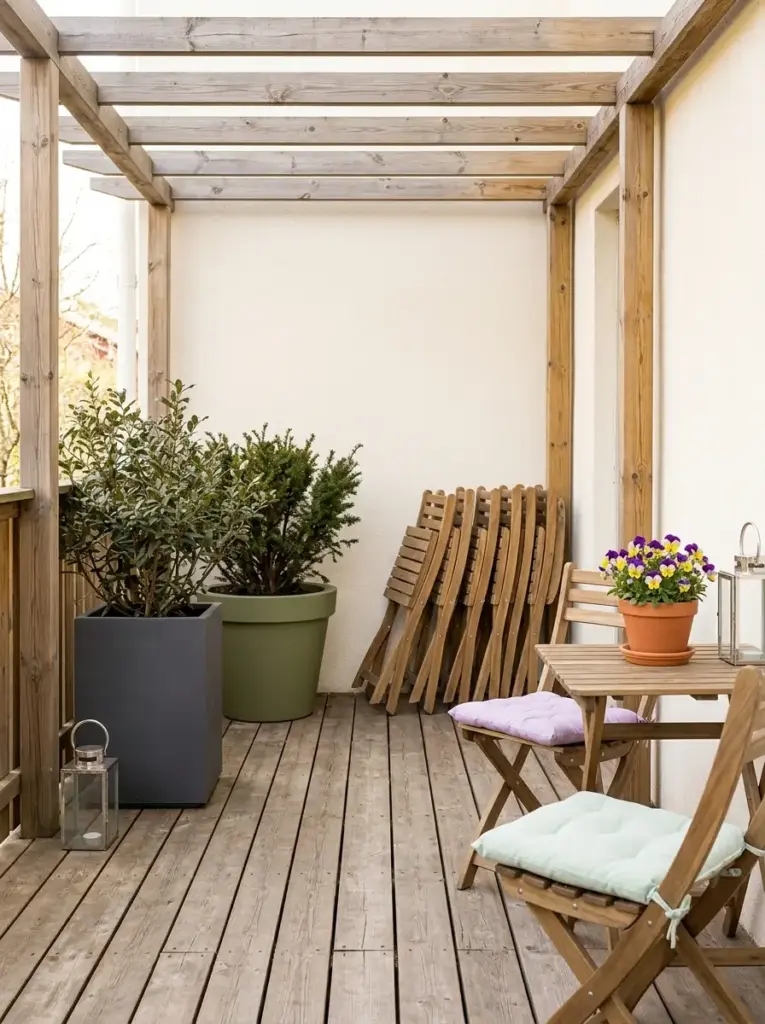
Seasonal design becomes simpler when the main structure stays neutral. Keep shelves, furniture, and large planters in versatile finishes, then change smaller elements such as cushion covers, flowering plants, lanterns, and table textiles. Olive, charcoal, warm white, and natural wood combine easily with spring pastels, summer brights, or autumn rust tones.
Flexibility works well for renters who move often or store items indoors during winter. Stackable pots, folding chairs, and washable covers reduce storage demands. Instead of replacing healthy plants for each season, add one or two temporary flowering containers. Pansies may suit cooler months, while marigolds or compact petunias can handle warmer periods in suitable climates.
Balanced Apartment Balcony Lighting also changes with the season. Longer summer evenings may need only a table lamp, while darker months benefit from two low-glare sources. Bring batteries and rechargeable fixtures indoors during freezing weather. Seasonal edits should improve comfort rather than create a constant cycle of shopping and disposal.
Common Mistakes to Avoid
Buying Plants Before Checking Sunlight
Plant tags often describe broad categories such as full sun or partial shade, but balcony exposure can be unusually intense. Reflected heat from glass and concrete may scorch plants that normally enjoy sunlight. Watch the space through the day before shopping, and ask a local nursery about container performance in similar conditions.
Ignoring Wind at Higher Levels
Tall plants, empty pots, umbrellas, and light screens can become unstable during strong gusts. Choose heavier bases, lower profiles, and flexible foliage for exposed locations. Move loose accessories indoors before storms. Never depend on decorative string, weak clips, or a railing alone to hold a heavy object safely.
Overcrowding the Walking Route
Crowded floors make watering, pruning, and cleaning frustrating. Keep the door swing clear and preserve access to drains, utility panels, and escape routes. One larger planter may be easier to manage than several tiny pots. Edit the arrangement whenever moving through the space starts to feel awkward.
Using Indoor Furniture Outside
Indoor wood, untreated fabric, and ordinary metal can warp, fade, mildew, or rust quickly. Outdoor-rated pieces cost more initially but usually last longer. Budget shoppers can find secondhand patio furniture, then clean it and replace worn cushions with weather-resistant covers. Confirm that folding joints and frames remain safe.
Letting Water Reach Neighbors
Overwatering can drip through railings and stain surfaces below. Use saucers, reservoir planters, and a narrow watering can with a controlled spout. Water slowly, stop before trays overflow, and empty excess after heavy rain. Responsible drainage protects the building relationship and prevents avoidable complaints.
Choosing Style Over Maintenance
Complicated displays often look good for a week and become difficult to manage. Delicate plants, white cushions, thick rugs, and dozens of small accessories require frequent care. Match the setup to the time you can realistically give it. Practical simplicity usually stays attractive longer than a crowded seasonal display.
Budget-Friendly Balcony Garden Tips
Start with the structure rather than decorative extras. One shelf, three coordinated pots, and a folding chair can create a complete usable corner. Add items slowly after living with the layout. Delayed buying reveals what the space actually needs and reduces waste from pieces that do not fit.
Secondhand markets can provide metal stools, plant stands, crates, and outdoor tables at low prices. Inspect rust, loose joints, splinters, and peeling finishes before buying. Clean everything thoroughly, then use exterior-safe paint or sealant when needed. Avoid repairing damaged furniture that may fail under body weight.
Propagation can expand the garden for little money. Herbs such as mint and basil root easily from healthy cuttings, while spider plants and some succulents produce offsets. Use clean tools and suitable potting mix. Free plants still need proper containers, drainage, and safe placement, so do not collect more than the balcony can support.
Matching containers do not need to come from one expensive set. Repeat two colors and similar shapes across different brands. For example, combine matte black cylinders with warm terracotta bowls, or use cream planters with natural woven covers. Visual repetition makes inexpensive pieces feel coordinated.
Spend more on soil, secure hardware, and healthy plants than on small ornaments. Good potting mix supports roots, while strong brackets and stable stands reduce safety risks. Decorative signs, tiny lanterns, and themed accessories can wait. Function should lead every purchase on a rental balcony.
Cost control becomes easier when purchases follow a simple order. Buy safety items first, then containers and soil, followed by plants, seating, lighting, and optional decoration. Spreading the work across several weeks gives you time to compare prices and notice seasonal discounts. Budget planning also keeps the Apartment Balcony Garden from becoming a collection of random bargains. Set a maximum number of pots before shopping, and reserve a small amount for replacement soil, pest treatment, or broken trays. Reusing nursery pots inside attractive covers can reduce early costs, provided each inner pot drains correctly and never sits in collected water. Simple records also prevent repeated impulse purchases later.
Practical Apartment Balcony Garden Tips
Every successful Apartment Balcony Garden begins with a short weekly routine. Check soil moisture, remove dead leaves, inspect pests, wipe furniture, and empty standing water. Ten focused minutes can prevent small problems from becoming expensive replacements. Keep gloves, ties, and a hand brush in a weatherproof box near the door.
Watering time matters. Early morning is usually efficient because plants can absorb moisture before strong heat, and leaves have time to dry. Evening watering may suit some climates, but constantly wet foliage can encourage disease. Push a finger into the soil rather than watering by habit. Surface dryness does not always mean the whole pot is dry.
Feeding should remain moderate. Container plants lose nutrients through watering, yet too much fertilizer can burn roots or cause weak growth. Follow product directions, use the correct formula for edible or flowering plants, and reduce feeding when growth slows. More fertilizer does not correct poor sunlight or bad drainage.
Cleaning supports both appearance and building care. Sweep soil before it enters drains, wipe saucers, and remove fallen petals that can stain concrete. Wash outdoor rugs according to their labels and let them dry fully. Keep a small mat beneath repotting work to collect loose mix.
Storage should be planned from the beginning. Foldable furniture, nesting pots, stackable crates, and removable textiles simplify winter or storm preparation. Measure indoor storage before buying seasonal pieces. Renters without a closet may prefer items that can remain attractive inside the apartment.
Review the design every few months. Plants grow, shade patterns shift, and daily habits change. Move crowded pots, replace failing varieties, and remove accessories that no longer help. Strong design is not fixed; it adapts while keeping circulation, safety, and maintenance easy.
Frequently Asked Questions
What Are the Easiest Plants for a Rental Balcony?
Easy choices depend on sunlight and climate. Herbs such as mint, parsley, thyme, and chives can be manageable in suitable conditions. Geraniums, begonias, pothos, spider plants, and succulents may also work, but each has different light and temperature needs. Begin with a few locally recommended varieties rather than buying a large mixed collection.
How Can I Garden Without Drilling into Walls?
Use freestanding shelves, weighted trellises, planter-and-screen combinations, rolling carts, railing brackets approved by the building, and removable outdoor hooks rated for the surface. Avoid attaching anything overhead unless the property manager confirms it is safe. Portable pieces are easier to rearrange and take to the next home.
How Much Weight Can a Balcony Hold?
Only the building owner, manager, engineer, or official documentation can answer that safely. Wet soil, ceramic pots, large planters, furniture, and people add weight quickly. Spread containers rather than clustering every heavy item in one spot, choose lightweight materials, and request guidance before installing large raised beds or water features.
How Do I Keep the Balcony Clean While Gardening?
Use fitted saucers, controlled-spout watering cans, a repotting mat, and sealed storage for soil. Sweep regularly and keep drains open. Avoid washing loose potting mix toward the edge. Self-watering inserts can reduce spills, while pot feet make it easier to clean beneath containers.
Can Vegetables Grow on a Small Apartment Balcony?
Many vegetables can grow in containers when they receive enough light, soil volume, water, and support. Dwarf tomatoes, peppers, lettuce, radishes, herbs, peas, and compact beans are common options. Check mature size, use food-safe containers, and choose varieties labeled for patios or containers.
How Can I Make the Space Comfortable at Night?
Combine a folding chair, a small table, warm rechargeable lighting, and one soft outdoor cushion. Keep brightness low enough to avoid glare and neighbor disturbance. Outdoor-rated lamps around 2200K to 2700K create a relaxed setting, while a focused 3000K lamp helps with reading.
Long-term success depends on accepting that some plants will fail. Heat waves, unexpected shade, insects, and travel can affect even a carefully planned Apartment Balcony Garden. Treat early losses as information rather than a reason to replace everything immediately. Note the plant name, location, watering pattern, and weather before choosing a substitute. A tougher variety with similar color or height may perform better in the same container. Beginners should keep receipts and plant labels for several weeks, since local nurseries sometimes offer limited guarantees. Learning from one failed pot is cheaper than repeating the same mismatch across the whole balcony. Seasonal notes make future shopping far more reliable.
Conclusion
Renter-friendly balcony gardening works best when every choice supports safety, movement, plant health, and easy removal. Measure first, understand the microclimate, protect drainage, and choose portable pieces that fit through the apartment. A few healthy plants and one comfortable seat can serve the space better than a crowded collection.
Strong Apartment Balcony Garden design grows gradually. Begin with a simple layout, observe how sunlight and wind affect it, then add only what improves daily use. Practical furniture, secure containers, warm lighting, and manageable plant varieties create a balcony that feels personal without risking the lease or wasting money.