
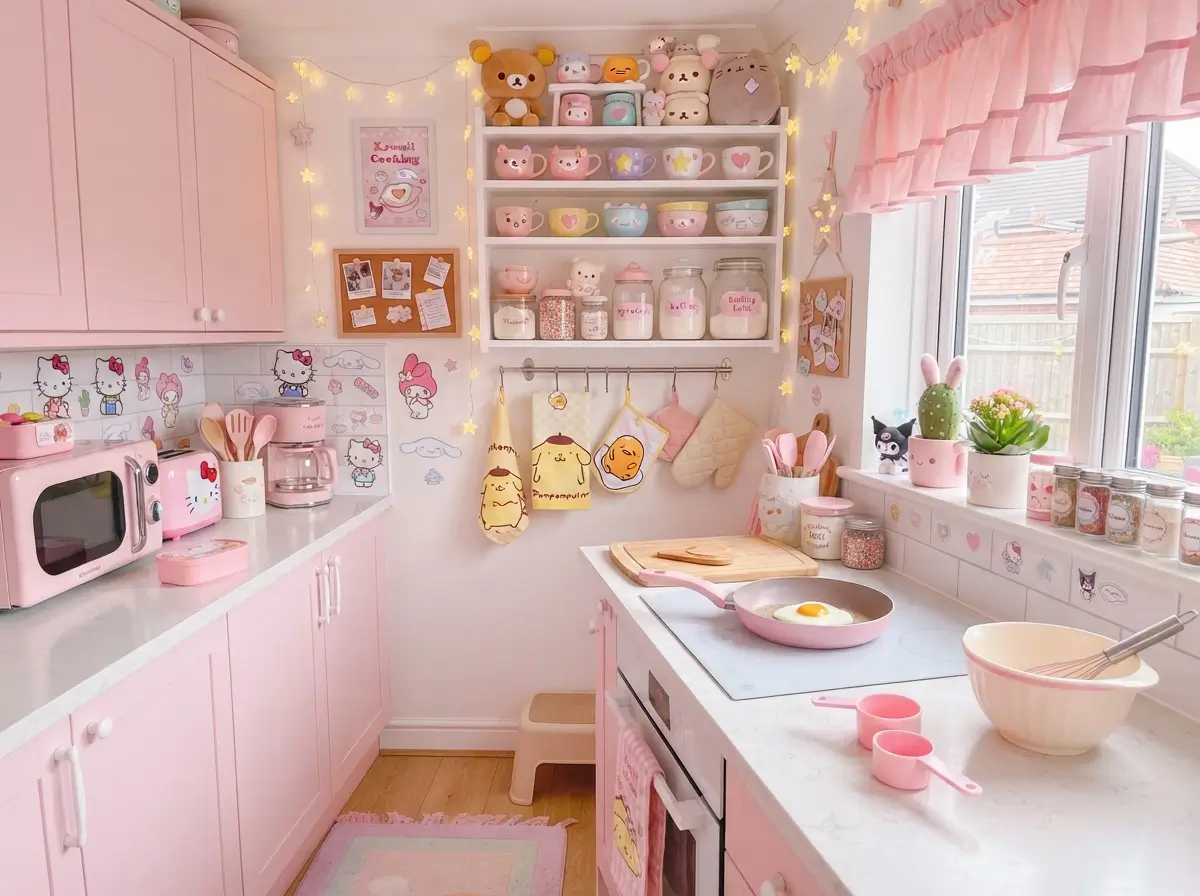

Small kitchens can feel cheerful, organized, and personal without becoming crowded or childish. Kawaii Kitchen Decor uses soft colors, rounded shapes, playful details, and practical storage to make everyday cooking feel more enjoyable. The best results come from choosing a few coordinated elements instead of filling every surface with novelty items. Soft pink, cream, mint, pale yellow, lavender, and light blue work especially well when balanced with white, warm wood, or stainless steel. Beginners should start with one color family, one repeating motif, and enough clear counter space for daily tasks.
Cute styling also works in rental kitchens because many changes can be temporary. Peel-and-stick finishes, removable hooks, washable rugs, countertop organizers, and rechargeable lights add character without damaging cabinets or walls. Small-space decorating experience shows that scale matters more than quantity. Two well-placed character jars often look better than ten mismatched pieces. Good layout choices keep the room easy to clean, safe to cook in, and visually calm even when the kitchen includes many charming details.
What Defines a Cute Kawaii Kitchen?
Kawaii Kitchen Decor combines sweet colors, rounded forms, character-inspired accents, and tidy organization in a functional kitchen. It works best when cute accessories support cooking rather than blocking work areas.
Build the Room Around a Soft Color Palette
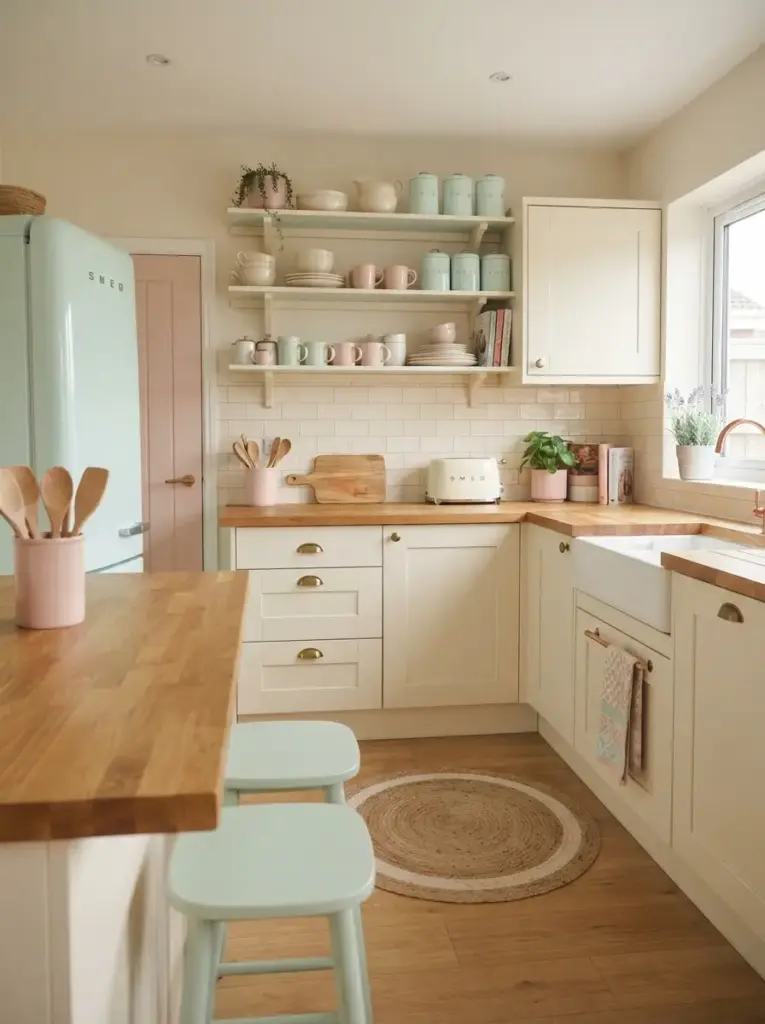
Color creates the strongest foundation for a cute kitchen because it affects every later choice. Pick two main shades and one neutral rather than using every pastel at once. Cream with blush pink and pale mint feels warm, while white with lavender and powder blue looks cleaner and cooler. Soft yellow also works well in kitchens with limited daylight because it reflects warmth without feeling heavy. Keep larger surfaces neutral, then use the brighter shades on towels, small appliances, canisters, stools, or shelf edges.
Controlled color works because repetition makes separate objects feel intentional. Renters can use removable cabinet decals, peel-and-stick backsplash sheets, or pastel contact paper inside open shelves. Homeowners may paint a small island, lower cabinet run, or pantry door instead of recoloring the entire room. Matte and satin finishes usually look softer than high-gloss surfaces. People who enjoy changing decor seasonally should keep walls and cabinets neutral, then rotate pink, peach, blue, or green accessories without rebuilding the whole scheme.
Add Rounded Appliances With Real Daily Value
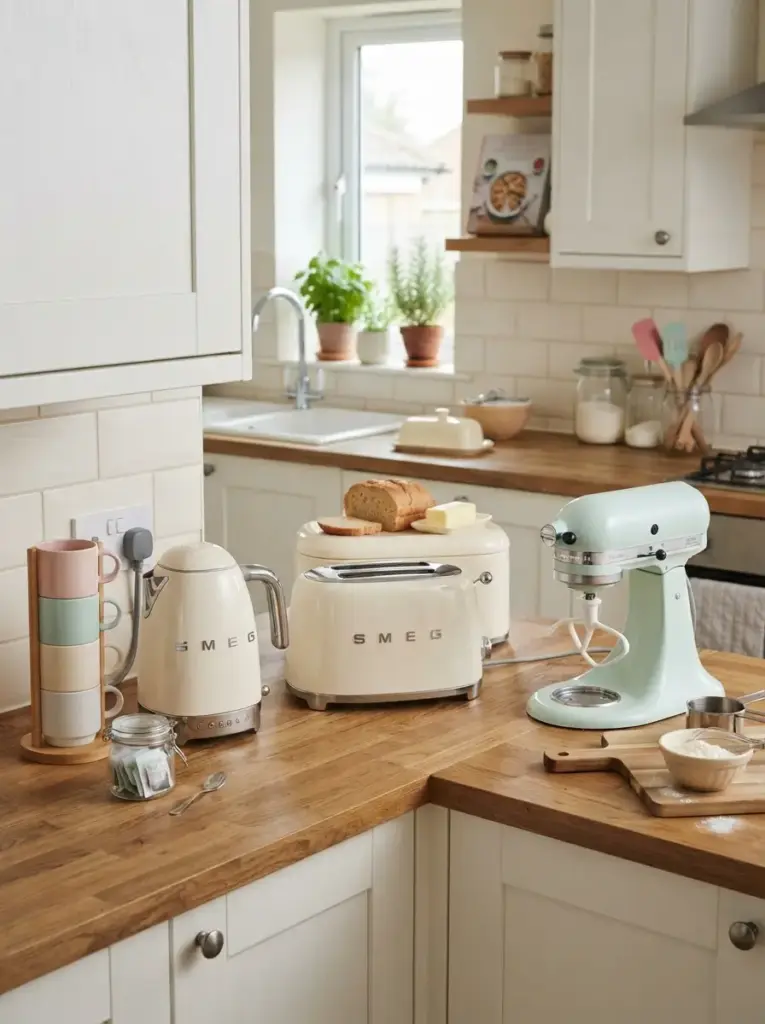
Small appliances often sit in view, so they can become part of the decorating plan. Look for kettles, toasters, rice cookers, mixers, or coffee makers with curved corners and simple controls. Cream, pale pink, mint, and butter yellow models suit the style without relying on cartoon graphics. Choose appliances based on capacity, safety, and cleaning needs before color. Someone who makes tea twice a day will benefit more from a charming kettle than a decorative machine that rarely gets used.
Curved forms soften hard cabinet lines and make compact rooms feel friendlier. Group appliances by function rather than color alone. Place the kettle near mugs, the toaster near bread storage, and the mixer close to baking tools. Leave airflow around heat-producing equipment and avoid crowding electrical outlets. Smaller households should consider narrow two-slice toasters or compact coffee machines to preserve counter space. Large families may prefer one larger appliance in a pastel finish instead of several tiny gadgets that create visual noise.
Use Character Jars for Visible Storage
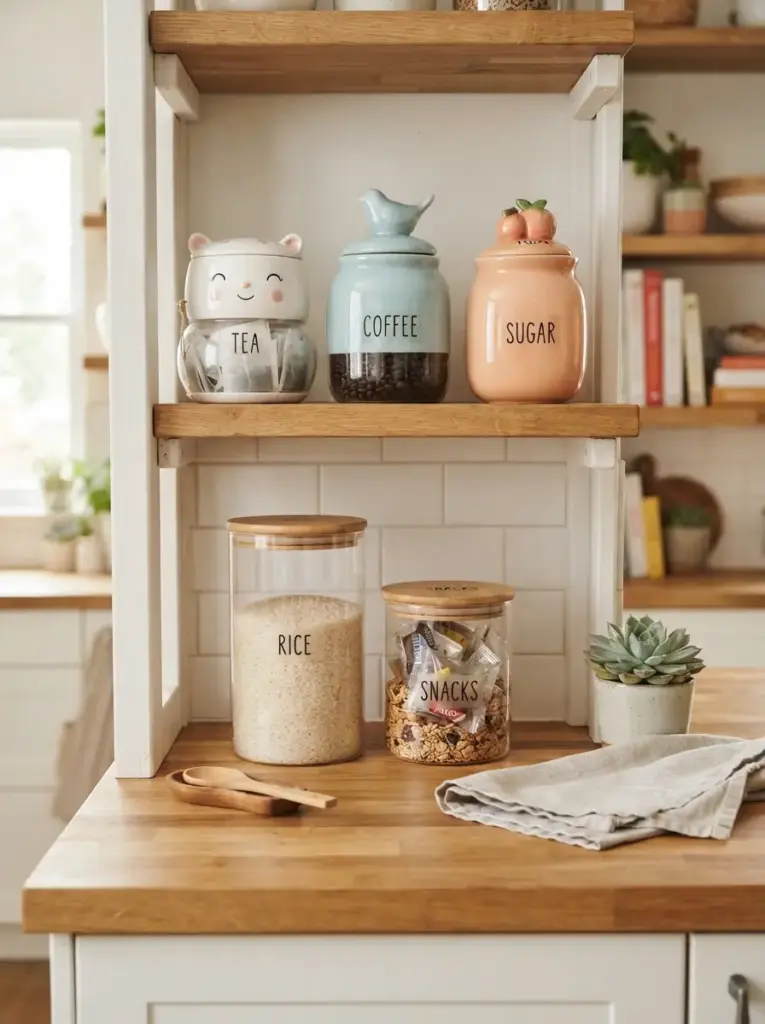
Storage jars can carry a playful theme while keeping ingredients fresh and easy to find. Choose ceramic or glass containers with simple faces, animal ears, fruit-shaped lids, or small embossed details. Use them for tea, sugar, coffee, cookies, rice, or wrapped snacks. Clear labels on the bottom or back help prevent confusion when multiple containers look similar. Food-safe seals matter more than decorative lids, especially for flour, cereal, and ingredients that attract moisture.
Visible storage succeeds because it turns necessary items into coordinated decor. Limit the display to three or five jars, then store backups inside a cabinet. Matching heights creates a tidy line, while mixed heights look more relaxed when the colors stay consistent. People with open shelving gain the most from this idea because the containers hide packaging clutter. Tiny kitchens should choose stackable jars or narrow canisters. Homes with children can place breakable ceramics higher and use lightweight metal or BPA-free containers at reachable levels.
Install Removable Scalloped Shelf Edging
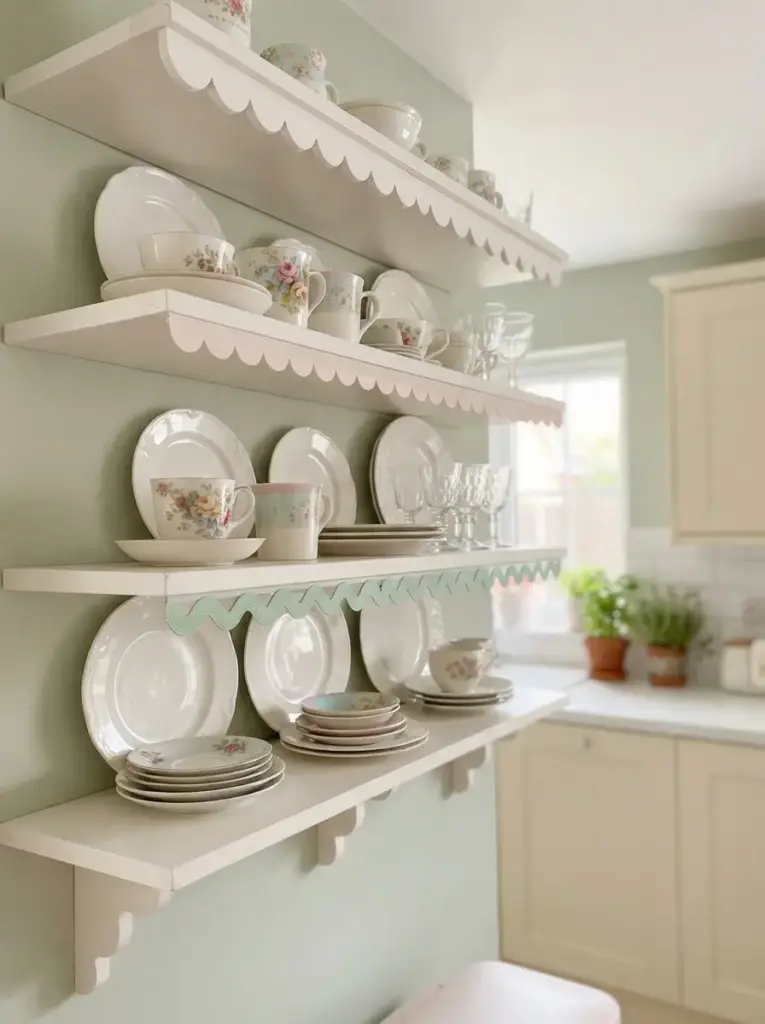
Plain shelves can look sweeter with a scalloped edge, wavy trim, or narrow pastel border. Renters can apply removable vinyl edging or lightweight decorative strips with damage-free tape. Homeowners may attach painted wood trim to open shelves or add scalloped brackets beneath them. Keep the detail shallow so it does not reduce storage height or catch on plates. White trim against pale cabinets creates subtle definition, while pink or mint edging adds a clearer decorative statement.
Small architectural details work because they repeat the rounded language common in cute interiors. Scallops also draw attention to carefully arranged dishes without requiring expensive cabinetry. Use the treatment on one or two shelves rather than every horizontal surface. Busy edges around all cabinets can make a small room feel restless. People who collect mugs, dessert plates, or glassware will enjoy this option most. Measure shelf thickness carefully, test adhesive in a hidden area, and leave enough clearance for cabinet doors and lighting cables.
Create a Pastel Beverage Corner
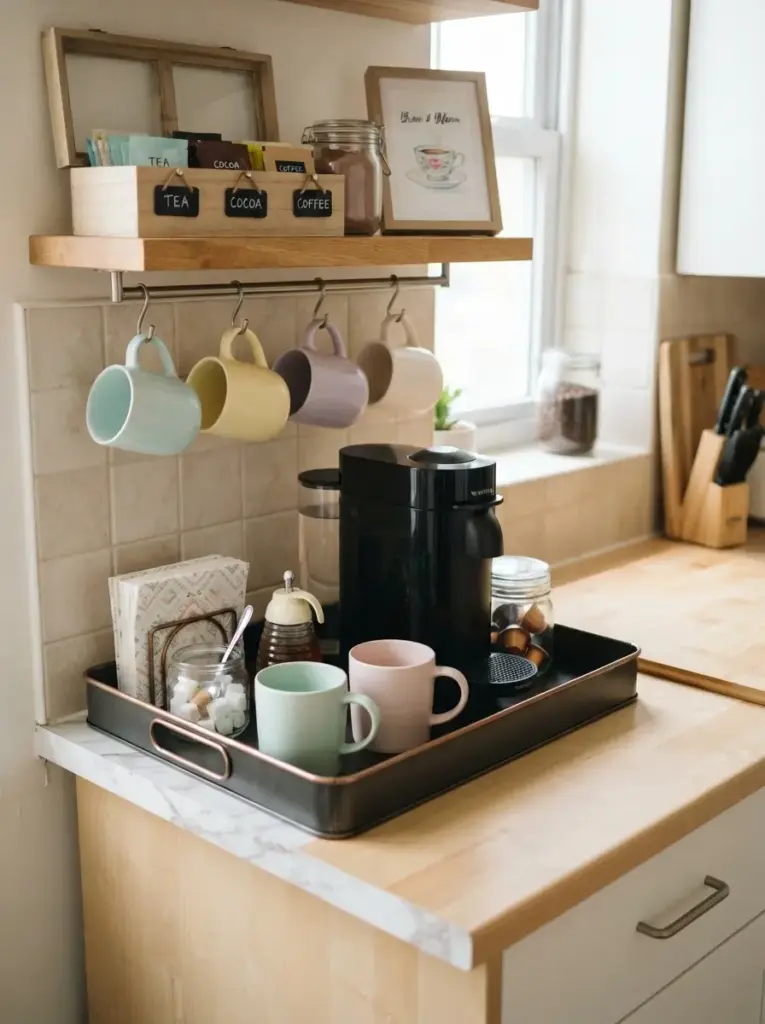
Tea, coffee, and hot chocolate supplies can form a compact beverage station on one tray or a narrow section of the counter. Place the main appliance at the back, then arrange mugs, spoons, sweeteners, and napkins in front or beside it. Use a washable tray with raised edges to catch spills. Pastel mugs can hang beneath a shelf, while tea bags fit inside a divided box. Add one small framed print or character spoon rest if the area still feels bare.
Dedicated zones improve function because related items stay together and other counters remain clear. Studio Apartment Kitchen layouts benefit from a beverage corner placed away from the main chopping area. Narrow kitchens can use a rolling cart beside the refrigerator, provided it does not block doors or walking paths. Coffee drinkers should keep beans away from heat and direct sunlight. Families may need labeled sections for tea, cocoa, and coffee. Anyone with limited counter space can store mugs vertically on hooks instead of lining them across the worktop.
Choose Warm Lighting With Cute Shapes
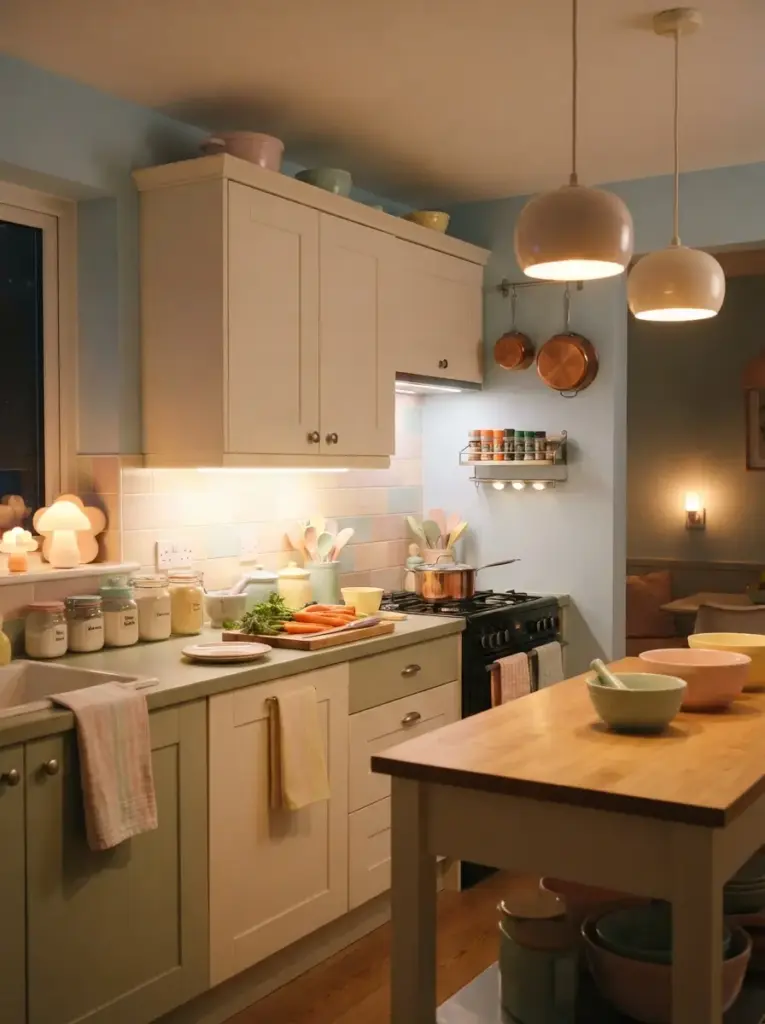
Lighting changes how pastel colors appear. Warm-white bulbs around 2700K create a cozy evening mood, while 3000K offers clearer task lighting without making the room feel clinical. Under-cabinet strips between 3000K and 3500K help with chopping, reading labels, and cleaning. Small mushroom lamps, flower-shaped rechargeable lights, or rounded pendant shades can add character. Decorative lamps should never replace proper task lighting near the sink, stove, or preparation area.
Layered light makes the style feel polished because soft colors lose depth under one harsh ceiling fixture. Renters can use rechargeable puck lights or plug-in lamps instead of hardwiring new fixtures. Magnetic lights work well under metal shelves, while adhesive strips suit smooth cabinet undersides. Anyone who cooks at night should prioritize even illumination over novelty shapes. Avoid colored bulbs near food preparation because they distort ingredient colors. Dimmer controls help separate bright cooking light from gentler light used during breakfast or late-night tea.
Display Cute Dishware in Small Groups
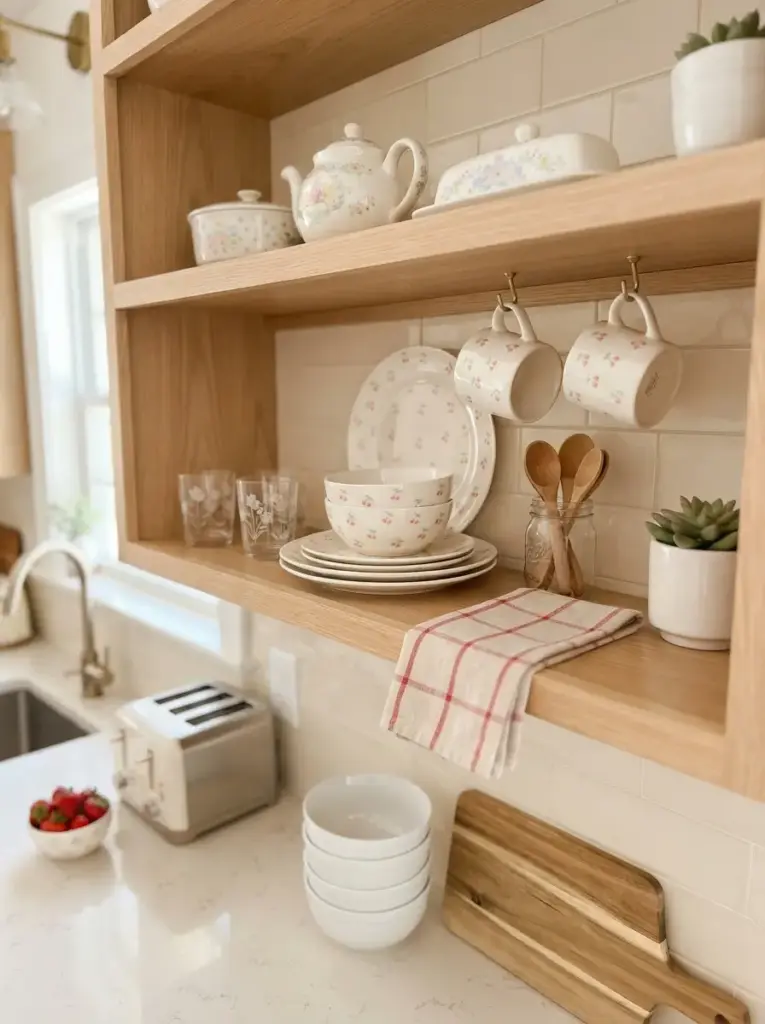
Plates, bowls, glasses, and mugs can become decor when displayed selectively. Choose pieces with tiny cherries, clouds, strawberries, bows, bears, flowers, or simple smiling faces. Arrange one complete breakfast set on an open shelf rather than mixing several unrelated collections. Keep everyday dishes closest to hand and decorative pieces higher. White dishes with one pastel pattern usually blend more easily than fully saturated sets, especially in kitchens with patterned walls or floors.
Curated dishware works because repetition creates charm without taking up extra space. People with glass-front cabinets can line the back with removable pastel paper to make pale dishes stand out. Open-shelf users should avoid stacking pieces too high because unstable piles are inconvenient and unsafe. Collectors can rotate seasonal designs, storing the rest in padded boxes. Beginners should buy only pieces they will actually use. One mug, one plate, and one bowl in the same motif can establish the theme more effectively than a cabinet full of impulse purchases.
Add a Washable Rug With a Small-Scale Pattern
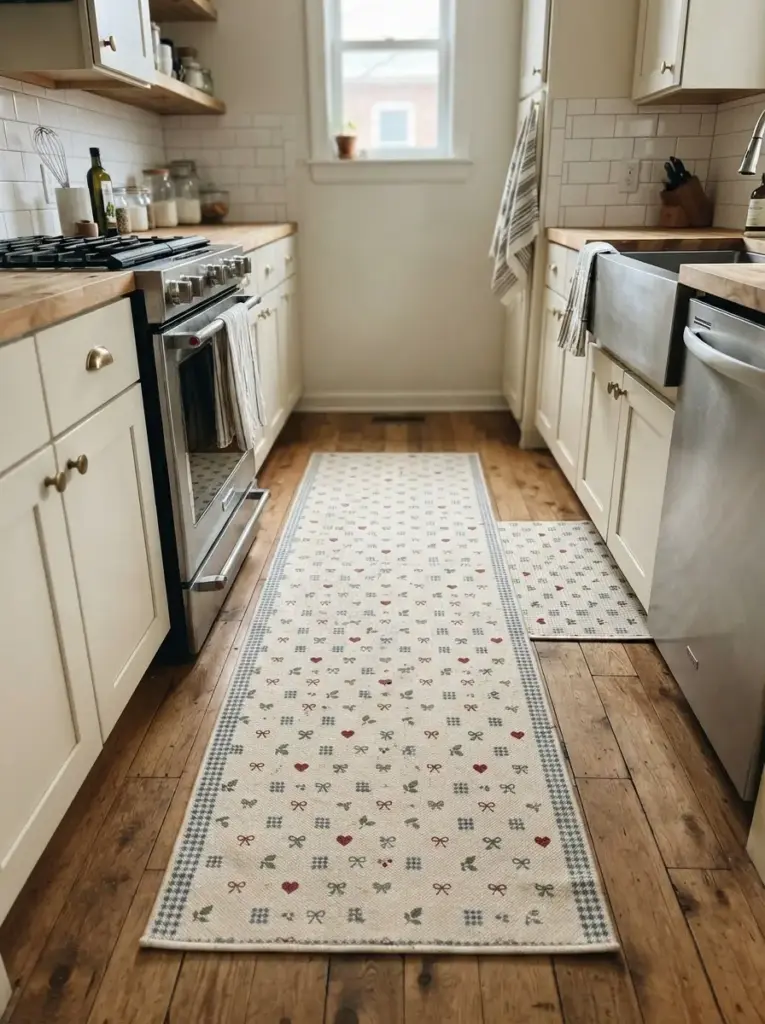
Kitchen rugs bring softness to hard floors, but material and placement matter. Pick a low-pile, washable rug with a non-slip backing. Small checks, tiny flowers, hearts, bows, fruit, or gingham suit the theme without dominating the floor. Cream and pink look gentle but show stains quickly. Soft blue, muted coral, sage, or warm beige hides daily wear more successfully. Keep rugs away from open flames and avoid thick edges that create a tripping hazard.
Pattern underfoot helps because it connects separate color accents across the room. Galley kitchens often suit a narrow runner, while square kitchens can use a small mat near the sink. Homes with pets or children need machine-washable fibers and a strong grip. Renters can place a rug over unattractive vinyl without altering the floor. Measure cabinet and appliance doors before buying because a thick rug may stop them from opening. Shake out crumbs frequently and wash spills quickly to keep the area hygienic.
Use Wall Hooks as Functional Mini Decor
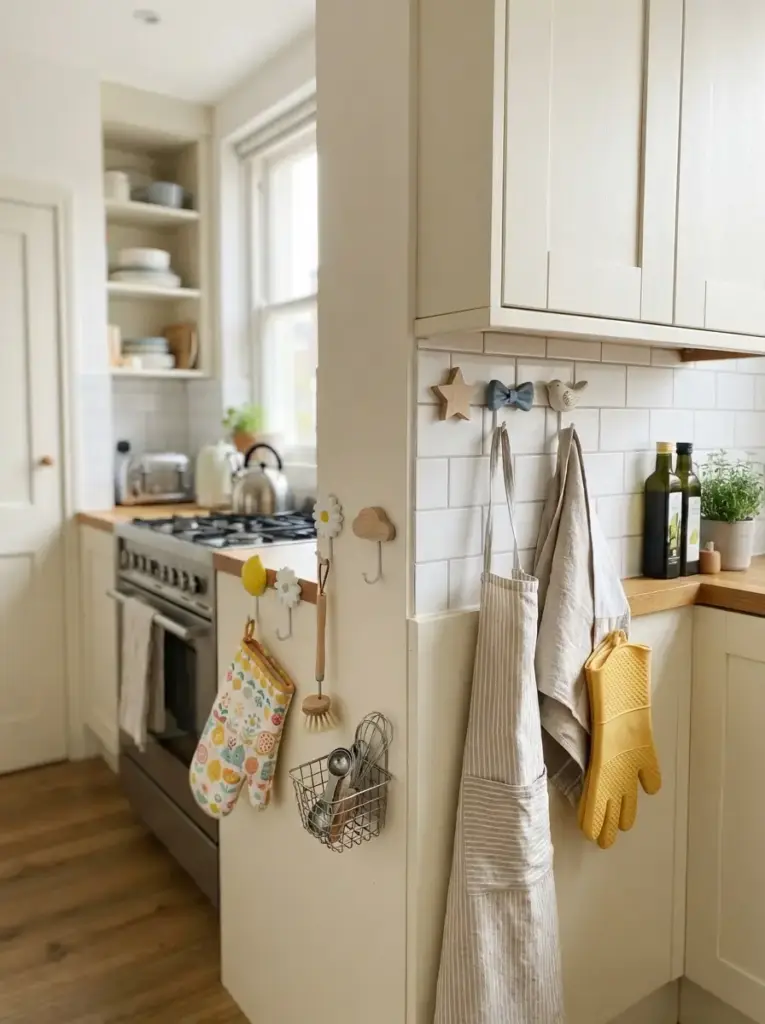
Hooks provide useful storage for oven gloves, aprons, measuring spoons, dish brushes, or lightweight baskets. Fruit shapes, flowers, clouds, stars, bows, and animal silhouettes work well when the colors match the room. Renters should use removable adhesive hooks rated for the item’s weight. Homeowners can install stronger screw-mounted hooks on a rail or wood strip. Keep fabric items at least several feet away from burners and avoid placing anything above a toaster or kettle where steam rises.
Vertical storage earns its place because it frees drawers and counters while filling awkward wall gaps. People following Apartment Kitchen Ideas often overlook the side of a cabinet, backsplash edge, or pantry door. Those spots can hold two or three hooks without making the room feel crowded. Arrange hooks in a straight line for a neat look or a gentle curve for a playful arrangement. Test the removable adhesive after cleaning the surface, and never mount heavy ceramic mugs on weak hooks.
Style the Refrigerator Without Covering It
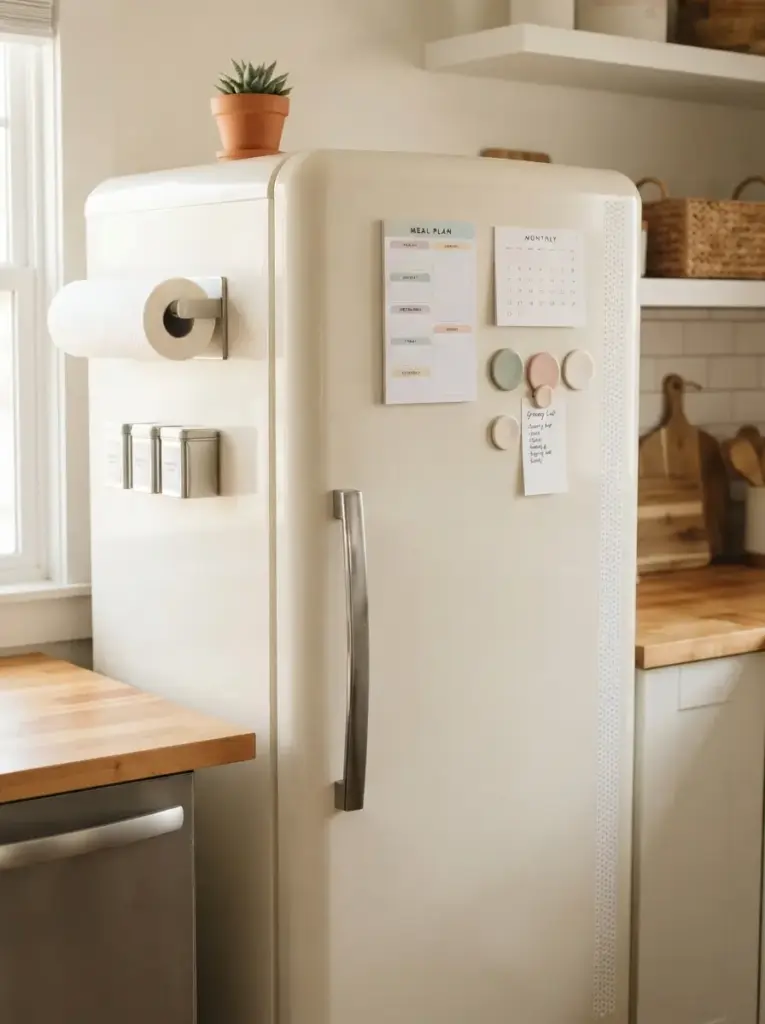
Refrigerators often occupy a large visual area, making them useful for small decorative changes. Add a few coordinated magnets, a weekly menu pad, one small calendar, or a removable border. Choose flat magnets in matching colors rather than covering the door with unrelated souvenirs. Side panels can hold magnetic spice tins, paper towel holders, or narrow storage racks when ventilation guidelines allow. Check the appliance manual before attaching anything near vents or warm surfaces.
Focused refrigerator styling works because it turns a bulky appliance into part of the room. Families can use pastel magnetic labels for meal planning and grocery reminders. Renters with older appliances may apply removable vinyl only if the surface is smooth and the manufacturer allows it. Avoid wrapping damaged, rusty, or hot panels because adhesive may fail. People who prefer a cleaner style should limit decoration to one corner. Keep door handles clear and remove old notes weekly to prevent paper clutter from becoming the main feature.
Organize the Pantry With Coordinated Labels
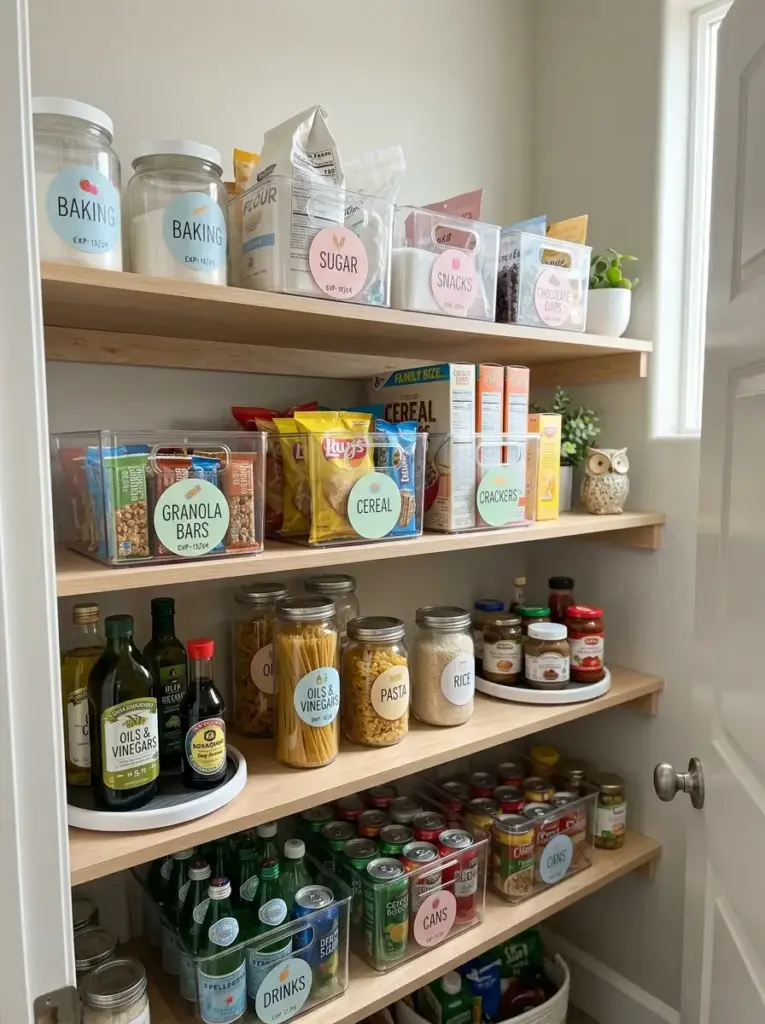
Pantry shelves look calmer when containers, labels, and categories follow a simple system. Group baking supplies, snacks, breakfast foods, drinks, and cooking basics separately. Use clear bins with pastel labels or small icons so items remain easy to identify. Rounded label shapes, tiny fruit illustrations, or soft borders add a cute detail without reducing readability. Large text helps children and guests return items to the right place. Date labels also prevent forgotten food from sitting behind newer packages.
The organization supports the theme because tidy shelves let playful details remain visible. People searching for Pantry Organization Ideas should begin by measuring shelf depth before buying bins. Deep containers often waste space in shallow cabinets. Turntables suit sauces and spreads, while handled bins work better for packets. Budget decorators can reuse clean jars and print simple labels at home. Leave breathing room around frequently used items instead of filling every inch. Clear categories reduce duplicate purchases and make weekly cleaning much easier.
Introduce One Small Statement Shelf
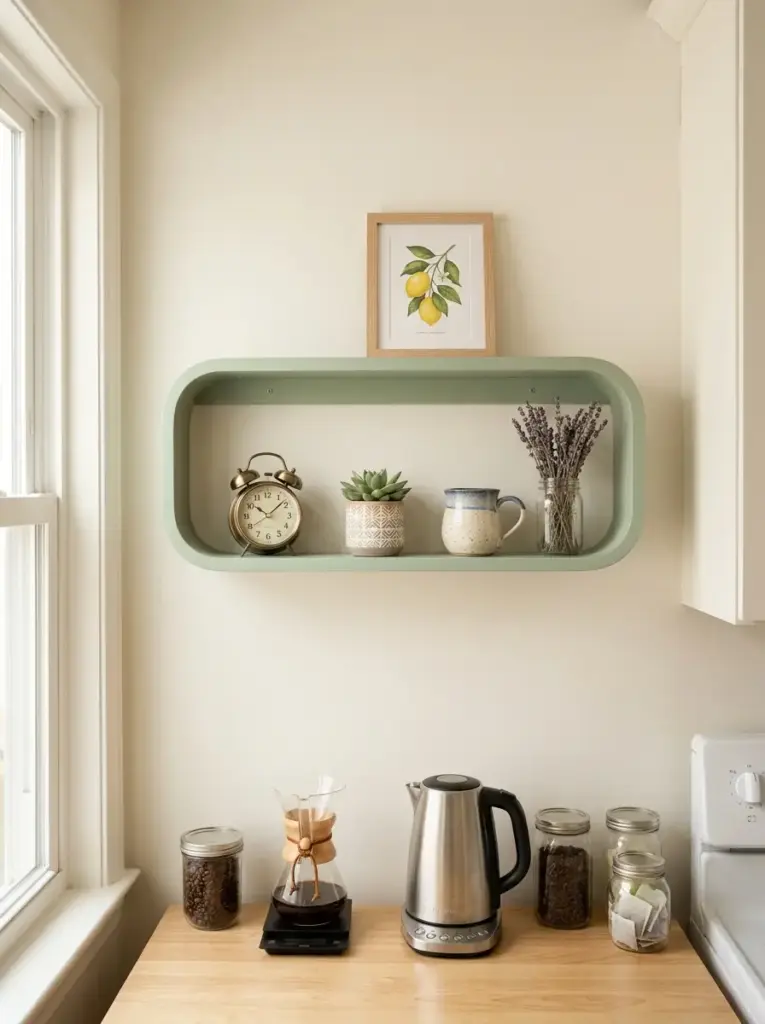
One decorative shelf can hold a few objects that would otherwise clutter counters. Choose a rounded rectangle, cloud shape, simple arch, or narrow ledge in a pastel finish. Place it above a beverage area, breakfast nook, or empty wall section away from grease and steam. Display three to five lightweight pieces, such as a small clock, framed illustration, tiny plant, or favorite mug. Leave visible space between items so each piece reads clearly.
Limited display works because the eye gets one focal point instead of scanning many competing surfaces. Renters can use a lightweight ledge with approved removable mounting systems, though weight limits must be respected. Homeowners may install a deeper shelf with hidden brackets. Small kitchens need shelves no wider than the furniture or counter below them. Anyone who dislikes dusting should keep the arrangement simple. Avoid placing ceramics above seats, beds, or work areas unless the shelf is securely anchored.
Bring in Soft Seating With Compact Shapes
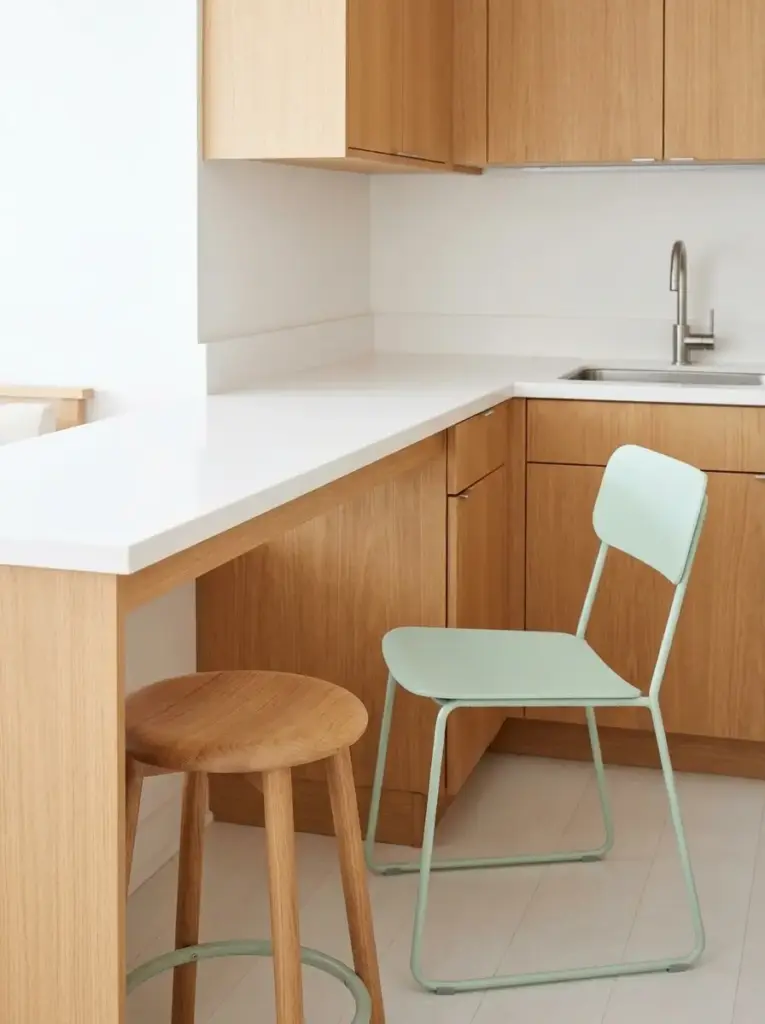
Seating can support the style through color, form, and fabric. Rounded stools, slim café chairs, cushioned bench pads, or small backless seats fit compact kitchens. Consider vinyl, coated fabric, or removable washable covers because cooking areas collect spills. Blush, mint, cream, pale blue, and warm peach pair well with light wood or white metal frames. Avoid oversized chairs with wide arms because they block movement and make small dining zones feel cramped.
Compact seating helps because curved silhouettes reduce the visual hardness of counters and appliances. Breakfast bars need stools with the correct seat height, usually leaving about 9 to 13 inches between the seat and counter underside. People in narrow rentals should choose stackable or tuck-under stools. Homes with children benefit from stable four-legged designs and wipeable surfaces. Add one bow-shaped cushion or gingham seat pad rather than mixing many novelty forms. Comfort and clearance should guide the final choice.
Add Natural Texture to Balance Pastels
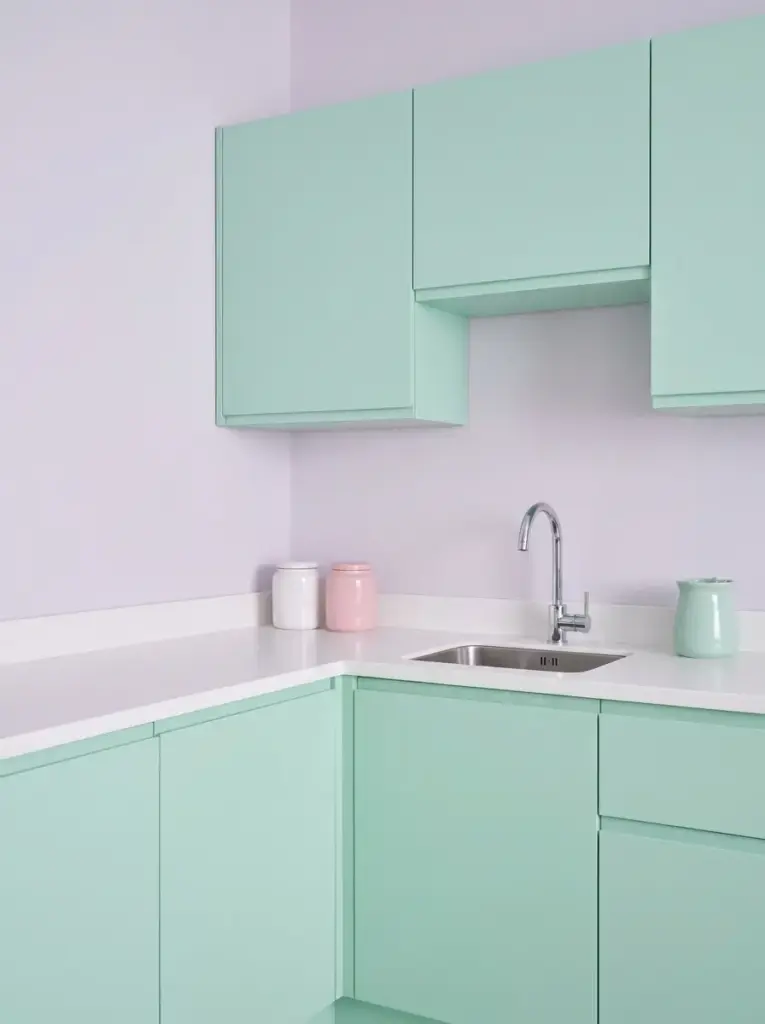
Too many smooth pastel surfaces can make a room feel flat. Light wood boards, bamboo trays, woven baskets, linen towels, cork coasters, and small rattan details bring warmth and texture. Choose pale or honey-toned wood rather than very dark finishes if the kitchen is small. Natural materials also help character pieces feel more mature. Place a wooden tray beneath canisters or use a woven basket for tea towels to create contrast around glossy ceramics.
Texture improves balance because it stops the room from resembling a themed display. Beginners often benefit from a 70-20-10 approach: roughly 70 percent neutral surfaces, 20 percent pastel color, and 10 percent playful pattern or character detail. People who already own white cabinets and stainless steel appliances can use wood as the connecting element. Avoid untreated baskets beside the sink because moisture can cause staining or mildew. Washable liners protect woven storage used for bread, fruit, or packaged snacks.
Finish With One Consistent Motif
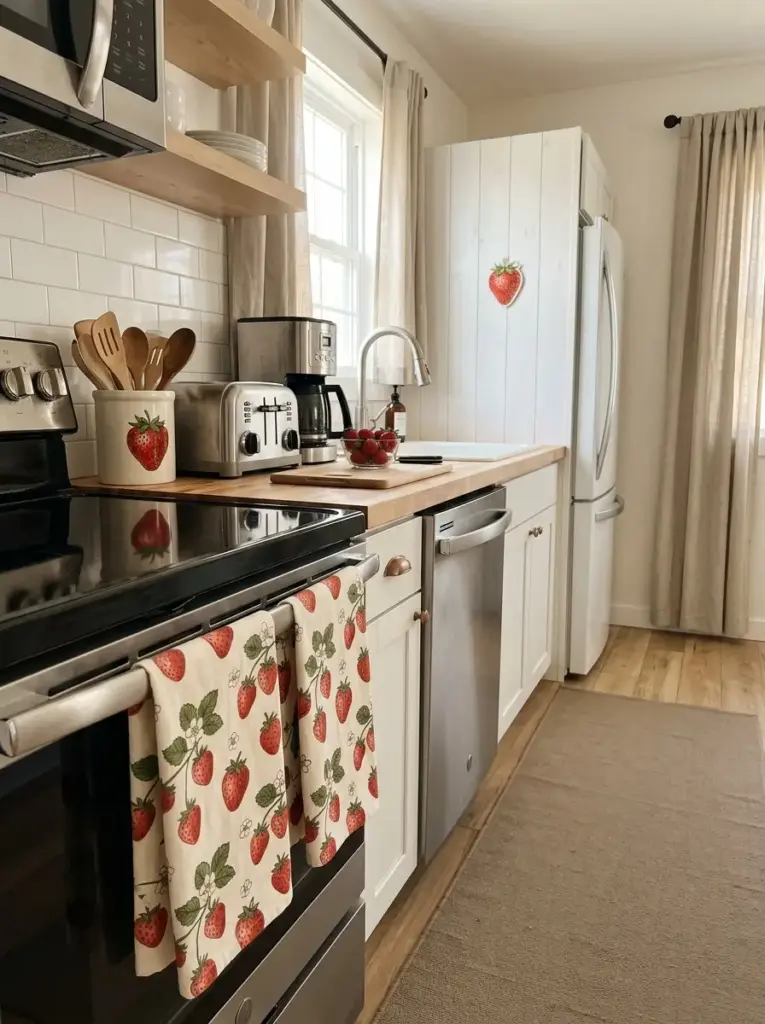
Motifs give a cute kitchen identity, but restraint keeps the design readable. Select one main symbol, such as strawberries, cherries, cats, clouds, daisies, bears, bows, or smiling toast. Repeat it in three places at different scales. For example, use cherry tea towels, one cherry mug, and a small cherry magnet. Avoid repeating the same graphic on curtains, rugs, dishes, canisters, walls, and appliances because the room may feel more like a store display than a home.
Consistency matters because the brain quickly recognizes repeated shapes and connects separate zones. People who love collectibles can keep one permanent motif and rotate secondary accents by season. Renters can use removable stickers, printed towels, and small accessories. Homeowners may add a patterned backsplash or painted pantry door, then keep everything else simpler. Choose motifs that suit daily life and cleaning habits. Flat prints are easier to maintain than heavily sculpted handles, lids, or figurines that trap grease and dust.
How can you create a cute kitchen without making it look cluttered?
Choose a controlled palette, repeat only one or two visual themes, and keep decorative pieces away from heat, water, and food preparation zones. Functional items should carry most of the style. Think pastel kettles, scalloped shelves, fruit-shaped hooks, smiling storage jars, and soft lighting instead of random ornaments. Renters can focus on removable changes while homeowners can add painted cabinetry, decorative tiles, or custom shelving. Every idea below explains the practical benefit, the best placement, and the type of kitchen that gains the most from it.
Common Mistakes to Avoid
Using Too Many Pastels at Once
Multiple soft colors can still create clutter when every object uses a different shade. Pick a dominant pastel, a secondary shade, and a neutral. Matching does not require identical tones, but warm and cool pastels should be balanced carefully. Peach, cream, and warm wood blend naturally. Icy lavender, cool white, and pale blue also work together. Problems often appear when warm yellow, cool mint, bright pink, lilac, and turquoise compete in equal amounts.
Filling Every Counter With Decorations
Crowded counters reduce preparation space and make cleaning harder. Keep at least one clear work zone near the sink or stove. Decorative pieces should sit on trays, shelves, or wall hooks whenever possible. People in small kitchens may need to store appliances used less than three times a week. Empty space is not wasted space. It gives the eye a rest and lets favorite pieces stand out. Clear surfaces also reduce the risk of spills, heat damage, and accidental breakage.
Ignoring Heat, Steam, and Grease
Cute accessories still need safe placement. Fabric, paper, vinyl, faux plants, and plastic decor should remain away from burners and toaster vents. Steam from kettles can loosen adhesive, damage shelf finishes, or create moisture behind wall decorations. Grease settles quickly on textured figurines near the stove. Choose wipeable items for cooking zones and reserve delicate pieces for dining corners. Battery lights and extension cords should follow manufacturer guidance, especially near sinks and wet counters.
Buying Decor Before Measuring
Online photos can make jars, carts, shelves, and stools look smaller than they are. Measure counter depth, cabinet clearance, walking paths, appliance doors, and shelf height before ordering. Mark proposed furniture dimensions on the floor with painter’s tape. Kitchen walkways generally need enough room for people to pass safely, open appliances, and carry hot dishes. Oversized carts and wide stools create frustration even when they look attractive. Scale determines whether the room feels charming or cramped.
Choosing Novelty Over Function
Character-shaped tools often look appealing, but awkward handles and hard-to-clean crevices can become annoying. Test whether utensils feel comfortable, containers seal properly, and appliance controls remain easy to read. Decorative cutting boards should not replace durable food-safe boards used for daily preparation. People on tight budgets should spend first on useful pieces with attractive colors. Functional beauty lasts longer than items bought only for display.
Forgetting Visual Rest
Pattern needs plain surfaces around it. Gingham curtains, fruit-print rugs, character dishes, and patterned backsplash tiles can compete when used together. Choose one large patterned element and keep nearby pieces quieter. White, cream, pale wood, or soft gray can separate decorative zones. Small rooms especially benefit from visual breaks because every wall and object remains within view. Calm backgrounds make cute details look more deliberate.
Budget-Friendly Styling Tips
Start with textiles because they change the room quickly and cost less than furniture or appliances. Two tea towels, one washable mat, and a pair of oven gloves can establish the palette. Choose items that share one color rather than buying a full matching set. Seasonal clearance sections often offer pastel textiles without character licensing costs. Washable cotton and microfiber usually provide better long-term value than delicate decorative fabric.
Reuse containers by removing labels and adding simple pastel tags. Clean jam jars can hold wrapped sweets, tea bags, or baking decorations, while small tins can store clips and rubber bands. Food storage requires proper airtight lids, so reused jars should not replace sealed containers for flour or cereal unless they close safely. Spray-paint only non-food-contact surfaces in a ventilated area and follow product directions. Adhesive vinyl offers a simpler option for dry decorative storage.
Print small artwork at home and place it in inexpensive frames. Simple fruit drawings, café menus, gingham backgrounds, or tiny character faces can create a focal point without permanent changes. Use frames with acrylic fronts near busy kitchen areas because they weigh less and do not shatter like glass. Keep printed art away from direct steam and grease. Clipboards, magnetic frames, and removable picture strips work well in rentals.
Shop by function rather than category. Discount stores may sell pastel trays, baskets, hooks, mugs, and storage bins outside the home decor aisle. Office organizers can become tea stations, bathroom trays can hold dish soap, and small craft boxes can organize packets. Check materials before using any product near food or heat. One practical object in the right color often looks more polished than a decorative item with no useful purpose.
Update cabinet interiors instead of cabinet fronts when rental rules are strict. Removable paper on shelf backs, coordinated drawer liners, and pastel bins add pleasure without changing the visible structure. Inside-cabinet improvements also reduce visual clutter. People who enjoy a minimal kitchen may prefer opening a neatly styled pantry over displaying everything on the counter. Test adhesive in a hidden corner and remove it slowly to protect painted surfaces.
Kawaii Kitchen Decor Tips for Small Spaces
Successful Kawaii Kitchen Decor depends on editing. Keep the lower half of the room visually quiet because cabinets, appliances, and floors already create strong blocks. Place brighter accents at eye level through mugs, labels, towels, or one shelf. Vertical storage should support daily movement rather than cover every wall. Clear counters, grouped accessories, and repeated colors make a tiny room feel organized even when storage is limited.
Choose objects that perform two jobs. A pastel tray can collect oils and seasonings while protecting the counter. A character jar can store tea. A decorative rail can hold tools. A cute stool can provide seating and reach upper cabinets when it is designed safely for both purposes. Folding tables, nesting carts, and stackable stools suit renters who need flexible layouts. Avoid furniture that only fills an empty corner without solving a real need.
Control scale carefully. Small motifs usually suit narrow rooms better than oversized graphics. Tiny cherries on towels feel lighter than large cartoon faces across cabinet doors. Large patterns can still work on one focal wall, but nearby surfaces should remain plain. Furniture with visible legs often feels less bulky because more floor remains visible. Rounded corners also improve movement in tight layouts, especially beside islands, carts, or breakfast bars.
Plan storage by frequency. Keep daily mugs, plates, utensils, and seasonings within easy reach. Place occasional baking tools or seasonal dishes higher. Cute baskets can hide packets, but labels should remain clear enough to prevent forgotten food. Deep cabinets benefit from pull-out bins or turntables. Tiny kitchens become frustrating when attractive containers make contents harder to access, so convenience should always guide the arrangement.
Frequently Asked Questions
How do I start with Kawaii Kitchen Decor?
Begin with one palette and one useful category. Towels, mugs, canisters, or a beverage tray offer an easy starting point. Choose a dominant color such as blush, mint, cream, or pale blue, then add one smaller accent. Keep existing cabinets and appliances neutral unless you already plan a renovation. Starting small helps you test whether the style feels comfortable before spending money on furniture, lighting, or larger finishes.
Can Cute Kitchen Styling Work in a Rental?
Rental kitchens can support the style through removable and portable pieces. Use washable rugs, countertop trays, adhesive hooks, magnetic decorations, rechargeable under-cabinet lights, and peel-and-stick products approved for the surface. Keep receipts and packaging for items that may need to move later. Always test adhesives in a hidden area. Avoid painting, drilling, wrapping appliances, or altering cabinets without written permission from the property owner.
Which Colors Make a Small Cute Kitchen Feel Bigger?
Light neutrals paired with one cool or warm pastel usually feel most open. Cream and blush create softness, while white and pale blue create a cleaner appearance. Mint works well with light wood and stainless steel. Use brighter colors in small amounts because strong contrast can break the room into many visual sections. Matching cabinet and wall tones can reduce visual boundaries, while good task lighting prevents pale surfaces from looking dull.
How Can I Keep Character Decor From Looking Childish?
Choose simple illustrations, muted colors, and functional objects. One bear mug, one cloud shelf, or a set of strawberry towels can feel playful without dominating the room. Pair character pieces with natural wood, plain ceramics, linen, and clean storage. Avoid using the same face or symbol on every item. Scale also matters. Small motifs often feel more refined than oversized graphics, especially in open-plan homes where the kitchen is visible from living areas.
What Lighting Works Best for Pastel Kitchens?
Warm-white lighting around 2700K suits dining and evening use, while 3000K to 3500K provides clearer task light for counters. Under-cabinet strips reduce shadows during food preparation. Decorative lamps can add personality, but they should not replace safe overhead and task lighting. Check color rendering when possible because poor bulbs can make pink look gray or mint look dull. Dimmers provide flexibility between cooking, cleaning, and relaxed meals.
How Do I Prevent Cute Accessories From Creating Clutter?
Group small items on trays, limit displays to odd-numbered sets, and keep one counter section completely clear. Store duplicates and seasonal pieces out of sight. Review visible items every few months and remove anything unused, damaged, or difficult to clean. Matching labels and repeated colors create order, but too many containers still take up space. Functional accessories should earn their position through regular use.
Conclusion
Kawaii Kitchen Decor feels most successful when charm and practicality support each other. Soft color, rounded shapes, warm lighting, natural texture, and a controlled motif can transform a kitchen without expensive renovation. Small changes often work best because they preserve workspace and make cleaning easier. Renters can rely on removable products, while homeowners can build the same ideas into shelves, paint, lighting, and cabinetry.
Thoughtful editing keeps the room welcoming rather than crowded. Choose useful objects, measure before buying, protect cooking zones, and leave enough plain space around patterns. One coordinated beverage station or shelf may have more impact than a collection spread across every surface. Begin with the ideas that solve a current problem, then add decorative layers slowly as the room develops.