
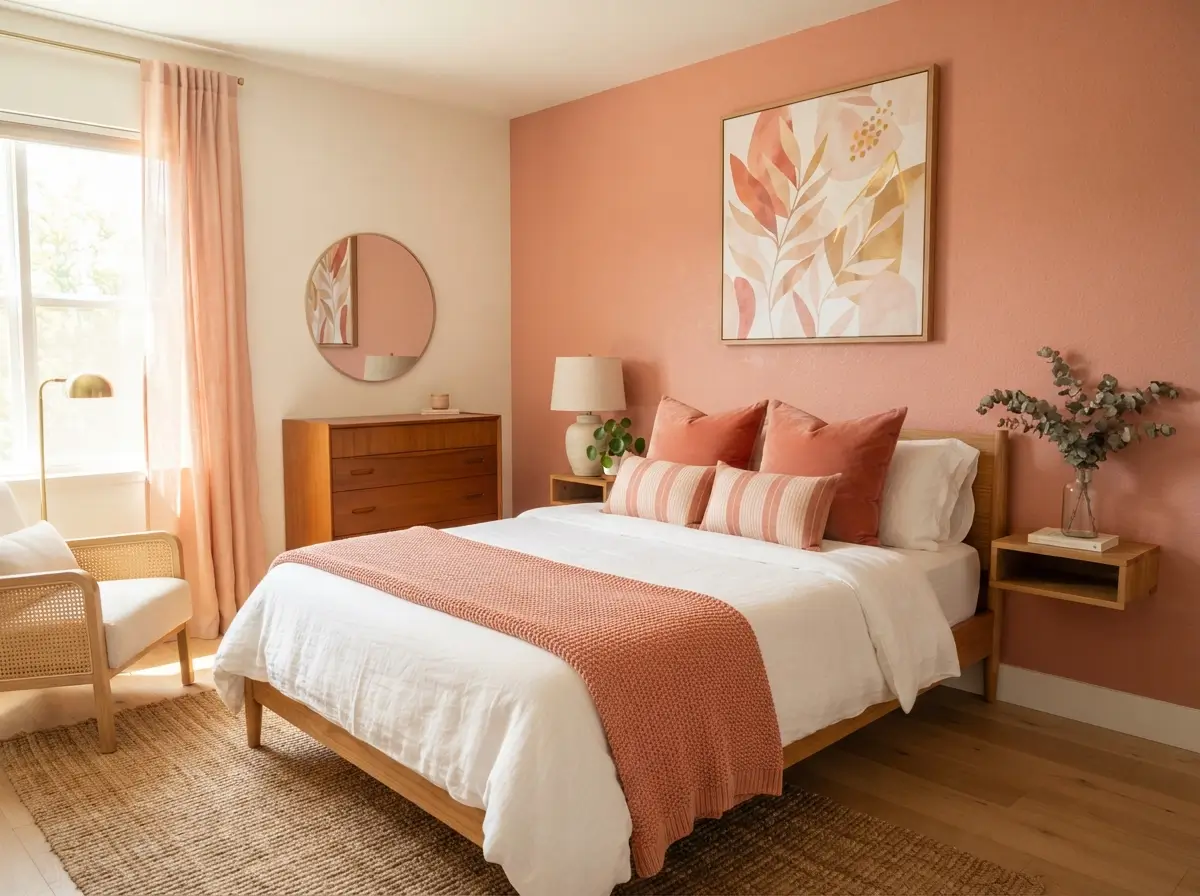

Coral brings warmth into a bedroom without feeling as heavy as red or as sugary as bright pink. Its mix of orange, peach, and soft red can make a room feel more welcoming, especially when paired with calm neutrals and simple furniture. Coral Bedroom Decor works best when the color supports the room instead of taking over every wall, fabric, and accessory. Small bedrooms benefit greatly. Coral Bedroom Decor
Good decorating starts with balance. Coral can appear in paint, bedding, curtains, art, or a single carefully chosen piece of furniture. Neutral colors such as warm white, sand, taupe, light gray, and natural wood create breathing room around it. Practical choices also matter. Washable fabrics, easy-to-move furniture, renter-safe wall treatments, and layered lighting make the room attractive without making daily life harder.
What Is the Easiest Way to Use Coral in a Bedroom?
Coral Bedroom Decor becomes easier when you choose one main coral feature and repeat the color two or three times in smaller details. For example, use a coral quilt, then add one coral stripe in the curtains and a small framed print near the dresser. Keeping the remaining surfaces quiet prevents clutter and gives the eye a clear place to rest. Beginners should start with textiles because they cost less than furniture, require no permanent changes, and can be replaced seasonally.
Start With One Coral Bedding Layer
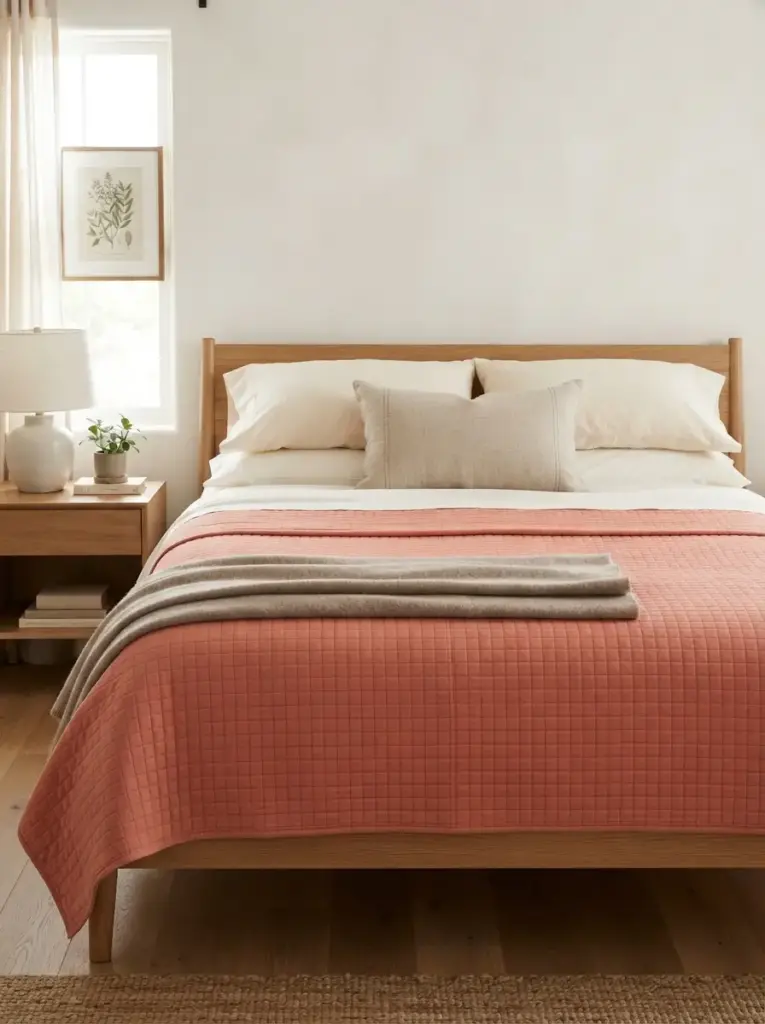
Bedding offers the safest way to introduce coral because it covers a large area without changing the room permanently. Choose one coral quilt, coverlet, or duvet and keep the sheets neutral. Warm white, oatmeal, light beige, or pale gray sheets soften the color and make the bed feel organized. Avoid stacking several coral pillows in different patterns because the surface can begin to look crowded rather than comfortable.
Layering works because the bed already acts as the visual center of most bedrooms. One clear coral element gives the space warmth while the neutral layers control the intensity. Try a muted coral coverlet with two cream sleeping pillows, one lumbar cushion, and a folded taupe throw at the foot. People who rent, move often, or like changing their decor with the seasons will find this method especially useful. Coral Bedroom Decor
Fabric choice affects the final result. Cotton percale feels crisp and suits modern rooms, while linen blends create a softer, relaxed finish. Velvet can look rich but may feel visually heavy in a small bedroom, so limit it to one cushion rather than a full duvet. The room feels cleaner when bedding has simple stitching, narrow stripes, or a small-scale pattern instead of large florals on every layer.
Paint a Soft Coral Half Wall
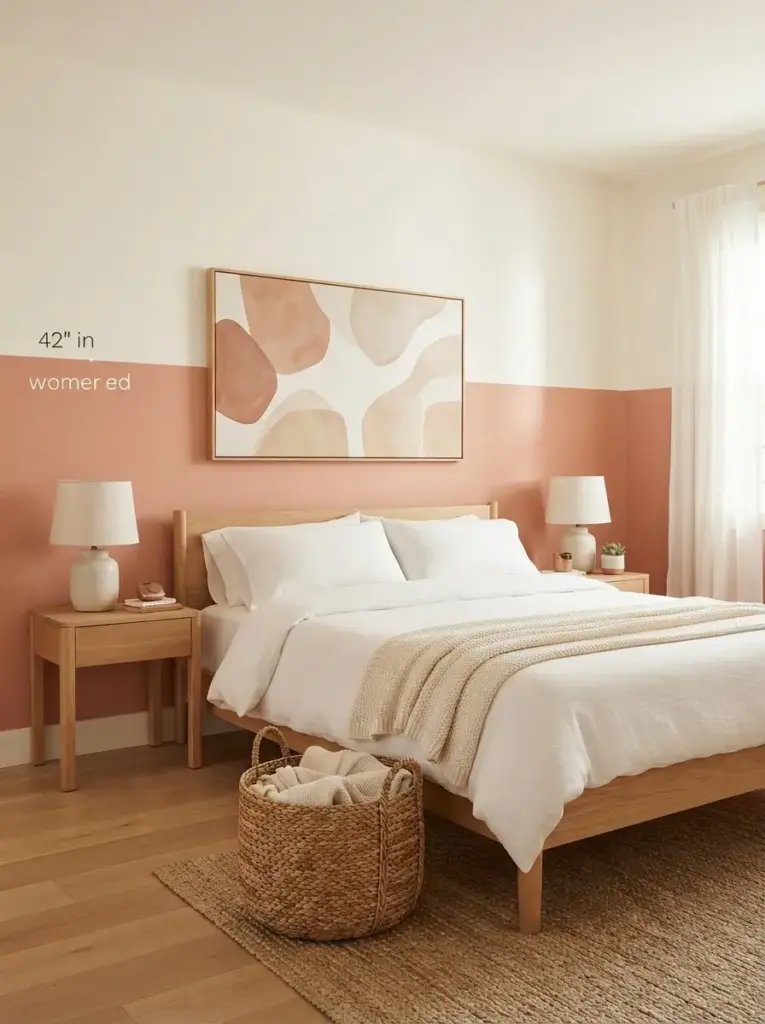
Half-wall paint gives color without shrinking the room. Paint the lower section coral and keep the upper section warm white or cream. Place the dividing line between 36 and 48 inches from the floor, depending on ceiling height and furniture placement. A lower line can make the room feel wider, while a higher line gives the bed more of a framed appearance.
Visual structure explains why the idea succeeds. The horizontal break adds interest, but the pale upper wall reflects light and prevents coral from surrounding the room. Use a dusty coral or clay-coral shade instead of a neon version. Pair it with light oak furniture, woven baskets, and simple white bedding for a calm result. Small bedrooms, children’s rooms, and guest rooms benefit most because the treatment adds personality without requiring many accessories. Coral Bedroom Decor
Rental homes can use removable wallpaper panels or peel-and-stick wall decals to create a similar band. Measure carefully, use a level, and test the material behind a door before covering a full wall. Keep wall art minimal on the painted section so the color remains the feature. One wide artwork above the bed usually looks cleaner than six small frames spread across the wall.
Use Coral Curtains With Plain Walls
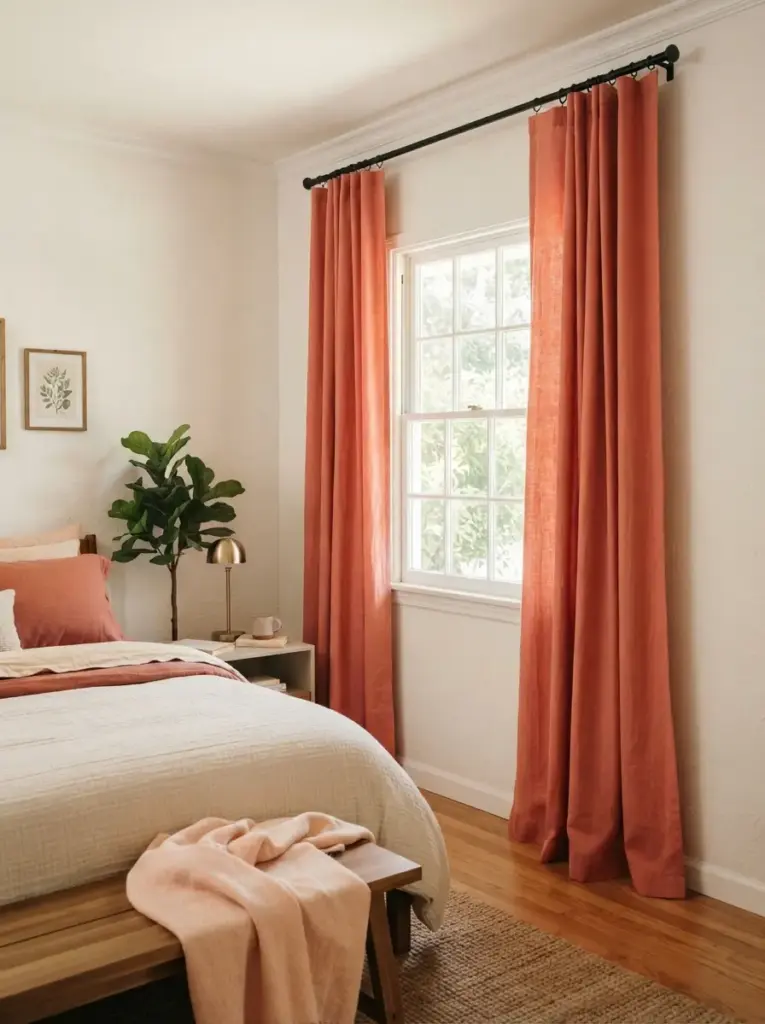
Curtains can add a tall column of color and make low ceilings appear higher when hung correctly. Mount the rod close to the ceiling and extend it several inches beyond each side of the window. Let the panels reach the floor with only a slight break. Coral curtains against warm white walls create warmth around the window while leaving the rest of the room open.
Height is the main advantage. Long fabric guides the eye upward and creates softness without using extra floor space. Choose solid linen-look panels, narrow coral stripes, or a quiet geometric pattern. Thick blackout curtains suit light sleepers, while light-filtering panels work well in darker rooms that need more daylight. People with narrow bedrooms or limited wall space can use this idea because the window becomes the decorative feature.
Avoid matching the curtains exactly to the bedding. Slight variation looks more natural. For instance, combine muted terracotta-coral curtains with a pale peach-coral throw. Repeating the same saturated shade everywhere can make the room feel flat. Keep the curtain hardware simple, such as matte black, brushed brass, or light wood, and avoid decorative finials that compete with the fabric.
Add Coral Through One Large Artwork
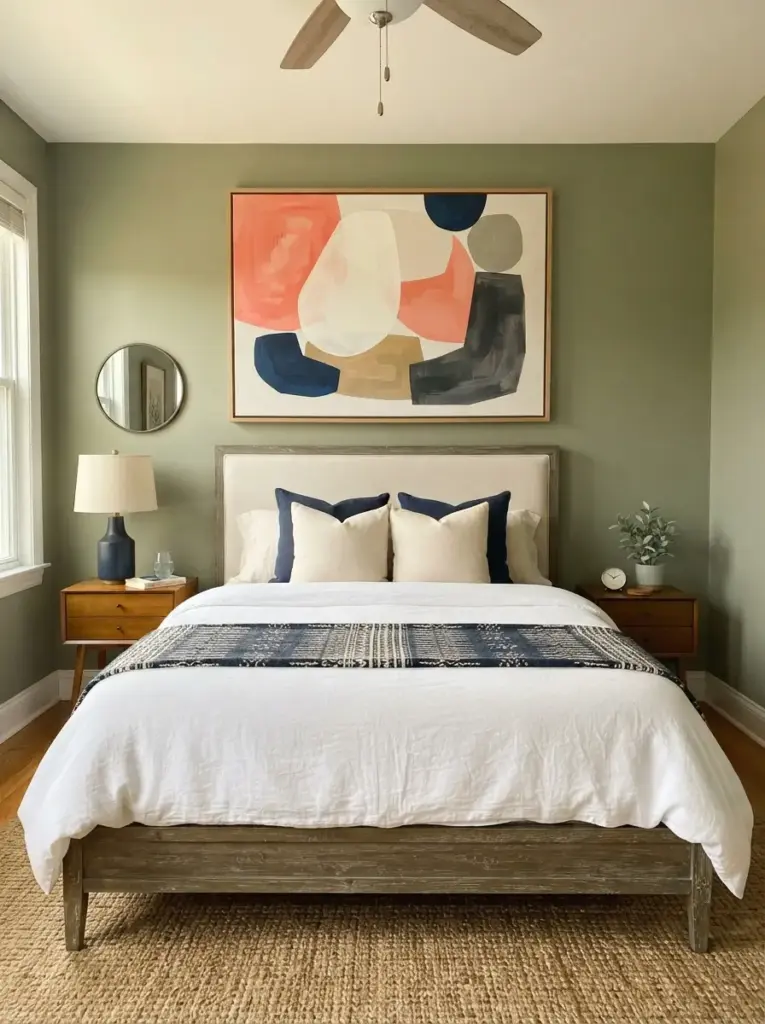
Large artwork often creates less visual clutter than a gallery wall because it gives the eye one strong focal point. Choose a print, textile, or painting that includes coral with cream, tan, navy, sage, or charcoal. Hang it above the bed, dresser, or reading chair. The piece should fill roughly two-thirds of the furniture width beneath it, which helps the arrangement feel intentional.
Scale makes the difference. Several tiny prints can leave a wall looking busy, while one larger piece creates order and gives the wall color room to breathe. Abstract shapes, coastal landscapes, botanical studies, and simple block prints all work when the palette remains limited. Beginners who struggle to coordinate many accessories will find one artwork easier to manage.
Budget-conscious decorators can frame a large piece of fabric, a wallpaper sample, or wrapping paper with a strong graphic pattern. Use a lightweight frame for safer hanging in rentals. Removable hooks may work for smaller pieces, while heavier frames need proper wall anchors. The palette gains depth when the artwork includes darker or cooler tones, since those colors prevent the room from becoming overly warm.Coral Bedroom Decor
Pair Coral With Light Natural Wood
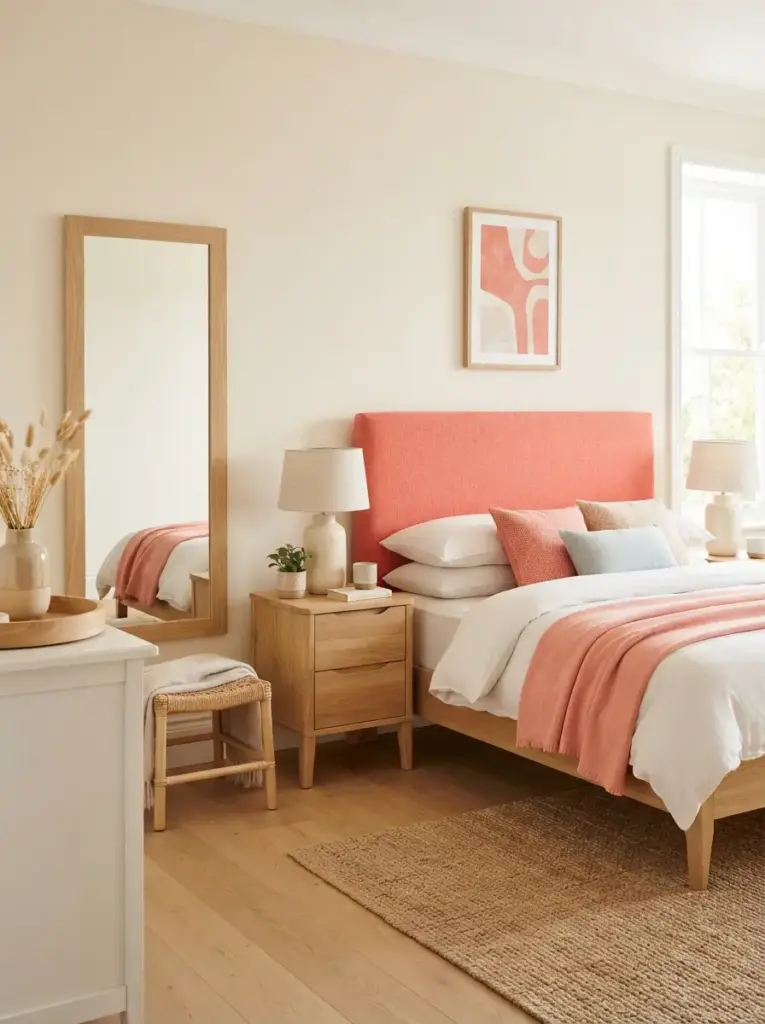
Natural wood grounds the coral and keeps it from feeling too sweet. Light oak, ash, birch, bamboo, and pale rattan work especially well because their warm undertones relate to coral without blending into it. Choose one or two wood finishes for the room, then repeat them in the bed frame, nightstands, mirror, or small bench.
Material contrast gives the scheme stability. Coral provides softness and color, while wood adds texture and a practical, familiar surface. A coral upholstered headboard beside light oak nightstands feels balanced because neither element has to compete for attention. People who prefer Scandinavian, coastal, bohemian, or relaxed modern rooms can use this pairing without changing their basic furniture style.
Keep wood grain visible and avoid orange-toned stains that sit too close to coral. Medium walnut can also work, but use it in smaller amounts if the bedroom receives little natural light. White laminate, painted MDF, or metal furniture can remain in the room; add a wood tray, stool, or lamp base to connect the materials. Limiting the finish count prevents the room from looking like a collection of unrelated pieces. Coral Bedroom Decor
Choose a Coral Upholstered Headboard
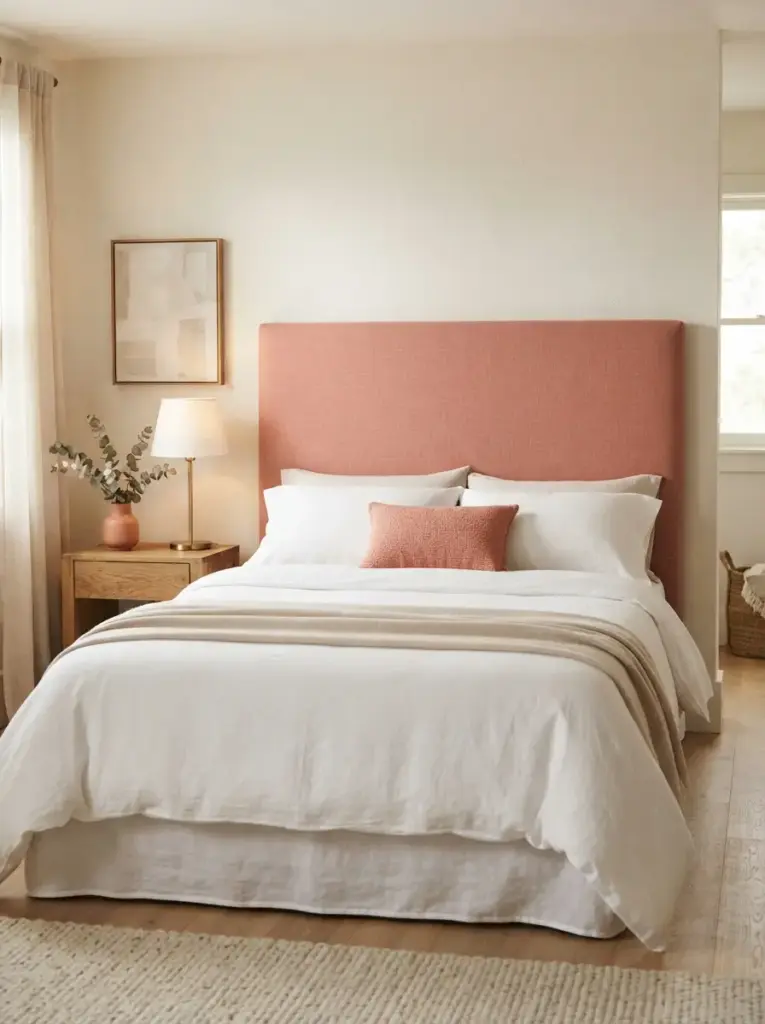
Upholstered headboards can deliver a strong color statement while keeping the rest of the bedroom simple. Select a clean shape such as a rectangle, gentle arch, or shallow channel design. Linen, cotton blend, and performance fabric are practical options because they look soft without reflecting too much light. Dusty coral usually feels calmer than bright salmon in a large upholstered surface.
Comfort supports the visual benefit. Upholstery softens the wall behind the bed and makes reading more comfortable, while the single block of color creates a clear focal point. Keep the bedding mostly white, beige, or light gray, then repeat coral in one small cushion or bedside object. Couples with different style preferences may like this solution because the furniture carries the color without requiring floral prints or many decorative accents.
DIY decorators can cover an existing headboard with batting and fabric, but the fabric should be pulled evenly and stapled securely on the back. Removable fitted headboard covers offer a renter-friendly option. Avoid tufting with many buttons in compact rooms, since deep detailing can collect dust and create visual noise. The arrangement stays practical when the headboard has enough presence to stand alone.
Mix Coral With Sage Green
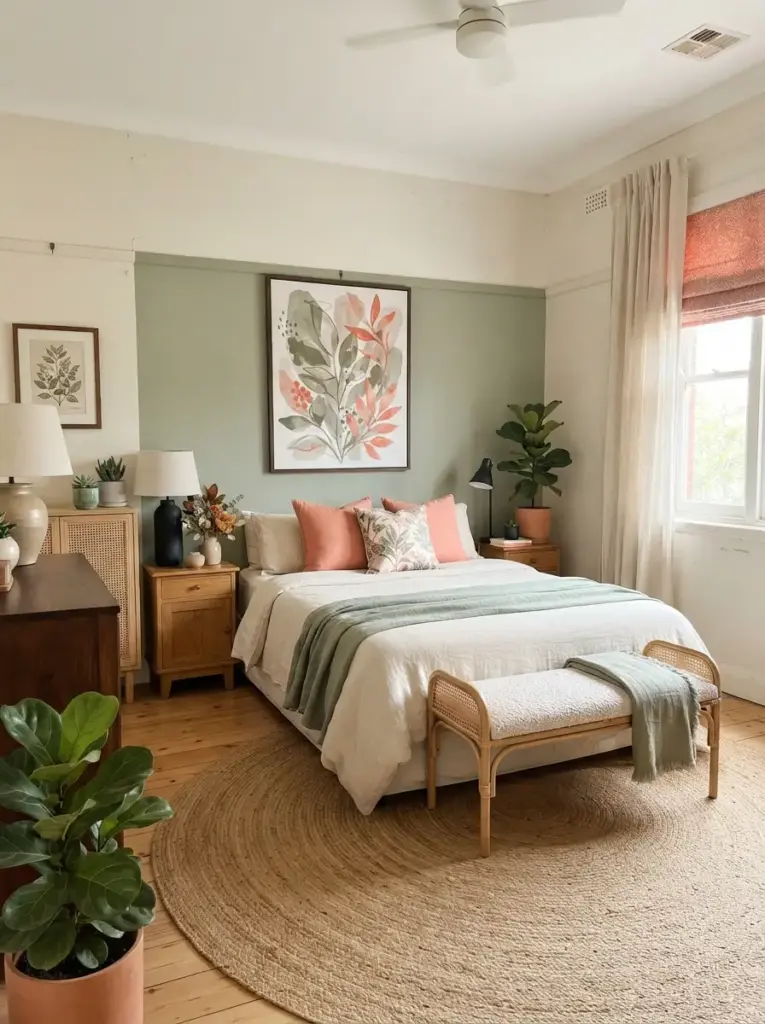
Sage green cools coral and creates a balanced palette inspired by leaves, clay, and faded flowers. Use coral as the warmer accent and sage as the quieter support color. White or cream should remain the largest part of the room so both colors look fresh rather than muddy. A useful ratio is about 60 percent neutral, 25 percent sage, and 15 percent coral.
Color temperature explains the harmony. Coral contains warm orange and red tones, while sage brings soft green that sits opposite red on the color wheel. The contrast feels noticeable but not harsh because both shades are muted. Try sage walls with coral bedding, or neutral walls with a sage bench and coral curtains. Garden lovers, vintage-style decorators, and anyone who wants warmth without a beach theme may prefer this combination.
Patterns should stay controlled. A botanical cushion with both colors can connect the scheme, but avoid adding several leafy prints at once. Matte black lamps or dark wood frames can give the palette sharper edges. Natural jute, woven cane, and linen also fit well. Rooms with north-facing light may need a warmer sage, while sunny rooms can handle a grayer version.
Ground Coral With Navy Blue
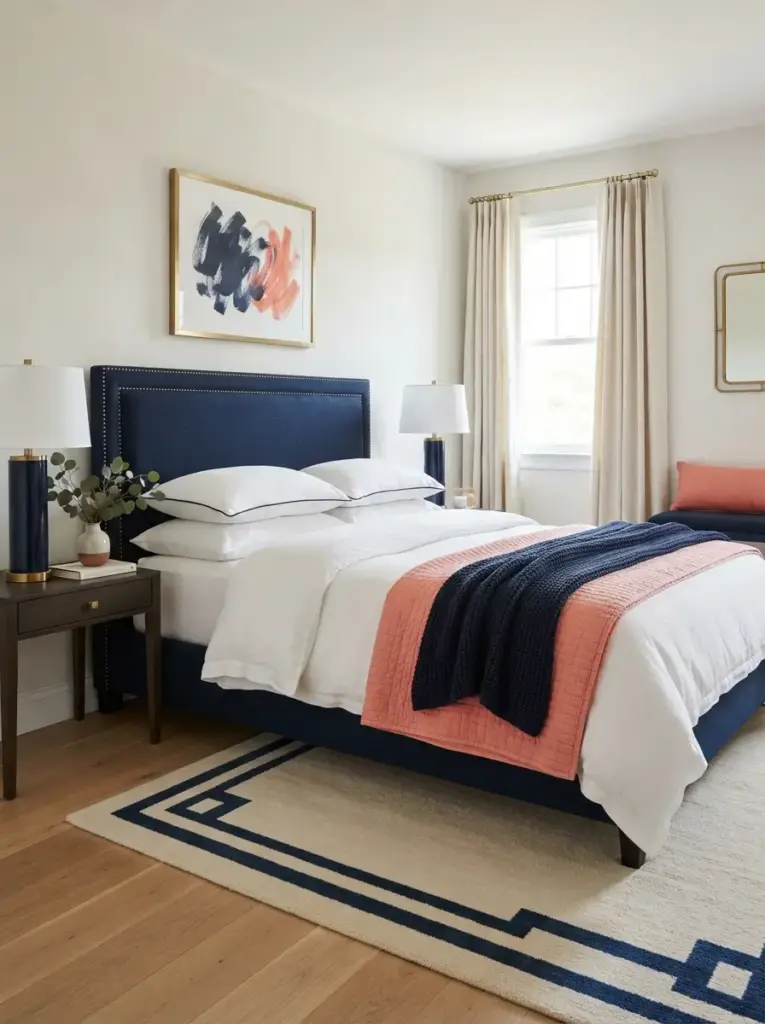
Navy gives coral a more tailored character and helps it feel less delicate. Use navy in a bed frame, rug border, throw, lamp base, or one piece of artwork. Keep the amount smaller than the coral if the room is dark, since navy absorbs light. White bedding and light walls maintain contrast and stop the palette from feeling heavy.
Depth makes the pairing effective. Navy adds a cool, structured base, while coral brings energy and warmth. A navy upholstered bed with a coral quilt and cream curtains can look polished without needing many decorative objects. Teen rooms, guest rooms, and shared bedrooms often benefit because the scheme feels balanced rather than strongly feminine or masculine.
Metal finishes can refine the combination. Brushed brass adds warmth, while chrome or nickel creates a cleaner, cooler edge. Limit metal to one finish across lamps, handles, and frames. Coral paired with navy also works well in coastal rooms, but skip obvious anchors, shells, and rope details unless they serve a practical purpose. Texture and color already communicate the theme without novelty decor.
Place Coral in a Small Reading Corner
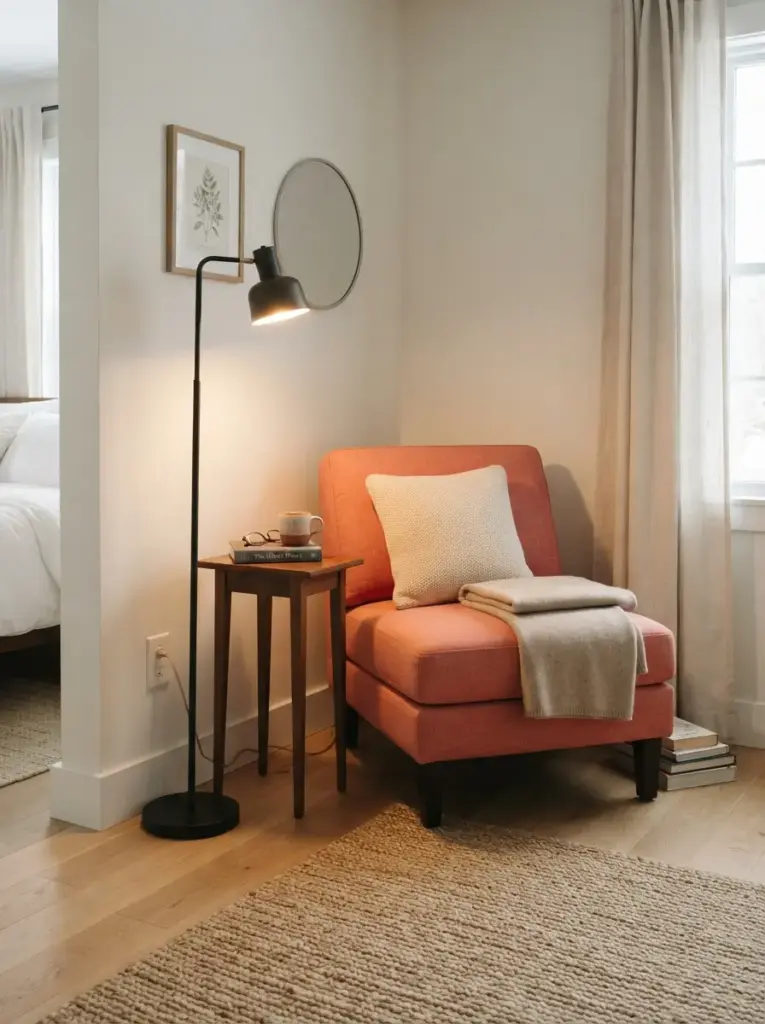
Unused bedroom corners can become functional with a compact chair, floor lamp, and narrow table. Choose a coral chair only when the surrounding walls and floor are quiet. Armless slipper chairs, small barrel chairs, and upright accent chairs take less space than wide lounge chairs. Leave at least 24 inches for a clear walkway around the setup.
Function prevents the color from becoming decoration for decoration’s sake. A coral chair gives the room a warm accent while adding a place to read, put on shoes, or set clothes briefly. Small-space decorators should measure the corner with painter’s tape before buying furniture. People who work from home may also use the chair for short breaks without turning the bedroom into a full office.
Lighting matters in the corner. Use a floor lamp with a shade that directs light downward, and choose a bulb around 2700K to 3000K for warm but usable illumination. Add one cream cushion or a folded neutral throw, not several patterned pillows. A wall-mounted reading light can save floor space in rentals if it plugs into an outlet and uses removable cable clips.
Use a Coral Rug to Define the Bed Zone
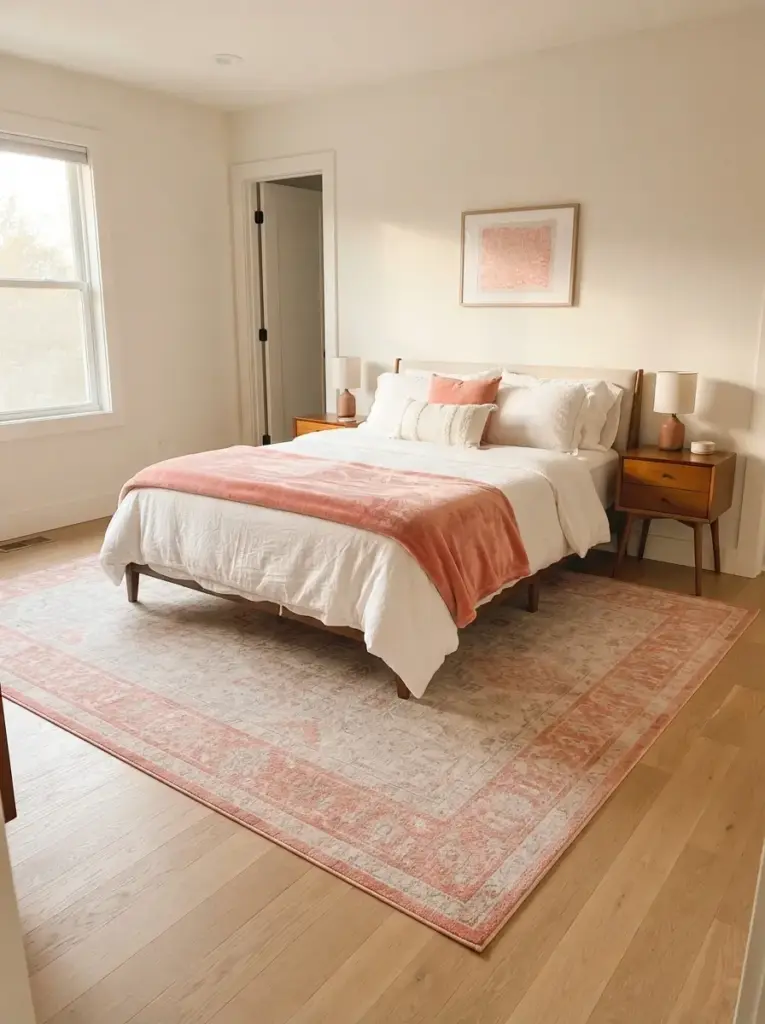
Rugs help organize a bedroom by visually connecting the bed and nightstands. Choose a rug with coral in the border, faded pattern, or small geometric details rather than a solid bright field. For a queen bed, an 8-by-10-foot rug usually allows enough material to show on both sides and at the foot. A 6-by-9-foot rug can work when placed under the lower two-thirds of the bed.
Clear zoning explains the value. The rug marks the sleeping area, adds softness, and introduces color at floor level without filling wall space. Coral Bedroom Decor often feels more grounded when the color appears below eye level instead of only in pillows and art. Renters with plain carpet can layer a flatweave rug over it, using a suitable pad to reduce movement.
Pattern scale should match room size. Small, dense motifs can hide wear but may look busy in a tight bedroom. Faded medallions, wide borders, or large, simple shapes usually feel calmer. Low-pile rugs are easier to vacuum and allow doors to open smoothly. People with pets should consider washable rugs or indoor-outdoor materials, especially in high-traffic bedrooms.
Style Coral Bedside Lamps
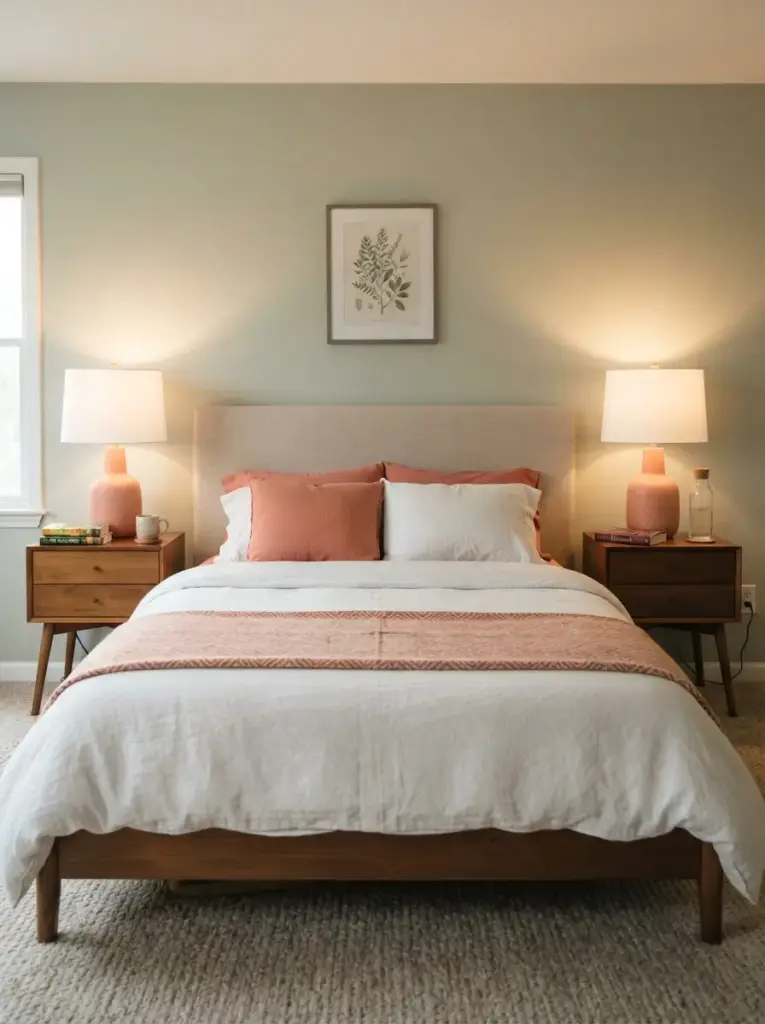
Matching bedside lamps create symmetry and add color in a controlled way. Choose ceramic bases, painted metal lamps, or fabric shades with a soft coral tone. Keep the lamp shape simple and allow the color to provide the interest. Lamp height should usually place the bottom of the shade near shoulder level when you sit in bed.
Practical lighting makes the color useful. Two lamps support reading, reduce harsh overhead light, and frame the bed without adding random objects. Use warm white bulbs between 2700K and 3000K. Bulbs around 800 to 1,100 lumens work for general bedside lighting, while lower output may suit relaxed evening use. Bedrooms with only one nightstand can use a coral wall sconce on the opposite side for visual balance.
Cord management keeps the area neat. Run cords behind furniture, use adhesive clips, and avoid placing extension blocks on top of the nightstand. White or neutral shades spread light more evenly than dark coral shades. Anyone who wants a low-cost update can paint an existing lamp base with paint suitable for the material, then add a new shade for a cleaner finish.
Add Coral With Removable Wallpaper
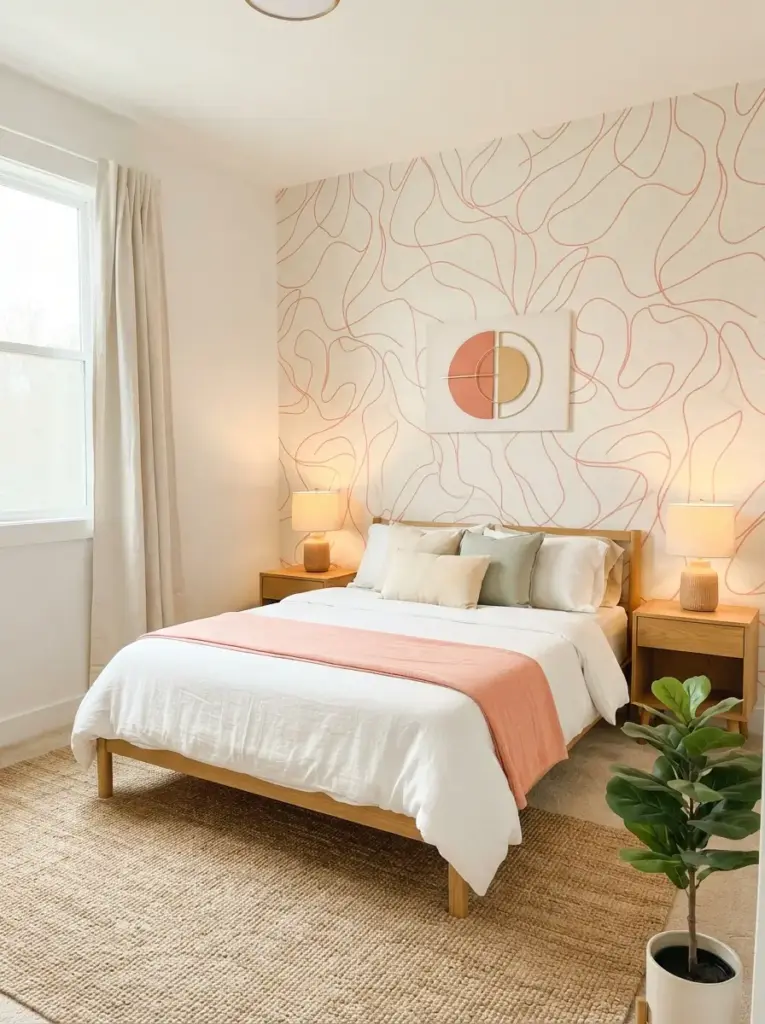
Removable wallpaper can create a feature wall without permanent paint. Select a design with plenty of open background space, such as thin coral lines on cream, oversized leaves with coral details, or a simple watercolor wash. Cover the wall behind the bed so furniture hides small alignment errors and the pattern has a clear purpose.
Controlled pattern keeps the feature from overwhelming the room. One wall provides interest, while the remaining walls stay plain and reflect light. Renters should test a sample for at least one week, especially on textured, recently painted, or matte surfaces. Follow the manufacturer’s removal guidance and avoid installing over damaged paint.
Installation improves when two people work together. Mark a straight vertical guide, smooth from the center outward, and trim around outlets with the power turned off. Busy patterns can disguise seams but may make a small bedroom feel crowded. Large, loose patterns usually create a calmer result. The room benefits from removable wallpaper when bedding and curtains remain mostly solid.
Keep Coral Accessories in Small Groups
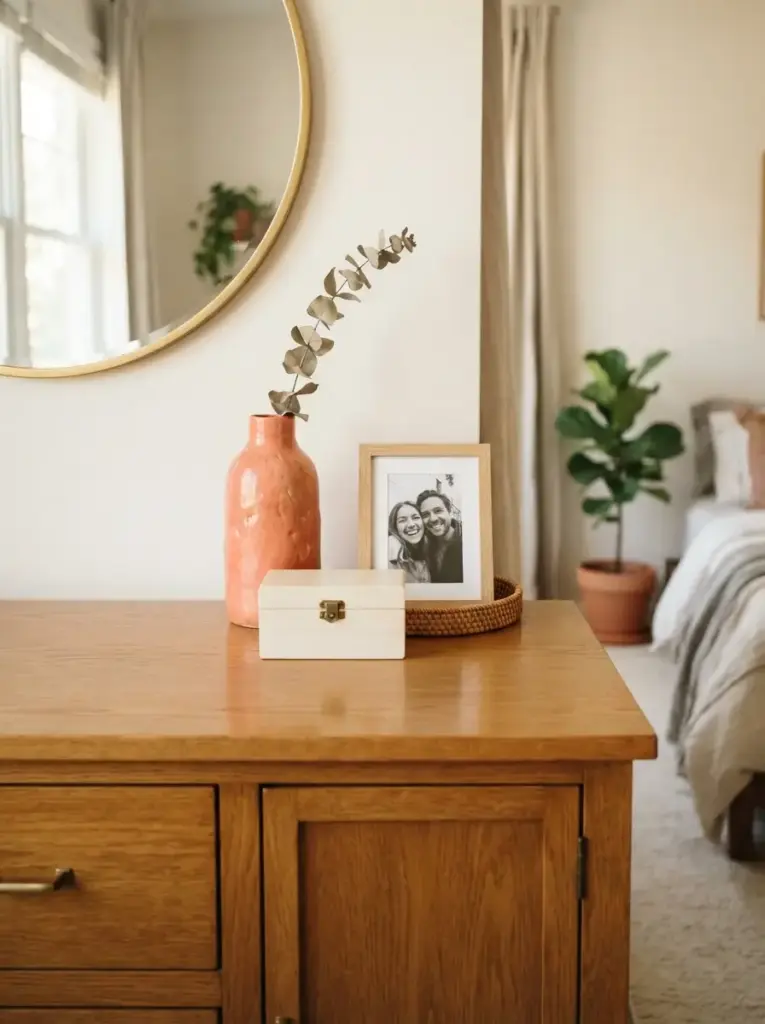
Accessories look more intentional when grouped instead of scattered around the room. Place three items together on a dresser, such as a coral vase, a small cream box, and a wood-framed photo. Leave open space around the group. Repeating several tiny coral objects on every shelf, ledge, and nightstand creates more clutter than color impact.
Grouping works because the eye reads the objects as one arrangement. Vary height and shape, but keep the palette limited. A tall vase, a low tray, and one small sculptural item make a stronger display than six objects of similar size. Minimalists, collectors, and people with narrow surfaces can use this rule to keep meaningful items visible without filling every inch.
Storage should support the styling. Choose boxes, drawers, and trays that hide chargers, jewelry, receipts, and daily clutter. Decorative pieces cannot compensate for crowded surfaces. Rotate accessories seasonally rather than displaying everything at once. Budget decorators can repaint thrifted vases or use coral book covers, but the finish should look consistent rather than patched together.
Warm the Room With Coral-Tinted Lighting Details
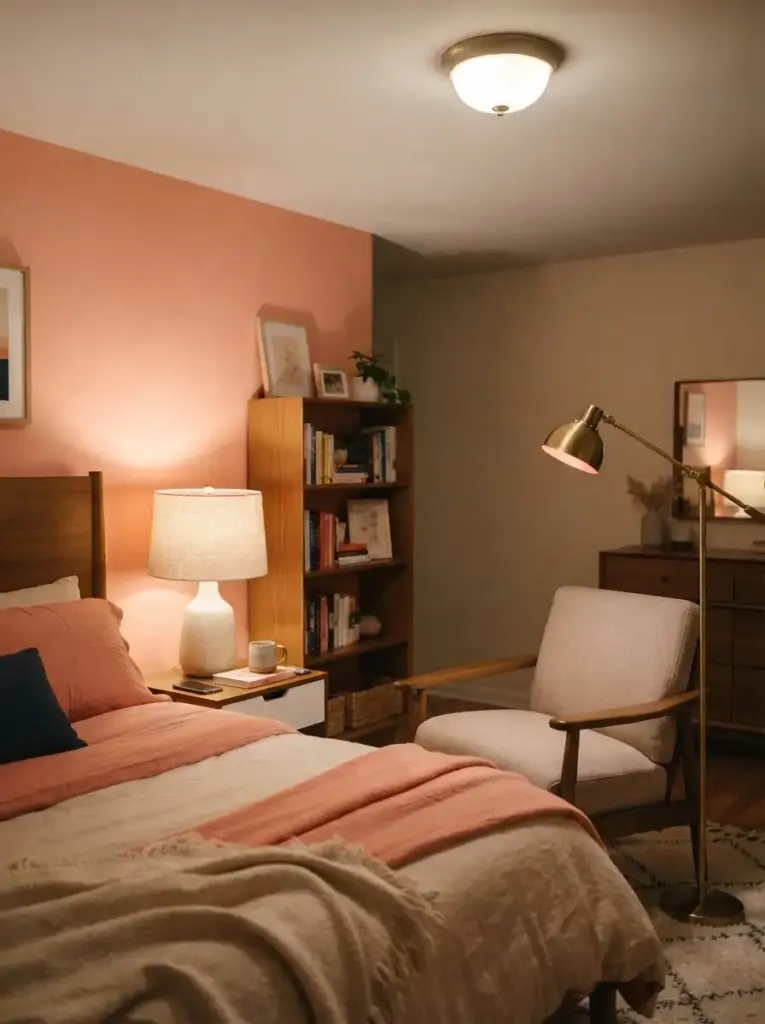
Colored light bulbs often distort skin tones and fabric colors, so keep the actual light warm white. Add coral through the lamp shade lining, base, cord, or nearby wall color instead. A cream shade with a pale coral interior can cast a gentle, warm reflection while still providing useful light. Test it at night before using the idea on every lamp.
Layered illumination creates comfort without adding physical clutter. Combine a ceiling light, bedside lamps, and one task light rather than relying on a single bright fixture. Keep bulbs within the same 2700K to 3000K range so the room does not shift from yellow to blue across different corners. People who read, dress, and relax in the same room need flexible lighting more than decorative fixtures.
Dimmer switches offer control, but renters can use plug-in dimmers or smart bulbs when compatible with the lamp. Avoid exposed filament bulbs beside coral walls because their amber output may make the color look orange. Frosted bulbs and light-colored shades provide a more accurate, comfortable glow. Clean lamp shades regularly, since dust reduces light and makes warm tones appear dull.
Create a Calm Coral Storage Wall
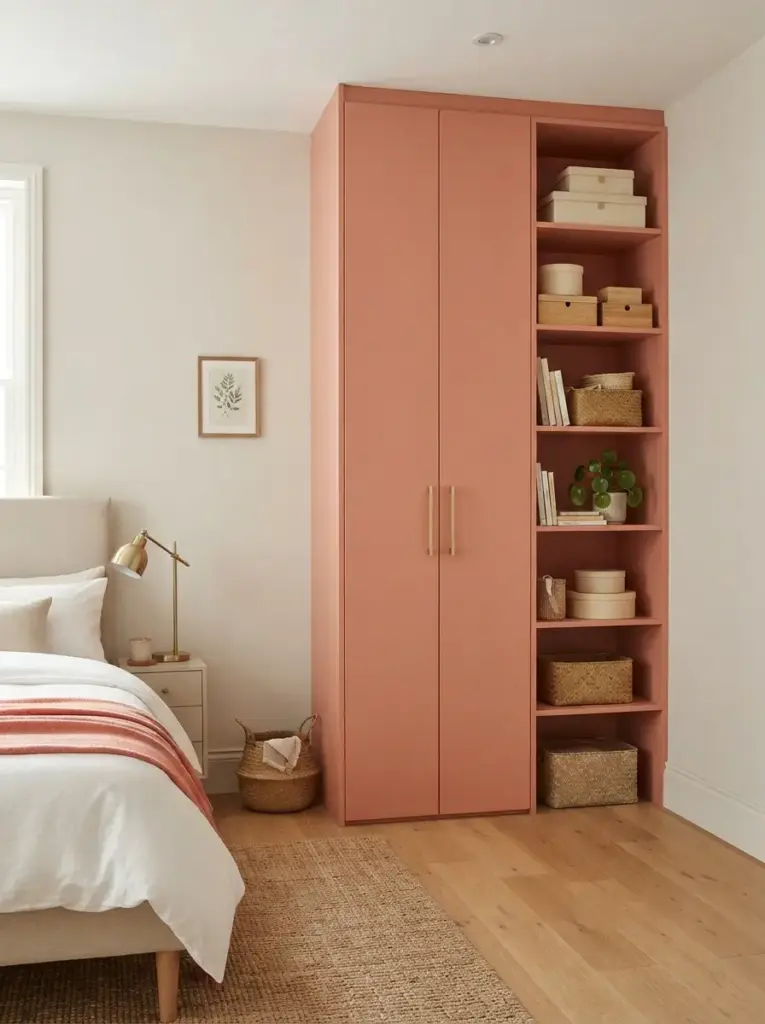
Storage can carry color while reducing clutter. Paint one wardrobe, dresser, or built-in cabinet a muted coral, then keep the wall behind it neutral. Flat-front doors and simple handles create a cleaner appearance than ornate panels. For open shelving, paint only the back panels coral and use cream or wood storage boxes on the shelves.
Useful color makes the room feel planned. The storage piece becomes a focal point, while its drawers and doors hide items that would otherwise crowd the room. Small bedrooms benefit most when one tall unit replaces several short cabinets. Measure door swing, drawer clearance, and walking space before choosing the piece. Sliding-door wardrobes work well where clearance is limited.
Renters can use removable vinyl on drawer fronts or switch to coral knobs that can be taken away later. Furniture paint requires cleaning, sanding, primer, and enough curing time to avoid sticky drawers. Coral Bedroom Decor looks more polished when storage hardware matches other metal finishes in the room. Keep the top of the unit mostly clear, especially if it sits above eye level.
Common Mistakes to Avoid
Using Too Many Coral Shades
Mixing peach, salmon, terracotta, neon coral, and pink coral in equal amounts can make the bedroom feel unsettled. Choose one main shade and one lighter or darker variation. Use the main shade on the largest feature, then repeat the supporting shade in small details. Bring home paint chips and fabric samples because coral changes noticeably under warm and cool light.
Covering Every Surface With Color
Walls, bedding, curtains, rugs, and furniture do not all need to be coral. Strong repetition removes contrast and makes it difficult to notice individual pieces. Leave large neutral areas on the ceiling, floor, walls, or bedding. Breathing room is especially important in bedrooms under 120 square feet, where every surface remains visible from the doorway.
Ignoring Natural Light
South-facing rooms can make coral look brighter and more orange, while north-facing rooms may make it appear pinker or grayer. Test samples in the morning, afternoon, and evening before buying large quantities. Rooms with limited daylight usually suit lighter coral accents and reflective neutral surfaces. Dark coral paint may work better on one wall than around the entire room.
Choosing the Wrong White
Cool blue-white paint can make warm coral look harsh. Cream, ivory, soft white, and warm greige usually create a smoother transition. Pure white can still work in modern rooms when black, navy, or gray adds structure. Compare samples directly beside the coral material rather than choosing white paint in isolation.
Adding Decor Without Removing Clutter
New cushions, vases, and wall art cannot improve a room when nightstands and dressers remain crowded. Remove unused objects first, then add color only where it supports the layout. Keep daily items in drawers, baskets, or trays. Clear surfaces make coral accents look deliberate and give a small bedroom a calmer rhythm.
Forgetting Practical Maintenance
Pale upholstery, textured rugs, and fabric headboards collect dust and marks. Check cleaning codes before buying and choose washable covers where possible. High-touch furniture needs durable paint, while sunlit curtains need fade-resistant fabric. Practical materials protect the look and reduce the need for frequent replacements.
Budget-Friendly Ways to Add Coral
Paint usually offers the most color for the lowest cost, but a full room is not necessary. Paint a narrow section behind the nightstand, the inside of a bookcase, or the lower half of one wall. Small leftover pots from paint stores may cover these limited areas. Test the shade first because inexpensive paint still becomes expensive when the color needs to be corrected.
Textiles provide another flexible route. Look for coral pillow covers, throws, and flat sheets during seasonal sales. Flat sheets can become lightweight curtains with clip rings, and a tablecloth can cover a simple bench cushion. Wash fabric before sewing or cutting because some materials shrink. Keep patterns limited so budget items do not make the room look busier.
Secondhand furniture can be updated with careful preparation. A small wood nightstand, mirror frame, or lamp base may need only cleaning, sanding, primer, and coral paint. Replace damaged handles with simple knobs, but keep receipts and old hardware if the furniture belongs to a rental. Quality preparation matters more than expensive paint for small projects.
Printable art, fabric remnants, and wallpaper samples can fill frames at low cost. Use matching frames from thrift shops and paint them one consistent color. Larger frames often create a stronger result than many small ones. Rotate the inserts when tastes change instead of buying new wall decor.
Rearranging costs nothing and often improves the room more than another purchase. Center the bed on the clearest wall, keep walkways open, and move small storage pieces closer to where they are used. Remove one unnecessary chair or table before adding a coral accent. Better spacing gives each color choice more impact.
Practical Coral Bedroom Decor Tips
Coral Bedroom Decor feels balanced when the color appears in three places at different heights. One example is a coral rug near the floor, a coral cushion at bed height, and a coral detail in artwork above the headboard. The repeated color connects the room, while the spacing prevents one area from becoming too concentrated.
Room size should guide saturation. Pale coral works well on larger surfaces in compact bedrooms because it reflects more light. Deep coral suits smaller accents, such as lamp bases, piping, or a narrow throw. Large rooms can handle stronger coral upholstery or wider curtains, but neutral zones still matter.
Existing undertones also deserve attention. Beige carpet, honey wood, and cream walls already lean warm, so choose a muted coral with a little gray. Cool gray flooring and white furniture may need a clearer coral plus warm wood or brass to avoid feeling disconnected. Testing samples beside fixed finishes prevents expensive mistakes.
Texture can replace extra decoration. Linen curtains, woven baskets, ribbed ceramics, and cotton quilts add interest without introducing more colors. Keep two or three main textures and repeat them. Too many materials can create the same visual noise as too many patterns.
Storage planning should happen before styling. Use under-bed drawers, narrow bedside cabinets, wall hooks inside wardrobes, and closed baskets for items used often. Once surfaces are clear, add only a few coral details. Organized rooms allow warm colors to feel inviting rather than busy.
Frequently Asked Questions
What Colors Go Best With Coral in a Bedroom?
Warm white, cream, beige, light oak, sage green, navy, and soft gray work well with coral. Cream and light wood create a gentle palette, while navy adds stronger contrast. Sage cools the warmth and suits natural materials. Choose two supporting colors rather than bringing every option into one room.
Can Coral Work in a Small Bedroom?
Coral can work very well in a small bedroom when used in controlled amounts. Choose one larger feature, such as bedding or a half wall, and repeat the color in one or two small details. Keep ceilings, major walls, and bulky furniture light. Clear walkways and closed storage will matter more than the exact shade.
Is Coral Too Feminine for a Shared Bedroom?
Coral changes character depending on its partners. Pairing it with navy, charcoal, olive, walnut, or black creates a more grounded and tailored scheme. Simple stripes, geometric patterns, and solid fabrics also feel more neutral than floral prints. Both people should choose the main coral shade together because peachy and red-based versions create different moods.
What Type of Lighting Makes Coral Look Best?
Warm white lighting between 2700K and 3000K usually flatters coral without turning it orange. High color-rendering bulbs help paint and fabric appear more accurate. Use the same color temperature across bedside lamps and ceiling fixtures. Test the room after sunset because artificial lighting may change the shade more than daylight.
How Can Renters Use Coral Without Painting?
Renters can use bedding, curtains, rugs, removable wallpaper, art, lamp bases, cushions, and temporary furniture covers. Removable vinyl can update drawer fronts, while peel-and-stick panels can create a half wall. Test adhesives in a hidden area and keep original hardware for move-out day.
How Do I Keep Coral Bedroom Decor From Looking Cluttered?
Coral Bedroom Decor stays calm when one item leads the palette and the remaining accents support it. Limit visible patterns, group accessories, keep storage mostly closed, and leave open space on walls and surfaces. Repeating the color three times is usually enough. Remove unused decor before adding another coral item.
Conclusion
Coral adds warmth, personality, and softness without demanding a room full of decoration. Strong results come from choosing one main feature, using neutral space generously, and repeating the color in a few measured places. Bedding, curtains, rugs, art, lighting, and storage all offer practical ways to work with coral at different budgets.
Successful Coral Bedroom Decor also depends on function. Clear walkways, useful furniture, washable materials, controlled lighting, and closed storage keep the bedroom comfortable every day. Start with one change, observe how the color reacts to daylight and evening bulbs, then add only what the room still needs. Careful editing will create more impact than filling every surface.