
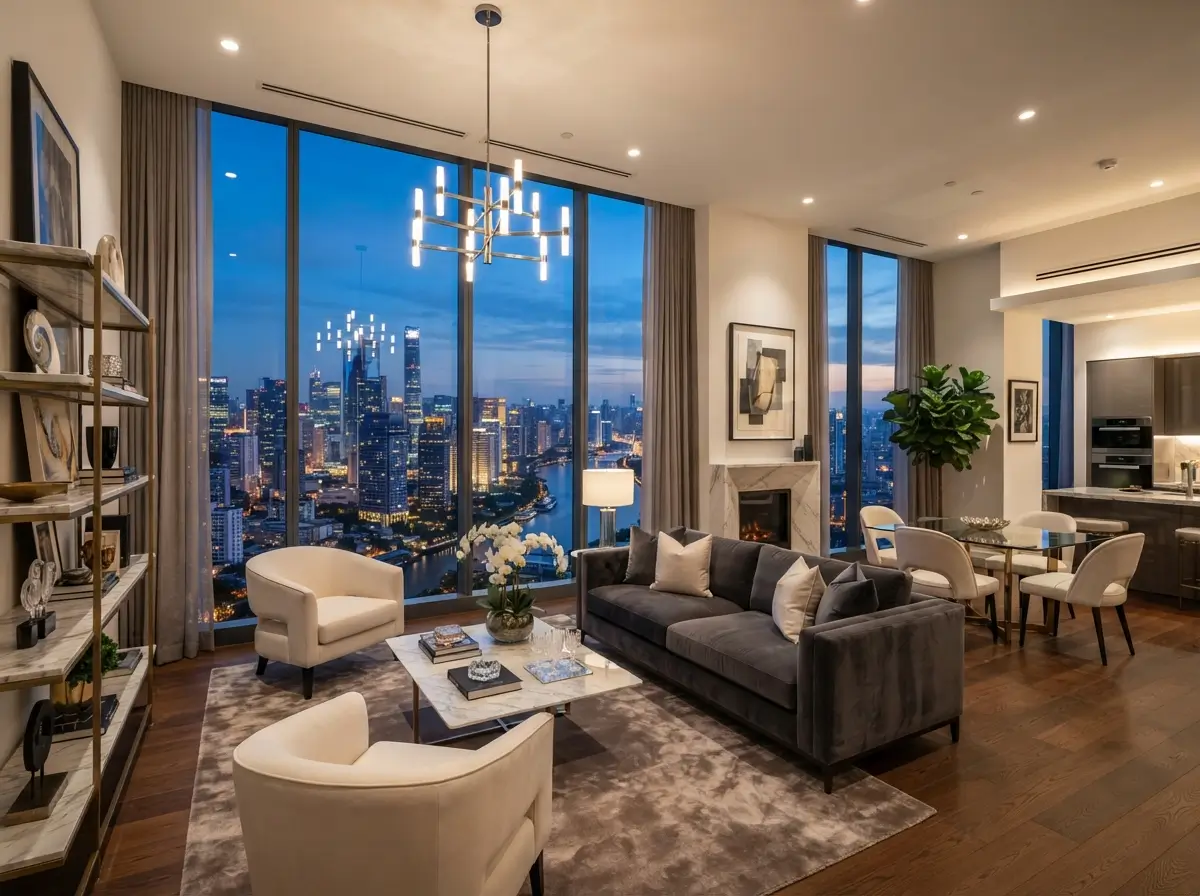

Downtown living often comes with one major decorating advantage: the skyline becomes part of the room. Tall windows, changing daylight, traffic lights, rooftop views, and evening reflections can give even a compact apartment a strong character. Good design should support that feature instead of competing with it. Furniture scale, curtain placement, lighting temperature, and storage choices all affect how clearly the view can be seen and how comfortable the room feels at different times of day. City view apartment
Small homes near busy city centers also bring real challenges. Glare can be strong, floor space may be limited, and oversized furniture can make windows feel smaller. Noise, privacy, rental rules, and awkward room shapes may also affect the plan. Thoughtful City view apartment styling balances elegance with daily function by keeping sight lines open, using light carefully, and choosing pieces that earn their place.
How can you make a downtown apartment feel elegant without blocking the view?
Plan every major item around the windows, not in front of them. Keep furniture low where possible, layer soft lighting, use a controlled color palette, and create storage along interior walls. City view apartment decorating works best when the skyline remains visible from the sofa, dining table, and main walking paths.
Plan the room before buying new decor
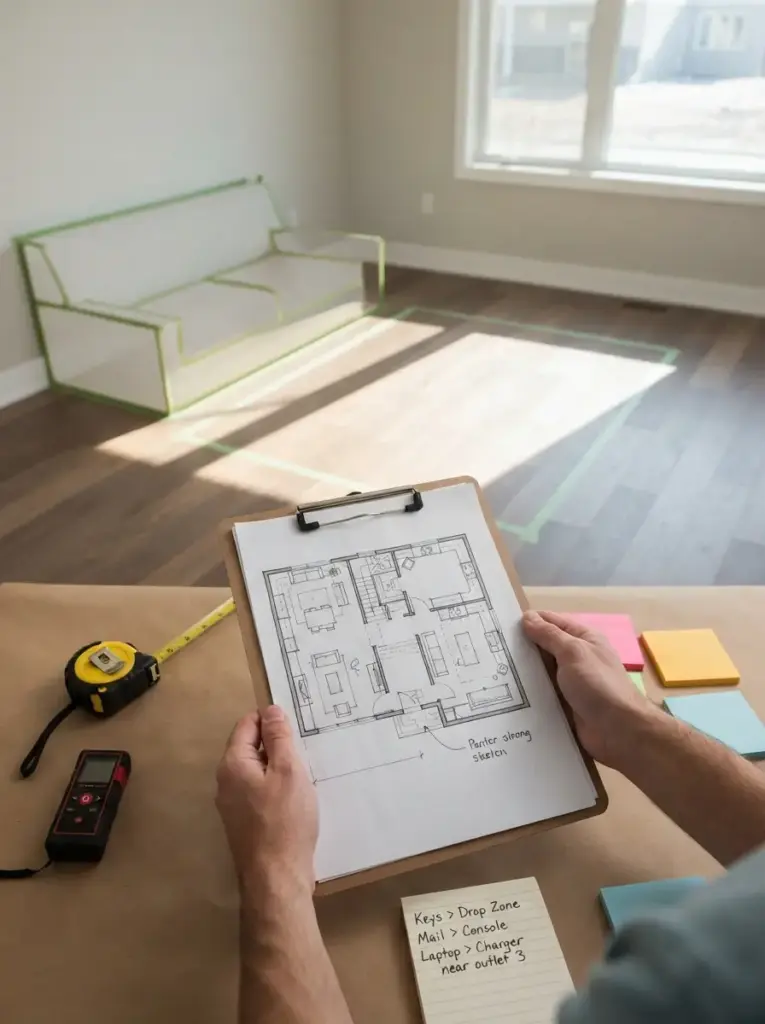
Begin with a room audit. Photograph each wall, then measure the floor area, window width, ceiling height, radiator depth, door swing, and distance between outlets. Record which surfaces receive direct sun and where shadows appear. Note daily habits, including where bags land, where shoes collect, and where laptop chargers are needed. Elegant rooms stay organized when the layout supports real behavior. Beginners often focus on decorative objects first, but solving traffic flow, storage, and lighting produces a stronger result than adding accessories.
Next, make a basic furniture plan on graph paper or in a free room-planning app. Include existing pieces before considering new ones, and test at least two arrangements. Mark primary walkways with 30 to 36 inches of clearance. Smaller passages can work beside a bed or occasional chair, but they should not interrupt the route from the entry to the kitchen, bathroom, or balcony. Planning several versions helps reveal whether the room needs another purchase or simply a better arrangement. It also reduces returns, delivery problems, and furniture that never fits comfortably.
Material samples deserve attention before a final decision. Carry curtain swatches, wood samples, paint cards, and rug photos to different parts of the apartment during the day. Warm walnut may look rich in morning light, but turns orange under a cool ceiling bulb. Pale beige fabric may appear gray beside blue-tinted windows. Compare finishes together rather than choosing each item separately. Repeated undertones make affordable pieces look coordinated, while clashing undertones can make expensive furnishings feel disconnected. Keep samples for future purchases so new items continue the established palette. City view apartment
Finally, decide which problems require money and which need editing. Privacy may justify shades, while visual clutter may only require closed baskets and fewer objects. Poor evening comfort may call for two lamps rather than a new sofa. Heat near the windows may need solar coverage before delicate textiles. Rank needs as essential, useful, and optional, then set a spending limit for each category. Clear priorities protect the budget and produce a home that looks intentional because every improvement answers a specific functional or visual need.
Let the windows guide the entire furniture layout
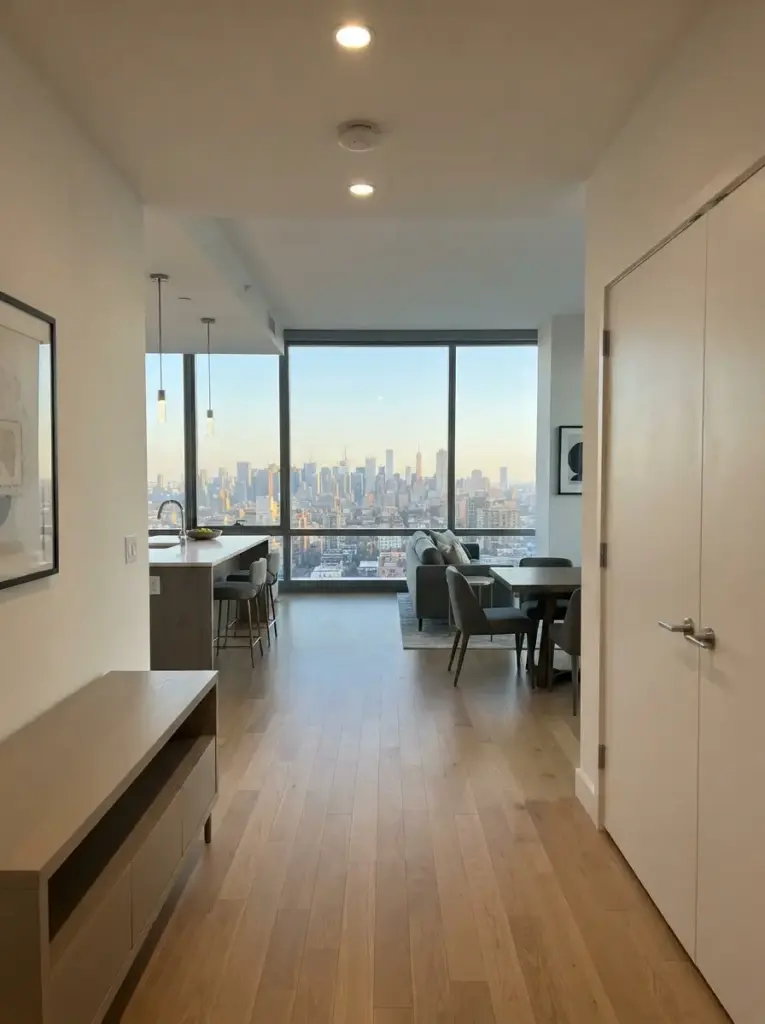
Start by standing at the apartment entrance and noting where your eyes naturally move. Next, sit in the places where you spend the most time, such as the sofa, dining chair, desk, or bed. Arrange the largest furniture so that at least one clear view remains from each important position. Sofas usually work well parallel to the windows or slightly angled toward them. Avoid placing a tall bookcase, television cabinet, or bulky chair directly in the strongest sight line. City view apartment
Layout planning works because it treats the view as a permanent design feature rather than a leftover background. Renters and first-time decorators benefit most from this approach because it costs nothing and prevents expensive furniture mistakes. In a narrow living room, try a 72-inch sofa against an inner wall, two light chairs near the glass, and a slim coffee table between them. City view apartment rooms feel calmer when people can move through the space without stepping around furniture that blocks daylight.
Choose low-profile seating near the glass
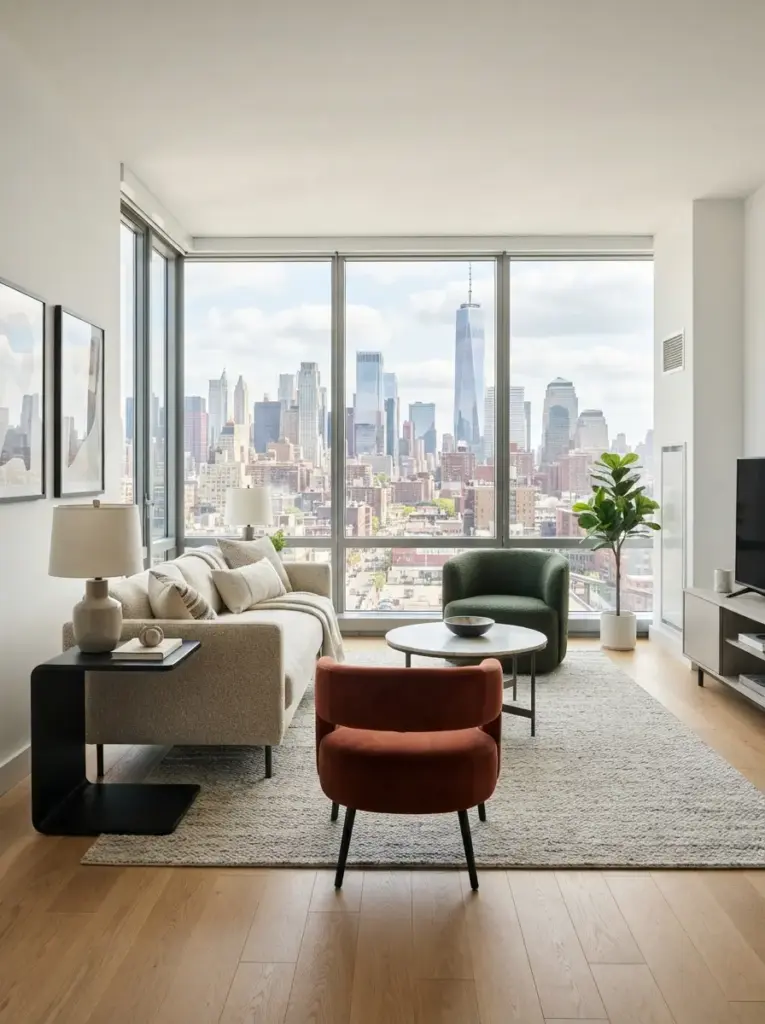
Low-backed furniture keeps more of the skyline visible, especially in apartments with windows that begin close to the floor. Look for sofas with backs around 30 to 34 inches high, armless lounge chairs, compact benches, or dining chairs with open frames. Pieces raised on visible legs also make the floor look less crowded. Deep reclining furniture may feel comfortable, but it often takes up too much visual and physical space in a small downtown room. City view apartment
Lower seating succeeds because it creates a smoother line between the interior and the outdoor scene. Owners of studio apartments, one-bedroom homes, and high-rise rentals gain the most from this method. Pair a low oatmeal-colored sofa with black metal side tables and one rust or forest-green chair for controlled contrast. Check seat depth before buying; 34 to 38 inches usually feels comfortable without overwhelming a tight plan. Common mistakes include choosing a dramatic high-back sectional or placing several heavy chairs beside the window.
Build a refined neutral color palette
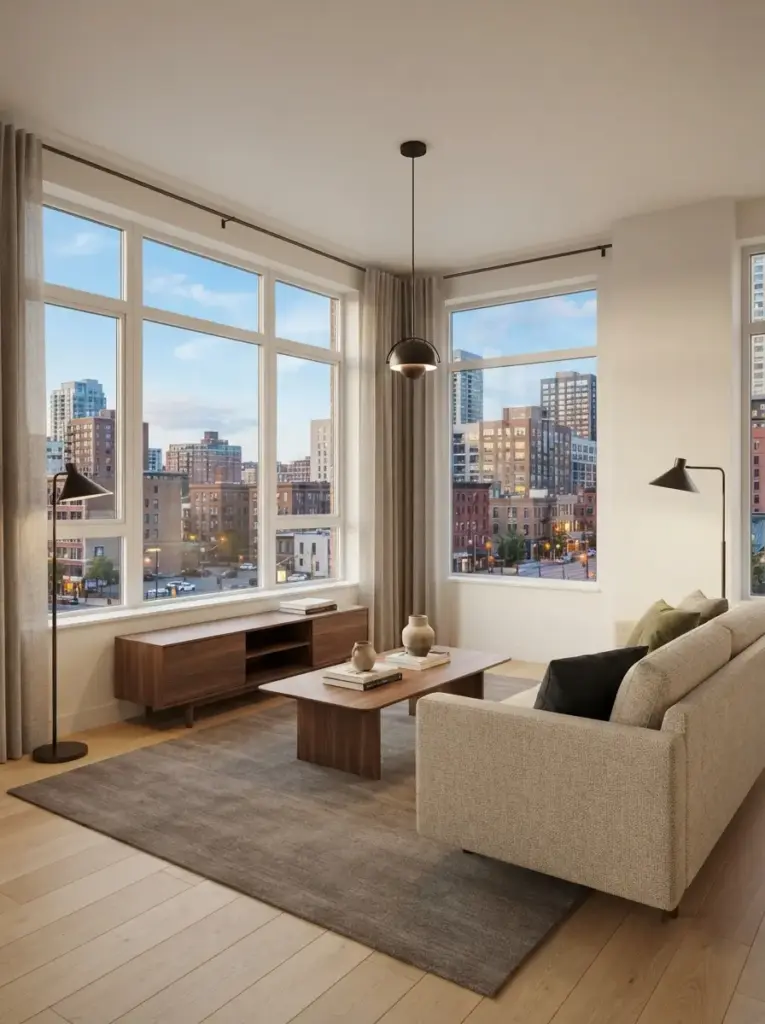
Warm neutrals make city lights, blue skies, brick buildings, and changing weather stand out without making the interior feel plain. Begin with soft ivory, warm white, pale greige, mushroom, or light taupe on the largest surfaces. Add medium tones through rugs, upholstery, and curtains, then use one broader accent such as charcoal, navy, olive, or muted burgundy. Limiting the palette to three main colors helps a small home feel connected from one zone to another.
Color control matters because downtown views already contain many moving colors and sharp lines. Beginners who feel unsure about mixing finishes will find a restrained scheme easier to manage. One practical combination is warm white walls, a beige sofa, a gray-brown rug, walnut furniture, and dark bronze lighting. Choose paint with a matte or eggshell finish to reduce harsh reflections. Skip cool blue-gray walls in rooms with little sun, because they can make concrete buildings outside feel colder and the interior less welcoming.
Hang curtains high and wider than the frame
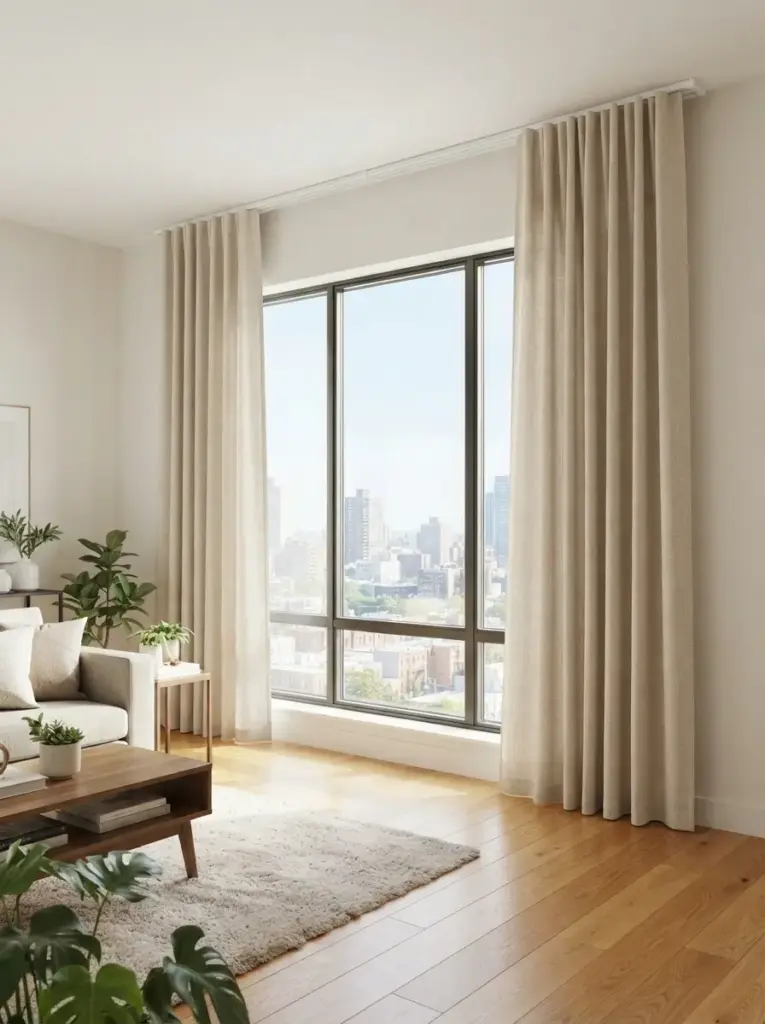
Curtains should reveal the full width of the window when they are open. Mount the rod close to the ceiling and extend it 8 to 12 inches beyond both sides of the frame when wall space allows. Full-length panels should lightly touch the floor or stop about half an inch above it. Wide placement makes windows look larger and prevents stacked fabric from covering the strongest part of the view. Ceiling tracks work especially well in modern apartments with broad glass walls. City view apartment
Better curtain placement creates height, improves daylight, and makes ordinary windows feel more intentional. Renters can use removable track systems, tension solutions for recessed frames, or small screw holes that are easy to patch later. Linen-look polyester panels offer a soft finish at a lower price than real linen and resist wrinkling. Choose warm white, stone, or light oatmeal for flexibility. Avoid narrow rods, short curtains, or thick dark panels unless blackout coverage is essential, because those choices can visually cut the wall and reduce natural light.
Layer privacy without losing daylight
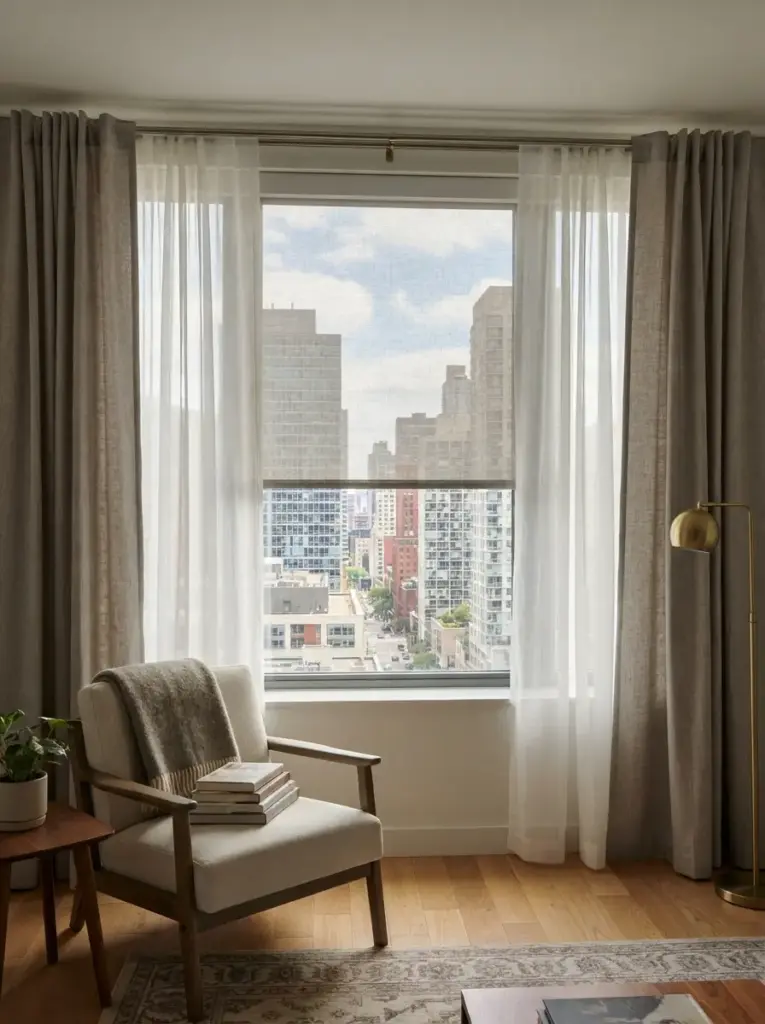
Sheer curtains, solar shades, and adjustable blinds can protect privacy while keeping the skyline present. Use a double curtain rod with a sheer inner layer and a heavier outer panel, or combine a light-filtering roller shade with side curtains. For rooms facing nearby towers, top-down, bottom-up shades allow daylight from above while covering direct views into the room. Solar shades with a 3% to 5% openness factor can also reduce glare without fully hiding buildings and sky. City view apartment
Layered privacy works because city apartments often need different coverage during the day and evening. People living across from offices or neighboring residential towers will benefit most. White or warm gray sheers soften hard window lines and spread sunlight more evenly. At night, close the outer panels before turning on bright lamps, since interior lighting makes rooms easier to see from outside. Avoid reflective films without checking the lease rules, and test any adhesive product in a hidden corner to prevent residue or glass damage.
Use mirrors to spread light rather than fake space
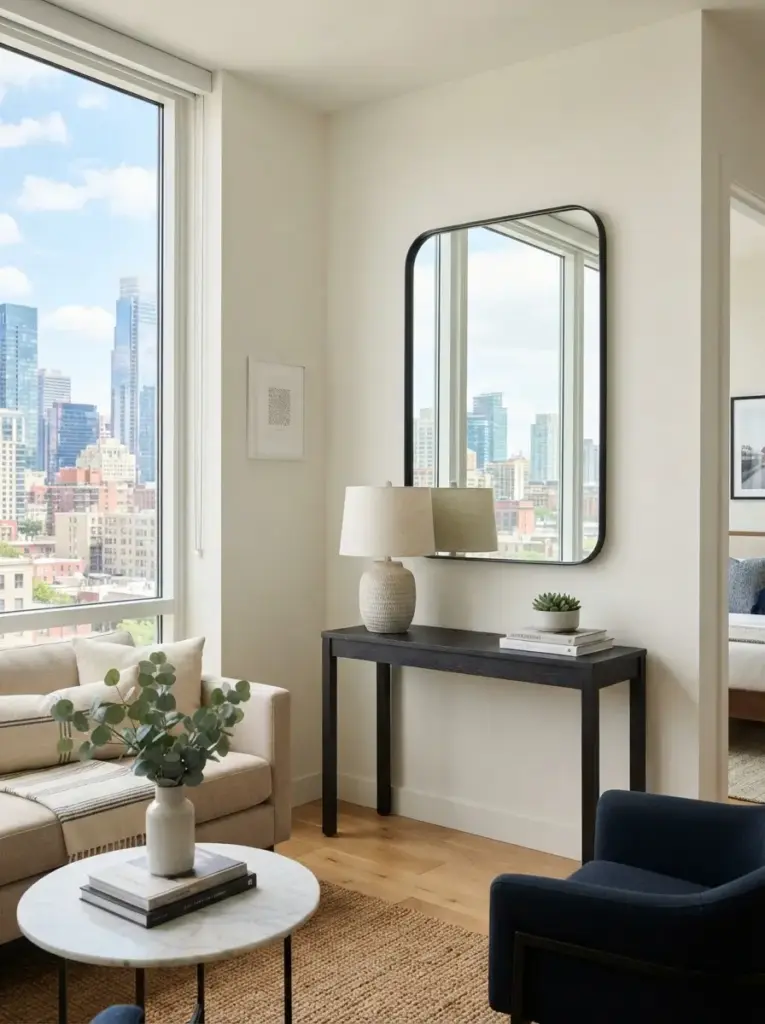
Mirrors can brighten a downtown home, but placement matters more than size. Position a large mirror on a wall perpendicular to the main window so it catches side light without creating strong glare. A mirror facing the skyline can work when the reflected scene adds depth, yet it may also reflect direct sun into seating areas. Rounded rectangles, simple arched frames, and thin metal edges suit modern interiors without introducing visual clutter. Keep the surrounding wall mostly clear.
Smart reflection makes dim corners feel connected to the brighter side of the room. North-facing units and long apartments with windows at only one end gain the most from this idea. Try a 30-by-40-inch mirror above a narrow console, or lean a taller mirror against an interior wall when lease rules allow. Bronze, black, or light wood frames add structure without overpowering the glass. Avoid creating a row of small mirrors, because many broken reflections can make a compact room feel busy and less restful.
Create a warm evening lighting plan
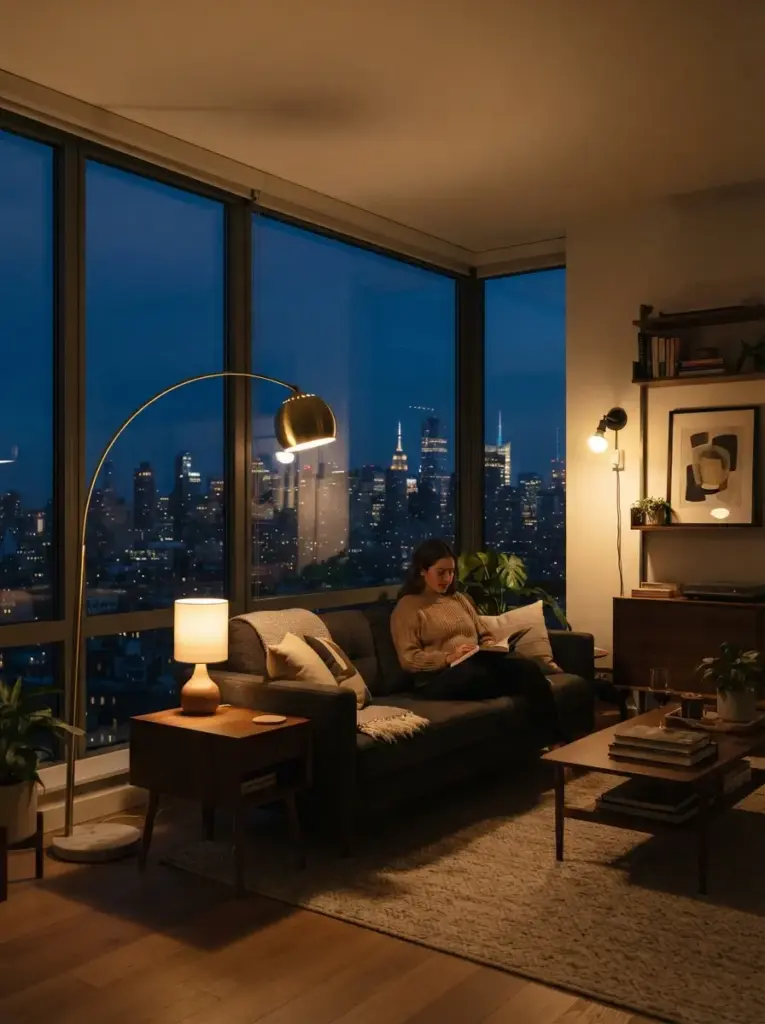
Daylight may be the main feature, but the apartment still needs a comfortable atmosphere after sunset. Use at least three light sources in the living area: one floor lamp, one table lamp, and one focused light for reading or art. Bulbs around 2700K create a warm residential glow, while 3000K suits kitchens and work zones that need slightly clearer light. Dimmers help adjust brightness as the outside scene changes from dusk to full darkness. City view apartment
Layered lighting supports the skyline because it prevents one bright ceiling fixture from reflecting across the glass. People who entertain at night or work late will notice the biggest improvement. Place lamps slightly away from windows and aim shades downward to control reflections. A slim arc lamp can reach over a sofa without taking much floor space, while plug-in sconces free small side tables. Skip exposed cool-white bulbs and very bright overhead lights, since they flatten textures and make window reflections more distracting than the view itself.
Face one daily-use zone toward the skyline
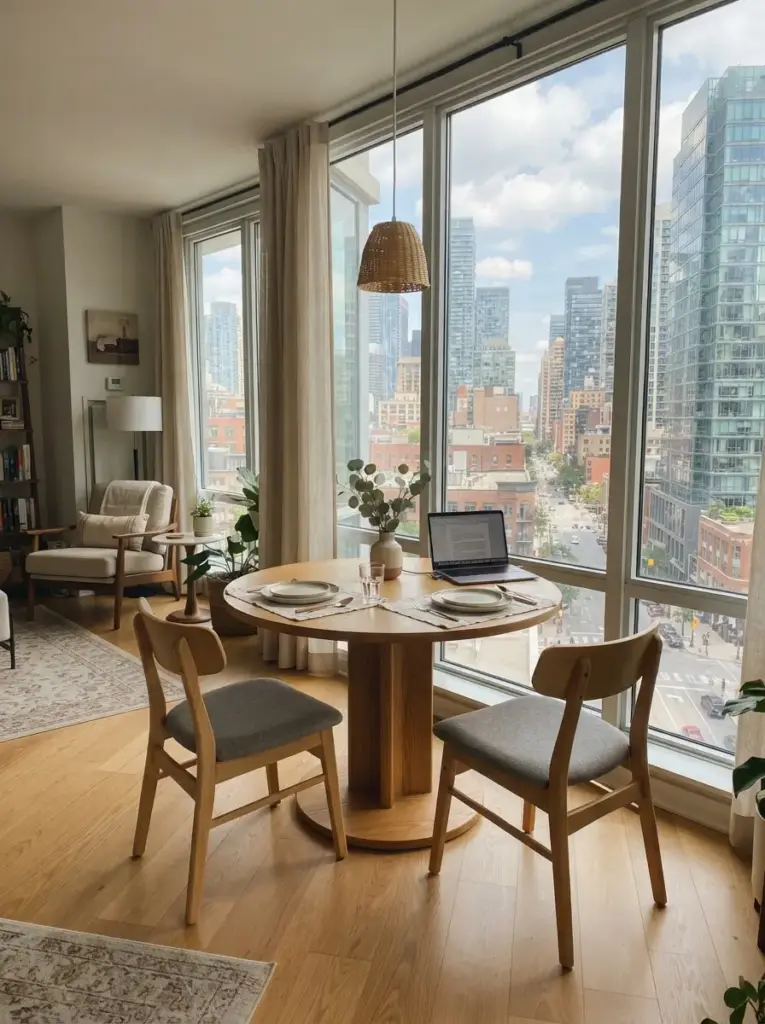
Give the view a practical role by directing one activity area toward it. A small dining table, reading chair, writing desk, or breakfast counter can face the windows without blocking them. Round pedestal tables work well because they reduce sharp corners and allow flexible seating. For a desk, choose a narrow top around 18 to 24 inches deep and keep the surface simple. Position screens slightly to the side to reduce glare while still allowing visual breaks.
Purposeful placement works because the best part of the apartment becomes part of normal daily life rather than something seen only when guests visit. Remote workers, readers, and people living alone may value this idea most. Set a 36-inch round table near the window with two light chairs and a small pendant above it. Keep at least 30 inches of walking space around the setup. Avoid pushing every seat directly against the glass, which can create heat discomfort and make cleaning the windows difficult.
Select slim storage for interior walls
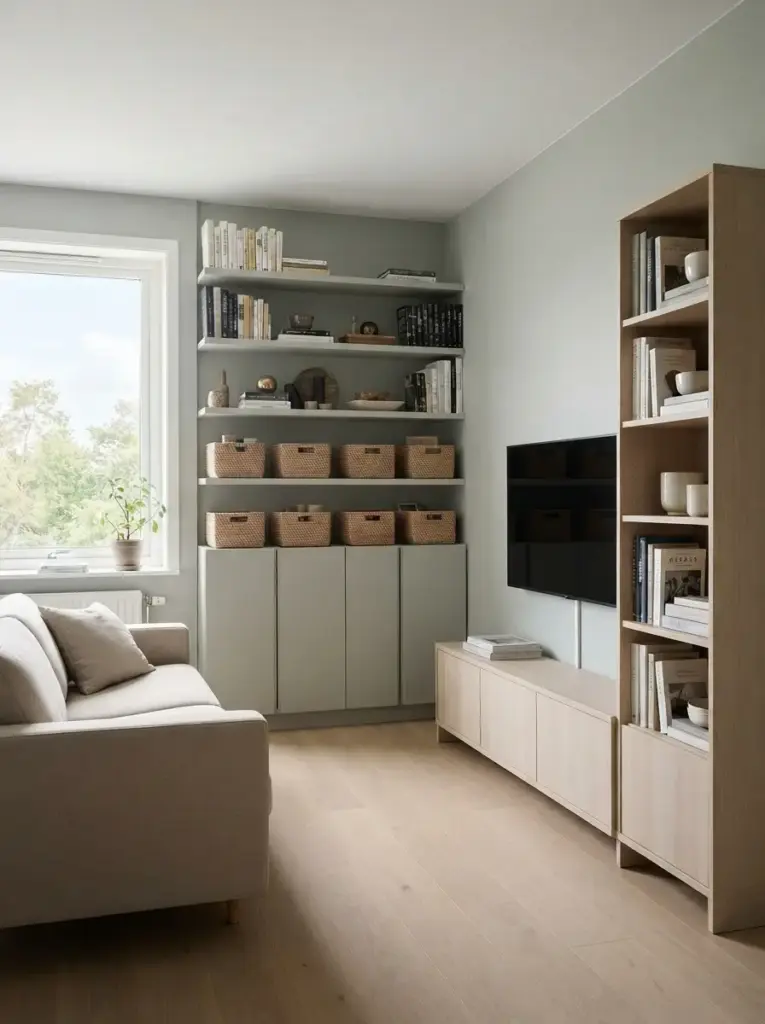
Storage should concentrate along walls that do not carry the main view. Choose bookcases 10 to 14 inches deep, closed cabinets with flat fronts, wall-mounted shelves, or media units with a shallow profile. Tall storage can work well on an inner wall because it draws attention away from clutter and leaves the window side lighter. Matching boxes or baskets help open shelves look controlled. Use vertical space instead of spreading several small cabinets across the floor.
Concentrated storage improves elegance by reducing the number of separate shapes in the room. Small households, collectors, and renters without built-in closets will benefit from this strategy. Paint freestanding shelving close to the wall color, or choose pale oak for a softer contrast. Secure tall pieces according to the manufacturer’s instructions, especially in homes with children or pets. Common errors include placing open shelves beside bright windows, where every object becomes visually prominent, or buying deep cabinets that narrow important walking routes.
Choose one large artwork for an inner wall
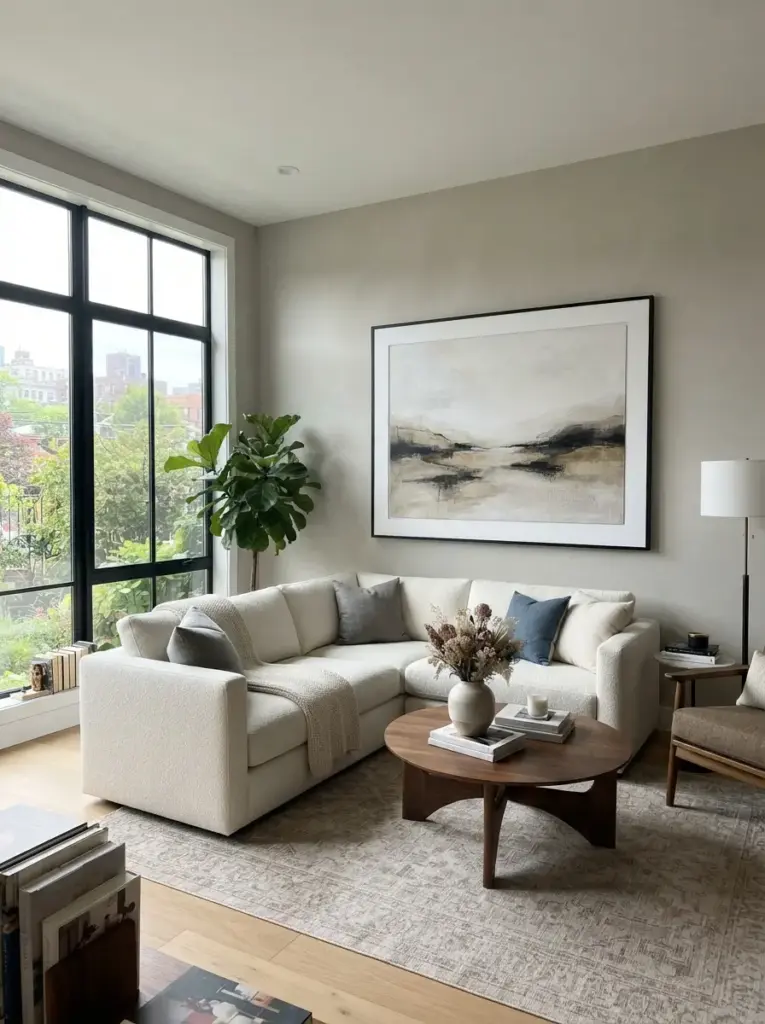
Large art can balance a broad window without competing with it. Hang one substantial piece above the sofa, console, or bed on the wall opposite or beside the main glass. Abstract landscapes, black-and-white photography, simple line work, and textured neutral paintings work especially well. Choose dimensions based on the furniture below; artwork should usually measure about two-thirds the width of a sofa or console. Keep the frame thin and the matting generous. City view apartment
Scale creates confidence because one strong piece looks calmer than many unrelated small frames. People who want an elegant home but dislike complicated gallery walls will find this option useful. Over a 78-inch sofa, consider art around 48 to 60 inches wide. Rental-friendly picture strips or properly rated hooks can reduce wall damage, although heavier frames may still require anchors. Avoid glossy surfaces directly opposite strong sun, since reflections can hide the artwork and create an uncomfortable bright spot during the day.
Keep window sills and sight lines uncluttered
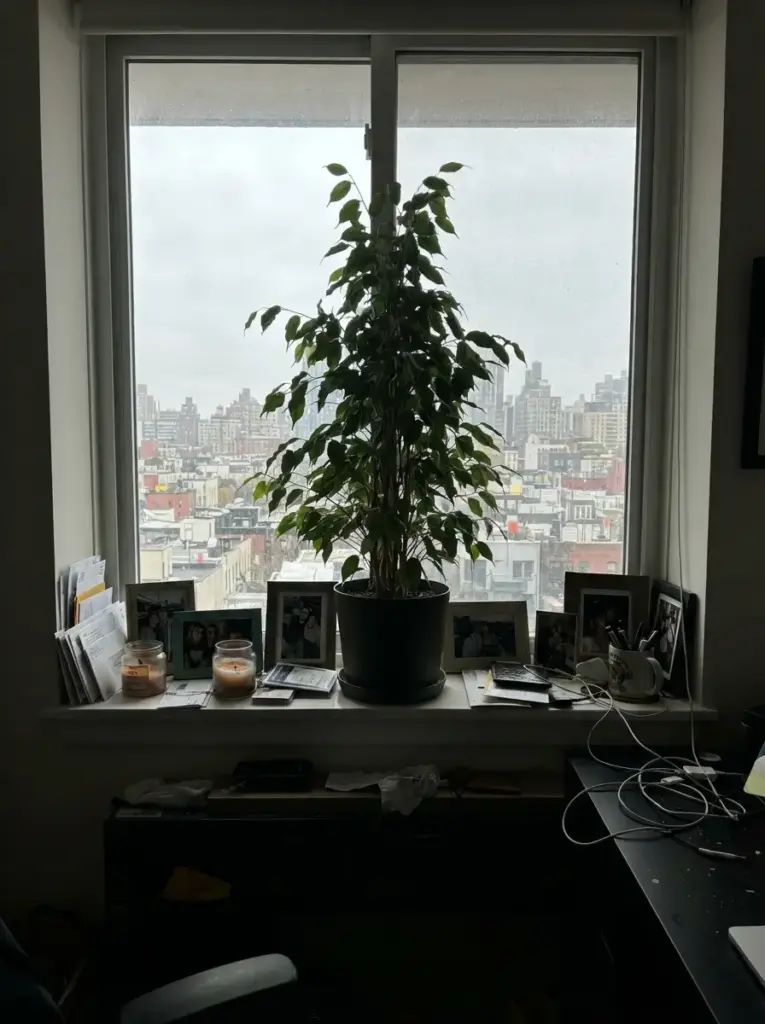
Window ledges often become storage for plants, candles, mail, and decorative objects. Limit each sill to one or two low items, or leave it completely clear when the architecture already looks strong. Keep furniture edges below the window line whenever possible, and avoid placing tall floor plants in the center of the glass. Small groupings look better when they sit toward one side rather than forming a row across the entire ledge.
Clear edges help the eye move outward without stopping at clutter. Busy professionals and beginners who tend to collect small decor will see an immediate difference. Use a shallow tray for one candle and a small ceramic piece, then move everyday items into a nearby drawer. Choose objects in related materials, such as stone, glass, or dark metal, to maintain order. Avoid filling every visible surface, because space is part of the design and allows both the skyline and chosen furniture to feel more important.
Add plants that suit strong window conditions
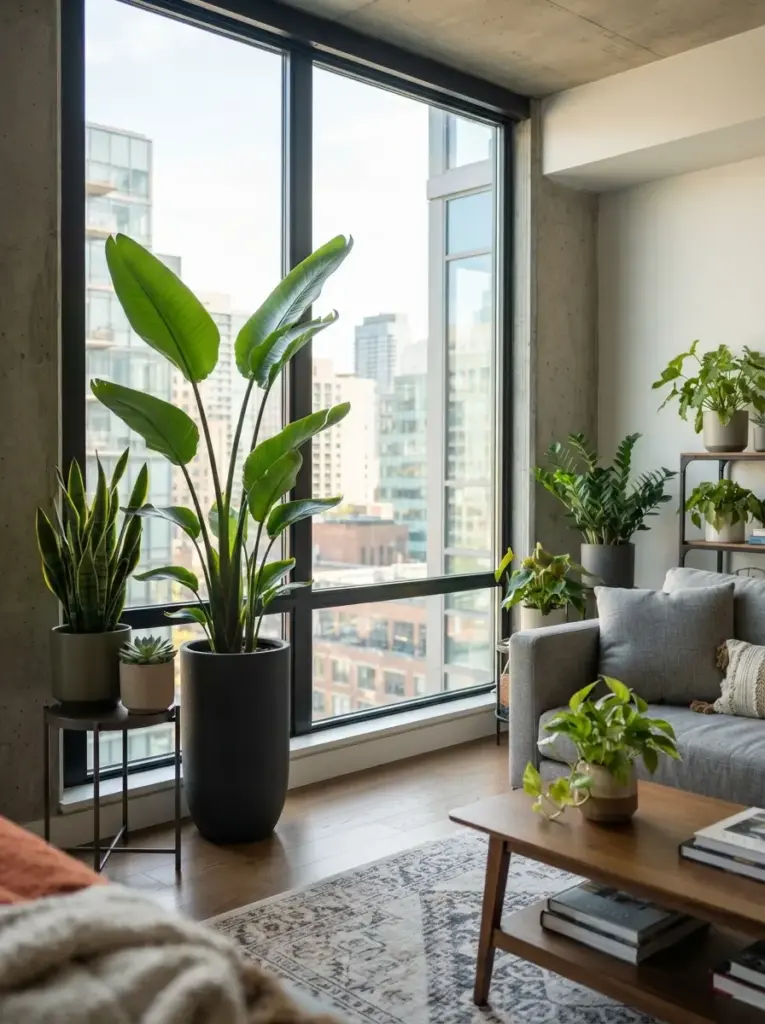
Plants soften concrete, steel, and glass, but they must match the apartment’s light and temperature. South- and west-facing windows may suit succulents, snake plants, rubber plants, or bird of paradise when heat is controlled. North-facing rooms often support pothos, ZZ plants, cast-iron plants, and some philodendrons. Place taller greenery near the side of the window rather than in the middle. Rotate pots regularly so growth remains balanced.
Living greenery works because organic shapes reduce the hard geometry common in downtown buildings. Plant lovers and renters who cannot change wall finishes will gain the most from this low-commitment update. Use two or three plants of different heights instead of many small pots. Matte ceramic planters in sand, charcoal, or muted olive look polished and hide basic nursery containers. Check pet safety before choosing a species. Avoid placing leaves against cold winter glass or directly above heating vents, where stress and dry air can damage them.
Define open zones with properly sized rugs
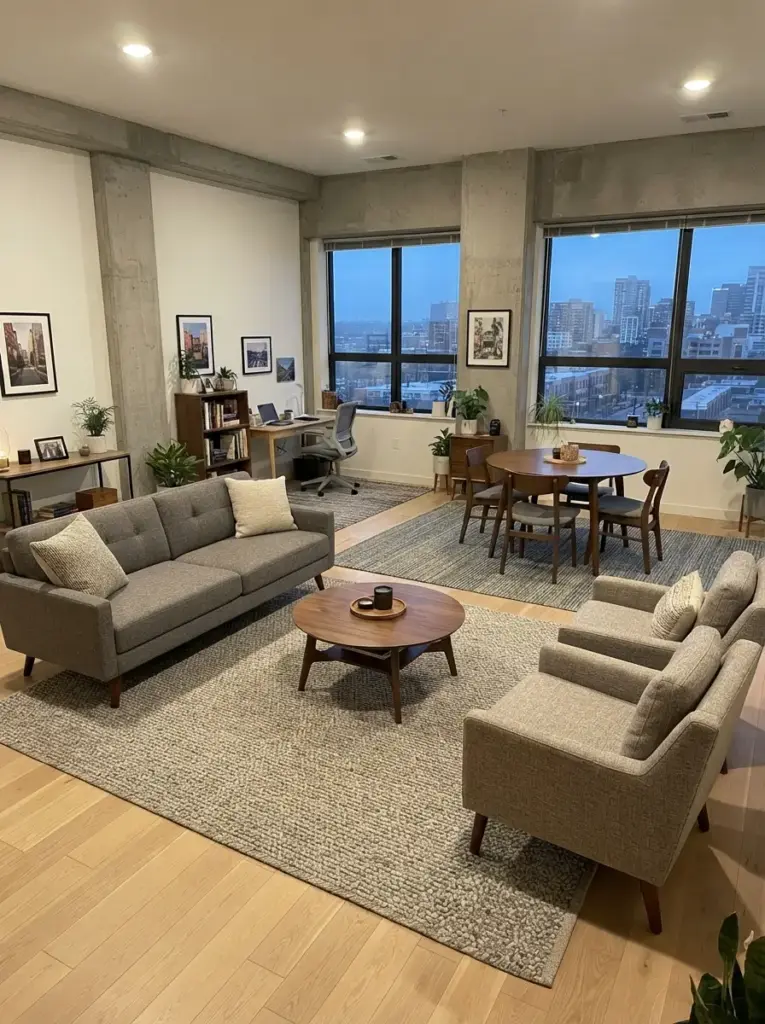
Rugs can organize a studio or open-plan apartment without adding walls. In a living zone, choose a rug large enough for at least the front legs of the sofa and chairs to rest on it. For a small dining area, the rug should extend about 24 inches beyond the table so chairs remain stable when pulled out. Low-pile wool blends, flatweaves, and durable synthetic rugs are practical for high-traffic downtown homes.
Clear floor zones make the layout easier to read while keeping sight lines open. Studio residents and anyone combining living, dining, and work functions in one room will benefit most. A 6-by-9-foot rug often suits a compact sofa arrangement, while an 8-by-10-foot option may fit a larger open room. Choose subtle patterns, heathered textures, or medium tones that hide daily wear. Avoid rugs that float like small islands under only the coffee table, because they can make furniture feel disconnected and the room appear smaller.
Add rental-friendly architectural detail
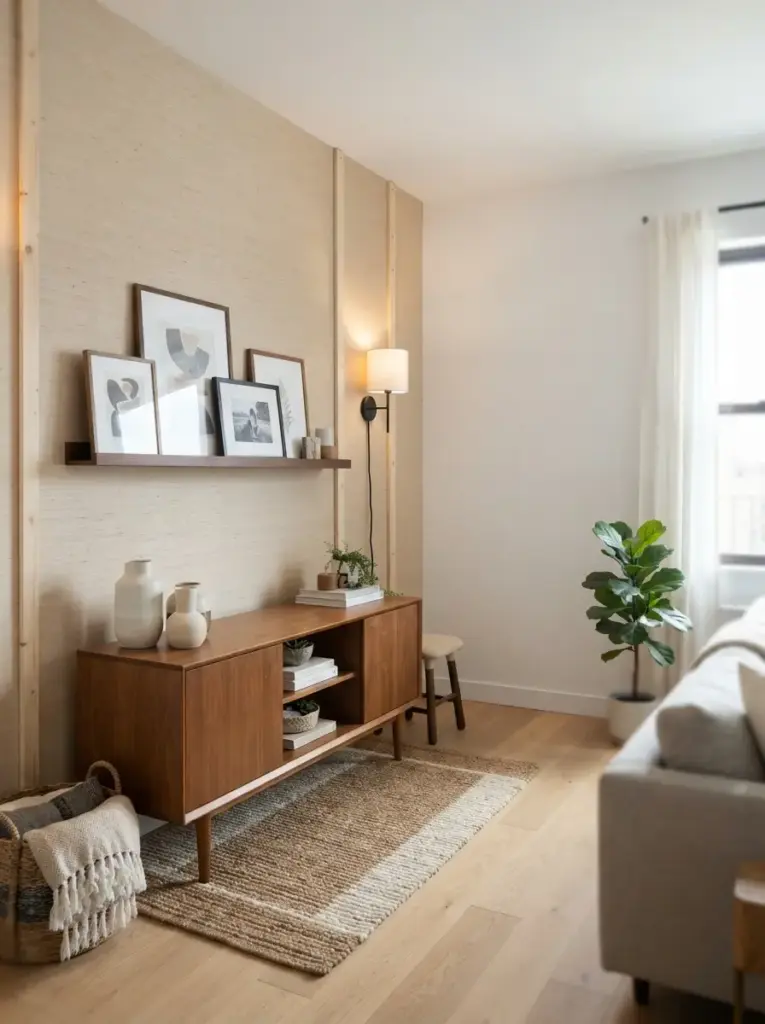
Temporary upgrades can give plain apartments more structure without permanent renovation. Peel-and-stick molding, removable wallpaper, picture ledges, plug-in sconces, and tension-mounted dividers can create interest on interior walls. Use these features sparingly and keep the window wall simple. One wallpapered niche, a framed entry zone, or a painted removable panel behind the bed can provide enough contrast. Always test adhesives on a hidden area and review the lease before installation.
Architectural detail adds depth because many new apartments rely on flat white walls and repeated finishes. Renters who want a more personal home without risking a large deposit will find this approach practical. Try warm beige removable wallpaper with a subtle grasscloth texture behind a console, or install two lightweight wall battens using removable mounting methods. Keep colors close to the main palette. Avoid covering every wall with a bold pattern, since too much detail can compete with the view and make a small floor plan feel crowded.
Build a compact window or balcony lounge
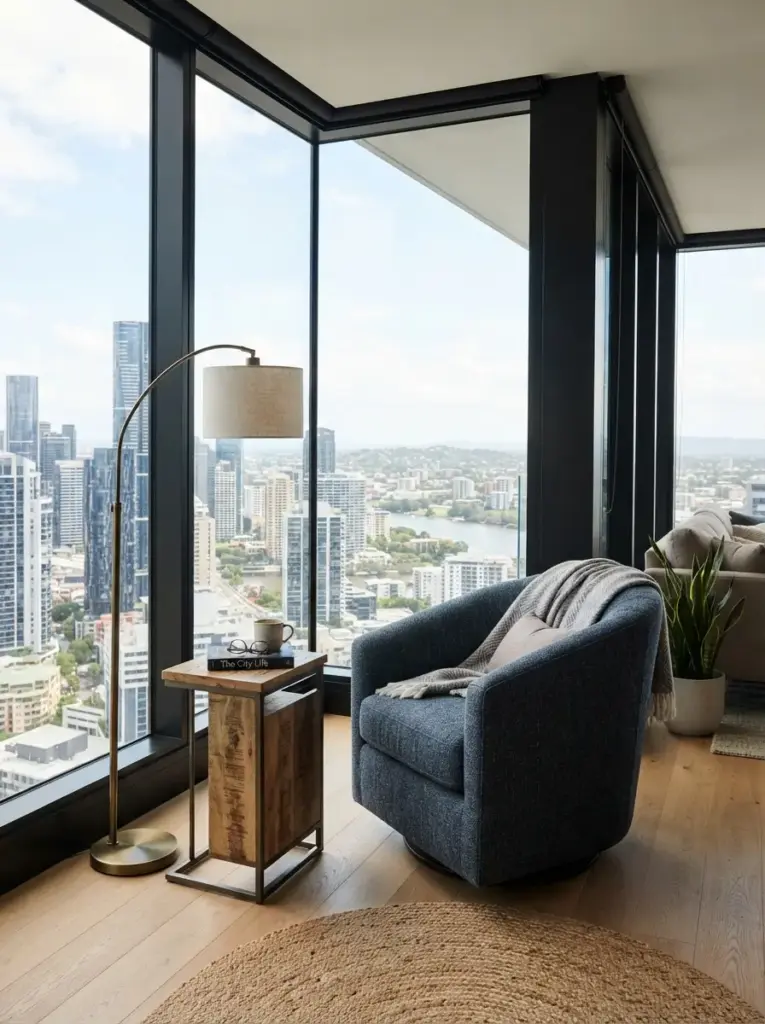
Turn a safe, permitted area near the glass into a small pause zone. One comfortable chair, a narrow side table, and a floor lamp may be enough. On a balcony, choose weather-resistant furniture sized for the actual width, leaving a clear path to the door and following building rules. Folding bistro chairs, slim benches, and nesting tables suit tight outdoor areas. Add an outdoor rug only when drainage and wind conditions make it safe.
Dedicated seating works because it gives the skyline a clear destination within the home. Couples, solo residents, and people who enjoy morning coffee or evening reading will appreciate the setup. Indoors, place a swivel chair near the corner so it can face both the view and the conversation area. Outdoors, secure lightweight items and avoid tall loose decor in windy high-rise conditions. Never block emergency exits, railings, or ventilation. Skip oversized egg chairs and deep loungers when they leave little room to move comfortably.
Common mistakes to avoid
Blocking the strongest window with a television wall is one of the most expensive layout errors. Screens often perform poorly against direct daylight, and large media units can hide valuable glass. Place the television on an interior wall when possible, then use a swivel mount to improve viewing angles. Where no alternative exists, choose a low console and keep the screen below major sight lines. Measuring before purchasing prevents a large cabinet from controlling the entire room.
Buying furniture only for appearance creates another common problem. Deep sofas, broad armchairs, and thick coffee tables may look elegant in a showroom but feel oversized at home. Mark dimensions on the floor with painter’s tape before ordering. Leave about 30 to 36 inches for primary walkways and at least 18 inches between the sofa and coffee table. Pieces with narrow arms and exposed legs often provide the same seating capacity with less visual weight.
Using too many reflective materials can make the room uncomfortable. Glossy cabinets, mirrored tables, polished stone, and glass decor may all bounce sunlight and nighttime lamps toward the windows. Mix reflective pieces with matte wood, woven textiles, plaster, ceramic, or brushed metal. One glass coffee table can work, but several shiny surfaces may produce glare and fingerprints. Balance creates more sophistication than repeating the same polished finish across every zone.
Ignoring heat and fading can damage furniture over time. Strong western sun may fade dark fabrics, dry wood, and raise afternoon temperatures. Use UV-filtering shades, rotate cushions, and move delicate art away from direct exposure. Performance fabrics in medium tones usually handle daily sunlight better than saturated velvet or untreated natural dyes. Window treatments should support comfort without staying closed all day, so choose adjustable layers instead of one heavy curtain.
Decorating every wall and surface leaves no visual rest. Downtown views already contain signs, windows, rooftops, vehicles, and movement. Crowding the interior with many frames, patterned cushions, plants, sculptures, and open shelves can create competition. Choose fewer objects with clear scale, repeat materials, and keep one or two walls quiet. Edit seasonal items before adding new ones, and store extras rather than displaying everything at once.
Budget-friendly ways to upgrade the space
Rearranging furniture should come before shopping. Test the sofa on another wall, move a chair toward the light, clear the window ledge, and shift a table so the view becomes useful. Small layout changes can solve the main problem without any cost. Take photos from the entrance and seating areas, since pictures often reveal blocked lines and clutter more clearly than standing in the room.
Lighting offers one of the best low-cost improvements. Replace mismatched cool and warm bulbs with consistent 2700K bulbs in living areas and 3000K bulbs in the kitchen or work zone. Add a plug-in dimmer where compatible, or use smart bulbs to adjust brightness. Secondhand floor lamps can look refined after a new shade and careful cleaning. Focus spending on light quality rather than decorative fixtures that do not improve function.
Textiles can change the room without permanent work. Buy affordable curtain panels in extra width, then hem them with iron-on tape for a custom length. Use pillow covers instead of replacing inserts, and choose a washable rug when maintenance matters. Repeating two or three colors across curtains, cushions, and throws creates more order than buying many unrelated accents. Look for texture through bouclé, cotton, linen-look fabric, or flatweave patterns rather than expensive ornament.
Secondhand furniture works well when dimensions are checked carefully. Search for narrow consoles, solid wood side tables, simple dining chairs, and mirrors with clean frames. Older pieces may offer better materials than low-cost new furniture, but inspect joints, odors, stains, and pests before bringing anything home. Budget decorating succeeds when each purchase solves a specific need. Avoid buying small decor simply because it is inexpensive, since many cheap items can cost more than one useful, well-scaled piece.
City view apartment tips for beginners
Measure the room, windows, door swings, outlets, and main walking routes before choosing furniture. Write the numbers in your phone and compare them with the product dimensions. Floor plans can be misleading, so painter’s tape gives a more accurate sense of scale. City view apartment planning becomes easier when every large item has a clear location and enough space around it.
Choose the view you want to emphasize rather than trying to highlight every direction. One window may frame the best sunset, another may face a landmark, and a third may provide softer morning light. Arrange the main seating around the strongest scene, then keep secondary windows practical for ventilation, work, or plants. Focus creates a room that feels designed instead of accidentally furnished.
Review the home at three times of day: morning, late afternoon, and night. Notice glare, shadows, privacy, reflections, and heat. Adjust curtains, lamp positions, and seating based on those conditions. Good downtown interiors change easily through the day, so flexible pieces such as swivel chairs, dimmable lamps, nesting tables, and adjustable shades often provide more value than fixed decorative statements.
Frequently asked questions
What colors work best in a City view apartment?
Warm white, ivory, greige, mushroom, taupe, and soft beige usually create a calm base. Broader accents such as navy, charcoal, muted green, rust, or burgundy add definition without competing with outdoor colors. Match the undertone to the natural light. South-facing rooms can handle cooler neutrals, while north-facing rooms often feel better with warm undertones. Test large samples during the morning and evening before painting or buying major upholstery.
Should the sofa face the windows?
Facing the sofa toward the windows works when the room is deep enough, and the view is the main feature. Parallel placement may be better when the room is narrow or the television sits on an interior wall. Angled chairs can connect in both directions. Keep a clear walking space behind or beside the sofa, and avoid pushing the back directly against the glass. Comfort, glare, and conversation should guide the final position.
Which lighting temperature suits a downtown apartment?
Bulbs around 2700K suit living rooms, bedrooms, and dining areas because they create a warm, comfortable glow. Kitchens, desks, and grooming zones often benefit from 3000K for slightly clearer visibility. Avoid mixing several temperatures within one open room, because the result can look uneven. Dimmers provide the most flexibility, especially when bright city lights already contribute to the nighttime atmosphere.
How can renters improve large apartment windows?
Curtain rods, ceiling tracks, removable shades, plug-in sconces, and freestanding furniture can improve the area without major construction. Choose wide curtain panels, mount them high where permitted, and add sheers for daytime privacy. Use a slim bench or chair near the glass rather than built-in seating. Check the lease before drilling or applying film, and keep all original hardware for move-out.
How much decor should sit near the window?
Keep the main glass mostly clear. One medium plant at the side, a low chair, or a small table usually provides enough interest. Window sills look more polished with one or two objects instead of a long row. Leave space for cleaning, curtain movement, ventilation, and safe access. Fewer items also reduce glare, dust, and the risk of objects overheating in direct sunlight.
Can dark furniture work in a small downtown home?
Dark furniture can look elegant when used selectively. One charcoal sofa, walnut table, or black cabinet may add depth against light walls and floors. Balance the piece with open legs, lighter textiles, and enough surrounding space. Several bulky dark items can make a compact room feel heavy, especially when natural light is limited. Measure carefully and repeat the dark tone in small details so the choice feels connected.
Conclusion
Elegant downtown decorating begins with respect for the windows, daily routines, and limited floor space. A City view apartment feels most successful when furniture supports the skyline, lighting remains warm after sunset, storage stays controlled, and color choices create calm. Expensive finishes are less important than good scale, clear movement, and thoughtful placement.
Practical decisions build a home that works during bright mornings, busy afternoons, and quiet evenings. Keep the strongest view open, choose fewer well-sized pieces, test changes before buying, and use rental-friendly upgrades where permanent work is not possible. Downtown style becomes more personal and comfortable when the interior frames city life without letting it overwhelm the room.