
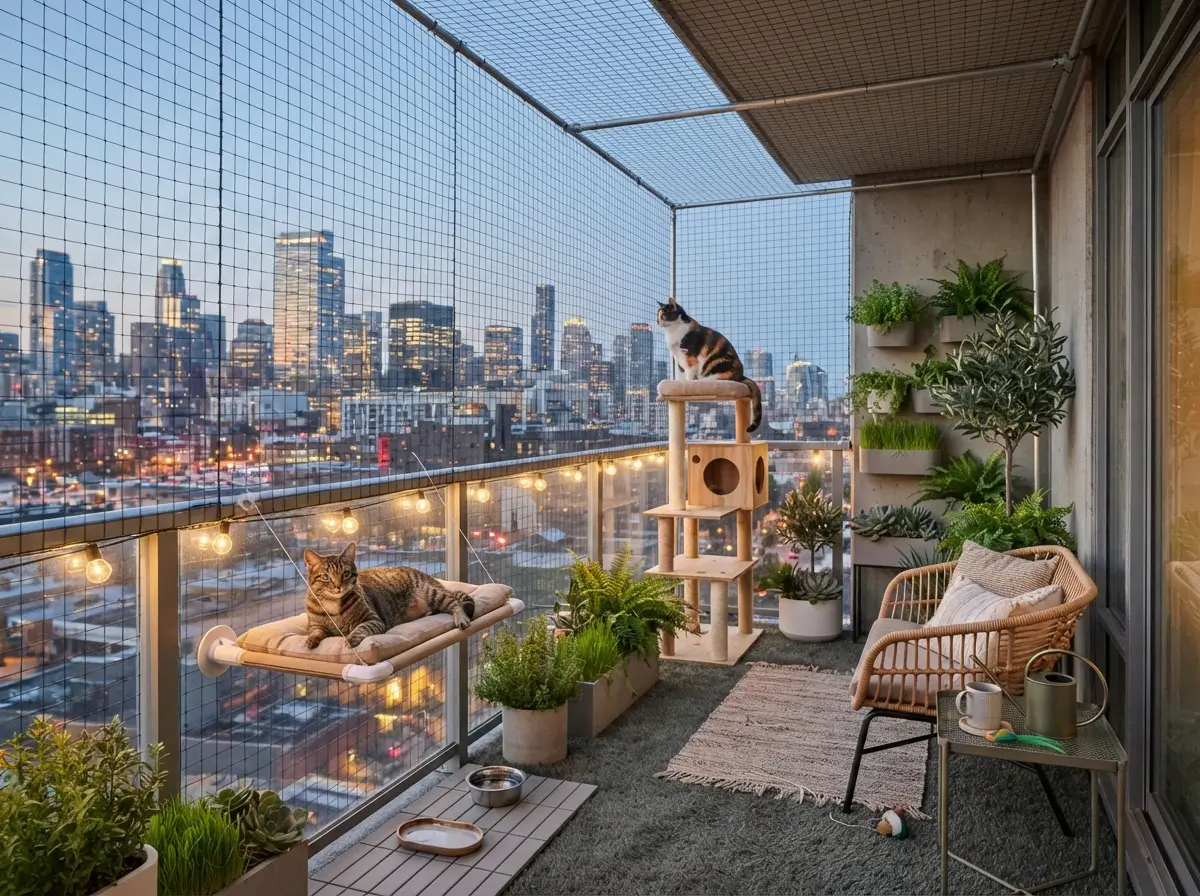

City cats often watch birds, traffic, trees, and changing light from behind a window, so a balcony can feel like a valuable extension of indoor life. Safety must shape every design decision before cushions, plants, or decorative lights enter the space. Open railings, climbable chairs, loose mesh, hot flooring, and unstable planters can create problems in seconds. Good small-space planning prevents those risks while keeping the balcony comfortable for people. Cat Proof Apartment Balcony
A well-designed Cat Proof Apartment Balcony uses secure boundaries, low furniture, washable materials, shaded resting areas, and a clear path back indoors.
Renters can achieve the same result with tension poles, removable clamps, freestanding frames, and lightweight pieces that leave walls and railings undamaged. Beginners should work in stages, starting with measurements and enclosure strength, then adding flooring, shade, seating, and personality. Thoughtful color choices also help a narrow balcony feel larger. Warm white, light gray, natural wood, muted green, and charcoal create a calm base that works with most apartment exteriors.
How do you make an apartment balcony safe for a cat?
Start by closing every opening from the floor to the ceiling, including narrow gaps near side walls, drains, pipes, and railing corners. Secure mesh or clear panels to a stable frame, then test each edge with gentle hand pressure.
A practical Cat Proof Apartment Balcony also needs shade, non-slip flooring, fresh water, low stable furniture, and supervision during use. Keep chairs and storage boxes away from the outer edge because cats may use them as launch points. Choose outdoor-rated fabrics, pet-safe plants, and lighting with covered cords.
Rental rules should guide the attachment method, but removable does not mean weak. Tension systems and clamp-mounted frames must resist pushing, wind, and repeated use. Early balcony visits should remain short while the cat adjusts to outdoor sounds, moving shadows, and nearby birds. Secure structure comes first, comfort follows, and decoration should support both rather than compete with them.
Fit floor-to-ceiling pet mesh
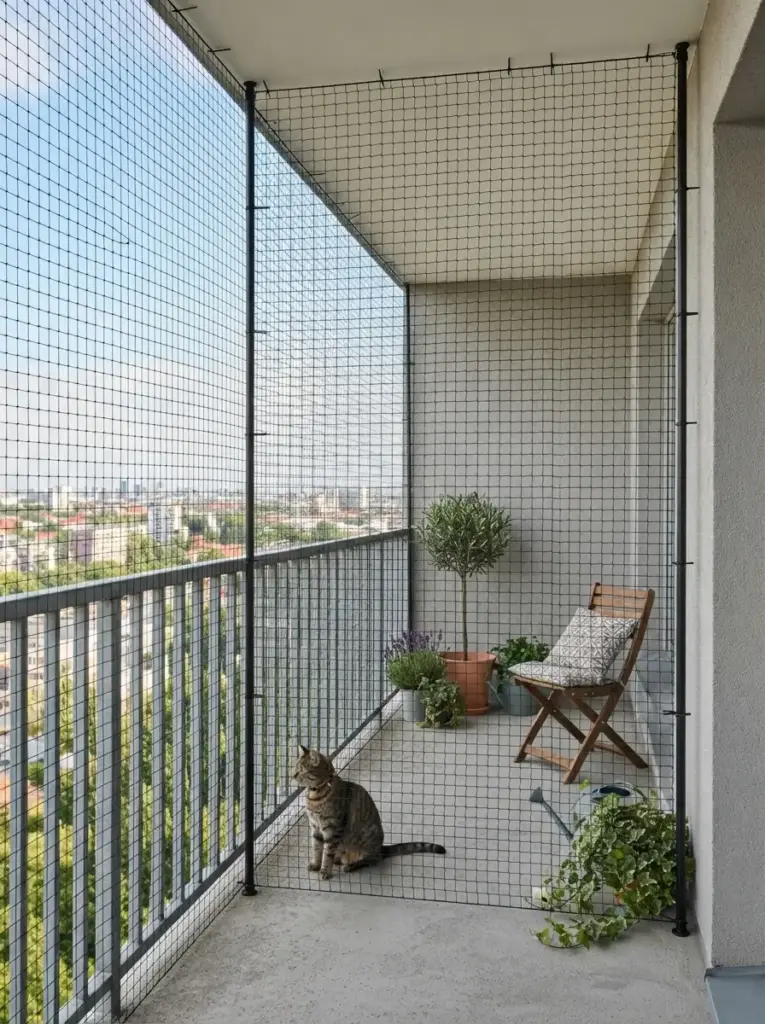
Floor-to-ceiling mesh creates the strongest visual and physical boundary for balconies with open railings or wide side gaps. UV-resistant pet netting works better than thin garden mesh because it handles sun, wind, and repeated contact more reliably. Openings around one inch are usually small enough to discourage heads and paws from pushing through, although the mesh still needs firm tension. Black netting often disappears against the view more effectively than white, while soft gray blends with pale concrete and metal. Renters can attach the material to tension poles, freestanding metal frames, or a removable timber structure instead of drilling into the building. Cat Proof Apartment Balcony
Close intervals between ties stop the edges from bowing outward. Corner overlaps should face inward so the cat cannot find a loose flap. This approach suits energetic cats, upper-floor homes, and balconies where birds regularly land nearby. Continuous coverage makes the idea effective because safety does not depend on one railing section. The Cat Proof Apartment Balcony feels more open when the mesh stays tight, evenly aligned, and matched to the balcony’s existing colors.
Combine clear acrylic panels with upper mesh
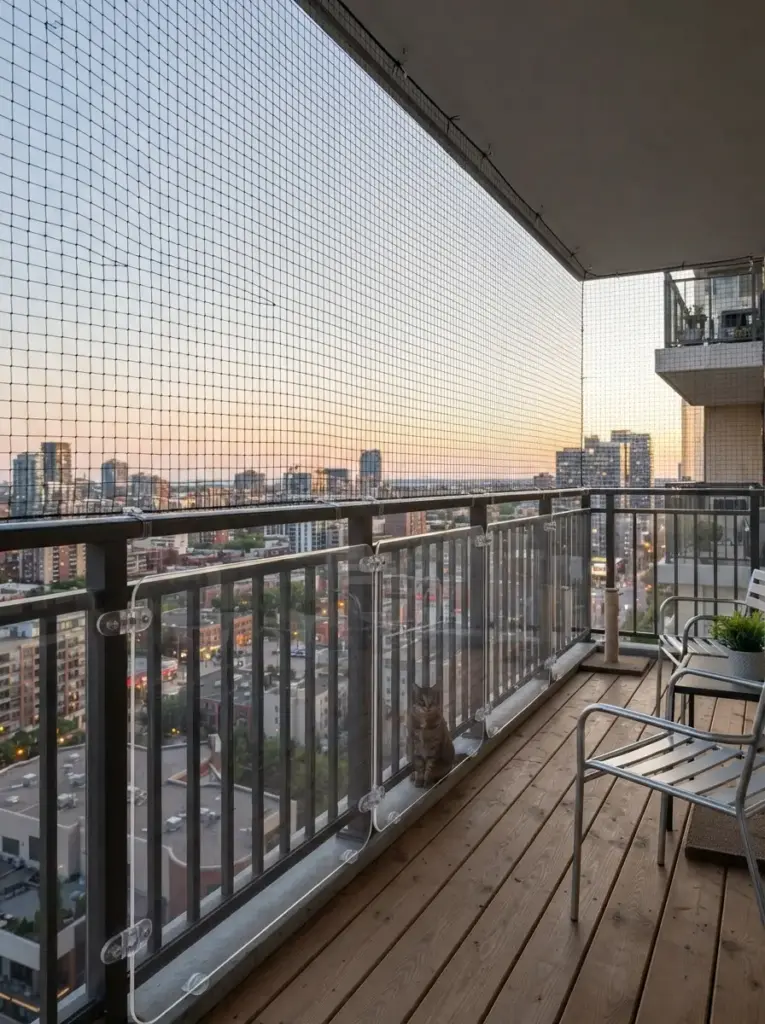
Clear acrylic panels block railing gaps without making the balcony feel visually closed. Panels work especially well across the lower half, where cats can press their faces between bars or reach through with a paw. Upper mesh completes the enclosure while preserving airflow. Acrylic around three to five millimeters thick feels more stable than flexible craft plastic, and rounded corners reduce sharp edges. Custom cutting provides the neatest result, but careful templates made from cardboard can guide a local hardware shop. Removable clamps and outdoor-rated cable ties keep panels inside the railing line, which often helps renters follow building appearance rules.
Modern apartments benefit from the clean finish because transparent surfaces suit simple metal furniture and uncluttered layouts. Frosted film can cover the lowest twelve inches when privacy is needed, while the remaining area stays clear for supervision. The combination works because solid protection handles the most tempting rail gaps and breathable mesh secures the upper zone without trapping excessive heat.
Build a removable frame for rental homes
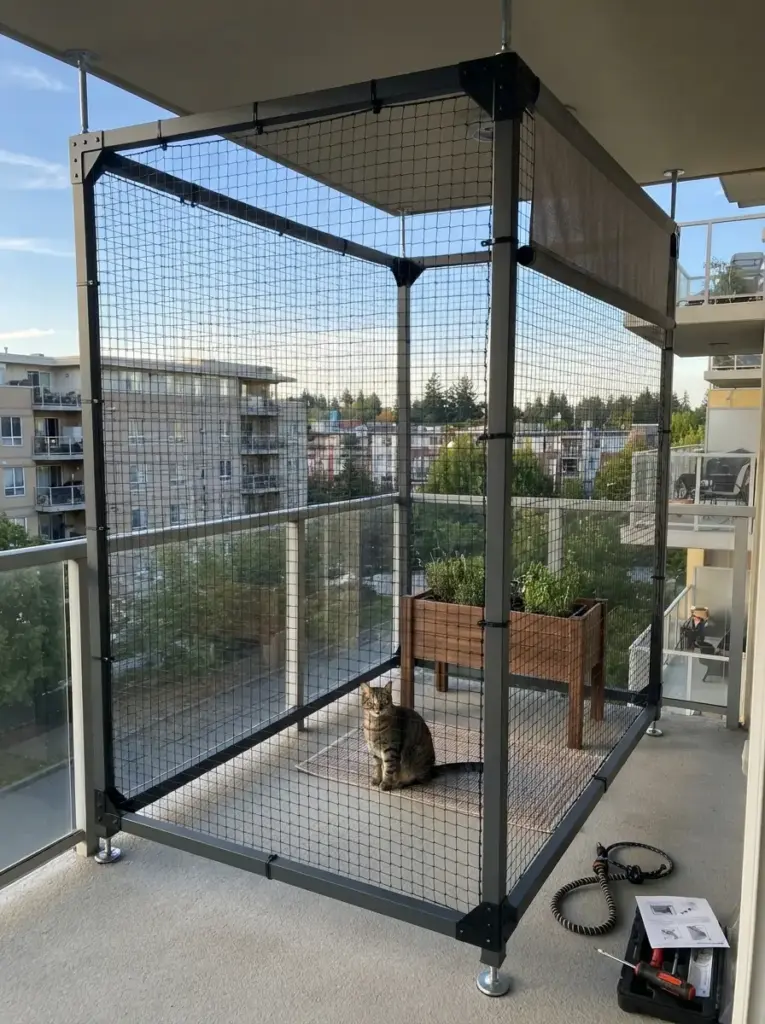
Freestanding frames give renters a reliable structure for mesh, shade cloth, and lightweight accessories. Exterior-grade timber creates a warm look, while powder-coated aluminum offers a slimmer profile and lower maintenance. Adjustable feet can press the frame gently between the balcony floor and ceiling, provided the surface is solid, and the final structure cannot slide. Corner braces stop a rectangular frame from twisting under pressure. Smooth every wooden edge, seal the material with a low-odor outdoor finish, and allow it to cure fully before the cat enters. Natural oak, medium walnut, and charcoal paint all hide everyday wear better than bright white. Cat Proof Apartment Balcony
Handy beginners may prefer modular frame kits that connect with screws rather than custom joinery. The idea serves apartments where drilling is prohibited, but safety still requires a strong perimeter. Flexibility adds long-term value because the frame can move to another rental, accept replacement mesh, or support a seasonal shade panel without altering the building.
Plan the furniture around a clear path
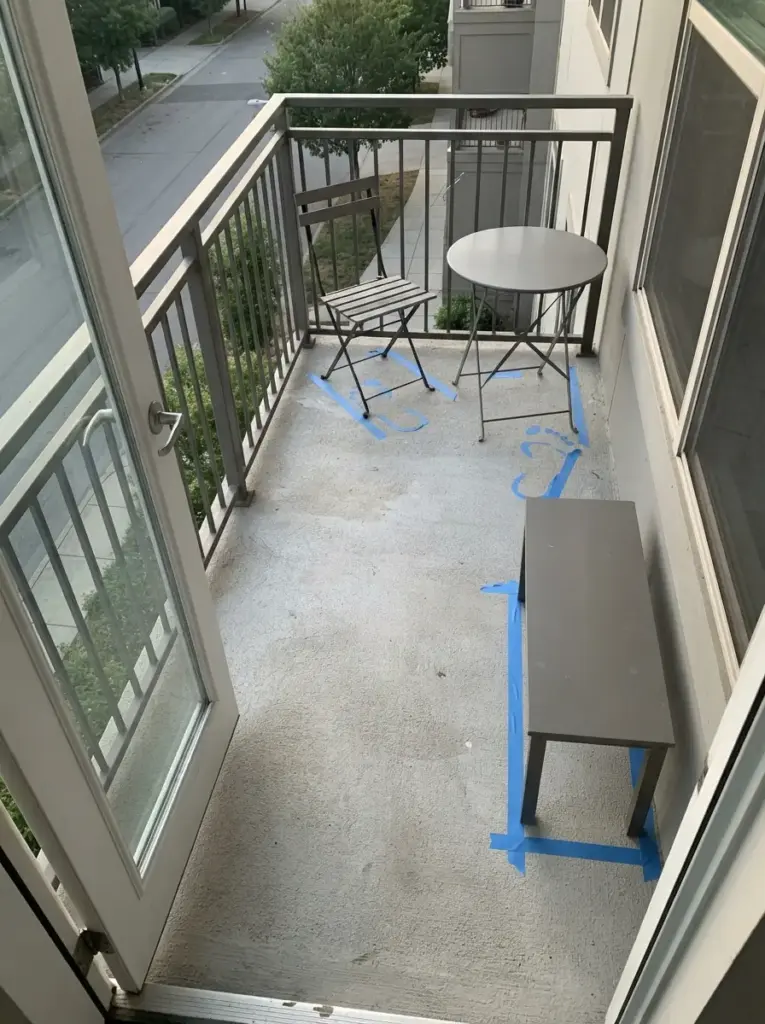
Furniture placement often determines whether a small balcony feels calm or crowded. Begin with the door swing, then mark a direct walking route from the apartment to the far corner. Painter’s tape can outline proposed chairs, benches, and tables before any purchase. Keep at least twenty-four inches of clear passage where possible, especially when carrying the cat indoors. Low lounge chairs and compact benches create less climbing opportunity than tall bar stools. Cat Proof Apartment Balcony
Weighted pedestal tables work better than light folding tables that wobble when bumped. Position the highest human seat against the apartment wall instead of near the outer edge. Narrow balconies usually function best with seating on one side and a clear opposite wall. Home decor lovers often add too many small pieces because each item appears compact on its own. Combined footprints can quickly remove turning space. Careful layout succeeds by protecting circulation, reducing launch points, and making supervision easier from one comfortable seat.
Choose a low storage bench with a washable top
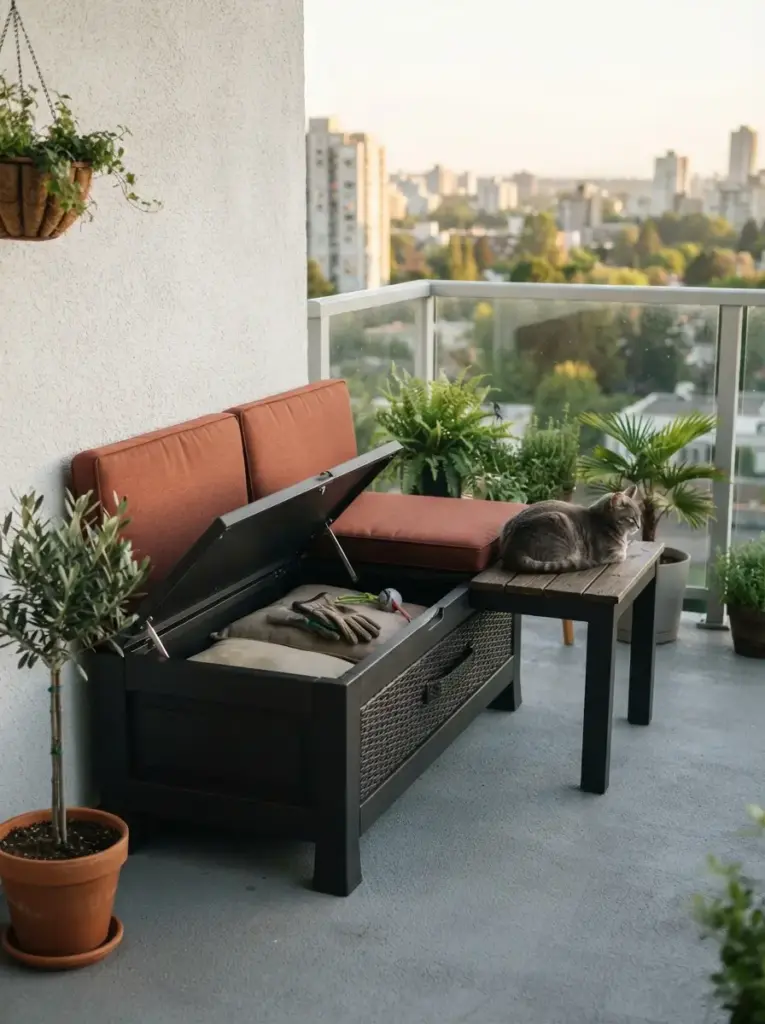
Low storage benches solve several problems in one footprint. People gain a seat, cats gain a stable resting surface, and owners gain space for outdoor cushions, grooming tools, repair ties, or lightweight toys. Seat height should stay close to a normal sofa, while the bench itself sits against the apartment wall. Soft-close hinges reduce the chance of trapped tails or paws. Woven resin handles rain well, powder-coated metal suits modern balconies, and sealed hardwood adds warmth. Untreated particleboard should remain indoors because moisture causes swelling and weakens joints. Cat Proof Apartment Balcony
Oatmeal cushions pair well with light wood, rust fabric warms charcoal metal, and muted sage works beside concrete floors. Small-space beginners benefit from one multifunctional piece because the balcony remains easier to clean and rearrange. Stability explains the appeal. Wide bases resist rocking, and the low profile keeps the viewing point away from dangerous heights.
Add wall-side cat shelves or a freestanding tower
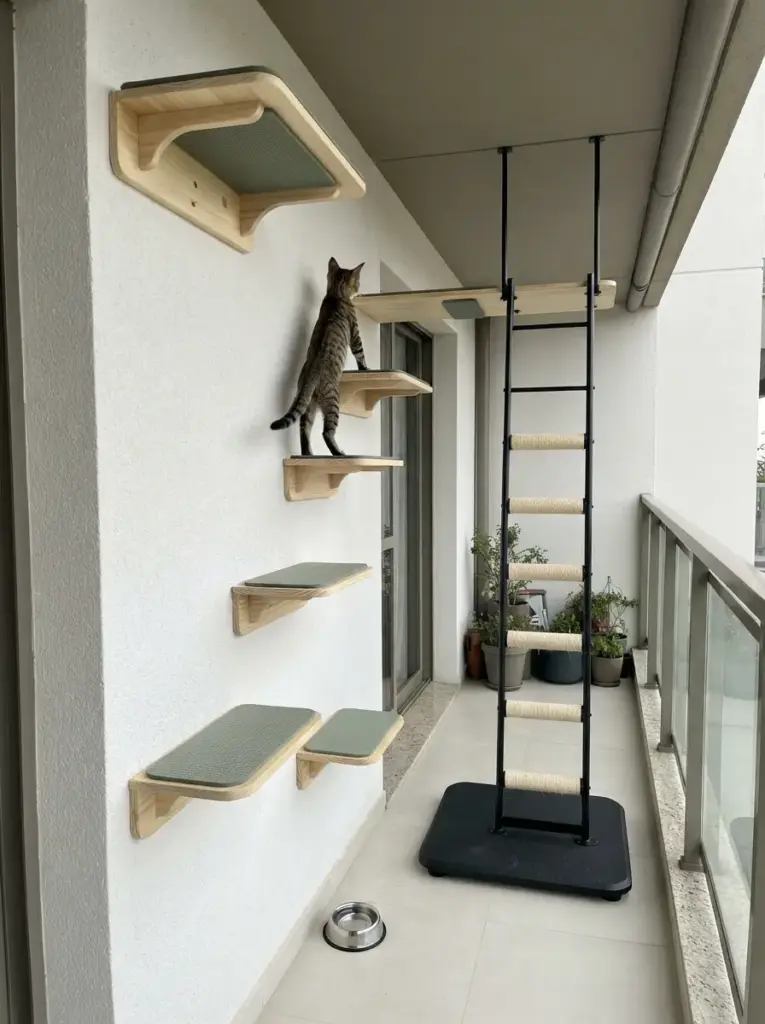
Vertical movement gives active indoor cats exercise without filling the floor with bulky furniture. Shelves should climb along the apartment wall, never along the outer barrier. Short staggered jumps feel safer than large gaps, and each platform needs enough depth for all four paws. Outdoor carpet squares, rubber-backed mats, or sealed cork provide grip. Permanent shelves require suitable wall material and landlord approval, while freestanding ladder towers offer a no-drill alternative. Towers need a wide base and may require a discreet strap attached to the interior frame.
Keep the highest level below the enclosure roof so the cat cannot reach clips or ceiling gaps. Light wood shelves soften white stucco, black metal suits industrial railings, and muted green pads add color without visual clutter. Active young cats benefit most from the setup, though older cats may prefer fewer, wider steps. Controlled vertical territory reduces frustration while directing climbing behavior toward the safest side of the balcony.
Cover hot concrete with washable flooring
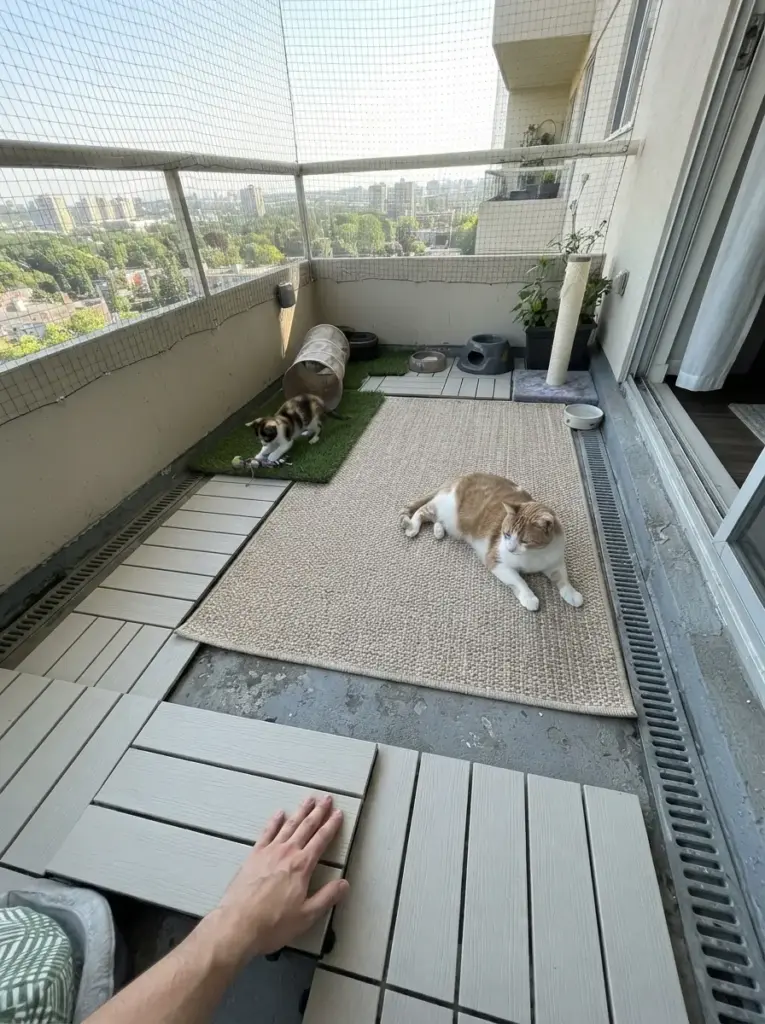
Concrete, dark tile, and synthetic decking can become uncomfortable under direct sunlight. Light-colored interlocking deck tiles, outdoor rugs, cork-look composite squares, or a small patch of washable artificial grass create a gentler surface. Touch the flooring with the back of your hand before each visit because the air temperature does not reveal how hot the ground feels. Pale gray, sand, weathered oak, and warm beige reflect more light than black or dark brown.
Drainage channels must remain open, and removable pieces should lift easily for cleaning underneath. Older cats gain traction from low-pile rugs, while kittens benefit from a floor that feels less slippery during play. Covering only the central walking zone saves money and keeps maintenance manageable. Comfort makes the Cat Proof Apartment Balcony more useful during changing seasons, but the selected surface must dry quickly and resist mildew rather than simply hiding the original concrete.
Design a shaded rest corner
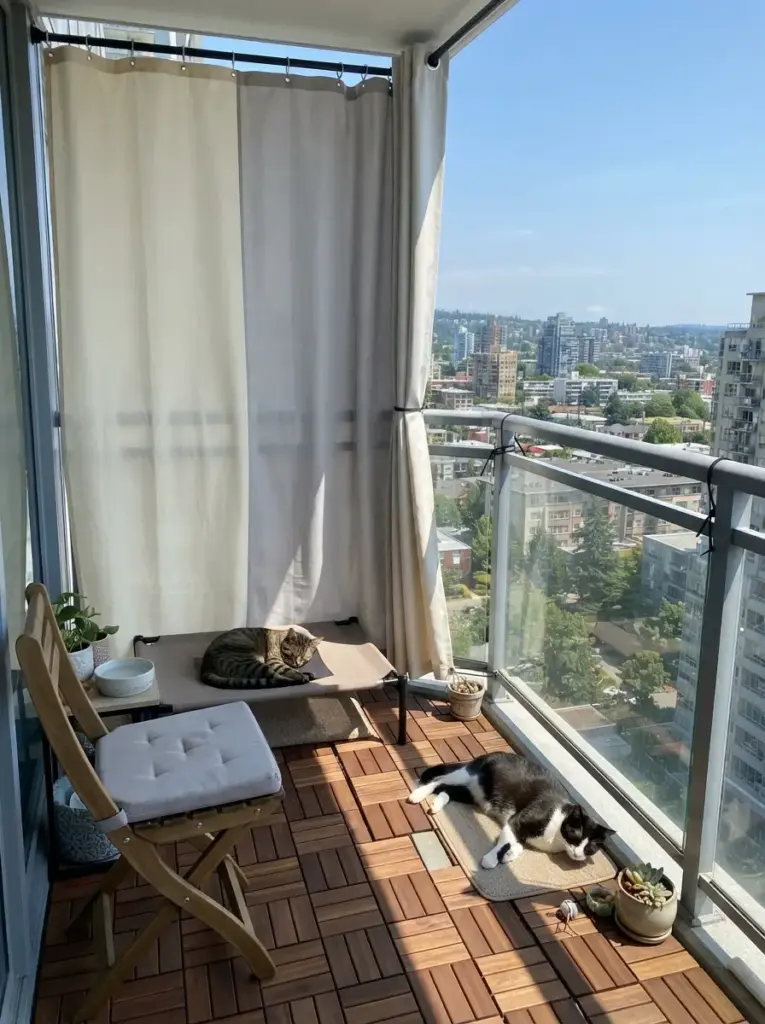
Shade gives cats control over body temperature and makes human seating more comfortable. Clamp-on umbrellas, tension-rod outdoor curtains, breathable shade cloth, and retractable panels all work in rentals when secured correctly. Fabric must attach at the bottom as well as the top so wind cannot whip it against the cat or pull hardware loose. Warm ivory, stone, taupe, and light gray reflect sunlight better than deep navy or black. Place a low bed in the protected corner while leaving a smaller sunny patch available for choice.
West-facing balconies need the strongest afternoon protection, while north-facing spaces may require only a light side screen. Hot-climate apartments benefit most from a dedicated shade zone. The arrangement succeeds because it creates two microclimates inside one small area rather than forcing the cat to remain in full sun or full shadow.
Select stable beds and scratch surfaces
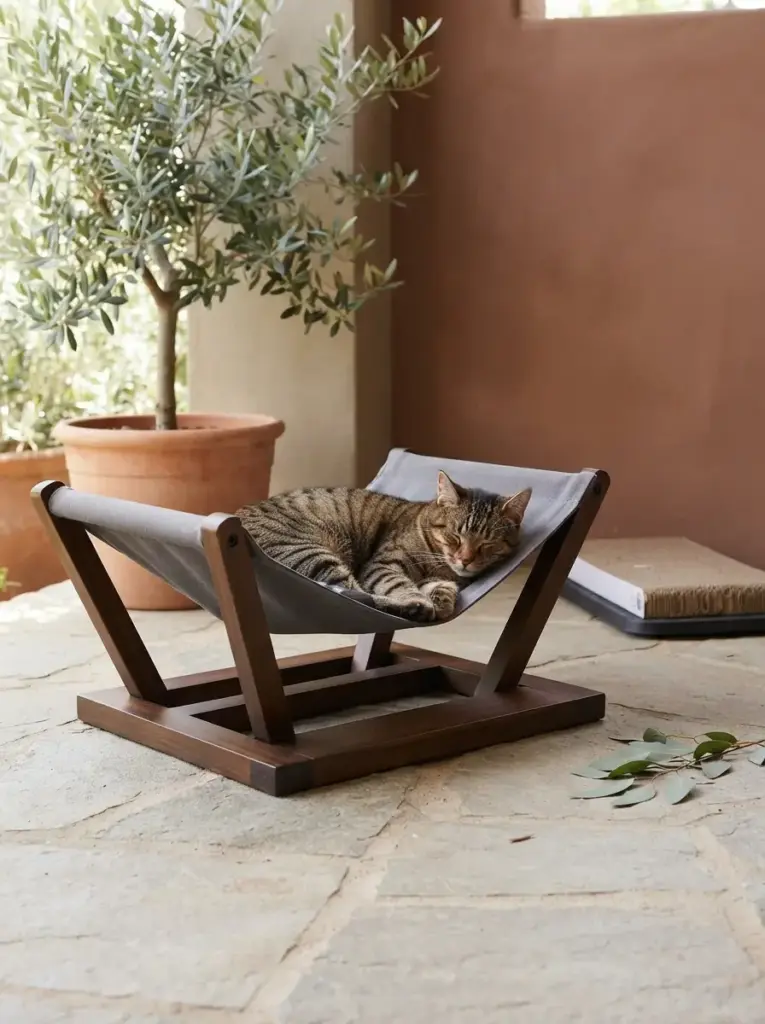
Pet furniture should remain still when a cat jumps, stretches, scratches, or reacts to a sudden sound. Wide-base beds, low hammocks, and flat scratch pads offer more stability than tall baskets or narrow stands. Rubber feet improve grip on tile, while weighted platforms reduce movement on smooth concrete. Solution-dyed outdoor fabric, dense felt, and washable canvas handle pollen and light moisture better than fluffy indoor textiles. Rust, olive, camel, and medium gray hides everyday dust more effectively than white.
Cats that spend longer supervised periods outside need a comfortable resting place that does not become another climbing route. The idea earns its place through predictable movement. Stable furniture lets the cat settle without rocking toward the railing or knocking nearby objects over.
Grow verified cat-safe plants in heavy pots
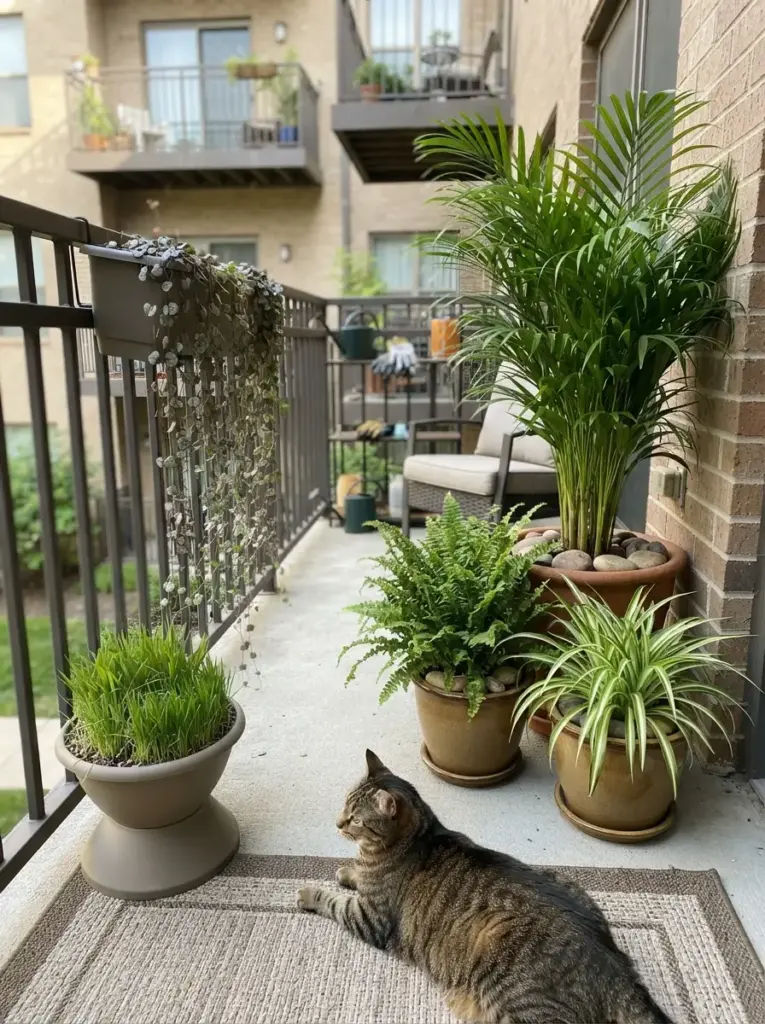
Greenery softens hard railings and creates privacy, but plant safety requires accurate identification. Cat grass, wheatgrass, spider plants, Boston ferns, and areca palms are commonly chosen for pet-friendly homes, yet owners should still confirm the exact species and growing products. Lilies, sago palms, aloe, pothos, and several popular decorative plants do not belong within reach. Heavy floor planters resist tipping better than narrow stands or railing boxes.
Large smooth stones can cover exposed soil when digging becomes a problem, provided the stones cannot be swallowed. Self-watering pots should have reservoirs that paws cannot open. Group one taller plant with two lower pots near the apartment wall for a balanced arrangement. Plant lovers gain texture and color without crowding every edge. Verified species and stable placement make the idea practical because beauty never depends on guessing whether a leaf or fertilizer is safe.
Install warm low-glare lighting
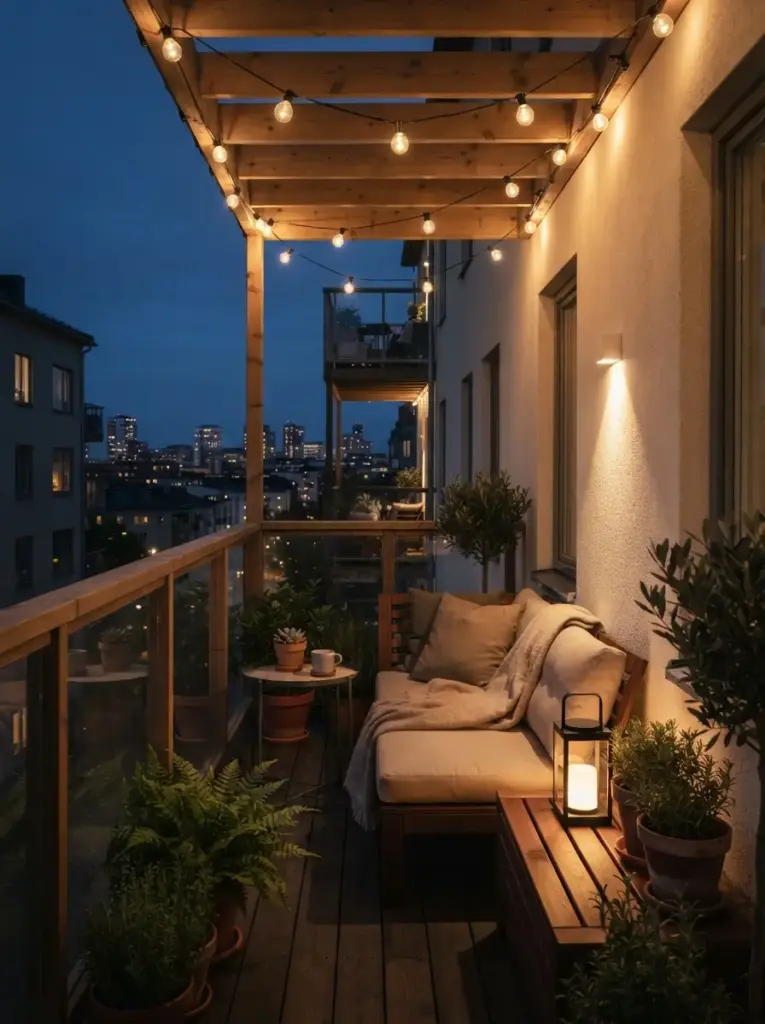
Evening light should help owners inspect the balcony without creating glare on acrylic or disturbing nearby apartments. Outdoor-rated LED string lights, rechargeable lanterns, and small wall washers provide useful brightness. Color temperatures between 2700K and 3000K feel warm and natural beside wood, beige fabric, and green plants. Cool white bulbs around 5000K can look harsh in a compact space and create strong reflections. Place the main light on the apartment wall or beneath a bench rather than wrapping cords around the railing. Battery boxes need sealed covers and positions beyond chewing range. Renters appreciate rechargeable fixtures because no wiring changes are required. Soft layered lighting works by illuminating floors, clips, and furniture edges while keeping the city view visible.
One overhead source and one low accent lamp usually provide enough light for a narrow balcony. Timers save power and prevent lights from running all night. Indoor fairy lights should not move outdoors because moisture can damage thin coatings and exposed connections. Warm light reflected from a pale wall often feels brighter than a bulb aimed directly into the seating area. Keep a stronger portable lantern indoors for repairs and cleaning. Secure every cord with short covered clips, leaving no hanging loops. Monthly checks should include corrosion, cracked housings, and loose adhesive pads.
Add partial privacy without blocking airflow
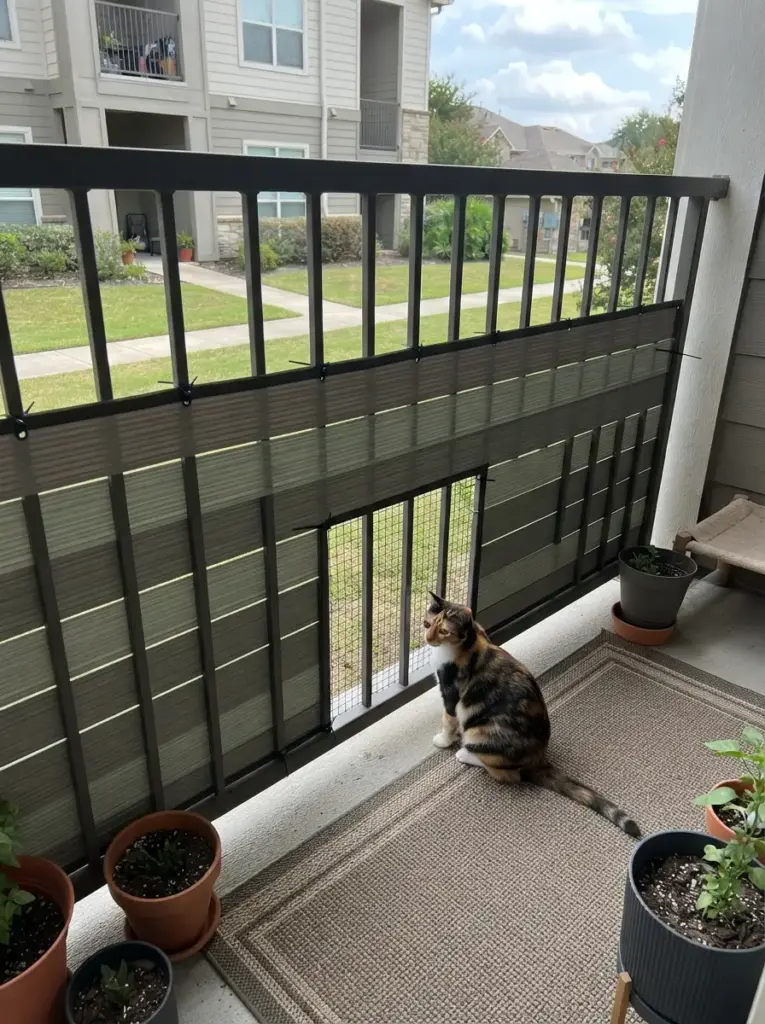
Partial privacy screens reduce visual stress for cats that react to neighboring pets, traffic, or constant movement below. Slatted composite panels, woven reed screens, or outdoor fabric can cover one side or the lower third of the railing. Place every privacy layer inside the secure enclosure so the cat cannot squeeze behind it. Muted reed, warm gray, dusty green, and charcoal coordinate with common apartment exteriors. Multiple attachment points matter because solid screens catch more wind than open mesh. Ground-floor balconies and closely spaced buildings benefit most from this feature. Selective coverage succeeds by limiting intense visual triggers while preserving a controlled viewing window, natural light, and cross-ventilation.
Covering the entire balcony can create a hot, enclosed box and make supervision harder. Start with the side facing the busiest view, then watch how the cat responds before adding more material. Slats should be close enough that paws cannot become trapped. Fabric edges need hems or sealed finishes to prevent fraying. Building rules may limit colors or materials visible from outside, so keep screens below railing height when necessary. Cleaning access remains important because dust collects between the privacy layer and the original barrier. Removable clips make seasonal washing easier.
Create a tidy water and treat station
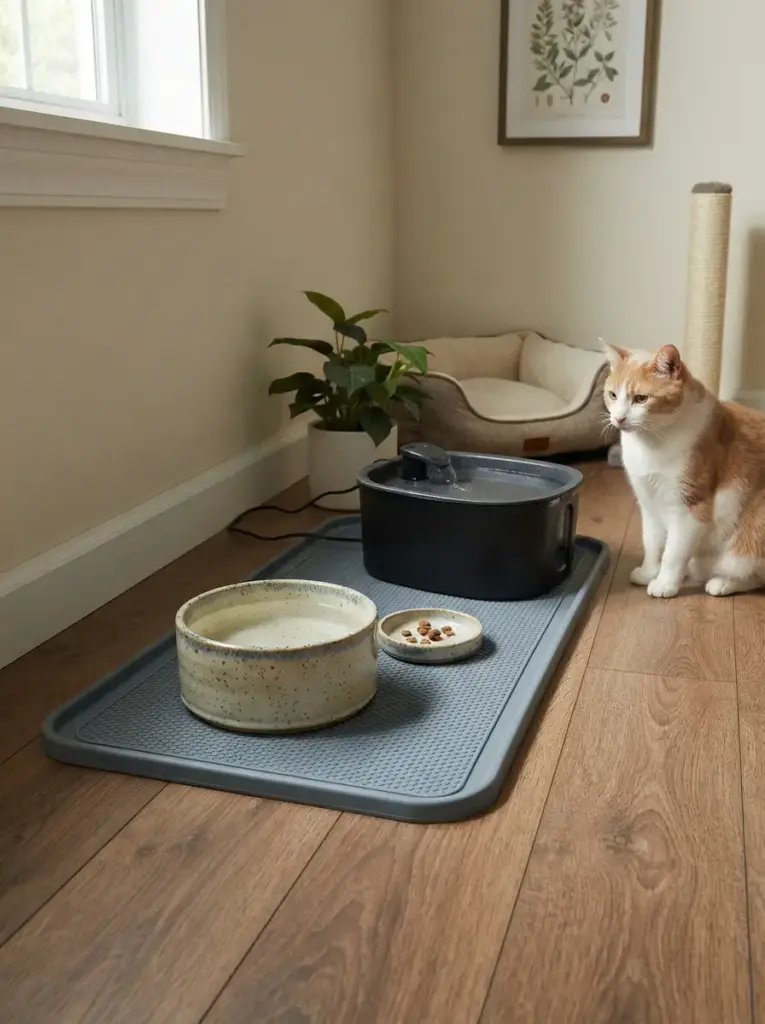
Hydration belongs in a shaded interior corner where bowls cannot tip into the walking path. Heavy ceramic water dishes stay cooler and move less than thin plastic, while low pet fountains may encourage drinking when protected cords and outdoor ratings are available. Place the bowl on a washable silicone tray in charcoal, stone, or muted green. Food should not remain outside for long because heat, insects, and birds can affect it. Small treats may support calm entry routines, but bowls should return indoors after the session. Cats that enjoy longer supervised visits benefit from reliable water access. Defined placement keeps the floor organized and reduces the chance of people kicking a dish in a narrow layout.
Refresh water often during warm weather, even when the bowl still looks clean. Dust and pollen settle quickly outdoors. Fountains need regular filter cleaning and protected outlets. Battery models remove cord concerns but still require dry storage. Keep the station away from litter boxes, scratch debris, and strong-smelling plants. One low tray can hold both water and a small treat dish without creating visual clutter. Raised stands should remain modest in height and wide at the base. During freezing weather or storms, bring every part indoors.
Manage the doorway as a safety zone
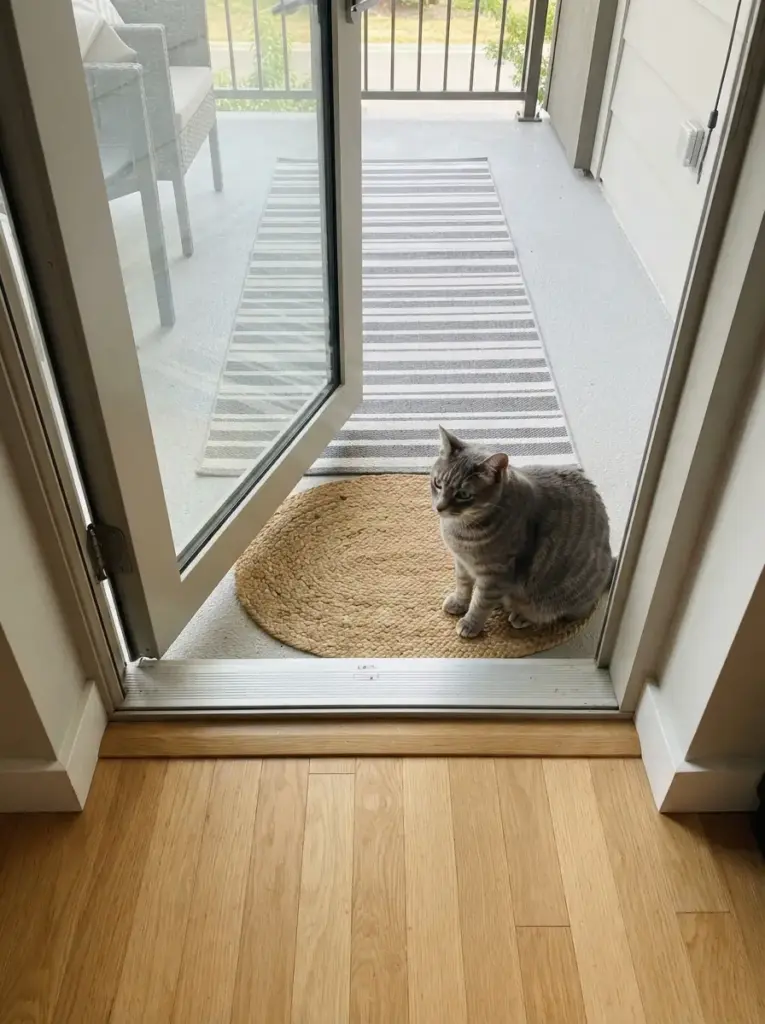
Many escapes happen at the threshold rather than through the finished enclosure. Clear toys, shoes, and planters away from the door so owners can enter and exit without stepping around obstacles. Place a low washable runner inside the balcony and create a waiting spot two or three feet from the opening. A small bed, textured mat, or brief treat routine can teach the cat to pause. Homes with fast door-dashers may need a secondary pet gate inside the apartment. Striped runners visually lengthen a narrow floor and hide light dust better than solid cream. Busy households and multi-cat homes gain the most from this plan. Doorway control works because it slows movement at the point where human attention is divided between the handle, the door, and the animal.
Practice the routine before carrying furniture or laundry through the doorway. Open the door only a few inches at first, reward calm waiting, and close it when the cat crowds the threshold. Training supports the physical setup but never replaces it. Sliding doors need clean tracks so they close fully. Hinged doors should not catch mesh, curtains, or rug corners. Keep one hand free when guiding the cat indoors. Emergency access must remain clear at all times, even when the balcony doubles as storage.
Finish with a shared human and cat lounge
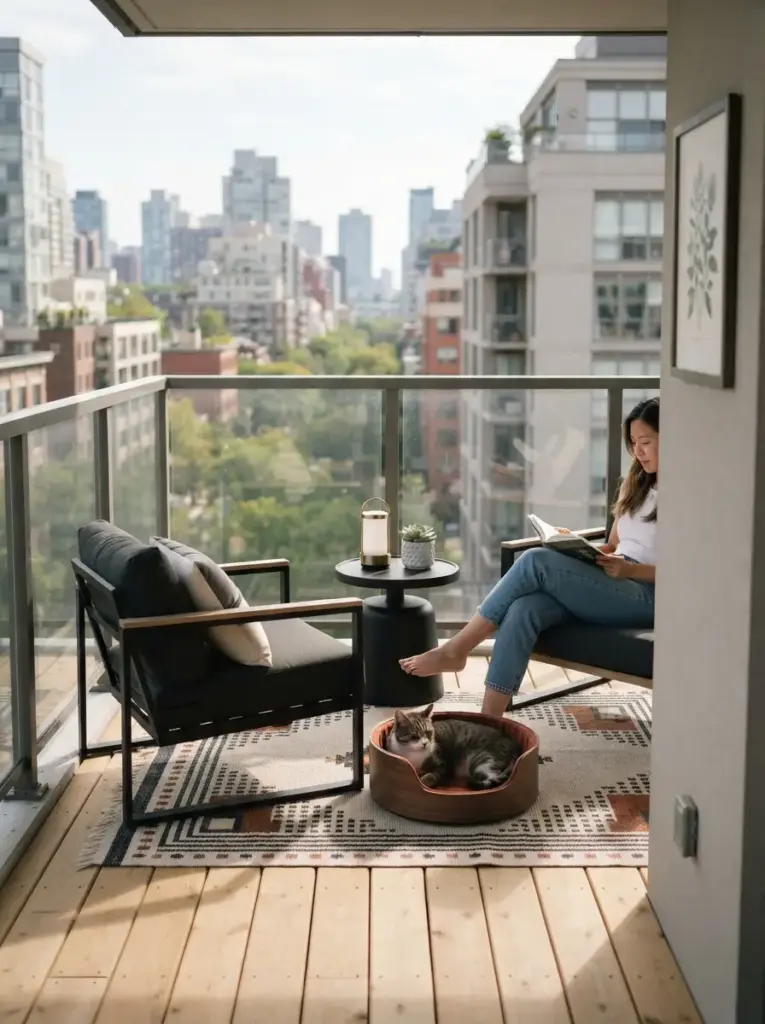
Shared comfort encourages owners to stay nearby, which improves supervision and makes the balcony feel like a real room. Choose one slim bench or low lounge chair, one weighted side table, and one stable cat bed or perch. Keep the center open and repeat a restrained palette across the pieces. Warm white, light oak, sage, and black metal create a fresh urban scheme. Charcoal, walnut, rust, and cream feel warmer and hide city dust well. Two outdoor cushions are usually enough; larger piles reduce seating and collect hair. A compact rechargeable lantern, one safe plant group, and a washable rug complete the layout without crowding it. Home decor beginners benefit from the limited formula because every piece has a clear role. The lounge succeeds through balance: people can sit comfortably, cats can rest within reach, and all enclosure edges remain visible for regular checks.
Use the view as the main decorative feature rather than filling the railing with objects. Keep wall decor light, weather-resistant, and securely fastened. Mirrors rarely suit cat balconies because they create glare, bird confusion, and breakage risk. One framed outdoor panel or narrow slatted accent can add character to a solid wall. Seasonal textiles provide easier updates than furniture replacement. Terracotta cushions warm the space in autumn, while pale sage and cream feel lighter in spring. Store unused pieces indoors so the balcony remains functional instead of becoming overflow storage.
Common mistakes that weaken balcony safety
Loose netting creates folds that cats can climb, push under, or catch their claws in. Tighten the full surface, not only the corners, and replace stretched ties quickly. Small gaps around pipes, drainage openings, side walls, air-conditioning units, and ceiling edges need the same attention as the main railing. Owners often inspect from standing height and miss openings near the floor. Kneel, view the perimeter from the cat’s level, and apply gentle pressure with a hand. Any section that moves several inches needs stronger support.
Crowded layouts form accidental staircases toward the edge. Tall plant stands, stacked boxes, bar stools, and narrow shelves can turn a secure lower railing into a reachable upper route. Keep height against the apartment wall and remove storage that has no active purpose. Loose cords, curtain ties, trailing vines, and hanging toys also catch paws. Short secured connections are safer than decorative loops. The Cat Proof Apartment Balcony should remain simple enough that every corner can be seen and cleaned without moving several objects.
Supervision alone cannot replace a barrier. Calm cats may jump when startled by construction noise, birds, dogs, fireworks, or a dropped object. Secure the space so a brief distraction does not create an immediate escape route. Owners should still stay nearby because hardware can loosen, and the weather can change. Early sessions reveal whether the cat chews mesh, climbs screens, hides behind furniture, or reacts strongly to movement below. Adjust the layout around observed behavior rather than assuming every indoor cat responds the same way.
Weather damage often develops gradually. Sunlight makes inexpensive plastic ties brittle, rain swells untreated wood, and wind works loose clamps that once felt firm. Seasonal inspections should cover fasteners, frames, shade cloth, flooring, lights, and plant stability. Remove umbrellas and light textiles before storms. Clear drainage channels after leaves fall. Heat deserves equal attention because partially enclosed balconies may warm faster than open ones. Shade, airflow, cool water, and short sessions protect comfort better than relying on a single outdoor bed.
Budget-friendly ways to decorate the balcony
Spend first on the enclosure, structural clips, and stable frame. Decorative purchases can wait until the barrier passes repeated checks. UV-resistant mesh, reusable cable ties, tension poles, and a simple washable mat usually cost less than a custom-built catio. Structural parts deserve the largest share of the budget because weak clamps cannot be improved with attractive cushions. Compare hardware by outdoor rating and load rather than package appearance. Buying a few reliable pieces is cheaper than replacing several flimsy options after one season.
Build the balcony over several weekends instead of buying everything at once. Week one can cover measurements and enclosure work. Week two can add flooring and shade. Seating, lighting, and plants can follow after observing how the cat uses the space. Slow decorating prevents wasted purchases and reveals which corner stays coolest, where rain enters, and which views attract the cat most. Keep a small repair kit with spare ties, clamps, scissors, and weatherproof tape. Routine maintenance costs less than rebuilding damaged sections.
Cat Proof Apartment Balcony tips for renters
Rental agreements and building rules should guide every attachment. Tension poles, freestanding frames, removable clamps, weighted bases, and outdoor ties avoid permanent holes, but each system still needs strength testing. Photograph walls, floors, and railings before installation. Keep original screws, caps, and furniture parts in a labeled container. Adhesive hooks may leave stains or fail in heat, so use them only for light decor, never for enclosure support. Mesh and panels should remain inside the railing line when exterior appearance rules are strict.
High-floor wind creates forces that are easy to underestimate. Large fabric screens, umbrellas, and solid panels can act like sails. Secure every piece at several points, use breathable materials, and remove loose items before storms. Heavy planters belong on the floor rather than railing brackets. Drainage must remain clear so water does not affect the apartment below. Building maintenance teams may need access to pipes, drains, or exterior equipment, so removable sections should open without dismantling the entire setup.
Regular inspection turns a temporary system into a dependable one. Before each use, check the door, mesh edges, clips, and floor temperature. Monthly care should include tightening frame feet, washing panels, lifting flooring, cleaning drains, and replacing chewed or brittle parts. Keep landlord communication simple and factual when approval is needed. Describe the installation as removable, interior-mounted, and non-damaging, then provide product details or photos. Never assume permission because another tenant has a similar screen.
Moving plans also affect design choices. Modular frames, numbered panels, reusable ties, and standard-size flooring travel more easily than custom permanent construction. Store installation photos and measurements with the repair kit. Clean all parts before packing so pests and moisture do not move to the next home. Replacement mesh costs less when the frame remains usable. A thoughtful rental setup protects the current balcony while creating materials that can be reused.
Frequently asked questions
Can a cat stay alone on an enclosed apartment balcony?
Unsupervised time remains risky even when the balcony looks secure. Fasteners can loosen, mesh can tear, weather can shift, and insects or birds can trigger unexpected behavior. Nearby supervision allows an owner to notice chewing, climbing, heat stress, or a new weak point. Cats that need long outdoor periods may be better served by a professionally designed catio that meets building rules and receives routine structural checks. Short supervised sessions are safer for most rental balconies.
Which mesh works best for cat-proofing?
UV-resistant pet netting with small openings and reinforced edges is more suitable than decorative garden netting or thin bird mesh. Material should resist stretching, claw contact, heat, and rain. Black mesh often provides the clearest view from indoors. Correct installation matters as much as product choice, so pull the mesh tight and attach it at short intervals to a stable frame. Inspect sun-exposed sections often because even outdoor materials age.
How can renters secure a balcony without drilling?
Tension poles, clamp-mounted acrylic panels, freestanding timber or aluminum frames, weighted bases, and removable outdoor ties can form a secure enclosure without holes. Combining methods offers better stability than relying on one attachment type. A frame may hold the upper mesh while clear panels close lower railing gaps. Test every component against pushing and wind. Removable systems still need landlord approval when building rules control balcony appearance.
Which furniture is best for a narrow cat balcony?
Low, stable, weather-resistant furniture uses limited floor space safely. Slim storage benches, compact lounge chairs, weighted side tables, flat scratch pads, and wide-base cat beds work well. Keep the tallest item against the apartment wall and leave a clear route from the door. Rounded corners reduce bumps in tight spaces. Furniture should serve more than one purpose whenever possible, but storage pieces must remain easy to open without trapping paws.
Which plants can be used around cats?
Cat grass, wheatgrass, spider plants, Boston ferns, and areca palms are often selected, but exact species and growing products must be verified. Garden labels may be incomplete, and fertilizers can create separate risks. Heavy floor pots reduce tipping, while railing planters and hanging baskets add unnecessary movement. Remove any plant that the cat chews heavily. Lilies and sago palms should never enter a cat-accessible area.
How often should the safety setup be checked?
Quick checks should happen before every use, particularly after wind, rain, maintenance work, or furniture changes. Monthly inspections can cover mesh tension, frame stability, fasteners, acrylic panels, flooring, drains, lights, and chew marks. Seasonal reviews help identify sun damage, rust, swollen wood, or mildew. Replace damaged parts immediately. Waiting for several small problems to appear at once makes repairs more difficult and increases risk.
Conclusion
Safe balcony decorating begins with a secure perimeter and a simple floor plan. Mesh, panels, frames, flooring, shade, and low furniture should work together rather than act as separate purchases. Cats need stable resting places, temperature choice, fresh water, and controlled views. People need clear circulation, comfortable seating, easy cleaning, and access to every connection point. Rental-friendly hardware can meet those needs when it is tested, maintained, and chosen for outdoor use.
Style becomes easier after the safety structure is complete. Natural wood, warm white, charcoal, muted green, and rust create flexible palettes that suit many city apartments. One bench, one cat bed, a small table, warm 2700K lighting, and a verified plant group can furnish the space without crowding it. The final Cat Proof Apartment Balcony should feel calm, practical, and connected to the home. Small choices simplify maintenance over time. Regular checks keep that design useful through weather changes, moves, and everyday wear, allowing modern city cats to enjoy fresh air while owners remain comfortably nearby.