
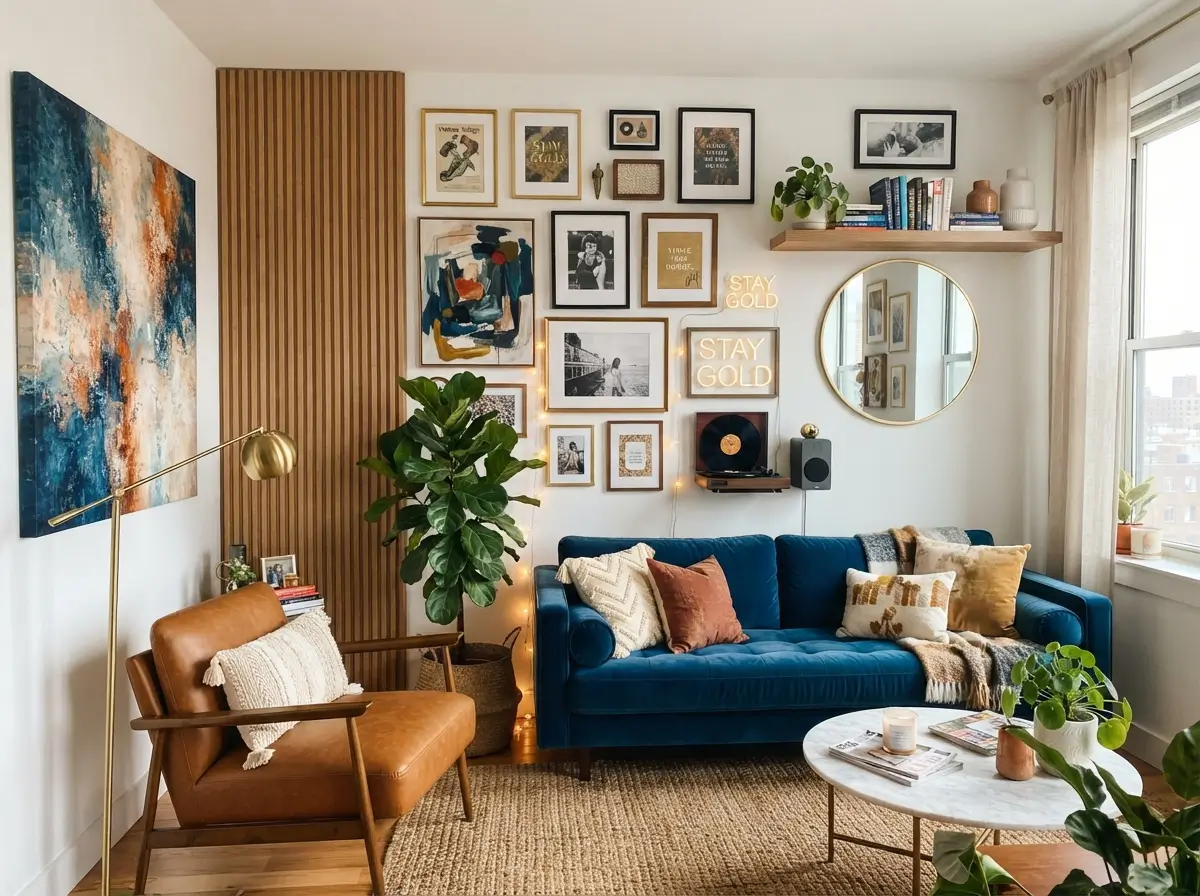

Plain walls can make even a well-furnished apartment feel unfinished, yet decorating them well does not require permanent construction, expensive artwork, or a large floor plan. Thoughtful Apartment Wall Decor can improve proportion, add warmth, create a focal point, and help separate one functional area from another. Small homes benefit most from wall treatments that add character without using valuable floor space. Good choices also support the furniture already in the room instead of competing with it.
Renters often hesitate because they worry about nail holes, paint restrictions, or losing a security deposit. Homeowners in compact apartments may face a different problem: too many ideas packed into too little space. Both situations call for a simple plan based on wall size, room function, color balance, and viewing distance. Measuring first, testing layouts with paper templates, and choosing removable hanging methods can prevent most decorating mistakes before they happen.
What Is the Best Way to Decorate Apartment Walls?
Choose one main focal wall, repeat two or three colors already used in the room, keep artwork proportional to nearby furniture, and mix decorative pieces with useful storage. Successful Apartment Wall Decor feels connected to the room rather than added as an afterthought. Rental-friendly hooks, removable strips, lightweight frames, peel-and-stick materials, and leaning displays can create a finished result with little or no wall damage.
Build a Balanced Gallery Wall
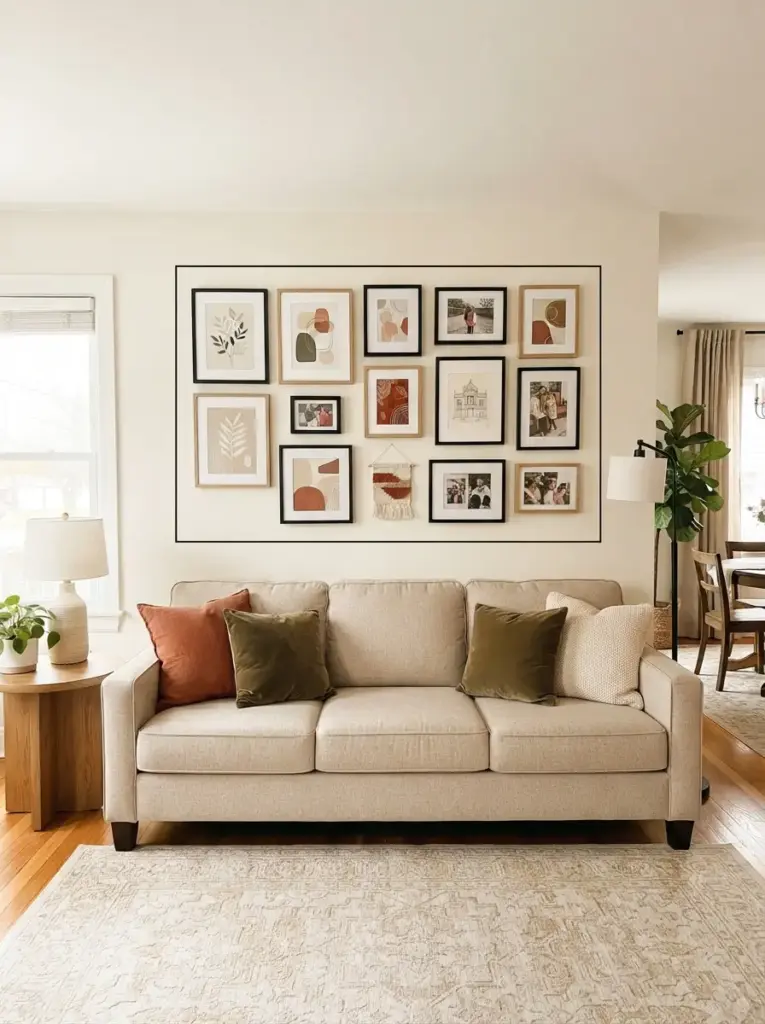
Gallery walls work well because they turn several smaller pieces into one strong visual feature. Beginners should start with a clear boundary rather than hanging frames across the entire wall. Picture an invisible rectangle above a sofa, console, bed, or dining bench, then keep every frame inside that area. For a sofa that measures 84 inches wide, aim for a gallery arrangement between 50 and 65 inches wide. Leave 2 to 3 inches between frames so the pieces read as a group. Black frames give mixed prints a cleaner structure, while light oak frames suit warm neutral rooms with cream, beige, terracotta, or olive accents.
Choose artwork that repeats colors from cushions, rugs, or curtains to make the display feel intentional. Paper templates taped to the wall let you test the arrangement before using hooks. Renters can choose lightweight frames with removable picture strips, but the wall surface should be clean, dry, and compatible with the adhesive. Gallery walls suit collectors, families with photos, and anyone who wants to combine affordable prints, postcards, textiles, and personal keepsakes without buying one costly oversized piece.
Hang One Oversized Artwork Piece
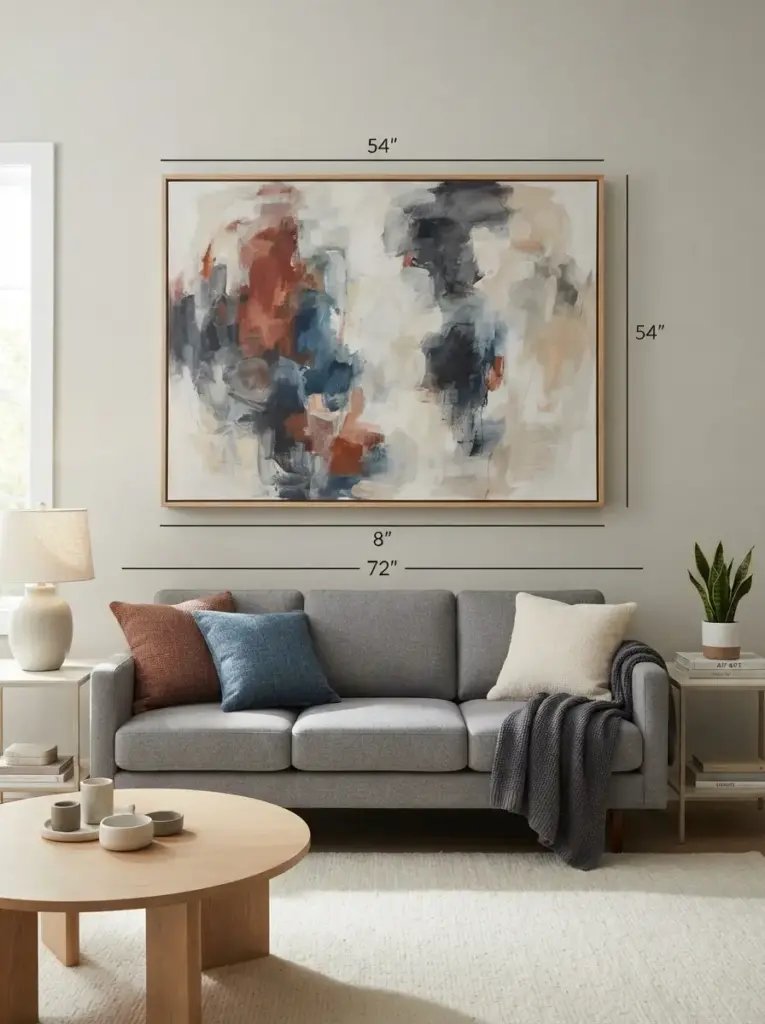
Oversized art creates calm because the eye reads one large shape instead of many small objects. Large walls often look weaker when covered with tiny frames that float without connection to the furniture below. Choose artwork that measures roughly two-thirds to three-quarters of the width of the sofa, headboard, sideboard, or desk underneath it. For example, a 72-inch sofa usually pairs well with art between 48 and 54 inches wide. Abstract prints with muted rust, deep blue, charcoal, and cream can bring color into a neutral living room without forcing every accessory to match exactly.
Photography works especially well in modern apartments, while graphic line art supports Scandinavian or minimalist furniture. Keep the center of the artwork close to eye level, usually about 57 to 60 inches from the floor, unless it hangs above furniture. Leave 6 to 10 inches between the lower frame edge and the furniture top. Large canvas pieces are lighter than framed glass and can be easier for renters to mount securely. Budget-conscious decorators can stretch fabric, frame a wallpaper remnant, or enlarge a public-domain image through a local print shop. Oversized art is best for people who prefer a clean room with fewer objects and a stronger visual impact.
Create a Removable Accent Wall
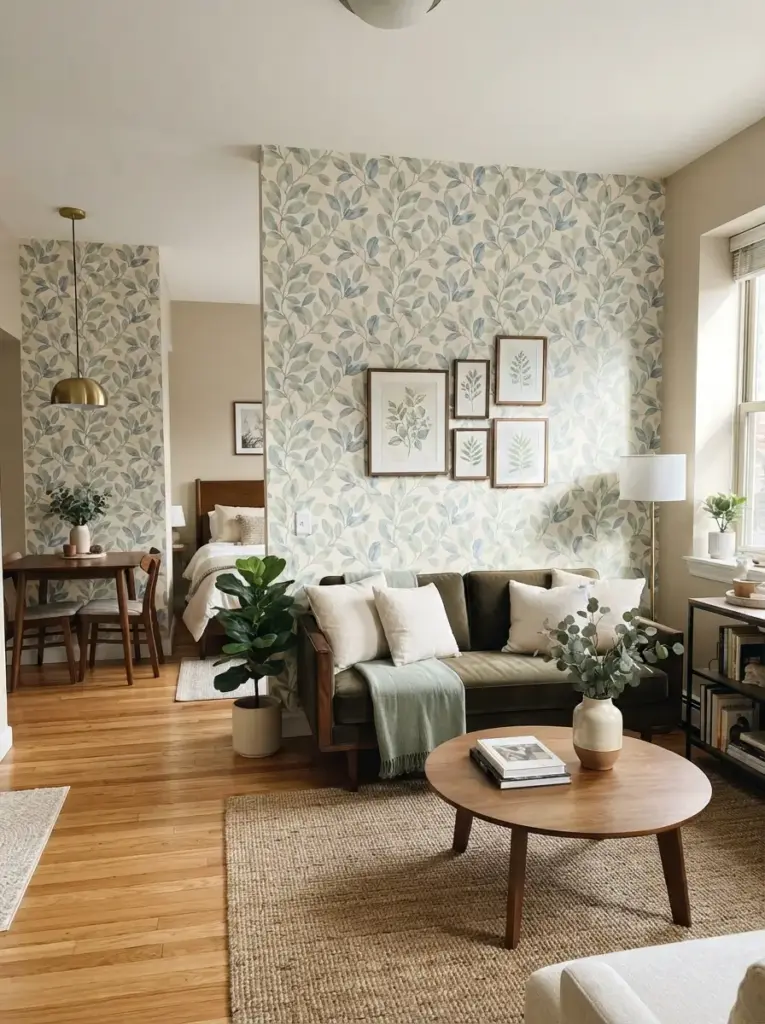
Peel-and-stick wallpaper, removable murals, and renter-safe decals can change a room without a permanent paint job. Pattern scale matters more in a small apartment than many beginners expect. Tiny busy prints can make a broad wall look cluttered, while very large patterns may overwhelm a narrow alcove. Medium-scale botanical, geometric, stripe, or linen-look designs usually offer the safest balance. Use a feature wall behind the bed, sofa, dining table, or entry console rather than covering every wall. Sample sheets should remain on the wall for several days so you can judge them in morning light, artificial light, and evening shadow. Warm beige, soft sage, dusty blue, and clay tones support wood furniture and cream upholstery.
Cooler gray patterns suit black metal, glass, and crisp white furniture. Good Apartment Wall Decor should improve the architecture, so align pattern edges carefully around corners, outlets, and ceiling lines. Rental walls with fresh paint, texture, moisture, or weak plaster may not hold adhesive well, making a partial panel or framed wallpaper section a safer choice. Removable accent walls are ideal for renters, nursery rooms, home offices, and anyone who wants a noticeable change without buying new furniture.
Add Floating Shelves With Restraint
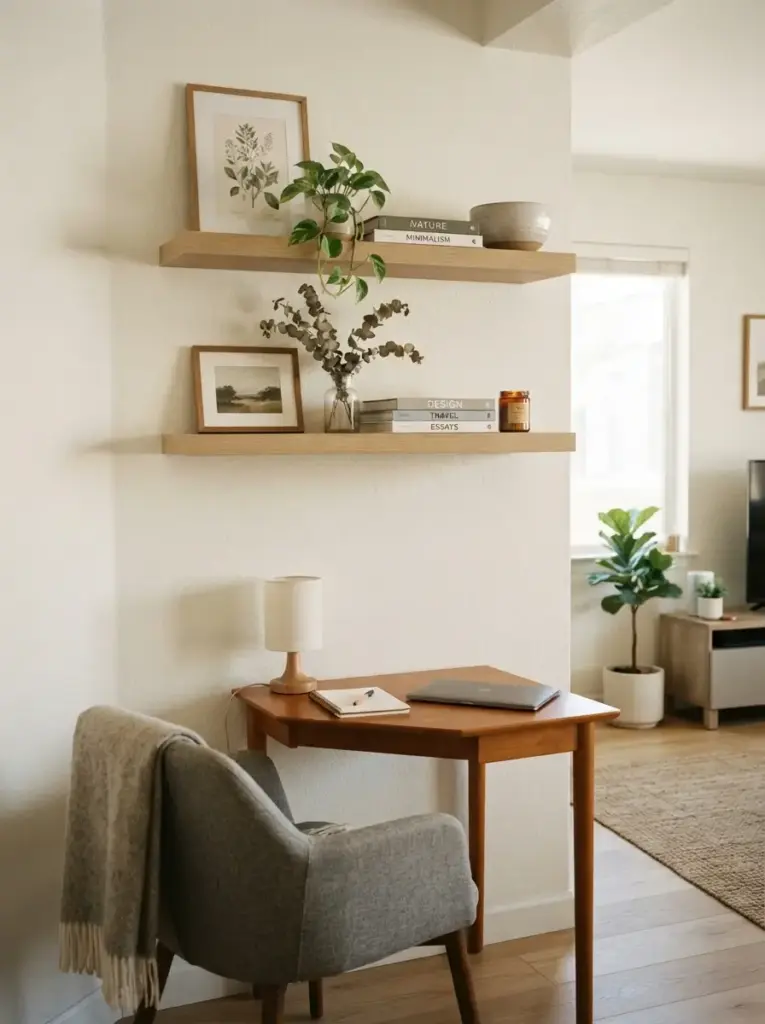
Floating shelves combine decoration with storage, which makes them especially useful in studios and compact living rooms. Strong results depend on limiting both the number of shelves and the amount displayed on them. Two or three shelves usually look better than a full wall of short ledges. Position them above a desk, low cabinet, toilet, reading chair, or kitchen counter where they support an existing function. Shelf depth between 6 and 10 inches is enough for books, small plants, framed art, candles, and ceramics without projecting too far into the room. Keep heavier pieces near the ends or directly above brackets when the shelf design allows it.
Styling should include different heights but consistent colors. Pair one vertical frame, a small trailing plant, two stacked books, and a rounded bowl rather than lining up ten small objects. Leaving roughly one-third of each shelf empty keeps the arrangement from feeling crowded. Renters should use freestanding ladder shelves or picture ledges supported by approved anchors if floating shelves are not allowed. Floating shelves work best for readers, plant lovers, collectors, and anyone needing flexible display space that can change through the year.
Design a Clean Apartment TV Wall
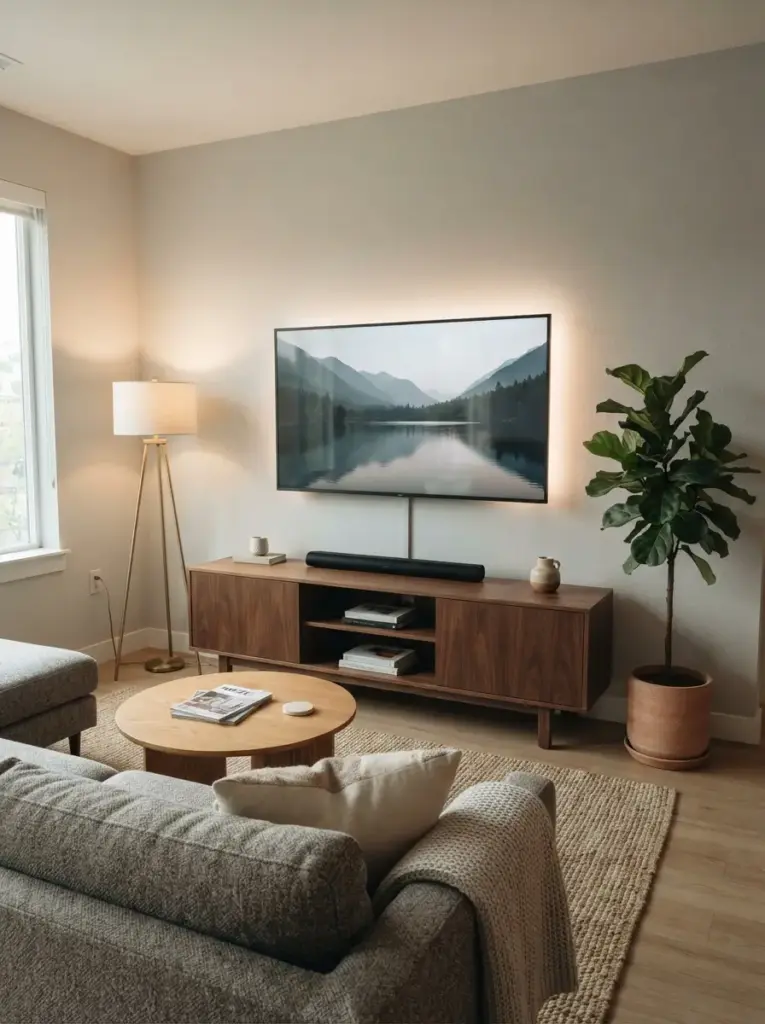
Television walls often become visually heavy because the black screen dominates a light room. Better balance comes from treating the screen as part of a complete composition. Start with the media console, which should usually be wider than the television by at least 6 to 12 inches on each side. Low walnut, oak, white, or matte black units help anchor the wall and hide cables. Place the screen at a comfortable viewing height rather than mounting it close to the ceiling. Seated eye level should fall around the middle or lower third of the display. Add one or two tall elements beside the console, such as a slim floor lamp, a narrow plant, or a vertical print, but avoid creating identical matching towers on both sides unless the room is very formal.
Soft backlighting can reduce eye strain and add depth; choose warm white lighting around 2700K to 3000K for living rooms, while 3000K to 3500K can suit a modern media space. Cable covers painted to match the wall keep the setup neat. Apartment TV Wall styling is best for people who use the living room daily and want technology to feel integrated rather than hidden behind excessive decoration.
Form an Apartment Accent Wall With Paint
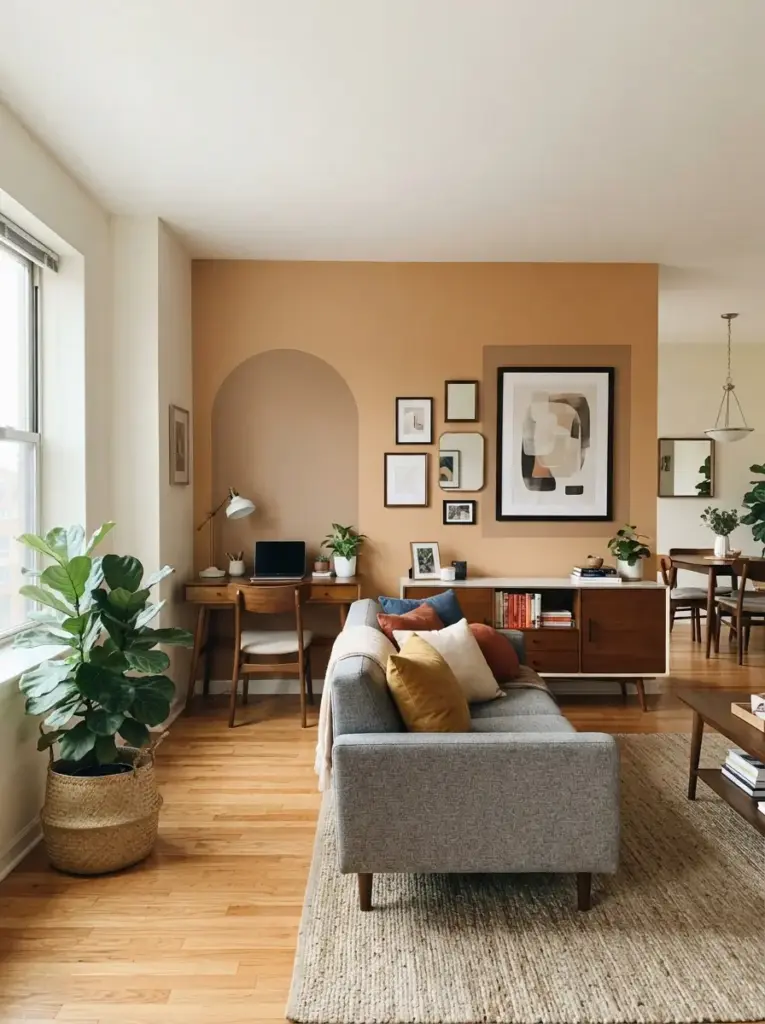
Paint remains one of the most affordable ways to define a wall, and many landlords allow it when tenants agree to repaint before moving. Color selection should respond to daylight, room size, and existing finishes. North-facing rooms often benefit from warm shades such as muted ochre, warm taupe, clay, or creamy beige because cool light can make blue-gray paint feel flat. Bright south-facing rooms can handle dusty blue, forest green, charcoal, or deeper terracotta. Bedrooms usually feel calmer when the wall behind the headboard carries the strongest color.
Dining nooks gain identity when paint wraps the back wall and a small portion of the side walls. Straight color blocking can also create architecture where none exists. Paint an arch behind a desk, a wide rectangle behind a console, or a horizontal band around a reading area. Use a laser level and painter’s tape to keep edges crisp. Apartment Accent Wall choices work best for renters with permission, first-time decorators, and anyone who wants a noticeable change for the cost of one paint can. Avoid choosing a color only from a phone screen; large sample patches reveal undertones far more accurately.
Use Mirrors to Improve Light and Scale
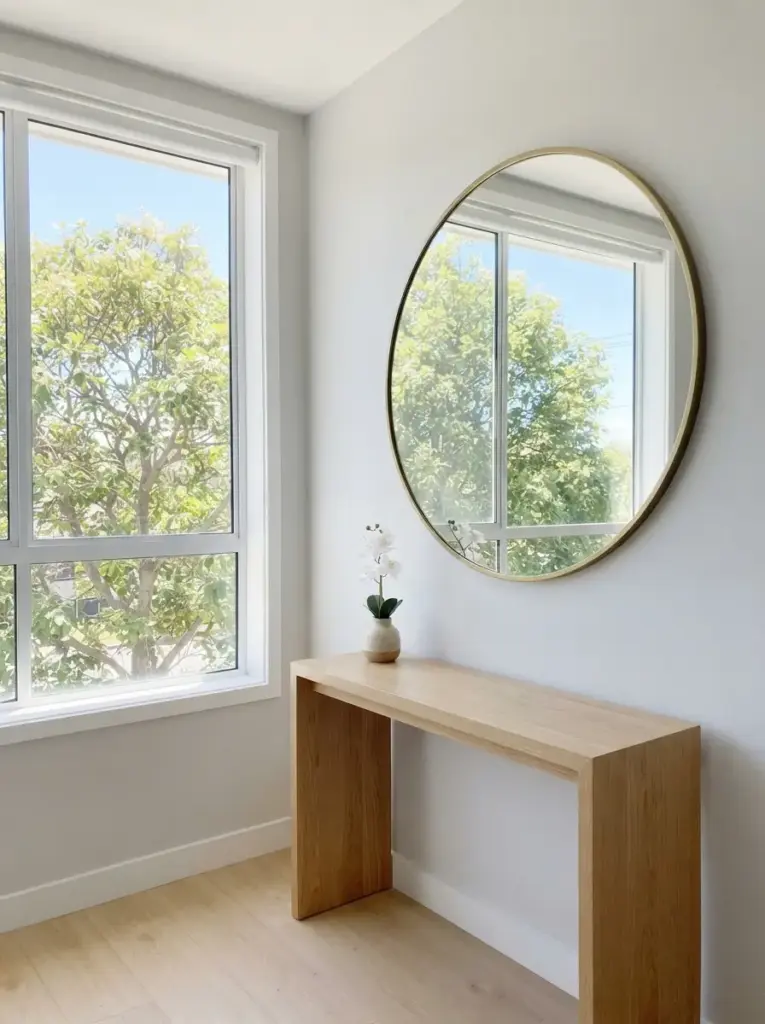
Mirrors make small rooms feel more open by reflecting light, views, and movement. Placement determines whether the effect feels useful or distracting. Hang a mirror across from a window so that it can reflect daylight or a pleasant outdoor view. Avoid reflecting cluttered storage, a television screen, or a dark hallway because the mirror will double the visual problem. Round mirrors soften rooms filled with rectangular furniture, while tall arched mirrors add vertical emphasis and can make ceilings seem higher.
Over a console, choose a mirror around two-thirds the width of the furniture. Full-length mirrors can lean safely against the wall when secured with an anti-tip strap, giving renters an option with minimal damage. Frames should connect with another finish in the room, such as black curtain rods, brass lighting, or natural wood furniture. Multiple small mirrored tiles can create sparkle, but they also create many reflections and may look busy in a narrow space. Mirrors suit dark apartments, tight entryways, bedrooms without strong daylight, and dining rooms that need more visual depth. Cleaning matters as well; fingerprints and dust reduce brightness, so a simple weekly wipe keeps the feature effective.
Install Picture Ledges for Flexible Displays
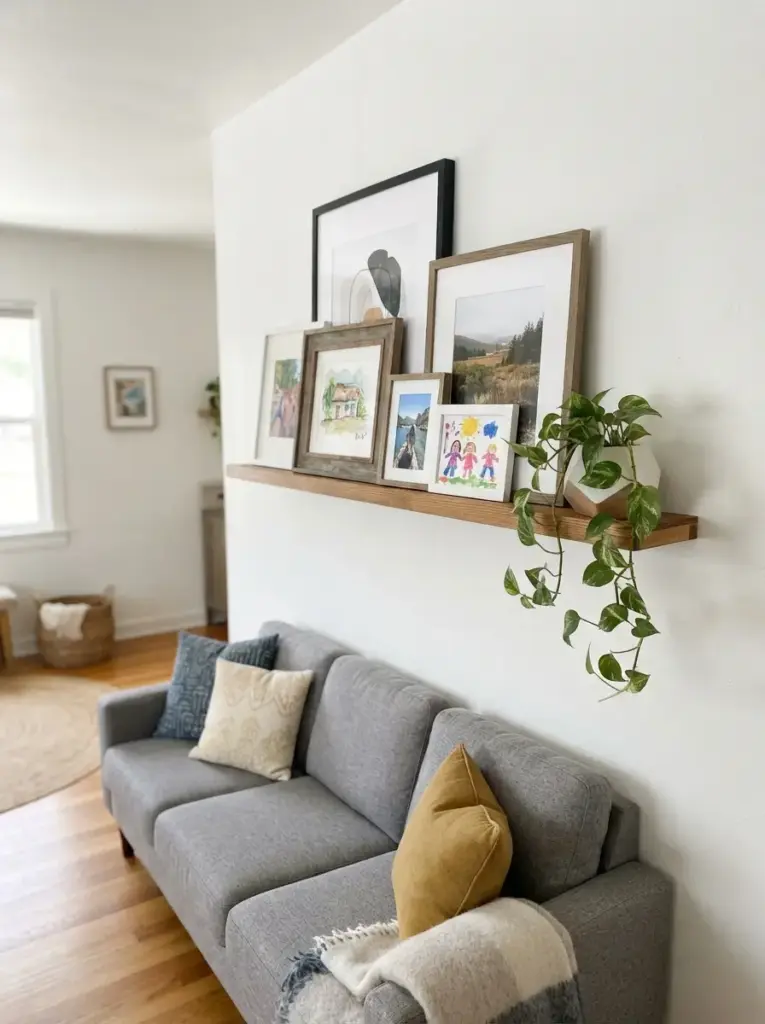
Picture ledges offer the layered look of a gallery wall without requiring a separate hook for every frame. Narrow ledges let artwork overlap slightly, creating depth while keeping the arrangement easy to update. Place one long ledge above a sofa or two shorter ledges in a staggered layout above a desk. Use frames in three sizes, then add one small sculptural object or plant for contrast. Larger pieces should sit toward the back, with smaller frames covering no more than one-quarter of the image behind them.
Too much overlap hides the art and makes the arrangement look accidental. White ledges disappear against white walls, black ledges create a sharper modern line, and wood ledges warm up neutral rooms. Children’s artwork, seasonal prints, records, cookbooks, and travel photos all work well on ledges because they can rotate without new holes. Secure every ledge with appropriate anchors and follow its weight limit. Adhesive-only shelves may fail under framed glass, so renters should use lightweight acrylic frames or approved mounting systems. Picture ledges are best for families, creative people, and decorators who enjoy changing displays every few months.
Display Textiles for Softness and Sound Control
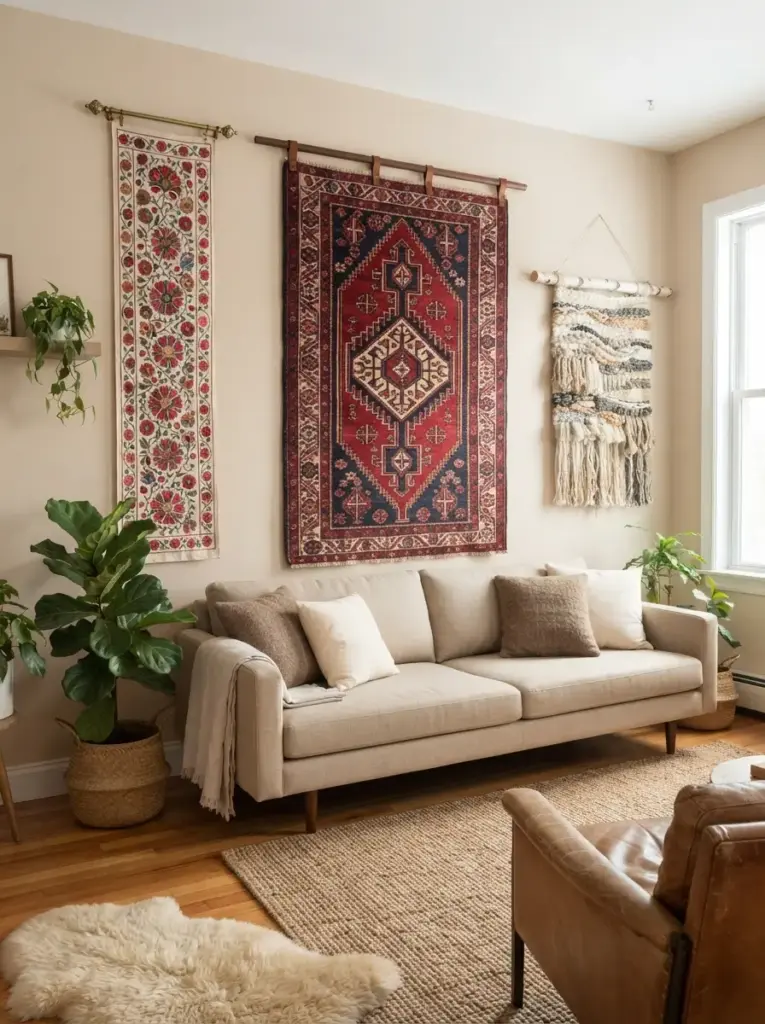
Fabric wall decor adds warmth and can soften echoes in rooms with hard floors, bare windows, and minimal upholstery. Woven hangings, quilts, vintage scarves, embroidered panels, and flat-weave rugs introduce texture without adding bulky furniture. Choose a piece large enough to relate to the wall; one tiny textile centered above a wide bed often looks lost. Horizontal fabrics suit sofas and beds, while long vertical panels can make a short wall feel taller. Neutral wool, cotton, jute, and linen fit relaxed spaces, while colorful kilim patterns can energize simple furniture in cream, brown, navy, or black.
Lightweight textiles can hang from a wooden dowel, a curtain rod, a quilt hanger, or removable hooks. Heavy rugs require secure anchors and should not hang above a bed unless the hardware can safely carry the weight. Steam or press fabric before mounting because deep folds catch shadows and make the display look unfinished. Textile displays work well for renters, sound-sensitive apartments, bohemian interiors, and rooms that need softness without another cushion or throw. They also provide a budget-friendly way to use meaningful family fabrics that would otherwise remain stored.
Add Wall-Mounted Lighting
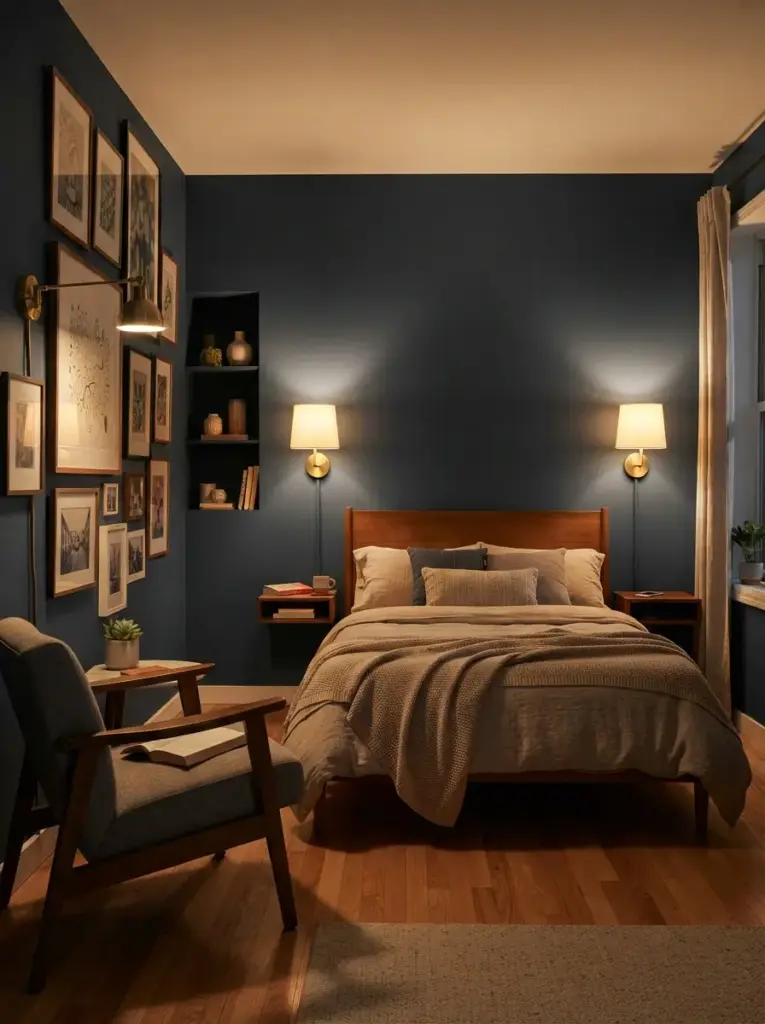
Wall lighting frees tables and adds an architectural layer that ordinary lamps may not provide. Plug-in sconces are especially useful for renters because they offer the look of wired fixtures without electrical work. Position a pair beside the bed to clear nightstands, or place one above a reading chair, desk, bar cart, or narrow console. Swing-arm models work well where a focused task light is needed. Fabric shades create softer light, metal domes direct light downward, and frosted glass spreads light more evenly.
Bulb temperature affects the entire room: 2700K creates a warm evening atmosphere, 3000K feels clean but comfortable, and 4000K may feel too clinical for bedrooms or living rooms. Choose bulbs with a high color rendering index, preferably 90 or above, so art, wood, and fabrics look accurate. Cord covers can be painted the wall color to reduce visual clutter. Symmetry is useful around beds, while an off-center sconce can balance a desk or art arrangement. Wall-mounted lighting suits small bedrooms, reading corners, and apartments where every surface needs to remain usable. Avoid placing bright fixtures directly beside reflective artwork or mirrors, where glare can become uncomfortable.
Turn Practical Storage Into Wall Decor
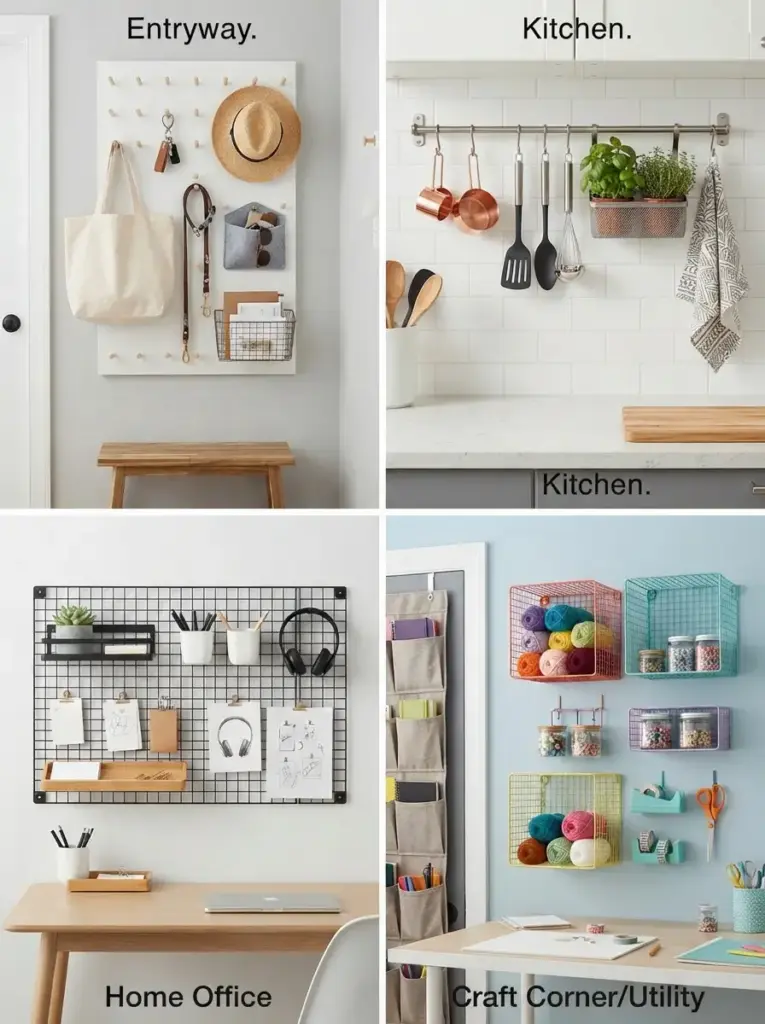
Wall storage looks intentional when it follows a clear grid, repeated material, or a limited color palette. Pegboards, rail systems, hook bars, wire baskets, and modular cubes can organize entryways, kitchens, craft corners, and home offices without taking much floor space. Entry walls can hold keys, hats, dog leads, sunglasses, and mail when every item has a specific place. Kitchen rails can store utensils, small pans, towels, and herbs while keeping counters clear. Office pegboards work best when containers, trays, and clips share two or three colors, such as white, natural wood, and black. Mount the main storage zone between waist and eye level so frequently used pieces remain easy to reach.
Open storage should not hold every possession; reserve it for useful items that are attractive enough to remain visible. Closed boxes or drawers can hide chargers, papers, and miscellaneous supplies. Rental-friendly over-door systems and tension-mounted rails provide alternatives when drilling is restricted. Decorative storage is best for busy households, small kitchens, creative workspaces, and people who need function more than formal art.
Try Sculptural Wall Objects
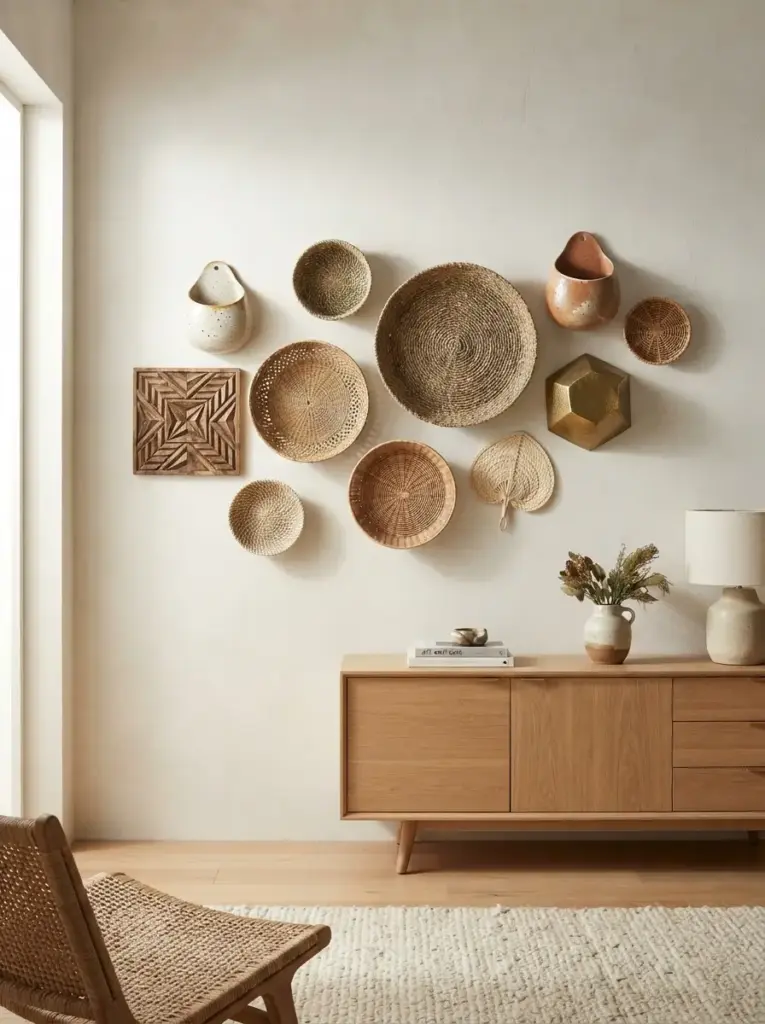
Sculptural objects create shadow and depth that flat prints cannot provide. Woven baskets, ceramic pieces, carved wood panels, metal shapes, fans, hats, and shallow wall planters can build a strong arrangement on a plain wall. Limit materials to prevent the display from looking like a random collection. For example, combine five natural baskets in different sizes but similar tones, or arrange three black metal forms above a light wood sideboard. Odd-numbered groups often feel more relaxed, while a symmetrical pair creates a formal result. Strong side lighting helps textured pieces cast subtle shadows, adding interest during the evening. Keep protruding objects away from narrow walkways, door swings, and areas where people may brush against them. Lightweight pieces can often use removable hooks, but ceramics and metal require secure anchors.
Dusting should be considered before choosing intricate shapes, especially in kitchens. Sculptural decor suits neutral interiors, global-inspired rooms, and people who want texture without introducing more patterns. It also works in spaces where framed art feels too predictable or where a low-contrast wall needs dimension rather than strong color.
Frame Maps, Plans, and Personal Documents
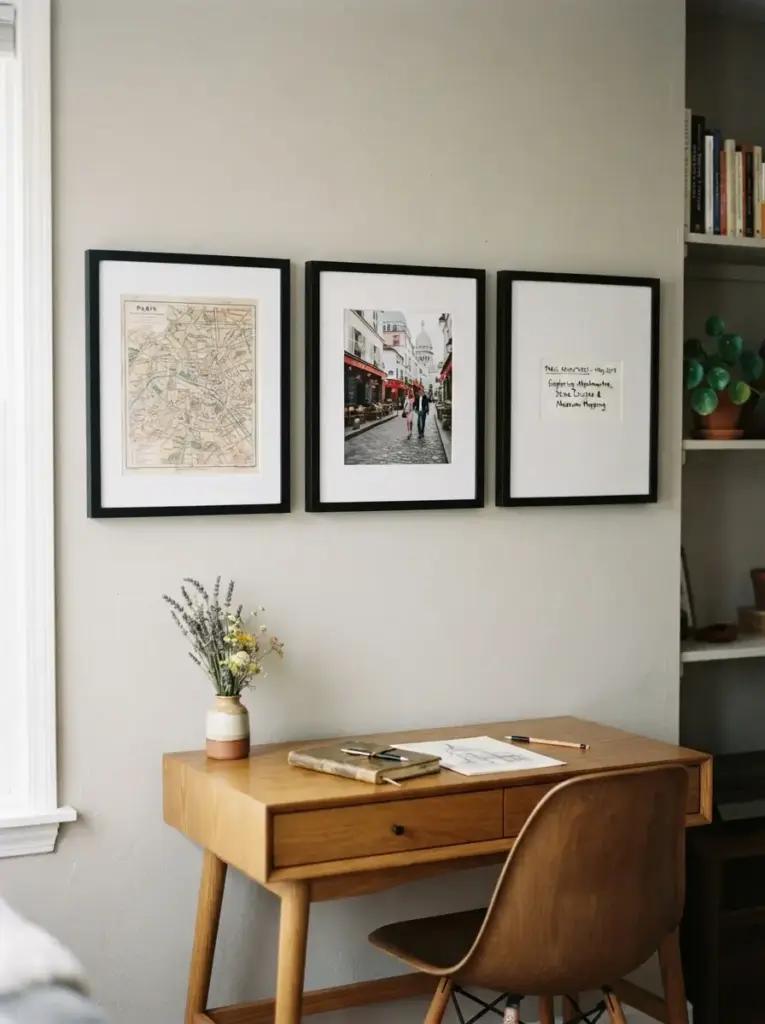
Personal wall displays feel meaningful when they connect to places, milestones, or interests rather than generic trends. City maps, architectural drawings, handwritten recipes, sheet music, children’s sketches, family letters, and travel tickets can become polished art when framed consistently. Scan fragile originals and display copies to protect important papers from sunlight and humidity. Simple white mats give mixed documents a shared structure, while black or walnut frames add definition. Pairing three related pieces in a row works well above a desk, dining bench, or hallway console. Leave equal spacing between frames and align either the top edges or centers.
For a travel display, combine a map, one photograph, and a small caption card rather than crowding the wall with every souvenir. Apartment Wall Art becomes more memorable when it reflects real experiences, but private documents should be reviewed before public display. Personal framing suits travelers, families, music lovers, and anyone who wants decor with a story. Budget options include thrifted frames painted in one finish, printable maps, and inexpensive custom mats cut by local framing shops.
Use Plants as Living Wall Features
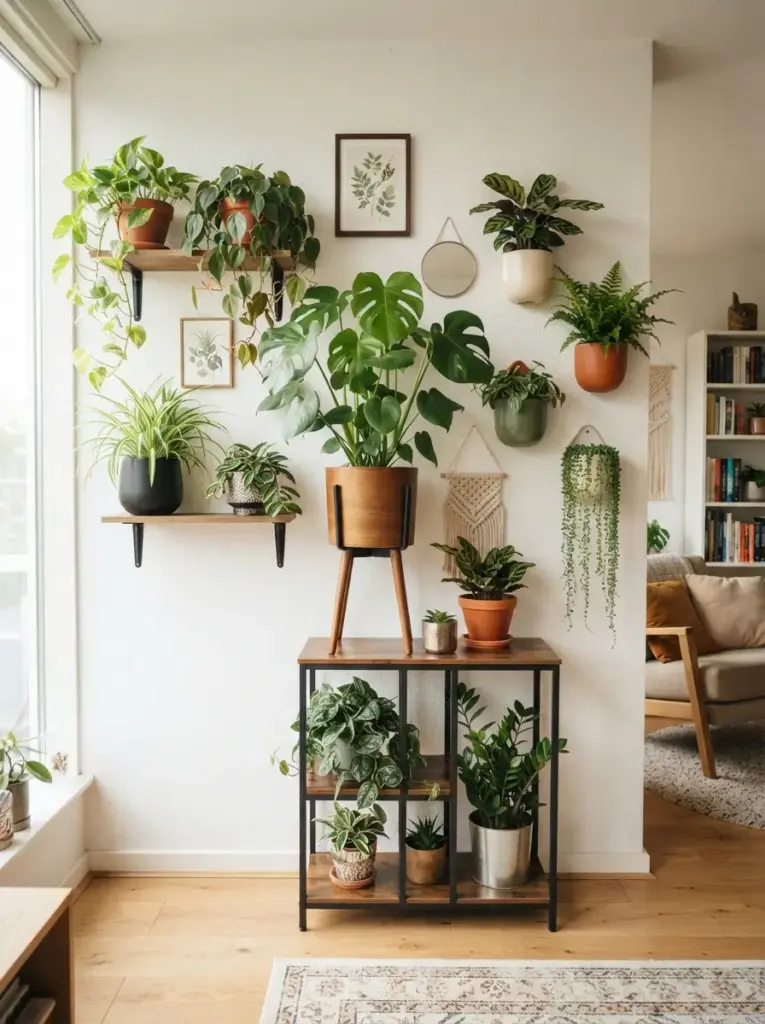
Plants introduce movement, color, and organic form, but wall placement must match their light and watering needs. Trailing pothos, heartleaf philodendron, spider plants, and some hoyas can work on high shelves or wall-mounted planters in bright indirect light. Herbs near a kitchen window need stronger light and frequent trimming. Grouping plants at different heights creates a more natural composition than lining them up evenly. Use waterproof liners and remove pots for watering when possible to protect walls from moisture. Heavy ceramic containers require strong anchors, while lightweight plastic nursery pots can sit inside decorative covers.
Artificial plants may be practical in windowless corners, though fewer high-quality stems usually look better than a full wall of inexpensive plastic vines. Pair greenery with wood frames, white walls, terracotta pots, or matte black brackets for a clear material story. Living wall features work best for plant owners who already understand basic care, not for beginners attracted only by appearance. One healthy trailing plant creates more value than several stressed plants with yellow leaves. Renters can choose freestanding plant stands that visually rise along the wall without permanent mounting.
Lean Art for a Relaxed Rental-Friendly Setup
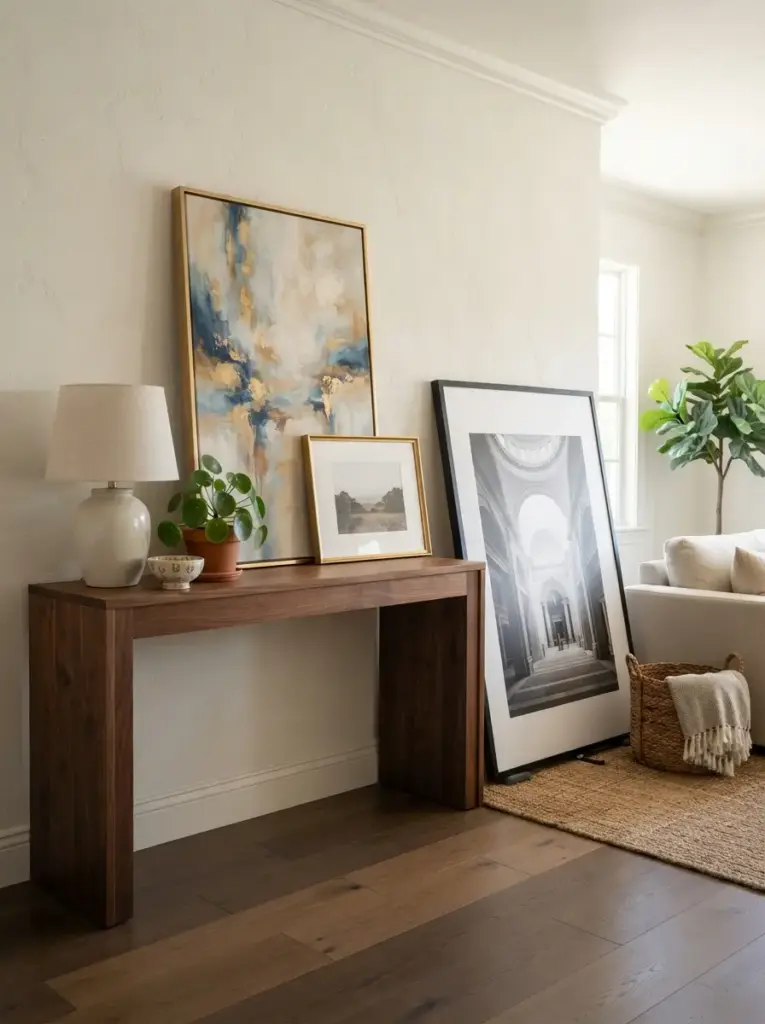
Leaning art removes pressure from measuring, drilling, and committing to a fixed arrangement. Large frames can rest on a console, dresser, mantel, desk, or directly on the floor. Layering two pieces works well when the larger frame sits behind, and the smaller one overlaps a lower corner. Keep both pieces related through color, subject, or frame finish so the grouping feels deliberate. Floor-leaning artwork should be large enough to look intentional, usually at least 30 inches tall, and it should sit where it will not block a path. Anti-slip pads and discreet safety straps help prevent movement, especially in homes with children or pets.
Console displays can combine one leaning print with a lamp, a small bowl, and one plant, leaving space around the objects. Avoid stacking many small frames because the surface quickly becomes cluttered. Leaning arrangements are ideal for renters, frequent movers, and people who like to rotate art seasonally. They also allow you to test a piece in different rooms before deciding whether permanent hanging is worthwhile.
Common Wall Decorating Mistakes to Avoid
Poor scale causes more wall problems than a limited budget. Tiny art above a large sofa, a narrow mirror over a wide console, or frames spaced too far apart can make a room feel disconnected. Measure furniture first, then choose wall pieces that visually relate to it. Artwork above furniture usually looks strongest when the combined width reaches about two-thirds of the furniture width. Hanging pieces too high is another frequent mistake. Eye level should guide standalone art, while art above furniture needs a clear visual relationship with the piece below. Gaps larger than 10 to 12 inches often make the display feel detached.
Overdecorating can make a small apartment feel restless. Every wall does not need a feature. Choose one focal wall in the main room, one quieter treatment elsewhere, and leave some blank space so the eye can rest. Mixed themes also weaken the result. Coastal prints, industrial metal signs, botanical wallpaper, and ornate gold frames may all be attractive, but combining them in one small room creates confusion unless color and material choices connect them.
Weak installation can damage walls, frames, and furniture. Match anchors to the wall type and object weight. Adhesive strips need smooth, clean surfaces and enough curing time. Heavy mirrors, shelves, and ceramics should never rely on light-duty removable hooks. Rental agreements may also restrict drilling or painting, so written permission prevents conflict. Practical Apartment Wall Decor should look secure, feel proportional, and remain easy to live with rather than creating constant maintenance.
Budget-Friendly Wall Decor Tips
Low-cost decorating starts with a plan, not a shopping trip. Select a color palette from items already in the room, then search for pieces that repeat those tones. Printable art, thrift-store frames, leftover fabric, wallpaper samples, calendars, maps, and children’s artwork can all become presentable displays with consistent framing. Painting mismatched frames in one finish creates unity for very little money. Matte black works in modern spaces, warm white suits soft neutral rooms, and natural wood keeps the result relaxed.
Secondhand shops often offer larger frames, mirrors, baskets, and shelves at prices far below new retail. Check the condition of hanging hardware, glass, and corners before buying. Replacing a damaged mat or painting a frame can still cost less than purchasing new. Removable wallpaper can become expensive across a full wall, so use it inside molding frames, behind open shelves, or on one narrow section. Sample pots of paint can create an arch or color block without buying a full gallon.
Rotating decor also saves money because the same collection can feel new when moved. Shift prints between the bedroom and living room, replace seasonal photographs, or restyle a ledge using books and objects already owned. Quality matters most for visible anchors such as one large frame, one mirror, or one shelf. Smaller supporting pieces can be inexpensive. Budget Apartment Wall Decor looks thoughtful when spacing, scale, and color are controlled, even when individual items cost very little.
Apartment Wall Decor Tips for Small Spaces
Small rooms need visual order more than constant minimalism. Choose a clear focal point, then let secondary walls stay quieter. Vertical pieces help draw attention upward, especially beside low furniture. Long horizontal art can widen a narrow wall, while a tall mirror can make a short hallway feel less compressed. Repeating the same frame finish across different rooms creates continuity, which helps the apartment feel larger as you move through it.
Furniture and wall features should work as one composition. Center art over the furniture it belongs to rather than centering it on the entire wall. When a sofa sits off-center because of a doorway, align the artwork with the sofa. In a studio, use wall treatments to define zones: a painted rectangle can mark a desk, picture ledges can identify the living area, and a textile can soften the sleeping corner. Keep floor space clear by using wall lights, narrow shelves, and vertical storage.
Color repetition makes varied rooms feel connected. Pull two shades from a rug, curtain, or upholstery and repeat them in prints or frames. Warm white walls pair well with tan leather, oak, olive, rust, and black accents. Cooler white walls suit gray upholstery, chrome, navy, blue-green, and crisp black. Keep lighting consistent as well. Bulbs around 2700K to 3000K usually flatter living rooms and bedrooms, while slightly brighter 3000K to 3500K lighting can support kitchens and work areas.
Frequently Asked Questions
How Do I Decorate Apartment Walls Without Nails?
Removable picture strips, adhesive hooks, tension rods, picture ledges on approved anchors, over-door systems, and leaning frames can reduce the need for nails. Always check the weight rating and wall compatibility before use. Clean the surface with the product-recommended method, allow it to dry, and follow the waiting period before hanging anything. Heavy mirrors, shelves, and glass frames may still require proper anchors for safety.
How Much Wall Decor Is Too Much in a Small Apartment?
Too much decor usually means the room lacks a visual resting point. One strong focal wall and one or two quieter displays often provide enough interest in a small living area. Leave some blank wall around major pieces, keep frame spacing consistent, and avoid placing separate collections on every surface. When furniture, rugs, curtains, and shelves already contain pattern or color, choose simpler wall pieces.
What Size Art Should Go Above a Sofa?
Artwork or a grouped arrangement should usually measure about two-thirds to three-quarters of the sofa’s width. A sofa that is 84 inches wide can support art around 56 to 63 inches wide. Hang the lower edge roughly 6 to 10 inches above the sofa back so the two elements feel connected. Exact placement may change when the sofa has a very high back or the ceiling is unusually low.
Which Colors Work Best for Apartment Wall Art?
Colors that repeat existing room finishes are easiest to use. Neutral rooms can handle muted rust, olive, navy, ochre, clay, or deep green. Rooms with strong upholstery may benefit from quieter cream, charcoal, tan, or soft gray prints. Select two dominant colors and one small accent rather than using every shade equally. Natural daylight and bulb temperature will change how those colors appear during the day.
Can Renters Use Peel-and-Stick Wallpaper Safely?
Many renters can use removable wallpaper, but safety depends on the wall finish, paint age, texture, humidity, and adhesive quality. Test a sample in a hidden area for at least several days. Avoid applying it to freshly painted, damp, damaged, or heavily textured walls. Remove it slowly according to the manufacturer’s instructions. Written landlord approval offers extra protection when lease rules are unclear.
How Can Wall Decor Make a Studio Apartment Feel Organized?
Use wall treatments to define functions. Place a ledge or gallery arrangement above the sofa area, paint or decal a shape behind the desk, and use a textile or large artwork near the bed. Repeating frame colors keeps separate zones connected. Functional wall storage can reduce clutter, but open systems should display only frequently used or visually tidy items.
Conclusion
Plain walls offer useful space for personality, storage, lighting, and visual structure. Strong results come from measuring carefully, choosing a focal point, matching decor scale to nearby furniture, and repeating colors already present in the room. Renters can rely on removable materials, lightweight frames, plug-in sconces, picture strips, leaning art, and freestanding alternatives. Homeowners can add more permanent shelves, paint, wiring, or architectural details while following the same rules of proportion and balance.
Effective Apartment Wall Decor does not depend on filling every surface or buying expensive pieces. One oversized print, a well-spaced gallery, a properly placed mirror, or a small painted zone can change how the whole room feels. Start with the wall that matters most, test the layout before installation, and add only what supports the room’s function. Thoughtful choices will make a compact apartment feel more finished, personal, and comfortable without sacrificing valuable floor space.