
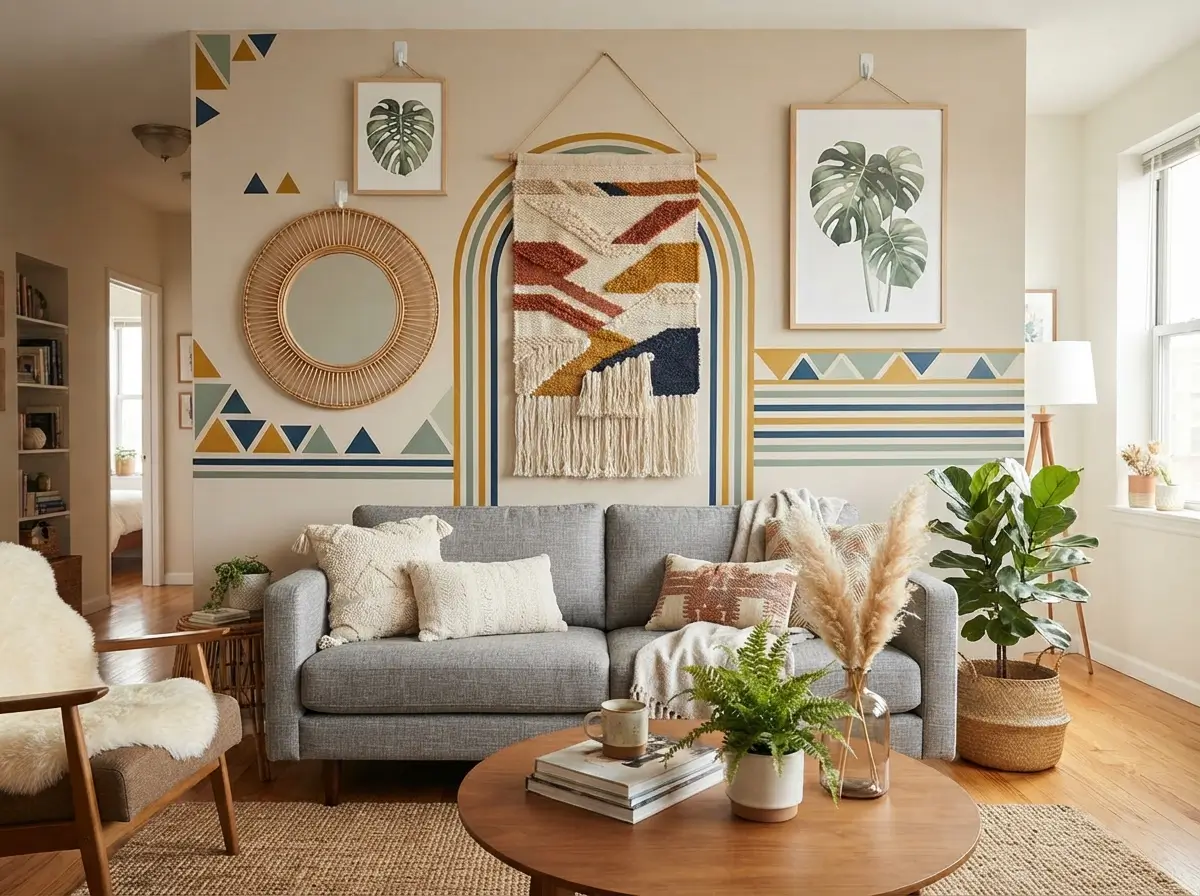

Rental homes often come with plain walls, limited space, and strict rules about paint, nails, and permanent fixtures. Those limits do not mean your rooms must feel unfinished. Smart decorating choices can create a strong focal point while protecting the wall underneath. Temporary materials, lightweight decor, carefully placed furniture, and renter-safe hanging methods can all add depth, color, and personality without risking your security deposit. Apartment Accent Wall
Creating an Apartment Accent Wall works best when you treat the wall as part of the whole room rather than as an isolated feature. Color, lighting, furniture height, floor space, and sightlines all matter. Beginners often focus only on the wall covering, but the strongest results come from balancing that surface with the objects around it. The following ideas explain what to use, why each method suits a small home, who will benefit most, and how to avoid common mistakes.
Can You Create an Accent Wall Without Permanent Changes
Yes, you can create a stylish focal wall with removable wallpaper, fabric, peel-and-stick panels, framed prints, freestanding screens, lighting, and furniture-based arrangements. Good planning matters more than permanent construction. Choose lightweight materials, test adhesives in a hidden area, measure carefully, and keep the design connected to your existing furniture and lighting.
Use Removable Wallpaper With a Calm Pattern
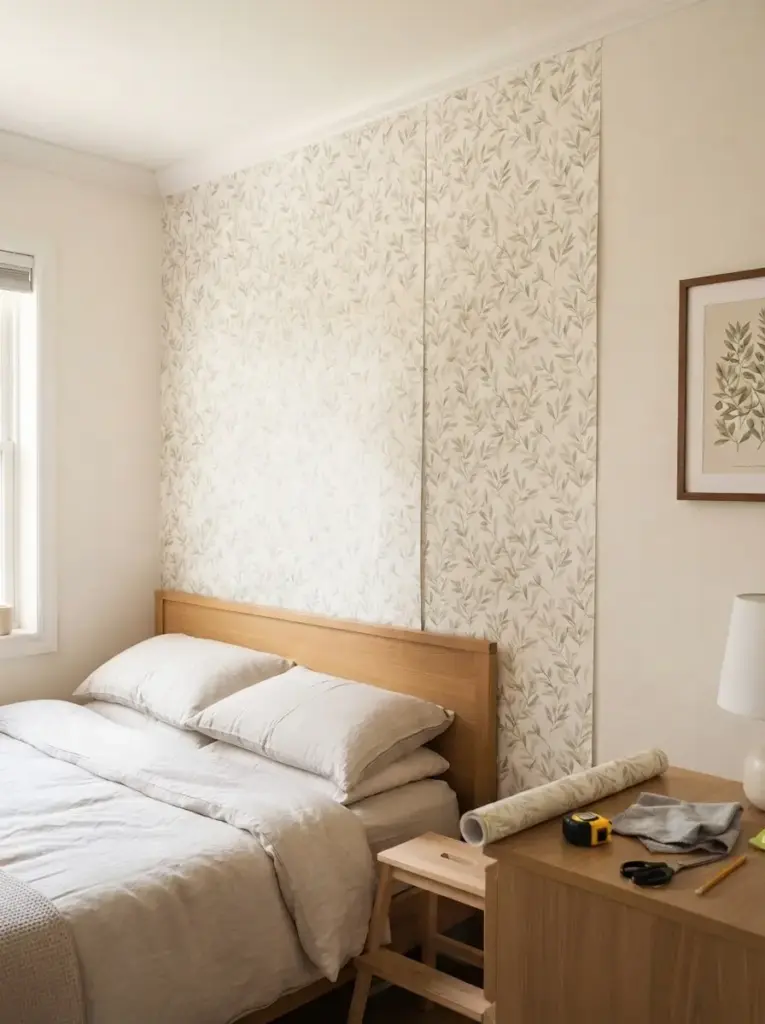
Removable wallpaper gives renters one of the fastest ways to change a plain wall without paint. Small geometric patterns, narrow stripes, soft botanical prints, and subtle linen textures usually work better in compact rooms than oversized, high-contrast designs. A bedroom with warm white walls, for example, can handle a muted olive leaf print behind the bed. A small living room may look more open with vertical beige and cream stripes. Beginners should choose repositionable wallpaper with a matte finish because glossy surfaces can reflect lamps and reveal every seam.
Visual rhythm makes this method effective. Repeated shapes guide the eye across the wall, while controlled color creates depth without needing heavy furniture or permanent trim. Renters who want a complete transformation with minimal tools will find this option especially useful. Measure the wall at three points because ceilings and floors are not always level. Order slightly more material than the exact calculation, and let the rolls rest flat before installation. Start in the least visible corner, smooth from the center outward, and avoid stretching the paper because stretched vinyl may shrink later.
Surface preparation decides whether the result looks polished. Wipe away dust with a dry microfiber cloth, remove grease near kitchens, and allow the wall to dry fully. Fresh paint may need several weeks to cure before adhesive products are applied. Textured walls can create bubbles or weak contact, so test a sample for several days before covering the full area. When removing the paper, warm the edge with a hair dryer on low heat and pull slowly at a shallow angle. Sudden pulling can lift weak paint even when the product is labeled as removable.
Hang Fabric Panels for Soft Color and Texture
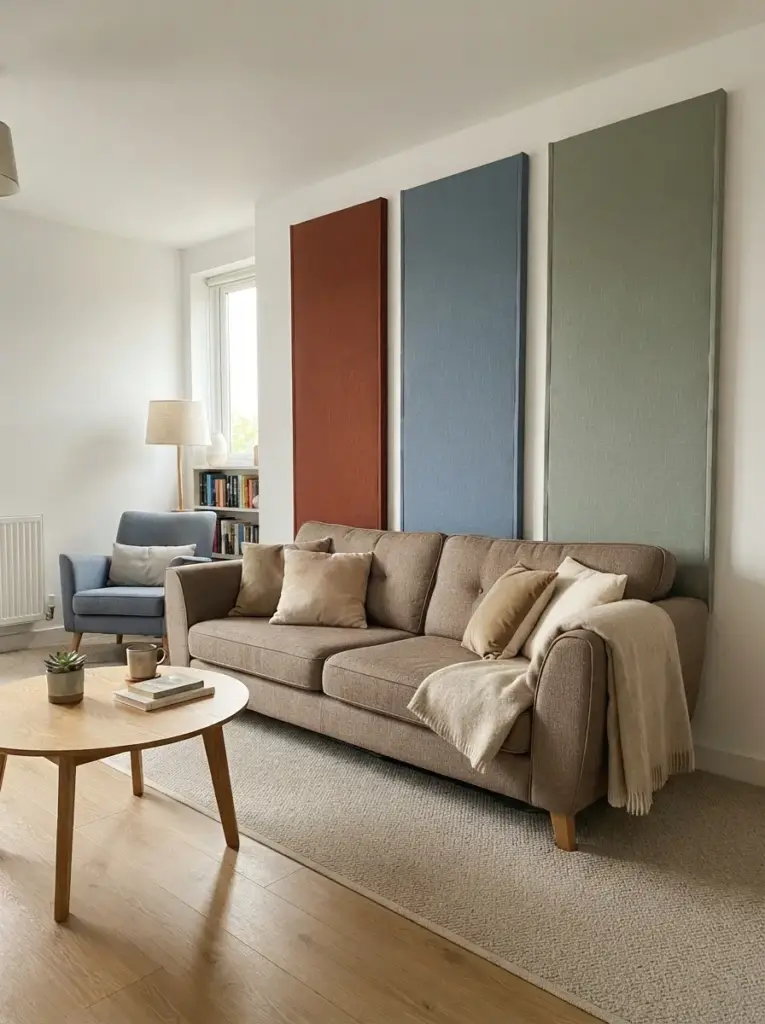
Fabric panels create a warmer result than printed vinyl and can cover a large surface without making the room feel rigid. Linen blends, cotton canvas, lightweight upholstery fabric, and even attractive flat sheets can work. Stretch fabric over foam boards, thin cork sheets, or lightweight wooden frames, then hang the panels with removable picture strips rated for the correct weight. Deep rust, dusty blue, sage green, and warm taupe pair well with common rental finishes such as white walls, beige carpet, and light oak laminate.
Soft texture helps absorb a small amount of echo and makes bedrooms, reading corners, and home offices feel more settled. People who prefer quiet color over bold graphics will appreciate this approach. Three tall panels behind a sofa can make a low ceiling appear higher when the gaps remain narrow and even. Fabric needs clean edges to look intentional. Iron or steam the material before mounting, fold the corners neatly, and secure the back with staples only if the frame is your own removable object. Avoid heavy velvet on weak adhesive hooks because the weight may pull them down. Keep fabric away from radiators, open flames, and damp exterior walls. In rooms with strong afternoon light, test a swatch near the window because some colors fade quickly. Vacuum the surface with a soft upholstery attachment every few weeks to prevent dust from collecting.
Build a Gallery Wall With Removable Hooks
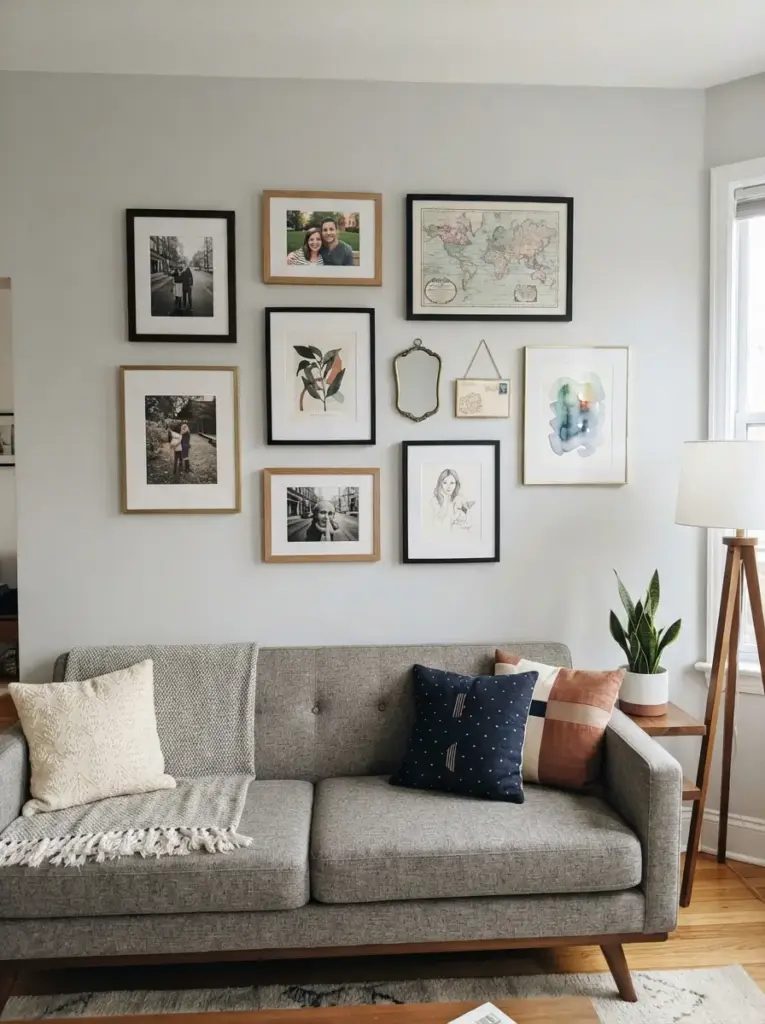
Gallery wall arrangements can turn photographs, drawings, maps, postcards, and small mirrors into a flexible Apartment Accent Wall. Matching frames create a neat, modern result, while mixed frames feel more collected and informal. Beginners should start with five to nine pieces rather than filling the entire surface. Black frames look sharp against white or pale gray walls, natural wood suits warm neutral rooms, and thin brass-colored frames work well with navy, forest green, or clay accents.
Personal meaning gives this idea its strength. Art can move with you, change by season, and reflect your interests without altering the wall itself. Small-space renters often benefit because the display adds character without taking up floor area. Arrange the frames on the floor first, keeping five to eight centimeters between pieces. Trace each frame onto paper, tape the paper templates to the wall, and view the layout from the room entrance before hanging anything. Center the full group around eye level rather than centering each frame separately.
Create a Color Block With Removable Vinyl
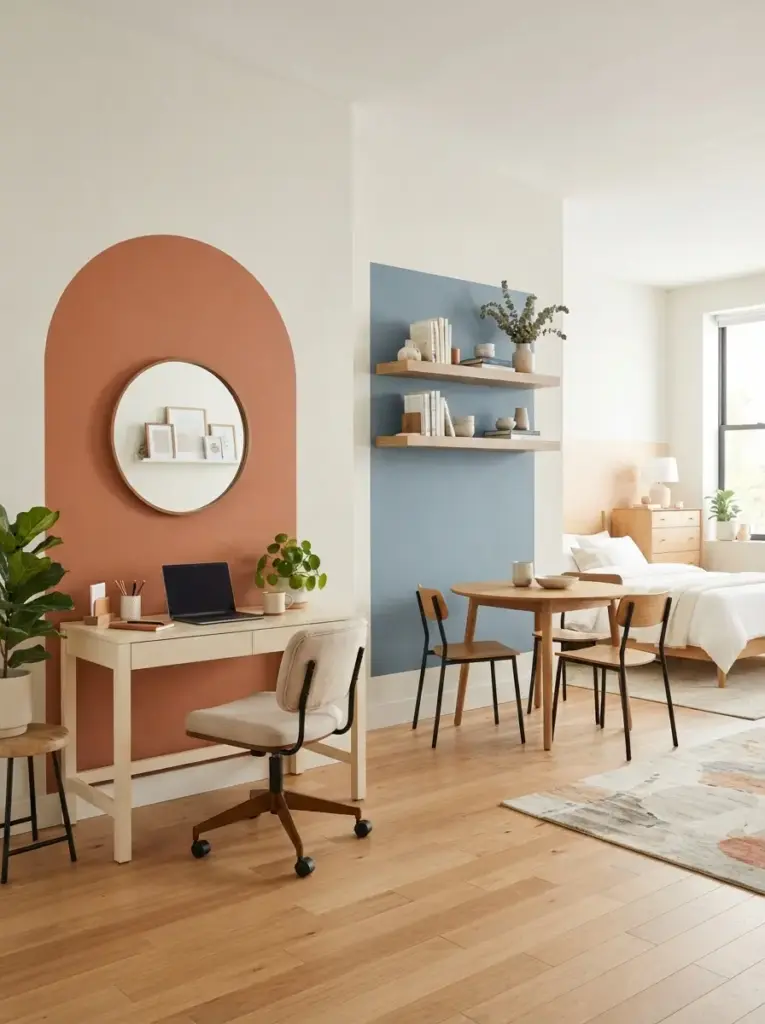
Removable vinyl sheets can form arches, circles, half walls, stripes, or simple rectangles without using paint. Large shapes work best when the color relates to nearby furniture. A terracotta arch behind a cream desk can define a work zone. A muted blue rectangle behind floating-look shelves can frame books and ceramics. A pale peach half wall can soften a bedroom with white bedding and light wood furniture. Matte vinyl generally looks more like paint than glossy film and produces fewer distracting reflections.
Clear boundaries make color blocking useful in studio apartments and multipurpose rooms. The shape signals a separate function even when no physical divider exists. People working with open-plan layouts can use one block behind a dining table and another behind a compact desk. Keep the palette limited to one main color plus existing neutrals. Two or three unrelated bold shapes can make a small room feel busy and reduce the sense of order.
Layer Oversized Art Against the Wall
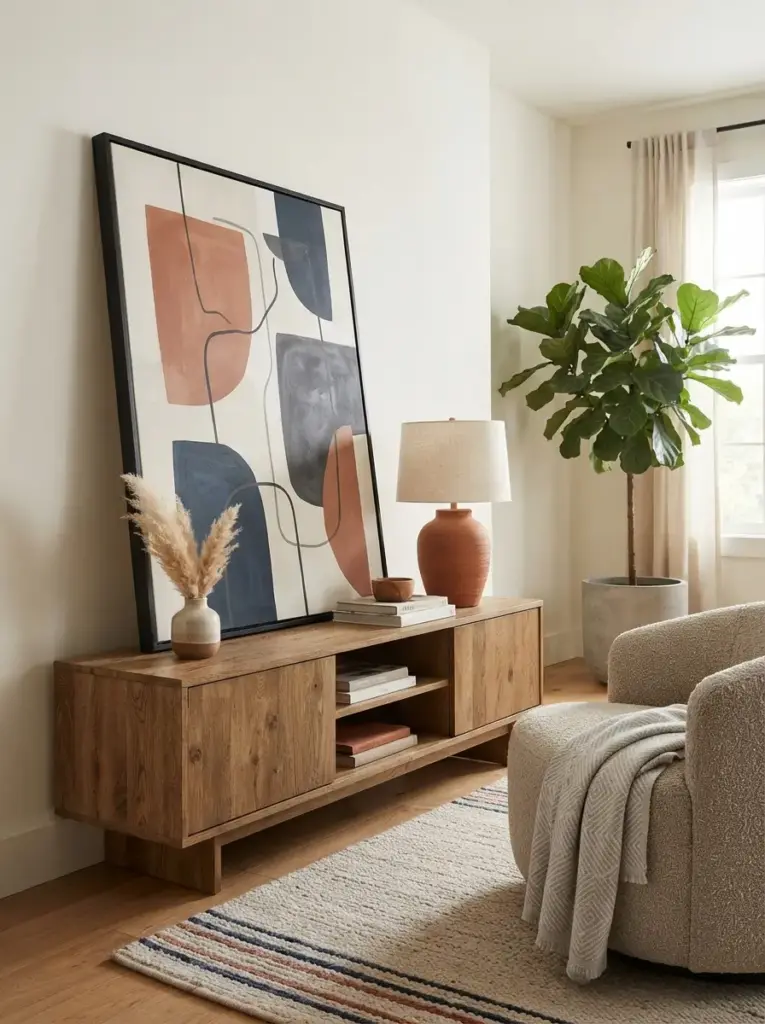
Oversized art does not always need to hang. A large framed print, canvas, textile artwork, or lightweight board can lean against the wall on a console, dresser, low bookcase, or floor. One substantial piece usually looks calmer than many tiny accessories. Abstract line art, simple landscapes, architectural photography, and large color fields suit modern apartments because the image remains readable from across the room. Choose colors that repeat at least one element already present, such as a rug stripe, cushion, lamp base, or curtain.
Scale creates the impact here. A generous artwork gives the wall visual weight while the leaning placement avoids holes and complex installation. Renters who move often will value the flexibility. A piece above a console should measure roughly two-thirds to three-quarters of the furniture width. Floor-leaning artworks best in a low-traffic corner, behind a side table, or beside a broad plant where they cannot be kicked or knocked over.
Style a Freestanding Slatted Screen
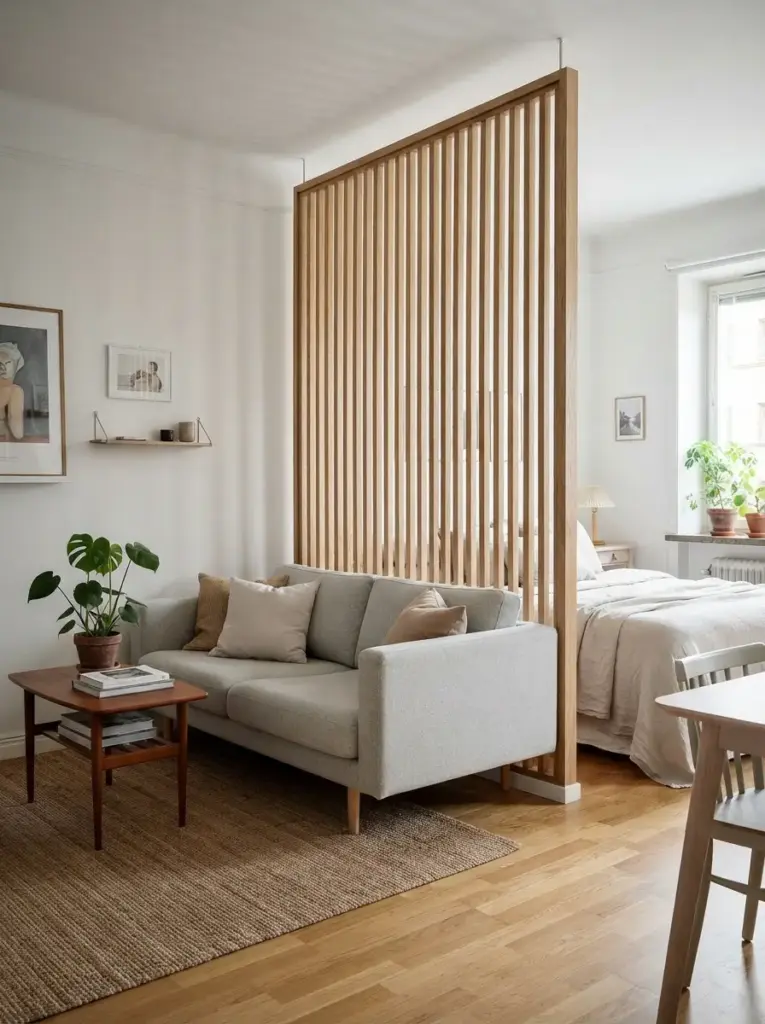
Freestanding slatted screens add architectural detail without attaching anything to the wall. Ready-made room dividers, folding screens, lightweight wood panels, and narrow bookcase-style partitions can all serve the purpose. Light oak slats suit Scandinavian interiors, walnut tones add warmth to neutral rooms, and painted black frames create a stronger contrast. Position the screen behind a sofa, bed, desk, or dining bench so it reads as a deliberate backdrop rather than a random divider.
Vertical lines draw the eye upward and give a small room a clearer structure. Studio residents can use a screen to suggest separation between sleeping and living areas while still allowing light to pass through. People who cannot use any wall adhesive will find this method especially practical. Keep at least a small gap between the screen and the wall to avoid trapping moisture, particularly on exterior walls.
Use Peel-and-Stick Wood or Fluted Panels
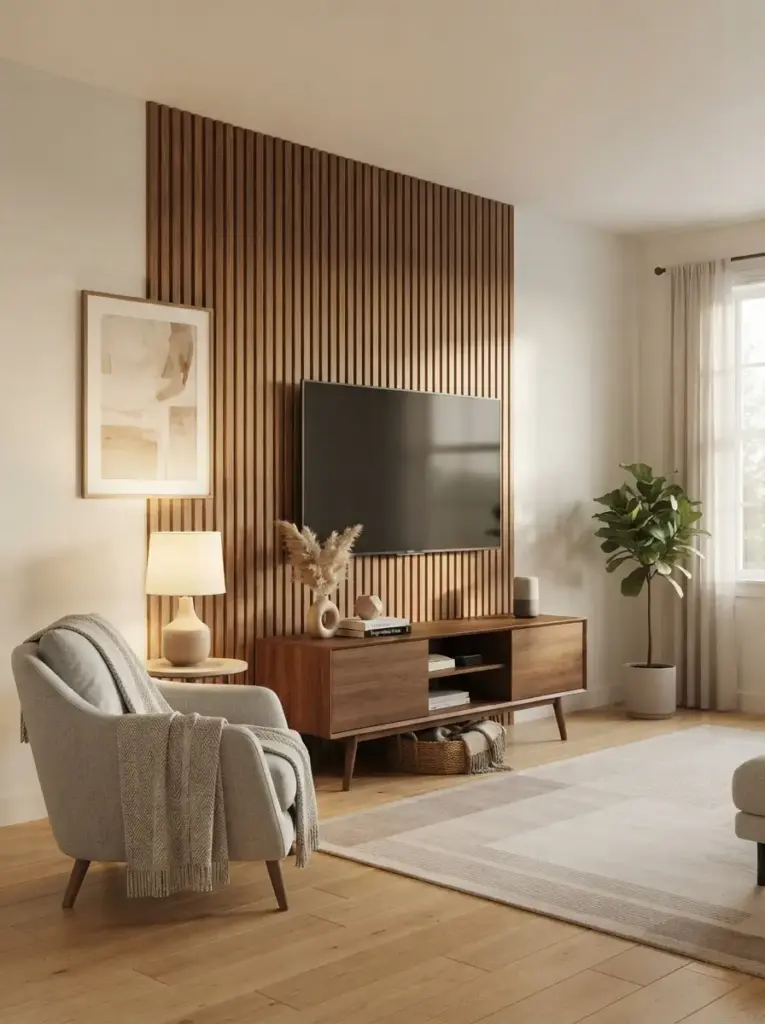
Peel-and-stick wood-look strips and lightweight fluted panels can bring warmth to a wall without full carpentry. Narrow vertical pieces behind a television, bed, or entry bench create a structured surface that feels more substantial than flat wallpaper. Choose pale oak for bright, minimal rooms, medium walnut for warm contemporary spaces, or painted white fluting when texture matters more than color. Foam and lightweight polymer versions are usually easier for renters than real wood because they place less stress on adhesives.
Shadow lines explain the appeal. Raised grooves catch light differently throughout the day, which creates depth even in a neutral palette. Home decor lovers who want architectural character without tools may prefer this option. Use panels on a limited section rather than on every wall. A strip about the width of a bed or media console often provides enough contrast. Warm white lighting around 2700K to 3000K enhances oak and walnut tones, while cooler 4000K bulbs may make them appear flat or gray.
Product testing remains essential because some panel adhesives grip strongly. Apply a sample in a hidden area and leave it for at least several days. Renters can also mount panels onto thin, lightweight boards and lean or hang those boards with approved systems, reducing direct wall contact. Align every piece with a level because small errors become obvious across repeated grooves. Finish exposed edges with matching removable trim or place the section between furniture pieces that naturally frame it.
Arrange Washi Tape Lines and Shapes
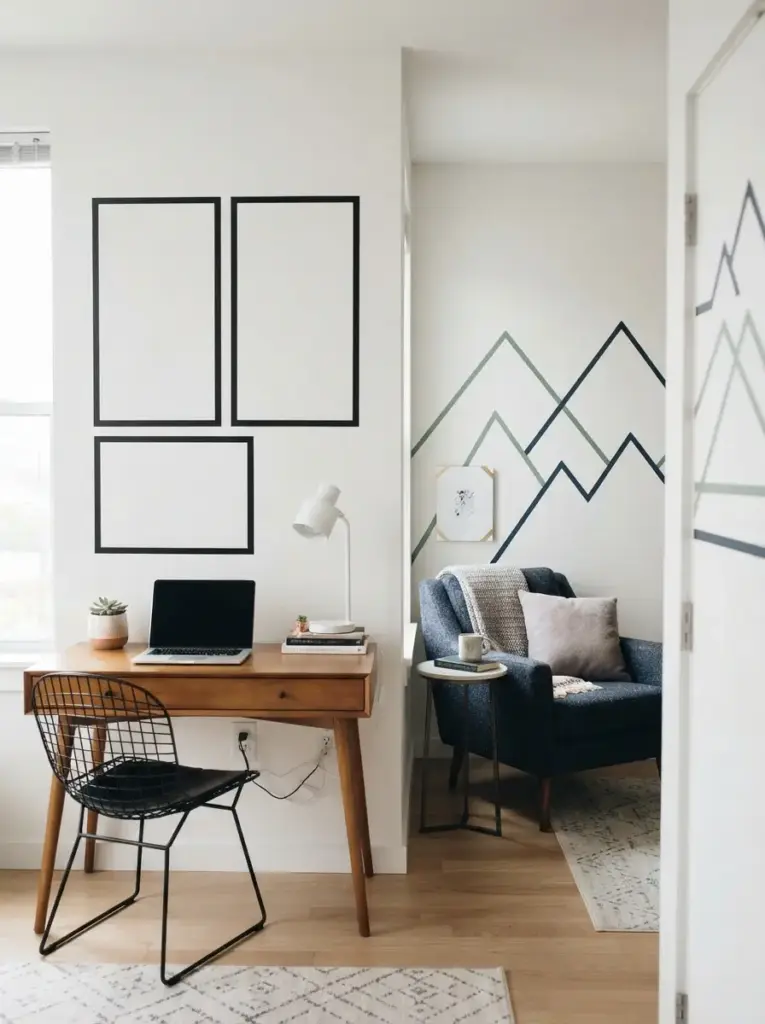
Washi tape offers a low-cost way to create geometric outlines, simple house shapes, mountain lines, grids, or framed color zones. Black tape can produce a clean graphic design on white walls. Muted green, ochre, blush, or navy tape suits softer rooms. Metallic tape adds small highlights but should be used sparingly. Beginners can create three oversized rectangles behind a desk or form a simple diagonal pattern behind a reading chair.
Low commitment makes the idea useful. Tape can be adjusted quickly, costs less than most wall coverings, and allows renters to experiment before investing in larger decor. Students, first-time renters, and people decorating temporary rooms often benefit most. Keep the pattern simple enough to understand from the doorway. Narrow, closely spaced lines can look cluttered in a small room, especially when shelves, cables, and artwork already compete for attention.
Build a Temporary Book and Object Display
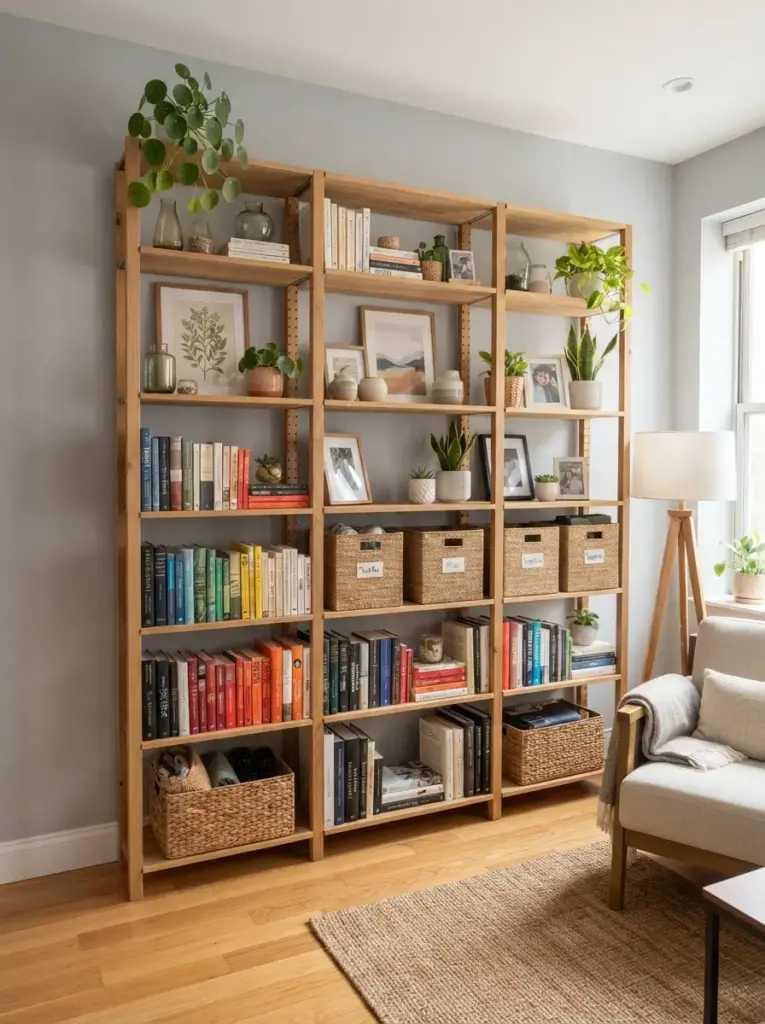
One tall open bookcase, modular cube unit, ladder shelf, or pair of narrow shelving towers can create a furniture-based focal wall. Books, framed art, baskets, ceramics, and small plants then provide color and rhythm. Matching storage boxes hide visual clutter, while open areas keep the unit from feeling heavy. White shelving blends with pale walls, black metal creates a stronger industrial outline, and natural wood adds warmth to cool gray rentals.
Depth and function make this solution especially valuable. The wall gains character while the furniture also stores useful items, which is important in compact homes. Readers, collectors, and renters with limited closets will benefit most. Keep heavier books on lower shelves, place medium objects near the center, and leave roughly one quarter of the spaces partly empty. Negative space prevents the arrangement from looking crowded.
Hang Lightweight Baskets and Woven Trays
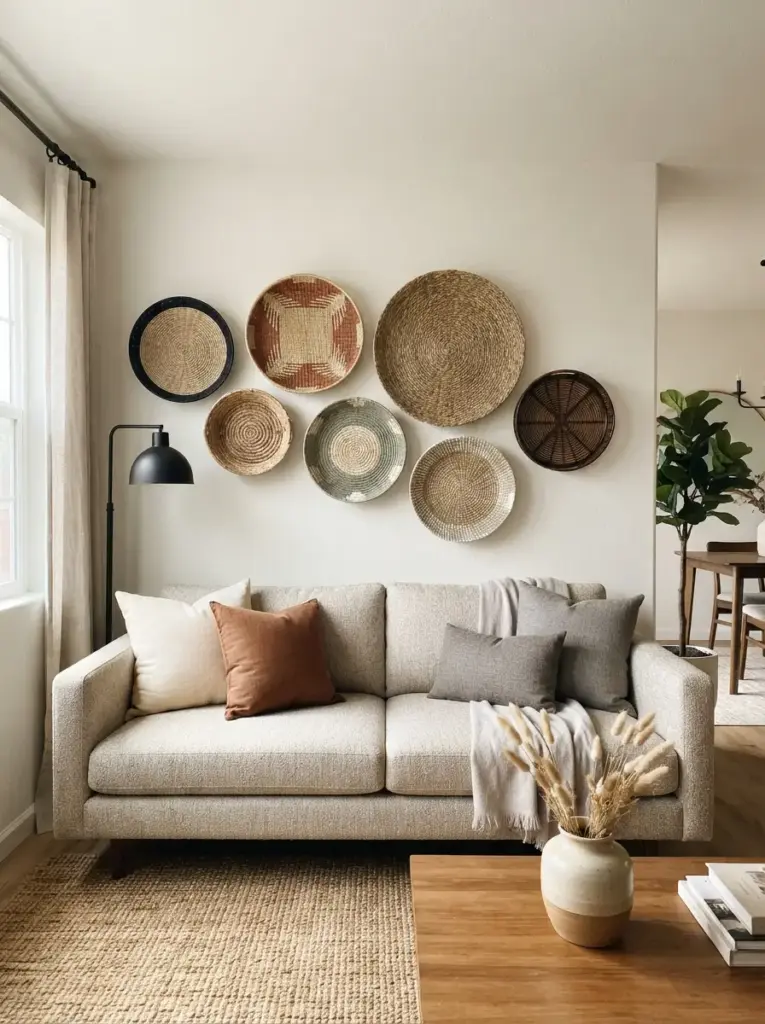
Flat woven baskets, rattan trays, seagrass discs, and lightweight wall plates create texture without heavy frames. A cluster of five to seven pieces works well above a sofa, dining bench, or entry console. Natural tan tones soften white and gray walls, while black-edged baskets can connect with dark curtain rods, table legs, or lighting fixtures. Painted woven pieces in rust, sage, or cream can introduce color without overwhelming the room.
Varied texture keeps a neutral interior from feeling flat. Light catches the weave, creating subtle shadows that change during the day. Renters who prefer natural materials and relaxed interiors may find this method more inviting than formal artwork. Start with one larger basket slightly off center, then build outward with smaller pieces. Keep the overall shape wider than it is tall above a sofa, and use a more vertical arrangement in narrow entry areas.
Use Curtains as a Full Wall Backdrop
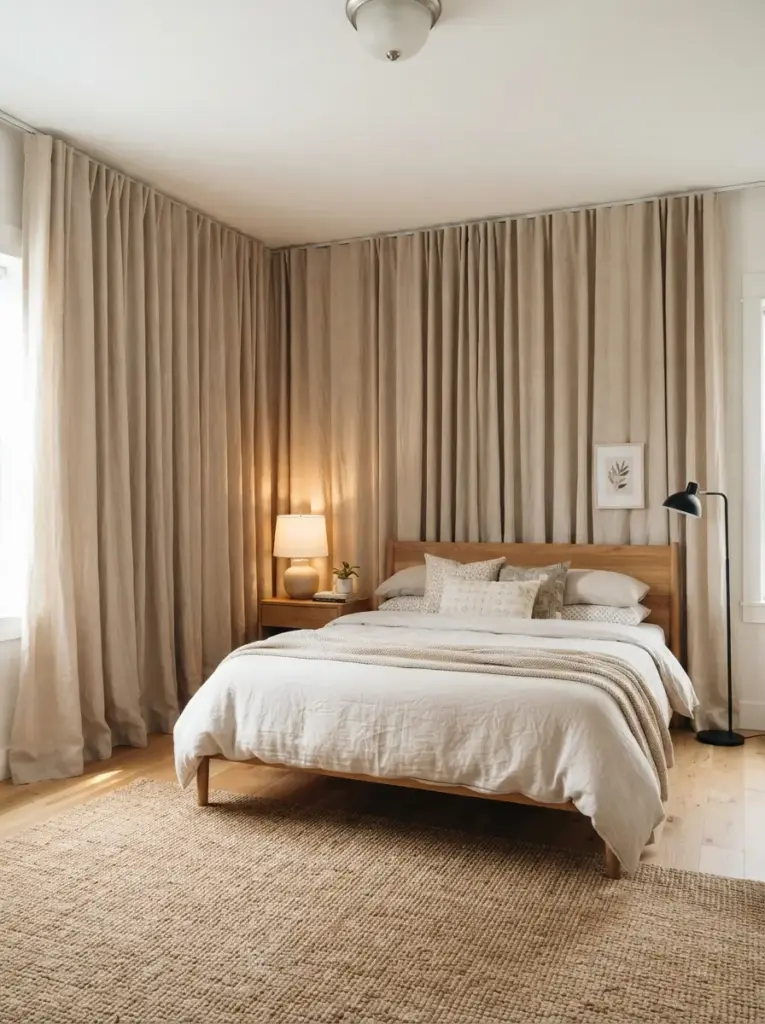
Curtains can cover a wall even when no window sits behind them. A tension rod placed between two close walls, a freestanding garment rail, or a renter-safe support system can hold lightweight fabric. Full-height curtains in warm white, oatmeal, muted green, or dusty blue create a soft backdrop behind a bed or sofa. Narrow vertical folds make the ceiling appear taller, especially when the fabric begins near the ceiling and reaches the floor.
Continuous fabric hides minor wall imperfections and adds softness to rooms with hard floors and simple furniture. Sleepers who want a calmer bedroom or renters dealing with unattractive wall color may prefer this solution. Choose fabric with enough body to hang evenly but not so much weight that the support becomes unsafe. Linen-look polyester often provides a practical balance because it resists wrinkling and usually costs less than real linen.
Create a Plant Focus Wall With Freestanding Stands
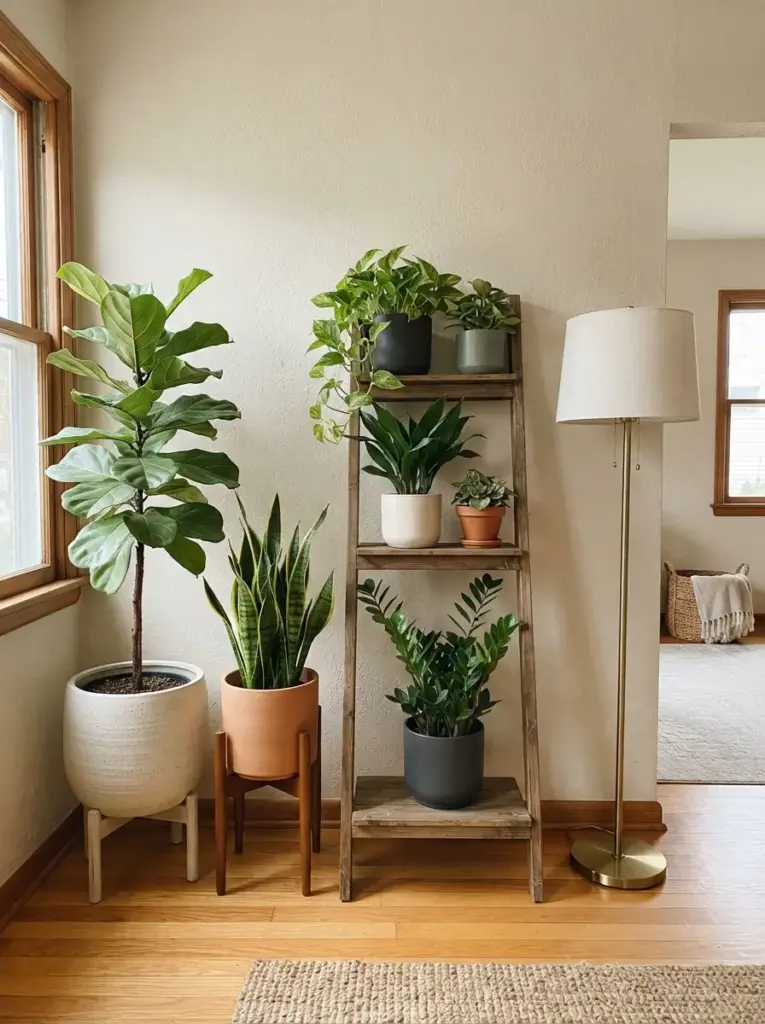
Plants can form a living focal area without requiring hanging planters or wall-mounted shelves. Combine one tall floor plant, one medium plant on a stand, and several smaller pots on a console or ladder shelf. Snake plants, ZZ plants, pothos, peperomia, and cast iron plants tolerate many indoor conditions, though every plant still needs suitable light and care. Use matching pots in off-white, terracotta, charcoal, or muted green to keep the group visually connected.
Layered height gives the wall energy while leaves soften hard furniture lines. Plant lovers and renters with bright corners will enjoy this flexible arrangement. Place the tallest plant near one side rather than directly in the center, then step heights downward. A narrow floor lamp on the opposite side can balance the composition. Keep enough space between leaves and wall surfaces to allow airflow and prevent moisture marks.
Frame a Bed With Removable Wall Decals
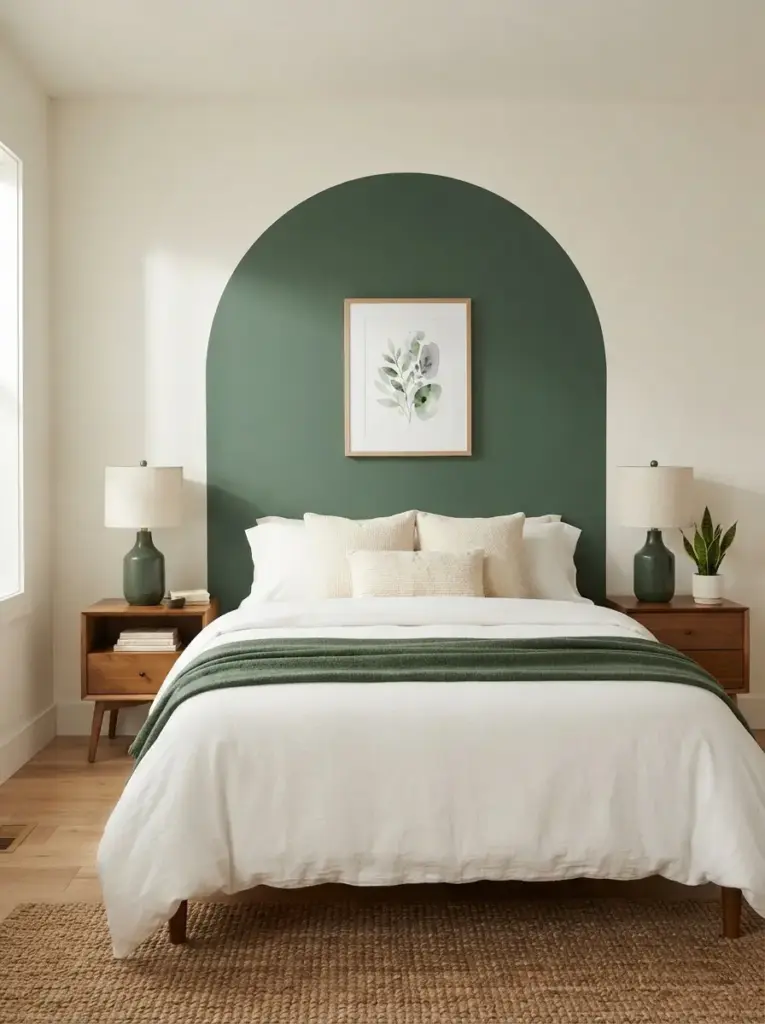
Large decals can create arches, branches, abstract curves, stars, or simple headboard shapes behind a bed. Soft clay, deep green, muted navy, and warm gray work well with white or cream bedding. Children’s rooms can use small repeated motifs, while adult bedrooms usually look calmer with one large shape. Choose decals with a matte finish and enough open wall around them to keep the design from feeling cramped.
Framing explains why the method succeeds. The decal gives the bed a clear visual boundary, which is useful when a rental bedroom lacks architectural features. People without a headboard or those using a basic platform bed will gain the most value. Extend the main shape slightly wider than the mattress so the proportions feel intentional. Bedside lamps, tables, and pillows should repeat one or two colors from the decal to connect the wall with the furniture.
Use Plug-In Lighting to Draw Attention
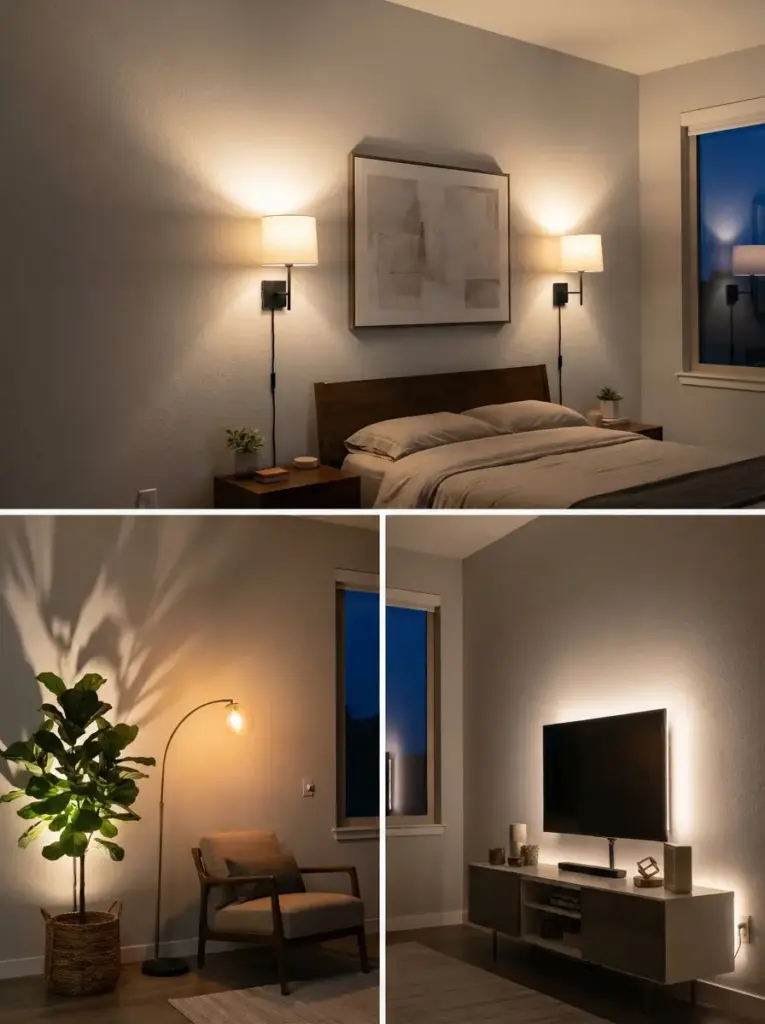
Lighting can create an accent feature even when the wall remains physically unchanged. Plug-in wall sconces, floor lamps, LED light bars, picture lights, and uplighters can wash a surface with warm light. A pair of plug-in sconces beside a bed creates symmetry. An uplighter behind a plant produces leaf shadows. A slim light bar behind a media console adds depth without covering the wall. Warm white bulbs between 2700K and 3000K suit living rooms and bedrooms, while 3500K can support a home office without feeling harsh.
Contrast between light and shadow gives the wall definition. Renters who cannot apply adhesive materials may still create a strong Apartment Accent Wall by directing light carefully. Use dimmers where possible, especially in rooms that serve several functions. A low evening setting makes texture and artwork easier to notice, while brighter light supports reading or work.
Cable management determines whether the result feels finished. Run cords behind furniture, use removable cable clips only after testing them, and keep plugs accessible. Avoid exposed extension cords across walkways. Light sources should not shine directly into seated eye level or reflect harshly on televisions and glossy art. Test lamp placement after sunset because daytime conditions can hide glare and uneven brightness.
Style a Console Wall With Layered Decor
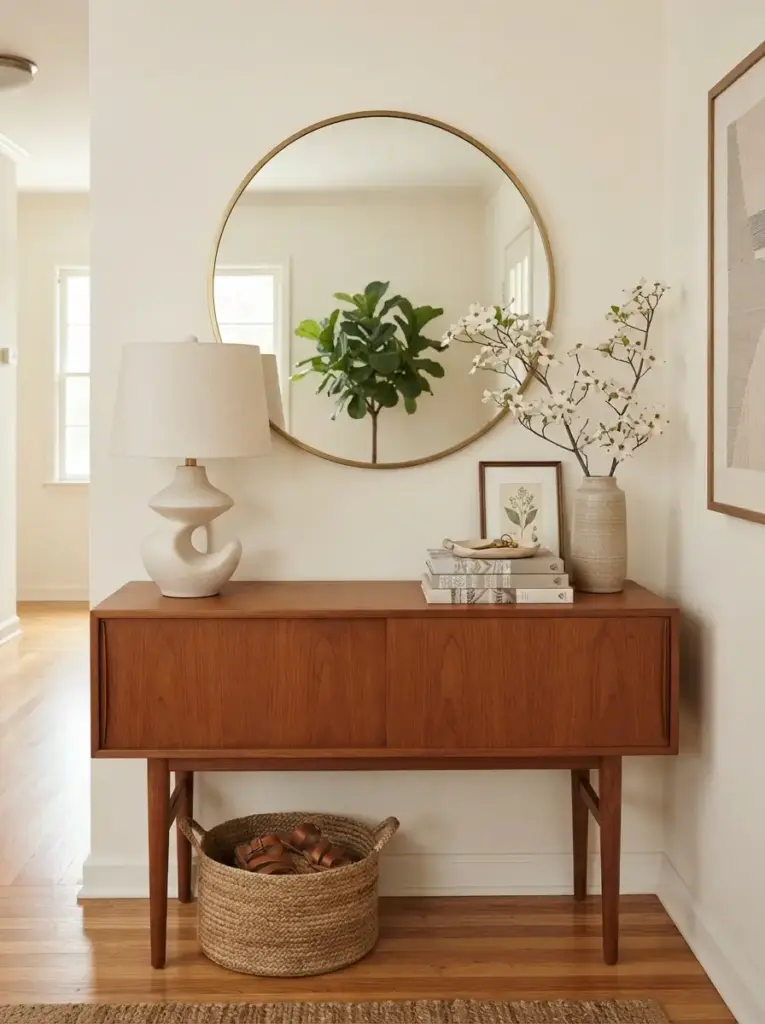
One console table, low dresser, or slim cabinet can anchor a wall through careful layering. Start with one main piece such as a large mirror, framed print, or textile panel. Add a table lamp, a medium-height object, and a low tray or stack of books. One plant or branch can soften the straight lines. Keep the arrangement related to the furniture width, and leave some empty wall and tabletop space around the objects.
Balanced layering creates a focal point without filling the entire surface. Beginners often find this approach easier because every item can be moved until the proportions feel right. Entryways, dining areas, and living rooms with narrow walls suit it well. A 120-centimeter console might support an artwork around 75 to 90 centimeters wide, paired with a lamp on one side and a smaller object on the other. Symmetry feels formal, while uneven heights produce a more relaxed result.
Useful objects can still look decorative. A lidded box can hold keys, a basket beneath the console can store shoes, and a small lamp can improve evening visibility. Avoid placing every item in a straight line. Overlap one or two pieces slightly and vary the height. Mirrors should reflect something attractive rather than clutter, an open bathroom door, or strong glare from a window. Non-slip pads and removable anti-tip supports improve safety.
Common Mistakes to Avoid
Poor scale causes many rental wall projects to feel awkward. Tiny artwork above a long sofa, a narrow decal behind a king-size bed, or a small wallpaper patch floating in the middle of a large wall can look accidental. Measure the furniture first and let its width guide the feature. Most focal arrangements should relate clearly to the object below them, whether that object is a bed, desk, console, or seating area.
Too many competing elements can also weaken the result. Bold wallpaper, several bright cushions, a patterned rug, colorful curtains, and a crowded gallery wall may all fight for attention in one small room. Choose one main feature and let supporting pieces repeat its colors quietly. A patterned wall usually needs simpler textiles. A highly textured basket display often looks best against plain upholstery and a restrained rug.
Unverified adhesive products create avoidable damage. Labels such as removable or renter-friendly do not guarantee compatibility with every paint finish. Old matte paint, freshly painted walls, damp surfaces, and textured plaster may react differently. Test products in a low area, leave them in place long enough to reveal problems, and follow removal instructions. Keep photos of the wall before installation in case you need to document existing marks.
Bad lighting can flatten the entire design. Cool bulbs may make warm beige, terracotta, and wood tones appear dull. One bright ceiling light can create harsh shadows and leave the focal wall uneven. Layer ambient, task, and accent lighting instead. Warm bulbs around 2700K suit relaxing spaces, while 3000K to 3500K often works in kitchens and work zones. Check colors both during daylight and after dark.
Clutter around the focal wall reduces its impact. Boxes, loose cables, oversized furniture, and too many small accessories prevent the eye from reading the arrangement. Clear the surrounding floor, manage cords, and remove one or two objects after styling. A strong wall feature needs breathing room. Keeping nearby furniture practical and visually simple often improves the result more than buying additional decor.
Budget-Friendly Ways to Plan the Project
Planning around what you already own can cut costs immediately. Pull colors from existing bedding, rugs, artwork, and furniture before buying wall materials. A navy cushion might inspire navy tape lines, a rust-colored rug could support terracotta decals, and a light wood desk may pair with oak-look panels. Repeating existing tones makes low-cost additions look deliberate rather than random.
Secondhand shopping offers useful frames, baskets, screens, fabric, and shelving at lower prices. Focus on shape and size first because many finishes can be cleaned, wrapped, or repainted away from the rental wall. Matching mismatched frames with one paint color can create a unified gallery. Old curtains can become stretched fabric panels. A folding screen can serve behind a bed, then move to a work area later.
Small samples help prevent expensive mistakes. Order wallpaper swatches, buy one vinyl sheet, or test a single panel before covering a large area. View samples beside the wall during morning, afternoon, and evening. Colors can shift under different bulbs and window directions. A muted green may appear gray in north-facing light, while warm beige can turn yellow under very warm bulbs.
Gradual styling keeps spending controlled. Start with the main feature, then live with it for several days before adding accessories. Many rooms need less decoration than expected once the focal area is installed. Use a simple budget divided into materials, mounting supplies, lighting, and optional decor. Reserve a small amount for replacement strips, extra wallpaper, or edge repairs.
Reusable pieces provide better long-term value. Frames, curtains, screens, modular shelves, lamps, and fabric panels can move to another home. Highly customized wall films may not be reusable, so use them on smaller sections when budget matters. A flexible Apartment Accent Wall should solve a current decorating problem without creating a large pile of materials that cannot serve another purpose.
Practical Tips for Better Apartment Accent Wall Results
Room function should guide every choice. Bedrooms benefit from soft texture, calm patterns, and warm light. Work areas need clearer lines, lower visual clutter, and lighting around 3000K to 3500K. Living rooms can handle stronger art, baskets, or wood-look texture because people usually view those walls from farther away. Entryways need durable, easy-to-clean materials that will not catch on bags or coats.
Sightlines matter in small apartments. Stand at the main entrance and identify which wall appears first. A feature wall often works best when it naturally draws attention from that position. Avoid highlighting a wall crowded with doors, thermostats, vents, or large switches unless the design can include those elements neatly. Clean uninterrupted surfaces usually produce a calmer result.
Furniture placement should support the wall. Centering is useful, but strict symmetry is not always necessary. A sofa may sit slightly off center to preserve a walkway, while the art group stays centered over the sofa itself. Beds can align with decals rather than the full room width. Console tables can shift to balance a doorway. Design around how people move, not only around wall measurements.
Color balance improves when you follow a simple distribution. Let the room’s main neutral cover most large surfaces, use a secondary tone on furniture or textiles, and reserve the strongest accent for smaller areas. Exact percentages are not essential, but restraint helps. A deep green wall feature may only need two or three smaller green references elsewhere, such as a cushion, plant pot, or book cover.
Material samples should always meet the real wall before purchase. Rental walls may be cooler, warmer, rougher, or glossier than product photographs suggest. Hold samples beside flooring, curtains, and the largest piece of furniture. Check whether the material makes the room feel narrower, darker, or busier. A successful Apartment Accent Wall should support the space rather than dominate every view.
Removal planning belongs at the beginning, not the end. Keep packaging and instructions, record the product name, and note where seams or strips start. Store a small quantity of matching material for repairs. When moving out, remove items slowly in a warm room, clean residue with methods approved for the wall finish, and stop if paint begins to lift. Careful removal can matter as much as careful installation.
Frequently Asked Questions
What Is the Best Temporary Material for Renters
Removable wallpaper is often the most complete option for smooth, well-cured walls, while fabric panels and freestanding screens are safer for uncertain paint. The best choice depends on wall texture, humidity, material weight, and how long the feature will stay. Testing a sample remains the most reliable first step.
Which Wall Should Become the Focal Wall
Choose the wall that naturally catches attention when you enter the room or the wall that already supports a main furniture piece. Bed walls, sofa walls, dining walls, and desk walls usually work well. Avoid surfaces broken by several doors, vents, or large windows unless the layout still feels balanced.
Can Removable Wallpaper Damage Paint
Removable wallpaper can lift weak, uncured, old, or poorly bonded paint. Damage risk also increases when the wall has moisture problems or strong texture. Use a test piece in a hidden area, wait several days, and remove it slowly. Gentle heat may help release adhesive, but follow the product instructions.
How Many Colors Should a Small Room Use
Most small rooms feel organized with one main neutral, one secondary color, and one stronger accent. Extra colors can appear in small amounts through books, art, or plants. Repeating a limited palette across the wall, furniture, and textiles creates continuity without making every object match exactly.
What Lighting Works Best for an Accent Feature
Warm white light between 2700K and 3000K works well for bedrooms and living rooms because it supports wood, beige, clay, and natural textures. Home offices may benefit from 3000K to 3500K. Position lights to reveal texture or artwork without causing glare at seated eye level.
How Can Beginners Avoid Crooked Layouts
Paper templates, painter’s tape, a measuring tape, and a small level prevent most alignment problems. Mark the furniture center first, then build the wall layout around that point. Step back frequently and check the design from the doorway. Small corrections are easier before adhesive makes full contact.
Conclusion
Temporary wall decorating works best when style, safety, scale, and removal all receive equal attention. Removable wallpaper, fabric, vinyl shapes, artwork, screens, shelving, plants, curtains, and lighting each solve a different problem. Renters should choose methods that suit the actual wall finish, available floor space, room function, and daily habits.
Careful measurement and restrained color choices usually create better results than adding more decor. Beginners can start with one low-risk feature, observe how it changes the room, and add supporting objects only where needed. With thoughtful planning, an Apartment Accent Wall can make a rental feel personal, organized, and comfortable without requiring permanent construction.