
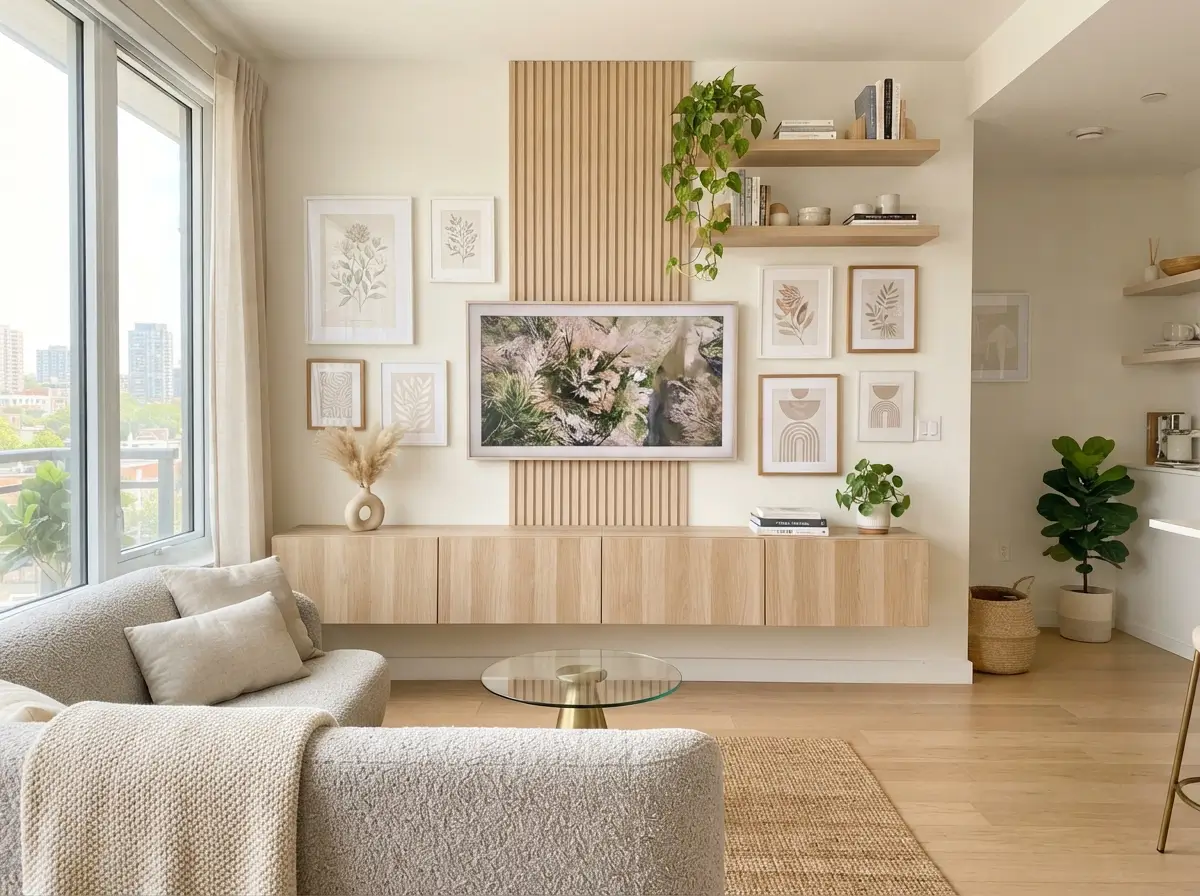

Small living rooms often feel crowded because the television, storage, cables, lighting, and furniture all compete for the same limited area. A well-planned Apartment TV Wall can solve several of those problems at once by creating one clear focal point, reducing visual clutter, and freeing up valuable floor space. Good design does not require expensive built-ins or major renovations. Careful choices involving scale, color, furniture depth, mounting height, lighting, and storage can make a compact room feel calmer and more open.
Rental rules, tight budgets, awkward corners, and narrow layouts can make the project seem difficult at first. Practical planning matters more than decorative extras. Start by measuring the wall, viewing distance, outlet locations, walkways, and nearby furniture. Those measurements help you choose a television size, console width, mounting position, and storage plan that fit the room instead of overpowering it. The ideas below focus on changes that improve both appearance and daily use.
Can a TV Wall Make a Small Apartment Look Bigger?
Yes. A thoughtful Apartment TV Wall can make a small room feel bigger when it reduces floor-level bulk, keeps cables out of sight, uses balanced proportions, and guides the eye across a clean surface. Wall-mounted furniture, pale colors, shallow storage, and soft lighting usually create the strongest result. The goal is not to make the television disappear completely. The goal is to integrate it so the whole wall feels intentional rather than crowded.
Float the TV Above a Slim Wall-Mounted Console
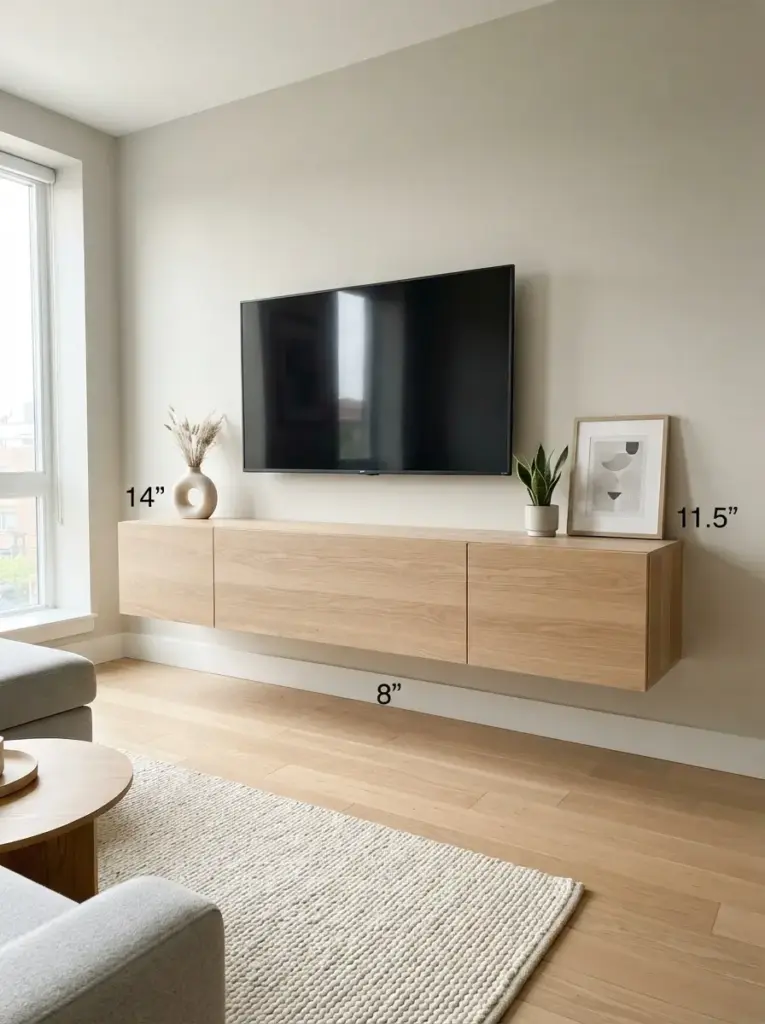
Mounting the television above a floating console immediately creates more visible floor area. Even a narrow strip of flooring under the cabinet can make a compact room appear lighter because the eye reads the wall and floor as continuous surfaces. Choose a console between 12 and 16 inches deep rather than a bulky media cabinet. A width that extends 8 to 18 inches beyond each side of the screen usually looks balanced without taking over the wall. Matte white, pale oak, warm walnut, and soft greige are reliable finishes for small rooms because they blend easily with common rental paint colors.
Hidden brackets and push-to-open doors keep the front clean. Store remotes, game controllers, routers, and charging cables inside, but leave enough ventilation around electronics. Renters can use a French cleat system secured into studs, then patch the small holes later. People who cannot drill may place a very low, legged console against the wall and use cable channels painted to match the surface. That option creates a similar horizontal line while remaining easier to move. Slim floating storage works especially well for studio apartments, narrow lounges, and rooms where every inch of walkway matters.
Use One Calm Color Across the Entire Wall
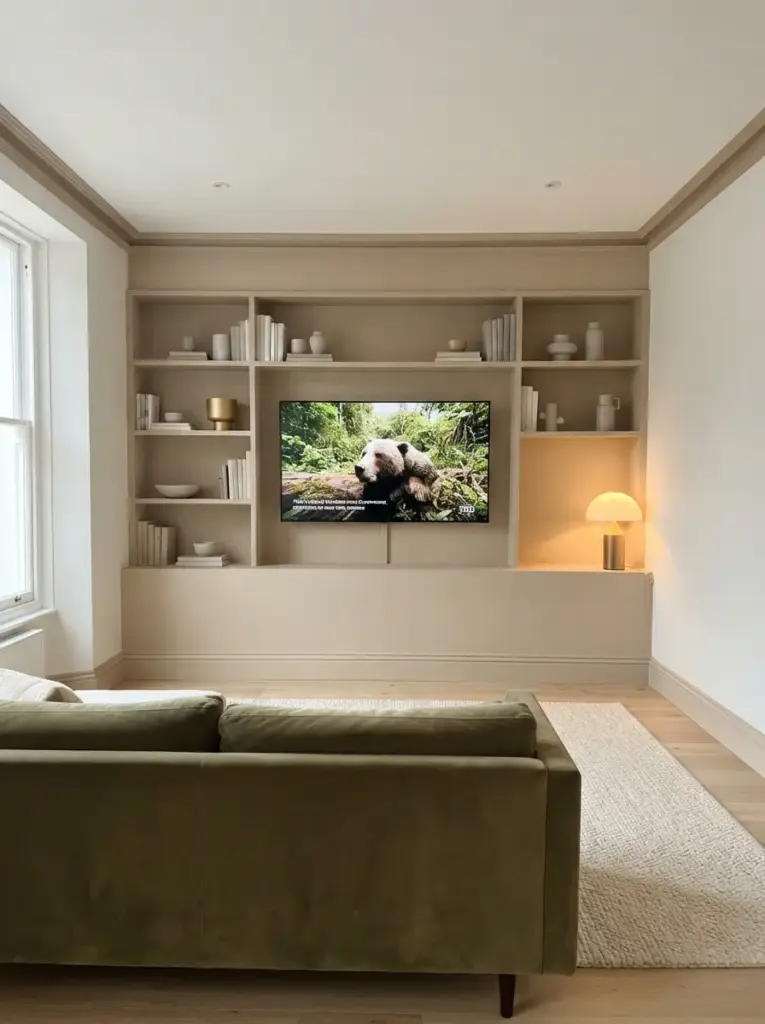
Color breaks can make a wall feel shorter, while one continuous shade helps the eye travel without interruption. Painting the TV wall, trim, shelving, and cable covers in a single quiet color creates a broad, unified plane. Warm off-white, mushroom beige, pale taupe, muted sage, and light gray with warm undertones suit compact rooms. Avoid icy gray in north-facing spaces because it can feel flat and shadowy. Test a sample in morning and evening light before committing, since apartment lighting often changes the color more than expected.
Dark shades can also work when used carefully. Deep charcoal, olive, navy, or cocoa brown can reduce the contrast around a black screen, making the television less dominant. Keep the adjacent walls lighter and use warm lamps so the room does not feel enclosed. Renters can achieve a similar result with removable wallpaper or peel-and-stick panels in a solid, low-contrast finish. Smooth surfaces usually feel more spacious than busy patterns. Color continuity suits beginners who want a strong improvement without buying new furniture, and it remains one of the least expensive ways to make a media area look planned.
Choose a Console With Legs Instead of a Solid Base
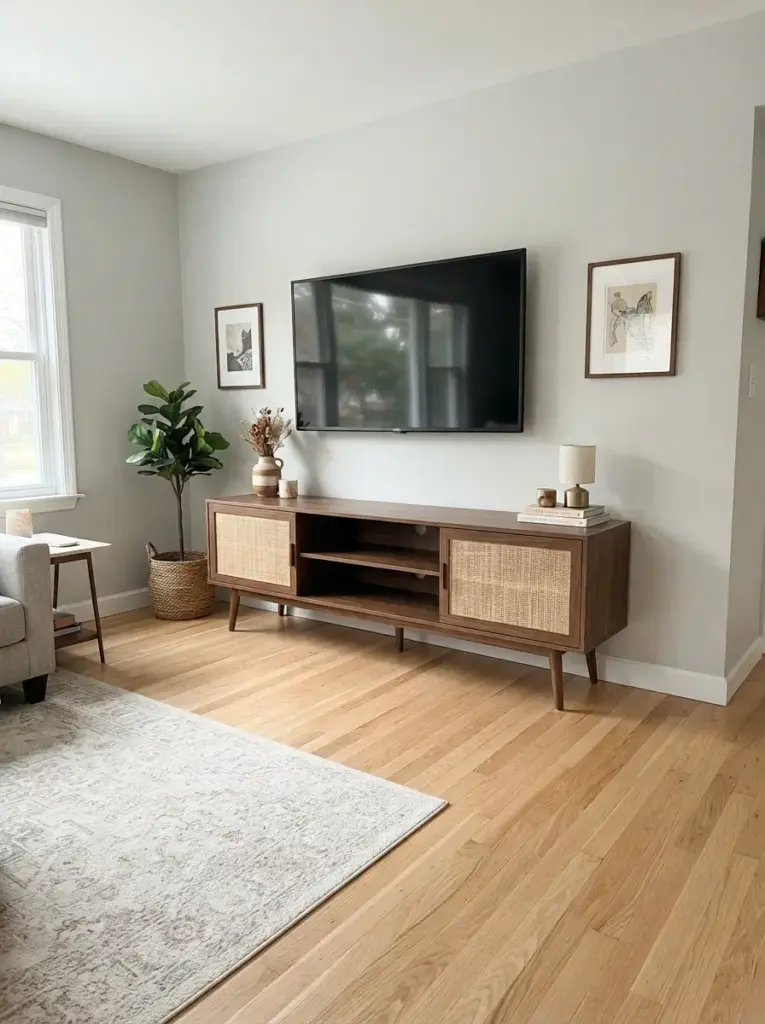
Visible flooring beneath furniture helps a small room breathe. When wall mounting is not possible, select a console with slender legs and at least 5 to 7 inches of clearance underneath. Mid-century-style units are useful because they often combine shallow cabinets, raised bases, and simple lines. Look for tapered wood legs, thin black metal supports, or a recessed plinth that creates a floating effect. Avoid heavy block feet, oversized side panels, and consoles that sit directly on the floor unless the wall is unusually wide.
Proportion matters as much as style. A 55-inch television generally looks comfortable above a console around 60 to 72 inches wide, while a 43-inch screen often pairs well with a unit around 48 to 60 inches wide. Leave breathing room between the furniture and nearby walls instead of squeezing the widest cabinet possible into the space. Baskets placed under the console may undo the airy effect, so keep the open section mostly clear. Raised furniture works best for renters, frequent movers, and anyone who needs easy access for cleaning or cable adjustments.
Build Vertical Storage Instead of Spreading Sideways
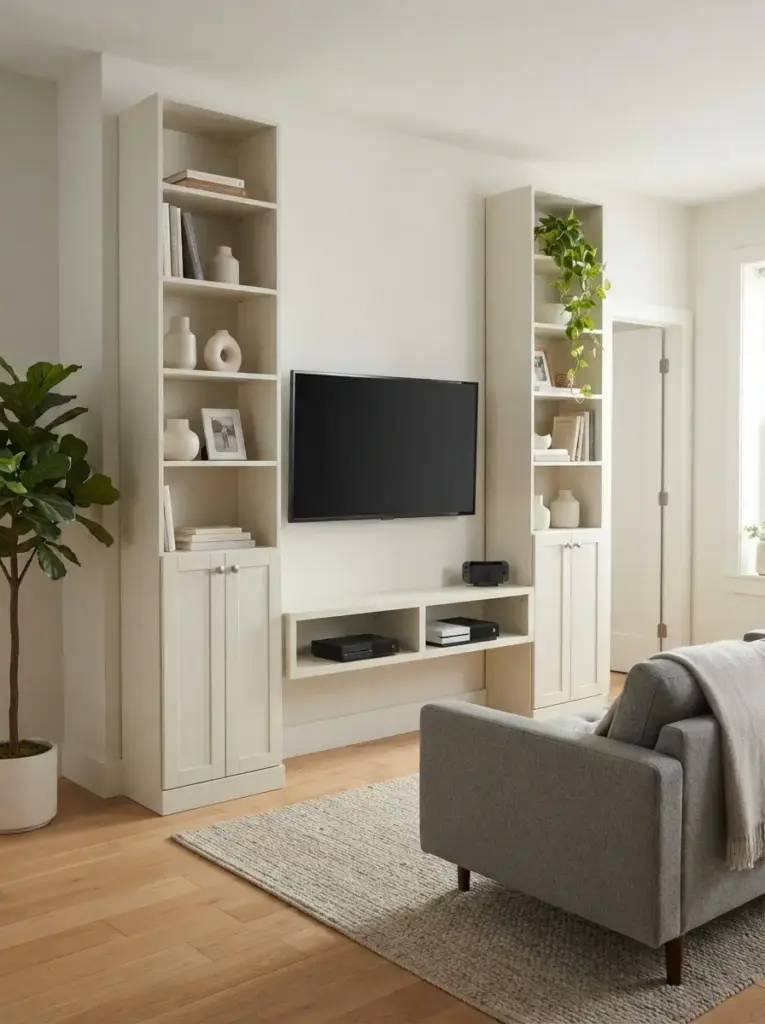
Small rooms often have more unused height than unused width. Tall, narrow cabinets or slim shelving towers can frame the television without consuming a long stretch of floor. Choose units between 10 and 14 inches deep, and keep their color close to the wall so they recede visually. Closed storage in the lower half hides clutter, while a few open shelves near eye level can display books, ceramics, or one trailing plant. Leave some shelves partially empty because tightly packed displays make the wall feel heavier.
Symmetry creates order, but exact matching is not always required. One tall cabinet on the side nearest an awkward corner can balance a doorway or window without forcing another cabinet into the room. Secure tall pieces to the wall for safety, especially in homes with children or pets. Renters can use freestanding bookcases with anti-tip straps and removable wall anchors. Vertical storage is most helpful for readers, gamers, and households that need room for media equipment but cannot sacrifice space to a deep entertainment center.
Keep the TV at the Correct Viewing Height
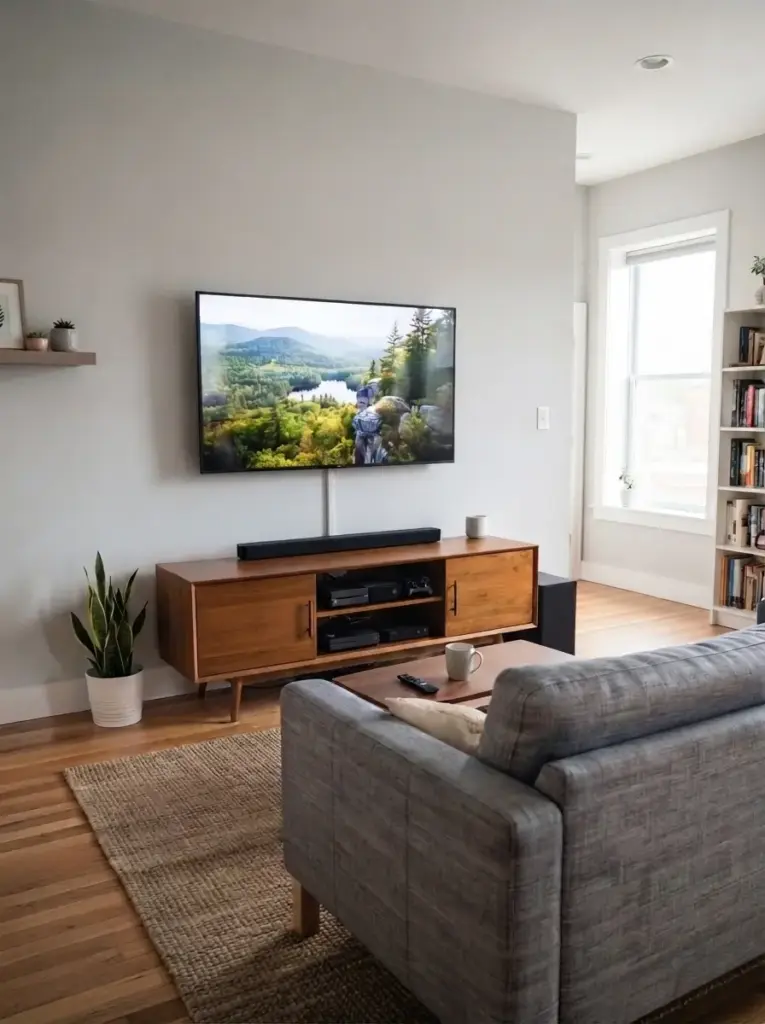
Mounting a screen too high makes a small room feel awkward and can cause neck strain. The center of the television should generally sit near seated eye level, often around 40 to 44 inches from the floor for a standard sofa. Exact placement depends on seat height, screen size, and viewing distance, so sit in your normal position and mark the wall before drilling. A slightly higher position may be necessary when a soundbar or console sits below, but the screen should not look like it belongs above a fireplace unless the seating reclines.
Distance also affects comfort and visual scale. Many compact living rooms place the sofa 6 to 8 feet from the screen, making a 50- to 65-inch television suitable for many viewers, depending on resolution and personal preference. Oversizing the screen can still work when the wall remains simple, but surrounding it with bulky furniture usually makes the room feel cramped. Outline the proposed screen size with painter’s tape and live with the shape for a day. Correct height and scale are best for every household, especially people who watch television daily or use the screen for gaming.
Hide Cables in a Paintable Surface Channel
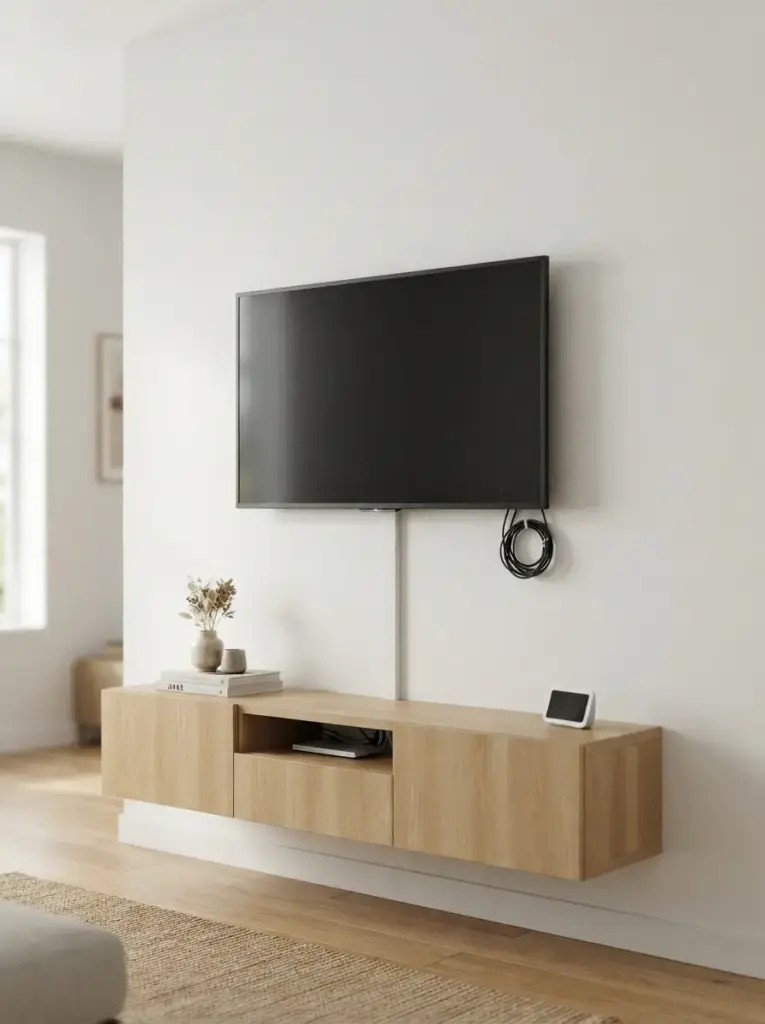
Loose cords create more visual clutter than their physical size suggests. A few black cables hanging beneath the screen divide the wall into messy sections and pull attention toward outlets. Paintable cable channels offer a simple solution for rentals and finished apartments where opening the wall is not practical. Run one straight channel from the television to the console, then paint it the same color as the wall. Short, direct routes appear cleaner than channels that bend around shelves or decorations.
Power cords should remain separate from low-voltage cables when required by local electrical rules, and standard television power cords should not be placed inside walls unless they are specifically rated for that use. For a permanent setup, ask a qualified electrician to install a recessed outlet and cable pass-through behind the screen. Label each cable before hiding it so future changes remain manageable. Cable control benefits everyone, but it makes the biggest difference for minimal interiors, white walls, and households with several connected devices.
Add Soft Backlighting Behind the Screen
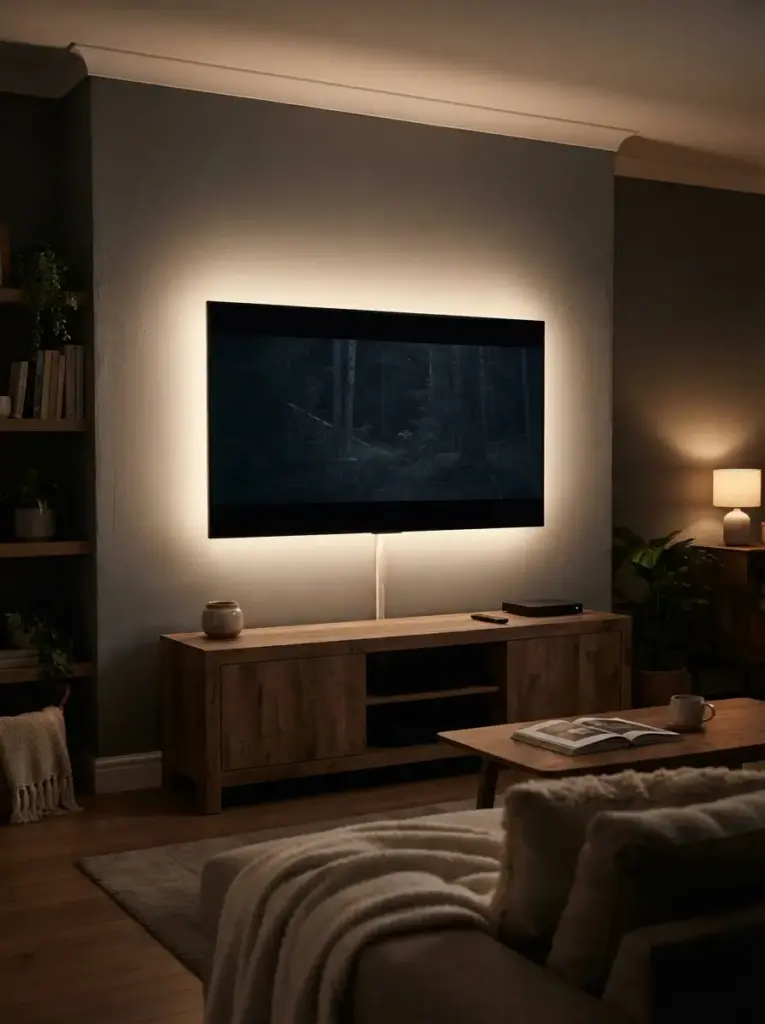
Gentle backlighting placed behind the television separates the screen from the wall and reduces the harsh black rectangle effect. Warm white LED strips around 2700K to 3000K suit cozy living rooms, while neutral white around 3500K works well in modern spaces with cooler finishes. Avoid bright blue or rapidly changing colors for daily viewing because they can make the setup feel busy. Place the strip a few inches inside the television edge so the light spreads softly rather than showing individual dots.
Backlighting also improves comfort in dark rooms by reducing the contrast between the screen and its surroundings. Brightness should remain low enough that it does not compete with the picture. USB-powered strips can switch on with the television, while plug-in versions offer more control through a remote or smart plug. Renters should use removable clips instead of strong adhesive directly on painted walls. Subtle lighting works especially well for evening viewers, windowless rooms, and media areas where overhead lighting feels too strong.
Use Shallow Picture Ledges for Flexible Styling
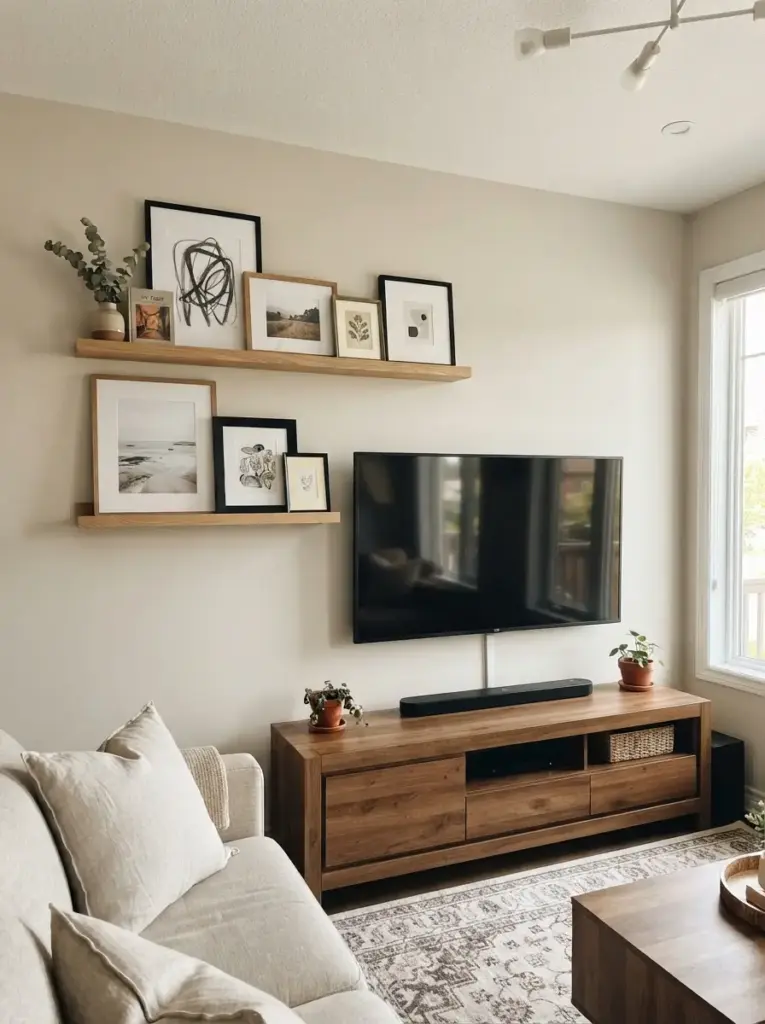
Picture ledges provide display space without the depth of standard shelves. A ledge around 3 to 4 inches deep can hold framed prints, small books, and lightweight decorative objects while keeping the walkway clear. Install one long ledge above the television or two shorter ledges offset to one side. Avoid placing a shelf directly over the screen when the ceiling is low, since that arrangement can make the television feel boxed in. Higher placement with generous blank space usually looks calmer.
Layer frames in two or three sizes, but keep the color palette limited. Black, natural wood, cream, and muted brass frames combine well without creating noise. Rotate the artwork seasonally instead of adding more pieces each time. Removable adhesive ledges exist for very light objects, although drilled installation is safer for larger frames. Picture ledges are ideal for renters who want personality without a full gallery wall, as well as beginners who prefer an arrangement that can change without creating many new holes.
Frame the TV With Narrow Decorative Panels
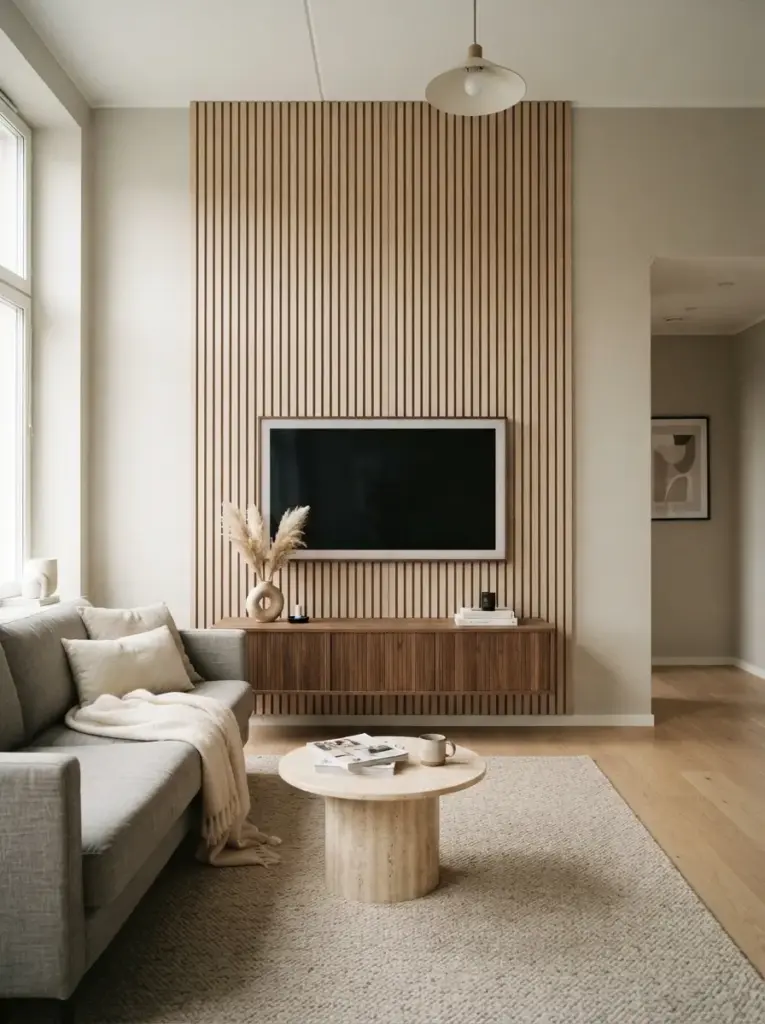
Slim wall panels can create architectural interest without the depth of built-in cabinetry. Vertical wood slats, narrow molding strips, or lightweight fluted panels draw the eye upward and make a low ceiling feel taller. Use panels only across the television zone rather than covering every wall. A section slightly wider than the console gives the setup a defined center while preserving open space around it. Pale oak, medium walnut, soft white, and painted greige are easier to use in small rooms than high-contrast black-and-white patterns.
Spacing affects the result. Narrow, even gaps look orderly, while uneven spacing can make the feature feel improvised. Renters can mount lightweight slats on a removable backing board, then secure the board with limited wall fixings. Peel-and-stick molding also works for simple rectangular frames, but edges should be pressed firmly and checked over time. Decorative paneling suits plain box-shaped apartments and homeowners who want character without adding large furniture. Keep accessories restrained so the texture remains the main feature.
Place a Large Mirror Beside the Media Zone
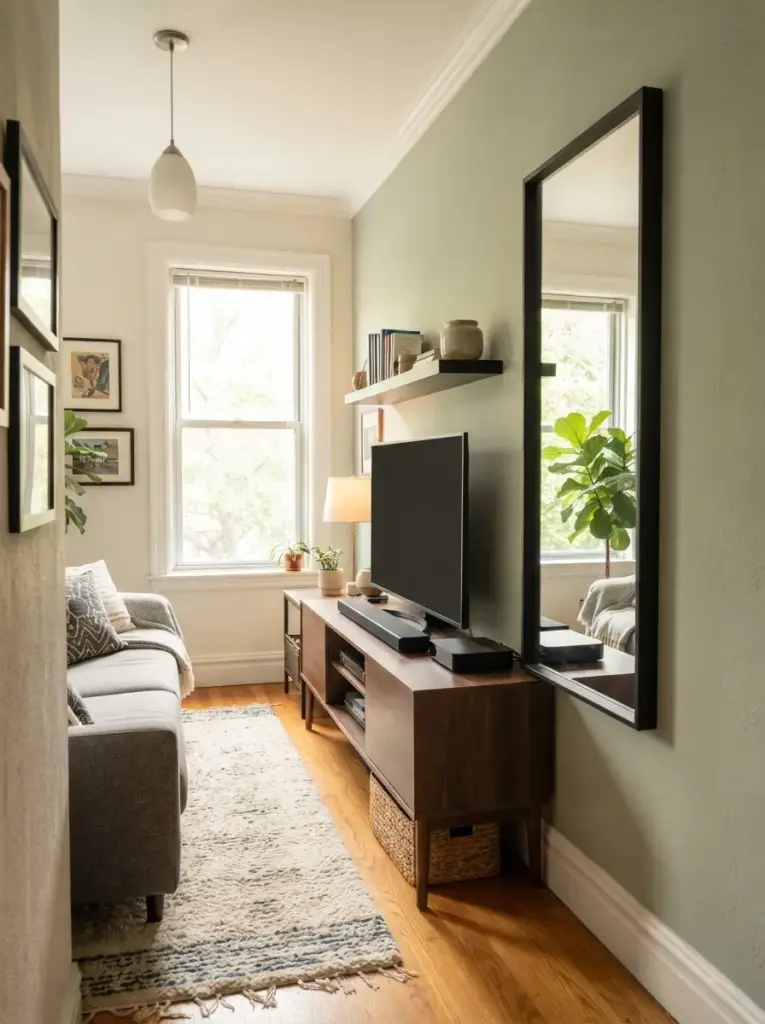
Mirrors can extend sightlines and bounce daylight into a narrow living area. Positioning a tall mirror beside the television works better than surrounding the screen with many small mirrored pieces. Choose a simple frame that matches the console or nearby furniture. Leaning mirrors suit rentals, but they should be anchored securely to prevent tipping. Wall-mounted mirrors save more floor space and look lighter, especially when their lower edge aligns with the console.
Reflection needs careful planning. Angle the mirror so it catches a window, lamp, artwork, or open part of the room rather than reflecting clutter, the television screen, or a busy kitchen. Mirrors placed directly opposite bright windows may cause glare during daytime viewing. A narrow arched mirror can soften a wall dominated by straight lines, while a plain rectangular mirror feels more modern. The technique works best for dark apartments, railroad-style layouts, and rooms with only one natural light source.
Select Low Furniture to Increase Visible Wall Height
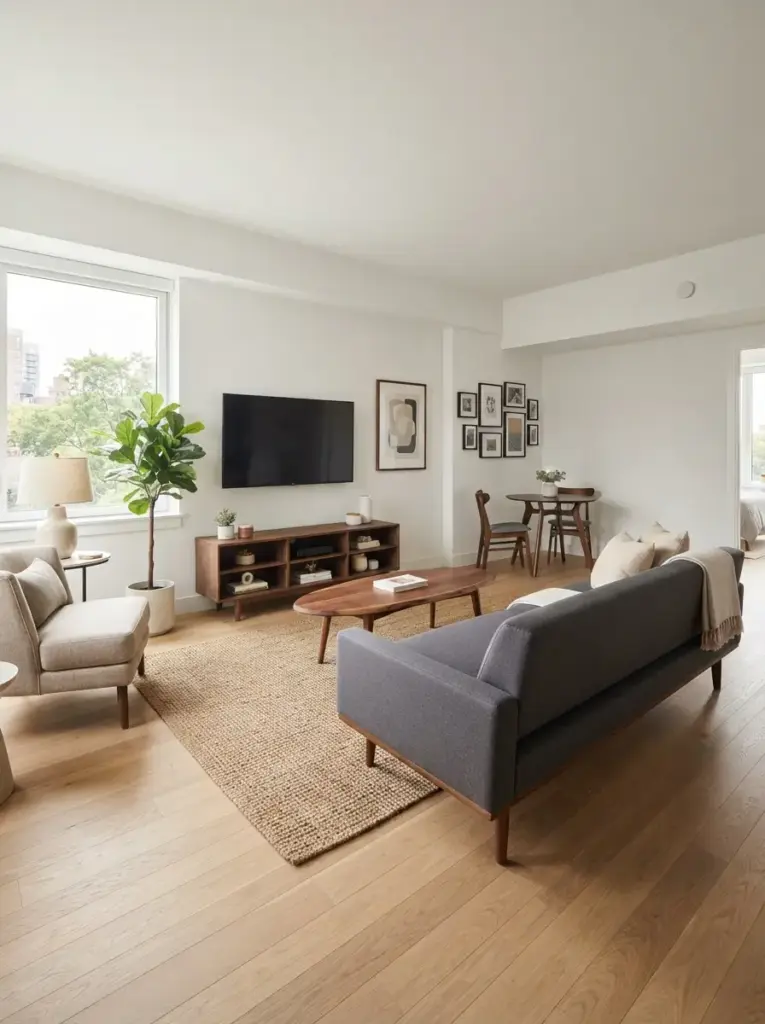
Low-profile sofas, coffee tables, and media units expose more wall, making the ceiling appear higher. A sofa back around 30 to 34 inches high often feels less bulky than an overstuffed model with a tall back and rolled arms. Pair it with a low console and a television mounted at a comfortable eye level. Avoid forcing every piece close to the floor, though, because extremely low furniture may feel uncomfortable or out of proportion. Comfortable seat depth and support still matter more than a few visual inches.
Furniture legs also influence openness. Sofas and chairs with visible legs let light pass underneath and show more of the flooring. Round or oval coffee tables improve movement in tight spaces because they remove sharp corners from busy walkways. Keep at least 18 inches between the sofa and coffee table when possible, and preserve a clear route of around 30 inches through the room. Low furniture helps studio dwellers, small families, and anyone working with an 8-foot ceiling or a narrow wall behind the television.
Use Closed Storage for Everyday Clutter
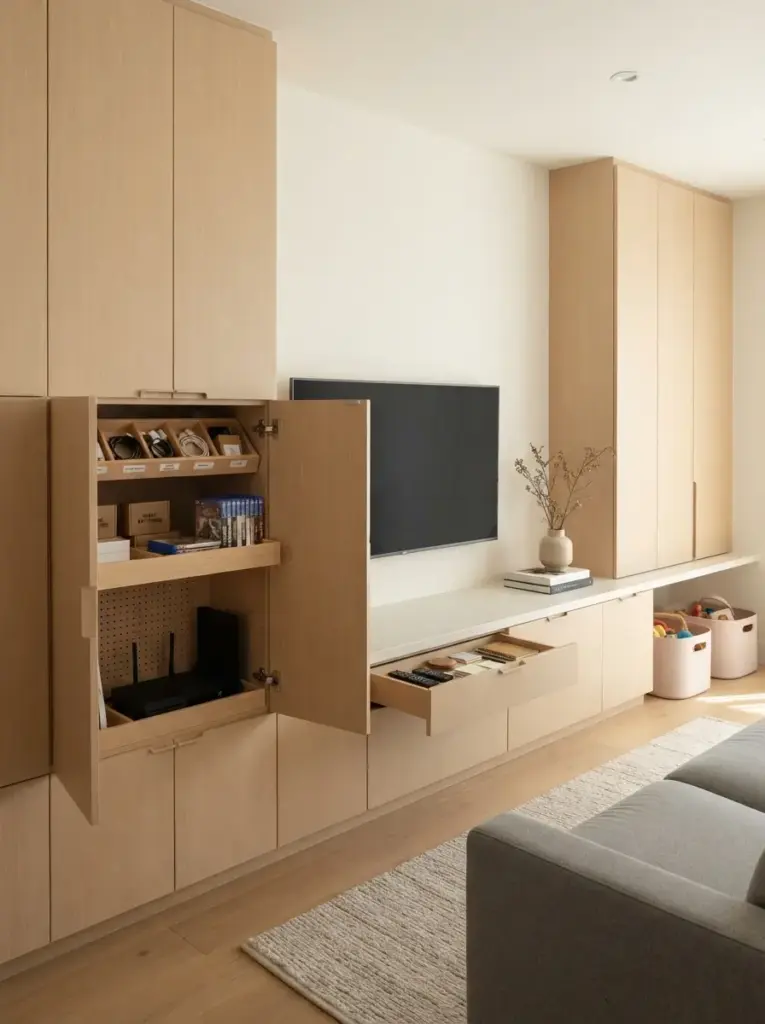
Open shelves look attractive when styled carefully, but they require discipline. Everyday items such as charging cords, paperwork, toys, game cases, and spare batteries quickly create visual noise. Closed cabinets allow the main wall to stay calm while keeping useful items close. Select doors with minimal hardware, flat fronts, or small integrated pulls. Storage should be divided inside with shallow trays or labeled boxes; the clutter simply moves behind the doors and becomes harder to manage.
Plan the cabinet around actual belongings instead of imagined decor. Measure the router, console, speakers, board games, or record collection before choosing furniture. Ventilated doors or open back sections protect electronics from heat. Families with young children may prefer soft-close hinges and rounded corners. People living alone may need less storage and can choose one drawer plus one cabinet. Closed storage is especially useful for multipurpose rooms where the same space supports television, work, exercise, and family activities.
Create an Asymmetrical Layout With Balanced Weight
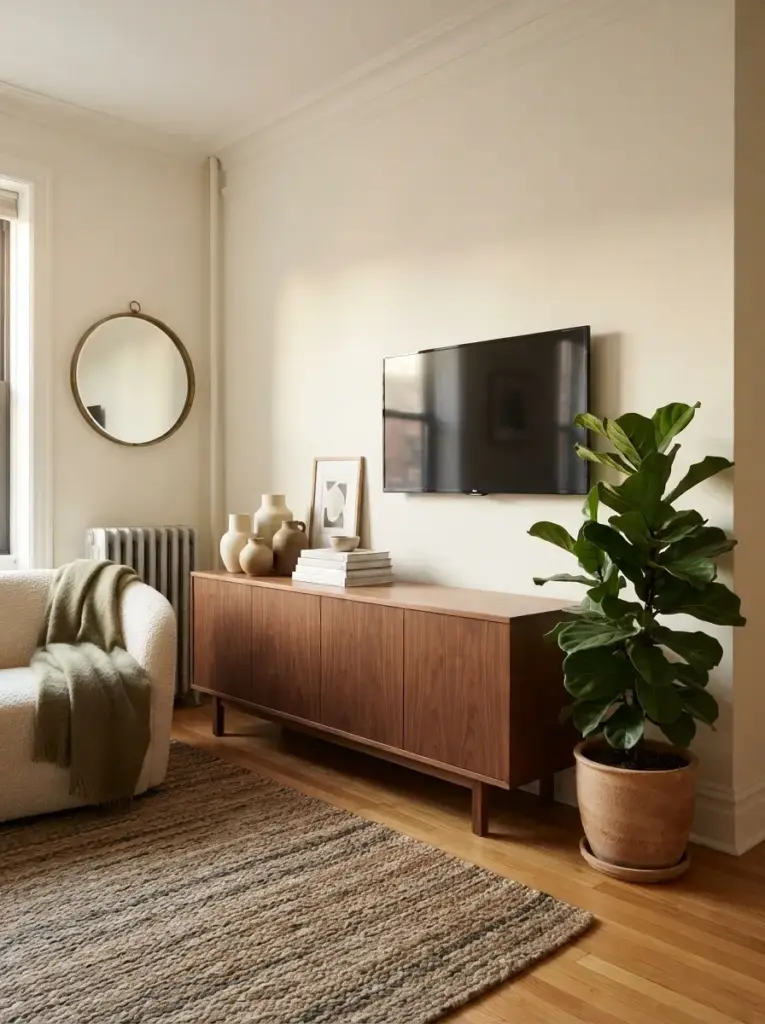
Perfect symmetry can feel formal and may require more furniture than a small wall can handle. An asymmetrical layout allows you to work around doors, windows, radiators, or corners while still creating balance. Place the television slightly off-center above a longer console, then add one tall plant, lamp, or narrow shelving unit on the open side. The visual weight of that object can balance the screen without duplicating everything on both sides.
Successful asymmetry depends on spacing and scale. A large floor plant needs more empty area than a slim lamp, while a tall cabinet should align with another strong horizontal or vertical line in the room. Keep decorative objects grouped rather than scattered. Three items with related colors usually feel calmer than seven unrelated pieces. Asymmetrical planning suits older apartments, converted spaces, and rooms where the television cannot sit in the exact center. Beginners can test arrangements with cardboard templates before moving furniture or drilling holes.
Blend the Screen Into a Small Gallery Arrangement
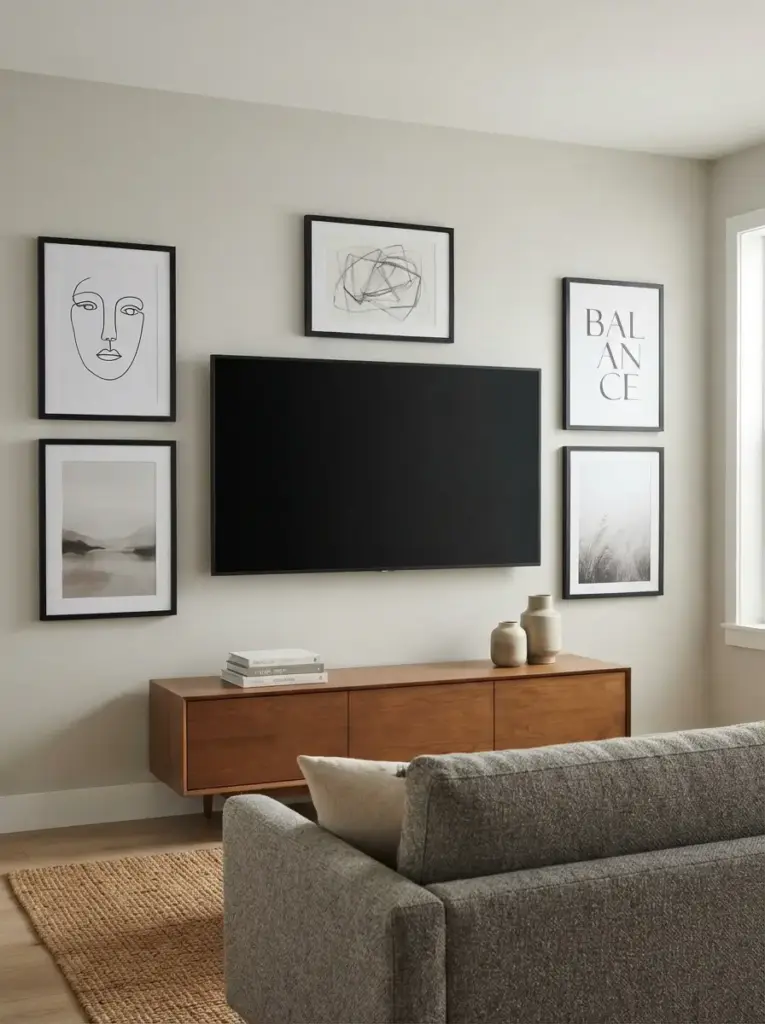
Artwork can reduce the dominance of a television when the frames share similar proportions and colors. Build the arrangement around the screen instead of treating the television as an interruption. Use four to six pieces with simple subjects, such as line drawings, landscapes, typography, or muted photography. Leave wider gaps around the television than between the frames so the screen has enough breathing room. Matching black frames can connect visually with the screen, while warm wood frames soften the overall effect.
Gallery layouts work best on walls with enough width to support them. Narrow rooms may feel busier when artwork crowds every side of the television. Lay the arrangement on the floor first, then transfer measurements to paper templates taped on the wall. Lightweight frames can hang from removable strips if the wall finish allows. People who enjoy collecting art or changing displays will benefit most from this approach. Keep the console surface simple because the gallery already provides plenty of visual activity.
Use a Corner or Swivel Mount in an Awkward Layout
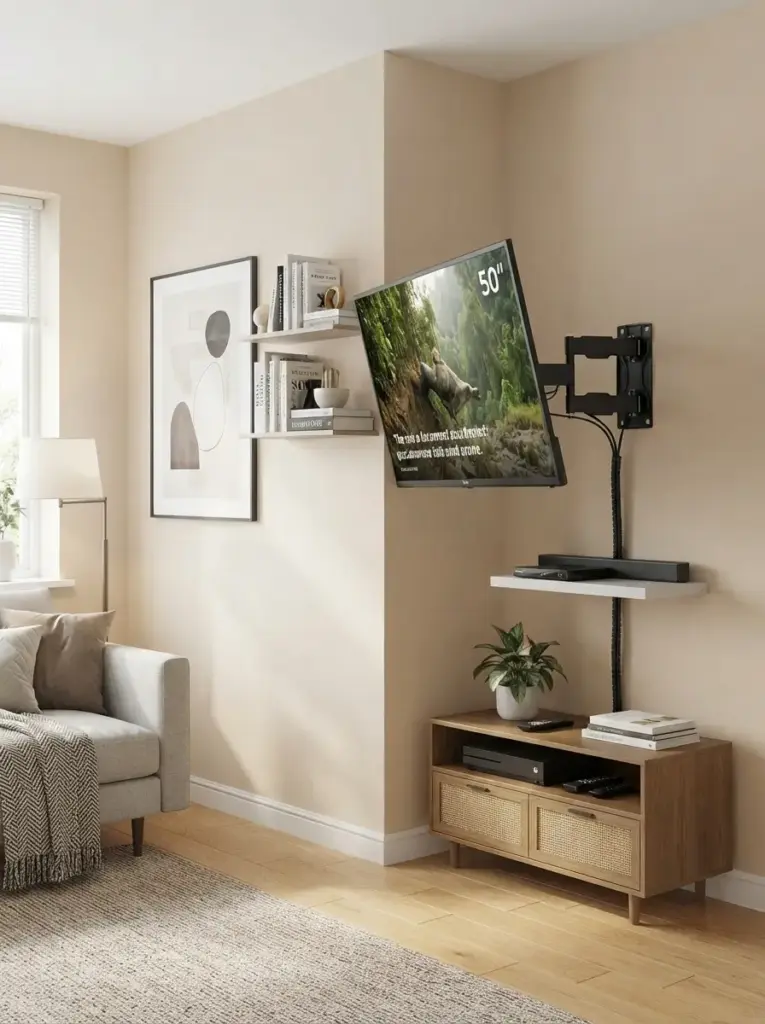
Not every apartment has a clear, centered wall facing the sofa. Corner mounting can solve difficult layouts by using an area that would otherwise remain empty. A full-motion swivel bracket allows the screen to face the seating during use and sit closer to the wall afterward. Choose a mount rated for the television’s size and weight, and attach it to suitable studs or masonry. Cable slack must allow safe movement without pulling on connections.
Corner placement works best when the console is also compact. A narrow triangular unit, a small floating shelf, or a low cabinet on the adjacent wall can hold devices without blocking the room. Avoid filling the corner with a huge diagonal entertainment center, which usually consumes more space than it saves. Swivel mounts suit open-plan apartments, combined dining and living rooms, and spaces where several seats need different viewing angles. Careful installation makes the setup functional while keeping the central wall available for art or storage.
Common Mistakes to Avoid
Oversized furniture is one of the most common problems in compact media areas. A deep console, a wide recliner, and a large coffee table can reduce movement even when each piece looks attractive on its own. Measure the full room and mark furniture outlines with tape before buying. Preserve clear pathways, door swings, and access to outlets. Scale should relate to both the screen and the wall, not only to what fits inside the furniture store.
Mounting the television too high creates another frequent issue. People often center the screen between the console and the ceiling, which ignores seated eye level. Decorative fireplaces, tall cabinets, and oversized soundbars can push the television upward. Reconsider the arrangement rather than accepting an uncomfortable position. Glare from windows and ceiling lights also deserves attention. Test the screen at different times of day, and use adjustable curtains, a swivel mount, or softer lamp placement when reflections interfere.
Too many materials can make a small wall feel fragmented. Wood slats, marble-effect panels, metallic trim, patterned wallpaper, colored LEDs, and a gallery wall rarely belong together in one compact zone. Choose one main surface, one storage finish, and one or two accent materials. Cable clutter, crowded shelves, and excessive decorations create the same problem on a smaller scale. Leave blank space around the screen and remove items that do not support the function or balance.
Ignoring ventilation and access can turn a neat setup into a frustrating one. Electronics need airflow, remotes need clear signals, and cables may require future replacement. Do not seal routers, consoles, or amplifiers inside unventilated cupboards. Keep a reachable power strip and label connections. Secure heavy furniture and tall shelving to the wall, particularly in homes with children or pets. Safety and maintenance should remain part of the design from the beginning.
Budget-Friendly Ways to Upgrade the TV Wall
Paint provides the greatest low-cost change for most rooms. One small can may be enough for a focused feature section, especially when the television and console occupy a limited area. Removable wallpaper samples, peel-and-stick molding, and paintable cable covers can add structure without a large investment. Compare the cost of a dramatic material panel with a simple painted rectangle before buying. Clean execution often looks more polished than an expensive finish installed poorly.
Secondhand furniture can offer better proportions and materials than many cheap new units. Search for narrow sideboards, low cabinets, floating shelves, and mid-century consoles. Check depth, door movement, and interior ventilation before purchase. Replacing dated handles, shortening legs, or painting a cabinet can update the piece for less than buying new. Avoid units with swollen particleboard, weak backs, or missing structural hardware, since repairs may cost more than the initial saving.
Lighting upgrades do not need to be complex. A warm LED strip, plug-in wall sconce, or small table lamp can soften the media area for a modest price. Choose bulbs between 2700K and 3000K for warm rooms, or around 3500K for a balanced neutral appearance. Dimmers and smart plugs help adjust brightness without rewiring. Skip decorative lights that create glare on the screen or expose tangled cords.
Styling can rely on items already in the apartment. Move two framed prints from another room, stack a few attractive books, or place one healthy plant beside the console. Repeating colors from the rug, cushions, and curtains makes the wall feel connected to the room. Buying many small accessories usually costs more and creates clutter. One medium lamp or plant often has a greater impact than several tiny objects.
Practical Apartment TV Wall Tips for Small Rooms
Measure before choosing any major piece. Record wall width, ceiling height, outlet position, window location, sofa distance, and the depth available without narrowing the walkway. Keep the console shallower than nearby storage and leave visible space at both ends when possible. Painter’s tape can show the television, cabinet, shelves, and artwork at full scale before installation. That simple step prevents many proportion mistakes.
Treat cable planning as part of the design rather than a final repair. Decide where the router, power strip, game console, speaker, and charging devices will sit. Provide ventilation and easy access. For rentals, use paintable surface channels, removable clips, and furniture with open backs. Permanent wall work should follow building rules and local electrical requirements. Written permission from the landlord may be necessary for large mounts or recessed wiring.
Match lighting to daily habits. Rooms used mostly in the evening benefit from warm, dimmable lamps and subtle backlighting. Bright rooms may need lined curtains or blinds to manage glare. Place floor lamps beside the sofa rather than directly beside the screen when the bulb reflects in the picture. Layered lighting feels more comfortable than one strong ceiling fixture and makes the room appear deeper after sunset.
Keep decoration connected to function. A tray can organize remotes, a lidded box can hide controllers, and a basket can hold blankets away from the console. Decorative objects should not block ventilation, speakers, or the screen. Rotate items rather than adding new layers. Calm surfaces make an Apartment TV Wall look wider and easier to maintain, especially in homes where the living room serves several purposes.
Scale every decorative choice against the wall rather than copying a large-room photo. Oversized art, thick shelves, deep cabinets, and multiple lamps can look impressive online yet overwhelm a compact layout. Start with the largest necessary items, usually the screen and console, then add only what improves balance or function. Leave at least one clear area around the display so the wall does not become a solid block of objects. When several pieces feel essential, repeat one finish or color to connect them. For example, combine a pale oak console with two pale oak frames, or pair black metal legs with a slim black lamp. Consistent details help the Apartment TV Wall read as one organized composition. Review the arrangement from the doorway as well as the sofa, because first sightlines influence whether the room feels open or crowded.
Frequently Asked Questions
What color makes a small TV wall look bigger?
Warm off-white, pale beige, soft greige, light taupe, and muted sage often make a compact wall feel open because they reflect light without looking harsh. A darker color can also work when it reduces contrast around the black screen, but adjacent walls and lighting should remain lighter. Test samples beside the television in both daylight and evening conditions before choosing.
Should the TV be wider than the console?
The console usually looks more balanced when it is wider than the television. Extending the furniture roughly 8 to 18 inches beyond each side of the screen creates visual support and leaves room for a lamp, speaker, or small object. Very narrow walls may require a closer match, but the television should not appear to overhang the cabinet.
How can renters hide TV cables without cutting the wall?
Paintable surface channels, removable cable clips, fabric cord sleeves, and consoles with open backs can keep wires controlled without opening the wall. Run cables in one straight route, match the channel to the wall color, and avoid strong adhesives on delicate paint. Power cords should remain accessible and should not be hidden inside walls unless the system is approved for that purpose.
Is a gallery wall around the television good for a small room?
Small, restrained gallery layouts can work when the wall is wide enough and the frames use a limited palette. Leave generous space around the screen and avoid filling every gap. Four to six pieces usually feel calmer than a large collection. Narrow rooms often benefit more from one ledge or one large artwork placed beside the television.
What size console works with a 55-inch TV?
Many 55-inch televisions pair well with consoles between 60 and 72 inches wide. Depth matters in small rooms, so look for a piece around 12 to 16 inches deep when possible. Check the exact screen width, wall size, nearby doors, and walking space before buying. A slightly wider, shallow console usually feels lighter than a short, deep cabinet.
How do I style an Apartment TV Wall without making it cluttered?
Limit the arrangement to one main finish, one storage piece, and a small number of useful accessories. Hide cords, keep shelves partly empty, repeat colors already present in the room, and choose one larger plant or lamp instead of many tiny decorations. Blank space around the screen gives the eye a place to rest and makes the entire room feel more orderly.
Conclusion
Small rooms benefit from decisions that create clear lines, open floor area, and practical storage. Floating consoles, raised furniture, continuous color, vertical cabinets, hidden cables, balanced lighting, and carefully scaled accessories all help the television zone feel integrated rather than crowded. No single idea suits every apartment, so choose the options that match the wall shape, viewing habits, rental rules, and belongings you actually use.
Begin with measurements and a simple plan before purchasing furniture or materials. Mark the screen and storage with painter’s tape, check viewing height from the sofa, and study daylight reflections. Prioritize comfort, safety, and easy maintenance. A successful Apartment TV Wall should support daily life, reduce visual noise, and make the room feel more spacious without relying on costly construction or excessive decoration.