
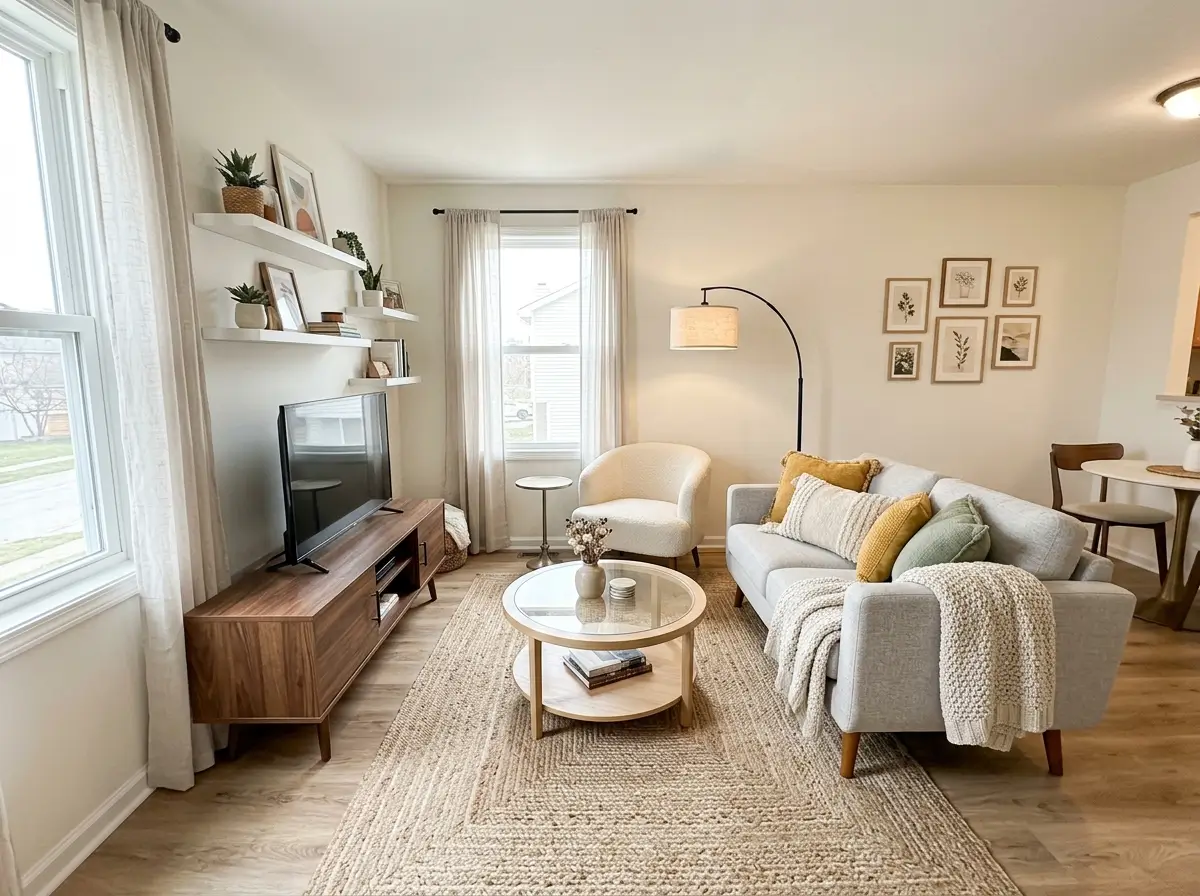

Limited square footage does not mean your living room has to feel cramped, unfinished, or hard to use. Good small-space decorating starts with honest measurements, clear priorities, and furniture that earns its place. College renters may need seating for friends, a study corner, and storage for daily clutter. First-time renters often need affordable pieces that can move to a new home later. Home decor lovers may care more about colour, lighting, and personality. Each group can create a room that feels balanced without filling every wall or buying a matching furniture set. Small Apartment Living Room
Practical choices matter more than expensive products. A well-placed floor lamp can improve the room more than another decorative cushion. One correctly sized rug can make separate pieces feel connected. Closed storage can calm visual noise, while a narrow table can replace a bulky media console. The best ideas below work across modern, traditional, bohemian, minimalist, and mixed home styles. Each suggestion explains the reason behind the choice, who benefits most, and how to apply it in a rental or on a limited budget.
Can a Small Living Room Look Stylish and Still Work Well?
Yes. A Small Apartment Living Room can look polished and remain practical when every item supports a clear job. Start by deciding how the room will be used most often. Some people need a television-focused setup. Others need conversation seating, a reading corner, a study desk, or space for guests. Once the main purpose is clear, choose a layout that protects walking paths and gives the largest furniture piece enough room to breathe.
The key question is simple: what must this room do every day? Write down the top three needs before shopping. For example, a college apartment may need two seats, hidden storage, and a flexible work surface. A first home may need durable seating, layered lighting, and a place to display personal items. Clear priorities prevent impulse purchases and make the room feel intentional.
Measure the Room Before Choosing Furniture
Start with the full room width, wall lengths, window positions, door swings, radiator depth, outlets, and any awkward corners. Measure the main walking path as well. Leave roughly 75 to 90 centimetres for a comfortable route through the room when possible. Smaller clearances can work in tight rentals, but avoid forcing people to turn sideways between the sofa and coffee table. Mark each measurement on a simple sketch, then add furniture dimensions before buying.
Accurate measuring saves more money than almost any decorating trick. Many small rooms feel crowded because the sofa is ten centimetres too deep, the coffee table blocks the route, or the media unit extends past the usable wall. Painter’s tape can show the footprint of furniture on the floor. Live with the taped layout for a day, open every door, and check whether drawers can move freely. This method works especially well for beginners who struggle to picture scale from online product photos.
Choose a Sofa With a Slim Profile
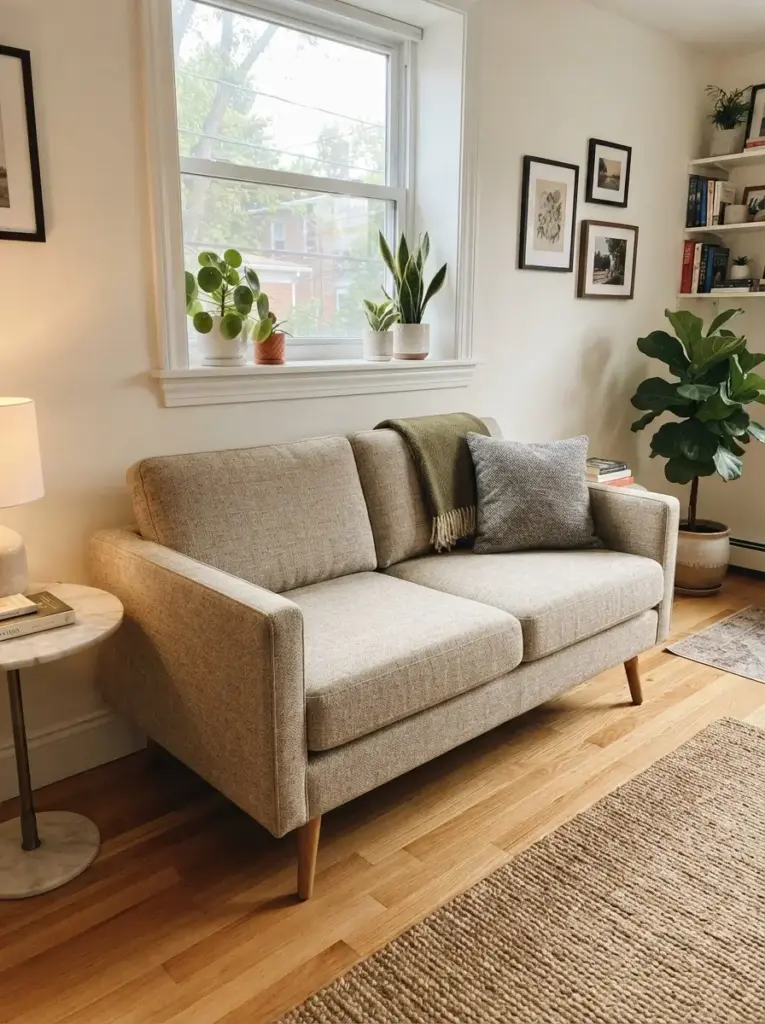
Look for a sofa with narrow arms, visible legs, a moderate seat depth, and a back that does not rise far above the window sill. Apartment sofas, compact loveseats, and small modular pieces often provide enough seating without dominating the room. Rounded arms can soften a boxy layout, while straight arms suit cleaner modern schemes. Avoid deep lounge sofas unless the room is wide enough to maintain a clear path around them.
Visible floor beneath the sofa creates a lighter visual line, so the room feels less blocked. Slim arms also provide more usable seat space within the same total width. People furnishing a college flat or first apartment benefit most because one correctly sized sofa can remain useful for years. Choose a neutral, durable fabric such as warm grey, oatmeal, olive, navy, or mid-tone brown. Add washable cushion covers instead of committing to a highly specific sofa colour.
Float Furniture When the Walls Feel Crowded
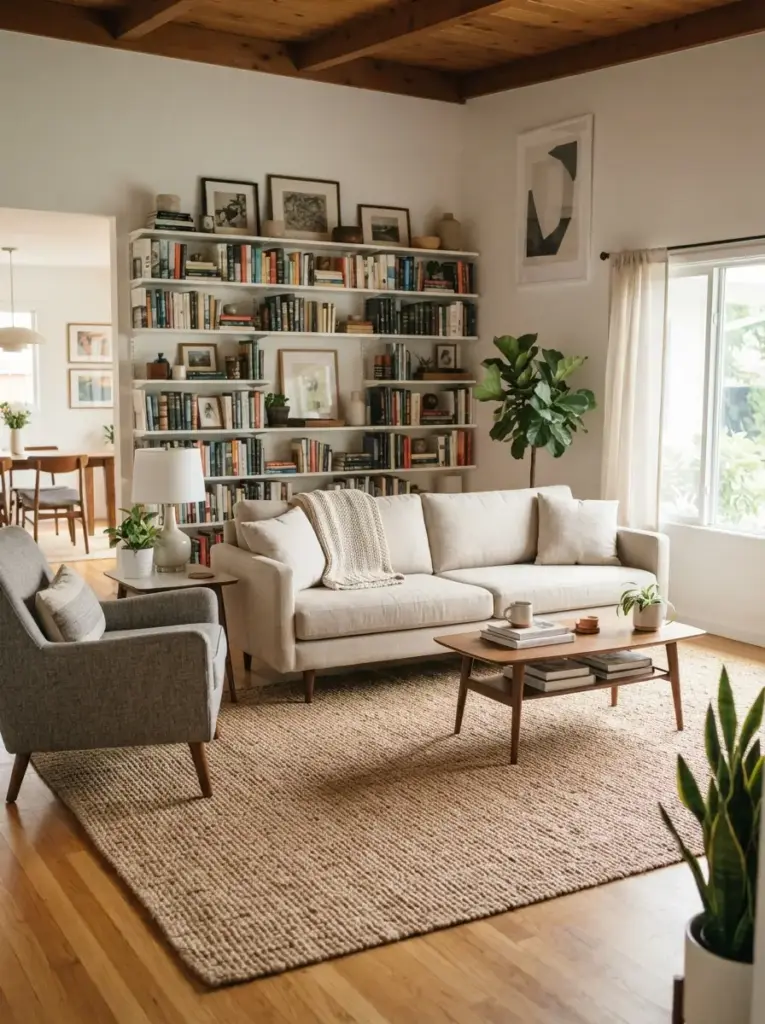
Pulling every piece against the wall may create an empty centre without improving circulation. Try moving the sofa forward by 10 to 20 centimetres or placing a small accent chair at an angle. A narrow console behind the sofa can hold a lamp, books, charging cables, or baskets. Even a slight gap can make the layout feel planned rather than pushed outward.
The idea works because furniture groupings become easier to read when each piece relates to another piece, not only to the walls. Conversation also feels more natural when seating faces inward. Renters with open-plan studios or combined dining areas gain the most from this approach because the sofa can act as a soft divider. Keep the back of the sofa tidy, use a low console, and avoid blocking the main path from the entrance to the kitchen or balcony.
Use One Large Rug Instead of Several Tiny Rugs
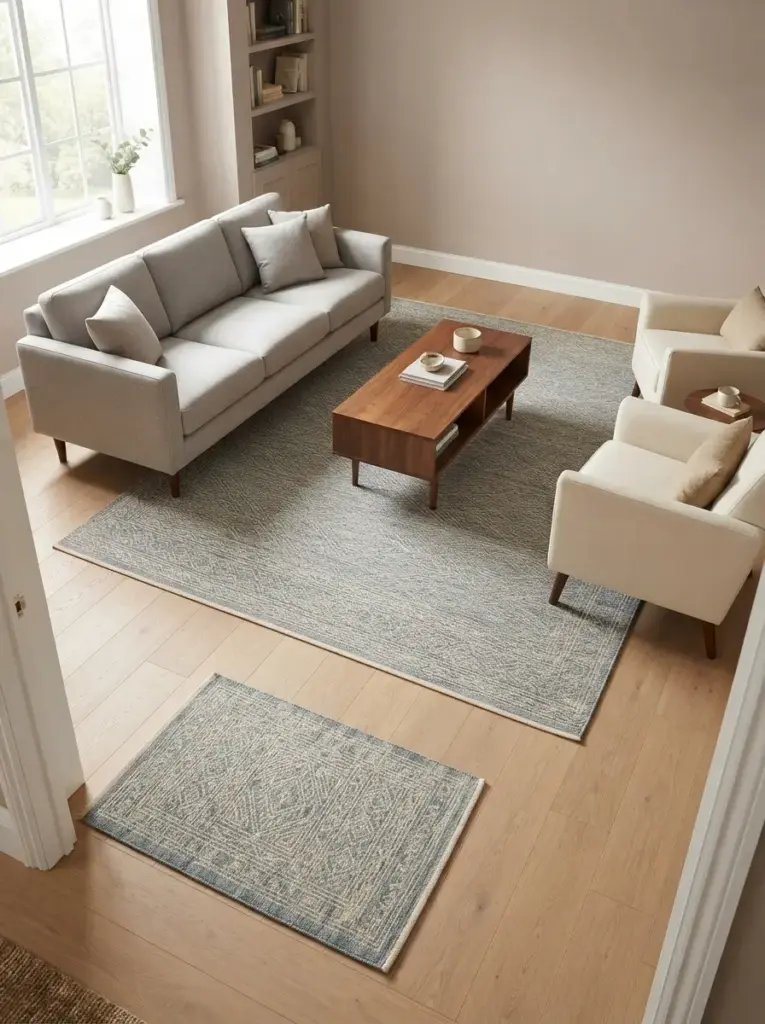
Choose a rug large enough for at least the front legs of the sofa and chairs to sit on it. In many compact rooms, 160 by 230 centimetres works better than a small bedside-size rug. Larger layouts may need 200 by 300 centimetres. Measure before ordering, especially if the room has a narrow doorway or built-in cabinet. Low-pile rugs are easier to clean, and flatweave styles usually fit under doors.
Using a larger rug connects the seating area and makes the floor feel broader. Several small rugs can break the room into visual fragments and make furniture look as though it is floating without purpose. Beginners often choose a rug that matches the coffee table rather than the whole seating group. Instead, treat the rug as the foundation for the zone. Cream with a subtle border, faded terracotta, muted blue, or a small geometric pattern can add interest without making the floor feel busy.
Build the Layout Around Clear Walking Paths
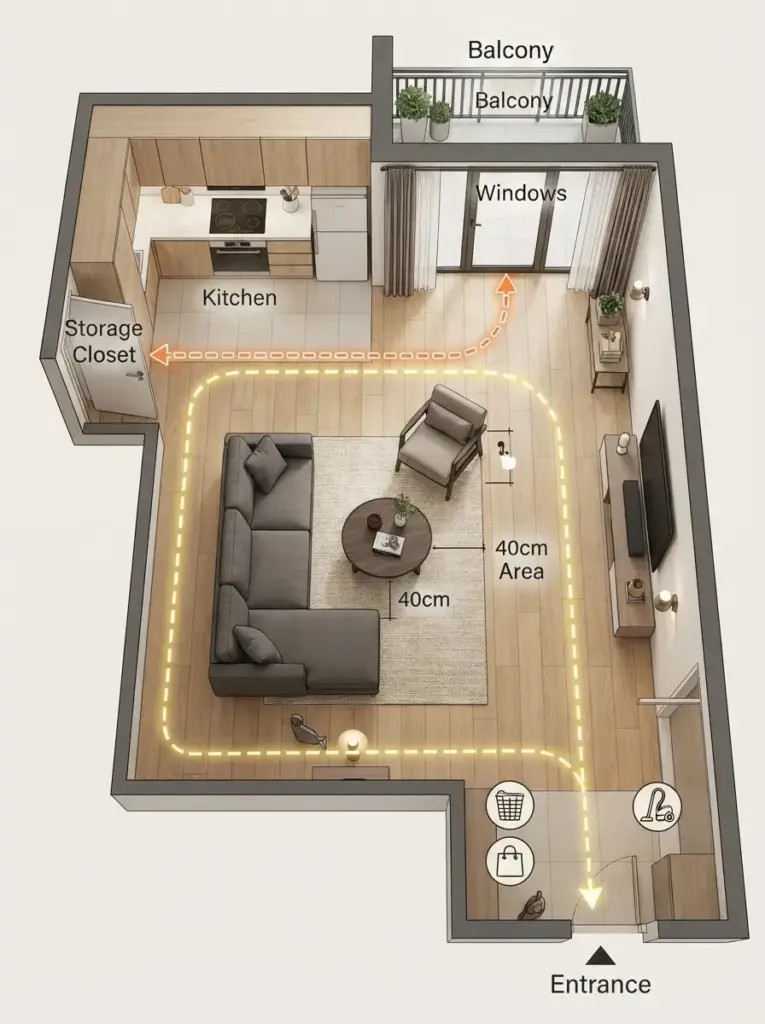
Map the route from the entrance to the sofa, windows, balcony, kitchen, and storage. Avoid placing a chair where someone must step around it every time they enter. Keep the coffee table around 35 to 45 centimetres from the sofa so it remains easy to reach without blocking knees. Nesting tables can sit closer because they move when needed. Wall-mounted lights can also free floor space near tight corners.
Good circulation makes a room feel larger because movement becomes easy and predictable. Poor circulation creates daily frustration even when the furniture looks attractive in a photo. Families, roommates, and students who host friends will notice the biggest improvement. Test the plan with bags, laundry baskets, and a vacuum, not only with empty hands. Real life requires wider movement than a styled room suggests.
Add Storage That Hides Everyday Clutter
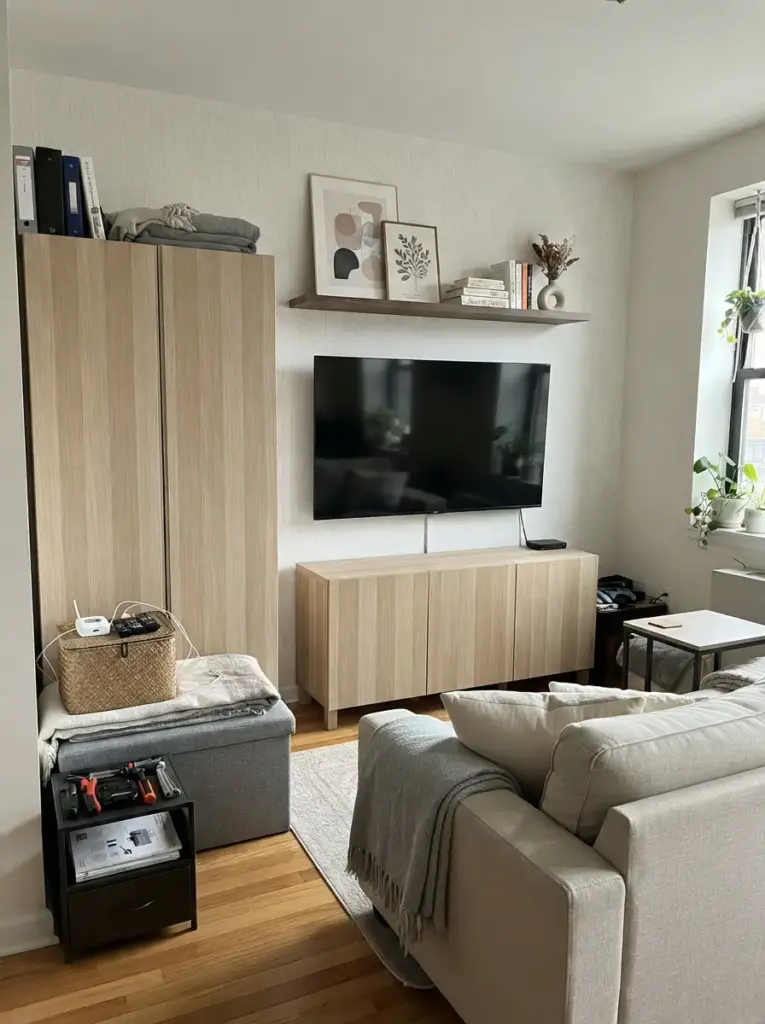
Use closed cabinets, storage ottomans, lidded baskets, drawer units, and media consoles with doors. Open shelving can display a few attractive objects, but it also exposes cables, paperwork, gaming accessories, and cleaning supplies. Mix both types. For example, use a low cabinet with closed doors below and one slim shelf above for art or books.
The calmer surface area reduces visual noise, which helps the entire room feel more spacious. College renters can store textbooks, chargers, blankets, and spare kitchen items in one place. First-home beginners can keep tools, instruction manuals, candles, and seasonal items out of sight. Look for furniture with adjustable shelves so it can adapt later. Flat-pack cabinets are often affordable, and removable peel-and-stick paper can improve a plain interior without changing the rental permanently.
Choose Multipurpose Furniture With Simple Shapes
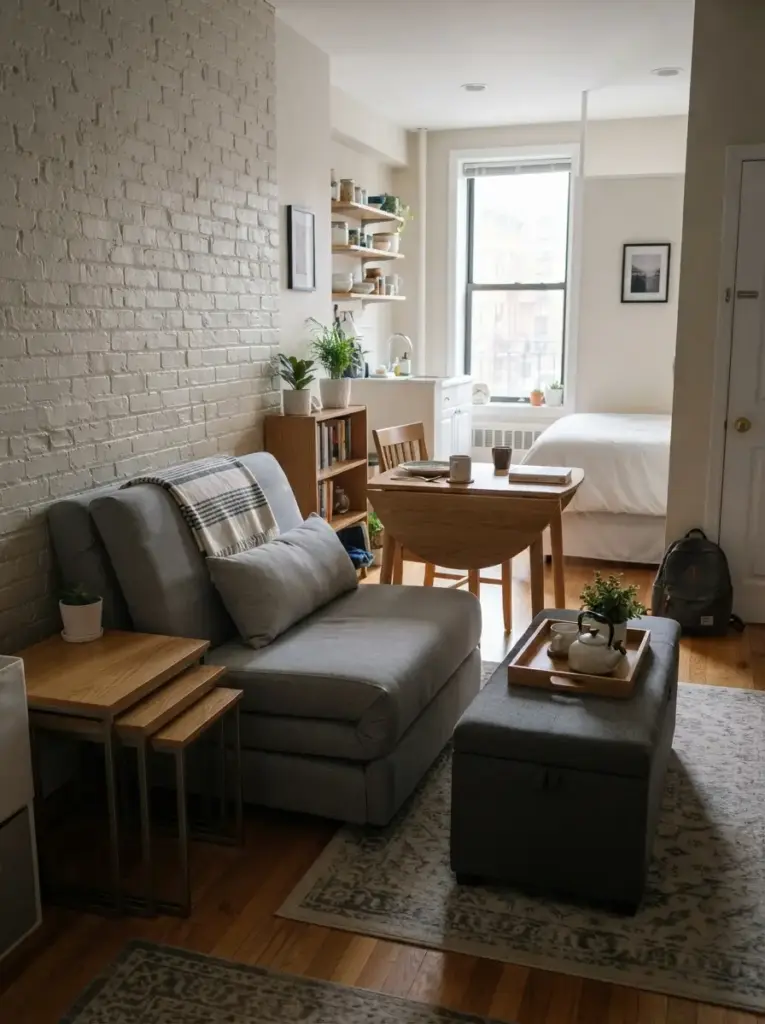
Select pieces that solve more than one need without becoming complicated to use. A storage ottoman can replace a coffee table, hold blankets, and offer extra seating. A drop-leaf table can serve as a desk, dining table, or console. Nesting tables can separate for guests and tuck together afterward. A compact sleeper chair may work better than a large sofa bed in a very narrow room.
Useful multipurpose furniture reduces the number of objects competing for space. The strongest choices have simple mechanisms and common dimensions, so they are easy to move and repair. People living in studios or college apartments benefit most because one room may need to support work, meals, relaxation, and visitors. Avoid novelty furniture with awkward hinges or tiny storage compartments. Daily convenience matters more than a clever product description.
Layer Lighting Instead of Relying on One Ceiling Light
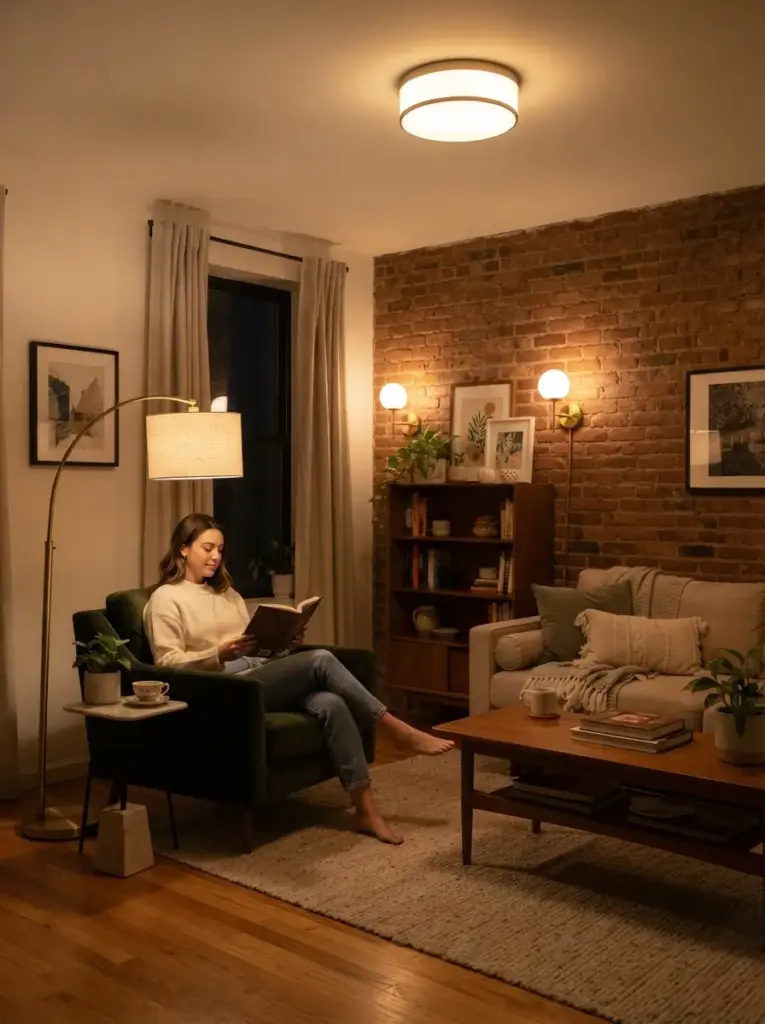
Combine three kinds of light: general light, task light, and accent light. General light may come from the ceiling fixture. Task light can come from a floor lamp beside the sofa or a small table lamp near a reading chair. Accent light may come from a wall sconce, shelf light, or lamp that washes a dark corner. Plug-in sconces and rechargeable lamps offer rental-friendly options without new wiring.
Lighting temperature changes how colours and materials appear. Use bulbs around 2700K for a warm, relaxed evening mood. Choose 3000K when the room also functions as a study space and needs slightly clearer light. Avoid mixing very cool 5000K bulbs with warm lamps in the same room because the result can look uneven. Anyone with a dark rental or limited natural light will see a practical difference from layered lighting.
Use Curtains to Make Windows Feel Taller
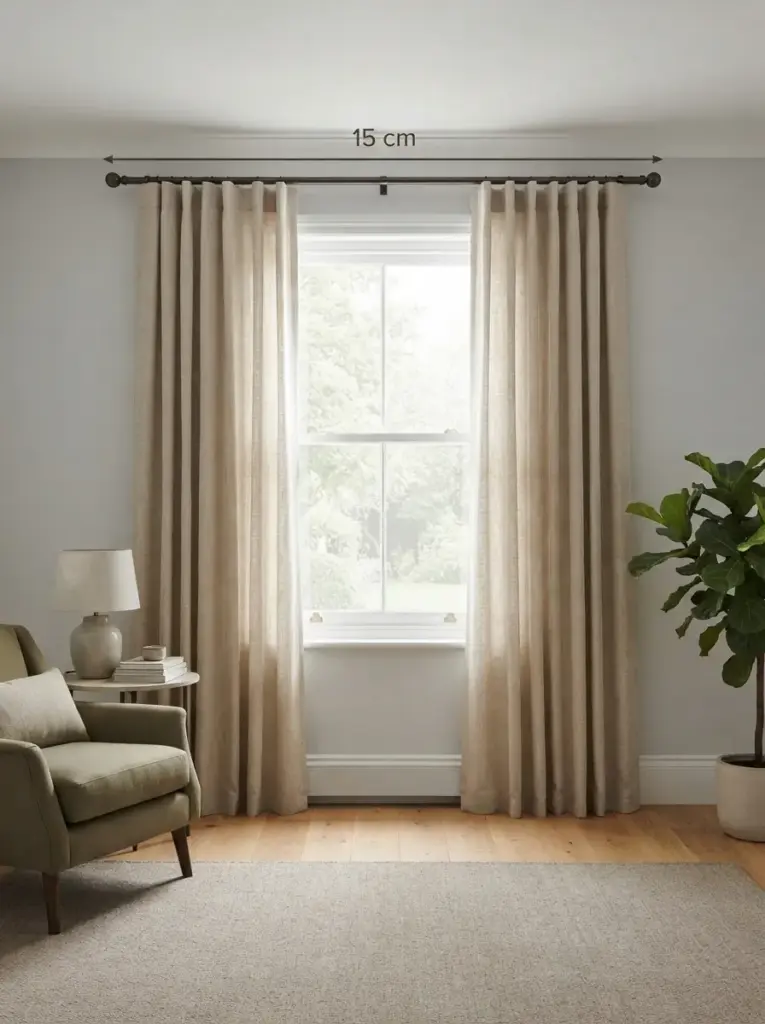
Mount the curtain rod several centimetres above the window frame and extend it beyond both sides when the wall allows. Curtains should fall close to the floor rather than stopping halfway down the wall. Choose lightweight cotton, linen-look fabric, or a soft blend that filters light. Blackout panels can sit behind decorative curtains in bedrooms or studio apartments where the living room also supports sleep.
Higher curtain placement draws the eye upward and gives the wall a stronger vertical line. Wider rods also allow curtains to stack beside the glass, which brings in more daylight. Renters can use tension systems, no-drill brackets, or removable hooks depending on the window design and lease rules. White, warm ivory, pale taupe, and soft grey are easy choices, while olive or rust can add colour in rooms with neutral walls.
Create One Strong Focal Point
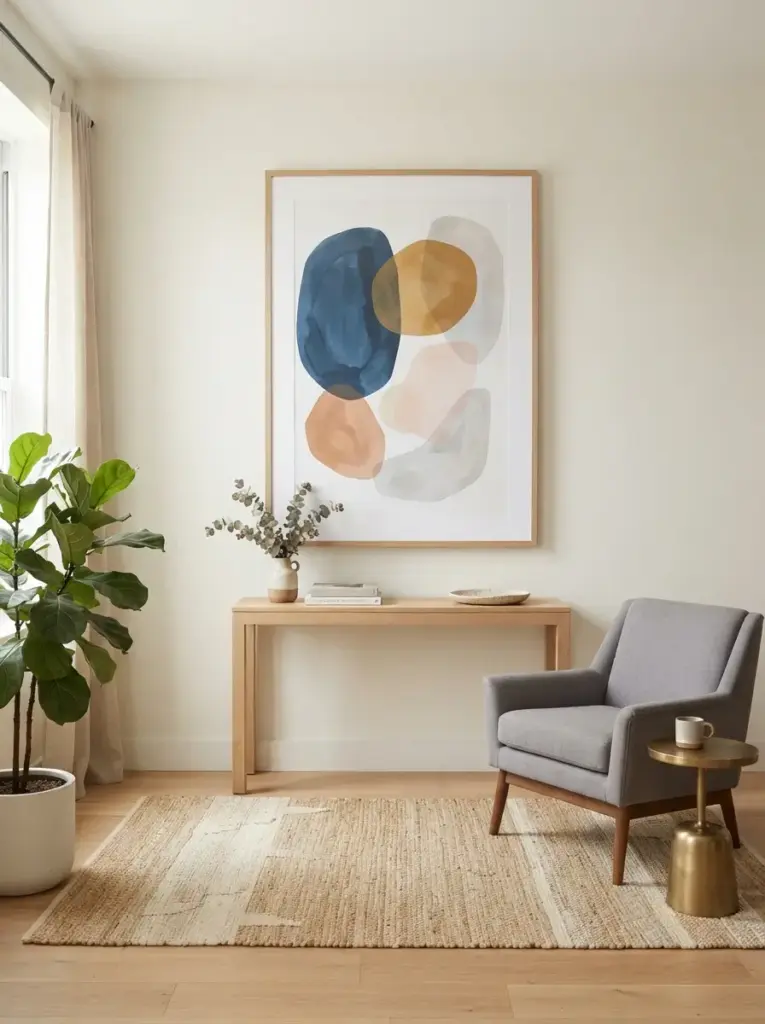
Pick one main feature for the eye to land on. Options include a large artwork, a well-styled media wall, a bold rug, a gallery arrangement, a painted bookcase, or a textured wall hanging. Keep nearby surfaces simpler so the focal point has space to stand out. One oversized frame often looks calmer than many unrelated small decorations.
One clear focal point gives the room hierarchy, so every corner does not compete for attention. Decor lovers who enjoy collecting art or colour benefit from this method because it allows personality without clutter. Rental-friendly choices include large removable wall decals, lightweight fabric hangings, poster rails, and leaning framed prints. Use proper removable strips for the object’s weight and follow the removal instructions to protect painted walls.
Keep the Colour Palette Controlled
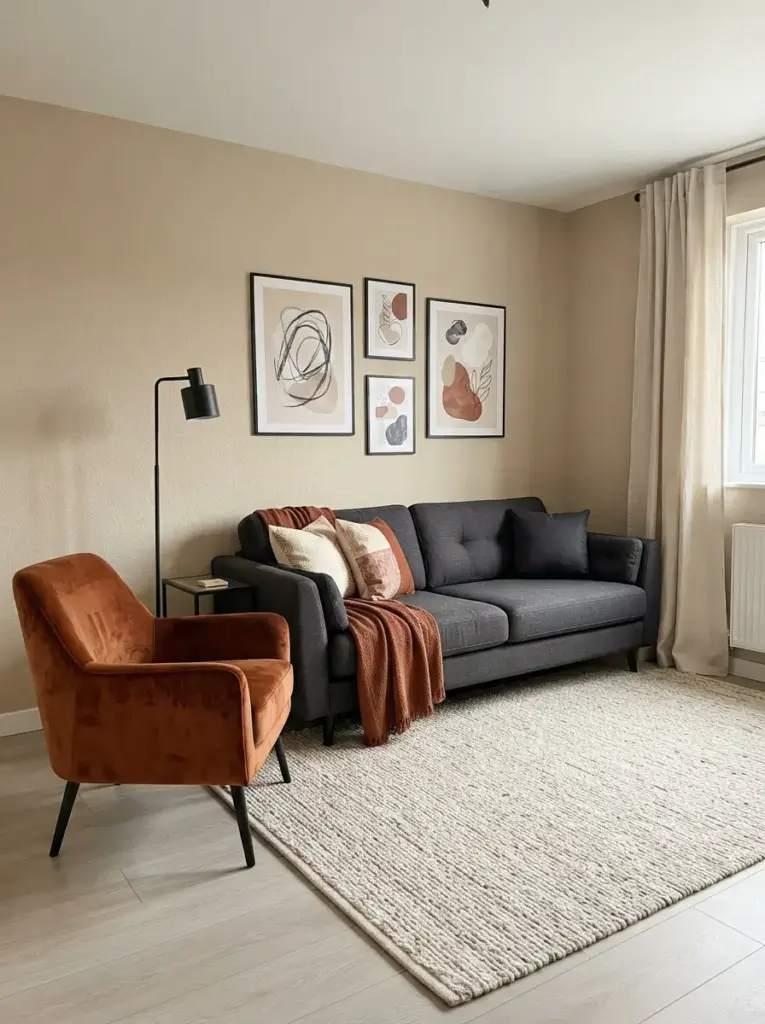
Choose one main neutral, one supporting colour, and one or two smaller accent colours. For example, warm white walls can pair with camel upholstery, olive cushions, and black metal details. Cool grey walls can work with navy, muted blue, and pale wood. Beige can feel more current when combined with charcoal, rust, cream, or deep green rather than only matching beige pieces.
Controlled colour creates repetition, and repetition makes a small room feel organised. Colour does not need to disappear, but every shade should connect to something else in the space. Beginners can use the 60-30-10 guideline loosely: around 60 percent main colour, 30 percent supporting colour, and 10 percent accent. Do not measure it exactly. Use it as a reminder that bold tones usually work best in smaller, repeated doses.
Add Vertical Storage Without Filling Every Wall
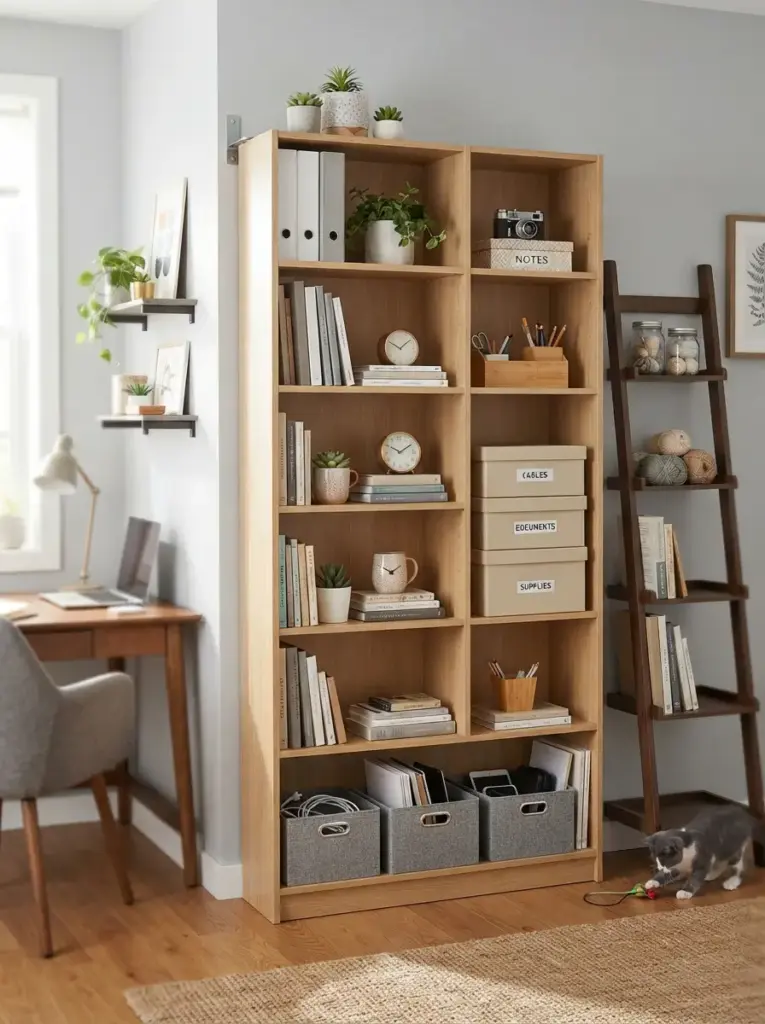
Use tall narrow bookcases, wall-mounted shelves, over-door organisers, or a slim ladder shelf. Keep frequently used items between waist and eye level. Store lighter or less-used pieces higher. Leave some empty shelf space so the unit does not become a solid block of objects. Matching boxes can hold cables, stationery, documents, and small electronics.
Vertical storage takes advantage of height while protecting valuable floor area. People with large book collections, plants, craft supplies, or study materials benefit most. Secure tall furniture to the wall when the lease and wall type allow, especially in homes with children or pets. Removable mounting systems may not be suitable for heavy furniture, so use approved anchors or choose a freestanding unit with a wider stable base.
Use Mirrors Where They Reflect Light
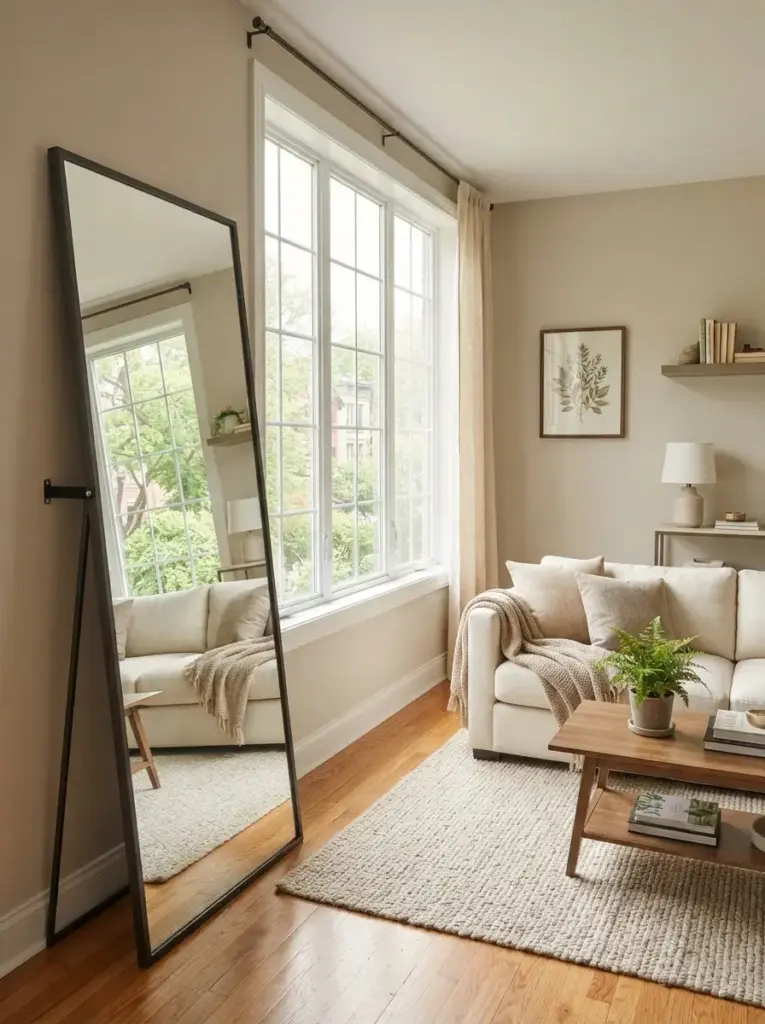
Place a mirror opposite or beside a window so it reflects daylight into the room. A tall leaning mirror can add height, while a wide horizontal mirror can stretch a short wall visually. Avoid placing a mirror where it reflects clutter, a television screen, or a busy kitchen counter. Reflection doubles whatever sits in front of it.
Strategic placement matters more than mirror size. The benefit comes from light and sight lines, not from adding mirrors to every wall. Dark north-facing rentals, narrow living rooms, and studios often gain the most. Renters can lean a heavy mirror safely using anti-tip supports or hang a lighter mirror with approved fixings. Check the reflection from the main seat before deciding on the final position.
Style Surfaces With Fewer, Larger Objects
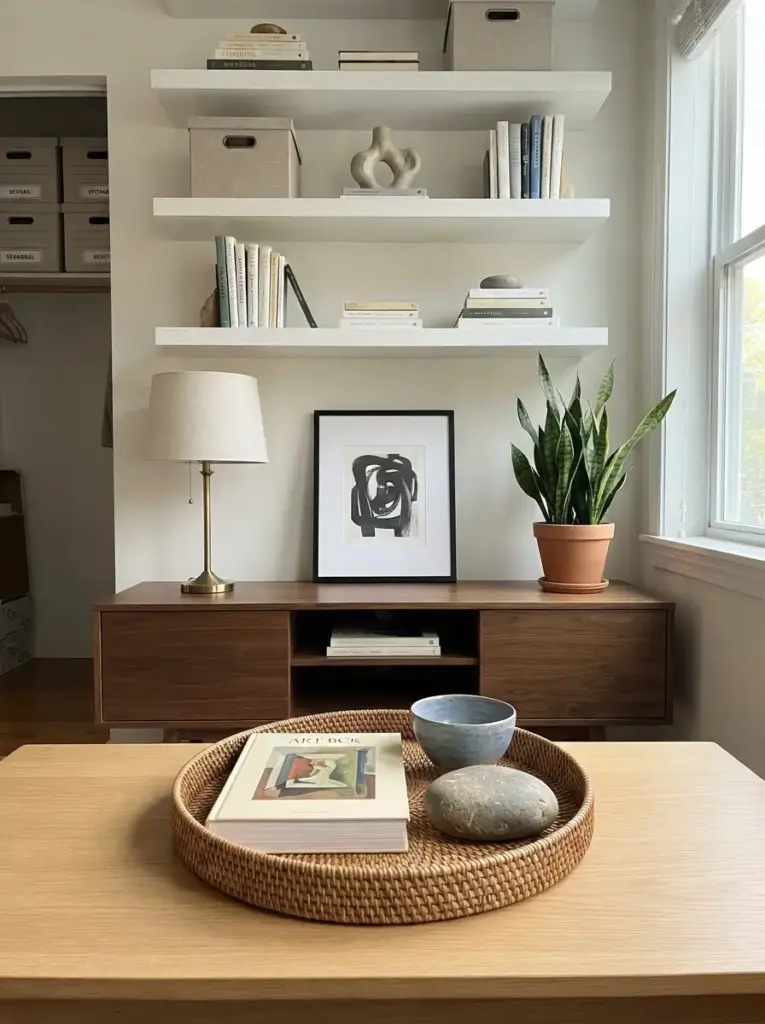
Group decor in small arrangements rather than spreading tiny objects across every surface. A coffee table might hold one tray, a book, and a small bowl. A media cabinet could display a lamp, one framed print, and a plant. Shelves can mix books, boxes, and one sculptural item while leaving open space between groups.
Larger objects are easier to read from across the room, so the space feels calmer. Tiny decorations often create visual static, especially when every item has a different colour or material. Home decor lovers who own many accessories can rotate items seasonally instead of displaying everything at once. Store the rest in labelled boxes, then refresh the room without buying new pieces.
Add Personality Through Textiles and Useful Details
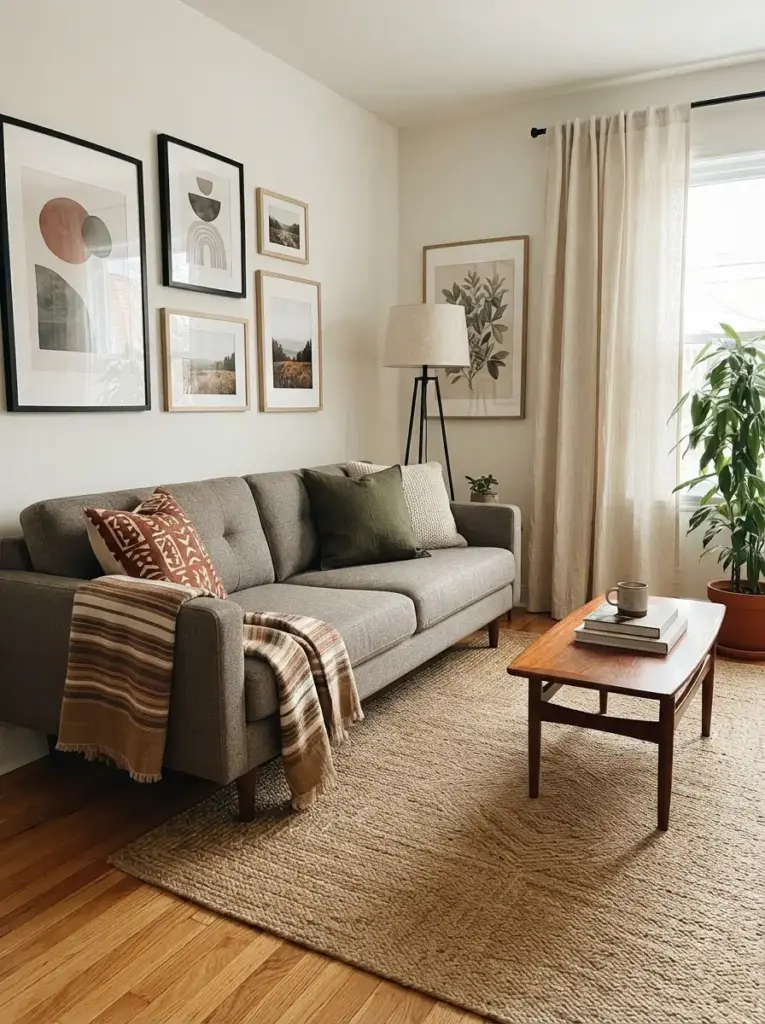
Use cushion covers, throws, curtains, lampshades, rugs, and artwork to express style. These pieces are easier to change than a sofa or cabinet. A modern room can use black lines, cream fabric, and one deep colour. A bohemian room can mix woven textures and warm earth tones. A traditional room can use stripes, checks, framed prints, and polished wood. A minimalist room can rely on texture rather than many colours.
Textiles soften hard surfaces and make a rental feel lived in without permanent changes. Students and first-time renters can build the room slowly by choosing one useful item at a time. Washable covers, machine-washable rugs, and durable throws are smarter than delicate fabrics in busy homes. Keep patterns within the same colour family when mixing more than one.
Style Directions for Different Homes
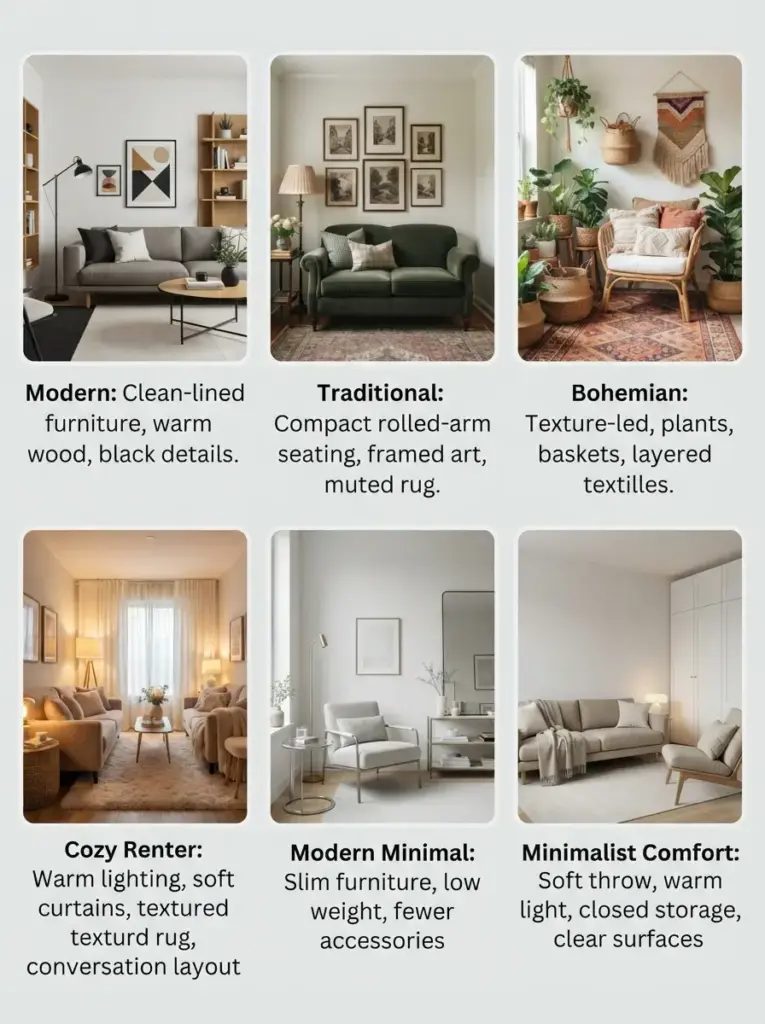
People searching for Small Apartment Living Room Decor often need more than one visual style. Modern spaces usually benefit from clean-lined furniture, warm wood, black details, and controlled contrast. Traditional rooms can use compact rolled-arm seating, framed art, pleated lampshades, and a muted patterned rug. Bohemian rooms work best when texture leads the design, but baskets, plants, and textiles should still follow a limited colour palette.
Searches for Small Apartment Living Room Ideas also include renters who want a cosy result without making the room feel heavy. Cozy Apartment Living Room Designs Ideas can include warm 2700K lamps, soft curtains, a textured rug, and seating arranged for conversation. Modern Apartment Living Room Ideas often use slim furniture, low visual weight, and fewer accessories. A Minimalist Apartment Living Room still needs comfort, so include a soft throw, warm light, supportive seating, and enough closed storage to keep surfaces clear.
Three Layout Examples You Can Copy
Narrow Room With a Television
Place a compact sofa along the longest uninterrupted wall and mount or position the television opposite it. Use a slim media cabinet no deeper than necessary, then choose nesting tables instead of a wide coffee table. Put a floor lamp in the darkest corner and keep the route beside the sofa open. Such a layout suits long rectangular rooms where the entrance sits at one end. Avoid placing extra chairs in the walkway; use a lightweight stool or pouffe that can move when guests arrive.
Square Room for Conversation and Study
Position the sofa on one wall and place a small chair diagonally across from it. Add a round coffee table to soften the square shape and improve movement around the corners. A narrow desk can sit beneath the window or behind the sofa if enough clearance remains. Students benefit from this plan because the room supports study during the day and conversation at night. Choose a desk chair that can serve as guest seating, and keep task lighting separate from the softer evening lamps.
Open-Plan Room With a Dining Area
Use the back of the sofa to define the living zone without adding a bulky divider. Place the rug fully within the seating area and keep dining chairs outside its edge. A narrow console behind the sofa can store table linens, chargers, or serving pieces while creating a clear boundary. Open-plan renters gain useful structure without blocking daylight. Repeat one colour or material in both zones, such as black metal, pale oak, or olive fabric, so the spaces feel related while keeping their functions distinct.
Common Small Living Room Mistakes to Avoid
Buying Furniture Before Measuring
Online photos can make furniture look smaller than it is. Always check total width, depth, seat depth, arm width, and back height. Compare those numbers with the taped floor outline in your room. Delivery access also matters. Measure doors, stairs, lifts, and tight corners before ordering a large sofa or cabinet.
Choosing Only Small Furniture
Many tiny pieces can make the room look scattered and create more legs, edges, and gaps. One properly scaled sofa and one useful storage unit often look better than several miniature pieces. Balance matters. Large does not automatically mean wrong, but every item must fit the walking path and leave enough open floor around it.
Pushing Every Item Against the Wall
Wall-hugging layouts can weaken conversation and leave the centre empty without purpose. Move one or two pieces inward and connect them with a rug. Even a slight shift can improve the relationship between the sofa, chair, and coffee table. Keep the main route clear and avoid creating a narrow corridor behind furniture.
Using Harsh or Mismatched Lighting
One cool ceiling bulb can make a room feel flat, especially at night. Add lower lamps and keep bulb temperatures consistent. Warm white around 2700K suits relaxing spaces, while 3000K works well for mixed living and study areas. Match bulb brightness to the lamp shade and task rather than using the strongest bulb everywhere.
Displaying Too Many Small Accessories
Collections can feel personal, but crowded surfaces reduce calm and make cleaning difficult. Choose a few favourites, group them, and store the rest. Repeating materials also helps. For example, use two or three black frames rather than five unrelated frame finishes. Rotate items when you want a fresh look.
Ignoring Cables and Charging Needs
Loose wires quickly make a small room look untidy. Plan where phones, laptops, lamps, speakers, and game consoles will charge. Use cable boxes, adhesive clips, Velcro ties, and furniture with cord openings. Keep extension leads accessible but out of the main walking path. Never overload outlets or cover hot power adaptors with fabric.
Budget-Friendly Decorating Tips
Set a spending order before buying decor. Start with the items that affect daily comfort and function: seating, lighting, window coverage, storage, and a rug. Artwork, cushions, and decorative objects can come later. A room with a comfortable sofa and good lamp will feel better than a room full of low-cost accessories but no practical foundation.
Second-hand furniture can stretch a limited budget, especially for solid wood side tables, bookcases, lamps, mirrors, and dining chairs. Check every item for stability, odour, pests, water damage, and loose joints. Upholstered furniture needs more careful inspection than hard furniture. Ask for dimensions before travelling, and bring a tape measure. A simple table can often improve with cleaning, a new knob, or removable vinyl.
Budget paint alternatives help renters add colour without changing the walls. Use large art, curtains, cushion covers, removable wallpaper inside a bookcase, or a coloured lampshade. Peel-and-stick products should be tested in a hidden area because some finishes can damage weak paint. Keep packaging and removal instructions until move-out.
Low-cost lighting upgrades can have a strong effect. Replace mismatched bulbs with the same colour temperature, then add one floor lamp and one small table lamp over time. Rechargeable lamps work well on shelves without outlets. Look for lamps with common bulb fittings so replacements remain easy to find. Avoid very cheap fixtures with unstable bases or poor wiring.
Textiles are another useful place to save. Buy cushion inserts once, then change only the covers. Choose standard sizes so replacements remain affordable. Use a washable throw to protect a second-hand sofa or cover a colour you do not love. Flatweave rugs are often cheaper, easier to move, and simpler to clean than thick high-pile styles.
In a Small Apartment Living Room, roommates can divide costs by function rather than buying random decor together. One person might buy the floor lamp, another the rug, and another the storage cabinet. Agree in advance on who owns each item when the lease ends. Keep receipts for larger shared purchases. Clear ownership prevents tension during move-out.
Small Apartment Living Room Tips for College Renters and First Homes
Student living rooms need flexible surfaces and strong storage. Choose a coffee table with a shelf, an ottoman with hidden space, or nesting tables that separate during group study. Keep one basket for chargers and another for blankets. Assign a drop zone near the entrance for keys, bags, and post so clutter does not spread across the sofa.
Move-in planning becomes easier when you separate essentials from upgrades. Essential items include safe lighting, comfortable seating, window privacy, a place for drinks, and basic storage. Upgrade items include extra art, decorative cushions, accent chairs, and seasonal decor. Buying essentials first prevents wasted spending and helps you understand how the room works before adding more.
First-home beginners should avoid buying a complete matching set unless every piece fits the room. Mixed furniture often looks more natural and adapts better to future homes. Connect pieces through repeated colour, wood tone, or metal finish. For example, a second-hand oak table, cream sofa, black lamp, and olive cushions can feel coordinated without coming from one shop.
Rental-friendly decorating should protect both the property and your deposit. Read the lease before drilling, painting, or applying adhesive products. Use removable hooks only within the stated weight limit. Keep a small box with spare screws, wall pads, furniture feet, and original hardware. Photograph walls and floors before moving furniture into the room.
Practical Move-In Checklist
Begin with measurements, then confirm the room’s main purpose. Mark the sofa position, walking path, television or projector location, and outlet access. Next, choose seating and one flexible table. Add storage for the items you already own, not the items you imagine buying later. Finish with lighting, curtains, a rug, and a small number of personal details.
Bring a tape measure, extension lead, basic toolkit, felt furniture pads, cable ties, removable hooks, spare bulbs, and cleaning supplies on move-in day. Felt pads protect rental floors and make furniture easier to adjust. Cable ties prevent a temporary setup from turning into permanent clutter. Spare bulbs help you test a consistent light temperature immediately.
Keep the first week simple. Live with the basic layout before ordering more furniture. Notice where bags collect, where people place drinks, which corner feels dark, and whether the table blocks movement. Real habits provide better decorating guidance than a staged floor plan. Small adjustments made after daily use often solve problems more effectively than another purchase.
Frequently Asked Questions
What Furniture Is Best for a Small Apartment Living Room?
Slim-profile furniture usually works best. Look for narrow sofa arms, visible legs, moderate seat depth, nesting tables, storage ottomans, and tall narrow cabinets. Choose pieces based on exact measurements rather than labels such as apartment size. One well-sized sofa can be more useful than several tiny chairs.
How Can I Make a Small Living Room Feel Bigger?
Protect walking paths, use a large enough rug, hang curtains higher, add layered lighting, and keep some floor visible beneath furniture. Mirrors can help when they reflect light or an open view. Closed storage also reduces visual clutter. Avoid filling every wall and corner simply because space is available.
Which Colours Work Best in a Small Living Room?
Light neutrals are easy to use, but darker colours can also work when balanced with good lighting and clear contrast. Warm white, cream, taupe, pale grey, olive, muted blue, rust, and navy are reliable choices. Limit the palette so the room feels connected. Repeat each main colour at least twice.
How Do I Decorate a Rental Without Damaging Walls?
Use lightweight art, poster rails, leaning frames, removable hooks, tension curtain rods, and freestanding shelves. Test adhesive products in a hidden area and follow removal directions. Check the lease before drilling or painting. Keep wall fixings appropriate for the object’s weight and the wall material.
What Should I Buy First for a College Apartment Living Room?
Start with seating, a lamp, window privacy, a small table, and storage for daily items. Add a rug and personal decor after living in the room for a few days. Shared apartments should agree on ownership and budget before buying larger items together. Durable, portable pieces offer better long-term value.
Can a Small Room Use Dark Furniture?
Yes, but balance matters. A dark sofa can look grounded when the walls, rug, curtains, or nearby furniture are lighter. Add warm lamps and keep the layout open around the sofa. Repeat the dark colour in small details such as frames or lamp bases so it feels intentional rather than heavy.
Conclusion
Thoughtful decorating turns limited floor space into a room that supports real life. Strong layouts begin with measurement, clear walking paths, useful storage, and furniture scaled to the room. Lighting, curtains, rugs, colour, and textiles then add comfort and personality. Renters can achieve meaningful change through portable pieces, removable upgrades, and careful planning rather than permanent renovation.
Every Small Apartment Living Room needs a slightly different solution because daily routines, room shape, budget, and personal style vary. Start with the biggest practical problem, solve it, and then move to the next. A room that feels easy to use will also feel more settled, welcoming, and personal.