
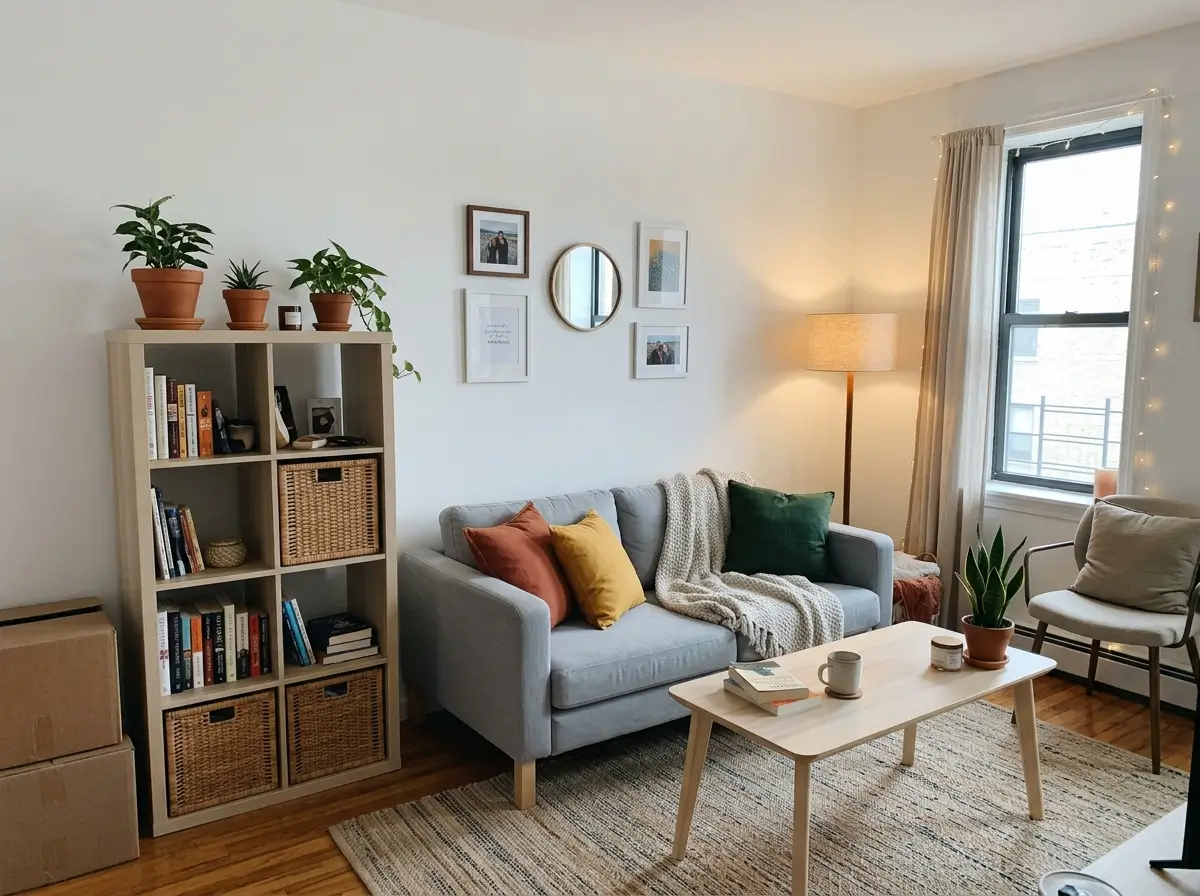

Moving into your first apartment feels exciting, but decorating it can also feel confusing. You may have a small living room, plain white walls, rental rules, a tight budget, and furniture that does not match yet. That is normal. A first home rarely comes together in one weekend, and it does not need to look expensive to feel welcoming. Good First Apartment Decor is about making smart choices that help your space work better, feel calmer, and reflect how you actually live.
A warm happy home starts with comfort, function, and a few personal details. You do not need custom furniture, designer lamps, or a large space. You need a layout that makes daily life easier, lighting that feels soft in the evening, storage that reduces clutter, and colors that make the rooms feel connected. The best first apartment decorating ideas are practical enough for renters and flexible enough to grow with you. Start with the rooms you use most, add pieces slowly, and choose items that solve real problems instead of buying decor only because it looks nice online.
Can You Make a First Apartment Feel Warm on a Budget?
Yes, you can make a first apartment feel warm on a budget by focusing on lighting, texture, layout, storage, and a simple color palette before buying extra decor. A warm home does not come from filling every wall or corner. It comes from making the space feel comfortable, easy to use, and personal.
For example, a beige sofa with two washable pillow covers, a soft throw blanket, a warm white floor lamp, and a small wood coffee table can make a living room feel settled without needing a full makeover. In a rental, removable hooks, peel-and-stick wallpaper, plug-in sconces, washable rugs, and freestanding shelves can add style without damaging walls. The key is to decorate in layers. Begin with the pieces that affect daily comfort, then add art, plants, baskets, and small accents once you understand how you use the apartment.
Start With a Simple Whole Apartment Color Palette
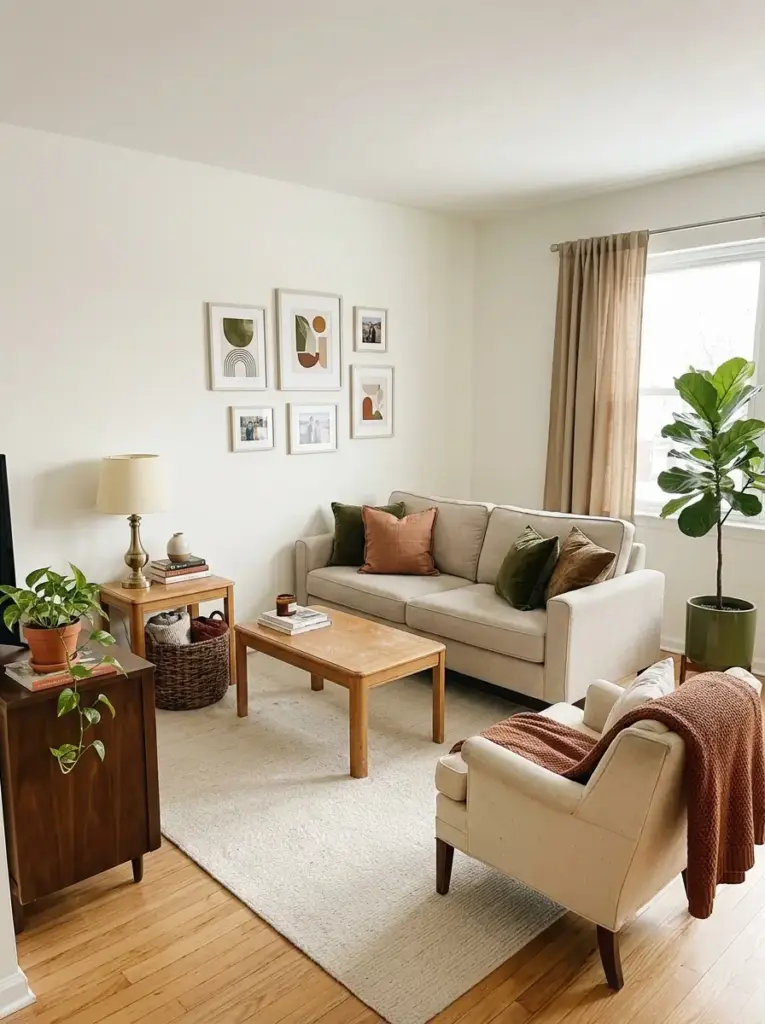
A clear color palette helps your first apartment look pulled together, even when your furniture comes from different stores, hand-me-downs, or budget finds. Choose one main neutral, one warm support color, and one or two accent colors. For example, you could use warm white walls, light oak or walnut furniture, beige textiles, and accents of olive green and rust. Another easy option is soft gray, cream, black metal, and muted blue. These combinations work because they give every room a quiet connection without making the apartment feel too planned.
This idea is especially useful for beginners who feel overwhelmed in home decor stores. Instead of asking whether every item is beautiful on its own, ask whether it fits your palette. A cream rug, tan curtains, a brass lamp, and a brown woven basket will usually work together because they share warmth. Common mistakes include buying too many bright colors at once or choosing a different theme for every room. In a small apartment, that can make the space feel busy. You can still use color, but keep the largest items calm and bring personality through pillows, art, books, plants, and small decor that is easier to change.
Use Warm Lighting Instead of Harsh Overhead Light
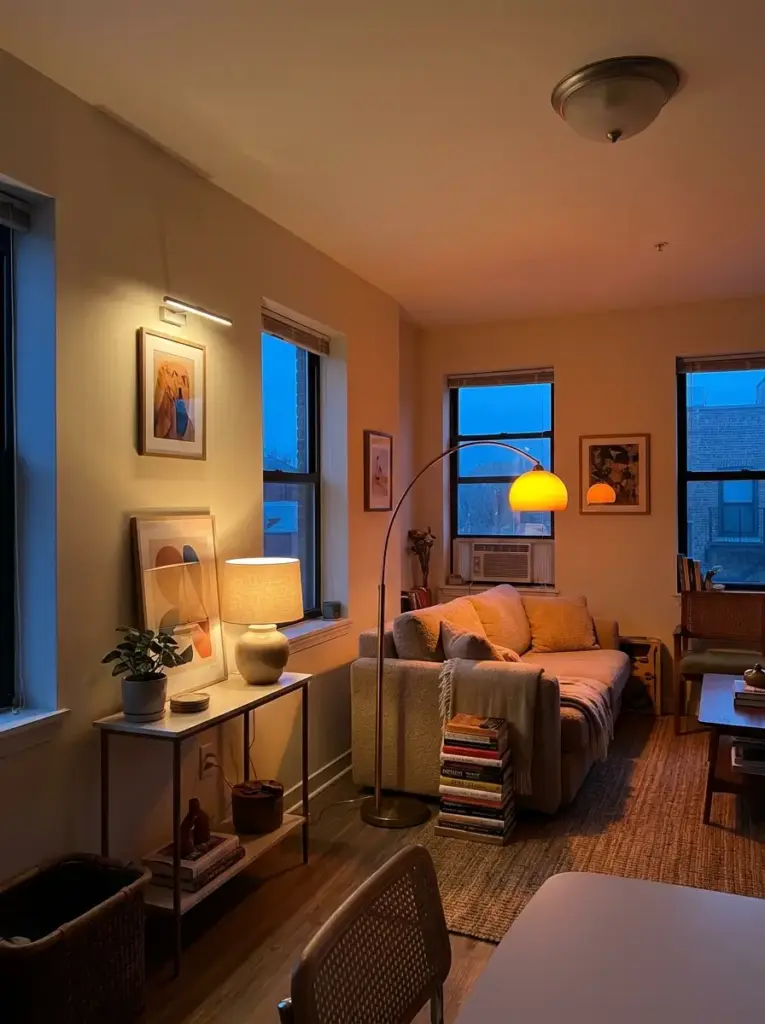
Lighting can change the feeling of a first apartment faster than almost anything else. Many rentals come with basic overhead lights that feel cold, flat, or too bright. Instead of relying only on ceiling lights, add two or three softer light sources in the rooms where you relax. Look for bulbs labeled warm white, usually around 2700K to 3000K. This temperature feels comfortable in living rooms and bedrooms because it gives a gentle glow instead of a blue office-like light.
A floor lamp beside the sofa, a table lamp on a nightstand, and a small lamp on a console can make the apartment feel more lived in. This works well because light at different heights adds depth and makes corners feel intentional. If you cannot install wired sconces, use plug-in wall sconces or rechargeable picture lights. Renters can often mount lightweight options with removable strips, but always check the weight limit first. This tip is best for anyone whose apartment feels cold at night, even after adding furniture. Avoid using only one bright ceiling light, and do not mix very cool bulbs with warm ones in the same room because the space can feel uneven.
Choose a Rug That Fits the Furniture Layout
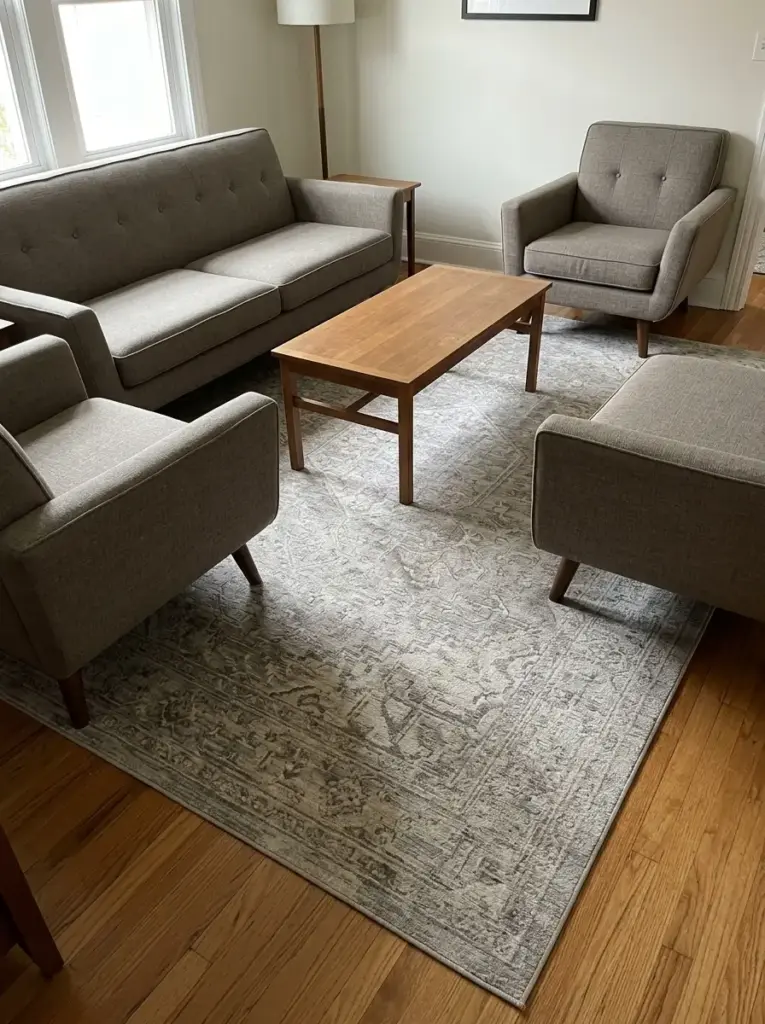
A rug is not only a decoration. It helps define zones, softens noise, protects rental floors, and makes a room feel finished. In a living room, try to choose a rug large enough for at least the front legs of the sofa and chairs to sit on it. For many first apartments, an 8-by-10 rug works better than a 5-by-7 if the living area allows it. A rug that is too small can make the room feel broken into pieces, while a larger rug visually holds the seating area together.
This approach is helpful for studio apartments and open layouts because it creates a clear living zone without building walls. If your budget is limited, consider flatweave rugs, washable rugs, indoor outdoor rugs, or secondhand options in good condition. Low-pile rugs are easier to clean and work better under dining chairs. For color, choose something forgiving, such as beige with a subtle pattern, muted terracotta, soft gray, or a vintage-style design with several tones. These hide small stains better than a solid white rug. A common mistake is buying a fluffy rug for a dining area or entryway, where crumbs and dirt collect quickly. Save softer rugs for bedrooms or low-traffic corners.
Pick Multi-Purpose Furniture Before Decorative Pieces
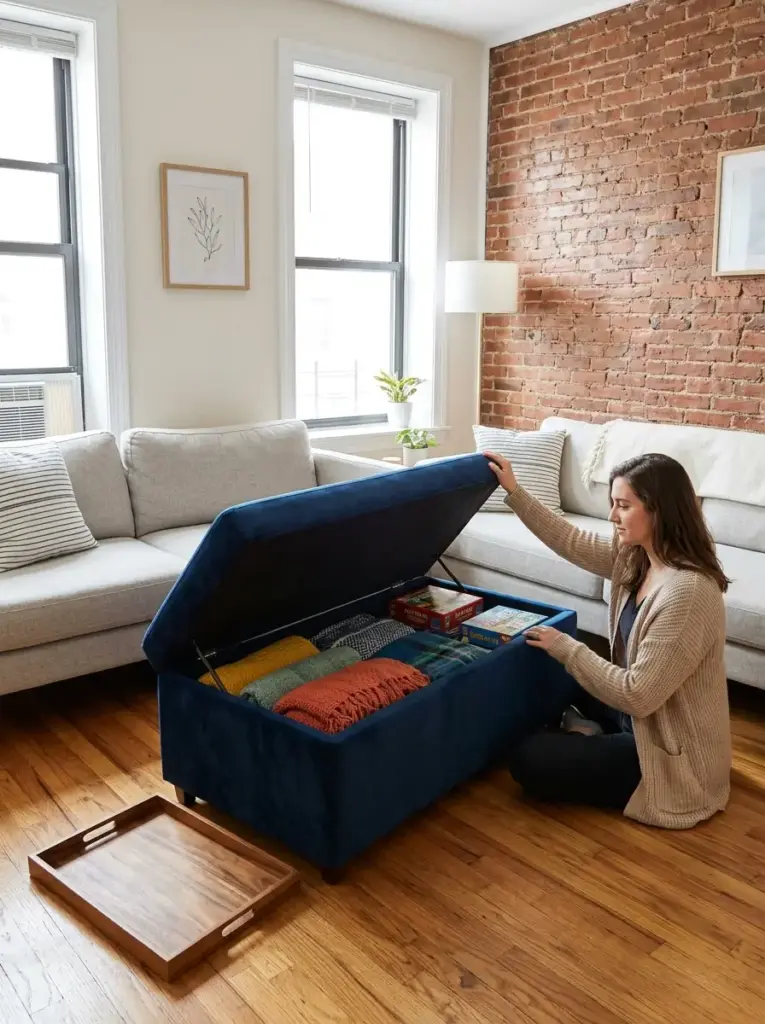
In a first apartment, every piece of furniture should earn its space. Multi-purpose furniture helps you stay organized without making the apartment feel crowded. A storage ottoman can hold blankets, extra pillows, or board games while also working as a coffee table. A drop-leaf dining table can sit against the wall during the week and open up when guests visit. A sleeper sofa or daybed can help if your apartment doubles as a guest space.
This idea works because small apartments often have limited closets and awkward layouts. Before buying side tables, accent chairs, or decorative shelves, think about what you need to store and how you move through the room. For example, a narrow console table behind a sofa can hold a lamp, keys, mail, and baskets underneath. A bed frame with drawers can replace a bulky dresser in a small bedroom. This tip is best for renters, students, and anyone furnishing an apartment from scratch. Avoid buying tiny furniture only because the apartment is small. Sometimes a normal-sized sofa with hidden storage looks calmer than three small pieces trying to do the same job.
Create a Real Entryway Even If You Do Not Have One
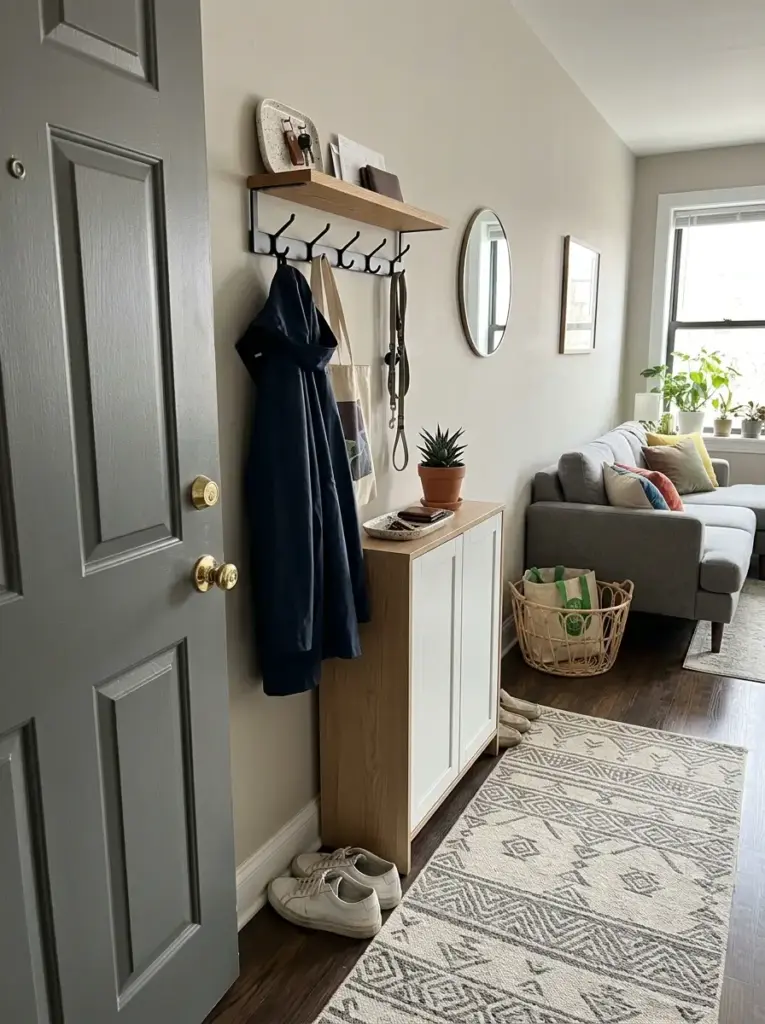
Many first apartments open straight into the living room, which can make bags, shoes, and keys spread everywhere. You can create an entryway with a few simple pieces. Add a small wall hook rack, a narrow shoe cabinet, a tray for keys, and a washable runner rug. If you have no wall space, place a slim basket near the door for shoes and hang removable hooks behind the door for coats or tote bags.
This works because the entrance controls the first impression of your home and helps you build better daily habits. When everything has a landing spot, the rest of the apartment stays cleaner. A renter-friendly option is a freestanding coat rack or a slim bench with storage underneath. Choose materials that match your main decor palette, such as black metal hooks with a wood shelf or a light woven basket with a neutral rug. This tip is best for busy beginners who often drop things on the sofa after coming home. The mistake to avoid is decorating the entry with only pretty items and no function. A candle and framed print are nice, but they will not help if shoes are piling up beside the door.
Make the Sofa Area Feel Comfortable and Useful
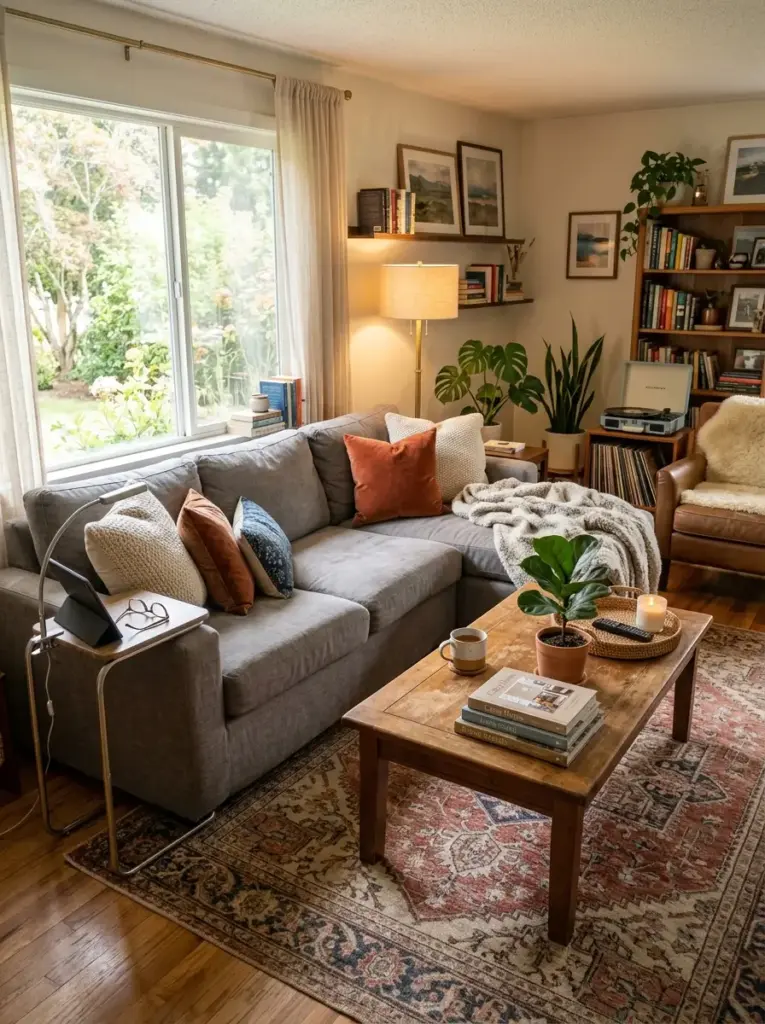
The sofa is usually the center of a first apartment living room, so it should feel comfortable and practical. If you already have a sofa, you can improve it with washable pillow covers, a textured throw, and a side table within reach. If you are buying one, choose a size that fits your room without blocking walkways. In small apartments, a two-seat sofa, apartment sofa, loveseat, or compact sectional can work well. Measure the wall, doorways, elevator, and stairwell before ordering.
This idea matters because the living room often has to handle relaxing, eating, working, hosting, and watching TV. Keep at least 30 inches of walking space where possible, especially between the sofa and the main path through the room. A coffee table with rounded corners works well in tight spaces because it is easier to move around. If the room is very small, try nesting tables or a storage ottoman instead of a large coffee table. This tip is best for anyone who wants a cozy living area without overcrowding the room. Avoid pushing every piece against the wall automatically. Sometimes, floating the sofa slightly away from the wall with a rug underneath creates a more comfortable conversation area.
Hang Curtains High to Make Rooms Feel Taller
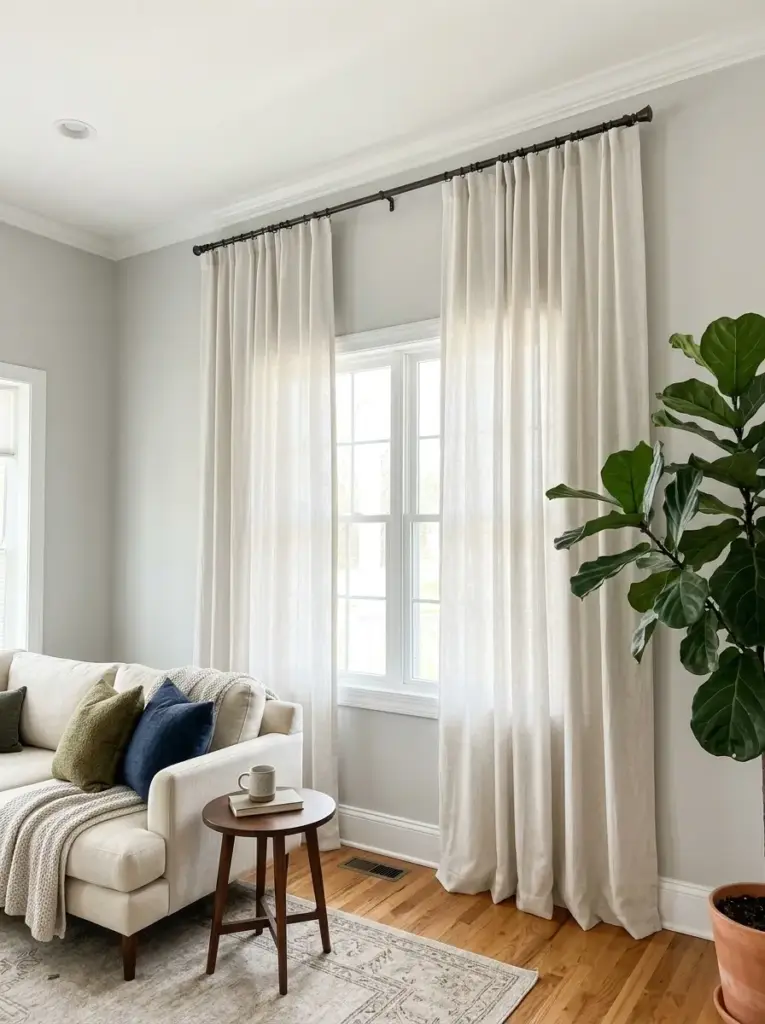
Curtains are one of the easiest ways to make a rental feel softer and more finished. Hang the curtain rod a few inches above the window frame, or closer to the ceiling if possible, and let the curtains reach the floor. This makes the wall look taller, and the window feel larger. Choose curtain panels that are wide enough to look full when closed. Thin, narrow panels can make the room feel unfinished, even if the fabric is nice.
This decorating move works because fabric adds softness, controls light, and reduces the hard edges that many apartments have. For a warm look, try linen blend curtains in ivory, oatmeal, warm gray, or soft taupe. If you need privacy, use light-filtering curtains in the living room and blackout curtains in the bedroom. Renters can use tension rods in some windows, no-drill curtain brackets, or removable adhesive hooks for lightweight panels. This tip is best for apartments with plain blinds or windows that feel bare. Avoid curtains that stop awkwardly halfway down the wall unless they are cafe curtains in a kitchen or bathroom. Floor-length panels usually look cleaner in living rooms and bedrooms.
Use Wall Art That Feels Personal but Not Cluttered
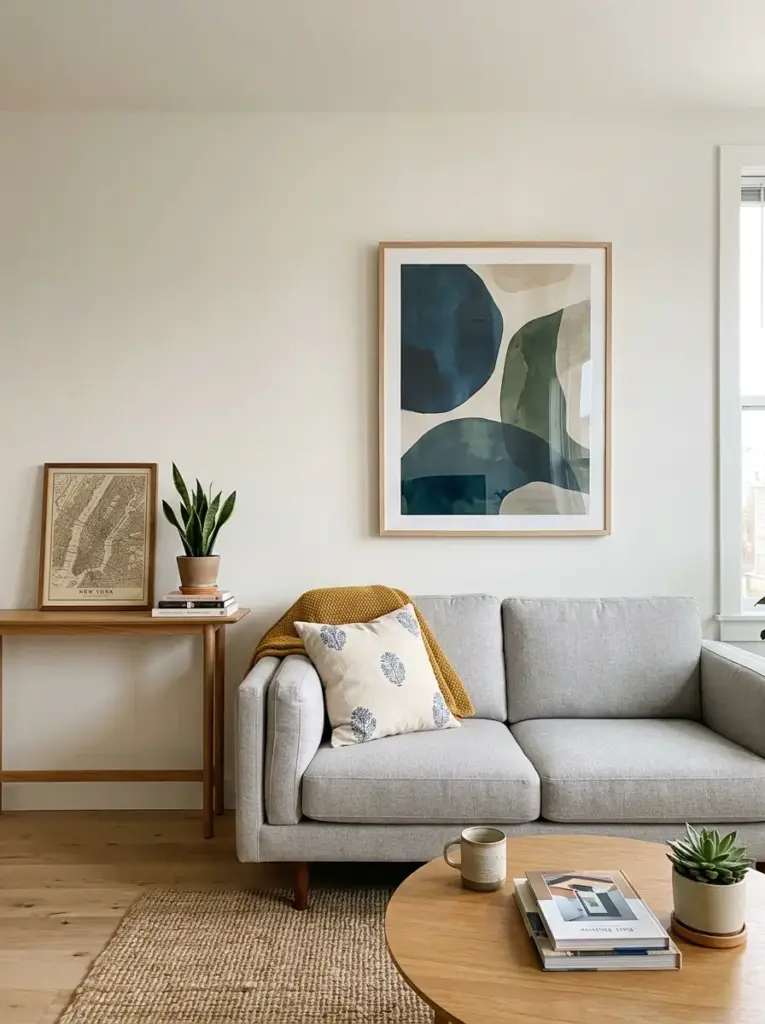
Blank walls can make a first apartment feel temporary, but you do not need to cover every wall at once. Start with one main wall in the living room, bedroom, or dining room. Choose art that connects to your colors and your life. This could be a framed city map, simple line drawings, vintage prints, textile art, family photos in matching frames, or a few pieces from local artists. A large piece above the sofa often looks calmer than many tiny frames scattered around the room.
This works because wall art gives the apartment personality and makes the space feel more settled. For renters, removable picture hanging strips are useful for lightweight frames, while leaning framed art on a console or dresser avoids wall holes altogether. If your budget is small, frame postcards, calendar pages, fabric samples, or your own photos printed in black and white. The tip is best for beginners who want a personal home but worry about making the walls look messy. A common mistake is hanging art too high. In most rooms, the center of the artwork should be around eye level, and art above a sofa should usually sit closer to the furniture than to the ceiling.
Add Texture With Blankets, Baskets, Wood, and Fabric
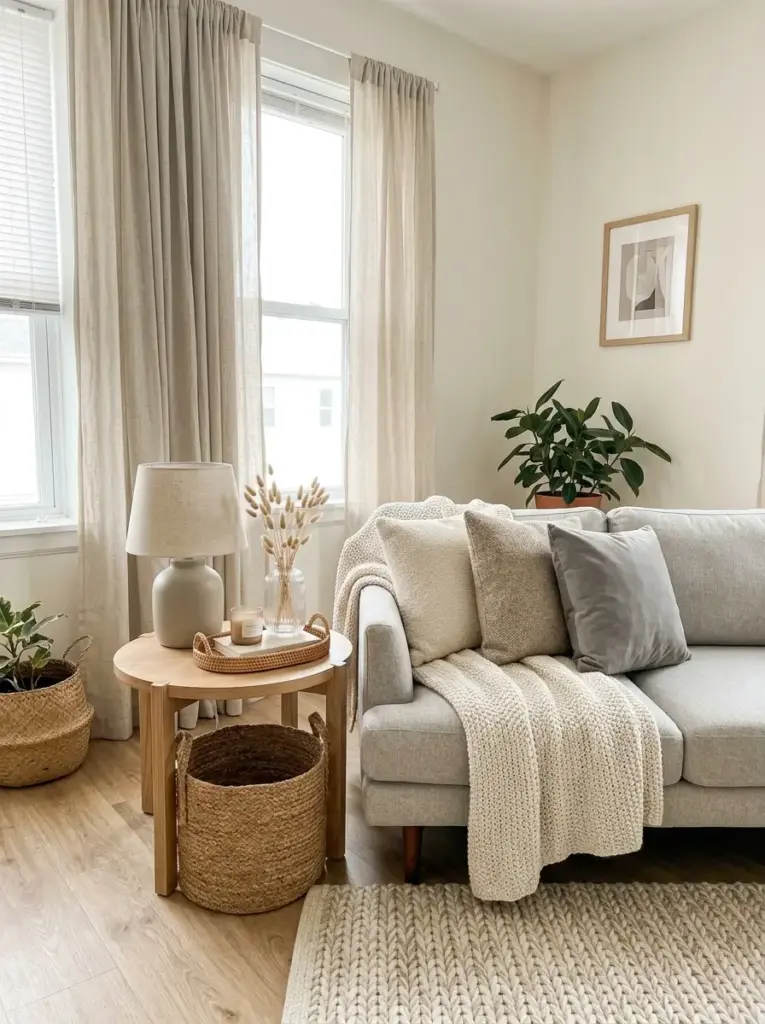
Texture makes a first apartment feel warm without requiring bold colors or expensive furniture. Use a mix of soft, smooth, woven, and natural materials. For example, pair a cotton sofa throw with a woven basket, a wood side table, linen curtains, and a wool blend rug. Even if everything is neutral, the space will feel more layered because the surfaces are different.
This approach is useful because many rentals have flat walls, plain cabinets, and basic flooring. Texture adds interest quietly. It is also budget-friendly because small textured items can make existing furniture feel better. A ribbed glass vase, a boucle pillow cover, a rattan tray, a jute basket, or a wooden lamp base can warm up a room without taking much space. This tip is best for people who like calm colors but do not want the apartment to feel plain. Avoid using too many shiny surfaces at once, such as glossy tables, chrome lamps, and satin pillows, because the room can feel cold. Also, avoid buying only chunky textures if your apartment is tiny, since too many heavy pieces can make the space feel crowded.
Set Up a Dining Spot That Matches Your Real Life
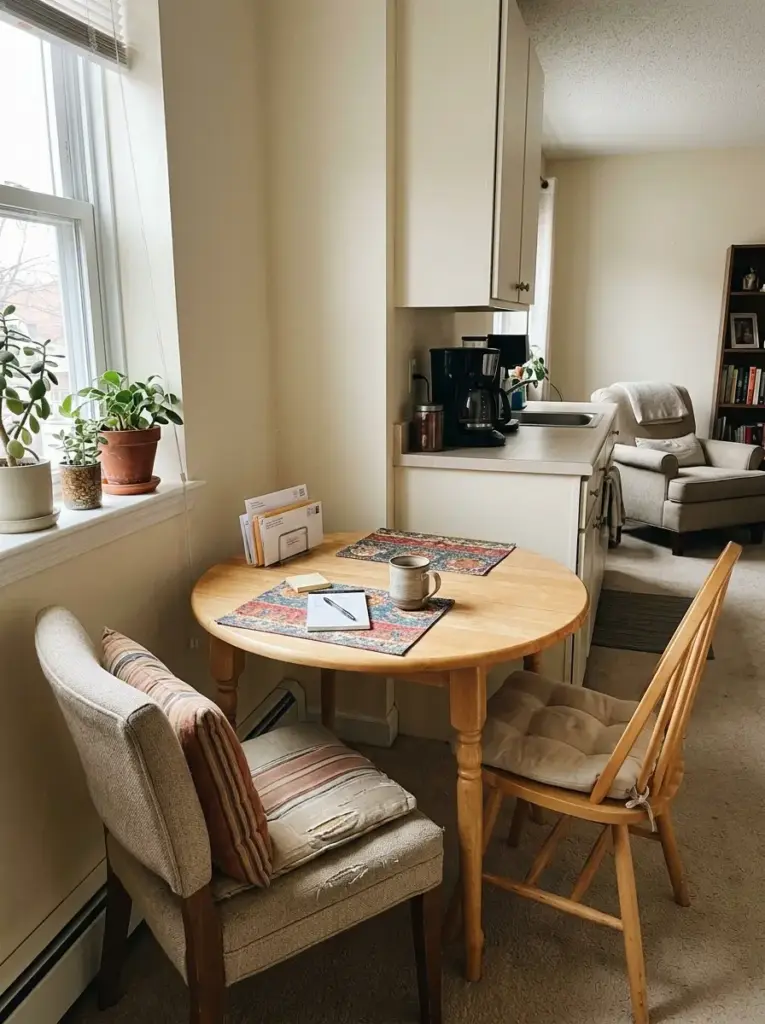
Your first apartment may not have a formal dining room, but having a small place to eat can make the home feel more comfortable and organized. If you live alone or with one other person, a round table with two chairs can fit into a corner and make meals feel more intentional. A drop-leaf table works well in a studio because it can fold down when not in use. If there is truly no room, use a wall-mounted folding table or a counter height setup with stools that tuck underneath.
This idea helps because eating at the sofa every day can make the living room messy and less relaxing. A small dining area can also work as a laptop spot, craft table, or place to sort mail. Choose chairs that are comfortable enough for real use, not just pretty in photos. Wood chairs with seat cushions, upholstered dining chairs, or simple metal chairs with a curved back can all work depending on your style. This tip is best for beginners who want their apartment to support better routines. Avoid buying a table that blocks the kitchen path or a glass table that shows every fingerprint if you do not want extra cleaning.
Make the Bedroom Calm and Storage-Friendly
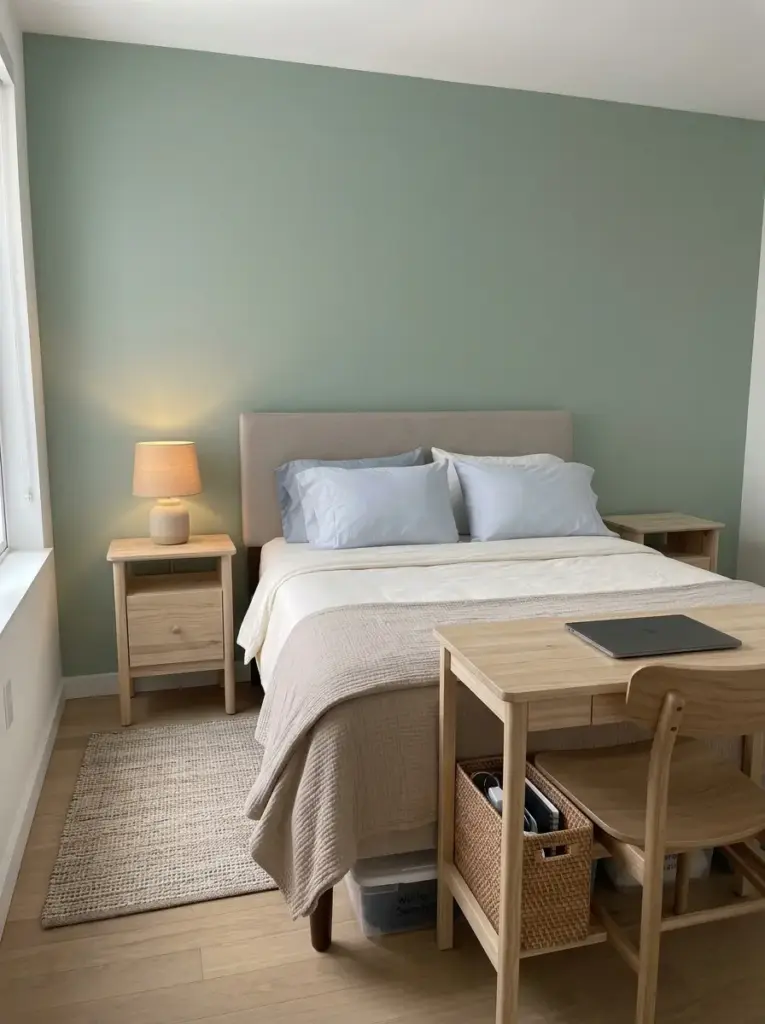
A first apartment bedroom should help you rest, get dressed, and keep personal items under control. Start with the bed placement. If possible, place the bed against the longest solid wall and leave space on at least one side to walk. Use a headboard, large pillows, or a fabric wall hanging to give the bed a clear anchor. Choose bedding in breathable materials like cotton, linen blend, or microfiber if you need something affordable and easy to wash. Warm white, cream, sage, clay, taupe, or soft blue can make the room feel calm without looking empty.
This works because the bed is the largest piece in the room, so it sets the mood. Add one or two nightstands with closed storage if you tend to collect books, chargers, and skincare items. If space is tight, use wall shelves or small stools as bedside tables. Under-bed storage boxes can hold seasonal clothes, extra sheets, or shoes, but label them so they do not become hidden clutter. This tip is best for anyone whose bedroom feels more like a storage room than a restful space. Avoid placing too many work items near the bed. If your desk must be in the bedroom, use a basket or cabinet to hide work supplies at night.
Bring in Plants Without Turning the Home Into a Chore
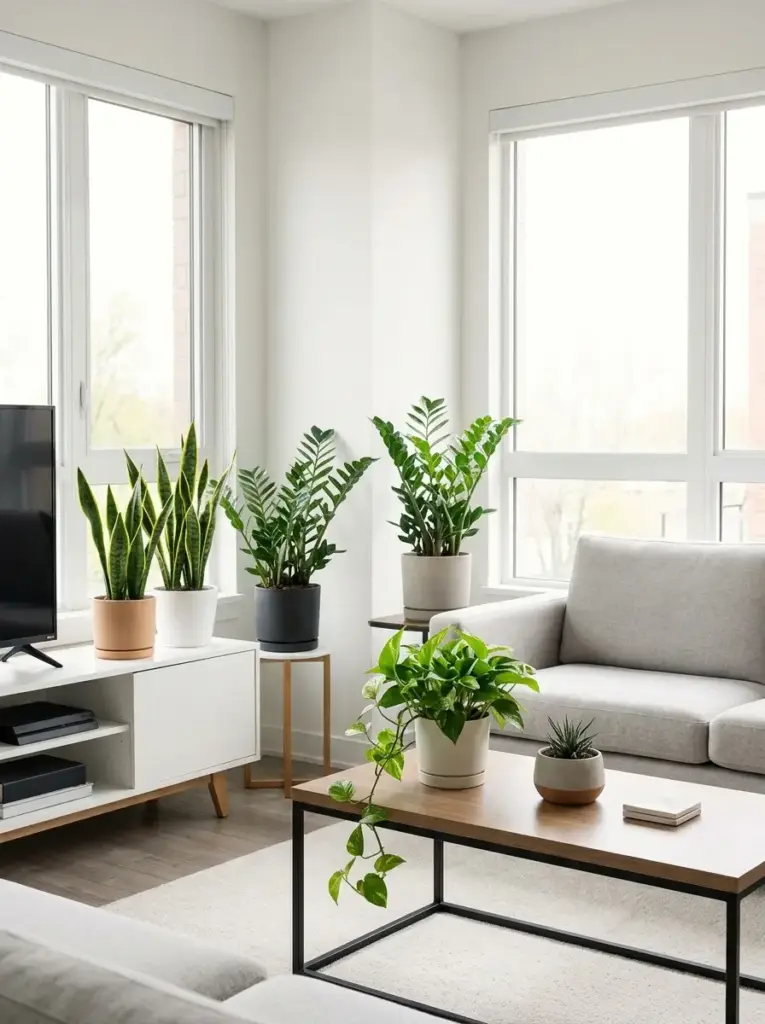
Plants can add life to a first apartment, but the best plant choice depends on your light, schedule, and experience. If you are a beginner, start with low-maintenance plants like pothos, snake plant, ZZ plant, or heartleaf philodendron. Place them where they can get the right light rather than where they only look good. A pothos can handle moderate indirect light, while many succulents need much brighter windows.
This idea works because plants soften corners, add color, and make a space feel cared for. They also help you decorate vertically when floor space is limited. Use hanging planters, narrow plant stands, or a small plant on a bookshelf. If your apartment has poor light or you travel often, realistic faux plants can still add greenery without stress. This tip is best for beginners who want natural elements but do not want a high-maintenance setup. Avoid buying several plants at once before learning your apartment’s light patterns. Also, avoid pots without drainage unless you keep the plant in a nursery pot inside a decorative cover pot. Overwatering is one of the fastest ways to lose a new plant.
Style Open Shelves With Fewer Better Choices
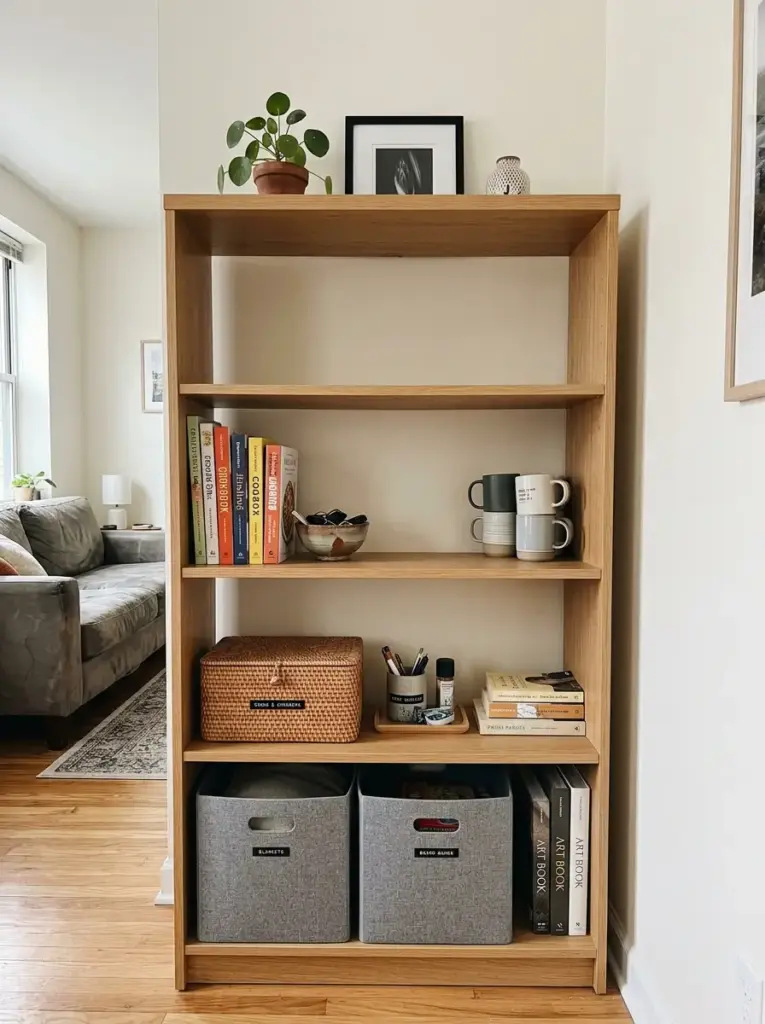
Open shelves can look useful or messy depending on how you style them. In a first apartment, use shelves for a mix of storage and display. Place heavier items like baskets, boxes, and large books on lower shelves. Use the middle shelves for items you reach often, and keep the top shelves lighter with art, plants, or decorative objects. Leave some space so the shelves do not feel packed.
This works because shelves are easy to overload, especially when storage is limited. A good shelf setup gives the eye places to rest and makes everyday items look intentional. For example, place cookbooks upright with a small bowl beside them, store cords in a lidded box, and group smaller items on a tray. This tip is best for renters because freestanding shelves add storage without built-ins. Choose a shelf depth that fits your room. A 12-inch deep bookcase works in many living rooms, while a narrow ladder shelf may be better for a hallway or bathroom. Avoid displaying every small item you own. If everything is visible, the apartment can feel cluttered even when it is clean.
Upgrade the Bathroom With Practical Soft Details
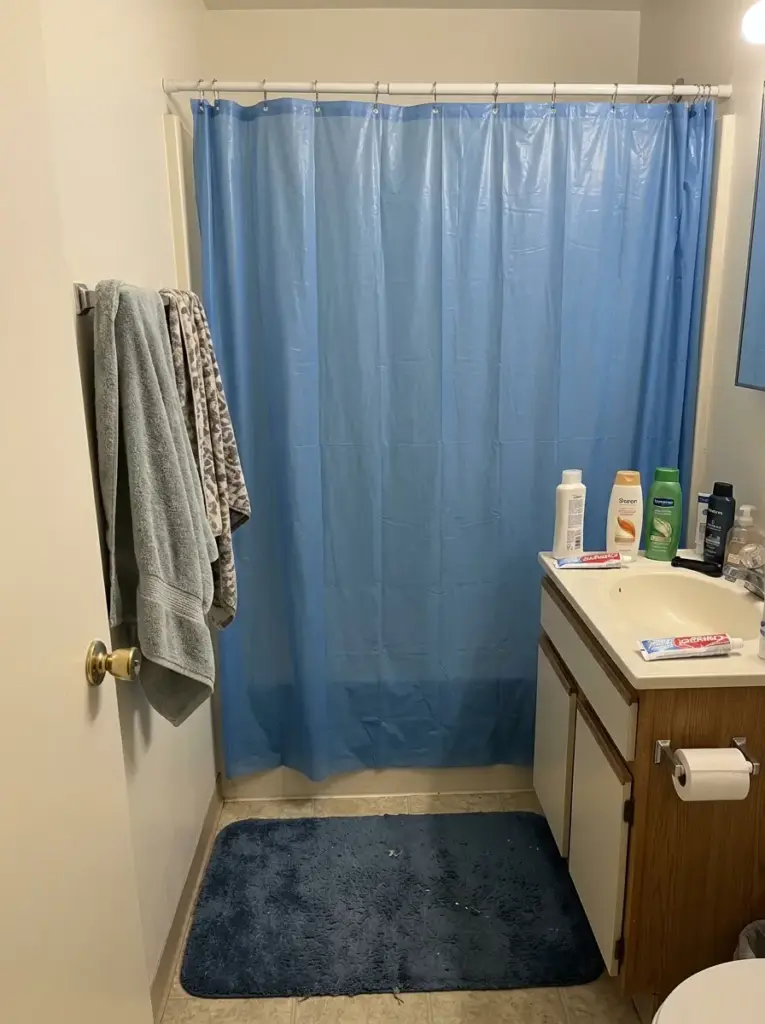
Rental bathrooms can feel plain, but small changes can make them feel cleaner and more comfortable. Start with a good shower curtain, a washable bath mat, matching towels, and storage that keeps products off the counter. A white waffle shower curtain, warm beige towels, and a wood or bamboo bath mat can make a basic bathroom feel fresh without renovation. If you prefer color, try sage green, dusty blue, or clay towels with a neutral curtain.
This idea works because bathrooms are small, so every visible item matters. Matching your towels and reducing product clutter can make the room feel calmer quickly. Use adhesive hooks for towels, a tension pole caddy for shower storage, and small drawer bins for skincare or makeup. If the lighting is harsh, a small plug-in night light with a warm glow can make evening routines nicer. This tip is best for renters who cannot change tile, vanity, or fixtures. Avoid using too many open containers on the counter, especially in a small bathroom. Also, avoid thick bath mats that never dry properly, because they can make the room smell damp.
Add Personal Details Slowly and With Intention
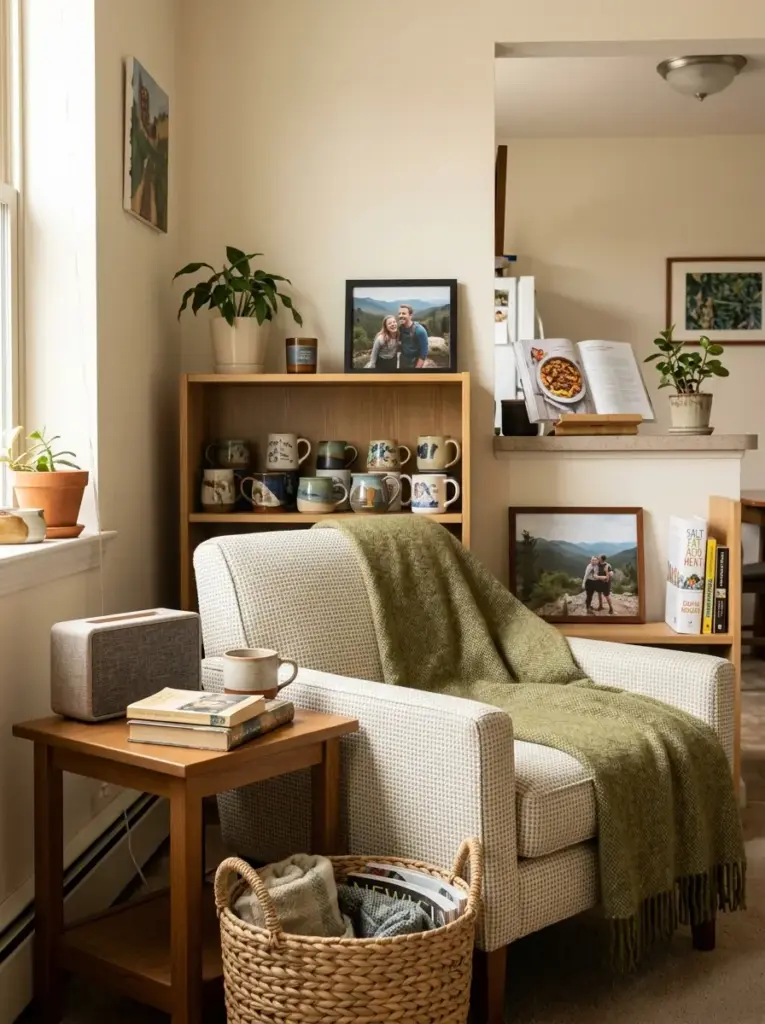
The most welcoming first apartments have signs of real life, but they are not filled with random clutter. Add personal details that tell your story and support your routines. This might include a favorite cookbook on the kitchen counter, a framed photo from a trip, a ceramic mug collection on a shelf, a small speaker near the sofa, or a basket for the blanket you use every night. Personal decor works best when it has space around it.
This matters because a home should not feel like a showroom. It should make daily life easier and remind you of the people, places, and habits that matter to you. The best approach is to decorate slowly. Live in the apartment for a few weeks before filling every corner. Notice where you need a lamp, where mail piles up, which chair you actually use, and which wall feels empty. This tip is best for anyone starting from scratch and feeling pressure to finish fast. Avoid buying decor only to copy a trend. Trends change, but a home built around your routines will stay useful longer.
Common Mistakes To Avoid in a First Apartment Decor
One common mistake is buying decor before measuring. A sofa that looks normal online can block a doorway, overpower a living room, or fail to fit through a stairwell. Measure the room, doorways, windows, and wall space before you order large pieces. Use painter’s tape on the floor to mark where furniture will sit. This simple step helps you see whether you can walk around the room comfortably.
Another mistake is choosing style over comfort. A hard dining chair, a low-quality mattress, or a narrow sofa may photograph well, but it will make daily life less pleasant. Spend more attention on the items your body uses every day, such as seating, bedding, lighting, and rugs. Decorative objects can come later. Many beginners also push all furniture against the walls because they think it makes the room feel bigger. Sometimes it does, but sometimes it creates an empty middle and awkward conversation area. Try different layouts before deciding.
Too much small decor is another problem. Many tiny candles, frames, trays, and objects can make a first apartment feel cluttered. Use fewer pieces with more purpose. A large lamp, a framed print, a plant, and a basket can do more for a corner than ten tiny accessories. Also, avoid ignoring vertical space. Walls, tall shelves, hooks, and organizers over the door can help you store items without filling the floor. Finally, do not use cool white bulbs in every room unless you truly like a bright work-like feeling. Warm lighting usually makes living spaces and bedrooms feel more comfortable.
Budget-Friendly First Apartment Decor Tips
Decorating your first apartment on a budget is easier when you spend in the right order. Start with the pieces that affect comfort and function first. A good mattress, a sofa or comfortable chair, proper lighting, and storage are more important than decorative vases or trendy wall art. Once the basics work, you can add affordable style through pillow covers, curtains, rugs, plants, baskets, and secondhand furniture.
Secondhand shopping can be helpful, especially for wood furniture, dining chairs, nightstands, mirrors, and lamps. Look for sturdy materials and simple shapes. A scratched wood dresser can often look better with new knobs, furniture polish, or a small repair. Be careful with upholstered secondhand items unless you can inspect and clean them well. For renters, removable upgrades are worth considering. Peel-and-stick backsplash, removable wallpaper, adhesive hooks, tension rods, and plug-in sconces can improve a space without permanent work. Just test adhesive products in a hidden spot and keep the original hardware if you swap knobs or showerheads.
Another smart budget tip is to buy covers instead of replacing everything. Pillow inserts can be reused with different covers, a sofa throw can hide worn fabric, and a tablecloth can improve a basic dining table. Choose items that work in more than one room. A small stool can serve as a plant stand, nightstand, or extra seat. A basket can hold blankets in the living room now and towels in the bathroom later. Budget decorating works best when you avoid panic buying. Leave some space until you find pieces that fit your apartment and your life.
First Apartment Decor Tips For Beginners
If you are new to First Apartment Decor, begin with one room instead of trying to decorate the whole apartment at once. The living room or bedroom is usually the best place to start because you use it every day. Set up the main furniture, add warm lighting, choose a rug if needed, and create storage for the items that usually become cluttered. Once that room feels comfortable, move to the next area.
Think in layers. The first layer is layout, which decides how easy the room is to use. The second layer is large furniture, such as the sofa, bed, table, and shelves. The third layer is comfort, including rugs, curtains, bedding, and lighting. The final layer is personality, such as art, plants, books, and small objects. This order helps you avoid wasting money on decor that does not solve the real problem.
Choose rental-friendly changes when you are unsure about rules. Use removable hooks, tension rods, freestanding shelves, washable rugs, and lamps instead of hardwired fixtures. Keep a small box for original knobs, screws, curtain hardware, or anything you replace, so you can return the apartment to its original condition when you move out. Most of all, give yourself time. A first apartment does not need to look complete right away. It should become more useful and personal as you learn what you need.
FAQ
What should I buy first for my first apartment?
Start with the items that support daily life. A mattress, basic seating, a small table, lamps, curtains or blinds for privacy, towels, bedding, and storage should come before extra decor. Once you can sleep, sit, eat, shower, and organize your things comfortably, you can add rugs, art, plants, and accessories. This order keeps your budget focused on what you will actually use.
How can I decorate a first apartment without damaging the walls?
Use removable picture hanging strips, adhesive hooks, tension rods, leaning art, freestanding shelves, and plug-in lighting. Peel-and-stick wallpaper or backsplash can work, but test a small area first because every wall finish is different. Avoid heavy items on adhesive strips unless the product clearly supports the weight. When in doubt, use furniture and textiles to add style instead of attaching everything to the wall.
What colors make a first apartment feel warm
Warm whites, cream, beige, camel, soft taupe, muted terracotta, olive green, warm gray, and natural wood tones can make a first apartment feel warmer. You do not need to use all of them. Choose two or three main tones and repeat them in different rooms. For example, cream curtains, a tan rug, walnut furniture, and olive pillows can create warmth without making the apartment feel dark.
How do I make a small apartment look less cluttered?
Use closed storage for everyday mess, choose furniture with hidden storage, and keep surfaces simple. Baskets, lidded boxes, drawer dividers, and slim cabinets can hide items that do not need to be displayed. Keep only a few things on tables and shelves. It also helps to use one color palette throughout the apartment because too many colors can make even a clean room feel busy.
Is it better to decorate slowly or buy everything at once
Decorating slowly is usually better for a first apartment. When you live in the space for a few weeks, you learn where you need storage, which corners are dark, how much seating you use, and what size furniture actually makes sense. Buying everything at once can lead to mistakes, especially with layout and scale. Start with essentials, then add pieces as you understand the apartment.
How can I make cheap furniture look better?
Make inexpensive furniture look better by keeping the surrounding area clean, adding better hardware, using warm lighting, and pairing it with texture. A basic bookcase can look more polished with baskets on the lower shelves and fewer items displayed. A simple sofa can look better with quality pillow covers and a throw blanket. A plain dresser can be improved with new knobs and a mirror or lamp above it.
Conclusion
First Apartment Decor is not about making a rental look expensive or copying every trend. It is about creating a warm, happy home that supports your daily life. Start with a simple color palette, comfortable lighting, useful furniture, and smart storage. Add rugs, curtains, plants, art, and personal details in layers. Use rental-friendly ideas when you cannot make permanent changes, and choose budget-friendly pieces that can move with you later.
Your first apartment will feel better when each choice has a purpose. A lamp can make evenings softer, a rug can define the living area, a basket can control clutter, and a curtain can make a plain window feel finished. Small choices add up. Decorate slowly, measure before buying, and let your home become more personal over time. A warm home does not need to be perfect. It needs to feel comfortable, practical, and truly yours.