
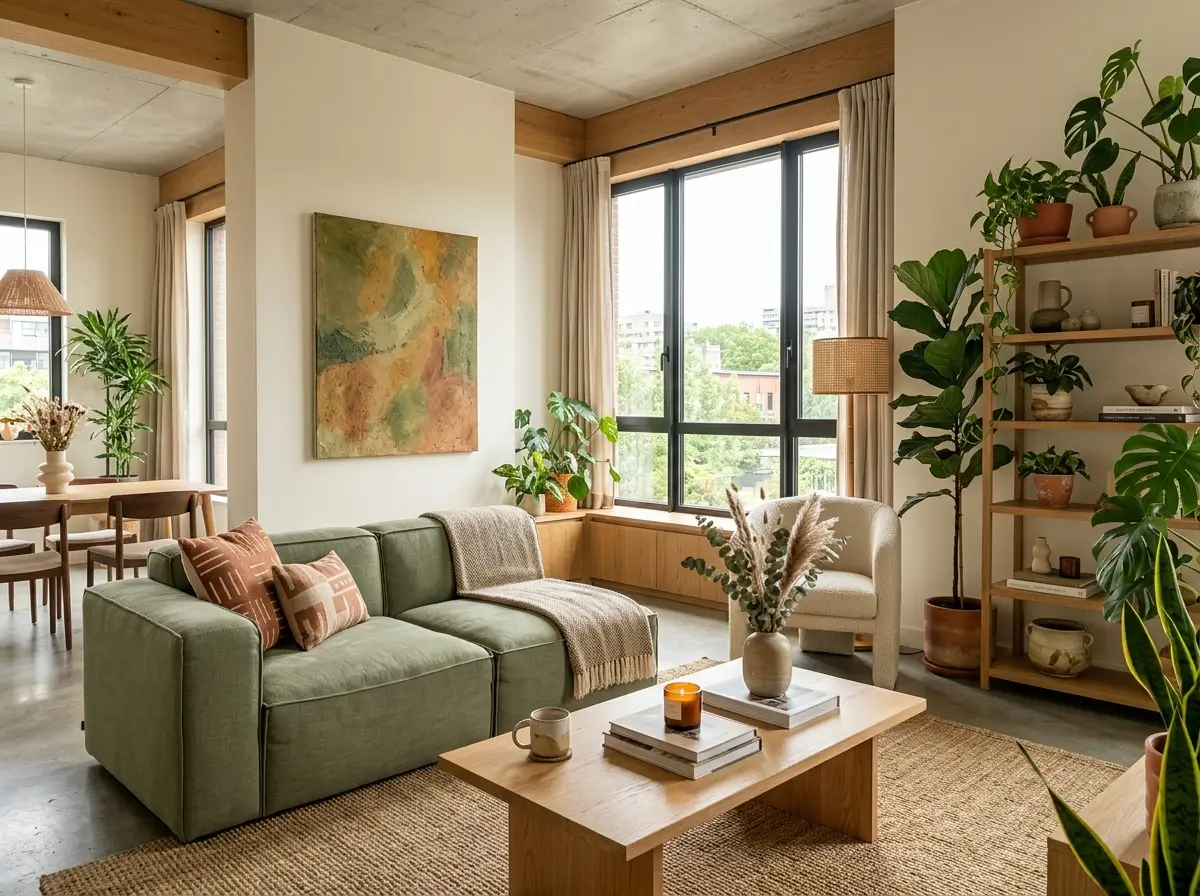

Modern apartments often look clean but can feel cold when every surface is white, gray, or glossy. Earthy Apartment Decor softens that effect by bringing in warm neutrals, tactile materials, organic shapes, and colors borrowed from soil, stone, wood, leaves, and clay. The goal is not to fill every corner with rustic objects. Better results come from balancing natural warmth with the simple lines, open pathways, and useful storage that small homes need.
Rental limits do not have to stop the look. Removable finishes, freestanding furniture, washable textiles, plug-in lighting, and lightweight wall pieces can change a room without permanent construction. Beginners also benefit because most of these ideas build on items they may already own. A beige sofa, wooden table, cream curtain, or green plant can become part of a stronger scheme once the surrounding colors and textures feel intentional.
Practical styling matters more than buying many new pieces. Scale, lighting, placement, and repetition decide whether a room feels calm or cluttered. Each idea below explains what to use, why the choice suits modern apartments, who will benefit most, and how to avoid common decorating mistakes.
What Is the Best Way to Create an Earthy Modern Apartment?
Effective Earthy Apartment Decor works when you begin with a restrained base, add two or three natural accent colors, and repeat a small group of materials throughout the home. Start with warm white, oatmeal, sand, taupe, or light greige on the largest surfaces. Then add olive, rust, terracotta, walnut, charcoal, or muted mustard in smaller amounts. Repeating wood, linen, ceramic, woven fiber, and matte metal creates a connection without making every room identical.
Small apartments need visual breathing room, so avoid treating every earthly object as essential. Choose one strong feature per area, such as a textured rug in the living room, a clay-colored headboard in the bedroom, or a walnut shelf near the dining table. Keep walking paths clear and let some wall and floor space remain empty. Controlled contrast makes natural materials stand out more effectively than crowded styling.
Build a Warm Neutral Foundation
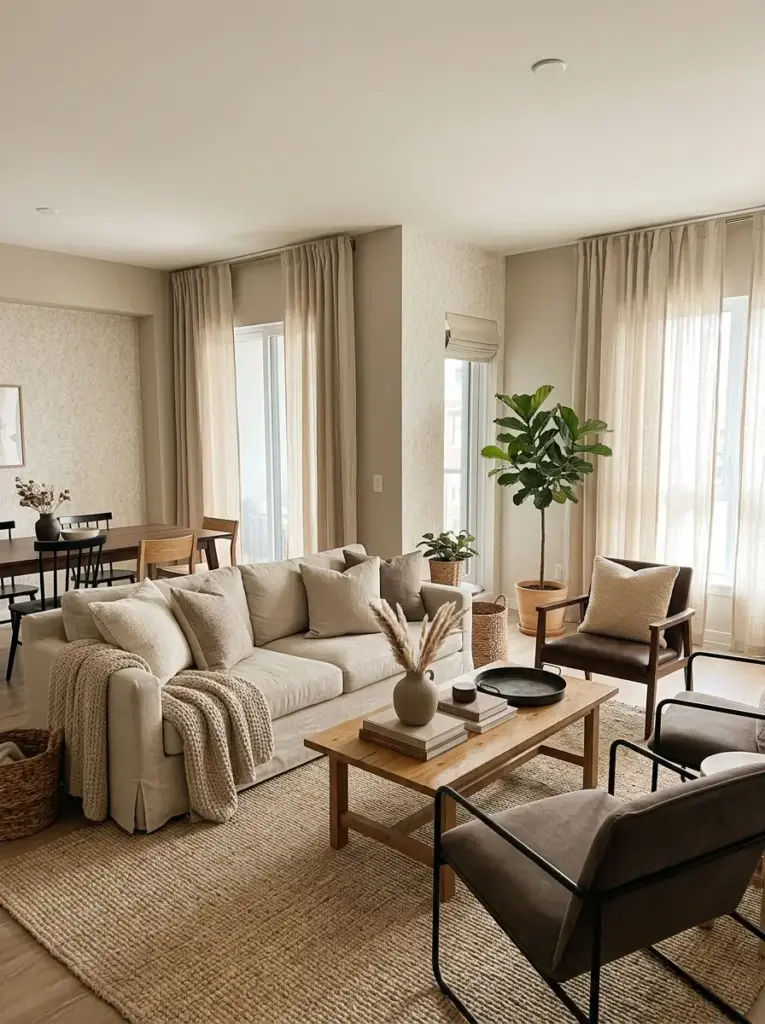
Warm neutrals create a flexible background that supports changing accessories, seasonal textiles, and different wood tones. Instead of bright builder white, use soft cream, mushroom, putty, warm greige, or pale sand. Renters can achieve the same result with large curtains, a washable rug, slipcovers, and removable wallpaper rather than paint. Choose undertones carefully. Yellow cream feels cozy beside honey oak, while mushroom and taupe suit walnut, black metal, and darker fabrics.
Layered Earthy Apartment Decor feels convincing when the base includes a slight tonal variation. Pair a cream sofa with oatmeal cushions, a flax throw, and a light taupe rug instead of matching every item exactly. The layered neutrals prevent flatness while keeping the room calm. This approach suits beginners, renters, and anyone who owns colorful objects but wants the overall home to feel more settled. Avoid cool blue-gray walls unless you balance them with substantial wood, warm light, and brown-based textiles.
Choose Two Natural Accent Colors
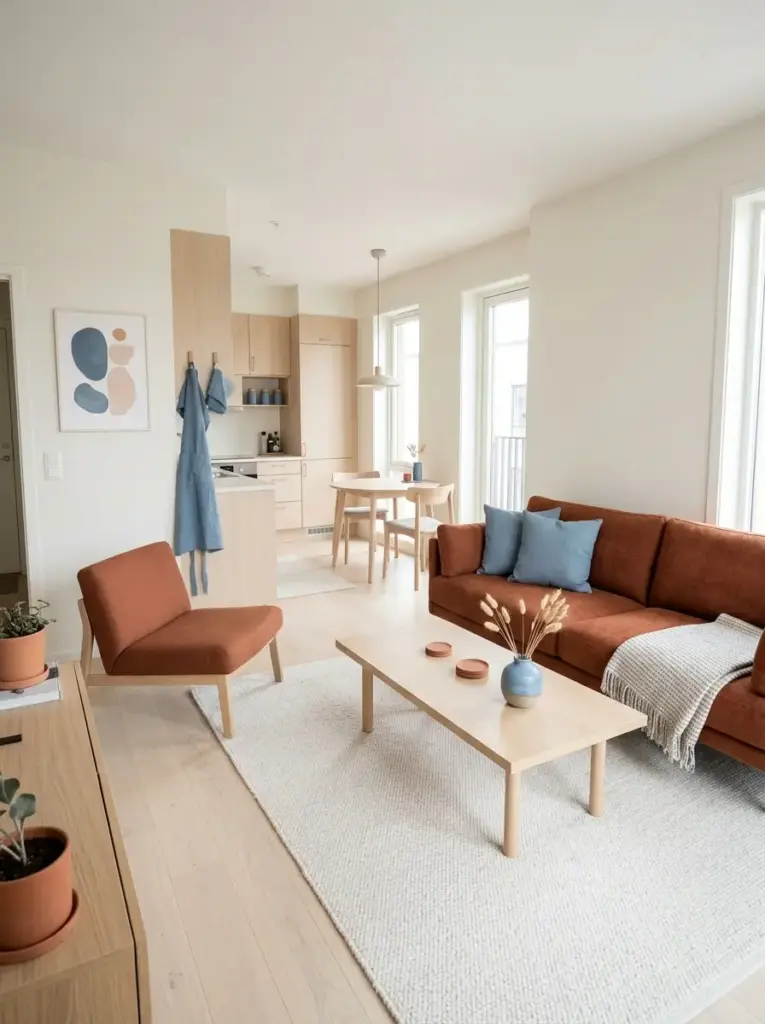
Limiting the palette prevents a small apartment from feeling visually busy. Select two main accent colors inspired by nature, then use them in different strengths. Olive and rust work well with cream and walnut. Clay and muted blue suit pale oak and off-white walls. Moss and ochre create a richer scheme beside dark brown furniture. One color can dominate while the second appears through smaller details such as cushions, books, ceramics, or artwork.
Color repetition creates a steady rhythm from one area to another. Place olive cushions in the living room, an olive towel in the kitchen, and a small olive print near the entry. Repeat rust through a vase, a blanket edge, and one framed shape. The room will feel coordinated without looking themed. This technique is best for open-plan apartments where the kitchen, dining area, and lounge are visible at once. Skip equal amounts of every shade because balanced distribution can look staged rather than natural.
Mix Light and Dark Wood Tones
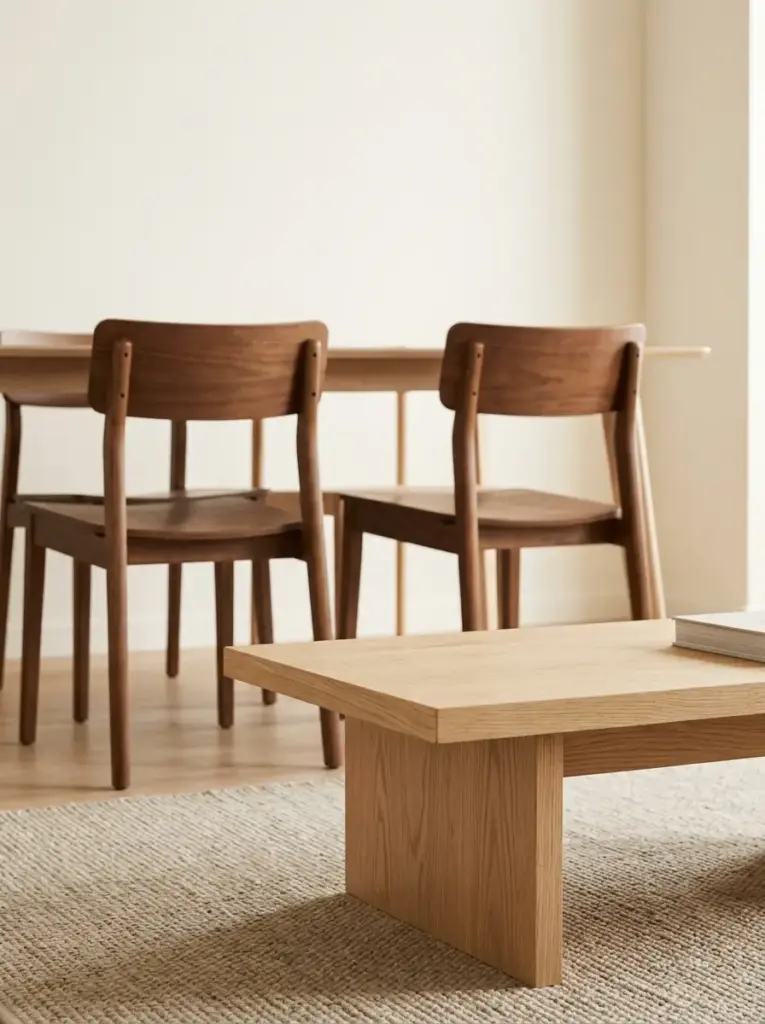
Matching every wood finish is unnecessary and often expensive. More natural rooms usually include variation, but the tones still need a relationship. Combine pale oak with medium walnut by repeating each finish at least twice. For example, use an oak coffee table and oak frames, then add walnut dining chairs and a walnut lamp base. Similar undertones help mixed pieces feel connected. Orange-red cherry can clash with gray-washed wood, while warm oak generally pairs well with walnut and teak.
Contrast also gives modern rooms more depth. Pale wood keeps compact spaces airy, while darker wood adds visual weight and prevents the room from feeling unfinished. People furnishing gradually or using secondhand pieces will find this method especially useful. Keep large furniture simple and let smaller objects bridge the finishes. A tray, frame, or side table can repeat a secondary wood tone. Avoid collecting five unrelated stains in one small room because the result may look accidental.
Add Linen and Cotton in Visible Layers
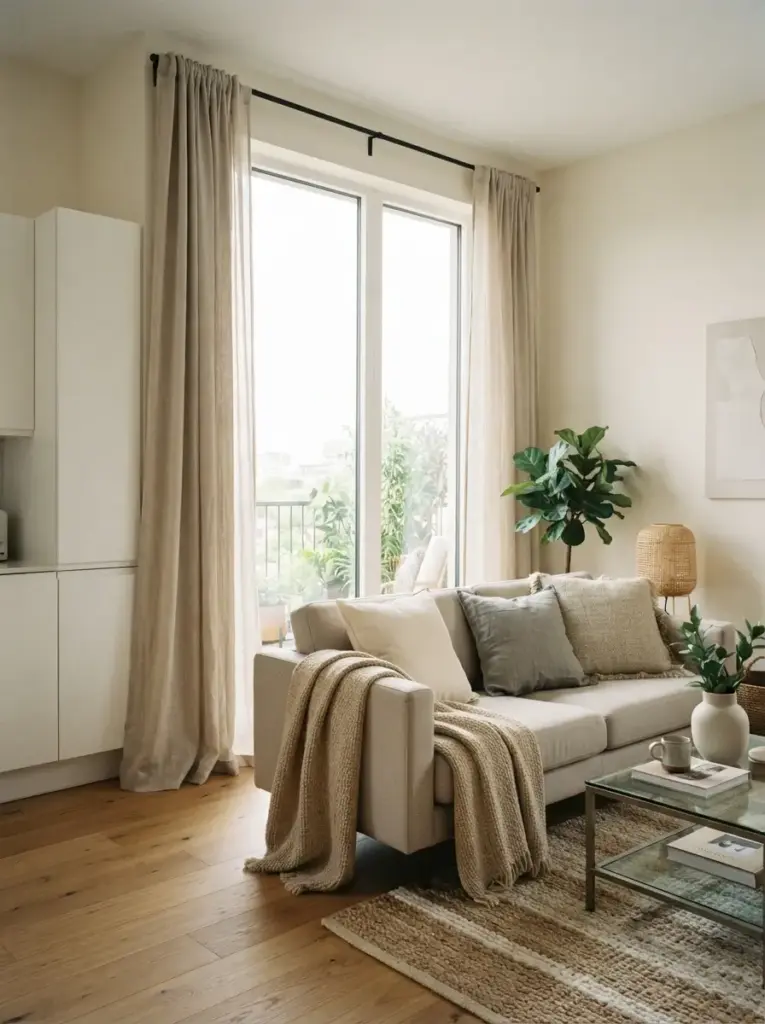
Natural-looking fabric brings softness to apartments filled with hard flooring, flat cabinets, glass, and metal. Linen-blend curtains, cotton cushion covers, woven throws, and relaxed bedding introduce movement without adding bulky furniture. Full-length curtains usually look better than short panels because they make ceilings appear taller. Hang the rod several inches above the window frame and extend it beyond the sides so more daylight enters when the curtains are open.
Texture performs an important role in a natural interior because neutral colors need surface variation to stay interesting. Mix one smoother cotton, one slubby linen, and one heavier weave rather than buying several fabrics with the same finish. The idea works particularly well for studios, bedrooms, and homes with limited wall decor options. Choose washable covers where possible, especially around pets or children. Avoid overly crumpled fabrics in every area because too much casual texture can make the apartment feel untidy.
Ground the Living Room With a Textured Rug
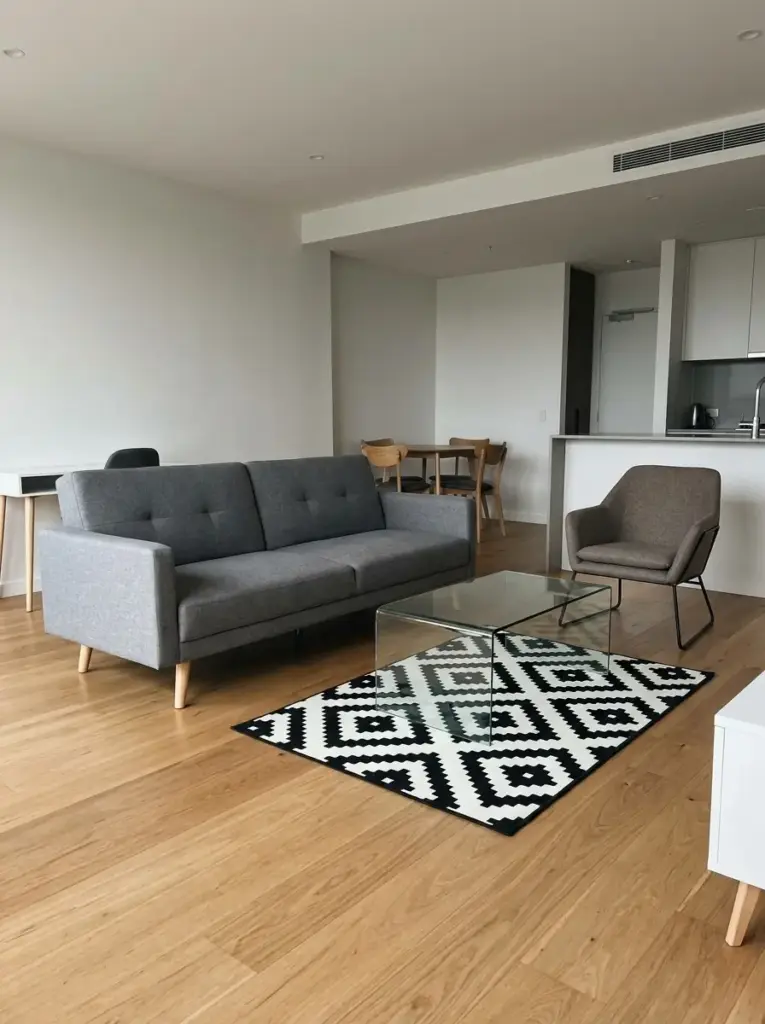
Well-sized rugs define the seating area and help open-plan apartments feel organized. Choose jute blends, flat-woven wool, low-pile geometric rugs, or washable rugs with subtle irregular patterns. Living room rugs should usually reach under the front legs of the sofa and chairs. A small floating rug placed only beneath the coffee table can make the furniture appear disconnected and the room smaller than it is.
Material choice should match daily life. Pure jute looks natural but may feel rough, shed fibers, or stain easily. Wool offers softness and durability but costs more. Washable synthetic blends can still support an earthy scheme when the pattern and colors resemble stone, sand, bark, or faded plant dyes. This idea suits renters who need a large visual change without touching the walls. Measure the seating zone with painter’s tape before ordering. Avoid high-contrast busy patterns when several other textures already compete nearby.
Use Curved Furniture to Soften Straight Lines
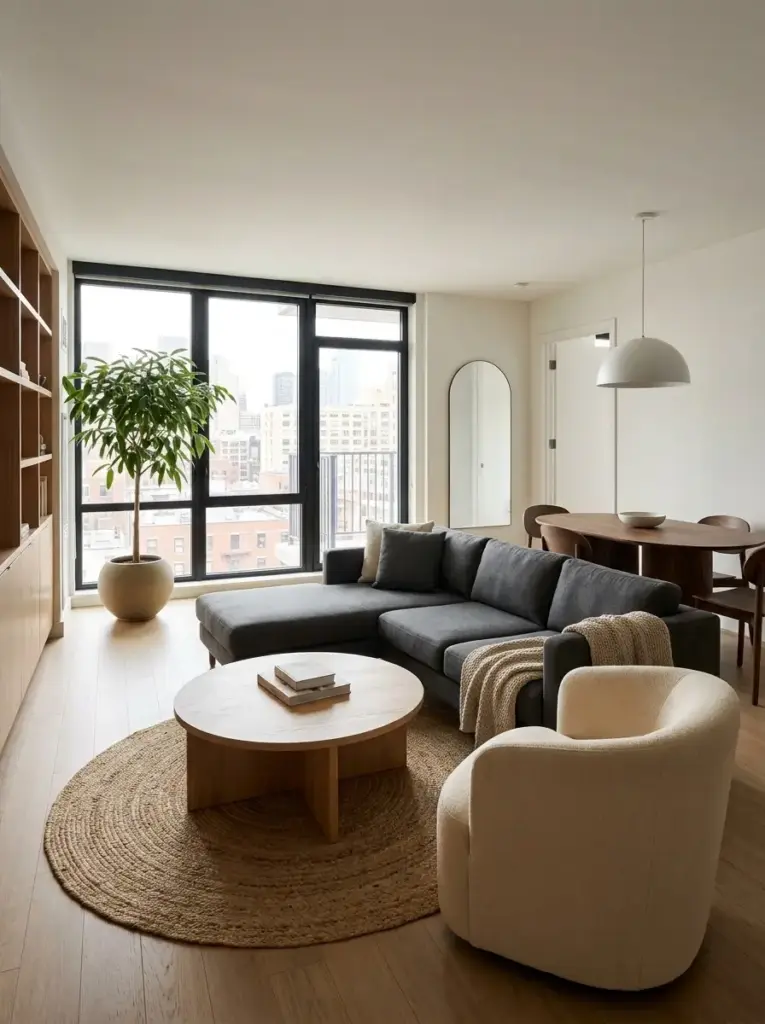
Apartment architecture often contains rectangles everywhere, including doors, windows, cabinets, tiles, and standard sofas. One or two curved pieces can relax those rigid lines. Consider a round coffee table, an oval dining table, a barrel chair, an arched mirror, or a lamp with a dome shade. Curves also improve movement in tight rooms because rounded corners are easier to walk around than sharp edges.
Organic shapes support a natural mood without relying on leaf prints or rustic decorations. A rounded oak table beside a straight sofa creates useful contrast, while an arched mirror can make a narrow entry feel taller. The approach is best for compact homes, households with young children, and layouts where furniture sits near walkways. Keep the number of curved objects controlled. Too many scallops, arches, and wavy accessories can turn a calm modern interior into a short-lived trend display.
Style With Stone and Ceramic Accents
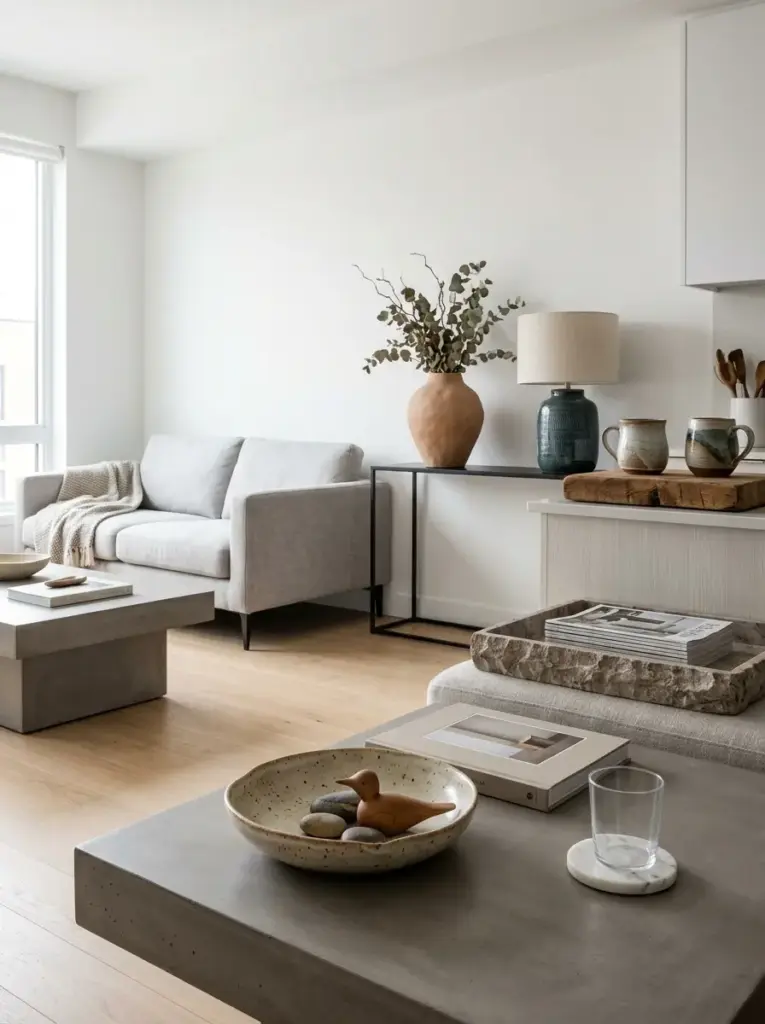
Stone and ceramic add weight, irregularity, and a handmade feeling to smooth modern interiors. Useful choices include travertine trays, marble coasters, speckled stoneware bowls, matte clay vases, and ceramic lamp bases. Budget versions do not need to be genuine stone. A well-finished composite tray or thrifted pottery piece can create the same visual contrast when its shape and color suit the room.
Placement matters more than quantity. Group a low ceramic bowl, a small wooden object, and one book on a coffee table rather than scattering tiny accessories across every surface. In a kitchen, display two attractive stoneware mugs beside a wooden board and store the rest. This method works well for people who prefer minimal styling but do not want a sterile home. Avoid placing fragile ceramics on narrow shelves, unstable tables, or busy pathways. Practical safety should guide decorative decisions.
Bring in Plants at Different Heights
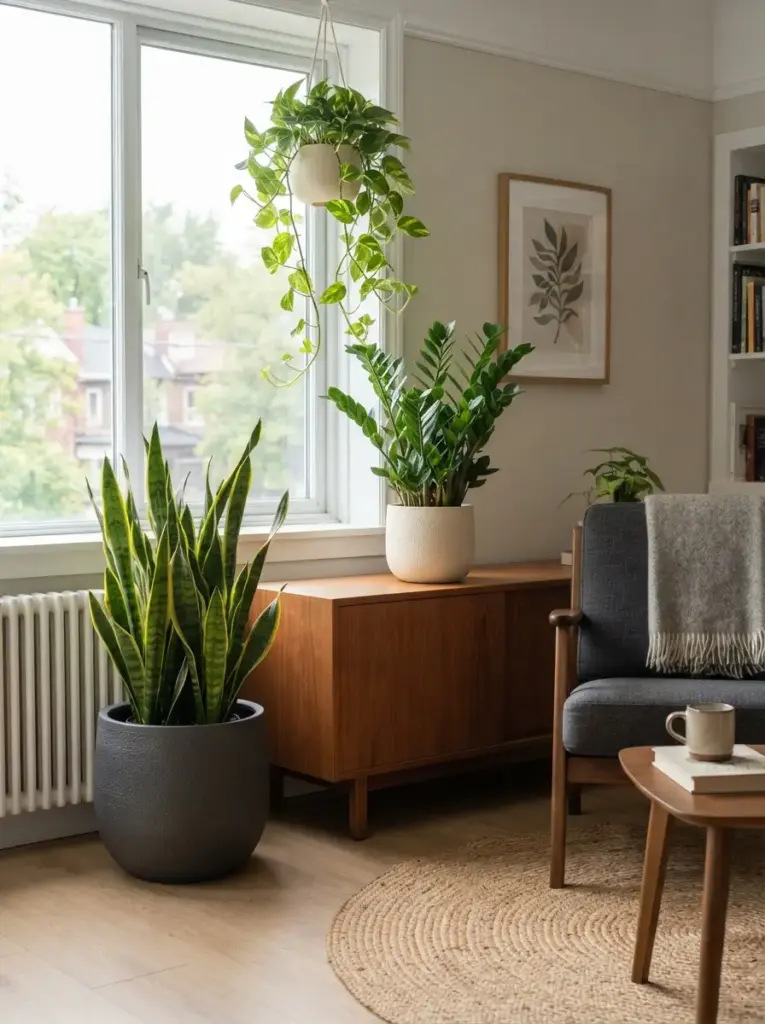
Plants add color, movement, and irregular forms that manufactured objects cannot fully copy. Use a combination of one floor plant, one medium tabletop plant, and one trailing or elevated plant if light conditions allow. Snake plants, pothos, ZZ plants, and certain philodendrons can handle many apartment environments, though every plant still needs suitable light and watering. Place each one where its mature size will not block doors, vents, or walkways.
Natural styling does not require turning the apartment into a greenhouse. Three healthy plants usually look better than twelve struggling ones. People with limited natural light can use convincing artificial greenery, dried branches, or preserved stems, but quality matters. Choose matte leaves with varied shapes rather than shiny plastic. Repeat planter colors such as terracotta, cream, or charcoal to keep the arrangement controlled. Avoid placing plants in random empty corners without checking whether they receive enough light to survive.
Improve the Room With Warm Layered Lighting
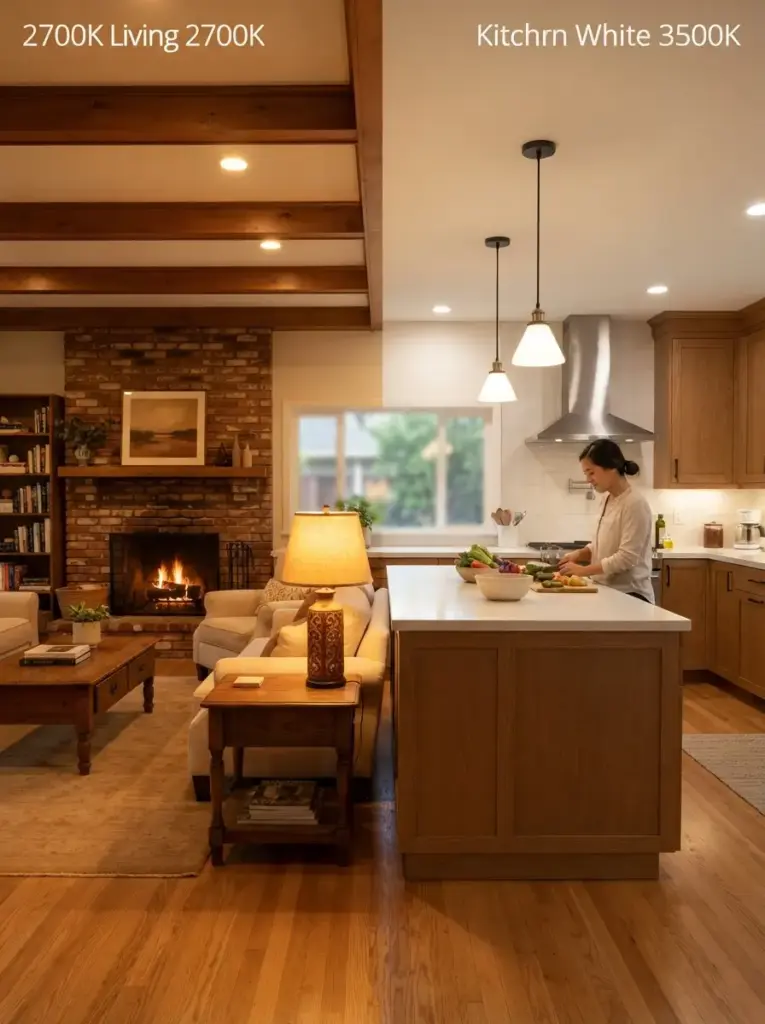
Lighting can either strengthen natural colors or make them look dull. Warm white bulbs between roughly 2700K and 3000K generally suit living rooms and bedrooms because they enhance wood, clay, cream, and brown. Kitchens and work areas may benefit from slightly clearer light around 3000K to 3500K. Keep bulb temperatures consistent within the same open room so one corner does not appear orange while another looks blue.
Layering creates comfort and function. Combine a ceiling fixture with a floor lamp, table lamp, wall-mounted plug-in sconce, or small reading light. Renters can use cord covers and adhesive clips to keep wires neat. Choose shades made from linen, paper, opal glass, rattan, or matte metal for a softer effect. This tip is especially valuable in apartments with limited daylight or harsh overhead fixtures. Avoid relying on one bright ceiling bulb, since it creates flat illumination and sharp shadows.
Create a Calm Nature-Inspired Wall Display
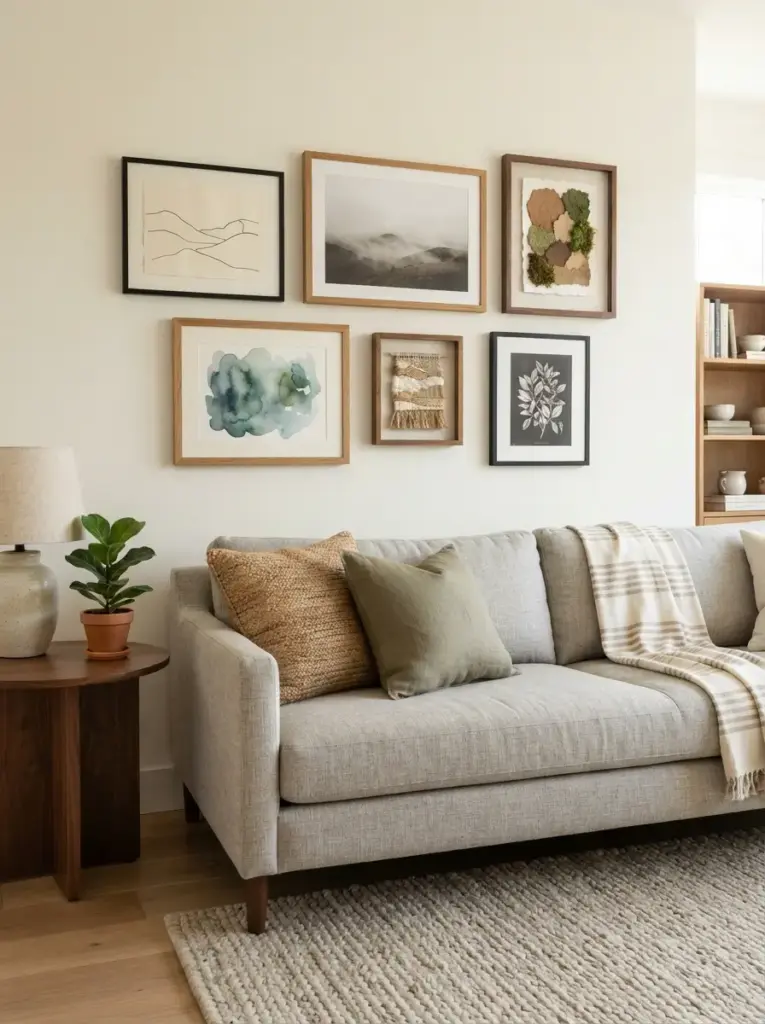
Wall art can suggest nature without using predictable forest photographs or oversized botanical prints. Try abstract landscapes, simple line drawings, muted photography, handmade paper, woven wall pieces, or prints featuring clay, moss, stone, and sand tones. Group related works through color or frame material rather than forcing every piece to match. Oak, walnut, black, or warm white frames can all work when repeated with intention.
Residents can use removable picture strips, leaning frames, lightweight textile hangings, or a picture ledge that rests on existing furniture. One large piece often looks cleaner than many small frames above a sofa. Gallery walls work best when their outer edges form a clear shape and spacing remains consistent. This idea suits people who want personality without adding more furniture. Avoid hanging artwork too high. Center pieces around seated eye level or keep the bottom edge reasonably close to the furniture below.
Make Open Storage Look Intentional
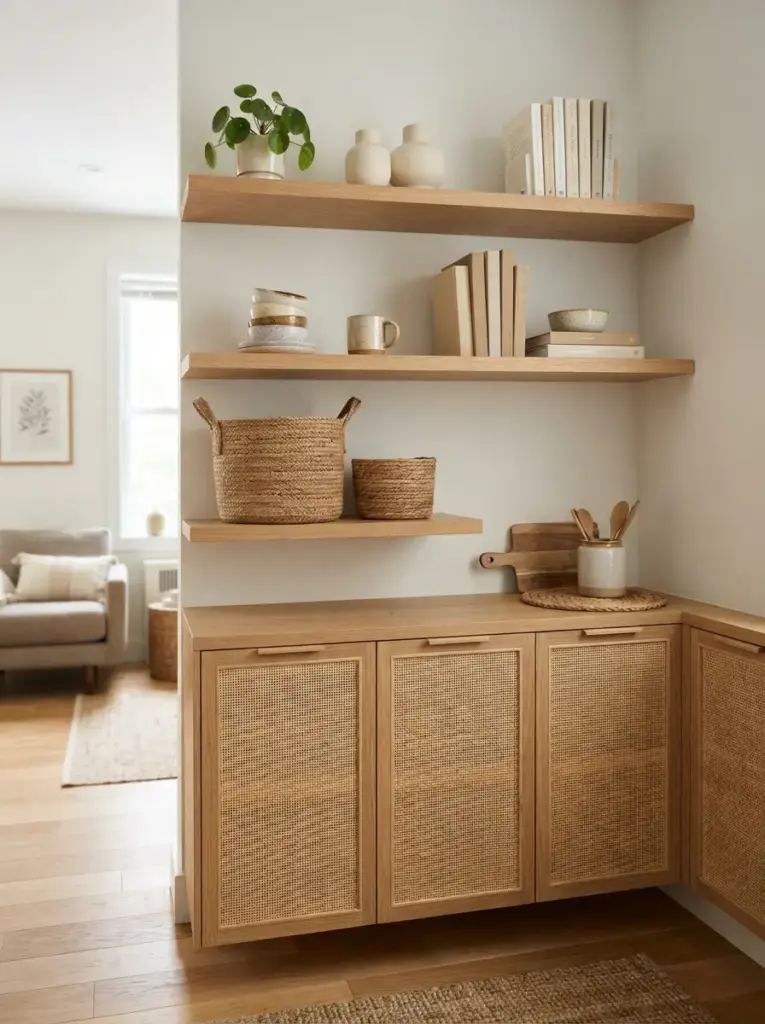
Open shelves can add character, but small apartments quickly look cluttered when every item remains visible. Limit displayed objects to those with useful shapes, coordinated colors, or real daily value. Combine books, baskets, pottery, and one small plant while leaving open space around each group. Repeating materials, such as two woven baskets and several cream ceramics, helps unrelated possessions feel more organized.
The overall scheme benefits from storage that feels tactile but controlled. Cane-front cabinets, wooden shelves, fabric boxes, and lidded baskets hide practical items while adding warmth. The idea is best for studios, shared apartments, and homes without much built-in storage. Place frequently used objects at easy reach and reserve high shelves for lighter decorative pieces. Avoid filling every shelf edge-to-edge. Negative space allows the eye to rest and makes the items you keep visible appear more important.
Upgrade the Entry With Natural Materials
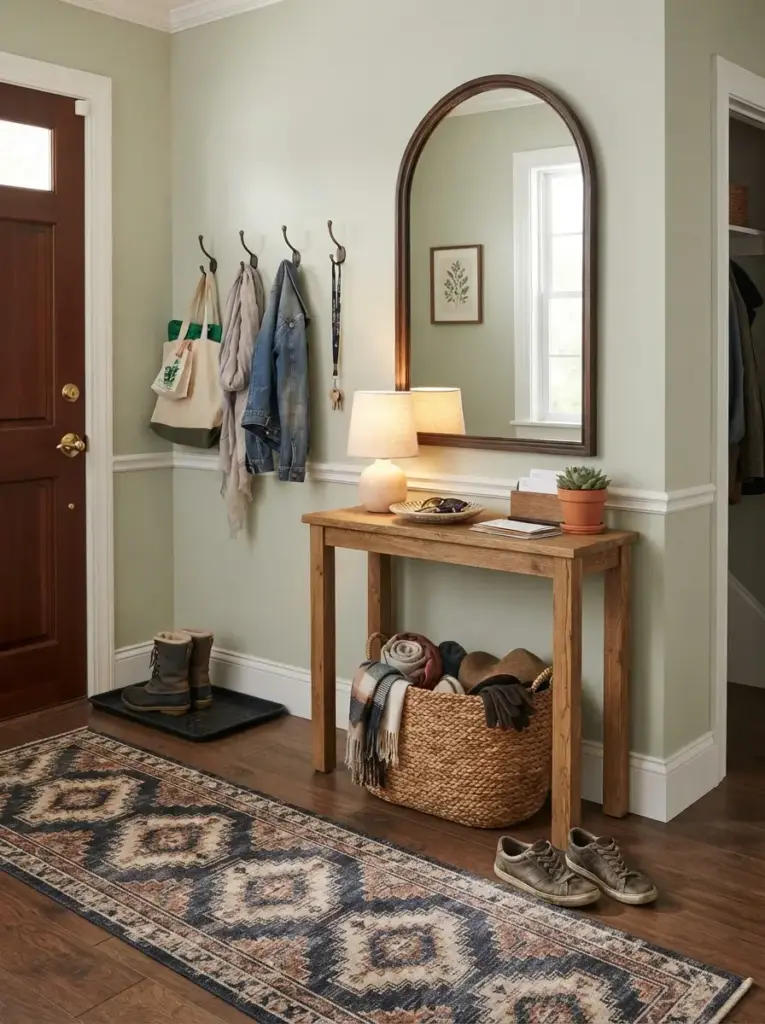
Entry areas often receive little decorating attention, yet they shape the first impression of the home. Use a narrow wood console, wall hooks, a woven basket, a washable runner, and a small lamp where space permits. Tiny entries can rely on a floating shelf, peg rail, or slim shoe cabinet. An arched or round mirror reflects light and provides a useful final check before leaving.
Function should come first. Give keys, shoes, bags, and mail a specific place so decorative pieces do not compete with daily clutter. A shallow ceramic dish can hold keys, while one basket collects scarves or reusable bags. This plan works especially well for renters and busy households because it improves routines as well as appearance. Choose durable, easy-clean materials near the door. Avoid pale, delicate rugs in high-traffic entries unless they are washable and replaceable.
Use Terracotta and Clay in Small Doses
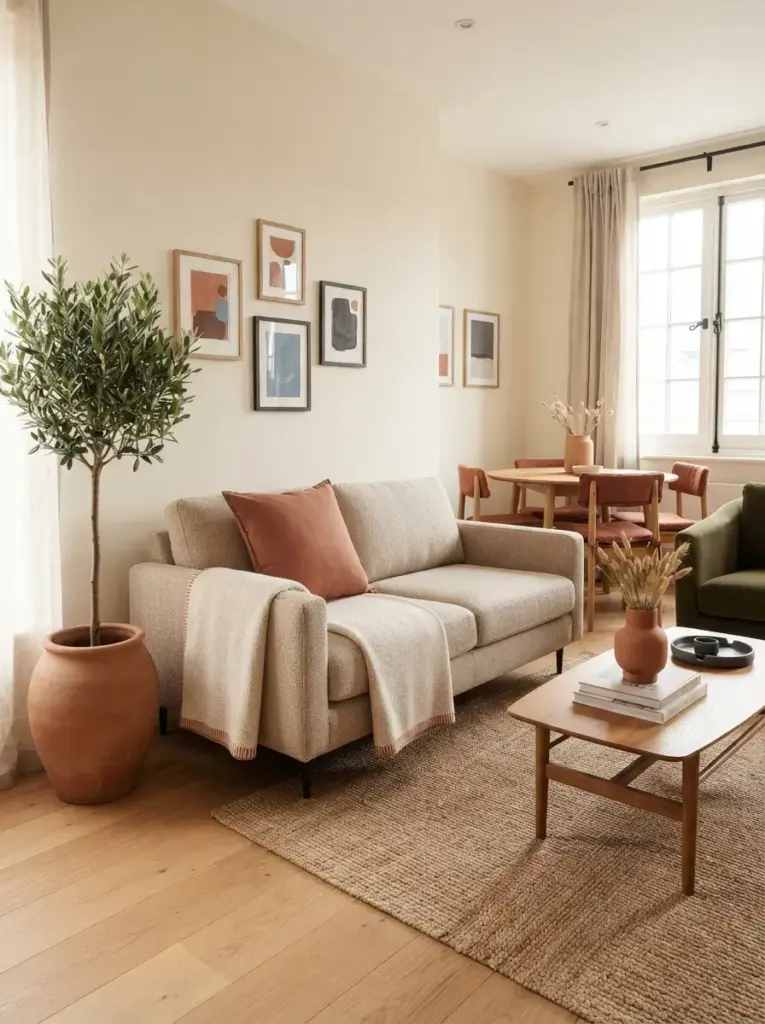
Terracotta adds warmth, but large amounts can make a compact room feel heavy or overly themed. Introduce it through a cushion, lamp, planter, vase, blanket border, or small artwork. Pair clay tones with cream, olive, dusty blue, dark brown, or charcoal. Matte surfaces usually look more grounded than glossy orange finishes, especially in modern homes.
Small doses create focal points without overwhelming neutral furniture. A terracotta pillow on a beige sofa can connect visually with a clay pot across the room. Rust-colored dining seat pads may repeat a warm print near the kitchen. This idea suits people who want more color but feel nervous about bold walls or expensive upholstery. Test the shade in daylight and evening light because orange undertones can change dramatically. Avoid combining terracotta with too many competing reds, yellows, and oranges in one small zone.
Design a Restful Earthy Bedroom
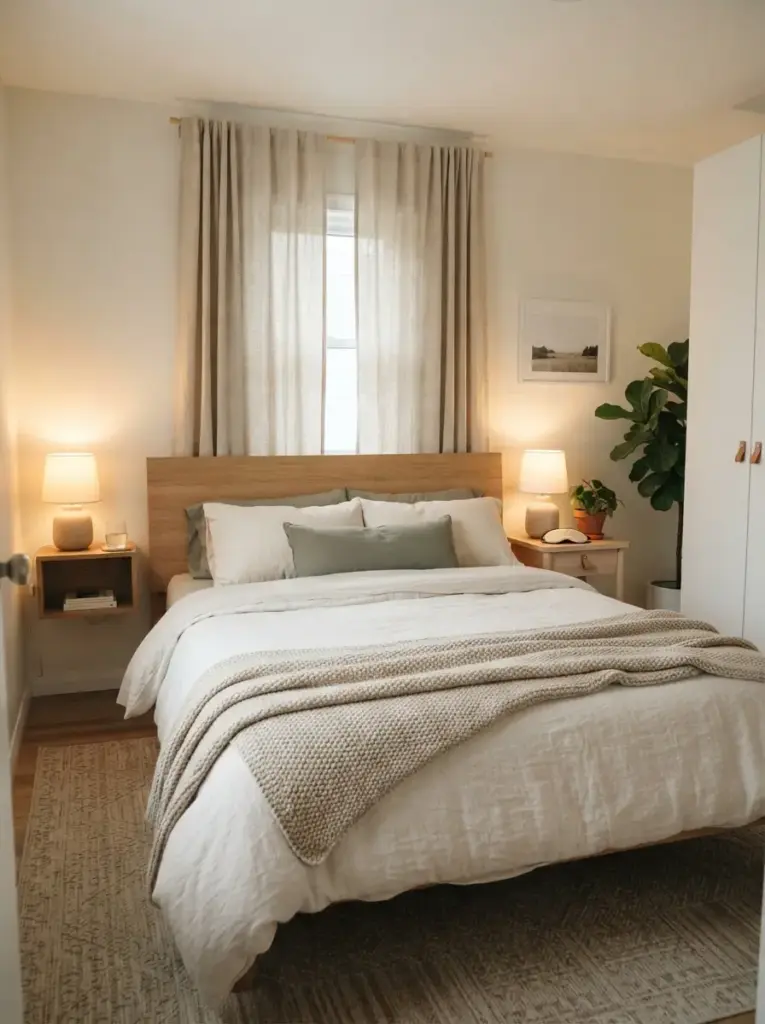
Bedrooms benefit from lower contrast, softer textures, and limited visual clutter. Start with warm white, oatmeal, taupe, muted green, or clay bedding. Add a simple wooden headboard, linen-look curtains, and one textured throw. Matching nightstands are optional, but both sides should feel visually balanced through similar height, lighting, or color. In narrow rooms, wall-mounted shelves can replace bulky bedside tables.
Natural bedroom styling should support rest rather than become another display project. Keep storage closed where possible, use warm 2700K lamps, and choose blackout curtains if street lighting disturbs sleep. The method is best for light sleepers, renters, and anyone working with a small bedroom. Let one element carry the strongest pattern, such as the rug or duvet, while the remaining textiles stay quieter. Avoid overloading the bed with decorative pillows that must be moved every night.
Connect the Kitchen and Dining Area
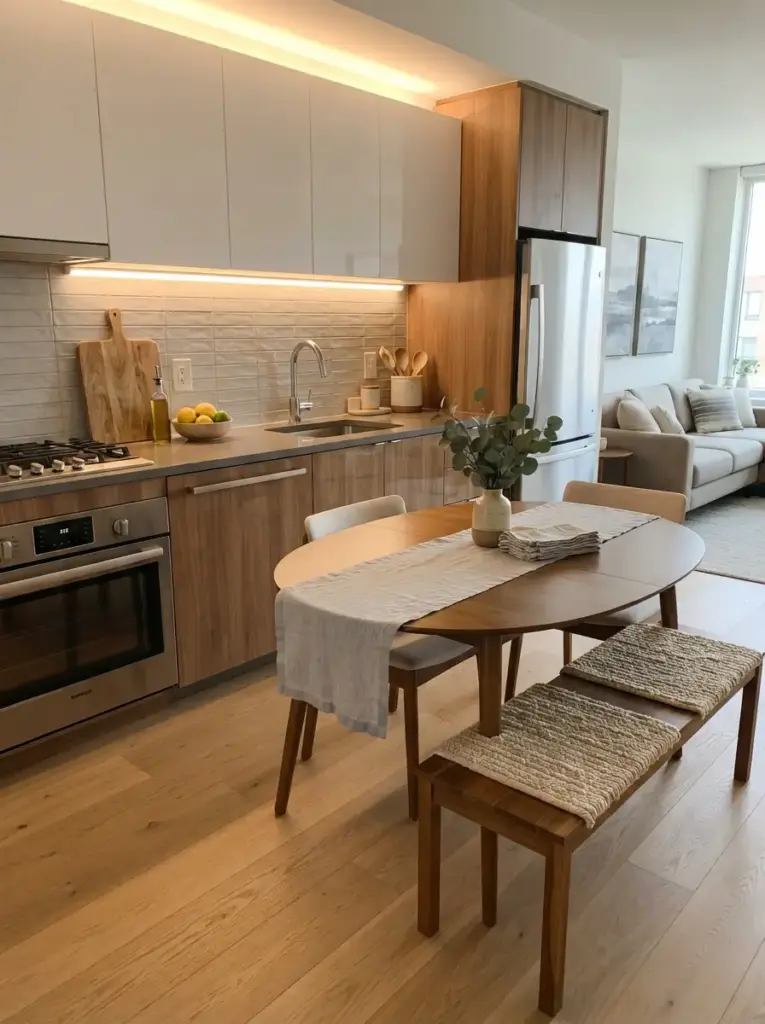
Modern apartment kitchens often contain glossy cabinets, stainless steel, or cool stone surfaces. Wood boards, linen napkins, ceramic bowls, woven seat pads, and warm lighting can soften those finishes. Keep only a few useful items on the counter, such as a wooden board, oil bottle, fruit bowl, or utensil crock. Clearing unnecessary appliances creates more working space and gives natural materials greater impact.
Dining furniture can also bridge the kitchen and living room. A round wood table works well in tight layouts, while a bench can provide flexible seating and slide underneath when unused. Repeat one kitchen color in nearby dining textiles or artwork to connect the zones. This strategy suits open-plan apartments and people who entertain casually. Avoid decorative counter clutter near the stove or sink because it collects grease, blocks preparation space, and makes cleaning harder.
Create a Simple Room-by-Room Plan
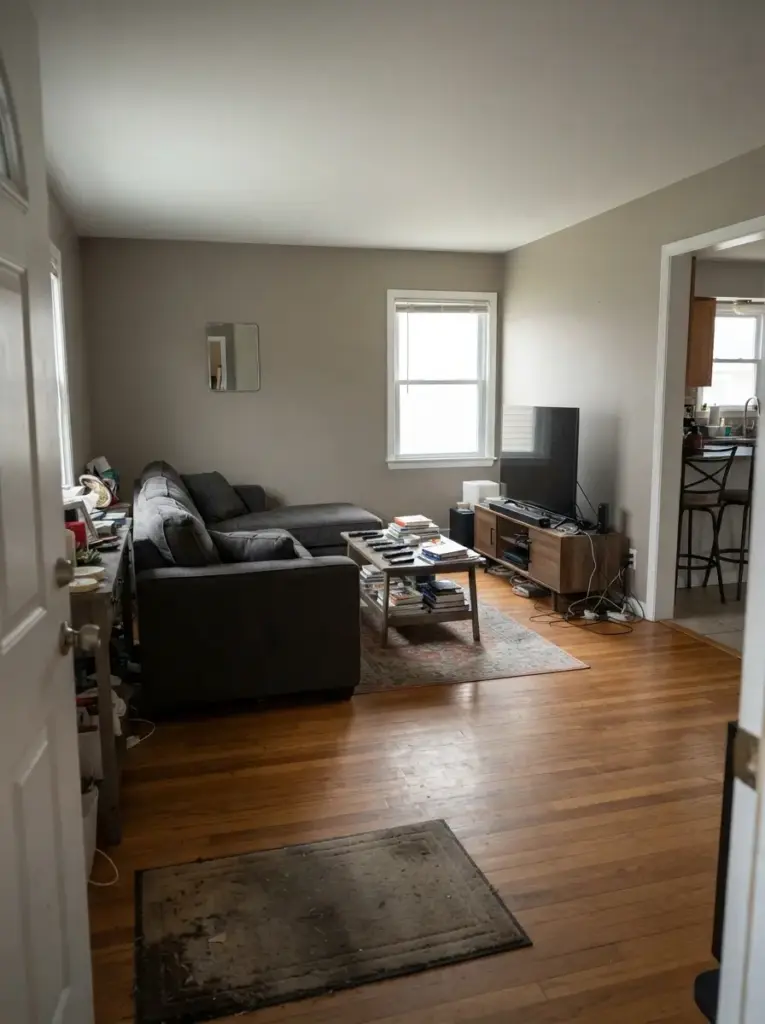
Start with the room you use most, then list three problems before buying anything. The living room may need better lighting, a larger rug, and concealed storage. The bedroom may need softer bedding, darker curtains, and clearer bedside surfaces. Solving visible problems first prevents random purchases and gives each update a practical reason. Photograph the room from the doorway, because the camera often reveals awkward gaps, crowded corners, and uneven visual weight that become easy to ignore during daily life.
Move through the apartment in a consistent order. Choose the base color first, followed by large textiles, lighting, storage, art, and smaller accessories. Carry one material or accent shade into the next room to create continuity, but adjust the amount for each function. Bedrooms can use softer contrast, kitchens need easier cleaning, and entries require stronger durability. Keep a short measurement note on your phone with wall widths, window heights, and furniture footprints. Accurate dimensions protect the budget and reduce returns.
Finish each room before spreading the budget across every space. Completion does not mean buying everything at once. It means reaching a point where lighting, seating, storage, and circulation work. Decorative additions can follow later. Keeping a checklist helps beginners notice progress and stops unfinished rooms from becoming storage zones.
Common Decorating Mistakes to Avoid
Overusing beige is one of the most common problems. Warm neutrals need contrast from darker wood, olive, charcoal, rust, or black details. Without contrast, furniture edges disappear, and the room can feel flat. Add depth through one dark lamp, several walnut pieces, a striped cushion, or a deeper rug border. Keep the darker color repeated in at least two places so it feels intentional rather than accidental.
Buying too many tiny accessories creates another issue. Small vases, miniature plants, candles, trays, and ornaments can make surfaces difficult to clean and visually noisy. Choose fewer objects with stronger shapes. One substantial bowl and one lamp usually have more presence than seven small pieces. Group accessories in odd numbers when useful, but leave enough space for daily activities such as placing a drink, opening a laptop, or serving food.
Ignoring scale can weaken an otherwise good scheme. Oversized furniture blocks movement, while undersized rugs, art, and lamps make a room look fragmented. Measure walls, floor zones, doors, and walking paths before shopping. Painter’s tape can show the footprint of a sofa, table, or rug. Aim for at least a comfortable passage around frequently used furniture, and avoid placing sharp corners directly in the main route through the room.
Using too many natural materials at once may also create confusion. Rattan, jute, bamboo, cane, raw wood, stone, linen, wool, and clay can coexist, but not every surface needs a different texture. Select three or four recurring materials for the main room. For example, combine oak, linen, ceramic, and matte black metal. Repetition gives the space structure and keeps the natural theme from looking like a collection of unrelated trends.
Poor lighting often causes homeowners to blame the color palette. Beige walls and wood furniture may look gray under cool bulbs or harsh beneath a single overhead light. Test the lighting before replacing major pieces. Add a shaded floor lamp near the sofa, a table lamp in a dark corner, and warm bulbs with good color rendering. Place lamps at different heights to avoid an evenly bright but lifeless room.
Budget-Friendly Ways to Get the Look
Secondhand shopping offers better materials at lower prices, especially for wood tables, ceramic lamps, baskets, frames, and mirrors. Focus on shape and construction rather than the current finish. A scratched side table can be cleaned, lightly sanded, or covered with a tray. Search with material and furniture terms instead of style labels, since sellers may not describe items as earthy or modern. Measure before purchasing because returns may not be available.
Textiles create large changes without replacing furniture. Use cushion covers instead of whole pillows, add a washable throw over a dated chair, or place a large neutral rug over unattractive rental flooring. Ready-made curtains can look custom when mounted high and wide. Hemming tape helps adjust length without sewing. Choose fabrics that can move between rooms so the investment remains useful after a layout change or future move.
Thrifted pottery and simple DIY artwork can fill visual gaps cheaply. Paint abstract shapes on heavy paper using leftover wall samples, then frame the work in secondhand wood frames. Create a branch arrangement using responsibly collected fallen stems and a sturdy vase. Refinish mismatched frames in one tone if their original colors compete. Keep homemade pieces simple, since complicated projects often cost more in supplies than expected.
Rental-friendly upgrades can include peel-and-stick backsplash panels, removable wallpaper, adhesive hooks, plug-in sconces, cabinet hardware swaps, and temporary window film. Store original hardware in labeled bags so everything can be restored before moving. Test adhesive products in hidden spots because paint quality varies. Budget planning should include removal supplies and possible touch-up paint, not only the initial purchase price.
Spend more on items that receive daily use. A supportive sofa, durable rug, stable dining chair, or quality mattress affects comfort more than decorative objects. Save on vases, trays, baskets, prints, and seasonal textiles. The project becomes more affordable when the budget follows function instead of social media trends. One well-sized table and a good lamp can improve a room more than a cart full of small accessories.
Earthy Apartment Decor Tips for Small Modern Homes
Begin with the room’s fixed features. Flooring, cabinets, counters, doors, and wall color already carry undertones that should guide new purchases. Warm beige tile may suit cream, rust, oak, and olive, while cool gray flooring often needs walnut, mushroom, brown, and warm white to reduce its blue cast. Take photos in daylight and evening light before choosing fabrics or paint.
Plan visual weight across the room. Dark furniture and dense textures feel heavier, so spread them instead of grouping everything on one side. A dark sofa may need a lighter rug and pale curtains, while a large walnut cabinet can be balanced by a warm print or floor lamp across the room. Balanced weight makes tight spaces feel steadier without requiring strict symmetry.
Keep surfaces useful. Coffee tables need room for drinks, dining tables need room for meals, and kitchen counters need room for preparation. Decor should support those activities rather than replace them. Use trays to gather small items and move them quickly. Choose storage furniture with doors or drawers when the apartment lacks closets. Practical rooms stay attractive longer because everyday habits do not constantly disrupt the styling.
Repeat shapes as well as colors. A round mirror, curved lamp shade, and circular tray can quietly connect separate zones. Rectangular frames, straight shelving, and a square-edged sofa can provide structure around those softer forms. Shape repetition feels subtle and sophisticated, making it useful for beginners who want cohesion without buying matching furniture sets.
Allow the home to develop gradually. Natural materials gain character through use, and thoughtful rooms rarely come from one shopping trip. Live with the layout, note where clutter gathers, and identify which areas feel dark or empty. Purchase the next piece to solve a real problem. Slow decorating also gives you time to compare prices, find secondhand options, and avoid trend-driven mistakes.
Frequently Asked Questions
What Colors Work Best for an Earthy Apartment?
Warm white, cream, oatmeal, sand, taupe, mushroom, olive, moss, rust, clay, walnut, and charcoal form a reliable palette. Choose one light base, one medium natural color, and one darker anchor. Cool colors can still work when muted. Dusty blue, sage, and gray-green pair well with brown and wood. Test fabric and paint samples in your actual light because apartment windows, neighboring buildings, and bulb temperatures can change how colors appear.
Can Renters Create an Earthy Style Without Painting?
Renters can make a great change through curtains, rugs, slipcovers, bedding, art, plants, lighting, baskets, and removable finishes. Large textile areas influence the room more than several small objects. Hang curtains high, choose a properly sized rug, and repeat two accent colors across the space. Plug-in wall lights and floor lamps also soften harsh rental lighting. Keep original hardware and test adhesives before applying them to painted walls or cabinets.
How Do I Keep Natural Decor From Looking Rustic?
Use clean furniture lines, controlled color, and limited decorative objects. Pair woven baskets with a straight sofa, simple metal lamp, or smooth cabinet. Choose matte ceramics in plain shapes rather than heavily distressed finishes. Modern contrast comes from combining tactile materials with uncluttered layouts. Earthy Apartment Decor can feel contemporary when wood grains, fabrics, and plant forms appear within a clear structure instead of covering every surface.
Which Materials Are Easiest to Maintain?
Cotton blends, washable rugs, sealed wood, glazed ceramic, performance upholstery, and removable cushion covers are practical choices. Pure jute, raw stone, unsealed clay, and delicate linen may need more care. Households with children or pets should prioritize washable, stain-resistant surfaces in high-use areas. Natural appearance matters, but maintenance should match your routine. Check cleaning instructions before buying large rugs, upholstered furniture, or window treatments.
How Many Plants Should a Small Apartment Have?
Plant quantity depends on light, available surfaces, and care habits. One floor plant, one medium plant, and one small trailing plant can create enough variation for many rooms. Healthy spacing matters more than quantity. Keep leaves away from walkways, radiators, and air vents. People with low light or limited time can use dried branches, preserved stems, or one high-quality artificial plant rather than collecting living plants they cannot maintain.
What Is the Easiest Room to Update First?
The bedroom is often the simplest starting point because bedding, curtains, lamps, and a rug can change most of the visible room. Choose a warm neutral duvet, add two textured cushions, switch to warm bulbs, and clear unnecessary items from bedside surfaces. Living rooms can also improve quickly with a larger rug and better lighting, but furniture scale may require more planning. Start where a few changes will affect daily comfort.
Conclusion
Well-planned Earthy Apartment Decor succeeds when natural warmth supports everyday life. Warm neutrals, repeated wood tones, tactile fabrics, practical storage, plants, and layered lighting can soften modern architecture without creating clutter. Strong results depend on restraint. A few well-chosen materials, two accent colors, and clear pathways usually work better than filling the home with themed accessories.
Small-space decorating becomes easier when every purchase has a purpose. Measure before buying, test colors in real light, protect usable surfaces, and choose rental-safe methods where needed. Build the room slowly, repeat useful details, and let natural materials provide texture rather than relying on excessive decoration. The finished apartment should feel calm, functional, personal, and comfortable enough for ordinary routines.