
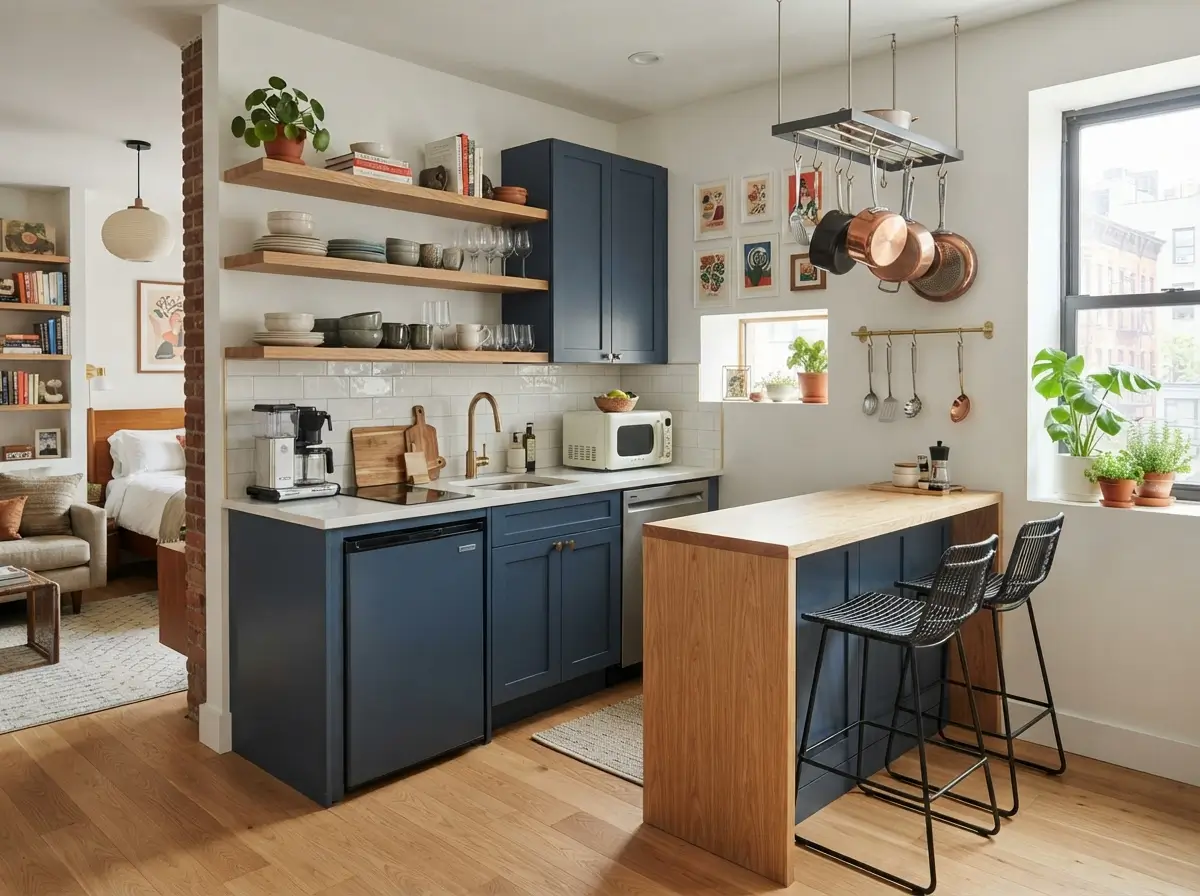

Small homes demand thoughtful choices, especially when the cooking area shares space with sleeping, dining, and relaxing zones. A well-planned Studio Apartment Kitchen can feel organized, welcoming, and easy to use without taking over the entire room. Smart layouts, layered lighting, compact furniture, and controlled color choices make the biggest difference.
Limited square footage often exposes every design mistake, but it also rewards clear planning. When countertops stay open, frequently used items remain easy to reach, and each object earns its place; the whole apartment feels calmer. The ideas below focus on real decisions, including where to place furniture, which colors reflect light, what lighting temperature works best, and how renters can make stylish changes without damaging walls or cabinets.
What Is the Best Way to Style a Small Kitchen?
Successful Studio Apartment Kitchen layouts should balance function, visual order, and comfort. Start by protecting the main work area, then add storage vertically instead of filling the floor. Choose two or three coordinated colors, use warm white lighting between 2700K and 3000K, and select furniture that can perform more than one job. Closed storage helps hide visual clutter, while a few open elements keep the room from feeling heavy.
Question to consider: Does every item in your kitchen make cooking easier, improve storage, or support the overall design? Anything that does none of those jobs may be using valuable space.
Define the Kitchen With a Compact Rug
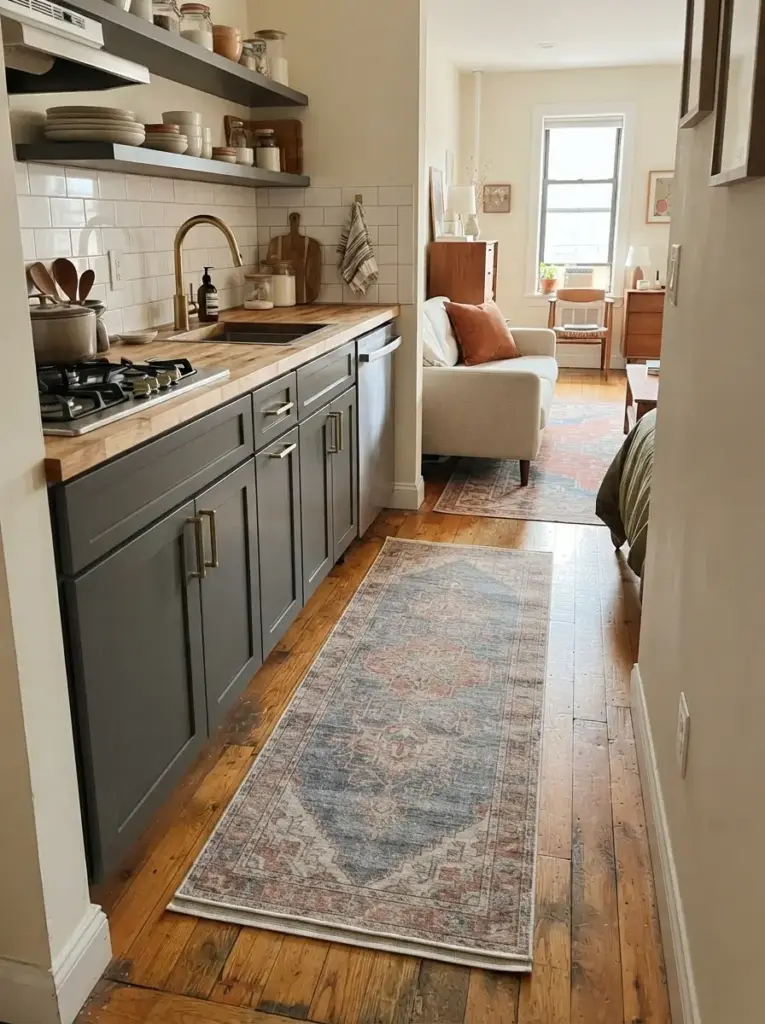
Small rugs can create a clear kitchen zone without adding walls or bulky furniture. Choose a washable runner that fits between the cabinets and the opposite wall, leaving enough floor visible around the edges. Flat-woven cotton, indoor-outdoor fabric, and low-pile synthetic rugs are easier to clean than thick wool styles. A runner measuring roughly 60 to 75 centimeters wide often suits narrow galley layouts, while a small rectangular rug works better in one-wall kitchens.
Color matters because the rug sits within view of the entire apartment. Soft terracotta, muted olive, charcoal, cream, or faded blue can connect the kitchen to nearby bedding and seating. Busy multicolor patterns hide crumbs well, but excessive contrast may make the floor look crowded. Renters who cannot change flooring can use a rug to cover worn vinyl or dated tile without permanent work.
Visual boundaries help the brain understand where one activity ends and another begins. That distinction feels especially useful when a bed or sofa sits only a few steps from the sink. The idea suits open-plan studios, older rentals with mismatched floors, and anyone who wants warmth underfoot. Keep the rug away from direct stove flames, and add a thin nonslip pad to prevent movement.
Build a Calm Two-Color Palette
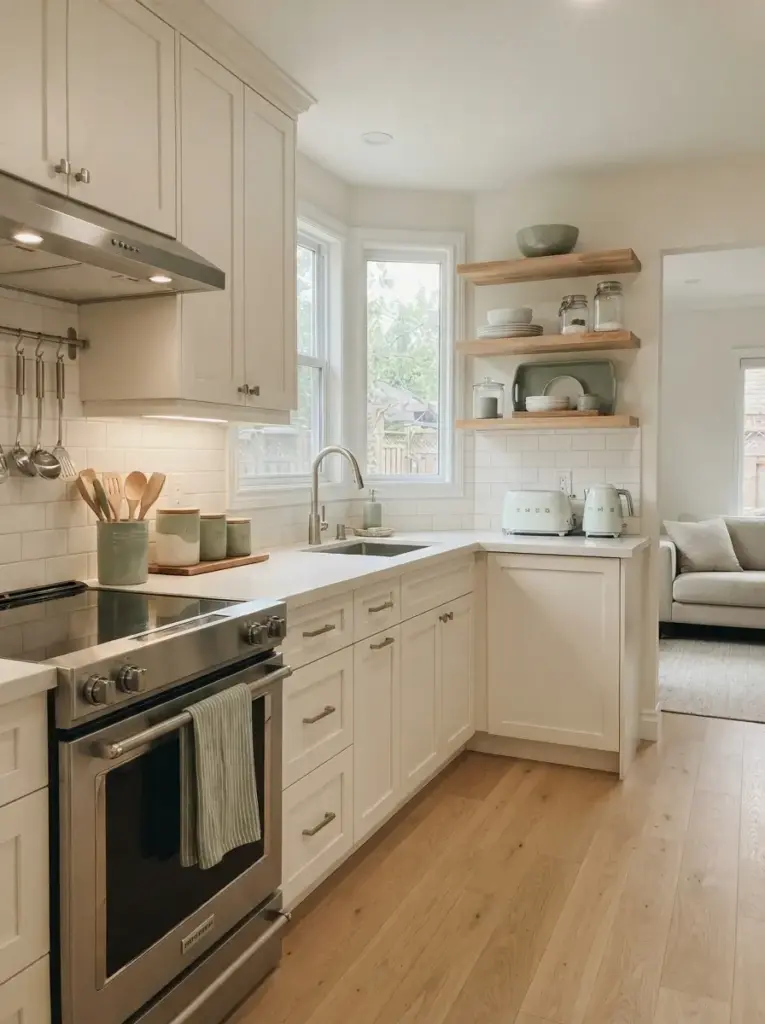
Restricting the palette gives a compact cooking space more visual breathing room. Choose one light base color and one supporting shade, then use metal finishes as small accents. Warm white cabinets with sage accessories create a relaxed result, while light gray with black hardware feels sharper. Cream and walnut suit warmer interiors, and pale blue with brushed nickel works well in bright apartments.
Paint is not always necessary. Dish towels, storage jars, stools, trays, and small appliances can establish the color story. When existing cabinets are dark, bring in pale countertops and reflective materials rather than fighting the cabinetry. When cabinets are white, add deeper details near the floor or backsplash to give the space enough definition.
Consistency reduces visual noise because the eye does not have to process many unrelated colors. Beginners often buy useful items one at a time, only to create a cluttered collection of packaging, plastics, and mismatched finishes. A limited palette makes ordinary objects feel more intentional. The approach works best for people who prefer calm interiors or need the kitchen to blend naturally with a nearby living area.
Use a Slim Rolling Cart for Flexible Storage
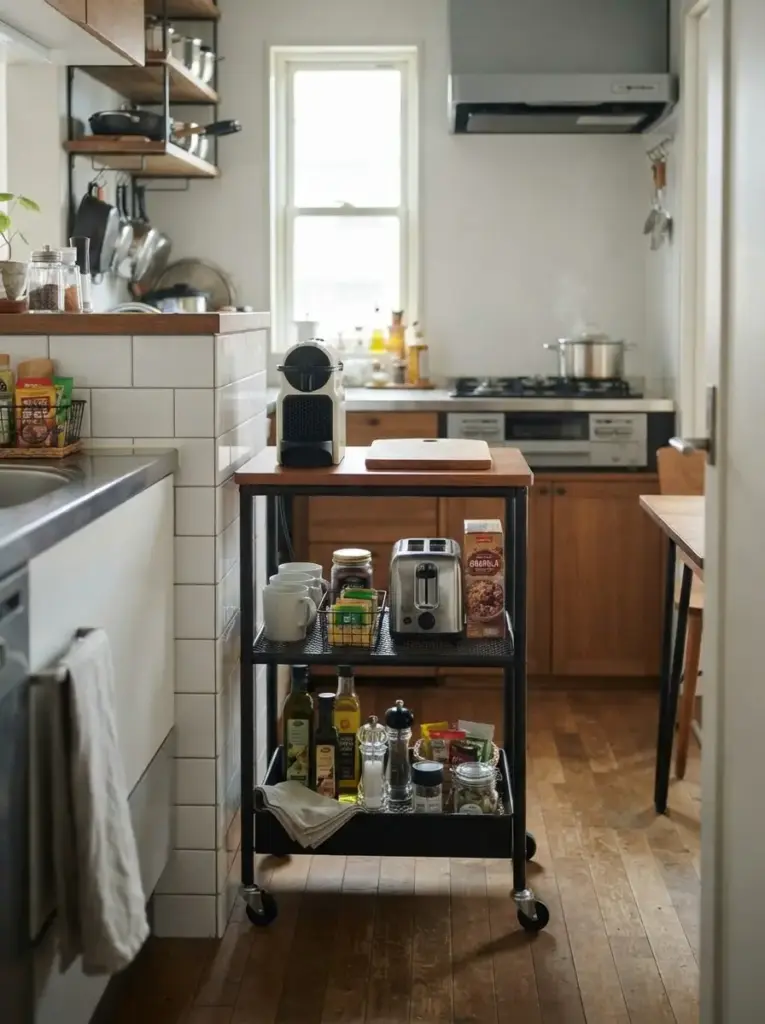
Rolling carts solve several small-space problems because they store supplies, extend the work surface, and move when extra floor area is needed. Look for a model between 30 and 45 centimeters deep so it does not interrupt walking paths. Locking wheels matter, especially when the top will hold a coffee machine, microwave, or chopping board. Metal carts suit modern rooms, while narrow wood carts add warmth.
Organize the cart by task instead of filling each shelf randomly. Keep breakfast items together, create a baking station, or group oils and seasonings near the cooking zone. Baskets prevent small packets from falling through open shelves. A heat-resistant top can serve as temporary counter space, but hot pans should only sit on materials rated for high temperatures.
Mobility makes the cart more valuable than a fixed shelf in many rentals. It can move beside the stove during meal preparation, beside the table during serving, or against a wall after cleanup. The solution is best for renters, frequent movers, and kitchens with almost no drawers. Measure appliance doors, cabinet doors, and walking clearance before buying, because a cart that blocks movement quickly becomes frustrating.
Install Removable Under-Cabinet Lighting
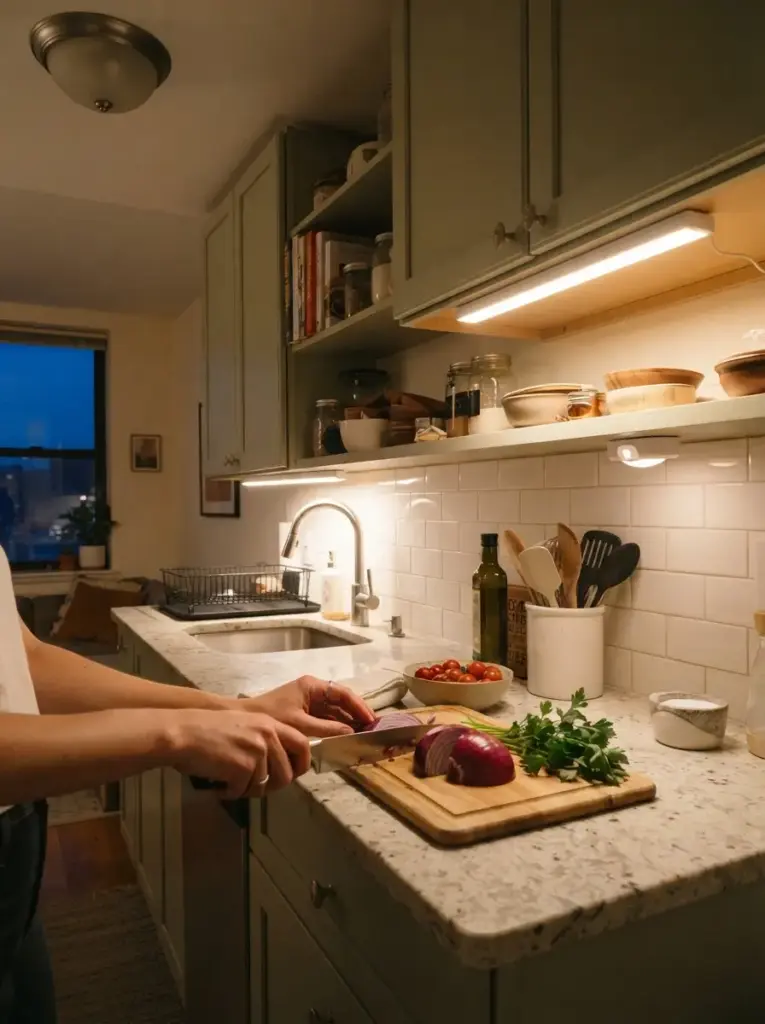
Good task lighting changes how a small kitchen works after sunset. Battery-powered LED bars, rechargeable strips, and plug-in puck lights can brighten counters without electrical work. Select a warm white range between 2700K and 3000K for a comfortable home setting. Neutral white around 3500K may suit detailed food preparation, but very cool light above 4000K can make a studio feel clinical.
Place lighting near the front edge beneath upper cabinets rather than against the backsplash. Forward placement sends light directly onto the work surface and reduces shadows from your hands. Motion sensors are useful near the sink, while dimmable strips offer better control in apartments where the kitchen remains visible from bed.
Layered light improves safety and helps the cooking zone feel intentional rather than forgotten. Overhead fixtures often leave counters dark because the person preparing food blocks the light. Removable options work particularly well for renters and beginners who cannot replace fixtures. Hide cords along cabinet edges with removable clips, and test adhesive on a discreet area before full installation.
Choose One Strong Backsplash Feature
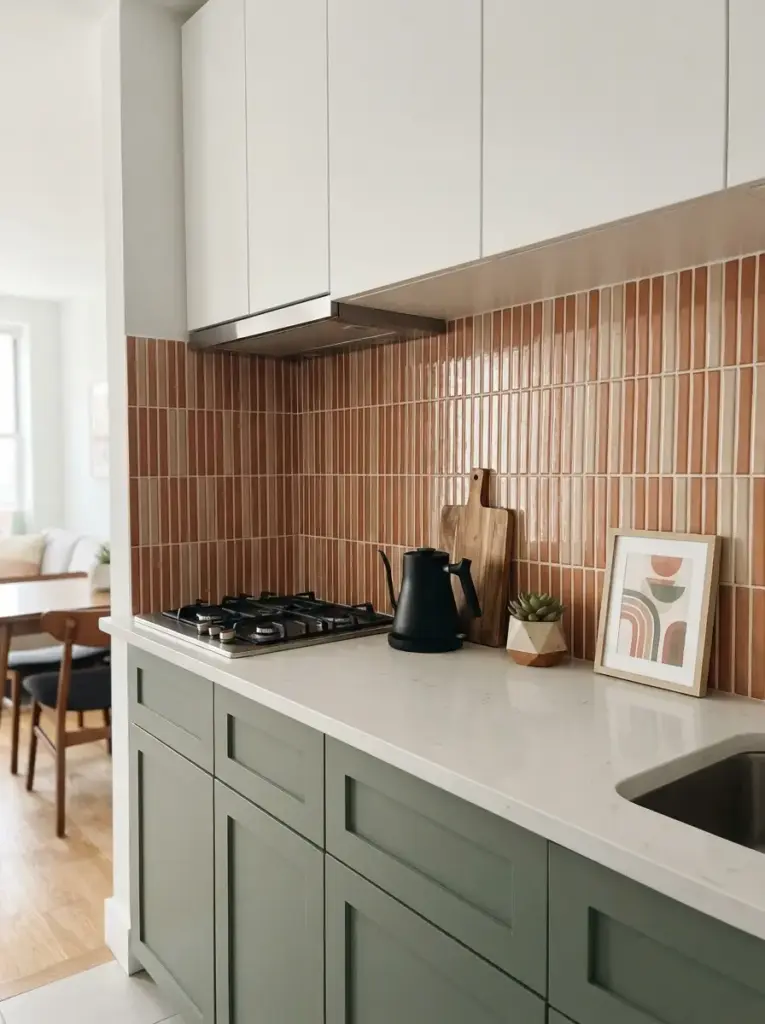
Small backsplashes offer enough area for personality without overwhelming the room. Peel-and-stick tiles, removable panels, and washable vinyl sheets allow renters to cover dated surfaces. Narrow vertical tiles can make low cabinets seem taller, while horizontal subway patterns visually widen a short wall. Small square mosaics add detail but may appear busy when countertops already hold many objects.
Choose a finish that can handle grease, heat, and repeated cleaning. Matte surfaces disguise fingerprints, while glossy finishes bounce light around darker spaces. Warm white, pale stone, muted green, and soft gray are dependable choices. Patterned designs should repeat colors already used elsewhere in the apartment so the kitchen does not feel disconnected.
One focused feature creates interest while protecting visual order. Covering every available surface with competing patterns can shrink the room. The idea suits renters who want a visible update, owners working with a modest budget, and anyone with plain cabinets that need contrast. Follow fire-safety and heat-clearance instructions near cooktops, since not every removable product is suitable beside high temperatures.
Add Open Shelving Without Creating Clutter
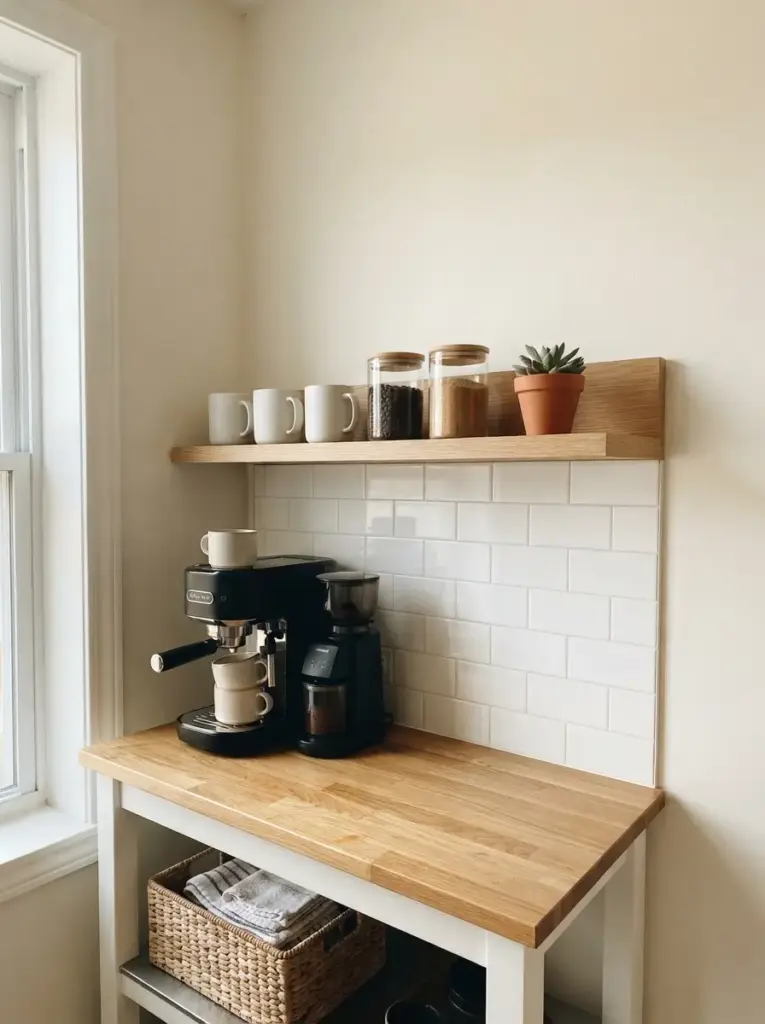
Open shelves can make a Studio Apartment Kitchen feel lighter than another row of closed wall cabinets. A single shelf above the sink, coffee station, or unused counter section often provides enough display and storage. Keep the depth between 15 and 20 centimeters for mugs, small bowls, jars, and plants. Deeper shelves may project too far into a narrow room.
Display items that are used frequently and share similar colors. White bowls, clear glasses, wood boards, and two matching jars look cleaner than a crowded mix of packets and appliances. Leave around one-quarter of the shelf empty so the arrangement has breathing room. Use shelf lips or rails in earthquake-prone areas and avoid placing fragile items above the stove.
Visible storage encourages regular editing because dust and grease reveal neglected objects quickly. That accountability can be helpful for people who tend to overfill cabinets. Open shelving works best for tidy cooks, minimalists, and renters who can use existing wall anchors or approved removable systems. Anyone who dislikes frequent cleaning should choose a narrow picture ledge or rail instead of several full shelves.
Create a Vertical Rail System
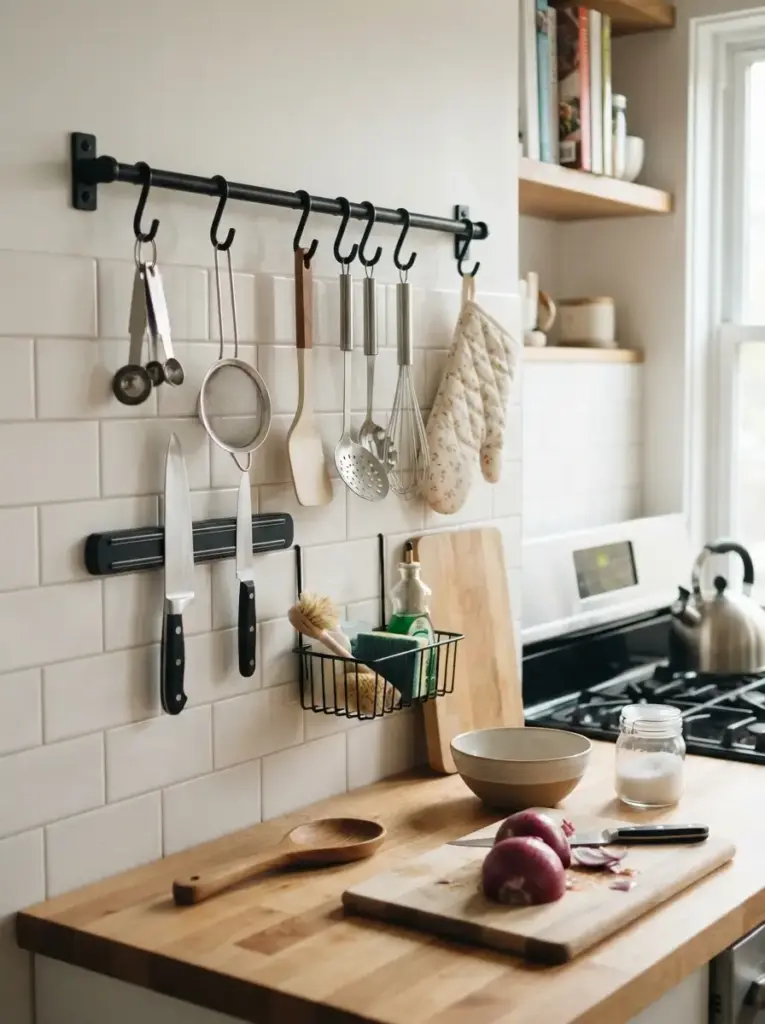
Wall rails with hooks, baskets, and holders use empty vertical space while keeping tools within reach. Install one near the preparation area for utensils, measuring spoons, oven mitts, and small strainers. Magnetic strips can hold suitable knives, but they require secure installation and careful placement away from children. Freestanding tension systems offer another option when drilling is not allowed.
Keep the rail organized around a single function. A cooking rail beside the stove should hold heat-safe tools, while a cleaning rail near the sink can support brushes and cloths. Mixing unrelated objects tends to create a messy wall. Matte black rails add contrast, stainless steel coordinates with appliances, and wood pegs soften an industrial kitchen.
Vertical organization protects limited drawers and countertops. Tools remain visible, which shortens preparation time and reduces duplicate purchases. The setup is particularly helpful for enthusiastic home cooks, renters with shallow cabinets, and people who need accessible storage. Avoid hanging too many items, and position each hook so that cookware does not strike the wall or block switches.
Select a Drop-Leaf Dining Table
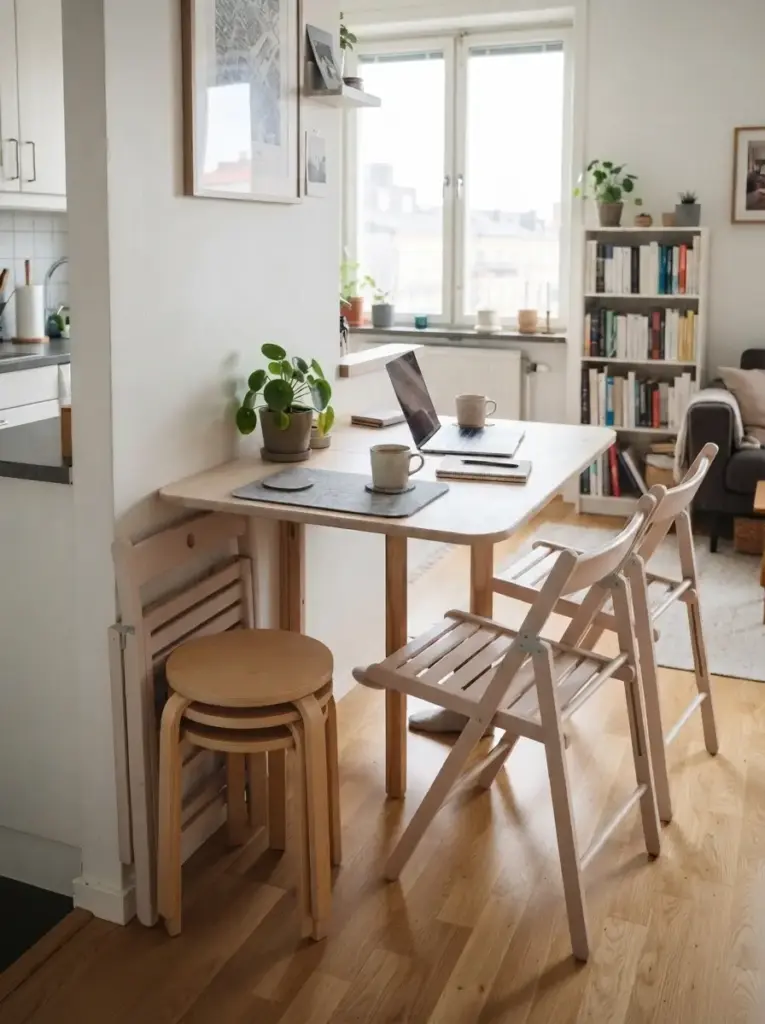
Drop-leaf tables provide a dining surface without permanently occupying the room. Wall-mounted versions fold almost flat, while freestanding gateleg tables can expand for meals, work, or food preparation. A width of 70 to 90 centimeters generally supports one or two people comfortably. Rounded corners reduce bumps in tight walkways and make the furniture appear less bulky.
Pair the table with folding chairs, slim stools, or stackable seats that tuck away. A pale wood top blends with Scandinavian interiors, while walnut brings contrast to white cabinets. Painted finishes can match the wall and visually recede. Protect the surface with a washable mat when chopping or handling hot dishes.
Multifunctional furniture earns its footprint by supporting several daily activities. One compact table may act as a breakfast counter, desk, extra prep station, and serving area. The choice works well for people who work from home, enjoy occasional guests, or dislike eating on the sofa. Check the folded depth and chair storage before purchasing because hidden bulk can still crowd a small apartment.
Hide Small Appliances Behind a Simple Screen
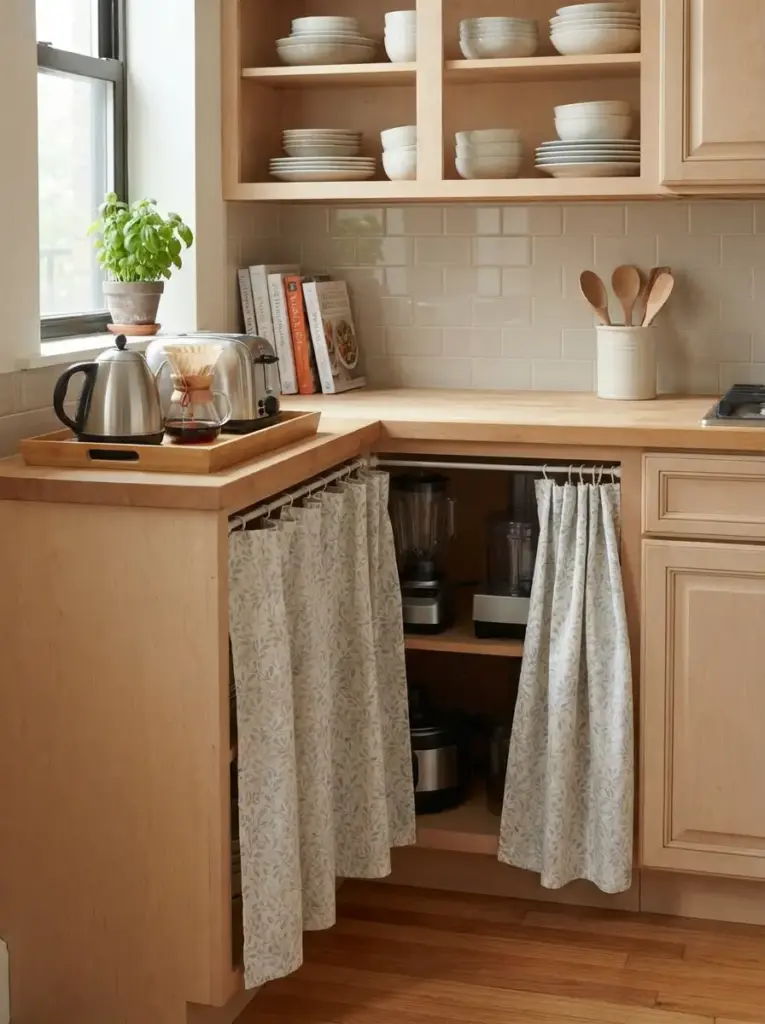
Toasters, blenders, kettles, and coffee machines create visual clutter when every appliance remains exposed. Frequently used equipment should stay accessible, but less-used items can sit behind a small sliding panel, fabric curtain, cabinet door, or countertop screen. Tension rods and washable cafe curtains create renter-friendly covers for open lower shelves.
Ventilation and heat safety remain essential. Appliances must cool fully before being covered or stored, and manufacturer clearance rules should always guide placement. Keep daily essentials together on a tray so the group can move easily when cleaning. Choose a curtain fabric that can be washed often, and keep it well away from flames.
Concealing irregular shapes gives the whole room a calmer background. The improvement matters because the kitchen is always visible in a studio, even during rest. The tactic suits people who own several appliances, prefer uncluttered surfaces, or use open shelving beneath counters. Do not hide tools so thoroughly that daily cooking becomes inconvenient, since function should remain the main priority.
Use Clear Containers Only Where Helpful
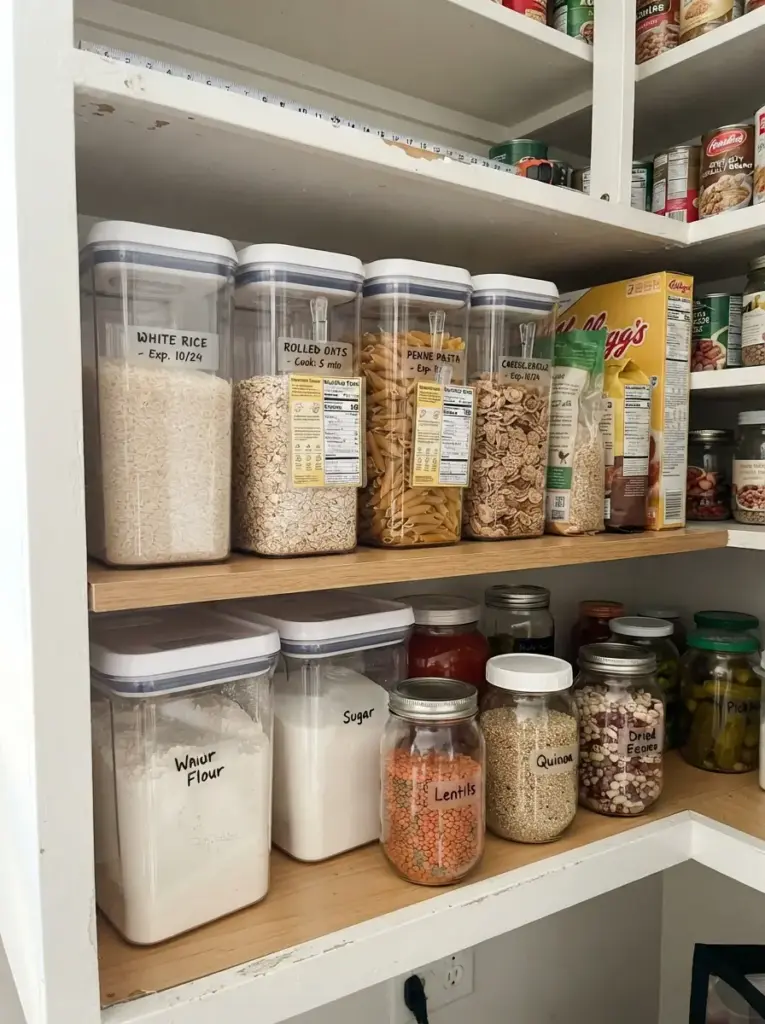
Clear containers can simplify food storage, but covering every shelf with matching jars is not always practical. Transfer frequently used dry goods such as rice, oats, pasta, and cereal when the original packaging is awkward or difficult to seal. Keep cooking instructions, allergy information, and expiration dates visible through labels or clipped package sections.
Square or rectangular containers use shelf space more efficiently than round ones. Stackable designs work well in narrow cabinets, while low bins suit deep shelves where items disappear at the back. Choose airtight lids for foods affected by moisture, and avoid buying a large set before measuring the available cabinet height.
Visibility helps households notice supplies before buying duplicates. Uniform shapes also reduce wasted gaps and make cleaning easier. The idea is most useful for regular cooks, people purchasing pantry staples in bulk, and anyone exploring Pantry Organization Ideas for a limited cabinet. Budget shoppers can reuse sturdy glass jars, provided they are clean, dry, food-safe, and easy to open.
Add a Narrow Mirror or Reflective Panel
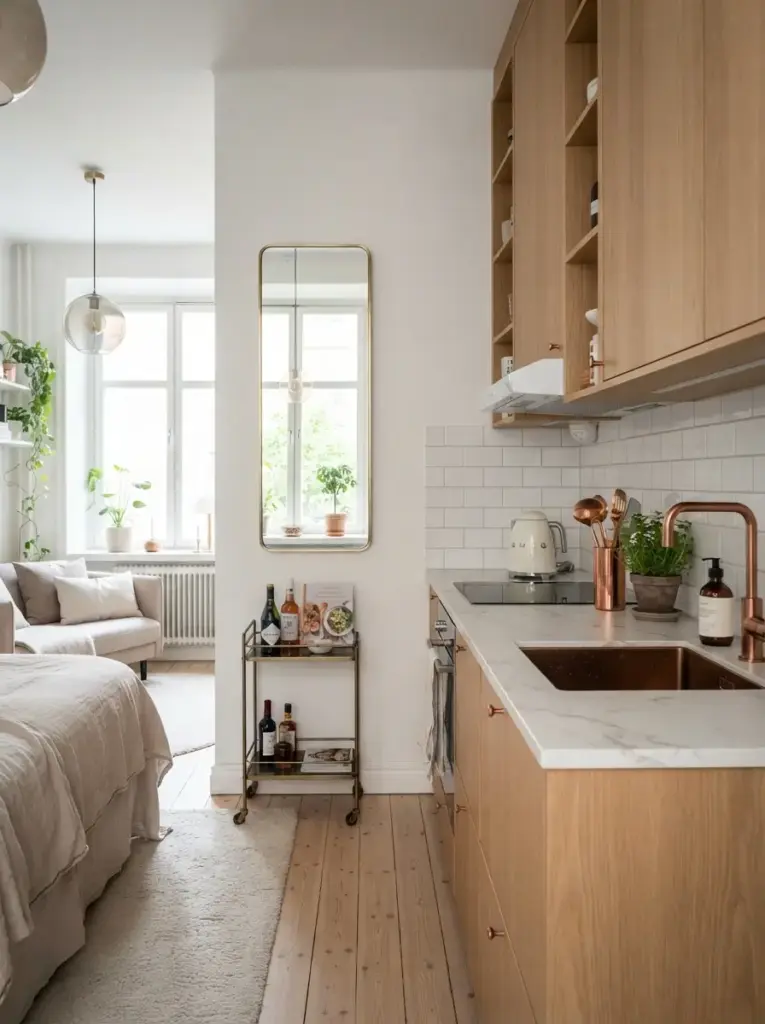
Mirrors are uncommon in kitchens, yet a carefully positioned reflective surface can brighten a dark studio. Place a narrow mirror on a side wall where it reflects a window, pendant light, or attractive shelf. Mirrored backsplash panels can create a stronger effect, but they require frequent wiping. Polished stainless steel and glossy ceramic tile offer subtler alternatives.
Reflections should not expose clutter, trash bins, or an unmade bed. Check the view from the main seating area before installation. A simple frame in wood, black metal, or brushed brass can coordinate with nearby finishes. Safety-backed acrylic mirrors are lighter than glass and may suit rental settings, though the reflection may be slightly less crisp.
Light bouncing across the room reduces heavy shadows and adds a sense of depth. That effect helps windowless kitchen corners or one-wall layouts facing away from natural light. The technique is best for tidy apartments and people comfortable cleaning fingerprints regularly. Avoid large mirrors directly behind active cooktops unless the material and installation method are specifically rated for that location.
Style One Practical Countertop Tray
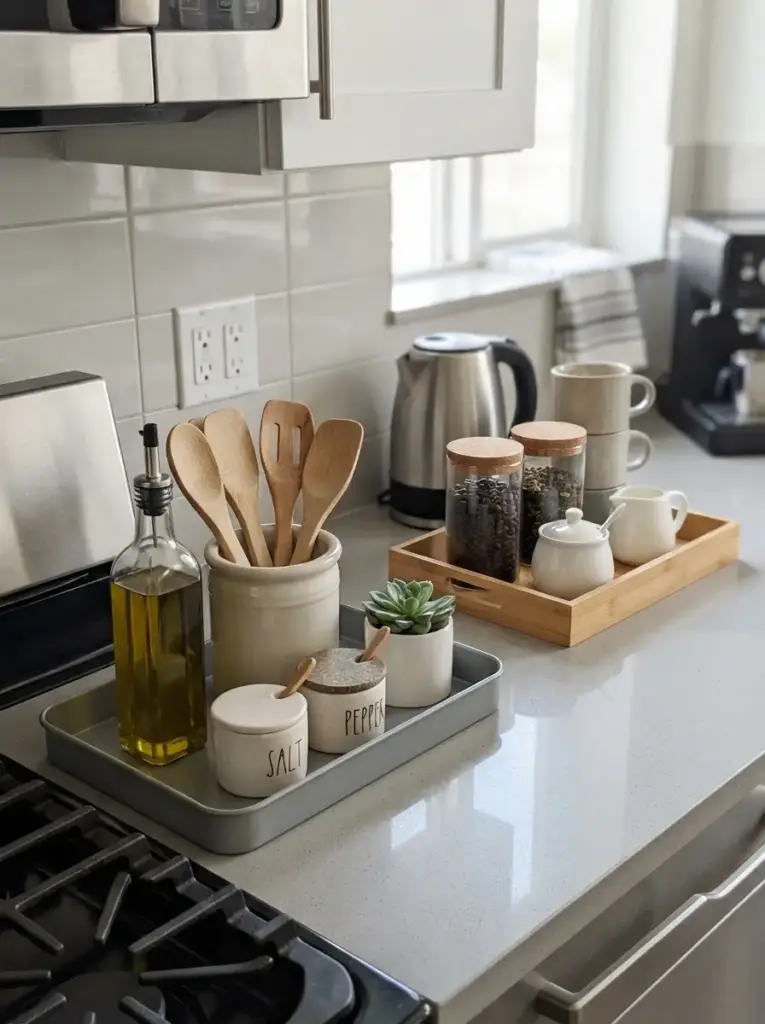
One tray groups daily essentials into a single controlled arrangement. Use one beside the stove for oil, salt, pepper, and a utensil jar, or place another near the kettle for tea and coffee supplies. Choose a washable material such as metal, sealed wood, ceramic, or durable plastic. The tray should occupy less than one-third of the available counter depth.
Keep the arrangement low enough that it does not block outlets or upper cabinet doors. Three to five useful items usually provide enough function without looking staged. A small plant or decorative object may join the group only when it does not interfere with cooking. Matching labels are optional; simple containers with clear contents often feel more natural.
Grouping creates a visual boundary and makes cleanup faster because everything moves together. It also prevents bottles from spreading across the full work surface. The idea suits beginners, renters, and anyone searching for manageable Apartment Kitchen Ideas rather than expensive renovations. Review the tray monthly, since unused condiments and empty containers can quietly turn an organized feature into clutter.
Bring in Soft Texture With Washable Fabrics
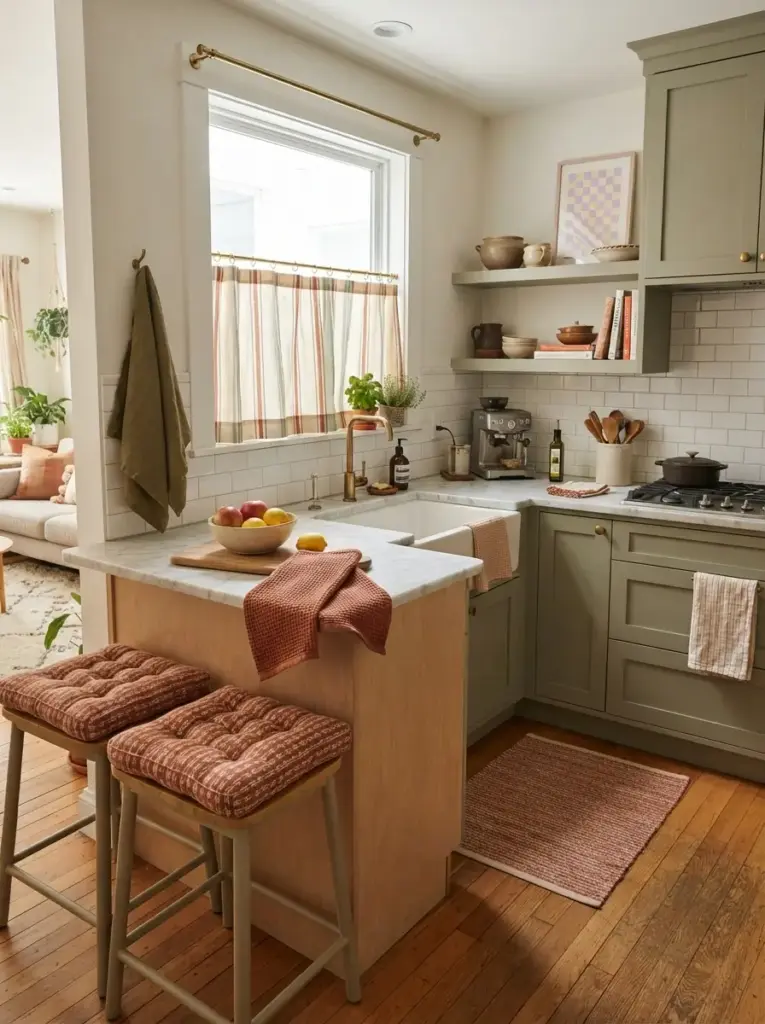
Hard surfaces dominate most kitchens, so small amounts of fabric can make the area feel connected to the rest of the home. Choose washable dish towels, a simple cafe curtain, padded stool covers, or a compact Roman shade. Linen blends and cotton bring softness, while performance fabrics resist stains and moisture.
Repeat one color from the living or sleeping zone to create continuity. Rust towels can echo a throw pillow, olive seat pads can relate to bedding, and cream curtains can soften dark cabinetry. Fans of playful interiors may borrow restrained elements from Kawaii Kitchen Decor, such as pastel checks or fruit motifs, without filling every surface with novelty items.
Textile repetition helps separate zones to feel like one considered home. The approach benefits renters who cannot repaint and people whose kitchens feel cold or unfinished. Keep fabrics away from burners, wash them regularly, and avoid thick floor-length curtains near sinks. Practical materials matter more than delicate finishes in a room exposed to steam, splashes, and food stains.
Add Greenery That Matches the Light
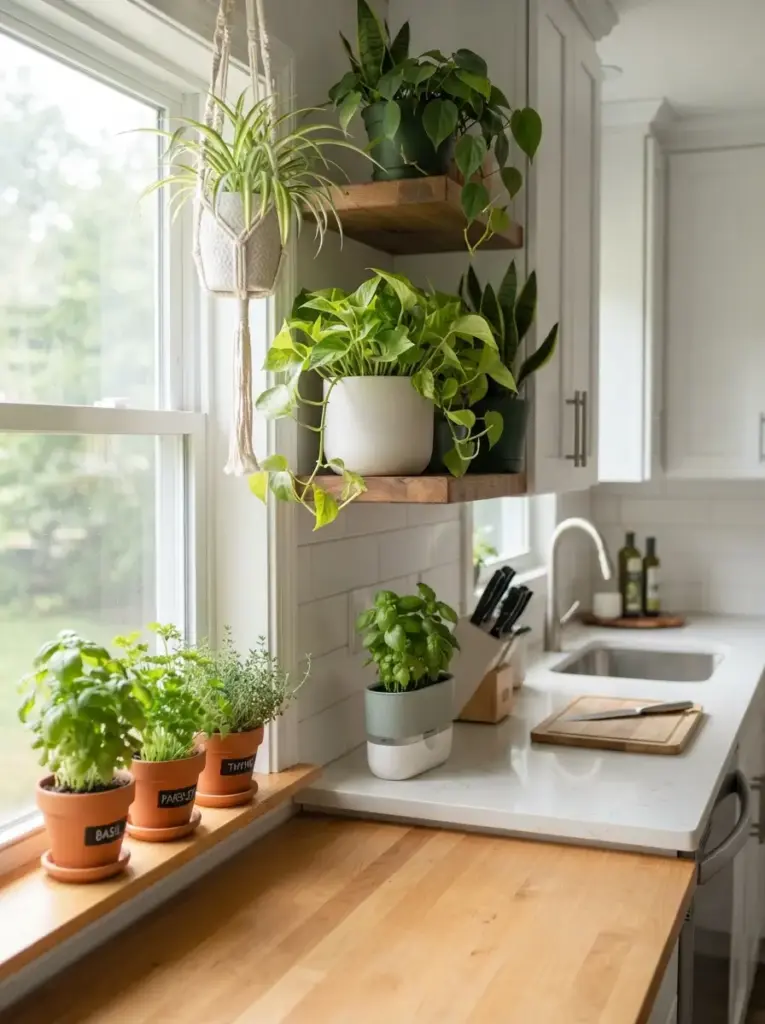
Plants bring color and movement, but the right species depends on actual light conditions. Herbs such as basil and parsley need bright light, while pothos, heartleaf philodendron, and some snake plants tolerate lower light. Place greenery near a window, on a shelf away from heat, or in a hanging planter that does not interrupt cabinet doors.
Artificial plants can work when natural light is very limited, but choose restrained shapes and realistic leaf variation. Dust them during regular cleaning so they do not look neglected. Small planters in terracotta, matte white, or dark green are easier to coordinate than several unrelated pots. Self-watering containers help people who forget frequent care.
Living greenery softens straight cabinet lines and introduces a natural accent without occupying much space. The idea is best for plant lovers, cooks who use fresh herbs, and apartments with at least one bright window. Avoid placing plants beside gas flames or directly above food preparation surfaces where soil and falling leaves could create hygiene problems.
Finish With One Visible Statement Piece
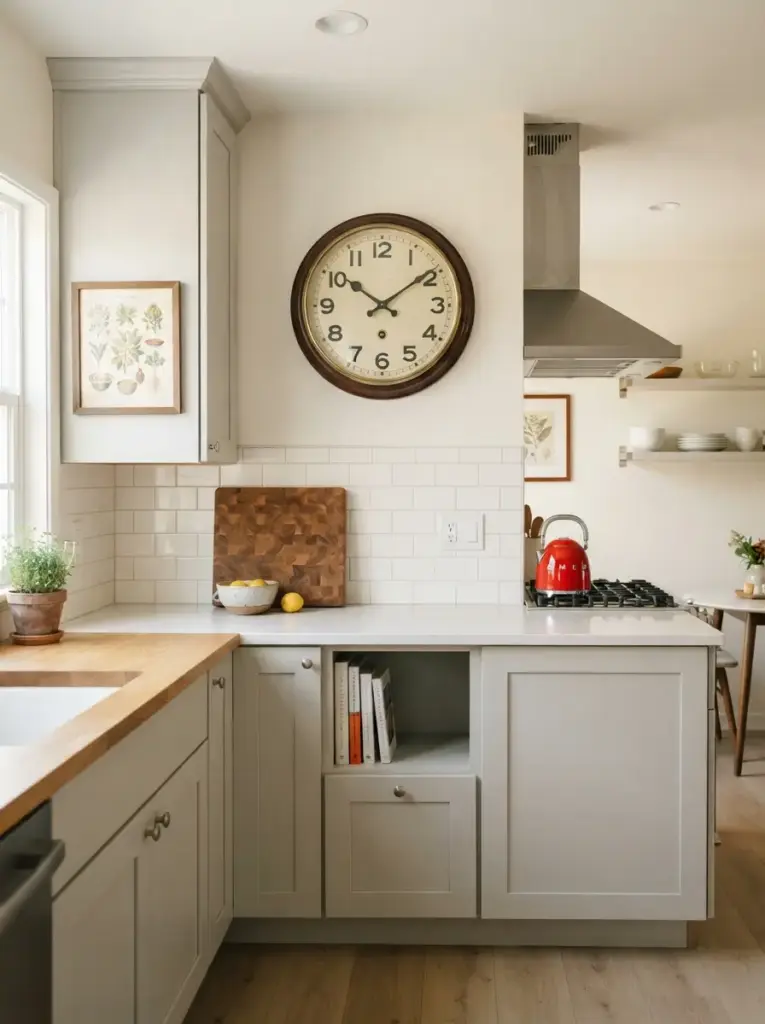
Small rooms benefit from restraint, but one memorable object keeps the kitchen from feeling purely functional. Consider a sculptural pendant, framed food illustration, colorful kettle, vintage wall clock, or handmade ceramic bowl. Scale the piece to the available wall and viewing distance. A large item with a simple shape often looks calmer than several tiny decorations.
Choose something connected to daily life rather than a random trend. A bright red kettle can energize a neutral palette, while an oversized wood board can add warmth and remain useful. Artwork should sit far enough from steam and grease, ideally behind glass or in a washable frame. Removable picture strips offer a rental-friendly hanging method when surface conditions allow.
One focal point gives the eye a clear destination and makes simpler surrounding choices feel deliberate. The tip works for anyone who has already solved storage and wants more personality. Avoid using statement objects to distract from clutter, damaged surfaces, or poor lighting. Practical foundations should come first, then decoration can complete the room.
Common Mistakes to Avoid in a Small Kitchen
Filling Every Wall With Storage
More storage does not always create a better room. Tall shelves, hooks, rails, and cabinets on every wall can make a compact area feel boxed in. Leave at least one visually quiet section, even when it is only a small strip of wall above the counter. Negative space allows useful items to stand out and makes cleaning easier.
Blocking the Main Work Triangle
Even one-wall kitchens need a sensible relationship between the sink, refrigerator, and cooktop. Large carts, open appliance doors, and dining chairs should not interrupt movement between these points. Walk through a normal cooking routine before adding furniture. Clearance of about 90 centimeters is comfortable where possible, though smaller rooms may require careful compromise.
Choosing Furniture Before Measuring
Online photos can make narrow islands, stools, and carts look smaller than they are. Measure width, depth, height, door swing, and walking clearance with painter’s tape on the floor. Include handles and overhanging tops in the calculation. A beautiful item becomes a daily problem when it blocks a cabinet or forces people to turn sideways.
Using Only Overhead Lighting
One ceiling fixture rarely provides enough light for chopping, washing, and cooking. Shadows form directly under upper cabinets and behind the person working. Add under-cabinet lights, a small lamp in a safe dry area, or a focused pendant above a dining surface. Warm layers create comfort while brighter task lighting supports accuracy.
Displaying Too Many Small Objects
Tiny jars, signs, mugs, magnets, and decorative figures can quickly fragment a limited view. Keep display items in groups, repeat materials, and leave space between collections. Store sentimental pieces on one shelf rather than scattering them across the kitchen. Rotating seasonal decor also prevents accumulation.
Ignoring Ventilation and Cleaning
Open layouts allow cooking odors and grease to travel into bedding, curtains, and upholstery. Use the extractor fan, open a window when possible, and clean filters according to manufacturer instructions. Wash nearby fabrics regularly and wipe upper surfaces where grease settles. Decorative choices should never block vents or make essential cleaning difficult.
Budget-Friendly Ways to Refresh the Space
Freshening a compact kitchen does not require new cabinets. Start with the least expensive changes that affect daily use. Replace worn dish towels, add matching storage baskets, improve bulbs, and clear unnecessary items from countertops. Small upgrades feel more noticeable when the room is already clean and organized.
Secondhand furniture can provide better quality than low-cost new pieces. Search for narrow carts, folding tables, wood stools, and small shelves, then check dimensions carefully. Sanding and refinishing may help solid wood pieces, while unstable flat-pack furniture is rarely worth repairing. Choose function first because every purchase consumes visible space.
Removable adhesive products offer color without construction. Use peel-and-stick material on a limited backsplash, line the inside of open shelves, or cover a damaged tabletop. Testing a hidden corner reduces the risk of peeling paint or leaving residue. Heat and moisture ratings matter, especially near ovens and sinks.
Changing hardware can update cabinets, but renters should store the original knobs and screws in a labeled bag. Measure the distance between existing holes before shopping. Brushed nickel, matte black, antique brass, and simple wood pulls each create a different mood. Avoid drilling new holes unless the landlord provides written approval.
Budget planning works better when divided into stages. Spend first on lighting and storage, then textiles, then decoration. A small amount reserved for repairs, cleaning products, and organizers often improves the result more than an impulse purchase. Track costs before buying so several inexpensive items do not quietly exceed the price of one durable solution.
Studio Apartment Kitchen Decor Tips for Beginners
Kitchen decor in a studio should support the room rather than compete with it. Begin by selecting a base color already present in the apartment, then repeat it through two or three kitchen details. A gray sofa might connect with charcoal towels and a small framed print, while warm wood furniture can relate to bamboo utensils and a sealed cutting board.
Scale deserves close attention. Oversized pendant lights may overpower low ceilings, while many miniature accessories can make counters feel cluttered. Choose fewer pieces with clear shapes. One medium artwork, one practical tray, and one small plant often create more impact than ten unrelated decorations.
Sightlines also shape the result. Stand near the entrance, bed, and main seating area to see what remains visible. Move unattractive packaging into cabinets, keep the sink area tidy, and position attractive objects where they can be enjoyed from multiple zones. Open apartments reveal the kitchen from almost every angle.
Material repetition provides quiet cohesion. Use no more than two main metals and repeat one wood tone where possible. Stainless appliances, black hooks, and brass handles can compete when each appears only once. Repeating black in a rail, frame, and stool legs makes the choice feel purposeful.
Cleaning effort should influence every decorative decision. Grooved accessories, unfinished wood, and fabric near the stove collect grease. Smooth washable surfaces are easier for beginners to maintain. Select decor that can be lifted, wiped, or washed without a complicated routine.
Personal style still belongs in a small home. People who enjoy playful colors can use one cheerful appliance or patterned towel, while minimalists may prefer warm neutrals and natural texture. Trendy details should remain easy to replace, allowing the expensive pieces to stay simple and useful.
How to Keep the Kitchen Looking Organized Daily?
Daily organization depends on reducing steps. Store each item close to where it is used, and make the easiest location the correct location. Mugs belong near the kettle or coffee machine, cooking tools belong near the stove, and cleaning supplies belong near the sink. Random storage creates extra movement and makes cleanup feel harder.
Five-minute evening resets can protect the whole apartment from visual mess. Wash or load dishes, wipe the main counter, return food, and take out strong-smelling waste. Completing these tasks before bed matters more in a studio because the kitchen stays visible from the sleeping area.
Frequently Asked Questions
How Can I Make a Studio Apartment Kitchen Look Bigger?
Use a light base color, clear counters, reflective accents, and continuous flooring where possible. Keep tall storage close to walls and avoid placing bulky furniture in the central sightline. Under-cabinet lighting removes dark corners, while one coordinated palette reduces visual breaks. A narrow mirror can help when it reflects natural light rather than clutter.
What Colors Work Best in a Studio Apartment Kitchen?
Warm white, soft gray, pale beige, muted green, and light wood are reliable base choices. Dark colors can still work when used on lower cabinets, hardware, or one focused feature. Repeat the same colors in the nearby living area so the kitchen belongs to the whole apartment. Limit the palette to two main colors and one accent for easier coordination.
How Much Counter Decor Should I Use?
Keep at least two-thirds of the main preparation surface open. One tray of daily essentials, a small plant, or a useful board may be enough. Store rarely used appliances and avoid decor that must be moved every time you cook. Counter space has greater functional value than display space in a small home.
Are Open Shelves Good for Renters?
Open shelves can work when existing holes, approved anchors, or tension systems are available. Renters should confirm wall rules before drilling and keep removed hardware for later restoration. A freestanding shelf or narrow hutch offers a safer alternative. Limit displayed items so cleaning remains manageable.
What Lighting Is Best for a Small Kitchen?
Warm white lighting between 2700K and 3000K creates comfort, while slightly brighter neutral light can support detailed preparation. Combine overhead lighting with under-cabinet task lights. Dimmers allow the kitchen to feel softer when cooking is finished. Avoid relying on one cool ceiling bulb because it often produces harsh shadows.
How Can I Add Personality Without Creating Clutter?
Choose one statement item, repeat a favorite color, and display only useful or meaningful objects. Framed art, a colorful kettle, handmade ceramics, or patterned textiles can express personality without filling every shelf. Rotate decorative pieces instead of showing everything at once. Clear space helps each chosen item feel more noticeable.
Conclusion
Thoughtful Studio Apartment Kitchen design grows from practical decisions rather than decoration alone. Clear work surfaces, flexible furniture, layered lighting, vertical storage, and a controlled color palette make cooking easier while helping the full apartment feel organized. Renters can achieve meaningful changes with washable rugs, removable lights, carts, textiles, and tested adhesive products.
Start with the problem that affects daily life most, whether it is poor lighting, crowded counters, missing storage, or nowhere to eat. Solve that issue before buying decorative extras. Small changes can still matter. Gradual improvements usually create a more useful result because each purchase responds to a real need. With careful measuring and regular editing, even a very small kitchen can support comfortable cooking, simple entertaining, and an attractive home.