
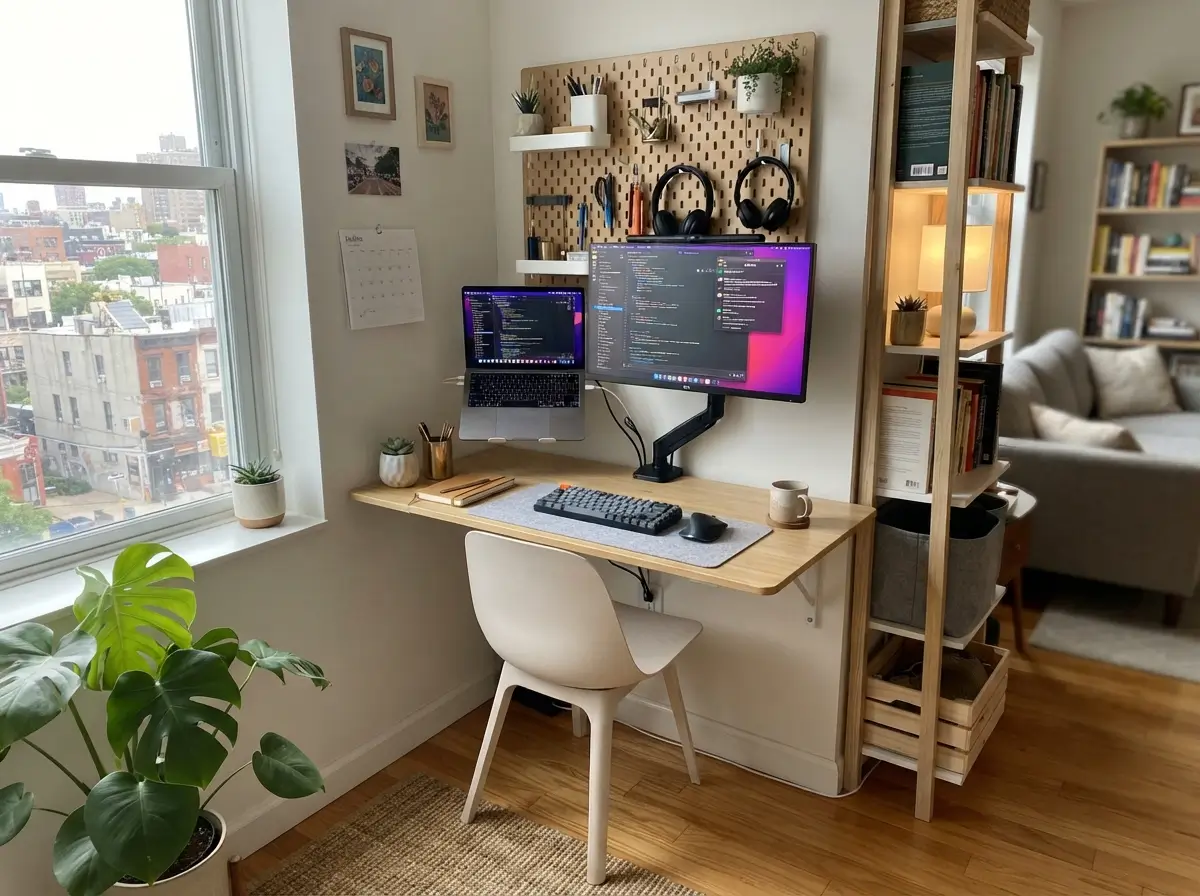

Limited square footage does not mean you need to work from the sofa or balance a laptop on the dining table every day. Good planning can turn an unused wall, narrow corner, closet, or bedside area into a comfortable place for work, study, budgeting, or creative projects. Every successful Small Apartment Desk Setup begins with honest measurements, clear priorities, and furniture that earns its place.
Small rooms work best when the desk feels connected to the rest of the home instead of looking like office furniture was dropped into the middle of a living area. Color, scale, storage, cable control, and lighting matter just as much as the desk itself. Careful choices can create a workspace that supports focus while leaving enough open floor space for everyday movement.
How Can You Create a Desk Area Without Crowding the Room?
Choose the smallest surface that comfortably supports your daily tasks, then use the wall above it for storage, lighting, and organization. A practical Small Apartment Desk Setup usually works best with a desk between 30 and 42 inches wide, a shallow depth, and a chair that slides fully underneath. Keeping the floor visible around the desk makes the entire apartment feel less crowded.
Choose a Slim Console Desk
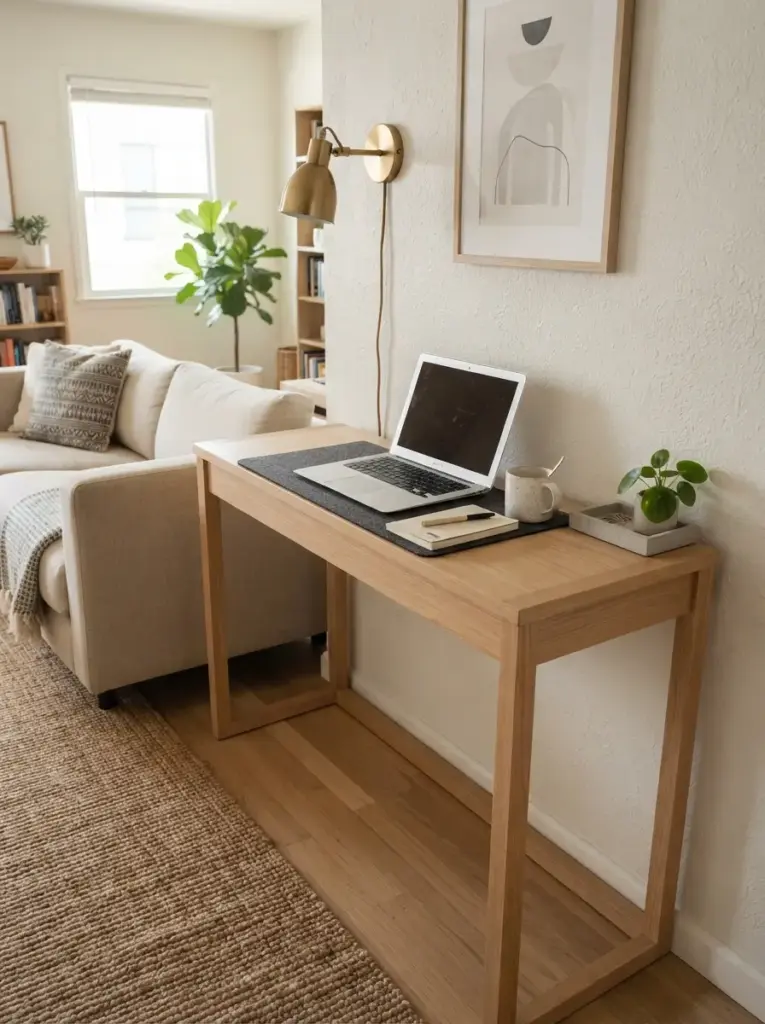
Slim console desks offer enough room for a laptop, notebook, lamp, and small tray without taking up the depth of a traditional office desk. Models between 16 and 20 inches deep work especially well along living room walls, behind sofas, or near entryways. Look for a simple rectangular frame with open legs because bulky side panels can make a narrow room feel boxed in.
Space efficiency comes from reducing depth rather than width. A 40-inch-wide console can still provide a useful work surface while leaving a clear walkway in front. White oak, light walnut, matte black, and warm white are easy finishes to coordinate with existing furniture. Renters who move often should choose a lightweight desk with removable legs rather than a heavy, solid-wood piece.
Remote workers who use only a laptop will benefit most from this layout. Place a narrow felt desk mat under the computer, add a small wall-mounted light, and keep accessories limited to one cup and one catchall tray. Avoid choosing a desk that is too shallow for comfortable wrist support. Test the depth with your forearms resting naturally before buying.
Use a Floating Wall-Mounted Desk
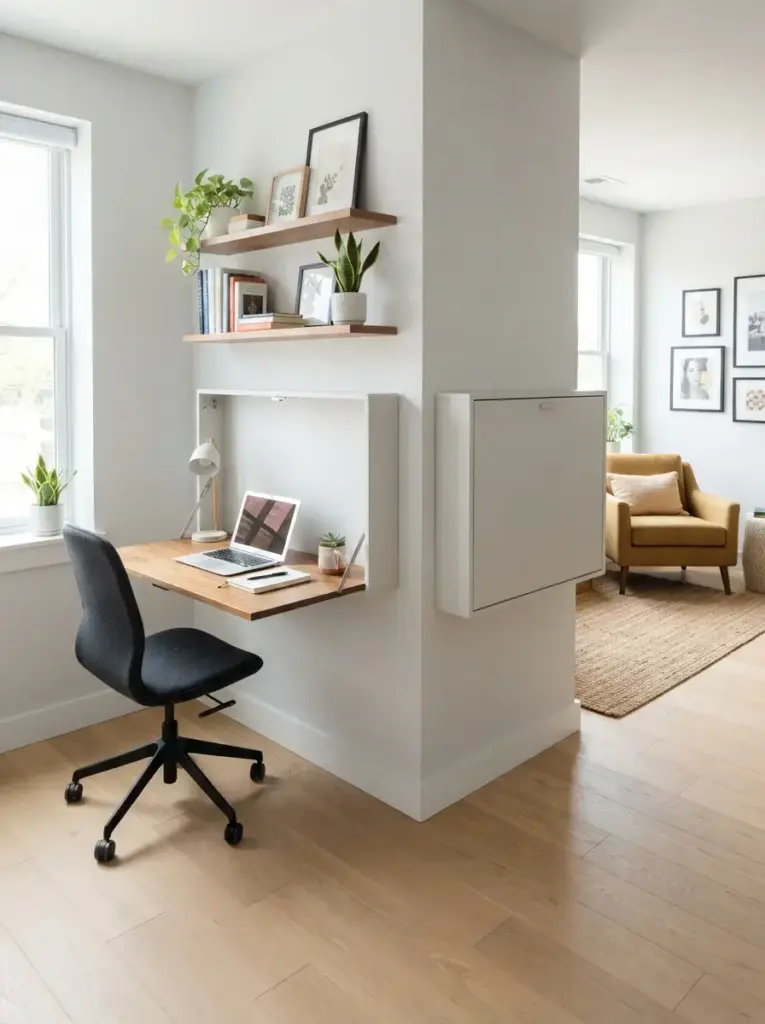
Floating desks free the floor and create a lighter visual effect because no legs interrupt the room. Fold-down versions are especially useful in studios, guest rooms, and multipurpose spaces. When work ends, the surface can close against the wall, hiding papers and returning the area to normal living space.
Visual openness makes this solution effective. Flooring continues beneath the desk, so the room appears wider and easier to clean. Mount the desk at roughly 28 to 30 inches from the floor for standard chair use, but adjust the height to your body before installation. Secure the unit to wall studs or use hardware rated for the wall type and expected load.
Renters should ask permission before drilling or choose a freestanding fold-down cabinet that mimics the same function. Peel-and-stick wood film can help an inexpensive white desk match nearby shelves. Keep the wall color close to the desk finish for a quiet, built-in appearance. People who need a temporary study station or occasional bill-paying area will find this option particularly useful.
Turn an Empty Corner Into a Work Zone
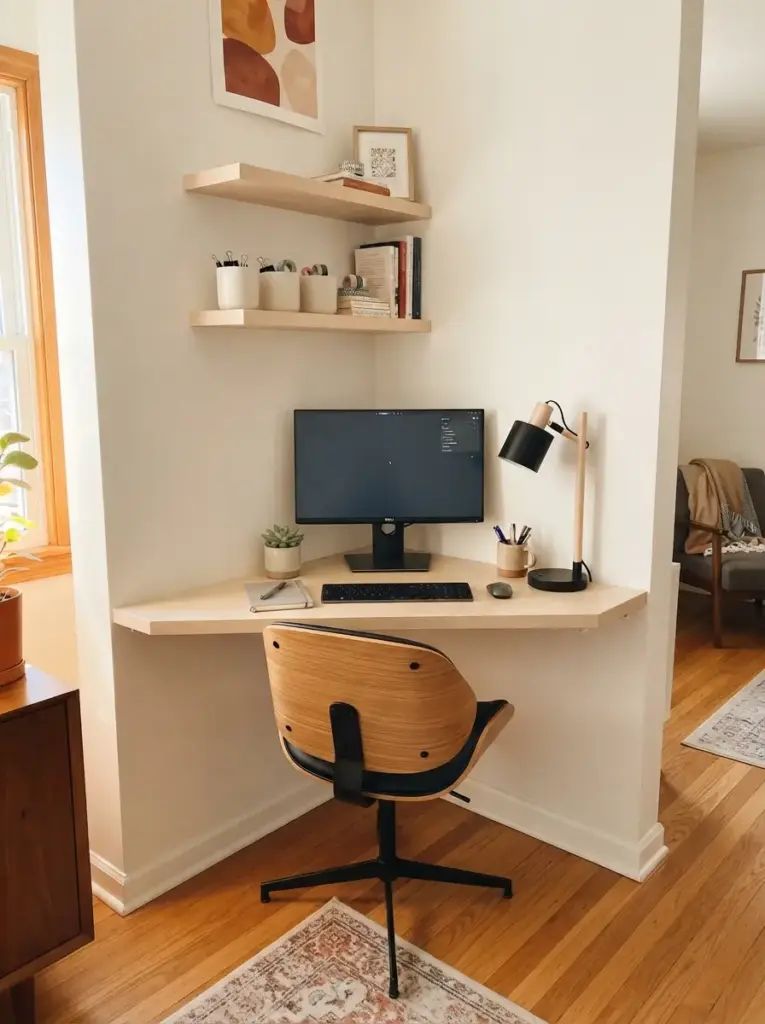
Corners often remain unused because standard furniture does not fit them neatly. A compact triangular desk, small writing table, or custom-cut plywood top can turn that awkward area into a practical workstation. Position the monitor toward the corner and place the chair at a slight angle so the setup feels intentional rather than squeezed in.
Diagonal placement improves circulation by reducing hard edges along the walkway. It also allows two walls to support vertical storage. Install one or two short floating shelves above the desk, leaving at least 18 inches between the work surface and the lowest shelf. Use matching containers to prevent the corners from looking visually busy.
Students, renters, and people with irregular room layouts will get the most value from this approach. Choose a chair with a curved back and narrow base so it can tuck close to the desk. Warm white paint, pale wood, and one darker accent can keep the corner from feeling cramped. Avoid overfilling both walls with shelves because too many objects can make the workstation feel enclosed.
Place the Desk Behind the Sofa
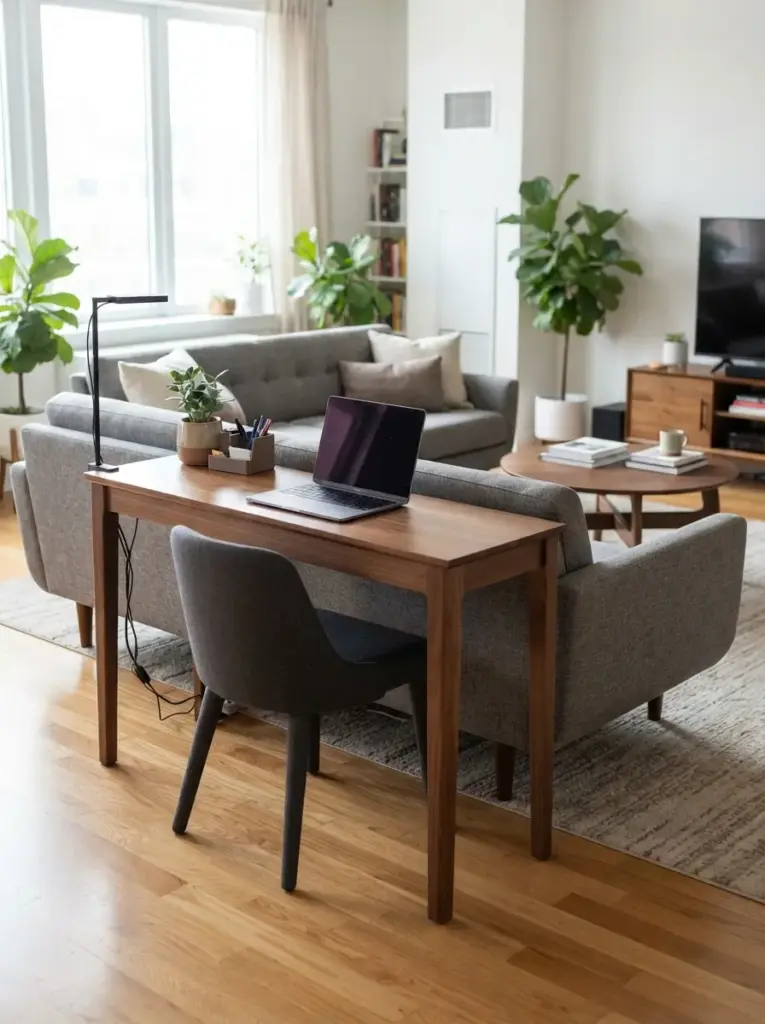
Space behind a floating sofa can become a highly efficient work area when the room layout allows several feet of clearance. A narrow desk or console can sit directly behind the sofa, creating a natural boundary between the lounge and work zones. Matching the desk height closely to the sofa back helps the arrangement look balanced.
Furniture zoning explains why this idea succeeds. One piece of floor space supports two functions without adding a new visual barrier. Keep the desk depth around 16 to 20 inches and use a chair that slides underneath completely. A low-back chair is less noticeable from the seating area and helps preserve the open sightline.
Open-plan apartment residents and couples sharing one room will appreciate this setup. Choose a desk finish that connects with the coffee table or media cabinet. Add a compact clamp lamp rather than a large table lamp, and route the cables down the least-visible desk leg. Avoid placing a tall monitor where it blocks the view across the room.
Build a Desk Into a Closet
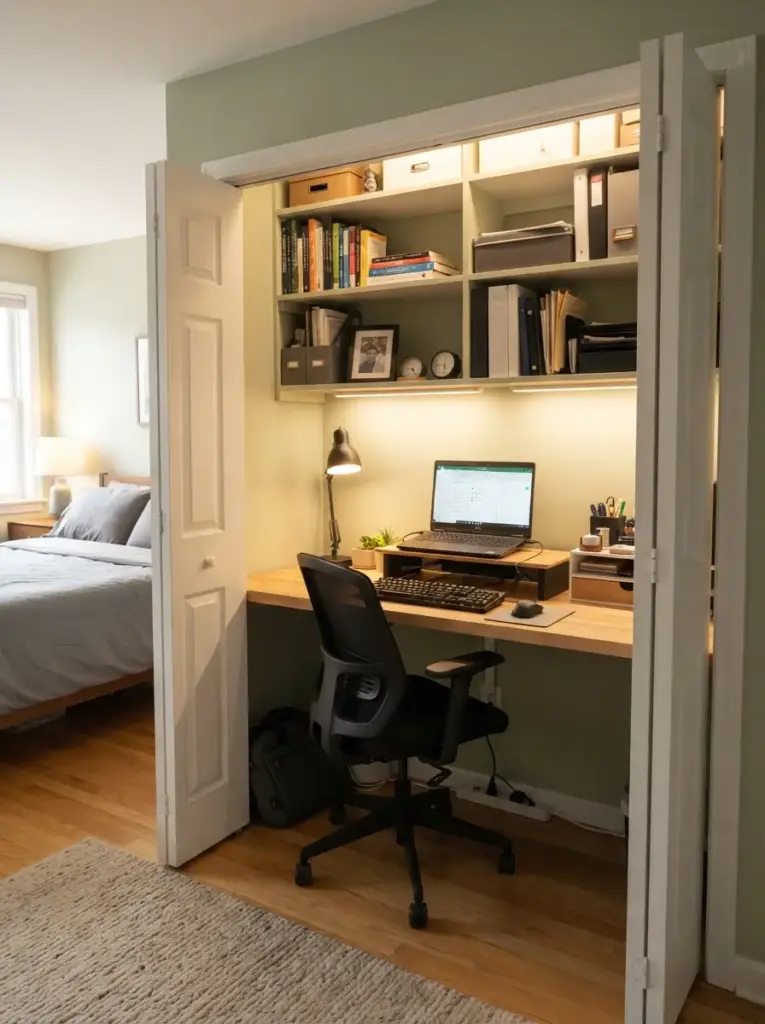
Closet offices, often called cloffices, work well when storage can be moved elsewhere. Remove the hanging rod, add a desktop, and use the upper portion for shelves. Closing the doors at the end of the day can hide screens, paperwork, and equipment, which is helpful in bedrooms and studio apartments.
Containment gives this layout its strength. Work materials stay in one defined zone, making it easier to separate job time from rest time. Standard closet depth usually provides enough room for a 20- to 24-inch desktop, but measure door clearance and chair space carefully. Ventilation matters if a computer or printer will run for long periods.
People who dislike seeing office equipment after work will benefit most. Battery-operated puck lights or plug-in LED strips can brighten the interior without major electrical work. Choose lighting around 3500K to 4000K for clear task visibility. Avoid relying only on a ceiling light behind you, since your body may cast a shadow across the desk.
Replace a Nightstand With a Desk
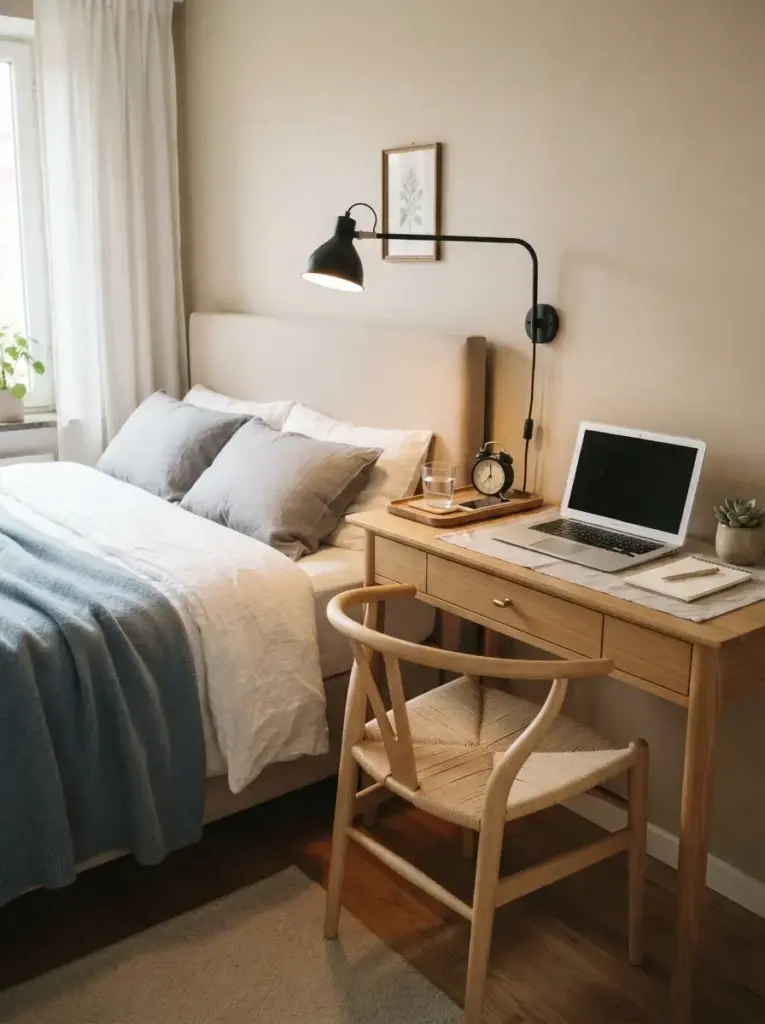
Bedrooms with very limited space can combine the nightstand and work desk into one piece. A narrow writing desk beside the bed can hold a lamp, phone, water glass, and laptop while providing enough surface area for occasional work. Choose a model with at least one drawer so nighttime items and office supplies remain separated.
Dual-purpose furniture reduces the number of pieces in the room, which improves circulation. Keep the desk close to mattress height for visual balance, but make sure the chair can pull out without hitting the bed. A wall-mounted swing-arm lamp can serve both the bed and desk while preserving valuable surface space.
Freelancers with light computer needs, students, and anyone living in a small bedroom will find this approach practical. Use a tray for bedside items so they can move quickly when work begins. Linen, soft gray, dusty blue, or warm beige accessories help the desk blend into a restful bedroom. Avoid storing piles of work papers beside the bed because visible clutter can make relaxation harder.
Install a Window-Facing Desk
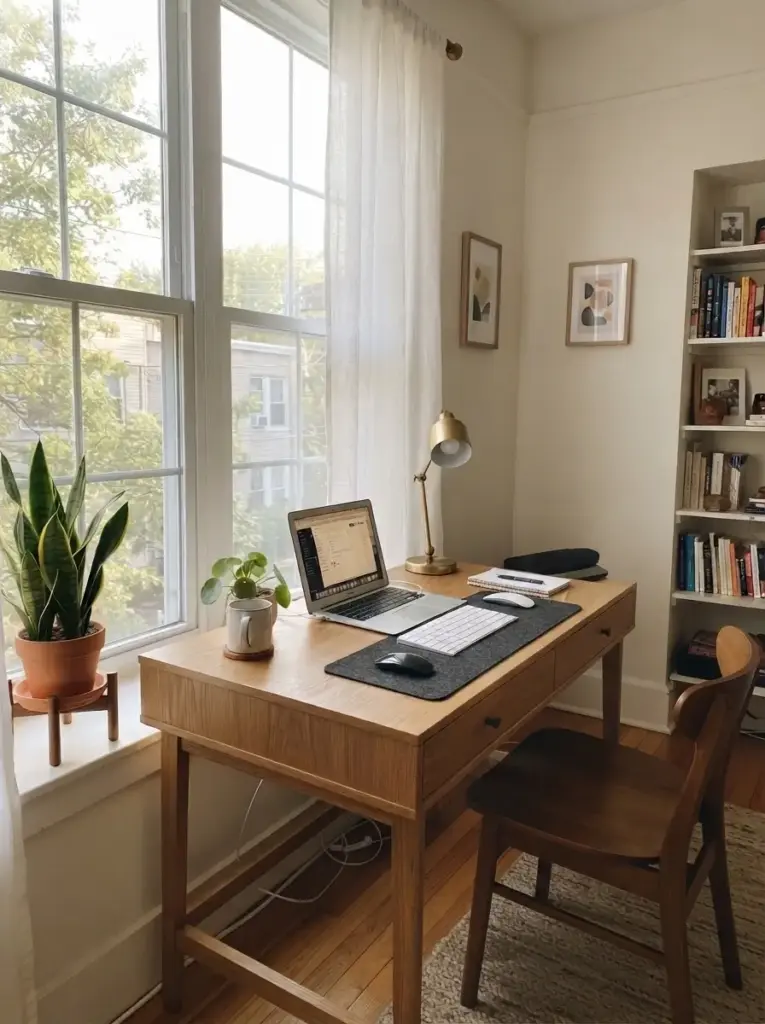
Placing a desk near a window can make a compact workstation feel more open. Natural light reduces the boxed-in feeling that often comes with working against a blank wall. Position the desk perpendicular to the window when possible, which provides daylight without placing the screen directly in front of glare.
Light quality is the main advantage here. Side lighting is generally more comfortable for screen work than strong light behind or directly ahead of the monitor. Add a sheer curtain to soften harsh midday sun and keep a small task lamp available for cloudy days or evening work. A bulb between 3500K and 4000K supports concentration without feeling overly blue.
Creative workers and people who spend several hours at a desk may enjoy this arrangement most. Choose a shallow desk with open legs so daylight continues through the room. Plants that tolerate indoor light can sit nearby, but keep leaves away from electronics. Avoid blocking a radiator, air vent, or window opening with the desk.
Use a Ladder Desk With Vertical Storage
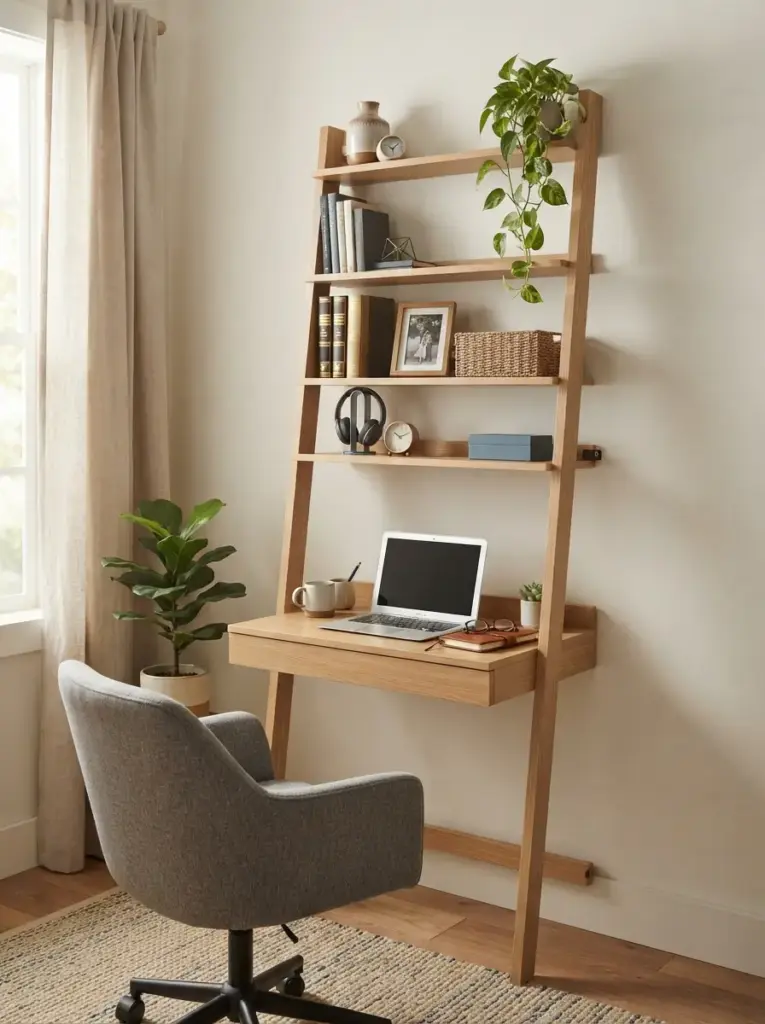
Ladder desks lean against the wall and combine a writing surface with shelves above. Their narrow footprint makes them suitable for small living rooms, bedrooms, and hallways. Shelves gradually become shallower toward the top, which reduces visual weight and keeps the unit from dominating the room.
Vertical organization is what makes the design useful. Books, headphones, small boxes, and decorative objects move off the work surface without requiring a separate cabinet. Anchor the unit according to the manufacturer’s directions, especially in homes with children or pets. Keep heavier objects on lower shelves to improve stability.
Book lovers, students, and hobbyists who need both display and work space will benefit from this option. Match storage boxes to the wall color for a calmer look. Use only one or two decorative items per shelf and leave some space. Avoid loading the upper shelves with unrelated clutter, since the open structure exposes everything in the room.
Create a Fold-Away Desk Cabinet
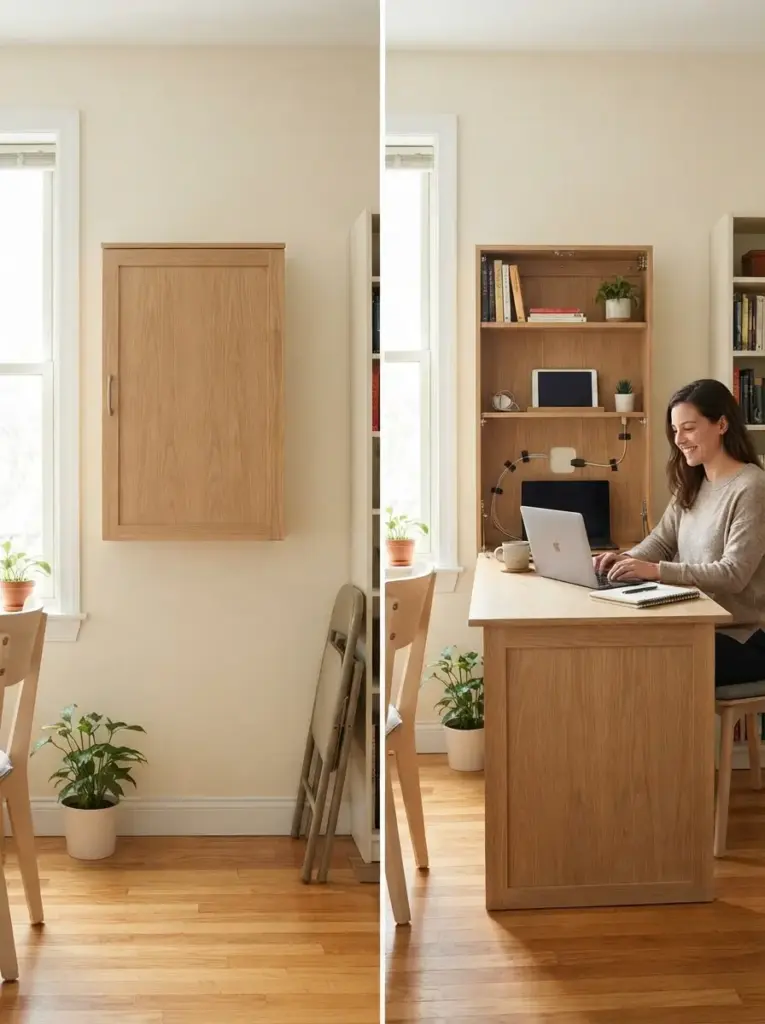
Fold-away desk cabinets resemble slim wall cupboards when closed and open into a small workstation when needed. Many designs include shallow shelves, a cable opening, and a fold-down writing surface. Such units work well in dining areas, guest rooms, and apartments where a permanent desk would interfere with daily activities.
Transformation is the reason this choice saves space. The workstation expands only during use, then returns the floor area to another purpose. Check the open depth before buying because the lowered surface and chair may require more clearance than expected. Keep frequently used items inside the cabinet so setup takes less than a minute.
People who work from home only a few days each week will find this format convenient. Paintable models can blend with the wall, while natural wood versions can act as a decorative feature. Add adhesive cable clips inside the cabinet to keep the charger in place. Avoid overloading the fold-down surface with a heavy monitor unless the unit is rated for it.
Fit a Desk Into a Wall Niche
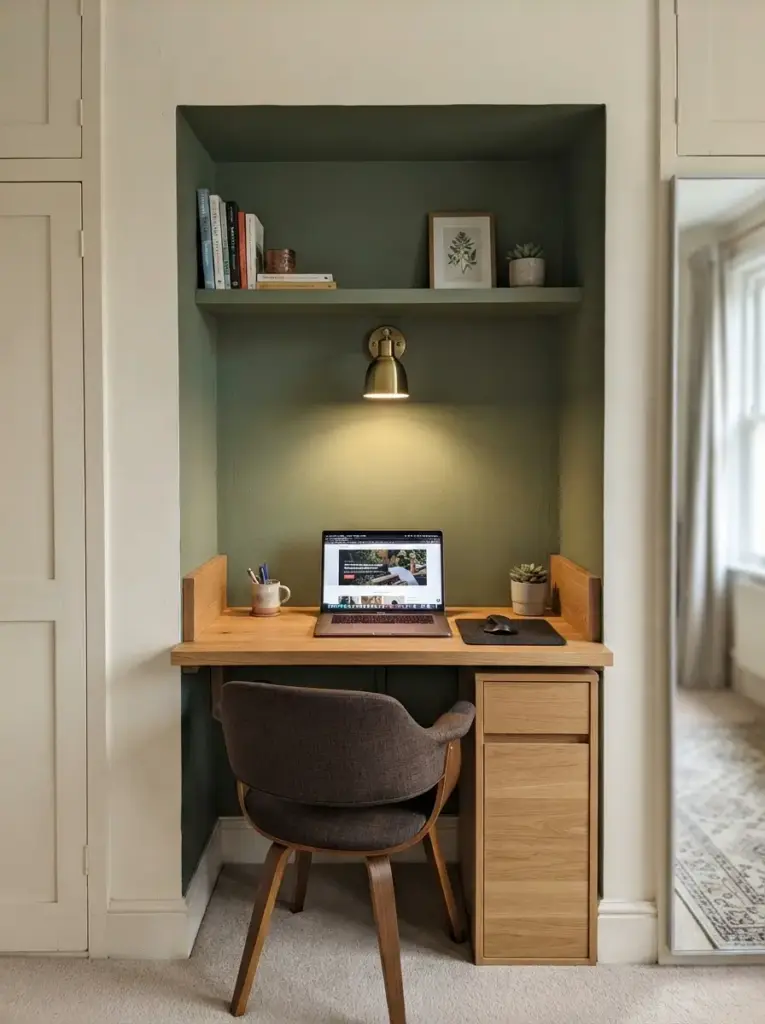
Wall niches, recessed areas, and spaces between wardrobes can become compact built-in workstations. A cut-to-size desktop supported by side cleats or slim drawer units makes better use of the opening than standard furniture. Even a niche only 36 inches wide can support a focused laptop station.
Custom fit creates a polished result because the surface uses every available inch. Measure the width at the front, middle, and back since older walls are not always square. Leave a small gap around the desktop for installation and cable access. Painting the niche a slightly deeper tone can define the work area without adding furniture.
Homeowners, confident DIY renters, and anyone dealing with unusual architecture will benefit from this idea. Sage green, muted navy, clay, or charcoal can make the niche feel intentional, while pale colors keep it quiet. Add one shelf and an under-shelf light instead of several bulky cabinets. Avoid ignoring knee clearance when placing drawers or supports.
Choose a Clear Acrylic Desk
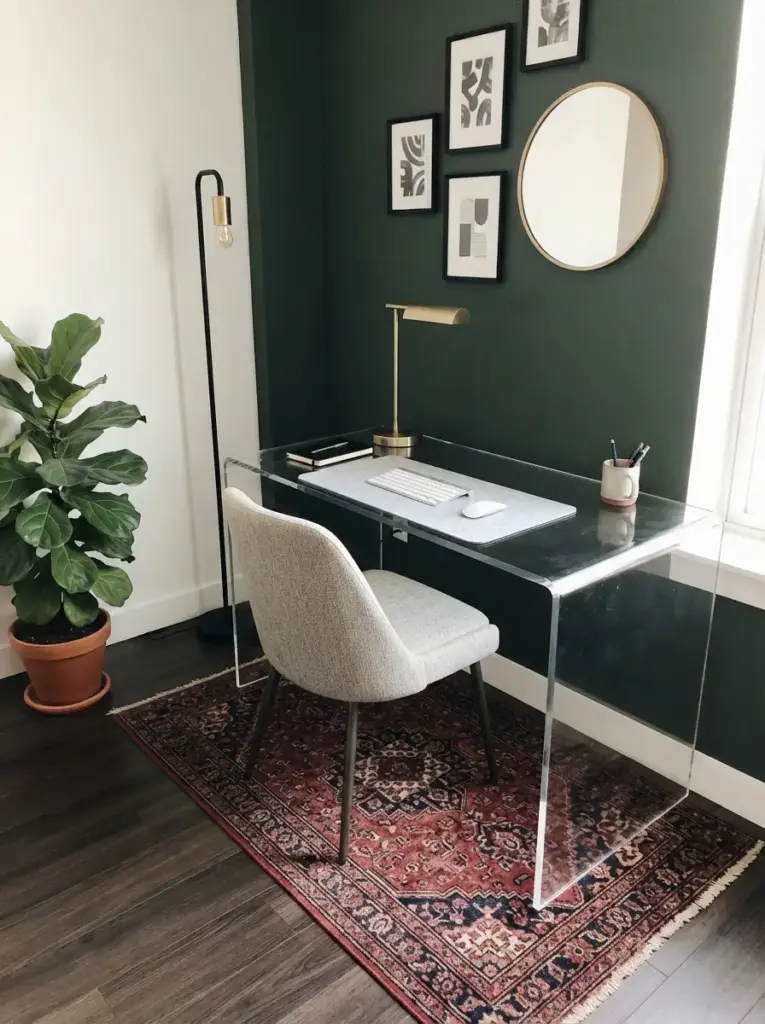
Clear acrylic desks visually disappear because light passes through them. They provide a useful surface without adding a heavy block of color or material to a small room. Such desks work particularly well in apartments with patterned rugs, dark floors, or strong wall colors that already create visual interest.
Transparency reduces visual interruption, which helps the room feel less crowded. Keep the desktop almost empty to preserve that effect. Acrylic scratches more easily than wood, so use a desk mat and clean it with a soft microfiber cloth. Check the weight capacity before placing a large monitor or printer on top.
Style-conscious renters and people who prefer modern interiors may enjoy this choice. Pair the desk with a simple upholstered chair or a light wood stool to soften the look. Chrome, brass, or black hardware can connect it with nearby lighting. Avoid placing too many clear accessories on the desk, since a mix of transparent pieces can look messy rather than minimal.
Use a Rolling Desk Cart
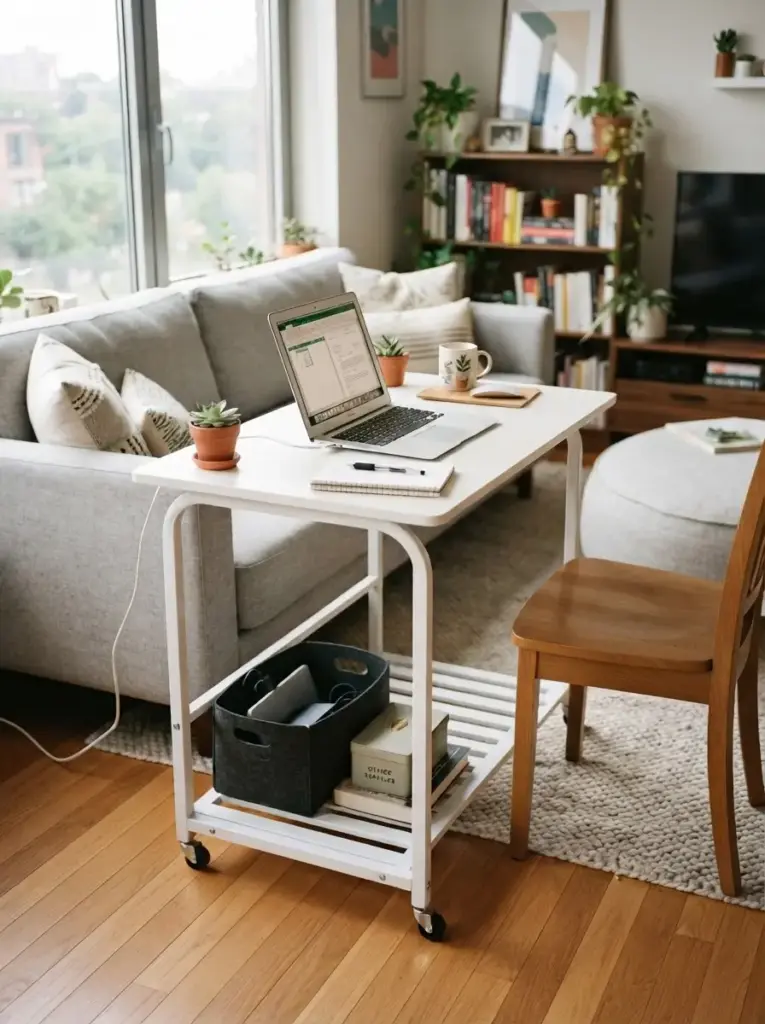
Rolling desk carts offer flexibility in apartments where one area cannot stay dedicated to work. A compact table on locking casters can move beside the sofa, near a window, or against a wall, depending on the task. Some models include a lower shelf for a laptop bag, printer, or storage basket.
Mobility makes this solution valuable. The desk can leave the main living zone after work and parked inside a closet or unused corner. Choose smooth, locking wheels that suit the flooring and check that the frame does not wobble. Keep cables limited to one extension cord or use rechargeable accessories to reduce setup time.
People with changing schedules, shared homes, and multipurpose rooms will get the most from a mobile workstation. Use one lidded box for office supplies so everything moves together. Neutral finishes such as white, black, or light wood help the cart blend into different rooms. Avoid buying a model that is too tall for a standard chair.
Mount the Monitor on the Wall
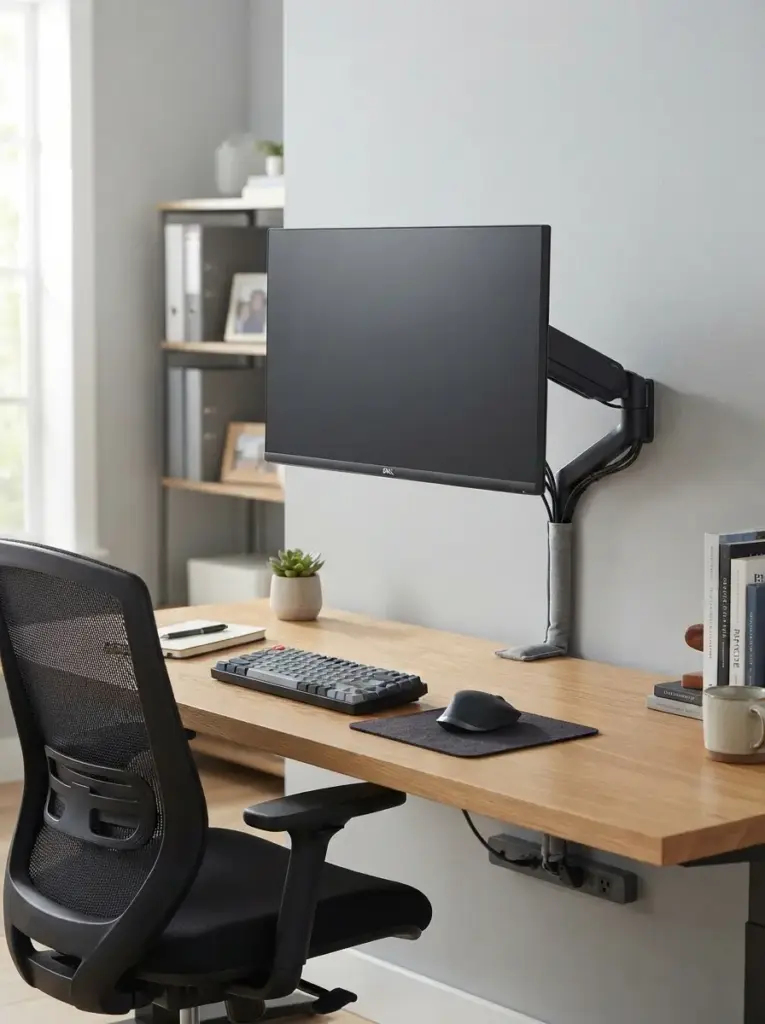
Wall-mounting a monitor can free several inches of valuable desk depth. A monitor arm or wall bracket moves the screen away from the work surface, leaving space for writing, drawing, or storing the keyboard. Adjustable arms also allow better screen height and viewing distance.
Ergonomic flexibility makes the idea more than a visual trick. Position the top of the screen near eye level and keep the display roughly an arm’s length away. Confirm that the wall, mount, and monitor use compatible hardware. Renters who cannot drill can use a clamp-mounted arm attached to a sturdy desk.
Full-time remote workers and anyone using a larger display will benefit most from this upgrade. Route the power and display cables through a fabric sleeve or adhesive channel. Match the cable cover to the wall color for a cleaner finish. Avoid mounting the monitor too high, since constant upward viewing can cause neck discomfort.
Add Under-Desk Storage Instead of Side Cabinets
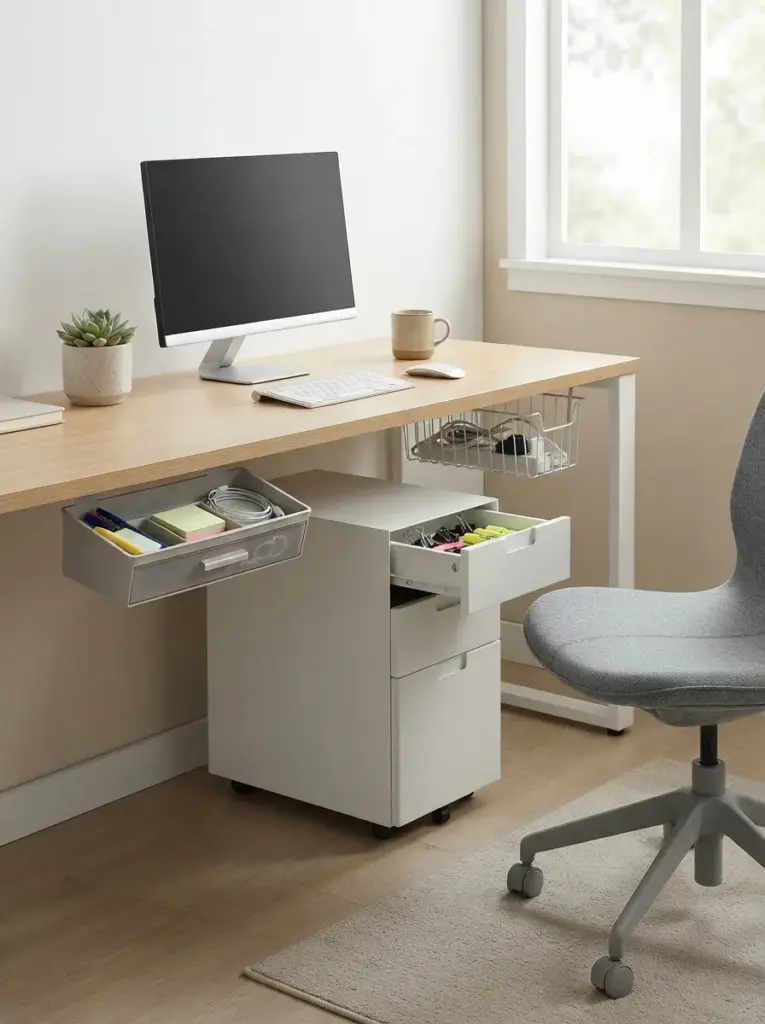
Under-desk drawers, hanging baskets, and slim mobile pedestals keep supplies close without widening the workstation. Products that screw or adhere beneath the desktop can hold pens, chargers, notebooks, and small tools. A narrow rolling drawer unit can also slide out only when needed.
Hidden storage preserves visual breathing room. Floor space beside the desk remains open, and the desktop stays easier to maintain. Check knee clearance before installing anything underneath. Place drawers toward the left or right edge rather than directly in the center, and avoid deep units that force the chair backward.
Minimalists, renters, and people with many small accessories will appreciate this method. Use matching drawer dividers so items do not shift or tangle. Budget versions can be made from adhesive trays, cable baskets, or small plastic organizers. Avoid filling every compartment simply because storage exists; keep only tools used regularly.
Create a Built-In Look With Matching Shelves
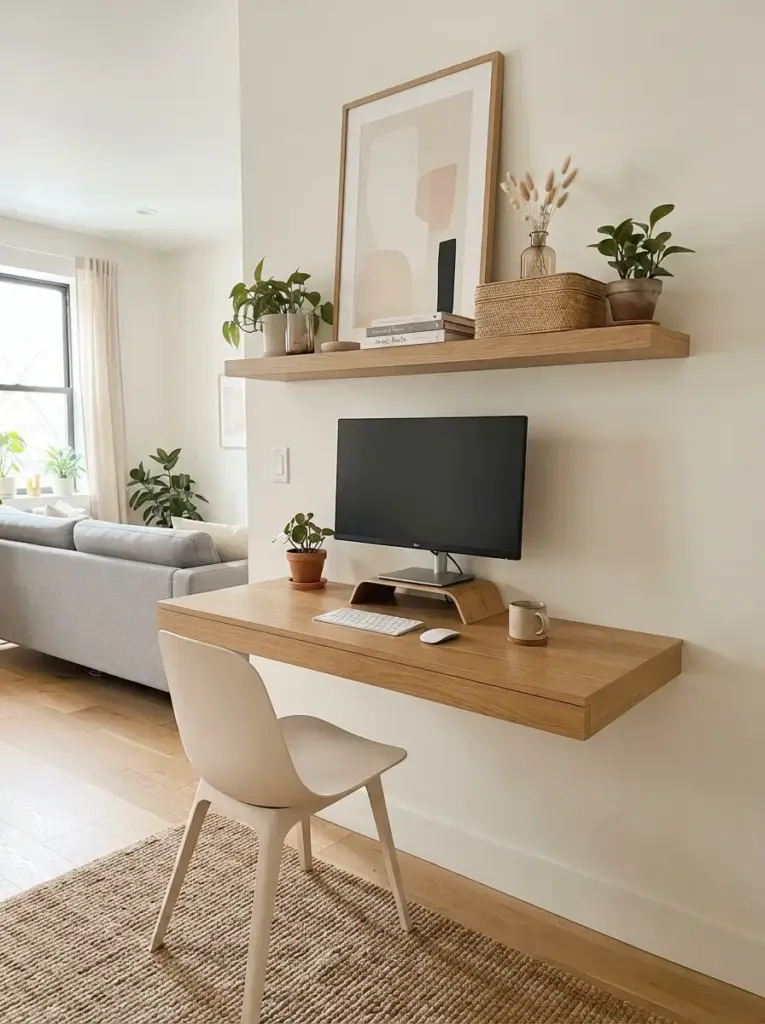
Matching the desk to wall shelves can create the appearance of a custom-built-in without using much floor space. Start with a slim desk, then install shelves that share the same color, wood tone, or edge profile. Repetition helps separate the work zone from the rest of the room while keeping it visually organized.
Design continuity explains why this method feels calm. Related finishes make several small pieces read as one intentional unit. Keep shelf widths equal to or slightly narrower than the desk. Leave enough vertical space for the monitor and use closed boxes for less attractive supplies. Open shelving should combine useful items with a limited number of decorative objects.
Decor lovers who want the workspace to feel integrated with the room will benefit most. Pair light oak with warm white walls, walnut with cream, or matte black with soft gray. Add a single framed print for personality. Avoid mixing several wood tones in a very tight area unless the rest of the room already uses them.
Plan the Workspace Before Buying Furniture
Start by listing every item used during a normal work session. Include the laptop, monitor, keyboard, notebooks, chargers, headphones, and any specialist tools. Measuring the equipment as a group gives a more accurate surface requirement than guessing from room size. It also prevents buying a wide desk for objects that could live on a shelf.
Next, mark the proposed desk footprint with painter’s tape. Add the chair position while tucked in and pulled out, then walk through the room several times. Open nearby doors, drawers, wardrobes, and windows. This simple test reveals conflicts that product photos rarely show and costs nothing to complete.
Consider the view from the apartment entrance and main seating area. A Small Apartment Desk Setup feels calmer when the least attractive elements, including cables and screen backs, are not the first things people see. Turning the desk slightly, choosing a finished monitor back, or adding a low plant can improve the view without blocking light.
Think about noise before choosing the final location. Desks beside kitchens, televisions, building hallways, or shared doors may be difficult to use during calls. Soft furnishings such as curtains, rugs, and upholstered chairs can reduce echo, but they cannot remove every distraction. Headphones help, though a quieter corner is usually the better long-term choice.
Finally, check access to power and the internet. Long extension cords across walkways create clutter and safety problems. Position the desk near an outlet when possible, or route one protected cable along the wall. Wi-Fi strength can also vary across a small apartment, especially near concrete walls, appliances, and enclosed closets.
Review future needs before committing to an installation. Someone using one laptop today may add a monitor, printer, or drawing tablet later. Leave modest cable access and enough strength for likely upgrades, but do not oversize the desk for imaginary equipment. Flexible storage handles change more efficiently than a larger permanent surface.
Common Mistakes to Avoid
Buying a Desk Before Measuring
Room dimensions alone are not enough. Measure the desk area, chair pullout space, nearby doors, drawers, vents, and walking path. Tape the proposed footprint on the floor before ordering furniture. Movement around the chair matters as much as the desk width. A setup can fit technically and still feel uncomfortable if the user must squeeze past it every day.
Choosing Too Much Desk Depth
Deep executive desks rarely suit compact apartments. Extra depth often becomes a landing place for clutter rather than a useful workspace. Laptop users usually need less surface area than they expect. Choose enough room for forearm support and essential equipment, then move storage upward or underneath.
Ignoring Chair Size
Oversized office chairs can consume more room than the desk. Check overall width, armrest height, wheelbase, and how far the chair reclines. Armless or flip-up-arm models tuck away more easily. Comfort still matters, so avoid using a backless stool for full workdays unless standing and sitting periods remain short.
Using Poor Lighting
Dim corners increase eye strain and make the workspace feel neglected. Combine general room lighting with a focused task light. Bulbs around 3500K to 4000K work well for many home offices, while warmer 2700K lighting can remain in the surrounding living area. Avoid bare bulbs that create glare on the screen.
Letting Cables Take Over
Loose cords make a compact workspace look more crowded and can create trip hazards. Use adhesive clips, a cable sleeve, and an under-desk power strip. Label chargers if several devices share the area. Leave enough slack for adjustable monitors and moving desks, but avoid loops hanging onto the floor.
Overdecorating the Work Surface
Decor should support the room, not reduce usable space. One framed photo, plant, or small object may be enough. Large vases, stacked books, and multiple trays can interfere with typing and writing. Keep frequently touched items within reach and move purely decorative pieces to the shelf above.
Budget-Friendly Ways to Improve the Setup
Secondhand furniture can provide better materials at a lower price than many new budget desks. Search for narrow console tables, writing desks, sewing tables, and small dining tables rather than limiting the search to office furniture. Solid wood pieces can often be cleaned, lightly sanded, and sealed for a durable finish.
Simple wall shelves can replace an expensive hutch. Use sturdy brackets and boards cut to the correct width, then paint them to match the wall or desk. Renters who cannot drill can place a narrow freestanding shelf beside the desk, though it should not block the chair path. Reusing matching boxes or baskets creates order without requiring custom organizers.
Lighting upgrades do not need to be costly. A clamp lamp saves surface area, while an LED strip under a shelf can spread light across the desk. Choose a bulb with a high color rendering rating when possible, especially for art, makeup, or material work. Position the light on the opposite side of your writing hand to reduce shadows.
Cable control offers one of the cheapest visual improvements. Reusable ties, adhesive clips, and a basic under-desk tray can make a low-cost desk feel more considered. Mount the power strip under the desktop and route one main cable toward the outlet. Keeping cords off the floor also makes cleaning faster.
Paint and removable wallpaper can define a workstation without buying furniture. A painted rectangle behind the desk, a narrow vertical stripe, or a subtle peel-and-stick panel creates a visual boundary. Choose muted tones that relate to the room, such as sage, warm gray, dusty blue, or clay. Busy patterns may feel overwhelming in very tight spaces.
Small Apartment Desk Setup Tips for Better Daily Use
Daily habits determine whether a Small Apartment Desk Setup remains functional after the first week. Begin by assigning every tool a specific home. Keep only daily essentials on the desktop, store weekly items in a drawer or box, and move rarely used supplies elsewhere. A two-minute reset at the end of each work session prevents small piles from becoming permanent clutter.
Comfort deserves equal attention. Set the chair so that feet rest flat on the floor, elbows stay close to a right angle, and shoulders remain relaxed. Raise a laptop on a stand if needed, then add a separate keyboard and mouse. Small ergonomic changes can improve long work sessions without requiring a larger desk.
Color choices influence how strongly the workstation stands out. Matching the desk to the wall creates a quieter effect, while a darker desk can define a clear zone. Repeating one finish from nearby furniture helps the workspace feel connected. Limit the immediate area to two or three main colors to reduce visual noise.
Lighting should change with the time of day. Daylight can handle much of the work during morning hours, while a focused lamp supports evening tasks. Avoid relying on a bright ceiling fixture alone. Use a warmer lamp nearby after work so the room can return to a relaxed mood.
Storage works best when it follows the frequency of use. Everyday items belong within arm’s reach, weekly items can sit on the nearest shelf, and backup supplies should move to a closet or higher cabinet. Keeping excess stationery at the desk wastes valuable space and makes drawers harder to use.
Frequently Asked Questions
What Is the Best Desk Size for a Small Apartment?
Desk size depends on the equipment and available wall space, but many laptop users work comfortably with a surface between 30 and 42 inches wide and 16 to 24 inches deep. Measure the chair clearance and walking route before deciding. Larger monitors, drawing tablets, or dual-screen setups may need more width.
Where Should a Desk Go in a Studio Apartment?
Unused corners, walls beside windows, space behind the sofa, and shallow niches are strong options. Choose a location that does not interrupt the main path between the entrance, bed, kitchen, and bathroom. Keeping the desk visually connected to nearby furniture also helps the studio feel organized.
How Can a Desk Blend Into a Living Room?
Match one element of the desk area to the room, such as wood tone, wall color, metal finish, or fabric. Use closed storage for paperwork and choose a chair that resembles dining or accent seating. A restrained accessory palette keeps the workstation from looking like a separate commercial office.
Is a Floating Desk Safe for Daily Work?
Properly installed floating desks can support daily work, but safety depends on the wall type, hardware, load rating, and installation quality. Secure the unit to studs or approved anchors and follow the manufacturer’s instructions. Heavy monitors, printers, and leaning pressure require stronger support than a lightweight laptop.
How Do You Hide a Desk in a Small Apartment?
Fold-down cabinets, closet workstations, curtains, folding screens, and closed storage can reduce visibility. Positioning the desk behind a sofa or inside a wall niche also helps. Keeping the desktop clear matters because even an exposed desk can feel unobtrusive when cords and supplies remain controlled.
What Makes a Small Apartment Desk Setup Comfortable?
Correct chair height, enough knee room, a screen near eye level, supportive lighting, and clear forearm space all contribute to comfort. A well-planned Small Apartment Desk Setup should also allow the chair to move easily and should not block doors, vents, or daily walking routes.
Conclusion
Smart space planning can create a useful workstation in almost any apartment. Slim desks, floating surfaces, closet offices, corner layouts, mobile carts, and vertical storage all reduce the amount of floor space devoted to work. The strongest choice depends on your equipment, schedule, rental rules, and room layout.
Successful results come from measuring carefully, limiting clutter, and choosing furniture that supports more than one purpose. A thoughtful Small Apartment Desk Setup can improve focus without making the home feel like an office. Start with the smallest practical surface, solve lighting and cable control early, and leave enough open space for the room to remain comfortable.