
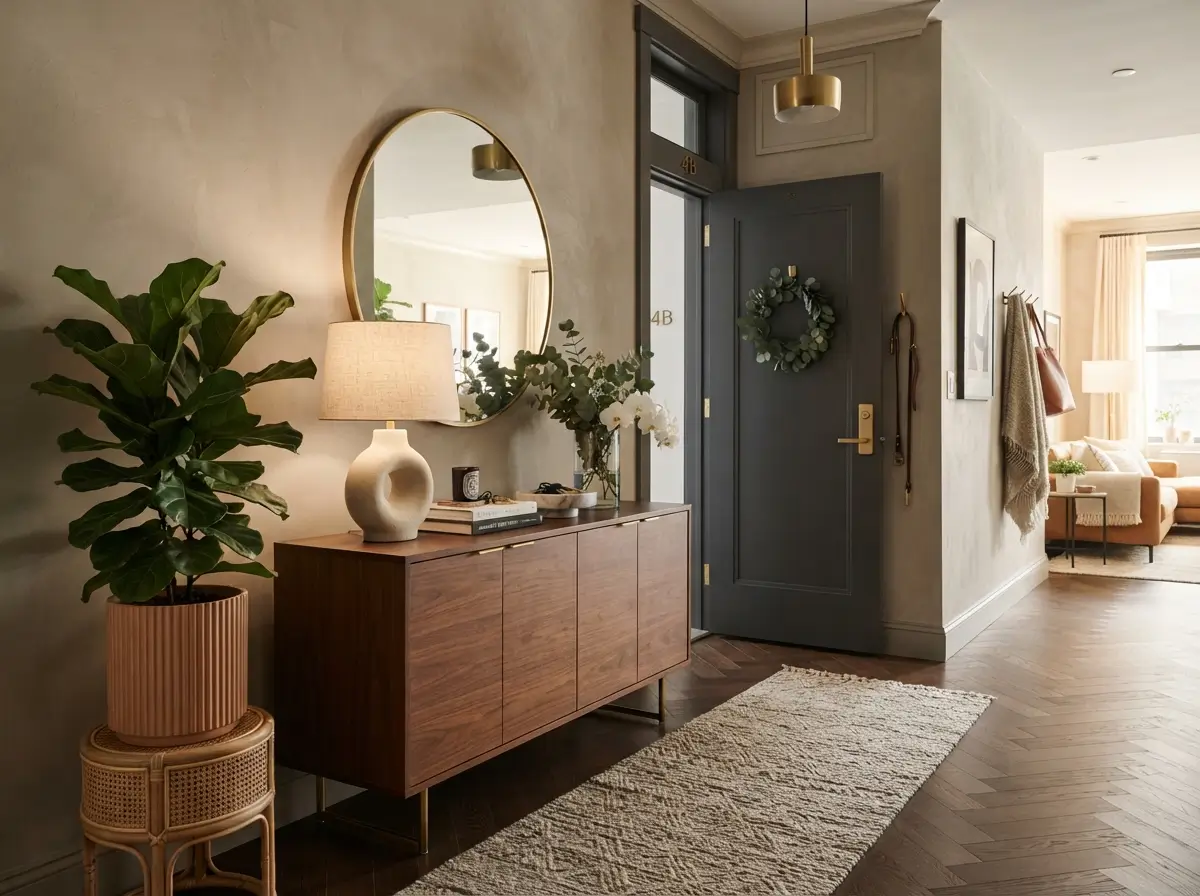

Apartment entrances receive less attention than living rooms or bedrooms, yet they shape the first impression of the entire home. Limited floor space, rental restrictions, poor lighting, and door placement can make decorating difficult. Thoughtful choices can turn a narrow entry into a welcoming area. Trendy Apartment Entrance Decor is not about filling every corner with expensive pieces. Strong results come from choosing the right scale, creating visual order, improving light, and using materials that appear refined without making the space impractical.
Premium style also depends on how well the entrance supports daily routines. Keys need a clear home, shoes should not block the walkway, and bags should remain easy to reach. Decorative details work best after those practical needs are solved. The ideas below explain how to balance storage, lighting, furniture, color, and personality in a small apartment entrance. Each suggestion includes realistic measurements, rental-friendly options, budget alternatives, and mistakes that can make an entry feel crowded or unfinished.
What Makes an Apartment Entrance Feel Premium?
Good design creates a premium impression through proportion, consistency, clean lines, and controlled contrast. Trendy Apartment Entrance Decor usually combines one useful furniture piece, one strong visual feature, layered lighting, and a limited color palette. Expensive materials are not essential. A narrow console with neat hardware, a well-sized mirror, a washable runner, and warm lighting can look more considered than several costly objects placed without a plan.
Could a tiny apartment entrance still look luxurious?
Yes. Small entrances often benefit from stronger editing because every item becomes visible. Keeping the floor clear, repeating two or three finishes, hiding everyday clutter, and selecting decor that fits the available wall width can make a compact entry feel intentional. Premium results come from restraint, not size.
Choose a Slim Console with Clean Lines
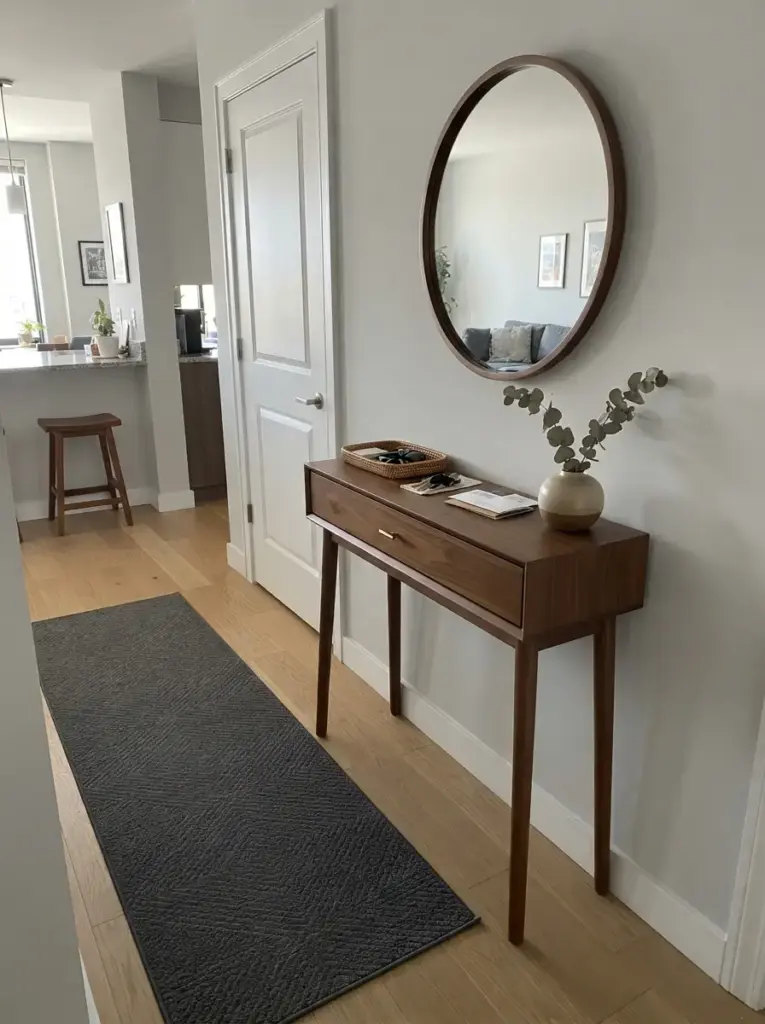
Narrow consoles create a useful landing zone without taking over the walkway. Look for a depth between 8 and 12 inches in a tight entry. Wider models may work in an open foyer, but they can make a hallway entrance difficult to pass. Designs with straight legs, a floating profile, or one shallow drawer usually feel lighter than bulky cabinets. Walnut, black oak, warm white, and medium-toned wood finishes suit many current interiors. Match the finish to something already visible nearby, such as the flooring, kitchen stools, or living room shelves, so the entrance feels connected to the rest of the apartment.
Slim furniture works because it gives small objects a clear destination while preserving movement. Keys, sunglasses, mail, and a small tray can sit near the door instead of spreading across the kitchen counter. This idea is best for renters with an unused wall beside the entrance or anyone who wants a formal entry without adding heavy storage. Use felt pads under the legs and secure taller pieces with removable anti-tip straps when allowed. Avoid choosing a console based only on appearance. Measure the door swing, walking path, and nearby closet clearance before buying.
Add an Oversized Mirror in the Right Proportion
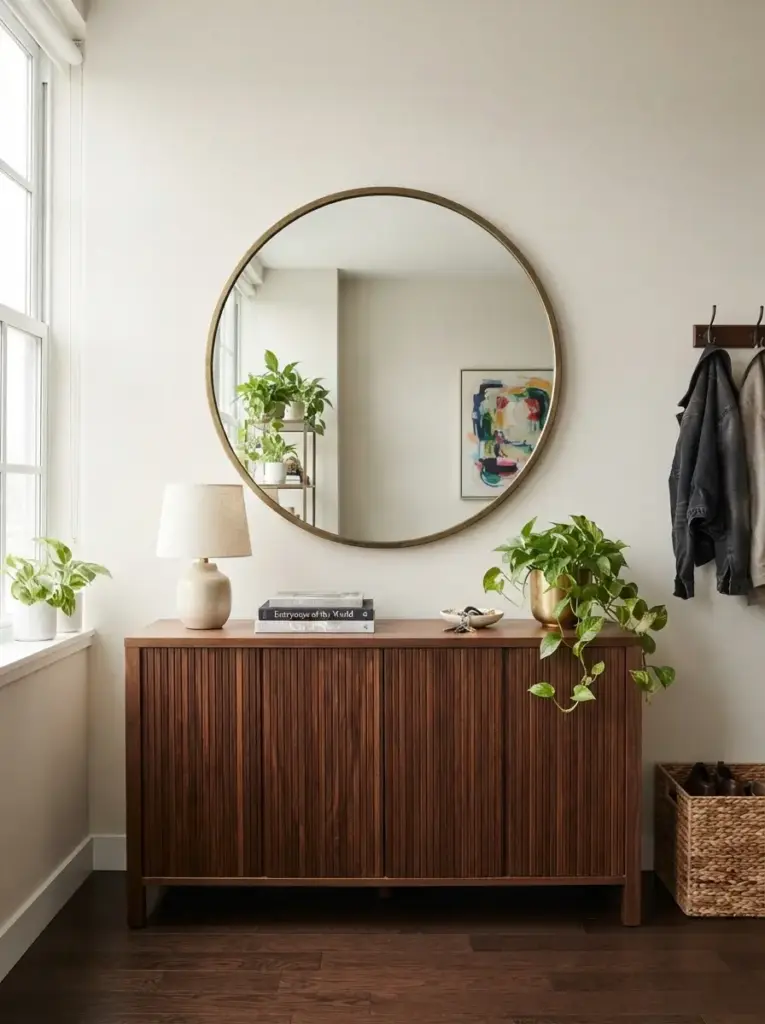
Mirrors make entrances brighter by reflecting light from nearby windows, lamps, and open rooms. Choose a size that relates to the furniture below it. A mirror measuring about two-thirds to three-quarters of the console width often looks balanced. Round mirrors soften boxy architecture, while arched mirrors add height and suit modern, transitional, or contemporary spaces. Rectangular mirrors with thin metal frames create a sharper, more tailored effect. Black, aged brass, dark bronze, and warm wood are versatile frame choices because they coordinate easily with door hardware and lighting.
Visual expansion is the main reason this approach succeeds. The reflected view can make a narrow entrance feel less enclosed, but placement matters. Position the mirror where it reflects a tidy room, artwork, or natural light rather than a shoe pile or utility closet. People who live in studios, darker rentals, or apartments with windowless hallways will gain the most from this upgrade. Hang the mirror so its center sits around eye level, usually near 57 to 60 inches from the floor, then adjust for household height and furniture placement.
Use a Runner That Defines the Entry Zone
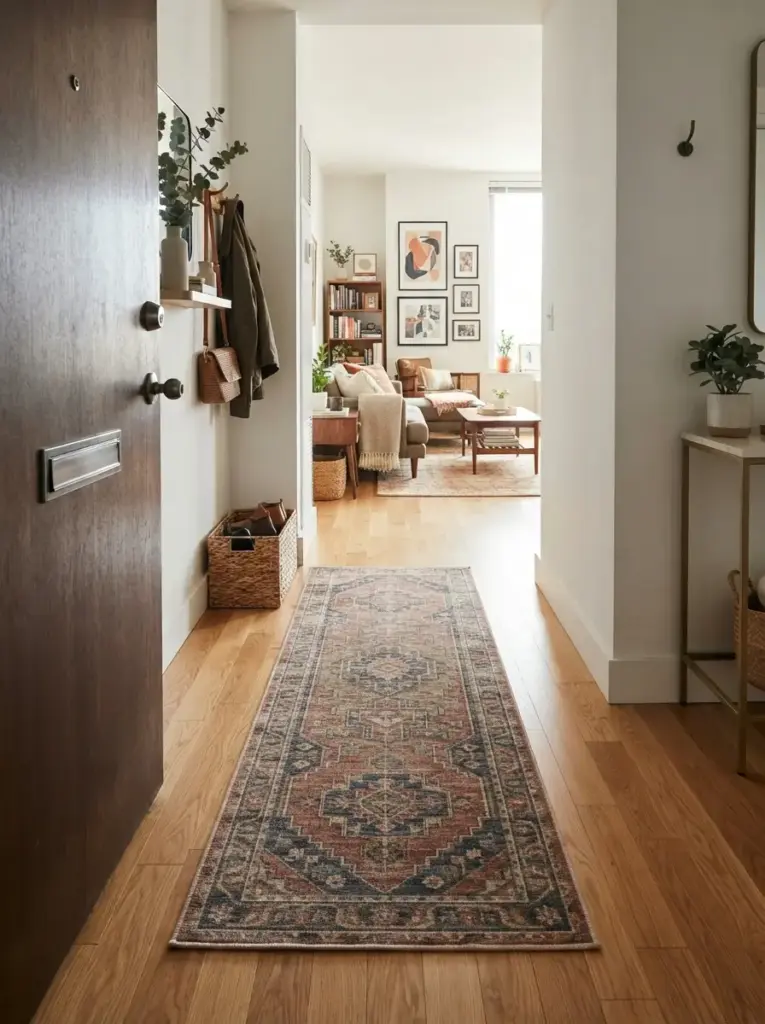
Runners help separate the entrance from the rest of an open apartment, especially when the door opens directly into a living area. Choose a rug that leaves a visible border of flooring around it instead of covering the entire path. Common sizes such as 2 by 6 feet or 2.5 by 8 feet suit many apartment hallways, but measuring is essential. Door clearance should also guide the pile height. Low-pile, flat-woven, or washable rugs usually work better than thick wool styles near doors because they reduce catching, curling, and trapped dirt.
The zone definition gives this idea its strength. A runner creates a clear starting point for the home and guides the eye inward. It is especially useful for open-plan apartments, long hallways, and rentals where walls cannot be painted. Choose patterns that can hide everyday marks, such as muted stripes, small geometrics, vintage-inspired motifs, or irregular tonal designs. Rust, navy, olive, sand, charcoal, and faded terracotta work well with common apartment flooring. Very pale cream rugs can look refined but require more frequent cleaning near an exterior door.
Install Warm Layered Lighting
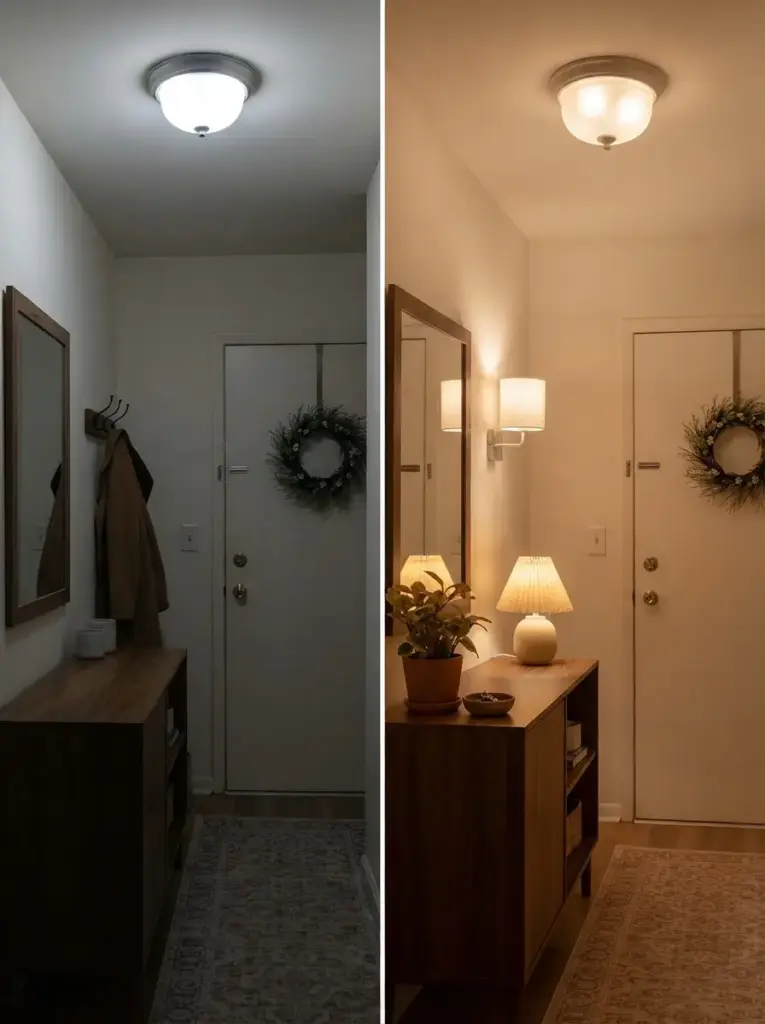
Many apartment entrances rely on one harsh ceiling fixture. Replacing or supplementing that light can immediately improve the atmosphere. Warm white bulbs between 2700K and 3000K usually flatter wood, skin tones, and neutral paint. Use a ceiling light for general visibility, then add a small table lamp, rechargeable wall sconce, or plug-in picture light for softer evening illumination. Layered light helps the entrance feel welcoming while making practical tasks, such as finding keys or checking a coat, easier.
Lighting creates depth by producing more than one level of brightness. Trendy Apartment Entrance Decor feels more refined when the eye notices gentle pools of light instead of one flat overhead source. This method is best for windowless foyers, long corridors, and apartments with builder-grade fixtures. Renters can use rechargeable sconces with magnetic mounts or plug-in lamps that do not require electrical work. Look for simple shades in linen, opal glass, pleated fabric, or frosted acrylic to diffuse glare.
Create a Built-In Effect with Freestanding Storage
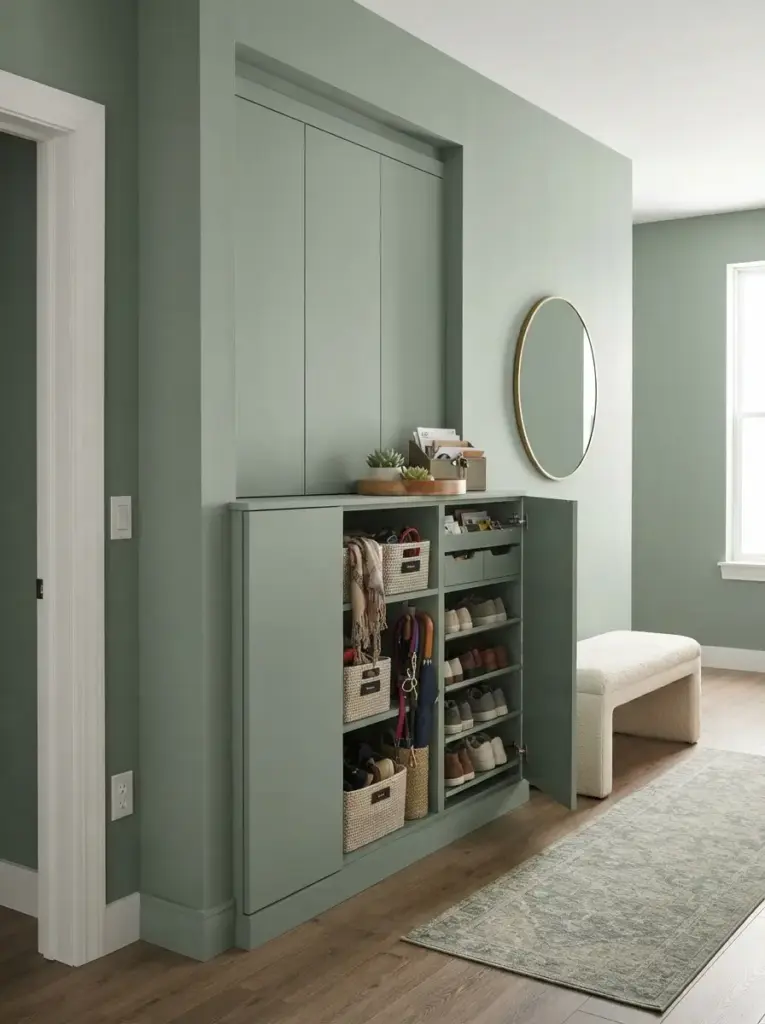
Freestanding cabinets can look custom when their dimensions closely match the wall or niche. Choose a narrow shoe cabinet, closed console, or tall unit with flat fronts and minimal hardware. Leave enough clearance for baseboards, outlets, and door trim. Paintable furniture can be matched to the wall color for a seamless appearance. Soft white, taupe, warm gray, deep green, and muted blue are strong choices because they feel settled rather than temporary.
The built-in effect works by reducing visual breaks. When storage blends with the surrounding wall, the entrance appears calmer and more architectural. This approach is useful for families, shoe collectors, and anyone whose entry quickly gathers clutter. Closed storage also supports Trendy Apartment Entrance Decor by keeping practical items accessible without making them part of the display. Use labeled baskets or shallow drawer dividers inside so the cabinet remains organized after the doors close.
Style a Bench Without Crowding the Walkway
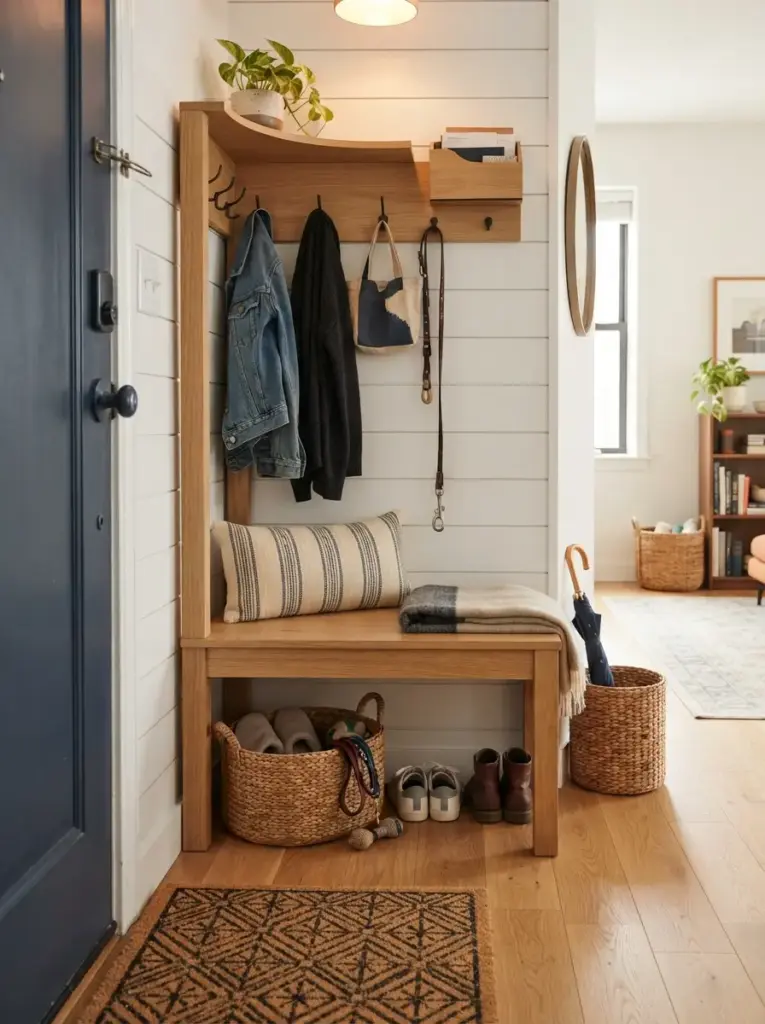
Benches make it easier to put on shoes, set down groceries, or help children get ready. Small apartments need careful sizing. Look for a depth of 12 to 16 inches and a width that leaves comfortable passage beside it. Backless designs appear lighter and can slide beneath hooks or shelves. Upholstered benches provide softness, while wood, metal, or woven styles handle heavier daily use. Choose a seat height of around 17 to 19 inches for comfortable use by most adults.
Practical comfort explains the appeal. Seating gives the entrance a purpose beyond decoration and reduces the chance of shoes being worn into the living space. Couples, families, older adults, and people who frequently change footwear near the door will find it especially useful. Place one basket under the bench for slippers, pet supplies, or seasonal accessories. Keep the top mostly clear so the seat remains usable. One narrow cushion can add color without turning the bench into another display shelf.
Build a Coordinated Wall Hook Station
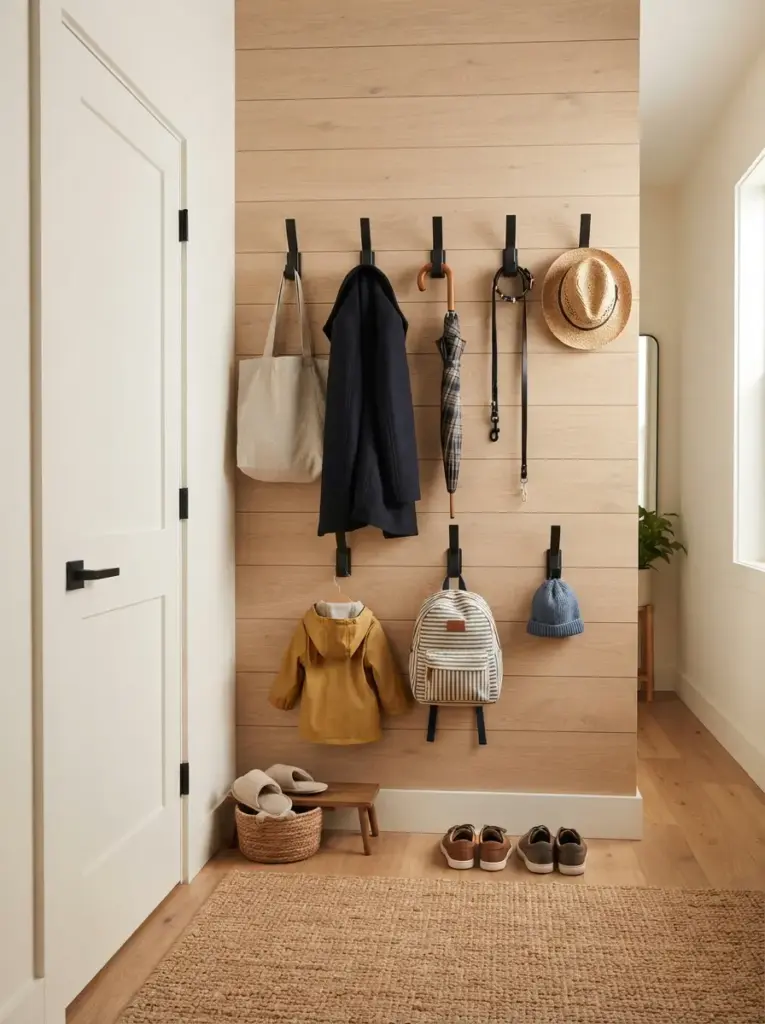
Wall hooks solve storage problems without using much floor area. A coordinated row can hold coats, bags, umbrellas, dog leashes, and hats while keeping them visible. Choose hooks with enough projection for the items you use, but avoid oversized styles near shoulder height in narrow halls. Brushed nickel, matte black, aged brass, wood pegs, and leather loops can all feel polished when repeated consistently. Mount hooks into studs or use anchors rated for the expected weight.
Order is what makes the feature feel intentional. Random hooks installed at different heights can look temporary, while a measured line creates rhythm. This idea is best for apartments without an entry closet, busy households, and renters who need vertical storage. Adults usually need hooks around 60 to 68 inches high, while lower hooks can help children reach their own belongings. Leave enough distance from the door so coats do not interfere with opening and closing.
Use One Large Artwork Instead of Many Small Pieces
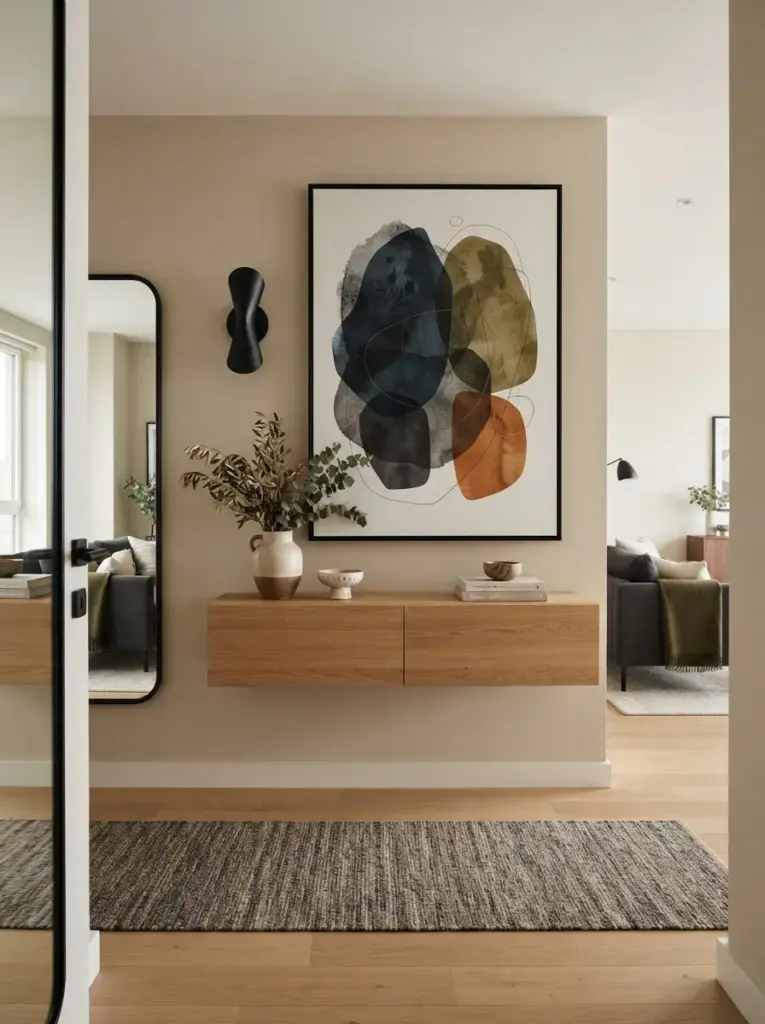
One substantial artwork can make an entrance feel more confident than a collection of small frames. Choose a piece that fills roughly two-thirds of the available wall width and relates to the nearby furniture. Abstract prints, architectural photography, textile art, graphic landscapes, and restrained botanical works can all suit a premium entrance. Frames in black, oak, walnut, antique brass, or painted wood create a finished edge and connect the artwork to other materials in the space.
Scale gives the design authority. Larger artwork reduces visual noise and provides a focal point that can be understood from the doorway. People with narrow entries, open-plan homes, or limited time for styling will appreciate the simplicity. Select colors already present in the apartment, then introduce one darker or richer accent to create depth. For example, an entry with beige walls and oak flooring could use art containing olive, rust, ink blue, or charcoal.
Introduce Texture Through Natural Materials
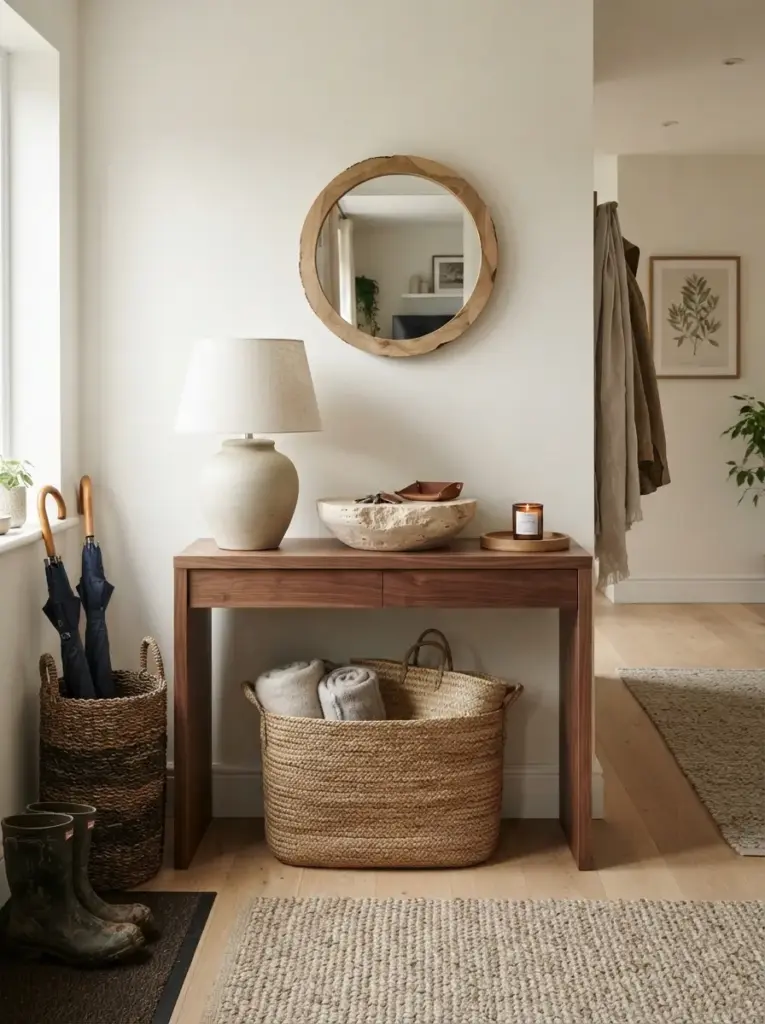
Natural texture keeps a neutral entrance from feeling flat. Woven baskets, oak trays, linen lampshades, stone bowls, jute details, ceramic vases, and leather catchalls add depth without relying on bold color. Limit the number of materials so the space remains cohesive. Three textures are often enough in a small area. For example, combine a walnut console, a woven basket, and a matte ceramic lamp rather than adding rattan, marble, velvet, metal, glass, and boucle all at once.
Tactile contrast makes simple colors appear richer. Smooth paint looks more considered beside rough wood, woven fiber, or honed stone. Minimalists, neutral-home lovers, and renters who cannot change finishes will benefit most from this approach. Natural materials also age more gracefully than many highly glossy accessories. Use sealed baskets near wet umbrellas or muddy shoes, since untreated fibers can absorb moisture and develop stains.
Repeat Metal Finishes for a Cohesive Look
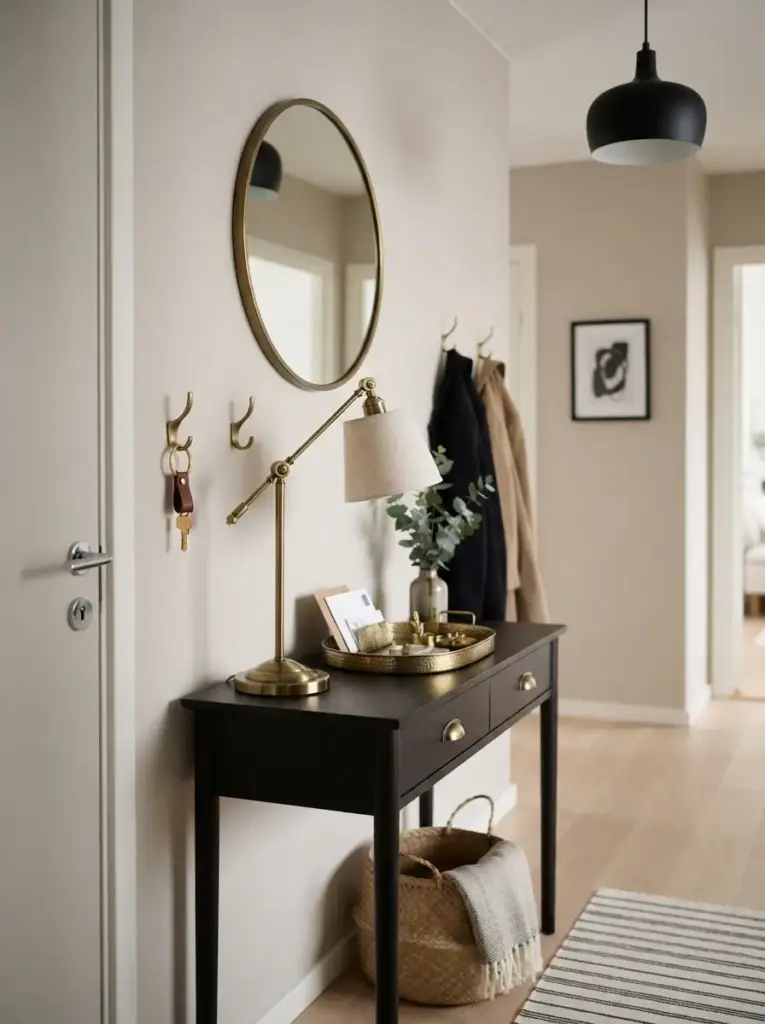
Repeating one main metal finish makes separate pieces feel related. Door hardware, mirror frames, lamp bases, hooks, trays, and cabinet pulls do not need to match perfectly, but they should share a similar undertone. Warm metals include brass, bronze, and champagne finishes. Cooler options include chrome, polished nickel, and stainless steel. Matte black can act as a neutral and works particularly well with modern doors, pale walls, and wood furniture.
Consistency creates a quiet sense of quality. Trendy Apartment Entrance Decor often looks expensive because the details appear planned, not because every object costs more. This method suits beginners who feel unsure about mixing decor. Choose one dominant metal for about two-thirds of the visible hardware, then allow one secondary finish in smaller amounts. For example, use aged brass hooks and a brass lamp, then keep the existing silver door handle without adding more silver accessories.
Paint or Wrap the Interior Door
The inside of the entrance door offers a large surface that can add character. Paint it in a deeper shade than the walls, such as charcoal, forest green, oxblood, navy, clay, or warm black. A satin or semi-gloss finish is easier to wipe than flat paint and highlights the door profile. Renters who cannot paint may use removable vinyl on smooth, suitable surfaces, though testing a hidden area first is important.
Color blocking works because the door becomes an intentional focal point instead of a builder-grade background. This option is best for apartments with plain white walls, limited art space, or a door visible from the living room. Repeat the door color in one or two small objects, such as a runner pattern, artwork detail, or bowl. That repetition prevents the strong color from feeling isolated.
Preparation determines the result. Clean grease and dust, lightly sand when appropriate, use bonding primer, and allow enough drying time between coats. Budget decorators gain a large visual change from a small amount of paint. Avoid very bright colors unless they connect to the rest of the apartment. Also, avoid covering peepholes, locks, weather stripping, safety labels, or moving parts. Rental agreements may require the original color to be restored before moving out.
Add a Small Shelf Above the Drop Zone
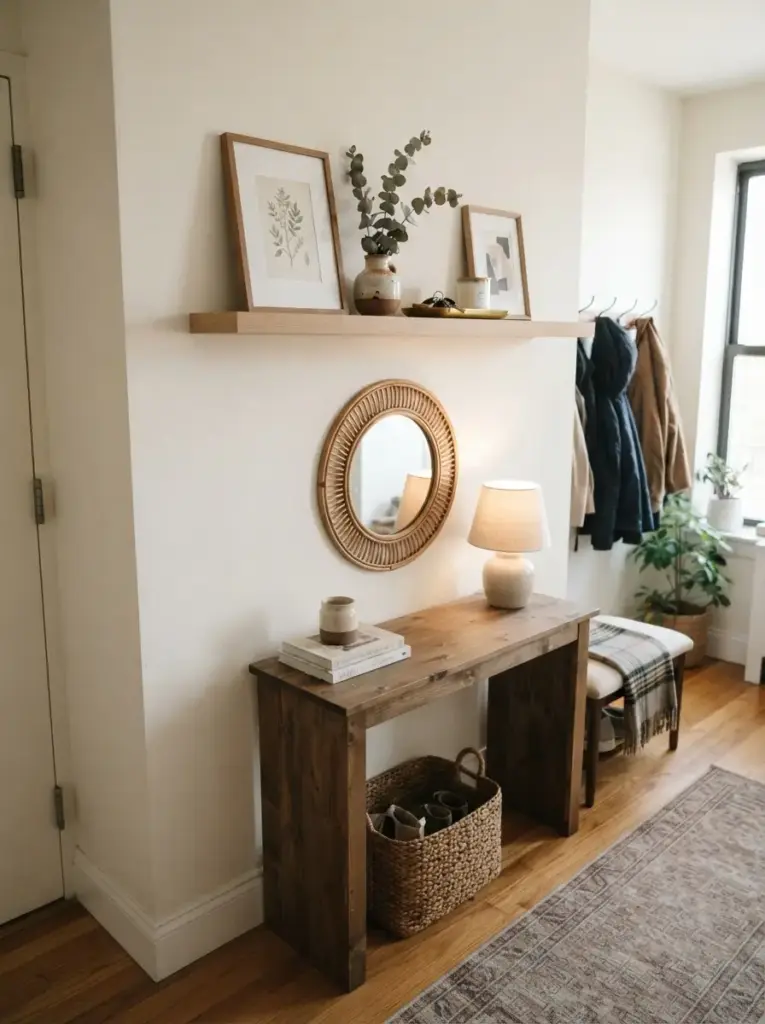
Shallow shelving can provide display and storage without using valuable floor space. Install it above a console, bench, or radiator-free wall. Depths between 4 and 8 inches work well for framed art, a small lamp, a tray, or seasonal accessories. Align the shelf with the furniture below or center it within a wall section. Floating shelves feel clean, while bracketed shelves can introduce traditional or industrial character.
Vertical layering makes the entrance feel complete. The shelf connects lower furniture to the upper wall and creates a place for personality. It works best for tiny apartments, studio entrances, and homes where a full cabinet would feel heavy. Keep the objects varied in height but limited in number. One leaning frame, one small vessel, and one practical container can be enough. Leave open space around each item so the shelf does not resemble crowded kitchen storage.
Renters can use a freestanding ladder shelf if wall mounting is not allowed, but the footprint must remain narrow. Adhesive picture ledges are suitable only when the manufacturer approves the surface and weight. Budget-friendly unfinished wood shelves can be stained to match existing furniture. Avoid placing fragile objects above a seating area or directly beside a door that slams. Secure frames with small museum putty dots to reduce shifting.
Add Greenery That Can Handle Entry Conditions
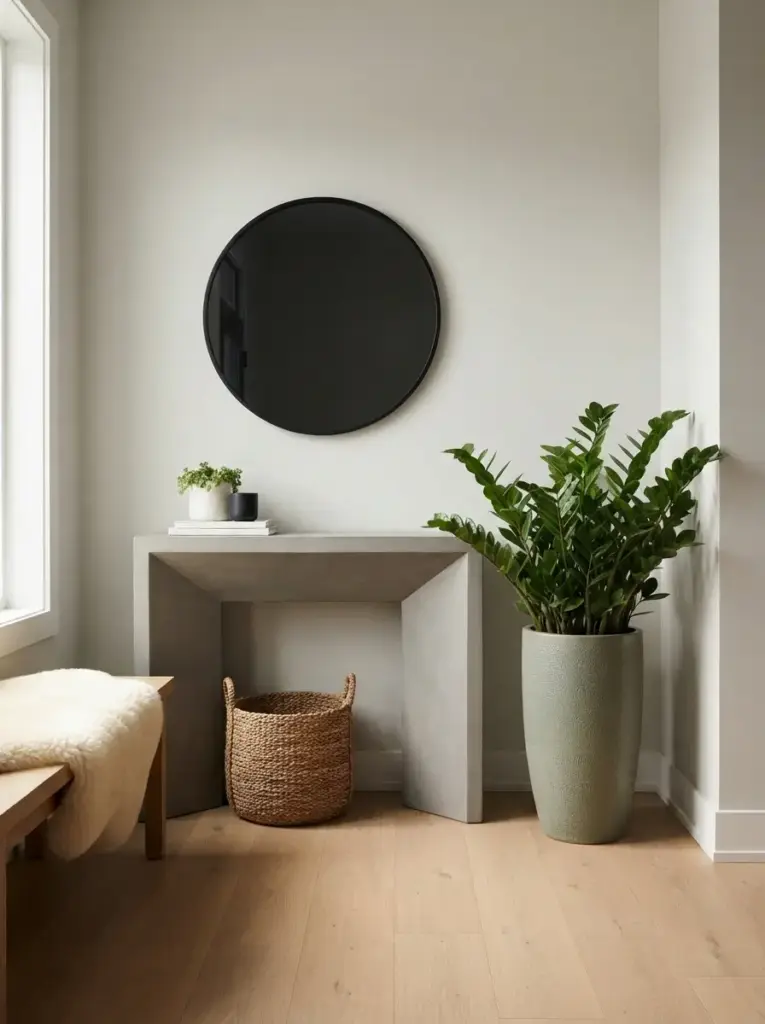
Plants can soften hard surfaces, but entrance conditions are often challenging. Low light, temperature changes, and drafts may limit the choices. Snake plants, ZZ plants, cast iron plants, and certain pothos varieties tolerate lower light better than many decorative species, though every plant still needs appropriate care. Artificial greenery can be practical when the entrance receives no daylight, especially if the leaves have realistic variation and a matte finish.
Organic shape balances straight furniture and architectural lines. Greenery gives the eye a softer form and can make a small entrance feel less rigid. Plant lovers, neutral decorators, and apartments with many hard finishes will benefit most. Choose one medium plant rather than several tiny pots. A floor plant can fill an awkward corner, while a trailing plant works on a high shelf where it will not catch on coats or bags.
Use a waterproof saucer and avoid placing live plants directly against cold glass or heating vents. Budget options include propagating a pothos cutting or using one branch in a tall vase. Keep scale in mind; a large floor planter can reduce door clearance and collect dirt. Dust leaves regularly because entryways gather outdoor particles. Dying plants create the opposite of a premium impression, so choose low-maintenance species honestly suited to your light level.
Create a Discreet Charging and Key Station
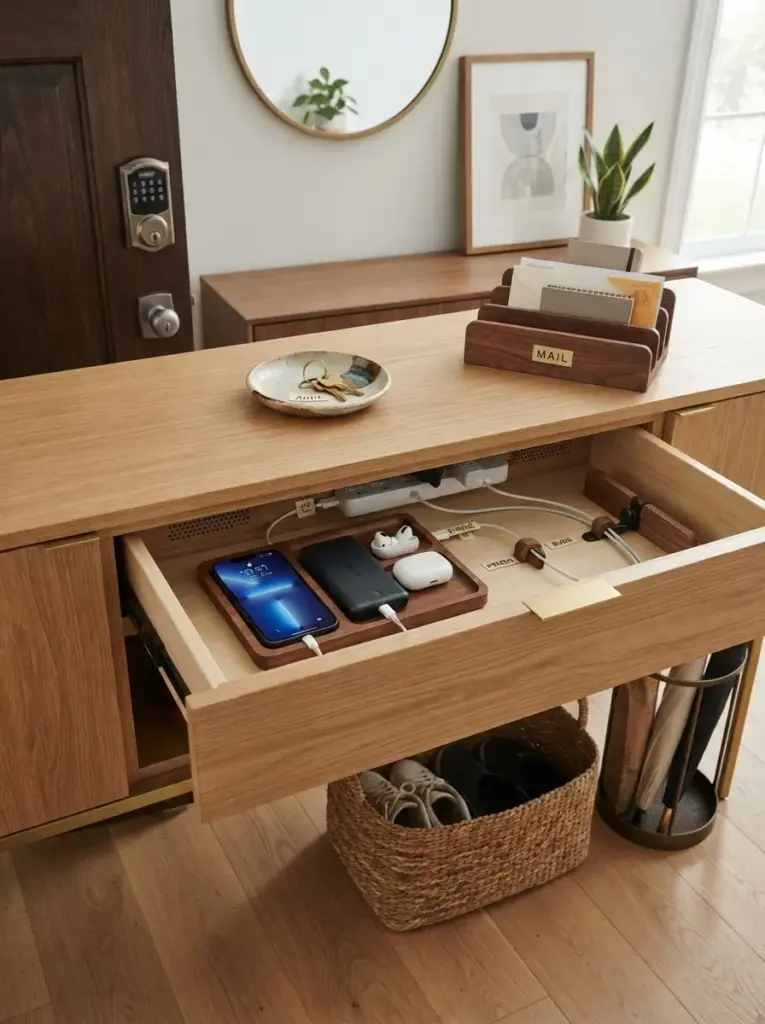
Modern entrances often need to manage phones, earbuds, smart locks, and portable chargers. A discreet charging station prevents visible cables from weakening the design. Place a compact charging tray inside a drawer, route a cable through the back of a console, or use a small lidded box designed for cord management. Add a shallow dish for keys and a separate slot for mail that needs action.
Hidden technology supports a cleaner visual field. The entrance feels calm because essential devices remain ready without becoming the main feature. Busy professionals, shared apartments, and households using several rechargeable items will find this idea especially useful. Keep the station close to an outlet but away from wet umbrellas or damp shoes. Label chargers inside the drawer so they do not become tangled.
Budget solutions include a wooden box with a carefully cut cable opening or a repurposed desk organizer placed inside a drawer. Use cord clips to guide cables along the furniture back. Avoid overloading outlets or using damaged extension leads. Heat-producing chargers need ventilation, so do not seal them in an airtight container. Practical technology should stay safe, organized, and easy to access.
Finish with a Signature Scent and Controlled Styling
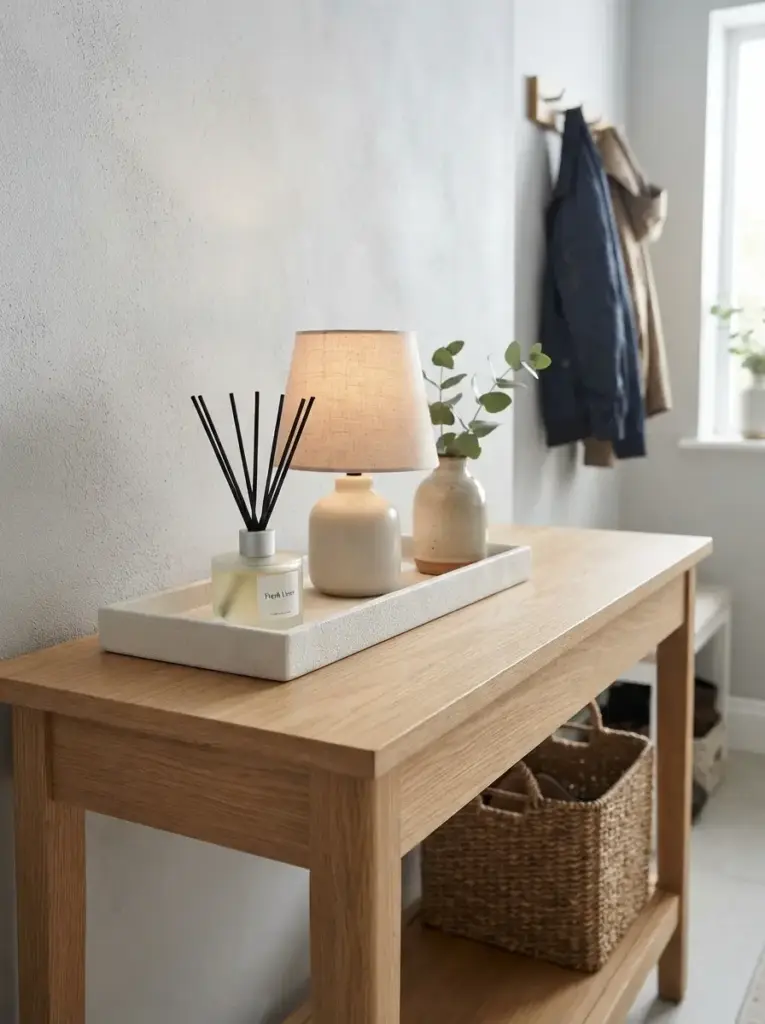
Scent contributes to the entrance experience, but restraint matters. Reed diffusers, wax warmers, candles, and room sprays can create a recognizable atmosphere. Fresh woods, citrus, tea, fig, light amber, or clean linen notes often suit entrances because they feel noticeable without becoming heavy. Use one scent source at a time and place it where it will not spill when bags or coats move past.
Sensory consistency makes the area memorable. Scent works best after the entrance is clean, ventilated, and free from shoe odor or damp textiles. Hosts, pet owners, and anyone who enjoys a polished arrival experience may appreciate this finishing layer. Combine fragrance with a tightly edited surface arrangement. A tray, a small lamp, and one vase usually feel more premium than a row of unrelated ornaments.
Budget-friendly reed diffusers can be decanted into a simple glass vessel, but keep the original label and safety instructions. Never place open flames near coats, paper, curtains, or a busy doorway. Strong fragrance can bother guests, children, or pets, so choose a light concentration. Styling should not interfere with the daily drop zone. Leave enough empty surface for a phone, package, or handbag when entering the home.
Common Apartment Entrance Decor Mistakes to Avoid
Overfilling the entrance is the most common mistake. Small spaces cannot support the same number of objects as large foyers. Consoles, benches, coat racks, baskets, floor plants, and umbrella stands may all look useful separately, but together they can narrow the route and create visual stress. Start with the single biggest daily problem, such as shoe storage or poor lighting, then solve it before adding decoration. Walk through the entrance carrying groceries to test whether the layout still feels comfortable.
Choosing furniture without measuring also leads to expensive errors. Door swings, baseboards, outlets, thermostats, and closet doors reduce usable space. Mark furniture dimensions on the floor with painter’s tape before ordering. Include handle depth and drawer clearance, not only the main cabinet body. An entrance should ideally preserve a clear route wide enough for regular movement, mobility needs, luggage, and deliveries.
Poor scale can make good pieces look wrong. Tiny art above a long console feels disconnected, while an oversized mirror may crowd the door trim. Decorative items should relate to the wall and furniture beneath them. Group smaller objects on one tray instead of spreading them across the entire surface. Negative space is part of the composition and helps premium details stand out.
Mismatched lighting temperatures create another problem. Cool blue ceiling bulbs can clash with warm lamps and make wood or beige paint look dull. Use bulbs in the same 2700K to 3000K range unless the apartment has a deliberate cooler lighting plan. Check brightness as well. A small entry usually needs enough light for safety but not the intensity of a kitchen workspace.
Ignoring maintenance can quickly weaken the result. White rugs, open shoe racks, delicate baskets, and high-gloss surfaces may require more care than expected. Choose washable, wipeable, and durable materials near the door. Homes with pets or children often need darker patterns and closed storage. Premium design should remain attractive during ordinary weeks, not only after a full cleaning session.
Budget-Friendly Ways to Upgrade an Apartment Entrance
Paint offers one of the largest changes for the lowest cost. A small section of wall, the interior door, or a basic console can become a feature with a quart of paint. Deep colors often make inexpensive furniture feel more substantial, while warm neutrals help mismatched items blend. Test samples in daytime and evening light before committing. Rental homes may require repainting later, so confirm the lease terms and keep the original color information.
Hardware changes can also improve simple furniture. Replace small plastic knobs with longer metal pulls, wood handles, or leather tabs. Measure the existing screw spacing before shopping to avoid drilling new holes. Matching the new hardware to a mirror frame or lamp base creates a more coordinated appearance. Store the original knobs in a labeled bag for future moves.
Secondhand shopping works especially well for entrance pieces because consoles, mirrors, and benches are common resale items. Focus on solid construction and useful dimensions rather than the current finish. Scratches can be sanded, paint can be changed, and fabric seats can be recovered. Avoid pieces with strong odors, unstable joints, or swelling from moisture. A good frame is more valuable than a fashionable finish.
Printable art and thrifted frames can create a large focal point without a gallery price. Choose a digital file sized for common frame dimensions, print it on matte paper, and add a wide mat. Matching several small frames with the same paint color can also create a unified set. Keep the arrangement simple enough to install accurately.
Small upgrades gain more impact when the entrance is decluttered first. Remove unused shoes, expired coupons, broken umbrellas, and bags that belong elsewhere. Clean the door, baseboards, switches, and floor before styling. Fresh caulk, tightened screws, and a washed rug can improve the space without buying anything. Spend money only after the basic conditions and organization are handled.
Practical Trendy Apartment Entrance Decor Tips
Start with a simple plan based on movement. Stand outside the apartment, open the door, and notice where your eyes land first. That wall or corner should hold the strongest feature, such as a mirror, artwork, or colored door. Next, watch where keys, shoes, bags, and mail naturally collect. Storage works better when it follows real habits instead of forcing a decorative routine that no one maintains.
Choose a limited palette before shopping. Trendy Apartment Entrance Decor usually feels calmer when it uses one main neutral, one wood tone, one metal finish, and one accent color. For example, warm white walls, walnut furniture, aged brass details, and olive textiles create a cohesive entrance. Another option is pale gray, black metal, light oak, and rust. Repeating these finishes in nearby rooms helps the apartment feel larger and more connected.
Prioritize the floor and lighting because they affect the whole entrance. A secure runner and warm layered light provide both comfort and structure. Furniture and accessories can then support those foundations. Renters who cannot change fixtures can use plug-in lamps, rechargeable sconces, removable hooks, and washable rugs. Focus on elements that move easily to a future home.
Edit seasonally instead of adding continuously. Store heavy coats, extra umbrellas, and winter boots when they are not needed. Replace them with lighter items rather than layering new decor on top. Seasonal editing keeps hooks, benches, and shelves functional. One small branch arrangement or textile change is often enough to refresh the entrance.
Photograph the finished space from the doorway. Photos reveal crooked art, crowded surfaces, exposed cords, and uneven spacing that may be hard to notice in person. Make small adjustments rather than buying more. Moving a lamp, lowering a mirror, or removing two objects often improves the design more than adding another accessory.
Frequently Asked Questions
How can I make a small apartment entrance look expensive?
Use fewer, better-scaled pieces and repeat finishes. A slim console, large mirror, warm lamp, closed storage, and low-pile runner can create a refined result. Keep surfaces mostly clear and hide cords, shoes, and mail. Expensive materials are optional, but accurate measuring and consistent color choices are essential.
What colors work best for a modern apartment entrance?
Warm white, mushroom, taupe, soft gray, olive, charcoal, navy, rust, and medium wood tones work well in many apartments. Light colors can open a narrow area, while darker accents add depth. Select colors that already appear in the adjoining room so the entrance does not feel disconnected.
How should renters decorate an entrance without damaging the walls?
Use freestanding furniture, over-door storage, removable hooks rated for the surface, rechargeable lighting, leaning artwork secured against tipping, and washable runners. Test adhesive products in a hidden spot and follow weight limits. Keep original hardware and confirm lease rules before painting or drilling.
What furniture is best for a narrow apartment entryway?
Furniture between 8 and 12 inches deep is often suitable for very narrow entrances. Slim consoles, shallow shoe cabinets, wall-mounted shelves, and backless benches are practical options. Measure the door swing and walking path before buying, then mark the footprint with painter’s tape.
How much decor should go on an entrance console?
Three to five items are usually enough, depending on console length. Use one lamp or tall object, one tray for daily essentials, and one decorative piece. Leave open space for temporary items such as a package or a handbag. Several tiny accessories often make the surface feel cluttered.
Can these entrance ideas work on a small budget?
Yes. Paint, secondhand furniture, upgraded hardware, printable artwork, thrifted frames, washable runners, and rechargeable lamps can produce a polished result. Spend first on scale, organization, and lighting. Small coordinated upgrades usually look better than many unrelated purchases.
Conclusion
Apartment entrances feel premium when every item has a clear role. Good scale keeps the path open, closed storage controls clutter, warm lighting improves comfort, and repeated finishes create consistency. Renters can achieve strong results through removable hardware, freestanding pieces, textiles, mirrors, and portable lamps. Budget-conscious decorators can rely on paint, secondhand furniture, simple hardware changes, and careful editing.
Successful Trendy Apartment Entrance Decor supports both appearance and routine. Measure before buying, choose materials that handle daily wear, and focus on one strong focal point rather than many small distractions. A narrow hallway or door-side wall can still become a welcoming introduction to the home when storage, lighting, color, and movement are planned together.