
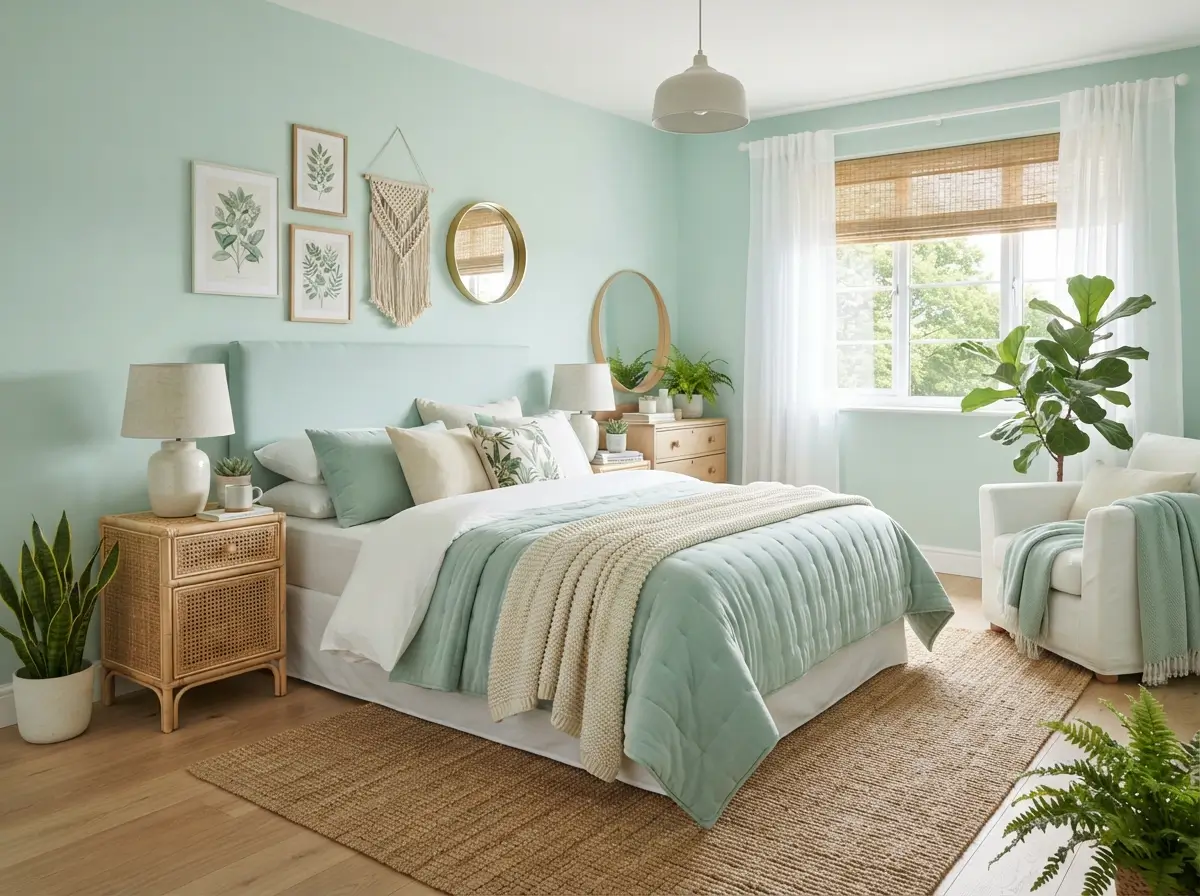

Soft mint can make a bedroom feel brighter, cleaner, and more restful without turning the room cold or overly sweet. Good results come from balance, not from covering every wall and surface in green. A Fresh Mint Bedroom works best when mint supports the room rather than dominates it. Warm whites, natural wood, soft fabrics, and practical storage keep the color grounded. Beginners can start with one wall, new bedding, or a few small accessories before making bigger changes. Renters can use removable wallpaper, fabric panels, and peel-and-stick details to create the same effect without permanent work.
Can Mint Green Help a Bedroom Feel More Relaxing?
Yes. Mint sits between green and blue, so it can feel fresh while still supporting a calm sleep setting. The strongest Fresh Mint Bedroom schemes pair muted mint with warm neutrals, layered lighting, and simple furniture. Bright neon mint can feel energetic, while dusty or gray-based mint feels softer at night. Choose the shade by testing samples beside your flooring, curtains, and bedding during both daylight and evening light.
15 Practical Mint Bedroom Ideas
Paint One Mint Accent Wall
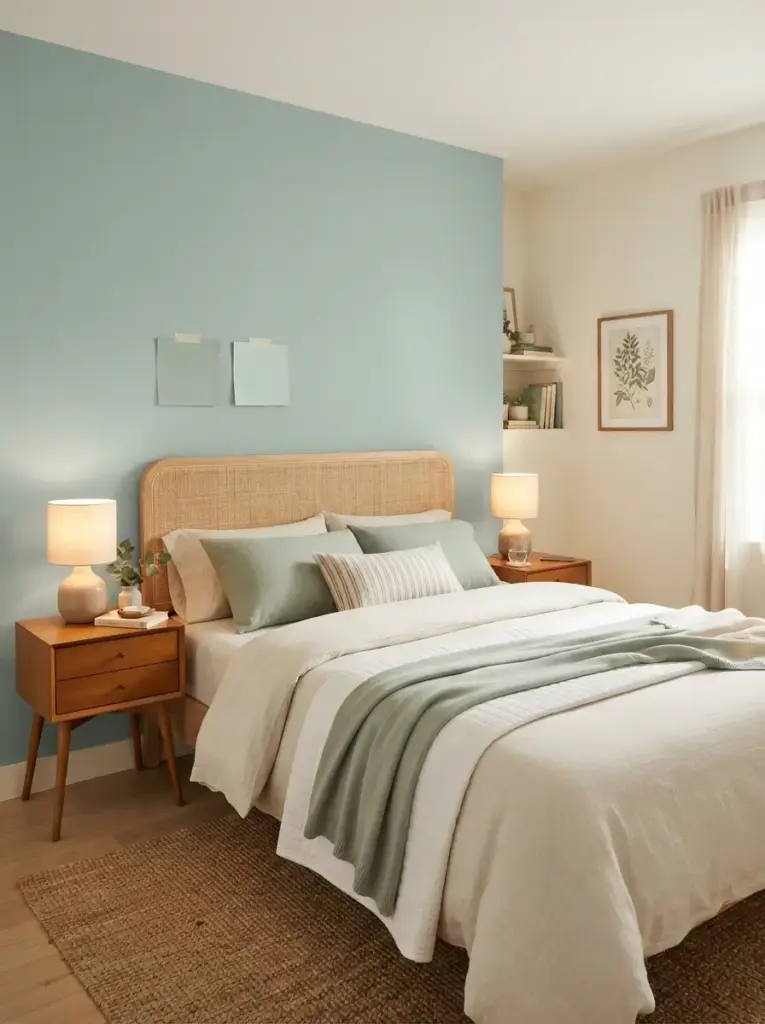
Choose the wall behind the bed for a focused mint feature rather than painting the entire room. Keeping the remaining walls warm white, cream, or very pale greige prevents a small bedroom from feeling boxed in. Muted shades such as sage-mint, gray-mint, or pastel eucalyptus usually look calmer than sharp turquoise-mint tones. Use a matte or eggshell finish because a strong shine can make pale green look colder under artificial light.
Visual balance makes this approach effective. The headboard and bedding break up the colored wall, so mint becomes a background instead of a large empty block. Small-room owners, renters with repainting permission, and beginners who want a noticeable change will benefit most. Before buying paint, place two sample boards behind the bed and check them at 10 a.m., 4 p.m., and after dark.
Use Removable Mint Wallpaper
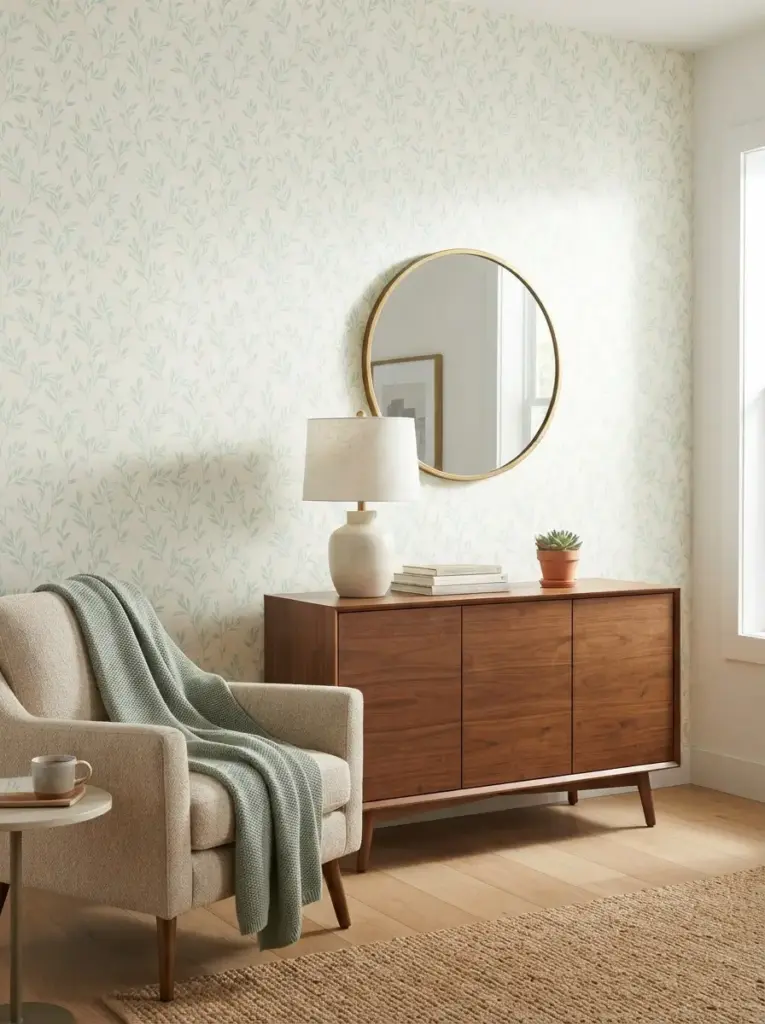
Peel-and-stick wallpaper can create a patterned feature without requiring a long-term commitment. Select a design with a light cream base and a small mint motif, such as thin leaves, soft stripes, or simple geometric lines. Large tropical prints can overwhelm narrow rooms, while tiny, busy patterns may make the wall look visually noisy. Cover one wall, the back of a bookshelf, or the inside of a shallow alcove.
Flexibility gives this idea its value. Renters can remove the paper later, and budget-conscious decorators can use one roll in a limited area. Smooth, clean walls produce the best result, so avoid applying removable wallpaper over peeling paint or heavily textured plaster. Order a sample first because online mint shades often appear bluer or brighter on a screen than they do in real rooms.
Pair Mint Walls With Warm White Bedding

Build the bed around warm white, ivory, or oatmeal bedding instead of stark blue-white sheets. Add mint through a quilt, lumbar cushion, or lightweight throw rather than matching every textile. Cotton percale works well for warm sleepers, while washed linen adds texture without a heavy pattern. A cream upholstered headboard or pale oak bed frame can soften the contrast further.
Warm undertones keep the palette comfortable. Cool white beside cool mint may look clinical, especially under bright LED bulbs. Couples, minimalists, and anyone who wants a calm hotel-inspired setup can use this combination easily. Keep bedding layers practical by using two or three visible tones at most. Too many pale colors can blend and make the bed look flat rather than inviting.
Add Natural Wood Furniture
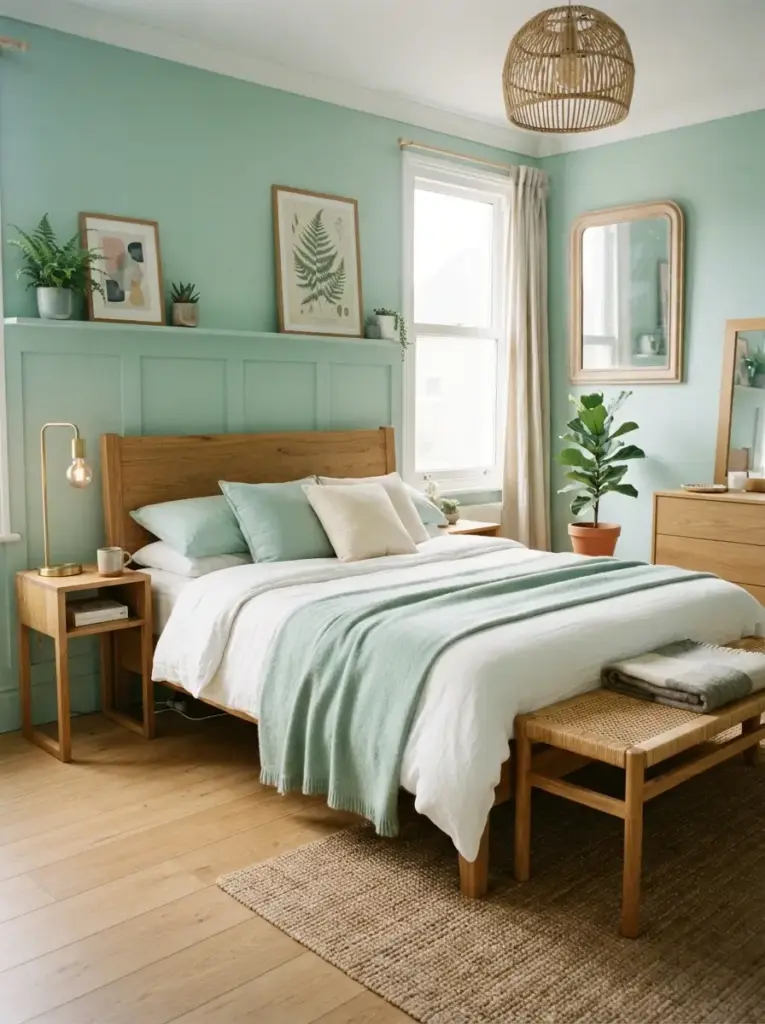
Introduce oak, ash, bamboo, beech, or light walnut furniture to warm up mint walls and fabrics. A slim oak nightstand, simple wood headboard, or narrow bench at the foot of the bed can provide enough contrast. Avoid buying a full matching furniture set if the room is small. One or two wood pieces often feel lighter and more personal than several bulky items in the same finish.
Organic texture explains why the pairing feels balanced. Mint brings freshness, while visible wood grain adds warmth and visual weight. The combination suits Scandinavian, coastal, modern farmhouse, and relaxed contemporary rooms. Apartment dwellers can look for open-leg furniture because visible floor space makes a compact bedroom appear less crowded. Secondhand wood pieces also work well after light sanding and a clear matte finish.
Layer Mint With Soft Gray
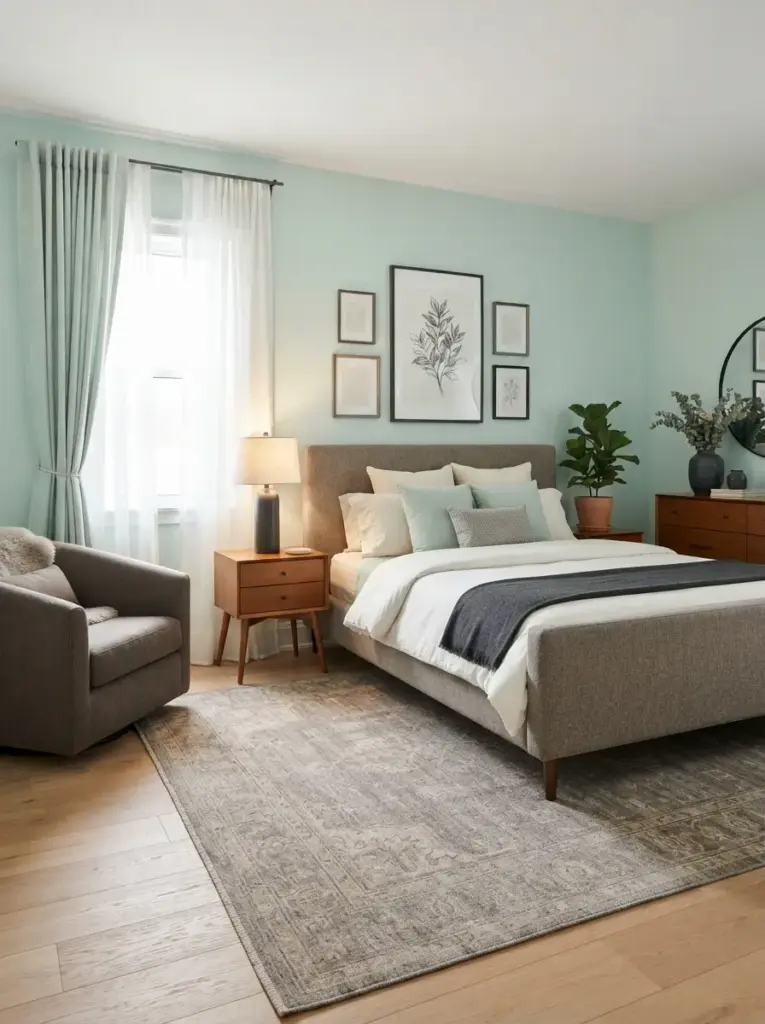
Combine pale mint with warm gray through curtains, a rug, or an upholstered chair. Choose gray shades with beige or taupe undertones rather than blue-gray, which may make the room feel chilly. A practical mix could include mint walls, a warm gray bed frame, ivory sheets, and one charcoal accent in a lamp or picture frame. Keep dark gray limited to small details.
Controlled contrast gives the room structure. Mint and white alone may look washed out, while a small amount of gray defines furniture and textiles. People who prefer modern interiors or share the bedroom with someone who dislikes overly pastel decor will find this palette useful. Test gray fabrics beside the mint surface because undertones become more visible when the colors sit next to each other.
Bring in Blush Through Small Accents
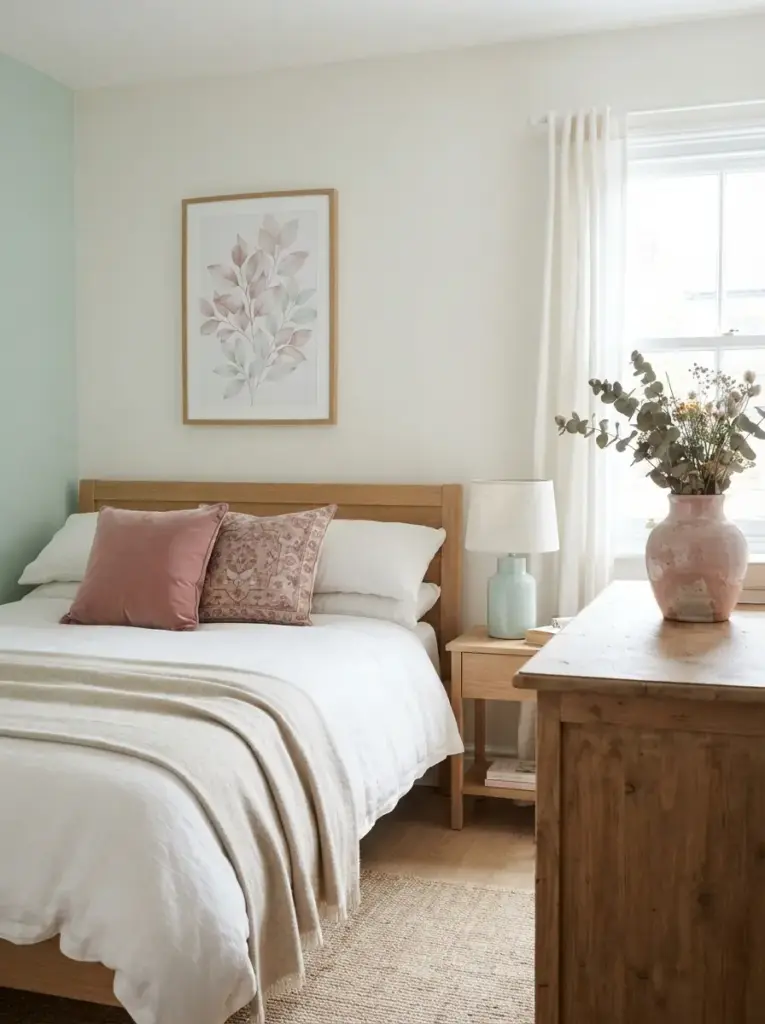
Use dusty blush in two or three small places, such as a cushion, ceramic vase, or framed print. Avoid large pink curtains or a full pink bedspread unless you want a clearly romantic room. Muted rose, clay pink, and faded peach feel more grown-up beside mint than bubblegum pink. Repeating the accent once near the bed and once across the room creates a deliberate connection.
Gentle color tension makes this mix appealing. Mint cools the warmth of blush, while blush prevents pale green from feeling too sharp. The idea works well for teen rooms, guest bedrooms, and soft contemporary spaces. Keep the main furniture neutral so the color scheme can change later without replacing expensive pieces. Budget decorators can achieve the look with cushion covers instead of new cushions.
Choose Curtains That Filter Light
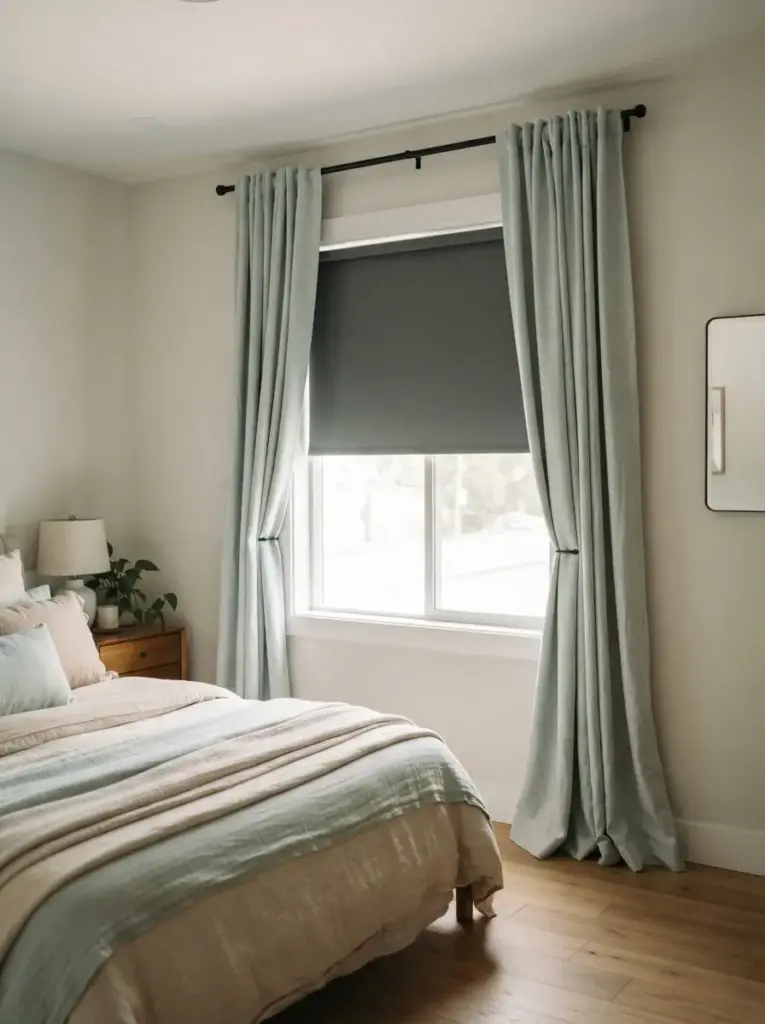
Hang lined cotton, linen-look, or woven curtains in warm white, pale beige, or a very light mint-gray. Position the rod several inches above the window and extend it beyond both sides of the frame. Longer curtains draw the eye upward and make a low ceiling feel taller. For better sleep, pair decorative curtains with a blackout roller blind mounted close to the glass.
Light control is the main advantage here. Mint changes dramatically under strong daylight, so filtered light helps the color remain soft rather than washed out. Shift workers, light sleepers, and bedrooms facing busy streets benefit most from the layered window treatment. Avoid thin mint curtains on their own because morning sunlight can cast a green tint across skin, bedding, and mirrors.
Use Warm Lighting Around 2700K

Select bedside bulbs around 2700K for a warm evening glow. Add a central ceiling light near 3000K if you need clearer visibility for cleaning or dressing. Lampshades in linen, paper, frosted glass, or cream fabric spread light more gently than exposed bulbs. Place one lamp on each side of the bed when space allows, or use wall-mounted plug-in sconces to free narrow nightstands.
Evening color quality makes this choice important. Cool 4000K or 5000K bulbs can push mint toward blue and make the bedroom feel more like a workspace. Readers, renters, and small-space owners can improve comfort without changing paint simply by replacing bulbs. Check the bulb package for color temperature and dimming compatibility rather than relying on labels such as warm or soft.
Create a Mint and Navy Contrast
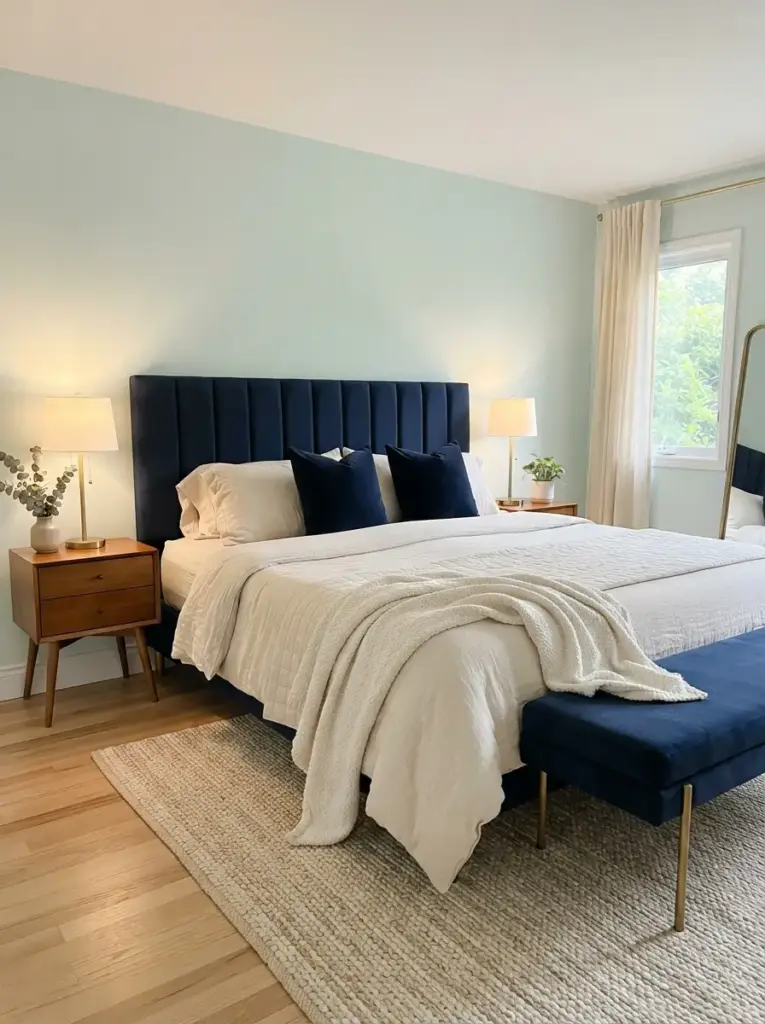
Add navy through a single strong element, such as a headboard, throw, bench, or pair of cushions. Keep the navy area smaller than the mint area so the room stays light. Brass, warm wood, and cream can bridge the two colors. A navy upholstered headboard against a pale mint wall creates a clear focal point without needing extra wall decor.
Depth is the reason this scheme works. Navy anchors pale mint and stops the palette from looking overly delicate. The pairing suits adult bedrooms, masculine-leaning spaces, and homeowners who want color without a pastel-heavy result. Small bedrooms should use navy below eye level or in one central feature because too many dark surfaces can visually shrink the room.
Add Texture With a Boucle or Woven Headboard
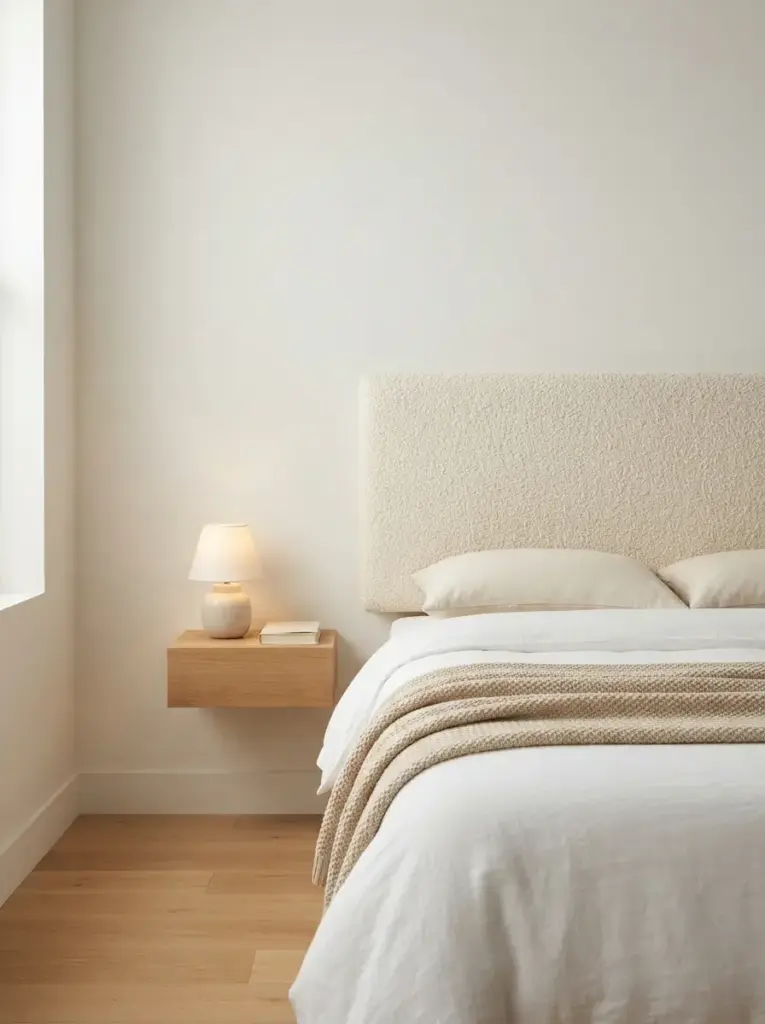
Choose an upholstered headboard in cream boucle, oatmeal linen, woven rattan, or cane. Texture can make a simple color scheme feel finished even when the room contains very little decor. Slim wall-mounted headboards are useful in tight rooms because they do not take up floor space. Rattan and cane also keep the visual weight low.
Tactile contrast supports the design without adding clutter. Smooth painted walls need a softer or more detailed surface nearby, and the headboard naturally provides that layer. Minimalists, renters, and people furnishing narrow rooms can use this method to make the bed feel intentional. Avoid oversized wingback headboards in compact spaces because their depth may reduce walkway clearance and block nearby switches.
Style the Bed With Three Main Layers
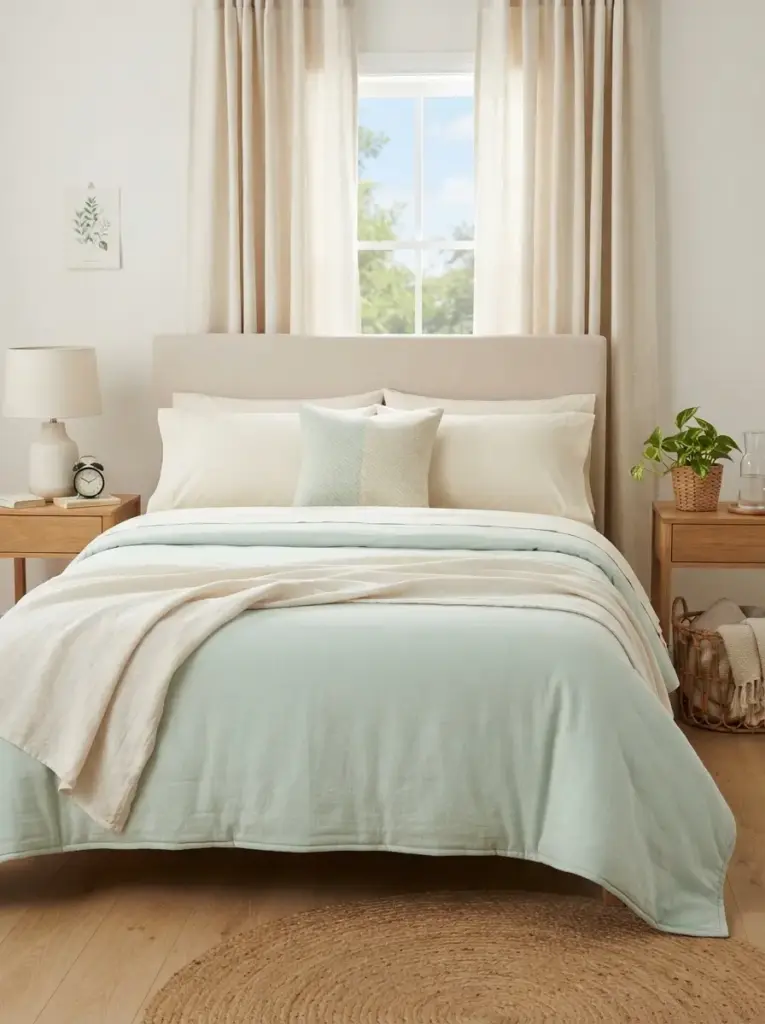
Start with plain sheets, add one quilt or duvet, then finish with a folded throw at the lower third of the bed. Use no more than three decorative cushions for a queen bed and one or two for a twin. A practical Fresh Mint Bedroom could include ivory sheets, a pale mint quilt, a textured cream throw, and one patterned cushion that repeats both colors.
Clear layering keeps the bed attractive without creating daily work. Too many pillows often end up on the floor and make a small room feel untidy. Busy homeowners, students, and anyone who prefers easy maintenance will appreciate the simple formula. Select washable fabrics and repeat one texture elsewhere, such as linen curtains or a woven basket, to create continuity.
Use Mirrors to Reflect Natural Light
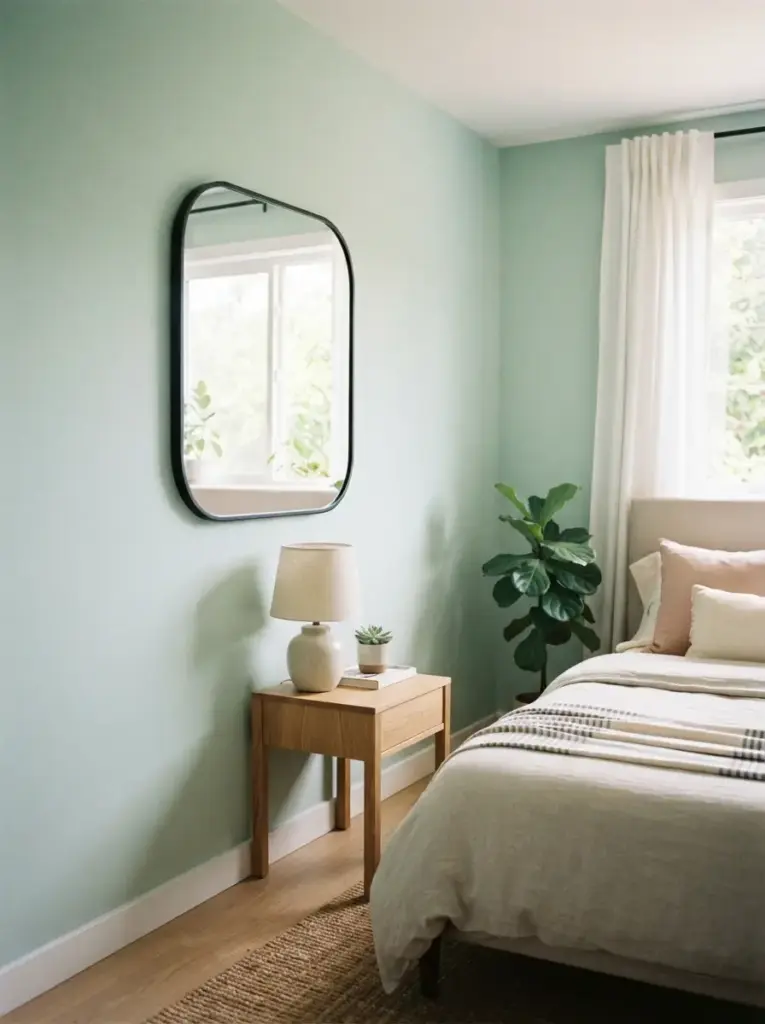
Place a medium mirror opposite or beside the window rather than directly facing the bed if reflections disturb sleep. A rounded mirror with a thin wood, black, or brass frame adds shape without taking up floor space. Full-length mirrors can lean safely only when secured; wall mounting is better in homes with children or pets.
Reflected daylight helps pale mint look open and airy. The mirror also reduces the need for extra wall art, which is useful in narrow bedrooms. North-facing rooms and apartments with one small window gain the most from this approach. Avoid positioning a mirror where it reflects clutter, an open closet, or a television because the repeated view will make the room feel busier.
Add Hidden Storage Under the Bed
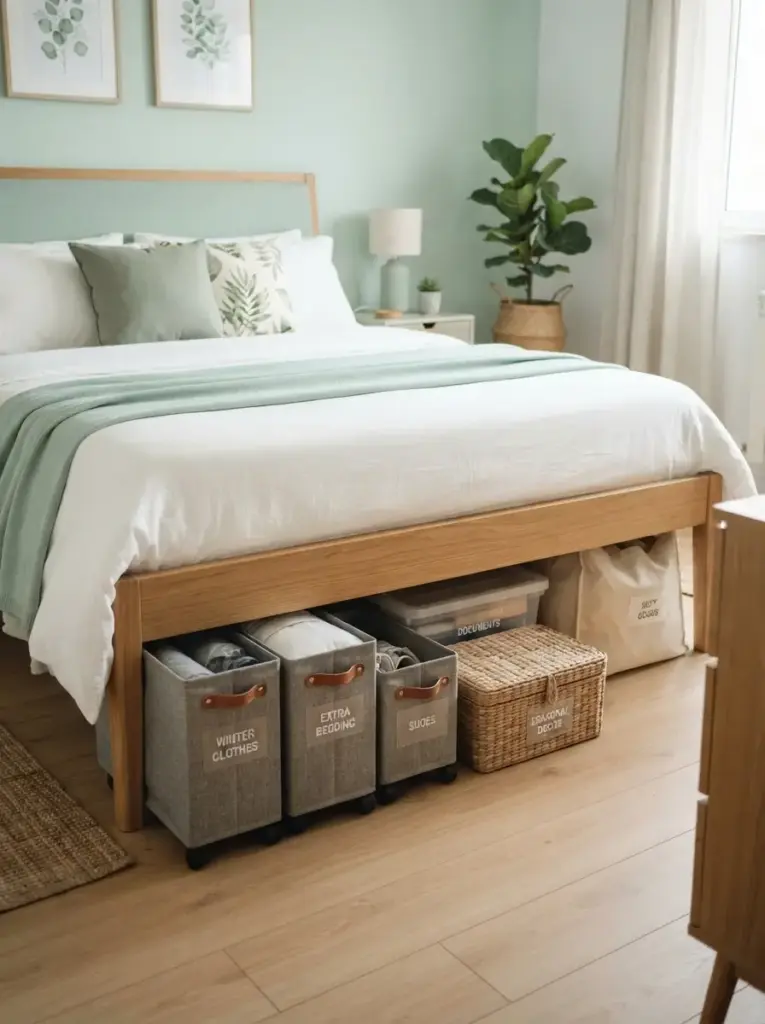
Use shallow lidded boxes, rolling drawers, or a lift-up storage bed to keep spare bedding, seasonal clothes, and shoes out of sight. Match container height to the available clearance and leave enough room for airflow. Fabric bags work for soft items, while hard-sided boxes protect shoes and documents. Label the ends so you can find items without pulling out every container.
Reduced visual clutter strengthens a Fresh Mint Bedroom because pale colors expose disorder quickly. Small-apartment residents, students, and families with limited closets will benefit most. Keep only low-use items under the bed and avoid stuffing the area completely. A packed storage zone can trap dust and make regular cleaning difficult.
Decorate With Simple Botanical Art
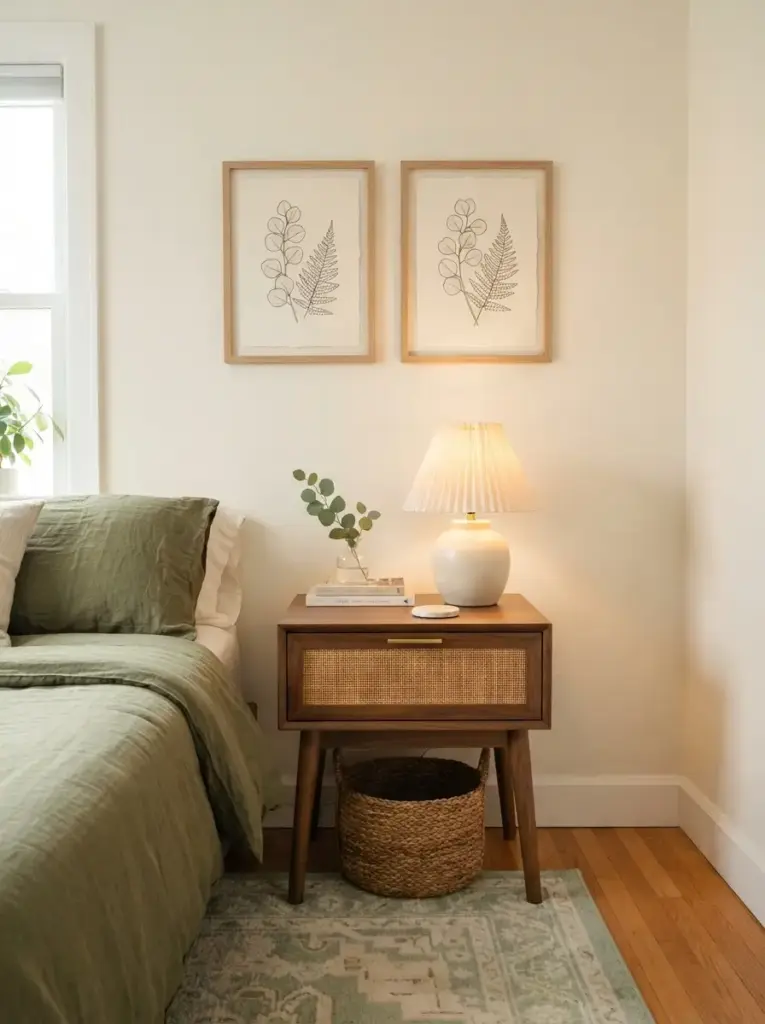
Hang one medium botanical print or a pair of small coordinating prints above a dresser or nightstand. Look for art that combines mint with cream, olive, charcoal, or warm brown, so it connects to the rest of the room. Thin frames usually suit small spaces better than deep, ornate frames. Removable picture strips provide a rental-friendly option for lightweight artwork.
Natural shapes make mint feel connected to greenery rather than themed decor. Botanical art also introduces darker tones that prevent the walls from appearing flat. Beginners who feel unsure about mixing patterns can start with line drawings or pressed-leaf designs. Keep the artwork narrower than the furniture below it so the arrangement feels balanced and does not visually spill beyond the edges.
Use Real or Low-Maintenance Greenery
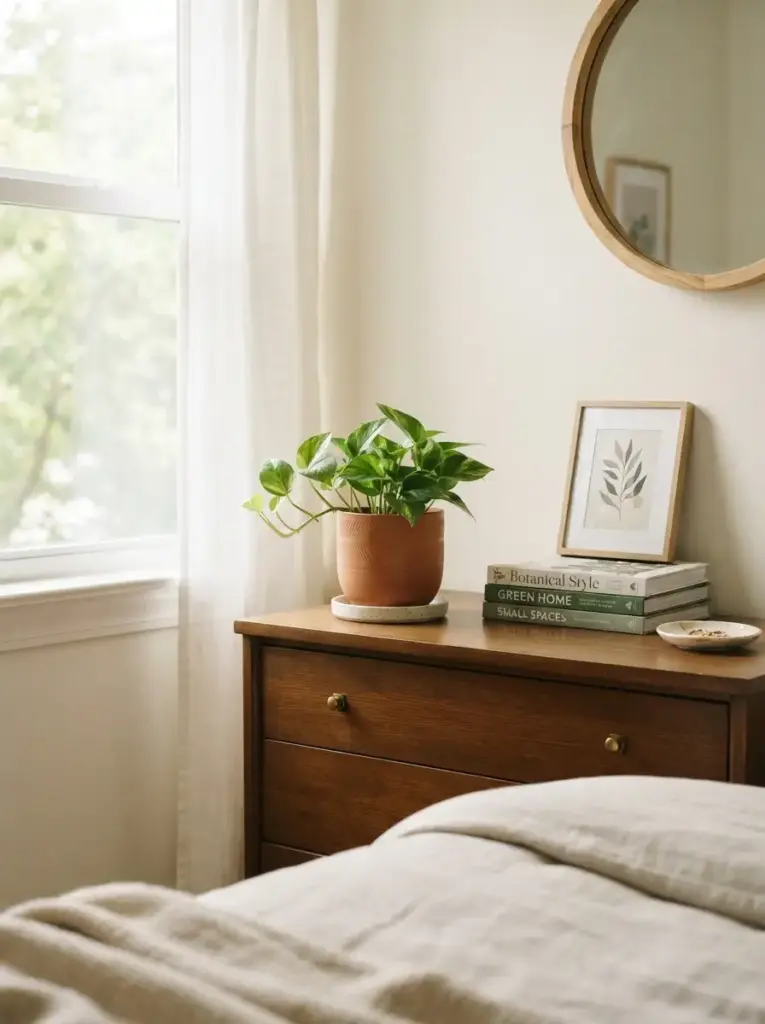
Place one small plant on a dresser, shelf, or windowsill instead of filling the room with multiple pots. Pothos, snake plants, and ZZ plants tolerate a range of indoor conditions, but plant choice should still match the available light. High-quality faux stems can work in dark bedrooms or homes where plant care is difficult. Choose a cream, terracotta, or woven planter to add warmth.
Living green introduces variation that painted mint cannot provide. Leaves bring deeper tones and natural shapes, helping the room feel less flat. Plant lovers, small-space decorators, and renters can use greenery as an easy finishing layer. Avoid placing damp pots directly on wood furniture; use a waterproof saucer to prevent rings, swelling, and mold.
Common Mistakes to Avoid
Using Too Much Mint
Covering walls, bedding, curtains, rugs, and furniture in the same shade can make the room feel themed and visually flat. Let mint occupy one major surface and two or three smaller accents. Warm white, wood, beige, gray, or navy should carry the rest of the palette.
Choosing the Wrong Undertone
Blue-based mint may look icy in a north-facing room, while yellow-based mint can appear brighter in strong afternoon sun. Test samples beside fixed elements such as flooring, wardrobes, and carpet. Paint a large movable board rather than judging from a tiny paper swatch.
Installing Cool White Bulbs
Harsh bulbs can change soft mint into a sharp aqua tone at night. Use 2700K bulbs near the bed and reserve cooler task lighting for a desk or dressing area. Matching bulb temperatures across visible lamps also prevents uneven color.
Ignoring Furniture Scale
Large dressers, deep nightstands, and oversized headboards can crowd a compact room even when the colors are light. Measure walkways before buying furniture and aim for at least 24 inches where possible. Wall-mounted shelves and raised-leg furniture preserve more visible floor.
Adding Too Many Small Accessories
Several tiny objects create more visual noise than one medium lamp, vase, or artwork. Group useful items on a tray and leave part of each surface empty. Calm rooms depend as much on open space as they do on color.
Budget-Friendly Mint Bedroom Updates
Paint offers the biggest visual change for a modest cost, especially when limited to one wall. Leftover paint can refresh a small nightstand, picture frame, or shelf, but avoid painting every item in the same mint shade. Sample pots may be enough for narrow ledges or decorative panels.
Textiles provide another affordable route. Replace cushion covers, add a light throw, or use a mint flat sheet as a temporary fabric panel behind the bed. Secondhand curtains can be shortened with iron-on hemming tape, and thrifted wood furniture can add warmth after cleaning and minor repairs.
Rental-friendly decorators can use removable wallpaper, peel-and-stick drawer liners, command hooks, and plug-in sconces. Save original hardware in a labeled bag when changing drawer pulls or curtain rods. Restoring the room later becomes much easier when every part stays together.
Shopping slowly usually produces a better result than buying a complete matching set. Start with the bed, lighting, and window treatment because they influence comfort most. Decorative pieces can follow after you see how the room feels in daily use.
Fresh Mint Bedroom Tips for Small Spaces
Keep the lightest colors on the largest surfaces. Pale mint walls, cream bedding, and a light rug can visually open the room, while deeper tones should appear in smaller accents. A dark headboard can still work, but balance it with open floor space and simple wall decor.
Choose furniture with visible legs or wall-mounted storage. Raised nightstands, slim shelves, and floating desks allow more flooring to remain visible, which can make the layout feel less crowded. Avoid placing tall furniture beside the window because it blocks daylight and interrupts the room’s natural brightness.
Use one clear focal point. The bed wall, a patterned wallpaper panel, or a navy headboard can carry the visual interest. Competing features on every wall make a small room feel restless. Repeat mint in only two supporting places, such as a throw and a small print, to connect the scheme.
Measure before decorating. Mark furniture footprints with painter’s tape and check door swings, drawer clearance, and walking paths. Good spacing often improves a compact bedroom more than adding another decorative item.
Frequently Asked Questions
What Colors Go Best With Mint Green in a Bedroom?
Warm white, cream, light oak, oatmeal, soft gray, navy, blush, and muted terracotta all pair well with mint. Choose two supporting neutrals and one accent color to keep the scheme controlled. Fixed elements such as flooring and wardrobes should guide the final combination.
Is Mint Green Suitable for a Small Bedroom?
Yes, especially when the shade is pale and slightly muted. Use mint on one wall or all walls with light trim, then choose slim furniture and simple textiles. Strong turquoise-mint shades can feel busy in tight spaces, so test them carefully before committing.
What Color Temperature Works Best With Mint Walls?
Bulbs around 2700K usually make mint feel softer and warmer in the evening. A 3000K ceiling light can provide clearer general lighting without becoming harsh. Avoid mixing several different bulb temperatures in the same view because the wall color may appear inconsistent.
Can Renters Create a Mint Bedroom Without Painting?
Yes. Removable wallpaper, mint bedding, framed fabric, cushion covers, temporary decals, and peel-and-stick drawer liners can introduce the color without permanent changes. Plug-in sconces and removable hooks also help create a finished layout without electrical work or drilling.
Should Mint Match Exactly Across the Room?
No. Slight variation adds depth and prevents the space from looking like a showroom set. Use one main mint shade, then add a lighter or grayer version in small details. Keep undertones related so the colors look intentional rather than mismatched.
How Do I Keep Mint Decor From Looking Too Childlike?
Pair mint with structured furniture, warm wood, navy, charcoal, or simple black accents. Choose solid textiles, subtle patterns, and clean-lined lighting instead of novelty decor. Limiting pastel pink and using fewer decorative accessories also creates a more mature result.
Conclusion
Thoughtful balance turns mint into a practical bedroom color rather than a passing theme. Start with one major decision, such as paint, wallpaper, or bedding, then build around it with warm neutrals, useful lighting, and furniture sized for the room. A Fresh Mint Bedroom feels most comfortable when color supports sleep, storage reduces clutter, and every decorative choice has a clear purpose. Small updates can work just as well as a full makeover when they improve light, layout, and daily use.