
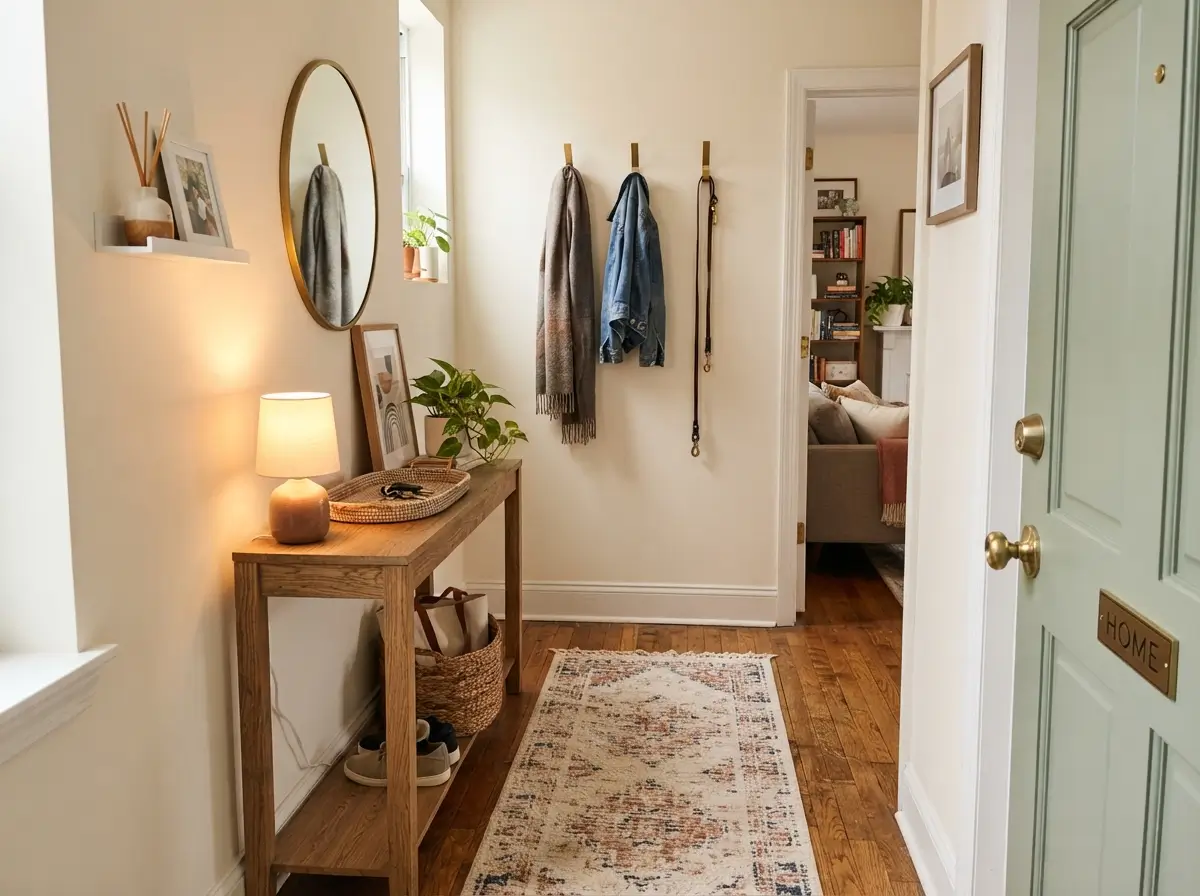

Small apartment entryways rarely come with generous square footage, but they still shape the first impression of your home. One narrow wall, a corner beside the door, or even a short strip of flooring can become a useful and welcoming landing zone when every item has a clear job. Good Small Apartment Entryway Decor balances three needs at once: storage, comfort, and visual order. Shoes need a place to go, keys should be easy to find, and the area should feel connected to the rest of the apartment rather than crowded with random objects.
Practical decorating matters more than filling the space with accessories. Slim furniture, warm light, washable materials, and renter-friendly wall solutions can make a tiny entrance work harder without blocking movement. Beginners can start with one problem, such as shoe clutter or poor lighting, then add only the pieces that solve it. Home decor lovers can layer color, texture, and art after the layout feels functional. The ideas below explain what to use, where to place it, who each tip suits, and which mistakes can make a small entryway feel tighter.
How can you create a warm entryway when your apartment has little space?
Build the area around a slim storage piece, one clear drop zone, warm lighting, and a limited color palette. Keep the walking path open, use vertical wall space, and choose items that serve more than one purpose. Even a two-foot section of wall can hold hooks, a narrow shelf, a mirror, and a small tray without making the entrance feel overloaded.
Start With a Slim Console or Wall Shelf
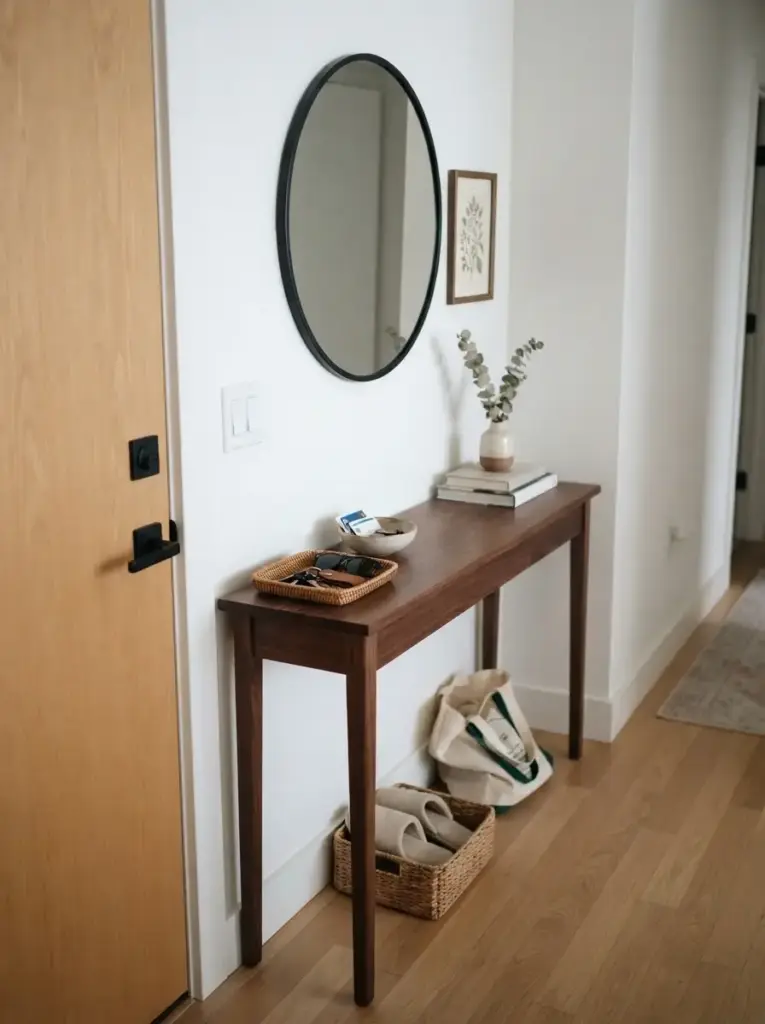
Narrow furniture gives an entryway a clear center without stealing valuable floor space. Look for a console that measures about 8 to 12 inches deep, especially in a hallway-style entrance where the door opens close to the wall. Renters with almost no floor area can use a picture ledge, floating shelf, or wall-mounted drop-leaf surface instead. Place a small tray on top for keys, a bowl for loose change, and one decorative object such as a short vase or framed print. Leaving part of the surface empty keeps the arrangement from looking messy.
Slim consoles succeed because they create a landing zone at the exact point where daily clutter enters the home. Someone who often loses keys, sunglasses, or transit cards will benefit most from this setup. Choose oak, walnut, white, or black based on nearby finishes. Warm wood softens white rental walls, while black metal works well in modern apartments with dark door hardware. Avoid a deep dresser unless the hallway is unusually wide. Furniture should not force anyone to turn sideways when entering, carrying groceries, or moving through the space.
Add a Mirror That Matches the Wall Shape
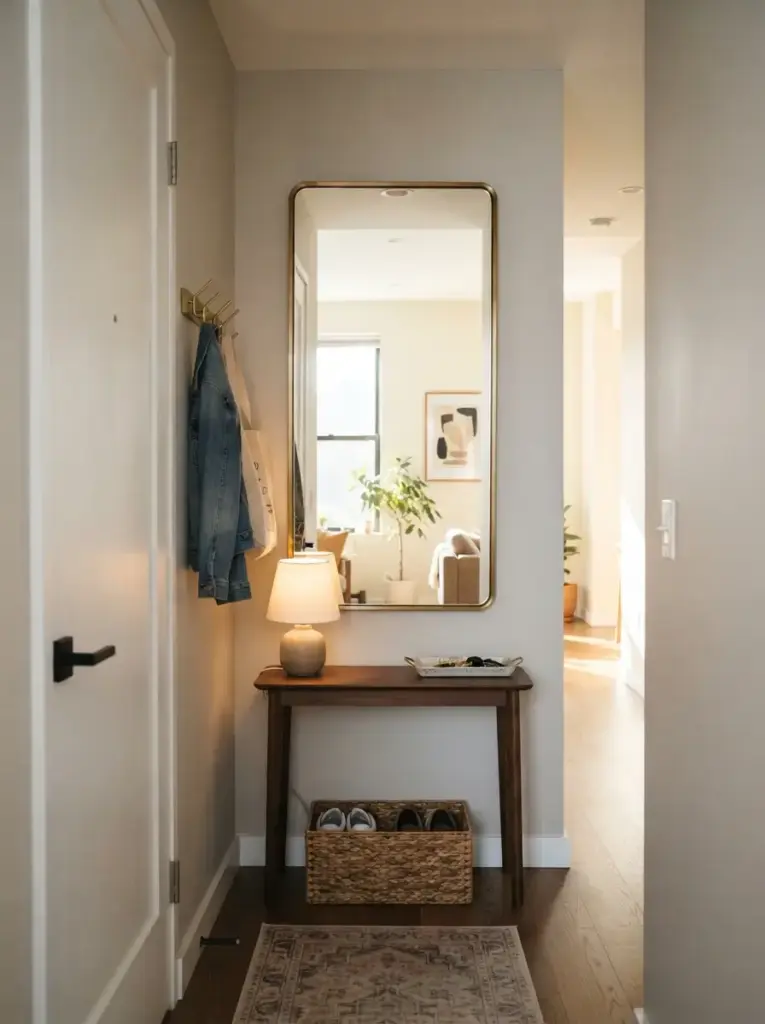
Mirrors help small entryways feel brighter by reflecting nearby light, but scale and placement matter more than buying the largest option available. A tall rectangular mirror suits a narrow wall, while a round mirror can soften an entry with many straight lines. Hang the center near eye level, usually around 57 to 60 inches from the floor, then check that the door handle or coat hooks do not interrupt the reflection. Renters can use heavy-duty removable strips only when the mirror falls within the product’s weight limit, or choose a lightweight acrylic mirror for safer installation.
Reflection works best when it faces something attractive or bright, such as a lamp, artwork, or open living area. People with dim hallways or windowless entrances will notice the biggest improvement. Frames also help connect the entry to the apartment. Brass brings warmth, matte black adds definition, and pale wood keeps the look relaxed. Avoid placing a mirror where it reflects a pile of shoes or an open bathroom door, because it doubles the visual clutter rather than reducing it. Wipe the glass often, since fingerprints and dust show quickly in a small, high-traffic zone.
Use Wall Hooks Instead of a Bulky Coat Rack
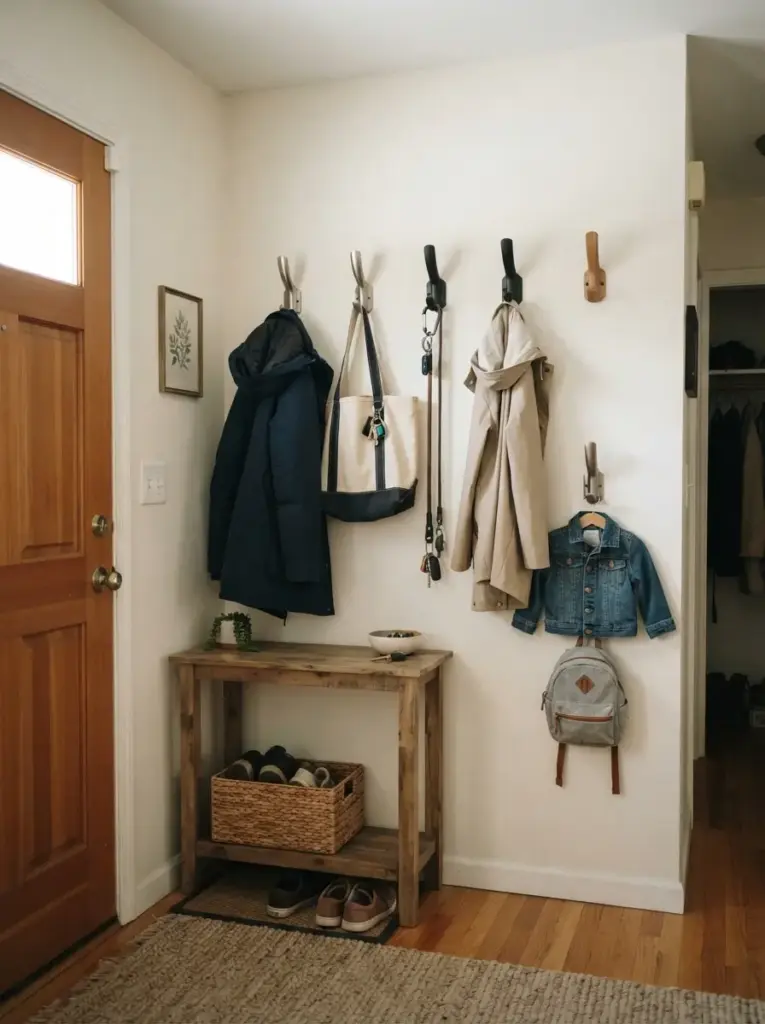
Wall hooks store coats, bags, hats, and umbrellas without adding another piece of furniture to the floor. Install a row at a comfortable height for adults, then add one or two lower hooks if children use the space. Five hooks may look useful, but a small entryway often functions better with three well-spaced hooks and a rule that each person keeps only the current jacket and daily bag near the door. Adhesive hooks can work for light items, while screwed-in hooks are safer for winter coats and loaded backpacks when the lease allows small wall holes.
Vertical storage earns its place because it turns an empty wall into an organized station. Busy households, commuters, and pet owners can use separate hooks for reusable shopping bags, dog leashes, or keys. Choose hooks that repeat another finish in the home, such as brushed nickel, black, or wood. Matching every hook is not necessary, but consistent spacing makes the arrangement look intentional. Keep hooks away from the door swing, and do not hang long straps where they can catch the handle. Overloaded hooks quickly make the entrance feel cramped, so move out-of-season items to a closet or storage box.
Place a Compact Bench With Hidden Storage
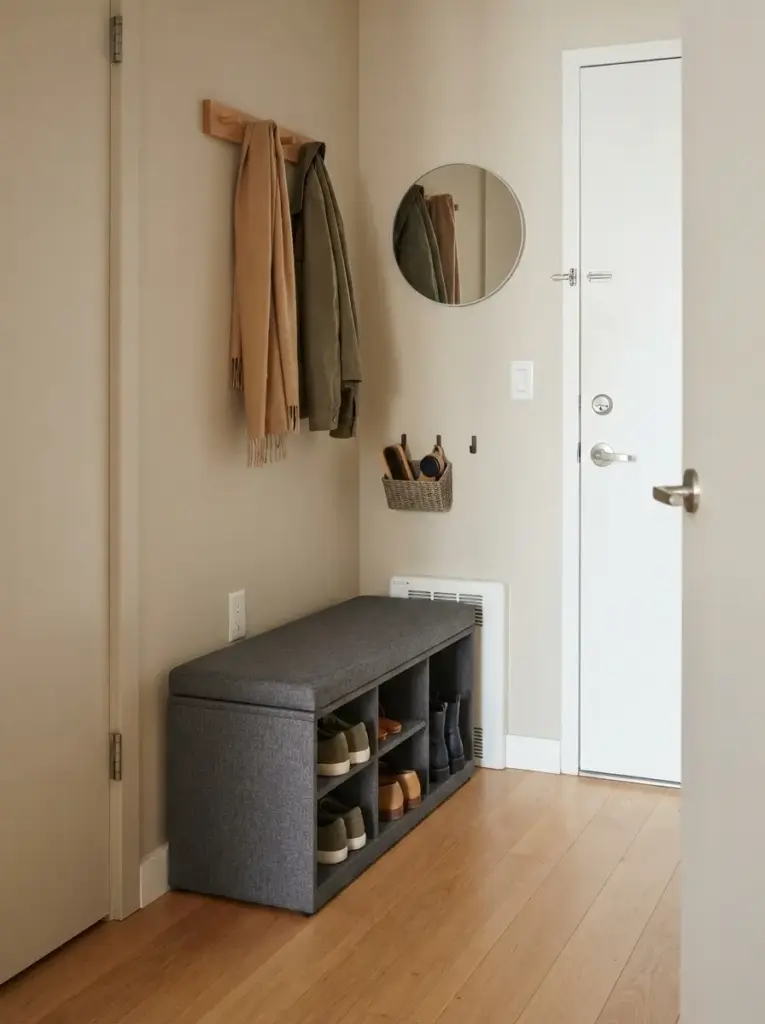
Seating makes it easier to put on shoes, but standard benches can be too deep for apartment entrances. Search for a compact bench around 12 to 15 inches deep, or use a storage ottoman with a firm lid. Cubby benches hold everyday shoes, while lift-top styles hide scarves, shoe-care products, or pet supplies. Best results come from measuring the door clearance and walking path before buying. Leave at least 30 inches of open passage where possible, and make sure the bench does not block an outlet, radiator, or closet door.
Hidden storage improves the room because it removes small items from sight while adding a useful place to sit. The idea suits families, older adults, and anyone who changes footwear at the door. Choose a washable cushion in charcoal, tan, olive, or a small-scale stripe. Light cream can look fresh, but it may show dirt quickly near an exterior door. Renters on a budget can place two sturdy lidded storage cubes side by side and top them with one long cushion. Skip loose throw pillows in very tight areas, since they often fall to the floor and become another obstacle.
Choose a Washable Runner With the Right Scale
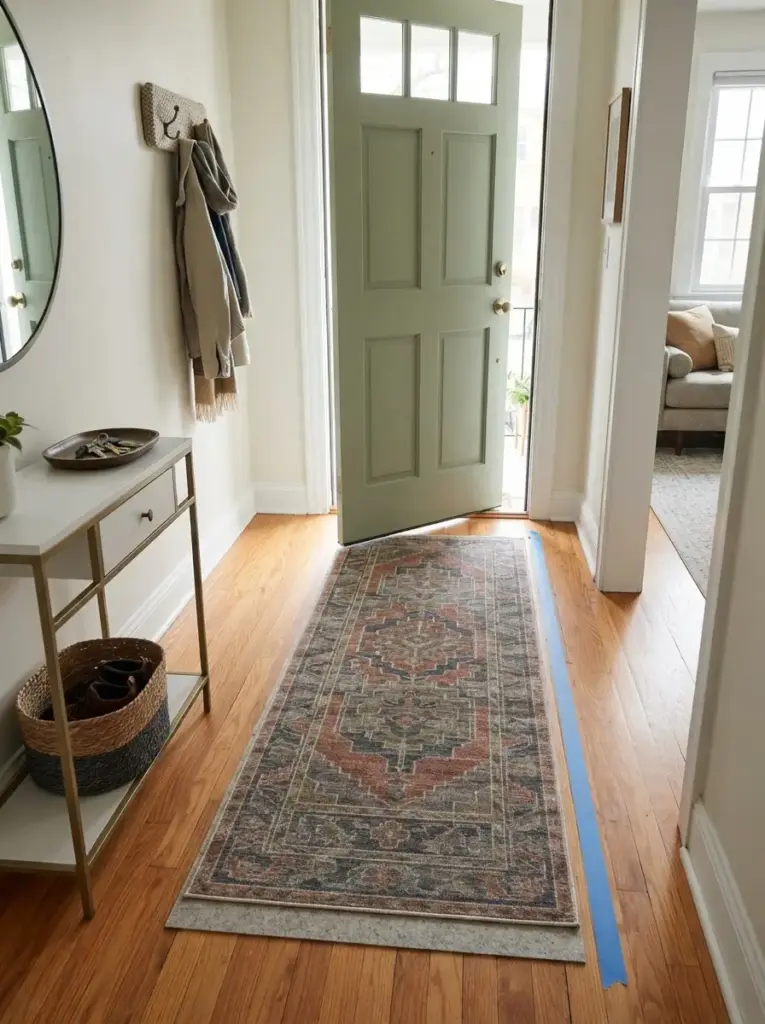
Rugs add warmth, protect the floor, and visually define an entryway that blends into a living room or hallway. Pick a low-pile, washable runner that allows the door to open freely. Before ordering, measure the door clearance from the floor and mark the rug size with painter’s tape. A 2-by-6-foot runner works in many narrow layouts, while a 3-by-5-foot rug may suit a small square foyer. Leave a visible border of flooring around the rug so the area does not look squeezed.
Pattern has a practical purpose in Small Apartment Entryway Decor because it hides dust, scuffs, and small marks between cleanings. Renters, pet owners, and homes in rainy climates benefit from medium-tone designs in rust, navy, olive, gray, or muted geometric patterns. Use a thin non-slip pad underneath, especially on tile, laminate, or polished wood. Warm neutrals make the entrance feel calm, while a restrained pattern can introduce color without needing more accessories. Avoid thick shag rugs, high tassels, and pale solid fabrics near the door. They catch dirt, interfere with movement, and require more maintenance than most small entryways can handle.
Create a Dedicated Shoe Zone
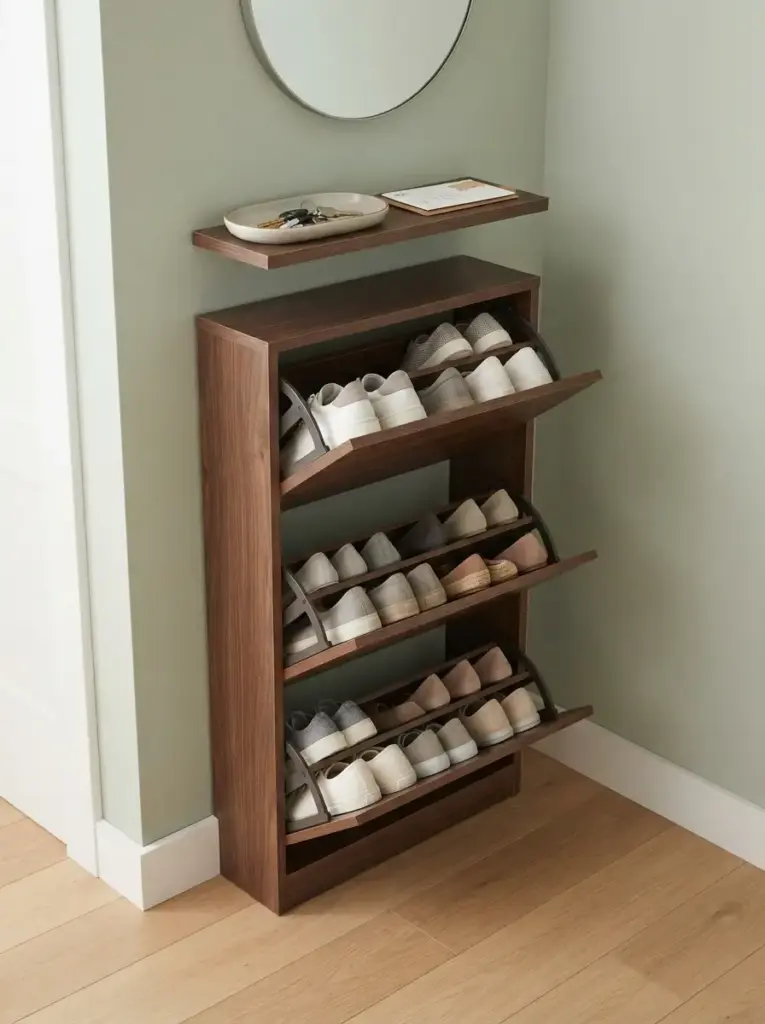
Shoes spread quickly when the entry lacks a clear boundary. Choose one storage method that fits the household: a two-tier rack for daily pairs, a tilt-out cabinet for a polished look, or labeled baskets under a bench for flexible storage. Slim tilt-out cabinets often measure less than 10 inches deep, making them useful in narrow apartments, but tall boots may need a different home. Place a boot tray beside the rack during wet seasons to protect the flooring and contain mud.
Defined shoe storage helps because it turns an informal pile into a simple routine. The setup works well for couples, families, and anyone who follows a shoes-off policy indoors. Limit the entry to two or three pairs per person, then rotate footwear as seasons change. Ventilated shelves are better than sealed boxes for damp shoes. Budget-conscious renters can use a painted wooden crate, a wire shelf, or a sturdy under-bed basket that slides beneath a bench. Avoid lining shoes directly along both sides of a narrow hallway. That arrangement reduces the walking path and makes even a clean entrance look disorganized.
Layer Warm Lighting Instead of Relying on One Ceiling Bulb
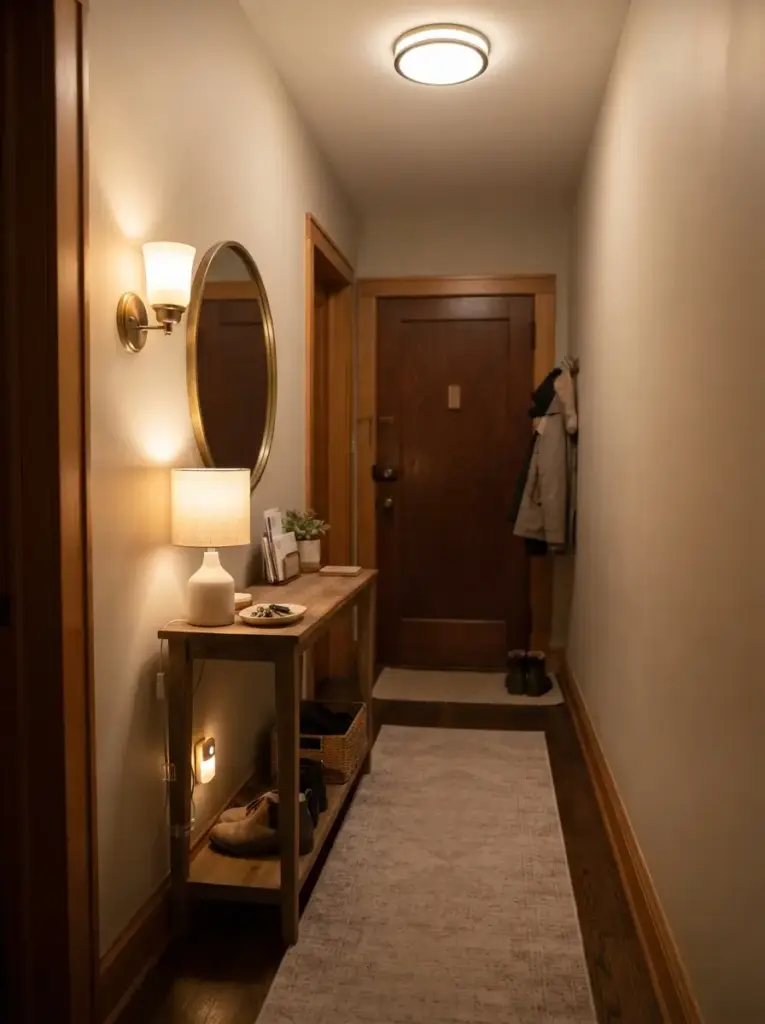
Lighting can make a small entrance feel welcoming even when there is no window. Choose bulbs between 2700K and 3000K for a warm, clear glow that flatters wood tones, paint colors, and skin. If the overhead fixture feels harsh, add a small table lamp on the console, a plug-in wall sconce, or a rechargeable lamp that needs no outlet. Lampshades made from linen, paper, or frosted glass soften the light and reduce glare in a tight space.
Layered lighting improves function because it creates both visibility and atmosphere. Apartment dwellers who return home after dark or have a dim interior hallway will benefit most. Keep lamp bases narrow and cords secured along the back of furniture with removable clips. Motion-sensor night lights can help near shoe storage or a dark threshold, especially for families and older adults. Avoid cool 5000K bulbs, which may make the entry feel clinical, and skip oversized lamps that crowd the drop zone. One compact light source paired with a mirror often brightens the area more effectively than several decorative objects.
Build a Simple Drop Zone for Small Essentials
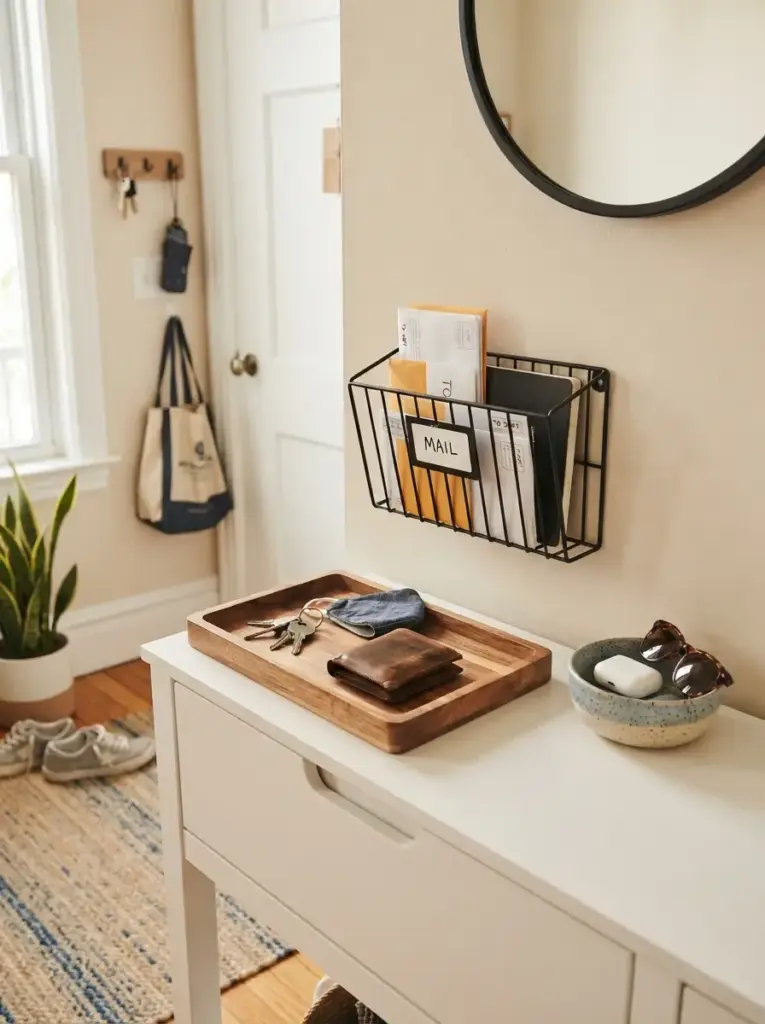
Keys, mail, earbuds, and sunglasses need fixed places, or they will spread across the nearest surface. Use a shallow tray for pocket items, a wall-mounted mail holder for envelopes, and one small bowl for loose objects. Labeling can help in shared apartments, but keep categories limited. Too many containers create extra decisions and make the station harder to maintain. Place the most-used item closest to the door and keep occasional items inside a drawer or basket.
Clear drop zones reduce stress because they support a repeatable habit. Commuters, students, and busy families often gain the most from this arrangement. Try a wood tray on a white console, a black metal mail pocket on a pale wall, or a ceramic dish that picks up a color from the rug. Rental-friendly options include adhesive key rails, magnetic holders on a metal door, and over-the-door organizers with slim pockets. Avoid using the entry as a holding area for every unopened package or letter. Sort mail regularly, recycle unwanted paper immediately, and move important documents to a desk or file box.
Add One Piece of Art With Strong Visual Impact
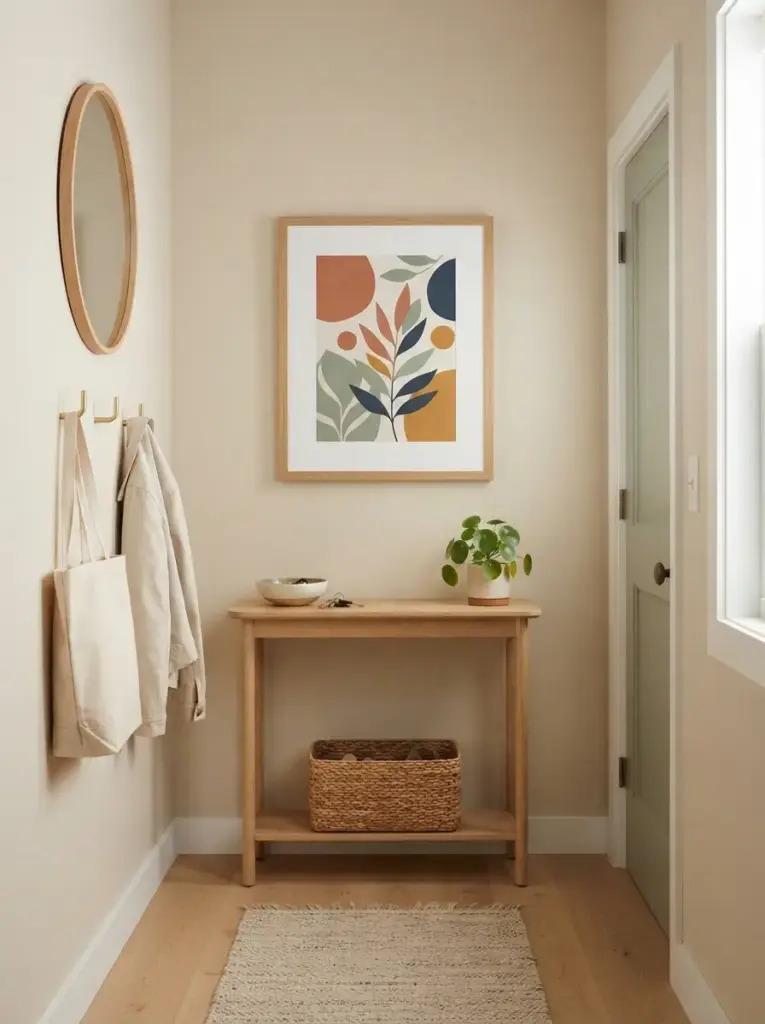
Artwork gives a tiny entrance personality without using floor space. Select one medium piece rather than several small frames when the wall already includes hooks, a mirror, or storage. A print around 16 by 20 inches often works above a narrow bench or console, but the correct size depends on the furniture below it. Aim for artwork that measures about two-thirds the width of the furniture, and hang it 6 to 8 inches above the surface so the two elements feel connected.
Focused artworks because it creates a deliberate visual pause near the door. The idea suits renters who cannot paint and beginners who want color without buying many accessories. Choose subjects that feel calm and easy to live with, such as abstract shapes, architecture, botanicals, or a local map. Colors like terracotta, sage, navy, ochre, and warm beige pair well with common rental finishes. Lightweight frames can hang from removable strips when installed correctly. Avoid tiny art floating alone on a wide wall, and do not cover every available section. Negative space helps the entry feel larger and lets the chosen piece stand out.
Bring in Greenery That Can Handle the Conditions
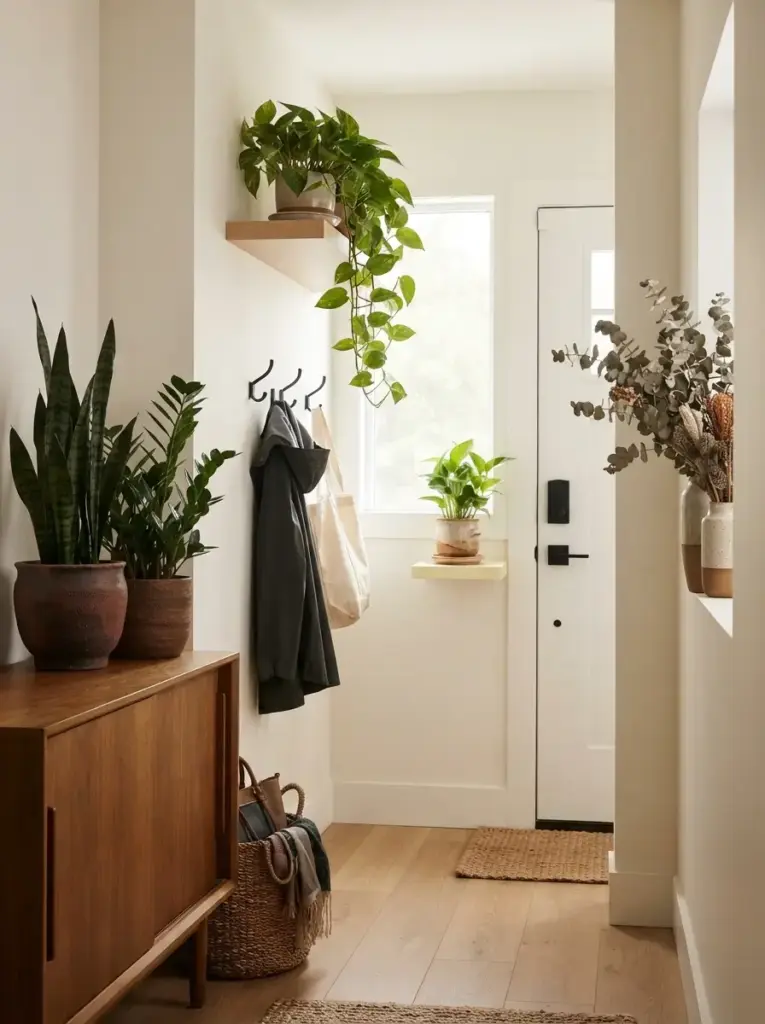
Plants soften hard surfaces and make an entry feel lived-in, but low light and temperature changes can limit the options. Check how much natural light reaches the area before choosing a plant. Snake plants, ZZ plants, and pothos tolerate lower light better than wide decorative varieties, though every living plant still needs some usable light. Windowless entries may be better suited to a high-quality faux plant, dried branches, or eucalyptus stems. Place greenery on a shelf, console, or wall planter instead of covering the floor.
Natural texture adds contrast against painted walls, metal hooks, and storage cabinets. Plant lovers with a brighter entrance can use a trailing pothos on a high shelf, while beginners may prefer one upright plant in a small ceramic pot. Choose planters with saucers to protect rental surfaces from water damage. Dark green leaves look especially good with warm white walls, tan wood, black hardware, and terracotta accents. Avoid large floor plants beside a door that opens inward, and do not let trailing stems catch on bags or coats. One healthy plant has more impact than several struggling ones.
Use Paint or Removable Wallpaper to Define the Area
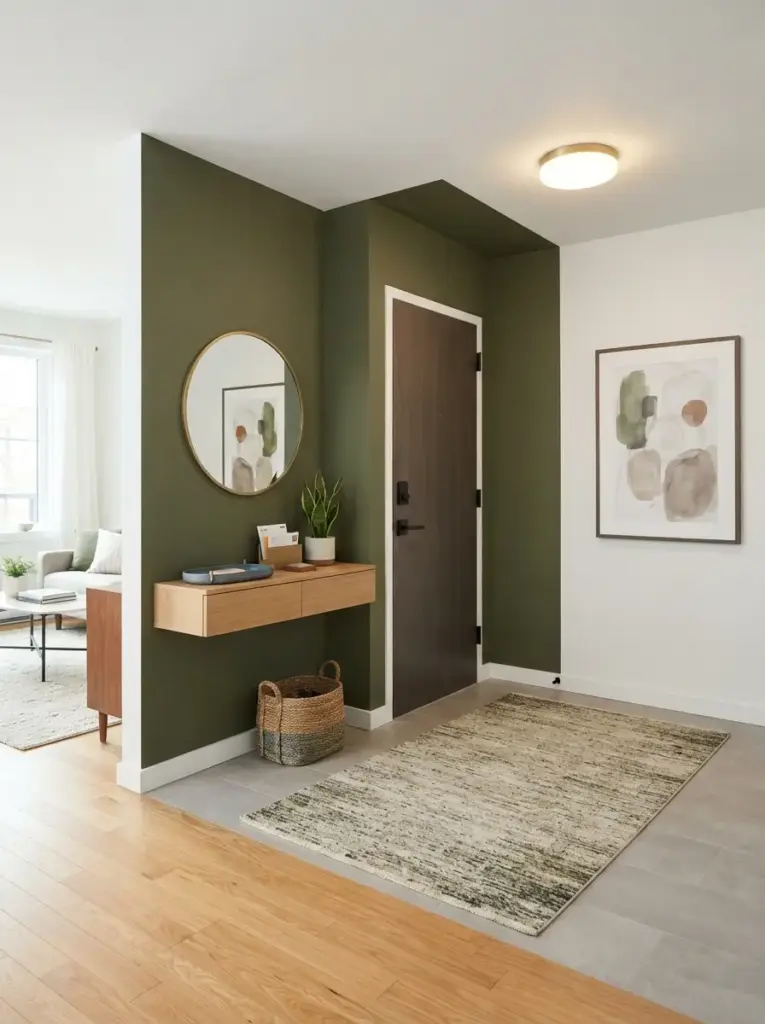
Color can separate an entryway from the rest of an open-plan apartment without adding furniture. Paint one short wall, the back of a niche, or the inside of the front door in a grounded shade such as muted olive, warm taupe, dusty blue, clay, or soft charcoal. Renters who cannot paint can use peel-and-stick wallpaper, removable decals, or a large fabric panel secured with renter-safe methods. Test any adhesive in a hidden area first, because wall finishes vary and removal can sometimes lift weak paint.
Visual zoning helps the entrance feel intentional rather than like leftover space. Open-studio residents and renters with no defined foyer benefit most from this technique. A darker color can work in a small area when the lighting is warm, and the surrounding walls remain lighter. Repeating the accent color in the rug, tray, or artwork creates a connected design. Avoid busy wallpaper on every wall of a narrow corridor, especially when storage and hooks already add detail. One controlled surface usually provides enough character. Sample colors at different times of day before committing, since hallway lighting can shift blue, gray, or green undertones.
Install a Peg Rail or Modular Wall System
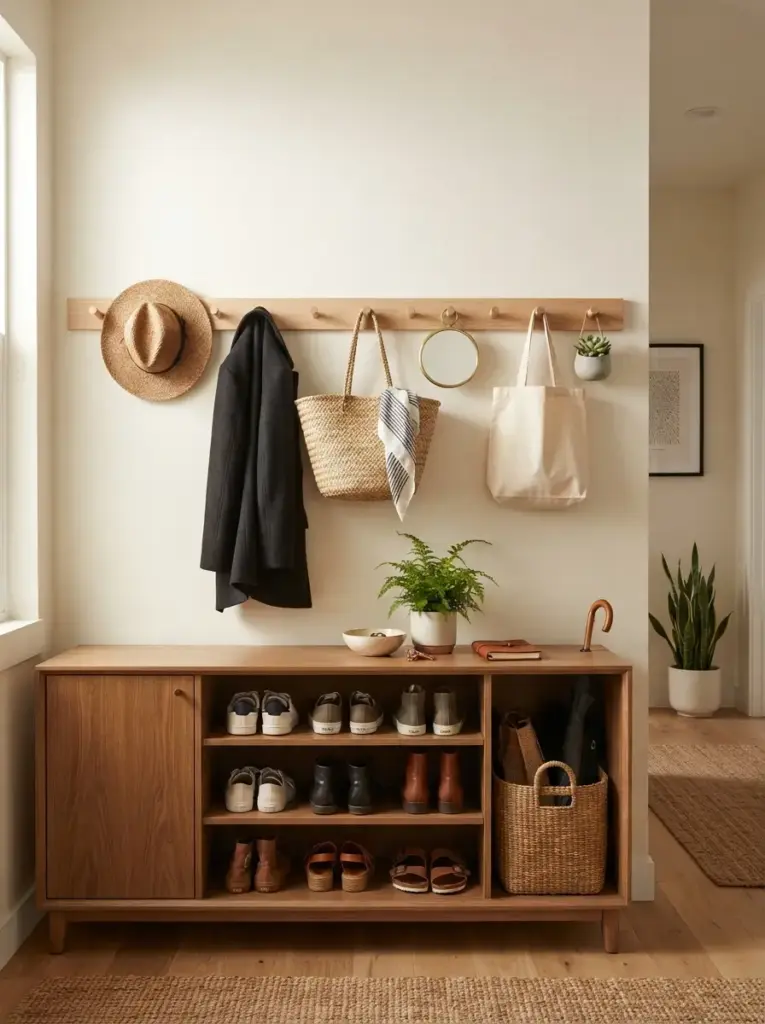
Peg rails combine storage and decoration in a shallow format. Mount one above a bench or shoe cabinet, then use it for coats, baskets, hats, and small hanging mirrors. Modular wall systems with movable hooks and shelves can adapt as needs change, which makes them useful in apartments where storage must work harder. Keep the lowest hanging items above the bench or cabinet so bags do not brush the floor.
Flexible systems perform well because they allow storage to change without replacing the whole setup. The idea is best for creative households, families, and renters who need one wall to support several routines. Wooden peg rails suit Scandinavian, farmhouse, and relaxed modern interiors, while metal rails feel cleaner in industrial or minimalist spaces. Use removable wall mounting only for lightweight decor; heavier loads need proper anchors or studs. Resist the urge to fill every peg. Empty spaces improve visibility and make it easier to grab daily items. Seasonal editing also matters, so remove heavy coats in summer and reduce the display when bags start overlapping.
Style the Front Door as Part of the Room
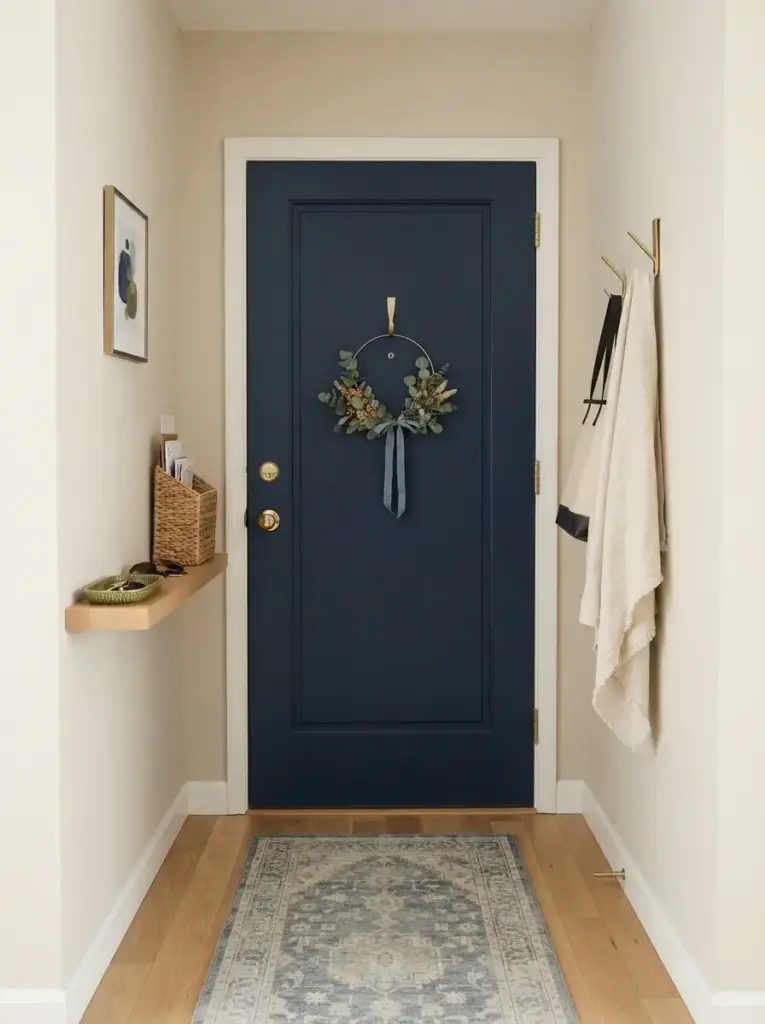
Front doors take up a large part of a small entryway, so their color and hardware affect the whole design. Clean the door, touch up scuffs when permitted, and replace temporary paper notices with a neat holder or remove them entirely. Renters can add a removable vinyl panel, a lightweight wreath, or an over-the-door hook that does not prevent the door from closing. Owners may consider painting the interior side in deep green, navy, warm black, or clay for a stronger focal point.
Treating the door as decor creates impact without taking floor space. The idea suits very small apartments where there is no room for a console or bench. Coordinate the door with nearby accents rather than matching everything exactly. A navy door can pair with a muted blue runner and brass tray, while an olive door works with natural wood and cream textiles. Check lease rules before changing hardware or paint. Avoid thick over-the-door organizers that scrape the frame or make the entrance look crowded. Keep locks, peepholes, and safety features fully accessible.
Make a Corner Work With Triangular or Curved Pieces
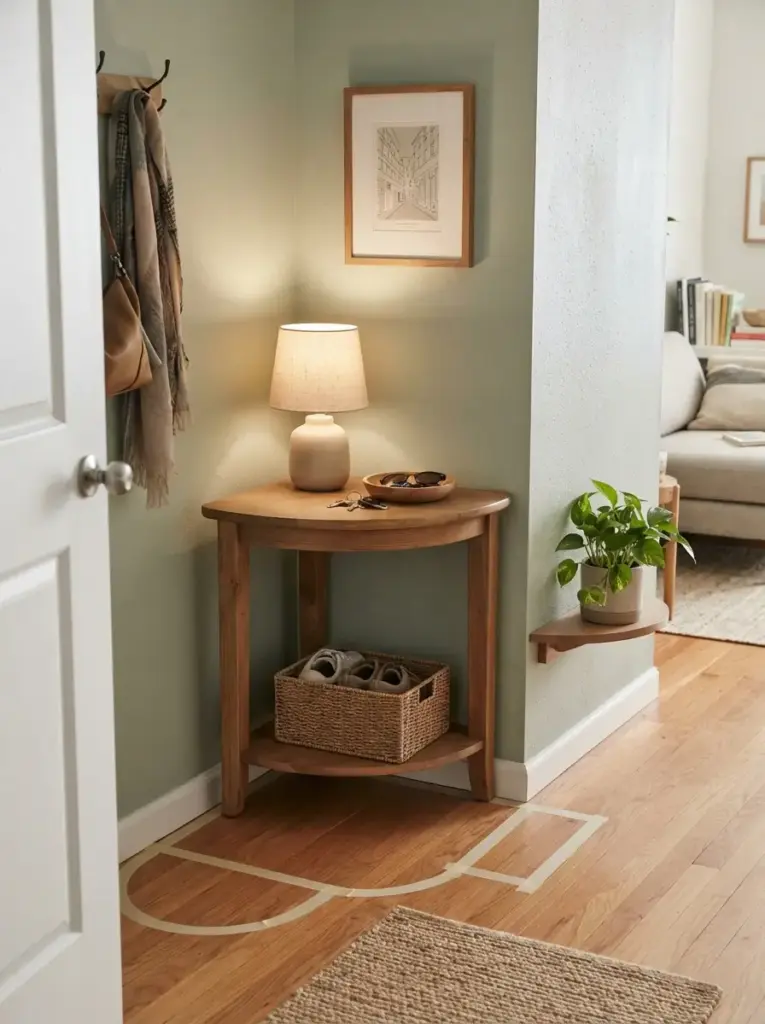
Unused corners can hold practical storage when straight furniture does not fit. A triangular shelf, a rounded pedestal table, a corner basket, or a narrow curved console may provide enough space for keys and a lamp while keeping the walkway open. Rounded edges are especially useful near tight turns because they reduce bumps and create smoother movement. Measure from the corner to the door swing, then mark the footprint with tape before buying anything.
Corner solutions make sense because they use space that often remains empty. Studio apartments, awkward layouts, and entrances that open directly into the living room can benefit from this approach. A small round table with a lower shelf can hold a tray above and shoes below, while a wall-mounted corner shelf suits renters who need almost zero floor depth. Keep styling simple with one lamp, one bowl, or one plant. Avoid pushing a standard rectangular cabinet into a corner where it projects into the path. Furniture should follow the shape of the available space rather than forcing the room to work around it.
Keep the Color Palette Limited and Repeated
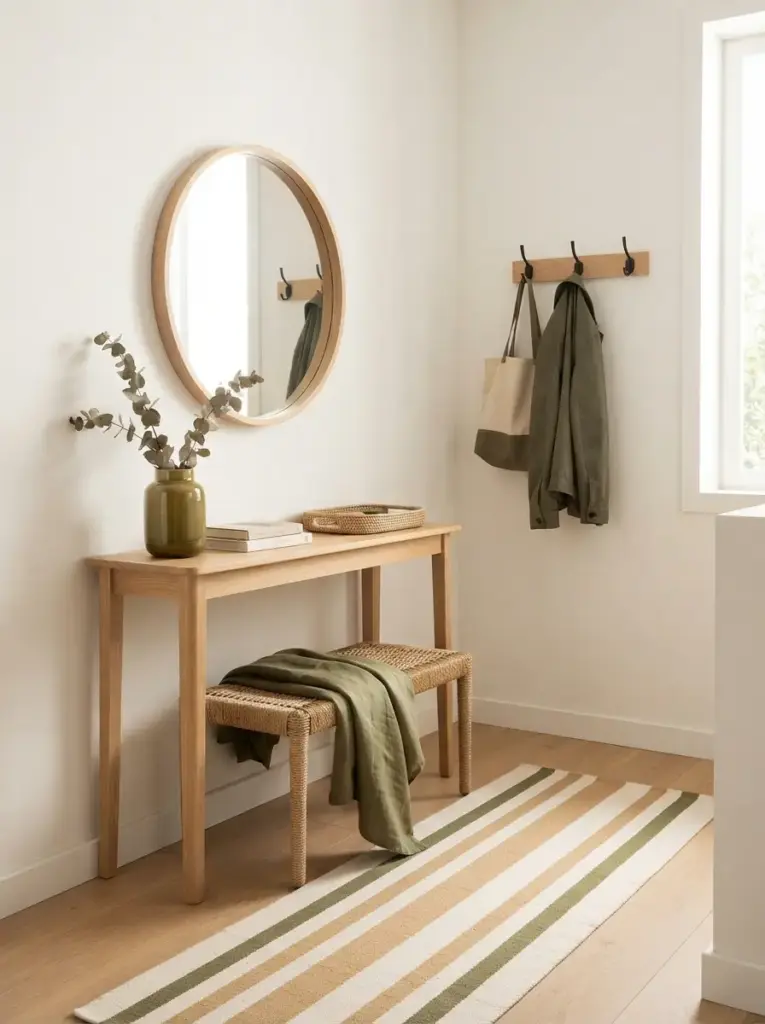
Color control helps a small entryway feel calm, even when it contains several functional pieces. Choose one main neutral, one supporting finish, and one accent color. For example, warm white walls, light oak furniture, and olive textiles create a soft, natural scheme. Another combination could use pale gray, black metal, and rust accents for a more graphic look. Repeat each color at least twice in small ways, such as matching the rug stripe to the artwork or the hook finish to the mirror frame.
Repetition creates visual order because the eye reads separate objects as part of one plan. Beginners and renters working with fixed flooring or wall colors will find this method especially helpful. Start with the permanent elements, including the door, floor, and built-in trim, then choose decor that works with them. Avoid mixing many unrelated wood tones, bright colors, and metal finishes in a two-foot-wide area. Variation can still work, but it needs a clear link. Two wood tones with similar warm undertones feel more connected than one orange oak and one cool gray wood.
Common Small Apartment Entryway Decor Mistakes to Avoid
Crowding the walkway causes the most immediate problem. Furniture may look slim online, but it still feels intrusive once doors, bags, and people move through the area. Measure the narrowest point, account for the door swing, and use painter’s tape to test each footprint. Pieces that reduce the path below a comfortable width should move elsewhere, even when they offer useful storage. Daily movement matters more than filling an empty wall.
Overdecorating creates another common issue. Small entryways cannot support the same number of accessories as a large foyer. Several signs, baskets, plants, frames, and pillows compete for attention and make cleaning harder. Keep one focal point and let practical items provide some of the decoration. Beautiful hooks, a patterned runner, or a sculptural lamp can carry visual interest without extra clutter.
Poor lighting can flatten colors and make the area feel unwelcoming. Cool bulbs, exposed glare, and shadows near the floor make it harder to find shoes or keys. Use warm 2700K to 3000K light, place a lamp near the mirror when possible, and add motion lighting for dark corners. Check whether the front door blocks the light when open.
Ignoring storage limits usually leads to overflow. Shoe racks, hooks, and mail trays only work when they hold a controlled amount. Set a realistic capacity, rotate seasonal pieces, and move backups into closets or under-bed storage. Small Apartment Entryway Decor looks best when the system supports everyday habits rather than trying to store the entire household.
Choosing delicate materials also causes frustration. Pale rugs, unstable tables, and unsealed baskets may not handle wet shoes, heavy bags, or frequent cleaning. Pick washable textiles, durable finishes, and furniture that stays steady when someone brushes past it. Practical materials keep the entrance attractive with less effort.
Budget-Friendly Entryway Decorating Tips
Low-cost improvements can change the space without requiring a full furniture purchase. Begin by editing what already sits near the door. Remove unused shoes, relocate extra coats, clean the baseboards, and wipe the door. A tidy entrance often reveals that only one or two additions are actually needed. Shop your home for a small tray, basket, framed print, stool, or lamp before buying new pieces.
Secondhand furniture can offer better quality than many inexpensive new options. Search for narrow side tables, telephone tables, small benches, and wall shelves rather than using only the term entryway console. A solid wood piece can be cleaned, lightly sanded, or painted to match the apartment. Check dimensions before traveling to collect it, and inspect for wobbling or strong odors.
Removable products help renters spend less on repairs. Adhesive hooks, picture strips, plug-in sconces, rechargeable lamps, and peel-and-stick accents can solve common problems without permanent changes. Follow weight limits carefully and remove adhesive slowly according to instructions. Cheap mounting products may damage paint, so reliable hardware is worth a little more.
Small upgrades can also make basic items feel intentional. Replace mismatched plastic trays with one shallow basket, add a washable cushion to a storage cube, or paint a thrifted frame to match existing hardware. Spend the largest part of the budget on the item used every day, such as a bench, a shoe cabinet, or a rug, then keep accessories simple.
Small Apartment Entryway Decor Tips for Better Daily Use
Daily routines should guide the layout. Place keys where your hand naturally reaches after closing the door, store shoes near the point where you remove them, and hang bags at shoulder height. Decorative arrangements that interrupt these habits will not stay organized for long. Watch how the household uses the entrance for a week before deciding which storage pieces to buy.
Cleaning access deserves equal attention. Leave enough room to vacuum around furniture, choose baskets that lift easily, and avoid rugs that require special care. Dirt gathers quickly near exterior doors, so a washable mat outside and a washable runner inside can reduce maintenance. Keep a small lint-free cloth in the console drawer for mirror and surface touch-ups.
Seasonal changes should be built into the plan. Summer may require a basket for sunglasses and caps, while winter needs space for wet shoes, gloves, and heavier coats. Rotate items instead of expanding storage every season. Compact homes benefit from limits, and those limits make the entry easier to reset.
Safety should stay visible throughout the decorating process. Do not cover vents, electrical panels, locks, or peepholes. Secure tall cabinets to the wall when permitted, keep cords away from the walking path, and make sure rugs do not slide. Households with children or pets should avoid breakable objects on low shelves and choose rounded furniture edges where possible.
Frequently Asked Questions
What furniture works best in a small apartment entryway?
Slim consoles, wall shelves, narrow shoe cabinets, compact benches, and storage ottomans usually work best. Depth matters more than width in many layouts, so look for pieces between 8 and 15 inches deep. Wall-mounted furniture can keep the floor visible and make cleaning easier. Measure the door swing and walking path before buying.
How can I decorate an entryway with no natural light?
Warm bulbs between 2700K and 3000K create a comfortable glow without looking yellow or harsh. Add a small lamp, plug-in sconce, or rechargeable light near a mirror to spread brightness. Use light or medium wall colors, reflective finishes, and one artificial plant or dried arrangement if live plants cannot survive there.
What colors make a small entryway feel more open?
Colors such as warm white, soft beige, pale greige, muted blue, and light taupe can keep the area airy, while darker shades work as controlled accents. Keep the palette limited and repeat colors across the rug, art, and accessories. Good lighting and clear floor space often affect openness more than paint color alone.
How do renters decorate an entryway without damaging the walls?
Removable hooks, adhesive picture strips, over-the-door storage, tension systems, freestanding benches, and lightweight mirrors offer flexible options. Test adhesives on a hidden spot and respect the listed weight limits. Plug-in sconces and rechargeable lamps can improve lighting without electrical work. Lease rules should guide any paint, hardware, or drilling decisions.
How do I keep shoes from taking over a tiny entrance?
Limit daily shoes to a set number per person and store the rest elsewhere. Use a two-tier rack, tilt-out cabinet, under-bench basket, or seasonal boot tray. Open shelves help dry damp shoes, while closed cabinets keep the view calm. Regular rotation matters more than buying a larger organizer.
Can a small entryway still have decorative accessories?
Decorative pieces work well when they also support the layout or remain limited in number. One mirror, one artwork, one lamp, or one plant can add character without crowding the space. Let useful pieces such as hooks, trays, baskets, and rugs contribute color and texture. Empty surface area is part of the design.
Conclusion
Thoughtful Small Apartment Entryway Decor starts with function and becomes warmer through color, lighting, and personal detail. A slim console can create a drop zone, a washable runner can define the area, and well-placed hooks can replace bulky storage. None of these ideas requires a large foyer. They only require accurate measurements, clear priorities, and a willingness to keep the number of objects under control.
Successful entryways support the way people actually enter and leave home. Begin with the biggest daily problem, choose one solution that fits the available depth, and test the layout before adding more. Renters can rely on removable hardware, compact furniture, and lighting that plugs in or recharges. Budget decorators can reuse baskets, shop secondhand, and improve the space through editing and cleaning. Warm welcomes come from order, comfort, and useful details, not from filling every wall. Small changes feel meaningful.