
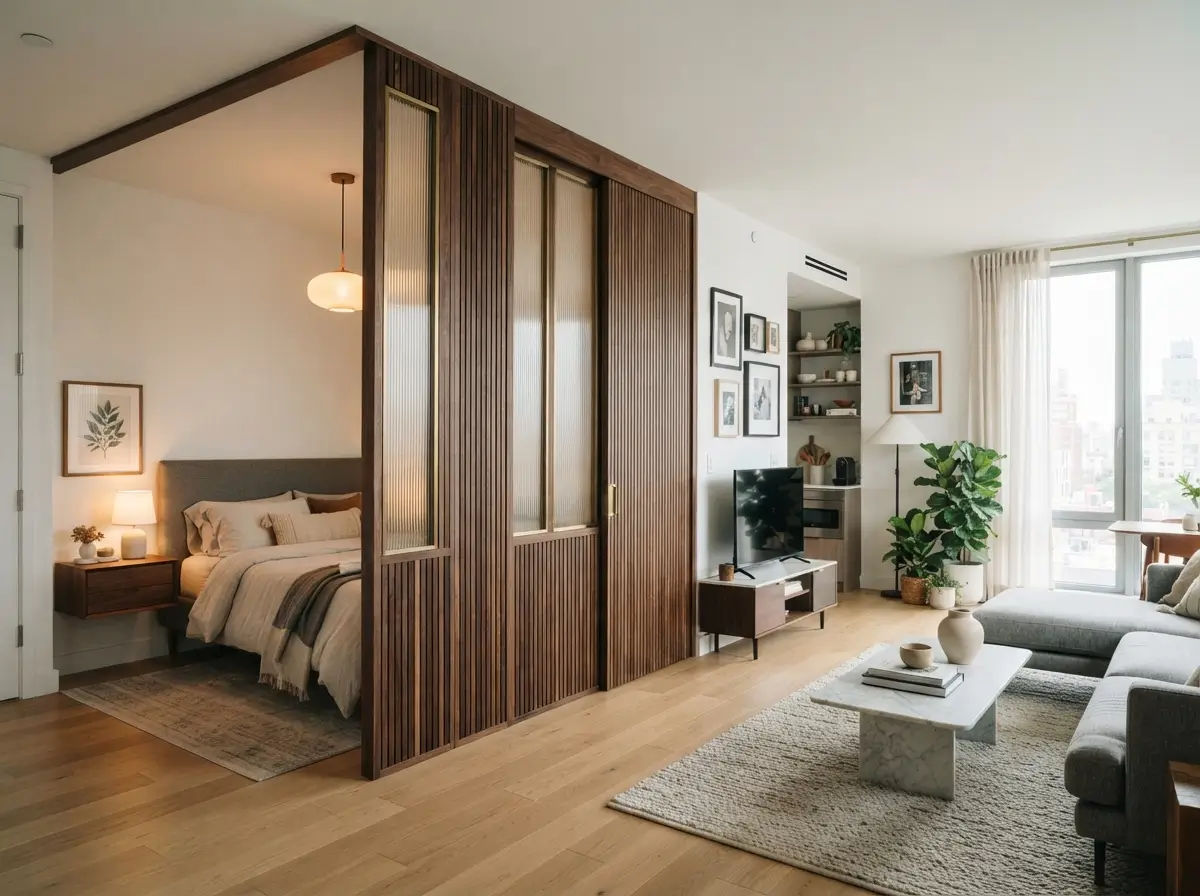

Living in one open room can feel freeing during the day and awkward at night. Your bed may sit beside the sofa, dining table, or entryway, making the entire apartment feel like a bedroom instead of a complete home. A well-chosen Studio Apartment Bedroom Divider can solve that problem without making the space dark, crowded, or difficult to move through. Smart dividing uses furniture, fabric, glass, wood, plants, and lighting to create a clear sleeping zone while protecting natural light and keeping the layout flexible.
Small-space decorating works best when every item earns its place. Bedroom dividers should provide privacy, improve the view from the entrance, support storage, or make furniture placement easier. Thick cabinets may overwhelm a narrow studio, while a light curtain or slim slatted screen can divide the same area with less visual weight. The ideas below explain how each option works, who it suits, what materials to use, and which mistakes to avoid, so beginners can plan a practical room rather than copy a pretty setup that does not function in daily life.
Can You Divide a Studio Apartment Bedroom Without Building a Wall?
Yes, you can create a defined sleeping area without permanent construction. Curtains, open shelving, folding panels, slatted screens, glass partitions, and tall furniture can separate the bed while allowing light and air to move through the room. Choose the divider according to how much privacy you need, how wide the studio is, and whether you rent or own. Renters usually do best with tension rods, freestanding shelving, ceiling tracks installed with permission, or foldable screens. Keep at least 30 to 36 inches of comfortable walking space where possible, and avoid placing a solid divider directly in front of the only window.
Ceiling Track Curtains for Flexible Privacy
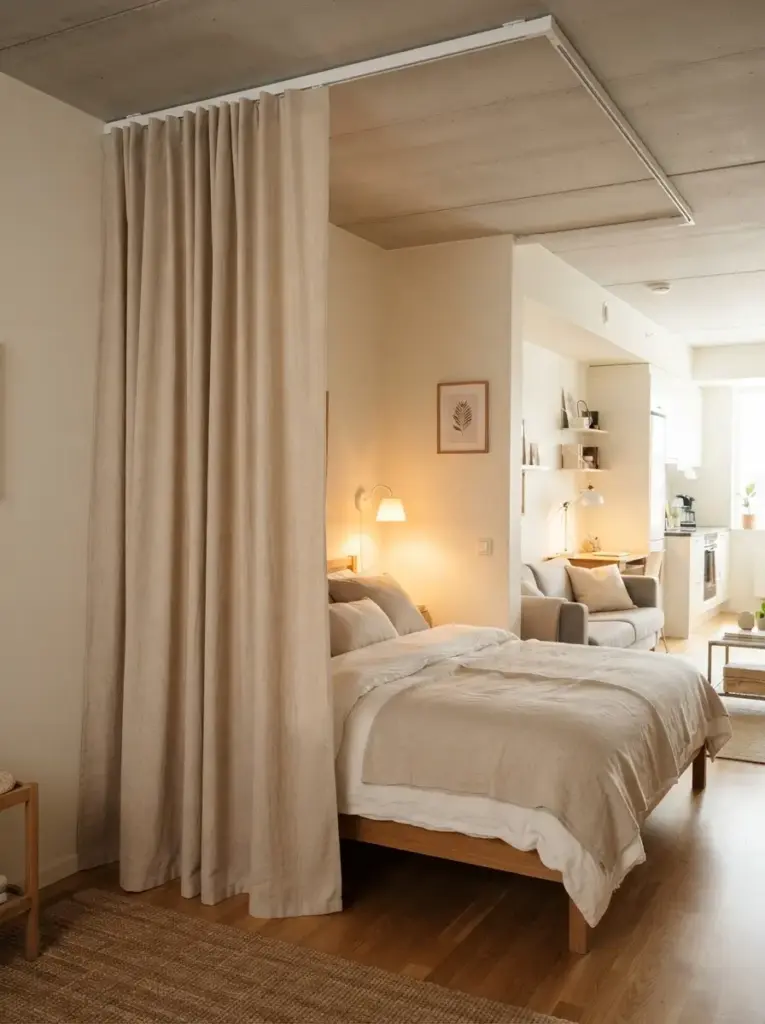
Ceiling-mounted curtains offer one of the easiest ways to turn a bed into a separate sleeping zone. A track looks cleaner than a standard wall rod because the fabric drops in a straight line from the ceiling and can slide fully open during the day. Choose medium-weight linen blend, cotton canvas, or lined polyester when privacy matters. Sheer fabric softens the view but will not hide the bed under strong lighting. Warm white, oatmeal, mushroom, pale gray, and soft taupe keep a small room calm, while dark olive, navy, or charcoal can make the bed area feel more enclosed in a bright studio.
Flexible fabric works especially well for renters, people who make the bed irregularly, and anyone who wants the divider to disappear when guests leave. Mount the track a few inches wider than the bed so the curtain stacks beyond the mattress instead of blocking the walkway. For better sleep, place a warm 2700K reading lamp inside the sleeping zone and use brighter 3000K to 3500K lighting near the kitchen or desk. Keep curtain hems about half an inch above the floor to prevent dust buildup and dragging. Before drilling into a rental ceiling, ask for written permission; where drilling is not allowed, a sturdy tension system or freestanding pipe frame provides a removable alternative.
Open Bookcases That Divide and Store
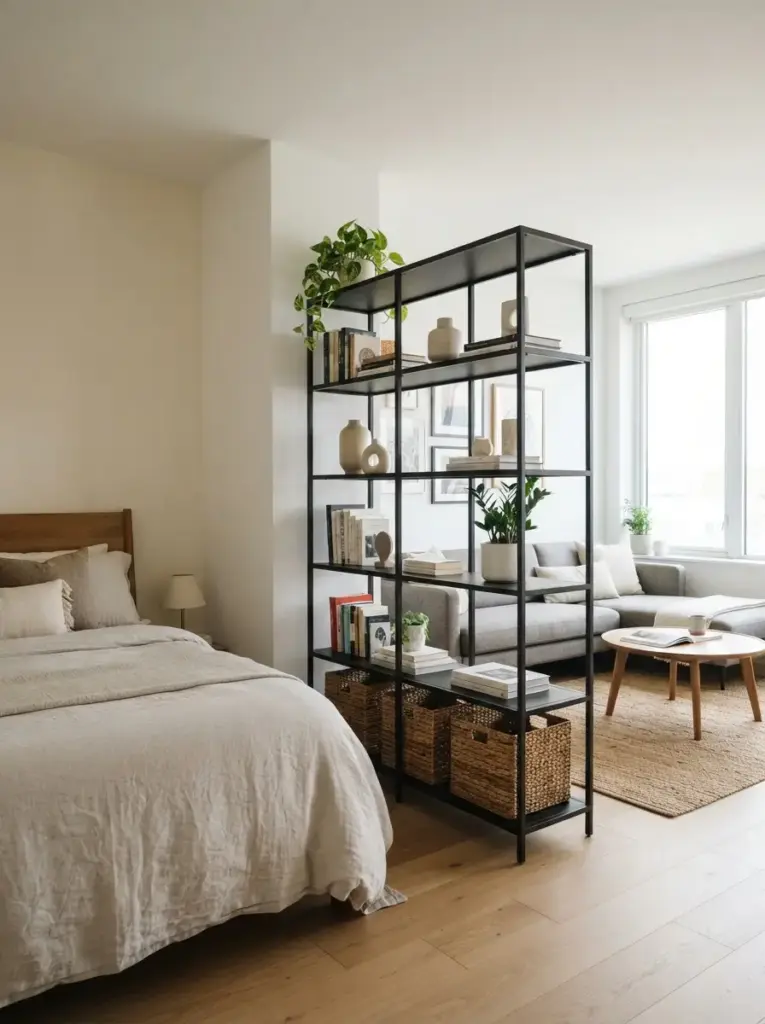
Open shelving can separate the bed from the living area while adding valuable storage. Unlike a solid wardrobe, a bookcase with open backs lets daylight pass through and keeps the room from feeling boxed in. Look for shelves no deeper than 12 to 14 inches in very small studios, because deeper furniture can steal walking space. Place books, woven boxes, ceramics, and a few plants across the shelves, but leave at least one-third of the openings visually empty. Too many objects turn an airy divider into a heavy wall and make the apartment look cluttered from both sides.
Storage-based zoning suits readers, collectors, and beginners who need one purchase to solve two problems. Anchor tall furniture whenever the lease and wall type allow, especially if children, pets, or frequent guests may pull on the shelves. A black metal frame creates a crisp modern line, natural oak warms white walls, and walnut works well with cream, rust, and muted green accents. Add matching baskets on the bedroom side for socks, chargers, or spare bedding, then style the living side with books and decor. Correct orientation matters: run the shelf perpendicular to the longest wall when you want a distinct sleeping corner, or place it parallel to the bed when you only need to hide the pillows from the entry.
Vertical Wood Slats for Light and Structure
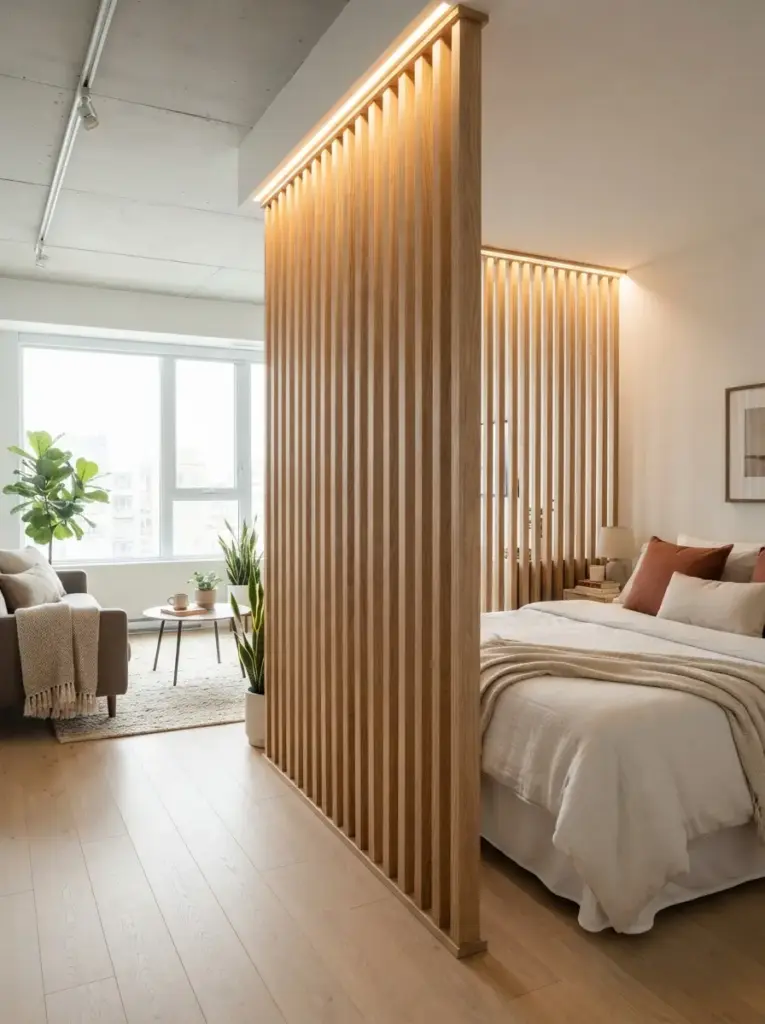
Vertical slats create a strong architectural boundary without the weight of a full wall. Narrow strips of oak, pine, ash, or painted MDF can run from floor to ceiling, leaving small gaps that filter views and daylight. Spacing between one and two inches gives partial privacy while maintaining an open feeling. Slim slats also draw the eye upward, which helps a low ceiling feel taller. Natural wood pairs well with white, warm gray, clay, and muted sage, while black-stained slats add definition in studios with large windows and pale floors.
Structured slat dividers fit homeowners, long-term renters with approval, and design lovers who want a built-in result. Keep the slatted section slightly wider than the bed rather than stretching it across the entire apartment. Partial coverage creates a sense of enclosure while preserving a clear route to the window. Hidden LED tape can wash the slats with soft light, but choose a diffuser channel and 2700K bulbs to avoid harsh dots. Poorly attached slats may wobble, so secure them into reliable ceiling and floor supports or use a professionally built freestanding frame.
Fluted or Frosted Glass Panels for Bright Privacy
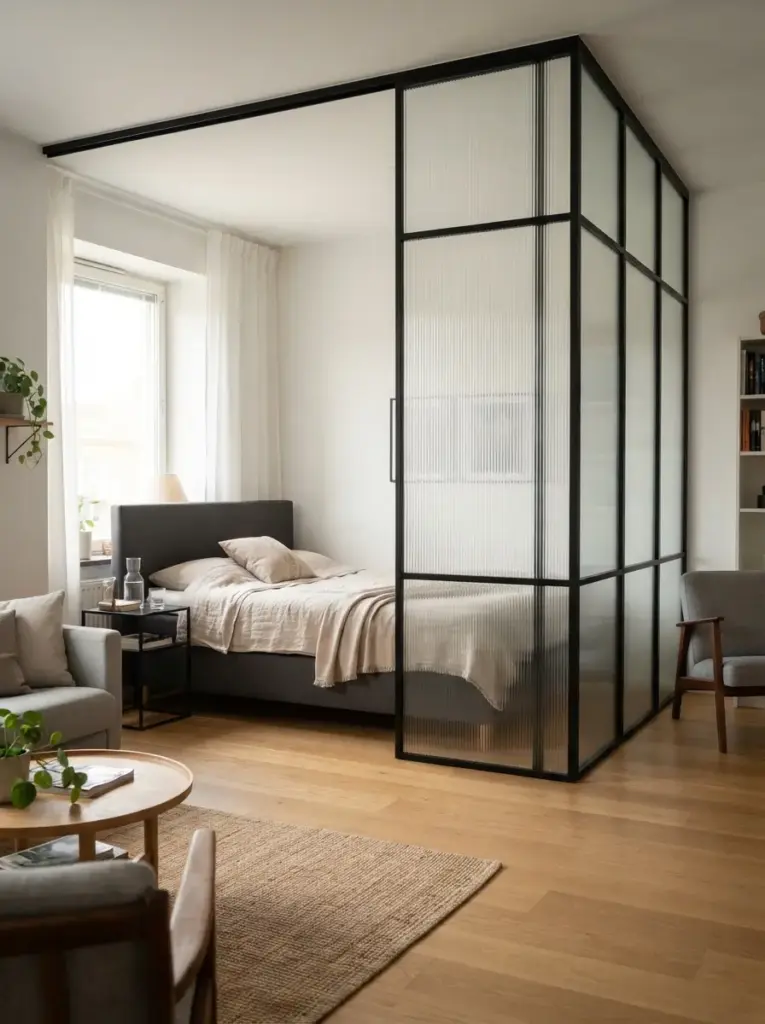
Frosted, ribbed, or fluted glass divides a studio while allowing natural light to reach the bed. Clear glass looks elegant but offers little privacy, so textured glass works better when the mattress sits close to the living area. Fixed panels can stop beside the bed, while sliding glass doors can close the sleeping zone at night. Because glass reflects light, the overall room often feels larger than it would with a solid partition, especially when the only window sits near the bed.
Bright glass partitions suit owners and renters who have permission for a more permanent upgrade. Safety matters more than appearance, so use tempered or laminated glass installed by a qualified professional. Apply removable frosted film to existing clear panels when privacy needs change, or the budget is tight. Keep fingerprints under control with a weekly wipe using a lint-free cloth, and avoid placing open shelves directly against ribbed glass where dust becomes difficult to reach. Pair the partition with a low upholstered bed and one compact nightstand so the framed lines remain the main feature rather than competing with bulky furniture.
Freestanding Folding Screens for Renters
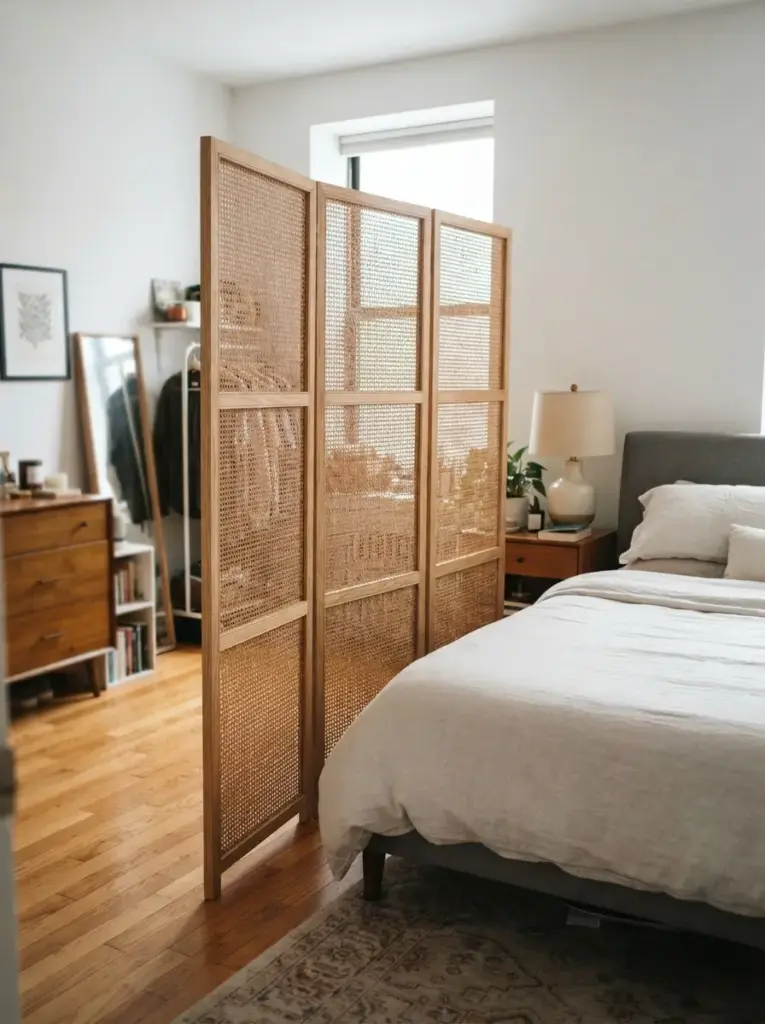
Folding screens provide instant separation with no drilling, measuring, or permanent changes. Three or four panels usually cover the side of a double or queen bed, while a taller screen hides pillows and bedside clutter more effectively. Cane and rattan allow some light through, upholstered versions soften sound, and solid wood offers the most visual privacy. Choose a screen that shares one color or material with the rest of the room, such as light oak legs, black metal details, or warm cream fabric.
Portable screens work best for renters, frequent movers, and people who rearrange furniture often. Angle the panels slightly instead of stretching them completely flat, because the zigzag shape improves stability. Leave enough space between the screen and the mattress to change sheets comfortably. Budget versions can be made from three lightweight doors or plywood panels joined with hinges, then covered in peel-and-stick wallpaper or fabric. Avoid tiny decorative screens that end below the headboard; they may add color, but they will not create meaningful separation or privacy.
Sliding Barn Style Panels With a Modern Finish
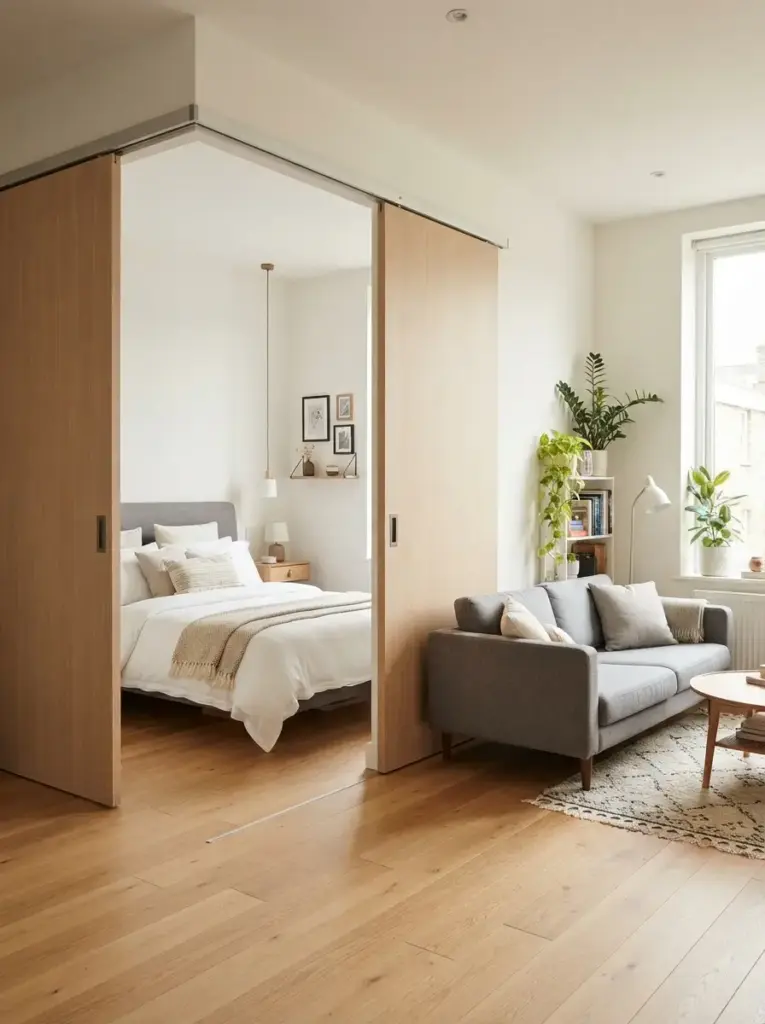
Sliding panels save floor space because they move sideways instead of swinging into the room. Consider smooth plywood, pale oak veneer, reeded panels, or matte-painted doors in warm white, greige, or charcoal. A single wide panel can cover the bed opening, while two lighter panels provide easier movement. Exposed black hardware suits industrial decor, though a concealed top track gives a more streamlined result.
Space-saving doors suit owners and long-term renters with landlord approval, especially in studios where a curtain feels too casual. Measure the wall area beside the opening before buying hardware, because every panel needs enough clear space to slide fully away. Soft-close fittings reduce noise and prevent slammed doors from shaking nearby shelves. For a lower-cost version, use lightweight hollow-core doors and paint them to match the wall. Small, dim studios usually benefit from pale finishes that reflect more light.
Half Walls With Built-In Storage
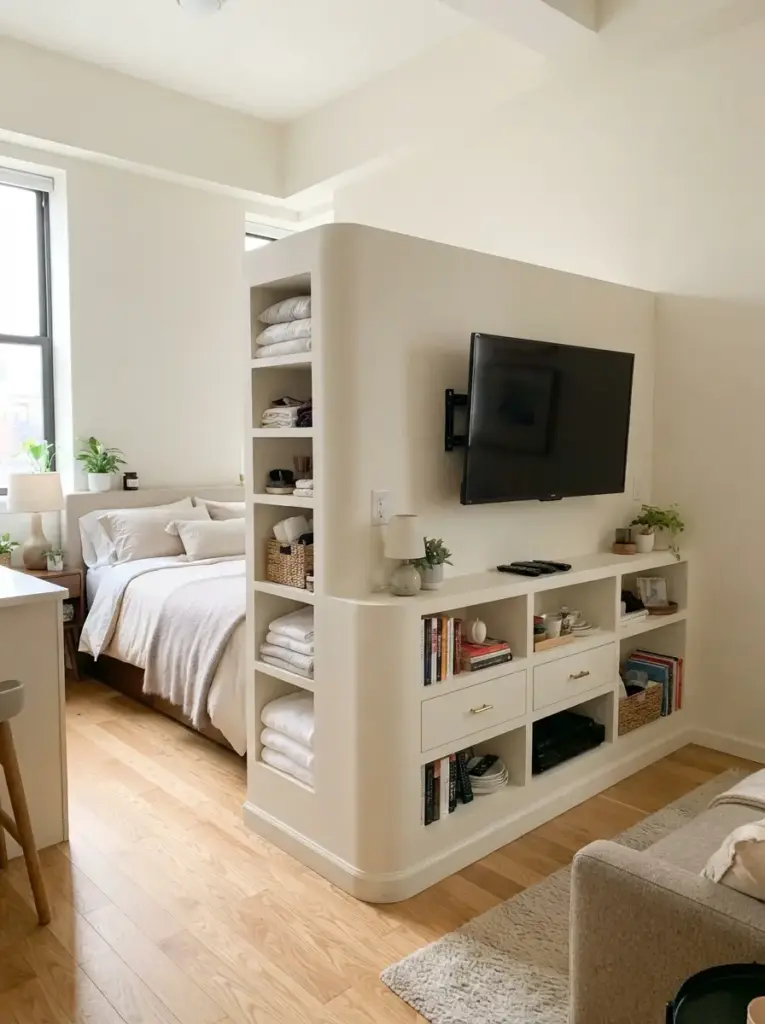
Half walls create a clear boundary while keeping the ceiling open. A partition around 42 to 54 inches high can hide the mattress, support a television, hold a narrow ledge, or contain drawers and shelves. Custom cabinetry facing the living area may store books, media equipment, or dining supplies, while bedroom-side cubbies can hold linens and personal items. Finishing the wall in the same color as the main room helps it blend into the architecture.
Dual-purpose half walls suit owners, serious renovators, and compact apartments that lack storage. Plan electrical needs before construction if the wall will support lamps, charging points, or a television. Keep the depth modest so the divider does not consume the center of the studio. Rounded corners reduce bumps along narrow routes, and shallow drawers work better than deep cupboards where clearance is limited. People on a budget can imitate the effect with two matching low cabinets secured back-to-back, topped with a single finished board. Stability and fire safety still matter, so avoid improvised structures that block exits, heaters, or ventilation.
Wardrobes Used as Privacy Walls
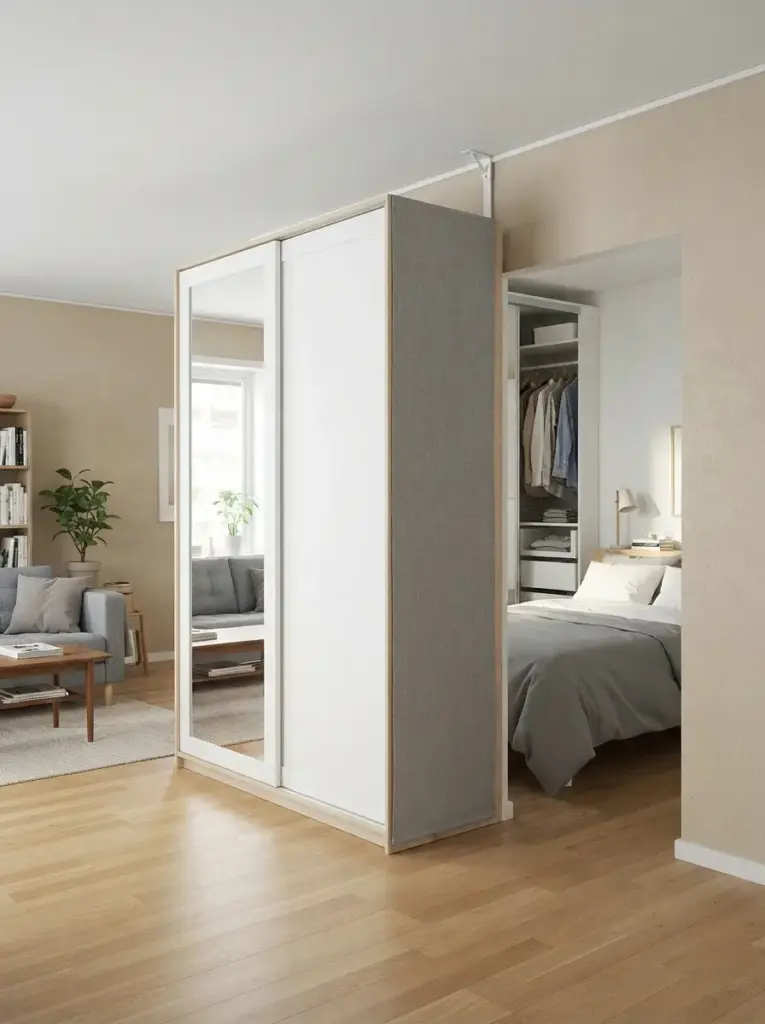
Freestanding wardrobes can create near-solid privacy and add essential clothing storage. Placing a wardrobe perpendicular to the wall forms a bedroom edge, especially when the back faces the living area. Cover an unattractive back with thin plywood, removable wallpaper, fabric panels, or painted hardboard. Sliding-door wardrobes need less front clearance than hinged doors, making them useful beside narrow walkways. White or pale wood keeps the block visually lighter, while a mirrored door can reflect daylight if it does not face the bed directly.
Wardrobe dividers work well for studios with limited closets and residents who prefer strong separation. Leave a small gap near the ceiling to prevent the piece from looking built into the room in an awkward way, unless a custom floor-to-ceiling unit is planned. Secure tall cabinets to a wall, ceiling brace, or approved support system to reduce tipping risk. Position the doors toward the sleeping side when clothes are part of the bedtime routine, or toward the entry when the wardrobe doubles as a coat closet. Avoid crowding both sides with furniture; one tall storage wall already carries considerable visual weight.
Rotating TV Units Between Bed and Sofa
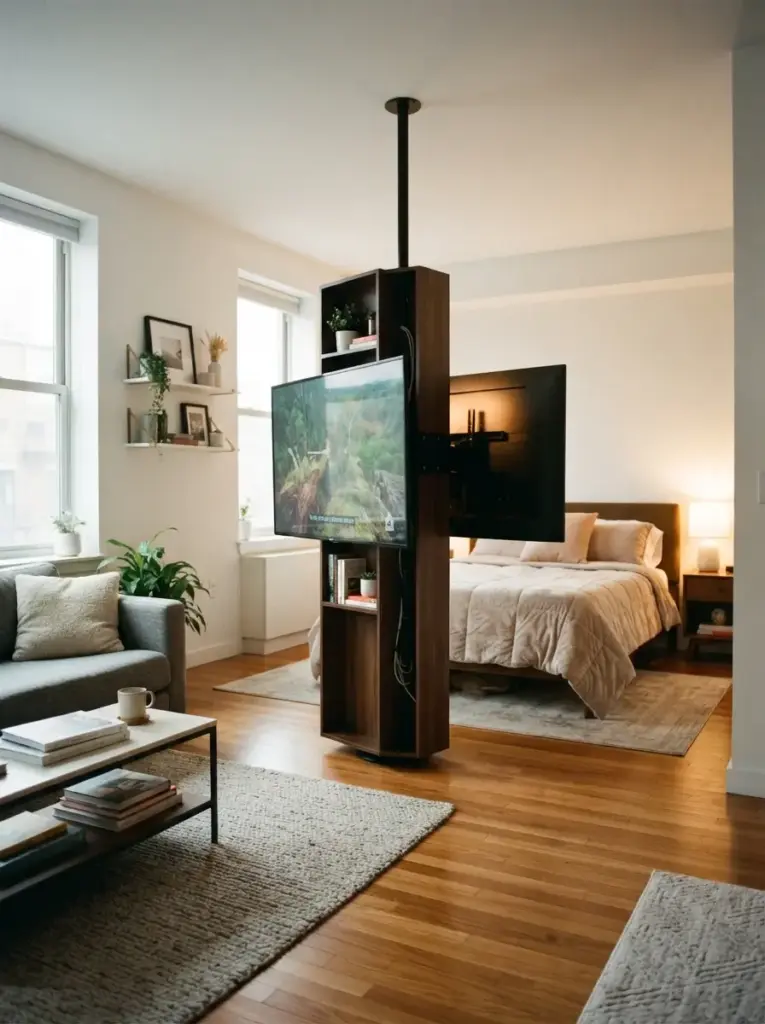
Rotating media units divide the apartment and let one television serve the bed and seating area. Compared with placing a large television on a solid wall, a slim rotating unit keeps the divider narrow and preserves sightlines around it. Cable management is essential because loose cords immediately make the arrangement look unfinished.
Shared media dividers suit movie lovers and residents who want fewer electronics in a small home. Choose a mount rated for the television’s size and weight, then secure it according to the manufacturer’s instructions. Keep the screen centered near seated eye level, which is often lower than people expect. Place the unit where rotation will not hit a lamp, plant, curtain, or shelf. Bedrooms benefit from softer lighting, so add a dimmable 2700K lamp behind the divider rather than watching a bright screen in a dark room.
Upholstered Panels for a Softer Boundary
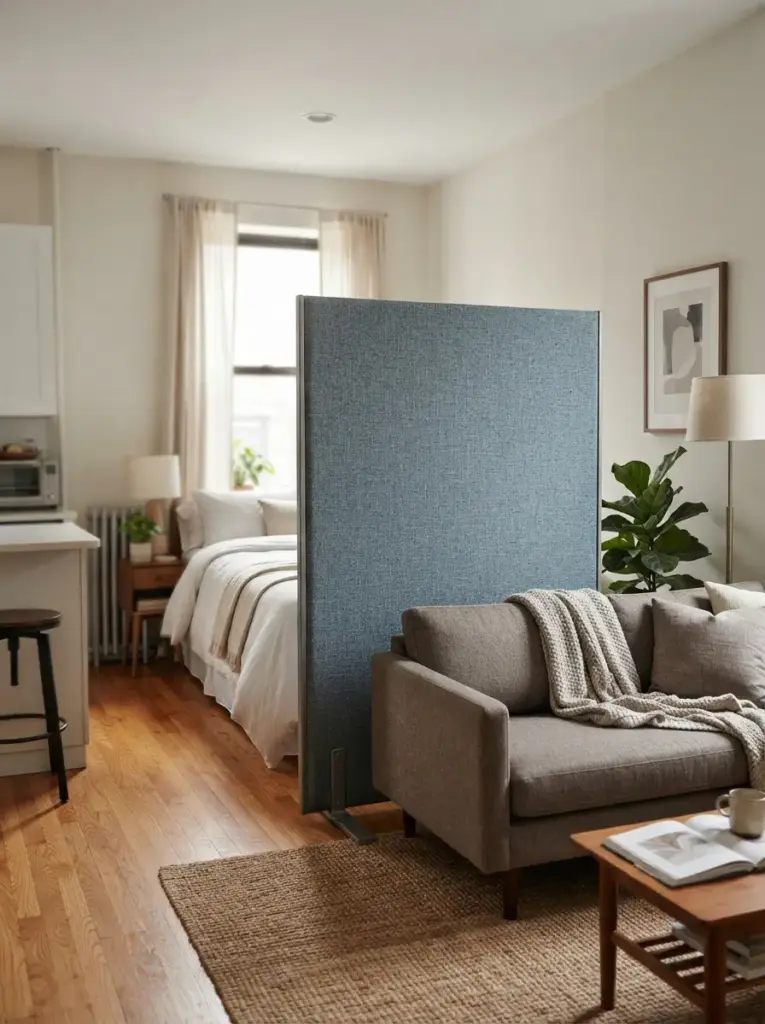
Upholstered divider panels introduce texture and reduce the hard, echoing quality common in small apartments. Floor-standing panels covered in wool blend, felt, boucle, or durable woven fabric can conceal the bed and create a comfortable visual backdrop for the sofa. Dusty blue, camel, moss, oatmeal, and warm gray add color without dominating the room.
Soft panels suit remote workers, renters, and residents who want slightly better acoustic comfort. Freestanding office-style screens can be repurposed at a lower cost, provided their base is stable and the height is suitable. Keep fabric several inches away from heaters, cooking areas, and open flames. Pair a textured divider with smooth bedding and simple curtains to prevent too many competing fabrics. Narrow studios should use a single panel or two slim sections rather than a thick, fully enclosed booth.
Plant Shelves That Create a Living Screen
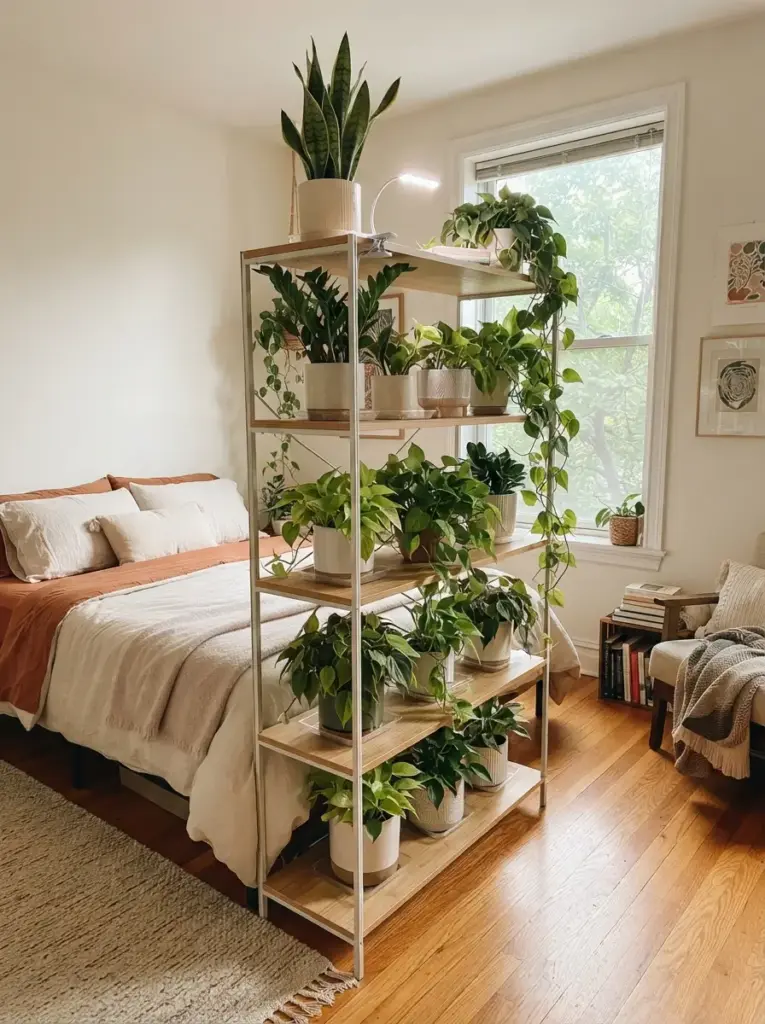
Plants can soften the view of a bed while keeping the divider light and breathable. A narrow open shelf filled with upright plants creates more structure than scattered pots on the floor. Snake plants, ZZ plants, pothos, and heartleaf philodendrons tolerate many indoor conditions, though every plant still needs suitable light and care.
Living screens suit plant lovers and bright studios where privacy needs are moderate. Place waterproof trays under every pot and avoid watering above bedding or electronics. Grow lights can help in darker corners; choose full-spectrum fixtures that look white rather than purple, and place them on a timer. Artificial plants may work in windowless areas, but use fewer, higher-quality pieces instead of filling every shelf with shiny plastic leaves. Pair greenery with a lightweight wood or metal frame so the divider does not feel bulky.
Rope, Cord, or Macrame Partitions With Clean Lines
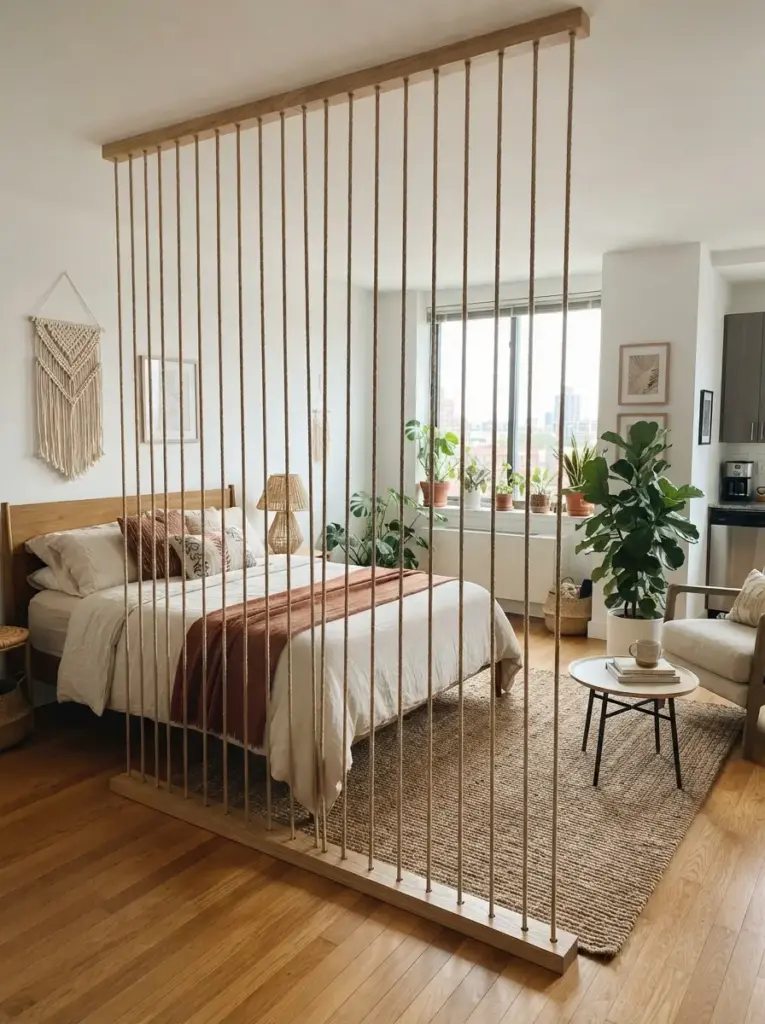
Cord dividers create visual separation without blocking light. Straight vertical ropes look more modern than dense decorative knots and can stretch from a top rail to a weighted base. Cotton cord feels soft, natural jute adds texture, and synthetic rope handles moisture and cleaning more easily. Spacing determines privacy, so closer lines hide more of the bed but collect more dust.
Lightweight cord partitions suit bohemian homes, casual rentals, and narrow studios where solid furniture would feel too large. Use a removable freestanding frame if ceiling attachment is not allowed. Keep loops and loose ends out of reach of small children and pets. Place the divider beside the bed rather than around all four sides, then support the boundary with a rug and separate lighting. Budget makers can build a simple wood frame and staple or tie cord at even intervals, but measure carefully so the pattern remains consistent. Cord dividers offer limited sound control and only partial privacy, so they work best when zoning matters more than concealment.
Raised Platforms With Integrated Dividers
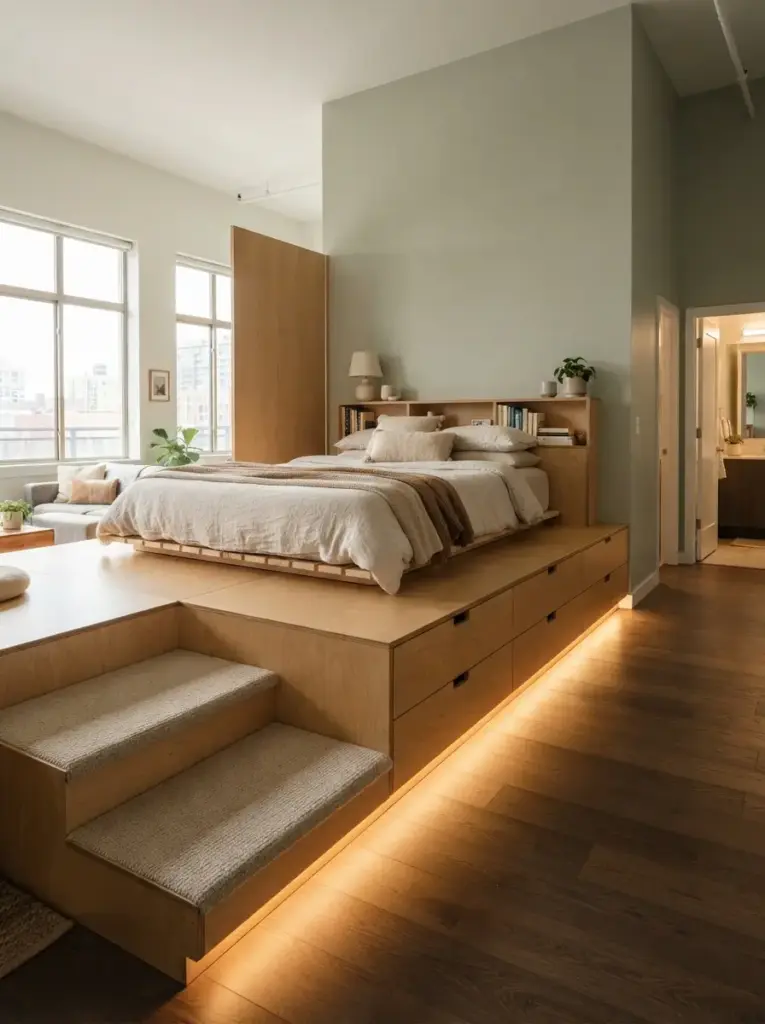
Raised sleeping platforms distinguish the bedroom through a change in floor level. Even a modest step can signal that the bed belongs to a separate zone. Custom platforms may include drawers, lift-up storage, a low bookcase, or a slatted edge. Light wood keeps the structure from looking heavy, while painted plywood can match the walls for a seamless result. LED strip lighting under the platform edge improves visibility at night and highlights the change in level; choose warm 2700K light and a motion sensor to avoid leaving it on all evening.
Platform designs suit owners, high-ceiling studios, and people who need serious storage. Safe construction is essential because the structure carries body weight and creates a trip edge. Add a broad step, nonslip finish, and clear route to the bathroom. Low ceilings may feel tighter once the mattress rises, so measure the distance from the mattress top to the ceiling before committing. Use a low-profile bed or place the mattress on a ventilated base rather than stacking a tall frame on the platform. Renters can create a mild version with a large area rug, low storage drawers, and a slim screen, gaining visual separation without altering the floor.
Color Blocking and Lighting as an Invisible Divider
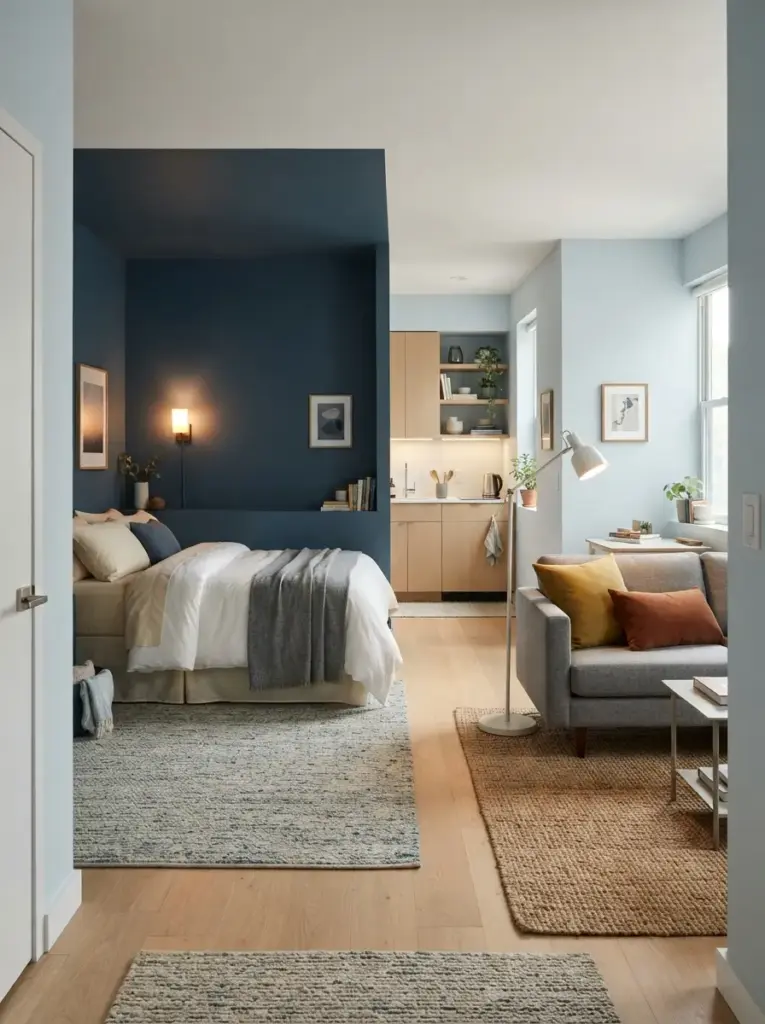
Paint and lighting can divide a studio without adding physical barriers. Cover the bed wall and a small section of the ceiling in a deeper color to create a clear sleeping nook. Muted olive, clay, smoky blue, warm taupe, and soft charcoal work well with neutral bedding. A lighter version of the same color in the living zone keeps the palette connected. Removable wallpaper or peel-and-stick panels offer a rental-friendly substitute, though test them in a hidden spot to reduce the risk of paint damage.
Invisible zoning suits very small studios where every inch of floor space matters. Use separate lighting circuits or smart bulbs so the bedroom can glow warmly at 2200K to 2700K while the work and kitchen areas stay brighter around 3000K to 3500K. Place a pendant or wall sconce over the bedside area and a floor lamp beside the sofa to reinforce the two functions. Rugs also help: tuck a 5-by-8-foot rug under the lower two-thirds of the bed, then use a different texture in the seating area. Color alone will not provide privacy, but it can make an open studio feel organized and intentional.
Curtain and Bookcase Combinations for Layered Zoning
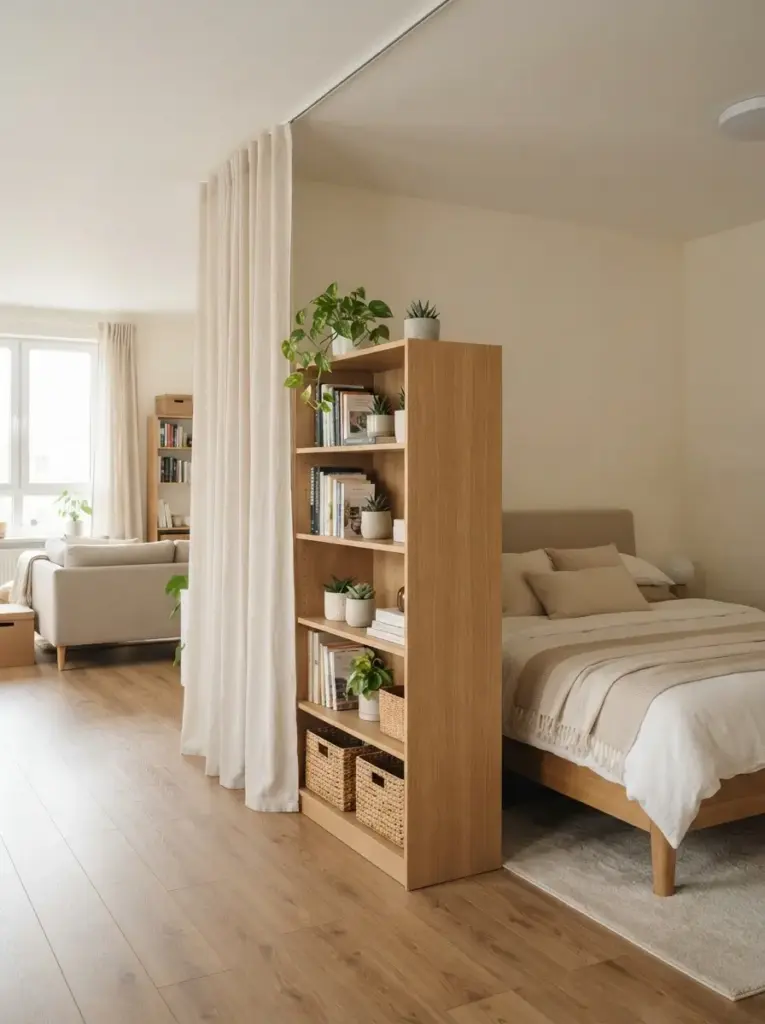
Combining a slim bookcase with a curtain provides storage, filtered light, and adjustable privacy. The shelf can mark the edge of the bed during the day, while the curtain closes the remaining gap at night. Matching the curtain to the wall color keeps the setup calm, and choosing a shelf finish that repeats the bed frame or flooring ties the arrangement together. Open shelves nearest the window preserve light, while closed baskets near the floor hide everyday clutter.
Layered dividers suit couples, people who host guests, and renters who need more control than one lightweight screen provides. Keep both elements visually simple because two divider types can easily look busy. Use plain curtains, repeated storage boxes, and only a few decorative objects. Mounting the track parallel to the bookcase creates a tidy corner, but leave enough clearance for the fabric to slide without catching on books or plants. Budget shoppers can pair a secondhand open shelf with an inexpensive ceiling curtain system. Careful measuring matters most: a divider that stops in the middle of a walkway will create daily frustration, no matter how attractive it looks.
Common Studio Divider Mistakes to Avoid
Oversized dividers cause the most common layout problem. A deep wardrobe or solid cabinet may provide privacy, yet it can also block the only path through the apartment. Mark the proposed footprint with painter’s tape before buying anything, then walk around it while carrying laundry, groceries, and bedding. Door swings, drawer clearance, radiator space, and access to windows must remain usable. Very short pieces may fail to hide the bed, while floor-to-ceiling walls can reduce light and air. Partial-height or open designs often provide the best balance in studios with one window.
Blocked daylight makes small rooms feel cramped and forces residents to use electric lighting throughout the day. Keep transparent, slatted, open, or low dividers near the window. Solid pieces usually belong closer to an interior wall. Poor stability creates a safety risk, especially with tall bookcases, wardrobes, and television mounts. Follow anchoring instructions, use anti-tip hardware, and avoid balancing heavy decor on narrow shelves. Written approval protects you when installing tracks, brackets, or fixed panels, and removable options should still be tested to prevent surface damage.
Mixed styles can make the sleeping zone look like an afterthought. Choose one main material and repeat it elsewhere, such as oak slats with an oak coffee table or black metal shelving with black lamp bases. Crowding the divider with decor is another frequent issue. Leave open space so light can move and the eye can rest. Neglected lighting can also weaken the result. One bright ceiling fixture makes every zone feel the same, so add separate lamps for sleeping, relaxing, working, and cooking. Curtains and solid furniture should not press against heaters, air vents, or damp exterior walls.
Budget-Friendly Divider Tips That Still Look Finished
Secondhand furniture often offers the best value because bookcases, wardrobes, folding screens, and low cabinets are widely available. Check dimensions before shopping and carry a tape measure, since inexpensive furniture is not a bargain when it blocks the walkway. Paint mismatched pieces in one low-sheen color to create consistency. Warm white, mushroom, or soft black can make basic materials look more deliberate. Replace cheap plastic handles with simple metal or wood pulls, and cover unfinished backs with thin hardboard or peel-and-stick paper.
Fabric provides another low-cost route. Ready-made curtains, canvas drop cloths, and flat sheets can work as dividers when the fabric hangs neatly and has enough fullness. Aim for curtain width around one and a half to two times the track length so the folds look intentional. Hem the bottom rather than letting excess material pool on the floor. Tension rods work only across suitable narrow spans; wider areas need a stable frame or approved ceiling track. DIY folding screens can be built from lightweight panels and hinges, but sand edges carefully and use feet wide enough to prevent tipping.
Small styling choices help inexpensive dividers look complete. Repeat two or three colors across bedding, curtains, rugs, and storage boxes instead of buying many unrelated items. Use warm bulbs with the same color temperature in nearby lamps. Hide cords in adhesive channels, keep baskets aligned, and remove packaging labels from visible containers. Spend money first on stability, correct size, and smooth movement. One solid, well-placed divider usually looks better than several cheap screens competing for attention.
Studio Apartment Bedroom Divider Tips for Better Results
Planning should begin with the bed, not the divider. Place the mattress where sleep feels comfortable, then study the view from the entry, sofa, kitchen, and desk. Decide which sightline needs screening most. Many studios only need to hide the head of the bed rather than every side. That smaller target allows a lighter, cheaper divider and keeps the room open. Measure ceiling height, walkway width, furniture depth, and the distance to windows before choosing materials.
Function should guide the design. People who work from home may need a divider that reduces distraction, while frequent hosts may value full visual privacy. Residents with limited closets may gain more from wardrobes or storage walls than from decorative screens. Couples should consider sound, movement, and access from both sides of the bed. Single sleepers can place one side of the mattress near a wall to free more space, though leaving a narrow gap makes changing sheets easier.
Maintenance deserves attention from the start. Fabric collects dust, plants need care, open shelves require editing, and glass shows fingerprints. Choose the option you can realistically maintain. Keep bedding simple behind visually active dividers, and repeat the divider material in one or two small details elsewhere. Strong zoning comes from several quiet signals working together: a rug under the bed, warm bedside lighting, coordinated color, and a clear walkway. No single object needs to carry the entire design.
Frequently Asked Questions
What Is the Best Divider for a Small Studio Apartment?
Open bookcases, ceiling curtains, slim slatted screens, and folding panels usually work well because they create separation without consuming too much floor space. The best choice depends on whether you need storage, full privacy, or flexibility. A bookcase suits someone who needs shelves, while a curtain works better when the divider should open completely. Very narrow studios often benefit from fabric or slats instead of deep cabinets. Measure the path around the bed and keep natural light in mind before buying.
How Can Renters Divide a Bedroom Without Damaging Walls?
Freestanding screens, open shelving, wardrobes, tension-supported curtains, and removable frames can create a bedroom zone with little or no drilling. Anti-tip safety may still require an approved attachment, so discuss tall furniture with the landlord. Felt pads protect floors, and removable adhesive products should be tested on a hidden area. Keep all original hardware and photograph the room before installation. Written permission is wise for ceiling tracks, fixed slats, or anything attached to electrical and structural surfaces.
Should a Studio Bedroom Divider Reach the Ceiling?
Floor-to-ceiling dividers provide stronger privacy and a more architectural appearance, but they can block light and airflow. Partial-height pieces often feel better in one-window apartments. Curtains and slim slats can reach the ceiling without feeling too heavy because they remain flexible or allow gaps. Solid wardrobes, cabinets, and walls need more careful placement. Leave open space above bulky furniture unless the piece is custom fitted and ventilation has been considered.
Which Divider Color Makes a Studio Look Larger?
Warm white, light oak, pale gray, soft beige, and muted greige reflect more light and usually feel less bulky. Matching the divider to the wall color also reduces visual contrast. Dark colors can work when the studio has strong daylight and the divider is slim or open. Black metal frames, for example, may define zones without adding much physical mass. Avoid using several high-contrast colors on one partition, because the eye will stop at every change and the room may feel busier.
Can a Bedroom Divider Reduce Noise?
Upholstered panels, thick curtains, filled bookcases, and wardrobes can soften reflected sound and slightly reduce noise between zones. They will not soundproof an open studio because sound travels around gaps, ceilings, floors, and ventilation paths. Use rugs, fabric curtains, upholstered furniture, and soft bedding together for a quieter room. Weather stripping and acoustic seals only make sense on fully enclosed partitions with proper doors. Focus on reducing echo rather than expecting complete silence from a decorative divider.
How Much Space Should Be Left Around a Divider?
Comfortable walkways often need around 30 to 36 inches, though some compact layouts may have less. Bed access, cabinet doors, drawers, and curtain movement all need extra clearance. Mark the proposed divider with painter’s tape and test the route for several days. Make sure you can carry laundry, open storage, reach outlets, clean the floor, and exit safely. Local building and fire rules may require more space in specific locations, especially near doors and escape routes.
Conclusion
Modern studio living becomes easier when the sleeping area feels deliberate rather than exposed. Curtains offer flexibility, bookcases add storage, slats preserve light, glass creates bright privacy, and wardrobes provide strong separation. The right Studio Apartment Bedroom Divider should match your daily habits, not just a photograph. Start with the bed position, protect the walkway, preserve daylight, and choose a divider that solves at least one practical problem beyond appearance.
Careful styling can make even a modest solution feel finished. Repeat materials, limit the color palette, use warm bedroom lighting, and keep visible storage organized. Renters can rely on freestanding or removable options, while owners may invest in glass, built-ins, or platforms. Budget matters less than proportion, stability, and placement. A simple curtain hung neatly or a secondhand shelf positioned well can improve a studio more than an expensive divider that blocks light or movement. Thoughtful zoning creates privacy, order, and a clearer sense of home without wasting valuable space.